Deciding if Upgrading to a High-MERV Filter is Right for Your Fall Allergies
Thick air filters can trap fall ragweed, but they might also suffocate an older HVAC system. Find out how to balance indoor air quality with equipment health.
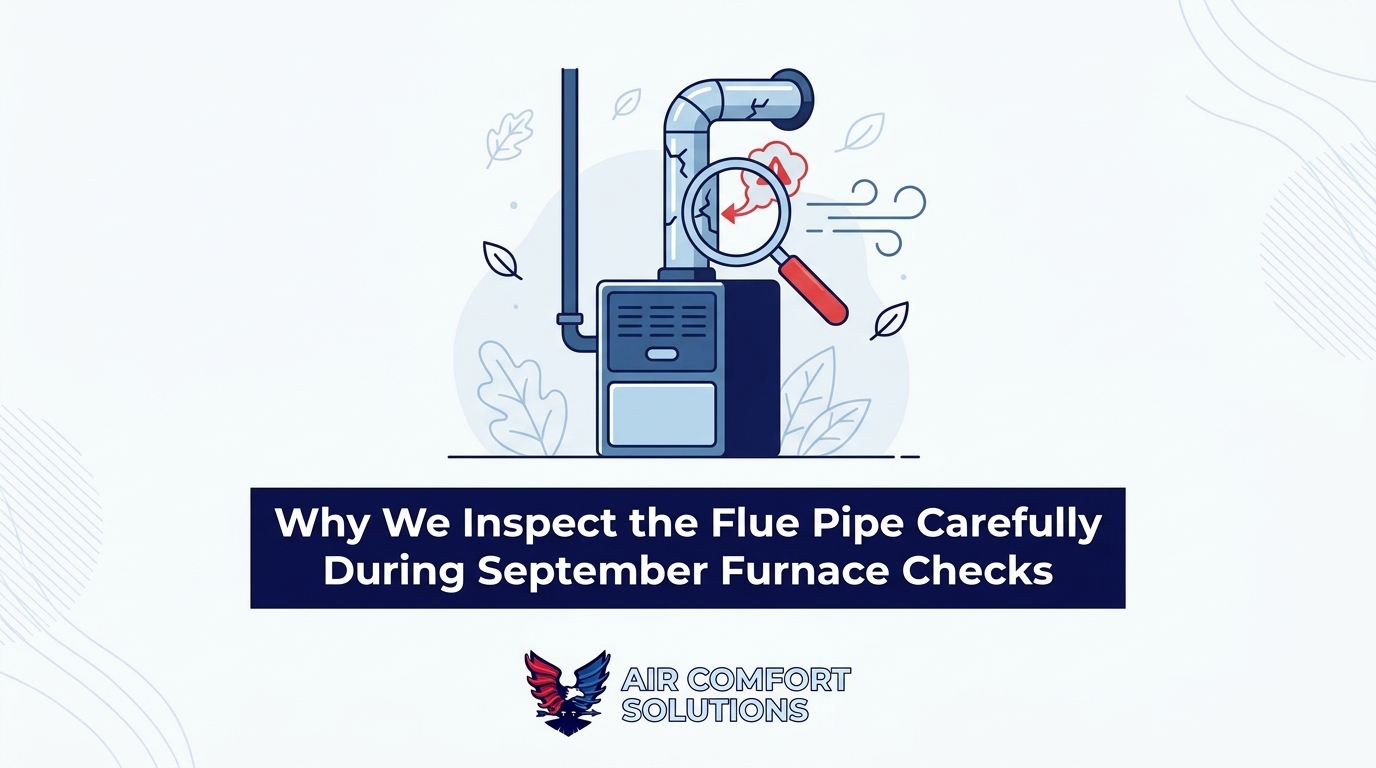
Your furnace has been sitting silently since early spring, and as the weather begins to shift, you might assume it is ready to run the moment you adjust the thermostat. However, turning on a dormant heating system without verifying the exhaust path can push highly toxic gases directly into your living space. This specific, hidden danger is exactly why we inspect the flue pipe carefully during September furnace checks. For many Pinehurst TX homes, our team at Air Comfort Solutions notices that heating equipment sits completely idle for over half the year. This long period of summer dormancy creates a false sense of security, leading many to believe that their equipment remains in the exact same condition it was in when it was powered down last winter.
To protect your HVAC system and ensure a safe winter, enrolling in a routine HVAC maintenance plan is the most effective proactive step you can take.
Most homeowners view their heating equipment as a static machine. The assumption is that if it worked perfectly in March, it should operate flawlessly in October. Unfortunately, metal components do not pause their interaction with the environment just because the appliance is turned off. The reality is that extended downtime exposes the system to constant, passive degradation, particularly in the exhaust venting. Moisture, pests, and subtle physical shifts all take a toll on the system while you are busy running your air conditioner.
In our years of servicing local systems, we've found that a proper fall tune-up must begin with verifying the physical integrity of this exhaust system before any test fires occur. This is a non-negotiable step in professional maintenance. Overlooking this critical decision point risks introducing carbon monoxide into the home during the very first heating cycle of the year. By treating the September pre-heating season transition as an active intervention rather than a simple filter change, our technicians can identify and neutralize these hidden summer damages before they threaten your family's safety.
To understand why summer degradation is so dangerous, it helps to understand exactly what this component does. The flue pipe acts as the chimney for your gas furnace, safely carrying combustion byproducts out of the house and venting them into the outdoor atmosphere. Whenever your furnace burns natural gas or propane to create heat, it also creates exhaust. Managing this exhaust safely is just as important as generating the heat itself.
The primary byproduct of concern during combustion is carbon monoxide (CO), an odorless, colorless, and highly toxic gas. Because humans cannot see or smell carbon monoxide, the physical structure containing it must be absolutely flawless. The exhaust system operates under specific draft pressures, meaning it relies on natural physics or a specialized draft inducer motor to pull the toxic gases upward and outward. Any physical alteration to the pipe can disrupt this delicate pressure balance, forcing dangerous gases backward into your living spaces.
Even a microscopic leak, a minor blockage, or a slight misalignment in this pipe compromises the entire safety mechanism of the furnace. To illustrate the difference, consider how a healthy system compares to a compromised one during the critical September pre-heating season transition:
• Healthy Flue Pipe — Airflow Path: Unobstructed flow from heat exchanger to roof/exterior. — Carbon Monoxide Status: Safely contained and vented entirely outside the home. — Draft Pressure: Maintains negative pressure, pulling exhaust upward.
• Compromised Flue Pipe — Airflow Path: Restricted or broken path due to rust, nests, or gaps. — Carbon Monoxide Status: Spills into the attic, utility closet, or living areas. — Draft Pressure: Backdrafts occur, pushing exhaust against the intended flow.
Because the stakes are so high, verifying that the system looks and functions like the healthy model in the table above is the foundational step of any legitimate safety inspection our team performs.
The problem: Metal flues are highly susceptible to oxidation when exposed to moisture over long periods without the drying effect of active furnace heat. During the winter, the sheer heat of the exhaust gases keeps the inner walls of the pipe bone-dry. Once the heating season ends, that protective drying effect disappears completely.
The cause: Pinehurst's long, hot, humid summers create the perfect environment for condensation-induced rust inside dormant metal flues. As ambient humidity levels rise and fall with the daily temperature cycle, condensation naturally forms on and inside the cool metal of the inactive pipe. Because the furnace is not running to evaporate this moisture, the water simply sits on the metal surfaces. Over several months, this trapped moisture accelerates rust, slowly eating away at the galvanized steel or aluminum.
The solution: What starts as surface oxidation in May can easily develop into severe structural compromises and pinhole leaks by late summer. A pipe that looked perfectly fine during the spring AC check may have developed dangerous vulnerabilities hidden from plain view. A professional inspection by our team during the September pre-heating season transition involves actively searching for these rust spots, flaking metal, and condensation stains. Our technicians have replaced countless flue pipes that looked fine in spring but developed dangerous rust holes by early fall. Catching this silent corrosion before the heat is turned on ensures that no carbon monoxide escapes into your home.
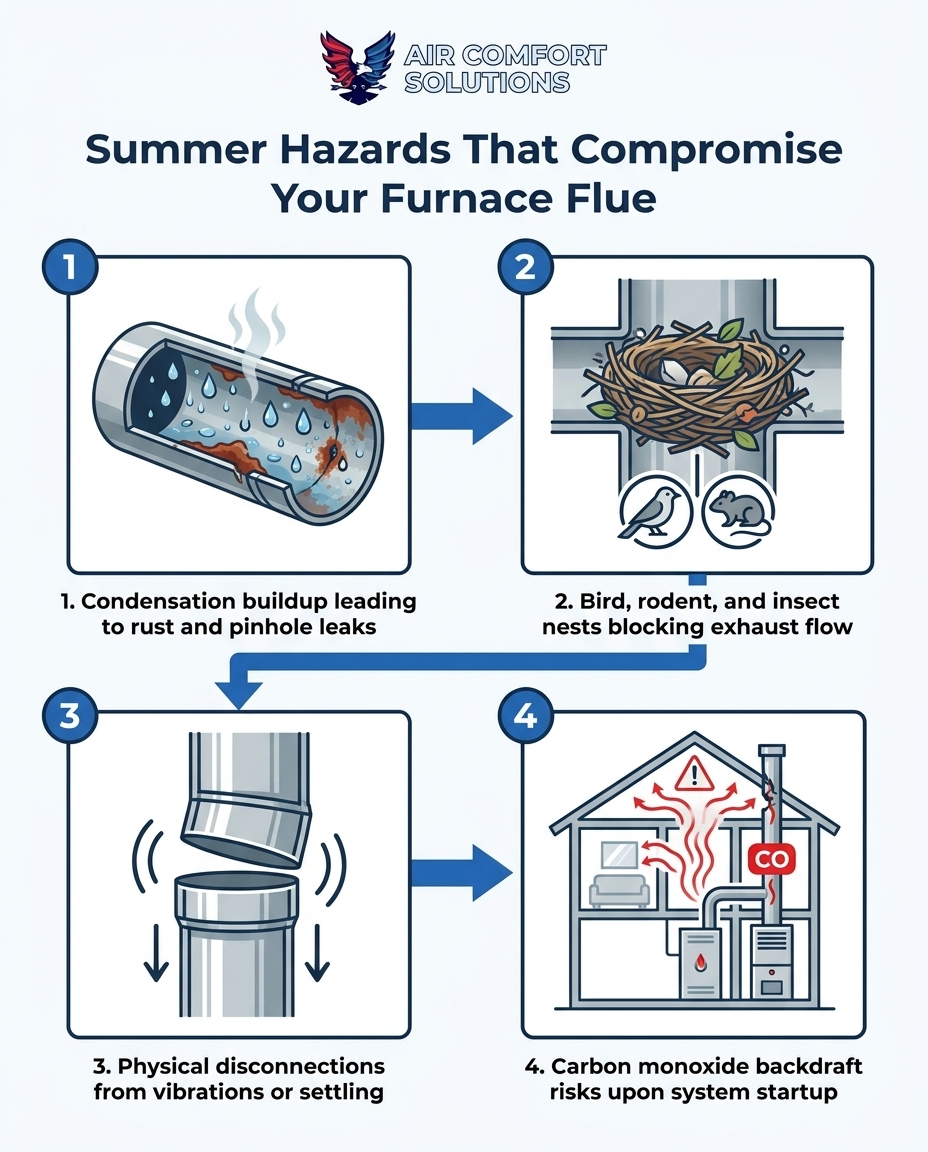
While humidity attacks the metal itself, the open end of the flue pipe faces an entirely different threat from the outside world. Spring and summer are prime nesting seasons for local wildlife, and an unused, sheltered pipe provides an attractive, predator-free home. Birds, rodents, and wasps frequently build dense nests inside the flue, completely obstructing the airflow.
When assessing indoor air quality and system safety for Pinehurst TX homes, our crew clears these obstructions following a strict professional sequence:
1. Identifying the Obstruction: Our technicians use specialized mirrors and inspection cameras to look deep into the venting system. Wasps often build paper nests just inside the cap, while birds can drop nesting materials several feet down the vertical pipe.
2. Evaluating the Blockage Density: A nest built over five months of summer dormancy is often tightly packed with twigs, mud, and debris. If left undiscovered, turning on the furnace would result in dangerous backdrafting, as the exhaust has absolutely nowhere to go but back into the house.
3. Safe and Structural Removal: Clearing these blockages requires specialized care to ensure the entire obstruction is removed without damaging the pipe lining. Forcing a brush down the pipe aggressively can easily dent or disconnect older metal flues.
4. Verifying the Cap and Screen: Once the pipe is cleared, professionals verify that the exterior cap and protective screens are intact to prevent wildlife from immediately returning before the cold weather sets in.
Discovering a blockage during the September pre-heating season transition is incredibly common—in fact, our crews remove dozens of nests every fall, which is why we never assume a pipe is clear just because it was clear last year.
Beyond rust and pests, the actual structural alignment of your exhaust system can shift over the summer months. Because the pipe is often routed through hidden areas of the home—such as utility closets, cramped attics, or behind drywall—these disconnections rarely show obvious visual signs to the homeowner. You could walk past your furnace every day and never realize the exhaust pipe in the attic has separated by half an inch.
For Pinehurst heating and cooling systems, we frequently see several common off-season events cause these hidden disconnections:
• Vibration Transfer: The furnace and the air conditioning evaporator coil often share the same air handler cabinet. As the AC runs heavily throughout the summer, the constant vibration can slowly rattle aging flue pipe joints loose.
• Foundation Settling: Minor shifts in the home's framing over the dry summer months can pull tightly strapped pipes apart.
• Attic Activity: Storing holiday decorations, moving boxes, or routine pest control work in the attic can easily result in an accidental bump to the venting system, dislodging a critical joint.
A disconnected flue pipe will dump concentrated carbon monoxide directly into the surrounding space. Tracing the entire length of the accessible flue is a mandatory step in verifying the system's structural soundness. Our technicians physically inspect the joints, ensuring that the heavy use of the AC over the summer did not inadvertently compromise the heating system's exhaust path.
At Air Comfort Solutions, standard operating procedure dictates that the furnace is never fired up for a test cycle until the exhaust path is fully cleared and verified. This preemptive check ensures that if a carbon monoxide hazard exists, it is identified and neutralized before it can ever enter the home's airflow. This thoroughness separates a comprehensive safety check from a superficial filter change.
We utilize a strictly enforced, safety-first procedural approach. Rather than just changing filters and checking belts, our technicians actively hunt for hidden CO hazards. The inspection protocol during the September pre-heating season transition involves a methodical sequence. First, the exterior of the pipe is evaluated for rust, corrosion, and proper slope. Next, the interior is checked using mirrors, cameras, and specialized lighting to rule out nests or debris. Finally, draft gauges are utilized to confirm that the pressure dynamics are correct.
This rigorous approach mirrors the care taken when checking heat exchangers in September. Both components handle toxic gases, and both require absolute structural perfection to operate safely. By verifying the flue pipe before the thermostat is ever switched to "heat," our technicians ensure that the very first test fire of the season is completely safe for the household.
Carbon monoxide is far too dangerous to rely on amateur visual inspections or guesswork. While many homeowners in Pinehurst TX homes are perfectly capable of changing their own air filters, our team stresses that inspecting and verifying the integrity of a gas exhaust system is strictly professional territory.
Licensed professionals carry specialized diagnostic equipment designed specifically for these systems. Combustion analyzers and digital draft gauges measure pressure differentials and detect microscopic leaks that the human eye cannot see. Furthermore, repairing or realigning a flue pipe involves strict building codes and specific materials to ensure airtight, heat-resistant seals. Using standard duct tape or improper screws on a flue pipe can melt, release toxic fumes, or create new leak points.
Attempting to clean or fix a flue pipe without proper training can inadvertently cause worse damage. Pushing a makeshift tool into the pipe to clear a suspected bird nest often results in compacting the debris further down into the heat exchanger, turning a simple removal job into a major, complex repair. Professional technicians have the exact brushes, vacuums, and scopes needed to extract blockages safely without compromising the delicate metal lining.
Understanding the hidden impacts of summer dormancy allows you to take proactive steps for your family's safety. The transition from cooling to heating is the most vulnerable time for your equipment, as months of inactivity can mask serious rust, blockages, or disconnections. A thorough, professional inspection provides peace of mind that your heating system will operate safely and efficiently all winter long.
Scheduling this check early in the fall ensures any summer damage is caught well before the first freezing night forces your system to run continuously. To guarantee your equipment is thoroughly evaluated by trained experts, establishing a routine HVAC maintenance plan is the smartest investment you can make for the September pre-heating season transition.
If a furnace exhaust pipe is blocked, the toxic combustion gases have nowhere to vent and will backdraft into your home. This introduces dangerous levels of carbon monoxide into your living spaces, posing a severe health risk. Modern furnaces are equipped with safety switches designed to shut the system down if a blockage is detected, but relying solely on these switches is dangerous. Regular inspections ensure the pipe is clear before the system ever has to rely on an emergency shut-off.
Your furnace flue pipe rusts over the summer due to unchecked condensation inside the dormant metal. High ambient humidity and fluctuating temperatures cause moisture to form inside the pipe, and because the furnace isn't running to produce drying heat, the water sits on the metal. Over several months, this trapped moisture slowly oxidizes the material, leading to rust flaking and eventual pinhole leaks.
A furnace flue should be inspected at least once a year, ideally in the early fall before the heating season begins. This annual check ensures that any damage, rust, or pest infiltration that occurred over the summer is caught before the system is turned on. Skipping this annual inspection increases the risk of undetected carbon monoxide leaks developing over time.
Yes, birds frequently get into furnace exhaust pipes during the spring and summer to build nests. The dormant, sheltered pipe provides an ideal, predator-free environment for nesting materials. If the exterior cap is damaged, missing, or lacks a proper screen, wildlife can easily enter and create dense blockages that must be professionally removed.
You generally cannot know if your furnace flue is leaking without professional diagnostic tools, as carbon monoxide is entirely invisible and odorless. However, visual warning signs include visible rust streaks, soot buildup around the pipe joints, or excessive moisture pooling near the base of the furnace. If your carbon monoxide detectors sound an alarm, evacuate immediately and call emergency services, as this is the most critical indicator of a severe leak.
No, it is not safe to test your furnace before the flue is checked. If the exhaust pipe developed a blockage or disconnected over the summer, running a test cycle will immediately push toxic exhaust gases into your home. Professional technicians always verify the physical integrity of the venting system first to ensure the exhaust has a safe, clear path outdoors before igniting the burners.


Zane came out and did an amazing job! Super friendly, honest and transparent about the work that needed to be done. This is my second time working with Air Comfort Solutions and they’re my go to for HVAC services. Highly recommend.
God's AMAZING grace sent us Robert and Zane. We have been without air in this Texas heat for six weeks and four days. We've had a few contractors give us quotes all trying to upsell when we're at a low point. But not the guys at Air Comfort Solutions. They came in assessed our situation, gave us honest feedback, and showed us the issues as they proceeded with the assessment for clear understanding. We highly recommend them for their professionalism, quality products, and fair pricing. We hands down support them for all the work they do 💯 %.
Robert and Zane gone above and beyond to make the process easy and affordable.
Would definitely recommend!!
I’m writing this review to let everyone know that Air Comfort Solutions is the company to work with. I know the owner ( Robert) for several years now. He has been taking care of my residential and business work orders. Robert is professional, knowledgeable and will save you money. I just want to thank Robert for great job you have been doing for me.