


Do You Need 24 Hour AC Repair? Troubleshooting Your Fall Heating Startup
See why fall heater smells cause panic. Use our home maintenance tips and troubleshooting to decide if it's normal dust burn-off or time to call a pro.
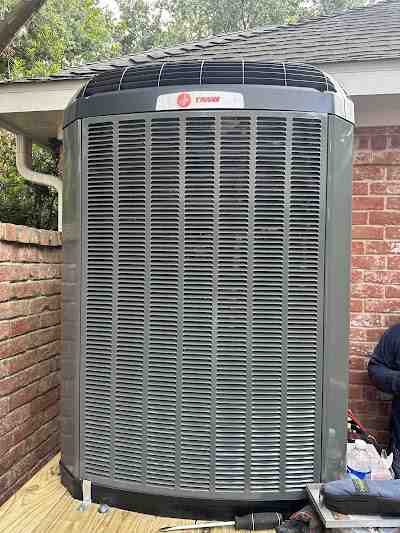
How SEER2 ratings affect energy bills comes down to one simple idea: the more efficiently your system cools your home, the less electricity it burns — and the lower your monthly utility bill.
Here is a quick breakdown of what that means in practice:
• 14.3 SEER2 — Relative Efficiency: Baseline (federal minimum, South) — Typical Annual Savings vs. Baseline: –
• 16 SEER2 — Relative Efficiency: Moderate upgrade — Typical Annual Savings vs. Baseline: $20–$40/year more than baseline
• 18 SEER2 — Relative Efficiency: ~20% more efficient than 14.3 — Typical Annual Savings vs. Baseline: ~$80/year more than baseline
• 20+ SEER2 — Relative Efficiency: ~43% more efficient than 14.3 — Typical Annual Savings vs. Baseline: $100+/year more than baseline
The short version: every point you move up the SEER2 scale means your system does the same cooling job using less electricity. In a hot, humid climate like Pinehurst, TX — where air conditioners run hard for months at a time — those savings add up fast.
But SEER2 is not just a new name for an old rating. It reflects a fundamentally different way of measuring efficiency, one that matches what your system actually does inside your home — not what it does in a perfect laboratory setting. For North Harris County homeowners already dealing with high summer energy bills, understanding this rating is one of the most practical steps you can take toward controlling your cooling costs.
If you have been looking into a new air conditioner lately, you have probably noticed that the old SEER ratings have been replaced by SEER2. This change, which became the industry standard in 2023 and is fully mature here in May 2026, isn’t just about adding a number to the end of an acronym. It represents a massive shift in how the Department of Energy (DOE) calculates efficiency.
The “M1” testing procedure is the heart of this change. In the past, the original SEER tests were conducted in laboratory settings that didn’t really look like a typical Texas home. These labs had “perfect” airflow, which is something most of us don’t have. In the real world, your air conditioner has to push air through a network of ducts, vents, and filters. This creates something called “external static pressure”—essentially, it’s the resistance the air faces as it moves.
The new SEER2 testing increases this static pressure requirement by five times (from 0.1 inches of water column to 0.5 inches). This is a much more realistic simulation of a home in Spring or Tomball. When we talk about how seer2 ratings affect energy bills, we are talking about a rating that finally accounts for the “work” your system does to overcome ductwork resistance. By using a more rigorous test, SEER2 gives you a more honest look at how much power your unit will actually draw when the August heat hits.
If your current system is over a decade old, it likely follows the old SEER standards. Upgrading to a modern unit ensures that you are meeting the latest 2026 compliance standards while seeing a tangible reduction in energy consumption. For a deeper dive into what this means for your specific property, you might find our AC Replacement Guide Pinehurst TX helpful.
You might notice something strange when comparing an old unit to a new one: the SEER2 number often looks lower than the old SEER number for the same piece of equipment. For example, a unit that was previously rated at 16 SEER might now carry a 15.2 SEER2 rating.
Don’t let that fool you! The unit isn’t less efficient; the test is just harder. It’s like a student taking a much more difficult exam—a lower score on a harder test can actually represent a higher level of knowledge. In HVAC terms, a 15.2 SEER2 unit is actually more efficient than a 15.2 SEER unit because it maintained that efficiency under much tougher conditions.
Understanding this numerical drop is vital so you don’t accidentally buy a system that underperforms. Accuracy in measurement means you can better predict your monthly savings. If you are wondering when the best time to make this switch is, check out our guide on the Optimal Times for Upgrading Your Home’s Air Conditioning System.
As of 2026, we are also navigating the full transition to new refrigerants like R-454B and R-32. These were mandated to replace the old R-410A. This shift actually works hand-in-hand with SEER2 standards to lower your bills.
These newer refrigerants have superior heat transfer properties. They move heat out of your home more effectively than the old stuff did. Because the system can move heat more efficiently, the compressor doesn’t have to work as long or as hard to reach your desired temperature. This leads to:
• Lower electricity draw during cooling cycles.
• Less wear and tear on the system, potentially extending its lifespan.
• A lower Global Warming Potential (GWP), which is better for the environment.
When we combine the more accurate SEER2 ratings with these high-efficiency refrigerants, the result is a cooling system that is leaner and meaner on energy waste. For homeowners in The Woodlands or Magnolia, this is a significant part of the Ultimate AC Replacement Guide Residential Woodlands TX.
The United States is divided into different regions for HVAC efficiency standards because a home in Maine has very different needs than a home in Pinehurst. Texas falls into the Southeast region, which has some of the strictest requirements in the country.
In 2026, the baseline for a new central air conditioner in our area is 15.2 SEER2 (which corresponds to the old 16 SEER). While some smaller systems or heat pumps might have a 14.3 SEER2 minimum, the reality of our Harris and Montgomery County climate means that aiming for the minimum is rarely the most cost-effective move.
Our local climate is characterized by extreme heat and high humidity. A system that meets the bare minimum might stay within the law, but it will struggle to keep your bills low when we hit three weeks of 100-degree days. Following the AC Replacement Guide Woodlands TX can help you navigate these regional mandates while choosing a system that actually fits the Texas sun.
In Pinehurst and surrounding areas, the heat is only half the battle; the moisture is the other. This is where “latent heat” comes into play. Your AC doesn’t just lower the temperature; it acts as a giant dehumidifier.
High-efficiency SEER2 systems, especially those with variable-speed technology, are much better at removing moisture. Instead of blasting on and off (which leaves the air feeling clammy), a variable-speed system runs at lower speeds for longer periods. This constant, gentle airflow pulls significantly more moisture out of the air.
When the humidity in your home is lower, you feel cooler at higher temperatures. You might find that you’re perfectly comfortable with the thermostat set at 75 degrees instead of 72. That three-degree difference can shave a massive percentage off your energy bill. However, to keep this efficiency high, you cannot ignore maintenance. To understand the risks, see What Happens If You Skip AC Maintenance in Texas and learn How Often Should You Service Your AC in Texas.
When choosing a system, you are generally looking at three tiers of efficiency. Each one has a different impact on how seer2 ratings affect energy bills.
• Standard — SEER2 Range: 14.3 – 15.2 — Technology Type: Single-Stage — Best For: Budget-conscious, smaller homes
• Mid-Range — SEER2 Range: 16 – 18 — Technology Type: Two-Stage — Best For: Balanced comfort and savings
• High-Performance — SEER2 Range: 19 – 25+ — Technology Type: Variable-Speed — Best For: Maximum savings, ultimate humidity control
Single-stage systems are the “all or nothing” models. They are either 100% on or 100% off. While they meet the baseline, they waste a lot of energy during the “start-up” phase of the cycle. Variable-speed systems, on the other hand, can adjust their output in tiny increments, often running at just 30% capacity to maintain a steady temperature. This eliminates the energy spikes associated with frequent cycling. If you are looking for the “gold standard” in our area, the Best AC Replacement Guide Spring TX offers excellent insights.
Many homeowners ask: “Is the higher-rated system actually worth it?” The answer lies in the Return on Investment (ROI) and the payback period.
If you upgrade from an old 10 SEER system (common in many older homes in Tomball or Conroe) to a new 18 SEER2 system, you are looking at an approximate 20% to 25% jump in efficiency. In some cases, moving from a baseline modern unit to a top-tier 20+ SEER2 unit can represent a 43% reduction in cooling energy use.
Over a 15-year lifespan, these savings can amount to thousands of dollars. For many families in Spring, the “payback period”—the time it takes for the energy savings to cover the difference in equipment cost—is often between 5 and 7 years. After that point, the system is essentially putting money back into your pocket every month. For those looking for a balance, our Affordable AC Replacement Guide Spring TX explores how to find that “sweet spot.”
Modern SEER2 systems are packed with technology that didn’t exist a decade ago. Inverter-driven compressors allow the unit to sip electricity rather than gulp it. Multi-stage cooling ensures you aren’t using more power than necessary on a mild May day.
Furthermore, integrating these systems with smart thermostats allows for even greater waste reduction. These thermostats can learn your habits, adjust for peak energy pricing from your utility provider, and even alert you if the system is losing efficiency. Working with the right AC Replacement Contractors Spring TX Guide ensures that these advanced features are set up correctly from day one.
Even the most efficient 25 SEER2 system will perform like a baseline model if it isn’t installed correctly. To truly see how seer2 ratings affect energy bills, the installation must be precise.
One of the most important steps we take is a professional “load calculation.” We don’t just guess the size based on square footage. We look at your windows, your insulation, and the direction your home faces. An oversized unit will “short cycle,” turning on and off too quickly to remove humidity and wasting electricity. An undersized unit will run forever and never get the job done.
Your ductwork is the “lungs” of your HVAC system. If your ducts are leaky, restricted, or poorly designed, your SEER2 rating effectively disappears. In fact, leaky ducts can waste up to 30% of your system’s energy.
When we install a high-efficiency system, we evaluate the static pressure of your existing ducts. If the resistance is too high, the fan has to work harder, which drives up your bill. Proper sizing and sealing of ducts are essential components of a successful upgrade. You can learn more about this process in our AC Replacement Guide The Woodlands TX.
Additionally, 2026 brings continued opportunities for federal tax credits. Under the Inflation Reduction Act’s 25C tax credit, homeowners can often claim a significant portion of the cost of high-efficiency heat pumps or central air conditioners, provided they meet specific SEER2 benchmarks (usually 16 SEER2 or higher). Local utility rebates in the CenterPoint or Entergy service areas can also provide immediate relief.
Generally, yes, because our cooling season is so long. However, if you plan to move in two years, you might not stay long enough to see the full ROI of a 22 SEER2 unit. For long-term residents, the higher rating is almost always the smarter financial move due to the extreme Texas humidity and heat.
As we mentioned earlier, this is due to the change in testing protocols. The new test uses 0.5 inches of water column pressure instead of 0.1. This higher static pressure makes the “exam” harder. A 15.2 SEER2 unit is roughly equivalent to a 16 SEER unit in terms of actual cooling power, but the rating is more “honest” about real-world performance.
The 25C tax credit remains a primary incentive. It allows homeowners to deduct up to 30% of the cost of qualifying high-efficiency equipment, up to a certain annual limit (often $2,000 for heat pumps). To qualify, the system must meet specific efficiency tiers, which is why choosing a system with a higher SEER2 rating can actually be more affordable after the credit is applied.
At Air Comfort Solutions, we have spent over 35 years helping our neighbors in Pinehurst, The Woodlands, and Spring stay comfortable without breaking the bank. We know that technical terms like “external static pressure” and “M1 testing” can be overwhelming, but our goal is to simplify the process for you.
How SEER2 ratings affect energy bills is a combination of better technology, more accurate testing, and professional installation. Whether you are in Plantersville, Magnolia, or Houston, our certified technicians are here to provide honest, upfront solutions tailored to your home’s unique needs. We don’t just sell units; we design comfort systems that save you money for years to come.
Ready to see how much you could save? Explore our Air Conditioning Services today and let us help you navigate the future of home cooling.
How SEER2 ratings affect energy bills comes down to one simple idea: the more efficiently your system cools your home, the less electricity it burns — and the lower your monthly utility bill.
Here is a quick breakdown of what that means in practice:
| SEER2 Rating | Relative Efficiency | Typical Annual Savings vs. Baseline |
|---|---|---|
| 14.3 SEER2 | Baseline (federal minimum, South) | - |
| 16 SEER2 | Moderate upgrade | $20–$40/year more than baseline |
| 18 SEER2 | ~20% more efficient than 14.3 | ~$80/year more than baseline |
| 20+ SEER2 | ~43% more efficient than 14.3 | $100+/year more than baseline |
The short version: every point you move up the SEER2 scale means your system does the same cooling job using less electricity. In a hot, humid climate like Pinehurst, TX — where air conditioners run hard for months at a time — those savings add up fast.
But SEER2 is not just a new name for an old rating. It reflects a fundamentally different way of measuring efficiency, one that matches what your system actually does inside your home — not what it does in a perfect laboratory setting. For North Harris County homeowners already dealing with high summer energy bills, understanding this rating is one of the most practical steps you can take toward controlling your cooling costs.
If you have been looking into a new air conditioner lately, you have probably noticed that the old SEER ratings have been replaced by SEER2. This change, which became the industry standard in 2023 and is fully mature here in May 2026, isn't just about adding a number to the end of an acronym. It represents a massive shift in how the Department of Energy (DOE) calculates efficiency.
The "M1" testing procedure is the heart of this change. In the past, the original SEER tests were conducted in laboratory settings that didn't really look like a typical Texas home. These labs had "perfect" airflow, which is something most of us don't have. In the real world, your air conditioner has to push air through a network of ducts, vents, and filters. This creates something called "external static pressure"—essentially, it’s the resistance the air faces as it moves.
The new SEER2 testing increases this static pressure requirement by five times (from 0.1 inches of water column to 0.5 inches). This is a much more realistic simulation of a home in Spring or Tomball. When we talk about how seer2 ratings affect energy bills, we are talking about a rating that finally accounts for the "work" your system does to overcome ductwork resistance. By using a more rigorous test, SEER2 gives you a more honest look at how much power your unit will actually draw when the August heat hits.
If your current system is over a decade old, it likely follows the old SEER standards. Upgrading to a modern unit ensures that you are meeting the latest 2026 compliance standards while seeing a tangible reduction in energy consumption. For a deeper dive into what this means for your specific property, you might find our AC Replacement Guide Pinehurst TX helpful.
You might notice something strange when comparing an old unit to a new one: the SEER2 number often looks lower than the old SEER number for the same piece of equipment. For example, a unit that was previously rated at 16 SEER might now carry a 15.2 SEER2 rating.
Don't let that fool you! The unit isn't less efficient; the test is just harder. It’s like a student taking a much more difficult exam—a lower score on a harder test can actually represent a higher level of knowledge. In HVAC terms, a 15.2 SEER2 unit is actually more efficient than a 15.2 SEER unit because it maintained that efficiency under much tougher conditions.
Understanding this numerical drop is vital so you don't accidentally buy a system that underperforms. Accuracy in measurement means you can better predict your monthly savings. If you are wondering when the best time to make this switch is, check out our guide on the Optimal Times for Upgrading Your Home's Air Conditioning System.
As of 2026, we are also navigating the full transition to new refrigerants like R-454B and R-32. These were mandated to replace the old R-410A. This shift actually works hand-in-hand with SEER2 standards to lower your bills.
These newer refrigerants have superior heat transfer properties. They move heat out of your home more effectively than the old stuff did. Because the system can move heat more efficiently, the compressor doesn't have to work as long or as hard to reach your desired temperature. This leads to:
When we combine the more accurate SEER2 ratings with these high-efficiency refrigerants, the result is a cooling system that is leaner and meaner on energy waste. For homeowners in The Woodlands or Magnolia, this is a significant part of the Ultimate AC Replacement Guide Residential Woodlands TX.
The United States is divided into different regions for HVAC efficiency standards because a home in Maine has very different needs than a home in Pinehurst. Texas falls into the Southeast region, which has some of the strictest requirements in the country.
In 2026, the baseline for a new central air conditioner in our area is 15.2 SEER2 (which corresponds to the old 16 SEER). While some smaller systems or heat pumps might have a 14.3 SEER2 minimum, the reality of our Harris and Montgomery County climate means that aiming for the minimum is rarely the most cost-effective move.
Our local climate is characterized by extreme heat and high humidity. A system that meets the bare minimum might stay within the law, but it will struggle to keep your bills low when we hit three weeks of 100-degree days. Following the AC Replacement Guide Woodlands TX can help you navigate these regional mandates while choosing a system that actually fits the Texas sun.
In Pinehurst and surrounding areas, the heat is only half the battle; the moisture is the other. This is where "latent heat" comes into play. Your AC doesn't just lower the temperature; it acts as a giant dehumidifier.
High-efficiency SEER2 systems, especially those with variable-speed technology, are much better at removing moisture. Instead of blasting on and off (which leaves the air feeling clammy), a variable-speed system runs at lower speeds for longer periods. This constant, gentle airflow pulls significantly more moisture out of the air.
When the humidity in your home is lower, you feel cooler at higher temperatures. You might find that you’re perfectly comfortable with the thermostat set at 75 degrees instead of 72. That three-degree difference can shave a massive percentage off your energy bill. However, to keep this efficiency high, you cannot ignore maintenance. To understand the risks, see What Happens If You Skip AC Maintenance in Texas and learn How Often Should You Service Your AC in Texas.
When choosing a system, you are generally looking at three tiers of efficiency. Each one has a different impact on how seer2 ratings affect energy bills.
| Tier | SEER2 Range | Technology Type | Best For |
|---|---|---|---|
| Standard | 14.3 – 15.2 | Single-Stage | Budget-conscious, smaller homes |
| Mid-Range | 16 – 18 | Two-Stage | Balanced comfort and savings |
| High-Performance | 19 – 25+ | Variable-Speed | Maximum savings, ultimate humidity control |
Single-stage systems are the "all or nothing" models. They are either 100% on or 100% off. While they meet the baseline, they waste a lot of energy during the "start-up" phase of the cycle. Variable-speed systems, on the other hand, can adjust their output in tiny increments, often running at just 30% capacity to maintain a steady temperature. This eliminates the energy spikes associated with frequent cycling. If you are looking for the "gold standard" in our area, the Best AC Replacement Guide Spring TX offers excellent insights.
Many homeowners ask: "Is the higher-rated system actually worth it?" The answer lies in the Return on Investment (ROI) and the payback period.
If you upgrade from an old 10 SEER system (common in many older homes in Tomball or Conroe) to a new 18 SEER2 system, you are looking at an approximate 20% to 25% jump in efficiency. In some cases, moving from a baseline modern unit to a top-tier 20+ SEER2 unit can represent a 43% reduction in cooling energy use.
Over a 15-year lifespan, these savings can amount to thousands of dollars. For many families in Spring, the "payback period"—the time it takes for the energy savings to cover the difference in equipment cost—is often between 5 and 7 years. After that point, the system is essentially putting money back into your pocket every month. For those looking for a balance, our Affordable AC Replacement Guide Spring TX explores how to find that "sweet spot."
Modern SEER2 systems are packed with technology that didn't exist a decade ago. Inverter-driven compressors allow the unit to sip electricity rather than gulp it. Multi-stage cooling ensures you aren't using more power than necessary on a mild May day.
Furthermore, integrating these systems with smart thermostats allows for even greater waste reduction. These thermostats can learn your habits, adjust for peak energy pricing from your utility provider, and even alert you if the system is losing efficiency. Working with the right AC Replacement Contractors Spring TX Guide ensures that these advanced features are set up correctly from day one.
Even the most efficient 25 SEER2 system will perform like a baseline model if it isn't installed correctly. To truly see how seer2 ratings affect energy bills, the installation must be precise.
One of the most important steps we take is a professional "load calculation." We don't just guess the size based on square footage. We look at your windows, your insulation, and the direction your home faces. An oversized unit will "short cycle," turning on and off too quickly to remove humidity and wasting electricity. An undersized unit will run forever and never get the job done.
Your ductwork is the "lungs" of your HVAC system. If your ducts are leaky, restricted, or poorly designed, your SEER2 rating effectively disappears. In fact, leaky ducts can waste up to 30% of your system's energy.
When we install a high-efficiency system, we evaluate the static pressure of your existing ducts. If the resistance is too high, the fan has to work harder, which drives up your bill. Proper sizing and sealing of ducts are essential components of a successful upgrade. You can learn more about this process in our AC Replacement Guide The Woodlands TX.
Additionally, 2026 brings continued opportunities for federal tax credits. Under the Inflation Reduction Act’s 25C tax credit, homeowners can often claim a significant portion of the cost of high-efficiency heat pumps or central air conditioners, provided they meet specific SEER2 benchmarks (usually 16 SEER2 or higher). Local utility rebates in the CenterPoint or Entergy service areas can also provide immediate relief.
Generally, yes, because our cooling season is so long. However, if you plan to move in two years, you might not stay long enough to see the full ROI of a 22 SEER2 unit. For long-term residents, the higher rating is almost always the smarter financial move due to the extreme Texas humidity and heat.
As we mentioned earlier, this is due to the change in testing protocols. The new test uses 0.5 inches of water column pressure instead of 0.1. This higher static pressure makes the "exam" harder. A 15.2 SEER2 unit is roughly equivalent to a 16 SEER unit in terms of actual cooling power, but the rating is more "honest" about real-world performance.
The 25C tax credit remains a primary incentive. It allows homeowners to deduct up to 30% of the cost of qualifying high-efficiency equipment, up to a certain annual limit (often $2,000 for heat pumps). To qualify, the system must meet specific efficiency tiers, which is why choosing a system with a higher SEER2 rating can actually be more affordable after the credit is applied.
At Air Comfort Pros, we have spent over 35 years helping our neighbors in Pinehurst, The Woodlands, and Spring stay comfortable without breaking the bank. We know that technical terms like "external static pressure" and "M1 testing" can be overwhelming, but our goal is to simplify the process for you.
How SEER2 ratings affect energy bills is a combination of better technology, more accurate testing, and professional installation. Whether you are in Plantersville, Magnolia, or Houston, our certified technicians are here to provide honest, upfront solutions tailored to your home's unique needs. We don't just sell units; we design comfort systems that save you money for years to come.
Ready to see how much you could save? Explore our Air Conditioning Services today and let us help you navigate the future of home cooling.
How SEER2 ratings affect energy bills comes down to one simple idea: the more efficiently your system cools your home, the less electricity it burns — and the lower your monthly utility bill.
Here is a quick breakdown of what that means in practice:
| SEER2 Rating | Relative Efficiency | Typical Annual Savings vs. Baseline |
|---|---|---|
| 14.3 SEER2 | Baseline (federal minimum, South) | - |
| 16 SEER2 | Moderate upgrade | $20–$40/year more than baseline |
| 18 SEER2 | ~20% more efficient than 14.3 | ~$80/year more than baseline |
| 20+ SEER2 | ~43% more efficient than 14.3 | $100+/year more than baseline |
The short version: every point you move up the SEER2 scale means your system does the same cooling job using less electricity. In a hot, humid climate like Pinehurst, TX — where air conditioners run hard for months at a time — those savings add up fast.
But SEER2 is not just a new name for an old rating. It reflects a fundamentally different way of measuring efficiency, one that matches what your system actually does inside your home — not what it does in a perfect laboratory setting. For North Harris County homeowners already dealing with high summer energy bills, understanding this rating is one of the most practical steps you can take toward controlling your cooling costs.
If you have been looking into a new air conditioner lately, you have probably noticed that the old SEER ratings have been replaced by SEER2. This change, which became the industry standard in 2023 and is fully mature here in May 2026, isn't just about adding a number to the end of an acronym. It represents a massive shift in how the Department of Energy (DOE) calculates efficiency.
The "M1" testing procedure is the heart of this change. In the past, the original SEER tests were conducted in laboratory settings that didn't really look like a typical Texas home. These labs had "perfect" airflow, which is something most of us don't have. In the real world, your air conditioner has to push air through a network of ducts, vents, and filters. This creates something called "external static pressure"—essentially, it’s the resistance the air faces as it moves.
The new SEER2 testing increases this static pressure requirement by five times (from 0.1 inches of water column to 0.5 inches). This is a much more realistic simulation of a home in Spring or Tomball. When we talk about how seer2 ratings affect energy bills, we are talking about a rating that finally accounts for the "work" your system does to overcome ductwork resistance. By using a more rigorous test, SEER2 gives you a more honest look at how much power your unit will actually draw when the August heat hits.
If your current system is over a decade old, it likely follows the old SEER standards. Upgrading to a modern unit ensures that you are meeting the latest 2026 compliance standards while seeing a tangible reduction in energy consumption. For a deeper dive into what this means for your specific property, you might find our AC Replacement Guide Pinehurst TX helpful.
You might notice something strange when comparing an old unit to a new one: the SEER2 number often looks lower than the old SEER number for the same piece of equipment. For example, a unit that was previously rated at 16 SEER might now carry a 15.2 SEER2 rating.
Don't let that fool you! The unit isn't less efficient; the test is just harder. It’s like a student taking a much more difficult exam—a lower score on a harder test can actually represent a higher level of knowledge. In HVAC terms, a 15.2 SEER2 unit is actually more efficient than a 15.2 SEER unit because it maintained that efficiency under much tougher conditions.
Understanding this numerical drop is vital so you don't accidentally buy a system that underperforms. Accuracy in measurement means you can better predict your monthly savings. If you are wondering when the best time to make this switch is, check out our guide on the Optimal Times for Upgrading Your Home's Air Conditioning System.
As of 2026, we are also navigating the full transition to new refrigerants like R-454B and R-32. These were mandated to replace the old R-410A. This shift actually works hand-in-hand with SEER2 standards to lower your bills.
These newer refrigerants have superior heat transfer properties. They move heat out of your home more effectively than the old stuff did. Because the system can move heat more efficiently, the compressor doesn't have to work as long or as hard to reach your desired temperature. This leads to:
When we combine the more accurate SEER2 ratings with these high-efficiency refrigerants, the result is a cooling system that is leaner and meaner on energy waste. For homeowners in The Woodlands or Magnolia, this is a significant part of the Ultimate AC Replacement Guide Residential Woodlands TX.
The United States is divided into different regions for HVAC efficiency standards because a home in Maine has very different needs than a home in Pinehurst. Texas falls into the Southeast region, which has some of the strictest requirements in the country.
In 2026, the baseline for a new central air conditioner in our area is 15.2 SEER2 (which corresponds to the old 16 SEER). While some smaller systems or heat pumps might have a 14.3 SEER2 minimum, the reality of our Harris and Montgomery County climate means that aiming for the minimum is rarely the most cost-effective move.
Our local climate is characterized by extreme heat and high humidity. A system that meets the bare minimum might stay within the law, but it will struggle to keep your bills low when we hit three weeks of 100-degree days. Following the AC Replacement Guide Woodlands TX can help you navigate these regional mandates while choosing a system that actually fits the Texas sun.
In Pinehurst and surrounding areas, the heat is only half the battle; the moisture is the other. This is where "latent heat" comes into play. Your AC doesn't just lower the temperature; it acts as a giant dehumidifier.
High-efficiency SEER2 systems, especially those with variable-speed technology, are much better at removing moisture. Instead of blasting on and off (which leaves the air feeling clammy), a variable-speed system runs at lower speeds for longer periods. This constant, gentle airflow pulls significantly more moisture out of the air.
When the humidity in your home is lower, you feel cooler at higher temperatures. You might find that you’re perfectly comfortable with the thermostat set at 75 degrees instead of 72. That three-degree difference can shave a massive percentage off your energy bill. However, to keep this efficiency high, you cannot ignore maintenance. To understand the risks, see What Happens If You Skip AC Maintenance in Texas and learn How Often Should You Service Your AC in Texas.
When choosing a system, you are generally looking at three tiers of efficiency. Each one has a different impact on how seer2 ratings affect energy bills.
| Tier | SEER2 Range | Technology Type | Best For |
|---|---|---|---|
| Standard | 14.3 – 15.2 | Single-Stage | Budget-conscious, smaller homes |
| Mid-Range | 16 – 18 | Two-Stage | Balanced comfort and savings |
| High-Performance | 19 – 25+ | Variable-Speed | Maximum savings, ultimate humidity control |
Single-stage systems are the "all or nothing" models. They are either 100% on or 100% off. While they meet the baseline, they waste a lot of energy during the "start-up" phase of the cycle. Variable-speed systems, on the other hand, can adjust their output in tiny increments, often running at just 30% capacity to maintain a steady temperature. This eliminates the energy spikes associated with frequent cycling. If you are looking for the "gold standard" in our area, the Best AC Replacement Guide Spring TX offers excellent insights.
Many homeowners ask: "Is the higher-rated system actually worth it?" The answer lies in the Return on Investment (ROI) and the payback period.
If you upgrade from an old 10 SEER system (common in many older homes in Tomball or Conroe) to a new 18 SEER2 system, you are looking at an approximate 20% to 25% jump in efficiency. In some cases, moving from a baseline modern unit to a top-tier 20+ SEER2 unit can represent a 43% reduction in cooling energy use.
Over a 15-year lifespan, these savings can amount to thousands of dollars. For many families in Spring, the "payback period"—the time it takes for the energy savings to cover the difference in equipment cost—is often between 5 and 7 years. After that point, the system is essentially putting money back into your pocket every month. For those looking for a balance, our Affordable AC Replacement Guide Spring TX explores how to find that "sweet spot."
Modern SEER2 systems are packed with technology that didn't exist a decade ago. Inverter-driven compressors allow the unit to sip electricity rather than gulp it. Multi-stage cooling ensures you aren't using more power than necessary on a mild May day.
Furthermore, integrating these systems with smart thermostats allows for even greater waste reduction. These thermostats can learn your habits, adjust for peak energy pricing from your utility provider, and even alert you if the system is losing efficiency. Working with the right AC Replacement Contractors Spring TX Guide ensures that these advanced features are set up correctly from day one.
Even the most efficient 25 SEER2 system will perform like a baseline model if it isn't installed correctly. To truly see how seer2 ratings affect energy bills, the installation must be precise.
One of the most important steps we take is a professional "load calculation." We don't just guess the size based on square footage. We look at your windows, your insulation, and the direction your home faces. An oversized unit will "short cycle," turning on and off too quickly to remove humidity and wasting electricity. An undersized unit will run forever and never get the job done.
Your ductwork is the "lungs" of your HVAC system. If your ducts are leaky, restricted, or poorly designed, your SEER2 rating effectively disappears. In fact, leaky ducts can waste up to 30% of your system's energy.
When we install a high-efficiency system, we evaluate the static pressure of your existing ducts. If the resistance is too high, the fan has to work harder, which drives up your bill. Proper sizing and sealing of ducts are essential components of a successful upgrade. You can learn more about this process in our AC Replacement Guide The Woodlands TX.
Additionally, 2026 brings continued opportunities for federal tax credits. Under the Inflation Reduction Act’s 25C tax credit, homeowners can often claim a significant portion of the cost of high-efficiency heat pumps or central air conditioners, provided they meet specific SEER2 benchmarks (usually 16 SEER2 or higher). Local utility rebates in the CenterPoint or Entergy service areas can also provide immediate relief.
Generally, yes, because our cooling season is so long. However, if you plan to move in two years, you might not stay long enough to see the full ROI of a 22 SEER2 unit. For long-term residents, the higher rating is almost always the smarter financial move due to the extreme Texas humidity and heat.
As we mentioned earlier, this is due to the change in testing protocols. The new test uses 0.5 inches of water column pressure instead of 0.1. This higher static pressure makes the "exam" harder. A 15.2 SEER2 unit is roughly equivalent to a 16 SEER unit in terms of actual cooling power, but the rating is more "honest" about real-world performance.
The 25C tax credit remains a primary incentive. It allows homeowners to deduct up to 30% of the cost of qualifying high-efficiency equipment, up to a certain annual limit (often $2,000 for heat pumps). To qualify, the system must meet specific efficiency tiers, which is why choosing a system with a higher SEER2 rating can actually be more affordable after the credit is applied.
At Air Comfort Pros, we have spent over 35 years helping our neighbors in Pinehurst, The Woodlands, and Spring stay comfortable without breaking the bank. We know that technical terms like "external static pressure" and "M1 testing" can be overwhelming, but our goal is to simplify the process for you.
How SEER2 ratings affect energy bills is a combination of better technology, more accurate testing, and professional installation. Whether you are in Plantersville, Magnolia, or Houston, our certified technicians are here to provide honest, upfront solutions tailored to your home's unique needs. We don't just sell units; we design comfort systems that save you money for years to come.
Ready to see how much you could save? Explore our Air Conditioning Services today and let us help you navigate the future of home cooling.
How SEER2 ratings affect energy bills comes down to one simple idea: the more efficiently your system cools your home, the less electricity it burns — and the lower your monthly utility bill.
Here is a quick breakdown of what that means in practice:
| SEER2 Rating | Relative Efficiency | Typical Annual Savings vs. Baseline |
|---|---|---|
| 14.3 SEER2 | Baseline (federal minimum, South) | - |
| 16 SEER2 | Moderate upgrade | $20–$40/year more than baseline |
| 18 SEER2 | ~20% more efficient than 14.3 | ~$80/year more than baseline |
| 20+ SEER2 | ~43% more efficient than 14.3 | $100+/year more than baseline |
The short version: every point you move up the SEER2 scale means your system does the same cooling job using less electricity. In a hot, humid climate like Pinehurst, TX — where air conditioners run hard for months at a time — those savings add up fast.
But SEER2 is not just a new name for an old rating. It reflects a fundamentally different way of measuring efficiency, one that matches what your system actually does inside your home — not what it does in a perfect laboratory setting. For North Harris County homeowners already dealing with high summer energy bills, understanding this rating is one of the most practical steps you can take toward controlling your cooling costs.
If you have been looking into a new air conditioner lately, you have probably noticed that the old SEER ratings have been replaced by SEER2. This change, which became the industry standard in 2023 and is fully mature here in May 2026, isn't just about adding a number to the end of an acronym. It represents a massive shift in how the Department of Energy (DOE) calculates efficiency.
The "M1" testing procedure is the heart of this change. In the past, the original SEER tests were conducted in laboratory settings that didn't really look like a typical Texas home. These labs had "perfect" airflow, which is something most of us don't have. In the real world, your air conditioner has to push air through a network of ducts, vents, and filters. This creates something called "external static pressure"—essentially, it’s the resistance the air faces as it moves.
The new SEER2 testing increases this static pressure requirement by five times (from 0.1 inches of water column to 0.5 inches). This is a much more realistic simulation of a home in Spring or Tomball. When we talk about how seer2 ratings affect energy bills, we are talking about a rating that finally accounts for the "work" your system does to overcome ductwork resistance. By using a more rigorous test, SEER2 gives you a more honest look at how much power your unit will actually draw when the August heat hits.
If your current system is over a decade old, it likely follows the old SEER standards. Upgrading to a modern unit ensures that you are meeting the latest 2026 compliance standards while seeing a tangible reduction in energy consumption. For a deeper dive into what this means for your specific property, you might find our AC Replacement Guide Pinehurst TX helpful.
You might notice something strange when comparing an old unit to a new one: the SEER2 number often looks lower than the old SEER number for the same piece of equipment. For example, a unit that was previously rated at 16 SEER might now carry a 15.2 SEER2 rating.
Don't let that fool you! The unit isn't less efficient; the test is just harder. It’s like a student taking a much more difficult exam—a lower score on a harder test can actually represent a higher level of knowledge. In HVAC terms, a 15.2 SEER2 unit is actually more efficient than a 15.2 SEER unit because it maintained that efficiency under much tougher conditions.
Understanding this numerical drop is vital so you don't accidentally buy a system that underperforms. Accuracy in measurement means you can better predict your monthly savings. If you are wondering when the best time to make this switch is, check out our guide on the Optimal Times for Upgrading Your Home's Air Conditioning System.
As of 2026, we are also navigating the full transition to new refrigerants like R-454B and R-32. These were mandated to replace the old R-410A. This shift actually works hand-in-hand with SEER2 standards to lower your bills.
These newer refrigerants have superior heat transfer properties. They move heat out of your home more effectively than the old stuff did. Because the system can move heat more efficiently, the compressor doesn't have to work as long or as hard to reach your desired temperature. This leads to:
When we combine the more accurate SEER2 ratings with these high-efficiency refrigerants, the result is a cooling system that is leaner and meaner on energy waste. For homeowners in The Woodlands or Magnolia, this is a significant part of the Ultimate AC Replacement Guide Residential Woodlands TX.
The United States is divided into different regions for HVAC efficiency standards because a home in Maine has very different needs than a home in Pinehurst. Texas falls into the Southeast region, which has some of the strictest requirements in the country.
In 2026, the baseline for a new central air conditioner in our area is 15.2 SEER2 (which corresponds to the old 16 SEER). While some smaller systems or heat pumps might have a 14.3 SEER2 minimum, the reality of our Harris and Montgomery County climate means that aiming for the minimum is rarely the most cost-effective move.
Our local climate is characterized by extreme heat and high humidity. A system that meets the bare minimum might stay within the law, but it will struggle to keep your bills low when we hit three weeks of 100-degree days. Following the AC Replacement Guide Woodlands TX can help you navigate these regional mandates while choosing a system that actually fits the Texas sun.
In Pinehurst and surrounding areas, the heat is only half the battle; the moisture is the other. This is where "latent heat" comes into play. Your AC doesn't just lower the temperature; it acts as a giant dehumidifier.
High-efficiency SEER2 systems, especially those with variable-speed technology, are much better at removing moisture. Instead of blasting on and off (which leaves the air feeling clammy), a variable-speed system runs at lower speeds for longer periods. This constant, gentle airflow pulls significantly more moisture out of the air.
When the humidity in your home is lower, you feel cooler at higher temperatures. You might find that you’re perfectly comfortable with the thermostat set at 75 degrees instead of 72. That three-degree difference can shave a massive percentage off your energy bill. However, to keep this efficiency high, you cannot ignore maintenance. To understand the risks, see What Happens If You Skip AC Maintenance in Texas and learn How Often Should You Service Your AC in Texas.
When choosing a system, you are generally looking at three tiers of efficiency. Each one has a different impact on how seer2 ratings affect energy bills.
| Tier | SEER2 Range | Technology Type | Best For |
|---|---|---|---|
| Standard | 14.3 – 15.2 | Single-Stage | Budget-conscious, smaller homes |
| Mid-Range | 16 – 18 | Two-Stage | Balanced comfort and savings |
| High-Performance | 19 – 25+ | Variable-Speed | Maximum savings, ultimate humidity control |
Single-stage systems are the "all or nothing" models. They are either 100% on or 100% off. While they meet the baseline, they waste a lot of energy during the "start-up" phase of the cycle. Variable-speed systems, on the other hand, can adjust their output in tiny increments, often running at just 30% capacity to maintain a steady temperature. This eliminates the energy spikes associated with frequent cycling. If you are looking for the "gold standard" in our area, the Best AC Replacement Guide Spring TX offers excellent insights.
Many homeowners ask: "Is the higher-rated system actually worth it?" The answer lies in the Return on Investment (ROI) and the payback period.
If you upgrade from an old 10 SEER system (common in many older homes in Tomball or Conroe) to a new 18 SEER2 system, you are looking at an approximate 20% to 25% jump in efficiency. In some cases, moving from a baseline modern unit to a top-tier 20+ SEER2 unit can represent a 43% reduction in cooling energy use.
Over a 15-year lifespan, these savings can amount to thousands of dollars. For many families in Spring, the "payback period"—the time it takes for the energy savings to cover the difference in equipment cost—is often between 5 and 7 years. After that point, the system is essentially putting money back into your pocket every month. For those looking for a balance, our Affordable AC Replacement Guide Spring TX explores how to find that "sweet spot."
Modern SEER2 systems are packed with technology that didn't exist a decade ago. Inverter-driven compressors allow the unit to sip electricity rather than gulp it. Multi-stage cooling ensures you aren't using more power than necessary on a mild May day.
Furthermore, integrating these systems with smart thermostats allows for even greater waste reduction. These thermostats can learn your habits, adjust for peak energy pricing from your utility provider, and even alert you if the system is losing efficiency. Working with the right AC Replacement Contractors Spring TX Guide ensures that these advanced features are set up correctly from day one.
Even the most efficient 25 SEER2 system will perform like a baseline model if it isn't installed correctly. To truly see how seer2 ratings affect energy bills, the installation must be precise.
One of the most important steps we take is a professional "load calculation." We don't just guess the size based on square footage. We look at your windows, your insulation, and the direction your home faces. An oversized unit will "short cycle," turning on and off too quickly to remove humidity and wasting electricity. An undersized unit will run forever and never get the job done.
Your ductwork is the "lungs" of your HVAC system. If your ducts are leaky, restricted, or poorly designed, your SEER2 rating effectively disappears. In fact, leaky ducts can waste up to 30% of your system's energy.
When we install a high-efficiency system, we evaluate the static pressure of your existing ducts. If the resistance is too high, the fan has to work harder, which drives up your bill. Proper sizing and sealing of ducts are essential components of a successful upgrade. You can learn more about this process in our AC Replacement Guide The Woodlands TX.
Additionally, 2026 brings continued opportunities for federal tax credits. Under the Inflation Reduction Act’s 25C tax credit, homeowners can often claim a significant portion of the cost of high-efficiency heat pumps or central air conditioners, provided they meet specific SEER2 benchmarks (usually 16 SEER2 or higher). Local utility rebates in the CenterPoint or Entergy service areas can also provide immediate relief.
Generally, yes, because our cooling season is so long. However, if you plan to move in two years, you might not stay long enough to see the full ROI of a 22 SEER2 unit. For long-term residents, the higher rating is almost always the smarter financial move due to the extreme Texas humidity and heat.
As we mentioned earlier, this is due to the change in testing protocols. The new test uses 0.5 inches of water column pressure instead of 0.1. This higher static pressure makes the "exam" harder. A 15.2 SEER2 unit is roughly equivalent to a 16 SEER unit in terms of actual cooling power, but the rating is more "honest" about real-world performance.
The 25C tax credit remains a primary incentive. It allows homeowners to deduct up to 30% of the cost of qualifying high-efficiency equipment, up to a certain annual limit (often $2,000 for heat pumps). To qualify, the system must meet specific efficiency tiers, which is why choosing a system with a higher SEER2 rating can actually be more affordable after the credit is applied.
At Air Comfort Pros, we have spent over 35 years helping our neighbors in Pinehurst, The Woodlands, and Spring stay comfortable without breaking the bank. We know that technical terms like "external static pressure" and "M1 testing" can be overwhelming, but our goal is to simplify the process for you.
How SEER2 ratings affect energy bills is a combination of better technology, more accurate testing, and professional installation. Whether you are in Plantersville, Magnolia, or Houston, our certified technicians are here to provide honest, upfront solutions tailored to your home's unique needs. We don't just sell units; we design comfort systems that save you money for years to come.
Ready to see how much you could save? Explore our Air Conditioning Services today and let us help you navigate the future of home cooling.
How SEER2 ratings affect energy bills comes down to one simple idea: the more efficiently your system cools your home, the less electricity it burns — and the lower your monthly utility bill.
Here is a quick breakdown of what that means in practice:
| SEER2 Rating | Relative Efficiency | Typical Annual Savings vs. Baseline |
|---|---|---|
| 14.3 SEER2 | Baseline (federal minimum, South) | - |
| 16 SEER2 | Moderate upgrade | $20–$40/year more than baseline |
| 18 SEER2 | ~20% more efficient than 14.3 | ~$80/year more than baseline |
| 20+ SEER2 | ~43% more efficient than 14.3 | $100+/year more than baseline |
The short version: every point you move up the SEER2 scale means your system does the same cooling job using less electricity. In a hot, humid climate like Pinehurst, TX — where air conditioners run hard for months at a time — those savings add up fast.
But SEER2 is not just a new name for an old rating. It reflects a fundamentally different way of measuring efficiency, one that matches what your system actually does inside your home — not what it does in a perfect laboratory setting. For North Harris County homeowners already dealing with high summer energy bills, understanding this rating is one of the most practical steps you can take toward controlling your cooling costs.
If you have been looking into a new air conditioner lately, you have probably noticed that the old SEER ratings have been replaced by SEER2. This change, which became the industry standard in 2023 and is fully mature here in May 2026, isn't just about adding a number to the end of an acronym. It represents a massive shift in how the Department of Energy (DOE) calculates efficiency.
The "M1" testing procedure is the heart of this change. In the past, the original SEER tests were conducted in laboratory settings that didn't really look like a typical Texas home. These labs had "perfect" airflow, which is something most of us don't have. In the real world, your air conditioner has to push air through a network of ducts, vents, and filters. This creates something called "external static pressure"—essentially, it’s the resistance the air faces as it moves.
The new SEER2 testing increases this static pressure requirement by five times (from 0.1 inches of water column to 0.5 inches). This is a much more realistic simulation of a home in Spring or Tomball. When we talk about how seer2 ratings affect energy bills, we are talking about a rating that finally accounts for the "work" your system does to overcome ductwork resistance. By using a more rigorous test, SEER2 gives you a more honest look at how much power your unit will actually draw when the August heat hits.
If your current system is over a decade old, it likely follows the old SEER standards. Upgrading to a modern unit ensures that you are meeting the latest 2026 compliance standards while seeing a tangible reduction in energy consumption. For a deeper dive into what this means for your specific property, you might find our AC Replacement Guide Pinehurst TX helpful.
You might notice something strange when comparing an old unit to a new one: the SEER2 number often looks lower than the old SEER number for the same piece of equipment. For example, a unit that was previously rated at 16 SEER might now carry a 15.2 SEER2 rating.
Don't let that fool you! The unit isn't less efficient; the test is just harder. It’s like a student taking a much more difficult exam—a lower score on a harder test can actually represent a higher level of knowledge. In HVAC terms, a 15.2 SEER2 unit is actually more efficient than a 15.2 SEER unit because it maintained that efficiency under much tougher conditions.
Understanding this numerical drop is vital so you don't accidentally buy a system that underperforms. Accuracy in measurement means you can better predict your monthly savings. If you are wondering when the best time to make this switch is, check out our guide on the Optimal Times for Upgrading Your Home's Air Conditioning System.
As of 2026, we are also navigating the full transition to new refrigerants like R-454B and R-32. These were mandated to replace the old R-410A. This shift actually works hand-in-hand with SEER2 standards to lower your bills.
These newer refrigerants have superior heat transfer properties. They move heat out of your home more effectively than the old stuff did. Because the system can move heat more efficiently, the compressor doesn't have to work as long or as hard to reach your desired temperature. This leads to:
When we combine the more accurate SEER2 ratings with these high-efficiency refrigerants, the result is a cooling system that is leaner and meaner on energy waste. For homeowners in The Woodlands or Magnolia, this is a significant part of the Ultimate AC Replacement Guide Residential Woodlands TX.
The United States is divided into different regions for HVAC efficiency standards because a home in Maine has very different needs than a home in Pinehurst. Texas falls into the Southeast region, which has some of the strictest requirements in the country.
In 2026, the baseline for a new central air conditioner in our area is 15.2 SEER2 (which corresponds to the old 16 SEER). While some smaller systems or heat pumps might have a 14.3 SEER2 minimum, the reality of our Harris and Montgomery County climate means that aiming for the minimum is rarely the most cost-effective move.
Our local climate is characterized by extreme heat and high humidity. A system that meets the bare minimum might stay within the law, but it will struggle to keep your bills low when we hit three weeks of 100-degree days. Following the AC Replacement Guide Woodlands TX can help you navigate these regional mandates while choosing a system that actually fits the Texas sun.
In Pinehurst and surrounding areas, the heat is only half the battle; the moisture is the other. This is where "latent heat" comes into play. Your AC doesn't just lower the temperature; it acts as a giant dehumidifier.
High-efficiency SEER2 systems, especially those with variable-speed technology, are much better at removing moisture. Instead of blasting on and off (which leaves the air feeling clammy), a variable-speed system runs at lower speeds for longer periods. This constant, gentle airflow pulls significantly more moisture out of the air.
When the humidity in your home is lower, you feel cooler at higher temperatures. You might find that you’re perfectly comfortable with the thermostat set at 75 degrees instead of 72. That three-degree difference can shave a massive percentage off your energy bill. However, to keep this efficiency high, you cannot ignore maintenance. To understand the risks, see What Happens If You Skip AC Maintenance in Texas and learn How Often Should You Service Your AC in Texas.
When choosing a system, you are generally looking at three tiers of efficiency. Each one has a different impact on how seer2 ratings affect energy bills.
| Tier | SEER2 Range | Technology Type | Best For |
|---|---|---|---|
| Standard | 14.3 – 15.2 | Single-Stage | Budget-conscious, smaller homes |
| Mid-Range | 16 – 18 | Two-Stage | Balanced comfort and savings |
| High-Performance | 19 – 25+ | Variable-Speed | Maximum savings, ultimate humidity control |
Single-stage systems are the "all or nothing" models. They are either 100% on or 100% off. While they meet the baseline, they waste a lot of energy during the "start-up" phase of the cycle. Variable-speed systems, on the other hand, can adjust their output in tiny increments, often running at just 30% capacity to maintain a steady temperature. This eliminates the energy spikes associated with frequent cycling. If you are looking for the "gold standard" in our area, the Best AC Replacement Guide Spring TX offers excellent insights.
Many homeowners ask: "Is the higher-rated system actually worth it?" The answer lies in the Return on Investment (ROI) and the payback period.
If you upgrade from an old 10 SEER system (common in many older homes in Tomball or Conroe) to a new 18 SEER2 system, you are looking at an approximate 20% to 25% jump in efficiency. In some cases, moving from a baseline modern unit to a top-tier 20+ SEER2 unit can represent a 43% reduction in cooling energy use.
Over a 15-year lifespan, these savings can amount to thousands of dollars. For many families in Spring, the "payback period"—the time it takes for the energy savings to cover the difference in equipment cost—is often between 5 and 7 years. After that point, the system is essentially putting money back into your pocket every month. For those looking for a balance, our Affordable AC Replacement Guide Spring TX explores how to find that "sweet spot."
Modern SEER2 systems are packed with technology that didn't exist a decade ago. Inverter-driven compressors allow the unit to sip electricity rather than gulp it. Multi-stage cooling ensures you aren't using more power than necessary on a mild May day.
Furthermore, integrating these systems with smart thermostats allows for even greater waste reduction. These thermostats can learn your habits, adjust for peak energy pricing from your utility provider, and even alert you if the system is losing efficiency. Working with the right AC Replacement Contractors Spring TX Guide ensures that these advanced features are set up correctly from day one.
Even the most efficient 25 SEER2 system will perform like a baseline model if it isn't installed correctly. To truly see how seer2 ratings affect energy bills, the installation must be precise.
One of the most important steps we take is a professional "load calculation." We don't just guess the size based on square footage. We look at your windows, your insulation, and the direction your home faces. An oversized unit will "short cycle," turning on and off too quickly to remove humidity and wasting electricity. An undersized unit will run forever and never get the job done.
Your ductwork is the "lungs" of your HVAC system. If your ducts are leaky, restricted, or poorly designed, your SEER2 rating effectively disappears. In fact, leaky ducts can waste up to 30% of your system's energy.
When we install a high-efficiency system, we evaluate the static pressure of your existing ducts. If the resistance is too high, the fan has to work harder, which drives up your bill. Proper sizing and sealing of ducts are essential components of a successful upgrade. You can learn more about this process in our AC Replacement Guide The Woodlands TX.
Additionally, 2026 brings continued opportunities for federal tax credits. Under the Inflation Reduction Act’s 25C tax credit, homeowners can often claim a significant portion of the cost of high-efficiency heat pumps or central air conditioners, provided they meet specific SEER2 benchmarks (usually 16 SEER2 or higher). Local utility rebates in the CenterPoint or Entergy service areas can also provide immediate relief.
Generally, yes, because our cooling season is so long. However, if you plan to move in two years, you might not stay long enough to see the full ROI of a 22 SEER2 unit. For long-term residents, the higher rating is almost always the smarter financial move due to the extreme Texas humidity and heat.
As we mentioned earlier, this is due to the change in testing protocols. The new test uses 0.5 inches of water column pressure instead of 0.1. This higher static pressure makes the "exam" harder. A 15.2 SEER2 unit is roughly equivalent to a 16 SEER unit in terms of actual cooling power, but the rating is more "honest" about real-world performance.
The 25C tax credit remains a primary incentive. It allows homeowners to deduct up to 30% of the cost of qualifying high-efficiency equipment, up to a certain annual limit (often $2,000 for heat pumps). To qualify, the system must meet specific efficiency tiers, which is why choosing a system with a higher SEER2 rating can actually be more affordable after the credit is applied.
At Air Comfort Pros, we have spent over 35 years helping our neighbors in Pinehurst, The Woodlands, and Spring stay comfortable without breaking the bank. We know that technical terms like "external static pressure" and "M1 testing" can be overwhelming, but our goal is to simplify the process for you.
How SEER2 ratings affect energy bills is a combination of better technology, more accurate testing, and professional installation. Whether you are in Plantersville, Magnolia, or Houston, our certified technicians are here to provide honest, upfront solutions tailored to your home's unique needs. We don't just sell units; we design comfort systems that save you money for years to come.
Ready to see how much you could save? Explore our Air Conditioning Services today and let us help you navigate the future of home cooling.


Zane came out and did an amazing job! Super friendly, honest and transparent about the work that needed to be done. This is my second time working with Air Comfort Solutions and they’re my go to for HVAC services. Highly recommend.
God's AMAZING grace sent us Robert and Zane. We have been without air in this Texas heat for six weeks and four days. We've had a few contractors give us quotes all trying to upsell when we're at a low point. But not the guys at Air Comfort Solutions. They came in assessed our situation, gave us honest feedback, and showed us the issues as they proceeded with the assessment for clear understanding. We highly recommend them for their professionalism, quality products, and fair pricing. We hands down support them for all the work they do 💯 %.
Robert and Zane gone above and beyond to make the process easy and affordable.
Would definitely recommend!!
I’m writing this review to let everyone know that Air Comfort Solutions is the company to work with. I know the owner ( Robert) for several years now. He has been taking care of my residential and business work orders. Robert is professional, knowledgeable and will save you money. I just want to thank Robert for great job you have been doing for me.


