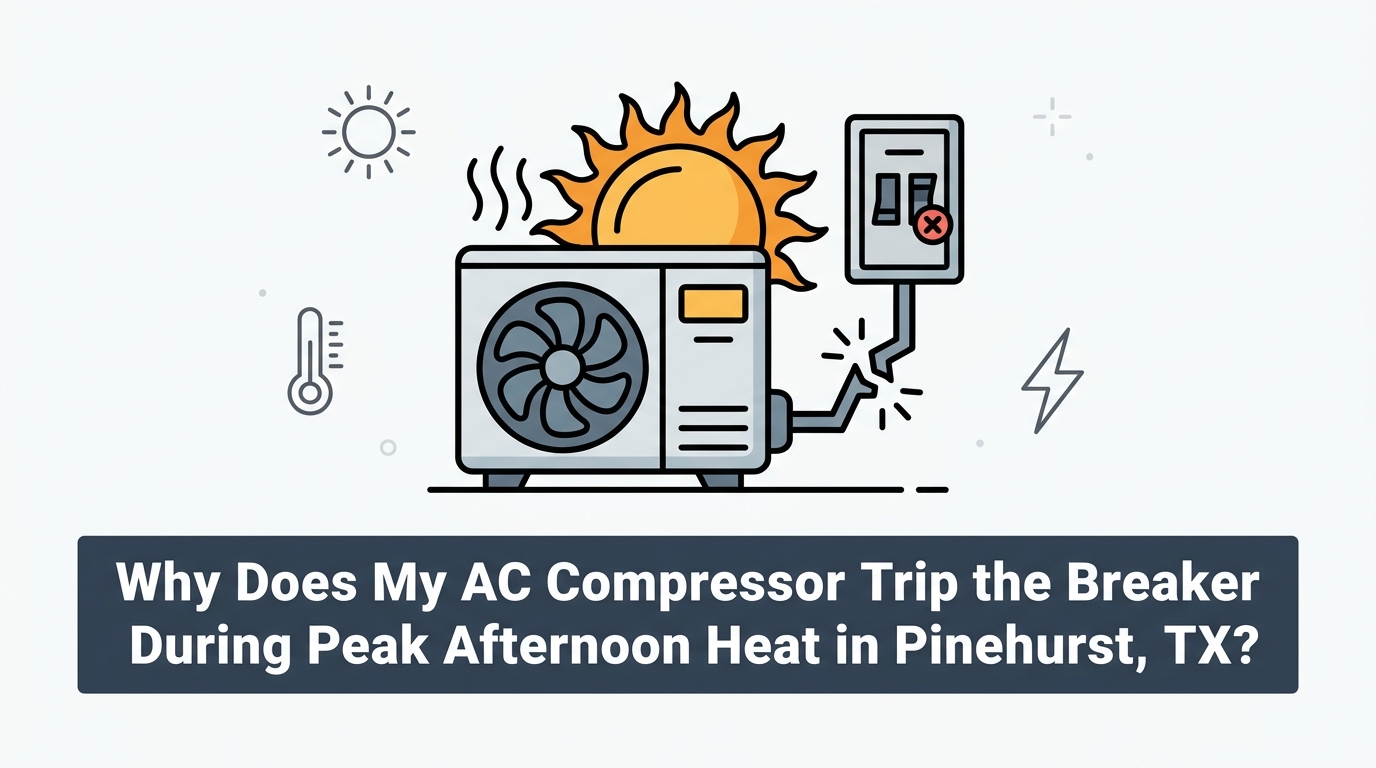
Assessing the Wear on Your AC Contactor After a Brutal Texas Summer
Months of continuous high-load cycling can leave electrical parts scarred and pitted. Catching a worn contactor during a fall tune-up prevents a welded-shut emergency.
You turn on your thermostat the morning of the first real temperature drop, expecting a rush of warm air, but instead, you are met with silence—or worse, a loud grinding noise. The reality of scheduling fall HVAC maintenance before the rush is that waiting for the cold snap means you are already too late. In our region, intense late-summer heat can vanish overnight, leaving homeowners scrambling when their dormant heating systems fail to start.
By booking your comprehensive HVAC services during the September transition before the first Texas cold snap, you completely bypass the logistical nightmare of the industry busy season.
When thousands of residents turn on their heating systems simultaneously, local dispatch boards light up. What would normally be a routine, same-day service request instantly transforms into a week-long wait. The predictable unpredictability of late summer and early fall in Texas means that the weather dictates availability. If you wait for the weather to turn, you are testing a complex mechanical system under the absolute worst conditions.
The Proactive vs. Reactive Difference:
• Proactive (September) — Technician Availability: High; flexible booking times — System Risk Level: Low; system is checked before stress — Service Experience: Unhurried, comprehensive inspection
• Reactive (First Cold Snap) — Technician Availability: Extremely low; days-long waits — System Risk Level: High; risk of sudden component failure — Service Experience: Emergency triage, focused only on the immediate fix
A typical pattern we see is that homeowners assume a system that cooled well in August will automatically heat well in November. This assumption ignores the mechanical reality of how these systems operate. Making the decision to be proactive while the weather is still warm is the single most effective way to protect your home's comfort.
Our local climate does not offer a gentle, gradual transition into autumn. For homes in Pinehurst TX and the greater Houston metro area, the shift is often violent and abrupt. This phenomenon, known as "weather whiplash," places an immense amount of mechanical stress on climate control systems. Unlike regions up north where systems get weeks of mild weather to ease into the heating season, our equipment is forced to pivot from peak cooling to sudden heating almost overnight.
This abrupt shift is especially hard on heat pump systems, which handle both cooling and heating loads year-round. The internal reversing valve, which dictates the flow of refrigerant to switch the system from cooling to heating, can easily stick or fail if it has not been tested and lubricated after a long summer.
Your air conditioning system has just finished running a marathon. Through months of relentless cooling demand, your equipment has accumulated significant wear and tear.
• Capacitor strain: Electrical components that have been running at maximum capacity all summer are often operating on borrowed time by early fall.
• Filter saturation: Months of circulating humid, dusty summer air leaves filters heavily clogged, restricting airflow and forcing blower motors to work harder.
• Condensate buildup: Drain lines often accumulate algae and debris during the humid summer, which can dry out and form hard clogs as the seasons change.
Deferred summer stress almost always manifests as fall mechanical failures. The components are fatigued, and without professional intervention to clean, calibrate, and restore them, they are highly vulnerable to breaking down.
When a sudden cold front hits, the physical impact on your dormant heating components is severe. A rapid temperature drop of twenty to thirty degrees causes metal components to contract quickly. When you fire up the furnace, those same components are suddenly subjected to intense heat, causing rapid expansion.
This thermal shock is exactly why the first operational cycle is the most dangerous for an unmaintained system. Cracked heat exchangers, blown fuses, and seized blower motors are incredibly common during this specific window. The system simply cannot handle the extreme pivot without prior preparation.
To truly understand why scheduling early is so critical, you have to look behind the curtain at how local service companies operate during seasonal transitions. The September transition before the first Texas cold snap represents a unique logistical bottleneck in the HVAC industry.
Local service fleets are finite. There are only so many certified technicians available in the region. When the weather is mild, dispatchers can easily route technicians for thorough maintenance visits. But when the weather turns, the mathematical reality of technician availability versus sudden, region-wide demand spikes creates an unavoidable backlog.
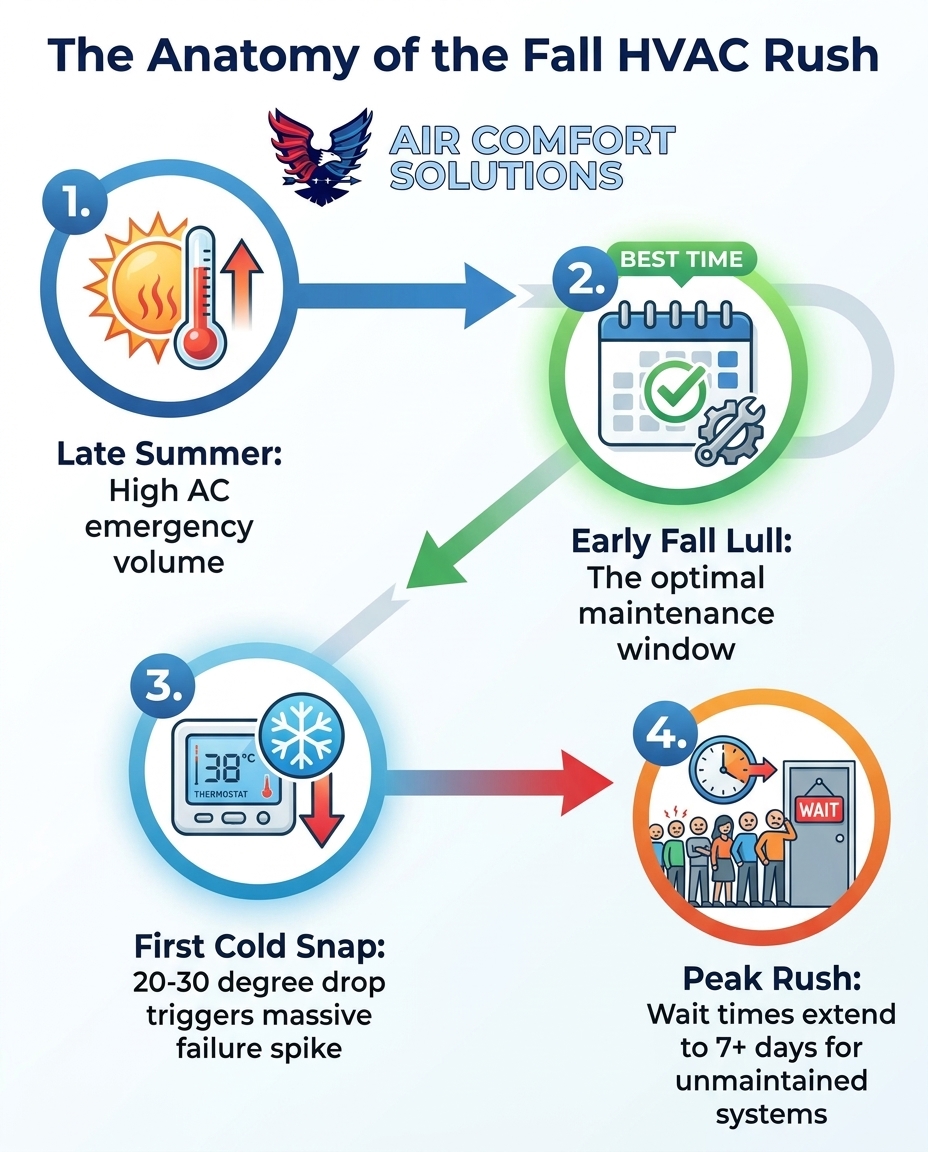
During the chaotic transition weeks of early fall, local service companies face a dual threat. Technicians are still being dispatched to handle late-summer AC burnouts for homes that are running their cooling systems during unseasonably warm afternoons. At the exact same time, the early heating calls begin pouring in from residents experiencing cold mornings.
This overlap stretches service fleets to their absolute limits. A technician might spend the morning diagnosing a failed furnace and the afternoon replacing a burnt-out AC compressor. This dual demand means that standard service windows disappear entirely.
Once the rush begins, dispatchers are forced to switch to emergency triage mode. In the HVAC industry, triage means that critical situations take absolute precedence over routine calls.
1. Vulnerable populations first: Emergency no-heat calls for the elderly, families with infants, or individuals with medical conditions go to the front of the line.
2. Complete system failures second: Homes with zero climate control are prioritized next.
3. Minor repairs third: Strange noises or mild inefficiencies are pushed down the board.
4. Routine tune-ups last: If you call for a tune-up during the rush, you will be scheduled weeks out.
Proactive scheduling bypasses this entire logistical bottleneck. By getting on the board early, you guarantee your spot before the triage system ever goes into effect.
Data from the Department of Energy (DOE) and Energy Star indicates that routine maintenance prevents up to 95% of unexpected breakdowns. This is not just a general statistic; it is deeply rooted in the science of system dormancy. When a heating system sits idle for six to eight months in Pinehurst TX and the greater Houston metro area, several hidden risks develop.
The Science of System Dormancy:
• Dust accumulation: Over the long summer, a thick layer of dust settles over the heat exchanger, burners, and electrical contacts. When the system fires up for the first time, this dust burns off. While a brief burning smell is normal, heavy accumulation can insulate the sensors, causing the system to short-cycle or fail to ignite entirely.
• Dried lubrication: Blower motor bearings and moving parts require constant lubrication to operate smoothly. During months of inactivity, this lubrication can dry out or become gummy. Firing up a dry motor creates immense friction, which can burn out the motor within the first few hours of use.
• Stiffened belts: In older systems, rubber belts that drive the blower fan can become stiff and brittle while sitting idle. The sudden torque of the first startup can easily snap a brittle belt.
• Loose electrical connections: The constant vibration of the AC running all summer, combined with temperature fluctuations in the attic or utility closet, can cause electrical connections to loosen. A loose wire on a heating element is a major failure point.
Firing up a furnace or heating element that has sat idle without a professional inspection is a gamble. A licensed technician knows exactly how to test these components safely, clean the sensitive sensors, and re-lubricate the moving parts. Attempting to clean internal combustion components yourself is highly dangerous and should never be done without proper training and licensing. Connecting these mechanical realities back to the core decision of booking early shows exactly why the first cycle is so critical.
Timing is everything when it comes to home maintenance. The September transition before the first Texas cold snap provides a brief, critical lull that serves as the ultimate scheduling sweet spot. This is the exact timeframe that guarantees priority service and optimal technician focus.
The Fall HVAC Timeline:
• August — Industry Status: Peak AC emergency season — Ideal Action for Homeowners: Focus on keeping current cooling running
• September — Industry Status: The Sweet Spot (Brief Lull) — Ideal Action for Homeowners: Schedule proactive heating maintenance
• October — Industry Status: Transition begins; first cold fronts approach — Ideal Action for Homeowners: Final window before wait times increase
• November — Industry Status: Peak heating emergency season begins — Ideal Action for Homeowners: Expect triage dispatching and long waits
Booking during this specific window ensures technicians have the time to perform thorough, unhurried inspections. When a technician is not rushing to get to ten other emergency no-heat calls, they can take the time to deeply analyze your system's performance, calibrate the thermostat, and optimize your airflow. Following a structured Texas AC maintenance plan guide during this lull sets your home up for success.
Savvy homeowners use this timeframe as a strategic advantage. The peace of mind that comes from knowing the system is fully prepped before the weather demands it is invaluable. You won't be anxiously watching the weather forecast, wondering if your furnace will actually turn on when you need it most.
Navigating extreme weather shifts requires partnering with a team that actually understands the local environment. National call centers simply do not grasp how quickly the weather turns in Pinehurst TX and the greater Houston metro area. A sudden drop in temperature might barely register on a national weather map, but locally, it changes everything about how homes operate.
Because Air Comfort Solutions has a deep understanding of the area's unique seasonal shifts, we prioritize timely service for our local residents. Establishing a service relationship early with a dedicated Pinehurst HVAC service team guarantees that you have a trusted partner when emergencies eventually arise.
Local operational knowledge matters. A technician who works in your specific neighborhood understands the common building styles, the typical ductwork layouts, and the specific ways high humidity impacts local hardware. They know what to look for because they see it every single day. By securing your spot on the schedule now, you are locking in priority status with a team that is uniquely equipped to prepare your system for the specific demands of our regional climate. The seasonal window is closing quickly, and taking action now is the best way to protect your investment.
When is the best time to schedule fall HVAC maintenance?
The ideal time is during the September transition before the first Texas cold snap. Scheduling during this brief late-summer lull ensures you bypass the massive wait times that occur when the first cold front hits and everyone turns on their heaters at once.
Why are HVAC wait times so long in the winter?
Wait times skyrocket because sudden temperature drops cause thousands of unmaintained dormant systems to fail simultaneously. Dispatchers are forced to use emergency triage, prioritizing vulnerable populations and complete system failures over routine calls, which pushes standard appointments weeks out.
Do I really need fall HVAC maintenance if my system ran fine all summer?
Yes, because your heating and cooling components operate differently. A system that cooled perfectly all summer has accumulated significant wear and tear, and the heating components have sat dormant and gathered dust. A professional inspection ensures the transition between modes is safe and efficient.
What month is considered the start of the HVAC busy season?
In our region, the fall busy season typically kicks off in late October or early November, exactly when the first major cold front pushes through. Once the overnight temperatures drop significantly, local service boards fill up almost instantly.
How does a sudden cold snap affect an unmaintained heating system?
A rapid drop in temperature causes metal components to contract, and firing up the furnace causes rapid expansion. This "thermal shock" on an unmaintained system with dried lubrication and dusty sensors frequently leads to cracked heat exchangers, blown blower motors, and short-cycling.
Understanding the industry rush is the key to avoiding it. The mechanical stress of weather whiplash, combined with the logistical realities of local dispatch boards, makes waiting for the first cold front a highly risky strategy. Proactive scheduling is not just about checking a box; it is about ensuring your equipment is safe, efficient, and ready to perform.
The peace of mind that comes from knowing your system is fully prepared for whatever the weather brings is worth the early phone call. For residents in Pinehurst TX and the greater Houston metro area, securing your spot on the schedule now means you won't be left waiting in the cold. Ensure your home remains a comfortable sanctuary by enrolling in a comprehensive HVAC maintenance plan today, and rest easy knowing your system is ready for the season ahead.


Zane came out and did an amazing job! Super friendly, honest and transparent about the work that needed to be done. This is my second time working with Air Comfort Solutions and they’re my go to for HVAC services. Highly recommend.
God's AMAZING grace sent us Robert and Zane. We have been without air in this Texas heat for six weeks and four days. We've had a few contractors give us quotes all trying to upsell when we're at a low point. But not the guys at Air Comfort Solutions. They came in assessed our situation, gave us honest feedback, and showed us the issues as they proceeded with the assessment for clear understanding. We highly recommend them for their professionalism, quality products, and fair pricing. We hands down support them for all the work they do 💯 %.
Robert and Zane gone above and beyond to make the process easy and affordable.
Would definitely recommend!!
I’m writing this review to let everyone know that Air Comfort Solutions is the company to work with. I know the owner ( Robert) for several years now. He has been taking care of my residential and business work orders. Robert is professional, knowledgeable and will save you money. I just want to thank Robert for great job you have been doing for me.