Why Your House Feels Muggy Even When the AC Is Running
If you're dealing with high humidity inside house even with ac running, you're not alone — and the fix usually comes down to one of a handful of common causes.
Quick Answer: Why Is My House Still Humid With the AC On?
• Oversized AC unit — What's Happening: Cools too fast, shuts off before removing moisture (short cycling)
• Fan set to "ON" — What's Happening: Blows moisture from coils back into your air between cooling cycles
• Dirty air filter or coils — What's Happening: Blocks airflow, preventing effective dehumidification
• Low refrigerant — What's Happening: Coil doesn't get cold enough to condense moisture out of the air
• Leaky ductwork — What's Happening: Pulls in hot, humid air from attics or unconditioned spaces
• Clogged condensate drain — What's Happening: Backed-up water stays in the system instead of draining outside
Here's the thing most homeowners don't realize: your AC has two jobs. It cools the air and removes moisture from it. When the temperature drops but the air still feels thick and sticky, that second job isn't getting done.
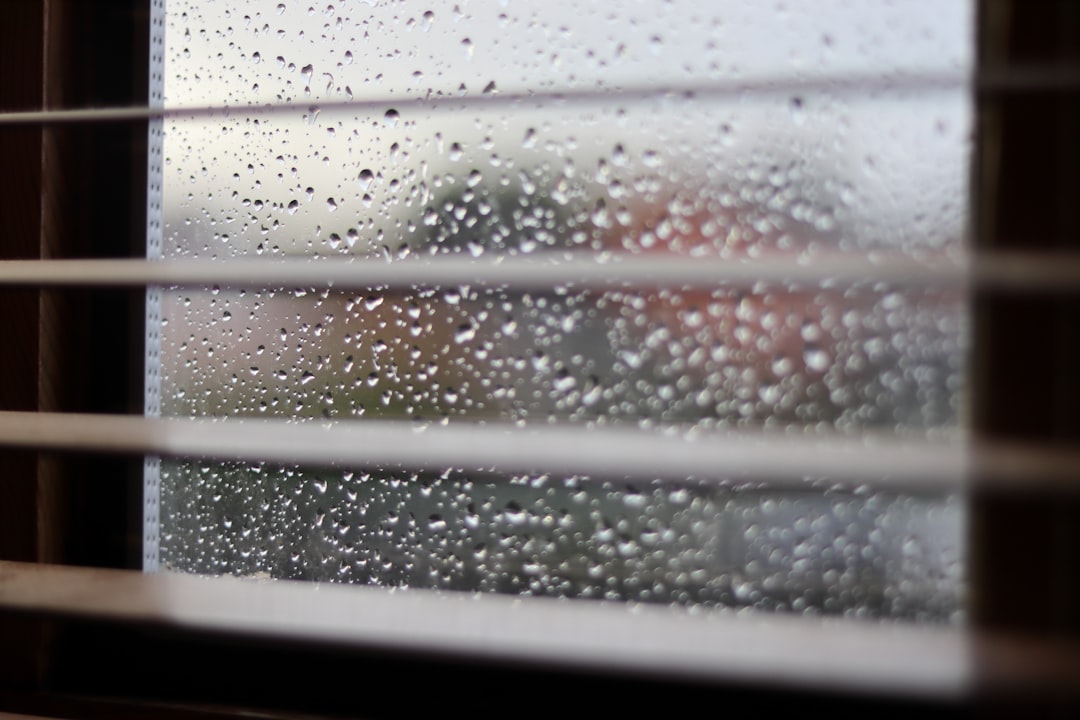
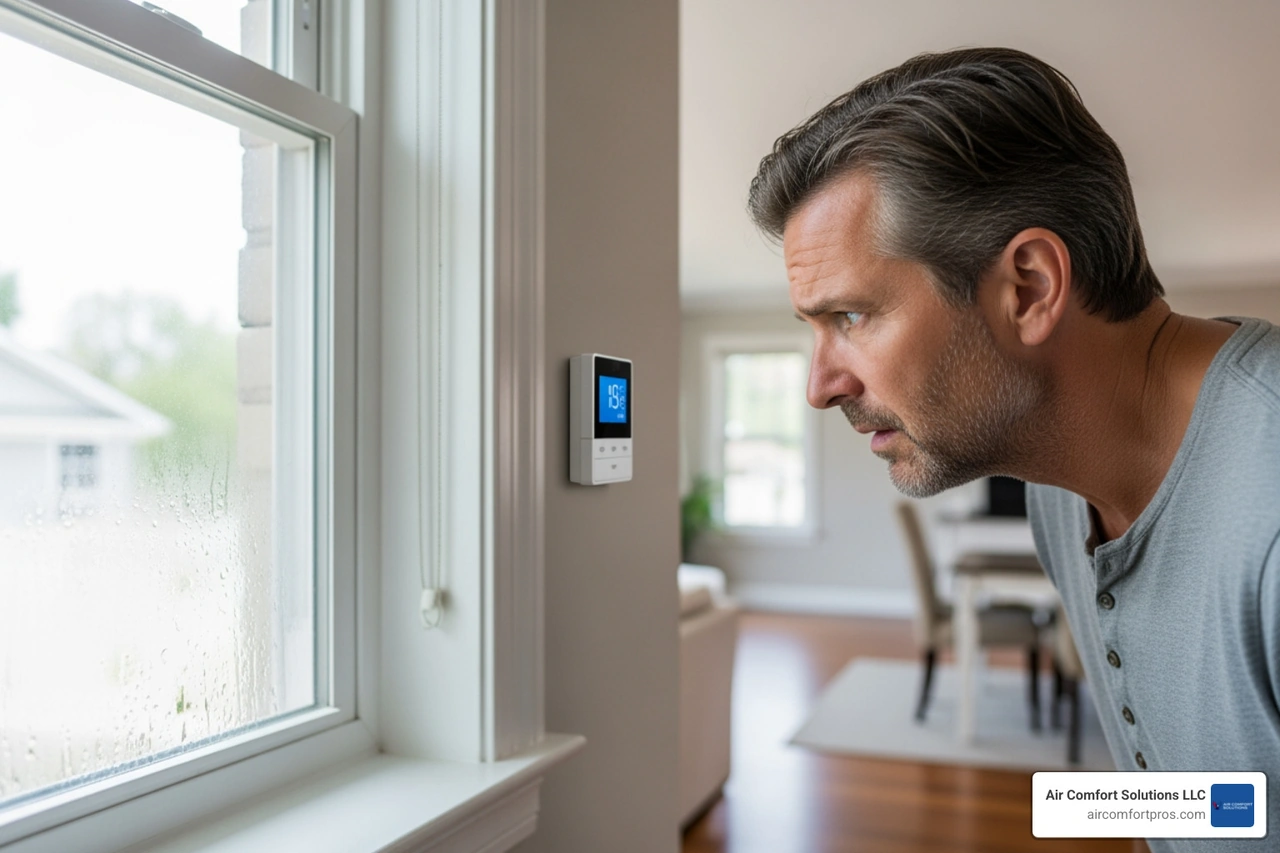
Picture this — your thermostat reads a perfectly comfortable 72°F, but your living room still feels like an invisible marsh. Your skin feels clammy. The air feels heavy. That's not a temperature problem. That's a humidity problem. And in Pinehurst, TX, where summer outdoor humidity regularly climbs into the 80s and 90s, a system that can't keep up with moisture removal makes life genuinely miserable.
The good news is that most causes are diagnosable and fixable — once you know where to look.
Understanding High Humidity Inside House Even With AC Running
To solve the mystery of the "72-degree swamp," we first have to understand what "comfortable" actually means. In May 2026, as we face another humid Texas spring, many homeowners in Harris County are noticing that the temperature on the wall doesn't tell the whole story.
The Comfort Zone: 30–50% Relative Humidity
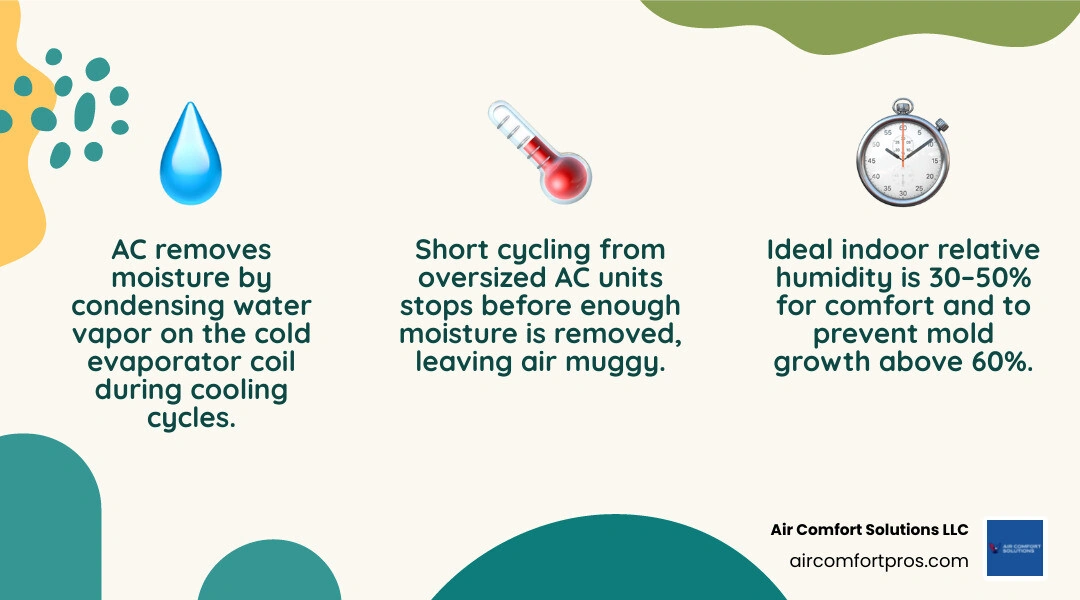
According to the EPA and ASHRAE, the ideal indoor relative humidity level is between 30% and 50%. Once that number climbs above 60%, your home enters the "Danger Zone." At this level, the air becomes a breeding ground for mold, mildew, and dust mites. High humidity doesn't just make you feel sticky; it can cause wood floors to warp, paint to peel, and wallpaper to bubble.
How Your AC Dehumidifies: The Science of the Sweat
Think of a cold glass of iced tea on a porch in Pinehurst. Within minutes, beads of water form on the outside of the glass. This is condensation. Your air conditioner works on the exact same principle.
As your system pulls warm, moist air from your home, it passes it over a freezing-cold evaporator coil. This coil acts like that glass of tea; it hits the "dew point," causing water vapor in the air to condense into liquid droplets. This liquid then drips into a drain pan and is sent outside. If your system is working correctly, it should be removing several pints of water every hour. If it's not, you're left with high humidity inside house even with ac running.
The Heat Index Impact
High humidity makes a room feel warmer than it actually is because it interferes with your body's natural cooling mechanism: sweat. When the air is saturated with moisture, your sweat can't evaporate, which "tricks" your brain into thinking the room is hot, even if the AC is blasting. To Address High Humidity Despite Running AC, we have to look beyond the temperature setting.
Common Mechanical Culprits for Poor Dehumidification
When your home feels like a tropical rainforest, the issue is often mechanical. An air conditioner needs time and proper airflow to effectively wring the water out of the air.
The Importance of Run Time
Dehumidification isn't instantaneous. An AC system generally needs to run for 10 to 15 minutes continuously before the evaporator coil reaches a steady state of moisture removal. If your system turns on and off in 5-minute bursts, it never has the chance to actually dry out your air.
• Duration — Short Cycling (Bad): 5–8 minutes — Full Cooling Cycle (Good): 15–20+ minutes
• Cooling — Short Cycling (Bad): Rapid temperature drop — Full Cooling Cycle (Good): Gradual, even cooling
• Humidity — Short Cycling (Bad): Stays high (clammy) — Full Cooling Cycle (Good): Drops to 30–50% range
• Efficiency — Short Cycling (Bad): Low (high wear and tear) — Full Cooling Cycle (Good): High (optimal SEER performance)
Airflow and Maintenance Issues
If your air is moving too fast or too slow, dehumidification fails.
• Dirty Air Filters: A clogged filter restricts airflow. This can cause the evaporator coil to get too cold and eventually freeze over. A frozen coil can't absorb heat or moisture. We recommend checking your filters every 30 days during the peak Texas summer.
• Low Refrigerant: If your system has a leak, the coil won't get cold enough to reach the dew point. You might feel "cool-ish" air, but the moisture stays in the gas phase, leaving you sticky.
• Clogged Drains: If your condensate drain line is blocked, that water has nowhere to go. In some cases, it can even evaporate back into the system's airflow. If you see water pooling, you should check What to Do When Your AC is Leaking Water immediately.
To prevent these issues, regular professional check-ups are vital. You can learn more about what happens during a visit in our AC Maintenance Visit Complete Guide.
Why an Oversized Unit Causes High Humidity Inside House Even With AC Running
In the HVAC world, "bigger" is definitely not "better." Many homes in the Magnolia and Tomball areas suffer from oversized AC units.
When a unit is too large for the square footage (meaning it wasn't sized using a proper Manual J load calculation), it performs what we call "short cycling." It blasts the house with cold air, hits the target temperature in five minutes, and shuts off. Because it didn't run long enough to remove moisture, the temperature drops to 72°F, but the humidity stays at 65%. This is the primary reason for that "cold but clammy" feeling.
The Impact of Dirty Coils and Maintenance Neglect
Dust is the enemy of dehumidification. When dust builds up on your evaporator coils, it acts as an insulator. This prevents the refrigerant from efficiently absorbing heat and moisture from the air. Not only does this leave you humid, but it also forces your system to work harder, shortening its lifespan. If you Resolve Poor Airflow From AC Vents, you often find that a thorough coil cleaning was the missing piece of the puzzle.
Thermostat Settings and Home Sealing Issues
Sometimes, the problem isn't the machinery itself, but how it's being used or how the home is built.
Fan "ON" vs. "AUTO" Mode
This is one of the most common mistakes we see in Pinehurst homes. Your thermostat has a fan setting that can be toggled between "ON" and "AUTO."
• AUTO: The fan only runs when the AC is actively cooling.
• ON: The fan runs 24/7, regardless of whether the compressor is running.
When the fan is set to "ON," it continues to blow air over the wet evaporator coil even after the cooling cycle ends. This causes the moisture that was just removed to evaporate right back into your home's air supply! Always keep your fan set to AUTO to ensure proper moisture control. Understanding How Humidity Affects Your AC Performance starts with mastering your thermostat settings.
Negative Air Pressure and Infiltration
Your home should be a sealed envelope. However, if you have leaky ductwork—especially in a hot Texas attic—your system can create "negative pressure." This acts like a vacuum, sucking in hot, humid outdoor air through cracks in windows, doors, and even electrical outlets.
How Leaky Ducts Lead to High Humidity Inside House Even With AC Running
If your return ducts have leaks in the attic, they aren't just pulling in air from your living room; they are pulling in 110-degree, 90% humidity air from your attic. This overwhelms the AC's ability to dehumidify. Proper duct sealing is essential for maintaining comfort in Harris County homes.
Professional Solutions for Lasting Comfort in Pinehurst
If DIY fixes like changing the filter and adjusting the thermostat don't work, it’s time to look at professional upgrades.
Whole-Home Dehumidifiers
In the Gulf Coast climate, a standard AC unit sometimes simply cannot keep up with the latent heat (moisture). A whole-home dehumidifier is the "gold standard" solution. These units integrate directly into your existing ductwork and work alongside your AC to pull gallons of water out of the air every day. Check out our Indoor Air Quality Services to see how these systems can transform your home's feel.
Variable-Speed Compressors
Older AC units are either "on" or "off." Modern variable-speed systems can ramp up or down. On a humid but mild day, a variable-speed system will run at a lower capacity for a longer period. This long, slow run time is perfect for wringing every drop of moisture out of the air, providing much better humidity control than a standard unit.
Addressing Odors and Air Quality
Persistent high humidity often leads to a "dirty sock" smell. If you notice this, read about the 6 Reasons Your AC Has a Musty Smell to identify if mold is already growing in your system.
Frequently Asked Questions about Indoor Humidity
What is the ideal indoor humidity level for Texas homes?
For most homes in the Pinehurst and Houston area, we recommend a range of 30% to 50%. Staying below 50% keeps dust mite populations low and prevents mold growth. If you go below 30%, you might experience dry skin or static electricity, but in our climate, the struggle is almost always keeping it below 60%.
Why does my AC feel cold but the air is still muggy?
This happens when your system provides enough "sensible cooling" (lowering the temperature) but not enough "latent cooling" (removing moisture). This is usually caused by short cycling from an oversized unit or the fan being set to the "ON" position.
Can a new AC system fix my humidity problems?
Yes, but only if it is sized correctly. A new, high-efficiency system with variable-speed technology is significantly better at humidity control than older models. However, even a brand-new system will fail if it's too large for the house or if the ductwork is leaking.
Conclusion
Living with high humidity inside house even with ac running is more than just an inconvenience—it’s a threat to your home’s structure and your family’s health. Whether the culprit is an oversized unit, a simple thermostat setting, or leaky ducts, you don't have to settle for a "clammy" home.
At Air Comfort Solutions LLC, we have over 35 years of experience helping our neighbors in Pinehurst, Tomball, and The Woodlands breathe easier. Our certified technicians specialize in diagnosing complex humidity issues and providing honest, upfront solutions that work for the unique Texas climate.
Don't let your home feel like a swamp for another day. Schedule Professional HVAC Services in Pinehurst with us today and get back to the crisp, dry comfort you deserve.
Why Your House Feels Muggy Even When the AC Is Running
If you're dealing with high humidity inside house even with ac running, you're not alone — and the fix usually comes down to one of a handful of common causes.
Quick Answer: Why Is My House Still Humid With the AC On?
| Cause | What's Happening |
|---|
| Oversized AC unit | Cools too fast, shuts off before removing moisture (short cycling) |
| Fan set to "ON" | Blows moisture from coils back into your air between cooling cycles |
| Dirty air filter or coils | Blocks airflow, preventing effective dehumidification |
| Low refrigerant | Coil doesn't get cold enough to condense moisture out of the air |
| Leaky ductwork | Pulls in hot, humid air from attics or unconditioned spaces |
| Clogged condensate drain | Backed-up water stays in the system instead of draining outside |
Here's the thing most homeowners don't realize: your AC has two jobs. It cools the air and removes moisture from it. When the temperature drops but the air still feels thick and sticky, that second job isn't getting done.
Picture this — your thermostat reads a perfectly comfortable 72°F, but your living room still feels like an invisible marsh. Your skin feels clammy. The air feels heavy. That's not a temperature problem. That's a humidity problem. And in Pinehurst, TX, where summer outdoor humidity regularly climbs into the 80s and 90s, a system that can't keep up with moisture removal makes life genuinely miserable.
The good news is that most causes are diagnosable and fixable — once you know where to look.
Understanding High Humidity Inside House Even With AC Running
To solve the mystery of the "72-degree swamp," we first have to understand what "comfortable" actually means. In May 2026, as we face another humid Texas spring, many homeowners in Harris County are noticing that the temperature on the wall doesn't tell the whole story.
The Comfort Zone: 30–50% Relative Humidity
According to the EPA and ASHRAE, the ideal indoor relative humidity level is between 30% and 50%. Once that number climbs above 60%, your home enters the "Danger Zone." At this level, the air becomes a breeding ground for mold, mildew, and dust mites. High humidity doesn't just make you feel sticky; it can cause wood floors to warp, paint to peel, and wallpaper to bubble.
How Your AC Dehumidifies: The Science of the Sweat
Think of a cold glass of iced tea on a porch in Pinehurst. Within minutes, beads of water form on the outside of the glass. This is condensation. Your air conditioner works on the exact same principle.
As your system pulls warm, moist air from your home, it passes it over a freezing-cold evaporator coil. This coil acts like that glass of tea; it hits the "dew point," causing water vapor in the air to condense into liquid droplets. This liquid then drips into a drain pan and is sent outside. If your system is working correctly, it should be removing several pints of water every hour. If it's not, you're left with high humidity inside house even with ac running.
The Heat Index Impact
High humidity makes a room feel warmer than it actually is because it interferes with your body's natural cooling mechanism: sweat. When the air is saturated with moisture, your sweat can't evaporate, which "tricks" your brain into thinking the room is hot, even if the AC is blasting. To Address High Humidity Despite Running AC, we have to look beyond the temperature setting.
Common Mechanical Culprits for Poor Dehumidification
When your home feels like a tropical rainforest, the issue is often mechanical. An air conditioner needs time and proper airflow to effectively wring the water out of the air.
The Importance of Run Time
Dehumidification isn't instantaneous. An AC system generally needs to run for 10 to 15 minutes continuously before the evaporator coil reaches a steady state of moisture removal. If your system turns on and off in 5-minute bursts, it never has the chance to actually dry out your air.
| Feature | Short Cycling (Bad) | Full Cooling Cycle (Good) |
|---|
| Duration | 5–8 minutes | 15–20+ minutes |
| Cooling | Rapid temperature drop | Gradual, even cooling |
| Humidity | Stays high (clammy) | Drops to 30–50% range |
| Efficiency | Low (high wear and tear) | High (optimal SEER performance) |
Airflow and Maintenance Issues
If your air is moving too fast or too slow, dehumidification fails.
- Dirty Air Filters: A clogged filter restricts airflow. This can cause the evaporator coil to get too cold and eventually freeze over. A frozen coil can't absorb heat or moisture. We recommend checking your filters every 30 days during the peak Texas summer.
- Low Refrigerant: If your system has a leak, the coil won't get cold enough to reach the dew point. You might feel "cool-ish" air, but the moisture stays in the gas phase, leaving you sticky.
- Clogged Drains: If your condensate drain line is blocked, that water has nowhere to go. In some cases, it can even evaporate back into the system's airflow. If you see water pooling, you should check What to Do When Your AC is Leaking Water immediately.
To prevent these issues, regular professional check-ups are vital. You can learn more about what happens during a visit in our AC Maintenance Visit Complete Guide.
Why an Oversized Unit Causes High Humidity Inside House Even With AC Running
In the HVAC world, "bigger" is definitely not "better." Many homes in the Magnolia and Tomball areas suffer from oversized AC units.
When a unit is too large for the square footage (meaning it wasn't sized using a proper Manual J load calculation), it performs what we call "short cycling." It blasts the house with cold air, hits the target temperature in five minutes, and shuts off. Because it didn't run long enough to remove moisture, the temperature drops to 72°F, but the humidity stays at 65%. This is the primary reason for that "cold but clammy" feeling.
The Impact of Dirty Coils and Maintenance Neglect
Dust is the enemy of dehumidification. When dust builds up on your evaporator coils, it acts as an insulator. This prevents the refrigerant from efficiently absorbing heat and moisture from the air. Not only does this leave you humid, but it also forces your system to work harder, shortening its lifespan. If you Resolve Poor Airflow From AC Vents, you often find that a thorough coil cleaning was the missing piece of the puzzle.
Thermostat Settings and Home Sealing Issues
Sometimes, the problem isn't the machinery itself, but how it's being used or how the home is built.
Fan "ON" vs. "AUTO" Mode
This is one of the most common mistakes we see in Pinehurst homes. Your thermostat has a fan setting that can be toggled between "ON" and "AUTO."
- AUTO: The fan only runs when the AC is actively cooling.
- ON: The fan runs 24/7, regardless of whether the compressor is running.
When the fan is set to "ON," it continues to blow air over the wet evaporator coil even after the cooling cycle ends. This causes the moisture that was just removed to evaporate right back into your home's air supply! Always keep your fan set to AUTO to ensure proper moisture control. Understanding How Humidity Affects Your AC Performance starts with mastering your thermostat settings.
Negative Air Pressure and Infiltration
Your home should be a sealed envelope. However, if you have leaky ductwork—especially in a hot Texas attic—your system can create "negative pressure." This acts like a vacuum, sucking in hot, humid outdoor air through cracks in windows, doors, and even electrical outlets.
How Leaky Ducts Lead to High Humidity Inside House Even With AC Running
If your return ducts have leaks in the attic, they aren't just pulling in air from your living room; they are pulling in 110-degree, 90% humidity air from your attic. This overwhelms the AC's ability to dehumidify. Proper duct sealing is essential for maintaining comfort in Harris County homes.
Professional Solutions for Lasting Comfort in Pinehurst
If DIY fixes like changing the filter and adjusting the thermostat don't work, it’s time to look at professional upgrades.
Whole-Home Dehumidifiers
In the Gulf Coast climate, a standard AC unit sometimes simply cannot keep up with the latent heat (moisture). A whole-home dehumidifier is the "gold standard" solution. These units integrate directly into your existing ductwork and work alongside your AC to pull gallons of water out of the air every day. Check out our Indoor Air Quality Services to see how these systems can transform your home's feel.
Variable-Speed Compressors
Older AC units are either "on" or "off." Modern variable-speed systems can ramp up or down. On a humid but mild day, a variable-speed system will run at a lower capacity for a longer period. This long, slow run time is perfect for wringing every drop of moisture out of the air, providing much better humidity control than a standard unit.
Addressing Odors and Air Quality
Persistent high humidity often leads to a "dirty sock" smell. If you notice this, read about the 6 Reasons Your AC Has a Musty Smell to identify if mold is already growing in your system.
Frequently Asked Questions about Indoor Humidity
What is the ideal indoor humidity level for Texas homes?
For most homes in the Pinehurst and Houston area, we recommend a range of 30% to 50%. Staying below 50% keeps dust mite populations low and prevents mold growth. If you go below 30%, you might experience dry skin or static electricity, but in our climate, the struggle is almost always keeping it below 60%.
Why does my AC feel cold but the air is still muggy?
This happens when your system provides enough "sensible cooling" (lowering the temperature) but not enough "latent cooling" (removing moisture). This is usually caused by short cycling from an oversized unit or the fan being set to the "ON" position.
Can a new AC system fix my humidity problems?
Yes, but only if it is sized correctly. A new, high-efficiency system with variable-speed technology is significantly better at humidity control than older models. However, even a brand-new system will fail if it's too large for the house or if the ductwork is leaking.
Conclusion
Living with high humidity inside house even with ac running is more than just an inconvenience—it’s a threat to your home’s structure and your family’s health. Whether the culprit is an oversized unit, a simple thermostat setting, or leaky ducts, you don't have to settle for a "clammy" home.
At Air Comfort Solutions LLC, we have over 35 years of experience helping our neighbors in Pinehurst, Tomball, and The Woodlands breathe easier. Our certified technicians specialize in diagnosing complex humidity issues and providing honest, upfront solutions that work for the unique Texas climate.
Don't let your home feel like a swamp for another day. Schedule Professional HVAC Services in Pinehurst with us today and get back to the crisp, dry comfort you deserve.
Why Your House Feels Muggy Even When the AC Is Running
If you're dealing with high humidity inside house even with ac running, you're not alone — and the fix usually comes down to one of a handful of common causes.
Quick Answer: Why Is My House Still Humid With the AC On?
| Cause | What's Happening |
|---|
| Oversized AC unit | Cools too fast, shuts off before removing moisture (short cycling) |
| Fan set to "ON" | Blows moisture from coils back into your air between cooling cycles |
| Dirty air filter or coils | Blocks airflow, preventing effective dehumidification |
| Low refrigerant | Coil doesn't get cold enough to condense moisture out of the air |
| Leaky ductwork | Pulls in hot, humid air from attics or unconditioned spaces |
| Clogged condensate drain | Backed-up water stays in the system instead of draining outside |
Here's the thing most homeowners don't realize: your AC has two jobs. It cools the air and removes moisture from it. When the temperature drops but the air still feels thick and sticky, that second job isn't getting done.
Picture this — your thermostat reads a perfectly comfortable 72°F, but your living room still feels like an invisible marsh. Your skin feels clammy. The air feels heavy. That's not a temperature problem. That's a humidity problem. And in Pinehurst, TX, where summer outdoor humidity regularly climbs into the 80s and 90s, a system that can't keep up with moisture removal makes life genuinely miserable.
The good news is that most causes are diagnosable and fixable — once you know where to look.
Understanding High Humidity Inside House Even With AC Running
To solve the mystery of the "72-degree swamp," we first have to understand what "comfortable" actually means. In May 2026, as we face another humid Texas spring, many homeowners in Harris County are noticing that the temperature on the wall doesn't tell the whole story.
The Comfort Zone: 30–50% Relative Humidity
According to the EPA and ASHRAE, the ideal indoor relative humidity level is between 30% and 50%. Once that number climbs above 60%, your home enters the "Danger Zone." At this level, the air becomes a breeding ground for mold, mildew, and dust mites. High humidity doesn't just make you feel sticky; it can cause wood floors to warp, paint to peel, and wallpaper to bubble.
How Your AC Dehumidifies: The Science of the Sweat
Think of a cold glass of iced tea on a porch in Pinehurst. Within minutes, beads of water form on the outside of the glass. This is condensation. Your air conditioner works on the exact same principle.
As your system pulls warm, moist air from your home, it passes it over a freezing-cold evaporator coil. This coil acts like that glass of tea; it hits the "dew point," causing water vapor in the air to condense into liquid droplets. This liquid then drips into a drain pan and is sent outside. If your system is working correctly, it should be removing several pints of water every hour. If it's not, you're left with high humidity inside house even with ac running.
The Heat Index Impact
High humidity makes a room feel warmer than it actually is because it interferes with your body's natural cooling mechanism: sweat. When the air is saturated with moisture, your sweat can't evaporate, which "tricks" your brain into thinking the room is hot, even if the AC is blasting. To Address High Humidity Despite Running AC, we have to look beyond the temperature setting.
Common Mechanical Culprits for Poor Dehumidification
When your home feels like a tropical rainforest, the issue is often mechanical. An air conditioner needs time and proper airflow to effectively wring the water out of the air.
The Importance of Run Time
Dehumidification isn't instantaneous. An AC system generally needs to run for 10 to 15 minutes continuously before the evaporator coil reaches a steady state of moisture removal. If your system turns on and off in 5-minute bursts, it never has the chance to actually dry out your air.
| Feature | Short Cycling (Bad) | Full Cooling Cycle (Good) |
|---|
| Duration | 5–8 minutes | 15–20+ minutes |
| Cooling | Rapid temperature drop | Gradual, even cooling |
| Humidity | Stays high (clammy) | Drops to 30–50% range |
| Efficiency | Low (high wear and tear) | High (optimal SEER performance) |
Airflow and Maintenance Issues
If your air is moving too fast or too slow, dehumidification fails.
- Dirty Air Filters: A clogged filter restricts airflow. This can cause the evaporator coil to get too cold and eventually freeze over. A frozen coil can't absorb heat or moisture. We recommend checking your filters every 30 days during the peak Texas summer.
- Low Refrigerant: If your system has a leak, the coil won't get cold enough to reach the dew point. You might feel "cool-ish" air, but the moisture stays in the gas phase, leaving you sticky.
- Clogged Drains: If your condensate drain line is blocked, that water has nowhere to go. In some cases, it can even evaporate back into the system's airflow. If you see water pooling, you should check What to Do When Your AC is Leaking Water immediately.
To prevent these issues, regular professional check-ups are vital. You can learn more about what happens during a visit in our AC Maintenance Visit Complete Guide.
Why an Oversized Unit Causes High Humidity Inside House Even With AC Running
In the HVAC world, "bigger" is definitely not "better." Many homes in the Magnolia and Tomball areas suffer from oversized AC units.
When a unit is too large for the square footage (meaning it wasn't sized using a proper Manual J load calculation), it performs what we call "short cycling." It blasts the house with cold air, hits the target temperature in five minutes, and shuts off. Because it didn't run long enough to remove moisture, the temperature drops to 72°F, but the humidity stays at 65%. This is the primary reason for that "cold but clammy" feeling.
The Impact of Dirty Coils and Maintenance Neglect
Dust is the enemy of dehumidification. When dust builds up on your evaporator coils, it acts as an insulator. This prevents the refrigerant from efficiently absorbing heat and moisture from the air. Not only does this leave you humid, but it also forces your system to work harder, shortening its lifespan. If you Resolve Poor Airflow From AC Vents, you often find that a thorough coil cleaning was the missing piece of the puzzle.
Thermostat Settings and Home Sealing Issues
Sometimes, the problem isn't the machinery itself, but how it's being used or how the home is built.
Fan "ON" vs. "AUTO" Mode
This is one of the most common mistakes we see in Pinehurst homes. Your thermostat has a fan setting that can be toggled between "ON" and "AUTO."
- AUTO: The fan only runs when the AC is actively cooling.
- ON: The fan runs 24/7, regardless of whether the compressor is running.
When the fan is set to "ON," it continues to blow air over the wet evaporator coil even after the cooling cycle ends. This causes the moisture that was just removed to evaporate right back into your home's air supply! Always keep your fan set to AUTO to ensure proper moisture control. Understanding How Humidity Affects Your AC Performance starts with mastering your thermostat settings.
Negative Air Pressure and Infiltration
Your home should be a sealed envelope. However, if you have leaky ductwork—especially in a hot Texas attic—your system can create "negative pressure." This acts like a vacuum, sucking in hot, humid outdoor air through cracks in windows, doors, and even electrical outlets.
How Leaky Ducts Lead to High Humidity Inside House Even With AC Running
If your return ducts have leaks in the attic, they aren't just pulling in air from your living room; they are pulling in 110-degree, 90% humidity air from your attic. This overwhelms the AC's ability to dehumidify. Proper duct sealing is essential for maintaining comfort in Harris County homes.
Professional Solutions for Lasting Comfort in Pinehurst
If DIY fixes like changing the filter and adjusting the thermostat don't work, it’s time to look at professional upgrades.
Whole-Home Dehumidifiers
In the Gulf Coast climate, a standard AC unit sometimes simply cannot keep up with the latent heat (moisture). A whole-home dehumidifier is the "gold standard" solution. These units integrate directly into your existing ductwork and work alongside your AC to pull gallons of water out of the air every day. Check out our Indoor Air Quality Services to see how these systems can transform your home's feel.
Variable-Speed Compressors
Older AC units are either "on" or "off." Modern variable-speed systems can ramp up or down. On a humid but mild day, a variable-speed system will run at a lower capacity for a longer period. This long, slow run time is perfect for wringing every drop of moisture out of the air, providing much better humidity control than a standard unit.
Addressing Odors and Air Quality
Persistent high humidity often leads to a "dirty sock" smell. If you notice this, read about the 6 Reasons Your AC Has a Musty Smell to identify if mold is already growing in your system.
Frequently Asked Questions about Indoor Humidity
What is the ideal indoor humidity level for Texas homes?
For most homes in the Pinehurst and Houston area, we recommend a range of 30% to 50%. Staying below 50% keeps dust mite populations low and prevents mold growth. If you go below 30%, you might experience dry skin or static electricity, but in our climate, the struggle is almost always keeping it below 60%.
Why does my AC feel cold but the air is still muggy?
This happens when your system provides enough "sensible cooling" (lowering the temperature) but not enough "latent cooling" (removing moisture). This is usually caused by short cycling from an oversized unit or the fan being set to the "ON" position.
Can a new AC system fix my humidity problems?
Yes, but only if it is sized correctly. A new, high-efficiency system with variable-speed technology is significantly better at humidity control than older models. However, even a brand-new system will fail if it's too large for the house or if the ductwork is leaking.
Conclusion
Living with high humidity inside house even with ac running is more than just an inconvenience—it’s a threat to your home’s structure and your family’s health. Whether the culprit is an oversized unit, a simple thermostat setting, or leaky ducts, you don't have to settle for a "clammy" home.
At Air Comfort Solutions LLC, we have over 35 years of experience helping our neighbors in Pinehurst, Tomball, and The Woodlands breathe easier. Our certified technicians specialize in diagnosing complex humidity issues and providing honest, upfront solutions that work for the unique Texas climate.
Don't let your home feel like a swamp for another day. Schedule Professional HVAC Services in Pinehurst with us today and get back to the crisp, dry comfort you deserve.
Why Your House Feels Muggy Even When the AC Is Running
If you're dealing with high humidity inside house even with ac running, you're not alone — and the fix usually comes down to one of a handful of common causes.
Quick Answer: Why Is My House Still Humid With the AC On?
| Cause | What's Happening |
|---|
| Oversized AC unit | Cools too fast, shuts off before removing moisture (short cycling) |
| Fan set to "ON" | Blows moisture from coils back into your air between cooling cycles |
| Dirty air filter or coils | Blocks airflow, preventing effective dehumidification |
| Low refrigerant | Coil doesn't get cold enough to condense moisture out of the air |
| Leaky ductwork | Pulls in hot, humid air from attics or unconditioned spaces |
| Clogged condensate drain | Backed-up water stays in the system instead of draining outside |
Here's the thing most homeowners don't realize: your AC has two jobs. It cools the air and removes moisture from it. When the temperature drops but the air still feels thick and sticky, that second job isn't getting done.
Picture this — your thermostat reads a perfectly comfortable 72°F, but your living room still feels like an invisible marsh. Your skin feels clammy. The air feels heavy. That's not a temperature problem. That's a humidity problem. And in Pinehurst, TX, where summer outdoor humidity regularly climbs into the 80s and 90s, a system that can't keep up with moisture removal makes life genuinely miserable.
The good news is that most causes are diagnosable and fixable — once you know where to look.
Understanding High Humidity Inside House Even With AC Running
To solve the mystery of the "72-degree swamp," we first have to understand what "comfortable" actually means. In May 2026, as we face another humid Texas spring, many homeowners in Harris County are noticing that the temperature on the wall doesn't tell the whole story.
The Comfort Zone: 30–50% Relative Humidity
According to the EPA and ASHRAE, the ideal indoor relative humidity level is between 30% and 50%. Once that number climbs above 60%, your home enters the "Danger Zone." At this level, the air becomes a breeding ground for mold, mildew, and dust mites. High humidity doesn't just make you feel sticky; it can cause wood floors to warp, paint to peel, and wallpaper to bubble.
How Your AC Dehumidifies: The Science of the Sweat
Think of a cold glass of iced tea on a porch in Pinehurst. Within minutes, beads of water form on the outside of the glass. This is condensation. Your air conditioner works on the exact same principle.
As your system pulls warm, moist air from your home, it passes it over a freezing-cold evaporator coil. This coil acts like that glass of tea; it hits the "dew point," causing water vapor in the air to condense into liquid droplets. This liquid then drips into a drain pan and is sent outside. If your system is working correctly, it should be removing several pints of water every hour. If it's not, you're left with high humidity inside house even with ac running.
The Heat Index Impact
High humidity makes a room feel warmer than it actually is because it interferes with your body's natural cooling mechanism: sweat. When the air is saturated with moisture, your sweat can't evaporate, which "tricks" your brain into thinking the room is hot, even if the AC is blasting. To Address High Humidity Despite Running AC, we have to look beyond the temperature setting.
Common Mechanical Culprits for Poor Dehumidification
When your home feels like a tropical rainforest, the issue is often mechanical. An air conditioner needs time and proper airflow to effectively wring the water out of the air.
The Importance of Run Time
Dehumidification isn't instantaneous. An AC system generally needs to run for 10 to 15 minutes continuously before the evaporator coil reaches a steady state of moisture removal. If your system turns on and off in 5-minute bursts, it never has the chance to actually dry out your air.
| Feature | Short Cycling (Bad) | Full Cooling Cycle (Good) |
|---|
| Duration | 5–8 minutes | 15–20+ minutes |
| Cooling | Rapid temperature drop | Gradual, even cooling |
| Humidity | Stays high (clammy) | Drops to 30–50% range |
| Efficiency | Low (high wear and tear) | High (optimal SEER performance) |
Airflow and Maintenance Issues
If your air is moving too fast or too slow, dehumidification fails.
- Dirty Air Filters: A clogged filter restricts airflow. This can cause the evaporator coil to get too cold and eventually freeze over. A frozen coil can't absorb heat or moisture. We recommend checking your filters every 30 days during the peak Texas summer.
- Low Refrigerant: If your system has a leak, the coil won't get cold enough to reach the dew point. You might feel "cool-ish" air, but the moisture stays in the gas phase, leaving you sticky.
- Clogged Drains: If your condensate drain line is blocked, that water has nowhere to go. In some cases, it can even evaporate back into the system's airflow. If you see water pooling, you should check What to Do When Your AC is Leaking Water immediately.
To prevent these issues, regular professional check-ups are vital. You can learn more about what happens during a visit in our AC Maintenance Visit Complete Guide.
Why an Oversized Unit Causes High Humidity Inside House Even With AC Running
In the HVAC world, "bigger" is definitely not "better." Many homes in the Magnolia and Tomball areas suffer from oversized AC units.
When a unit is too large for the square footage (meaning it wasn't sized using a proper Manual J load calculation), it performs what we call "short cycling." It blasts the house with cold air, hits the target temperature in five minutes, and shuts off. Because it didn't run long enough to remove moisture, the temperature drops to 72°F, but the humidity stays at 65%. This is the primary reason for that "cold but clammy" feeling.
The Impact of Dirty Coils and Maintenance Neglect
Dust is the enemy of dehumidification. When dust builds up on your evaporator coils, it acts as an insulator. This prevents the refrigerant from efficiently absorbing heat and moisture from the air. Not only does this leave you humid, but it also forces your system to work harder, shortening its lifespan. If you Resolve Poor Airflow From AC Vents, you often find that a thorough coil cleaning was the missing piece of the puzzle.
Thermostat Settings and Home Sealing Issues
Sometimes, the problem isn't the machinery itself, but how it's being used or how the home is built.
Fan "ON" vs. "AUTO" Mode
This is one of the most common mistakes we see in Pinehurst homes. Your thermostat has a fan setting that can be toggled between "ON" and "AUTO."
- AUTO: The fan only runs when the AC is actively cooling.
- ON: The fan runs 24/7, regardless of whether the compressor is running.
When the fan is set to "ON," it continues to blow air over the wet evaporator coil even after the cooling cycle ends. This causes the moisture that was just removed to evaporate right back into your home's air supply! Always keep your fan set to AUTO to ensure proper moisture control. Understanding How Humidity Affects Your AC Performance starts with mastering your thermostat settings.
Negative Air Pressure and Infiltration
Your home should be a sealed envelope. However, if you have leaky ductwork—especially in a hot Texas attic—your system can create "negative pressure." This acts like a vacuum, sucking in hot, humid outdoor air through cracks in windows, doors, and even electrical outlets.
How Leaky Ducts Lead to High Humidity Inside House Even With AC Running
If your return ducts have leaks in the attic, they aren't just pulling in air from your living room; they are pulling in 110-degree, 90% humidity air from your attic. This overwhelms the AC's ability to dehumidify. Proper duct sealing is essential for maintaining comfort in Harris County homes.
Professional Solutions for Lasting Comfort in Pinehurst
If DIY fixes like changing the filter and adjusting the thermostat don't work, it’s time to look at professional upgrades.
Whole-Home Dehumidifiers
In the Gulf Coast climate, a standard AC unit sometimes simply cannot keep up with the latent heat (moisture). A whole-home dehumidifier is the "gold standard" solution. These units integrate directly into your existing ductwork and work alongside your AC to pull gallons of water out of the air every day. Check out our Indoor Air Quality Services to see how these systems can transform your home's feel.
Variable-Speed Compressors
Older AC units are either "on" or "off." Modern variable-speed systems can ramp up or down. On a humid but mild day, a variable-speed system will run at a lower capacity for a longer period. This long, slow run time is perfect for wringing every drop of moisture out of the air, providing much better humidity control than a standard unit.
Addressing Odors and Air Quality
Persistent high humidity often leads to a "dirty sock" smell. If you notice this, read about the 6 Reasons Your AC Has a Musty Smell to identify if mold is already growing in your system.
Frequently Asked Questions about Indoor Humidity
What is the ideal indoor humidity level for Texas homes?
For most homes in the Pinehurst and Houston area, we recommend a range of 30% to 50%. Staying below 50% keeps dust mite populations low and prevents mold growth. If you go below 30%, you might experience dry skin or static electricity, but in our climate, the struggle is almost always keeping it below 60%.
Why does my AC feel cold but the air is still muggy?
This happens when your system provides enough "sensible cooling" (lowering the temperature) but not enough "latent cooling" (removing moisture). This is usually caused by short cycling from an oversized unit or the fan being set to the "ON" position.
Can a new AC system fix my humidity problems?
Yes, but only if it is sized correctly. A new, high-efficiency system with variable-speed technology is significantly better at humidity control than older models. However, even a brand-new system will fail if it's too large for the house or if the ductwork is leaking.
Conclusion
Living with high humidity inside house even with ac running is more than just an inconvenience—it’s a threat to your home’s structure and your family’s health. Whether the culprit is an oversized unit, a simple thermostat setting, or leaky ducts, you don't have to settle for a "clammy" home.
At Air Comfort Solutions LLC, we have over 35 years of experience helping our neighbors in Pinehurst, Tomball, and The Woodlands breathe easier. Our certified technicians specialize in diagnosing complex humidity issues and providing honest, upfront solutions that work for the unique Texas climate.
Don't let your home feel like a swamp for another day. Schedule Professional HVAC Services in Pinehurst with us today and get back to the crisp, dry comfort you deserve.
Why Your House Feels Muggy Even When the AC Is Running
If you're dealing with high humidity inside house even with ac running, you're not alone — and the fix usually comes down to one of a handful of common causes.
Quick Answer: Why Is My House Still Humid With the AC On?
| Cause | What's Happening |
|---|
| Oversized AC unit | Cools too fast, shuts off before removing moisture (short cycling) |
| Fan set to "ON" | Blows moisture from coils back into your air between cooling cycles |
| Dirty air filter or coils | Blocks airflow, preventing effective dehumidification |
| Low refrigerant | Coil doesn't get cold enough to condense moisture out of the air |
| Leaky ductwork | Pulls in hot, humid air from attics or unconditioned spaces |
| Clogged condensate drain | Backed-up water stays in the system instead of draining outside |
Here's the thing most homeowners don't realize: your AC has two jobs. It cools the air and removes moisture from it. When the temperature drops but the air still feels thick and sticky, that second job isn't getting done.
Picture this — your thermostat reads a perfectly comfortable 72°F, but your living room still feels like an invisible marsh. Your skin feels clammy. The air feels heavy. That's not a temperature problem. That's a humidity problem. And in Pinehurst, TX, where summer outdoor humidity regularly climbs into the 80s and 90s, a system that can't keep up with moisture removal makes life genuinely miserable.
The good news is that most causes are diagnosable and fixable — once you know where to look.
Understanding High Humidity Inside House Even With AC Running
To solve the mystery of the "72-degree swamp," we first have to understand what "comfortable" actually means. In May 2026, as we face another humid Texas spring, many homeowners in Harris County are noticing that the temperature on the wall doesn't tell the whole story.
The Comfort Zone: 30–50% Relative Humidity
According to the EPA and ASHRAE, the ideal indoor relative humidity level is between 30% and 50%. Once that number climbs above 60%, your home enters the "Danger Zone." At this level, the air becomes a breeding ground for mold, mildew, and dust mites. High humidity doesn't just make you feel sticky; it can cause wood floors to warp, paint to peel, and wallpaper to bubble.
How Your AC Dehumidifies: The Science of the Sweat
Think of a cold glass of iced tea on a porch in Pinehurst. Within minutes, beads of water form on the outside of the glass. This is condensation. Your air conditioner works on the exact same principle.
As your system pulls warm, moist air from your home, it passes it over a freezing-cold evaporator coil. This coil acts like that glass of tea; it hits the "dew point," causing water vapor in the air to condense into liquid droplets. This liquid then drips into a drain pan and is sent outside. If your system is working correctly, it should be removing several pints of water every hour. If it's not, you're left with high humidity inside house even with ac running.
The Heat Index Impact
High humidity makes a room feel warmer than it actually is because it interferes with your body's natural cooling mechanism: sweat. When the air is saturated with moisture, your sweat can't evaporate, which "tricks" your brain into thinking the room is hot, even if the AC is blasting. To Address High Humidity Despite Running AC, we have to look beyond the temperature setting.
Common Mechanical Culprits for Poor Dehumidification
When your home feels like a tropical rainforest, the issue is often mechanical. An air conditioner needs time and proper airflow to effectively wring the water out of the air.
The Importance of Run Time
Dehumidification isn't instantaneous. An AC system generally needs to run for 10 to 15 minutes continuously before the evaporator coil reaches a steady state of moisture removal. If your system turns on and off in 5-minute bursts, it never has the chance to actually dry out your air.
| Feature | Short Cycling (Bad) | Full Cooling Cycle (Good) |
|---|
| Duration | 5–8 minutes | 15–20+ minutes |
| Cooling | Rapid temperature drop | Gradual, even cooling |
| Humidity | Stays high (clammy) | Drops to 30–50% range |
| Efficiency | Low (high wear and tear) | High (optimal SEER performance) |
Airflow and Maintenance Issues
If your air is moving too fast or too slow, dehumidification fails.
- Dirty Air Filters: A clogged filter restricts airflow. This can cause the evaporator coil to get too cold and eventually freeze over. A frozen coil can't absorb heat or moisture. We recommend checking your filters every 30 days during the peak Texas summer.
- Low Refrigerant: If your system has a leak, the coil won't get cold enough to reach the dew point. You might feel "cool-ish" air, but the moisture stays in the gas phase, leaving you sticky.
- Clogged Drains: If your condensate drain line is blocked, that water has nowhere to go. In some cases, it can even evaporate back into the system's airflow. If you see water pooling, you should check What to Do When Your AC is Leaking Water immediately.
To prevent these issues, regular professional check-ups are vital. You can learn more about what happens during a visit in our AC Maintenance Visit Complete Guide.
Why an Oversized Unit Causes High Humidity Inside House Even With AC Running
In the HVAC world, "bigger" is definitely not "better." Many homes in the Magnolia and Tomball areas suffer from oversized AC units.
When a unit is too large for the square footage (meaning it wasn't sized using a proper Manual J load calculation), it performs what we call "short cycling." It blasts the house with cold air, hits the target temperature in five minutes, and shuts off. Because it didn't run long enough to remove moisture, the temperature drops to 72°F, but the humidity stays at 65%. This is the primary reason for that "cold but clammy" feeling.
The Impact of Dirty Coils and Maintenance Neglect
Dust is the enemy of dehumidification. When dust builds up on your evaporator coils, it acts as an insulator. This prevents the refrigerant from efficiently absorbing heat and moisture from the air. Not only does this leave you humid, but it also forces your system to work harder, shortening its lifespan. If you Resolve Poor Airflow From AC Vents, you often find that a thorough coil cleaning was the missing piece of the puzzle.
Thermostat Settings and Home Sealing Issues
Sometimes, the problem isn't the machinery itself, but how it's being used or how the home is built.
Fan "ON" vs. "AUTO" Mode
This is one of the most common mistakes we see in Pinehurst homes. Your thermostat has a fan setting that can be toggled between "ON" and "AUTO."
- AUTO: The fan only runs when the AC is actively cooling.
- ON: The fan runs 24/7, regardless of whether the compressor is running.
When the fan is set to "ON," it continues to blow air over the wet evaporator coil even after the cooling cycle ends. This causes the moisture that was just removed to evaporate right back into your home's air supply! Always keep your fan set to AUTO to ensure proper moisture control. Understanding How Humidity Affects Your AC Performance starts with mastering your thermostat settings.
Negative Air Pressure and Infiltration
Your home should be a sealed envelope. However, if you have leaky ductwork—especially in a hot Texas attic—your system can create "negative pressure." This acts like a vacuum, sucking in hot, humid outdoor air through cracks in windows, doors, and even electrical outlets.
How Leaky Ducts Lead to High Humidity Inside House Even With AC Running
If your return ducts have leaks in the attic, they aren't just pulling in air from your living room; they are pulling in 110-degree, 90% humidity air from your attic. This overwhelms the AC's ability to dehumidify. Proper duct sealing is essential for maintaining comfort in Harris County homes.
Professional Solutions for Lasting Comfort in Pinehurst
If DIY fixes like changing the filter and adjusting the thermostat don't work, it’s time to look at professional upgrades.
Whole-Home Dehumidifiers
In the Gulf Coast climate, a standard AC unit sometimes simply cannot keep up with the latent heat (moisture). A whole-home dehumidifier is the "gold standard" solution. These units integrate directly into your existing ductwork and work alongside your AC to pull gallons of water out of the air every day. Check out our Indoor Air Quality Services to see how these systems can transform your home's feel.
Variable-Speed Compressors
Older AC units are either "on" or "off." Modern variable-speed systems can ramp up or down. On a humid but mild day, a variable-speed system will run at a lower capacity for a longer period. This long, slow run time is perfect for wringing every drop of moisture out of the air, providing much better humidity control than a standard unit.
Addressing Odors and Air Quality
Persistent high humidity often leads to a "dirty sock" smell. If you notice this, read about the 6 Reasons Your AC Has a Musty Smell to identify if mold is already growing in your system.
Frequently Asked Questions about Indoor Humidity
What is the ideal indoor humidity level for Texas homes?
For most homes in the Pinehurst and Houston area, we recommend a range of 30% to 50%. Staying below 50% keeps dust mite populations low and prevents mold growth. If you go below 30%, you might experience dry skin or static electricity, but in our climate, the struggle is almost always keeping it below 60%.
Why does my AC feel cold but the air is still muggy?
This happens when your system provides enough "sensible cooling" (lowering the temperature) but not enough "latent cooling" (removing moisture). This is usually caused by short cycling from an oversized unit or the fan being set to the "ON" position.
Can a new AC system fix my humidity problems?
Yes, but only if it is sized correctly. A new, high-efficiency system with variable-speed technology is significantly better at humidity control than older models. However, even a brand-new system will fail if it's too large for the house or if the ductwork is leaking.
Conclusion
Living with high humidity inside house even with ac running is more than just an inconvenience—it’s a threat to your home’s structure and your family’s health. Whether the culprit is an oversized unit, a simple thermostat setting, or leaky ducts, you don't have to settle for a "clammy" home.
At Air Comfort Solutions LLC, we have over 35 years of experience helping our neighbors in Pinehurst, Tomball, and The Woodlands breathe easier. Our certified technicians specialize in diagnosing complex humidity issues and providing honest, upfront solutions that work for the unique Texas climate.
Don't let your home feel like a swamp for another day. Schedule Professional HVAC Services in Pinehurst with us today and get back to the crisp, dry comfort you deserve.