


Beyond AC Repair: Understanding Fall Heating Startup Smells and Short-Cycling
Notice a burning smell during your fall heating startup? Make diagnostics part of your seasonal home maintenance checklist. See what causes short-cycling.
How a failed blower motor affects your cooling is something every homeowner in Pinehurst, TX should understand before the hottest days of summer arrive. Your HVAC system might be running, the outdoor unit might be humming away, and your thermostat might be set perfectly — but if the blower motor has failed, you'll feel little to no cool air coming from your vents. It's one of the most common reasons homes in North Harris County stay stuffy and uncomfortable even when the AC appears to be on.
Here's a quick look at the core ways a failed blower motor impacts your cooling:
Blower motors rarely fail without warning. Subtle signs like weak airflow, strange noises, or rooms that never quite cool down are your system's way of telling you something is wrong. Catching the problem early can mean the difference between a straightforward repair and a much more expensive fix — like a failed compressor.
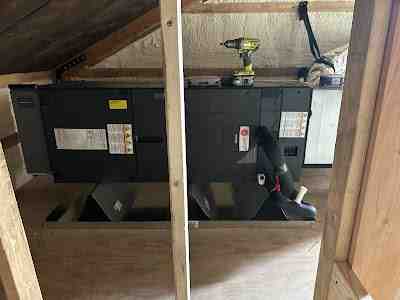
To understand how a failed blower motor affects your cooling, it helps to look at the blower motor as the "heart" of your heating and cooling system. While the outdoor condenser unit is responsible for releasing heat and compressing refrigerant, the indoor air handler is where the actual indoor air circulation happens. Inside this air handler sits the blower motor assembly, which powers a heavy fan wheel (often called a squirrel cage) to physically move air.
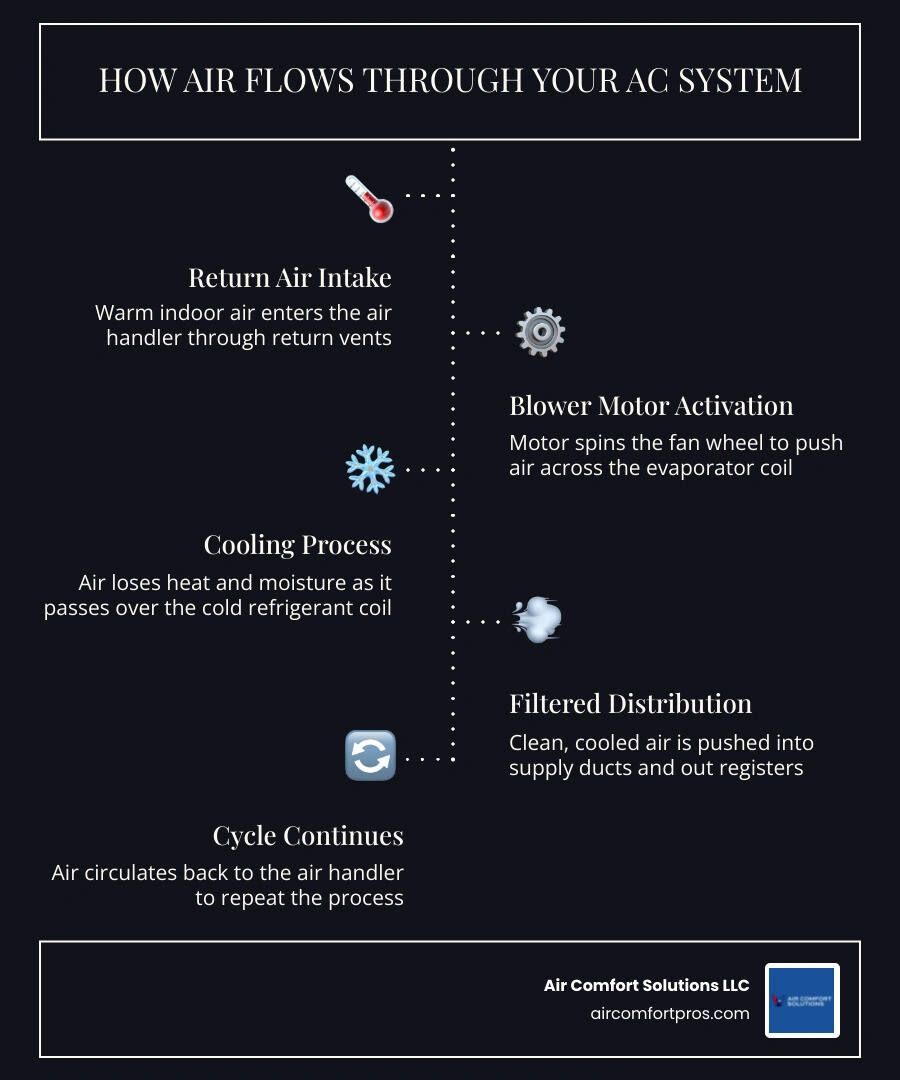
The cooling cycle relies entirely on a continuous exchange of heat. First, the blower motor pulls warm, humid air from your living spaces through the return vents. This air is pushed directly across the cold evaporator coil. As the warm air passes over the coil, the refrigerant circulating inside absorbs the heat and moisture, cooling and dehumidifying the air.
Once the air is cooled, the blower motor pushes it forward into the supply registers, distributing it evenly throughout your home. This process relies on maintaining a careful balance of static pressure—the resistance to airflow within your ductwork. If the blower motor cannot spin the fan wheel at the proper speed, this delicate cycle breaks down. Without the continuous mechanical force of the blower, heat transfer cannot occur, and the cooled air remains trapped inside your utility closet or attic. To keep this vital system running optimally, check out our AC Service Complete Guide Pinehurst TX to see how professional maintenance keeps your air handler in peak condition.
When your blower motor begins to fail, the comfort level in your home drops instantly. In Southeast Texas, where summer temperatures regularly soar, your air conditioner must work incredibly hard to maintain a liveable indoor climate. If the blower motor is weak or completely dead, your system will run continuously as it tries in vain to satisfy the thermostat, leading to a massive spike in your monthly energy bills.
Because the outdoor unit keeps running while the indoor fan remains motionless, the system is subjected to immense mechanical stress. This is particularly dangerous during peak summer heatwaves in areas like Spring, Tomball, and Magnolia, where systems already run for extended periods. When the motor draws excess electrical current to overcome friction or electrical resistance, it generates intense heat, which can trip your circuit breakers or burn out the motor's internal insulation. To learn more about identifying these issues before they leave you stranded in the heat, read our guide on the Signs Your AC Needs Repair in Houston Area Heat.
One of the most immediate and frustrating consequences of a failing blower motor is a severe drop in airflow. You might stand directly beneath a supply vent and feel only a faint, lukewarm whisper of air. This lack of circulation leads to stagnant, stuffy indoor air.
Furthermore, our local climate is notoriously humid. Your air conditioner plays a double role: it cools the air and extracts moisture. Without a functional blower motor to pull humid air across the evaporator coil, moisture levels inside your home will rapidly rise. This humidity buildup makes your indoor spaces feel sticky, warm, and highly susceptible to mold growth. If you are struggling with weak breeze from your registers, our guide on how to Resolve Poor Airflow from AC Vents offers excellent troubleshooting steps.
Perhaps the most destructive consequence of a failed blower motor is the domino effect it triggers within the refrigeration cycle. The evaporator coil relies on the warmth of your home's return air to keep the refrigerant inside from dropping below freezing temperatures. When the blower motor fails, there is no warm air passing over the coil to facilitate heat transfer.
As a result, the temperature of the coil drops rapidly. The condensation that naturally gathers on the coil's metal fins begins to freeze, turning into a thick block of ice. This ice acts as an insulating barrier, further restricting airflow and worsening the problem.
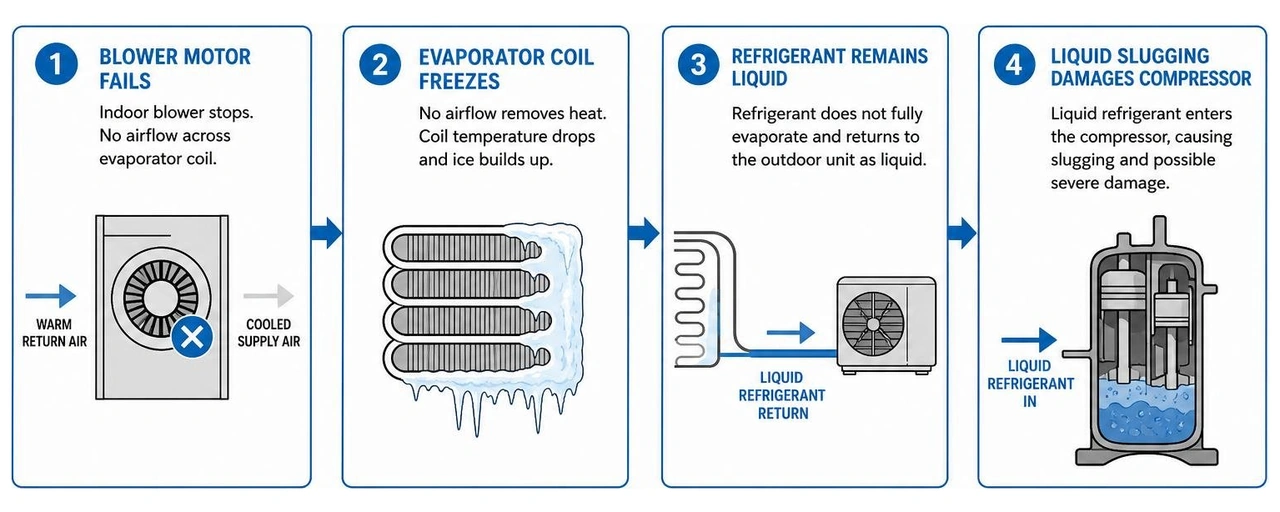
If the system is left running in this state, the refrigerant inside the evaporator coil cannot evaporate into a gas. It remains a cold liquid and travels back down the copper lines to the outdoor compressor. Because compressors are designed to compress gas, not liquid, this phenomenon—known as "liquid slugging"—can physically destroy the compressor's internal valves. Replacing a compressor is a major, complex repair that can often be avoided by addressing a failing blower motor early. Learn more about these critical system warning signs in our article on AC Repair Red Flags That Mean You Need a New System.
Blower motors rarely fail overnight. They usually send out several warning signs that homeowners can spot if they know what to look for. Recognizing these symptoms early can save you from a complete system breakdown during a hot afternoon in Conroe or The Woodlands.
Keep an eye and ear out for these common warning signs:
For a deeper dive into diagnosing these issues, explore our resources on AC Making Strange Noises What They Mean and learn about the Most Common AC Repairs and What Causes Them.
Not all blower motors are built the same way. Understanding what type of motor is installed in your air handler can help you make informed decisions when it comes to system performance and potential replacements.
| Feature | PSC (Permanent Split Capacitor) Motors | ECM (Electronically Commutated) Motors |
|---|---|---|
| Technology | Older, single-speed or multi-speed (fixed steps) | Modern, variable-speed (microprocessor-controlled) |
| Energy Efficiency | Standard efficiency; runs at full speed constantly | Highly efficient; uses up to 80% less electricity |
| Airflow Control | On/Off or fixed speeds; cannot adjust to static pressure changes | Automatically adjusts speed to maintain consistent airflow |
| Humidity Control | Standard; can leave air feeling humid on shorter cycles | Excellent; runs at lower speeds for longer, steadier dehumidification |
| Lifespan | Typically 10 to 15 years | Typically 15 to 20 years |
PSC motors use a run capacitor to provide the initial electrical jolt needed to start spinning. While reliable, they are binary in nature—they are either completely on or completely off.
In contrast, ECM motors utilize variable-speed technology. They can ramp up or down gradually, running at low, ultra-efficient speeds for long periods. This not only keeps your home's temperature incredibly consistent but also maximizes dehumidification, which is a massive advantage during muggy summers in Montgomery and Conroe.
Preventing blower motor failure starts with understanding what causes these components to wear out prematurely. By addressing these root causes, you can protect your system and keep your home cool and comfortable.
To keep your entire system protected from these common issues, take a look at our HVAC Maintenance Tips for Texas Homeowners.
We strongly advise shutting down your system immediately if you hear grinding, squealing, or heavy humming. Running an AC with a struggling blower motor can lead to complete motor seizure, severe electrical overheating, a potential fire hazard, or extensive damage to your system's main control board. It can also cause your evaporator coil to freeze, putting your compressor at risk.
If you can hear the indoor fan spinning but feel no air coming from your registers, you are likely dealing with a frozen evaporator coil that has completely blocked the airflow path. Other possibilities include a major disconnect in your main ductwork trunk line or an extremely clogged air filter that has choked off all incoming air.
A dirty blower wheel accumulates dust unevenly on its blades, creating a weight imbalance. This imbalance causes the motor shaft to wobble, wearing down the bearings rapidly. Additionally, the dirt reduces the aerodynamic efficiency of the blades, forcing the motor to draw more electrical current and generate excess heat, which eventually burns out the motor's internal insulation.
Your blower motor plays an indispensable role in keeping your home cool, dry, and comfortable. When it fails, the cooling process grinds to a halt, leaving your household vulnerable to the intense summer heat. Fortunately, proactive care, regular filter changes, and professional maintenance can dramatically extend the life of your air handler.
At Air Comfort Solutions LLC, we have over 35 years of experience serving homeowners across Pinehurst, Magnolia, Conroe, Spring, and surrounding areas. Our certified technicians are dedicated to providing honest, reliable HVAC solutions tailored to the unique demands of our local climate. To learn more about protecting your system, read our guide on How to Extend the Life of Your AC in Texas or check out our AC Maintenance Visit Complete Guide.
For expert diagnostic services and reliable system restoration, schedule your AC Repair in Tomball, TX with our team today.
How a failed blower motor affects your cooling is something every homeowner in Pinehurst, TX should understand before the hottest days of summer arrive. Your HVAC system might be running, the outdoor unit might be humming away, and your thermostat might be set perfectly — but if the blower motor has failed, you'll feel little to no cool air coming from your vents. It's one of the most common reasons homes in North Harris County stay stuffy and uncomfortable even when the AC appears to be on.
Here's a quick look at the core ways a failed blower motor impacts your cooling:
Blower motors rarely fail without warning. Subtle signs like weak airflow, strange noises, or rooms that never quite cool down are your system's way of telling you something is wrong. Catching the problem early can mean the difference between a straightforward repair and a much more expensive fix — like a failed compressor.
To understand how a failed blower motor affects your cooling, it helps to look at the blower motor as the "heart" of your heating and cooling system. While the outdoor condenser unit is responsible for releasing heat and compressing refrigerant, the indoor air handler is where the actual indoor air circulation happens. Inside this air handler sits the blower motor assembly, which powers a heavy fan wheel (often called a squirrel cage) to physically move air.
The cooling cycle relies entirely on a continuous exchange of heat. First, the blower motor pulls warm, humid air from your living spaces through the return vents. This air is pushed directly across the cold evaporator coil. As the warm air passes over the coil, the refrigerant circulating inside absorbs the heat and moisture, cooling and dehumidifying the air.
Once the air is cooled, the blower motor pushes it forward into the supply registers, distributing it evenly throughout your home. This process relies on maintaining a careful balance of static pressure—the resistance to airflow within your ductwork. If the blower motor cannot spin the fan wheel at the proper speed, this delicate cycle breaks down. Without the continuous mechanical force of the blower, heat transfer cannot occur, and the cooled air remains trapped inside your utility closet or attic. To keep this vital system running optimally, check out our AC Service Complete Guide Pinehurst TX to see how professional maintenance keeps your air handler in peak condition.
When your blower motor begins to fail, the comfort level in your home drops instantly. In Southeast Texas, where summer temperatures regularly soar, your air conditioner must work incredibly hard to maintain a liveable indoor climate. If the blower motor is weak or completely dead, your system will run continuously as it tries in vain to satisfy the thermostat, leading to a massive spike in your monthly energy bills.
Because the outdoor unit keeps running while the indoor fan remains motionless, the system is subjected to immense mechanical stress. This is particularly dangerous during peak summer heatwaves in areas like Spring, Tomball, and Magnolia, where systems already run for extended periods. When the motor draws excess electrical current to overcome friction or electrical resistance, it generates intense heat, which can trip your circuit breakers or burn out the motor's internal insulation. To learn more about identifying these issues before they leave you stranded in the heat, read our guide on the Signs Your AC Needs Repair in Houston Area Heat.
One of the most immediate and frustrating consequences of a failing blower motor is a severe drop in airflow. You might stand directly beneath a supply vent and feel only a faint, lukewarm whisper of air. This lack of circulation leads to stagnant, stuffy indoor air.
Furthermore, our local climate is notoriously humid. Your air conditioner plays a double role: it cools the air and extracts moisture. Without a functional blower motor to pull humid air across the evaporator coil, moisture levels inside your home will rapidly rise. This humidity buildup makes your indoor spaces feel sticky, warm, and highly susceptible to mold growth. If you are struggling with weak breeze from your registers, our guide on how to Resolve Poor Airflow from AC Vents offers excellent troubleshooting steps.
Perhaps the most destructive consequence of a failed blower motor is the domino effect it triggers within the refrigeration cycle. The evaporator coil relies on the warmth of your home's return air to keep the refrigerant inside from dropping below freezing temperatures. When the blower motor fails, there is no warm air passing over the coil to facilitate heat transfer.
As a result, the temperature of the coil drops rapidly. The condensation that naturally gathers on the coil's metal fins begins to freeze, turning into a thick block of ice. This ice acts as an insulating barrier, further restricting airflow and worsening the problem.
If the system is left running in this state, the refrigerant inside the evaporator coil cannot evaporate into a gas. It remains a cold liquid and travels back down the copper lines to the outdoor compressor. Because compressors are designed to compress gas, not liquid, this phenomenon—known as "liquid slugging"—can physically destroy the compressor's internal valves. Replacing a compressor is a major, complex repair that can often be avoided by addressing a failing blower motor early. Learn more about these critical system warning signs in our article on AC Repair Red Flags That Mean You Need a New System.
Blower motors rarely fail overnight. They usually send out several warning signs that homeowners can spot if they know what to look for. Recognizing these symptoms early can save you from a complete system breakdown during a hot afternoon in Conroe or The Woodlands.
Keep an eye and ear out for these common warning signs:
For a deeper dive into diagnosing these issues, explore our resources on AC Making Strange Noises What They Mean and learn about the Most Common AC Repairs and What Causes Them.
Not all blower motors are built the same way. Understanding what type of motor is installed in your air handler can help you make informed decisions when it comes to system performance and potential replacements.
| Feature | PSC (Permanent Split Capacitor) Motors | ECM (Electronically Commutated) Motors |
|---|---|---|
| Technology | Older, single-speed or multi-speed (fixed steps) | Modern, variable-speed (microprocessor-controlled) |
| Energy Efficiency | Standard efficiency; runs at full speed constantly | Highly efficient; uses up to 80% less electricity |
| Airflow Control | On/Off or fixed speeds; cannot adjust to static pressure changes | Automatically adjusts speed to maintain consistent airflow |
| Humidity Control | Standard; can leave air feeling humid on shorter cycles | Excellent; runs at lower speeds for longer, steadier dehumidification |
| Lifespan | Typically 10 to 15 years | Typically 15 to 20 years |
PSC motors use a run capacitor to provide the initial electrical jolt needed to start spinning. While reliable, they are binary in nature—they are either completely on or completely off.
In contrast, ECM motors utilize variable-speed technology. They can ramp up or down gradually, running at low, ultra-efficient speeds for long periods. This not only keeps your home's temperature incredibly consistent but also maximizes dehumidification, which is a massive advantage during muggy summers in Montgomery and Conroe.
Preventing blower motor failure starts with understanding what causes these components to wear out prematurely. By addressing these root causes, you can protect your system and keep your home cool and comfortable.
To keep your entire system protected from these common issues, take a look at our HVAC Maintenance Tips for Texas Homeowners.
We strongly advise shutting down your system immediately if you hear grinding, squealing, or heavy humming. Running an AC with a struggling blower motor can lead to complete motor seizure, severe electrical overheating, a potential fire hazard, or extensive damage to your system's main control board. It can also cause your evaporator coil to freeze, putting your compressor at risk.
If you can hear the indoor fan spinning but feel no air coming from your registers, you are likely dealing with a frozen evaporator coil that has completely blocked the airflow path. Other possibilities include a major disconnect in your main ductwork trunk line or an extremely clogged air filter that has choked off all incoming air.
A dirty blower wheel accumulates dust unevenly on its blades, creating a weight imbalance. This imbalance causes the motor shaft to wobble, wearing down the bearings rapidly. Additionally, the dirt reduces the aerodynamic efficiency of the blades, forcing the motor to draw more electrical current and generate excess heat, which eventually burns out the motor's internal insulation.
Your blower motor plays an indispensable role in keeping your home cool, dry, and comfortable. When it fails, the cooling process grinds to a halt, leaving your household vulnerable to the intense summer heat. Fortunately, proactive care, regular filter changes, and professional maintenance can dramatically extend the life of your air handler.
At Air Comfort Solutions LLC, we have over 35 years of experience serving homeowners across Pinehurst, Magnolia, Conroe, Spring, and surrounding areas. Our certified technicians are dedicated to providing honest, reliable HVAC solutions tailored to the unique demands of our local climate. To learn more about protecting your system, read our guide on How to Extend the Life of Your AC in Texas or check out our AC Maintenance Visit Complete Guide.
For expert diagnostic services and reliable system restoration, schedule your AC Repair in Tomball, TX with our team today.
How a failed blower motor affects your cooling is something every homeowner in Pinehurst, TX should understand before the hottest days of summer arrive. Your HVAC system might be running, the outdoor unit might be humming away, and your thermostat might be set perfectly — but if the blower motor has failed, you'll feel little to no cool air coming from your vents. It's one of the most common reasons homes in North Harris County stay stuffy and uncomfortable even when the AC appears to be on.
Here's a quick look at the core ways a failed blower motor impacts your cooling:
Blower motors rarely fail without warning. Subtle signs like weak airflow, strange noises, or rooms that never quite cool down are your system's way of telling you something is wrong. Catching the problem early can mean the difference between a straightforward repair and a much more expensive fix — like a failed compressor.
To understand how a failed blower motor affects your cooling, it helps to look at the blower motor as the "heart" of your heating and cooling system. While the outdoor condenser unit is responsible for releasing heat and compressing refrigerant, the indoor air handler is where the actual indoor air circulation happens. Inside this air handler sits the blower motor assembly, which powers a heavy fan wheel (often called a squirrel cage) to physically move air.
The cooling cycle relies entirely on a continuous exchange of heat. First, the blower motor pulls warm, humid air from your living spaces through the return vents. This air is pushed directly across the cold evaporator coil. As the warm air passes over the coil, the refrigerant circulating inside absorbs the heat and moisture, cooling and dehumidifying the air.
Once the air is cooled, the blower motor pushes it forward into the supply registers, distributing it evenly throughout your home. This process relies on maintaining a careful balance of static pressure—the resistance to airflow within your ductwork. If the blower motor cannot spin the fan wheel at the proper speed, this delicate cycle breaks down. Without the continuous mechanical force of the blower, heat transfer cannot occur, and the cooled air remains trapped inside your utility closet or attic. To keep this vital system running optimally, check out our AC Service Complete Guide Pinehurst TX to see how professional maintenance keeps your air handler in peak condition.
When your blower motor begins to fail, the comfort level in your home drops instantly. In Southeast Texas, where summer temperatures regularly soar, your air conditioner must work incredibly hard to maintain a liveable indoor climate. If the blower motor is weak or completely dead, your system will run continuously as it tries in vain to satisfy the thermostat, leading to a massive spike in your monthly energy bills.
Because the outdoor unit keeps running while the indoor fan remains motionless, the system is subjected to immense mechanical stress. This is particularly dangerous during peak summer heatwaves in areas like Spring, Tomball, and Magnolia, where systems already run for extended periods. When the motor draws excess electrical current to overcome friction or electrical resistance, it generates intense heat, which can trip your circuit breakers or burn out the motor's internal insulation. To learn more about identifying these issues before they leave you stranded in the heat, read our guide on the Signs Your AC Needs Repair in Houston Area Heat.
One of the most immediate and frustrating consequences of a failing blower motor is a severe drop in airflow. You might stand directly beneath a supply vent and feel only a faint, lukewarm whisper of air. This lack of circulation leads to stagnant, stuffy indoor air.
Furthermore, our local climate is notoriously humid. Your air conditioner plays a double role: it cools the air and extracts moisture. Without a functional blower motor to pull humid air across the evaporator coil, moisture levels inside your home will rapidly rise. This humidity buildup makes your indoor spaces feel sticky, warm, and highly susceptible to mold growth. If you are struggling with weak breeze from your registers, our guide on how to Resolve Poor Airflow from AC Vents offers excellent troubleshooting steps.
Perhaps the most destructive consequence of a failed blower motor is the domino effect it triggers within the refrigeration cycle. The evaporator coil relies on the warmth of your home's return air to keep the refrigerant inside from dropping below freezing temperatures. When the blower motor fails, there is no warm air passing over the coil to facilitate heat transfer.
As a result, the temperature of the coil drops rapidly. The condensation that naturally gathers on the coil's metal fins begins to freeze, turning into a thick block of ice. This ice acts as an insulating barrier, further restricting airflow and worsening the problem.
If the system is left running in this state, the refrigerant inside the evaporator coil cannot evaporate into a gas. It remains a cold liquid and travels back down the copper lines to the outdoor compressor. Because compressors are designed to compress gas, not liquid, this phenomenon—known as "liquid slugging"—can physically destroy the compressor's internal valves. Replacing a compressor is a major, complex repair that can often be avoided by addressing a failing blower motor early. Learn more about these critical system warning signs in our article on AC Repair Red Flags That Mean You Need a New System.
Blower motors rarely fail overnight. They usually send out several warning signs that homeowners can spot if they know what to look for. Recognizing these symptoms early can save you from a complete system breakdown during a hot afternoon in Conroe or The Woodlands.
Keep an eye and ear out for these common warning signs:
For a deeper dive into diagnosing these issues, explore our resources on AC Making Strange Noises What They Mean and learn about the Most Common AC Repairs and What Causes Them.
Not all blower motors are built the same way. Understanding what type of motor is installed in your air handler can help you make informed decisions when it comes to system performance and potential replacements.
| Feature | PSC (Permanent Split Capacitor) Motors | ECM (Electronically Commutated) Motors |
|---|---|---|
| Technology | Older, single-speed or multi-speed (fixed steps) | Modern, variable-speed (microprocessor-controlled) |
| Energy Efficiency | Standard efficiency; runs at full speed constantly | Highly efficient; uses up to 80% less electricity |
| Airflow Control | On/Off or fixed speeds; cannot adjust to static pressure changes | Automatically adjusts speed to maintain consistent airflow |
| Humidity Control | Standard; can leave air feeling humid on shorter cycles | Excellent; runs at lower speeds for longer, steadier dehumidification |
| Lifespan | Typically 10 to 15 years | Typically 15 to 20 years |
PSC motors use a run capacitor to provide the initial electrical jolt needed to start spinning. While reliable, they are binary in nature—they are either completely on or completely off.
In contrast, ECM motors utilize variable-speed technology. They can ramp up or down gradually, running at low, ultra-efficient speeds for long periods. This not only keeps your home's temperature incredibly consistent but also maximizes dehumidification, which is a massive advantage during muggy summers in Montgomery and Conroe.
Preventing blower motor failure starts with understanding what causes these components to wear out prematurely. By addressing these root causes, you can protect your system and keep your home cool and comfortable.
To keep your entire system protected from these common issues, take a look at our HVAC Maintenance Tips for Texas Homeowners.
We strongly advise shutting down your system immediately if you hear grinding, squealing, or heavy humming. Running an AC with a struggling blower motor can lead to complete motor seizure, severe electrical overheating, a potential fire hazard, or extensive damage to your system's main control board. It can also cause your evaporator coil to freeze, putting your compressor at risk.
If you can hear the indoor fan spinning but feel no air coming from your registers, you are likely dealing with a frozen evaporator coil that has completely blocked the airflow path. Other possibilities include a major disconnect in your main ductwork trunk line or an extremely clogged air filter that has choked off all incoming air.
A dirty blower wheel accumulates dust unevenly on its blades, creating a weight imbalance. This imbalance causes the motor shaft to wobble, wearing down the bearings rapidly. Additionally, the dirt reduces the aerodynamic efficiency of the blades, forcing the motor to draw more electrical current and generate excess heat, which eventually burns out the motor's internal insulation.
Your blower motor plays an indispensable role in keeping your home cool, dry, and comfortable. When it fails, the cooling process grinds to a halt, leaving your household vulnerable to the intense summer heat. Fortunately, proactive care, regular filter changes, and professional maintenance can dramatically extend the life of your air handler.
At Air Comfort Solutions LLC, we have over 35 years of experience serving homeowners across Pinehurst, Magnolia, Conroe, Spring, and surrounding areas. Our certified technicians are dedicated to providing honest, reliable HVAC solutions tailored to the unique demands of our local climate. To learn more about protecting your system, read our guide on How to Extend the Life of Your AC in Texas or check out our AC Maintenance Visit Complete Guide.
For expert diagnostic services and reliable system restoration, schedule your AC Repair in Tomball, TX with our team today.
How a failed blower motor affects your cooling is something every homeowner in Pinehurst, TX should understand before the hottest days of summer arrive. Your HVAC system might be running, the outdoor unit might be humming away, and your thermostat might be set perfectly — but if the blower motor has failed, you'll feel little to no cool air coming from your vents. It's one of the most common reasons homes in North Harris County stay stuffy and uncomfortable even when the AC appears to be on.
Here's a quick look at the core ways a failed blower motor impacts your cooling:
Blower motors rarely fail without warning. Subtle signs like weak airflow, strange noises, or rooms that never quite cool down are your system's way of telling you something is wrong. Catching the problem early can mean the difference between a straightforward repair and a much more expensive fix — like a failed compressor.
To understand how a failed blower motor affects your cooling, it helps to look at the blower motor as the "heart" of your heating and cooling system. While the outdoor condenser unit is responsible for releasing heat and compressing refrigerant, the indoor air handler is where the actual indoor air circulation happens. Inside this air handler sits the blower motor assembly, which powers a heavy fan wheel (often called a squirrel cage) to physically move air.
The cooling cycle relies entirely on a continuous exchange of heat. First, the blower motor pulls warm, humid air from your living spaces through the return vents. This air is pushed directly across the cold evaporator coil. As the warm air passes over the coil, the refrigerant circulating inside absorbs the heat and moisture, cooling and dehumidifying the air.
Once the air is cooled, the blower motor pushes it forward into the supply registers, distributing it evenly throughout your home. This process relies on maintaining a careful balance of static pressure—the resistance to airflow within your ductwork. If the blower motor cannot spin the fan wheel at the proper speed, this delicate cycle breaks down. Without the continuous mechanical force of the blower, heat transfer cannot occur, and the cooled air remains trapped inside your utility closet or attic. To keep this vital system running optimally, check out our AC Service Complete Guide Pinehurst TX to see how professional maintenance keeps your air handler in peak condition.
When your blower motor begins to fail, the comfort level in your home drops instantly. In Southeast Texas, where summer temperatures regularly soar, your air conditioner must work incredibly hard to maintain a liveable indoor climate. If the blower motor is weak or completely dead, your system will run continuously as it tries in vain to satisfy the thermostat, leading to a massive spike in your monthly energy bills.
Because the outdoor unit keeps running while the indoor fan remains motionless, the system is subjected to immense mechanical stress. This is particularly dangerous during peak summer heatwaves in areas like Spring, Tomball, and Magnolia, where systems already run for extended periods. When the motor draws excess electrical current to overcome friction or electrical resistance, it generates intense heat, which can trip your circuit breakers or burn out the motor's internal insulation. To learn more about identifying these issues before they leave you stranded in the heat, read our guide on the Signs Your AC Needs Repair in Houston Area Heat.
One of the most immediate and frustrating consequences of a failing blower motor is a severe drop in airflow. You might stand directly beneath a supply vent and feel only a faint, lukewarm whisper of air. This lack of circulation leads to stagnant, stuffy indoor air.
Furthermore, our local climate is notoriously humid. Your air conditioner plays a double role: it cools the air and extracts moisture. Without a functional blower motor to pull humid air across the evaporator coil, moisture levels inside your home will rapidly rise. This humidity buildup makes your indoor spaces feel sticky, warm, and highly susceptible to mold growth. If you are struggling with weak breeze from your registers, our guide on how to Resolve Poor Airflow from AC Vents offers excellent troubleshooting steps.
Perhaps the most destructive consequence of a failed blower motor is the domino effect it triggers within the refrigeration cycle. The evaporator coil relies on the warmth of your home's return air to keep the refrigerant inside from dropping below freezing temperatures. When the blower motor fails, there is no warm air passing over the coil to facilitate heat transfer.
As a result, the temperature of the coil drops rapidly. The condensation that naturally gathers on the coil's metal fins begins to freeze, turning into a thick block of ice. This ice acts as an insulating barrier, further restricting airflow and worsening the problem.
If the system is left running in this state, the refrigerant inside the evaporator coil cannot evaporate into a gas. It remains a cold liquid and travels back down the copper lines to the outdoor compressor. Because compressors are designed to compress gas, not liquid, this phenomenon—known as "liquid slugging"—can physically destroy the compressor's internal valves. Replacing a compressor is a major, complex repair that can often be avoided by addressing a failing blower motor early. Learn more about these critical system warning signs in our article on AC Repair Red Flags That Mean You Need a New System.
Blower motors rarely fail overnight. They usually send out several warning signs that homeowners can spot if they know what to look for. Recognizing these symptoms early can save you from a complete system breakdown during a hot afternoon in Conroe or The Woodlands.
Keep an eye and ear out for these common warning signs:
For a deeper dive into diagnosing these issues, explore our resources on AC Making Strange Noises What They Mean and learn about the Most Common AC Repairs and What Causes Them.
Not all blower motors are built the same way. Understanding what type of motor is installed in your air handler can help you make informed decisions when it comes to system performance and potential replacements.
| Feature | PSC (Permanent Split Capacitor) Motors | ECM (Electronically Commutated) Motors |
|---|---|---|
| Technology | Older, single-speed or multi-speed (fixed steps) | Modern, variable-speed (microprocessor-controlled) |
| Energy Efficiency | Standard efficiency; runs at full speed constantly | Highly efficient; uses up to 80% less electricity |
| Airflow Control | On/Off or fixed speeds; cannot adjust to static pressure changes | Automatically adjusts speed to maintain consistent airflow |
| Humidity Control | Standard; can leave air feeling humid on shorter cycles | Excellent; runs at lower speeds for longer, steadier dehumidification |
| Lifespan | Typically 10 to 15 years | Typically 15 to 20 years |
PSC motors use a run capacitor to provide the initial electrical jolt needed to start spinning. While reliable, they are binary in nature—they are either completely on or completely off.
In contrast, ECM motors utilize variable-speed technology. They can ramp up or down gradually, running at low, ultra-efficient speeds for long periods. This not only keeps your home's temperature incredibly consistent but also maximizes dehumidification, which is a massive advantage during muggy summers in Montgomery and Conroe.
Preventing blower motor failure starts with understanding what causes these components to wear out prematurely. By addressing these root causes, you can protect your system and keep your home cool and comfortable.
To keep your entire system protected from these common issues, take a look at our HVAC Maintenance Tips for Texas Homeowners.
We strongly advise shutting down your system immediately if you hear grinding, squealing, or heavy humming. Running an AC with a struggling blower motor can lead to complete motor seizure, severe electrical overheating, a potential fire hazard, or extensive damage to your system's main control board. It can also cause your evaporator coil to freeze, putting your compressor at risk.
If you can hear the indoor fan spinning but feel no air coming from your registers, you are likely dealing with a frozen evaporator coil that has completely blocked the airflow path. Other possibilities include a major disconnect in your main ductwork trunk line or an extremely clogged air filter that has choked off all incoming air.
A dirty blower wheel accumulates dust unevenly on its blades, creating a weight imbalance. This imbalance causes the motor shaft to wobble, wearing down the bearings rapidly. Additionally, the dirt reduces the aerodynamic efficiency of the blades, forcing the motor to draw more electrical current and generate excess heat, which eventually burns out the motor's internal insulation.
Your blower motor plays an indispensable role in keeping your home cool, dry, and comfortable. When it fails, the cooling process grinds to a halt, leaving your household vulnerable to the intense summer heat. Fortunately, proactive care, regular filter changes, and professional maintenance can dramatically extend the life of your air handler.
At Air Comfort Solutions LLC, we have over 35 years of experience serving homeowners across Pinehurst, Magnolia, Conroe, Spring, and surrounding areas. Our certified technicians are dedicated to providing honest, reliable HVAC solutions tailored to the unique demands of our local climate. To learn more about protecting your system, read our guide on How to Extend the Life of Your AC in Texas or check out our AC Maintenance Visit Complete Guide.
For expert diagnostic services and reliable system restoration, schedule your AC Repair in Tomball, TX with our team today.
How a failed blower motor affects your cooling is something every homeowner in Pinehurst, TX should understand before the hottest days of summer arrive. Your HVAC system might be running, the outdoor unit might be humming away, and your thermostat might be set perfectly — but if the blower motor has failed, you'll feel little to no cool air coming from your vents. It's one of the most common reasons homes in North Harris County stay stuffy and uncomfortable even when the AC appears to be on.
Here's a quick look at the core ways a failed blower motor impacts your cooling:
Blower motors rarely fail without warning. Subtle signs like weak airflow, strange noises, or rooms that never quite cool down are your system's way of telling you something is wrong. Catching the problem early can mean the difference between a straightforward repair and a much more expensive fix — like a failed compressor.
To understand how a failed blower motor affects your cooling, it helps to look at the blower motor as the "heart" of your heating and cooling system. While the outdoor condenser unit is responsible for releasing heat and compressing refrigerant, the indoor air handler is where the actual indoor air circulation happens. Inside this air handler sits the blower motor assembly, which powers a heavy fan wheel (often called a squirrel cage) to physically move air.
The cooling cycle relies entirely on a continuous exchange of heat. First, the blower motor pulls warm, humid air from your living spaces through the return vents. This air is pushed directly across the cold evaporator coil. As the warm air passes over the coil, the refrigerant circulating inside absorbs the heat and moisture, cooling and dehumidifying the air.
Once the air is cooled, the blower motor pushes it forward into the supply registers, distributing it evenly throughout your home. This process relies on maintaining a careful balance of static pressure—the resistance to airflow within your ductwork. If the blower motor cannot spin the fan wheel at the proper speed, this delicate cycle breaks down. Without the continuous mechanical force of the blower, heat transfer cannot occur, and the cooled air remains trapped inside your utility closet or attic. To keep this vital system running optimally, check out our AC Service Complete Guide Pinehurst TX to see how professional maintenance keeps your air handler in peak condition.
When your blower motor begins to fail, the comfort level in your home drops instantly. In Southeast Texas, where summer temperatures regularly soar, your air conditioner must work incredibly hard to maintain a liveable indoor climate. If the blower motor is weak or completely dead, your system will run continuously as it tries in vain to satisfy the thermostat, leading to a massive spike in your monthly energy bills.
Because the outdoor unit keeps running while the indoor fan remains motionless, the system is subjected to immense mechanical stress. This is particularly dangerous during peak summer heatwaves in areas like Spring, Tomball, and Magnolia, where systems already run for extended periods. When the motor draws excess electrical current to overcome friction or electrical resistance, it generates intense heat, which can trip your circuit breakers or burn out the motor's internal insulation. To learn more about identifying these issues before they leave you stranded in the heat, read our guide on the Signs Your AC Needs Repair in Houston Area Heat.
One of the most immediate and frustrating consequences of a failing blower motor is a severe drop in airflow. You might stand directly beneath a supply vent and feel only a faint, lukewarm whisper of air. This lack of circulation leads to stagnant, stuffy indoor air.
Furthermore, our local climate is notoriously humid. Your air conditioner plays a double role: it cools the air and extracts moisture. Without a functional blower motor to pull humid air across the evaporator coil, moisture levels inside your home will rapidly rise. This humidity buildup makes your indoor spaces feel sticky, warm, and highly susceptible to mold growth. If you are struggling with weak breeze from your registers, our guide on how to Resolve Poor Airflow from AC Vents offers excellent troubleshooting steps.
Perhaps the most destructive consequence of a failed blower motor is the domino effect it triggers within the refrigeration cycle. The evaporator coil relies on the warmth of your home's return air to keep the refrigerant inside from dropping below freezing temperatures. When the blower motor fails, there is no warm air passing over the coil to facilitate heat transfer.
As a result, the temperature of the coil drops rapidly. The condensation that naturally gathers on the coil's metal fins begins to freeze, turning into a thick block of ice. This ice acts as an insulating barrier, further restricting airflow and worsening the problem.
If the system is left running in this state, the refrigerant inside the evaporator coil cannot evaporate into a gas. It remains a cold liquid and travels back down the copper lines to the outdoor compressor. Because compressors are designed to compress gas, not liquid, this phenomenon—known as "liquid slugging"—can physically destroy the compressor's internal valves. Replacing a compressor is a major, complex repair that can often be avoided by addressing a failing blower motor early. Learn more about these critical system warning signs in our article on AC Repair Red Flags That Mean You Need a New System.
Blower motors rarely fail overnight. They usually send out several warning signs that homeowners can spot if they know what to look for. Recognizing these symptoms early can save you from a complete system breakdown during a hot afternoon in Conroe or The Woodlands.
Keep an eye and ear out for these common warning signs:
For a deeper dive into diagnosing these issues, explore our resources on AC Making Strange Noises What They Mean and learn about the Most Common AC Repairs and What Causes Them.
Not all blower motors are built the same way. Understanding what type of motor is installed in your air handler can help you make informed decisions when it comes to system performance and potential replacements.
| Feature | PSC (Permanent Split Capacitor) Motors | ECM (Electronically Commutated) Motors |
|---|---|---|
| Technology | Older, single-speed or multi-speed (fixed steps) | Modern, variable-speed (microprocessor-controlled) |
| Energy Efficiency | Standard efficiency; runs at full speed constantly | Highly efficient; uses up to 80% less electricity |
| Airflow Control | On/Off or fixed speeds; cannot adjust to static pressure changes | Automatically adjusts speed to maintain consistent airflow |
| Humidity Control | Standard; can leave air feeling humid on shorter cycles | Excellent; runs at lower speeds for longer, steadier dehumidification |
| Lifespan | Typically 10 to 15 years | Typically 15 to 20 years |
PSC motors use a run capacitor to provide the initial electrical jolt needed to start spinning. While reliable, they are binary in nature—they are either completely on or completely off.
In contrast, ECM motors utilize variable-speed technology. They can ramp up or down gradually, running at low, ultra-efficient speeds for long periods. This not only keeps your home's temperature incredibly consistent but also maximizes dehumidification, which is a massive advantage during muggy summers in Montgomery and Conroe.
Preventing blower motor failure starts with understanding what causes these components to wear out prematurely. By addressing these root causes, you can protect your system and keep your home cool and comfortable.
To keep your entire system protected from these common issues, take a look at our HVAC Maintenance Tips for Texas Homeowners.
We strongly advise shutting down your system immediately if you hear grinding, squealing, or heavy humming. Running an AC with a struggling blower motor can lead to complete motor seizure, severe electrical overheating, a potential fire hazard, or extensive damage to your system's main control board. It can also cause your evaporator coil to freeze, putting your compressor at risk.
If you can hear the indoor fan spinning but feel no air coming from your registers, you are likely dealing with a frozen evaporator coil that has completely blocked the airflow path. Other possibilities include a major disconnect in your main ductwork trunk line or an extremely clogged air filter that has choked off all incoming air.
A dirty blower wheel accumulates dust unevenly on its blades, creating a weight imbalance. This imbalance causes the motor shaft to wobble, wearing down the bearings rapidly. Additionally, the dirt reduces the aerodynamic efficiency of the blades, forcing the motor to draw more electrical current and generate excess heat, which eventually burns out the motor's internal insulation.
Your blower motor plays an indispensable role in keeping your home cool, dry, and comfortable. When it fails, the cooling process grinds to a halt, leaving your household vulnerable to the intense summer heat. Fortunately, proactive care, regular filter changes, and professional maintenance can dramatically extend the life of your air handler.
At Air Comfort Solutions LLC, we have over 35 years of experience serving homeowners across Pinehurst, Magnolia, Conroe, Spring, and surrounding areas. Our certified technicians are dedicated to providing honest, reliable HVAC solutions tailored to the unique demands of our local climate. To learn more about protecting your system, read our guide on How to Extend the Life of Your AC in Texas or check out our AC Maintenance Visit Complete Guide.
For expert diagnostic services and reliable system restoration, schedule your AC Repair in Tomball, TX with our team today.


Zane came out and did an amazing job! Super friendly, honest and transparent about the work that needed to be done. This is my second time working with Air Comfort Solutions and they’re my go to for HVAC services. Highly recommend.
God's AMAZING grace sent us Robert and Zane. We have been without air in this Texas heat for six weeks and four days. We've had a few contractors give us quotes all trying to upsell when we're at a low point. But not the guys at Air Comfort Solutions. They came in assessed our situation, gave us honest feedback, and showed us the issues as they proceeded with the assessment for clear understanding. We highly recommend them for their professionalism, quality products, and fair pricing. We hands down support them for all the work they do 💯 %.
Robert and Zane gone above and beyond to make the process easy and affordable.
Would definitely recommend!!
I’m writing this review to let everyone know that Air Comfort Solutions is the company to work with. I know the owner ( Robert) for several years now. He has been taking care of my residential and business work orders. Robert is professional, knowledgeable and will save you money. I just want to thank Robert for great job you have been doing for me.


