What Causes the Most Common AC Repairs in Pinehurst, TX
Understanding most common AC repairs and what causes them can save you from a miserable, sweltering day in Pinehurst, TX — and a much bigger repair bill down the road. Most AC breakdowns don't happen out of nowhere. They build up slowly from worn parts, skipped maintenance, and small issues that get ignored one season too long. Here in North Harris County, where the heat and humidity push your system harder than almost anywhere else in the country, knowing what to watch for makes a real difference.
Here is a quick look at the most common AC repairs and their causes:
• Weak or no cooling — Most Common Cause: Dirty air filter, low refrigerant, dirty coils
• AC won't turn on — Most Common Cause: Faulty capacitor, tripped breaker, bad thermostat
• Frozen evaporator coils — Most Common Cause: Restricted airflow or refrigerant leak
• Water leaking from unit — Most Common Cause: Clogged condensate drain line
• Short cycling — Most Common Cause: Oversized system, failing capacitor, refrigerant leak
• Strange noises — Most Common Cause: Loose fan, worn belt, failing capacitor or contactor
• High energy bills — Most Common Cause: Dirty coils, low refrigerant, aging components
• AC running constantly — Most Common Cause: Undersized system, blocked vents, dirty filter
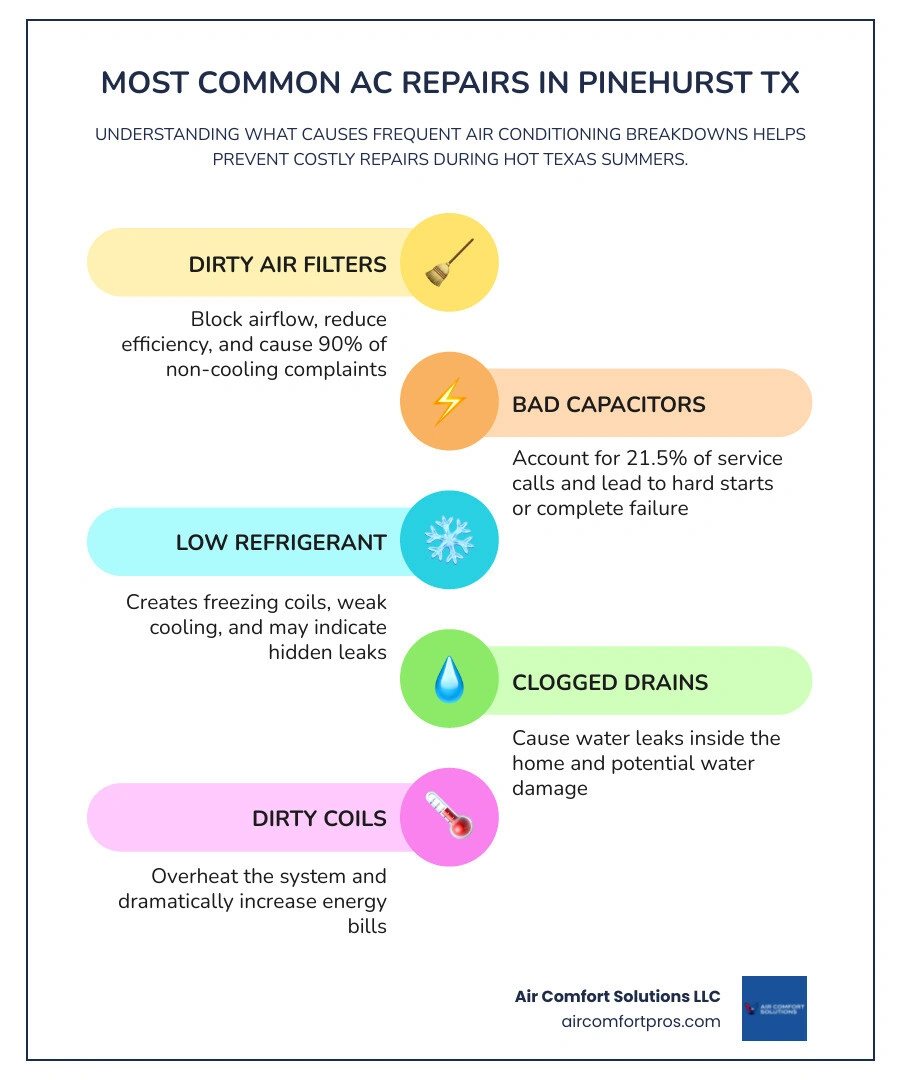
Two numbers stand out from real service call data. First, bad capacitors alone account for more than one in five AC service calls — roughly 21.5% based on a sample of 242 repair visits. Second, nine out of ten central air units that aren't cooling properly trace back to a dirty air filter. That means a huge share of AC problems in Pinehurst homes are preventable with basic upkeep.
The sections below break down each repair type, what causes it, and what you can do about it — whether that's a simple DIY fix or a call to a licensed HVAC technician.
Identifying the Most Common AC Repairs and What Causes Them
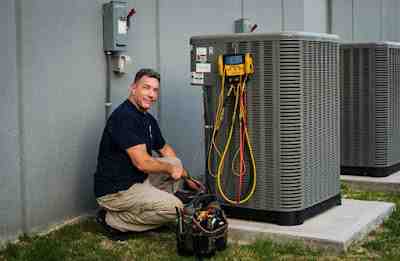
The first step is knowing what counts as an early warning sign. In many homes, the system gives small hints before it fails completely. If you catch them early, you can often avoid turning a minor repair into a major one.
Common signs your AC may need attention include:
• Weak airflow from one or more vents
• Warm air when the thermostat is set to cool
• Rooms that feel sticky or more humid than usual
• Short cycling, where the system turns on and off too often
• Ice on the refrigerant line or indoor coil
• Water around the indoor unit
• Strange sounds like clicking, buzzing, rattling, or grinding
• Musty or electrical odors
• A sudden spike in energy use
• The unit not starting at all
If those symptoms sound familiar, our guide on Signs Your AC Needs Repair in Houston Area Heat goes deeper into what Pinehurst-area homeowners should watch for during extreme Texas weather.
The biggest causes behind these repair calls are usually not dramatic. They are everyday problems like:
• Dirty filters that choke airflow
• Dirty condenser coils that trap heat outside
• Refrigerant leaks that reduce cooling capacity
• Electrical wear on capacitors and contactors
• Thermostat errors or battery failure
• Drain line clogs from algae, dust, and moisture
• Oversized or undersized equipment
• Deferred maintenance year after year
That last one is the sneaky one. Skipped maintenance does not always punish you immediately. It waits until the hottest week of the year, because of course it does.
Airflow Obstructions and Drainage Issues
Airflow and drainage problems are among the most common reasons an AC stops performing well in Pinehurst, Tomball, Magnolia, and nearby areas. Heat, humidity, pollen, dust, and long cooling seasons all work against your system.
Restricted airflow can come from:
• Dirty or clogged air filters
• Closed or blocked supply vents
• Furniture covering returns
• Dirty evaporator coils
• Blower motor problems
• Duct issues or poor installation
When airflow drops, the evaporator coil gets too cold. That can lead to ice buildup, weak cooling, longer run times, and eventually compressor stress. If your vents feel weak, start with Resolve Poor Airflow from AC Vents.
Drainage issues are just as common. Your AC removes moisture from indoor air, and that water has to leave through the condensate drain line. In humid areas like ours, algae and sludge can build up quickly. When the line clogs, water backs up into the drain pan and may leak around the air handler, damage drywall, or trigger a float switch that shuts the system down.
For more on that issue, see What to Do When Your AC Is Leaking Water.
Early clues of airflow or drainage trouble include:
• Uneven temperatures from room to room
• The AC running longer than normal
• Higher humidity indoors
• Water stains near the indoor unit
• A musty smell near vents or the closet housing the air handler
Humidity matters more than many homeowners realize. If you want to understand that connection better, read How Humidity Affects Your AC Performance.
Understanding the Most Common AC Repairs and What Causes Them in Electrical Systems
Electrical problems are some of the most frequent reasons an AC suddenly stops. The most common parts involved are the capacitor, contactor, and wiring connections.
Capacitors help start and run the compressor and fan motors. When one weakens, you may notice:
• Clicking but no startup
• Buzzing from the outdoor unit
• The fan trying but failing to spin
• Short cycling
• Intermittent cooling
This is a major category in real-world service calls. As noted earlier, capacitor failures make up about 21.5% of repair visits in one service-call sample. That makes them one of the most common AC repairs homeowners face.
Contactors are switches that control electrical flow to the compressor and condenser fan. Over time, their surfaces can pit and wear down from repeated cycling. Add summer storms and power surges, and electrical wear becomes even more likely.
You may also hear clues before a total failure. Our article AC Making Strange Noises What They Mean can help you connect sounds with likely issues.
A few homeowner-safe checks are okay:
• Confirm the thermostat is calling for cooling
• Check whether the breaker has tripped
• Listen for clicking or buzzing
• Look for obvious loose debris around the outdoor unit
But if the system smells hot or burnt, stop there and read AC System Have an Electrical Burning Smell. Electrical repairs are not a DIY project. Capacitors can store dangerous voltage even after power is shut off.
If your breaker keeps tripping, that is also a warning sign, not an inconvenience to be ignored. More on that here: AC Keeps Tripping Circuit Breaker in Spring.
Thermostat Malfunctions and Sensor Issues
Sometimes the AC itself is fine, but the thermostat is sending bad instructions. That is good news, comparatively speaking.
Common thermostat-related problems include:
• Dead batteries
• Incorrect mode or schedule settings
• Calibration errors
• Poor placement in direct sunlight
• Loose wiring
• Sensor misalignment
In newer homes, smart thermostat settings can also cause confusion. Eco mode, vacation schedules, app overrides, or lost Wi-Fi connection can make homeowners think the AC is failing when it is actually following bad instructions.
Start with the basics:
• Make sure it is set to Cool
• Set the temperature below room temperature
• Replace batteries if applicable
• Check the screen for error messages
• Make sure sunlight or lamps are not heating the thermostat
If the system will not start during a stretch of hot weather, AC Not Turning On During a Heatwave is a helpful next read.
Refrigerant Leaks and Coil Freezing
Refrigerant problems are serious because they affect performance, efficiency, equipment life, and the environment. Refrigerant does not get "used up" like gasoline. If levels are low, there is usually a leak.
Common causes of refrigerant loss include:
• Corrosion in coils
• Vibration-related wear at joints
• Damage from age or contamination
• Installation issues such as undercharging
Low refrigerant changes system pressure and reduces heat absorption. The result can be:
• Weak or warm airflow
• Longer cooling cycles
• Ice on the indoor coil or refrigerant lines
• High humidity indoors
• Hissing sounds
• Rising energy use
If you suspect this issue, review Low Refrigerant Signs in Your AC System.
Refrigerant leaks should always be handled by a trained HVAC technician. The proper fix is to locate and repair the leak, verify the repair, and then charge the system to manufacturer specifications. Simply "topping it off" without fixing the leak is not a real solution.
There is also an environmental angle. Refrigerant releases can harm the environment, and older systems using R-22 are especially complicated in 2026 because that refrigerant has long been phased out and is no longer manufactured for new use. In many older systems, major refrigerant-related repairs can become a strong reason to consider replacement instead.
Frozen coils are closely related. Homeowners sometimes think ice means the AC is working extra hard. Unfortunately, it usually means the opposite. A frozen evaporator coil cannot absorb heat well, so cooling drops fast.
The two most common root causes are:
• Restricted airflow
• Low refrigerant
If your system freezes in summer, shut it off and let it thaw. Running it while frozen can damage the compressor. This article explains more: Why Is My AC Freezing Up in Summer in Tomball.
Signs of a Failing AC Compressor
The compressor is one of the most important parts in the system. It pumps refrigerant through the cooling cycle. When it starts failing, cooling often becomes inconsistent, and repair decisions become more serious.
Warning signs include:
• The outdoor unit hums but struggles to start
• The AC runs but does not cool well
• Frequent breaker trips
• Loud clanking, buzzing, or hard-start sounds
• Overheating outdoor unit
• Repeated refrigerant-related problems
If your system is running but not keeping up, Why Is My AC Running But Not Cooling is a smart troubleshooting resource. If you suspect compressor trouble specifically, see How to Tell If Your AC Compressor Is Failing.
Compressor failure is often the end result of another problem that was ignored too long, such as:
• Dirty coils causing high pressure
• Low refrigerant
• Electrical failures
• Overheating in extreme Texas heat
• Short cycling from improper sizing
That is one reason proper installation and sizing matter so much. An oversized system may short cycle and leave humidity behind. An undersized system may run constantly and wear out faster. For some home additions, garages, or problem rooms, a ductless mini-split can reduce future strain by cooling that space independently instead of overloading the main system.
Prevention and Professional Maintenance
The best AC repair is the one you never need. Regular maintenance helps prevent the most common failures before they happen, especially in Pinehurst and the north side of Harris County where long, hot cooling seasons are hard on equipment.
A neglected system loses efficiency, runs longer, and wears down faster. If you want the full Texas-specific picture, read What Happens If You Skip AC Maintenance in Texas.
Professional maintenance typically includes:
• Inspecting electrical components
• Testing capacitors and contactors
• Checking refrigerant pressure
• Cleaning coils
• Flushing the condensate drain
• Inspecting blower components
• Verifying thermostat operation
• Measuring airflow and temperature split
One of the biggest efficiency killers is a dirty outdoor coil. When that coil is coated with dirt, grass, or cottonwood-type debris, the system cannot reject heat properly. That means longer run times, higher energy use, and more strain on the compressor. More on that here: Dirty Condenser Coil and AC Performance Connection.
How Maintenance Prevents the Most Common AC Repairs and What Causes Them
Regular upkeep directly reduces many of the issues on the list of most common AC repairs and what causes them.
Here are the core tasks that matter most:
• Change or check the air filter every month during heavy cooling season
• Keep supply and return vents open and unobstructed
• Rinse debris from the outdoor unit with power off
• Keep at least a couple feet of clearance around the condenser
• Flush the condensate drain line periodically if recommended for your setup
• Schedule annual professional tune-ups before peak summer heat
Seasonal maintenance checklist for homeowners:
• Spring:
— Replace filter
— Test thermostat
— Clear debris around condenser
— Schedule AC tune-up
• Summer:
— Check filter monthly
— Watch for weak airflow, leaks, or ice
— Keep doors and vents open for balanced airflow
• Fall:
— Inspect for unusual wear after cooling season
— Clean around outdoor equipment
• Winter:
— Review system age, performance, and repair history before next season
Hot climates shorten equipment life when maintenance is skipped. We explain that in Why Do AC Units Wear Out Faster in Hot Climates.
DIY Troubleshooting vs. Professional Repair
Some AC issues are reasonable for homeowners to check. Others should be left to us or another qualified HVAC professional right away.
• Replace air filter — Professional Repairs: Refrigerant leak detection and repair
• Check thermostat settings and batteries — Professional Repairs: Capacitor or contactor replacement
• Make sure vents are open and clear — Professional Repairs: Electrical wiring repairs
• Reset breaker once — Professional Repairs: Compressor diagnostics
• Clear leaves and debris around outdoor unit — Professional Repairs: Motor replacement
• Turn off system if coil is frozen — Professional Repairs: Coil cleaning requiring disassembly
• Look for visible water around unit — Professional Repairs: Drain line repairs inside equipment
Call for professional help right away if you notice:
• Electrical burning smells
• Repeated breaker trips
• Ice that returns after filter replacement
• Hissing refrigerant sounds
• Loud metal-on-metal noises
• Water leaking into ceilings, walls, or closets
• The system not cooling during extreme heat
At Air Comfort Solutions LLC, we help homeowners across Pinehurst, Plantersville, Magnolia, Houston, The Woodlands, Montgomery, Conroe, Spring, and Tomball diagnose these issues honestly and fix the actual cause, not just the symptom.
Frequently Asked Questions about AC Repairs
Why is my AC running but the house isn't getting cooler?
The most common causes are a dirty air filter, low refrigerant, a frozen evaporator coil, dirty condenser coils, or thermostat issues. Start with the filter first. Research shows that nine out of ten central AC systems with poor cooling performance trace back to a clogged filter.
How often should I change my air filter in the Pinehurst area?
Check it every month, especially during spring and summer. Many homes need replacement every 30 to 90 days, but homes with pets, dust, allergies, or heavy AC use may need more frequent changes. In our area, heat, humidity, and airborne debris can clog filters faster than many homeowners expect.
What causes my AC unit to make a loud clicking or buzzing sound?
Clicking or buzzing often points to electrical issues like a failing capacitor or worn contactor. It can also mean a motor is struggling to start. Do not ignore it. Small electrical problems can lead to bigger component damage if the system keeps trying to run.
Conclusion
Most AC problems start small: a dirty filter, a clogged drain, a weak capacitor, a thermostat setting that got a little too clever for its own good. But in Pinehurst heat, small problems do not stay small for long.
Knowing the warning signs and the root causes behind the most common AC repairs and what causes them helps you act early, protect your comfort, and avoid unnecessary strain on your system. Regular maintenance, quick attention to symptoms, and proper sizing all make a big difference over the life of your equipment.
If your AC is freezing up, leaking, short cycling, making strange noises, or simply refusing to keep up, our team at Air Comfort Solutions LLC is here to help with reliable service across Pinehurst and nearby communities. When you are ready, schedule your professional AC repair in Tomball and Pinehurst today.
What Causes the Most Common AC Repairs in Pinehurst, TX
Understanding most common AC repairs and what causes them can save you from a miserable, sweltering day in Pinehurst, TX — and a much bigger repair bill down the road. Most AC breakdowns don't happen out of nowhere. They build up slowly from worn parts, skipped maintenance, and small issues that get ignored one season too long. Here in North Harris County, where the heat and humidity push your system harder than almost anywhere else in the country, knowing what to watch for makes a real difference.
Here is a quick look at the most common AC repairs and their causes:
| AC Repair Issue | Most Common Cause |
|---|
| Weak or no cooling | Dirty air filter, low refrigerant, dirty coils |
| AC won't turn on | Faulty capacitor, tripped breaker, bad thermostat |
| Frozen evaporator coils | Restricted airflow or refrigerant leak |
| Water leaking from unit | Clogged condensate drain line |
| Short cycling | Oversized system, failing capacitor, refrigerant leak |
| Strange noises | Loose fan, worn belt, failing capacitor or contactor |
| High energy bills | Dirty coils, low refrigerant, aging components |
| AC running constantly | Undersized system, blocked vents, dirty filter |
Two numbers stand out from real service call data. First, bad capacitors alone account for more than one in five AC service calls — roughly 21.5% based on a sample of 242 repair visits. Second, nine out of ten central air units that aren't cooling properly trace back to a dirty air filter. That means a huge share of AC problems in Pinehurst homes are preventable with basic upkeep.
The sections below break down each repair type, what causes it, and what you can do about it — whether that's a simple DIY fix or a call to a licensed HVAC technician.
Identifying the Most Common AC Repairs and What Causes Them
The first step is knowing what counts as an early warning sign. In many homes, the system gives small hints before it fails completely. If you catch them early, you can often avoid turning a minor repair into a major one.
Common signs your AC may need attention include:
- Weak airflow from one or more vents
- Warm air when the thermostat is set to cool
- Rooms that feel sticky or more humid than usual
- Short cycling, where the system turns on and off too often
- Ice on the refrigerant line or indoor coil
- Water around the indoor unit
- Strange sounds like clicking, buzzing, rattling, or grinding
- Musty or electrical odors
- A sudden spike in energy use
- The unit not starting at all
If those symptoms sound familiar, our guide on Signs Your AC Needs Repair in Houston Area Heat goes deeper into what Pinehurst-area homeowners should watch for during extreme Texas weather.
The biggest causes behind these repair calls are usually not dramatic. They are everyday problems like:
- Dirty filters that choke airflow
- Dirty condenser coils that trap heat outside
- Refrigerant leaks that reduce cooling capacity
- Electrical wear on capacitors and contactors
- Thermostat errors or battery failure
- Drain line clogs from algae, dust, and moisture
- Oversized or undersized equipment
- Deferred maintenance year after year
That last one is the sneaky one. Skipped maintenance does not always punish you immediately. It waits until the hottest week of the year, because of course it does.
Airflow Obstructions and Drainage Issues
Airflow and drainage problems are among the most common reasons an AC stops performing well in Pinehurst, Tomball, Magnolia, and nearby areas. Heat, humidity, pollen, dust, and long cooling seasons all work against your system.
Restricted airflow can come from:
- Dirty or clogged air filters
- Closed or blocked supply vents
- Furniture covering returns
- Dirty evaporator coils
- Blower motor problems
- Duct issues or poor installation
When airflow drops, the evaporator coil gets too cold. That can lead to ice buildup, weak cooling, longer run times, and eventually compressor stress. If your vents feel weak, start with Resolve Poor Airflow from AC Vents.
Drainage issues are just as common. Your AC removes moisture from indoor air, and that water has to leave through the condensate drain line. In humid areas like ours, algae and sludge can build up quickly. When the line clogs, water backs up into the drain pan and may leak around the air handler, damage drywall, or trigger a float switch that shuts the system down.
For more on that issue, see What to Do When Your AC Is Leaking Water.
Early clues of airflow or drainage trouble include:
- Uneven temperatures from room to room
- The AC running longer than normal
- Higher humidity indoors
- Water stains near the indoor unit
- A musty smell near vents or the closet housing the air handler
Humidity matters more than many homeowners realize. If you want to understand that connection better, read How Humidity Affects Your AC Performance.
Understanding the Most Common AC Repairs and What Causes Them in Electrical Systems
Electrical problems are some of the most frequent reasons an AC suddenly stops. The most common parts involved are the capacitor, contactor, and wiring connections.
Capacitors help start and run the compressor and fan motors. When one weakens, you may notice:
- Clicking but no startup
- Buzzing from the outdoor unit
- The fan trying but failing to spin
- Short cycling
- Intermittent cooling
This is a major category in real-world service calls. As noted earlier, capacitor failures make up about 21.5% of repair visits in one service-call sample. That makes them one of the most common AC repairs homeowners face.
Contactors are switches that control electrical flow to the compressor and condenser fan. Over time, their surfaces can pit and wear down from repeated cycling. Add summer storms and power surges, and electrical wear becomes even more likely.
You may also hear clues before a total failure. Our article AC Making Strange Noises What They Mean can help you connect sounds with likely issues.
A few homeowner-safe checks are okay:
- Confirm the thermostat is calling for cooling
- Check whether the breaker has tripped
- Listen for clicking or buzzing
- Look for obvious loose debris around the outdoor unit
But if the system smells hot or burnt, stop there and read AC System Have an Electrical Burning Smell. Electrical repairs are not a DIY project. Capacitors can store dangerous voltage even after power is shut off.
If your breaker keeps tripping, that is also a warning sign, not an inconvenience to be ignored. More on that here: AC Keeps Tripping Circuit Breaker in Spring.
Thermostat Malfunctions and Sensor Issues
Sometimes the AC itself is fine, but the thermostat is sending bad instructions. That is good news, comparatively speaking.
Common thermostat-related problems include:
- Dead batteries
- Incorrect mode or schedule settings
- Calibration errors
- Poor placement in direct sunlight
- Loose wiring
- Sensor misalignment
In newer homes, smart thermostat settings can also cause confusion. Eco mode, vacation schedules, app overrides, or lost Wi-Fi connection can make homeowners think the AC is failing when it is actually following bad instructions.
Start with the basics:
- Make sure it is set to Cool
- Set the temperature below room temperature
- Replace batteries if applicable
- Check the screen for error messages
- Make sure sunlight or lamps are not heating the thermostat
If the system will not start during a stretch of hot weather, AC Not Turning On During a Heatwave is a helpful next read.
Refrigerant Leaks and Coil Freezing
Refrigerant problems are serious because they affect performance, efficiency, equipment life, and the environment. Refrigerant does not get "used up" like gasoline. If levels are low, there is usually a leak.
Common causes of refrigerant loss include:
- Corrosion in coils
- Vibration-related wear at joints
- Damage from age or contamination
- Installation issues such as undercharging
Low refrigerant changes system pressure and reduces heat absorption. The result can be:
- Weak or warm airflow
- Longer cooling cycles
- Ice on the indoor coil or refrigerant lines
- High humidity indoors
- Hissing sounds
- Rising energy use
If you suspect this issue, review Low Refrigerant Signs in Your AC System.
Refrigerant leaks should always be handled by a trained HVAC technician. The proper fix is to locate and repair the leak, verify the repair, and then charge the system to manufacturer specifications. Simply "topping it off" without fixing the leak is not a real solution.
There is also an environmental angle. Refrigerant releases can harm the environment, and older systems using R-22 are especially complicated in 2026 because that refrigerant has long been phased out and is no longer manufactured for new use. In many older systems, major refrigerant-related repairs can become a strong reason to consider replacement instead.
Frozen coils are closely related. Homeowners sometimes think ice means the AC is working extra hard. Unfortunately, it usually means the opposite. A frozen evaporator coil cannot absorb heat well, so cooling drops fast.
The two most common root causes are:
- Restricted airflow
- Low refrigerant
If your system freezes in summer, shut it off and let it thaw. Running it while frozen can damage the compressor. This article explains more: Why Is My AC Freezing Up in Summer in Tomball.
Signs of a Failing AC Compressor
The compressor is one of the most important parts in the system. It pumps refrigerant through the cooling cycle. When it starts failing, cooling often becomes inconsistent, and repair decisions become more serious.
Warning signs include:
- The outdoor unit hums but struggles to start
- The AC runs but does not cool well
- Frequent breaker trips
- Loud clanking, buzzing, or hard-start sounds
- Overheating outdoor unit
- Repeated refrigerant-related problems
If your system is running but not keeping up, Why Is My AC Running But Not Cooling is a smart troubleshooting resource. If you suspect compressor trouble specifically, see How to Tell If Your AC Compressor Is Failing.
Compressor failure is often the end result of another problem that was ignored too long, such as:
- Dirty coils causing high pressure
- Low refrigerant
- Electrical failures
- Overheating in extreme Texas heat
- Short cycling from improper sizing
That is one reason proper installation and sizing matter so much. An oversized system may short cycle and leave humidity behind. An undersized system may run constantly and wear out faster. For some home additions, garages, or problem rooms, a ductless mini-split can reduce future strain by cooling that space independently instead of overloading the main system.
Prevention and Professional Maintenance
The best AC repair is the one you never need. Regular maintenance helps prevent the most common failures before they happen, especially in Pinehurst and the north side of Harris County where long, hot cooling seasons are hard on equipment.
A neglected system loses efficiency, runs longer, and wears down faster. If you want the full Texas-specific picture, read What Happens If You Skip AC Maintenance in Texas.
Professional maintenance typically includes:
- Inspecting electrical components
- Testing capacitors and contactors
- Checking refrigerant pressure
- Cleaning coils
- Flushing the condensate drain
- Inspecting blower components
- Verifying thermostat operation
- Measuring airflow and temperature split
One of the biggest efficiency killers is a dirty outdoor coil. When that coil is coated with dirt, grass, or cottonwood-type debris, the system cannot reject heat properly. That means longer run times, higher energy use, and more strain on the compressor. More on that here: Dirty Condenser Coil and AC Performance Connection.
How Maintenance Prevents the Most Common AC Repairs and What Causes Them
Regular upkeep directly reduces many of the issues on the list of most common AC repairs and what causes them.
Here are the core tasks that matter most:
- Change or check the air filter every month during heavy cooling season
- Keep supply and return vents open and unobstructed
- Rinse debris from the outdoor unit with power off
- Keep at least a couple feet of clearance around the condenser
- Flush the condensate drain line periodically if recommended for your setup
- Schedule annual professional tune-ups before peak summer heat
Seasonal maintenance checklist for homeowners:
- Spring:
- Replace filter
- Test thermostat
- Clear debris around condenser
- Schedule AC tune-up
- Summer:
- Check filter monthly
- Watch for weak airflow, leaks, or ice
- Keep doors and vents open for balanced airflow
- Fall:
- Inspect for unusual wear after cooling season
- Clean around outdoor equipment
- Winter:
- Review system age, performance, and repair history before next season
Hot climates shorten equipment life when maintenance is skipped. We explain that in Why Do AC Units Wear Out Faster in Hot Climates.
DIY Troubleshooting vs. Professional Repair
Some AC issues are reasonable for homeowners to check. Others should be left to us or another qualified HVAC professional right away.
| Homeowner DIY Tasks | Professional Repairs |
|---|
| Replace air filter | Refrigerant leak detection and repair |
| Check thermostat settings and batteries | Capacitor or contactor replacement |
| Make sure vents are open and clear | Electrical wiring repairs |
| Reset breaker once | Compressor diagnostics |
| Clear leaves and debris around outdoor unit | Motor replacement |
| Turn off system if coil is frozen | Coil cleaning requiring disassembly |
| Look for visible water around unit | Drain line repairs inside equipment |
Call for professional help right away if you notice:
- Electrical burning smells
- Repeated breaker trips
- Ice that returns after filter replacement
- Hissing refrigerant sounds
- Loud metal-on-metal noises
- Water leaking into ceilings, walls, or closets
- The system not cooling during extreme heat
At Air Comfort Solutions LLC, we help homeowners across Pinehurst, Plantersville, Magnolia, Houston, The Woodlands, Montgomery, Conroe, Spring, and Tomball diagnose these issues honestly and fix the actual cause, not just the symptom.
Frequently Asked Questions about AC Repairs
Why is my AC running but the house isn't getting cooler?
The most common causes are a dirty air filter, low refrigerant, a frozen evaporator coil, dirty condenser coils, or thermostat issues. Start with the filter first. Research shows that nine out of ten central AC systems with poor cooling performance trace back to a clogged filter.
How often should I change my air filter in the Pinehurst area?
Check it every month, especially during spring and summer. Many homes need replacement every 30 to 90 days, but homes with pets, dust, allergies, or heavy AC use may need more frequent changes. In our area, heat, humidity, and airborne debris can clog filters faster than many homeowners expect.
What causes my AC unit to make a loud clicking or buzzing sound?
Clicking or buzzing often points to electrical issues like a failing capacitor or worn contactor. It can also mean a motor is struggling to start. Do not ignore it. Small electrical problems can lead to bigger component damage if the system keeps trying to run.
Conclusion
Most AC problems start small: a dirty filter, a clogged drain, a weak capacitor, a thermostat setting that got a little too clever for its own good. But in Pinehurst heat, small problems do not stay small for long.
Knowing the warning signs and the root causes behind the most common AC repairs and what causes them helps you act early, protect your comfort, and avoid unnecessary strain on your system. Regular maintenance, quick attention to symptoms, and proper sizing all make a big difference over the life of your equipment.
If your AC is freezing up, leaking, short cycling, making strange noises, or simply refusing to keep up, our team at Air Comfort Solutions LLC is here to help with reliable service across Pinehurst and nearby communities. When you are ready, schedule your professional AC repair in Tomball and Pinehurst today.
What Causes the Most Common AC Repairs in Pinehurst, TX
Understanding most common AC repairs and what causes them can save you from a miserable, sweltering day in Pinehurst, TX — and a much bigger repair bill down the road. Most AC breakdowns don't happen out of nowhere. They build up slowly from worn parts, skipped maintenance, and small issues that get ignored one season too long. Here in North Harris County, where the heat and humidity push your system harder than almost anywhere else in the country, knowing what to watch for makes a real difference.
Here is a quick look at the most common AC repairs and their causes:
| AC Repair Issue | Most Common Cause |
|---|
| Weak or no cooling | Dirty air filter, low refrigerant, dirty coils |
| AC won't turn on | Faulty capacitor, tripped breaker, bad thermostat |
| Frozen evaporator coils | Restricted airflow or refrigerant leak |
| Water leaking from unit | Clogged condensate drain line |
| Short cycling | Oversized system, failing capacitor, refrigerant leak |
| Strange noises | Loose fan, worn belt, failing capacitor or contactor |
| High energy bills | Dirty coils, low refrigerant, aging components |
| AC running constantly | Undersized system, blocked vents, dirty filter |
Two numbers stand out from real service call data. First, bad capacitors alone account for more than one in five AC service calls — roughly 21.5% based on a sample of 242 repair visits. Second, nine out of ten central air units that aren't cooling properly trace back to a dirty air filter. That means a huge share of AC problems in Pinehurst homes are preventable with basic upkeep.
The sections below break down each repair type, what causes it, and what you can do about it — whether that's a simple DIY fix or a call to a licensed HVAC technician.
Identifying the Most Common AC Repairs and What Causes Them
The first step is knowing what counts as an early warning sign. In many homes, the system gives small hints before it fails completely. If you catch them early, you can often avoid turning a minor repair into a major one.
Common signs your AC may need attention include:
- Weak airflow from one or more vents
- Warm air when the thermostat is set to cool
- Rooms that feel sticky or more humid than usual
- Short cycling, where the system turns on and off too often
- Ice on the refrigerant line or indoor coil
- Water around the indoor unit
- Strange sounds like clicking, buzzing, rattling, or grinding
- Musty or electrical odors
- A sudden spike in energy use
- The unit not starting at all
If those symptoms sound familiar, our guide on Signs Your AC Needs Repair in Houston Area Heat goes deeper into what Pinehurst-area homeowners should watch for during extreme Texas weather.
The biggest causes behind these repair calls are usually not dramatic. They are everyday problems like:
- Dirty filters that choke airflow
- Dirty condenser coils that trap heat outside
- Refrigerant leaks that reduce cooling capacity
- Electrical wear on capacitors and contactors
- Thermostat errors or battery failure
- Drain line clogs from algae, dust, and moisture
- Oversized or undersized equipment
- Deferred maintenance year after year
That last one is the sneaky one. Skipped maintenance does not always punish you immediately. It waits until the hottest week of the year, because of course it does.
Airflow Obstructions and Drainage Issues
Airflow and drainage problems are among the most common reasons an AC stops performing well in Pinehurst, Tomball, Magnolia, and nearby areas. Heat, humidity, pollen, dust, and long cooling seasons all work against your system.
Restricted airflow can come from:
- Dirty or clogged air filters
- Closed or blocked supply vents
- Furniture covering returns
- Dirty evaporator coils
- Blower motor problems
- Duct issues or poor installation
When airflow drops, the evaporator coil gets too cold. That can lead to ice buildup, weak cooling, longer run times, and eventually compressor stress. If your vents feel weak, start with Resolve Poor Airflow from AC Vents.
Drainage issues are just as common. Your AC removes moisture from indoor air, and that water has to leave through the condensate drain line. In humid areas like ours, algae and sludge can build up quickly. When the line clogs, water backs up into the drain pan and may leak around the air handler, damage drywall, or trigger a float switch that shuts the system down.
For more on that issue, see What to Do When Your AC Is Leaking Water.
Early clues of airflow or drainage trouble include:
- Uneven temperatures from room to room
- The AC running longer than normal
- Higher humidity indoors
- Water stains near the indoor unit
- A musty smell near vents or the closet housing the air handler
Humidity matters more than many homeowners realize. If you want to understand that connection better, read How Humidity Affects Your AC Performance.
Understanding the Most Common AC Repairs and What Causes Them in Electrical Systems
Electrical problems are some of the most frequent reasons an AC suddenly stops. The most common parts involved are the capacitor, contactor, and wiring connections.
Capacitors help start and run the compressor and fan motors. When one weakens, you may notice:
- Clicking but no startup
- Buzzing from the outdoor unit
- The fan trying but failing to spin
- Short cycling
- Intermittent cooling
This is a major category in real-world service calls. As noted earlier, capacitor failures make up about 21.5% of repair visits in one service-call sample. That makes them one of the most common AC repairs homeowners face.
Contactors are switches that control electrical flow to the compressor and condenser fan. Over time, their surfaces can pit and wear down from repeated cycling. Add summer storms and power surges, and electrical wear becomes even more likely.
You may also hear clues before a total failure. Our article AC Making Strange Noises What They Mean can help you connect sounds with likely issues.
A few homeowner-safe checks are okay:
- Confirm the thermostat is calling for cooling
- Check whether the breaker has tripped
- Listen for clicking or buzzing
- Look for obvious loose debris around the outdoor unit
But if the system smells hot or burnt, stop there and read AC System Have an Electrical Burning Smell. Electrical repairs are not a DIY project. Capacitors can store dangerous voltage even after power is shut off.
If your breaker keeps tripping, that is also a warning sign, not an inconvenience to be ignored. More on that here: AC Keeps Tripping Circuit Breaker in Spring.
Thermostat Malfunctions and Sensor Issues
Sometimes the AC itself is fine, but the thermostat is sending bad instructions. That is good news, comparatively speaking.
Common thermostat-related problems include:
- Dead batteries
- Incorrect mode or schedule settings
- Calibration errors
- Poor placement in direct sunlight
- Loose wiring
- Sensor misalignment
In newer homes, smart thermostat settings can also cause confusion. Eco mode, vacation schedules, app overrides, or lost Wi-Fi connection can make homeowners think the AC is failing when it is actually following bad instructions.
Start with the basics:
- Make sure it is set to Cool
- Set the temperature below room temperature
- Replace batteries if applicable
- Check the screen for error messages
- Make sure sunlight or lamps are not heating the thermostat
If the system will not start during a stretch of hot weather, AC Not Turning On During a Heatwave is a helpful next read.
Refrigerant Leaks and Coil Freezing
Refrigerant problems are serious because they affect performance, efficiency, equipment life, and the environment. Refrigerant does not get "used up" like gasoline. If levels are low, there is usually a leak.
Common causes of refrigerant loss include:
- Corrosion in coils
- Vibration-related wear at joints
- Damage from age or contamination
- Installation issues such as undercharging
Low refrigerant changes system pressure and reduces heat absorption. The result can be:
- Weak or warm airflow
- Longer cooling cycles
- Ice on the indoor coil or refrigerant lines
- High humidity indoors
- Hissing sounds
- Rising energy use
If you suspect this issue, review Low Refrigerant Signs in Your AC System.
Refrigerant leaks should always be handled by a trained HVAC technician. The proper fix is to locate and repair the leak, verify the repair, and then charge the system to manufacturer specifications. Simply "topping it off" without fixing the leak is not a real solution.
There is also an environmental angle. Refrigerant releases can harm the environment, and older systems using R-22 are especially complicated in 2026 because that refrigerant has long been phased out and is no longer manufactured for new use. In many older systems, major refrigerant-related repairs can become a strong reason to consider replacement instead.
Frozen coils are closely related. Homeowners sometimes think ice means the AC is working extra hard. Unfortunately, it usually means the opposite. A frozen evaporator coil cannot absorb heat well, so cooling drops fast.
The two most common root causes are:
- Restricted airflow
- Low refrigerant
If your system freezes in summer, shut it off and let it thaw. Running it while frozen can damage the compressor. This article explains more: Why Is My AC Freezing Up in Summer in Tomball.
Signs of a Failing AC Compressor
The compressor is one of the most important parts in the system. It pumps refrigerant through the cooling cycle. When it starts failing, cooling often becomes inconsistent, and repair decisions become more serious.
Warning signs include:
- The outdoor unit hums but struggles to start
- The AC runs but does not cool well
- Frequent breaker trips
- Loud clanking, buzzing, or hard-start sounds
- Overheating outdoor unit
- Repeated refrigerant-related problems
If your system is running but not keeping up, Why Is My AC Running But Not Cooling is a smart troubleshooting resource. If you suspect compressor trouble specifically, see How to Tell If Your AC Compressor Is Failing.
Compressor failure is often the end result of another problem that was ignored too long, such as:
- Dirty coils causing high pressure
- Low refrigerant
- Electrical failures
- Overheating in extreme Texas heat
- Short cycling from improper sizing
That is one reason proper installation and sizing matter so much. An oversized system may short cycle and leave humidity behind. An undersized system may run constantly and wear out faster. For some home additions, garages, or problem rooms, a ductless mini-split can reduce future strain by cooling that space independently instead of overloading the main system.
Prevention and Professional Maintenance
The best AC repair is the one you never need. Regular maintenance helps prevent the most common failures before they happen, especially in Pinehurst and the north side of Harris County where long, hot cooling seasons are hard on equipment.
A neglected system loses efficiency, runs longer, and wears down faster. If you want the full Texas-specific picture, read What Happens If You Skip AC Maintenance in Texas.
Professional maintenance typically includes:
- Inspecting electrical components
- Testing capacitors and contactors
- Checking refrigerant pressure
- Cleaning coils
- Flushing the condensate drain
- Inspecting blower components
- Verifying thermostat operation
- Measuring airflow and temperature split
One of the biggest efficiency killers is a dirty outdoor coil. When that coil is coated with dirt, grass, or cottonwood-type debris, the system cannot reject heat properly. That means longer run times, higher energy use, and more strain on the compressor. More on that here: Dirty Condenser Coil and AC Performance Connection.
How Maintenance Prevents the Most Common AC Repairs and What Causes Them
Regular upkeep directly reduces many of the issues on the list of most common AC repairs and what causes them.
Here are the core tasks that matter most:
- Change or check the air filter every month during heavy cooling season
- Keep supply and return vents open and unobstructed
- Rinse debris from the outdoor unit with power off
- Keep at least a couple feet of clearance around the condenser
- Flush the condensate drain line periodically if recommended for your setup
- Schedule annual professional tune-ups before peak summer heat
Seasonal maintenance checklist for homeowners:
- Spring:
- Replace filter
- Test thermostat
- Clear debris around condenser
- Schedule AC tune-up
- Summer:
- Check filter monthly
- Watch for weak airflow, leaks, or ice
- Keep doors and vents open for balanced airflow
- Fall:
- Inspect for unusual wear after cooling season
- Clean around outdoor equipment
- Winter:
- Review system age, performance, and repair history before next season
Hot climates shorten equipment life when maintenance is skipped. We explain that in Why Do AC Units Wear Out Faster in Hot Climates.
DIY Troubleshooting vs. Professional Repair
Some AC issues are reasonable for homeowners to check. Others should be left to us or another qualified HVAC professional right away.
| Homeowner DIY Tasks | Professional Repairs |
|---|
| Replace air filter | Refrigerant leak detection and repair |
| Check thermostat settings and batteries | Capacitor or contactor replacement |
| Make sure vents are open and clear | Electrical wiring repairs |
| Reset breaker once | Compressor diagnostics |
| Clear leaves and debris around outdoor unit | Motor replacement |
| Turn off system if coil is frozen | Coil cleaning requiring disassembly |
| Look for visible water around unit | Drain line repairs inside equipment |
Call for professional help right away if you notice:
- Electrical burning smells
- Repeated breaker trips
- Ice that returns after filter replacement
- Hissing refrigerant sounds
- Loud metal-on-metal noises
- Water leaking into ceilings, walls, or closets
- The system not cooling during extreme heat
At Air Comfort Solutions LLC, we help homeowners across Pinehurst, Plantersville, Magnolia, Houston, The Woodlands, Montgomery, Conroe, Spring, and Tomball diagnose these issues honestly and fix the actual cause, not just the symptom.
Frequently Asked Questions about AC Repairs
Why is my AC running but the house isn't getting cooler?
The most common causes are a dirty air filter, low refrigerant, a frozen evaporator coil, dirty condenser coils, or thermostat issues. Start with the filter first. Research shows that nine out of ten central AC systems with poor cooling performance trace back to a clogged filter.
How often should I change my air filter in the Pinehurst area?
Check it every month, especially during spring and summer. Many homes need replacement every 30 to 90 days, but homes with pets, dust, allergies, or heavy AC use may need more frequent changes. In our area, heat, humidity, and airborne debris can clog filters faster than many homeowners expect.
What causes my AC unit to make a loud clicking or buzzing sound?
Clicking or buzzing often points to electrical issues like a failing capacitor or worn contactor. It can also mean a motor is struggling to start. Do not ignore it. Small electrical problems can lead to bigger component damage if the system keeps trying to run.
Conclusion
Most AC problems start small: a dirty filter, a clogged drain, a weak capacitor, a thermostat setting that got a little too clever for its own good. But in Pinehurst heat, small problems do not stay small for long.
Knowing the warning signs and the root causes behind the most common AC repairs and what causes them helps you act early, protect your comfort, and avoid unnecessary strain on your system. Regular maintenance, quick attention to symptoms, and proper sizing all make a big difference over the life of your equipment.
If your AC is freezing up, leaking, short cycling, making strange noises, or simply refusing to keep up, our team at Air Comfort Solutions LLC is here to help with reliable service across Pinehurst and nearby communities. When you are ready, schedule your professional AC repair in Tomball and Pinehurst today.
What Causes the Most Common AC Repairs in Pinehurst, TX
Understanding most common AC repairs and what causes them can save you from a miserable, sweltering day in Pinehurst, TX — and a much bigger repair bill down the road. Most AC breakdowns don't happen out of nowhere. They build up slowly from worn parts, skipped maintenance, and small issues that get ignored one season too long. Here in North Harris County, where the heat and humidity push your system harder than almost anywhere else in the country, knowing what to watch for makes a real difference.
Here is a quick look at the most common AC repairs and their causes:
| AC Repair Issue | Most Common Cause |
|---|
| Weak or no cooling | Dirty air filter, low refrigerant, dirty coils |
| AC won't turn on | Faulty capacitor, tripped breaker, bad thermostat |
| Frozen evaporator coils | Restricted airflow or refrigerant leak |
| Water leaking from unit | Clogged condensate drain line |
| Short cycling | Oversized system, failing capacitor, refrigerant leak |
| Strange noises | Loose fan, worn belt, failing capacitor or contactor |
| High energy bills | Dirty coils, low refrigerant, aging components |
| AC running constantly | Undersized system, blocked vents, dirty filter |
Two numbers stand out from real service call data. First, bad capacitors alone account for more than one in five AC service calls — roughly 21.5% based on a sample of 242 repair visits. Second, nine out of ten central air units that aren't cooling properly trace back to a dirty air filter. That means a huge share of AC problems in Pinehurst homes are preventable with basic upkeep.
The sections below break down each repair type, what causes it, and what you can do about it — whether that's a simple DIY fix or a call to a licensed HVAC technician.
Identifying the Most Common AC Repairs and What Causes Them
The first step is knowing what counts as an early warning sign. In many homes, the system gives small hints before it fails completely. If you catch them early, you can often avoid turning a minor repair into a major one.
Common signs your AC may need attention include:
- Weak airflow from one or more vents
- Warm air when the thermostat is set to cool
- Rooms that feel sticky or more humid than usual
- Short cycling, where the system turns on and off too often
- Ice on the refrigerant line or indoor coil
- Water around the indoor unit
- Strange sounds like clicking, buzzing, rattling, or grinding
- Musty or electrical odors
- A sudden spike in energy use
- The unit not starting at all
If those symptoms sound familiar, our guide on Signs Your AC Needs Repair in Houston Area Heat goes deeper into what Pinehurst-area homeowners should watch for during extreme Texas weather.
The biggest causes behind these repair calls are usually not dramatic. They are everyday problems like:
- Dirty filters that choke airflow
- Dirty condenser coils that trap heat outside
- Refrigerant leaks that reduce cooling capacity
- Electrical wear on capacitors and contactors
- Thermostat errors or battery failure
- Drain line clogs from algae, dust, and moisture
- Oversized or undersized equipment
- Deferred maintenance year after year
That last one is the sneaky one. Skipped maintenance does not always punish you immediately. It waits until the hottest week of the year, because of course it does.
Airflow Obstructions and Drainage Issues
Airflow and drainage problems are among the most common reasons an AC stops performing well in Pinehurst, Tomball, Magnolia, and nearby areas. Heat, humidity, pollen, dust, and long cooling seasons all work against your system.
Restricted airflow can come from:
- Dirty or clogged air filters
- Closed or blocked supply vents
- Furniture covering returns
- Dirty evaporator coils
- Blower motor problems
- Duct issues or poor installation
When airflow drops, the evaporator coil gets too cold. That can lead to ice buildup, weak cooling, longer run times, and eventually compressor stress. If your vents feel weak, start with Resolve Poor Airflow from AC Vents.
Drainage issues are just as common. Your AC removes moisture from indoor air, and that water has to leave through the condensate drain line. In humid areas like ours, algae and sludge can build up quickly. When the line clogs, water backs up into the drain pan and may leak around the air handler, damage drywall, or trigger a float switch that shuts the system down.
For more on that issue, see What to Do When Your AC Is Leaking Water.
Early clues of airflow or drainage trouble include:
- Uneven temperatures from room to room
- The AC running longer than normal
- Higher humidity indoors
- Water stains near the indoor unit
- A musty smell near vents or the closet housing the air handler
Humidity matters more than many homeowners realize. If you want to understand that connection better, read How Humidity Affects Your AC Performance.
Understanding the Most Common AC Repairs and What Causes Them in Electrical Systems
Electrical problems are some of the most frequent reasons an AC suddenly stops. The most common parts involved are the capacitor, contactor, and wiring connections.
Capacitors help start and run the compressor and fan motors. When one weakens, you may notice:
- Clicking but no startup
- Buzzing from the outdoor unit
- The fan trying but failing to spin
- Short cycling
- Intermittent cooling
This is a major category in real-world service calls. As noted earlier, capacitor failures make up about 21.5% of repair visits in one service-call sample. That makes them one of the most common AC repairs homeowners face.
Contactors are switches that control electrical flow to the compressor and condenser fan. Over time, their surfaces can pit and wear down from repeated cycling. Add summer storms and power surges, and electrical wear becomes even more likely.
You may also hear clues before a total failure. Our article AC Making Strange Noises What They Mean can help you connect sounds with likely issues.
A few homeowner-safe checks are okay:
- Confirm the thermostat is calling for cooling
- Check whether the breaker has tripped
- Listen for clicking or buzzing
- Look for obvious loose debris around the outdoor unit
But if the system smells hot or burnt, stop there and read AC System Have an Electrical Burning Smell. Electrical repairs are not a DIY project. Capacitors can store dangerous voltage even after power is shut off.
If your breaker keeps tripping, that is also a warning sign, not an inconvenience to be ignored. More on that here: AC Keeps Tripping Circuit Breaker in Spring.
Thermostat Malfunctions and Sensor Issues
Sometimes the AC itself is fine, but the thermostat is sending bad instructions. That is good news, comparatively speaking.
Common thermostat-related problems include:
- Dead batteries
- Incorrect mode or schedule settings
- Calibration errors
- Poor placement in direct sunlight
- Loose wiring
- Sensor misalignment
In newer homes, smart thermostat settings can also cause confusion. Eco mode, vacation schedules, app overrides, or lost Wi-Fi connection can make homeowners think the AC is failing when it is actually following bad instructions.
Start with the basics:
- Make sure it is set to Cool
- Set the temperature below room temperature
- Replace batteries if applicable
- Check the screen for error messages
- Make sure sunlight or lamps are not heating the thermostat
If the system will not start during a stretch of hot weather, AC Not Turning On During a Heatwave is a helpful next read.
Refrigerant Leaks and Coil Freezing
Refrigerant problems are serious because they affect performance, efficiency, equipment life, and the environment. Refrigerant does not get "used up" like gasoline. If levels are low, there is usually a leak.
Common causes of refrigerant loss include:
- Corrosion in coils
- Vibration-related wear at joints
- Damage from age or contamination
- Installation issues such as undercharging
Low refrigerant changes system pressure and reduces heat absorption. The result can be:
- Weak or warm airflow
- Longer cooling cycles
- Ice on the indoor coil or refrigerant lines
- High humidity indoors
- Hissing sounds
- Rising energy use
If you suspect this issue, review Low Refrigerant Signs in Your AC System.
Refrigerant leaks should always be handled by a trained HVAC technician. The proper fix is to locate and repair the leak, verify the repair, and then charge the system to manufacturer specifications. Simply "topping it off" without fixing the leak is not a real solution.
There is also an environmental angle. Refrigerant releases can harm the environment, and older systems using R-22 are especially complicated in 2026 because that refrigerant has long been phased out and is no longer manufactured for new use. In many older systems, major refrigerant-related repairs can become a strong reason to consider replacement instead.
Frozen coils are closely related. Homeowners sometimes think ice means the AC is working extra hard. Unfortunately, it usually means the opposite. A frozen evaporator coil cannot absorb heat well, so cooling drops fast.
The two most common root causes are:
- Restricted airflow
- Low refrigerant
If your system freezes in summer, shut it off and let it thaw. Running it while frozen can damage the compressor. This article explains more: Why Is My AC Freezing Up in Summer in Tomball.
Signs of a Failing AC Compressor
The compressor is one of the most important parts in the system. It pumps refrigerant through the cooling cycle. When it starts failing, cooling often becomes inconsistent, and repair decisions become more serious.
Warning signs include:
- The outdoor unit hums but struggles to start
- The AC runs but does not cool well
- Frequent breaker trips
- Loud clanking, buzzing, or hard-start sounds
- Overheating outdoor unit
- Repeated refrigerant-related problems
If your system is running but not keeping up, Why Is My AC Running But Not Cooling is a smart troubleshooting resource. If you suspect compressor trouble specifically, see How to Tell If Your AC Compressor Is Failing.
Compressor failure is often the end result of another problem that was ignored too long, such as:
- Dirty coils causing high pressure
- Low refrigerant
- Electrical failures
- Overheating in extreme Texas heat
- Short cycling from improper sizing
That is one reason proper installation and sizing matter so much. An oversized system may short cycle and leave humidity behind. An undersized system may run constantly and wear out faster. For some home additions, garages, or problem rooms, a ductless mini-split can reduce future strain by cooling that space independently instead of overloading the main system.
Prevention and Professional Maintenance
The best AC repair is the one you never need. Regular maintenance helps prevent the most common failures before they happen, especially in Pinehurst and the north side of Harris County where long, hot cooling seasons are hard on equipment.
A neglected system loses efficiency, runs longer, and wears down faster. If you want the full Texas-specific picture, read What Happens If You Skip AC Maintenance in Texas.
Professional maintenance typically includes:
- Inspecting electrical components
- Testing capacitors and contactors
- Checking refrigerant pressure
- Cleaning coils
- Flushing the condensate drain
- Inspecting blower components
- Verifying thermostat operation
- Measuring airflow and temperature split
One of the biggest efficiency killers is a dirty outdoor coil. When that coil is coated with dirt, grass, or cottonwood-type debris, the system cannot reject heat properly. That means longer run times, higher energy use, and more strain on the compressor. More on that here: Dirty Condenser Coil and AC Performance Connection.
How Maintenance Prevents the Most Common AC Repairs and What Causes Them
Regular upkeep directly reduces many of the issues on the list of most common AC repairs and what causes them.
Here are the core tasks that matter most:
- Change or check the air filter every month during heavy cooling season
- Keep supply and return vents open and unobstructed
- Rinse debris from the outdoor unit with power off
- Keep at least a couple feet of clearance around the condenser
- Flush the condensate drain line periodically if recommended for your setup
- Schedule annual professional tune-ups before peak summer heat
Seasonal maintenance checklist for homeowners:
- Spring:
- Replace filter
- Test thermostat
- Clear debris around condenser
- Schedule AC tune-up
- Summer:
- Check filter monthly
- Watch for weak airflow, leaks, or ice
- Keep doors and vents open for balanced airflow
- Fall:
- Inspect for unusual wear after cooling season
- Clean around outdoor equipment
- Winter:
- Review system age, performance, and repair history before next season
Hot climates shorten equipment life when maintenance is skipped. We explain that in Why Do AC Units Wear Out Faster in Hot Climates.
DIY Troubleshooting vs. Professional Repair
Some AC issues are reasonable for homeowners to check. Others should be left to us or another qualified HVAC professional right away.
| Homeowner DIY Tasks | Professional Repairs |
|---|
| Replace air filter | Refrigerant leak detection and repair |
| Check thermostat settings and batteries | Capacitor or contactor replacement |
| Make sure vents are open and clear | Electrical wiring repairs |
| Reset breaker once | Compressor diagnostics |
| Clear leaves and debris around outdoor unit | Motor replacement |
| Turn off system if coil is frozen | Coil cleaning requiring disassembly |
| Look for visible water around unit | Drain line repairs inside equipment |
Call for professional help right away if you notice:
- Electrical burning smells
- Repeated breaker trips
- Ice that returns after filter replacement
- Hissing refrigerant sounds
- Loud metal-on-metal noises
- Water leaking into ceilings, walls, or closets
- The system not cooling during extreme heat
At Air Comfort Solutions LLC, we help homeowners across Pinehurst, Plantersville, Magnolia, Houston, The Woodlands, Montgomery, Conroe, Spring, and Tomball diagnose these issues honestly and fix the actual cause, not just the symptom.
Frequently Asked Questions about AC Repairs
Why is my AC running but the house isn't getting cooler?
The most common causes are a dirty air filter, low refrigerant, a frozen evaporator coil, dirty condenser coils, or thermostat issues. Start with the filter first. Research shows that nine out of ten central AC systems with poor cooling performance trace back to a clogged filter.
How often should I change my air filter in the Pinehurst area?
Check it every month, especially during spring and summer. Many homes need replacement every 30 to 90 days, but homes with pets, dust, allergies, or heavy AC use may need more frequent changes. In our area, heat, humidity, and airborne debris can clog filters faster than many homeowners expect.
What causes my AC unit to make a loud clicking or buzzing sound?
Clicking or buzzing often points to electrical issues like a failing capacitor or worn contactor. It can also mean a motor is struggling to start. Do not ignore it. Small electrical problems can lead to bigger component damage if the system keeps trying to run.
Conclusion
Most AC problems start small: a dirty filter, a clogged drain, a weak capacitor, a thermostat setting that got a little too clever for its own good. But in Pinehurst heat, small problems do not stay small for long.
Knowing the warning signs and the root causes behind the most common AC repairs and what causes them helps you act early, protect your comfort, and avoid unnecessary strain on your system. Regular maintenance, quick attention to symptoms, and proper sizing all make a big difference over the life of your equipment.
If your AC is freezing up, leaking, short cycling, making strange noises, or simply refusing to keep up, our team at Air Comfort Solutions LLC is here to help with reliable service across Pinehurst and nearby communities. When you are ready, schedule your professional AC repair in Tomball and Pinehurst today.
What Causes the Most Common AC Repairs in Pinehurst, TX
Understanding most common AC repairs and what causes them can save you from a miserable, sweltering day in Pinehurst, TX — and a much bigger repair bill down the road. Most AC breakdowns don't happen out of nowhere. They build up slowly from worn parts, skipped maintenance, and small issues that get ignored one season too long. Here in North Harris County, where the heat and humidity push your system harder than almost anywhere else in the country, knowing what to watch for makes a real difference.
Here is a quick look at the most common AC repairs and their causes:
| AC Repair Issue | Most Common Cause |
|---|
| Weak or no cooling | Dirty air filter, low refrigerant, dirty coils |
| AC won't turn on | Faulty capacitor, tripped breaker, bad thermostat |
| Frozen evaporator coils | Restricted airflow or refrigerant leak |
| Water leaking from unit | Clogged condensate drain line |
| Short cycling | Oversized system, failing capacitor, refrigerant leak |
| Strange noises | Loose fan, worn belt, failing capacitor or contactor |
| High energy bills | Dirty coils, low refrigerant, aging components |
| AC running constantly | Undersized system, blocked vents, dirty filter |
Two numbers stand out from real service call data. First, bad capacitors alone account for more than one in five AC service calls — roughly 21.5% based on a sample of 242 repair visits. Second, nine out of ten central air units that aren't cooling properly trace back to a dirty air filter. That means a huge share of AC problems in Pinehurst homes are preventable with basic upkeep.
The sections below break down each repair type, what causes it, and what you can do about it — whether that's a simple DIY fix or a call to a licensed HVAC technician.
Identifying the Most Common AC Repairs and What Causes Them
The first step is knowing what counts as an early warning sign. In many homes, the system gives small hints before it fails completely. If you catch them early, you can often avoid turning a minor repair into a major one.
Common signs your AC may need attention include:
- Weak airflow from one or more vents
- Warm air when the thermostat is set to cool
- Rooms that feel sticky or more humid than usual
- Short cycling, where the system turns on and off too often
- Ice on the refrigerant line or indoor coil
- Water around the indoor unit
- Strange sounds like clicking, buzzing, rattling, or grinding
- Musty or electrical odors
- A sudden spike in energy use
- The unit not starting at all
If those symptoms sound familiar, our guide on Signs Your AC Needs Repair in Houston Area Heat goes deeper into what Pinehurst-area homeowners should watch for during extreme Texas weather.
The biggest causes behind these repair calls are usually not dramatic. They are everyday problems like:
- Dirty filters that choke airflow
- Dirty condenser coils that trap heat outside
- Refrigerant leaks that reduce cooling capacity
- Electrical wear on capacitors and contactors
- Thermostat errors or battery failure
- Drain line clogs from algae, dust, and moisture
- Oversized or undersized equipment
- Deferred maintenance year after year
That last one is the sneaky one. Skipped maintenance does not always punish you immediately. It waits until the hottest week of the year, because of course it does.
Airflow Obstructions and Drainage Issues
Airflow and drainage problems are among the most common reasons an AC stops performing well in Pinehurst, Tomball, Magnolia, and nearby areas. Heat, humidity, pollen, dust, and long cooling seasons all work against your system.
Restricted airflow can come from:
- Dirty or clogged air filters
- Closed or blocked supply vents
- Furniture covering returns
- Dirty evaporator coils
- Blower motor problems
- Duct issues or poor installation
When airflow drops, the evaporator coil gets too cold. That can lead to ice buildup, weak cooling, longer run times, and eventually compressor stress. If your vents feel weak, start with Resolve Poor Airflow from AC Vents.
Drainage issues are just as common. Your AC removes moisture from indoor air, and that water has to leave through the condensate drain line. In humid areas like ours, algae and sludge can build up quickly. When the line clogs, water backs up into the drain pan and may leak around the air handler, damage drywall, or trigger a float switch that shuts the system down.
For more on that issue, see What to Do When Your AC Is Leaking Water.
Early clues of airflow or drainage trouble include:
- Uneven temperatures from room to room
- The AC running longer than normal
- Higher humidity indoors
- Water stains near the indoor unit
- A musty smell near vents or the closet housing the air handler
Humidity matters more than many homeowners realize. If you want to understand that connection better, read How Humidity Affects Your AC Performance.
Understanding the Most Common AC Repairs and What Causes Them in Electrical Systems
Electrical problems are some of the most frequent reasons an AC suddenly stops. The most common parts involved are the capacitor, contactor, and wiring connections.
Capacitors help start and run the compressor and fan motors. When one weakens, you may notice:
- Clicking but no startup
- Buzzing from the outdoor unit
- The fan trying but failing to spin
- Short cycling
- Intermittent cooling
This is a major category in real-world service calls. As noted earlier, capacitor failures make up about 21.5% of repair visits in one service-call sample. That makes them one of the most common AC repairs homeowners face.
Contactors are switches that control electrical flow to the compressor and condenser fan. Over time, their surfaces can pit and wear down from repeated cycling. Add summer storms and power surges, and electrical wear becomes even more likely.
You may also hear clues before a total failure. Our article AC Making Strange Noises What They Mean can help you connect sounds with likely issues.
A few homeowner-safe checks are okay:
- Confirm the thermostat is calling for cooling
- Check whether the breaker has tripped
- Listen for clicking or buzzing
- Look for obvious loose debris around the outdoor unit
But if the system smells hot or burnt, stop there and read AC System Have an Electrical Burning Smell. Electrical repairs are not a DIY project. Capacitors can store dangerous voltage even after power is shut off.
If your breaker keeps tripping, that is also a warning sign, not an inconvenience to be ignored. More on that here: AC Keeps Tripping Circuit Breaker in Spring.
Thermostat Malfunctions and Sensor Issues
Sometimes the AC itself is fine, but the thermostat is sending bad instructions. That is good news, comparatively speaking.
Common thermostat-related problems include:
- Dead batteries
- Incorrect mode or schedule settings
- Calibration errors
- Poor placement in direct sunlight
- Loose wiring
- Sensor misalignment
In newer homes, smart thermostat settings can also cause confusion. Eco mode, vacation schedules, app overrides, or lost Wi-Fi connection can make homeowners think the AC is failing when it is actually following bad instructions.
Start with the basics:
- Make sure it is set to Cool
- Set the temperature below room temperature
- Replace batteries if applicable
- Check the screen for error messages
- Make sure sunlight or lamps are not heating the thermostat
If the system will not start during a stretch of hot weather, AC Not Turning On During a Heatwave is a helpful next read.
Refrigerant Leaks and Coil Freezing
Refrigerant problems are serious because they affect performance, efficiency, equipment life, and the environment. Refrigerant does not get "used up" like gasoline. If levels are low, there is usually a leak.
Common causes of refrigerant loss include:
- Corrosion in coils
- Vibration-related wear at joints
- Damage from age or contamination
- Installation issues such as undercharging
Low refrigerant changes system pressure and reduces heat absorption. The result can be:
- Weak or warm airflow
- Longer cooling cycles
- Ice on the indoor coil or refrigerant lines
- High humidity indoors
- Hissing sounds
- Rising energy use
If you suspect this issue, review Low Refrigerant Signs in Your AC System.
Refrigerant leaks should always be handled by a trained HVAC technician. The proper fix is to locate and repair the leak, verify the repair, and then charge the system to manufacturer specifications. Simply "topping it off" without fixing the leak is not a real solution.
There is also an environmental angle. Refrigerant releases can harm the environment, and older systems using R-22 are especially complicated in 2026 because that refrigerant has long been phased out and is no longer manufactured for new use. In many older systems, major refrigerant-related repairs can become a strong reason to consider replacement instead.
Frozen coils are closely related. Homeowners sometimes think ice means the AC is working extra hard. Unfortunately, it usually means the opposite. A frozen evaporator coil cannot absorb heat well, so cooling drops fast.
The two most common root causes are:
- Restricted airflow
- Low refrigerant
If your system freezes in summer, shut it off and let it thaw. Running it while frozen can damage the compressor. This article explains more: Why Is My AC Freezing Up in Summer in Tomball.
Signs of a Failing AC Compressor
The compressor is one of the most important parts in the system. It pumps refrigerant through the cooling cycle. When it starts failing, cooling often becomes inconsistent, and repair decisions become more serious.
Warning signs include:
- The outdoor unit hums but struggles to start
- The AC runs but does not cool well
- Frequent breaker trips
- Loud clanking, buzzing, or hard-start sounds
- Overheating outdoor unit
- Repeated refrigerant-related problems
If your system is running but not keeping up, Why Is My AC Running But Not Cooling is a smart troubleshooting resource. If you suspect compressor trouble specifically, see How to Tell If Your AC Compressor Is Failing.
Compressor failure is often the end result of another problem that was ignored too long, such as:
- Dirty coils causing high pressure
- Low refrigerant
- Electrical failures
- Overheating in extreme Texas heat
- Short cycling from improper sizing
That is one reason proper installation and sizing matter so much. An oversized system may short cycle and leave humidity behind. An undersized system may run constantly and wear out faster. For some home additions, garages, or problem rooms, a ductless mini-split can reduce future strain by cooling that space independently instead of overloading the main system.
Prevention and Professional Maintenance
The best AC repair is the one you never need. Regular maintenance helps prevent the most common failures before they happen, especially in Pinehurst and the north side of Harris County where long, hot cooling seasons are hard on equipment.
A neglected system loses efficiency, runs longer, and wears down faster. If you want the full Texas-specific picture, read What Happens If You Skip AC Maintenance in Texas.
Professional maintenance typically includes:
- Inspecting electrical components
- Testing capacitors and contactors
- Checking refrigerant pressure
- Cleaning coils
- Flushing the condensate drain
- Inspecting blower components
- Verifying thermostat operation
- Measuring airflow and temperature split
One of the biggest efficiency killers is a dirty outdoor coil. When that coil is coated with dirt, grass, or cottonwood-type debris, the system cannot reject heat properly. That means longer run times, higher energy use, and more strain on the compressor. More on that here: Dirty Condenser Coil and AC Performance Connection.
How Maintenance Prevents the Most Common AC Repairs and What Causes Them
Regular upkeep directly reduces many of the issues on the list of most common AC repairs and what causes them.
Here are the core tasks that matter most:
- Change or check the air filter every month during heavy cooling season
- Keep supply and return vents open and unobstructed
- Rinse debris from the outdoor unit with power off
- Keep at least a couple feet of clearance around the condenser
- Flush the condensate drain line periodically if recommended for your setup
- Schedule annual professional tune-ups before peak summer heat
Seasonal maintenance checklist for homeowners:
- Spring:
- Replace filter
- Test thermostat
- Clear debris around condenser
- Schedule AC tune-up
- Summer:
- Check filter monthly
- Watch for weak airflow, leaks, or ice
- Keep doors and vents open for balanced airflow
- Fall:
- Inspect for unusual wear after cooling season
- Clean around outdoor equipment
- Winter:
- Review system age, performance, and repair history before next season
Hot climates shorten equipment life when maintenance is skipped. We explain that in Why Do AC Units Wear Out Faster in Hot Climates.
DIY Troubleshooting vs. Professional Repair
Some AC issues are reasonable for homeowners to check. Others should be left to us or another qualified HVAC professional right away.
| Homeowner DIY Tasks | Professional Repairs |
|---|
| Replace air filter | Refrigerant leak detection and repair |
| Check thermostat settings and batteries | Capacitor or contactor replacement |
| Make sure vents are open and clear | Electrical wiring repairs |
| Reset breaker once | Compressor diagnostics |
| Clear leaves and debris around outdoor unit | Motor replacement |
| Turn off system if coil is frozen | Coil cleaning requiring disassembly |
| Look for visible water around unit | Drain line repairs inside equipment |
Call for professional help right away if you notice:
- Electrical burning smells
- Repeated breaker trips
- Ice that returns after filter replacement
- Hissing refrigerant sounds
- Loud metal-on-metal noises
- Water leaking into ceilings, walls, or closets
- The system not cooling during extreme heat
At Air Comfort Solutions LLC, we help homeowners across Pinehurst, Plantersville, Magnolia, Houston, The Woodlands, Montgomery, Conroe, Spring, and Tomball diagnose these issues honestly and fix the actual cause, not just the symptom.
Frequently Asked Questions about AC Repairs
Why is my AC running but the house isn't getting cooler?
The most common causes are a dirty air filter, low refrigerant, a frozen evaporator coil, dirty condenser coils, or thermostat issues. Start with the filter first. Research shows that nine out of ten central AC systems with poor cooling performance trace back to a clogged filter.
How often should I change my air filter in the Pinehurst area?
Check it every month, especially during spring and summer. Many homes need replacement every 30 to 90 days, but homes with pets, dust, allergies, or heavy AC use may need more frequent changes. In our area, heat, humidity, and airborne debris can clog filters faster than many homeowners expect.
What causes my AC unit to make a loud clicking or buzzing sound?
Clicking or buzzing often points to electrical issues like a failing capacitor or worn contactor. It can also mean a motor is struggling to start. Do not ignore it. Small electrical problems can lead to bigger component damage if the system keeps trying to run.
Conclusion
Most AC problems start small: a dirty filter, a clogged drain, a weak capacitor, a thermostat setting that got a little too clever for its own good. But in Pinehurst heat, small problems do not stay small for long.
Knowing the warning signs and the root causes behind the most common AC repairs and what causes them helps you act early, protect your comfort, and avoid unnecessary strain on your system. Regular maintenance, quick attention to symptoms, and proper sizing all make a big difference over the life of your equipment.
If your AC is freezing up, leaking, short cycling, making strange noises, or simply refusing to keep up, our team at Air Comfort Solutions LLC is here to help with reliable service across Pinehurst and nearby communities. When you are ready, schedule your professional AC repair in Tomball and Pinehurst today.