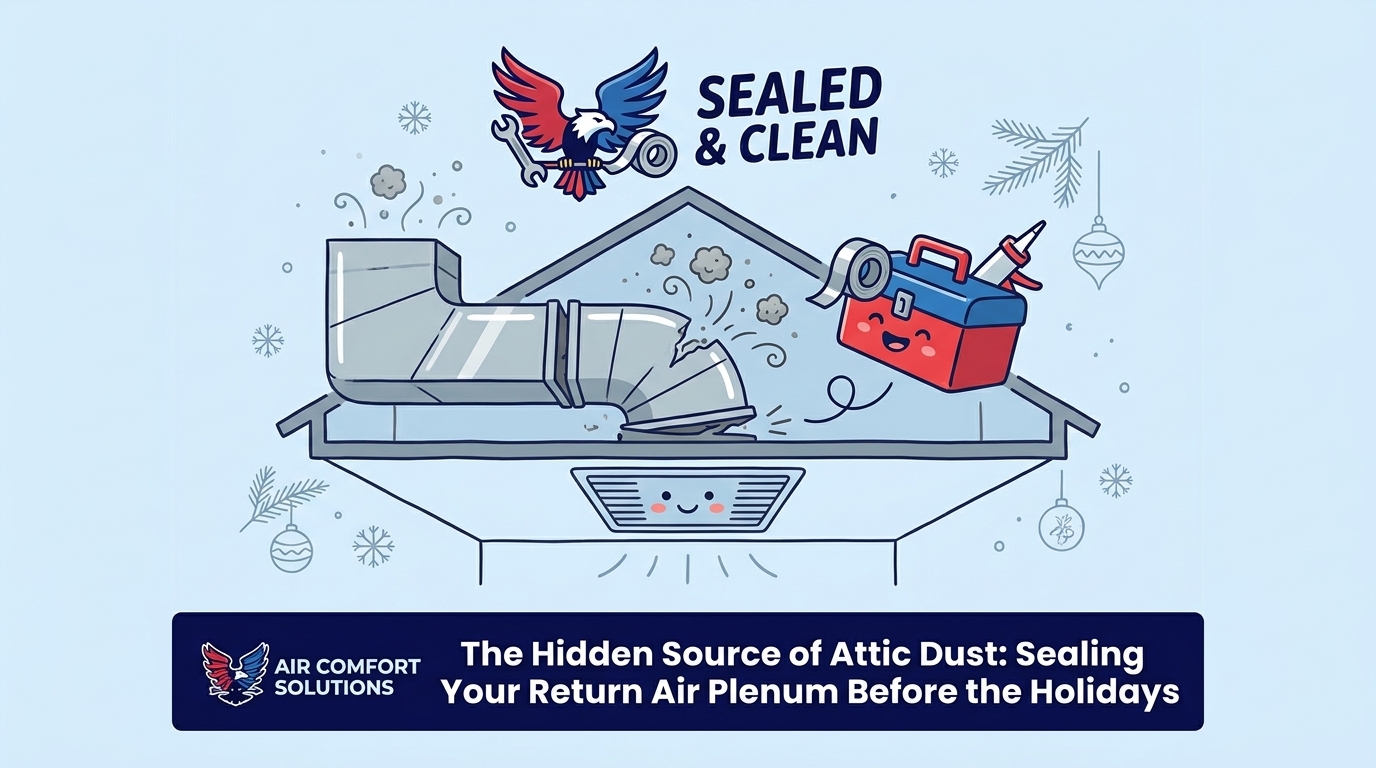
The Value of Sealing Your Return Air Plenum Before the Holidays
Most homeowners buy expensive filters to fix dusty air, not realizing a leaky return plenum in the attic is the real culprit. See why sealing it now saves your holiday gatherings.
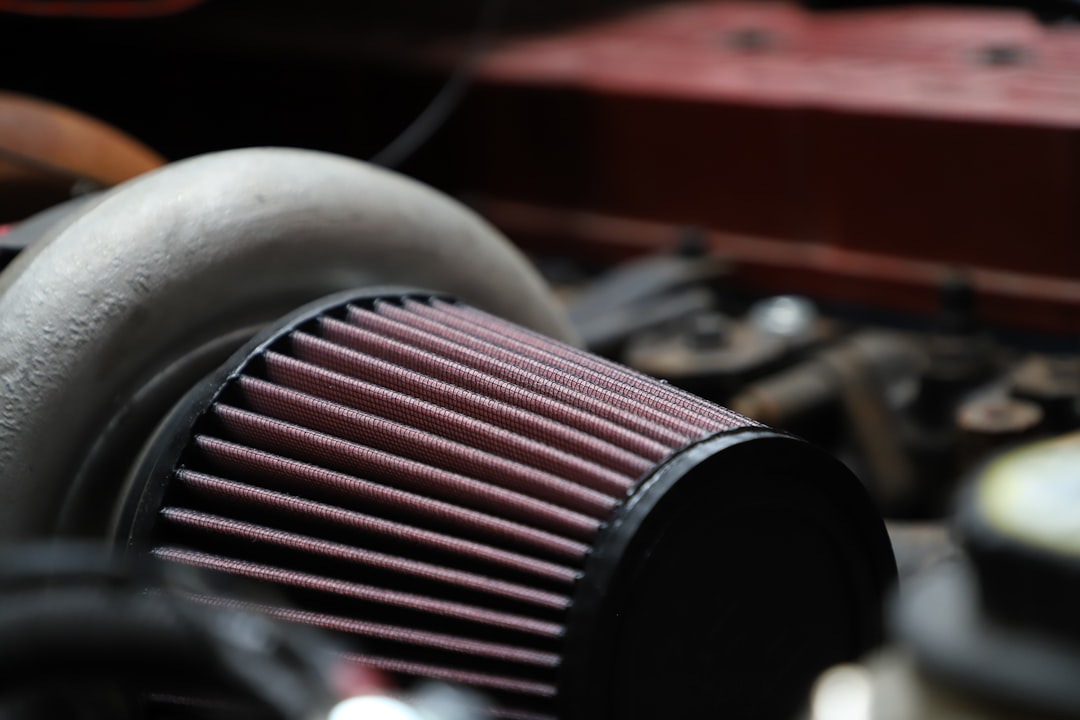
How a clogged filter makes your AC work harder is one of the most common — and most overlooked — causes of high energy bills and poor cooling in homes across Pinehurst, TX. Here is the short answer:
A clogged air filter restricts airflow through your AC system, which causes three key problems:
The result? Your AC runs longer, works harder, and still struggles to keep your home comfortable. According to the U.S. Department of Energy, a dirty filter can increase your system's energy consumption by up to 15 percent — and that shows up directly on your monthly utility bill.
This is not a minor maintenance detail. A clogged filter sets off a chain reaction inside your system that can turn a five-dollar filter replacement into a five-hundred-dollar repair call if left unchecked long enough. In a climate like North Harris County — where your AC may run twelve or more hours a day during peak summer — the strain adds up fast.
I'm Robert Patterson, and in this guide I'll walk you through exactly what happens inside your AC when the filter gets blocked, how to spot the warning signs early, and what you can do right now to protect your system.
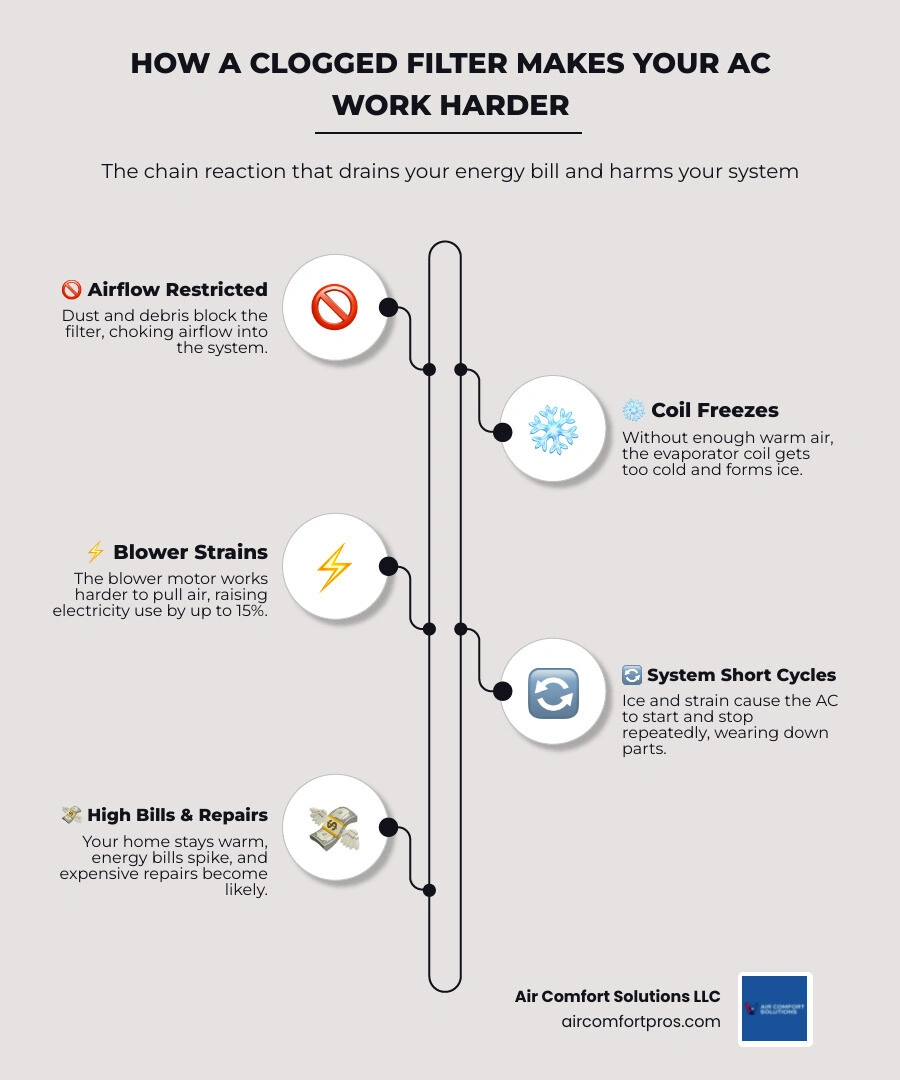
How a clogged filter makes your ac work harder vocab to learn:
To understand why how a clogged filter makes your ac work harder is such a critical concept, we have to look at the basic physics of how an air conditioner operates. Your AC does not actually "create" cold air in the way a heater creates heat. Instead, it is a heat removal machine. It works by drawing warm, humid air out of your living spaces, passing it over a cold evaporator coil to extract the heat and moisture, and then blowing the cooled air back into your home.
This entire process relies on a continuous, uninterrupted loop of air. When you install an air filter, it acts as a gatekeeper, catching dust, pet dander, and pollen before they can settle on your delicate HVAC components. However, as that gatekeeper does its job, it inevitably fills up.
When the filter becomes packed with debris, it introduces static pressure — a technical term for resistance against the air flowing through your system. Think of it like trying to breathe through a thick, wet towel while running a marathon. Your lungs have to expand and contract with much greater effort to get the same amount of oxygen. In your HVAC system, this "air starvation" places immense resistance on your blower motor, forcing it to consume significantly more electrical energy just to move air through the blockage.
When static pressure rises, your system experiences air starvation. The volume of air moving through your ductwork drops significantly. This creates what we call the "thermostat gap."
Your thermostat is a simple device: it measures the ambient temperature in your home, not the physical effort or runtime of your AC unit. If you set your thermostat to 72°F on a sweltering July afternoon in Tomball or Spring, the system will run until the air in that specific room reaches 72°F.
Under normal conditions, a clean system might achieve this in a brief 15-minute cycle. But when air starvation strikes, the volume of cooled air entering your rooms is drastically reduced. The system has to run for 30, 45, or even 60 minutes straight to deliver the same amount of cooling. Because the thermostat only cares about the final temperature, it keeps the system running continuously, widening the gap between normal operation and the massive effort required to cool your home.
The drop in airflow also disrupts the delicate thermal equilibrium of your evaporator coil. Your AC relies on a steady stream of warm return air to keep the refrigerant inside the evaporator coil from getting too cold.
When a clogged filter chokes off that warm air, the refrigerant temperature plummets. The moisture that your system naturally extracts from the humid Texas air begins to freeze on the surface of the coil. What starts as a thin layer of frost quickly compounds into a solid block of ice.
Once the coil is encased in ice, it acts as a physical barrier to heat transfer. The air can no longer touch the cold metal of the coil, and the cooling process halts entirely. Your system will continue to run 24/7, blowing warm air and consuming electricity, all because the heat transfer cycle has been completely broken by a dirty filter.
When we say your air conditioner is "working harder," we are talking about measurable mechanical and electrical strain. To help visualize this, let’s compare how a clean filter keeps your system in balance versus the cascading problems caused by a clogged filter:
| System Component | Impact of a Clean Filter | Impact of a Clogged Filter | Long-Term Consequence |
|---|---|---|---|
| Evaporator Coil | Balanced heat transfer; efficient cooling and moisture removal. | Drops below freezing; condensation turns into a thick block of ice. | Frozen coils, water leaks, and zero cooling capacity. |
| Blower Motor | Smooth, unrestricted airflow; low electrical draw. | Overworks to pull air through blockage; draws high amperage. | Motor overheating, capacitor failure, and eventual motor burnout. |
| Compressor | Standard, structured cooling cycles with proper lubrication. | Runs continuously or short cycles; liquid refrigerant floods back. | Overheating, high wear, and catastrophic compressor failure. |
Let's dive deeper into the three primary ways this physical strain manifests inside your system.
The relationship between airflow and temperature is a delicate balancing act. When your air conditioner is running, liquid refrigerant flows through the indoor evaporator coil at a very low temperature. Under normal circumstances, the warm air drawn from your home passes over these coils, transferring its heat to the refrigerant. This process cools the air and warms the refrigerant, allowing it to evaporate into a gas and travel back to the outdoor unit.
When a dirty filter blocks the airflow, this thermal balance is destroyed. Without a steady flow of warm indoor air to heat the refrigerant, the temperature of the evaporator coil drops below 32°F.
The humidity in our local area — from Montgomery to Conroe — means there is always plenty of water vapor in your indoor air. When this humid air hits the sub-freezing coil, the condensation freezes instantly. This ice layer acts as an insulator, further preventing what little air is left from transferring its heat.
If you suspect your system is icing over, you can read more about how dirty filters cause frozen evaporator coils to understand the exact mechanics and how to thaw them safely.
The blower motor is the muscle of your HVAC system. Its sole job is to spin the fan wheel that circulates air throughout your home. When a filter is clean, the motor spins freely, meeting only the design-specified resistance of your ductwork.
When you introduce a clogged filter, the resistance increases dramatically. The blower motor must draw more electrical current (amperage) to try and pull air through the dirt-caked barrier. This extra electrical draw generates intense internal heat within the motor windings.
Over time, this heat degrades the motor's lubrication and insulation, leading to premature motor burnout. Furthermore, this electrical strain directly impacts the run capacitor — the small cylindrical component that provides the electrical boost your motor needs to start and run. Industry statistics show that up to 37% of capacitor and blower motor failures can be traced back to missed filter changes. Replacing a blower motor is a major repair that can easily be avoided with a simple, regular filter swap.
Short cycling occurs when your air conditioner turns on and off far more frequently than normal. A standard, healthy cooling cycle lasts around 15 to 20 minutes, allowing the system to run efficiently and dehumidify your home.
When the air filter is severely clogged, the restricted airflow can cause the internal temperature of the system to fluctuate wildly. High-limit switches and safety sensors inside the unit will detect that the system is overheating or that pressure levels are unsafe, prompting the system to shut down prematurely to protect itself. After a few minutes, the system cools down, the sensors reset, and the AC starts up again — only to shut down minutes later.
This rapid starting and stopping is incredibly damaging to your compressor, which is located in the outdoor unit. The compressor is the "heart" of your AC, and it experiences the greatest amount of wear and tear during the first few seconds of startup. Short cycling multiplies this wear, leading to rapid component degradation, high energy spikes, and eventually, a seized compressor.
A clogged filter doesn't always cause an immediate system breakdown. Often, it drops clues over several weeks. Recognizing these signs early can save you from a complete system failure during the hottest weeks of the year.
The most immediate physical symptom of a dirty filter is a noticeable drop in the volume of air coming out of your supply registers. If you hold your hand up to a vent and the airflow feels more like a gentle whisper than a strong breeze, your filter is likely choked with dust.
This drop in airflow directly leads to uneven cooling. You might notice that rooms closest to the indoor unit remain relatively comfortable, while rooms further away, or upstairs spaces in places like The Woodlands and Magnolia, become hot zones. Because the system cannot push enough conditioned air to the far reaches of your home, you are left with frustrating hot spots and poor overall air circulation.
If your monthly utility bill suddenly takes a massive jump but the outdoor temperatures haven't changed drastically, your AC is likely struggling against a blocked filter.
Because the system has to run significantly longer to satisfy the thermostat, it consumes far more kilowatt-hours of electricity. During peak summer, this extra runtime can easily add up, turning what should be a highly efficient system into an energy hog.
Maintaining a clean filter is one of the most effective ways to lower your energy bills. If you want to optimize your system's performance further, check out our guide on how to help your AC during a Houston area heat wave.
Have you started hearing a high-pitched whistling or whistling-like sound whenever your AC kicks on? This is often the sound of air struggling to squeeze through the tiny remaining gaps in a heavily clogged filter. The high static pressure turns your return grille into a whistle as air is pulled through at high velocity.
Additionally, a clogged filter can lead to unpleasant indoor odors. When airflow is restricted, moisture lingers on the evaporator coil and inside the drain pan rather than draining away. This constant dampness creates the perfect breeding ground for mold and mildew, resulting in a musty "wet sock" smell blowing through your vents.
If you are hearing unusual sounds from your system, you can learn more by reading our breakdown of AC making strange noises what they mean.
Living in Southeast Texas presents unique challenges for HVAC systems. Between the intense summer heat, high humidity, and local allergens, our air conditioners work harder than systems in almost any other part of the country. Preventing airflow restriction requires a proactive approach tailored to our local climate.
When shopping for a new air filter, you will see a MERV (Minimum Efficiency Reporting Value) rating on the packaging, typically ranging from 1 to 16 for residential systems. While it is tempting to buy the highest rating possible to get the cleanest air, doing so can actually mimic the effects of a clogged filter.
For most homes in Pinehurst and surrounding areas, a high-quality pleated MERV 8 or MERV 11 filter offers the perfect balance of filtration efficiency and healthy airflow.
A generic "change every 90 days" recommendation printed on a filter box rarely works in our local climate. High humidity dampens filter fibers, causing dust to stick and paste itself to the surface like a blanket, accelerating the clogging process.
If you have pets, live near active construction in growing areas like Conroe or Spring, or suffer from seasonal allergies, you should inspect your filter every 30 days. A simple "light test" is the easiest way to check: hold the filter up to a bright light bulb or the sun. If you cannot see light passing through the pleats, it is time for a replacement.
For a detailed step-by-step walkthrough, check out our how to replace AC filters a quick and simple guide and learn more about managing your system with our guide on how often to change your AC filter in humid Texas heat.
No, you should never run your air conditioner without a filter, even for a short time. Without a filter, the return air duct pulls raw dust, hair, pet dander, and microscopic debris directly into the indoor cabinet.
These particles will quickly settle on the wet evaporator coil, creating a sticky grime layer that blocks heat transfer, breeds mold, and is incredibly difficult and expensive to clean. It is far safer to leave the system off for a few hours until you can run to the store and grab a replacement filter.
During a heatwave, the thermal load on your home is at its peak. Heat is constantly radiating through your roof and walls, forcing your AC to run for extended periods just to maintain a comfortable indoor temperature.
When you introduce a clogged filter during these extreme conditions, the system's efficiency drops at the exact moment it needs to perform at its best. The blower motor must run longer under high heat, and the compressor operates under elevated pressures. This combination of high ambient heat and restricted airflow dramatically increases the risk of a complete system breakdown when you need cooling the most.
Yes, a neglected air filter can absolutely cause permanent, catastrophic damage to your HVAC system. The most severe consequence is compressor failure.
When airflow is restricted, liquid refrigerant can fail to evaporate fully in the indoor coil. This liquid refrigerant can travel back down the line and flood the compressor. Because liquids cannot be compressed, this "liquid slugging" can instantly destroy the internal valves and pistons of your compressor. Since the compressor is the most expensive component in your system, its failure often means you will need a complete outdoor unit replacement.
A clean air filter is the simplest, most cost-effective insurance policy you can buy for your home's comfort system. Understanding how a clogged filter makes your ac work harder empowers you to take control of your indoor air quality, protect your equipment from expensive breakdowns, and keep your monthly energy bills in check.
While changing your filter is a great DIY task, it is only one part of keeping your system running at peak efficiency. Over time, dust can still bypass filters, electrical connections can loosen, and refrigerant levels can shift. That is why professional maintenance is so critical.
At Air Comfort Solutions LLC, we have over 35 years of experience keeping homes cool and comfortable throughout Pinehurst, Plantersville, Magnolia, Houston, The Woodlands, Montgomery, Conroe, Spring, and Tomball. Our certified technicians provide honest, reliable solutions, upfront pricing, and flexible financing options to fit your budget.
Whether you need a quick system check, a professional cleaning, or want to sign up for our comprehensive AC Maintenance Plan, we are here to help. To learn more about what our team does during a visit, explore our AC Maintenance Visit Complete Guide and discover what does professional AC service include.
Don't wait for the heat of summer to push your system to its limit. Prepare your home with our AC Tune Up Guide for Houston Area Homeowners and review our pre-summer AC tune up checklist for homeowners. Contact us today to schedule your service and breathe easy knowing your comfort is in expert hands!
How a clogged filter makes your AC work harder is one of the most common — and most overlooked — causes of high energy bills and poor cooling in homes across Pinehurst, TX. Here is the short answer:
A clogged air filter restricts airflow through your AC system, which causes three key problems:
The result? Your AC runs longer, works harder, and still struggles to keep your home comfortable. According to the U.S. Department of Energy, a dirty filter can increase your system's energy consumption by up to 15 percent — and that shows up directly on your monthly utility bill.
This is not a minor maintenance detail. A clogged filter sets off a chain reaction inside your system that can turn a five-dollar filter replacement into a five-hundred-dollar repair call if left unchecked long enough. In a climate like North Harris County — where your AC may run twelve or more hours a day during peak summer — the strain adds up fast.
I'm Robert Patterson, and in this guide I'll walk you through exactly what happens inside your AC when the filter gets blocked, how to spot the warning signs early, and what you can do right now to protect your system.
How a clogged filter makes your ac work harder vocab to learn:
To understand why how a clogged filter makes your ac work harder is such a critical concept, we have to look at the basic physics of how an air conditioner operates. Your AC does not actually "create" cold air in the way a heater creates heat. Instead, it is a heat removal machine. It works by drawing warm, humid air out of your living spaces, passing it over a cold evaporator coil to extract the heat and moisture, and then blowing the cooled air back into your home.
This entire process relies on a continuous, uninterrupted loop of air. When you install an air filter, it acts as a gatekeeper, catching dust, pet dander, and pollen before they can settle on your delicate HVAC components. However, as that gatekeeper does its job, it inevitably fills up.
When the filter becomes packed with debris, it introduces static pressure — a technical term for resistance against the air flowing through your system. Think of it like trying to breathe through a thick, wet towel while running a marathon. Your lungs have to expand and contract with much greater effort to get the same amount of oxygen. In your HVAC system, this "air starvation" places immense resistance on your blower motor, forcing it to consume significantly more electrical energy just to move air through the blockage.
When static pressure rises, your system experiences air starvation. The volume of air moving through your ductwork drops significantly. This creates what we call the "thermostat gap."
Your thermostat is a simple device: it measures the ambient temperature in your home, not the physical effort or runtime of your AC unit. If you set your thermostat to 72°F on a sweltering July afternoon in Tomball or Spring, the system will run until the air in that specific room reaches 72°F.
Under normal conditions, a clean system might achieve this in a brief 15-minute cycle. But when air starvation strikes, the volume of cooled air entering your rooms is drastically reduced. The system has to run for 30, 45, or even 60 minutes straight to deliver the same amount of cooling. Because the thermostat only cares about the final temperature, it keeps the system running continuously, widening the gap between normal operation and the massive effort required to cool your home.
The drop in airflow also disrupts the delicate thermal equilibrium of your evaporator coil. Your AC relies on a steady stream of warm return air to keep the refrigerant inside the evaporator coil from getting too cold.
When a clogged filter chokes off that warm air, the refrigerant temperature plummets. The moisture that your system naturally extracts from the humid Texas air begins to freeze on the surface of the coil. What starts as a thin layer of frost quickly compounds into a solid block of ice.
Once the coil is encased in ice, it acts as a physical barrier to heat transfer. The air can no longer touch the cold metal of the coil, and the cooling process halts entirely. Your system will continue to run 24/7, blowing warm air and consuming electricity, all because the heat transfer cycle has been completely broken by a dirty filter.
When we say your air conditioner is "working harder," we are talking about measurable mechanical and electrical strain. To help visualize this, let’s compare how a clean filter keeps your system in balance versus the cascading problems caused by a clogged filter:
| System Component | Impact of a Clean Filter | Impact of a Clogged Filter | Long-Term Consequence |
|---|---|---|---|
| Evaporator Coil | Balanced heat transfer; efficient cooling and moisture removal. | Drops below freezing; condensation turns into a thick block of ice. | Frozen coils, water leaks, and zero cooling capacity. |
| Blower Motor | Smooth, unrestricted airflow; low electrical draw. | Overworks to pull air through blockage; draws high amperage. | Motor overheating, capacitor failure, and eventual motor burnout. |
| Compressor | Standard, structured cooling cycles with proper lubrication. | Runs continuously or short cycles; liquid refrigerant floods back. | Overheating, high wear, and catastrophic compressor failure. |
Let's dive deeper into the three primary ways this physical strain manifests inside your system.
The relationship between airflow and temperature is a delicate balancing act. When your air conditioner is running, liquid refrigerant flows through the indoor evaporator coil at a very low temperature. Under normal circumstances, the warm air drawn from your home passes over these coils, transferring its heat to the refrigerant. This process cools the air and warms the refrigerant, allowing it to evaporate into a gas and travel back to the outdoor unit.
When a dirty filter blocks the airflow, this thermal balance is destroyed. Without a steady flow of warm indoor air to heat the refrigerant, the temperature of the evaporator coil drops below 32°F.
The humidity in our local area — from Montgomery to Conroe — means there is always plenty of water vapor in your indoor air. When this humid air hits the sub-freezing coil, the condensation freezes instantly. This ice layer acts as an insulator, further preventing what little air is left from transferring its heat.
If you suspect your system is icing over, you can read more about how dirty filters cause frozen evaporator coils to understand the exact mechanics and how to thaw them safely.
The blower motor is the muscle of your HVAC system. Its sole job is to spin the fan wheel that circulates air throughout your home. When a filter is clean, the motor spins freely, meeting only the design-specified resistance of your ductwork.
When you introduce a clogged filter, the resistance increases dramatically. The blower motor must draw more electrical current (amperage) to try and pull air through the dirt-caked barrier. This extra electrical draw generates intense internal heat within the motor windings.
Over time, this heat degrades the motor's lubrication and insulation, leading to premature motor burnout. Furthermore, this electrical strain directly impacts the run capacitor — the small cylindrical component that provides the electrical boost your motor needs to start and run. Industry statistics show that up to 37% of capacitor and blower motor failures can be traced back to missed filter changes. Replacing a blower motor is a major repair that can easily be avoided with a simple, regular filter swap.
Short cycling occurs when your air conditioner turns on and off far more frequently than normal. A standard, healthy cooling cycle lasts around 15 to 20 minutes, allowing the system to run efficiently and dehumidify your home.
When the air filter is severely clogged, the restricted airflow can cause the internal temperature of the system to fluctuate wildly. High-limit switches and safety sensors inside the unit will detect that the system is overheating or that pressure levels are unsafe, prompting the system to shut down prematurely to protect itself. After a few minutes, the system cools down, the sensors reset, and the AC starts up again — only to shut down minutes later.
This rapid starting and stopping is incredibly damaging to your compressor, which is located in the outdoor unit. The compressor is the "heart" of your AC, and it experiences the greatest amount of wear and tear during the first few seconds of startup. Short cycling multiplies this wear, leading to rapid component degradation, high energy spikes, and eventually, a seized compressor.
A clogged filter doesn't always cause an immediate system breakdown. Often, it drops clues over several weeks. Recognizing these signs early can save you from a complete system failure during the hottest weeks of the year.
The most immediate physical symptom of a dirty filter is a noticeable drop in the volume of air coming out of your supply registers. If you hold your hand up to a vent and the airflow feels more like a gentle whisper than a strong breeze, your filter is likely choked with dust.
This drop in airflow directly leads to uneven cooling. You might notice that rooms closest to the indoor unit remain relatively comfortable, while rooms further away, or upstairs spaces in places like The Woodlands and Magnolia, become hot zones. Because the system cannot push enough conditioned air to the far reaches of your home, you are left with frustrating hot spots and poor overall air circulation.
If your monthly utility bill suddenly takes a massive jump but the outdoor temperatures haven't changed drastically, your AC is likely struggling against a blocked filter.
Because the system has to run significantly longer to satisfy the thermostat, it consumes far more kilowatt-hours of electricity. During peak summer, this extra runtime can easily add up, turning what should be a highly efficient system into an energy hog.
Maintaining a clean filter is one of the most effective ways to lower your energy bills. If you want to optimize your system's performance further, check out our guide on how to help your AC during a Houston area heat wave.
Have you started hearing a high-pitched whistling or whistling-like sound whenever your AC kicks on? This is often the sound of air struggling to squeeze through the tiny remaining gaps in a heavily clogged filter. The high static pressure turns your return grille into a whistle as air is pulled through at high velocity.
Additionally, a clogged filter can lead to unpleasant indoor odors. When airflow is restricted, moisture lingers on the evaporator coil and inside the drain pan rather than draining away. This constant dampness creates the perfect breeding ground for mold and mildew, resulting in a musty "wet sock" smell blowing through your vents.
If you are hearing unusual sounds from your system, you can learn more by reading our breakdown of AC making strange noises what they mean.
Living in Southeast Texas presents unique challenges for HVAC systems. Between the intense summer heat, high humidity, and local allergens, our air conditioners work harder than systems in almost any other part of the country. Preventing airflow restriction requires a proactive approach tailored to our local climate.
When shopping for a new air filter, you will see a MERV (Minimum Efficiency Reporting Value) rating on the packaging, typically ranging from 1 to 16 for residential systems. While it is tempting to buy the highest rating possible to get the cleanest air, doing so can actually mimic the effects of a clogged filter.
For most homes in Pinehurst and surrounding areas, a high-quality pleated MERV 8 or MERV 11 filter offers the perfect balance of filtration efficiency and healthy airflow.
A generic "change every 90 days" recommendation printed on a filter box rarely works in our local climate. High humidity dampens filter fibers, causing dust to stick and paste itself to the surface like a blanket, accelerating the clogging process.
If you have pets, live near active construction in growing areas like Conroe or Spring, or suffer from seasonal allergies, you should inspect your filter every 30 days. A simple "light test" is the easiest way to check: hold the filter up to a bright light bulb or the sun. If you cannot see light passing through the pleats, it is time for a replacement.
For a detailed step-by-step walkthrough, check out our how to replace AC filters a quick and simple guide and learn more about managing your system with our guide on how often to change your AC filter in humid Texas heat.
No, you should never run your air conditioner without a filter, even for a short time. Without a filter, the return air duct pulls raw dust, hair, pet dander, and microscopic debris directly into the indoor cabinet.
These particles will quickly settle on the wet evaporator coil, creating a sticky grime layer that blocks heat transfer, breeds mold, and is incredibly difficult and expensive to clean. It is far safer to leave the system off for a few hours until you can run to the store and grab a replacement filter.
During a heatwave, the thermal load on your home is at its peak. Heat is constantly radiating through your roof and walls, forcing your AC to run for extended periods just to maintain a comfortable indoor temperature.
When you introduce a clogged filter during these extreme conditions, the system's efficiency drops at the exact moment it needs to perform at its best. The blower motor must run longer under high heat, and the compressor operates under elevated pressures. This combination of high ambient heat and restricted airflow dramatically increases the risk of a complete system breakdown when you need cooling the most.
Yes, a neglected air filter can absolutely cause permanent, catastrophic damage to your HVAC system. The most severe consequence is compressor failure.
When airflow is restricted, liquid refrigerant can fail to evaporate fully in the indoor coil. This liquid refrigerant can travel back down the line and flood the compressor. Because liquids cannot be compressed, this "liquid slugging" can instantly destroy the internal valves and pistons of your compressor. Since the compressor is the most expensive component in your system, its failure often means you will need a complete outdoor unit replacement.
A clean air filter is the simplest, most cost-effective insurance policy you can buy for your home's comfort system. Understanding how a clogged filter makes your ac work harder empowers you to take control of your indoor air quality, protect your equipment from expensive breakdowns, and keep your monthly energy bills in check.
While changing your filter is a great DIY task, it is only one part of keeping your system running at peak efficiency. Over time, dust can still bypass filters, electrical connections can loosen, and refrigerant levels can shift. That is why professional maintenance is so critical.
At Air Comfort Solutions LLC, we have over 35 years of experience keeping homes cool and comfortable throughout Pinehurst, Plantersville, Magnolia, Houston, The Woodlands, Montgomery, Conroe, Spring, and Tomball. Our certified technicians provide honest, reliable solutions, upfront pricing, and flexible financing options to fit your budget.
Whether you need a quick system check, a professional cleaning, or want to sign up for our comprehensive AC Maintenance Plan, we are here to help. To learn more about what our team does during a visit, explore our AC Maintenance Visit Complete Guide and discover what does professional AC service include.
Don't wait for the heat of summer to push your system to its limit. Prepare your home with our AC Tune Up Guide for Houston Area Homeowners and review our pre-summer AC tune up checklist for homeowners. Contact us today to schedule your service and breathe easy knowing your comfort is in expert hands!
How a clogged filter makes your AC work harder is one of the most common — and most overlooked — causes of high energy bills and poor cooling in homes across Pinehurst, TX. Here is the short answer:
A clogged air filter restricts airflow through your AC system, which causes three key problems:
The result? Your AC runs longer, works harder, and still struggles to keep your home comfortable. According to the U.S. Department of Energy, a dirty filter can increase your system's energy consumption by up to 15 percent — and that shows up directly on your monthly utility bill.
This is not a minor maintenance detail. A clogged filter sets off a chain reaction inside your system that can turn a five-dollar filter replacement into a five-hundred-dollar repair call if left unchecked long enough. In a climate like North Harris County — where your AC may run twelve or more hours a day during peak summer — the strain adds up fast.
I'm Robert Patterson, and in this guide I'll walk you through exactly what happens inside your AC when the filter gets blocked, how to spot the warning signs early, and what you can do right now to protect your system.
How a clogged filter makes your ac work harder vocab to learn:
To understand why how a clogged filter makes your ac work harder is such a critical concept, we have to look at the basic physics of how an air conditioner operates. Your AC does not actually "create" cold air in the way a heater creates heat. Instead, it is a heat removal machine. It works by drawing warm, humid air out of your living spaces, passing it over a cold evaporator coil to extract the heat and moisture, and then blowing the cooled air back into your home.
This entire process relies on a continuous, uninterrupted loop of air. When you install an air filter, it acts as a gatekeeper, catching dust, pet dander, and pollen before they can settle on your delicate HVAC components. However, as that gatekeeper does its job, it inevitably fills up.
When the filter becomes packed with debris, it introduces static pressure — a technical term for resistance against the air flowing through your system. Think of it like trying to breathe through a thick, wet towel while running a marathon. Your lungs have to expand and contract with much greater effort to get the same amount of oxygen. In your HVAC system, this "air starvation" places immense resistance on your blower motor, forcing it to consume significantly more electrical energy just to move air through the blockage.
When static pressure rises, your system experiences air starvation. The volume of air moving through your ductwork drops significantly. This creates what we call the "thermostat gap."
Your thermostat is a simple device: it measures the ambient temperature in your home, not the physical effort or runtime of your AC unit. If you set your thermostat to 72°F on a sweltering July afternoon in Tomball or Spring, the system will run until the air in that specific room reaches 72°F.
Under normal conditions, a clean system might achieve this in a brief 15-minute cycle. But when air starvation strikes, the volume of cooled air entering your rooms is drastically reduced. The system has to run for 30, 45, or even 60 minutes straight to deliver the same amount of cooling. Because the thermostat only cares about the final temperature, it keeps the system running continuously, widening the gap between normal operation and the massive effort required to cool your home.
The drop in airflow also disrupts the delicate thermal equilibrium of your evaporator coil. Your AC relies on a steady stream of warm return air to keep the refrigerant inside the evaporator coil from getting too cold.
When a clogged filter chokes off that warm air, the refrigerant temperature plummets. The moisture that your system naturally extracts from the humid Texas air begins to freeze on the surface of the coil. What starts as a thin layer of frost quickly compounds into a solid block of ice.
Once the coil is encased in ice, it acts as a physical barrier to heat transfer. The air can no longer touch the cold metal of the coil, and the cooling process halts entirely. Your system will continue to run 24/7, blowing warm air and consuming electricity, all because the heat transfer cycle has been completely broken by a dirty filter.
When we say your air conditioner is "working harder," we are talking about measurable mechanical and electrical strain. To help visualize this, let’s compare how a clean filter keeps your system in balance versus the cascading problems caused by a clogged filter:
| System Component | Impact of a Clean Filter | Impact of a Clogged Filter | Long-Term Consequence |
|---|---|---|---|
| Evaporator Coil | Balanced heat transfer; efficient cooling and moisture removal. | Drops below freezing; condensation turns into a thick block of ice. | Frozen coils, water leaks, and zero cooling capacity. |
| Blower Motor | Smooth, unrestricted airflow; low electrical draw. | Overworks to pull air through blockage; draws high amperage. | Motor overheating, capacitor failure, and eventual motor burnout. |
| Compressor | Standard, structured cooling cycles with proper lubrication. | Runs continuously or short cycles; liquid refrigerant floods back. | Overheating, high wear, and catastrophic compressor failure. |
Let's dive deeper into the three primary ways this physical strain manifests inside your system.
The relationship between airflow and temperature is a delicate balancing act. When your air conditioner is running, liquid refrigerant flows through the indoor evaporator coil at a very low temperature. Under normal circumstances, the warm air drawn from your home passes over these coils, transferring its heat to the refrigerant. This process cools the air and warms the refrigerant, allowing it to evaporate into a gas and travel back to the outdoor unit.
When a dirty filter blocks the airflow, this thermal balance is destroyed. Without a steady flow of warm indoor air to heat the refrigerant, the temperature of the evaporator coil drops below 32°F.
The humidity in our local area — from Montgomery to Conroe — means there is always plenty of water vapor in your indoor air. When this humid air hits the sub-freezing coil, the condensation freezes instantly. This ice layer acts as an insulator, further preventing what little air is left from transferring its heat.
If you suspect your system is icing over, you can read more about how dirty filters cause frozen evaporator coils to understand the exact mechanics and how to thaw them safely.
The blower motor is the muscle of your HVAC system. Its sole job is to spin the fan wheel that circulates air throughout your home. When a filter is clean, the motor spins freely, meeting only the design-specified resistance of your ductwork.
When you introduce a clogged filter, the resistance increases dramatically. The blower motor must draw more electrical current (amperage) to try and pull air through the dirt-caked barrier. This extra electrical draw generates intense internal heat within the motor windings.
Over time, this heat degrades the motor's lubrication and insulation, leading to premature motor burnout. Furthermore, this electrical strain directly impacts the run capacitor — the small cylindrical component that provides the electrical boost your motor needs to start and run. Industry statistics show that up to 37% of capacitor and blower motor failures can be traced back to missed filter changes. Replacing a blower motor is a major repair that can easily be avoided with a simple, regular filter swap.
Short cycling occurs when your air conditioner turns on and off far more frequently than normal. A standard, healthy cooling cycle lasts around 15 to 20 minutes, allowing the system to run efficiently and dehumidify your home.
When the air filter is severely clogged, the restricted airflow can cause the internal temperature of the system to fluctuate wildly. High-limit switches and safety sensors inside the unit will detect that the system is overheating or that pressure levels are unsafe, prompting the system to shut down prematurely to protect itself. After a few minutes, the system cools down, the sensors reset, and the AC starts up again — only to shut down minutes later.
This rapid starting and stopping is incredibly damaging to your compressor, which is located in the outdoor unit. The compressor is the "heart" of your AC, and it experiences the greatest amount of wear and tear during the first few seconds of startup. Short cycling multiplies this wear, leading to rapid component degradation, high energy spikes, and eventually, a seized compressor.
A clogged filter doesn't always cause an immediate system breakdown. Often, it drops clues over several weeks. Recognizing these signs early can save you from a complete system failure during the hottest weeks of the year.
The most immediate physical symptom of a dirty filter is a noticeable drop in the volume of air coming out of your supply registers. If you hold your hand up to a vent and the airflow feels more like a gentle whisper than a strong breeze, your filter is likely choked with dust.
This drop in airflow directly leads to uneven cooling. You might notice that rooms closest to the indoor unit remain relatively comfortable, while rooms further away, or upstairs spaces in places like The Woodlands and Magnolia, become hot zones. Because the system cannot push enough conditioned air to the far reaches of your home, you are left with frustrating hot spots and poor overall air circulation.
If your monthly utility bill suddenly takes a massive jump but the outdoor temperatures haven't changed drastically, your AC is likely struggling against a blocked filter.
Because the system has to run significantly longer to satisfy the thermostat, it consumes far more kilowatt-hours of electricity. During peak summer, this extra runtime can easily add up, turning what should be a highly efficient system into an energy hog.
Maintaining a clean filter is one of the most effective ways to lower your energy bills. If you want to optimize your system's performance further, check out our guide on how to help your AC during a Houston area heat wave.
Have you started hearing a high-pitched whistling or whistling-like sound whenever your AC kicks on? This is often the sound of air struggling to squeeze through the tiny remaining gaps in a heavily clogged filter. The high static pressure turns your return grille into a whistle as air is pulled through at high velocity.
Additionally, a clogged filter can lead to unpleasant indoor odors. When airflow is restricted, moisture lingers on the evaporator coil and inside the drain pan rather than draining away. This constant dampness creates the perfect breeding ground for mold and mildew, resulting in a musty "wet sock" smell blowing through your vents.
If you are hearing unusual sounds from your system, you can learn more by reading our breakdown of AC making strange noises what they mean.
Living in Southeast Texas presents unique challenges for HVAC systems. Between the intense summer heat, high humidity, and local allergens, our air conditioners work harder than systems in almost any other part of the country. Preventing airflow restriction requires a proactive approach tailored to our local climate.
When shopping for a new air filter, you will see a MERV (Minimum Efficiency Reporting Value) rating on the packaging, typically ranging from 1 to 16 for residential systems. While it is tempting to buy the highest rating possible to get the cleanest air, doing so can actually mimic the effects of a clogged filter.
For most homes in Pinehurst and surrounding areas, a high-quality pleated MERV 8 or MERV 11 filter offers the perfect balance of filtration efficiency and healthy airflow.
A generic "change every 90 days" recommendation printed on a filter box rarely works in our local climate. High humidity dampens filter fibers, causing dust to stick and paste itself to the surface like a blanket, accelerating the clogging process.
If you have pets, live near active construction in growing areas like Conroe or Spring, or suffer from seasonal allergies, you should inspect your filter every 30 days. A simple "light test" is the easiest way to check: hold the filter up to a bright light bulb or the sun. If you cannot see light passing through the pleats, it is time for a replacement.
For a detailed step-by-step walkthrough, check out our how to replace AC filters a quick and simple guide and learn more about managing your system with our guide on how often to change your AC filter in humid Texas heat.
No, you should never run your air conditioner without a filter, even for a short time. Without a filter, the return air duct pulls raw dust, hair, pet dander, and microscopic debris directly into the indoor cabinet.
These particles will quickly settle on the wet evaporator coil, creating a sticky grime layer that blocks heat transfer, breeds mold, and is incredibly difficult and expensive to clean. It is far safer to leave the system off for a few hours until you can run to the store and grab a replacement filter.
During a heatwave, the thermal load on your home is at its peak. Heat is constantly radiating through your roof and walls, forcing your AC to run for extended periods just to maintain a comfortable indoor temperature.
When you introduce a clogged filter during these extreme conditions, the system's efficiency drops at the exact moment it needs to perform at its best. The blower motor must run longer under high heat, and the compressor operates under elevated pressures. This combination of high ambient heat and restricted airflow dramatically increases the risk of a complete system breakdown when you need cooling the most.
Yes, a neglected air filter can absolutely cause permanent, catastrophic damage to your HVAC system. The most severe consequence is compressor failure.
When airflow is restricted, liquid refrigerant can fail to evaporate fully in the indoor coil. This liquid refrigerant can travel back down the line and flood the compressor. Because liquids cannot be compressed, this "liquid slugging" can instantly destroy the internal valves and pistons of your compressor. Since the compressor is the most expensive component in your system, its failure often means you will need a complete outdoor unit replacement.
A clean air filter is the simplest, most cost-effective insurance policy you can buy for your home's comfort system. Understanding how a clogged filter makes your ac work harder empowers you to take control of your indoor air quality, protect your equipment from expensive breakdowns, and keep your monthly energy bills in check.
While changing your filter is a great DIY task, it is only one part of keeping your system running at peak efficiency. Over time, dust can still bypass filters, electrical connections can loosen, and refrigerant levels can shift. That is why professional maintenance is so critical.
At Air Comfort Solutions LLC, we have over 35 years of experience keeping homes cool and comfortable throughout Pinehurst, Plantersville, Magnolia, Houston, The Woodlands, Montgomery, Conroe, Spring, and Tomball. Our certified technicians provide honest, reliable solutions, upfront pricing, and flexible financing options to fit your budget.
Whether you need a quick system check, a professional cleaning, or want to sign up for our comprehensive AC Maintenance Plan, we are here to help. To learn more about what our team does during a visit, explore our AC Maintenance Visit Complete Guide and discover what does professional AC service include.
Don't wait for the heat of summer to push your system to its limit. Prepare your home with our AC Tune Up Guide for Houston Area Homeowners and review our pre-summer AC tune up checklist for homeowners. Contact us today to schedule your service and breathe easy knowing your comfort is in expert hands!
How a clogged filter makes your AC work harder is one of the most common — and most overlooked — causes of high energy bills and poor cooling in homes across Pinehurst, TX. Here is the short answer:
A clogged air filter restricts airflow through your AC system, which causes three key problems:
The result? Your AC runs longer, works harder, and still struggles to keep your home comfortable. According to the U.S. Department of Energy, a dirty filter can increase your system's energy consumption by up to 15 percent — and that shows up directly on your monthly utility bill.
This is not a minor maintenance detail. A clogged filter sets off a chain reaction inside your system that can turn a five-dollar filter replacement into a five-hundred-dollar repair call if left unchecked long enough. In a climate like North Harris County — where your AC may run twelve or more hours a day during peak summer — the strain adds up fast.
I'm Robert Patterson, and in this guide I'll walk you through exactly what happens inside your AC when the filter gets blocked, how to spot the warning signs early, and what you can do right now to protect your system.
How a clogged filter makes your ac work harder vocab to learn:
To understand why how a clogged filter makes your ac work harder is such a critical concept, we have to look at the basic physics of how an air conditioner operates. Your AC does not actually "create" cold air in the way a heater creates heat. Instead, it is a heat removal machine. It works by drawing warm, humid air out of your living spaces, passing it over a cold evaporator coil to extract the heat and moisture, and then blowing the cooled air back into your home.
This entire process relies on a continuous, uninterrupted loop of air. When you install an air filter, it acts as a gatekeeper, catching dust, pet dander, and pollen before they can settle on your delicate HVAC components. However, as that gatekeeper does its job, it inevitably fills up.
When the filter becomes packed with debris, it introduces static pressure — a technical term for resistance against the air flowing through your system. Think of it like trying to breathe through a thick, wet towel while running a marathon. Your lungs have to expand and contract with much greater effort to get the same amount of oxygen. In your HVAC system, this "air starvation" places immense resistance on your blower motor, forcing it to consume significantly more electrical energy just to move air through the blockage.
When static pressure rises, your system experiences air starvation. The volume of air moving through your ductwork drops significantly. This creates what we call the "thermostat gap."
Your thermostat is a simple device: it measures the ambient temperature in your home, not the physical effort or runtime of your AC unit. If you set your thermostat to 72°F on a sweltering July afternoon in Tomball or Spring, the system will run until the air in that specific room reaches 72°F.
Under normal conditions, a clean system might achieve this in a brief 15-minute cycle. But when air starvation strikes, the volume of cooled air entering your rooms is drastically reduced. The system has to run for 30, 45, or even 60 minutes straight to deliver the same amount of cooling. Because the thermostat only cares about the final temperature, it keeps the system running continuously, widening the gap between normal operation and the massive effort required to cool your home.
The drop in airflow also disrupts the delicate thermal equilibrium of your evaporator coil. Your AC relies on a steady stream of warm return air to keep the refrigerant inside the evaporator coil from getting too cold.
When a clogged filter chokes off that warm air, the refrigerant temperature plummets. The moisture that your system naturally extracts from the humid Texas air begins to freeze on the surface of the coil. What starts as a thin layer of frost quickly compounds into a solid block of ice.
Once the coil is encased in ice, it acts as a physical barrier to heat transfer. The air can no longer touch the cold metal of the coil, and the cooling process halts entirely. Your system will continue to run 24/7, blowing warm air and consuming electricity, all because the heat transfer cycle has been completely broken by a dirty filter.
When we say your air conditioner is "working harder," we are talking about measurable mechanical and electrical strain. To help visualize this, let’s compare how a clean filter keeps your system in balance versus the cascading problems caused by a clogged filter:
| System Component | Impact of a Clean Filter | Impact of a Clogged Filter | Long-Term Consequence |
|---|---|---|---|
| Evaporator Coil | Balanced heat transfer; efficient cooling and moisture removal. | Drops below freezing; condensation turns into a thick block of ice. | Frozen coils, water leaks, and zero cooling capacity. |
| Blower Motor | Smooth, unrestricted airflow; low electrical draw. | Overworks to pull air through blockage; draws high amperage. | Motor overheating, capacitor failure, and eventual motor burnout. |
| Compressor | Standard, structured cooling cycles with proper lubrication. | Runs continuously or short cycles; liquid refrigerant floods back. | Overheating, high wear, and catastrophic compressor failure. |
Let's dive deeper into the three primary ways this physical strain manifests inside your system.
The relationship between airflow and temperature is a delicate balancing act. When your air conditioner is running, liquid refrigerant flows through the indoor evaporator coil at a very low temperature. Under normal circumstances, the warm air drawn from your home passes over these coils, transferring its heat to the refrigerant. This process cools the air and warms the refrigerant, allowing it to evaporate into a gas and travel back to the outdoor unit.
When a dirty filter blocks the airflow, this thermal balance is destroyed. Without a steady flow of warm indoor air to heat the refrigerant, the temperature of the evaporator coil drops below 32°F.
The humidity in our local area — from Montgomery to Conroe — means there is always plenty of water vapor in your indoor air. When this humid air hits the sub-freezing coil, the condensation freezes instantly. This ice layer acts as an insulator, further preventing what little air is left from transferring its heat.
If you suspect your system is icing over, you can read more about how dirty filters cause frozen evaporator coils to understand the exact mechanics and how to thaw them safely.
The blower motor is the muscle of your HVAC system. Its sole job is to spin the fan wheel that circulates air throughout your home. When a filter is clean, the motor spins freely, meeting only the design-specified resistance of your ductwork.
When you introduce a clogged filter, the resistance increases dramatically. The blower motor must draw more electrical current (amperage) to try and pull air through the dirt-caked barrier. This extra electrical draw generates intense internal heat within the motor windings.
Over time, this heat degrades the motor's lubrication and insulation, leading to premature motor burnout. Furthermore, this electrical strain directly impacts the run capacitor — the small cylindrical component that provides the electrical boost your motor needs to start and run. Industry statistics show that up to 37% of capacitor and blower motor failures can be traced back to missed filter changes. Replacing a blower motor is a major repair that can easily be avoided with a simple, regular filter swap.
Short cycling occurs when your air conditioner turns on and off far more frequently than normal. A standard, healthy cooling cycle lasts around 15 to 20 minutes, allowing the system to run efficiently and dehumidify your home.
When the air filter is severely clogged, the restricted airflow can cause the internal temperature of the system to fluctuate wildly. High-limit switches and safety sensors inside the unit will detect that the system is overheating or that pressure levels are unsafe, prompting the system to shut down prematurely to protect itself. After a few minutes, the system cools down, the sensors reset, and the AC starts up again — only to shut down minutes later.
This rapid starting and stopping is incredibly damaging to your compressor, which is located in the outdoor unit. The compressor is the "heart" of your AC, and it experiences the greatest amount of wear and tear during the first few seconds of startup. Short cycling multiplies this wear, leading to rapid component degradation, high energy spikes, and eventually, a seized compressor.
A clogged filter doesn't always cause an immediate system breakdown. Often, it drops clues over several weeks. Recognizing these signs early can save you from a complete system failure during the hottest weeks of the year.
The most immediate physical symptom of a dirty filter is a noticeable drop in the volume of air coming out of your supply registers. If you hold your hand up to a vent and the airflow feels more like a gentle whisper than a strong breeze, your filter is likely choked with dust.
This drop in airflow directly leads to uneven cooling. You might notice that rooms closest to the indoor unit remain relatively comfortable, while rooms further away, or upstairs spaces in places like The Woodlands and Magnolia, become hot zones. Because the system cannot push enough conditioned air to the far reaches of your home, you are left with frustrating hot spots and poor overall air circulation.
If your monthly utility bill suddenly takes a massive jump but the outdoor temperatures haven't changed drastically, your AC is likely struggling against a blocked filter.
Because the system has to run significantly longer to satisfy the thermostat, it consumes far more kilowatt-hours of electricity. During peak summer, this extra runtime can easily add up, turning what should be a highly efficient system into an energy hog.
Maintaining a clean filter is one of the most effective ways to lower your energy bills. If you want to optimize your system's performance further, check out our guide on how to help your AC during a Houston area heat wave.
Have you started hearing a high-pitched whistling or whistling-like sound whenever your AC kicks on? This is often the sound of air struggling to squeeze through the tiny remaining gaps in a heavily clogged filter. The high static pressure turns your return grille into a whistle as air is pulled through at high velocity.
Additionally, a clogged filter can lead to unpleasant indoor odors. When airflow is restricted, moisture lingers on the evaporator coil and inside the drain pan rather than draining away. This constant dampness creates the perfect breeding ground for mold and mildew, resulting in a musty "wet sock" smell blowing through your vents.
If you are hearing unusual sounds from your system, you can learn more by reading our breakdown of AC making strange noises what they mean.
Living in Southeast Texas presents unique challenges for HVAC systems. Between the intense summer heat, high humidity, and local allergens, our air conditioners work harder than systems in almost any other part of the country. Preventing airflow restriction requires a proactive approach tailored to our local climate.
When shopping for a new air filter, you will see a MERV (Minimum Efficiency Reporting Value) rating on the packaging, typically ranging from 1 to 16 for residential systems. While it is tempting to buy the highest rating possible to get the cleanest air, doing so can actually mimic the effects of a clogged filter.
For most homes in Pinehurst and surrounding areas, a high-quality pleated MERV 8 or MERV 11 filter offers the perfect balance of filtration efficiency and healthy airflow.
A generic "change every 90 days" recommendation printed on a filter box rarely works in our local climate. High humidity dampens filter fibers, causing dust to stick and paste itself to the surface like a blanket, accelerating the clogging process.
If you have pets, live near active construction in growing areas like Conroe or Spring, or suffer from seasonal allergies, you should inspect your filter every 30 days. A simple "light test" is the easiest way to check: hold the filter up to a bright light bulb or the sun. If you cannot see light passing through the pleats, it is time for a replacement.
For a detailed step-by-step walkthrough, check out our how to replace AC filters a quick and simple guide and learn more about managing your system with our guide on how often to change your AC filter in humid Texas heat.
No, you should never run your air conditioner without a filter, even for a short time. Without a filter, the return air duct pulls raw dust, hair, pet dander, and microscopic debris directly into the indoor cabinet.
These particles will quickly settle on the wet evaporator coil, creating a sticky grime layer that blocks heat transfer, breeds mold, and is incredibly difficult and expensive to clean. It is far safer to leave the system off for a few hours until you can run to the store and grab a replacement filter.
During a heatwave, the thermal load on your home is at its peak. Heat is constantly radiating through your roof and walls, forcing your AC to run for extended periods just to maintain a comfortable indoor temperature.
When you introduce a clogged filter during these extreme conditions, the system's efficiency drops at the exact moment it needs to perform at its best. The blower motor must run longer under high heat, and the compressor operates under elevated pressures. This combination of high ambient heat and restricted airflow dramatically increases the risk of a complete system breakdown when you need cooling the most.
Yes, a neglected air filter can absolutely cause permanent, catastrophic damage to your HVAC system. The most severe consequence is compressor failure.
When airflow is restricted, liquid refrigerant can fail to evaporate fully in the indoor coil. This liquid refrigerant can travel back down the line and flood the compressor. Because liquids cannot be compressed, this "liquid slugging" can instantly destroy the internal valves and pistons of your compressor. Since the compressor is the most expensive component in your system, its failure often means you will need a complete outdoor unit replacement.
A clean air filter is the simplest, most cost-effective insurance policy you can buy for your home's comfort system. Understanding how a clogged filter makes your ac work harder empowers you to take control of your indoor air quality, protect your equipment from expensive breakdowns, and keep your monthly energy bills in check.
While changing your filter is a great DIY task, it is only one part of keeping your system running at peak efficiency. Over time, dust can still bypass filters, electrical connections can loosen, and refrigerant levels can shift. That is why professional maintenance is so critical.
At Air Comfort Solutions LLC, we have over 35 years of experience keeping homes cool and comfortable throughout Pinehurst, Plantersville, Magnolia, Houston, The Woodlands, Montgomery, Conroe, Spring, and Tomball. Our certified technicians provide honest, reliable solutions, upfront pricing, and flexible financing options to fit your budget.
Whether you need a quick system check, a professional cleaning, or want to sign up for our comprehensive AC Maintenance Plan, we are here to help. To learn more about what our team does during a visit, explore our AC Maintenance Visit Complete Guide and discover what does professional AC service include.
Don't wait for the heat of summer to push your system to its limit. Prepare your home with our AC Tune Up Guide for Houston Area Homeowners and review our pre-summer AC tune up checklist for homeowners. Contact us today to schedule your service and breathe easy knowing your comfort is in expert hands!
How a clogged filter makes your AC work harder is one of the most common — and most overlooked — causes of high energy bills and poor cooling in homes across Pinehurst, TX. Here is the short answer:
A clogged air filter restricts airflow through your AC system, which causes three key problems:
The result? Your AC runs longer, works harder, and still struggles to keep your home comfortable. According to the U.S. Department of Energy, a dirty filter can increase your system's energy consumption by up to 15 percent — and that shows up directly on your monthly utility bill.
This is not a minor maintenance detail. A clogged filter sets off a chain reaction inside your system that can turn a five-dollar filter replacement into a five-hundred-dollar repair call if left unchecked long enough. In a climate like North Harris County — where your AC may run twelve or more hours a day during peak summer — the strain adds up fast.
I'm Robert Patterson, and in this guide I'll walk you through exactly what happens inside your AC when the filter gets blocked, how to spot the warning signs early, and what you can do right now to protect your system.
How a clogged filter makes your ac work harder vocab to learn:
To understand why how a clogged filter makes your ac work harder is such a critical concept, we have to look at the basic physics of how an air conditioner operates. Your AC does not actually "create" cold air in the way a heater creates heat. Instead, it is a heat removal machine. It works by drawing warm, humid air out of your living spaces, passing it over a cold evaporator coil to extract the heat and moisture, and then blowing the cooled air back into your home.
This entire process relies on a continuous, uninterrupted loop of air. When you install an air filter, it acts as a gatekeeper, catching dust, pet dander, and pollen before they can settle on your delicate HVAC components. However, as that gatekeeper does its job, it inevitably fills up.
When the filter becomes packed with debris, it introduces static pressure — a technical term for resistance against the air flowing through your system. Think of it like trying to breathe through a thick, wet towel while running a marathon. Your lungs have to expand and contract with much greater effort to get the same amount of oxygen. In your HVAC system, this "air starvation" places immense resistance on your blower motor, forcing it to consume significantly more electrical energy just to move air through the blockage.
When static pressure rises, your system experiences air starvation. The volume of air moving through your ductwork drops significantly. This creates what we call the "thermostat gap."
Your thermostat is a simple device: it measures the ambient temperature in your home, not the physical effort or runtime of your AC unit. If you set your thermostat to 72°F on a sweltering July afternoon in Tomball or Spring, the system will run until the air in that specific room reaches 72°F.
Under normal conditions, a clean system might achieve this in a brief 15-minute cycle. But when air starvation strikes, the volume of cooled air entering your rooms is drastically reduced. The system has to run for 30, 45, or even 60 minutes straight to deliver the same amount of cooling. Because the thermostat only cares about the final temperature, it keeps the system running continuously, widening the gap between normal operation and the massive effort required to cool your home.
The drop in airflow also disrupts the delicate thermal equilibrium of your evaporator coil. Your AC relies on a steady stream of warm return air to keep the refrigerant inside the evaporator coil from getting too cold.
When a clogged filter chokes off that warm air, the refrigerant temperature plummets. The moisture that your system naturally extracts from the humid Texas air begins to freeze on the surface of the coil. What starts as a thin layer of frost quickly compounds into a solid block of ice.
Once the coil is encased in ice, it acts as a physical barrier to heat transfer. The air can no longer touch the cold metal of the coil, and the cooling process halts entirely. Your system will continue to run 24/7, blowing warm air and consuming electricity, all because the heat transfer cycle has been completely broken by a dirty filter.
When we say your air conditioner is "working harder," we are talking about measurable mechanical and electrical strain. To help visualize this, let’s compare how a clean filter keeps your system in balance versus the cascading problems caused by a clogged filter:
| System Component | Impact of a Clean Filter | Impact of a Clogged Filter | Long-Term Consequence |
|---|---|---|---|
| Evaporator Coil | Balanced heat transfer; efficient cooling and moisture removal. | Drops below freezing; condensation turns into a thick block of ice. | Frozen coils, water leaks, and zero cooling capacity. |
| Blower Motor | Smooth, unrestricted airflow; low electrical draw. | Overworks to pull air through blockage; draws high amperage. | Motor overheating, capacitor failure, and eventual motor burnout. |
| Compressor | Standard, structured cooling cycles with proper lubrication. | Runs continuously or short cycles; liquid refrigerant floods back. | Overheating, high wear, and catastrophic compressor failure. |
Let's dive deeper into the three primary ways this physical strain manifests inside your system.
The relationship between airflow and temperature is a delicate balancing act. When your air conditioner is running, liquid refrigerant flows through the indoor evaporator coil at a very low temperature. Under normal circumstances, the warm air drawn from your home passes over these coils, transferring its heat to the refrigerant. This process cools the air and warms the refrigerant, allowing it to evaporate into a gas and travel back to the outdoor unit.
When a dirty filter blocks the airflow, this thermal balance is destroyed. Without a steady flow of warm indoor air to heat the refrigerant, the temperature of the evaporator coil drops below 32°F.
The humidity in our local area — from Montgomery to Conroe — means there is always plenty of water vapor in your indoor air. When this humid air hits the sub-freezing coil, the condensation freezes instantly. This ice layer acts as an insulator, further preventing what little air is left from transferring its heat.
If you suspect your system is icing over, you can read more about how dirty filters cause frozen evaporator coils to understand the exact mechanics and how to thaw them safely.
The blower motor is the muscle of your HVAC system. Its sole job is to spin the fan wheel that circulates air throughout your home. When a filter is clean, the motor spins freely, meeting only the design-specified resistance of your ductwork.
When you introduce a clogged filter, the resistance increases dramatically. The blower motor must draw more electrical current (amperage) to try and pull air through the dirt-caked barrier. This extra electrical draw generates intense internal heat within the motor windings.
Over time, this heat degrades the motor's lubrication and insulation, leading to premature motor burnout. Furthermore, this electrical strain directly impacts the run capacitor — the small cylindrical component that provides the electrical boost your motor needs to start and run. Industry statistics show that up to 37% of capacitor and blower motor failures can be traced back to missed filter changes. Replacing a blower motor is a major repair that can easily be avoided with a simple, regular filter swap.
Short cycling occurs when your air conditioner turns on and off far more frequently than normal. A standard, healthy cooling cycle lasts around 15 to 20 minutes, allowing the system to run efficiently and dehumidify your home.
When the air filter is severely clogged, the restricted airflow can cause the internal temperature of the system to fluctuate wildly. High-limit switches and safety sensors inside the unit will detect that the system is overheating or that pressure levels are unsafe, prompting the system to shut down prematurely to protect itself. After a few minutes, the system cools down, the sensors reset, and the AC starts up again — only to shut down minutes later.
This rapid starting and stopping is incredibly damaging to your compressor, which is located in the outdoor unit. The compressor is the "heart" of your AC, and it experiences the greatest amount of wear and tear during the first few seconds of startup. Short cycling multiplies this wear, leading to rapid component degradation, high energy spikes, and eventually, a seized compressor.
A clogged filter doesn't always cause an immediate system breakdown. Often, it drops clues over several weeks. Recognizing these signs early can save you from a complete system failure during the hottest weeks of the year.
The most immediate physical symptom of a dirty filter is a noticeable drop in the volume of air coming out of your supply registers. If you hold your hand up to a vent and the airflow feels more like a gentle whisper than a strong breeze, your filter is likely choked with dust.
This drop in airflow directly leads to uneven cooling. You might notice that rooms closest to the indoor unit remain relatively comfortable, while rooms further away, or upstairs spaces in places like The Woodlands and Magnolia, become hot zones. Because the system cannot push enough conditioned air to the far reaches of your home, you are left with frustrating hot spots and poor overall air circulation.
If your monthly utility bill suddenly takes a massive jump but the outdoor temperatures haven't changed drastically, your AC is likely struggling against a blocked filter.
Because the system has to run significantly longer to satisfy the thermostat, it consumes far more kilowatt-hours of electricity. During peak summer, this extra runtime can easily add up, turning what should be a highly efficient system into an energy hog.
Maintaining a clean filter is one of the most effective ways to lower your energy bills. If you want to optimize your system's performance further, check out our guide on how to help your AC during a Houston area heat wave.
Have you started hearing a high-pitched whistling or whistling-like sound whenever your AC kicks on? This is often the sound of air struggling to squeeze through the tiny remaining gaps in a heavily clogged filter. The high static pressure turns your return grille into a whistle as air is pulled through at high velocity.
Additionally, a clogged filter can lead to unpleasant indoor odors. When airflow is restricted, moisture lingers on the evaporator coil and inside the drain pan rather than draining away. This constant dampness creates the perfect breeding ground for mold and mildew, resulting in a musty "wet sock" smell blowing through your vents.
If you are hearing unusual sounds from your system, you can learn more by reading our breakdown of AC making strange noises what they mean.
Living in Southeast Texas presents unique challenges for HVAC systems. Between the intense summer heat, high humidity, and local allergens, our air conditioners work harder than systems in almost any other part of the country. Preventing airflow restriction requires a proactive approach tailored to our local climate.
When shopping for a new air filter, you will see a MERV (Minimum Efficiency Reporting Value) rating on the packaging, typically ranging from 1 to 16 for residential systems. While it is tempting to buy the highest rating possible to get the cleanest air, doing so can actually mimic the effects of a clogged filter.
For most homes in Pinehurst and surrounding areas, a high-quality pleated MERV 8 or MERV 11 filter offers the perfect balance of filtration efficiency and healthy airflow.
A generic "change every 90 days" recommendation printed on a filter box rarely works in our local climate. High humidity dampens filter fibers, causing dust to stick and paste itself to the surface like a blanket, accelerating the clogging process.
If you have pets, live near active construction in growing areas like Conroe or Spring, or suffer from seasonal allergies, you should inspect your filter every 30 days. A simple "light test" is the easiest way to check: hold the filter up to a bright light bulb or the sun. If you cannot see light passing through the pleats, it is time for a replacement.
For a detailed step-by-step walkthrough, check out our how to replace AC filters a quick and simple guide and learn more about managing your system with our guide on how often to change your AC filter in humid Texas heat.
No, you should never run your air conditioner without a filter, even for a short time. Without a filter, the return air duct pulls raw dust, hair, pet dander, and microscopic debris directly into the indoor cabinet.
These particles will quickly settle on the wet evaporator coil, creating a sticky grime layer that blocks heat transfer, breeds mold, and is incredibly difficult and expensive to clean. It is far safer to leave the system off for a few hours until you can run to the store and grab a replacement filter.
During a heatwave, the thermal load on your home is at its peak. Heat is constantly radiating through your roof and walls, forcing your AC to run for extended periods just to maintain a comfortable indoor temperature.
When you introduce a clogged filter during these extreme conditions, the system's efficiency drops at the exact moment it needs to perform at its best. The blower motor must run longer under high heat, and the compressor operates under elevated pressures. This combination of high ambient heat and restricted airflow dramatically increases the risk of a complete system breakdown when you need cooling the most.
Yes, a neglected air filter can absolutely cause permanent, catastrophic damage to your HVAC system. The most severe consequence is compressor failure.
When airflow is restricted, liquid refrigerant can fail to evaporate fully in the indoor coil. This liquid refrigerant can travel back down the line and flood the compressor. Because liquids cannot be compressed, this "liquid slugging" can instantly destroy the internal valves and pistons of your compressor. Since the compressor is the most expensive component in your system, its failure often means you will need a complete outdoor unit replacement.
A clean air filter is the simplest, most cost-effective insurance policy you can buy for your home's comfort system. Understanding how a clogged filter makes your ac work harder empowers you to take control of your indoor air quality, protect your equipment from expensive breakdowns, and keep your monthly energy bills in check.
While changing your filter is a great DIY task, it is only one part of keeping your system running at peak efficiency. Over time, dust can still bypass filters, electrical connections can loosen, and refrigerant levels can shift. That is why professional maintenance is so critical.
At Air Comfort Solutions LLC, we have over 35 years of experience keeping homes cool and comfortable throughout Pinehurst, Plantersville, Magnolia, Houston, The Woodlands, Montgomery, Conroe, Spring, and Tomball. Our certified technicians provide honest, reliable solutions, upfront pricing, and flexible financing options to fit your budget.
Whether you need a quick system check, a professional cleaning, or want to sign up for our comprehensive AC Maintenance Plan, we are here to help. To learn more about what our team does during a visit, explore our AC Maintenance Visit Complete Guide and discover what does professional AC service include.
Don't wait for the heat of summer to push your system to its limit. Prepare your home with our AC Tune Up Guide for Houston Area Homeowners and review our pre-summer AC tune up checklist for homeowners. Contact us today to schedule your service and breathe easy knowing your comfort is in expert hands!


Zane came out and did an amazing job! Super friendly, honest and transparent about the work that needed to be done. This is my second time working with Air Comfort Solutions and they’re my go to for HVAC services. Highly recommend.
God's AMAZING grace sent us Robert and Zane. We have been without air in this Texas heat for six weeks and four days. We've had a few contractors give us quotes all trying to upsell when we're at a low point. But not the guys at Air Comfort Solutions. They came in assessed our situation, gave us honest feedback, and showed us the issues as they proceeded with the assessment for clear understanding. We highly recommend them for their professionalism, quality products, and fair pricing. We hands down support them for all the work they do 💯 %.
Robert and Zane gone above and beyond to make the process easy and affordable.
Would definitely recommend!!
I’m writing this review to let everyone know that Air Comfort Solutions is the company to work with. I know the owner ( Robert) for several years now. He has been taking care of my residential and business work orders. Robert is professional, knowledgeable and will save you money. I just want to thank Robert for great job you have been doing for me.