Why Every Houston Homeowner Needs an AC Tune-Up Before Summer Hits
This ac tune up guide for Houston area homeowners answers the most important question first: yes, you need a professional tune-up every year — ideally every spring before the brutal heat arrives, and again in fall after your system has worked overtime all season.
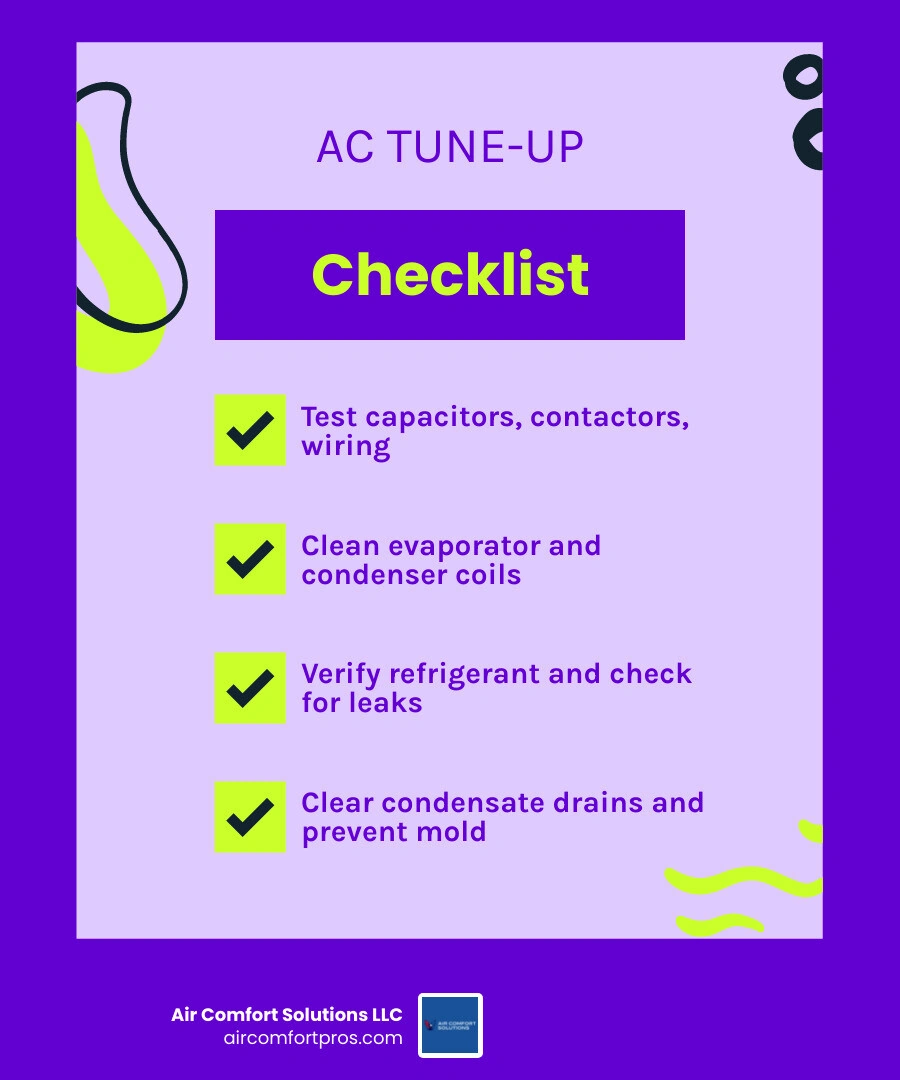
Here’s what a proper Houston AC tune-up covers:
1. Electrical inspection – Test capacitors, contactors, and wiring connections
2. Coil cleaning – Clean evaporator and condenser coils for peak efficiency
3. Refrigerant check – Verify levels and inspect for leaks
4. Condensate drain clearing – Prevent clogs, water damage, and mold
5. Thermostat calibration – Ensure accurate temperature control
6. Airflow evaluation – Check filters, fan motors, and static pressure
7. Full system performance test – Confirm your system can handle Houston summers
Houston is not a typical city when it comes to air conditioning. By June 2026, temperatures are already climbing into the mid-to-upper 90s, and the Gulf Coast humidity makes every degree feel worse. Your AC isn’t just running — it’s fighting. Houston systems run approximately 2,800 hours every year, nearly double the national average. That kind of workload breaks down equipment fast when maintenance is skipped.
Most homeowners don’t think about their AC until it stops working. But in Houston, a breakdown isn’t just an inconvenience — with heat-related deaths a real risk every summer, a working AC is genuinely a safety necessity.
The good news? Most summertime failures are preventable. A professional tune-up catches small problems — a weakening capacitor, a slow condensate drain, low refrigerant — before they become expensive emergencies.
Why You Need an AC Tune Up Guide for Houston Area Homeowners
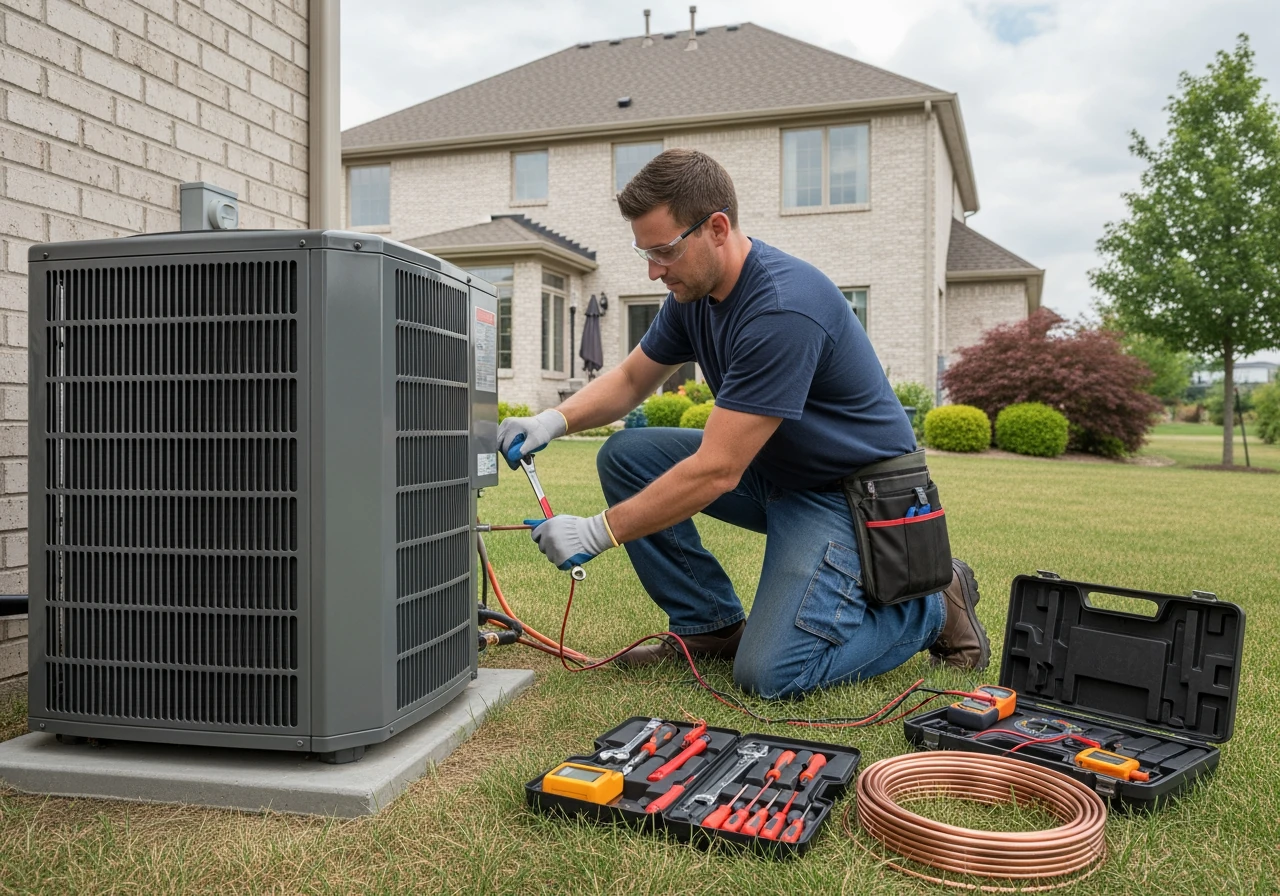
Living in Southeast Texas, our relationship with our air conditioning system is unique. Unlike milder parts of the country where the AC is switched on only during July and August, local systems in Pinehurst, Magnolia, and Conroe operate for seven to nine months out of the year.
Because we run our air conditioners nearly 2,800 hours annually, our units experience rapid wear and tear. Without a structured maintenance schedule, minor mechanical stresses accumulate quickly. This leads to a drop in system efficiency, higher utility bills, and eventual breakdown.
By investing in regular AC Maintenance Houston TX, you are not just buying peace of mind; you are protecting a major home investment. Studies show that proper HVAC maintenance can reduce home energy consumption by 15% to 40%. Because Houston residents spend approximately 27% more on cooling costs compared to the national average, those percentage points translate directly into substantial monthly savings.
How an AC Tune Up Guide for Houston Area Homeowners Saves Your Summer
When temperatures soar past 95°F, your air conditioner is the only line of defense between your family and the oppressive outdoor climate. Skipping seasonal checkups is a gamble that often results in mid-summer failures. Most emergency calls happen during peak heat waves when local service schedules are packed, leading to uncomfortable wait times.
A proactive tune-up ensures your system is primed for peak performance before those triple-digit days arrive. Technicians can identify worn parts—like a degrading contactor or a motor that needs lubrication—and swap them out on your terms. This preventive care can extend your system’s life by up to 40%.
In our challenging Gulf Coast climate, unmaintained AC units typically last only 10 to 15 years, whereas a well-maintained system can easily serve your home for 15 to 20 years. To make sure your home is fully prepared, check out our guide on How to Make Sure Your AC Survives a Texas Summer. You can also read more about Preparing Your Home’s Cooling System for a Smooth Summer and review key Things to Do Before Triple Digit Temperatures Hit to keep your home comfortable.
The Toll of Houston’s Humidity on Your Cooling System
Houston’s average relative humidity hovers around 75% year-round, often climbing to 90% or higher on summer mornings. This moisture presents a massive challenge for your air conditioner. An AC system does not just cool the air; it must dehumidify it. In fact, a typical residential cooling system in our area extracts between 5 and 20 gallons of water from indoor air every single day.
When you ignore routine maintenance, this constant moisture extraction can cause serious problems. High humidity levels accelerate the corrosion of electrical connections and copper coils. It also creates a breeding ground for mold and biological growth inside your drain pan and ductwork.
If you want to know the true cost of neglect, read our detailed breakdown of What Happens If You Skip AC Maintenance in Texas. Without proper care, dirty coils and clogged drains will reduce your system’s ability to remove humidity, leaving your home feeling sticky and warm even when the fan is running constantly.
What is Included in a Professional Houston AC Tune-Up?
A professional AC tune-up is much more than just a quick visual inspection and a filter swap. It is a highly technical, multi-point service performed by a licensed professional to verify that every component of your heating and cooling system is operating safely and efficiently. If you are scheduling your first professional visit, you can read about What to Expect During Your First AC Tune-Up to understand the process.
For homeowners in nearby communities, we also offer specialized resources such as our AC Tune-Up Tomball TX Complete Guide and the AC Tune-Up Spring TX Guide to help you understand the local climate demands.
Electrical and Mechanical Component Testing
The electrical components of your AC system are its nerve center. During a professional tune-up, a technician will use specialized diagnostic tools to test the health of your system’s capacitors. Capacitors act like temporary batteries that provide the high-voltage jolt needed to start your compressor and fan motors. In our hot climate, capacitors are the number-one failure point during heatwaves because extreme heat degrades their ability to store electrical charges.
Technicians will also check electrical connections for tightness and signs of corrosion caused by humidity. They measure the voltage and amperage draw on your blower motor, condenser fan, and compressor to ensure they are operating within safe manufacturer specifications. Loose connections or worn contacts can cause electrical resistance, leading to motor failure or even electrical fires.
Coil Cleaning and Airflow Optimization
Your air conditioner relies on two main coils to transfer heat out of your home: the indoor evaporator coil and the outdoor condenser coil.
• The Evaporator Coil: Located inside your home, this coil absorbs heat and moisture from your indoor air. If it becomes coated in dust, its ability to transfer heat drops dramatically, which can cause the coil to freeze over and turn into a block of ice.
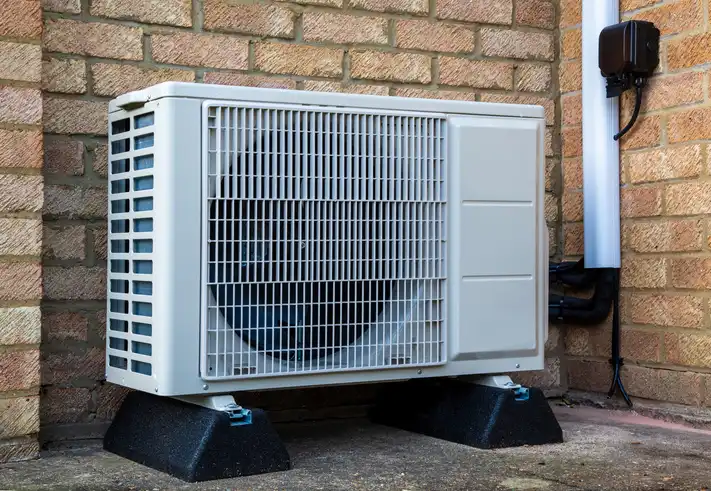
• The Condenser Coil: Located in the outdoor unit, this coil releases the collected heat into the outdoor air. Because it sits outside, it quickly becomes coated in dirt, pollen, lawn clippings, and dust.
A professional tune-up includes cleaning these coils to restore optimal heat transfer. The technician will also evaluate the system’s static pressure and airflow, ensuring the blower motor is adjusted correctly and all moving parts are lubricated to minimize friction and wear.
Condensate Drain Line Clearing
Because your AC extracts gallons of water from the air daily, keeping the condensate drain line clear is absolutely vital. Over time, the warm, dark, and damp environment inside the drain line encourages algae, mold, and slime to grow. If this buildup is not cleared, the line will clog, causing water to back up.
A clogged drain line can lead to severe water damage in your ceilings, walls, and floors. It can also trigger your system’s safety float switch, shutting down your AC completely in the middle of a hot day. During a professional tune-up, the technician will flush the drain line, inspect the drain pan for rust or cracks, and ensure the safety switches are working perfectly.
DIY Maintenance Tasks vs. Professional HVAC Services
While professional tune-ups are essential for the technical components of your system, there are several basic maintenance steps that homeowners can safely perform to keep their systems running smoothly between professional visits.
• Air Filter Replacement — DIY Friendly?: Yes — Requires Licensed Professional?: No — Recommended Frequency: Every 30–90 Days
• Clearing Debris Around Outdoor Unit — DIY Friendly?: Yes — Requires Licensed Professional?: No — Recommended Frequency: Monthly
• Thermostat Settings Adjustment — DIY Friendly?: Yes — Requires Licensed Professional?: No — Recommended Frequency: As Needed
• Cleaning Evaporator & Condenser Coils — DIY Friendly?: No — Requires Licensed Professional?: Yes — Recommended Frequency: Annually
• Checking & Adjusting Refrigerant Levels — DIY Friendly?: No — Requires Licensed Professional?: Yes — Recommended Frequency: Annually
• Testing Electrical Components & Capacitors — DIY Friendly?: No — Requires Licensed Professional?: Yes — Recommended Frequency: Annually
• Flushing & Clearing Condensate Lines — DIY Friendly?: Yes (Basic) — Requires Licensed Professional?: Yes (Deep Clean) — Recommended Frequency: Monthly (DIY) / Annual (Pro)
For a broader look at home maintenance, you can read our HVAC Maintenance Tips for Texas Homeowners.
DIY Tips to Pair with Your AC Tune Up Guide for Houston Area Homeowners
The most important DIY task is replacing your air filter regularly. During the peak cooling season, you should check your filter every 30 days. If you have pets or allergy sufferers in your home, use a high-quality pleated filter with a MERV rating of 8 to 11, and replace it promptly. A dirty filter restricts airflow, forcing your system to work harder, which can lead to frozen coils and blower motor failure.
You should also maintain a clear zone around your outdoor condenser unit. Keep shrubs, weeds, and grass trimmed back at least two feet from the unit to ensure adequate airflow. Periodically check the outdoor unit for debris like leaves or twigs, and gently rinse the exterior fins with a garden hose on a low-pressure setting to wash away loose dirt. Always turn off the power to the unit before rinsing it.
When to Call a Licensed Professional in Pinehurst and North Harris County
Certain tasks should always be left to a licensed professional. Any service involving refrigerant—such as testing for leaks, recovering refrigerant, or recharging the system—is strictly regulated by the EPA and requires specialized certification. Attempting to handle refrigerant yourself is not only illegal but can also permanently damage your compressor.
Electrical troubleshooting, motor replacements, and complex diagnostic tests also require the expertise of a professional. If you live in Pinehurst, Spring, Conroe, or surrounding areas, contacting a trusted technician for AC Service Houston TX ensures your system is serviced safely and in compliance with your manufacturer’s warranty guidelines.
Frequently Asked Questions About Houston AC Maintenance
To help you keep your cooling system in top shape, we have compiled answers to some of the most common questions we receive from local homeowners.
How often should you service your AC in Texas?
In our demanding climate, we highly recommend scheduling professional AC service twice a year. The ideal schedule is a spring tune-up (between February and April) to prepare the system for the summer heat, and a fall tune-up (between September and November) to inspect the system after months of heavy use and prepare it for winter. For more details on this schedule, read How Often Should You Service Your AC in Texas.
What happens if you skip AC maintenance in Texas?
Skipping routine maintenance can cause your system’s efficiency to drop by about 5% every year. This means you will pay more on your monthly energy bills for poorer cooling performance. Additionally, minor issues like a dirty coil or a weak capacitor will place extra strain on major components, leading to premature system failure and potentially voiding your manufacturer’s warranty. Learn more about these risks in our article on What Happens If You Skip AC Maintenance in Texas.
If your system is struggling, it will usually give you a few warning signs before breaking down completely. Keep an eye out for:
• Weak or warm airflow coming from your supply vents.
• Unusual noises such as squealing, grinding, or banging from the indoor or outdoor units.
• Frequent short-cycling, where the system turns on and off rapidly without cooling the home.
• Unexplained spikes in your monthly electricity bills.
• Excessive indoor humidity or musty odors near your vents.
If you notice any of these signs, read our AC Maintenance Visit Complete Guide to understand how a professional inspection can resolve these issues before they turn into major repairs.
Conclusion
Mastering your air conditioner’s maintenance is the key to enjoying a cool, stress-free summer in Southeast Texas. By pairing simple DIY habits with regular professional tune-ups, you can keep your energy bills manageable, prevent sudden breakdowns, and extend the lifespan of your cooling system.
At Air Comfort Solutions, we have spent over 35 years helping families across Pinehurst, Magnolia, The Woodlands, Tomball, Conroe, and Spring stay comfortable in their homes. Our certified, non-commissioned technicians provide honest, reliable solutions, transparent upfront pricing, and flexible maintenance plans tailored to the unique demands of the Texas climate.
Don’t wait for the next major heatwave to find out if your air conditioner is ready. Schedule your professional AC maintenance with Air Comfort Solutions today and keep your home cool all year long!
Why Every Houston Homeowner Needs an AC Tune-Up Before Summer Hits
This ac tune up guide for Houston area homeowners answers the most important question first: yes, you need a professional tune-up every year — ideally every spring before the brutal heat arrives, and again in fall after your system has worked overtime all season.
Here's what a proper Houston AC tune-up covers:
- Electrical inspection - Test capacitors, contactors, and wiring connections
- Coil cleaning - Clean evaporator and condenser coils for peak efficiency
- Refrigerant check - Verify levels and inspect for leaks
- Condensate drain clearing - Prevent clogs, water damage, and mold
- Thermostat calibration - Ensure accurate temperature control
- Airflow evaluation - Check filters, fan motors, and static pressure
- Full system performance test - Confirm your system can handle Houston summers
Houston is not a typical city when it comes to air conditioning. By June 2026, temperatures are already climbing into the mid-to-upper 90s, and the Gulf Coast humidity makes every degree feel worse. Your AC isn't just running — it's fighting. Houston systems run approximately 2,800 hours every year, nearly double the national average. That kind of workload breaks down equipment fast when maintenance is skipped.
Most homeowners don't think about their AC until it stops working. But in Houston, a breakdown isn't just an inconvenience — with heat-related deaths a real risk every summer, a working AC is genuinely a safety necessity.
The good news? Most summertime failures are preventable. A professional tune-up catches small problems — a weakening capacitor, a slow condensate drain, low refrigerant — before they become expensive emergencies.
Why You Need an AC Tune Up Guide for Houston Area Homeowners
Living in Southeast Texas, our relationship with our air conditioning system is unique. Unlike milder parts of the country where the AC is switched on only during July and August, local systems in Pinehurst, Magnolia, and Conroe operate for seven to nine months out of the year.
Because we run our air conditioners nearly 2,800 hours annually, our units experience rapid wear and tear. Without a structured maintenance schedule, minor mechanical stresses accumulate quickly. This leads to a drop in system efficiency, higher utility bills, and eventual breakdown.
By investing in regular AC Maintenance Houston TX, you are not just buying peace of mind; you are protecting a major home investment. Studies show that proper HVAC maintenance can reduce home energy consumption by 15% to 40%. Because Houston residents spend approximately 27% more on cooling costs compared to the national average, those percentage points translate directly into substantial monthly savings.
How an AC Tune Up Guide for Houston Area Homeowners Saves Your Summer
When temperatures soar past 95°F, your air conditioner is the only line of defense between your family and the oppressive outdoor climate. Skipping seasonal checkups is a gamble that often results in mid-summer failures. Most emergency calls happen during peak heat waves when local service schedules are packed, leading to uncomfortable wait times.
A proactive tune-up ensures your system is primed for peak performance before those triple-digit days arrive. Technicians can identify worn parts—like a degrading contactor or a motor that needs lubrication—and swap them out on your terms. This preventive care can extend your system's life by up to 40%.
In our challenging Gulf Coast climate, unmaintained AC units typically last only 10 to 15 years, whereas a well-maintained system can easily serve your home for 15 to 20 years. To make sure your home is fully prepared, check out our guide on How to Make Sure Your AC Survives a Texas Summer. You can also read more about Preparing Your Home's Cooling System for a Smooth Summer and review key Things to Do Before Triple Digit Temperatures Hit to keep your home comfortable.
The Toll of Houston's Humidity on Your Cooling System
Houston's average relative humidity hovers around 75% year-round, often climbing to 90% or higher on summer mornings. This moisture presents a massive challenge for your air conditioner. An AC system does not just cool the air; it must dehumidify it. In fact, a typical residential cooling system in our area extracts between 5 and 20 gallons of water from indoor air every single day.
When you ignore routine maintenance, this constant moisture extraction can cause serious problems. High humidity levels accelerate the corrosion of electrical connections and copper coils. It also creates a breeding ground for mold and biological growth inside your drain pan and ductwork.
If you want to know the true cost of neglect, read our detailed breakdown of What Happens If You Skip AC Maintenance in Texas. Without proper care, dirty coils and clogged drains will reduce your system’s ability to remove humidity, leaving your home feeling sticky and warm even when the fan is running constantly.
What is Included in a Professional Houston AC Tune-Up?
A professional AC tune-up is much more than just a quick visual inspection and a filter swap. It is a highly technical, multi-point service performed by a licensed professional to verify that every component of your heating and cooling system is operating safely and efficiently. If you are scheduling your first professional visit, you can read about What to Expect During Your First AC Tune-Up to understand the process.
For homeowners in nearby communities, we also offer specialized resources such as our AC Tune-Up Tomball TX Complete Guide and the AC Tune-Up Spring TX Guide to help you understand the local climate demands.
Electrical and Mechanical Component Testing
The electrical components of your AC system are its nerve center. During a professional tune-up, a technician will use specialized diagnostic tools to test the health of your system’s capacitors. Capacitors act like temporary batteries that provide the high-voltage jolt needed to start your compressor and fan motors. In our hot climate, capacitors are the number-one failure point during heatwaves because extreme heat degrades their ability to store electrical charges.
Technicians will also check electrical connections for tightness and signs of corrosion caused by humidity. They measure the voltage and amperage draw on your blower motor, condenser fan, and compressor to ensure they are operating within safe manufacturer specifications. Loose connections or worn contacts can cause electrical resistance, leading to motor failure or even electrical fires.
Coil Cleaning and Airflow Optimization
Your air conditioner relies on two main coils to transfer heat out of your home: the indoor evaporator coil and the outdoor condenser coil.
- The Evaporator Coil: Located inside your home, this coil absorbs heat and moisture from your indoor air. If it becomes coated in dust, its ability to transfer heat drops dramatically, which can cause the coil to freeze over and turn into a block of ice.
- The Condenser Coil: Located in the outdoor unit, this coil releases the collected heat into the outdoor air. Because it sits outside, it quickly becomes coated in dirt, pollen, lawn clippings, and dust.
A professional tune-up includes cleaning these coils to restore optimal heat transfer. The technician will also evaluate the system's static pressure and airflow, ensuring the blower motor is adjusted correctly and all moving parts are lubricated to minimize friction and wear.
Condensate Drain Line Clearing
Because your AC extracts gallons of water from the air daily, keeping the condensate drain line clear is absolutely vital. Over time, the warm, dark, and damp environment inside the drain line encourages algae, mold, and slime to grow. If this buildup is not cleared, the line will clog, causing water to back up.
A clogged drain line can lead to severe water damage in your ceilings, walls, and floors. It can also trigger your system's safety float switch, shutting down your AC completely in the middle of a hot day. During a professional tune-up, the technician will flush the drain line, inspect the drain pan for rust or cracks, and ensure the safety switches are working perfectly.
DIY Maintenance Tasks vs. Professional HVAC Services
While professional tune-ups are essential for the technical components of your system, there are several basic maintenance steps that homeowners can safely perform to keep their systems running smoothly between professional visits.
| Maintenance Task | DIY Friendly? | Requires Licensed Professional? | Recommended Frequency |
|---|
| Air Filter Replacement | Yes | No | Every 30–90 Days |
| Clearing Debris Around Outdoor Unit | Yes | No | Monthly |
| Thermostat Settings Adjustment | Yes | No | As Needed |
| Cleaning Evaporator & Condenser Coils | No | Yes | Annually |
| Checking & Adjusting Refrigerant Levels | No | Yes | Annually |
| Testing Electrical Components & Capacitors | No | Yes | Annually |
| Flushing & Clearing Condensate Lines | Yes (Basic) | Yes (Deep Clean) | Monthly (DIY) / Annual (Pro) |
For a broader look at home maintenance, you can read our HVAC Maintenance Tips for Texas Homeowners.
DIY Tips to Pair with Your AC Tune Up Guide for Houston Area Homeowners
The most important DIY task is replacing your air filter regularly. During the peak cooling season, you should check your filter every 30 days. If you have pets or allergy sufferers in your home, use a high-quality pleated filter with a MERV rating of 8 to 11, and replace it promptly. A dirty filter restricts airflow, forcing your system to work harder, which can lead to frozen coils and blower motor failure.
You should also maintain a clear zone around your outdoor condenser unit. Keep shrubs, weeds, and grass trimmed back at least two feet from the unit to ensure adequate airflow. Periodically check the outdoor unit for debris like leaves or twigs, and gently rinse the exterior fins with a garden hose on a low-pressure setting to wash away loose dirt. Always turn off the power to the unit before rinsing it.
When to Call a Licensed Professional in Pinehurst and North Harris County
Certain tasks should always be left to a licensed professional. Any service involving refrigerant—such as testing for leaks, recovering refrigerant, or recharging the system—is strictly regulated by the EPA and requires specialized certification. Attempting to handle refrigerant yourself is not only illegal but can also permanently damage your compressor.
Electrical troubleshooting, motor replacements, and complex diagnostic tests also require the expertise of a professional. If you live in Pinehurst, Spring, Conroe, or surrounding areas, contacting a trusted technician for AC Service Houston TX ensures your system is serviced safely and in compliance with your manufacturer’s warranty guidelines.
Frequently Asked Questions About Houston AC Maintenance
To help you keep your cooling system in top shape, we have compiled answers to some of the most common questions we receive from local homeowners.
How often should you service your AC in Texas?
In our demanding climate, we highly recommend scheduling professional AC service twice a year. The ideal schedule is a spring tune-up (between February and April) to prepare the system for the summer heat, and a fall tune-up (between September and November) to inspect the system after months of heavy use and prepare it for winter. For more details on this schedule, read How Often Should You Service Your AC in Texas.
What happens if you skip AC maintenance in Texas?
Skipping routine maintenance can cause your system’s efficiency to drop by about 5% every year. This means you will pay more on your monthly energy bills for poorer cooling performance. Additionally, minor issues like a dirty coil or a weak capacitor will place extra strain on major components, leading to premature system failure and potentially voiding your manufacturer’s warranty. Learn more about these risks in our article on What Happens If You Skip AC Maintenance in Texas.
If your system is struggling, it will usually give you a few warning signs before breaking down completely. Keep an eye out for:
- Weak or warm airflow coming from your supply vents.
- Unusual noises such as squealing, grinding, or banging from the indoor or outdoor units.
- Frequent short-cycling, where the system turns on and off rapidly without cooling the home.
- Unexplained spikes in your monthly electricity bills.
- Excessive indoor humidity or musty odors near your vents.
If you notice any of these signs, read our AC Maintenance Visit Complete Guide to understand how a professional inspection can resolve these issues before they turn into major repairs.
Conclusion
Mastering your air conditioner's maintenance is the key to enjoying a cool, stress-free summer in Southeast Texas. By pairing simple DIY habits with regular professional tune-ups, you can keep your energy bills manageable, prevent sudden breakdowns, and extend the lifespan of your cooling system.
At Air Comfort Pros, we have spent over 35 years helping families across Pinehurst, Magnolia, The Woodlands, Tomball, Conroe, and Spring stay comfortable in their homes. Our certified, non-commissioned technicians provide honest, reliable solutions, transparent upfront pricing, and flexible maintenance plans tailored to the unique demands of the Texas climate.
Don't wait for the next major heatwave to find out if your air conditioner is ready. Schedule your professional AC maintenance with Air Comfort Pros today and keep your home cool all year long!
Why Every Houston Homeowner Needs an AC Tune-Up Before Summer Hits
This ac tune up guide for Houston area homeowners answers the most important question first: yes, you need a professional tune-up every year — ideally every spring before the brutal heat arrives, and again in fall after your system has worked overtime all season.
Here's what a proper Houston AC tune-up covers:
- Electrical inspection - Test capacitors, contactors, and wiring connections
- Coil cleaning - Clean evaporator and condenser coils for peak efficiency
- Refrigerant check - Verify levels and inspect for leaks
- Condensate drain clearing - Prevent clogs, water damage, and mold
- Thermostat calibration - Ensure accurate temperature control
- Airflow evaluation - Check filters, fan motors, and static pressure
- Full system performance test - Confirm your system can handle Houston summers
Houston is not a typical city when it comes to air conditioning. By June 2026, temperatures are already climbing into the mid-to-upper 90s, and the Gulf Coast humidity makes every degree feel worse. Your AC isn't just running — it's fighting. Houston systems run approximately 2,800 hours every year, nearly double the national average. That kind of workload breaks down equipment fast when maintenance is skipped.
Most homeowners don't think about their AC until it stops working. But in Houston, a breakdown isn't just an inconvenience — with heat-related deaths a real risk every summer, a working AC is genuinely a safety necessity.
The good news? Most summertime failures are preventable. A professional tune-up catches small problems — a weakening capacitor, a slow condensate drain, low refrigerant — before they become expensive emergencies.
Why You Need an AC Tune Up Guide for Houston Area Homeowners
Living in Southeast Texas, our relationship with our air conditioning system is unique. Unlike milder parts of the country where the AC is switched on only during July and August, local systems in Pinehurst, Magnolia, and Conroe operate for seven to nine months out of the year.
Because we run our air conditioners nearly 2,800 hours annually, our units experience rapid wear and tear. Without a structured maintenance schedule, minor mechanical stresses accumulate quickly. This leads to a drop in system efficiency, higher utility bills, and eventual breakdown.
By investing in regular AC Maintenance Houston TX, you are not just buying peace of mind; you are protecting a major home investment. Studies show that proper HVAC maintenance can reduce home energy consumption by 15% to 40%. Because Houston residents spend approximately 27% more on cooling costs compared to the national average, those percentage points translate directly into substantial monthly savings.
How an AC Tune Up Guide for Houston Area Homeowners Saves Your Summer
When temperatures soar past 95°F, your air conditioner is the only line of defense between your family and the oppressive outdoor climate. Skipping seasonal checkups is a gamble that often results in mid-summer failures. Most emergency calls happen during peak heat waves when local service schedules are packed, leading to uncomfortable wait times.
A proactive tune-up ensures your system is primed for peak performance before those triple-digit days arrive. Technicians can identify worn parts—like a degrading contactor or a motor that needs lubrication—and swap them out on your terms. This preventive care can extend your system's life by up to 40%.
In our challenging Gulf Coast climate, unmaintained AC units typically last only 10 to 15 years, whereas a well-maintained system can easily serve your home for 15 to 20 years. To make sure your home is fully prepared, check out our guide on How to Make Sure Your AC Survives a Texas Summer. You can also read more about Preparing Your Home's Cooling System for a Smooth Summer and review key Things to Do Before Triple Digit Temperatures Hit to keep your home comfortable.
The Toll of Houston's Humidity on Your Cooling System
Houston's average relative humidity hovers around 75% year-round, often climbing to 90% or higher on summer mornings. This moisture presents a massive challenge for your air conditioner. An AC system does not just cool the air; it must dehumidify it. In fact, a typical residential cooling system in our area extracts between 5 and 20 gallons of water from indoor air every single day.
When you ignore routine maintenance, this constant moisture extraction can cause serious problems. High humidity levels accelerate the corrosion of electrical connections and copper coils. It also creates a breeding ground for mold and biological growth inside your drain pan and ductwork.
If you want to know the true cost of neglect, read our detailed breakdown of What Happens If You Skip AC Maintenance in Texas. Without proper care, dirty coils and clogged drains will reduce your system’s ability to remove humidity, leaving your home feeling sticky and warm even when the fan is running constantly.
What is Included in a Professional Houston AC Tune-Up?
A professional AC tune-up is much more than just a quick visual inspection and a filter swap. It is a highly technical, multi-point service performed by a licensed professional to verify that every component of your heating and cooling system is operating safely and efficiently. If you are scheduling your first professional visit, you can read about What to Expect During Your First AC Tune-Up to understand the process.
For homeowners in nearby communities, we also offer specialized resources such as our AC Tune-Up Tomball TX Complete Guide and the AC Tune-Up Spring TX Guide to help you understand the local climate demands.
Electrical and Mechanical Component Testing
The electrical components of your AC system are its nerve center. During a professional tune-up, a technician will use specialized diagnostic tools to test the health of your system’s capacitors. Capacitors act like temporary batteries that provide the high-voltage jolt needed to start your compressor and fan motors. In our hot climate, capacitors are the number-one failure point during heatwaves because extreme heat degrades their ability to store electrical charges.
Technicians will also check electrical connections for tightness and signs of corrosion caused by humidity. They measure the voltage and amperage draw on your blower motor, condenser fan, and compressor to ensure they are operating within safe manufacturer specifications. Loose connections or worn contacts can cause electrical resistance, leading to motor failure or even electrical fires.
Coil Cleaning and Airflow Optimization
Your air conditioner relies on two main coils to transfer heat out of your home: the indoor evaporator coil and the outdoor condenser coil.
- The Evaporator Coil: Located inside your home, this coil absorbs heat and moisture from your indoor air. If it becomes coated in dust, its ability to transfer heat drops dramatically, which can cause the coil to freeze over and turn into a block of ice.
- The Condenser Coil: Located in the outdoor unit, this coil releases the collected heat into the outdoor air. Because it sits outside, it quickly becomes coated in dirt, pollen, lawn clippings, and dust.
A professional tune-up includes cleaning these coils to restore optimal heat transfer. The technician will also evaluate the system's static pressure and airflow, ensuring the blower motor is adjusted correctly and all moving parts are lubricated to minimize friction and wear.
Condensate Drain Line Clearing
Because your AC extracts gallons of water from the air daily, keeping the condensate drain line clear is absolutely vital. Over time, the warm, dark, and damp environment inside the drain line encourages algae, mold, and slime to grow. If this buildup is not cleared, the line will clog, causing water to back up.
A clogged drain line can lead to severe water damage in your ceilings, walls, and floors. It can also trigger your system's safety float switch, shutting down your AC completely in the middle of a hot day. During a professional tune-up, the technician will flush the drain line, inspect the drain pan for rust or cracks, and ensure the safety switches are working perfectly.
DIY Maintenance Tasks vs. Professional HVAC Services
While professional tune-ups are essential for the technical components of your system, there are several basic maintenance steps that homeowners can safely perform to keep their systems running smoothly between professional visits.
| Maintenance Task | DIY Friendly? | Requires Licensed Professional? | Recommended Frequency |
|---|
| Air Filter Replacement | Yes | No | Every 30–90 Days |
| Clearing Debris Around Outdoor Unit | Yes | No | Monthly |
| Thermostat Settings Adjustment | Yes | No | As Needed |
| Cleaning Evaporator & Condenser Coils | No | Yes | Annually |
| Checking & Adjusting Refrigerant Levels | No | Yes | Annually |
| Testing Electrical Components & Capacitors | No | Yes | Annually |
| Flushing & Clearing Condensate Lines | Yes (Basic) | Yes (Deep Clean) | Monthly (DIY) / Annual (Pro) |
For a broader look at home maintenance, you can read our HVAC Maintenance Tips for Texas Homeowners.
DIY Tips to Pair with Your AC Tune Up Guide for Houston Area Homeowners
The most important DIY task is replacing your air filter regularly. During the peak cooling season, you should check your filter every 30 days. If you have pets or allergy sufferers in your home, use a high-quality pleated filter with a MERV rating of 8 to 11, and replace it promptly. A dirty filter restricts airflow, forcing your system to work harder, which can lead to frozen coils and blower motor failure.
You should also maintain a clear zone around your outdoor condenser unit. Keep shrubs, weeds, and grass trimmed back at least two feet from the unit to ensure adequate airflow. Periodically check the outdoor unit for debris like leaves or twigs, and gently rinse the exterior fins with a garden hose on a low-pressure setting to wash away loose dirt. Always turn off the power to the unit before rinsing it.
When to Call a Licensed Professional in Pinehurst and North Harris County
Certain tasks should always be left to a licensed professional. Any service involving refrigerant—such as testing for leaks, recovering refrigerant, or recharging the system—is strictly regulated by the EPA and requires specialized certification. Attempting to handle refrigerant yourself is not only illegal but can also permanently damage your compressor.
Electrical troubleshooting, motor replacements, and complex diagnostic tests also require the expertise of a professional. If you live in Pinehurst, Spring, Conroe, or surrounding areas, contacting a trusted technician for AC Service Houston TX ensures your system is serviced safely and in compliance with your manufacturer’s warranty guidelines.
Frequently Asked Questions About Houston AC Maintenance
To help you keep your cooling system in top shape, we have compiled answers to some of the most common questions we receive from local homeowners.
How often should you service your AC in Texas?
In our demanding climate, we highly recommend scheduling professional AC service twice a year. The ideal schedule is a spring tune-up (between February and April) to prepare the system for the summer heat, and a fall tune-up (between September and November) to inspect the system after months of heavy use and prepare it for winter. For more details on this schedule, read How Often Should You Service Your AC in Texas.
What happens if you skip AC maintenance in Texas?
Skipping routine maintenance can cause your system’s efficiency to drop by about 5% every year. This means you will pay more on your monthly energy bills for poorer cooling performance. Additionally, minor issues like a dirty coil or a weak capacitor will place extra strain on major components, leading to premature system failure and potentially voiding your manufacturer’s warranty. Learn more about these risks in our article on What Happens If You Skip AC Maintenance in Texas.
If your system is struggling, it will usually give you a few warning signs before breaking down completely. Keep an eye out for:
- Weak or warm airflow coming from your supply vents.
- Unusual noises such as squealing, grinding, or banging from the indoor or outdoor units.
- Frequent short-cycling, where the system turns on and off rapidly without cooling the home.
- Unexplained spikes in your monthly electricity bills.
- Excessive indoor humidity or musty odors near your vents.
If you notice any of these signs, read our AC Maintenance Visit Complete Guide to understand how a professional inspection can resolve these issues before they turn into major repairs.
Conclusion
Mastering your air conditioner's maintenance is the key to enjoying a cool, stress-free summer in Southeast Texas. By pairing simple DIY habits with regular professional tune-ups, you can keep your energy bills manageable, prevent sudden breakdowns, and extend the lifespan of your cooling system.
At Air Comfort Pros, we have spent over 35 years helping families across Pinehurst, Magnolia, The Woodlands, Tomball, Conroe, and Spring stay comfortable in their homes. Our certified, non-commissioned technicians provide honest, reliable solutions, transparent upfront pricing, and flexible maintenance plans tailored to the unique demands of the Texas climate.
Don't wait for the next major heatwave to find out if your air conditioner is ready. Schedule your professional AC maintenance with Air Comfort Pros today and keep your home cool all year long!
Why Every Houston Homeowner Needs an AC Tune-Up Before Summer Hits
This ac tune up guide for Houston area homeowners answers the most important question first: yes, you need a professional tune-up every year — ideally every spring before the brutal heat arrives, and again in fall after your system has worked overtime all season.
Here's what a proper Houston AC tune-up covers:
- Electrical inspection - Test capacitors, contactors, and wiring connections
- Coil cleaning - Clean evaporator and condenser coils for peak efficiency
- Refrigerant check - Verify levels and inspect for leaks
- Condensate drain clearing - Prevent clogs, water damage, and mold
- Thermostat calibration - Ensure accurate temperature control
- Airflow evaluation - Check filters, fan motors, and static pressure
- Full system performance test - Confirm your system can handle Houston summers
Houston is not a typical city when it comes to air conditioning. By June 2026, temperatures are already climbing into the mid-to-upper 90s, and the Gulf Coast humidity makes every degree feel worse. Your AC isn't just running — it's fighting. Houston systems run approximately 2,800 hours every year, nearly double the national average. That kind of workload breaks down equipment fast when maintenance is skipped.
Most homeowners don't think about their AC until it stops working. But in Houston, a breakdown isn't just an inconvenience — with heat-related deaths a real risk every summer, a working AC is genuinely a safety necessity.
The good news? Most summertime failures are preventable. A professional tune-up catches small problems — a weakening capacitor, a slow condensate drain, low refrigerant — before they become expensive emergencies.
Why You Need an AC Tune Up Guide for Houston Area Homeowners
Living in Southeast Texas, our relationship with our air conditioning system is unique. Unlike milder parts of the country where the AC is switched on only during July and August, local systems in Pinehurst, Magnolia, and Conroe operate for seven to nine months out of the year.
Because we run our air conditioners nearly 2,800 hours annually, our units experience rapid wear and tear. Without a structured maintenance schedule, minor mechanical stresses accumulate quickly. This leads to a drop in system efficiency, higher utility bills, and eventual breakdown.
By investing in regular AC Maintenance Houston TX, you are not just buying peace of mind; you are protecting a major home investment. Studies show that proper HVAC maintenance can reduce home energy consumption by 15% to 40%. Because Houston residents spend approximately 27% more on cooling costs compared to the national average, those percentage points translate directly into substantial monthly savings.
How an AC Tune Up Guide for Houston Area Homeowners Saves Your Summer
When temperatures soar past 95°F, your air conditioner is the only line of defense between your family and the oppressive outdoor climate. Skipping seasonal checkups is a gamble that often results in mid-summer failures. Most emergency calls happen during peak heat waves when local service schedules are packed, leading to uncomfortable wait times.
A proactive tune-up ensures your system is primed for peak performance before those triple-digit days arrive. Technicians can identify worn parts—like a degrading contactor or a motor that needs lubrication—and swap them out on your terms. This preventive care can extend your system's life by up to 40%.
In our challenging Gulf Coast climate, unmaintained AC units typically last only 10 to 15 years, whereas a well-maintained system can easily serve your home for 15 to 20 years. To make sure your home is fully prepared, check out our guide on How to Make Sure Your AC Survives a Texas Summer. You can also read more about Preparing Your Home's Cooling System for a Smooth Summer and review key Things to Do Before Triple Digit Temperatures Hit to keep your home comfortable.
The Toll of Houston's Humidity on Your Cooling System
Houston's average relative humidity hovers around 75% year-round, often climbing to 90% or higher on summer mornings. This moisture presents a massive challenge for your air conditioner. An AC system does not just cool the air; it must dehumidify it. In fact, a typical residential cooling system in our area extracts between 5 and 20 gallons of water from indoor air every single day.
When you ignore routine maintenance, this constant moisture extraction can cause serious problems. High humidity levels accelerate the corrosion of electrical connections and copper coils. It also creates a breeding ground for mold and biological growth inside your drain pan and ductwork.
If you want to know the true cost of neglect, read our detailed breakdown of What Happens If You Skip AC Maintenance in Texas. Without proper care, dirty coils and clogged drains will reduce your system’s ability to remove humidity, leaving your home feeling sticky and warm even when the fan is running constantly.
What is Included in a Professional Houston AC Tune-Up?
A professional AC tune-up is much more than just a quick visual inspection and a filter swap. It is a highly technical, multi-point service performed by a licensed professional to verify that every component of your heating and cooling system is operating safely and efficiently. If you are scheduling your first professional visit, you can read about What to Expect During Your First AC Tune-Up to understand the process.
For homeowners in nearby communities, we also offer specialized resources such as our AC Tune-Up Tomball TX Complete Guide and the AC Tune-Up Spring TX Guide to help you understand the local climate demands.
Electrical and Mechanical Component Testing
The electrical components of your AC system are its nerve center. During a professional tune-up, a technician will use specialized diagnostic tools to test the health of your system’s capacitors. Capacitors act like temporary batteries that provide the high-voltage jolt needed to start your compressor and fan motors. In our hot climate, capacitors are the number-one failure point during heatwaves because extreme heat degrades their ability to store electrical charges.
Technicians will also check electrical connections for tightness and signs of corrosion caused by humidity. They measure the voltage and amperage draw on your blower motor, condenser fan, and compressor to ensure they are operating within safe manufacturer specifications. Loose connections or worn contacts can cause electrical resistance, leading to motor failure or even electrical fires.
Coil Cleaning and Airflow Optimization
Your air conditioner relies on two main coils to transfer heat out of your home: the indoor evaporator coil and the outdoor condenser coil.
- The Evaporator Coil: Located inside your home, this coil absorbs heat and moisture from your indoor air. If it becomes coated in dust, its ability to transfer heat drops dramatically, which can cause the coil to freeze over and turn into a block of ice.
- The Condenser Coil: Located in the outdoor unit, this coil releases the collected heat into the outdoor air. Because it sits outside, it quickly becomes coated in dirt, pollen, lawn clippings, and dust.
A professional tune-up includes cleaning these coils to restore optimal heat transfer. The technician will also evaluate the system's static pressure and airflow, ensuring the blower motor is adjusted correctly and all moving parts are lubricated to minimize friction and wear.
Condensate Drain Line Clearing
Because your AC extracts gallons of water from the air daily, keeping the condensate drain line clear is absolutely vital. Over time, the warm, dark, and damp environment inside the drain line encourages algae, mold, and slime to grow. If this buildup is not cleared, the line will clog, causing water to back up.
A clogged drain line can lead to severe water damage in your ceilings, walls, and floors. It can also trigger your system's safety float switch, shutting down your AC completely in the middle of a hot day. During a professional tune-up, the technician will flush the drain line, inspect the drain pan for rust or cracks, and ensure the safety switches are working perfectly.
DIY Maintenance Tasks vs. Professional HVAC Services
While professional tune-ups are essential for the technical components of your system, there are several basic maintenance steps that homeowners can safely perform to keep their systems running smoothly between professional visits.
| Maintenance Task | DIY Friendly? | Requires Licensed Professional? | Recommended Frequency |
|---|
| Air Filter Replacement | Yes | No | Every 30–90 Days |
| Clearing Debris Around Outdoor Unit | Yes | No | Monthly |
| Thermostat Settings Adjustment | Yes | No | As Needed |
| Cleaning Evaporator & Condenser Coils | No | Yes | Annually |
| Checking & Adjusting Refrigerant Levels | No | Yes | Annually |
| Testing Electrical Components & Capacitors | No | Yes | Annually |
| Flushing & Clearing Condensate Lines | Yes (Basic) | Yes (Deep Clean) | Monthly (DIY) / Annual (Pro) |
For a broader look at home maintenance, you can read our HVAC Maintenance Tips for Texas Homeowners.
DIY Tips to Pair with Your AC Tune Up Guide for Houston Area Homeowners
The most important DIY task is replacing your air filter regularly. During the peak cooling season, you should check your filter every 30 days. If you have pets or allergy sufferers in your home, use a high-quality pleated filter with a MERV rating of 8 to 11, and replace it promptly. A dirty filter restricts airflow, forcing your system to work harder, which can lead to frozen coils and blower motor failure.
You should also maintain a clear zone around your outdoor condenser unit. Keep shrubs, weeds, and grass trimmed back at least two feet from the unit to ensure adequate airflow. Periodically check the outdoor unit for debris like leaves or twigs, and gently rinse the exterior fins with a garden hose on a low-pressure setting to wash away loose dirt. Always turn off the power to the unit before rinsing it.
When to Call a Licensed Professional in Pinehurst and North Harris County
Certain tasks should always be left to a licensed professional. Any service involving refrigerant—such as testing for leaks, recovering refrigerant, or recharging the system—is strictly regulated by the EPA and requires specialized certification. Attempting to handle refrigerant yourself is not only illegal but can also permanently damage your compressor.
Electrical troubleshooting, motor replacements, and complex diagnostic tests also require the expertise of a professional. If you live in Pinehurst, Spring, Conroe, or surrounding areas, contacting a trusted technician for AC Service Houston TX ensures your system is serviced safely and in compliance with your manufacturer’s warranty guidelines.
Frequently Asked Questions About Houston AC Maintenance
To help you keep your cooling system in top shape, we have compiled answers to some of the most common questions we receive from local homeowners.
How often should you service your AC in Texas?
In our demanding climate, we highly recommend scheduling professional AC service twice a year. The ideal schedule is a spring tune-up (between February and April) to prepare the system for the summer heat, and a fall tune-up (between September and November) to inspect the system after months of heavy use and prepare it for winter. For more details on this schedule, read How Often Should You Service Your AC in Texas.
What happens if you skip AC maintenance in Texas?
Skipping routine maintenance can cause your system’s efficiency to drop by about 5% every year. This means you will pay more on your monthly energy bills for poorer cooling performance. Additionally, minor issues like a dirty coil or a weak capacitor will place extra strain on major components, leading to premature system failure and potentially voiding your manufacturer’s warranty. Learn more about these risks in our article on What Happens If You Skip AC Maintenance in Texas.
If your system is struggling, it will usually give you a few warning signs before breaking down completely. Keep an eye out for:
- Weak or warm airflow coming from your supply vents.
- Unusual noises such as squealing, grinding, or banging from the indoor or outdoor units.
- Frequent short-cycling, where the system turns on and off rapidly without cooling the home.
- Unexplained spikes in your monthly electricity bills.
- Excessive indoor humidity or musty odors near your vents.
If you notice any of these signs, read our AC Maintenance Visit Complete Guide to understand how a professional inspection can resolve these issues before they turn into major repairs.
Conclusion
Mastering your air conditioner's maintenance is the key to enjoying a cool, stress-free summer in Southeast Texas. By pairing simple DIY habits with regular professional tune-ups, you can keep your energy bills manageable, prevent sudden breakdowns, and extend the lifespan of your cooling system.
At Air Comfort Pros, we have spent over 35 years helping families across Pinehurst, Magnolia, The Woodlands, Tomball, Conroe, and Spring stay comfortable in their homes. Our certified, non-commissioned technicians provide honest, reliable solutions, transparent upfront pricing, and flexible maintenance plans tailored to the unique demands of the Texas climate.
Don't wait for the next major heatwave to find out if your air conditioner is ready. Schedule your professional AC maintenance with Air Comfort Pros today and keep your home cool all year long!
Why Every Houston Homeowner Needs an AC Tune-Up Before Summer Hits
This ac tune up guide for Houston area homeowners answers the most important question first: yes, you need a professional tune-up every year — ideally every spring before the brutal heat arrives, and again in fall after your system has worked overtime all season.
Here's what a proper Houston AC tune-up covers:
- Electrical inspection - Test capacitors, contactors, and wiring connections
- Coil cleaning - Clean evaporator and condenser coils for peak efficiency
- Refrigerant check - Verify levels and inspect for leaks
- Condensate drain clearing - Prevent clogs, water damage, and mold
- Thermostat calibration - Ensure accurate temperature control
- Airflow evaluation - Check filters, fan motors, and static pressure
- Full system performance test - Confirm your system can handle Houston summers
Houston is not a typical city when it comes to air conditioning. By June 2026, temperatures are already climbing into the mid-to-upper 90s, and the Gulf Coast humidity makes every degree feel worse. Your AC isn't just running — it's fighting. Houston systems run approximately 2,800 hours every year, nearly double the national average. That kind of workload breaks down equipment fast when maintenance is skipped.
Most homeowners don't think about their AC until it stops working. But in Houston, a breakdown isn't just an inconvenience — with heat-related deaths a real risk every summer, a working AC is genuinely a safety necessity.
The good news? Most summertime failures are preventable. A professional tune-up catches small problems — a weakening capacitor, a slow condensate drain, low refrigerant — before they become expensive emergencies.
Why You Need an AC Tune Up Guide for Houston Area Homeowners
Living in Southeast Texas, our relationship with our air conditioning system is unique. Unlike milder parts of the country where the AC is switched on only during July and August, local systems in Pinehurst, Magnolia, and Conroe operate for seven to nine months out of the year.
Because we run our air conditioners nearly 2,800 hours annually, our units experience rapid wear and tear. Without a structured maintenance schedule, minor mechanical stresses accumulate quickly. This leads to a drop in system efficiency, higher utility bills, and eventual breakdown.
By investing in regular AC Maintenance Houston TX, you are not just buying peace of mind; you are protecting a major home investment. Studies show that proper HVAC maintenance can reduce home energy consumption by 15% to 40%. Because Houston residents spend approximately 27% more on cooling costs compared to the national average, those percentage points translate directly into substantial monthly savings.
How an AC Tune Up Guide for Houston Area Homeowners Saves Your Summer
When temperatures soar past 95°F, your air conditioner is the only line of defense between your family and the oppressive outdoor climate. Skipping seasonal checkups is a gamble that often results in mid-summer failures. Most emergency calls happen during peak heat waves when local service schedules are packed, leading to uncomfortable wait times.
A proactive tune-up ensures your system is primed for peak performance before those triple-digit days arrive. Technicians can identify worn parts—like a degrading contactor or a motor that needs lubrication—and swap them out on your terms. This preventive care can extend your system's life by up to 40%.
In our challenging Gulf Coast climate, unmaintained AC units typically last only 10 to 15 years, whereas a well-maintained system can easily serve your home for 15 to 20 years. To make sure your home is fully prepared, check out our guide on How to Make Sure Your AC Survives a Texas Summer. You can also read more about Preparing Your Home's Cooling System for a Smooth Summer and review key Things to Do Before Triple Digit Temperatures Hit to keep your home comfortable.
The Toll of Houston's Humidity on Your Cooling System
Houston's average relative humidity hovers around 75% year-round, often climbing to 90% or higher on summer mornings. This moisture presents a massive challenge for your air conditioner. An AC system does not just cool the air; it must dehumidify it. In fact, a typical residential cooling system in our area extracts between 5 and 20 gallons of water from indoor air every single day.
When you ignore routine maintenance, this constant moisture extraction can cause serious problems. High humidity levels accelerate the corrosion of electrical connections and copper coils. It also creates a breeding ground for mold and biological growth inside your drain pan and ductwork.
If you want to know the true cost of neglect, read our detailed breakdown of What Happens If You Skip AC Maintenance in Texas. Without proper care, dirty coils and clogged drains will reduce your system’s ability to remove humidity, leaving your home feeling sticky and warm even when the fan is running constantly.
What is Included in a Professional Houston AC Tune-Up?
A professional AC tune-up is much more than just a quick visual inspection and a filter swap. It is a highly technical, multi-point service performed by a licensed professional to verify that every component of your heating and cooling system is operating safely and efficiently. If you are scheduling your first professional visit, you can read about What to Expect During Your First AC Tune-Up to understand the process.
For homeowners in nearby communities, we also offer specialized resources such as our AC Tune-Up Tomball TX Complete Guide and the AC Tune-Up Spring TX Guide to help you understand the local climate demands.
Electrical and Mechanical Component Testing
The electrical components of your AC system are its nerve center. During a professional tune-up, a technician will use specialized diagnostic tools to test the health of your system’s capacitors. Capacitors act like temporary batteries that provide the high-voltage jolt needed to start your compressor and fan motors. In our hot climate, capacitors are the number-one failure point during heatwaves because extreme heat degrades their ability to store electrical charges.
Technicians will also check electrical connections for tightness and signs of corrosion caused by humidity. They measure the voltage and amperage draw on your blower motor, condenser fan, and compressor to ensure they are operating within safe manufacturer specifications. Loose connections or worn contacts can cause electrical resistance, leading to motor failure or even electrical fires.
Coil Cleaning and Airflow Optimization
Your air conditioner relies on two main coils to transfer heat out of your home: the indoor evaporator coil and the outdoor condenser coil.
- The Evaporator Coil: Located inside your home, this coil absorbs heat and moisture from your indoor air. If it becomes coated in dust, its ability to transfer heat drops dramatically, which can cause the coil to freeze over and turn into a block of ice.
- The Condenser Coil: Located in the outdoor unit, this coil releases the collected heat into the outdoor air. Because it sits outside, it quickly becomes coated in dirt, pollen, lawn clippings, and dust.
A professional tune-up includes cleaning these coils to restore optimal heat transfer. The technician will also evaluate the system's static pressure and airflow, ensuring the blower motor is adjusted correctly and all moving parts are lubricated to minimize friction and wear.
Condensate Drain Line Clearing
Because your AC extracts gallons of water from the air daily, keeping the condensate drain line clear is absolutely vital. Over time, the warm, dark, and damp environment inside the drain line encourages algae, mold, and slime to grow. If this buildup is not cleared, the line will clog, causing water to back up.
A clogged drain line can lead to severe water damage in your ceilings, walls, and floors. It can also trigger your system's safety float switch, shutting down your AC completely in the middle of a hot day. During a professional tune-up, the technician will flush the drain line, inspect the drain pan for rust or cracks, and ensure the safety switches are working perfectly.
DIY Maintenance Tasks vs. Professional HVAC Services
While professional tune-ups are essential for the technical components of your system, there are several basic maintenance steps that homeowners can safely perform to keep their systems running smoothly between professional visits.
| Maintenance Task | DIY Friendly? | Requires Licensed Professional? | Recommended Frequency |
|---|
| Air Filter Replacement | Yes | No | Every 30–90 Days |
| Clearing Debris Around Outdoor Unit | Yes | No | Monthly |
| Thermostat Settings Adjustment | Yes | No | As Needed |
| Cleaning Evaporator & Condenser Coils | No | Yes | Annually |
| Checking & Adjusting Refrigerant Levels | No | Yes | Annually |
| Testing Electrical Components & Capacitors | No | Yes | Annually |
| Flushing & Clearing Condensate Lines | Yes (Basic) | Yes (Deep Clean) | Monthly (DIY) / Annual (Pro) |
For a broader look at home maintenance, you can read our HVAC Maintenance Tips for Texas Homeowners.
DIY Tips to Pair with Your AC Tune Up Guide for Houston Area Homeowners
The most important DIY task is replacing your air filter regularly. During the peak cooling season, you should check your filter every 30 days. If you have pets or allergy sufferers in your home, use a high-quality pleated filter with a MERV rating of 8 to 11, and replace it promptly. A dirty filter restricts airflow, forcing your system to work harder, which can lead to frozen coils and blower motor failure.
You should also maintain a clear zone around your outdoor condenser unit. Keep shrubs, weeds, and grass trimmed back at least two feet from the unit to ensure adequate airflow. Periodically check the outdoor unit for debris like leaves or twigs, and gently rinse the exterior fins with a garden hose on a low-pressure setting to wash away loose dirt. Always turn off the power to the unit before rinsing it.
When to Call a Licensed Professional in Pinehurst and North Harris County
Certain tasks should always be left to a licensed professional. Any service involving refrigerant—such as testing for leaks, recovering refrigerant, or recharging the system—is strictly regulated by the EPA and requires specialized certification. Attempting to handle refrigerant yourself is not only illegal but can also permanently damage your compressor.
Electrical troubleshooting, motor replacements, and complex diagnostic tests also require the expertise of a professional. If you live in Pinehurst, Spring, Conroe, or surrounding areas, contacting a trusted technician for AC Service Houston TX ensures your system is serviced safely and in compliance with your manufacturer’s warranty guidelines.
Frequently Asked Questions About Houston AC Maintenance
To help you keep your cooling system in top shape, we have compiled answers to some of the most common questions we receive from local homeowners.
How often should you service your AC in Texas?
In our demanding climate, we highly recommend scheduling professional AC service twice a year. The ideal schedule is a spring tune-up (between February and April) to prepare the system for the summer heat, and a fall tune-up (between September and November) to inspect the system after months of heavy use and prepare it for winter. For more details on this schedule, read How Often Should You Service Your AC in Texas.
What happens if you skip AC maintenance in Texas?
Skipping routine maintenance can cause your system’s efficiency to drop by about 5% every year. This means you will pay more on your monthly energy bills for poorer cooling performance. Additionally, minor issues like a dirty coil or a weak capacitor will place extra strain on major components, leading to premature system failure and potentially voiding your manufacturer’s warranty. Learn more about these risks in our article on What Happens If You Skip AC Maintenance in Texas.
If your system is struggling, it will usually give you a few warning signs before breaking down completely. Keep an eye out for:
- Weak or warm airflow coming from your supply vents.
- Unusual noises such as squealing, grinding, or banging from the indoor or outdoor units.
- Frequent short-cycling, where the system turns on and off rapidly without cooling the home.
- Unexplained spikes in your monthly electricity bills.
- Excessive indoor humidity or musty odors near your vents.
If you notice any of these signs, read our AC Maintenance Visit Complete Guide to understand how a professional inspection can resolve these issues before they turn into major repairs.
Conclusion
Mastering your air conditioner's maintenance is the key to enjoying a cool, stress-free summer in Southeast Texas. By pairing simple DIY habits with regular professional tune-ups, you can keep your energy bills manageable, prevent sudden breakdowns, and extend the lifespan of your cooling system.
At Air Comfort Pros, we have spent over 35 years helping families across Pinehurst, Magnolia, The Woodlands, Tomball, Conroe, and Spring stay comfortable in their homes. Our certified, non-commissioned technicians provide honest, reliable solutions, transparent upfront pricing, and flexible maintenance plans tailored to the unique demands of the Texas climate.
Don't wait for the next major heatwave to find out if your air conditioner is ready. Schedule your professional AC maintenance with Air Comfort Pros today and keep your home cool all year long!