Burning Smell on Fall Startup? When to Call for 24 Hour AC Repair
Why we always check for dust burn-off first. Review our home maintenance tips and troubleshooting advice to decide if that fall HVAC smell needs a pro.

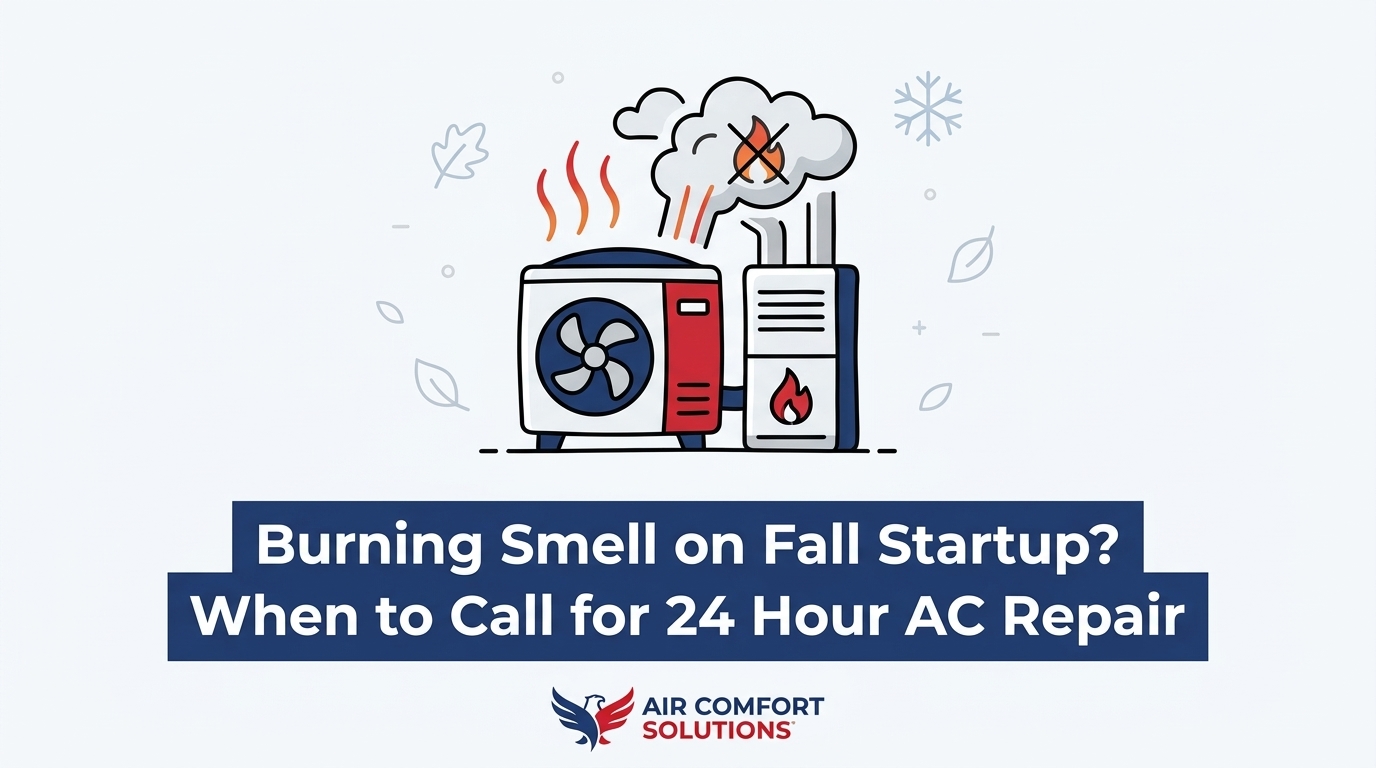
Did you just switch your thermostat from cool to heat, only to be hit with an alarming burning smell spreading through your vents? If you are frantically searching for home maintenance tips and troubleshooting to figure out if your system is safe to run, you are not alone. Here at Air Comfort Solutions, we understand that the sudden, unmistakable odor of something burning is enough to make anyone panic, especially when it happens during the first cool October cold front of the season.
The immediate reaction is usually to rush to the thermostat and shut the entire system down. You are suddenly faced with a stressful decision: do you wait it out and see if the smell clears, or do you need to call a professional immediately? In our years of servicing local heating systems, we've found that determining whether this is a harmless case of normal seasonal dust burn-off or a serious safety hazard requiring emergency intervention is critical for your peace of mind and your family's safety.
While many fall startup quirks are completely harmless, ignoring the wrong kind of burning smell can lead to severe equipment damage or compromised indoor air quality. If the situation escalates or you feel unsafe, you can always rely on our professional air conditioning services to evaluate your system. However, understanding the source of these odors can help you make an informed decision before you contact us for emergency service.
To understand why your heater smells like a campfire on the first chilly night of autumn, you have to look at what your HVAC system has been doing for the previous eight months. Our technicians often explain to homeowners that the science behind that initial burning smell is directly tied to our regional climate and how your equipment operates year-round.
In many Pinehurst TX area homes we visit, the heating components of the HVAC system sit completely dormant from late February all the way through October. While your air conditioner is running around the clock to keep you cool, the heat exchanger—the metal component that actually warms the air—does absolutely nothing. However, because your AC and heating system share the same blower motor and ductwork, all the indoor air circulating through your home still passes right over those dormant heating parts.
Our region is known for brutal, humid Texas summers. This intense cooling workload means your system is constantly pulling moisture out of the indoor air. The high humidity environment inside the air handler creates a slightly damp, sticky surface on the inactive heat exchanger. Over the course of eight months, everyday household particles—including standard airborne dust, pet dander, lint from clothing, and cooking aerosols—get pulled into the system and stick firmly to these dormant metal surfaces. Instead of blowing past, our team routinely observes how this debris forms a thin, stubborn layer across the heating elements.
When the first cool October cold front finally arrives and you switch your thermostat to "heat," the burners ignite or the heating strips activate for the very first time. The heat exchanger rapidly climbs to hundreds of degrees. All that accumulated dust, dander, and lint that has been resting on the metal for most of the year is instantly incinerated. The physical process of this debris burning off all at once is what creates that strong, dusty, burning odor that gets pushed out through your supply vents. Because it happens simultaneously across the entire surface of the heat exchanger, the smell can be surprisingly intense for the first few heating cycles.
Knowing the difference between harmless seasonal dust burn-off and a true mechanical emergency is the key to protecting your home. While the initial smell can be startling, our team at Air Comfort Solutions assures customers that it is usually completely normal. However, there are strict boundaries you should observe. If your system crosses these lines, it is time to shut it down immediately.
• Type of Odor — Normal Dust Burn-Off: Smells like hot, dusty air, similar to a hair dryer or an old space heater. — Emergency Warning Sign: Smells like melting plastic, electrical ozone, burning rubber, or metallic friction.
• Duration of Smell — Normal Dust Burn-Off: Dissipates steadily within 30 to 45 minutes of the first heating cycle. — Emergency Warning Sign: Persists for more than an hour, or grows noticeably stronger the longer the system runs.
• Visual Indicators — Normal Dust Burn-Off: No visible smoke or residue anywhere near the vents or the unit. — Emergency Warning Sign: Visible smoke coming from vents, or black soot accumulating around the registers.
• Safety Alarms — Normal Dust Burn-Off: Smoke detectors and carbon monoxide detectors remain silent. — Emergency Warning Sign: Any alarm in the house triggers, particularly carbon monoxide detectors.
The Carbon Monoxide Factor: It is crucial to remember that carbon monoxide (CO) itself is completely odorless, colorless, and tasteless. You cannot smell a carbon monoxide leak. However, unusual burning smells, exhaust-like odors, or visible soot are major red flags we look for that indicate your furnace is experiencing poor combustion or that the heat exchanger is compromised. A cracked heat exchanger allows combustion gases to mix with your breathing air, which is a severe hazard.
The Strict Rule to Follow: If the smell persists beyond one hour of continuous operation, if it smells distinctly synthetic (like burning wires or melting plastic), or if any alarms sound during that first cool October cold front, shut the system down at the thermostat immediately. Do not turn it back on until a professional has evaluated the equipment.

Smells are rarely the only thing that alarms homeowners during the fall startup. After months of silence, the sudden mechanical sounds of a heating system coming to life can be jarring. Understanding which noises are harmless and which indicate a problem can save you a lot of anxiety in Pinehurst TX area homes.
Yes, occasional popping, pinging, or clicking sounds are entirely normal during the first few heating cycles. Your ductwork and the heat exchanger are made of metal. When the burners ignite, that metal rapidly heats up and expands. When the cycle ends, the metal cools and contracts. This natural expansion and contraction causes the metal to flex, resulting in harmless popping noises echoing through your vents. As the season progresses and the temperature swings become less extreme, our technicians note that these sounds typically quiet down.
While light popping is fine, aggressive mechanical sounds are not. If you hear loud banging (which can indicate delayed ignition, a minor gas explosion inside the chamber), metal-on-metal grinding (usually a failing blower motor bearing), or loud squealing (a failing belt or motor issue), you should turn the system off. These are clear indicators of mechanical failure, and understanding what strange AC noises mean can help you prevent catastrophic equipment damage.
If your system turns on, runs for just a few minutes, shuts down prematurely, and then immediately tries to start again, it is "short-cycling." This is not a harmless quirk; it is a built-in safety mechanism. Furnaces are equipped with a high-limit switch that monitors the internal temperature. If the system cannot push enough air over the heat exchanger to keep it cool, the furnace will overheat. To prevent a fire or a cracked heat exchanger, the limit switch forcefully shuts the burners down. In our experience, repeated short-cycling means the system is dangerously overheating and requires professional diagnosis.
Before you assume the worst during the first cool October cold front, there are a few safe, simple things you can check. As a local business, our team at Air Comfort Solutions actively tries to save neighbors from booking unnecessary emergency calls by empowering them with safe troubleshooting steps first. Here is what we recommend you do to help your system run smoothly.
1. Check and replace your air filter: This is the single most important step. A clogged, dirty air filter severely restricts airflow. Without enough cool air moving over the heat exchanger, the system will run hotter than it should, making the burning dust smell much worse and potentially causing the system to short-cycle. Start the season with a brand-new filter.
2. Ensure all supply and return vents are fully open: Walk through your home and check every register. Make sure the louvers are open and that no heavy furniture, rugs, or curtains are blocking the airflow. Closing vents in unused rooms actually increases pressure inside the ductwork and forces your blower motor to work harder, which can lead to overheating.
3. Monitor the system closely for the first 30 minutes: Turn the heat on and stay near a primary vent. Note the time. Pay attention to how the smell changes. If it is just dust burn-off, the odor should peak in the first ten minutes and then steadily decline. Open a few windows to help ventilate the harmless odor out of the house.
Strict Safety Warning: Never attempt to remove the service panels, open the furnace cabinet, or visually inspect the heat exchanger yourself. Modern HVAC systems contain high-voltage electrical components, pressurized gas lines, and delicate safety sensors. Inspecting the internal combustion chamber requires specialized tools and must only be handled by a licensed professional. If basic troubleshooting does not resolve the issue, relying on a professional AC maintenance plan is the safest route.
Every fall, our dispatchers at Air Comfort Solutions field countless calls from concerned homeowners experiencing the exact same startup symptoms. Below are the most common questions we receive regarding that initial burning smell, short-cycling, and knowing when to call for 24 hour ac repair Montgomery or 24 hour hvac service near me Magnolia TX.
The normal dust burn-off smell typically lasts between 30 to 45 minutes during the very first heating cycle of the year. You should notice the intensity of the odor decreasing significantly after the first 15 minutes. If the smell remains strong after an hour, or returns every single time the heater kicks on days later, it is time to have our team inspect the system.
Usually, it is not an emergency if the odor smells like dusty heat and fades quickly, as this is just accumulated debris burning off the heat exchanger. However, it absolutely becomes an emergency if the odor smells like melting plastic, electrical burning, or rubber. Furthermore, if the smell is accompanied by smoke, soot, or any sounding alarms, you should shut the system down immediately and call us for emergency repair.
A cracked heat exchanger often produces a strong, unpleasant odor that many homeowners describe to us as smelling like formaldehyde, metallic exhaust, or harsh chemicals. Because a crack allows hazardous combustion gases to mix with the air circulating through your home, this smell may also be accompanied by physical symptoms like headaches or nausea. You may also notice dark soot building up around your supply vents.
Yes, opening your windows and running ceiling fans for the first 20 to 30 minutes of the heating season is a highly recommended, safe way to clear out the harmless dust burn-off odor. Ventilating the home helps dissipate the smell quickly and reduces the anxiety of having a strong odor trapped indoors. Once the smell fades, you can close the windows and let the system run normally.
Homeowners cannot safely or accurately inspect a heat exchanger on their own, as the component is hidden deep inside the furnace cabinet. Confirming the safety of a heat exchanger requires a professional combustion analysis, specialized cameras, and a thorough visual inspection by a licensed HVAC technician. If you have any doubts about the integrity of your heating system in Pinehurst TX area homes, scheduling a professional safety inspection with Air Comfort Solutions is the only way to know for sure.
When the first cool October cold front hits, your peace of mind and home safety are the top priorities. While a brief, dusty burning smell is usually nothing to worry about, you should never ignore your instincts if something feels wrong. Trusting your senses and knowing the boundaries between normal operation and a true emergency will keep your family safe and comfortable all season long.
If a strange smell persists, if your system starts short-cycling, or if unusual noises make you uncomfortable, do not hesitate to seek professional reassurance. Empower yourself with basic troubleshooting, but leave the complex diagnostics to the experts. Reach out to our responsive, local team familiar with the Pinehurst TX service area to evaluate your system, ensure your heat exchanger is intact, and restore your comfort safely and efficiently.


Zane came out and did an amazing job! Super friendly, honest and transparent about the work that needed to be done. This is my second time working with Air Comfort Solutions and they’re my go to for HVAC services. Highly recommend.
God's AMAZING grace sent us Robert and Zane. We have been without air in this Texas heat for six weeks and four days. We've had a few contractors give us quotes all trying to upsell when we're at a low point. But not the guys at Air Comfort Solutions. They came in assessed our situation, gave us honest feedback, and showed us the issues as they proceeded with the assessment for clear understanding. We highly recommend them for their professionalism, quality products, and fair pricing. We hands down support them for all the work they do 💯 %.
Robert and Zane gone above and beyond to make the process easy and affordable.
Would definitely recommend!!
I’m writing this review to let everyone know that Air Comfort Solutions is the company to work with. I know the owner ( Robert) for several years now. He has been taking care of my residential and business work orders. Robert is professional, knowledgeable and will save you money. I just want to thank Robert for great job you have been doing for me.