

Whole Home Air Filtration
Whole-home air filtration installed at the system, where all your air passes — real relief from Gulf Coast dust, dander and allergens.
- 24/7 Emergency
- TDLR & EPA Certified
- Family Owned
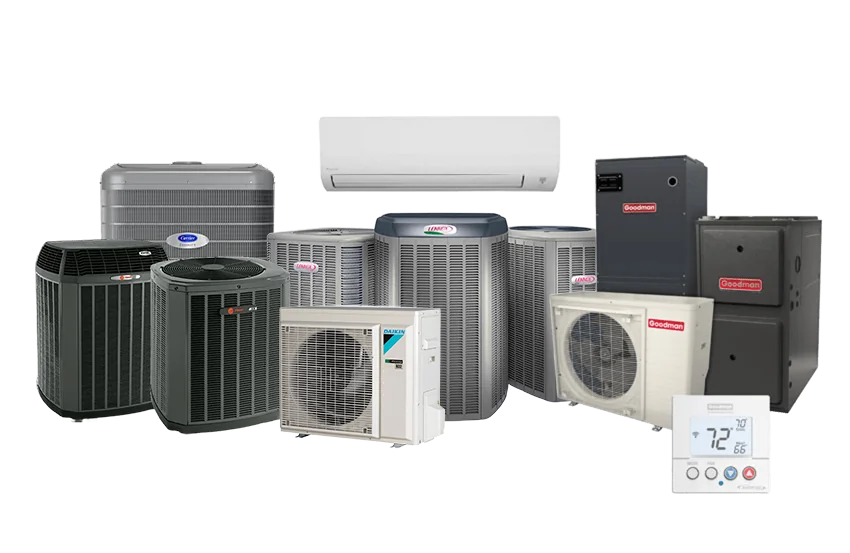
Whole-home air filtration treats the air in every room by filtering it in the one place all of it passes: your HVAC system. Instead of a plug-in purifier cleaning one corner of one room, a properly installed media filtration system cleans every cubic foot your blower moves — which, in a Gulf Coast summer, is your home's entire air volume many times a day. Air Comfort Solutions LLC assesses and installs it as part of the whole system, not as a gadget bolted on. Family owned, 35+ years in the trade, TDLR-licensed and EPA-certified, with a 5.0-star Google rating across 137 reviews.
Why does air quality behave differently here?
Three reasons, all local. Our pollen season is long and heavy — pine, oak and grass in overlapping waves from late winter well into summer — and under a tree canopy like The Woodlands it is relentless. Our humidity feeds biological growth on evaporator coils and in condensate pans, which is where the musty smell at startup usually comes from. And because systems here run roughly seven months a year, your indoor air passes through that equipment far more often than it would in a milder climate. That is a problem if the filtration is poor, and an opportunity if it is good.
When is whole-home filtration the right call?
When the symptoms are house-wide: allergies that flare indoors, dust that returns a day after cleaning, pet dander that reaches rooms the pet never enters, musty odors when the system starts, and standard 1-inch filters that load up gray within weeks. Those thin filters exist mainly to protect the equipment, not your lungs — a media filtration upgrade captures far smaller particles with less airflow restriction, and typically needs changing once or twice a year instead of monthly.
What is MERV, and why does a bigger number not simply mean better?
MERV rates how small a particle a filter captures. Higher numbers catch more, but they also resist airflow more, and that is where homeowners get into trouble. Your system was designed around a certain static pressure; drop a restrictive filter into a slot never meant for it and you choke the blower, lower airflow across the coil, and risk freezing it. The answer is not a thicker filter jammed into the existing slot — it is a properly sized media cabinet with enough surface area to filter well at low resistance. More filter area, not more restriction.
Where does humidity fit in?
Alongside filtration, not instead of it. Filters capture particles; they do nothing about the moisture that lets mold and dust mites thrive in the first place, and Gulf Coast indoor humidity routinely sits above the range where both are suppressed. A system that is correctly sized and running long, steady cycles removes a great deal of moisture on its own — which is one more reason oversized equipment is a quiet air-quality problem, since it short-cycles and never dehumidifies properly. Where that is not enough, dedicated humidity control is the next conversation, and we have it honestly rather than selling a filter to fix a moisture problem.
What are the failure modes of doing it wrong?
Two classics. First, over-filtering: cramming a restrictive high-MERV filter into a slot designed for a 1-inch filter chokes airflow, freezes coils and strains the blower — the filtration upgrade has to be engineered with the system, which is exactly the assessment we do. Second, treating symptoms out of order: if the real driver is humidity or biological growth at the coil, filtration alone won't fix the smell. We assess filtration, humidity and the equipment together — see our indoor air quality overview — and tell you honestly which piece matters first.
What does the assessment actually involve?
We look at the system before we look at a product. That means measuring static pressure and airflow to understand what headroom the blower has, inspecting the evaporator coil and drain pan for growth or standing water, checking the existing filter slot and how well it seals (a filter that air bypasses is doing nothing), reviewing the ductwork for leaks that pull unfiltered attic air into the supply, and asking what you actually notice and when. Then we recommend — and if the honest recommendation is sealing the filter slot and fixing a duct leak rather than selling you a cabinet, that is what you will hear.
What about duct leakage?
It undermines everything else. If return ductwork leaks in a hot attic, the system pulls in attic air — insulation fibers, dust and all — downstream of wherever your filter sits. You can install the best media cabinet made and still breathe attic air. That is why filtration is a system question, and why we check the ducts as part of the assessment rather than treating the filter as an isolated product.
How often does a media filter need changing?
Typically once or twice a year, compared with monthly for a 1-inch filter, because the greater surface area holds far more before it restricts airflow. Homes with pets, heavy pollen exposure or ongoing construction nearby land at the shorter end. We check it on every maintenance visit and tell you where yours actually stands rather than guessing from the calendar.
Why trust us on air quality?
Because we're accountable for the whole system, not one gadget. TDLR-licensed, EPA-certified, family owned, 35+ years in Gulf Coast air, and flat-rate up-front pricing per our Customer Comfort Pledge. Every technician who reaches your door is background-checked and drug-tested. Public reviews tell the pattern — Lena N.: “honest feedback… professionalism, quality products, and fair pricing.” More on the reviews page.
How do you get started?
Ask for a filtration assessment with your next visit — many homeowners pair it with the spring tune-up, and maintenance plan members get 10% off any recommended work plus a waived service-call fee. Call (832) 863-8325 or request service online; we install filtration across twelve north-Houston-area communities including Pinehurst, Tomball and The Woodlands.
Frequently asked questions
Is a whole-home filter better than a portable air purifier?
For house-wide problems, yes. A portable unit cleans the room it is in. A media filter at the HVAC system treats every cubic foot the blower moves, which in a Gulf Coast summer is your whole home's air many times a day.
Will a higher MERV filter improve my air?
Only if your system can move air through it. A restrictive filter in a slot not designed for it chokes airflow and can freeze the coil. The right answer is more filter surface area in a properly sized cabinet, not more restriction.
How often do I change a media filter?
Usually once or twice a year, versus monthly for a one-inch filter, because the larger surface area holds far more before restricting airflow. Pets, heavy pollen or nearby construction shorten that.
My house smells musty when the AC starts. Will filtration fix it?
Often not on its own. That smell usually comes from biological growth on the evaporator coil or in the drain pan, which is a humidity and cleaning issue. We assess filtration, humidity and the equipment together and tell you which to address first.
Comfort can't wait. Neither do we.
Call now for 24/7 service, or request a visit online and we'll confirm your two-hour arrival window.
The $159/yr maintenance plan can pay for itself in a single repair — and easy, flexible financing options are available on new systems with approved credit.
- Open 24 hours, 7 daysReal emergency service — nights, weekends, and holidays included.
- Up-front, flat-rate pricingYou approve the exact price before a single tool comes out.
- TDLR licensed · EPA certified35+ years of experience behind every visit.