

Furnace Repair and Service
24/7 no-heat furnace repair plus scheduled heating service — igniters, flame sensors, blowers and safety controls diagnosed with flat-rate pricing before any work begins.
- 24/7 Emergency
- TDLR & EPA Certified
- Family Owned
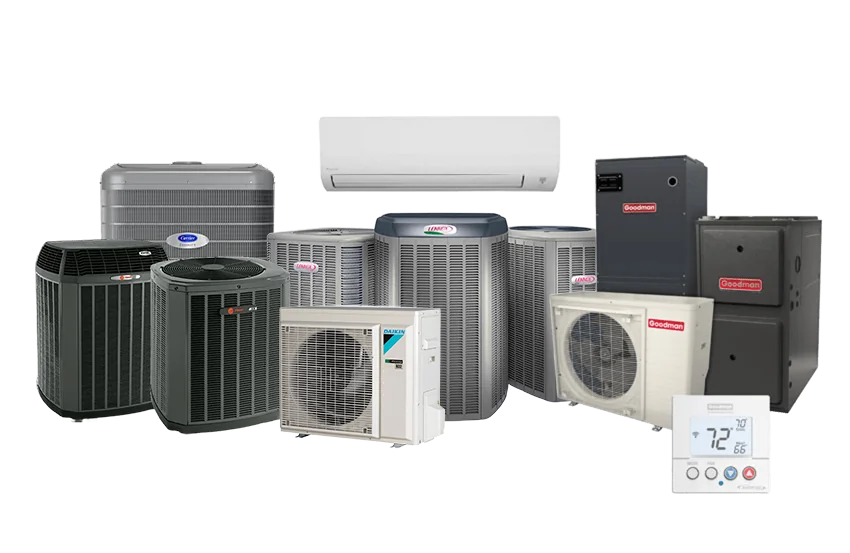
Furnace repair and heating service are two different jobs, and this page covers both. Repair is the no-heat emergency on the first freezing night. Service is the scheduled visit that keeps that night from happening. A dead furnace in Texas is the most predictable emergency in the trade — nine idle months, then a cold snap asks everything of the system at once. Air Comfort Solutions LLC runs repair 24 hours a day with a two-hour arrival window on scheduled calls, and books heating service year-round. Family owned, 35+ years in the trade, TDLR-licensed and EPA-certified.
What is the difference between furnace repair and heating service?
Repair is reactive: the furnace will not light, or lights and quits, and we find the fault and fix it. Service is proactive: cleaning, testing, measuring and reporting before the season starts, so the weak igniter gets replaced in October rather than failing at 11pm in January. On gas equipment the distinction carries a safety dimension that cooling equipment does not have, which is why every visit of either kind ends the same way — with a combustion test and a carbon-monoxide check.
When is a furnace problem urgent?
Immediately urgent: any smell of gas (leave the house and call your gas utility first), a carbon-monoxide alarm, or no heat with vulnerable family members at home. Urgent soon: a furnace that will not ignite, cycles on and off in short bursts, blows cold air, makes booming or metallic scraping sounds, or trips its safety switch repeatedly. Those safety controls are doing their job — the fix is finding out why they are tripping, not resetting them again. A furnace that needs resetting to run is telling you something, and the something is rarely cheap to ignore.
What actually fails on furnaces here?
The first-cold-night classics: hot-surface igniters that crack under thermal shock, flame sensors coated over from months of dust, pressure switches blocked by debris, and blower motors worn out by the long cooling season they just carried. Our climate writes its own failure list — a furnace that sits unused from March to November collects dust in places a northern furnace never would, and the first ignition of the season is where that shows up. Rodent and insect damage in attic-mounted units is commoner here than most homeowners expect, and condensate drains on high-efficiency models clog with the same biological growth that plagues AC drains all summer. Most of these are same-visit fixes from a stocked truck. The serious one is a cracked heat exchanger on an aging furnace — a genuine safety issue that turns the conversation to furnace replacement, with honest numbers for both paths.
What does heating service include?
A full pre-season workup rather than a quick look. We inspect and clean the burners, check and clean the flame sensor, inspect the heat exchanger for cracks, test the igniter and the complete ignition sequence, verify gas pressure by instrument, check the inducer and pressure switch, test the blower motor amp draw, clear the condensate path on high-efficiency units, inspect the venting, check electrical connections for heat damage, calibrate the thermostat, and finish with a combustion analysis and carbon-monoxide test. You get a plain-language condition report and flat-rate pricing on anything worth addressing, decided by you.
What happens on a repair visit?
Diagnosis before quoting, always. The technician checks the actual sequence of operation — call for heat, inducer, pressure switch, igniter, flame, blower — and finds where it stops, rather than swapping the part that usually fails and hoping. You see what we see: we show you the fouled sensor, the cracked igniter, the blocked drain, and explain what it means in plain language. Then you get a flat-rate price for the repair, which you approve before any work starts. Every gas repair ends with a combustion test and a carbon-monoxide check before we call it done — that is not an upsell, it is the last step of the job.
Why does the safety check matter so much?
Because a furnace is the only appliance in most homes that burns fuel in a sealed chamber a few feet from the air you breathe. A cracked heat exchanger can let combustion gases into the supply air without any smell or visible sign, and carbon monoxide is not something a homeowner can detect unaided. That is why we check for it on aging furnaces as part of the diagnosis rather than waiting for symptoms, and why we will not sign off on a repair we have not combustion-tested.
Is it worth repairing, or is it time to replace?
We will give you both numbers. A furnace under ten years old with a failed igniter or flame sensor is worth fixing without hesitation. Past fifteen years, facing its second major repair in two seasons, or showing a cracked heat exchanger, the math and the safety picture usually favor a new system — and in this climate it is worth asking us to price a heat pump alongside it, since one machine can cover both heating and cooling. We do not sell systems people do not need, and we will say so out loud when repair is the right answer.
Who shows up at your door?
A TDLR-licensed, EPA-certified technician who is background-checked and drug-tested — our Customer Comfort Pledge in person. As Lena N. wrote in her public review: “They came in, assessed our situation, gave us honest feedback, and showed us the issues as they proceeded with the assessment for clear understanding.” More on the reviews page, where our Google rating stands at 5.0 across 137 reviews.
How do you avoid the next no-heat call?
A fall heating visit — included in the $159/yr maintenance plan along with a spring cooling visit, a waived service-call fee and 10% off repairs. The visit is where a weak igniter or a dirty flame sensor gets caught in October rather than at 11pm in January. First responders, veterans and seniors always save 10% on service and repair work through our local heroes offers. Call (832) 863-8325 or request service — we cover twelve communities across the north Houston area, dispatching from our shop at 28215 Vallie St in Pinehurst.
Frequently asked questions
Do you offer emergency furnace repair at night and on weekends?
Yes. We answer the phone 24 hours a day, including weekends and holidays. Scheduled calls carry a two-hour arrival window, and you approve flat-rate pricing before any work begins.
What is the difference between furnace repair and heating service?
Repair fixes something that has already failed. Service is the scheduled pre-season visit that cleans, tests and verifies the system so it does not fail. Both end with a combustion test and a carbon-monoxide check.
My furnace runs but blows cold air. What causes that?
Commonly a flame sensor that has fouled, an igniter that is failing, or a safety control shutting the burners down while the blower keeps running. It can also be a thermostat set to 'fan on' rather than 'auto'. The diagnosis is quick and tells us which.
How do I know if my heat exchanger is cracked?
You usually cannot see it yourself. It takes a visual inspection of the exchanger plus a combustion and carbon-monoxide test. This is a safety issue rather than a comfort one, so we check for it on aging furnaces as part of the diagnosis instead of waiting for symptoms.
Comfort can't wait. Neither do we.
Call now for 24/7 service, or request a visit online and we'll confirm your two-hour arrival window.
The $159/yr maintenance plan can pay for itself in a single repair — and easy, flexible financing options are available on new systems with approved credit.
- Open 24 hours, 7 daysReal emergency service — nights, weekends, and holidays included.
- Up-front, flat-rate pricingYou approve the exact price before a single tool comes out.
- TDLR licensed · EPA certified35+ years of experience behind every visit.