The Essential Seasonal Home Maintenance Checklist for Pinehurst Residents
Prevent furnace startup hazards this fall. Review this seasonal home maintenance checklist to keep your system running safely. See what requires a pro today.
When looking at common homeowner questions answered by HVAC professionals, one of the most urgent inquiries always revolves around a sudden burning smell during the first fall cold snap in October. Have you ever switched your thermostat from cooling to heating, only to be immediately greeted by a troubling, smoky odor spreading through your house? It is completely understandable to feel a sudden spike of panic when your vents start blowing air that smells like something is on fire. You rely on your heating equipment to keep your family safe and comfortable, and any unexpected scent naturally triggers alarm bells.
While some of these odors are a harmless byproduct of the changing seasons, others are serious warning signs that require immediate professional intervention. Transitioning from months of heavy cooling usage to heating introduces unique thermal stresses to your system. The internal components experience a rapid temperature shift, and any debris that has settled inside the cabinet is instantly subjected to high heat. When you are unsure if your equipment is safe to operate, reading authentic feedback from your neighbors can help you find a trustworthy expert who will give you an honest, accurate assessment of your system's health.
If you need immediate assistance navigating these seasonal transitions, check out our local customer reviews or learn more about our comprehensive air conditioning services to keep your entire HVAC system running safely year-round.
To understand why that alarming scent occurs, we have to look at the environment inside your ductwork and air handler. In places like Pinehurst TX, heating systems often sit completely dormant for six to eight months during the extended cooling season. This long period of inactivity creates the perfect conditions for dust buildup.
The extreme heat and humidity of a Texas summer force your heating components to remain offline much longer than they would in northern climates. During this prolonged dormancy period, there is absolutely no warm airflow moving over the heating elements to keep them clean. Because southern climates also deal with higher indoor humidity levels, the moisture in the air acts as a natural adhesive inside your ductwork. Household dust, pet dander, skin cells, volatile organic compounds, and other airborne particles are continuously drawn into the system through the return vents. Instead of passing through, these particles stick firmly to the cold metal surfaces of the furnace or air handler.
This accumulation does not happen evenly across the unit. The debris primarily settles directly onto the most critical heating components:
• Heat exchangers: The large metal coils that heat the air before it enters your home.
• Burner assemblies: The precise components where gas ignition occurs.
• Ductwork transitions: The tight corners where the air handler connects to your main supply ducts.
When the thermostat finally calls for heat in the fall, the initial ignition sequence fires up those components to extremely high temperatures. The sudden blast of heat incinerates this accumulated layer of dust and dander all at once. This creates a distinct, highly noticeable odor that travels rapidly through your supply vents into every room. The simple rule of thumb is this: the longer the dormant period, the more pronounced the initial smell will be. After a sweltering summer, your system has collected half a year's worth of dust, making that first cycle particularly fragrant.
When you notice a burning smell from vents when heater turns on, the most critical step is determining whether you are experiencing a normal startup process or a potential electrical hazard. You need clear, panic-free criteria to help distinguish between the two without attempting any dangerous DIY dismantling of the unit.
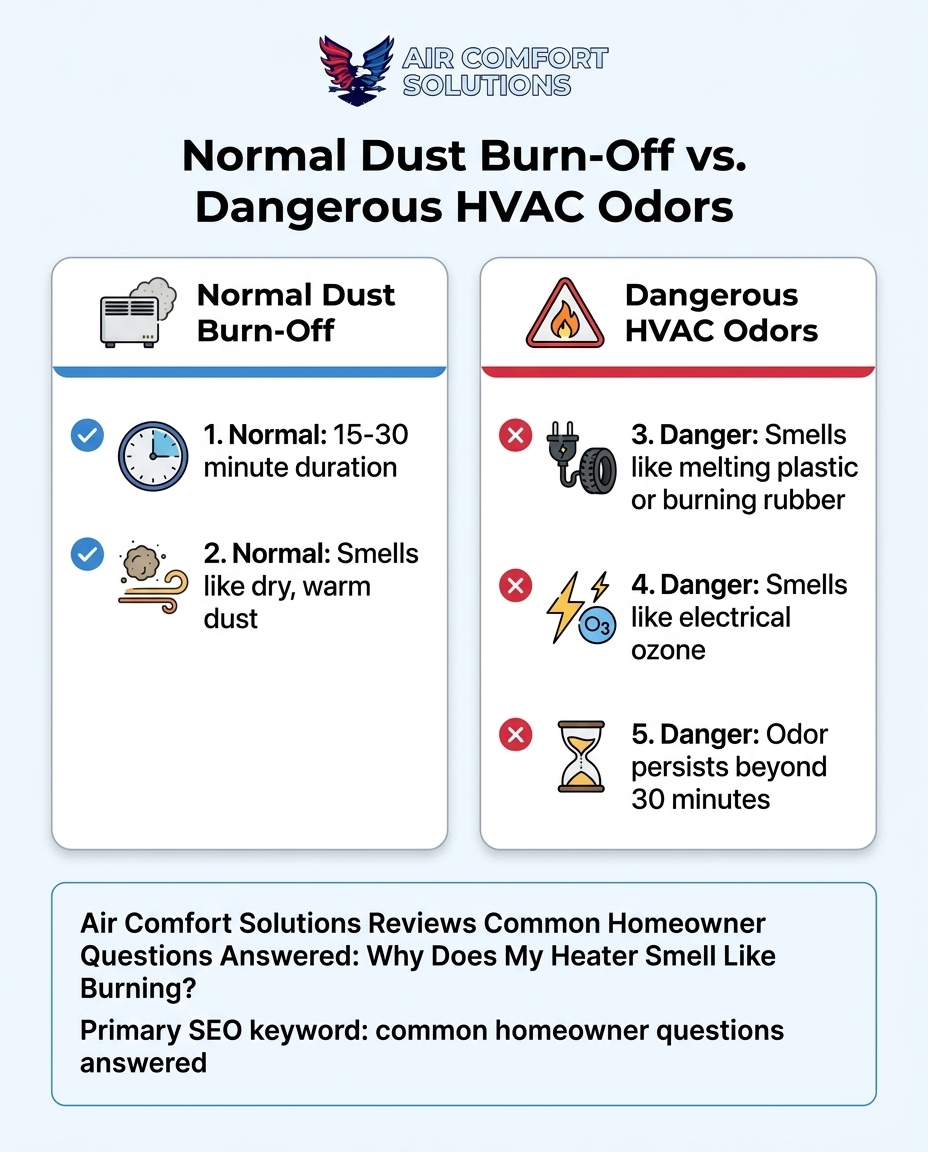
The exact odor profile of burning dust is generally described as a dry, dusty, or slightly singed smell. It is very similar to the scent of a hot clothing iron, a toaster that has just been turned on, or a space heater that has just been plugged in for the first time. This smell should be entirely temporary. Under normal circumstances, standard dust burn-off should dissipate within 15 to 30 minutes of the first heating cycle. As the system continues to push air through the home and the dust is fully incinerated, the odor will fade and eventually disappear entirely.
Conversely, dangerous malfunctions produce distinctly different scents that are harsh and chemical. If you smell the sharp, acrid odor of melting plastic, burning rubber, or electrical ozone, this is not dust. Ozone smells remarkably like a sparked wire, a lightning strike, or a metallic burning scent. These odors indicate that wiring casings are melting, a blower motor is overheating, or an electrical short is actively occurring inside the cabinet. Continuous odors that do not fade after one cycle, or smells that grow stronger rather than weaker, are major red flags.
• Dry, dusty, warm singed smell — Typical Cause: Accumulated dust on heat exchanger — Required Action: Monitor for 15-30 minutes; should dissipate naturally.
• Sharp, acrid, melting plastic — Typical Cause: Overheating wires or failing capacitor — Required Action: Shut down immediately and call a professional.
• Metallic, ozone, sparked wire — Typical Cause: Electrical short or failing blower motor — Required Action: Shut down immediately at the thermostat.
• Persistent burning beyond 30 mins — Typical Cause: Clogged filter or internal blockage — Required Action: Turn off system and schedule an inspection.
While a brief dusty smell is a normal part of fall operation, certain warning signs dictate that you must stop the system immediately to protect your home. Ignoring persistent electrical smells can lead to catastrophic motor failure, severe wiring shorts, or even a localized fire hazard within the unit itself. Whether you operate a traditional gas furnace or you rely on heat pump installation and repair services to keep your home warm, electrical odors are always an emergency that requires professional attention.
• The smell of melting wires: If the air coming from your vents smells strongly of burning plastic or rubber, shut the system off at the thermostat immediately. This usually means a wire's protective casing is melting away.
• Visible smoke or haze: Normal dust burn-off may produce a noticeable scent, but it should never produce visible smoke in your home or around the indoor unit. Smoke indicates active combustion where it does not belong.
• Loud grinding or screeching noises: If the burning smell is accompanied by mechanical distress sounds, a motor bearing has likely failed. The motor is working too hard, overheating, and creating a burning friction smell.
• Tripping circuit breakers: If turning on the heat causes your breaker to trip, and you smell burning near the electrical panel or the HVAC unit, do not attempt to reset the breaker. This is a clear sign of an electrical short.
• Odors that persist beyond an hour: If the smell does not fade after 30 to 60 minutes of continuous operation, the system is not simply burning off summer dust. There is an ongoing issue that needs diagnosis.
We strongly advise against any DIY electrical diagnostics. Heating systems carry high voltage and, in the case of gas furnaces, serious combustion risks. Opening the cabinet to investigate an electrical burning smell puts you at severe risk of shock or injury. Always leave internal diagnostics, component testing, and wiring repairs to a licensed HVAC professional.
Experiencing a sudden temperature drop is stressful enough, but the anxiety of being without heat because you are afraid to run your system adds a massive layer of frustration to your day. Homeowners should never have to guess if their heating equipment is safe to operate. When you detect a suspicious odor and make the right call to shut down your unit, you need to know that help is on the way quickly.
As a local, family-owned business, our priority is community comfort and fast response times, especially when homeowners are afraid to run their heaters due to potential safety hazards. We understand that a burning smell is not something that can wait for days to be addressed. A strong track record of positive customer experiences is the best indicator of reliable emergency service. When you call a trusted local team, you are getting technicians who understand the specific climate challenges of the region and who prioritize your family's safety above all else.
You deserve the peace of mind that comes from knowing a qualified expert is thoroughly inspecting your heat exchanger, blower motor, and electrical connections. A fast response means less time shivering in the cold and more time resting easy, knowing your heating system is operating exactly as the manufacturer intended.
The best way to handle fall startup odors is to prevent them from happening in the first place. Shifting from reactive troubleshooting to proactive maintenance ensures a smooth, safe, and odor-free transition between seasons. By enrolling in an ongoing HVAC maintenance plan, you can eliminate the anxiety of that first heating cycle entirely.
During a comprehensive pre-season inspection, professional technicians physically clean the heat exchanger and burner assemblies before the system is ever turned on for the winter. This process safely removes the thick layer of summer dust, meaning there is nothing left to incinerate when the ignition sequence begins. Furthermore, technicians test the ignition sequences safely and verify the integrity of all electrical connections. By tightening loose wires and testing motor capacitors, they prevent dangerous overheating odors before they ever have a chance to start.
Another critical step is managing your home's airflow and filtration. You can take several steps to keep dust out of your system year-round:
1. Replace summer-clogged filters: Before switching your thermostat to heat, remove the air filter that has been catching dust, pollen, and debris all summer. A clogged filter restricts airflow, forcing the heating system to work much harder and potentially overheat.
2. Select the right MERV rating: Choose a filter with an appropriate MERV rating for the fall season. A high-quality pleated filter will trap dust before it can settle on the heat exchanger, minimizing future burn-off odors and protecting the equipment.
3. Keep dust out of the ductwork: Regularly dusting and vacuuming your home, especially around the return air vents, reduces the volume of airborne particles that get pulled into the HVAC system during the dormant months.
4. Clear the surrounding area: Ensure the space immediately around your furnace or air handler is completely clear of stored items, cardboard boxes, and combustible materials before the heating season begins.
When preparing for the colder months, it helps to have reliable information at your fingertips. Partnering with a team that provides professional AC service and comprehensive heating care ensures your system runs safely year-round. Below, we answer the most common search queries regarding heating startup odors to help you easily distinguish between normal operation and dangerous warning signs.
Yes, a brief burning dust smell is entirely normal during the first heating cycle of the season. Because the heating elements sit unused for months during the summer, accumulated dust and dander settle on the components and are safely incinerated upon startup. As long as the odor resembles dry dust and fades quickly, there is no cause for alarm.
Normal dust burn-off typically takes between 15 and 30 minutes to dissipate completely. The smell may be strong initially, but it should noticeably weaken as the system continues to run and circulate air throughout the house. If the smell lasts longer than an hour, you should turn off the unit and have it inspected by a professional.
An electrical fire or failing component will smell sharply of melting plastic, burning rubber, or metallic ozone. Unlike the organic, dry scent of burning dust, electrical odors are acrid, chemical, and highly irritating to breathe. If you detect these specific scents coming from your vents, shut off your system immediately at the thermostat to prevent further damage.
A heater smell is dangerous if it smells like chemicals, plastic, or ozone, if it produces visible smoke, or if it is accompanied by loud grinding noises. Additionally, any burning smell that persists for more than a single heating cycle indicates an ongoing internal issue. In these cases, professional diagnostics are required to ensure the system is safe to operate.
Yes, opening a few windows during the first 15 to 30 minutes of your initial heating cycle is a great way to help the normal dust burn-off smell dissipate faster. This improves indoor ventilation and prevents the temporary odor from lingering in your living spaces. Once the smell is gone, you can close the windows and enjoy the warmth.
Absolutely, a severely dirty air filter can cause a burning smell by restricting vital airflow over the heat exchanger. When airflow is blocked, the internal components overheat, which can produce a noticeable burning odor and cause the system to shut down on a high-limit safety switch. Always replace your filter before the first major cold snap to prevent this issue.
Understanding how your HVAC system operates is the best way to protect your home and your family during seasonal transitions. While a brief dusty smell during that first October cold snap is a perfectly normal part of firing up the heater, your peace of mind is paramount. You should never have to wonder if your equipment is a hazard to your home. If you ever detect the acrid scent of melting plastic, ozone, or burning rubber, remember the warning signs that dictate immediate professional intervention.
Do not take chances with high-voltage electrical components or combustion systems. By prioritizing safety, keeping up with regular filter changes, and relying on trusted local experts to verify your equipment is ready for the cold, you can enjoy a warm, comfortable, and hazard-free home all season long. Schedule a thorough pre-season inspection today to eliminate startup odors and ensure your system runs efficiently through the coldest nights.


Zane came out and did an amazing job! Super friendly, honest and transparent about the work that needed to be done. This is my second time working with Air Comfort Solutions and they’re my go to for HVAC services. Highly recommend.
God's AMAZING grace sent us Robert and Zane. We have been without air in this Texas heat for six weeks and four days. We've had a few contractors give us quotes all trying to upsell when we're at a low point. But not the guys at Air Comfort Solutions. They came in assessed our situation, gave us honest feedback, and showed us the issues as they proceeded with the assessment for clear understanding. We highly recommend them for their professionalism, quality products, and fair pricing. We hands down support them for all the work they do 💯 %.
Robert and Zane gone above and beyond to make the process easy and affordable.
Would definitely recommend!!
I’m writing this review to let everyone know that Air Comfort Solutions is the company to work with. I know the owner ( Robert) for several years now. He has been taking care of my residential and business work orders. Robert is professional, knowledgeable and will save you money. I just want to thank Robert for great job you have been doing for me.