AC Blowing Hot in the Day and Heater Smelling at Night? Fall HVAC Troubleshooting
See why your heater smells like burning dust in fall. Apply these home maintenance tips and troubleshooting to decide when to call a professional.

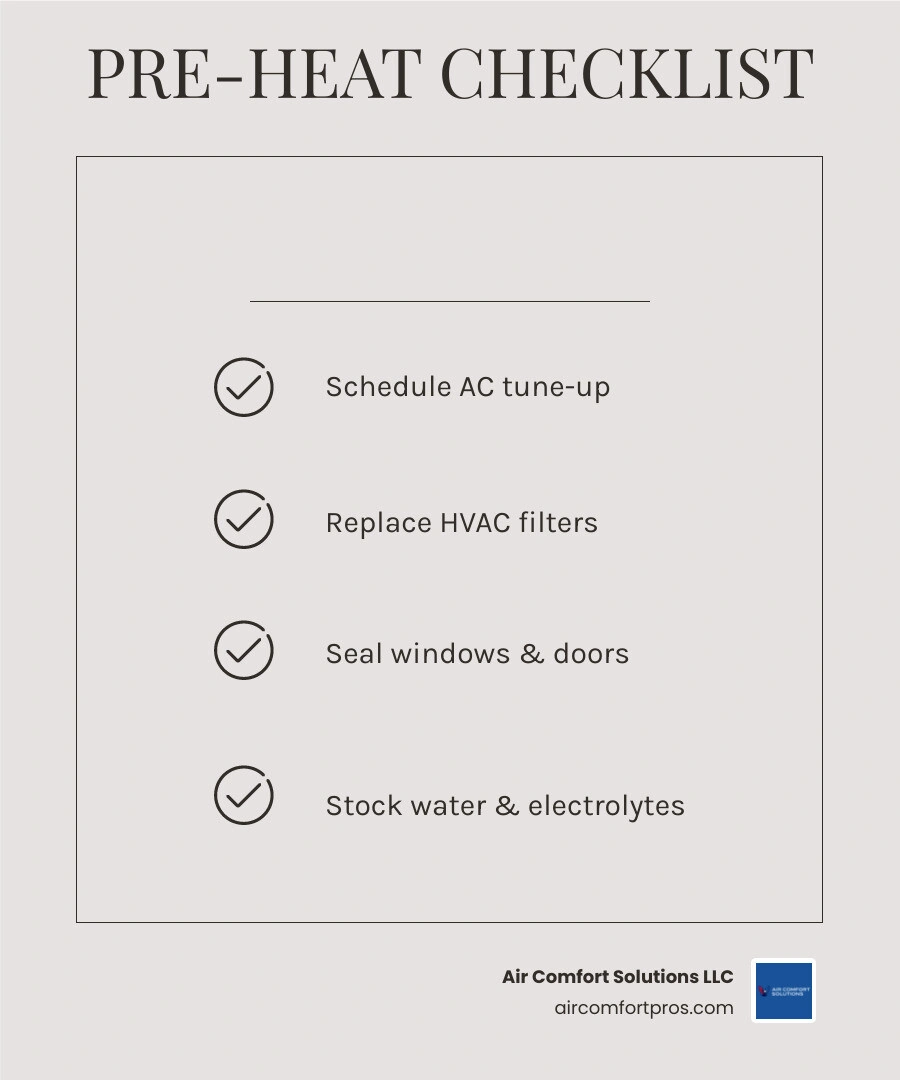
Things to do before triple digit temperatures hit include scheduling an AC tune-up, sealing air leaks around windows and doors, pre-hydrating with water and electrolytes, checking your HVAC filters, and identifying local cooling centers in case your system fails during a heatwave.
Quick checklist:
1. Schedule a professional AC inspection before peak heat arrives
2. Replace or check your HVAC air filters
3. Seal gaps around windows and doors with weather-stripping
4. Cover sun-facing windows with shades or blackout curtains
5. Stock up on water and start pre-hydrating before temperatures climb
6. Know the signs of heat exhaustion and heat stroke
7. Locate your nearest cooling center or hydration station
8. Never leave children or pets in a parked car — interior temperatures can reach between 131 and 172 degrees Fahrenheit within 15 minutes
Here in Pinehurst, TX, summer does not ease in gently. Triple-digit heat arrives fast, and when it does, an unprepared home — or an AC system running on borrowed time — can turn uncomfortable very quickly. Extreme heat is the number one weather-related killer in the United States each year, responsible for more deaths than hurricanes, tornadoes, or floods. Sustained high temperatures, not just a single hot afternoon, are what push people and HVAC systems past their limits. Nights that stay warm give your body no chance to recover. That same relentless heat puts enormous strain on your air conditioning equipment.
The good news is that a little preparation now goes a long way. Taking the right steps before temperatures climb into the triple digits protects your family’s health, keeps your energy bills from spiking, and reduces the chance of a breakdown on the hottest day of the year.
As we move through April 2026, the window for preparation is narrowing. In places like Houston and The Woodlands, we know the “heat dome” can settle in at any moment. One of the most critical things to do before triple digit temperatures hit is to shift your focus toward physiological and mechanical readiness.
Physiologically, you need to start “pre-hydrating.” It sounds like a buzzword, but it’s a medical necessity. You can sweat out a full quart of fluid in just one hour when the mercury climbs. If you wait until you are thirsty to start drinking water, you are already behind. Combine your water intake with a small amount of salt or electrolytes; water alone doesn’t always cut it when you’re losing minerals through heavy perspiration.
Mechanically, your home needs a fighting chance. Preparing Your Home’s Cooling System for a Smooth Summer should be at the top of your to-do list. A system that worked “okay” in the 80s won’t necessarily survive a week of 105-degree afternoons.
One simple task you can do today is How to Replace AC Filters: A Quick and Simple Guide. Clogged filters are the leading cause of AC motor failure. When air can’t move, the system works twice as hard, uses more electricity, and eventually freezes up or burns out.
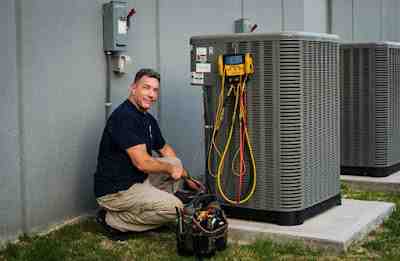
Think of a tune-up like an oil change for your car before a cross-country road trip. You wouldn’t drive to California in 110-degree heat with old oil and a loose belt; don’t ask your AC to do the same. A professional inspection ensures that refrigerant levels are correct, electrical connections are tight, and the condensate drain is clear.
Knowing What to Expect During Your First AC Tune-Up can help ease any anxiety about the process. Our technicians look for the “silent killers” of HVAC units—worn capacitors or dirty coils—that only reveal themselves when the system is under maximum stress. If you want year-round peace of mind, What Does an HVAC Maintenance Plan Include is a great place to start, as it often covers these preventative checks automatically.
Your AC is only half of the equation; the other half is your home’s “envelope.” If you have cool air leaking out and 100-degree air leaking in, your thermostat will never reach its goal.
• Weather-stripping: Check the seals around your doors. If you can see daylight under the door, you’re losing money.
• Window Shades: In Texas, the sun is a heat lamp. Keep curtains or blackout shades closed on the east side in the morning and the west side in the afternoon.
• Attic Ventilation: Your attic can reach 150 degrees. Ensuring your vents are clear or using a powered ventilator can drop that temperature significantly.
• Insulation: If your home is older, your insulation may have settled. Adding a fresh layer can keep the heat from radiating through your ceiling.
What Happens If You Skip AC Maintenance in Texas is often a realization that comes too late—usually when the indoor temperature hits 85 degrees at midnight.
When the triple digits hit, your body works overtime to maintain a normal internal temperature. This puts a massive strain on the heart, kidneys, and brain. In fact, hospitalizations for heart attacks and kidney failure spike during Texas heatwaves.
• Skin — Heat Exhaustion: Pale, cold, and clammy — Heat Stroke (Emergency!): Red, hot, and dry (no sweat)
• Pulse — Heat Exhaustion: Fast and weak — Heat Stroke (Emergency!): Rapid and strong
• Temperature — Heat Exhaustion: Normal or slightly elevated — Heat Stroke (Emergency!): Above 103°F
• Mental State — Heat Exhaustion: Dizziness, fatigue — Heat Stroke (Emergency!): Confusion, unconsciousness
• Action — Heat Exhaustion: Move to shade, sip water — Heat Stroke (Emergency!): Call 9-1-1 immediately
If you find your AC Not Turning On During a Heatwave, your home can become a danger zone within hours. It is vital to have a backup plan, such as a neighbor’s house or a public cooling center.
Heat exhaustion is the body’s warning shot. If you feel nauseous, dizzy, or notice your skin is cool and clammy despite the heat, you need to stop what you are doing. Pace your activities—don’t try to mow the lawn at 2 PM. Many cities like Houston set up hydration stations and cooling centers during excessive heat warnings; know where these are before you need them.
We love our outdoor spaces in Pinehurst and Magnolia, but we have to be smart. If you are planning to hit the trails, “early” means 7 AM or earlier. By 10 AM, the humidity and rising temps can make physical exertion dangerous. Stick to shaded trails, wear light-colored, breathable fabrics, and always carry more water than you think you’ll need.
Because of the intensity of our local climate, many homeowners ask How Often Should You Service Your AC in Texas. Given that our “summer” can last six months, twice-a-year checks are the gold standard to ensure your system can handle the early morning humidity and the afternoon dry heat.
Just because it’s hot doesn’t mean life stops. It just moves toward the water. Texas has some of the best spring-fed and river-based cooling options in the country.
• Barton Springs: Located in Austin (a great day trip from the Houston area), this pool stays a constant 68 degrees year-round.
• Guadalupe River: A classic for tubing. Memorial Day weekend 2026 marks the unofficial start of the tubing season.
• Lady Bird Lake: Perfect for kayaking or paddleboarding, especially during “Floatopia” events where the community gathers on the water.
• The Bats: If you’re in the Austin area, don’t miss the 1.5 million Mexican free-tailed bats emerging from the Congress Avenue Bridge at sunset—it’s a spectacular way to enjoy the slightly cooler evening air.
If you find that When Your AC Can’t Keep Up With the Heat, it might be time to head to these water-based escapes while a technician looks at your system.
Keeping kids entertained when it’s 105 degrees outside requires creativity.
• Indoor Museums: Houston has world-class air-conditioned museums that often maintain a crisp 75 degrees to protect the art.
• Skating Rinks: Ice skating is the ultimate heat-beater. You might even need a light jacket!
• Indoor Picnics: Spread a blanket in the living room, turn on a movie, and avoid using the oven. Using the oven can raise your kitchen temperature by 5-10 degrees, forcing your AC to work even harder.
Sometimes, the best thing to do is leave the humidity behind. While we love our homes in Tomball and The Woodlands, a trip to higher elevations can provide a 30-degree temperature drop.
If you are traveling west, the Palm Springs Aerial Tramway takes you to Mount San Jacinto, where the air is thin and cool. Closer to home, mountain lakes like Lake Hemet or the shaded pines of Idyllwild offer a respite from the concrete heat of the city.
If your current unit is struggling every single year, it might be time to look at Optimal Times for Upgrading Your Home’s Air Conditioning System. Replacing a system in the spring is much less stressful than doing it during an emergency mid-July breakdown.
The absolute first steps are to replace your air filters, test your AC system on a moderately warm day to see if it reaches the set temperature, and start increasing your daily water intake. You should also check the weather-stripping on your front and back doors to ensure you aren’t “cooling the neighborhood.”
It is incredibly dangerous. Within just 15 minutes, the interior of a parked car can reach between 131 and 172 degrees Fahrenheit. Never leave children or pets inside a vehicle, even for “just a minute” with the windows cracked. The glass acts like a greenhouse, trapping heat far more effectively than the outside air.
Watch for “short-cycling” (turning on and off every few minutes) or, conversely, running 24/7 without ever reaching the temperature on the thermostat. Strange grinding noises, musty smells, or ice forming on the copper lines outside are all red flags that you need a professional immediately.
Preparing for a Texas summer is a marathon, not a sprint. By checking off these things to do before triple digit temperatures hit, you aren’t just protecting your wallet—you’re protecting your family. From the piney woods of The Woodlands to the busy streets of Houston, we all share the same goal: staying cool and safe.
At Air Comfort Solutions, we’ve spent over 35 years helping our neighbors in Pinehurst, TX, and across Harris County navigate these extreme heatwaves. Whether you need a quick filter change or a full system replacement, our licensed technicians are here to provide honest, reliable solutions.
If you’re wondering Is an HVAC Maintenance Plan Worth It, consider the cost of an emergency repair in the middle of a 110-degree Sunday. Our HVAC Maintenance Plan is designed to catch problems before they become emergencies, ensuring your home remains a sanctuary all summer long. Stay cool, stay hydrated, and give us a call if your comfort is on the line.
Things to do before triple digit temperatures hit include scheduling an AC tune-up, sealing air leaks around windows and doors, pre-hydrating with water and electrolytes, checking your HVAC filters, and identifying local cooling centers in case your system fails during a heatwave.
Quick checklist:
Here in Pinehurst, TX, summer does not ease in gently. Triple-digit heat arrives fast, and when it does, an unprepared home — or an AC system running on borrowed time — can turn uncomfortable very quickly. Extreme heat is the number one weather-related killer in the United States each year, responsible for more deaths than hurricanes, tornadoes, or floods. Sustained high temperatures, not just a single hot afternoon, are what push people and HVAC systems past their limits. Nights that stay warm give your body no chance to recover. That same relentless heat puts enormous strain on your air conditioning equipment.
The good news is that a little preparation now goes a long way. Taking the right steps before temperatures climb into the triple digits protects your family's health, keeps your energy bills from spiking, and reduces the chance of a breakdown on the hottest day of the year.
As we move through April 2026, the window for preparation is narrowing. In places like Houston and The Woodlands, we know the "heat dome" can settle in at any moment. One of the most critical things to do before triple digit temperatures hit is to shift your focus toward physiological and mechanical readiness.
Physiologically, you need to start "pre-hydrating." It sounds like a buzzword, but it’s a medical necessity. You can sweat out a full quart of fluid in just one hour when the mercury climbs. If you wait until you are thirsty to start drinking water, you are already behind. Combine your water intake with a small amount of salt or electrolytes; water alone doesn't always cut it when you're losing minerals through heavy perspiration.
Mechanically, your home needs a fighting chance. Preparing Your Home's Cooling System for a Smooth Summer should be at the top of your to-do list. A system that worked "okay" in the 80s won't necessarily survive a week of 105-degree afternoons.
One simple task you can do today is How to Replace AC Filters: A Quick and Simple Guide. Clogged filters are the leading cause of AC motor failure. When air can't move, the system works twice as hard, uses more electricity, and eventually freezes up or burns out.
Think of a tune-up like an oil change for your car before a cross-country road trip. You wouldn't drive to California in 110-degree heat with old oil and a loose belt; don't ask your AC to do the same. A professional inspection ensures that refrigerant levels are correct, electrical connections are tight, and the condensate drain is clear.
Knowing What to Expect During Your First AC Tune-Up can help ease any anxiety about the process. Our technicians look for the "silent killers" of HVAC units—worn capacitors or dirty coils—that only reveal themselves when the system is under maximum stress. If you want year-round peace of mind, What Does an HVAC Maintenance Plan Include is a great place to start, as it often covers these preventative checks automatically.
Your AC is only half of the equation; the other half is your home's "envelope." If you have cool air leaking out and 100-degree air leaking in, your thermostat will never reach its goal.
What Happens If You Skip AC Maintenance in Texas is often a realization that comes too late—usually when the indoor temperature hits 85 degrees at midnight.
When the triple digits hit, your body works overtime to maintain a normal internal temperature. This puts a massive strain on the heart, kidneys, and brain. In fact, hospitalizations for heart attacks and kidney failure spike during Texas heatwaves.
| Feature | Heat Exhaustion | Heat Stroke (Emergency!) |
|---|---|---|
| Skin | Pale, cold, and clammy | Red, hot, and dry (no sweat) |
| Pulse | Fast and weak | Rapid and strong |
| Temperature | Normal or slightly elevated | Above 103°F |
| Mental State | Dizziness, fatigue | Confusion, unconsciousness |
| Action | Move to shade, sip water | Call 9-1-1 immediately |
If you find your AC Not Turning On During a Heatwave, your home can become a danger zone within hours. It is vital to have a backup plan, such as a neighbor's house or a public cooling center.
Heat exhaustion is the body’s warning shot. If you feel nauseous, dizzy, or notice your skin is cool and clammy despite the heat, you need to stop what you are doing. Pace your activities—don't try to mow the lawn at 2 PM. Many cities like Houston set up hydration stations and cooling centers during excessive heat warnings; know where these are before you need them.
We love our outdoor spaces in Pinehurst and Magnolia, but we have to be smart. If you are planning to hit the trails, "early" means 7 AM or earlier. By 10 AM, the humidity and rising temps can make physical exertion dangerous. Stick to shaded trails, wear light-colored, breathable fabrics, and always carry more water than you think you’ll need.
Because of the intensity of our local climate, many homeowners ask How Often Should You Service Your AC in Texas. Given that our "summer" can last six months, twice-a-year checks are the gold standard to ensure your system can handle the early morning humidity and the afternoon dry heat.
Just because it's hot doesn't mean life stops. It just moves toward the water. Texas has some of the best spring-fed and river-based cooling options in the country.
If you find that When Your AC Can't Keep Up With the Heat, it might be time to head to these water-based escapes while a technician looks at your system.
Keeping kids entertained when it's 105 degrees outside requires creativity.
Sometimes, the best thing to do is leave the humidity behind. While we love our homes in Tomball and The Woodlands, a trip to higher elevations can provide a 30-degree temperature drop.
If you are traveling west, the Palm Springs Aerial Tramway takes you to Mount San Jacinto, where the air is thin and cool. Closer to home, mountain lakes like Lake Hemet or the shaded pines of Idyllwild offer a respite from the concrete heat of the city.
If your current unit is struggling every single year, it might be time to look at Optimal Times for Upgrading Your Home's Air Conditioning System. Replacing a system in the spring is much less stressful than doing it during an emergency mid-July breakdown.
The absolute first steps are to replace your air filters, test your AC system on a moderately warm day to see if it reaches the set temperature, and start increasing your daily water intake. You should also check the weather-stripping on your front and back doors to ensure you aren't "cooling the neighborhood."
It is incredibly dangerous. Within just 15 minutes, the interior of a parked car can reach between 131 and 172 degrees Fahrenheit. Never leave children or pets inside a vehicle, even for "just a minute" with the windows cracked. The glass acts like a greenhouse, trapping heat far more effectively than the outside air.
Watch for "short-cycling" (turning on and off every few minutes) or, conversely, running 24/7 without ever reaching the temperature on the thermostat. Strange grinding noises, musty smells, or ice forming on the copper lines outside are all red flags that you need a professional immediately.
Preparing for a Texas summer is a marathon, not a sprint. By checking off these things to do before triple digit temperatures hit, you aren't just protecting your wallet—you're protecting your family. From the piney woods of The Woodlands to the busy streets of Houston, we all share the same goal: staying cool and safe.
At Air Comfort Pros, we’ve spent over 35 years helping our neighbors in Pinehurst, TX, and across Harris County navigate these extreme heatwaves. Whether you need a quick filter change or a full system replacement, our licensed technicians are here to provide honest, reliable solutions.
If you're wondering Is an HVAC Maintenance Plan Worth It, consider the cost of an emergency repair in the middle of a 110-degree Sunday. Our HVAC Maintenance Plan is designed to catch problems before they become emergencies, ensuring your home remains a sanctuary all summer long. Stay cool, stay hydrated, and give us a call if your comfort is on the line.
Things to do before triple digit temperatures hit include scheduling an AC tune-up, sealing air leaks around windows and doors, pre-hydrating with water and electrolytes, checking your HVAC filters, and identifying local cooling centers in case your system fails during a heatwave.
Quick checklist:
Here in Pinehurst, TX, summer does not ease in gently. Triple-digit heat arrives fast, and when it does, an unprepared home — or an AC system running on borrowed time — can turn uncomfortable very quickly. Extreme heat is the number one weather-related killer in the United States each year, responsible for more deaths than hurricanes, tornadoes, or floods. Sustained high temperatures, not just a single hot afternoon, are what push people and HVAC systems past their limits. Nights that stay warm give your body no chance to recover. That same relentless heat puts enormous strain on your air conditioning equipment.
The good news is that a little preparation now goes a long way. Taking the right steps before temperatures climb into the triple digits protects your family's health, keeps your energy bills from spiking, and reduces the chance of a breakdown on the hottest day of the year.
As we move through April 2026, the window for preparation is narrowing. In places like Houston and The Woodlands, we know the "heat dome" can settle in at any moment. One of the most critical things to do before triple digit temperatures hit is to shift your focus toward physiological and mechanical readiness.
Physiologically, you need to start "pre-hydrating." It sounds like a buzzword, but it’s a medical necessity. You can sweat out a full quart of fluid in just one hour when the mercury climbs. If you wait until you are thirsty to start drinking water, you are already behind. Combine your water intake with a small amount of salt or electrolytes; water alone doesn't always cut it when you're losing minerals through heavy perspiration.
Mechanically, your home needs a fighting chance. Preparing Your Home's Cooling System for a Smooth Summer should be at the top of your to-do list. A system that worked "okay" in the 80s won't necessarily survive a week of 105-degree afternoons.
One simple task you can do today is How to Replace AC Filters: A Quick and Simple Guide. Clogged filters are the leading cause of AC motor failure. When air can't move, the system works twice as hard, uses more electricity, and eventually freezes up or burns out.
Think of a tune-up like an oil change for your car before a cross-country road trip. You wouldn't drive to California in 110-degree heat with old oil and a loose belt; don't ask your AC to do the same. A professional inspection ensures that refrigerant levels are correct, electrical connections are tight, and the condensate drain is clear.
Knowing What to Expect During Your First AC Tune-Up can help ease any anxiety about the process. Our technicians look for the "silent killers" of HVAC units—worn capacitors or dirty coils—that only reveal themselves when the system is under maximum stress. If you want year-round peace of mind, What Does an HVAC Maintenance Plan Include is a great place to start, as it often covers these preventative checks automatically.
Your AC is only half of the equation; the other half is your home's "envelope." If you have cool air leaking out and 100-degree air leaking in, your thermostat will never reach its goal.
What Happens If You Skip AC Maintenance in Texas is often a realization that comes too late—usually when the indoor temperature hits 85 degrees at midnight.
When the triple digits hit, your body works overtime to maintain a normal internal temperature. This puts a massive strain on the heart, kidneys, and brain. In fact, hospitalizations for heart attacks and kidney failure spike during Texas heatwaves.
| Feature | Heat Exhaustion | Heat Stroke (Emergency!) |
|---|---|---|
| Skin | Pale, cold, and clammy | Red, hot, and dry (no sweat) |
| Pulse | Fast and weak | Rapid and strong |
| Temperature | Normal or slightly elevated | Above 103°F |
| Mental State | Dizziness, fatigue | Confusion, unconsciousness |
| Action | Move to shade, sip water | Call 9-1-1 immediately |
If you find your AC Not Turning On During a Heatwave, your home can become a danger zone within hours. It is vital to have a backup plan, such as a neighbor's house or a public cooling center.
Heat exhaustion is the body’s warning shot. If you feel nauseous, dizzy, or notice your skin is cool and clammy despite the heat, you need to stop what you are doing. Pace your activities—don't try to mow the lawn at 2 PM. Many cities like Houston set up hydration stations and cooling centers during excessive heat warnings; know where these are before you need them.
We love our outdoor spaces in Pinehurst and Magnolia, but we have to be smart. If you are planning to hit the trails, "early" means 7 AM or earlier. By 10 AM, the humidity and rising temps can make physical exertion dangerous. Stick to shaded trails, wear light-colored, breathable fabrics, and always carry more water than you think you’ll need.
Because of the intensity of our local climate, many homeowners ask How Often Should You Service Your AC in Texas. Given that our "summer" can last six months, twice-a-year checks are the gold standard to ensure your system can handle the early morning humidity and the afternoon dry heat.
Just because it's hot doesn't mean life stops. It just moves toward the water. Texas has some of the best spring-fed and river-based cooling options in the country.
If you find that When Your AC Can't Keep Up With the Heat, it might be time to head to these water-based escapes while a technician looks at your system.
Keeping kids entertained when it's 105 degrees outside requires creativity.
Sometimes, the best thing to do is leave the humidity behind. While we love our homes in Tomball and The Woodlands, a trip to higher elevations can provide a 30-degree temperature drop.
If you are traveling west, the Palm Springs Aerial Tramway takes you to Mount San Jacinto, where the air is thin and cool. Closer to home, mountain lakes like Lake Hemet or the shaded pines of Idyllwild offer a respite from the concrete heat of the city.
If your current unit is struggling every single year, it might be time to look at Optimal Times for Upgrading Your Home's Air Conditioning System. Replacing a system in the spring is much less stressful than doing it during an emergency mid-July breakdown.
The absolute first steps are to replace your air filters, test your AC system on a moderately warm day to see if it reaches the set temperature, and start increasing your daily water intake. You should also check the weather-stripping on your front and back doors to ensure you aren't "cooling the neighborhood."
It is incredibly dangerous. Within just 15 minutes, the interior of a parked car can reach between 131 and 172 degrees Fahrenheit. Never leave children or pets inside a vehicle, even for "just a minute" with the windows cracked. The glass acts like a greenhouse, trapping heat far more effectively than the outside air.
Watch for "short-cycling" (turning on and off every few minutes) or, conversely, running 24/7 without ever reaching the temperature on the thermostat. Strange grinding noises, musty smells, or ice forming on the copper lines outside are all red flags that you need a professional immediately.
Preparing for a Texas summer is a marathon, not a sprint. By checking off these things to do before triple digit temperatures hit, you aren't just protecting your wallet—you're protecting your family. From the piney woods of The Woodlands to the busy streets of Houston, we all share the same goal: staying cool and safe.
At Air Comfort Pros, we’ve spent over 35 years helping our neighbors in Pinehurst, TX, and across Harris County navigate these extreme heatwaves. Whether you need a quick filter change or a full system replacement, our licensed technicians are here to provide honest, reliable solutions.
If you're wondering Is an HVAC Maintenance Plan Worth It, consider the cost of an emergency repair in the middle of a 110-degree Sunday. Our HVAC Maintenance Plan is designed to catch problems before they become emergencies, ensuring your home remains a sanctuary all summer long. Stay cool, stay hydrated, and give us a call if your comfort is on the line.
Things to do before triple digit temperatures hit include scheduling an AC tune-up, sealing air leaks around windows and doors, pre-hydrating with water and electrolytes, checking your HVAC filters, and identifying local cooling centers in case your system fails during a heatwave.
Quick checklist:
Here in Pinehurst, TX, summer does not ease in gently. Triple-digit heat arrives fast, and when it does, an unprepared home — or an AC system running on borrowed time — can turn uncomfortable very quickly. Extreme heat is the number one weather-related killer in the United States each year, responsible for more deaths than hurricanes, tornadoes, or floods. Sustained high temperatures, not just a single hot afternoon, are what push people and HVAC systems past their limits. Nights that stay warm give your body no chance to recover. That same relentless heat puts enormous strain on your air conditioning equipment.
The good news is that a little preparation now goes a long way. Taking the right steps before temperatures climb into the triple digits protects your family's health, keeps your energy bills from spiking, and reduces the chance of a breakdown on the hottest day of the year.
As we move through April 2026, the window for preparation is narrowing. In places like Houston and The Woodlands, we know the "heat dome" can settle in at any moment. One of the most critical things to do before triple digit temperatures hit is to shift your focus toward physiological and mechanical readiness.
Physiologically, you need to start "pre-hydrating." It sounds like a buzzword, but it’s a medical necessity. You can sweat out a full quart of fluid in just one hour when the mercury climbs. If you wait until you are thirsty to start drinking water, you are already behind. Combine your water intake with a small amount of salt or electrolytes; water alone doesn't always cut it when you're losing minerals through heavy perspiration.
Mechanically, your home needs a fighting chance. Preparing Your Home's Cooling System for a Smooth Summer should be at the top of your to-do list. A system that worked "okay" in the 80s won't necessarily survive a week of 105-degree afternoons.
One simple task you can do today is How to Replace AC Filters: A Quick and Simple Guide. Clogged filters are the leading cause of AC motor failure. When air can't move, the system works twice as hard, uses more electricity, and eventually freezes up or burns out.
Think of a tune-up like an oil change for your car before a cross-country road trip. You wouldn't drive to California in 110-degree heat with old oil and a loose belt; don't ask your AC to do the same. A professional inspection ensures that refrigerant levels are correct, electrical connections are tight, and the condensate drain is clear.
Knowing What to Expect During Your First AC Tune-Up can help ease any anxiety about the process. Our technicians look for the "silent killers" of HVAC units—worn capacitors or dirty coils—that only reveal themselves when the system is under maximum stress. If you want year-round peace of mind, What Does an HVAC Maintenance Plan Include is a great place to start, as it often covers these preventative checks automatically.
Your AC is only half of the equation; the other half is your home's "envelope." If you have cool air leaking out and 100-degree air leaking in, your thermostat will never reach its goal.
What Happens If You Skip AC Maintenance in Texas is often a realization that comes too late—usually when the indoor temperature hits 85 degrees at midnight.
When the triple digits hit, your body works overtime to maintain a normal internal temperature. This puts a massive strain on the heart, kidneys, and brain. In fact, hospitalizations for heart attacks and kidney failure spike during Texas heatwaves.
| Feature | Heat Exhaustion | Heat Stroke (Emergency!) |
|---|---|---|
| Skin | Pale, cold, and clammy | Red, hot, and dry (no sweat) |
| Pulse | Fast and weak | Rapid and strong |
| Temperature | Normal or slightly elevated | Above 103°F |
| Mental State | Dizziness, fatigue | Confusion, unconsciousness |
| Action | Move to shade, sip water | Call 9-1-1 immediately |
If you find your AC Not Turning On During a Heatwave, your home can become a danger zone within hours. It is vital to have a backup plan, such as a neighbor's house or a public cooling center.
Heat exhaustion is the body’s warning shot. If you feel nauseous, dizzy, or notice your skin is cool and clammy despite the heat, you need to stop what you are doing. Pace your activities—don't try to mow the lawn at 2 PM. Many cities like Houston set up hydration stations and cooling centers during excessive heat warnings; know where these are before you need them.
We love our outdoor spaces in Pinehurst and Magnolia, but we have to be smart. If you are planning to hit the trails, "early" means 7 AM or earlier. By 10 AM, the humidity and rising temps can make physical exertion dangerous. Stick to shaded trails, wear light-colored, breathable fabrics, and always carry more water than you think you’ll need.
Because of the intensity of our local climate, many homeowners ask How Often Should You Service Your AC in Texas. Given that our "summer" can last six months, twice-a-year checks are the gold standard to ensure your system can handle the early morning humidity and the afternoon dry heat.
Just because it's hot doesn't mean life stops. It just moves toward the water. Texas has some of the best spring-fed and river-based cooling options in the country.
If you find that When Your AC Can't Keep Up With the Heat, it might be time to head to these water-based escapes while a technician looks at your system.
Keeping kids entertained when it's 105 degrees outside requires creativity.
Sometimes, the best thing to do is leave the humidity behind. While we love our homes in Tomball and The Woodlands, a trip to higher elevations can provide a 30-degree temperature drop.
If you are traveling west, the Palm Springs Aerial Tramway takes you to Mount San Jacinto, where the air is thin and cool. Closer to home, mountain lakes like Lake Hemet or the shaded pines of Idyllwild offer a respite from the concrete heat of the city.
If your current unit is struggling every single year, it might be time to look at Optimal Times for Upgrading Your Home's Air Conditioning System. Replacing a system in the spring is much less stressful than doing it during an emergency mid-July breakdown.
The absolute first steps are to replace your air filters, test your AC system on a moderately warm day to see if it reaches the set temperature, and start increasing your daily water intake. You should also check the weather-stripping on your front and back doors to ensure you aren't "cooling the neighborhood."
It is incredibly dangerous. Within just 15 minutes, the interior of a parked car can reach between 131 and 172 degrees Fahrenheit. Never leave children or pets inside a vehicle, even for "just a minute" with the windows cracked. The glass acts like a greenhouse, trapping heat far more effectively than the outside air.
Watch for "short-cycling" (turning on and off every few minutes) or, conversely, running 24/7 without ever reaching the temperature on the thermostat. Strange grinding noises, musty smells, or ice forming on the copper lines outside are all red flags that you need a professional immediately.
Preparing for a Texas summer is a marathon, not a sprint. By checking off these things to do before triple digit temperatures hit, you aren't just protecting your wallet—you're protecting your family. From the piney woods of The Woodlands to the busy streets of Houston, we all share the same goal: staying cool and safe.
At Air Comfort Pros, we’ve spent over 35 years helping our neighbors in Pinehurst, TX, and across Harris County navigate these extreme heatwaves. Whether you need a quick filter change or a full system replacement, our licensed technicians are here to provide honest, reliable solutions.
If you're wondering Is an HVAC Maintenance Plan Worth It, consider the cost of an emergency repair in the middle of a 110-degree Sunday. Our HVAC Maintenance Plan is designed to catch problems before they become emergencies, ensuring your home remains a sanctuary all summer long. Stay cool, stay hydrated, and give us a call if your comfort is on the line.
Things to do before triple digit temperatures hit include scheduling an AC tune-up, sealing air leaks around windows and doors, pre-hydrating with water and electrolytes, checking your HVAC filters, and identifying local cooling centers in case your system fails during a heatwave.
Quick checklist:
Here in Pinehurst, TX, summer does not ease in gently. Triple-digit heat arrives fast, and when it does, an unprepared home — or an AC system running on borrowed time — can turn uncomfortable very quickly. Extreme heat is the number one weather-related killer in the United States each year, responsible for more deaths than hurricanes, tornadoes, or floods. Sustained high temperatures, not just a single hot afternoon, are what push people and HVAC systems past their limits. Nights that stay warm give your body no chance to recover. That same relentless heat puts enormous strain on your air conditioning equipment.
The good news is that a little preparation now goes a long way. Taking the right steps before temperatures climb into the triple digits protects your family's health, keeps your energy bills from spiking, and reduces the chance of a breakdown on the hottest day of the year.
As we move through April 2026, the window for preparation is narrowing. In places like Houston and The Woodlands, we know the "heat dome" can settle in at any moment. One of the most critical things to do before triple digit temperatures hit is to shift your focus toward physiological and mechanical readiness.
Physiologically, you need to start "pre-hydrating." It sounds like a buzzword, but it’s a medical necessity. You can sweat out a full quart of fluid in just one hour when the mercury climbs. If you wait until you are thirsty to start drinking water, you are already behind. Combine your water intake with a small amount of salt or electrolytes; water alone doesn't always cut it when you're losing minerals through heavy perspiration.
Mechanically, your home needs a fighting chance. Preparing Your Home's Cooling System for a Smooth Summer should be at the top of your to-do list. A system that worked "okay" in the 80s won't necessarily survive a week of 105-degree afternoons.
One simple task you can do today is How to Replace AC Filters: A Quick and Simple Guide. Clogged filters are the leading cause of AC motor failure. When air can't move, the system works twice as hard, uses more electricity, and eventually freezes up or burns out.
Think of a tune-up like an oil change for your car before a cross-country road trip. You wouldn't drive to California in 110-degree heat with old oil and a loose belt; don't ask your AC to do the same. A professional inspection ensures that refrigerant levels are correct, electrical connections are tight, and the condensate drain is clear.
Knowing What to Expect During Your First AC Tune-Up can help ease any anxiety about the process. Our technicians look for the "silent killers" of HVAC units—worn capacitors or dirty coils—that only reveal themselves when the system is under maximum stress. If you want year-round peace of mind, What Does an HVAC Maintenance Plan Include is a great place to start, as it often covers these preventative checks automatically.
Your AC is only half of the equation; the other half is your home's "envelope." If you have cool air leaking out and 100-degree air leaking in, your thermostat will never reach its goal.
What Happens If You Skip AC Maintenance in Texas is often a realization that comes too late—usually when the indoor temperature hits 85 degrees at midnight.
When the triple digits hit, your body works overtime to maintain a normal internal temperature. This puts a massive strain on the heart, kidneys, and brain. In fact, hospitalizations for heart attacks and kidney failure spike during Texas heatwaves.
| Feature | Heat Exhaustion | Heat Stroke (Emergency!) |
|---|---|---|
| Skin | Pale, cold, and clammy | Red, hot, and dry (no sweat) |
| Pulse | Fast and weak | Rapid and strong |
| Temperature | Normal or slightly elevated | Above 103°F |
| Mental State | Dizziness, fatigue | Confusion, unconsciousness |
| Action | Move to shade, sip water | Call 9-1-1 immediately |
If you find your AC Not Turning On During a Heatwave, your home can become a danger zone within hours. It is vital to have a backup plan, such as a neighbor's house or a public cooling center.
Heat exhaustion is the body’s warning shot. If you feel nauseous, dizzy, or notice your skin is cool and clammy despite the heat, you need to stop what you are doing. Pace your activities—don't try to mow the lawn at 2 PM. Many cities like Houston set up hydration stations and cooling centers during excessive heat warnings; know where these are before you need them.
We love our outdoor spaces in Pinehurst and Magnolia, but we have to be smart. If you are planning to hit the trails, "early" means 7 AM or earlier. By 10 AM, the humidity and rising temps can make physical exertion dangerous. Stick to shaded trails, wear light-colored, breathable fabrics, and always carry more water than you think you’ll need.
Because of the intensity of our local climate, many homeowners ask How Often Should You Service Your AC in Texas. Given that our "summer" can last six months, twice-a-year checks are the gold standard to ensure your system can handle the early morning humidity and the afternoon dry heat.
Just because it's hot doesn't mean life stops. It just moves toward the water. Texas has some of the best spring-fed and river-based cooling options in the country.
If you find that When Your AC Can't Keep Up With the Heat, it might be time to head to these water-based escapes while a technician looks at your system.
Keeping kids entertained when it's 105 degrees outside requires creativity.
Sometimes, the best thing to do is leave the humidity behind. While we love our homes in Tomball and The Woodlands, a trip to higher elevations can provide a 30-degree temperature drop.
If you are traveling west, the Palm Springs Aerial Tramway takes you to Mount San Jacinto, where the air is thin and cool. Closer to home, mountain lakes like Lake Hemet or the shaded pines of Idyllwild offer a respite from the concrete heat of the city.
If your current unit is struggling every single year, it might be time to look at Optimal Times for Upgrading Your Home's Air Conditioning System. Replacing a system in the spring is much less stressful than doing it during an emergency mid-July breakdown.
The absolute first steps are to replace your air filters, test your AC system on a moderately warm day to see if it reaches the set temperature, and start increasing your daily water intake. You should also check the weather-stripping on your front and back doors to ensure you aren't "cooling the neighborhood."
It is incredibly dangerous. Within just 15 minutes, the interior of a parked car can reach between 131 and 172 degrees Fahrenheit. Never leave children or pets inside a vehicle, even for "just a minute" with the windows cracked. The glass acts like a greenhouse, trapping heat far more effectively than the outside air.
Watch for "short-cycling" (turning on and off every few minutes) or, conversely, running 24/7 without ever reaching the temperature on the thermostat. Strange grinding noises, musty smells, or ice forming on the copper lines outside are all red flags that you need a professional immediately.
Preparing for a Texas summer is a marathon, not a sprint. By checking off these things to do before triple digit temperatures hit, you aren't just protecting your wallet—you're protecting your family. From the piney woods of The Woodlands to the busy streets of Houston, we all share the same goal: staying cool and safe.
At Air Comfort Pros, we’ve spent over 35 years helping our neighbors in Pinehurst, TX, and across Harris County navigate these extreme heatwaves. Whether you need a quick filter change or a full system replacement, our licensed technicians are here to provide honest, reliable solutions.
If you're wondering Is an HVAC Maintenance Plan Worth It, consider the cost of an emergency repair in the middle of a 110-degree Sunday. Our HVAC Maintenance Plan is designed to catch problems before they become emergencies, ensuring your home remains a sanctuary all summer long. Stay cool, stay hydrated, and give us a call if your comfort is on the line.


Zane came out and did an amazing job! Super friendly, honest and transparent about the work that needed to be done. This is my second time working with Air Comfort Solutions and they’re my go to for HVAC services. Highly recommend.
God's AMAZING grace sent us Robert and Zane. We have been without air in this Texas heat for six weeks and four days. We've had a few contractors give us quotes all trying to upsell when we're at a low point. But not the guys at Air Comfort Solutions. They came in assessed our situation, gave us honest feedback, and showed us the issues as they proceeded with the assessment for clear understanding. We highly recommend them for their professionalism, quality products, and fair pricing. We hands down support them for all the work they do 💯 %.
Robert and Zane gone above and beyond to make the process easy and affordable.
Would definitely recommend!!
I’m writing this review to let everyone know that Air Comfort Solutions is the company to work with. I know the owner ( Robert) for several years now. He has been taking care of my residential and business work orders. Robert is professional, knowledgeable and will save you money. I just want to thank Robert for great job you have been doing for me.