Burning Smell on Fall Startup? When to Call for 24 Hour AC Repair
Why we always check for dust burn-off first. Review our home maintenance tips and troubleshooting advice to decide if that fall HVAC smell needs a pro.
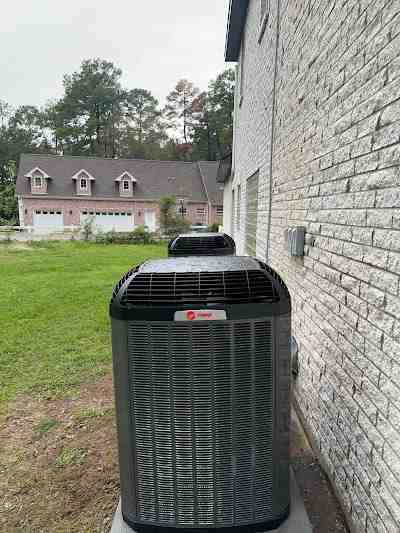
If you've been researching r410a vs r454b refrigerant what you need to know, here's the short answer: R-410A is being phased out under federal EPA regulations, and R-454B is the new industry-standard refrigerant replacing it in all new residential and light commercial HVAC systems. The two refrigerants are not interchangeable — R-454B requires equipment specifically designed for it.
Here's a quick comparison to get you oriented:
• GWP (Global Warming Potential) — R-410A: 2,088 — R-454B: 466
• GWP Reduction — R-410A: - — R-454B: 78% lower
• ASHRAE Safety Class — R-410A: A1 (non-flammable) — R-454B: A2L (mildly flammable)
• Operating Pressure — R-410A: ~711 psi — R-454B: ~674 psi
• Energy Efficiency (COP) — R-410A: Baseline — R-454B: 3-5% higher
• Cooling Capacity — R-410A: Baseline — R-454B: 98-100% of R-410A
• Drop-In Replacement? — R-410A: - — R-454B: No
• New Equipment Mandate — R-410A: Banned after Jan 1, 2025 — R-454B: Required for new systems
• Chemical Composition — R-410A: HFC blend (R-32 + R-125) — R-454B: HFO blend (R-32 + R-1234yf)
If you bought a new HVAC system after January 1, 2025, it almost certainly uses R-454B. If your system is older, it likely still runs on R-410A — and that's fine for now. But understanding the difference matters when it's time to repair, maintain, or replace your equipment.
The HVAC industry is in the middle of its biggest refrigerant transition since R-22 was phased out. For homeowners in Pinehurst, TX and surrounding North Harris County, where air conditioning runs hard for most of the year, knowing what refrigerant your system uses — and what's coming — can help you make smarter decisions about repairs and replacements before a breakdown forces your hand.
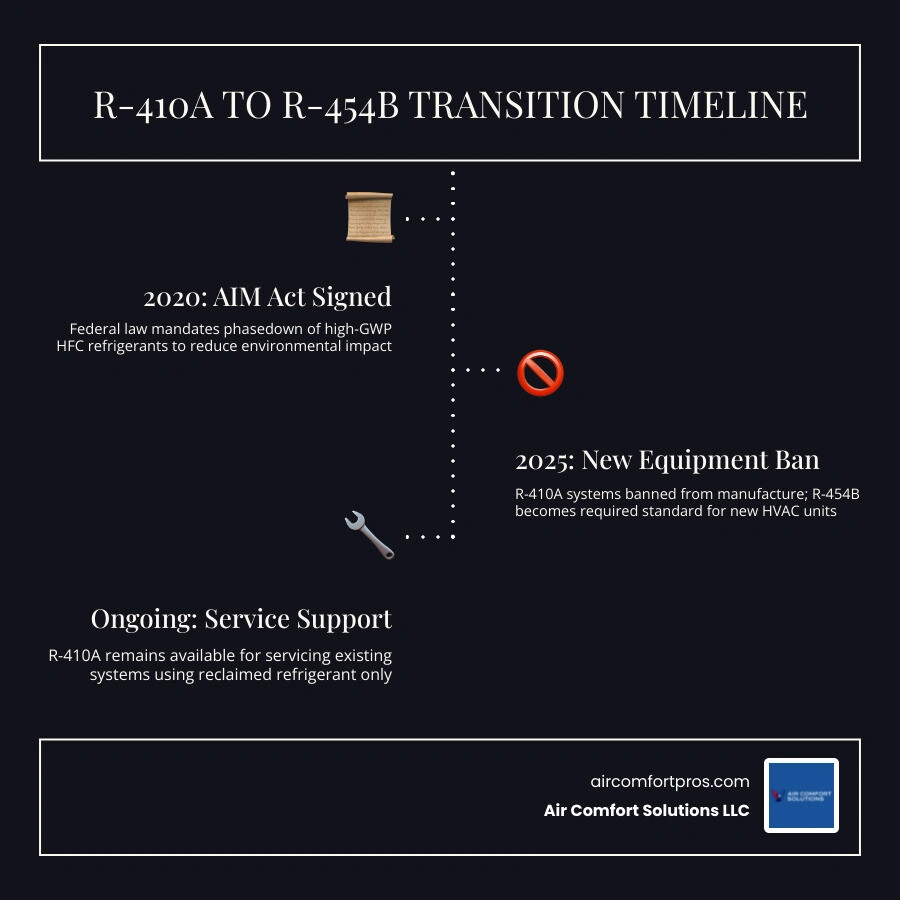
The shift away from R-410A isn't just a corporate whim; it is a legally mandated transition driven by environmental policy. The Environmental Protection Agency (EPA), acting under the authority of the American Innovation and Manufacturing (AIM) Act of 2020, has established strict phase-down timelines for hydrofluorocarbons (HFCs).
The federal government implemented a 40% reduction in HFC production and consumption, which will sharpen to a steep 70% reduction by 2029. To hit these targets, the EPA mandated that all new residential and light commercial air conditioning and heat pump systems manufactured or imported after January 1, 2025, must utilize refrigerants with a Global Warming Potential (GWP) of 700 or less.
Because R-410A has a massive GWP of 2,088, it fell far above this threshold. This regulatory hammer made the transition to lower-GWP alternatives like R-454B inevitable.
In places like Pinehurst, Spring, and Tomball, our cooling systems operate under intense stress for months at a time. Understanding how these changes shape the market is essential because How Southeast Texas Climate Affects Your HVAC System directly influences how quickly your equipment ages and how much it costs to keep it running smoothly.
To truly grasp the transition, we have to look closely at the science behind r410a vs r454b refrigerant what you need to know. At their core, these two substances are built from different chemical families designed for different eras of environmental awareness.
• R-410A is a near-azeotropic mixture consisting of 50% R-32 and 50% R-125. While it does not deplete the ozone layer (possessing an Ozone Depletion Potential of 0), it is a highly potent greenhouse gas.
• R-454B (developed by Chemours and branded as Opteon XL41™) is a zeotropic Hydrofluoroolefin (HFO) blend. It consists of 68.9% R-32 and 31.1% R-1234yf.
By blending an HFC (R-32) with a next-generation HFO (R-1234yf), chemists created a refrigerant that preserves the excellent thermodynamic properties of older refrigerants while dramatically lowering the environmental footprint. Like its predecessor, R-454B has an Ozone Depletion Potential (ODP) of exactly zero, meaning it is entirely safe for Earth's stratospheric ozone layer.
The primary driver of this industry-wide transition is Global Warming Potential (GWP). GWP is a relative measure of how much heat a greenhouse gas traps in the atmosphere compared to carbon dioxide (which has a baseline GWP of 1).
• R-410A GWP: 2,088
• R-454B GWP: 466
This represents an incredible 78% reduction in global warming potential. Choosing a system that utilizes R-454B significantly shrinks your household's carbon footprint. If a leak ever occurs in your system, the environmental impact of the escaping gas is less than a quarter of what it would have been with R-410A.
Because R-454B is a zeotropic blend rather than a near-azeotropic blend like R-410A, it behaves differently as it changes phases from liquid to gas inside your system's coils.
Zeotropic refrigerants experience what is known as temperature glide. As the refrigerant evaporates or condenses at a constant pressure, its temperature shifts slightly. R-454B has a temperature glide of approximately 1.5°F (whereas R-410A has a glide of less than 0.1°C).
While a 1.5°F glide is very manageable, it does require professional HVAC technicians to adjust their superheat and subcooling calculations during installation and service.
On the performance side, R-454B boasts a higher latent heat of 273 kJ/kg compared to R-410A’s 256 kJ/kg. This represents roughly a 7% increase in cooling capacity per pound of refrigerant circulating through the system, giving R-454B a distinct thermodynamic edge. Furthermore, R-454B features a higher critical temperature of 172.6°F (78.1°C) compared to R-410A's 163°F (72.8°C), allowing it to reject heat more effectively even during our hottest summer afternoons.
Many homeowners worry that transitioning to a green refrigerant means sacrificing cooling power. Fortunately, the engineering behind R-454B ensures that modern systems perform beautifully. If you are comparing options, understanding a Standard Efficiency vs High Efficiency AC Comparison can help you decide which path fits your comfort goals.
R-454B is highly efficient. Under standard operating conditions, R-454B systems can achieve a 3% to 5% higher Coefficient of Performance (COP) than equivalent R-410A systems.
It delivers 98% to 100% of the cooling capacity of R-410A while simultaneously reducing energy consumption. This means you get the exact same cooling output but with lower monthly electricity bills.
When shopping for a new system, you will also want to look at the efficiency ratings. To understand how modern equipment is rated, check out our guide on What is a SEER2 Rating on an AC Unit. Selecting high-efficiency, R-454B-compatible equipment is often the Best AC System for Hot Humid Climates because it balances high-capacity cooling with lower operating costs.
Operating pressure is another area where R-454B excels. It operates at approximately 5% lower pressure than R-410A (673.9 psi vs 711 psi under peak conditions).
Lower operating pressures mean less mechanical stress on your system's compressor, coils, and joints. This is a massive benefit in our hot, humid climate. Because our air conditioners run almost continuously during the summer, high operating pressures can accelerate wear and tear. To understand why this matters locally, read about Why Do AC Units Wear Out Faster in Hot Climates and how lower pressures can help mitigate some of this environmental strain.
Safety is always a top priority when introducing new chemicals into a residential space. If you are considering a complete system upgrade, it is also worth exploring Heat Pump Advantages Over Traditional HVAC to see how modern, lower-GWP heat pumps compare to standard air conditioners.
The safety standard developed by ASHRAE (Standard 34) classifies refrigerants based on toxicity and flammability:
• R-410A is classified as A1: Non-toxic and non-flammable.
• R-454B is classified as A2L: Non-toxic but mildly flammable.
The "A2L" designation often causes unnecessary concern. In reality, A2L refrigerants are incredibly difficult to ignite. They have a high Lower Flammability Limit (LFL) of about 12.4% by volume in air, meaning a very high concentration must be present for ignition to even be possible. Additionally, they have a low flame propagation speed, meaning that even if they do ignite, the flame spreads very slowly and is easily extinguished.
To ensure absolute safety, manufacturers have redesigned modern R-454B systems with advanced safety controls. These systems feature built-in leak detection sensors and mitigation controls. If a leak is detected inside the indoor unit, the system automatically shuts down the compressor and engages the indoor blower fan to safely disperse and dilute the refrigerant, keeping it far below the flammability threshold.
No. R-454B is not a drop-in replacement for R-410A systems.
Because R-454B is an A2L refrigerant, it cannot legally or safely be added to an existing system designed for R-410A. R-454B systems require:
1. Spark-proof electrical components: Relays, contactors, and switches designed to prevent electrical arcs.
2. Specific expansion valves: Sized and calibrated to accommodate R-454B's thermodynamic properties and temperature glide.
3. Dedicated safety sensors: Integrated leak detection systems that communicate with the control board.
4. Compatible Synthetic Oils: While both systems use Polyolester (POE) oil, the specific viscosity and additives are formulated for each system's unique operating requirements.
If your existing R-410A system has a major breakdown, you must weigh your options carefully. Our guide on How to Decide Between AC Repair and Replacement can help you determine whether it makes sense to fix your older unit or upgrade to a modern, future-proof system.
The intense heat and humidity of Southeast Texas put immense pressure on residential cooling systems. When evaluating r410a vs r454b refrigerant what you need to know, keep in mind how our local environment interacts with your equipment's lifespan.
Our climate forces air conditioners to run longer cycles, which accelerates component degradation. You can learn more about how our weather impacts equipment longevity in our article on How Hot Humid Climate Shortens HVAC Lifespan. On average, the Average Lifespan of an HVAC System in Texas is slightly shorter than in milder regions of the country. Because R-454B operates at lower pressures, it may help reduce the physical strain on your system over its lifetime, potentially offering better long-term durability.
As we navigate through 2026, the manufacturing bans on new R-410A equipment are fully in effect. Homeowners looking to install a new air conditioner or heat pump must transition to the new refrigerant standards.
Upgrading to an R-454B system now ensures that your home is fully compliant with modern environmental laws and that replacement refrigerant will be readily available and affordable for decades to come. If you are trying to time your next purchase, check out our insights on the Optimal Times for Upgrading Your Home's Air Conditioning System to maximize your investment and avoid summer breakdown emergencies.
Absolutely not. Mixing refrigerants is highly dangerous, illegal under EPA regulations, and will instantly destroy your system's compressor. Because they operate at different thermodynamic rates and require different safety components, mixing them will cause chemical instability, system failure, and void all manufacturer warranties.
Yes. While manufacturers can no longer build new R-410A systems, the EPA has not banned the servicing of existing systems. R-410A will remain available for repairs and recharges for many years, largely supplied by reclaimed, recycled, and existing stockpiles. However, as the federal HFC phase-down restricts supply, the market price of R-410A is expected to rise over time.
Major American manufacturers chose R-454B because of its low GWP (466) and its close performance match to R-410A. Some manufacturers utilize R-32, but its higher GWP of 675 provides less of a regulatory "cushion" under the EPA's 700-GWP ceiling. R-454B offers the best balance of safety, high efficiency, and long-term regulatory compliance.
The transition from R-410A to R-454B represents a major step forward for environmental sustainability and home energy efficiency. While change can feel overwhelming, this transition ultimately means safer, more efficient, and more reliable cooling systems for your home.
At Air Comfort Solutions LLC, we are committed to keeping our neighbors in Pinehurst, TX, and the north side of Harris County cool and comfortable. With over 35 years of experience, our certified technicians are fully equipped and trained to handle both legacy R-410A systems and next-generation R-454B installations. We provide honest, reliable solutions, upfront pricing, and flexible financing options to fit your family's needs.
If you have questions about your air conditioner or are ready to discuss an upgrade, Schedule Air Conditioning Services in Pinehurst with our friendly team today!
If you've been researching r410a vs r454b refrigerant what you need to know, here's the short answer: R-410A is being phased out under federal EPA regulations, and R-454B is the new industry-standard refrigerant replacing it in all new residential and light commercial HVAC systems. The two refrigerants are not interchangeable — R-454B requires equipment specifically designed for it.
Here's a quick comparison to get you oriented:
| Feature | R-410A | R-454B |
|---|---|---|
| GWP (Global Warming Potential) | 2,088 | 466 |
| GWP Reduction | - | 78% lower |
| ASHRAE Safety Class | A1 (non-flammable) | A2L (mildly flammable) |
| Operating Pressure | ~711 psi | ~674 psi |
| Energy Efficiency (COP) | Baseline | 3-5% higher |
| Cooling Capacity | Baseline | 98-100% of R-410A |
| Drop-In Replacement? | - | No |
| New Equipment Mandate | Banned after Jan 1, 2025 | Required for new systems |
| Chemical Composition | HFC blend (R-32 + R-125) | HFO blend (R-32 + R-1234yf) |
If you bought a new HVAC system after January 1, 2025, it almost certainly uses R-454B. If your system is older, it likely still runs on R-410A — and that's fine for now. But understanding the difference matters when it's time to repair, maintain, or replace your equipment.
The HVAC industry is in the middle of its biggest refrigerant transition since R-22 was phased out. For homeowners in Pinehurst, TX and surrounding North Harris County, where air conditioning runs hard for most of the year, knowing what refrigerant your system uses — and what's coming — can help you make smarter decisions about repairs and replacements before a breakdown forces your hand.
The shift away from R-410A isn't just a corporate whim; it is a legally mandated transition driven by environmental policy. The Environmental Protection Agency (EPA), acting under the authority of the American Innovation and Manufacturing (AIM) Act of 2020, has established strict phase-down timelines for hydrofluorocarbons (HFCs).
The federal government implemented a 40% reduction in HFC production and consumption, which will sharpen to a steep 70% reduction by 2029. To hit these targets, the EPA mandated that all new residential and light commercial air conditioning and heat pump systems manufactured or imported after January 1, 2025, must utilize refrigerants with a Global Warming Potential (GWP) of 700 or less.
Because R-410A has a massive GWP of 2,088, it fell far above this threshold. This regulatory hammer made the transition to lower-GWP alternatives like R-454B inevitable.
In places like Pinehurst, Spring, and Tomball, our cooling systems operate under intense stress for months at a time. Understanding how these changes shape the market is essential because How Southeast Texas Climate Affects Your HVAC System directly influences how quickly your equipment ages and how much it costs to keep it running smoothly.
To truly grasp the transition, we have to look closely at the science behind r410a vs r454b refrigerant what you need to know. At their core, these two substances are built from different chemical families designed for different eras of environmental awareness.
By blending an HFC (R-32) with a next-generation HFO (R-1234yf), chemists created a refrigerant that preserves the excellent thermodynamic properties of older refrigerants while dramatically lowering the environmental footprint. Like its predecessor, R-454B has an Ozone Depletion Potential (ODP) of exactly zero, meaning it is entirely safe for Earth's stratospheric ozone layer.
The primary driver of this industry-wide transition is Global Warming Potential (GWP). GWP is a relative measure of how much heat a greenhouse gas traps in the atmosphere compared to carbon dioxide (which has a baseline GWP of 1).
This represents an incredible 78% reduction in global warming potential. Choosing a system that utilizes R-454B significantly shrinks your household's carbon footprint. If a leak ever occurs in your system, the environmental impact of the escaping gas is less than a quarter of what it would have been with R-410A.
Because R-454B is a zeotropic blend rather than a near-azeotropic blend like R-410A, it behaves differently as it changes phases from liquid to gas inside your system's coils.
Zeotropic refrigerants experience what is known as temperature glide. As the refrigerant evaporates or condenses at a constant pressure, its temperature shifts slightly. R-454B has a temperature glide of approximately 1.5°F (whereas R-410A has a glide of less than 0.1°C).
While a 1.5°F glide is very manageable, it does require professional HVAC technicians to adjust their superheat and subcooling calculations during installation and service.
On the performance side, R-454B boasts a higher latent heat of 273 kJ/kg compared to R-410A’s 256 kJ/kg. This represents roughly a 7% increase in cooling capacity per pound of refrigerant circulating through the system, giving R-454B a distinct thermodynamic edge. Furthermore, R-454B features a higher critical temperature of 172.6°F (78.1°C) compared to R-410A's 163°F (72.8°C), allowing it to reject heat more effectively even during our hottest summer afternoons.
Many homeowners worry that transitioning to a green refrigerant means sacrificing cooling power. Fortunately, the engineering behind R-454B ensures that modern systems perform beautifully. If you are comparing options, understanding a Standard Efficiency vs High Efficiency AC Comparison can help you decide which path fits your comfort goals.
R-454B is highly efficient. Under standard operating conditions, R-454B systems can achieve a 3% to 5% higher Coefficient of Performance (COP) than equivalent R-410A systems.
It delivers 98% to 100% of the cooling capacity of R-410A while simultaneously reducing energy consumption. This means you get the exact same cooling output but with lower monthly electricity bills.
When shopping for a new system, you will also want to look at the efficiency ratings. To understand how modern equipment is rated, check out our guide on What is a SEER2 Rating on an AC Unit. Selecting high-efficiency, R-454B-compatible equipment is often the Best AC System for Hot Humid Climates because it balances high-capacity cooling with lower operating costs.
Operating pressure is another area where R-454B excels. It operates at approximately 5% lower pressure than R-410A (673.9 psi vs 711 psi under peak conditions).
Lower operating pressures mean less mechanical stress on your system's compressor, coils, and joints. This is a massive benefit in our hot, humid climate. Because our air conditioners run almost continuously during the summer, high operating pressures can accelerate wear and tear. To understand why this matters locally, read about Why Do AC Units Wear Out Faster in Hot Climates and how lower pressures can help mitigate some of this environmental strain.
Safety is always a top priority when introducing new chemicals into a residential space. If you are considering a complete system upgrade, it is also worth exploring Heat Pump Advantages Over Traditional HVAC to see how modern, lower-GWP heat pumps compare to standard air conditioners.
The safety standard developed by ASHRAE (Standard 34) classifies refrigerants based on toxicity and flammability:
The "A2L" designation often causes unnecessary concern. In reality, A2L refrigerants are incredibly difficult to ignite. They have a high Lower Flammability Limit (LFL) of about 12.4% by volume in air, meaning a very high concentration must be present for ignition to even be possible. Additionally, they have a low flame propagation speed, meaning that even if they do ignite, the flame spreads very slowly and is easily extinguished.
To ensure absolute safety, manufacturers have redesigned modern R-454B systems with advanced safety controls. These systems feature built-in leak detection sensors and mitigation controls. If a leak is detected inside the indoor unit, the system automatically shuts down the compressor and engages the indoor blower fan to safely disperse and dilute the refrigerant, keeping it far below the flammability threshold.
No. R-454B is not a drop-in replacement for R-410A systems.
Because R-454B is an A2L refrigerant, it cannot legally or safely be added to an existing system designed for R-410A. R-454B systems require:
If your existing R-410A system has a major breakdown, you must weigh your options carefully. Our guide on How to Decide Between AC Repair and Replacement can help you determine whether it makes sense to fix your older unit or upgrade to a modern, future-proof system.
The intense heat and humidity of Southeast Texas put immense pressure on residential cooling systems. When evaluating r410a vs r454b refrigerant what you need to know, keep in mind how our local environment interacts with your equipment's lifespan.
Our climate forces air conditioners to run longer cycles, which accelerates component degradation. You can learn more about how our weather impacts equipment longevity in our article on How Hot Humid Climate Shortens HVAC Lifespan. On average, the Average Lifespan of an HVAC System in Texas is slightly shorter than in milder regions of the country. Because R-454B operates at lower pressures, it may help reduce the physical strain on your system over its lifetime, potentially offering better long-term durability.
As we navigate through 2026, the manufacturing bans on new R-410A equipment are fully in effect. Homeowners looking to install a new air conditioner or heat pump must transition to the new refrigerant standards.
Upgrading to an R-454B system now ensures that your home is fully compliant with modern environmental laws and that replacement refrigerant will be readily available and affordable for decades to come. If you are trying to time your next purchase, check out our insights on the Optimal Times for Upgrading Your Home's Air Conditioning System to maximize your investment and avoid summer breakdown emergencies.
Absolutely not. Mixing refrigerants is highly dangerous, illegal under EPA regulations, and will instantly destroy your system's compressor. Because they operate at different thermodynamic rates and require different safety components, mixing them will cause chemical instability, system failure, and void all manufacturer warranties.
Yes. While manufacturers can no longer build new R-410A systems, the EPA has not banned the servicing of existing systems. R-410A will remain available for repairs and recharges for many years, largely supplied by reclaimed, recycled, and existing stockpiles. However, as the federal HFC phase-down restricts supply, the market price of R-410A is expected to rise over time.
Major American manufacturers chose R-454B because of its low GWP (466) and its close performance match to R-410A. Some manufacturers utilize R-32, but its higher GWP of 675 provides less of a regulatory "cushion" under the EPA's 700-GWP ceiling. R-454B offers the best balance of safety, high efficiency, and long-term regulatory compliance.
The transition from R-410A to R-454B represents a major step forward for environmental sustainability and home energy efficiency. While change can feel overwhelming, this transition ultimately means safer, more efficient, and more reliable cooling systems for your home.
At Air Comfort Solutions LLC, we are committed to keeping our neighbors in Pinehurst, TX, and the north side of Harris County cool and comfortable. With over 35 years of experience, our certified technicians are fully equipped and trained to handle both legacy R-410A systems and next-generation R-454B installations. We provide honest, reliable solutions, upfront pricing, and flexible financing options to fit your family's needs.
If you have questions about your air conditioner or are ready to discuss an upgrade, Schedule Air Conditioning Services in Pinehurst with our friendly team today!
If you've been researching r410a vs r454b refrigerant what you need to know, here's the short answer: R-410A is being phased out under federal EPA regulations, and R-454B is the new industry-standard refrigerant replacing it in all new residential and light commercial HVAC systems. The two refrigerants are not interchangeable — R-454B requires equipment specifically designed for it.
Here's a quick comparison to get you oriented:
| Feature | R-410A | R-454B |
|---|---|---|
| GWP (Global Warming Potential) | 2,088 | 466 |
| GWP Reduction | - | 78% lower |
| ASHRAE Safety Class | A1 (non-flammable) | A2L (mildly flammable) |
| Operating Pressure | ~711 psi | ~674 psi |
| Energy Efficiency (COP) | Baseline | 3-5% higher |
| Cooling Capacity | Baseline | 98-100% of R-410A |
| Drop-In Replacement? | - | No |
| New Equipment Mandate | Banned after Jan 1, 2025 | Required for new systems |
| Chemical Composition | HFC blend (R-32 + R-125) | HFO blend (R-32 + R-1234yf) |
If you bought a new HVAC system after January 1, 2025, it almost certainly uses R-454B. If your system is older, it likely still runs on R-410A — and that's fine for now. But understanding the difference matters when it's time to repair, maintain, or replace your equipment.
The HVAC industry is in the middle of its biggest refrigerant transition since R-22 was phased out. For homeowners in Pinehurst, TX and surrounding North Harris County, where air conditioning runs hard for most of the year, knowing what refrigerant your system uses — and what's coming — can help you make smarter decisions about repairs and replacements before a breakdown forces your hand.
The shift away from R-410A isn't just a corporate whim; it is a legally mandated transition driven by environmental policy. The Environmental Protection Agency (EPA), acting under the authority of the American Innovation and Manufacturing (AIM) Act of 2020, has established strict phase-down timelines for hydrofluorocarbons (HFCs).
The federal government implemented a 40% reduction in HFC production and consumption, which will sharpen to a steep 70% reduction by 2029. To hit these targets, the EPA mandated that all new residential and light commercial air conditioning and heat pump systems manufactured or imported after January 1, 2025, must utilize refrigerants with a Global Warming Potential (GWP) of 700 or less.
Because R-410A has a massive GWP of 2,088, it fell far above this threshold. This regulatory hammer made the transition to lower-GWP alternatives like R-454B inevitable.
In places like Pinehurst, Spring, and Tomball, our cooling systems operate under intense stress for months at a time. Understanding how these changes shape the market is essential because How Southeast Texas Climate Affects Your HVAC System directly influences how quickly your equipment ages and how much it costs to keep it running smoothly.
To truly grasp the transition, we have to look closely at the science behind r410a vs r454b refrigerant what you need to know. At their core, these two substances are built from different chemical families designed for different eras of environmental awareness.
By blending an HFC (R-32) with a next-generation HFO (R-1234yf), chemists created a refrigerant that preserves the excellent thermodynamic properties of older refrigerants while dramatically lowering the environmental footprint. Like its predecessor, R-454B has an Ozone Depletion Potential (ODP) of exactly zero, meaning it is entirely safe for Earth's stratospheric ozone layer.
The primary driver of this industry-wide transition is Global Warming Potential (GWP). GWP is a relative measure of how much heat a greenhouse gas traps in the atmosphere compared to carbon dioxide (which has a baseline GWP of 1).
This represents an incredible 78% reduction in global warming potential. Choosing a system that utilizes R-454B significantly shrinks your household's carbon footprint. If a leak ever occurs in your system, the environmental impact of the escaping gas is less than a quarter of what it would have been with R-410A.
Because R-454B is a zeotropic blend rather than a near-azeotropic blend like R-410A, it behaves differently as it changes phases from liquid to gas inside your system's coils.
Zeotropic refrigerants experience what is known as temperature glide. As the refrigerant evaporates or condenses at a constant pressure, its temperature shifts slightly. R-454B has a temperature glide of approximately 1.5°F (whereas R-410A has a glide of less than 0.1°C).
While a 1.5°F glide is very manageable, it does require professional HVAC technicians to adjust their superheat and subcooling calculations during installation and service.
On the performance side, R-454B boasts a higher latent heat of 273 kJ/kg compared to R-410A’s 256 kJ/kg. This represents roughly a 7% increase in cooling capacity per pound of refrigerant circulating through the system, giving R-454B a distinct thermodynamic edge. Furthermore, R-454B features a higher critical temperature of 172.6°F (78.1°C) compared to R-410A's 163°F (72.8°C), allowing it to reject heat more effectively even during our hottest summer afternoons.
Many homeowners worry that transitioning to a green refrigerant means sacrificing cooling power. Fortunately, the engineering behind R-454B ensures that modern systems perform beautifully. If you are comparing options, understanding a Standard Efficiency vs High Efficiency AC Comparison can help you decide which path fits your comfort goals.
R-454B is highly efficient. Under standard operating conditions, R-454B systems can achieve a 3% to 5% higher Coefficient of Performance (COP) than equivalent R-410A systems.
It delivers 98% to 100% of the cooling capacity of R-410A while simultaneously reducing energy consumption. This means you get the exact same cooling output but with lower monthly electricity bills.
When shopping for a new system, you will also want to look at the efficiency ratings. To understand how modern equipment is rated, check out our guide on What is a SEER2 Rating on an AC Unit. Selecting high-efficiency, R-454B-compatible equipment is often the Best AC System for Hot Humid Climates because it balances high-capacity cooling with lower operating costs.
Operating pressure is another area where R-454B excels. It operates at approximately 5% lower pressure than R-410A (673.9 psi vs 711 psi under peak conditions).
Lower operating pressures mean less mechanical stress on your system's compressor, coils, and joints. This is a massive benefit in our hot, humid climate. Because our air conditioners run almost continuously during the summer, high operating pressures can accelerate wear and tear. To understand why this matters locally, read about Why Do AC Units Wear Out Faster in Hot Climates and how lower pressures can help mitigate some of this environmental strain.
Safety is always a top priority when introducing new chemicals into a residential space. If you are considering a complete system upgrade, it is also worth exploring Heat Pump Advantages Over Traditional HVAC to see how modern, lower-GWP heat pumps compare to standard air conditioners.
The safety standard developed by ASHRAE (Standard 34) classifies refrigerants based on toxicity and flammability:
The "A2L" designation often causes unnecessary concern. In reality, A2L refrigerants are incredibly difficult to ignite. They have a high Lower Flammability Limit (LFL) of about 12.4% by volume in air, meaning a very high concentration must be present for ignition to even be possible. Additionally, they have a low flame propagation speed, meaning that even if they do ignite, the flame spreads very slowly and is easily extinguished.
To ensure absolute safety, manufacturers have redesigned modern R-454B systems with advanced safety controls. These systems feature built-in leak detection sensors and mitigation controls. If a leak is detected inside the indoor unit, the system automatically shuts down the compressor and engages the indoor blower fan to safely disperse and dilute the refrigerant, keeping it far below the flammability threshold.
No. R-454B is not a drop-in replacement for R-410A systems.
Because R-454B is an A2L refrigerant, it cannot legally or safely be added to an existing system designed for R-410A. R-454B systems require:
If your existing R-410A system has a major breakdown, you must weigh your options carefully. Our guide on How to Decide Between AC Repair and Replacement can help you determine whether it makes sense to fix your older unit or upgrade to a modern, future-proof system.
The intense heat and humidity of Southeast Texas put immense pressure on residential cooling systems. When evaluating r410a vs r454b refrigerant what you need to know, keep in mind how our local environment interacts with your equipment's lifespan.
Our climate forces air conditioners to run longer cycles, which accelerates component degradation. You can learn more about how our weather impacts equipment longevity in our article on How Hot Humid Climate Shortens HVAC Lifespan. On average, the Average Lifespan of an HVAC System in Texas is slightly shorter than in milder regions of the country. Because R-454B operates at lower pressures, it may help reduce the physical strain on your system over its lifetime, potentially offering better long-term durability.
As we navigate through 2026, the manufacturing bans on new R-410A equipment are fully in effect. Homeowners looking to install a new air conditioner or heat pump must transition to the new refrigerant standards.
Upgrading to an R-454B system now ensures that your home is fully compliant with modern environmental laws and that replacement refrigerant will be readily available and affordable for decades to come. If you are trying to time your next purchase, check out our insights on the Optimal Times for Upgrading Your Home's Air Conditioning System to maximize your investment and avoid summer breakdown emergencies.
Absolutely not. Mixing refrigerants is highly dangerous, illegal under EPA regulations, and will instantly destroy your system's compressor. Because they operate at different thermodynamic rates and require different safety components, mixing them will cause chemical instability, system failure, and void all manufacturer warranties.
Yes. While manufacturers can no longer build new R-410A systems, the EPA has not banned the servicing of existing systems. R-410A will remain available for repairs and recharges for many years, largely supplied by reclaimed, recycled, and existing stockpiles. However, as the federal HFC phase-down restricts supply, the market price of R-410A is expected to rise over time.
Major American manufacturers chose R-454B because of its low GWP (466) and its close performance match to R-410A. Some manufacturers utilize R-32, but its higher GWP of 675 provides less of a regulatory "cushion" under the EPA's 700-GWP ceiling. R-454B offers the best balance of safety, high efficiency, and long-term regulatory compliance.
The transition from R-410A to R-454B represents a major step forward for environmental sustainability and home energy efficiency. While change can feel overwhelming, this transition ultimately means safer, more efficient, and more reliable cooling systems for your home.
At Air Comfort Solutions LLC, we are committed to keeping our neighbors in Pinehurst, TX, and the north side of Harris County cool and comfortable. With over 35 years of experience, our certified technicians are fully equipped and trained to handle both legacy R-410A systems and next-generation R-454B installations. We provide honest, reliable solutions, upfront pricing, and flexible financing options to fit your family's needs.
If you have questions about your air conditioner or are ready to discuss an upgrade, Schedule Air Conditioning Services in Pinehurst with our friendly team today!
If you've been researching r410a vs r454b refrigerant what you need to know, here's the short answer: R-410A is being phased out under federal EPA regulations, and R-454B is the new industry-standard refrigerant replacing it in all new residential and light commercial HVAC systems. The two refrigerants are not interchangeable — R-454B requires equipment specifically designed for it.
Here's a quick comparison to get you oriented:
| Feature | R-410A | R-454B |
|---|---|---|
| GWP (Global Warming Potential) | 2,088 | 466 |
| GWP Reduction | - | 78% lower |
| ASHRAE Safety Class | A1 (non-flammable) | A2L (mildly flammable) |
| Operating Pressure | ~711 psi | ~674 psi |
| Energy Efficiency (COP) | Baseline | 3-5% higher |
| Cooling Capacity | Baseline | 98-100% of R-410A |
| Drop-In Replacement? | - | No |
| New Equipment Mandate | Banned after Jan 1, 2025 | Required for new systems |
| Chemical Composition | HFC blend (R-32 + R-125) | HFO blend (R-32 + R-1234yf) |
If you bought a new HVAC system after January 1, 2025, it almost certainly uses R-454B. If your system is older, it likely still runs on R-410A — and that's fine for now. But understanding the difference matters when it's time to repair, maintain, or replace your equipment.
The HVAC industry is in the middle of its biggest refrigerant transition since R-22 was phased out. For homeowners in Pinehurst, TX and surrounding North Harris County, where air conditioning runs hard for most of the year, knowing what refrigerant your system uses — and what's coming — can help you make smarter decisions about repairs and replacements before a breakdown forces your hand.
The shift away from R-410A isn't just a corporate whim; it is a legally mandated transition driven by environmental policy. The Environmental Protection Agency (EPA), acting under the authority of the American Innovation and Manufacturing (AIM) Act of 2020, has established strict phase-down timelines for hydrofluorocarbons (HFCs).
The federal government implemented a 40% reduction in HFC production and consumption, which will sharpen to a steep 70% reduction by 2029. To hit these targets, the EPA mandated that all new residential and light commercial air conditioning and heat pump systems manufactured or imported after January 1, 2025, must utilize refrigerants with a Global Warming Potential (GWP) of 700 or less.
Because R-410A has a massive GWP of 2,088, it fell far above this threshold. This regulatory hammer made the transition to lower-GWP alternatives like R-454B inevitable.
In places like Pinehurst, Spring, and Tomball, our cooling systems operate under intense stress for months at a time. Understanding how these changes shape the market is essential because How Southeast Texas Climate Affects Your HVAC System directly influences how quickly your equipment ages and how much it costs to keep it running smoothly.
To truly grasp the transition, we have to look closely at the science behind r410a vs r454b refrigerant what you need to know. At their core, these two substances are built from different chemical families designed for different eras of environmental awareness.
By blending an HFC (R-32) with a next-generation HFO (R-1234yf), chemists created a refrigerant that preserves the excellent thermodynamic properties of older refrigerants while dramatically lowering the environmental footprint. Like its predecessor, R-454B has an Ozone Depletion Potential (ODP) of exactly zero, meaning it is entirely safe for Earth's stratospheric ozone layer.
The primary driver of this industry-wide transition is Global Warming Potential (GWP). GWP is a relative measure of how much heat a greenhouse gas traps in the atmosphere compared to carbon dioxide (which has a baseline GWP of 1).
This represents an incredible 78% reduction in global warming potential. Choosing a system that utilizes R-454B significantly shrinks your household's carbon footprint. If a leak ever occurs in your system, the environmental impact of the escaping gas is less than a quarter of what it would have been with R-410A.
Because R-454B is a zeotropic blend rather than a near-azeotropic blend like R-410A, it behaves differently as it changes phases from liquid to gas inside your system's coils.
Zeotropic refrigerants experience what is known as temperature glide. As the refrigerant evaporates or condenses at a constant pressure, its temperature shifts slightly. R-454B has a temperature glide of approximately 1.5°F (whereas R-410A has a glide of less than 0.1°C).
While a 1.5°F glide is very manageable, it does require professional HVAC technicians to adjust their superheat and subcooling calculations during installation and service.
On the performance side, R-454B boasts a higher latent heat of 273 kJ/kg compared to R-410A’s 256 kJ/kg. This represents roughly a 7% increase in cooling capacity per pound of refrigerant circulating through the system, giving R-454B a distinct thermodynamic edge. Furthermore, R-454B features a higher critical temperature of 172.6°F (78.1°C) compared to R-410A's 163°F (72.8°C), allowing it to reject heat more effectively even during our hottest summer afternoons.
Many homeowners worry that transitioning to a green refrigerant means sacrificing cooling power. Fortunately, the engineering behind R-454B ensures that modern systems perform beautifully. If you are comparing options, understanding a Standard Efficiency vs High Efficiency AC Comparison can help you decide which path fits your comfort goals.
R-454B is highly efficient. Under standard operating conditions, R-454B systems can achieve a 3% to 5% higher Coefficient of Performance (COP) than equivalent R-410A systems.
It delivers 98% to 100% of the cooling capacity of R-410A while simultaneously reducing energy consumption. This means you get the exact same cooling output but with lower monthly electricity bills.
When shopping for a new system, you will also want to look at the efficiency ratings. To understand how modern equipment is rated, check out our guide on What is a SEER2 Rating on an AC Unit. Selecting high-efficiency, R-454B-compatible equipment is often the Best AC System for Hot Humid Climates because it balances high-capacity cooling with lower operating costs.
Operating pressure is another area where R-454B excels. It operates at approximately 5% lower pressure than R-410A (673.9 psi vs 711 psi under peak conditions).
Lower operating pressures mean less mechanical stress on your system's compressor, coils, and joints. This is a massive benefit in our hot, humid climate. Because our air conditioners run almost continuously during the summer, high operating pressures can accelerate wear and tear. To understand why this matters locally, read about Why Do AC Units Wear Out Faster in Hot Climates and how lower pressures can help mitigate some of this environmental strain.
Safety is always a top priority when introducing new chemicals into a residential space. If you are considering a complete system upgrade, it is also worth exploring Heat Pump Advantages Over Traditional HVAC to see how modern, lower-GWP heat pumps compare to standard air conditioners.
The safety standard developed by ASHRAE (Standard 34) classifies refrigerants based on toxicity and flammability:
The "A2L" designation often causes unnecessary concern. In reality, A2L refrigerants are incredibly difficult to ignite. They have a high Lower Flammability Limit (LFL) of about 12.4% by volume in air, meaning a very high concentration must be present for ignition to even be possible. Additionally, they have a low flame propagation speed, meaning that even if they do ignite, the flame spreads very slowly and is easily extinguished.
To ensure absolute safety, manufacturers have redesigned modern R-454B systems with advanced safety controls. These systems feature built-in leak detection sensors and mitigation controls. If a leak is detected inside the indoor unit, the system automatically shuts down the compressor and engages the indoor blower fan to safely disperse and dilute the refrigerant, keeping it far below the flammability threshold.
No. R-454B is not a drop-in replacement for R-410A systems.
Because R-454B is an A2L refrigerant, it cannot legally or safely be added to an existing system designed for R-410A. R-454B systems require:
If your existing R-410A system has a major breakdown, you must weigh your options carefully. Our guide on How to Decide Between AC Repair and Replacement can help you determine whether it makes sense to fix your older unit or upgrade to a modern, future-proof system.
The intense heat and humidity of Southeast Texas put immense pressure on residential cooling systems. When evaluating r410a vs r454b refrigerant what you need to know, keep in mind how our local environment interacts with your equipment's lifespan.
Our climate forces air conditioners to run longer cycles, which accelerates component degradation. You can learn more about how our weather impacts equipment longevity in our article on How Hot Humid Climate Shortens HVAC Lifespan. On average, the Average Lifespan of an HVAC System in Texas is slightly shorter than in milder regions of the country. Because R-454B operates at lower pressures, it may help reduce the physical strain on your system over its lifetime, potentially offering better long-term durability.
As we navigate through 2026, the manufacturing bans on new R-410A equipment are fully in effect. Homeowners looking to install a new air conditioner or heat pump must transition to the new refrigerant standards.
Upgrading to an R-454B system now ensures that your home is fully compliant with modern environmental laws and that replacement refrigerant will be readily available and affordable for decades to come. If you are trying to time your next purchase, check out our insights on the Optimal Times for Upgrading Your Home's Air Conditioning System to maximize your investment and avoid summer breakdown emergencies.
Absolutely not. Mixing refrigerants is highly dangerous, illegal under EPA regulations, and will instantly destroy your system's compressor. Because they operate at different thermodynamic rates and require different safety components, mixing them will cause chemical instability, system failure, and void all manufacturer warranties.
Yes. While manufacturers can no longer build new R-410A systems, the EPA has not banned the servicing of existing systems. R-410A will remain available for repairs and recharges for many years, largely supplied by reclaimed, recycled, and existing stockpiles. However, as the federal HFC phase-down restricts supply, the market price of R-410A is expected to rise over time.
Major American manufacturers chose R-454B because of its low GWP (466) and its close performance match to R-410A. Some manufacturers utilize R-32, but its higher GWP of 675 provides less of a regulatory "cushion" under the EPA's 700-GWP ceiling. R-454B offers the best balance of safety, high efficiency, and long-term regulatory compliance.
The transition from R-410A to R-454B represents a major step forward for environmental sustainability and home energy efficiency. While change can feel overwhelming, this transition ultimately means safer, more efficient, and more reliable cooling systems for your home.
At Air Comfort Solutions LLC, we are committed to keeping our neighbors in Pinehurst, TX, and the north side of Harris County cool and comfortable. With over 35 years of experience, our certified technicians are fully equipped and trained to handle both legacy R-410A systems and next-generation R-454B installations. We provide honest, reliable solutions, upfront pricing, and flexible financing options to fit your family's needs.
If you have questions about your air conditioner or are ready to discuss an upgrade, Schedule Air Conditioning Services in Pinehurst with our friendly team today!
If you've been researching r410a vs r454b refrigerant what you need to know, here's the short answer: R-410A is being phased out under federal EPA regulations, and R-454B is the new industry-standard refrigerant replacing it in all new residential and light commercial HVAC systems. The two refrigerants are not interchangeable — R-454B requires equipment specifically designed for it.
Here's a quick comparison to get you oriented:
| Feature | R-410A | R-454B |
|---|---|---|
| GWP (Global Warming Potential) | 2,088 | 466 |
| GWP Reduction | - | 78% lower |
| ASHRAE Safety Class | A1 (non-flammable) | A2L (mildly flammable) |
| Operating Pressure | ~711 psi | ~674 psi |
| Energy Efficiency (COP) | Baseline | 3-5% higher |
| Cooling Capacity | Baseline | 98-100% of R-410A |
| Drop-In Replacement? | - | No |
| New Equipment Mandate | Banned after Jan 1, 2025 | Required for new systems |
| Chemical Composition | HFC blend (R-32 + R-125) | HFO blend (R-32 + R-1234yf) |
If you bought a new HVAC system after January 1, 2025, it almost certainly uses R-454B. If your system is older, it likely still runs on R-410A — and that's fine for now. But understanding the difference matters when it's time to repair, maintain, or replace your equipment.
The HVAC industry is in the middle of its biggest refrigerant transition since R-22 was phased out. For homeowners in Pinehurst, TX and surrounding North Harris County, where air conditioning runs hard for most of the year, knowing what refrigerant your system uses — and what's coming — can help you make smarter decisions about repairs and replacements before a breakdown forces your hand.
The shift away from R-410A isn't just a corporate whim; it is a legally mandated transition driven by environmental policy. The Environmental Protection Agency (EPA), acting under the authority of the American Innovation and Manufacturing (AIM) Act of 2020, has established strict phase-down timelines for hydrofluorocarbons (HFCs).
The federal government implemented a 40% reduction in HFC production and consumption, which will sharpen to a steep 70% reduction by 2029. To hit these targets, the EPA mandated that all new residential and light commercial air conditioning and heat pump systems manufactured or imported after January 1, 2025, must utilize refrigerants with a Global Warming Potential (GWP) of 700 or less.
Because R-410A has a massive GWP of 2,088, it fell far above this threshold. This regulatory hammer made the transition to lower-GWP alternatives like R-454B inevitable.
In places like Pinehurst, Spring, and Tomball, our cooling systems operate under intense stress for months at a time. Understanding how these changes shape the market is essential because How Southeast Texas Climate Affects Your HVAC System directly influences how quickly your equipment ages and how much it costs to keep it running smoothly.
To truly grasp the transition, we have to look closely at the science behind r410a vs r454b refrigerant what you need to know. At their core, these two substances are built from different chemical families designed for different eras of environmental awareness.
By blending an HFC (R-32) with a next-generation HFO (R-1234yf), chemists created a refrigerant that preserves the excellent thermodynamic properties of older refrigerants while dramatically lowering the environmental footprint. Like its predecessor, R-454B has an Ozone Depletion Potential (ODP) of exactly zero, meaning it is entirely safe for Earth's stratospheric ozone layer.
The primary driver of this industry-wide transition is Global Warming Potential (GWP). GWP is a relative measure of how much heat a greenhouse gas traps in the atmosphere compared to carbon dioxide (which has a baseline GWP of 1).
This represents an incredible 78% reduction in global warming potential. Choosing a system that utilizes R-454B significantly shrinks your household's carbon footprint. If a leak ever occurs in your system, the environmental impact of the escaping gas is less than a quarter of what it would have been with R-410A.
Because R-454B is a zeotropic blend rather than a near-azeotropic blend like R-410A, it behaves differently as it changes phases from liquid to gas inside your system's coils.
Zeotropic refrigerants experience what is known as temperature glide. As the refrigerant evaporates or condenses at a constant pressure, its temperature shifts slightly. R-454B has a temperature glide of approximately 1.5°F (whereas R-410A has a glide of less than 0.1°C).
While a 1.5°F glide is very manageable, it does require professional HVAC technicians to adjust their superheat and subcooling calculations during installation and service.
On the performance side, R-454B boasts a higher latent heat of 273 kJ/kg compared to R-410A’s 256 kJ/kg. This represents roughly a 7% increase in cooling capacity per pound of refrigerant circulating through the system, giving R-454B a distinct thermodynamic edge. Furthermore, R-454B features a higher critical temperature of 172.6°F (78.1°C) compared to R-410A's 163°F (72.8°C), allowing it to reject heat more effectively even during our hottest summer afternoons.
Many homeowners worry that transitioning to a green refrigerant means sacrificing cooling power. Fortunately, the engineering behind R-454B ensures that modern systems perform beautifully. If you are comparing options, understanding a Standard Efficiency vs High Efficiency AC Comparison can help you decide which path fits your comfort goals.
R-454B is highly efficient. Under standard operating conditions, R-454B systems can achieve a 3% to 5% higher Coefficient of Performance (COP) than equivalent R-410A systems.
It delivers 98% to 100% of the cooling capacity of R-410A while simultaneously reducing energy consumption. This means you get the exact same cooling output but with lower monthly electricity bills.
When shopping for a new system, you will also want to look at the efficiency ratings. To understand how modern equipment is rated, check out our guide on What is a SEER2 Rating on an AC Unit. Selecting high-efficiency, R-454B-compatible equipment is often the Best AC System for Hot Humid Climates because it balances high-capacity cooling with lower operating costs.
Operating pressure is another area where R-454B excels. It operates at approximately 5% lower pressure than R-410A (673.9 psi vs 711 psi under peak conditions).
Lower operating pressures mean less mechanical stress on your system's compressor, coils, and joints. This is a massive benefit in our hot, humid climate. Because our air conditioners run almost continuously during the summer, high operating pressures can accelerate wear and tear. To understand why this matters locally, read about Why Do AC Units Wear Out Faster in Hot Climates and how lower pressures can help mitigate some of this environmental strain.
Safety is always a top priority when introducing new chemicals into a residential space. If you are considering a complete system upgrade, it is also worth exploring Heat Pump Advantages Over Traditional HVAC to see how modern, lower-GWP heat pumps compare to standard air conditioners.
The safety standard developed by ASHRAE (Standard 34) classifies refrigerants based on toxicity and flammability:
The "A2L" designation often causes unnecessary concern. In reality, A2L refrigerants are incredibly difficult to ignite. They have a high Lower Flammability Limit (LFL) of about 12.4% by volume in air, meaning a very high concentration must be present for ignition to even be possible. Additionally, they have a low flame propagation speed, meaning that even if they do ignite, the flame spreads very slowly and is easily extinguished.
To ensure absolute safety, manufacturers have redesigned modern R-454B systems with advanced safety controls. These systems feature built-in leak detection sensors and mitigation controls. If a leak is detected inside the indoor unit, the system automatically shuts down the compressor and engages the indoor blower fan to safely disperse and dilute the refrigerant, keeping it far below the flammability threshold.
No. R-454B is not a drop-in replacement for R-410A systems.
Because R-454B is an A2L refrigerant, it cannot legally or safely be added to an existing system designed for R-410A. R-454B systems require:
If your existing R-410A system has a major breakdown, you must weigh your options carefully. Our guide on How to Decide Between AC Repair and Replacement can help you determine whether it makes sense to fix your older unit or upgrade to a modern, future-proof system.
The intense heat and humidity of Southeast Texas put immense pressure on residential cooling systems. When evaluating r410a vs r454b refrigerant what you need to know, keep in mind how our local environment interacts with your equipment's lifespan.
Our climate forces air conditioners to run longer cycles, which accelerates component degradation. You can learn more about how our weather impacts equipment longevity in our article on How Hot Humid Climate Shortens HVAC Lifespan. On average, the Average Lifespan of an HVAC System in Texas is slightly shorter than in milder regions of the country. Because R-454B operates at lower pressures, it may help reduce the physical strain on your system over its lifetime, potentially offering better long-term durability.
As we navigate through 2026, the manufacturing bans on new R-410A equipment are fully in effect. Homeowners looking to install a new air conditioner or heat pump must transition to the new refrigerant standards.
Upgrading to an R-454B system now ensures that your home is fully compliant with modern environmental laws and that replacement refrigerant will be readily available and affordable for decades to come. If you are trying to time your next purchase, check out our insights on the Optimal Times for Upgrading Your Home's Air Conditioning System to maximize your investment and avoid summer breakdown emergencies.
Absolutely not. Mixing refrigerants is highly dangerous, illegal under EPA regulations, and will instantly destroy your system's compressor. Because they operate at different thermodynamic rates and require different safety components, mixing them will cause chemical instability, system failure, and void all manufacturer warranties.
Yes. While manufacturers can no longer build new R-410A systems, the EPA has not banned the servicing of existing systems. R-410A will remain available for repairs and recharges for many years, largely supplied by reclaimed, recycled, and existing stockpiles. However, as the federal HFC phase-down restricts supply, the market price of R-410A is expected to rise over time.
Major American manufacturers chose R-454B because of its low GWP (466) and its close performance match to R-410A. Some manufacturers utilize R-32, but its higher GWP of 675 provides less of a regulatory "cushion" under the EPA's 700-GWP ceiling. R-454B offers the best balance of safety, high efficiency, and long-term regulatory compliance.
The transition from R-410A to R-454B represents a major step forward for environmental sustainability and home energy efficiency. While change can feel overwhelming, this transition ultimately means safer, more efficient, and more reliable cooling systems for your home.
At Air Comfort Solutions LLC, we are committed to keeping our neighbors in Pinehurst, TX, and the north side of Harris County cool and comfortable. With over 35 years of experience, our certified technicians are fully equipped and trained to handle both legacy R-410A systems and next-generation R-454B installations. We provide honest, reliable solutions, upfront pricing, and flexible financing options to fit your family's needs.
If you have questions about your air conditioner or are ready to discuss an upgrade, Schedule Air Conditioning Services in Pinehurst with our friendly team today!


Zane came out and did an amazing job! Super friendly, honest and transparent about the work that needed to be done. This is my second time working with Air Comfort Solutions and they’re my go to for HVAC services. Highly recommend.
God's AMAZING grace sent us Robert and Zane. We have been without air in this Texas heat for six weeks and four days. We've had a few contractors give us quotes all trying to upsell when we're at a low point. But not the guys at Air Comfort Solutions. They came in assessed our situation, gave us honest feedback, and showed us the issues as they proceeded with the assessment for clear understanding. We highly recommend them for their professionalism, quality products, and fair pricing. We hands down support them for all the work they do 💯 %.
Robert and Zane gone above and beyond to make the process easy and affordable.
Would definitely recommend!!
I’m writing this review to let everyone know that Air Comfort Solutions is the company to work with. I know the owner ( Robert) for several years now. He has been taking care of my residential and business work orders. Robert is professional, knowledgeable and will save you money. I just want to thank Robert for great job you have been doing for me.