Why How a Maintenance Plan Extends Your AC Equipment Life Is the Most Important Question a Texas Homeowner Can Ask
How a maintenance plan extends your AC equipment life comes down to one straightforward idea: small, consistent professional care stops the slow, invisible damage that quietly cuts your system's life short long before it should fail.
Here is a quick answer before we go deeper:
A maintenance plan extends your AC equipment life by:
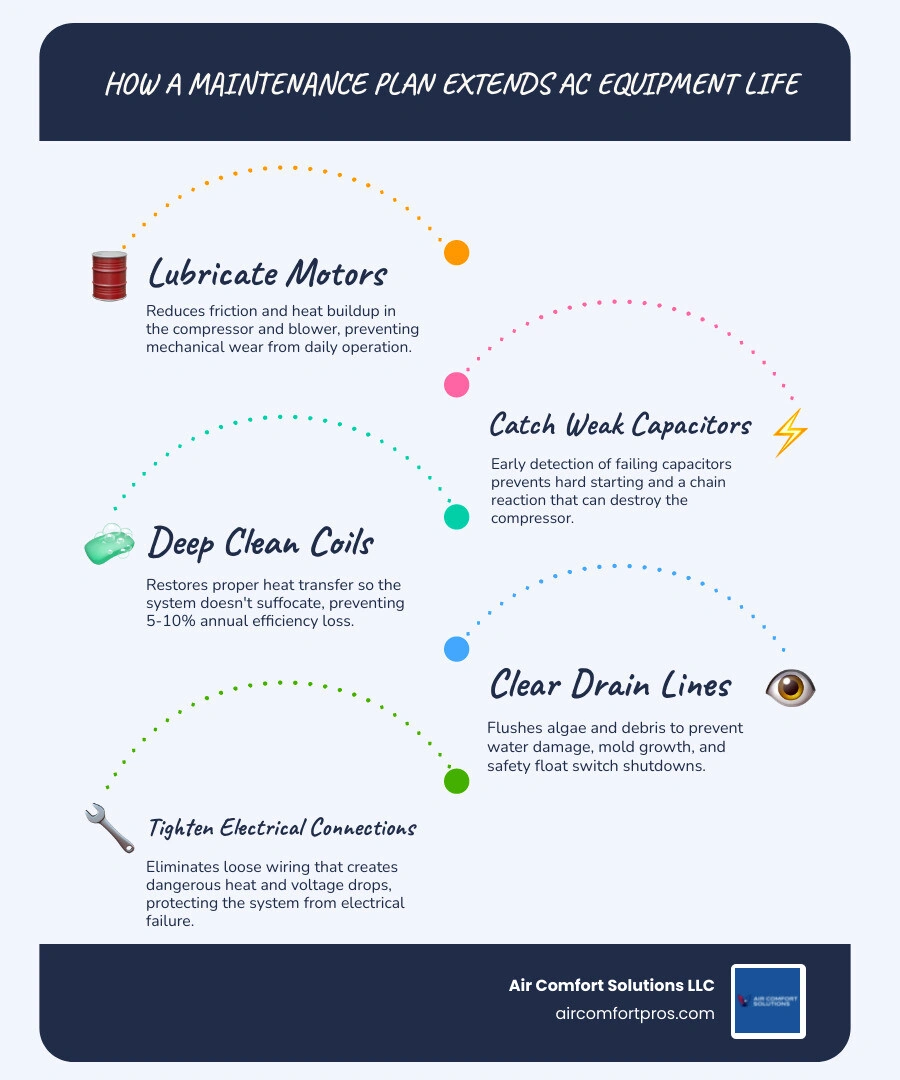
- Reducing friction and heat buildup through regular motor lubrication, keeping moving parts from grinding themselves down
- Catching failing components early — like a weak capacitor — before they trigger a chain reaction that destroys the compressor
- Cleaning coils and clearing airflow so the system does not have to work harder than it was designed to
- Flushing condensate drain lines to prevent water damage and mold buildup inside the air handler
- Testing electrical connections to stop loose wiring from creating dangerous heat and voltage drops
- Preserving your manufacturer warranty by providing documented proof of annual professional service
- Keeping energy efficiency near factory ratings instead of letting it erode by 5% to 10% every single year without service
In a climate like Pinehurst, TX — where your AC can run 12 to 16 hours a day during peak summer and log over 3,000 operating hours per year — this is not optional upkeep. It is the single biggest factor separating a system that lasts 15 to 20 years from one that gives out in 8 to 12.
Think of it the way you think about a car engine. You would never drive 200,000 miles without an oil change and expect the engine to survive. Your AC compressor faces the same physics: friction, heat, and mechanical stress accumulate with every hour of operation. Without scheduled intervention, that wear compounds silently until something breaks — usually on the hottest afternoon of the year.
Well-maintained HVAC systems routinely last 15 to 20 years. Neglected ones often fail prematurely within 8 to 12 years, and in extreme cases, as few as 5 to 10. That gap represents thousands of dollars and years of reliable comfort.
The sections below walk through exactly how each maintenance task protects your equipment, what the data says about lifespan and efficiency, and what to look for in a professional plan here in North Harris County.
How a maintenance plan extends your ac equipment life glossary:
The Science of Wear: How a Maintenance Plan Extends Your AC Equipment Life
To truly understand how a maintenance plan extends your ac equipment life, we have to look at the physical forces acting on your system. An air conditioner is a complex thermodynamic machine. It doesn't actually "create" cold; it extracts heat from inside your home and dumps it outdoors.
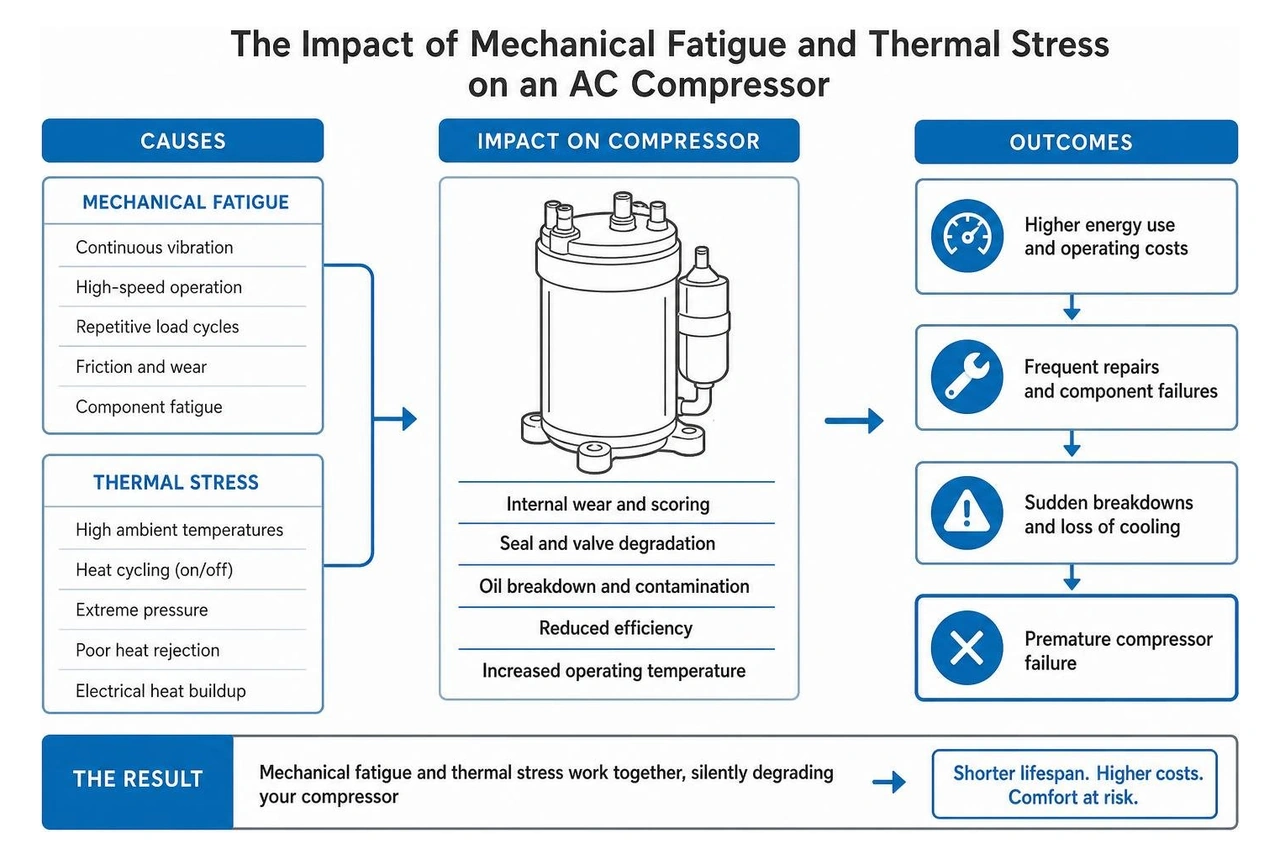
This process requires high pressures, rapid electrical cycling, and high-speed mechanical motion. Under the hood, your system battles constant mechanical fatigue, thermal cycling, compressor health degradation, and immense operational stress.
Mitigating Friction and Thermal Stress in Texas Heat
In Southeast Texas, our air conditioners face some of the most punishing operating conditions in the country. A typical AC unit in northern states might run for 1,000 hours a year. In Pinehurst, Spring, and Tomball, our systems routinely run for 2,200 to 2,500 hours annually — and up to 3,000 hours in exceptionally hot years.
Furthermore, many indoor air handlers in our area are located in attics. During July 2026, attic temperatures can easily climb to between 140°F and 160°F. This extreme heat creates massive thermal stress on the system's motors and electrical components before the unit even turns on.
Friction is the ultimate mechanical killer. Poor lubrication causes more mechanical equipment failures than almost any other single factor in HVAC systems. Up to 40% of preventable motor bearing failures are directly caused by lubrication degradation. When fan motors and bearings run without fresh lubricant, metal-on-metal wear generates intense localized heat. This heat radiates through the motor shaft, drying out seals, melting wire insulation, and eventually causing the motor to seize.
By ensuring moving parts are lubricated during scheduled seasonal visits, you directly reduce this friction, keeping the motor running cool and preventing premature failure. For a deeper look at protecting your system from our unique climate, read our guide on How to Extend the Life of Your AC in Texas.
Preventing the Domino Effect of Component Failure
In an air conditioner, components do not fail in a vacuum. A minor issue with a cheap, secondary part almost always triggers a destructive chain reaction that takes down the most expensive components in the system.
Take the dual run capacitor, for example. The capacitor acts like a temporary battery, providing the electrical boost your compressor and fan motor need to start and run. Over time, heat and electrical surges cause capacitors to lose their storage capacity. A capacitor strength drop of even 10% can trigger compressor "hard starting."
When this happens, the compressor struggles to turn over, drawing massive spikes of electrical current. This extra electrical resistance generates intense heat within the compressor windings. If left unchecked, a failing capacitor will burn out the compressor's motor.
Instead of a simple component replacement during a routine check, you are suddenly faced with a ruined compressor — the heart of your AC system. The same domino effect occurs when a dirty blower wheel goes unbalanced. The resulting vibrations travel down the shaft, quickly destroying the blower motor bearings and cracking the housing. Proactive maintenance halts these cascade failures before they start.

Key Tasks in a Plan That Directly Prevent Premature Wear
When you sign up for a professional maintenance plan, you aren't just paying for a technician to look at your system. You are investing in a series of highly technical, physical tasks designed to reverse the wear and tear of continuous operation.
Every task on a professional checklist has a direct engineering purpose aimed at extending equipment life. To see the full scope of what should be performed, check out our breakdown of What Does an HVAC Maintenance Plan Include?.
Deep Coil Cleaning and Airflow Optimization
Your AC relies on two main coils to transfer heat: the indoor evaporator coil and the outdoor condenser coil. For heat transfer to happen efficiently, air must flow freely over clean copper and aluminum surfaces.
Unfortunately, outdoor condenser coils act like giant magnets for dirt, lawn clippings, pollen, and dust. Inside, evaporator coils can become coated in household dust and pet dander. When dirt accumulates on these coils, it acts like an insulating blanket.
- The physical consequence: Heat gets trapped inside the system. The refrigerant cannot release heat outdoors or absorb it indoors efficiently.
- The mechanical strain: To make up for the poor heat transfer, the compressor must run at dangerously high temperatures and pressures. It has to run longer cycles to cool your home, accelerating mechanical fatigue.
- The ultimate danger: Dirty coils can cause a 10% to 25% loss in operating efficiency. Even worse, restricted airflow can drop coil temperatures below freezing. This causes the indoor coil to ice over, which can lead to "slugging" — a catastrophic event where liquid refrigerant floods back into the compressor. Because liquid cannot be compressed, slugging can destroy a compressor's internal valves in a matter of minutes.
Electrical System Calibration and Capacitor Testing
The electrical side of your air conditioner is highly sensitive. Normal operational vibrations naturally loosen electrical connections over time. When a wire connection becomes loose, electrical resistance increases at that specific point.
Increased resistance causes local heat to build up. This heat can melt plastic wire harnesses, damage control boards, and cause voltage drops. During a maintenance visit, a technician will inspect and tighten all wiring harness connections and terminal screws.
Technicians also use specialized multimeters to measure the exact voltage and amperage draw of your motors. By measuring electrical current down to the microamp, we can track the health of your compressor and fan motors over time. If a motor is drawing more amps than its manufacturer rating, it is a clear sign of mechanical drag or winding degradation, allowing us to address the issue before the motor burns out completely.
Lubrication and Condensate Drain Line Clearing
As mentioned, keeping fan bearings and motor shafts lubricated is essential to combat friction. But mechanical parts aren't the only things that need physical clearing. Your AC removes an incredible amount of moisture from your home's air. This moisture drains through a condensate line.
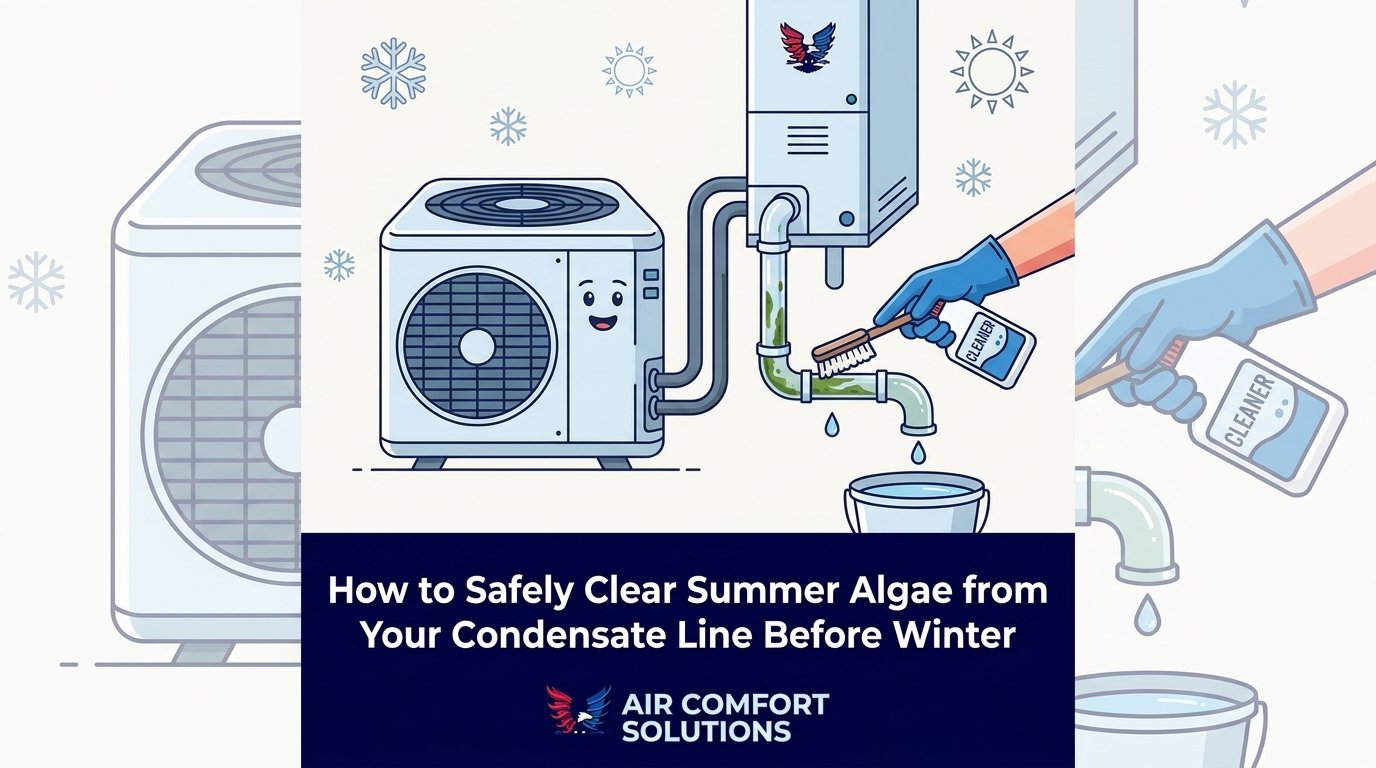
In the warm, humid climate of Pinehurst, Magnolia, and Conroe, these wet drain lines are prime breeding grounds for algae, mold, and bacterial slime. If the drain line is not flushed regularly, a clog will form.
When water backs up, it can overflow the drain pan, leading to severe water damage to your ceilings, walls, and floors. A professional maintenance plan includes flushing the drain line with specialized clearing agents and testing the safety float switches. These switches are designed to shut down the system immediately if water begins to back up, preventing property damage and protecting the indoor air handler from standing water.
Proactive Care vs. Reactive Repairs: Lifespan and Efficiency Realities
Many homeowners view AC maintenance as an optional luxury, preferring a "pay-as-you-go" or "run-to-failure" approach. However, the physics of mechanical systems and the reality of operating costs prove that waiting for a breakdown is the most expensive way to manage your home comfort.
| Feature / Benefit | Proactive Maintenance Plan | Reactive "Pay-As-You-Go" Repairs |
|---|
| Average AC Lifespan | 15 to 20 Years | 8 to 12 Years |
| Annual Breakdown Risk | Under 5% | Over 35% |
| Energy Consumption | Low (Maintains factory efficiency) | High (Consumes up to 25% more energy) |
| Repair Cost Ratio | 1:4 cost ratio (Preventive vs emergency) | High emergency fees & cascade damage |
| Manufacturer Warranty | Fully Protected & Validated | Risk of being voided due to neglect |
| Priority Scheduling | Guaranteed (Even during peak summer) | Long wait times during heatwaves |
How a Maintenance Plan Extends Your AC Equipment Life Compared to Neglect
The numbers do not lie. Equipment with consistent, proactive maintenance routinely lasts 15 to 20 years. In contrast, neglected units in our harsh Texas climate often fail prematurely within 8 to 12 years.
When you skip maintenance, your system is subjected to continuous mechanical fatigue. The compressor runs hotter, the electrical components degrade faster, and the motors operate under constant strain. This constant stress cuts the system's useful life nearly in half.
To put this in perspective, think about the $5,000 Rule used by HVAC professionals to make objective repair-vs-replace decisions:
$$\text{Age of System (Years)} \times \text{Cost of Repair} = \text{Decision Metric}$$
If the result is over $5,000, replacement is generally the smarter financial move. A neglected system will reach this threshold much sooner due to high-cost component failures like a failed compressor or cracked heat exchanger. By investing in proactive care, you keep your repair costs low and push that replacement date far into the future. For more on this comparison, read Is an HVAC Maintenance Plan Worth It?.
Reducing Operational Strain and Energy Consumption
Your heating and cooling system is the single largest energy consumer in your home, accounting for approximately 43% of your average utility bill. When your system is neglected, its efficiency drops by 5% to 10% annually. Within just three years, an unmaintained AC can lose up to 15% of its operating efficiency, and up to 30% after five years.
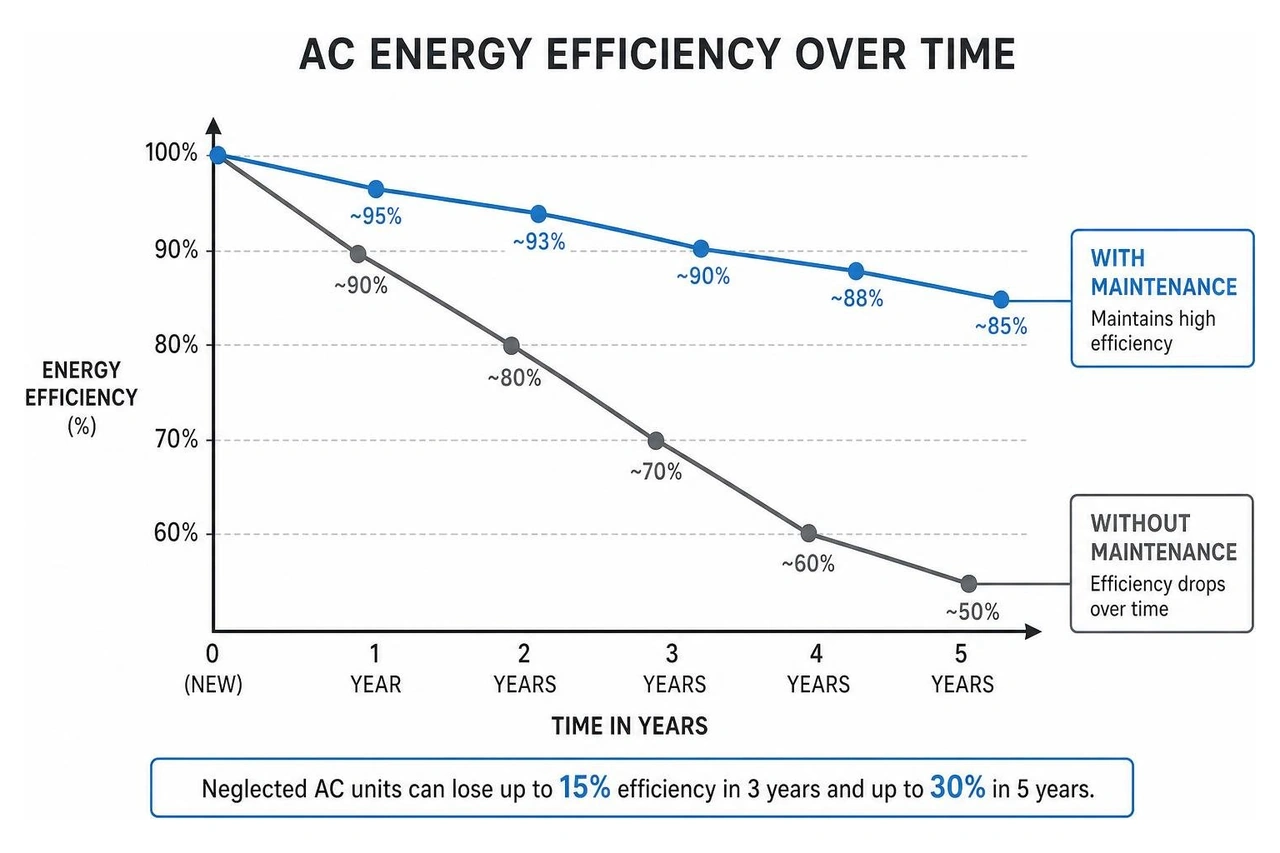
A neglected AC unit must run longer and work harder to achieve the same indoor temperature, consuming up to 25% more energy than a well-maintained system. This extra runtime translates directly to more wear and tear on every single moving part.
By restoring original airflow and reducing mechanical friction, routine maintenance can improve your system's operating efficiency by up to 15%, reducing your monthly energy bills and removing unnecessary operational strain. To learn more about what happens when you skip these checkups, read our detailed guide on What Happens If You Skip AC Maintenance in Texas.
Protecting Your Investment: Warranties and Environmental Factors in Pinehurst
An air conditioner is a major financial investment for any homeowner. Protecting that investment requires understanding both the legal protections of your equipment and the physical environment it operates in.
Keeping Your Manufacturer Warranty Valid
Almost all major HVAC manufacturers (including Carrier, Trane, Lennox, and Daikin) provide a 5- to 10-year parts warranty on new equipment. However, there is a catch that many homeowners overlook: manufacturer warranties require proof of regular professional maintenance to remain valid.
If a major component like your compressor fails in year six, the manufacturer will likely require you to provide documented service records showing the system was maintained annually by a licensed professional. If you cannot provide this paper trail, they can legally deny your warranty claim, leaving you to pay for an expensive replacement part out of pocket. A structured maintenance plan naturally builds this "medical history" for your system, keeping your warranty active and protecting your wallet.
Combating Pinehurst Humidity and Coastal Salt Air
Our geographic location in Southeast Texas introduces unique environmental challenges. While we are inland, areas like Pinehurst, Spring, and The Woodlands still experience incredibly high humidity and occasional coastal salt air currents.
High humidity accelerates biological growth in condensate lines and outdoor cabinets. Salt air triggers galvanic corrosion (pitting) on delicate aluminum condenser fins. This corrosion eats away at the heat exchange surface area, forcing the compressor to run longer cycles.
A professional maintenance plan addresses these local environmental challenges by:
- Applying specialized rust inhibitors to vulnerable metal components.
- Deep cleaning condenser coils with self-rinsing, salt-neutralizing solutions that dissolve dirt and salt buildup without bending the delicate aluminum fins.
- Clearing biological blockages from drain pans and lines to prevent mold and mildew growth.
What to Look For in a Professional HVAC Agreement
Not all maintenance plans are created equal. When choosing a service provider for your home in Pinehurst, Magnolia, or Tomball, you want to ensure you are getting a comprehensive agreement that actually protects your equipment, rather than a quick visual inspection.
Essential Inclusions for Texas Systems
A high-quality maintenance plan tailored for our hot climate should offer biannual tune-ups (spring and fall) and include physical labor, not just visual checks. Look for a plan that covers:
- Physical coil cleaning: Deep cleaning of both indoor and outdoor coils.
- Electrical safety audits: Checking start/run capacitors, contactors, and tightening connections.
- Refrigerant charge testing: Measuring pressures and temperatures to ensure no slow leaks exist (running low on refrigerant causes thermal damage to the compressor).
- Condensate system flushing: Physically clearing the drain lines and testing the safety float switches.
- Member benefits: Many great plans offer perks like priority scheduling during heatwaves, waived diagnostic fees, or discounts on repairs.
DIY Maintenance vs. Professional Service Limits
While a professional plan is essential, homeowners can and should perform basic tasks between scheduled visits to keep the system running smoothly:
- Replace air filters every 30 to 90 days: A clogged filter is the leading cause of suffocated systems that burn out blower motors. Check your filter every 30 days, especially if you have pets.
- Keep the outdoor unit clear: Maintain at least two feet of clear space around your outdoor condenser. Clear away fallen leaves, grass clippings, weeds, and overgrown shrubs.
- Monthly drain flush: Pouring a cup of vinegar down your condensate drain access point once a month can help discourage algae growth.
However, technical tasks must be left to licensed professionals. Working with high-voltage electricity, testing capacitors, cleaning delicate indoor coils, and handling pressurized chemical refrigerants require specialized diagnostic tools, professional training, and EPA Section 608 certification. Attempting these tasks yourself is a safety hazard and can instantly void your manufacturer warranty.
Frequently Asked Questions About AC Longevity
What are the early warning signs that my AC is failing?
Your system will usually tell you it is struggling long before it stops working entirely. Key warning signs include:
- Short cycling: The system turns on and off rapidly, never completing a full cooling cycle.
- Unusual noises: Squealing, grinding, rattling, or clicking sounds indicate mechanical wear or failing electrical contactors.
- Weak airflow: Barely feeling air coming from your vents points to a failing blower motor or a completely clogged coil.
- Rising utility bills: An unexplained spike in your monthly energy consumption indicates the system is losing efficiency and working harder than normal to cool your home.
How a maintenance plan extends your ac equipment life during extreme summer heat?
During a brutal Texas summer, your AC runs continuously for 12 to 16 hours a day. This high runtime subjects the system to intense mechanical fatigue and thermal stress. A maintenance plan prepares your system for this marathon by ensuring motors are fully lubricated to minimize friction heat, coils are perfectly clean to allow rapid heat transfer, and electrical capacitors are performing at 100% strength. This seasonal preparation minimizes the strain on the compressor, keeping it running cool and reliably through the hottest days.
Can I perform all of my AC maintenance tasks myself?
No. While homeowners should handle simple tasks like changing air filters every 30 to 90 days and keeping the outdoor unit clear of debris, deep maintenance must be left to professionals. Tasks involving high-voltage electricity, delicate aluminum fins, and pressurized chemical refrigerants require specialized diagnostic tools, multimeters, and EPA certification to perform safely and legally.
Conclusion
At Air Comfort Pros, we have spent over 35 years helping homeowners across Pinehurst, Magnolia, Tomball, Spring, and Conroe keep their homes cool and comfortable. We know how harsh the Texas climate can be on your air conditioner, and we understand that a proactive maintenance plan is the single best investment you can make to protect your home's comfort and your wallet.
Our certified, experienced technicians provide honest, reliable solutions, upfront pricing, and comprehensive care tailored to our local environment. We are committed to helping you stop the aging process of your air conditioner, lower your monthly energy bills, and enjoy the dependable comfort your family deserves.
Ready to stop worrying about unexpected summer breakdowns and start maximizing your system's lifespan? Learn more about our customizable Maintenance Plan today, or contact our friendly team to schedule your next seasonal tune-up!
Why How a Maintenance Plan Extends Your AC Equipment Life Is the Most Important Question a Texas Homeowner Can Ask
How a maintenance plan extends your AC equipment life comes down to one straightforward idea: small, consistent professional care stops the slow, invisible damage that quietly cuts your system's life short long before it should fail.
Here is a quick answer before we go deeper:
A maintenance plan extends your AC equipment life by:
- Reducing friction and heat buildup through regular motor lubrication, keeping moving parts from grinding themselves down
- Catching failing components early — like a weak capacitor — before they trigger a chain reaction that destroys the compressor
- Cleaning coils and clearing airflow so the system does not have to work harder than it was designed to
- Flushing condensate drain lines to prevent water damage and mold buildup inside the air handler
- Testing electrical connections to stop loose wiring from creating dangerous heat and voltage drops
- Preserving your manufacturer warranty by providing documented proof of annual professional service
- Keeping energy efficiency near factory ratings instead of letting it erode by 5% to 10% every single year without service
In a climate like Pinehurst, TX — where your AC can run 12 to 16 hours a day during peak summer and log over 3,000 operating hours per year — this is not optional upkeep. It is the single biggest factor separating a system that lasts 15 to 20 years from one that gives out in 8 to 12.
Think of it the way you think about a car engine. You would never drive 200,000 miles without an oil change and expect the engine to survive. Your AC compressor faces the same physics: friction, heat, and mechanical stress accumulate with every hour of operation. Without scheduled intervention, that wear compounds silently until something breaks — usually on the hottest afternoon of the year.
Well-maintained HVAC systems routinely last 15 to 20 years. Neglected ones often fail prematurely within 8 to 12 years, and in extreme cases, as few as 5 to 10. That gap represents thousands of dollars and years of reliable comfort.
The sections below walk through exactly how each maintenance task protects your equipment, what the data says about lifespan and efficiency, and what to look for in a professional plan here in North Harris County.
How a maintenance plan extends your ac equipment life glossary:
The Science of Wear: How a Maintenance Plan Extends Your AC Equipment Life
To truly understand how a maintenance plan extends your ac equipment life, we have to look at the physical forces acting on your system. An air conditioner is a complex thermodynamic machine. It doesn't actually "create" cold; it extracts heat from inside your home and dumps it outdoors.
This process requires high pressures, rapid electrical cycling, and high-speed mechanical motion. Under the hood, your system battles constant mechanical fatigue, thermal cycling, compressor health degradation, and immense operational stress.
Mitigating Friction and Thermal Stress in Texas Heat
In Southeast Texas, our air conditioners face some of the most punishing operating conditions in the country. A typical AC unit in northern states might run for 1,000 hours a year. In Pinehurst, Spring, and Tomball, our systems routinely run for 2,200 to 2,500 hours annually — and up to 3,000 hours in exceptionally hot years.
Furthermore, many indoor air handlers in our area are located in attics. During July 2026, attic temperatures can easily climb to between 140°F and 160°F. This extreme heat creates massive thermal stress on the system's motors and electrical components before the unit even turns on.
Friction is the ultimate mechanical killer. Poor lubrication causes more mechanical equipment failures than almost any other single factor in HVAC systems. Up to 40% of preventable motor bearing failures are directly caused by lubrication degradation. When fan motors and bearings run without fresh lubricant, metal-on-metal wear generates intense localized heat. This heat radiates through the motor shaft, drying out seals, melting wire insulation, and eventually causing the motor to seize.
By ensuring moving parts are lubricated during scheduled seasonal visits, you directly reduce this friction, keeping the motor running cool and preventing premature failure. For a deeper look at protecting your system from our unique climate, read our guide on How to Extend the Life of Your AC in Texas.
Preventing the Domino Effect of Component Failure
In an air conditioner, components do not fail in a vacuum. A minor issue with a cheap, secondary part almost always triggers a destructive chain reaction that takes down the most expensive components in the system.
Take the dual run capacitor, for example. The capacitor acts like a temporary battery, providing the electrical boost your compressor and fan motor need to start and run. Over time, heat and electrical surges cause capacitors to lose their storage capacity. A capacitor strength drop of even 10% can trigger compressor "hard starting."
When this happens, the compressor struggles to turn over, drawing massive spikes of electrical current. This extra electrical resistance generates intense heat within the compressor windings. If left unchecked, a failing capacitor will burn out the compressor's motor.
Instead of a simple component replacement during a routine check, you are suddenly faced with a ruined compressor — the heart of your AC system. The same domino effect occurs when a dirty blower wheel goes unbalanced. The resulting vibrations travel down the shaft, quickly destroying the blower motor bearings and cracking the housing. Proactive maintenance halts these cascade failures before they start.
Key Tasks in a Plan That Directly Prevent Premature Wear
When you sign up for a professional maintenance plan, you aren't just paying for a technician to look at your system. You are investing in a series of highly technical, physical tasks designed to reverse the wear and tear of continuous operation.
Every task on a professional checklist has a direct engineering purpose aimed at extending equipment life. To see the full scope of what should be performed, check out our breakdown of What Does an HVAC Maintenance Plan Include?.
Deep Coil Cleaning and Airflow Optimization
Your AC relies on two main coils to transfer heat: the indoor evaporator coil and the outdoor condenser coil. For heat transfer to happen efficiently, air must flow freely over clean copper and aluminum surfaces.
Unfortunately, outdoor condenser coils act like giant magnets for dirt, lawn clippings, pollen, and dust. Inside, evaporator coils can become coated in household dust and pet dander. When dirt accumulates on these coils, it acts like an insulating blanket.
- The physical consequence: Heat gets trapped inside the system. The refrigerant cannot release heat outdoors or absorb it indoors efficiently.
- The mechanical strain: To make up for the poor heat transfer, the compressor must run at dangerously high temperatures and pressures. It has to run longer cycles to cool your home, accelerating mechanical fatigue.
- The ultimate danger: Dirty coils can cause a 10% to 25% loss in operating efficiency. Even worse, restricted airflow can drop coil temperatures below freezing. This causes the indoor coil to ice over, which can lead to "slugging" — a catastrophic event where liquid refrigerant floods back into the compressor. Because liquid cannot be compressed, slugging can destroy a compressor's internal valves in a matter of minutes.
Electrical System Calibration and Capacitor Testing
The electrical side of your air conditioner is highly sensitive. Normal operational vibrations naturally loosen electrical connections over time. When a wire connection becomes loose, electrical resistance increases at that specific point.
Increased resistance causes local heat to build up. This heat can melt plastic wire harnesses, damage control boards, and cause voltage drops. During a maintenance visit, a technician will inspect and tighten all wiring harness connections and terminal screws.
Technicians also use specialized multimeters to measure the exact voltage and amperage draw of your motors. By measuring electrical current down to the microamp, we can track the health of your compressor and fan motors over time. If a motor is drawing more amps than its manufacturer rating, it is a clear sign of mechanical drag or winding degradation, allowing us to address the issue before the motor burns out completely.
Lubrication and Condensate Drain Line Clearing
As mentioned, keeping fan bearings and motor shafts lubricated is essential to combat friction. But mechanical parts aren't the only things that need physical clearing. Your AC removes an incredible amount of moisture from your home's air. This moisture drains through a condensate line.
In the warm, humid climate of Pinehurst, Magnolia, and Conroe, these wet drain lines are prime breeding grounds for algae, mold, and bacterial slime. If the drain line is not flushed regularly, a clog will form.
When water backs up, it can overflow the drain pan, leading to severe water damage to your ceilings, walls, and floors. A professional maintenance plan includes flushing the drain line with specialized clearing agents and testing the safety float switches. These switches are designed to shut down the system immediately if water begins to back up, preventing property damage and protecting the indoor air handler from standing water.
Proactive Care vs. Reactive Repairs: Lifespan and Efficiency Realities
Many homeowners view AC maintenance as an optional luxury, preferring a "pay-as-you-go" or "run-to-failure" approach. However, the physics of mechanical systems and the reality of operating costs prove that waiting for a breakdown is the most expensive way to manage your home comfort.
| Feature / Benefit | Proactive Maintenance Plan | Reactive "Pay-As-You-Go" Repairs |
|---|
| Average AC Lifespan | 15 to 20 Years | 8 to 12 Years |
| Annual Breakdown Risk | Under 5% | Over 35% |
| Energy Consumption | Low (Maintains factory efficiency) | High (Consumes up to 25% more energy) |
| Repair Cost Ratio | 1:4 cost ratio (Preventive vs emergency) | High emergency fees & cascade damage |
| Manufacturer Warranty | Fully Protected & Validated | Risk of being voided due to neglect |
| Priority Scheduling | Guaranteed (Even during peak summer) | Long wait times during heatwaves |
How a Maintenance Plan Extends Your AC Equipment Life Compared to Neglect
The numbers do not lie. Equipment with consistent, proactive maintenance routinely lasts 15 to 20 years. In contrast, neglected units in our harsh Texas climate often fail prematurely within 8 to 12 years.
When you skip maintenance, your system is subjected to continuous mechanical fatigue. The compressor runs hotter, the electrical components degrade faster, and the motors operate under constant strain. This constant stress cuts the system's useful life nearly in half.
To put this in perspective, think about the $5,000 Rule used by HVAC professionals to make objective repair-vs-replace decisions:
$$\text{Age of System (Years)} \times \text{Cost of Repair} = \text{Decision Metric}$$
If the result is over $5,000, replacement is generally the smarter financial move. A neglected system will reach this threshold much sooner due to high-cost component failures like a failed compressor or cracked heat exchanger. By investing in proactive care, you keep your repair costs low and push that replacement date far into the future. For more on this comparison, read Is an HVAC Maintenance Plan Worth It?.
Reducing Operational Strain and Energy Consumption
Your heating and cooling system is the single largest energy consumer in your home, accounting for approximately 43% of your average utility bill. When your system is neglected, its efficiency drops by 5% to 10% annually. Within just three years, an unmaintained AC can lose up to 15% of its operating efficiency, and up to 30% after five years.
A neglected AC unit must run longer and work harder to achieve the same indoor temperature, consuming up to 25% more energy than a well-maintained system. This extra runtime translates directly to more wear and tear on every single moving part.
By restoring original airflow and reducing mechanical friction, routine maintenance can improve your system's operating efficiency by up to 15%, reducing your monthly energy bills and removing unnecessary operational strain. To learn more about what happens when you skip these checkups, read our detailed guide on What Happens If You Skip AC Maintenance in Texas.
Protecting Your Investment: Warranties and Environmental Factors in Pinehurst
An air conditioner is a major financial investment for any homeowner. Protecting that investment requires understanding both the legal protections of your equipment and the physical environment it operates in.
Keeping Your Manufacturer Warranty Valid
Almost all major HVAC manufacturers (including Carrier, Trane, Lennox, and Daikin) provide a 5- to 10-year parts warranty on new equipment. However, there is a catch that many homeowners overlook: manufacturer warranties require proof of regular professional maintenance to remain valid.
If a major component like your compressor fails in year six, the manufacturer will likely require you to provide documented service records showing the system was maintained annually by a licensed professional. If you cannot provide this paper trail, they can legally deny your warranty claim, leaving you to pay for an expensive replacement part out of pocket. A structured maintenance plan naturally builds this "medical history" for your system, keeping your warranty active and protecting your wallet.
Combating Pinehurst Humidity and Coastal Salt Air
Our geographic location in Southeast Texas introduces unique environmental challenges. While we are inland, areas like Pinehurst, Spring, and The Woodlands still experience incredibly high humidity and occasional coastal salt air currents.
High humidity accelerates biological growth in condensate lines and outdoor cabinets. Salt air triggers galvanic corrosion (pitting) on delicate aluminum condenser fins. This corrosion eats away at the heat exchange surface area, forcing the compressor to run longer cycles.
A professional maintenance plan addresses these local environmental challenges by:
- Applying specialized rust inhibitors to vulnerable metal components.
- Deep cleaning condenser coils with self-rinsing, salt-neutralizing solutions that dissolve dirt and salt buildup without bending the delicate aluminum fins.
- Clearing biological blockages from drain pans and lines to prevent mold and mildew growth.
What to Look For in a Professional HVAC Agreement
Not all maintenance plans are created equal. When choosing a service provider for your home in Pinehurst, Magnolia, or Tomball, you want to ensure you are getting a comprehensive agreement that actually protects your equipment, rather than a quick visual inspection.
Essential Inclusions for Texas Systems
A high-quality maintenance plan tailored for our hot climate should offer biannual tune-ups (spring and fall) and include physical labor, not just visual checks. Look for a plan that covers:
- Physical coil cleaning: Deep cleaning of both indoor and outdoor coils.
- Electrical safety audits: Checking start/run capacitors, contactors, and tightening connections.
- Refrigerant charge testing: Measuring pressures and temperatures to ensure no slow leaks exist (running low on refrigerant causes thermal damage to the compressor).
- Condensate system flushing: Physically clearing the drain lines and testing the safety float switches.
- Member benefits: Many great plans offer perks like priority scheduling during heatwaves, waived diagnostic fees, or discounts on repairs.
DIY Maintenance vs. Professional Service Limits
While a professional plan is essential, homeowners can and should perform basic tasks between scheduled visits to keep the system running smoothly:
- Replace air filters every 30 to 90 days: A clogged filter is the leading cause of suffocated systems that burn out blower motors. Check your filter every 30 days, especially if you have pets.
- Keep the outdoor unit clear: Maintain at least two feet of clear space around your outdoor condenser. Clear away fallen leaves, grass clippings, weeds, and overgrown shrubs.
- Monthly drain flush: Pouring a cup of vinegar down your condensate drain access point once a month can help discourage algae growth.
However, technical tasks must be left to licensed professionals. Working with high-voltage electricity, testing capacitors, cleaning delicate indoor coils, and handling pressurized chemical refrigerants require specialized diagnostic tools, professional training, and EPA Section 608 certification. Attempting these tasks yourself is a safety hazard and can instantly void your manufacturer warranty.
Frequently Asked Questions About AC Longevity
What are the early warning signs that my AC is failing?
Your system will usually tell you it is struggling long before it stops working entirely. Key warning signs include:
- Short cycling: The system turns on and off rapidly, never completing a full cooling cycle.
- Unusual noises: Squealing, grinding, rattling, or clicking sounds indicate mechanical wear or failing electrical contactors.
- Weak airflow: Barely feeling air coming from your vents points to a failing blower motor or a completely clogged coil.
- Rising utility bills: An unexplained spike in your monthly energy consumption indicates the system is losing efficiency and working harder than normal to cool your home.
How a maintenance plan extends your ac equipment life during extreme summer heat?
During a brutal Texas summer, your AC runs continuously for 12 to 16 hours a day. This high runtime subjects the system to intense mechanical fatigue and thermal stress. A maintenance plan prepares your system for this marathon by ensuring motors are fully lubricated to minimize friction heat, coils are perfectly clean to allow rapid heat transfer, and electrical capacitors are performing at 100% strength. This seasonal preparation minimizes the strain on the compressor, keeping it running cool and reliably through the hottest days.
Can I perform all of my AC maintenance tasks myself?
No. While homeowners should handle simple tasks like changing air filters every 30 to 90 days and keeping the outdoor unit clear of debris, deep maintenance must be left to professionals. Tasks involving high-voltage electricity, delicate aluminum fins, and pressurized chemical refrigerants require specialized diagnostic tools, multimeters, and EPA certification to perform safely and legally.
Conclusion
At Air Comfort Pros, we have spent over 35 years helping homeowners across Pinehurst, Magnolia, Tomball, Spring, and Conroe keep their homes cool and comfortable. We know how harsh the Texas climate can be on your air conditioner, and we understand that a proactive maintenance plan is the single best investment you can make to protect your home's comfort and your wallet.
Our certified, experienced technicians provide honest, reliable solutions, upfront pricing, and comprehensive care tailored to our local environment. We are committed to helping you stop the aging process of your air conditioner, lower your monthly energy bills, and enjoy the dependable comfort your family deserves.
Ready to stop worrying about unexpected summer breakdowns and start maximizing your system's lifespan? Learn more about our customizable Maintenance Plan today, or contact our friendly team to schedule your next seasonal tune-up!
Why How a Maintenance Plan Extends Your AC Equipment Life Is the Most Important Question a Texas Homeowner Can Ask
How a maintenance plan extends your AC equipment life comes down to one straightforward idea: small, consistent professional care stops the slow, invisible damage that quietly cuts your system's life short long before it should fail.
Here is a quick answer before we go deeper:
A maintenance plan extends your AC equipment life by:
- Reducing friction and heat buildup through regular motor lubrication, keeping moving parts from grinding themselves down
- Catching failing components early — like a weak capacitor — before they trigger a chain reaction that destroys the compressor
- Cleaning coils and clearing airflow so the system does not have to work harder than it was designed to
- Flushing condensate drain lines to prevent water damage and mold buildup inside the air handler
- Testing electrical connections to stop loose wiring from creating dangerous heat and voltage drops
- Preserving your manufacturer warranty by providing documented proof of annual professional service
- Keeping energy efficiency near factory ratings instead of letting it erode by 5% to 10% every single year without service
In a climate like Pinehurst, TX — where your AC can run 12 to 16 hours a day during peak summer and log over 3,000 operating hours per year — this is not optional upkeep. It is the single biggest factor separating a system that lasts 15 to 20 years from one that gives out in 8 to 12.
Think of it the way you think about a car engine. You would never drive 200,000 miles without an oil change and expect the engine to survive. Your AC compressor faces the same physics: friction, heat, and mechanical stress accumulate with every hour of operation. Without scheduled intervention, that wear compounds silently until something breaks — usually on the hottest afternoon of the year.
Well-maintained HVAC systems routinely last 15 to 20 years. Neglected ones often fail prematurely within 8 to 12 years, and in extreme cases, as few as 5 to 10. That gap represents thousands of dollars and years of reliable comfort.
The sections below walk through exactly how each maintenance task protects your equipment, what the data says about lifespan and efficiency, and what to look for in a professional plan here in North Harris County.
How a maintenance plan extends your ac equipment life glossary:
The Science of Wear: How a Maintenance Plan Extends Your AC Equipment Life
To truly understand how a maintenance plan extends your ac equipment life, we have to look at the physical forces acting on your system. An air conditioner is a complex thermodynamic machine. It doesn't actually "create" cold; it extracts heat from inside your home and dumps it outdoors.
This process requires high pressures, rapid electrical cycling, and high-speed mechanical motion. Under the hood, your system battles constant mechanical fatigue, thermal cycling, compressor health degradation, and immense operational stress.
Mitigating Friction and Thermal Stress in Texas Heat
In Southeast Texas, our air conditioners face some of the most punishing operating conditions in the country. A typical AC unit in northern states might run for 1,000 hours a year. In Pinehurst, Spring, and Tomball, our systems routinely run for 2,200 to 2,500 hours annually — and up to 3,000 hours in exceptionally hot years.
Furthermore, many indoor air handlers in our area are located in attics. During July 2026, attic temperatures can easily climb to between 140°F and 160°F. This extreme heat creates massive thermal stress on the system's motors and electrical components before the unit even turns on.
Friction is the ultimate mechanical killer. Poor lubrication causes more mechanical equipment failures than almost any other single factor in HVAC systems. Up to 40% of preventable motor bearing failures are directly caused by lubrication degradation. When fan motors and bearings run without fresh lubricant, metal-on-metal wear generates intense localized heat. This heat radiates through the motor shaft, drying out seals, melting wire insulation, and eventually causing the motor to seize.
By ensuring moving parts are lubricated during scheduled seasonal visits, you directly reduce this friction, keeping the motor running cool and preventing premature failure. For a deeper look at protecting your system from our unique climate, read our guide on How to Extend the Life of Your AC in Texas.
Preventing the Domino Effect of Component Failure
In an air conditioner, components do not fail in a vacuum. A minor issue with a cheap, secondary part almost always triggers a destructive chain reaction that takes down the most expensive components in the system.
Take the dual run capacitor, for example. The capacitor acts like a temporary battery, providing the electrical boost your compressor and fan motor need to start and run. Over time, heat and electrical surges cause capacitors to lose their storage capacity. A capacitor strength drop of even 10% can trigger compressor "hard starting."
When this happens, the compressor struggles to turn over, drawing massive spikes of electrical current. This extra electrical resistance generates intense heat within the compressor windings. If left unchecked, a failing capacitor will burn out the compressor's motor.
Instead of a simple component replacement during a routine check, you are suddenly faced with a ruined compressor — the heart of your AC system. The same domino effect occurs when a dirty blower wheel goes unbalanced. The resulting vibrations travel down the shaft, quickly destroying the blower motor bearings and cracking the housing. Proactive maintenance halts these cascade failures before they start.
Key Tasks in a Plan That Directly Prevent Premature Wear
When you sign up for a professional maintenance plan, you aren't just paying for a technician to look at your system. You are investing in a series of highly technical, physical tasks designed to reverse the wear and tear of continuous operation.
Every task on a professional checklist has a direct engineering purpose aimed at extending equipment life. To see the full scope of what should be performed, check out our breakdown of What Does an HVAC Maintenance Plan Include?.
Deep Coil Cleaning and Airflow Optimization
Your AC relies on two main coils to transfer heat: the indoor evaporator coil and the outdoor condenser coil. For heat transfer to happen efficiently, air must flow freely over clean copper and aluminum surfaces.
Unfortunately, outdoor condenser coils act like giant magnets for dirt, lawn clippings, pollen, and dust. Inside, evaporator coils can become coated in household dust and pet dander. When dirt accumulates on these coils, it acts like an insulating blanket.
- The physical consequence: Heat gets trapped inside the system. The refrigerant cannot release heat outdoors or absorb it indoors efficiently.
- The mechanical strain: To make up for the poor heat transfer, the compressor must run at dangerously high temperatures and pressures. It has to run longer cycles to cool your home, accelerating mechanical fatigue.
- The ultimate danger: Dirty coils can cause a 10% to 25% loss in operating efficiency. Even worse, restricted airflow can drop coil temperatures below freezing. This causes the indoor coil to ice over, which can lead to "slugging" — a catastrophic event where liquid refrigerant floods back into the compressor. Because liquid cannot be compressed, slugging can destroy a compressor's internal valves in a matter of minutes.
Electrical System Calibration and Capacitor Testing
The electrical side of your air conditioner is highly sensitive. Normal operational vibrations naturally loosen electrical connections over time. When a wire connection becomes loose, electrical resistance increases at that specific point.
Increased resistance causes local heat to build up. This heat can melt plastic wire harnesses, damage control boards, and cause voltage drops. During a maintenance visit, a technician will inspect and tighten all wiring harness connections and terminal screws.
Technicians also use specialized multimeters to measure the exact voltage and amperage draw of your motors. By measuring electrical current down to the microamp, we can track the health of your compressor and fan motors over time. If a motor is drawing more amps than its manufacturer rating, it is a clear sign of mechanical drag or winding degradation, allowing us to address the issue before the motor burns out completely.
Lubrication and Condensate Drain Line Clearing
As mentioned, keeping fan bearings and motor shafts lubricated is essential to combat friction. But mechanical parts aren't the only things that need physical clearing. Your AC removes an incredible amount of moisture from your home's air. This moisture drains through a condensate line.
In the warm, humid climate of Pinehurst, Magnolia, and Conroe, these wet drain lines are prime breeding grounds for algae, mold, and bacterial slime. If the drain line is not flushed regularly, a clog will form.
When water backs up, it can overflow the drain pan, leading to severe water damage to your ceilings, walls, and floors. A professional maintenance plan includes flushing the drain line with specialized clearing agents and testing the safety float switches. These switches are designed to shut down the system immediately if water begins to back up, preventing property damage and protecting the indoor air handler from standing water.
Proactive Care vs. Reactive Repairs: Lifespan and Efficiency Realities
Many homeowners view AC maintenance as an optional luxury, preferring a "pay-as-you-go" or "run-to-failure" approach. However, the physics of mechanical systems and the reality of operating costs prove that waiting for a breakdown is the most expensive way to manage your home comfort.
| Feature / Benefit | Proactive Maintenance Plan | Reactive "Pay-As-You-Go" Repairs |
|---|
| Average AC Lifespan | 15 to 20 Years | 8 to 12 Years |
| Annual Breakdown Risk | Under 5% | Over 35% |
| Energy Consumption | Low (Maintains factory efficiency) | High (Consumes up to 25% more energy) |
| Repair Cost Ratio | 1:4 cost ratio (Preventive vs emergency) | High emergency fees & cascade damage |
| Manufacturer Warranty | Fully Protected & Validated | Risk of being voided due to neglect |
| Priority Scheduling | Guaranteed (Even during peak summer) | Long wait times during heatwaves |
How a Maintenance Plan Extends Your AC Equipment Life Compared to Neglect
The numbers do not lie. Equipment with consistent, proactive maintenance routinely lasts 15 to 20 years. In contrast, neglected units in our harsh Texas climate often fail prematurely within 8 to 12 years.
When you skip maintenance, your system is subjected to continuous mechanical fatigue. The compressor runs hotter, the electrical components degrade faster, and the motors operate under constant strain. This constant stress cuts the system's useful life nearly in half.
To put this in perspective, think about the $5,000 Rule used by HVAC professionals to make objective repair-vs-replace decisions:
$$\text{Age of System (Years)} \times \text{Cost of Repair} = \text{Decision Metric}$$
If the result is over $5,000, replacement is generally the smarter financial move. A neglected system will reach this threshold much sooner due to high-cost component failures like a failed compressor or cracked heat exchanger. By investing in proactive care, you keep your repair costs low and push that replacement date far into the future. For more on this comparison, read Is an HVAC Maintenance Plan Worth It?.
Reducing Operational Strain and Energy Consumption
Your heating and cooling system is the single largest energy consumer in your home, accounting for approximately 43% of your average utility bill. When your system is neglected, its efficiency drops by 5% to 10% annually. Within just three years, an unmaintained AC can lose up to 15% of its operating efficiency, and up to 30% after five years.
A neglected AC unit must run longer and work harder to achieve the same indoor temperature, consuming up to 25% more energy than a well-maintained system. This extra runtime translates directly to more wear and tear on every single moving part.
By restoring original airflow and reducing mechanical friction, routine maintenance can improve your system's operating efficiency by up to 15%, reducing your monthly energy bills and removing unnecessary operational strain. To learn more about what happens when you skip these checkups, read our detailed guide on What Happens If You Skip AC Maintenance in Texas.
Protecting Your Investment: Warranties and Environmental Factors in Pinehurst
An air conditioner is a major financial investment for any homeowner. Protecting that investment requires understanding both the legal protections of your equipment and the physical environment it operates in.
Keeping Your Manufacturer Warranty Valid
Almost all major HVAC manufacturers (including Carrier, Trane, Lennox, and Daikin) provide a 5- to 10-year parts warranty on new equipment. However, there is a catch that many homeowners overlook: manufacturer warranties require proof of regular professional maintenance to remain valid.
If a major component like your compressor fails in year six, the manufacturer will likely require you to provide documented service records showing the system was maintained annually by a licensed professional. If you cannot provide this paper trail, they can legally deny your warranty claim, leaving you to pay for an expensive replacement part out of pocket. A structured maintenance plan naturally builds this "medical history" for your system, keeping your warranty active and protecting your wallet.
Combating Pinehurst Humidity and Coastal Salt Air
Our geographic location in Southeast Texas introduces unique environmental challenges. While we are inland, areas like Pinehurst, Spring, and The Woodlands still experience incredibly high humidity and occasional coastal salt air currents.
High humidity accelerates biological growth in condensate lines and outdoor cabinets. Salt air triggers galvanic corrosion (pitting) on delicate aluminum condenser fins. This corrosion eats away at the heat exchange surface area, forcing the compressor to run longer cycles.
A professional maintenance plan addresses these local environmental challenges by:
- Applying specialized rust inhibitors to vulnerable metal components.
- Deep cleaning condenser coils with self-rinsing, salt-neutralizing solutions that dissolve dirt and salt buildup without bending the delicate aluminum fins.
- Clearing biological blockages from drain pans and lines to prevent mold and mildew growth.
What to Look For in a Professional HVAC Agreement
Not all maintenance plans are created equal. When choosing a service provider for your home in Pinehurst, Magnolia, or Tomball, you want to ensure you are getting a comprehensive agreement that actually protects your equipment, rather than a quick visual inspection.
Essential Inclusions for Texas Systems
A high-quality maintenance plan tailored for our hot climate should offer biannual tune-ups (spring and fall) and include physical labor, not just visual checks. Look for a plan that covers:
- Physical coil cleaning: Deep cleaning of both indoor and outdoor coils.
- Electrical safety audits: Checking start/run capacitors, contactors, and tightening connections.
- Refrigerant charge testing: Measuring pressures and temperatures to ensure no slow leaks exist (running low on refrigerant causes thermal damage to the compressor).
- Condensate system flushing: Physically clearing the drain lines and testing the safety float switches.
- Member benefits: Many great plans offer perks like priority scheduling during heatwaves, waived diagnostic fees, or discounts on repairs.
DIY Maintenance vs. Professional Service Limits
While a professional plan is essential, homeowners can and should perform basic tasks between scheduled visits to keep the system running smoothly:
- Replace air filters every 30 to 90 days: A clogged filter is the leading cause of suffocated systems that burn out blower motors. Check your filter every 30 days, especially if you have pets.
- Keep the outdoor unit clear: Maintain at least two feet of clear space around your outdoor condenser. Clear away fallen leaves, grass clippings, weeds, and overgrown shrubs.
- Monthly drain flush: Pouring a cup of vinegar down your condensate drain access point once a month can help discourage algae growth.
However, technical tasks must be left to licensed professionals. Working with high-voltage electricity, testing capacitors, cleaning delicate indoor coils, and handling pressurized chemical refrigerants require specialized diagnostic tools, professional training, and EPA Section 608 certification. Attempting these tasks yourself is a safety hazard and can instantly void your manufacturer warranty.
Frequently Asked Questions About AC Longevity
What are the early warning signs that my AC is failing?
Your system will usually tell you it is struggling long before it stops working entirely. Key warning signs include:
- Short cycling: The system turns on and off rapidly, never completing a full cooling cycle.
- Unusual noises: Squealing, grinding, rattling, or clicking sounds indicate mechanical wear or failing electrical contactors.
- Weak airflow: Barely feeling air coming from your vents points to a failing blower motor or a completely clogged coil.
- Rising utility bills: An unexplained spike in your monthly energy consumption indicates the system is losing efficiency and working harder than normal to cool your home.
How a maintenance plan extends your ac equipment life during extreme summer heat?
During a brutal Texas summer, your AC runs continuously for 12 to 16 hours a day. This high runtime subjects the system to intense mechanical fatigue and thermal stress. A maintenance plan prepares your system for this marathon by ensuring motors are fully lubricated to minimize friction heat, coils are perfectly clean to allow rapid heat transfer, and electrical capacitors are performing at 100% strength. This seasonal preparation minimizes the strain on the compressor, keeping it running cool and reliably through the hottest days.
Can I perform all of my AC maintenance tasks myself?
No. While homeowners should handle simple tasks like changing air filters every 30 to 90 days and keeping the outdoor unit clear of debris, deep maintenance must be left to professionals. Tasks involving high-voltage electricity, delicate aluminum fins, and pressurized chemical refrigerants require specialized diagnostic tools, multimeters, and EPA certification to perform safely and legally.
Conclusion
At Air Comfort Pros, we have spent over 35 years helping homeowners across Pinehurst, Magnolia, Tomball, Spring, and Conroe keep their homes cool and comfortable. We know how harsh the Texas climate can be on your air conditioner, and we understand that a proactive maintenance plan is the single best investment you can make to protect your home's comfort and your wallet.
Our certified, experienced technicians provide honest, reliable solutions, upfront pricing, and comprehensive care tailored to our local environment. We are committed to helping you stop the aging process of your air conditioner, lower your monthly energy bills, and enjoy the dependable comfort your family deserves.
Ready to stop worrying about unexpected summer breakdowns and start maximizing your system's lifespan? Learn more about our customizable Maintenance Plan today, or contact our friendly team to schedule your next seasonal tune-up!
Why How a Maintenance Plan Extends Your AC Equipment Life Is the Most Important Question a Texas Homeowner Can Ask
How a maintenance plan extends your AC equipment life comes down to one straightforward idea: small, consistent professional care stops the slow, invisible damage that quietly cuts your system's life short long before it should fail.
Here is a quick answer before we go deeper:
A maintenance plan extends your AC equipment life by:
- Reducing friction and heat buildup through regular motor lubrication, keeping moving parts from grinding themselves down
- Catching failing components early — like a weak capacitor — before they trigger a chain reaction that destroys the compressor
- Cleaning coils and clearing airflow so the system does not have to work harder than it was designed to
- Flushing condensate drain lines to prevent water damage and mold buildup inside the air handler
- Testing electrical connections to stop loose wiring from creating dangerous heat and voltage drops
- Preserving your manufacturer warranty by providing documented proof of annual professional service
- Keeping energy efficiency near factory ratings instead of letting it erode by 5% to 10% every single year without service
In a climate like Pinehurst, TX — where your AC can run 12 to 16 hours a day during peak summer and log over 3,000 operating hours per year — this is not optional upkeep. It is the single biggest factor separating a system that lasts 15 to 20 years from one that gives out in 8 to 12.
Think of it the way you think about a car engine. You would never drive 200,000 miles without an oil change and expect the engine to survive. Your AC compressor faces the same physics: friction, heat, and mechanical stress accumulate with every hour of operation. Without scheduled intervention, that wear compounds silently until something breaks — usually on the hottest afternoon of the year.
Well-maintained HVAC systems routinely last 15 to 20 years. Neglected ones often fail prematurely within 8 to 12 years, and in extreme cases, as few as 5 to 10. That gap represents thousands of dollars and years of reliable comfort.
The sections below walk through exactly how each maintenance task protects your equipment, what the data says about lifespan and efficiency, and what to look for in a professional plan here in North Harris County.
How a maintenance plan extends your ac equipment life glossary:
The Science of Wear: How a Maintenance Plan Extends Your AC Equipment Life
To truly understand how a maintenance plan extends your ac equipment life, we have to look at the physical forces acting on your system. An air conditioner is a complex thermodynamic machine. It doesn't actually "create" cold; it extracts heat from inside your home and dumps it outdoors.
This process requires high pressures, rapid electrical cycling, and high-speed mechanical motion. Under the hood, your system battles constant mechanical fatigue, thermal cycling, compressor health degradation, and immense operational stress.
Mitigating Friction and Thermal Stress in Texas Heat
In Southeast Texas, our air conditioners face some of the most punishing operating conditions in the country. A typical AC unit in northern states might run for 1,000 hours a year. In Pinehurst, Spring, and Tomball, our systems routinely run for 2,200 to 2,500 hours annually — and up to 3,000 hours in exceptionally hot years.
Furthermore, many indoor air handlers in our area are located in attics. During July 2026, attic temperatures can easily climb to between 140°F and 160°F. This extreme heat creates massive thermal stress on the system's motors and electrical components before the unit even turns on.
Friction is the ultimate mechanical killer. Poor lubrication causes more mechanical equipment failures than almost any other single factor in HVAC systems. Up to 40% of preventable motor bearing failures are directly caused by lubrication degradation. When fan motors and bearings run without fresh lubricant, metal-on-metal wear generates intense localized heat. This heat radiates through the motor shaft, drying out seals, melting wire insulation, and eventually causing the motor to seize.
By ensuring moving parts are lubricated during scheduled seasonal visits, you directly reduce this friction, keeping the motor running cool and preventing premature failure. For a deeper look at protecting your system from our unique climate, read our guide on How to Extend the Life of Your AC in Texas.
Preventing the Domino Effect of Component Failure
In an air conditioner, components do not fail in a vacuum. A minor issue with a cheap, secondary part almost always triggers a destructive chain reaction that takes down the most expensive components in the system.
Take the dual run capacitor, for example. The capacitor acts like a temporary battery, providing the electrical boost your compressor and fan motor need to start and run. Over time, heat and electrical surges cause capacitors to lose their storage capacity. A capacitor strength drop of even 10% can trigger compressor "hard starting."
When this happens, the compressor struggles to turn over, drawing massive spikes of electrical current. This extra electrical resistance generates intense heat within the compressor windings. If left unchecked, a failing capacitor will burn out the compressor's motor.
Instead of a simple component replacement during a routine check, you are suddenly faced with a ruined compressor — the heart of your AC system. The same domino effect occurs when a dirty blower wheel goes unbalanced. The resulting vibrations travel down the shaft, quickly destroying the blower motor bearings and cracking the housing. Proactive maintenance halts these cascade failures before they start.
Key Tasks in a Plan That Directly Prevent Premature Wear
When you sign up for a professional maintenance plan, you aren't just paying for a technician to look at your system. You are investing in a series of highly technical, physical tasks designed to reverse the wear and tear of continuous operation.
Every task on a professional checklist has a direct engineering purpose aimed at extending equipment life. To see the full scope of what should be performed, check out our breakdown of What Does an HVAC Maintenance Plan Include?.
Deep Coil Cleaning and Airflow Optimization
Your AC relies on two main coils to transfer heat: the indoor evaporator coil and the outdoor condenser coil. For heat transfer to happen efficiently, air must flow freely over clean copper and aluminum surfaces.
Unfortunately, outdoor condenser coils act like giant magnets for dirt, lawn clippings, pollen, and dust. Inside, evaporator coils can become coated in household dust and pet dander. When dirt accumulates on these coils, it acts like an insulating blanket.
- The physical consequence: Heat gets trapped inside the system. The refrigerant cannot release heat outdoors or absorb it indoors efficiently.
- The mechanical strain: To make up for the poor heat transfer, the compressor must run at dangerously high temperatures and pressures. It has to run longer cycles to cool your home, accelerating mechanical fatigue.
- The ultimate danger: Dirty coils can cause a 10% to 25% loss in operating efficiency. Even worse, restricted airflow can drop coil temperatures below freezing. This causes the indoor coil to ice over, which can lead to "slugging" — a catastrophic event where liquid refrigerant floods back into the compressor. Because liquid cannot be compressed, slugging can destroy a compressor's internal valves in a matter of minutes.
Electrical System Calibration and Capacitor Testing
The electrical side of your air conditioner is highly sensitive. Normal operational vibrations naturally loosen electrical connections over time. When a wire connection becomes loose, electrical resistance increases at that specific point.
Increased resistance causes local heat to build up. This heat can melt plastic wire harnesses, damage control boards, and cause voltage drops. During a maintenance visit, a technician will inspect and tighten all wiring harness connections and terminal screws.
Technicians also use specialized multimeters to measure the exact voltage and amperage draw of your motors. By measuring electrical current down to the microamp, we can track the health of your compressor and fan motors over time. If a motor is drawing more amps than its manufacturer rating, it is a clear sign of mechanical drag or winding degradation, allowing us to address the issue before the motor burns out completely.
Lubrication and Condensate Drain Line Clearing
As mentioned, keeping fan bearings and motor shafts lubricated is essential to combat friction. But mechanical parts aren't the only things that need physical clearing. Your AC removes an incredible amount of moisture from your home's air. This moisture drains through a condensate line.
In the warm, humid climate of Pinehurst, Magnolia, and Conroe, these wet drain lines are prime breeding grounds for algae, mold, and bacterial slime. If the drain line is not flushed regularly, a clog will form.
When water backs up, it can overflow the drain pan, leading to severe water damage to your ceilings, walls, and floors. A professional maintenance plan includes flushing the drain line with specialized clearing agents and testing the safety float switches. These switches are designed to shut down the system immediately if water begins to back up, preventing property damage and protecting the indoor air handler from standing water.
Proactive Care vs. Reactive Repairs: Lifespan and Efficiency Realities
Many homeowners view AC maintenance as an optional luxury, preferring a "pay-as-you-go" or "run-to-failure" approach. However, the physics of mechanical systems and the reality of operating costs prove that waiting for a breakdown is the most expensive way to manage your home comfort.
| Feature / Benefit | Proactive Maintenance Plan | Reactive "Pay-As-You-Go" Repairs |
|---|
| Average AC Lifespan | 15 to 20 Years | 8 to 12 Years |
| Annual Breakdown Risk | Under 5% | Over 35% |
| Energy Consumption | Low (Maintains factory efficiency) | High (Consumes up to 25% more energy) |
| Repair Cost Ratio | 1:4 cost ratio (Preventive vs emergency) | High emergency fees & cascade damage |
| Manufacturer Warranty | Fully Protected & Validated | Risk of being voided due to neglect |
| Priority Scheduling | Guaranteed (Even during peak summer) | Long wait times during heatwaves |
How a Maintenance Plan Extends Your AC Equipment Life Compared to Neglect
The numbers do not lie. Equipment with consistent, proactive maintenance routinely lasts 15 to 20 years. In contrast, neglected units in our harsh Texas climate often fail prematurely within 8 to 12 years.
When you skip maintenance, your system is subjected to continuous mechanical fatigue. The compressor runs hotter, the electrical components degrade faster, and the motors operate under constant strain. This constant stress cuts the system's useful life nearly in half.
To put this in perspective, think about the $5,000 Rule used by HVAC professionals to make objective repair-vs-replace decisions:
$$\text{Age of System (Years)} \times \text{Cost of Repair} = \text{Decision Metric}$$
If the result is over $5,000, replacement is generally the smarter financial move. A neglected system will reach this threshold much sooner due to high-cost component failures like a failed compressor or cracked heat exchanger. By investing in proactive care, you keep your repair costs low and push that replacement date far into the future. For more on this comparison, read Is an HVAC Maintenance Plan Worth It?.
Reducing Operational Strain and Energy Consumption
Your heating and cooling system is the single largest energy consumer in your home, accounting for approximately 43% of your average utility bill. When your system is neglected, its efficiency drops by 5% to 10% annually. Within just three years, an unmaintained AC can lose up to 15% of its operating efficiency, and up to 30% after five years.
A neglected AC unit must run longer and work harder to achieve the same indoor temperature, consuming up to 25% more energy than a well-maintained system. This extra runtime translates directly to more wear and tear on every single moving part.
By restoring original airflow and reducing mechanical friction, routine maintenance can improve your system's operating efficiency by up to 15%, reducing your monthly energy bills and removing unnecessary operational strain. To learn more about what happens when you skip these checkups, read our detailed guide on What Happens If You Skip AC Maintenance in Texas.
Protecting Your Investment: Warranties and Environmental Factors in Pinehurst
An air conditioner is a major financial investment for any homeowner. Protecting that investment requires understanding both the legal protections of your equipment and the physical environment it operates in.
Keeping Your Manufacturer Warranty Valid
Almost all major HVAC manufacturers (including Carrier, Trane, Lennox, and Daikin) provide a 5- to 10-year parts warranty on new equipment. However, there is a catch that many homeowners overlook: manufacturer warranties require proof of regular professional maintenance to remain valid.
If a major component like your compressor fails in year six, the manufacturer will likely require you to provide documented service records showing the system was maintained annually by a licensed professional. If you cannot provide this paper trail, they can legally deny your warranty claim, leaving you to pay for an expensive replacement part out of pocket. A structured maintenance plan naturally builds this "medical history" for your system, keeping your warranty active and protecting your wallet.
Combating Pinehurst Humidity and Coastal Salt Air
Our geographic location in Southeast Texas introduces unique environmental challenges. While we are inland, areas like Pinehurst, Spring, and The Woodlands still experience incredibly high humidity and occasional coastal salt air currents.
High humidity accelerates biological growth in condensate lines and outdoor cabinets. Salt air triggers galvanic corrosion (pitting) on delicate aluminum condenser fins. This corrosion eats away at the heat exchange surface area, forcing the compressor to run longer cycles.
A professional maintenance plan addresses these local environmental challenges by:
- Applying specialized rust inhibitors to vulnerable metal components.
- Deep cleaning condenser coils with self-rinsing, salt-neutralizing solutions that dissolve dirt and salt buildup without bending the delicate aluminum fins.
- Clearing biological blockages from drain pans and lines to prevent mold and mildew growth.
What to Look For in a Professional HVAC Agreement
Not all maintenance plans are created equal. When choosing a service provider for your home in Pinehurst, Magnolia, or Tomball, you want to ensure you are getting a comprehensive agreement that actually protects your equipment, rather than a quick visual inspection.
Essential Inclusions for Texas Systems
A high-quality maintenance plan tailored for our hot climate should offer biannual tune-ups (spring and fall) and include physical labor, not just visual checks. Look for a plan that covers:
- Physical coil cleaning: Deep cleaning of both indoor and outdoor coils.
- Electrical safety audits: Checking start/run capacitors, contactors, and tightening connections.
- Refrigerant charge testing: Measuring pressures and temperatures to ensure no slow leaks exist (running low on refrigerant causes thermal damage to the compressor).
- Condensate system flushing: Physically clearing the drain lines and testing the safety float switches.
- Member benefits: Many great plans offer perks like priority scheduling during heatwaves, waived diagnostic fees, or discounts on repairs.
DIY Maintenance vs. Professional Service Limits
While a professional plan is essential, homeowners can and should perform basic tasks between scheduled visits to keep the system running smoothly:
- Replace air filters every 30 to 90 days: A clogged filter is the leading cause of suffocated systems that burn out blower motors. Check your filter every 30 days, especially if you have pets.
- Keep the outdoor unit clear: Maintain at least two feet of clear space around your outdoor condenser. Clear away fallen leaves, grass clippings, weeds, and overgrown shrubs.
- Monthly drain flush: Pouring a cup of vinegar down your condensate drain access point once a month can help discourage algae growth.
However, technical tasks must be left to licensed professionals. Working with high-voltage electricity, testing capacitors, cleaning delicate indoor coils, and handling pressurized chemical refrigerants require specialized diagnostic tools, professional training, and EPA Section 608 certification. Attempting these tasks yourself is a safety hazard and can instantly void your manufacturer warranty.
Frequently Asked Questions About AC Longevity
What are the early warning signs that my AC is failing?
Your system will usually tell you it is struggling long before it stops working entirely. Key warning signs include:
- Short cycling: The system turns on and off rapidly, never completing a full cooling cycle.
- Unusual noises: Squealing, grinding, rattling, or clicking sounds indicate mechanical wear or failing electrical contactors.
- Weak airflow: Barely feeling air coming from your vents points to a failing blower motor or a completely clogged coil.
- Rising utility bills: An unexplained spike in your monthly energy consumption indicates the system is losing efficiency and working harder than normal to cool your home.
How a maintenance plan extends your ac equipment life during extreme summer heat?
During a brutal Texas summer, your AC runs continuously for 12 to 16 hours a day. This high runtime subjects the system to intense mechanical fatigue and thermal stress. A maintenance plan prepares your system for this marathon by ensuring motors are fully lubricated to minimize friction heat, coils are perfectly clean to allow rapid heat transfer, and electrical capacitors are performing at 100% strength. This seasonal preparation minimizes the strain on the compressor, keeping it running cool and reliably through the hottest days.
Can I perform all of my AC maintenance tasks myself?
No. While homeowners should handle simple tasks like changing air filters every 30 to 90 days and keeping the outdoor unit clear of debris, deep maintenance must be left to professionals. Tasks involving high-voltage electricity, delicate aluminum fins, and pressurized chemical refrigerants require specialized diagnostic tools, multimeters, and EPA certification to perform safely and legally.
Conclusion
At Air Comfort Pros, we have spent over 35 years helping homeowners across Pinehurst, Magnolia, Tomball, Spring, and Conroe keep their homes cool and comfortable. We know how harsh the Texas climate can be on your air conditioner, and we understand that a proactive maintenance plan is the single best investment you can make to protect your home's comfort and your wallet.
Our certified, experienced technicians provide honest, reliable solutions, upfront pricing, and comprehensive care tailored to our local environment. We are committed to helping you stop the aging process of your air conditioner, lower your monthly energy bills, and enjoy the dependable comfort your family deserves.
Ready to stop worrying about unexpected summer breakdowns and start maximizing your system's lifespan? Learn more about our customizable Maintenance Plan today, or contact our friendly team to schedule your next seasonal tune-up!
Why How a Maintenance Plan Extends Your AC Equipment Life Is the Most Important Question a Texas Homeowner Can Ask
How a maintenance plan extends your AC equipment life comes down to one straightforward idea: small, consistent professional care stops the slow, invisible damage that quietly cuts your system's life short long before it should fail.
Here is a quick answer before we go deeper:
A maintenance plan extends your AC equipment life by:
- Reducing friction and heat buildup through regular motor lubrication, keeping moving parts from grinding themselves down
- Catching failing components early — like a weak capacitor — before they trigger a chain reaction that destroys the compressor
- Cleaning coils and clearing airflow so the system does not have to work harder than it was designed to
- Flushing condensate drain lines to prevent water damage and mold buildup inside the air handler
- Testing electrical connections to stop loose wiring from creating dangerous heat and voltage drops
- Preserving your manufacturer warranty by providing documented proof of annual professional service
- Keeping energy efficiency near factory ratings instead of letting it erode by 5% to 10% every single year without service
In a climate like Pinehurst, TX — where your AC can run 12 to 16 hours a day during peak summer and log over 3,000 operating hours per year — this is not optional upkeep. It is the single biggest factor separating a system that lasts 15 to 20 years from one that gives out in 8 to 12.
Think of it the way you think about a car engine. You would never drive 200,000 miles without an oil change and expect the engine to survive. Your AC compressor faces the same physics: friction, heat, and mechanical stress accumulate with every hour of operation. Without scheduled intervention, that wear compounds silently until something breaks — usually on the hottest afternoon of the year.
Well-maintained HVAC systems routinely last 15 to 20 years. Neglected ones often fail prematurely within 8 to 12 years, and in extreme cases, as few as 5 to 10. That gap represents thousands of dollars and years of reliable comfort.
The sections below walk through exactly how each maintenance task protects your equipment, what the data says about lifespan and efficiency, and what to look for in a professional plan here in North Harris County.
How a maintenance plan extends your ac equipment life glossary:
The Science of Wear: How a Maintenance Plan Extends Your AC Equipment Life
To truly understand how a maintenance plan extends your ac equipment life, we have to look at the physical forces acting on your system. An air conditioner is a complex thermodynamic machine. It doesn't actually "create" cold; it extracts heat from inside your home and dumps it outdoors.
This process requires high pressures, rapid electrical cycling, and high-speed mechanical motion. Under the hood, your system battles constant mechanical fatigue, thermal cycling, compressor health degradation, and immense operational stress.
Mitigating Friction and Thermal Stress in Texas Heat
In Southeast Texas, our air conditioners face some of the most punishing operating conditions in the country. A typical AC unit in northern states might run for 1,000 hours a year. In Pinehurst, Spring, and Tomball, our systems routinely run for 2,200 to 2,500 hours annually — and up to 3,000 hours in exceptionally hot years.
Furthermore, many indoor air handlers in our area are located in attics. During July 2026, attic temperatures can easily climb to between 140°F and 160°F. This extreme heat creates massive thermal stress on the system's motors and electrical components before the unit even turns on.
Friction is the ultimate mechanical killer. Poor lubrication causes more mechanical equipment failures than almost any other single factor in HVAC systems. Up to 40% of preventable motor bearing failures are directly caused by lubrication degradation. When fan motors and bearings run without fresh lubricant, metal-on-metal wear generates intense localized heat. This heat radiates through the motor shaft, drying out seals, melting wire insulation, and eventually causing the motor to seize.
By ensuring moving parts are lubricated during scheduled seasonal visits, you directly reduce this friction, keeping the motor running cool and preventing premature failure. For a deeper look at protecting your system from our unique climate, read our guide on How to Extend the Life of Your AC in Texas.
Preventing the Domino Effect of Component Failure
In an air conditioner, components do not fail in a vacuum. A minor issue with a cheap, secondary part almost always triggers a destructive chain reaction that takes down the most expensive components in the system.
Take the dual run capacitor, for example. The capacitor acts like a temporary battery, providing the electrical boost your compressor and fan motor need to start and run. Over time, heat and electrical surges cause capacitors to lose their storage capacity. A capacitor strength drop of even 10% can trigger compressor "hard starting."
When this happens, the compressor struggles to turn over, drawing massive spikes of electrical current. This extra electrical resistance generates intense heat within the compressor windings. If left unchecked, a failing capacitor will burn out the compressor's motor.
Instead of a simple component replacement during a routine check, you are suddenly faced with a ruined compressor — the heart of your AC system. The same domino effect occurs when a dirty blower wheel goes unbalanced. The resulting vibrations travel down the shaft, quickly destroying the blower motor bearings and cracking the housing. Proactive maintenance halts these cascade failures before they start.
Key Tasks in a Plan That Directly Prevent Premature Wear
When you sign up for a professional maintenance plan, you aren't just paying for a technician to look at your system. You are investing in a series of highly technical, physical tasks designed to reverse the wear and tear of continuous operation.
Every task on a professional checklist has a direct engineering purpose aimed at extending equipment life. To see the full scope of what should be performed, check out our breakdown of What Does an HVAC Maintenance Plan Include?.
Deep Coil Cleaning and Airflow Optimization
Your AC relies on two main coils to transfer heat: the indoor evaporator coil and the outdoor condenser coil. For heat transfer to happen efficiently, air must flow freely over clean copper and aluminum surfaces.
Unfortunately, outdoor condenser coils act like giant magnets for dirt, lawn clippings, pollen, and dust. Inside, evaporator coils can become coated in household dust and pet dander. When dirt accumulates on these coils, it acts like an insulating blanket.
- The physical consequence: Heat gets trapped inside the system. The refrigerant cannot release heat outdoors or absorb it indoors efficiently.
- The mechanical strain: To make up for the poor heat transfer, the compressor must run at dangerously high temperatures and pressures. It has to run longer cycles to cool your home, accelerating mechanical fatigue.
- The ultimate danger: Dirty coils can cause a 10% to 25% loss in operating efficiency. Even worse, restricted airflow can drop coil temperatures below freezing. This causes the indoor coil to ice over, which can lead to "slugging" — a catastrophic event where liquid refrigerant floods back into the compressor. Because liquid cannot be compressed, slugging can destroy a compressor's internal valves in a matter of minutes.
Electrical System Calibration and Capacitor Testing
The electrical side of your air conditioner is highly sensitive. Normal operational vibrations naturally loosen electrical connections over time. When a wire connection becomes loose, electrical resistance increases at that specific point.
Increased resistance causes local heat to build up. This heat can melt plastic wire harnesses, damage control boards, and cause voltage drops. During a maintenance visit, a technician will inspect and tighten all wiring harness connections and terminal screws.
Technicians also use specialized multimeters to measure the exact voltage and amperage draw of your motors. By measuring electrical current down to the microamp, we can track the health of your compressor and fan motors over time. If a motor is drawing more amps than its manufacturer rating, it is a clear sign of mechanical drag or winding degradation, allowing us to address the issue before the motor burns out completely.
Lubrication and Condensate Drain Line Clearing
As mentioned, keeping fan bearings and motor shafts lubricated is essential to combat friction. But mechanical parts aren't the only things that need physical clearing. Your AC removes an incredible amount of moisture from your home's air. This moisture drains through a condensate line.
In the warm, humid climate of Pinehurst, Magnolia, and Conroe, these wet drain lines are prime breeding grounds for algae, mold, and bacterial slime. If the drain line is not flushed regularly, a clog will form.
When water backs up, it can overflow the drain pan, leading to severe water damage to your ceilings, walls, and floors. A professional maintenance plan includes flushing the drain line with specialized clearing agents and testing the safety float switches. These switches are designed to shut down the system immediately if water begins to back up, preventing property damage and protecting the indoor air handler from standing water.
Proactive Care vs. Reactive Repairs: Lifespan and Efficiency Realities
Many homeowners view AC maintenance as an optional luxury, preferring a "pay-as-you-go" or "run-to-failure" approach. However, the physics of mechanical systems and the reality of operating costs prove that waiting for a breakdown is the most expensive way to manage your home comfort.
| Feature / Benefit | Proactive Maintenance Plan | Reactive "Pay-As-You-Go" Repairs |
|---|
| Average AC Lifespan | 15 to 20 Years | 8 to 12 Years |
| Annual Breakdown Risk | Under 5% | Over 35% |
| Energy Consumption | Low (Maintains factory efficiency) | High (Consumes up to 25% more energy) |
| Repair Cost Ratio | 1:4 cost ratio (Preventive vs emergency) | High emergency fees & cascade damage |
| Manufacturer Warranty | Fully Protected & Validated | Risk of being voided due to neglect |
| Priority Scheduling | Guaranteed (Even during peak summer) | Long wait times during heatwaves |
How a Maintenance Plan Extends Your AC Equipment Life Compared to Neglect
The numbers do not lie. Equipment with consistent, proactive maintenance routinely lasts 15 to 20 years. In contrast, neglected units in our harsh Texas climate often fail prematurely within 8 to 12 years.
When you skip maintenance, your system is subjected to continuous mechanical fatigue. The compressor runs hotter, the electrical components degrade faster, and the motors operate under constant strain. This constant stress cuts the system's useful life nearly in half.
To put this in perspective, think about the $5,000 Rule used by HVAC professionals to make objective repair-vs-replace decisions:
$$\text{Age of System (Years)} \times \text{Cost of Repair} = \text{Decision Metric}$$
If the result is over $5,000, replacement is generally the smarter financial move. A neglected system will reach this threshold much sooner due to high-cost component failures like a failed compressor or cracked heat exchanger. By investing in proactive care, you keep your repair costs low and push that replacement date far into the future. For more on this comparison, read Is an HVAC Maintenance Plan Worth It?.
Reducing Operational Strain and Energy Consumption
Your heating and cooling system is the single largest energy consumer in your home, accounting for approximately 43% of your average utility bill. When your system is neglected, its efficiency drops by 5% to 10% annually. Within just three years, an unmaintained AC can lose up to 15% of its operating efficiency, and up to 30% after five years.
A neglected AC unit must run longer and work harder to achieve the same indoor temperature, consuming up to 25% more energy than a well-maintained system. This extra runtime translates directly to more wear and tear on every single moving part.
By restoring original airflow and reducing mechanical friction, routine maintenance can improve your system's operating efficiency by up to 15%, reducing your monthly energy bills and removing unnecessary operational strain. To learn more about what happens when you skip these checkups, read our detailed guide on What Happens If You Skip AC Maintenance in Texas.
Protecting Your Investment: Warranties and Environmental Factors in Pinehurst
An air conditioner is a major financial investment for any homeowner. Protecting that investment requires understanding both the legal protections of your equipment and the physical environment it operates in.
Keeping Your Manufacturer Warranty Valid
Almost all major HVAC manufacturers (including Carrier, Trane, Lennox, and Daikin) provide a 5- to 10-year parts warranty on new equipment. However, there is a catch that many homeowners overlook: manufacturer warranties require proof of regular professional maintenance to remain valid.
If a major component like your compressor fails in year six, the manufacturer will likely require you to provide documented service records showing the system was maintained annually by a licensed professional. If you cannot provide this paper trail, they can legally deny your warranty claim, leaving you to pay for an expensive replacement part out of pocket. A structured maintenance plan naturally builds this "medical history" for your system, keeping your warranty active and protecting your wallet.
Combating Pinehurst Humidity and Coastal Salt Air
Our geographic location in Southeast Texas introduces unique environmental challenges. While we are inland, areas like Pinehurst, Spring, and The Woodlands still experience incredibly high humidity and occasional coastal salt air currents.
High humidity accelerates biological growth in condensate lines and outdoor cabinets. Salt air triggers galvanic corrosion (pitting) on delicate aluminum condenser fins. This corrosion eats away at the heat exchange surface area, forcing the compressor to run longer cycles.
A professional maintenance plan addresses these local environmental challenges by:
- Applying specialized rust inhibitors to vulnerable metal components.
- Deep cleaning condenser coils with self-rinsing, salt-neutralizing solutions that dissolve dirt and salt buildup without bending the delicate aluminum fins.
- Clearing biological blockages from drain pans and lines to prevent mold and mildew growth.
What to Look For in a Professional HVAC Agreement
Not all maintenance plans are created equal. When choosing a service provider for your home in Pinehurst, Magnolia, or Tomball, you want to ensure you are getting a comprehensive agreement that actually protects your equipment, rather than a quick visual inspection.
Essential Inclusions for Texas Systems
A high-quality maintenance plan tailored for our hot climate should offer biannual tune-ups (spring and fall) and include physical labor, not just visual checks. Look for a plan that covers:
- Physical coil cleaning: Deep cleaning of both indoor and outdoor coils.
- Electrical safety audits: Checking start/run capacitors, contactors, and tightening connections.
- Refrigerant charge testing: Measuring pressures and temperatures to ensure no slow leaks exist (running low on refrigerant causes thermal damage to the compressor).
- Condensate system flushing: Physically clearing the drain lines and testing the safety float switches.
- Member benefits: Many great plans offer perks like priority scheduling during heatwaves, waived diagnostic fees, or discounts on repairs.
DIY Maintenance vs. Professional Service Limits
While a professional plan is essential, homeowners can and should perform basic tasks between scheduled visits to keep the system running smoothly:
- Replace air filters every 30 to 90 days: A clogged filter is the leading cause of suffocated systems that burn out blower motors. Check your filter every 30 days, especially if you have pets.
- Keep the outdoor unit clear: Maintain at least two feet of clear space around your outdoor condenser. Clear away fallen leaves, grass clippings, weeds, and overgrown shrubs.
- Monthly drain flush: Pouring a cup of vinegar down your condensate drain access point once a month can help discourage algae growth.
However, technical tasks must be left to licensed professionals. Working with high-voltage electricity, testing capacitors, cleaning delicate indoor coils, and handling pressurized chemical refrigerants require specialized diagnostic tools, professional training, and EPA Section 608 certification. Attempting these tasks yourself is a safety hazard and can instantly void your manufacturer warranty.
Frequently Asked Questions About AC Longevity
What are the early warning signs that my AC is failing?
Your system will usually tell you it is struggling long before it stops working entirely. Key warning signs include:
- Short cycling: The system turns on and off rapidly, never completing a full cooling cycle.
- Unusual noises: Squealing, grinding, rattling, or clicking sounds indicate mechanical wear or failing electrical contactors.
- Weak airflow: Barely feeling air coming from your vents points to a failing blower motor or a completely clogged coil.
- Rising utility bills: An unexplained spike in your monthly energy consumption indicates the system is losing efficiency and working harder than normal to cool your home.
How a maintenance plan extends your ac equipment life during extreme summer heat?
During a brutal Texas summer, your AC runs continuously for 12 to 16 hours a day. This high runtime subjects the system to intense mechanical fatigue and thermal stress. A maintenance plan prepares your system for this marathon by ensuring motors are fully lubricated to minimize friction heat, coils are perfectly clean to allow rapid heat transfer, and electrical capacitors are performing at 100% strength. This seasonal preparation minimizes the strain on the compressor, keeping it running cool and reliably through the hottest days.
Can I perform all of my AC maintenance tasks myself?
No. While homeowners should handle simple tasks like changing air filters every 30 to 90 days and keeping the outdoor unit clear of debris, deep maintenance must be left to professionals. Tasks involving high-voltage electricity, delicate aluminum fins, and pressurized chemical refrigerants require specialized diagnostic tools, multimeters, and EPA certification to perform safely and legally.
Conclusion
At Air Comfort Pros, we have spent over 35 years helping homeowners across Pinehurst, Magnolia, Tomball, Spring, and Conroe keep their homes cool and comfortable. We know how harsh the Texas climate can be on your air conditioner, and we understand that a proactive maintenance plan is the single best investment you can make to protect your home's comfort and your wallet.
Our certified, experienced technicians provide honest, reliable solutions, upfront pricing, and comprehensive care tailored to our local environment. We are committed to helping you stop the aging process of your air conditioner, lower your monthly energy bills, and enjoy the dependable comfort your family deserves.
Ready to stop worrying about unexpected summer breakdowns and start maximizing your system's lifespan? Learn more about our customizable Maintenance Plan today, or contact our friendly team to schedule your next seasonal tune-up!