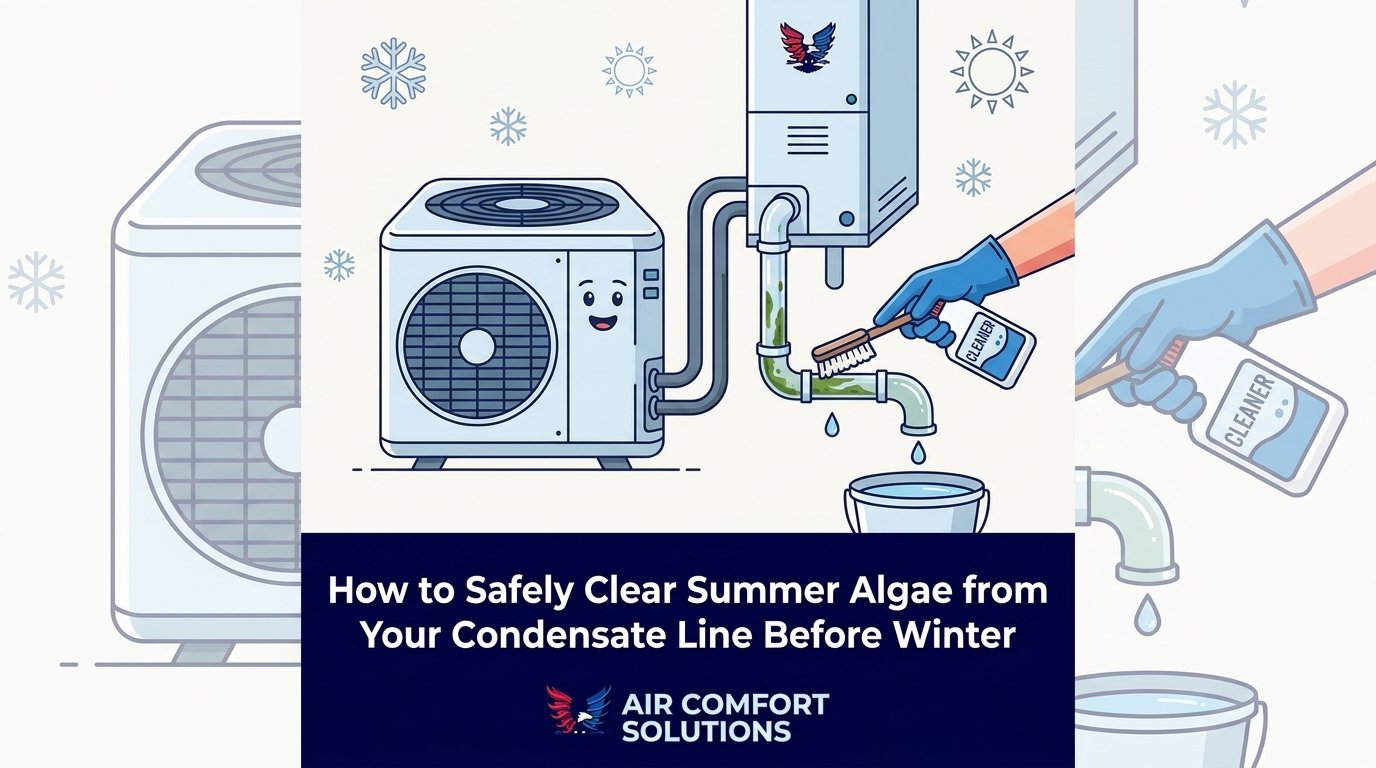
How to Safely Clear Summer Algae from Your Condensate Line Before Winter
How to Safely Clear Summer Algae from Your Condensate Line Before Winter
Don't Let Summer Slime Become a Winter Blockage
The September transition to fall is finally here, which means your cooling system will soon get a well-deserved break, but before you switch off the thermostat, you need to know exactly how to safely clear summer algae from your condensate line before winter. During the long, sweltering summer months, your air conditioner works overtime, pulling gallons of moisture out of your indoor air every single day. This constant flow of water usually keeps the drain line relatively clear, washing away minor biological buildup before it can take root. However, as constant AC usage slows down in the early fall, stagnant water in the system becomes a hidden risk.
To ensure your air conditioning system is fully protected, our team at Air Comfort Solutions believes combining homeowner prevention with professional oversight is the smartest move.
The core problem lies in what happens when the water stops flowing. Wet algae and biological slime left over from summer will dry out and harden over the idle winter months. If left untreated, this organic matter transforms from a soft, slippery sludge into a dense, concrete-like blockage. Taking preventative action to flush the line before the heating season begins saves homeowners from massive spring backups. The good news is that basic, safe homeowner steps can mitigate this risk before professional intervention is needed. By taking a few minutes during the September transition to fall, you can secure your system and protect your home from unexpected water damage.
The Science of the Clog: What Happens to AC Algae in Winter?
To understand why fall maintenance is so critical, it helps to understand the biology of your HVAC system. Biological pollutants thrive in stagnant condensate water when the relative humidity exceeds 60%. Inside your dark, damp indoor air handler, dust from the air mixes with condensation to create the perfect food source for algae, mold, and mildew. During the summer, the sheer volume of water moving through the pipe helps push the worst of this slime outside.
The Desiccation Process
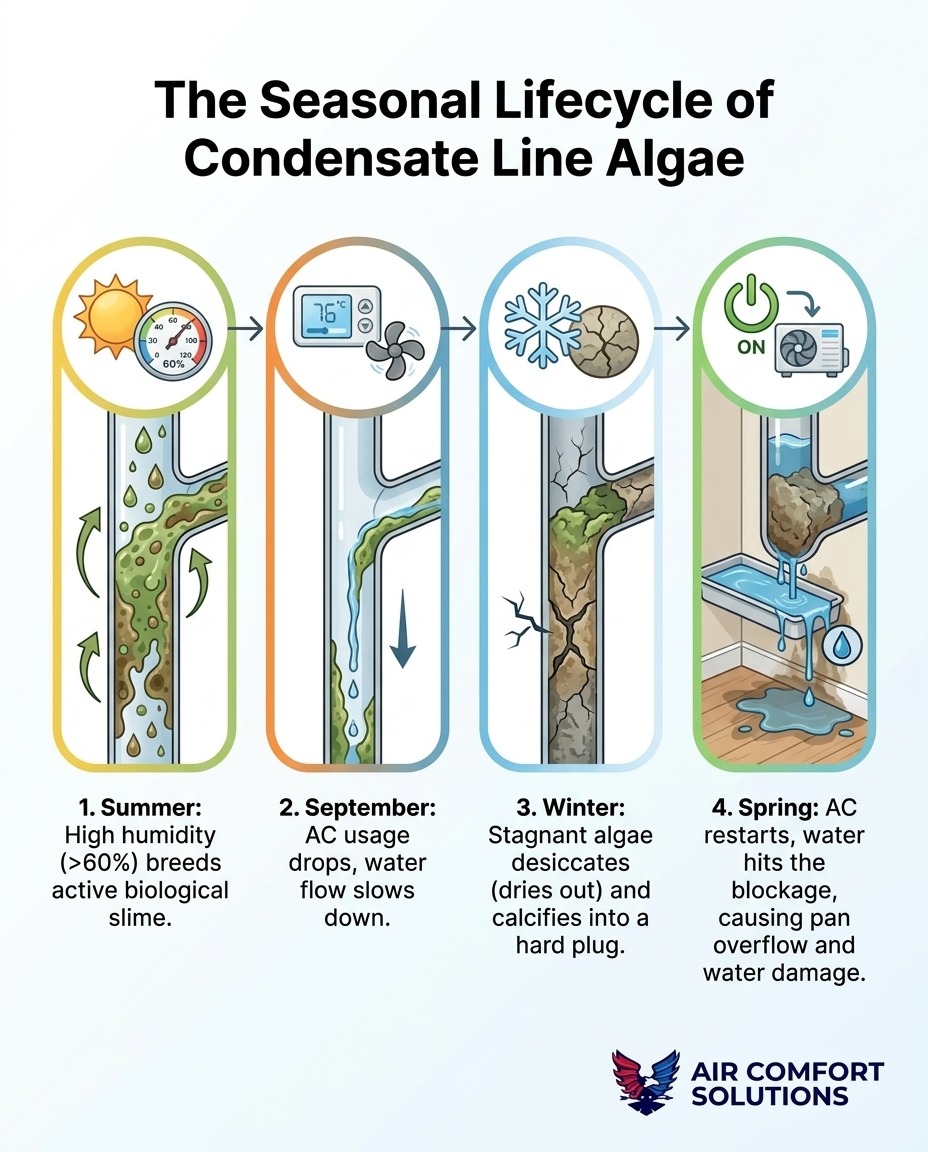
When regular water flow stops in the cooler months, the environment inside that pipe changes drastically. The biological slime begins to desiccate, meaning it dries out. Because algae is primarily composed of water, the evaporation process causes its cellular structure to collapse. What remains is a dense, mineralized crust bonded tightly to the inside of your PVC drain pipe.
The Concrete Effect
This dried algae acts like concrete, creating an impenetrable plug that won't easily wash away when the AC kicks back on. When spring arrives and your air conditioner suddenly dumps gallons of water into the drain pan, that water hits the hardened winter plug and has nowhere to go but over the edges of the pan and into your ceiling or floors.
Contrasting a typical slow summer drain with a catastrophic hard winter plug highlights exactly why the September transition to fall is the perfect time to act. You want to wash out the slime while it is still soft and pliable.
The Seasonal Lifecycle of Condensate Line Algae
Why High Humidity Accelerates Condensate Line Buildup
The severity of condensate line clogs varies wildly depending on where you live. In drier climates, a clogged drain line is an occasional nuisance. However, Southeast Texas's extreme summer humidity creates a massive volume of algae, making this maintenance step non-negotiable for locals. Extended high dew points mean condensation generation remains exceptionally high right up until the heating season begins.
For Pinehurst area homeowners, we often remind our customers that the air conditioner doesn't just cool the air; it acts as a heavy-duty dehumidifier. Massive volumes of water moving through the system create the perfect breeding ground for thick, fast-growing algae. The more moisture the system pulls from the air, the more organic matter washes into the drain pan.
This localized weather pattern makes the risk of winter drying and hardening much more severe than in other parts of the country. Because the buildup is so thick by late summer, the resulting winter crust is thicker and more stubborn. The sheer volume of biological buildup our technicians see in Pinehurst TX area homes requires proactive end-of-season attention. You simply cannot afford to let months of heavy Gulf Coast humidity sit drying in your pipes all winter long.
Warning Signs Your AC Drain Line Needs Immediate Attention
Before you attempt to clean your condensate line, it is helpful to know if your system is already harboring dangerous levels of summer algae. If you catch these symptoms early during the September transition to fall, you can clear the line before it hardens.
• Musty or moldy odors: If you smell a damp, dirty-sock odor coming from your vents or near the indoor unit, you are likely smelling the off-gassing of biological growth in the drain pan.
• Visible standing water: Check the condensate drip pan beneath your indoor air handler. If you see standing water or sluggish draining, the line is already partially restricted by slime.
• The system shutting itself off: Modern HVAC systems are equipped with a float switch. If water backs up too high in the pan, this switch trips and shuts down the AC to prevent flooding. If your system randomly turns off and won't restart, a clogged line is a prime suspect.
• Water stains or minor pooling: Look closely around the base of the indoor air handler. Discolored water stains, damp insulation, or minor pooling on the floor indicate that the pan has already overflowed at least once.
• Gurgling sounds: A clear line drains silently. If you hear a bubbling or gurgling noise when the AC turns off, air is struggling to get past a blockage of wet algae.
Safe, Preventative Steps for Flushing Your Condensate Line
Handling your HVAC system can feel intimidating, but clearing out soft summer algae is a straightforward process when done correctly. We always want to provide our customers with actionable, safe homeowner advice that won't put your equipment at risk. A simple flush during the September transition to fall is highly effective.
First, you need to locate the condensate access pipe. This is usually a T-shaped PVC pipe located near your indoor air handler. It will have a removable cap on top. Once you find it, check the drain pan for standing water and safely remove any visible debris, like dust bunnies or pet hair, that may have gathered near the drain opening.
Many homeowners reach for bleach when they think of cleaning algae, but this is a mistake we see all too often. Bleach can degrade PVC piping and corrode metal components over time, leading to brittle pipes and expensive leaks. Instead, using a simple mixture like distilled white vinegar is highly recommended. Vinegar is acidic enough to neutralize soft algae before it hardens, but gentle enough to keep your system safe. For more comprehensive seasonal advice, reviewing a reliable Texas AC maintenance guide can help you prepare your entire home for the changing weather.
The Vinegar Flush Method
1. Turn off the HVAC system: Always shut off the power at the thermostat before performing any maintenance to ensure the system doesn't turn on while you are working.
2. Remove the cap: Gently pull the cap off the T-shaped access pipe. Do not force it; if it is glued shut, you will need professional assistance.
3. Pour the vinegar solution: Slowly pour about a quarter cup of distilled white vinegar down the access pipe. Pour slowly to avoid spillover.
4. Wait 30 minutes: Let the vinegar sit in the line. The mild acetic acid will break down the cellular walls of the wet algae and loosen the slime from the PVC walls.
5. Follow up with a warm water rinse: Slowly pour a cup of clean, warm (not boiling) water down the pipe to flush the neutralized algae out the exterior drain. Ensure the water flows freely outside.
When to Step Back: Knowing Your Maintenance Boundaries
While a vinegar flush is a fantastic preventative measure, it is crucial to set clear boundaries on what requires a licensed professional. If the line is completely backed up and the vinegar flush does not drain, stop immediately. Pouring more liquid into a fully clogged pipe will only cause the drain pan to overflow into your home.
Never use high-pressure air compressors or chemical drain cleaners to force a clog out. Chemical drain cleaners create an exothermic heat reaction that will literally melt the thin PVC piping of your AC system, causing catastrophic damage. High-pressure air can easily blow apart hidden PVC joints inside your walls, leading to silent leaks that destroy drywall and framing.
Physical extraction of a hard clog, especially one that has already calcified, requires specialized suction equipment and professional-grade nitrogen clearing tools. At Air Comfort Solutions, our team has firsthand experience dealing with the unique severity of these concrete-like clogs during spring start-ups in Pinehurst TX area homes. Our technicians frequently encounter winter clogs so hardened that the piping must be cut and replaced. This is exactly why relying on local expertise matters when a simple flush fails. Trusting a licensed technician to handle complex blockages ensures you avoid voiding warranties or causing severe water damage. When in doubt, reaching out for professional HVAC services is always the safest route.
Securing Your System with End-of-Season Maintenance
A homeowner flush is a great first step, but a comprehensive inspection catches what you cannot see. We always stress the importance of bridging this specific condensate line maintenance to the broader need for professional fall maintenance, ensuring your entire system is ready for the colder months ahead. The September transition to fall is about more than just cleaning a pipe; it is about securing the longevity of your equipment.
Professional maintenance goes far beyond a simple vinegar flush. A licensed technician includes checking the condensate pump to ensure its motor hasn't burned out during the heavy summer workload. They will also clean the evaporator coil, which is the actual source of the condensation. If the coil is dirty, it will continue to shed debris into the drain pan, rapidly recreating the clog you just tried to clear. Verifying proper drainage slope and checking for micro-leaks in the pan are also critical steps.
Routine check-ups transition the system safely from cooling to heating, ensuring no hidden moisture causes winter damage. Moisture left on electrical components or heat exchangers can lead to dangerous corrosion. Investing in a routine AC maintenance plan takes the guesswork out of seasonal transitions, providing peace of mind that your system is clean, dry, and ready for winter.
Protect Your Home for the Next Cooling Season
Clearing summer algae now prevents a concrete-like disaster next spring. By taking a few minutes to perform a safe vinegar flush in your Pinehurst TX area home, you eliminate the organic matter before it has a chance to dry out and calcify over the winter. Don't wait until water is dripping through your ceiling next May to think about your drain line.
Now is the perfect time to schedule your pre-heating-season tune-up. Talk to our local experts about inspecting and maintaining your system thoroughly. A proactive approach today guarantees a dry, comfortable, and stress-free home when the cooling season returns.
Frequently Asked Questions
What happens to AC algae in the winter?
When the air conditioner stops running regularly, the water in the condensate line evaporates, causing the algae to desiccate and dry out. This dried organic matter turns into a hard, calcified crust that bonds to the PVC pipe. By spring, this crust acts like a concrete plug that blocks new condensation from draining, often leading to rapid overflows.
How do I safely flush my AC drain line before fall?
The safest method is to turn off your HVAC system, locate the T-shaped access pipe, and pour a quarter cup of distilled white vinegar down the line. Let the vinegar sit for about 30 minutes to break down the soft slime. Finally, flush the line gently with warm water to ensure the debris washes completely out of the exterior drain.
Can dried algae permanently clog an AC pipe?
Yes, if algae is allowed to dry and harden over multiple winters without being cleared, it can create a blockage so severe that standard suction cannot remove it. In extreme cases, the calcified buildup becomes permanently fused to the plastic. When this happens, a licensed technician must physically cut out the affected section of PVC piping and install a new line.
Can I put vinegar in my AC drain line in winter?
You can use vinegar year-round, but it is most effective when used as a preventative measure in the early fall before the algae dries out. Pouring vinegar onto an already hardened winter clog will not dissolve it quickly enough to clear a solid blockage. Preventative flushing while the algae is still wet and soft yields the best results.
Why is my AC drain line clogged with slime?
The inside of your air handler is dark, damp, and constantly exposed to airborne dust, creating the perfect environment for biological growth. As your AC pulls humidity from the air, that moisture collects in the drain pan along with microscopic organic particles. When relative humidity stays high, this mixture rapidly grows into thick, jelly-like algae.
How often should you flush your AC drain line in high-humidity areas?
In extremely humid regions, homeowners should proactively flush their condensate lines with vinegar every 30 to 60 days during the peak cooling season. A final, thorough flush in September is critical to clear out any remaining buildup before the system sits idle for the winter heating season.
Zane came out and did an amazing job! Super friendly, honest and transparent about the work that needed to be done. This is my second time working with Air Comfort Solutions and they’re my go to for HVAC services. Highly recommend.
Markeith H.
God's AMAZING grace sent us Robert and Zane. We have been without air in this Texas heat for six weeks and four days. We've had a few contractors give us quotes all trying to upsell when we're at a low point. But not the guys at Air Comfort Solutions. They came in assessed our situation, gave us honest feedback, and showed us the issues as they proceeded with the assessment for clear understanding. We highly recommend them for their professionalism, quality products, and fair pricing. We hands down support them for all the work they do 💯 %.
Lena N.
Robert and Zane gone above and beyond to make the process easy and affordable. Would definitely recommend!!
Cameron J.
I’m writing this review to let everyone know that Air Comfort Solutions is the company to work with. I know the owner ( Robert) for several years now. He has been taking care of my residential and business work orders. Robert is professional, knowledgeable and will save you money. I just want to thank Robert for great job you have been doing for me.