The Value of Sealing Your Return Air Plenum Before the Holidays
The Value of Sealing Your Return Air Plenum Before the Holidays
The 30% Air Loss Statistic: Why Your HVAC System Might Be Working Against You
Understanding the value of sealing your return air plenum before the holidays starts with a surprising statistic that most homeowners completely overlook. According to Energy Star, up to 20 to 30 percent of the air moving through a typical residential duct system is lost due to leaks, holes, and poor connections. In our years of inspecting ductwork throughout Pinehurst and the surrounding areas, our team at Air Comfort Solutions sees this exact scenario play out daily. While this number is often discussed in terms of wasted energy and higher utility bills, the mechanical reality of how that air escapes—or rather, how unconditioned air gets pulled in—creates a massive unseen problem for your home.
Your HVAC system operates through a continuous breathing cycle. The supply ducts push conditioned air into your rooms, while the return ducts pull stagnant air back to the equipment to be filtered, heated, or cooled again. At the very center of this return side is the return air plenum. You can think of the plenum as the heart of your ductwork—a large sheet metal or fiberglass box that gathers all the returning air before feeding it into the air handler.
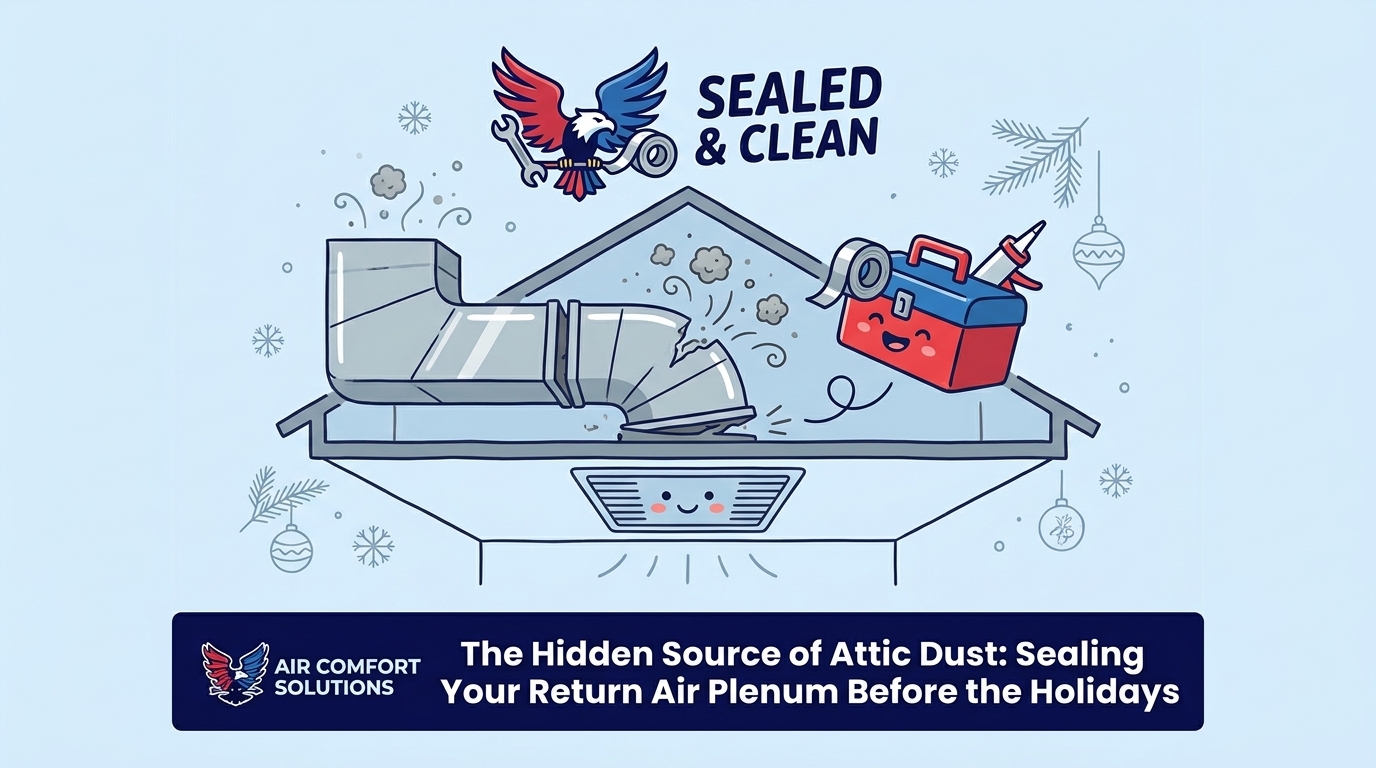
When this central gathering point has compromised seams or structural gaps, it fundamentally alters how your system functions. Instead of exclusively pulling air from inside your home, a leaky return plenum pulls dusty, unconditioned air directly from the space around it. Because we are in the early fall / pre-heating season transition, addressing this hidden structural flaw is a critical step for improving your overall indoor air quality before you start hosting holiday guests.
The True Cost of Duct Leakage
To fully grasp why that 30 percent air loss statistic matters, you have to look at what replaces the air that goes missing. HVAC systems operate on a closed-loop pressure balance. If 30 percent of your conditioned air leaks out of the supply ducts, the system must make up the difference by pulling in 30 percent more air from somewhere else.
• Conditioned Return Air — Source Location: Inside your living space (bedrooms, hallways) — Impact on Your Home: Maintains consistent temperatures and passes through your filter normally.
• Unconditioned Infiltration — Source Location: Attic spaces, crawlspaces, or wall cavities — Impact on Your Home: Introduces extreme temperatures, high humidity, and heavy dust loads directly into the blower.
The bottom line: When your system pulls from the wrong source, it works harder, costs more to run, and actively degrades the environment inside your home.
Understanding the Return Air Plenum and the 'Vacuum Effect'
To understand why plenum leaks are so destructive to your air quality, you have to look at the physics of how your air handler moves air. The blower motor inside your HVAC unit is incredibly powerful. As it spins, it creates a strong positive pressure on the supply side (pushing air out of the vents) and an equally strong negative pressure on the return side (pulling air into the grilles).
Because the return air plenum is located immediately before the blower motor, it experiences the highest level of negative pressure in the entire ductwork system. It acts like a giant vacuum. If there is even a hairline crack, a loose tape joint, or a poorly sealed corner on that plenum box, that powerful vacuum will suck air through the gap. In the typical Cypress and Pinehurst attics our technicians crawl through every week, this means your system is actively vacuuming up the surrounding environment.
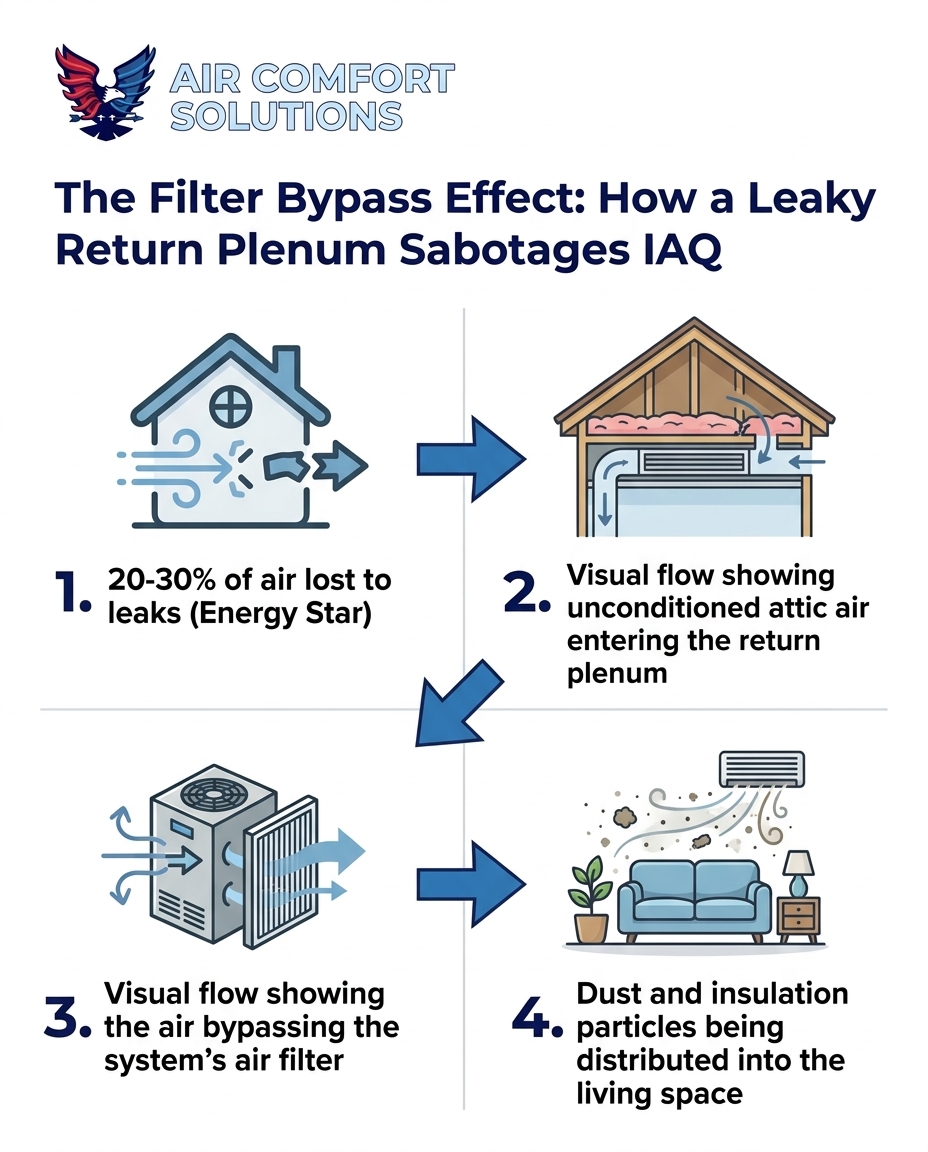
The hidden danger of the vacuum effect: When a return air plenum leaks, it pulls unconditioned, contaminated attic air directly into the HVAC system, completely bypassing the air filter. Because the leak occurs behind the filter's location, the system distributes raw attic dust, insulation particles, and humidity straight into your living space, rendering even the most expensive filtration systems useless.
How Expensive Filters Are Defeated by Hidden Leaks
Homeowners frequently spend significant money on premium, high-MERV air filters, expecting them to solve their dust and allergy problems. However, an air filter can only clean the air that actually passes through it.
• The intended path: Air enters the return grille inside your house, passes immediately through the pleated filter, travels cleanly through the ductwork, and enters the air handler.
• The bypass path: Air is sucked through a crack in the attic plenum, joining the airstream after the filter, and travels straight into the blower motor and out to your rooms.
If you have been investing in air filtration upgrades but still find yourself dusting your furniture every few days, a bypassed filter is the most likely culprit. The filter itself might look perfectly clean when you check it, simply because the dirtiest air is sneaking in through the back door.
The Filter Bypass Effect: How a Leaky Return Plenum Sabotages IAQ
What Exactly Are You Breathing? The Reality of Southeast Texas Attics
It is one thing to know that air is leaking into your system; it is another to understand exactly what that air contains. The environment inside a residential attic is vastly different from the environment inside your living room. During the long, intense summers, attics bake. The air becomes completely stagnant, and the materials inside the attic begin to dry out and break down.
In our region, Southeast Texas humidity and fine attic insulation dust get pulled directly into the living space during winter when homes are sealed up tight against the dropping temperatures. When that powerful vacuum effect kicks in, it draws in a highly concentrated mixture of airborne debris.
Common Attic Contaminants Pulled Through Leaky Plenums
• Fiberglass insulation particles: As blown-in or batt insulation ages, it sheds microscopic glass fibers that are easily picked up by air currents.
• Settled summer dust: Months of undisturbed dust accumulation in the attic gets disturbed the moment the system switches on.
• Pest dander and droppings: Even in clean homes, attics often host insects or rodents, leaving behind microscopic biological contaminants.
• Trapped humidity: Stagnant moisture in the attic air gets pulled into the system, forcing your equipment to work overtime to dehumidify the space.
Because Cypress and Pinehurst attics have specific architectural layouts and ventilation profiles, identifying these hidden structural IAQ saboteurs requires localized expertise. At Air Comfort Solutions, our technicians have spent countless hours in these exact spaces. We know firsthand where these plenums tend to fail, how the local humidity impacts the mastic sealants over time, and what specific types of insulation dust are most likely infiltrating your air supply.
Holiday Hosting: The Seasonal Urgency of Clean Indoor Air
Timing matters when it comes to ductwork maintenance. As we move through the early fall / pre-heating season transition, a pattern we see often is homeowners waiting until the last minute to prepare their systems for a major operational shift. Switching your system from cooling to heating mode for the first time in months can violently stir up the dust that has settled deep inside your ductwork over the summer.
When the winter temperatures finally arrive and you turn on the furnace or heat pump, your home's windows and doors stay firmly shut. The house is sealed tight to keep the cold out. If your return plenum is leaking, that sealed environment becomes a trap. The system continuously pulls dirty attic air into the house, and because the home is closed up, those contaminants have nowhere to escape. They simply cycle through your rooms over and over again.
The Compounding Effect of Holiday Guests
This mechanical issue becomes a highly visible problem the moment you start hosting for the holidays. Indoor air quality naturally degrades when you have a house full of guests.
• Increased movement: More people walking around stirs up settled dust from carpets and rugs.
• Cooking and baking: Holiday meals introduce significant particulate matter, grease, and moisture into the air.
• Candles and decorations: Scented candles and holiday decor release volatile organic compounds (VOCs) and fine soot.
If your HVAC system is already struggling with a compromised return plenum, adding the stress of holiday hosting pushes your indoor air quality over the edge. Sealing the plenum now ensures that when your guests arrive, your home smells fresh, the air feels clean, and your surfaces stay dust-free throughout the entire gathering.
Telltale Signs Your Return Ductwork is Leaking
Because the return air plenum is usually hidden away in the attic, you cannot rely on simply looking at it to know if it is failing. Instead, you have to look for the secondary symptoms that manifest inside your living space. If you know what to watch for, your home will tell you exactly when the ductwork is compromised.
In our experience, the most obvious symptom homeowners report is rapid, unexplained dust buildup. If you thoroughly clean your living room on a Saturday, and by Tuesday there is a visible film of dust on your television stand and bookshelves, your system is likely pulling in attic debris. Similarly, if you notice distinct dirt streaks, grayish smudges, or "ghosting" marks on the ceiling directly surrounding your return air vents, that is a physical trail of unfiltered air bypassing the system.
You may also notice sudden spikes in your energy bills. When a leaky plenum in Cypress and Pinehurst attics pulls in extreme temperatures, the system has to work significantly harder to condition that raw air before sending it to your rooms, driving up your utility costs. Finally, pay attention to odors. A musty, stale, or distinctly "dusty" smell when the blower motor kicks on is a strong indicator that stagnant attic air is entering the airstream.
Why Visual Inspections Are Often Misleading
Even if you go up into the attic with a flashlight, spotting a plenum leak is incredibly difficult for an untrained eye.
• Hidden beneath insulation: Plenums are typically wrapped in thick layers of fiberglass or foil-backed insulation to prevent condensation, completely obscuring the metal joints beneath.
• Microscopic gaps: Under extreme negative pressure, a gap no wider than a credit card can pull in massive amounts of unconditioned air.
• Thermal expansion: Metal ductwork expands and contracts with seasonal temperature changes, meaning a seam that looks tight when the system is off might open up entirely once the blower engages.
Why Plenum Sealing Requires a Licensed Professional
When homeowners discover a duct leak, the immediate temptation is to grab a roll of standard duct tape and attempt a quick patch. However, we strongly advise against this. Properly sealing a return air plenum is a complex mechanical process that strictly requires a licensed HVAC professional. Standard hardware store duct tape degrades rapidly in harsh attic environments; the extreme heat causes the adhesive to dry out, turn brittle, and peel away within a matter of months.
Professionals use specialized diagnostic tools to locate the exact source of the negative pressure leaks. This often involves manometer testing to measure the pressure differentials across the system, or controlled smoke tests that visually reveal exactly where the vacuum effect is pulling air through the structural joints. Once the leaks are identified in Cypress and Pinehurst attics, technicians use professional-grade mastic sealant—a thick, paste-like material—combined with embedded fiberglass mesh tape to create a permanent, airtight, and flexible bond that withstands decades of thermal expansion.
The Importance of Static Pressure Balancing
Sealing a leaky duct system changes the physics of how your HVAC equipment breathes. If a system has been operating with severe leaks for years, suddenly sealing those gaps will alter the static pressure inside the ductwork.
A licensed professional will evaluate the total static pressure of the system before and after sealing the plenum. This ensures that closing the leaks doesn't inadvertently choke off the airflow to the blower motor. A perfectly sealed duct system allows advanced equipment, like a high-efficiency heat pump, to operate at its absolute peak performance, delivering exact temperatures without wasting energy. Additionally, professional duct sealing and system optimization may qualify you for generally applicable energy rebates or tax credits—we always recommend verifying current programs with your utility provider or a tax professional.
Protecting Your Home's Air Quality Before the Winter Chill
Buying the most expensive air filters on the market is completely useless if your return plenum is acting like a vacuum, pulling raw attic dust into the system from behind the filter. The value of sealing your return air plenum before the holidays lies in taking control of your indoor environment before the seasonal shift forces you to seal up your home for the winter.
Taking advantage of the early fall / pre-heating season transition gives you the perfect window to address this hidden structural flaw. By stopping the infiltration of fiberglass, pest dander, and stagnant humidity, you ensure that the air circulating during your holiday gatherings is actually clean, filtered, and fresh.
Don't wait until your guests are sneezing or your furniture is covered in a fresh layer of attic dust. Proactively request a comprehensive ductwork and plenum inspection as part of your seasonal HVAC maintenance plan. Having our licensed professionals at Air Comfort Solutions properly diagnose and seal your system will restore your indoor air quality, lower your energy costs, and give you total confidence in your home's comfort this winter.
Frequently Asked Questions
What happens if return air duct is leaking?
If a return air duct is leaking, it pulls unconditioned air from the surrounding space directly into your HVAC system. Because this side of the ductwork is under negative pressure, it acts like a vacuum, sucking in dust, humidity, and insulation particles. This forces your system to work harder to heat or cool the air, driving up energy bills and significantly degrading your indoor air quality.
Can leaking ducts cause a dusty house?
Yes, leaking ducts are one of the primary causes of a chronically dusty house. When the return plenum leaks in an attic or crawlspace, it bypasses your air filter and distributes raw environmental debris straight into your living space. If you find yourself needing to dust your furniture just days after cleaning, a duct leak is a highly probable culprit.
Should return air ducts be sealed?
Absolutely. Sealing return air ducts is critical for maintaining both system efficiency and healthy indoor air. A fully sealed return system ensures that 100 percent of the air moving through your home has successfully passed through your air filter, protecting your blower motor from debris buildup and keeping your indoor air clean.
How do I know if my return air plenum is pulling in attic air?
The most common signs include a sudden increase in indoor dust, musty odors when the HVAC system turns on, and higher than normal utility bills. You may also notice dark streaks or dust trails forming on the ceiling immediately surrounding your return air vents. Because plenums are often wrapped in insulation, a professional pressure test is the most accurate way to confirm a leak.
Does sealing ductwork improve indoor air quality?
Yes, professional duct sealing is one of the most effective ways to improve indoor air quality. By closing the structural gaps in the return ductwork, you stop the infiltration of attic dust, fiberglass particles, and outdoor allergens. This allows your air filters to actually do their job, resulting in significantly cleaner air circulating through your home.
Why is my air filter clean but my house is still dusty?
If your air filter remains relatively clean while your house is constantly dusty, it usually means the dirty air is bypassing the filter entirely. This happens when there is a leak in the return air plenum located behind the filter housing. The system pulls clean air through the filter, but simultaneously sucks in heavy dust through the leak, mixing them together before blowing them into your rooms.
Zane came out and did an amazing job! Super friendly, honest and transparent about the work that needed to be done. This is my second time working with Air Comfort Solutions and they’re my go to for HVAC services. Highly recommend.
Markeith H.
God's AMAZING grace sent us Robert and Zane. We have been without air in this Texas heat for six weeks and four days. We've had a few contractors give us quotes all trying to upsell when we're at a low point. But not the guys at Air Comfort Solutions. They came in assessed our situation, gave us honest feedback, and showed us the issues as they proceeded with the assessment for clear understanding. We highly recommend them for their professionalism, quality products, and fair pricing. We hands down support them for all the work they do 💯 %.
Lena N.
Robert and Zane gone above and beyond to make the process easy and affordable. Would definitely recommend!!
Cameron J.
I’m writing this review to let everyone know that Air Comfort Solutions is the company to work with. I know the owner ( Robert) for several years now. He has been taking care of my residential and business work orders. Robert is professional, knowledgeable and will save you money. I just want to thank Robert for great job you have been doing for me.