The Value of Sealing Your Return Air Plenum Before the Holidays
Most homeowners buy expensive filters to fix dusty air, not realizing a leaky return plenum in the attic is the real culprit. See why sealing it now saves your holiday gatherings.

The standard efficiency vs high efficiency ac comparison comes down to a few key differences that directly affect your energy bills, indoor comfort, and long-term costs. Here's a quick breakdown:
• SEER2 Rating — Standard Efficiency: 13–15 — High Efficiency: 16 and above
• Compressor Type — Standard Efficiency: Single-stage (on/off) — High Efficiency: Two-stage or variable-speed
• Energy Use — Standard Efficiency: Higher — High Efficiency: Up to 40% lower
• Humidity Control — Standard Efficiency: Basic — High Efficiency: Advanced
• Noise Level — Standard Efficiency: Louder — High Efficiency: Quieter
• Smart Thermostat Compatibility — Standard Efficiency: Limited — High Efficiency: Common
• Best For — Standard Efficiency: Tight budgets, mild climates — High Efficiency: Hot/humid climates, long-term ownership
When summer temperatures climb in North Harris County, your AC becomes one of the hardest-working appliances in your home — and one of the biggest drivers of your electricity bill. Not all air conditioners handle that load the same way.
Standard efficiency units get the job done, but they cycle on and off constantly, use more energy per cooling hour, and offer little control over humidity. High-efficiency systems use smarter technology — like variable-speed compressors and electronically commutated motors (ECMs) — to cool your home more precisely, more quietly, and with significantly less energy.
According to the U.S. Department of Energy, upgrading to a newer, more efficient air conditioner can reduce your cooling-season electricity use by up to 40%. In a hot, humid climate like Pinehurst or The Woodlands, that kind of savings adds up fast.

When we sit down with homeowners in Tomball or Magnolia to discuss a new system, the conversation usually starts with a standard efficiency vs high efficiency ac comparison. To understand the difference, you have to look under the hood.
A standard efficiency unit is a lot like a car that only has two speeds: parked and floor-it. These systems use single-stage compressors that are either 100% on or 100% off. This leads to frequent "cycling," where the unit kicks on with a loud hum, blasts cold air until the thermostat is satisfied, and then shuts down entirely. This process is energy-intensive and creates those annoying "hot spots" in your house.
In contrast, high-efficiency systems are built for precision. By utilizing two-stage or variable-speed technology, they can adjust their output based on the actual cooling demand. Instead of a "blast and stop" approach, they often run at lower speeds for longer periods, which is actually much more efficient. For a deeper dive into the logistics of switching systems, check out our AC Replacement Houston TX Complete Guide.
To truly measure a standard efficiency vs high efficiency ac comparison, we use industry-standard metrics. The most important one is SEER2 (Seasonal Energy Efficiency Ratio 2). Think of SEER2 like the MPG (miles per gallon) rating for your car. The higher the number, the more cooling you get for every dollar spent on electricity.
• Standard Efficiency: These typically range from 13.4 to 15 SEER2. While they meet federal minimums, they don't offer much in the way of "extra" savings.
• High Efficiency: These units start at 16 SEER2 and can reach 20 or even 30 in some ultra-premium models.
Beyond SEER2, we look at the BTU (British Thermal Unit) capacity. While both standard and high-efficiency units can have the same BTU rating (meaning they have the same "cooling power"), the high-efficiency unit will deliver that cooling with much more consistent airflow. This consistency is vital for maintaining Air Conditioning performance throughout the long Texas summer.
In Pinehurst and the surrounding North Harris County area, the climate isn't just hot—it’s humid. This is where the standard efficiency vs high efficiency ac comparison really leans in favor of the high-efficiency models.
Standard units often don't run long enough to effectively pull moisture out of the air. They cool the room quickly and shut off, leaving that "clammy" feeling behind. High-efficiency units, particularly those with variable-speed blowers, run longer cycles at lower speeds. This allows them to act as a giant dehumidifier for your home. If you're local, our AC Replacement Guide Pinehurst TX covers how these systems stand up to our specific regional heat loads.
If you've looked at an AC unit recently, you've probably seen the bright yellow "Energy Guide" label. As of April 2026, we are operating under the Department of Energy’s (DOE) 2023 regulations, which introduced the SEER2 testing standard.

The shift from SEER to SEER2 was more than just adding a number. The new testing procedure more accurately reflects real-world conditions, including the static pressure of a home's ductwork. For our region (the Southeast/Southwest), the minimum SEER2 for a split-system air conditioner is roughly 14.3.
When you choose a system for an AC Installation Spring TX, you are choosing between meeting the bare minimum or investing in a system that exceeds these federal mandates for better long-term protection against rising utility rates.
What exactly are you paying for when you move up the efficiency ladder? It isn't just a higher number on a label; it’s advanced engineering.
1. Variable-Speed Compressors: Unlike a single-stage compressor that is either on or off, a variable-speed compressor can operate at hundreds of different speeds. This allows it to reduce energy use by up to 30% or more under part-load conditions.
2. ECM (Electronically Commutated Motors): These motors power the indoor blower fan. They use about 60% less electricity than standard PSC motors when running at lower speeds, contributing to a quieter home environment.
3. Smart Thermostat Integration: High-efficiency systems often "communicate" with smart thermostats. This allows the system to adjust its performance based on outdoor humidity, your schedule, and even which rooms are currently occupied.
4. Sound Blankets and Upgraded Blades: Noise reduction is a huge perk. Some high-efficiency units operate as low as 58 decibels—about the level of a quiet conversation—thanks to compressor blankets and specially designed fan blades.
Knowing the Optimal Times for Upgrading Your Home's Air Conditioning System can help you snag these features when manufacturers offer the best incentives.
Even the most expensive 25-SEER2 unit will perform like a budget model if it isn't installed correctly. This is a critical part of any standard efficiency vs high efficiency ac comparison.
At Air Comfort Solutions LLC, we perform a Manual J Load Calculation for every home. We don't just guess based on square footage; we look at ceiling height, window orientation, and insulation levels. For example, homes with ceilings over 10 feet require about 40 BTUs per square foot compared to just 20 BTUs for standard 8-foot ceilings.
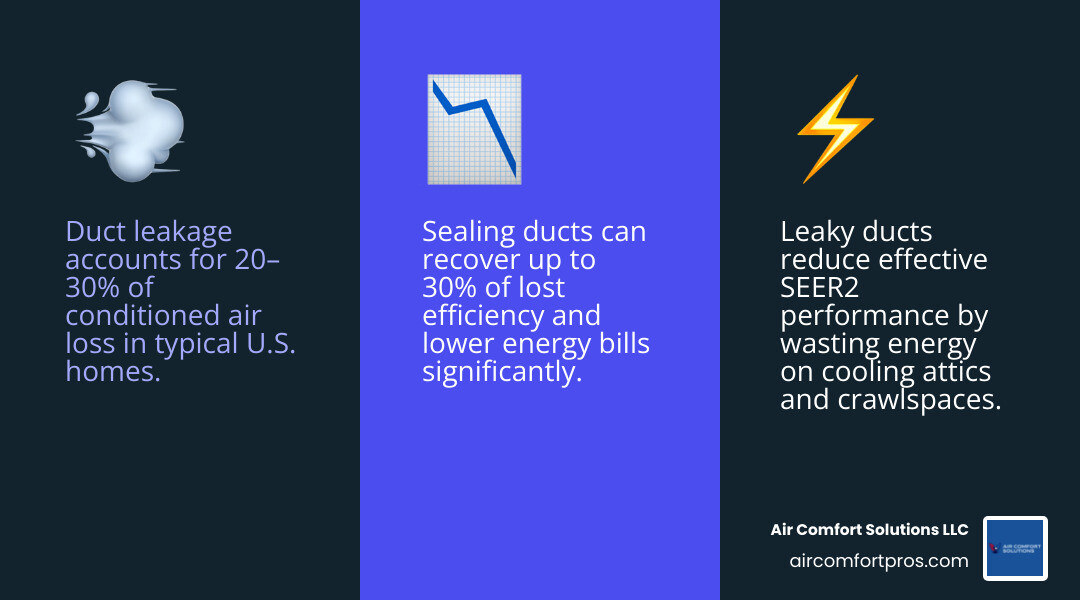
Ductwork integrity is another "make or break" factor. Industry data shows that duct leakage accounts for 20–30% of conditioned air loss in typical U.S. homes. If your ducts are leaking, that high-efficiency compressor is just cooling your attic. Our AC Replacement Guide The Woodlands TX emphasizes the importance of sealing the "envelope" of your home to ensure you actually see the savings on your bill.
The "worth it" factor of a standard efficiency vs high efficiency ac comparison depends on your specific situation.
• The Case for High Efficiency: If you plan to stay in your home for more than five years, live in a high-heat area like Conroe or Cypress, and value a quiet, humidity-controlled environment, high efficiency is the clear winner. You can often offset the initial investment through lower monthly bills and federal tax credits (like those available through the Inflation Reduction Act).
• The Case for Standard Efficiency: If you are a landlord for a short-term rental, on a very tight immediate budget, or planning to sell the home in the next year, a standard unit provides reliable cooling without the higher upfront cost.
Regardless of which you choose, a consistent Maintenance Plan is the only way to protect that investment and ensure the equipment reaches its full 15-to-20-year lifespan.
The primary difference lies in the compressor and fan technology. Standard units use single-stage "on/off" compressors and basic motors. High-efficiency units use variable-speed or two-stage compressors and ECM motors that adjust their output to match your home's cooling needs precisely, saving energy and improving comfort.
SEER2 is the updated version of the Seasonal Energy Efficiency Ratio. It uses a new testing procedure that accounts for the higher static pressure found in modern ductwork. This provides a more accurate representation of how an AC unit will actually perform in your home compared to the old SEER metric.
Yes! Under current federal guidelines (such as Section 25C of the Internal Revenue Code), homeowners can often claim tax credits for installing equipment that meets specific high-efficiency tiers. Local utility rebates in the Houston area may also be available to help lower the initial cost.
Choosing between a standard and high-efficiency system doesn't have to be a headache. While the technical jargon can feel like "alphabet soup," the reality is simple: high-efficiency systems offer better comfort, lower bills, and a quieter home, while standard systems offer a lower entry price for those with simpler needs.
At Air Comfort Solutions LLC, we’ve spent over 35 years helping our neighbors in Pinehurst, The Woodlands, Tomball, and throughout North Harris County find the perfect balance for their homes. Our certified technicians provide honest, reliable solutions and upfront pricing so you can make an informed decision without the pressure. Whether you're ready for a high-tech upgrade or a reliable standard replacement, we have the flexible financing and expertise to get the job done right.
Ready to find the perfect fit for your home? Explore our Air Conditioning services today and let us help you stay cool all summer long.
The standard efficiency vs high efficiency ac comparison comes down to a few key differences that directly affect your energy bills, indoor comfort, and long-term costs. Here's a quick breakdown:
| Feature | Standard Efficiency | High Efficiency |
|---|---|---|
| SEER2 Rating | 13–15 | 16 and above |
| Compressor Type | Single-stage (on/off) | Two-stage or variable-speed |
| Energy Use | Higher | Up to 40% lower |
| Humidity Control | Basic | Advanced |
| Noise Level | Louder | Quieter |
| Smart Thermostat Compatibility | Limited | Common |
| Best For | Tight budgets, mild climates | Hot/humid climates, long-term ownership |
When summer temperatures climb in North Harris County, your AC becomes one of the hardest-working appliances in your home — and one of the biggest drivers of your electricity bill. Not all air conditioners handle that load the same way.
Standard efficiency units get the job done, but they cycle on and off constantly, use more energy per cooling hour, and offer little control over humidity. High-efficiency systems use smarter technology — like variable-speed compressors and electronically commutated motors (ECMs) — to cool your home more precisely, more quietly, and with significantly less energy.
According to the U.S. Department of Energy, upgrading to a newer, more efficient air conditioner can reduce your cooling-season electricity use by up to 40%. In a hot, humid climate like Pinehurst or The Woodlands, that kind of savings adds up fast.
When we sit down with homeowners in Tomball or Magnolia to discuss a new system, the conversation usually starts with a standard efficiency vs high efficiency ac comparison. To understand the difference, you have to look under the hood.
A standard efficiency unit is a lot like a car that only has two speeds: parked and floor-it. These systems use single-stage compressors that are either 100% on or 100% off. This leads to frequent "cycling," where the unit kicks on with a loud hum, blasts cold air until the thermostat is satisfied, and then shuts down entirely. This process is energy-intensive and creates those annoying "hot spots" in your house.
In contrast, high-efficiency systems are built for precision. By utilizing two-stage or variable-speed technology, they can adjust their output based on the actual cooling demand. Instead of a "blast and stop" approach, they often run at lower speeds for longer periods, which is actually much more efficient. For a deeper dive into the logistics of switching systems, check out our AC Replacement Houston TX Complete Guide.
To truly measure a standard efficiency vs high efficiency ac comparison, we use industry-standard metrics. The most important one is SEER2 (Seasonal Energy Efficiency Ratio 2). Think of SEER2 like the MPG (miles per gallon) rating for your car. The higher the number, the more cooling you get for every dollar spent on electricity.
Beyond SEER2, we look at the BTU (British Thermal Unit) capacity. While both standard and high-efficiency units can have the same BTU rating (meaning they have the same "cooling power"), the high-efficiency unit will deliver that cooling with much more consistent airflow. This consistency is vital for maintaining Air Conditioning performance throughout the long Texas summer.
In Pinehurst and the surrounding North Harris County area, the climate isn't just hot—it’s humid. This is where the standard efficiency vs high efficiency ac comparison really leans in favor of the high-efficiency models.
Standard units often don't run long enough to effectively pull moisture out of the air. They cool the room quickly and shut off, leaving that "clammy" feeling behind. High-efficiency units, particularly those with variable-speed blowers, run longer cycles at lower speeds. This allows them to act as a giant dehumidifier for your home. If you're local, our AC Replacement Guide Pinehurst TX covers how these systems stand up to our specific regional heat loads.
If you've looked at an AC unit recently, you've probably seen the bright yellow "Energy Guide" label. As of April 2026, we are operating under the Department of Energy’s (DOE) 2023 regulations, which introduced the SEER2 testing standard.
The shift from SEER to SEER2 was more than just adding a number. The new testing procedure more accurately reflects real-world conditions, including the static pressure of a home's ductwork. For our region (the Southeast/Southwest), the minimum SEER2 for a split-system air conditioner is roughly 14.3.
When you choose a system for an AC Installation Spring TX, you are choosing between meeting the bare minimum or investing in a system that exceeds these federal mandates for better long-term protection against rising utility rates.
What exactly are you paying for when you move up the efficiency ladder? It isn't just a higher number on a label; it’s advanced engineering.
Knowing the Optimal Times for Upgrading Your Home's Air Conditioning System can help you snag these features when manufacturers offer the best incentives.
Even the most expensive 25-SEER2 unit will perform like a budget model if it isn't installed correctly. This is a critical part of any standard efficiency vs high efficiency ac comparison.
At Air Comfort Solutions LLC, we perform a Manual J Load Calculation for every home. We don't just guess based on square footage; we look at ceiling height, window orientation, and insulation levels. For example, homes with ceilings over 10 feet require about 40 BTUs per square foot compared to just 20 BTUs for standard 8-foot ceilings.
Ductwork integrity is another "make or break" factor. Industry data shows that duct leakage accounts for 20–30% of conditioned air loss in typical U.S. homes. If your ducts are leaking, that high-efficiency compressor is just cooling your attic. Our AC Replacement Guide The Woodlands TX emphasizes the importance of sealing the "envelope" of your home to ensure you actually see the savings on your bill.
The "worth it" factor of a standard efficiency vs high efficiency ac comparison depends on your specific situation.
Regardless of which you choose, a consistent Maintenance Plan is the only way to protect that investment and ensure the equipment reaches its full 15-to-20-year lifespan.
The primary difference lies in the compressor and fan technology. Standard units use single-stage "on/off" compressors and basic motors. High-efficiency units use variable-speed or two-stage compressors and ECM motors that adjust their output to match your home's cooling needs precisely, saving energy and improving comfort.
SEER2 is the updated version of the Seasonal Energy Efficiency Ratio. It uses a new testing procedure that accounts for the higher static pressure found in modern ductwork. This provides a more accurate representation of how an AC unit will actually perform in your home compared to the old SEER metric.
Yes! Under current federal guidelines (such as Section 25C of the Internal Revenue Code), homeowners can often claim tax credits for installing equipment that meets specific high-efficiency tiers. Local utility rebates in the Houston area may also be available to help lower the initial cost.
Choosing between a standard and high-efficiency system doesn't have to be a headache. While the technical jargon can feel like "alphabet soup," the reality is simple: high-efficiency systems offer better comfort, lower bills, and a quieter home, while standard systems offer a lower entry price for those with simpler needs.
At Air Comfort Solutions LLC, we’ve spent over 35 years helping our neighbors in Pinehurst, The Woodlands, Tomball, and throughout North Harris County find the perfect balance for their homes. Our certified technicians provide honest, reliable solutions and upfront pricing so you can make an informed decision without the pressure. Whether you're ready for a high-tech upgrade or a reliable standard replacement, we have the flexible financing and expertise to get the job done right.
Ready to find the perfect fit for your home? Explore our Air Conditioning services today and let us help you stay cool all summer long.
The standard efficiency vs high efficiency ac comparison comes down to a few key differences that directly affect your energy bills, indoor comfort, and long-term costs. Here's a quick breakdown:
| Feature | Standard Efficiency | High Efficiency |
|---|---|---|
| SEER2 Rating | 13–15 | 16 and above |
| Compressor Type | Single-stage (on/off) | Two-stage or variable-speed |
| Energy Use | Higher | Up to 40% lower |
| Humidity Control | Basic | Advanced |
| Noise Level | Louder | Quieter |
| Smart Thermostat Compatibility | Limited | Common |
| Best For | Tight budgets, mild climates | Hot/humid climates, long-term ownership |
When summer temperatures climb in North Harris County, your AC becomes one of the hardest-working appliances in your home — and one of the biggest drivers of your electricity bill. Not all air conditioners handle that load the same way.
Standard efficiency units get the job done, but they cycle on and off constantly, use more energy per cooling hour, and offer little control over humidity. High-efficiency systems use smarter technology — like variable-speed compressors and electronically commutated motors (ECMs) — to cool your home more precisely, more quietly, and with significantly less energy.
According to the U.S. Department of Energy, upgrading to a newer, more efficient air conditioner can reduce your cooling-season electricity use by up to 40%. In a hot, humid climate like Pinehurst or The Woodlands, that kind of savings adds up fast.
When we sit down with homeowners in Tomball or Magnolia to discuss a new system, the conversation usually starts with a standard efficiency vs high efficiency ac comparison. To understand the difference, you have to look under the hood.
A standard efficiency unit is a lot like a car that only has two speeds: parked and floor-it. These systems use single-stage compressors that are either 100% on or 100% off. This leads to frequent "cycling," where the unit kicks on with a loud hum, blasts cold air until the thermostat is satisfied, and then shuts down entirely. This process is energy-intensive and creates those annoying "hot spots" in your house.
In contrast, high-efficiency systems are built for precision. By utilizing two-stage or variable-speed technology, they can adjust their output based on the actual cooling demand. Instead of a "blast and stop" approach, they often run at lower speeds for longer periods, which is actually much more efficient. For a deeper dive into the logistics of switching systems, check out our AC Replacement Houston TX Complete Guide.
To truly measure a standard efficiency vs high efficiency ac comparison, we use industry-standard metrics. The most important one is SEER2 (Seasonal Energy Efficiency Ratio 2). Think of SEER2 like the MPG (miles per gallon) rating for your car. The higher the number, the more cooling you get for every dollar spent on electricity.
Beyond SEER2, we look at the BTU (British Thermal Unit) capacity. While both standard and high-efficiency units can have the same BTU rating (meaning they have the same "cooling power"), the high-efficiency unit will deliver that cooling with much more consistent airflow. This consistency is vital for maintaining Air Conditioning performance throughout the long Texas summer.
In Pinehurst and the surrounding North Harris County area, the climate isn't just hot—it’s humid. This is where the standard efficiency vs high efficiency ac comparison really leans in favor of the high-efficiency models.
Standard units often don't run long enough to effectively pull moisture out of the air. They cool the room quickly and shut off, leaving that "clammy" feeling behind. High-efficiency units, particularly those with variable-speed blowers, run longer cycles at lower speeds. This allows them to act as a giant dehumidifier for your home. If you're local, our AC Replacement Guide Pinehurst TX covers how these systems stand up to our specific regional heat loads.
If you've looked at an AC unit recently, you've probably seen the bright yellow "Energy Guide" label. As of April 2026, we are operating under the Department of Energy’s (DOE) 2023 regulations, which introduced the SEER2 testing standard.
The shift from SEER to SEER2 was more than just adding a number. The new testing procedure more accurately reflects real-world conditions, including the static pressure of a home's ductwork. For our region (the Southeast/Southwest), the minimum SEER2 for a split-system air conditioner is roughly 14.3.
When you choose a system for an AC Installation Spring TX, you are choosing between meeting the bare minimum or investing in a system that exceeds these federal mandates for better long-term protection against rising utility rates.
What exactly are you paying for when you move up the efficiency ladder? It isn't just a higher number on a label; it’s advanced engineering.
Knowing the Optimal Times for Upgrading Your Home's Air Conditioning System can help you snag these features when manufacturers offer the best incentives.
Even the most expensive 25-SEER2 unit will perform like a budget model if it isn't installed correctly. This is a critical part of any standard efficiency vs high efficiency ac comparison.
At Air Comfort Solutions LLC, we perform a Manual J Load Calculation for every home. We don't just guess based on square footage; we look at ceiling height, window orientation, and insulation levels. For example, homes with ceilings over 10 feet require about 40 BTUs per square foot compared to just 20 BTUs for standard 8-foot ceilings.
Ductwork integrity is another "make or break" factor. Industry data shows that duct leakage accounts for 20–30% of conditioned air loss in typical U.S. homes. If your ducts are leaking, that high-efficiency compressor is just cooling your attic. Our AC Replacement Guide The Woodlands TX emphasizes the importance of sealing the "envelope" of your home to ensure you actually see the savings on your bill.
The "worth it" factor of a standard efficiency vs high efficiency ac comparison depends on your specific situation.
Regardless of which you choose, a consistent Maintenance Plan is the only way to protect that investment and ensure the equipment reaches its full 15-to-20-year lifespan.
The primary difference lies in the compressor and fan technology. Standard units use single-stage "on/off" compressors and basic motors. High-efficiency units use variable-speed or two-stage compressors and ECM motors that adjust their output to match your home's cooling needs precisely, saving energy and improving comfort.
SEER2 is the updated version of the Seasonal Energy Efficiency Ratio. It uses a new testing procedure that accounts for the higher static pressure found in modern ductwork. This provides a more accurate representation of how an AC unit will actually perform in your home compared to the old SEER metric.
Yes! Under current federal guidelines (such as Section 25C of the Internal Revenue Code), homeowners can often claim tax credits for installing equipment that meets specific high-efficiency tiers. Local utility rebates in the Houston area may also be available to help lower the initial cost.
Choosing between a standard and high-efficiency system doesn't have to be a headache. While the technical jargon can feel like "alphabet soup," the reality is simple: high-efficiency systems offer better comfort, lower bills, and a quieter home, while standard systems offer a lower entry price for those with simpler needs.
At Air Comfort Solutions LLC, we’ve spent over 35 years helping our neighbors in Pinehurst, The Woodlands, Tomball, and throughout North Harris County find the perfect balance for their homes. Our certified technicians provide honest, reliable solutions and upfront pricing so you can make an informed decision without the pressure. Whether you're ready for a high-tech upgrade or a reliable standard replacement, we have the flexible financing and expertise to get the job done right.
Ready to find the perfect fit for your home? Explore our Air Conditioning services today and let us help you stay cool all summer long.
The standard efficiency vs high efficiency ac comparison comes down to a few key differences that directly affect your energy bills, indoor comfort, and long-term costs. Here's a quick breakdown:
| Feature | Standard Efficiency | High Efficiency |
|---|---|---|
| SEER2 Rating | 13–15 | 16 and above |
| Compressor Type | Single-stage (on/off) | Two-stage or variable-speed |
| Energy Use | Higher | Up to 40% lower |
| Humidity Control | Basic | Advanced |
| Noise Level | Louder | Quieter |
| Smart Thermostat Compatibility | Limited | Common |
| Best For | Tight budgets, mild climates | Hot/humid climates, long-term ownership |
When summer temperatures climb in North Harris County, your AC becomes one of the hardest-working appliances in your home — and one of the biggest drivers of your electricity bill. Not all air conditioners handle that load the same way.
Standard efficiency units get the job done, but they cycle on and off constantly, use more energy per cooling hour, and offer little control over humidity. High-efficiency systems use smarter technology — like variable-speed compressors and electronically commutated motors (ECMs) — to cool your home more precisely, more quietly, and with significantly less energy.
According to the U.S. Department of Energy, upgrading to a newer, more efficient air conditioner can reduce your cooling-season electricity use by up to 40%. In a hot, humid climate like Pinehurst or The Woodlands, that kind of savings adds up fast.
When we sit down with homeowners in Tomball or Magnolia to discuss a new system, the conversation usually starts with a standard efficiency vs high efficiency ac comparison. To understand the difference, you have to look under the hood.
A standard efficiency unit is a lot like a car that only has two speeds: parked and floor-it. These systems use single-stage compressors that are either 100% on or 100% off. This leads to frequent "cycling," where the unit kicks on with a loud hum, blasts cold air until the thermostat is satisfied, and then shuts down entirely. This process is energy-intensive and creates those annoying "hot spots" in your house.
In contrast, high-efficiency systems are built for precision. By utilizing two-stage or variable-speed technology, they can adjust their output based on the actual cooling demand. Instead of a "blast and stop" approach, they often run at lower speeds for longer periods, which is actually much more efficient. For a deeper dive into the logistics of switching systems, check out our AC Replacement Houston TX Complete Guide.
To truly measure a standard efficiency vs high efficiency ac comparison, we use industry-standard metrics. The most important one is SEER2 (Seasonal Energy Efficiency Ratio 2). Think of SEER2 like the MPG (miles per gallon) rating for your car. The higher the number, the more cooling you get for every dollar spent on electricity.
Beyond SEER2, we look at the BTU (British Thermal Unit) capacity. While both standard and high-efficiency units can have the same BTU rating (meaning they have the same "cooling power"), the high-efficiency unit will deliver that cooling with much more consistent airflow. This consistency is vital for maintaining Air Conditioning performance throughout the long Texas summer.
In Pinehurst and the surrounding North Harris County area, the climate isn't just hot—it’s humid. This is where the standard efficiency vs high efficiency ac comparison really leans in favor of the high-efficiency models.
Standard units often don't run long enough to effectively pull moisture out of the air. They cool the room quickly and shut off, leaving that "clammy" feeling behind. High-efficiency units, particularly those with variable-speed blowers, run longer cycles at lower speeds. This allows them to act as a giant dehumidifier for your home. If you're local, our AC Replacement Guide Pinehurst TX covers how these systems stand up to our specific regional heat loads.
If you've looked at an AC unit recently, you've probably seen the bright yellow "Energy Guide" label. As of April 2026, we are operating under the Department of Energy’s (DOE) 2023 regulations, which introduced the SEER2 testing standard.
The shift from SEER to SEER2 was more than just adding a number. The new testing procedure more accurately reflects real-world conditions, including the static pressure of a home's ductwork. For our region (the Southeast/Southwest), the minimum SEER2 for a split-system air conditioner is roughly 14.3.
When you choose a system for an AC Installation Spring TX, you are choosing between meeting the bare minimum or investing in a system that exceeds these federal mandates for better long-term protection against rising utility rates.
What exactly are you paying for when you move up the efficiency ladder? It isn't just a higher number on a label; it’s advanced engineering.
Knowing the Optimal Times for Upgrading Your Home's Air Conditioning System can help you snag these features when manufacturers offer the best incentives.
Even the most expensive 25-SEER2 unit will perform like a budget model if it isn't installed correctly. This is a critical part of any standard efficiency vs high efficiency ac comparison.
At Air Comfort Solutions LLC, we perform a Manual J Load Calculation for every home. We don't just guess based on square footage; we look at ceiling height, window orientation, and insulation levels. For example, homes with ceilings over 10 feet require about 40 BTUs per square foot compared to just 20 BTUs for standard 8-foot ceilings.
Ductwork integrity is another "make or break" factor. Industry data shows that duct leakage accounts for 20–30% of conditioned air loss in typical U.S. homes. If your ducts are leaking, that high-efficiency compressor is just cooling your attic. Our AC Replacement Guide The Woodlands TX emphasizes the importance of sealing the "envelope" of your home to ensure you actually see the savings on your bill.
The "worth it" factor of a standard efficiency vs high efficiency ac comparison depends on your specific situation.
Regardless of which you choose, a consistent Maintenance Plan is the only way to protect that investment and ensure the equipment reaches its full 15-to-20-year lifespan.
The primary difference lies in the compressor and fan technology. Standard units use single-stage "on/off" compressors and basic motors. High-efficiency units use variable-speed or two-stage compressors and ECM motors that adjust their output to match your home's cooling needs precisely, saving energy and improving comfort.
SEER2 is the updated version of the Seasonal Energy Efficiency Ratio. It uses a new testing procedure that accounts for the higher static pressure found in modern ductwork. This provides a more accurate representation of how an AC unit will actually perform in your home compared to the old SEER metric.
Yes! Under current federal guidelines (such as Section 25C of the Internal Revenue Code), homeowners can often claim tax credits for installing equipment that meets specific high-efficiency tiers. Local utility rebates in the Houston area may also be available to help lower the initial cost.
Choosing between a standard and high-efficiency system doesn't have to be a headache. While the technical jargon can feel like "alphabet soup," the reality is simple: high-efficiency systems offer better comfort, lower bills, and a quieter home, while standard systems offer a lower entry price for those with simpler needs.
At Air Comfort Solutions LLC, we’ve spent over 35 years helping our neighbors in Pinehurst, The Woodlands, Tomball, and throughout North Harris County find the perfect balance for their homes. Our certified technicians provide honest, reliable solutions and upfront pricing so you can make an informed decision without the pressure. Whether you're ready for a high-tech upgrade or a reliable standard replacement, we have the flexible financing and expertise to get the job done right.
Ready to find the perfect fit for your home? Explore our Air Conditioning services today and let us help you stay cool all summer long.
The standard efficiency vs high efficiency ac comparison comes down to a few key differences that directly affect your energy bills, indoor comfort, and long-term costs. Here's a quick breakdown:
| Feature | Standard Efficiency | High Efficiency |
|---|---|---|
| SEER2 Rating | 13–15 | 16 and above |
| Compressor Type | Single-stage (on/off) | Two-stage or variable-speed |
| Energy Use | Higher | Up to 40% lower |
| Humidity Control | Basic | Advanced |
| Noise Level | Louder | Quieter |
| Smart Thermostat Compatibility | Limited | Common |
| Best For | Tight budgets, mild climates | Hot/humid climates, long-term ownership |
When summer temperatures climb in North Harris County, your AC becomes one of the hardest-working appliances in your home — and one of the biggest drivers of your electricity bill. Not all air conditioners handle that load the same way.
Standard efficiency units get the job done, but they cycle on and off constantly, use more energy per cooling hour, and offer little control over humidity. High-efficiency systems use smarter technology — like variable-speed compressors and electronically commutated motors (ECMs) — to cool your home more precisely, more quietly, and with significantly less energy.
According to the U.S. Department of Energy, upgrading to a newer, more efficient air conditioner can reduce your cooling-season electricity use by up to 40%. In a hot, humid climate like Pinehurst or The Woodlands, that kind of savings adds up fast.
When we sit down with homeowners in Tomball or Magnolia to discuss a new system, the conversation usually starts with a standard efficiency vs high efficiency ac comparison. To understand the difference, you have to look under the hood.
A standard efficiency unit is a lot like a car that only has two speeds: parked and floor-it. These systems use single-stage compressors that are either 100% on or 100% off. This leads to frequent "cycling," where the unit kicks on with a loud hum, blasts cold air until the thermostat is satisfied, and then shuts down entirely. This process is energy-intensive and creates those annoying "hot spots" in your house.
In contrast, high-efficiency systems are built for precision. By utilizing two-stage or variable-speed technology, they can adjust their output based on the actual cooling demand. Instead of a "blast and stop" approach, they often run at lower speeds for longer periods, which is actually much more efficient. For a deeper dive into the logistics of switching systems, check out our AC Replacement Houston TX Complete Guide.
To truly measure a standard efficiency vs high efficiency ac comparison, we use industry-standard metrics. The most important one is SEER2 (Seasonal Energy Efficiency Ratio 2). Think of SEER2 like the MPG (miles per gallon) rating for your car. The higher the number, the more cooling you get for every dollar spent on electricity.
Beyond SEER2, we look at the BTU (British Thermal Unit) capacity. While both standard and high-efficiency units can have the same BTU rating (meaning they have the same "cooling power"), the high-efficiency unit will deliver that cooling with much more consistent airflow. This consistency is vital for maintaining Air Conditioning performance throughout the long Texas summer.
In Pinehurst and the surrounding North Harris County area, the climate isn't just hot—it’s humid. This is where the standard efficiency vs high efficiency ac comparison really leans in favor of the high-efficiency models.
Standard units often don't run long enough to effectively pull moisture out of the air. They cool the room quickly and shut off, leaving that "clammy" feeling behind. High-efficiency units, particularly those with variable-speed blowers, run longer cycles at lower speeds. This allows them to act as a giant dehumidifier for your home. If you're local, our AC Replacement Guide Pinehurst TX covers how these systems stand up to our specific regional heat loads.
If you've looked at an AC unit recently, you've probably seen the bright yellow "Energy Guide" label. As of April 2026, we are operating under the Department of Energy’s (DOE) 2023 regulations, which introduced the SEER2 testing standard.
The shift from SEER to SEER2 was more than just adding a number. The new testing procedure more accurately reflects real-world conditions, including the static pressure of a home's ductwork. For our region (the Southeast/Southwest), the minimum SEER2 for a split-system air conditioner is roughly 14.3.
When you choose a system for an AC Installation Spring TX, you are choosing between meeting the bare minimum or investing in a system that exceeds these federal mandates for better long-term protection against rising utility rates.
What exactly are you paying for when you move up the efficiency ladder? It isn't just a higher number on a label; it’s advanced engineering.
Knowing the Optimal Times for Upgrading Your Home's Air Conditioning System can help you snag these features when manufacturers offer the best incentives.
Even the most expensive 25-SEER2 unit will perform like a budget model if it isn't installed correctly. This is a critical part of any standard efficiency vs high efficiency ac comparison.
At Air Comfort Solutions LLC, we perform a Manual J Load Calculation for every home. We don't just guess based on square footage; we look at ceiling height, window orientation, and insulation levels. For example, homes with ceilings over 10 feet require about 40 BTUs per square foot compared to just 20 BTUs for standard 8-foot ceilings.
Ductwork integrity is another "make or break" factor. Industry data shows that duct leakage accounts for 20–30% of conditioned air loss in typical U.S. homes. If your ducts are leaking, that high-efficiency compressor is just cooling your attic. Our AC Replacement Guide The Woodlands TX emphasizes the importance of sealing the "envelope" of your home to ensure you actually see the savings on your bill.
The "worth it" factor of a standard efficiency vs high efficiency ac comparison depends on your specific situation.
Regardless of which you choose, a consistent Maintenance Plan is the only way to protect that investment and ensure the equipment reaches its full 15-to-20-year lifespan.
The primary difference lies in the compressor and fan technology. Standard units use single-stage "on/off" compressors and basic motors. High-efficiency units use variable-speed or two-stage compressors and ECM motors that adjust their output to match your home's cooling needs precisely, saving energy and improving comfort.
SEER2 is the updated version of the Seasonal Energy Efficiency Ratio. It uses a new testing procedure that accounts for the higher static pressure found in modern ductwork. This provides a more accurate representation of how an AC unit will actually perform in your home compared to the old SEER metric.
Yes! Under current federal guidelines (such as Section 25C of the Internal Revenue Code), homeowners can often claim tax credits for installing equipment that meets specific high-efficiency tiers. Local utility rebates in the Houston area may also be available to help lower the initial cost.
Choosing between a standard and high-efficiency system doesn't have to be a headache. While the technical jargon can feel like "alphabet soup," the reality is simple: high-efficiency systems offer better comfort, lower bills, and a quieter home, while standard systems offer a lower entry price for those with simpler needs.
At Air Comfort Solutions LLC, we’ve spent over 35 years helping our neighbors in Pinehurst, The Woodlands, Tomball, and throughout North Harris County find the perfect balance for their homes. Our certified technicians provide honest, reliable solutions and upfront pricing so you can make an informed decision without the pressure. Whether you're ready for a high-tech upgrade or a reliable standard replacement, we have the flexible financing and expertise to get the job done right.
Ready to find the perfect fit for your home? Explore our Air Conditioning services today and let us help you stay cool all summer long.


Zane came out and did an amazing job! Super friendly, honest and transparent about the work that needed to be done. This is my second time working with Air Comfort Solutions and they’re my go to for HVAC services. Highly recommend.
God's AMAZING grace sent us Robert and Zane. We have been without air in this Texas heat for six weeks and four days. We've had a few contractors give us quotes all trying to upsell when we're at a low point. But not the guys at Air Comfort Solutions. They came in assessed our situation, gave us honest feedback, and showed us the issues as they proceeded with the assessment for clear understanding. We highly recommend them for their professionalism, quality products, and fair pricing. We hands down support them for all the work they do 💯 %.
Robert and Zane gone above and beyond to make the process easy and affordable.
Would definitely recommend!!
I’m writing this review to let everyone know that Air Comfort Solutions is the company to work with. I know the owner ( Robert) for several years now. He has been taking care of my residential and business work orders. Robert is professional, knowledgeable and will save you money. I just want to thank Robert for great job you have been doing for me.