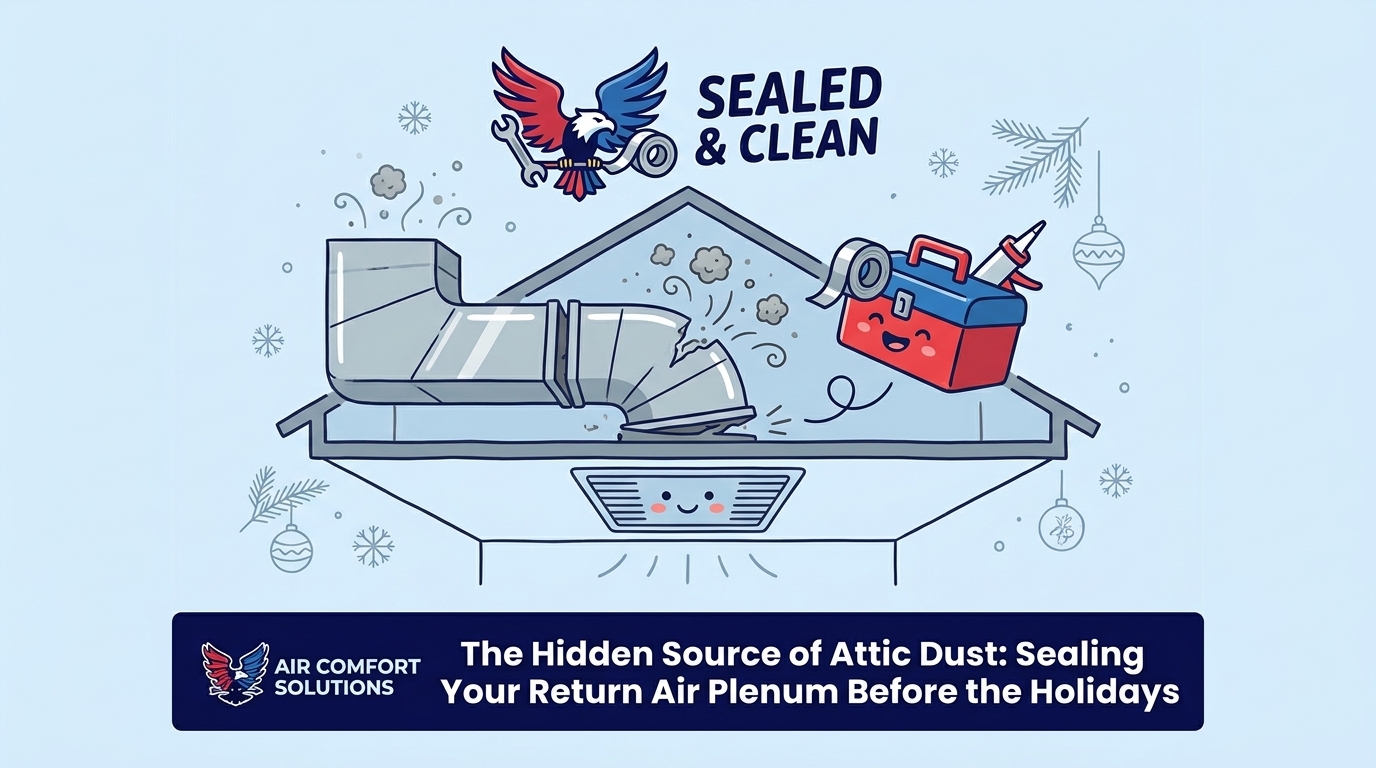
The Value of Sealing Your Return Air Plenum Before the Holidays
Most homeowners buy expensive filters to fix dusty air, not realizing a leaky return plenum in the attic is the real culprit. See why sealing it now saves your holiday gatherings.
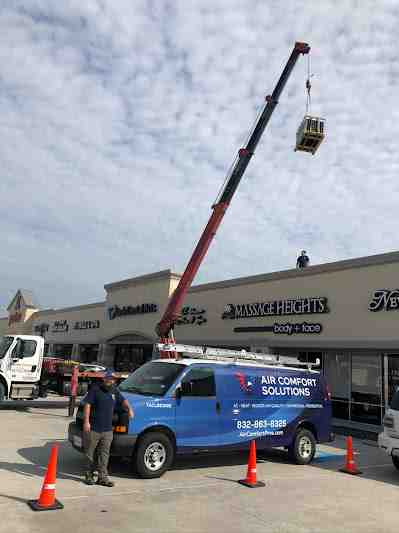
AC replacement in Houston, TX is one of the most important home decisions you'll make — especially when summer temperatures push past 100°F and humidity makes every degree feel worse.
Here's a quick overview of what you need to know:
When to replace your AC in Houston:
• Your system is 10-15 years old or older
• Energy bills keep climbing despite repairs
• Your home won't cool evenly or stay comfortable
• Your unit uses R-22 refrigerant (now phased out)
• Repair needs are becoming more frequent
What the replacement process looks like:
1. A certified technician evaluates your current system
2. A load calculation determines the right size for your home
3. The old unit is removed and properly disposed of
4. New equipment is installed and matched to your ductwork
5. Refrigerant lines, electrical connections, and thermostat are calibrated
6. The full system is tested before the technician leaves
Houston's brutal subtropical climate is hard on air conditioners. The heat runs long, the humidity is relentless, and AC systems here simply work harder than almost anywhere else in the country. That wear adds up — and when a system starts to fail, it usually does so right in the middle of August, when you can least afford to be without cool air.
Whether your system is aging out, breaking down too often, or just not keeping up anymore, understanding the AC replacement process helps you make a smarter, calmer decision — without getting overwhelmed when you're sweating through a 95°F afternoon.
This guide walks you through everything: the warning signs, the right equipment, what happens on installation day, and how to get the most out of your investment.
Knowing when to pull the trigger on a new system is the difference between a planned upgrade and a middle-of-the-night emergency. In Southeast Texas, air conditioners are the marathon runners of home appliances. While a unit in a milder climate might glide through twenty years of service, a Houston unit is usually nearing the finish line by year 10 to 15.
If your system was installed when the Astros were still playing at Enron Field, it’s likely time to start shopping. Beyond age, keep an eye out for these red flags:
• Frequent Breakdowns: If you have your HVAC company’s number on speed dial, you’re likely dealing with a system that has reached its limit. A common rule of thumb is that if repairs are becoming a regular occurrence, replacement is often the more reliable choice.
• The R-22 Refrigerant Problem: Older units use R-22 (Freon), which has been phased out by the EPA. Maintaining these systems is becoming difficult because the supply is strictly limited. If your unit leaks Freon, a full AC replacement in Houston, TX is almost always the recommended path forward.
• Rising Energy Bills: Have you noticed your summer electric bills creeping up year after year, even though you haven't changed your thermostat habits? As components wear out, the motor and compressor have to work longer cycles to achieve the same cooling effect.
• Uneven Cooling: If the master bedroom feels like an ice box while the kitchen feels like a sauna, your system is struggling to distribute air effectively. This often points to a dying compressor or an undersized unit that can no longer overcome the Texas sun.
If you aren't sure if your system has reached its limit, a professional diagnostic can provide a clear picture of your system's remaining life expectancy.
In Houston, it isn't just the heat; it’s the humidity. Our subtropical climate creates a unique set of challenges that can shave years off an HVAC system’s life.
First, there is the issue of corrosion. The high moisture content in our air, especially in areas closer to the coast or near the ship channel, can lead to "pitting" on the copper coils. Once these coils degrade, refrigerant leaks become inevitable.
Second, an air conditioner’s secondary job is acting as a giant dehumidifier. When a system ages, it loses its ability to pull moisture from the air effectively. This leads to that "sticky" feeling indoors, even when the air coming out of the vents is cold. If left unchecked, high indoor humidity can lead to mold growth inside the ductwork or on the evaporator coil, creating indoor air quality issues. Proper system preservation and maintenance can help delay these issues, but eventually, the mechanical toll of the Houston swamp wins out.
One of the biggest mistakes a homeowner can make is assuming "bigger is better." In HVAC, an oversized unit is just as bad as an undersized one.
If a unit is too large, it will "short cycle." It turns on, blasts the house with cold air in five minutes, and shuts off before it has a chance to remove any humidity. You end up with a cold, clammy house and a compressor that wears out prematurely from constant starting and stopping. Conversely, an undersized unit will run 24/7, never reaching the target temperature and burning out its motor.
To get the sizing right, we perform a Manual J Load Calculation. This isn't just looking at square footage; it accounts for:
• The R-value of your attic insulation.
• The number and orientation of your windows (West-facing windows in Texas are heat magnets!).
• The height of your ceilings.
• The type of exterior siding on your home.
Getting this calculation right is the foundation of a successful expert installation.
When you start looking at new equipment, you’ll see a lot of talk about SEER2 ratings. SEER stands for Seasonal Energy Efficiency Ratio. Think of it like MPG for your car—the higher the number, the less energy it uses to cool your home.
As of 2023, the U.S. Department of Energy mandated a minimum SEER2 rating of 14.3 (equivalent to 15.2 SEER) for the Southern region, including Texas. Upgrading from an old 8 or 10 SEER unit to a modern 16 or 18 SEER system can significantly improve your home's energy efficiency and overall comfort.
When choosing your new system, you generally have three levels of technology to choose from:
• Operation — Single-Stage: All on or all off. — Two-Stage: High and Low settings. — Variable-Speed (Inverter): Adjusts in tiny increments.
• Humidity Control — Single-Stage: Basic. — Two-Stage: Good. — Variable-Speed (Inverter): Excellent.
• Efficiency — Single-Stage: Standard. — Two-Stage: High. — Variable-Speed (Inverter): Ultra-High.
• Comfort — Single-Stage: May have temp swings. — Two-Stage: Consistent. — Variable-Speed (Inverter): Near-perfect consistency.
Variable-speed motors and inverter technology are the "gold standard" for Houston. These systems can slow down to a "sip" of electricity, running at 25% capacity to maintain a perfect temperature and constant dehumidification. They are quieter, more efficient, and provide the best comfort in our extreme climate.
A professional ac replacement in houston, tx isn't just a "drop and swap." It is a complex mechanical project that usually takes between 8 to 12 hours. Here is what a typical day looks like when our team arrives at your home:
1. Site Protection: We start by laying down drop cloths and wearing shoe covers to protect your flooring.
2. Recovery and Removal: We safely recover the old refrigerant (as required by law) and remove the old condenser and indoor coil.
3. Ductwork Inspection: Before the new unit goes in, we check your plenums and accessible ducts. There’s no point in putting a high-efficiency unit on "leaky straws." We ensure the airflow is optimized for the new equipment.
4. The New Build: We install the new indoor evaporator coil and the outdoor condenser. This often involves installing a new, level pad for the outdoor unit and a new secondary drain pan for the indoor unit to prevent ceiling leaks.
5. Line Matching and Brazing: We connect the copper refrigerant lines, using nitrogen during the welding process to prevent internal oxidation.
6. Vacuum and Charge: We pull a deep vacuum on the system to remove moisture and air, then release the precise amount of refrigerant needed for your specific line set length.
7. Commissioning: We don't just "flip a switch." We measure the "Delta T" (the temperature difference between intake and output), check static pressure, and calibrate your new thermostat.
This thoroughness ensures that your investment provides heating and cooling reliability for years to come.
If you're already investing in a new system, it's the perfect time to consider "while we're at it" upgrades that can significantly improve your quality of life.
• Smart Thermostats: Modern thermostats learn your schedule and can be controlled from your phone. Some can even alert us if the system detects a performance drop before you even notice the house getting warm.
• Indoor Air Quality (IAQ): Houston is a haven for allergens. Adding a whole-home media filter or a UV light system to your new installation can kill bacteria and mold spores before they ever reach your living room.
• Heat Pumps: Don't let the name fool you; heat pump technology provides world-class cooling. In our mild winters, a heat pump is often much more efficient than a traditional gas furnace.
• Ductless Mini-Splits: Have a "bonus room" over the garage or a sunroom that never gets cool? A ductless system can provide targeted cooling to specific zones without needing to rework your entire central duct system.
Most standard residential installations are completed in a single day, including the removal of the old unit and final system testing. For very large homes or complex attic installs, it might stretch into a second day, but we always aim to have you sleeping in a cool house the first night.
While you can technically replace just the outdoor unit, it is highly recommended to replace the indoor coil simultaneously. Modern SEER2 ratings are achieved by matching the indoor and outdoor components. If you keep an old, dirty indoor coil and pair it with a high-efficiency outdoor unit, the system will likely fail prematurely, and the manufacturer may even void your warranty.
Surviving a Houston summer requires more than just luck; it requires a cooling system you can actually trust. At Air Comfort Solutions LLC, we’ve spent over 35 years helping our neighbors in Pinehurst, Houston, The Woodlands, and across Harris County stay comfortable.
We believe in honest, reliable solutions. That means we won't try to sell you a replacement if a simple repair will do the trick. But when it is time for an upgrade, our certified technicians provide the expert sizing and precision installation that ensures your new system runs efficiently for its entire lifespan. We make it easier to get the comfort you deserve.
Don't wait until your unit gives up the ghost in the middle of a heatwave. Schedule your professional AC Replacement Houston TX today and breathe easy knowing you're ready for whatever the Texas sky throws your way.
AC replacement in Houston, TX is one of the most important home decisions you'll make — especially when summer temperatures push past 100°F and humidity makes every degree feel worse.
Here's a quick overview of what you need to know:
When to replace your AC in Houston:
What the replacement process looks like:
Houston's brutal subtropical climate is hard on air conditioners. The heat runs long, the humidity is relentless, and AC systems here simply work harder than almost anywhere else in the country. That wear adds up — and when a system starts to fail, it usually does so right in the middle of August, when you can least afford to be without cool air.
Whether your system is aging out, breaking down too often, or just not keeping up anymore, understanding the AC replacement process helps you make a smarter, calmer decision — without getting overwhelmed when you're sweating through a 95°F afternoon.
This guide walks you through everything: the warning signs, the right equipment, what happens on installation day, and how to get the most out of your investment.
Knowing when to pull the trigger on a new system is the difference between a planned upgrade and a middle-of-the-night emergency. In Southeast Texas, air conditioners are the marathon runners of home appliances. While a unit in a milder climate might glide through twenty years of service, a Houston unit is usually nearing the finish line by year 10 to 15.
If your system was installed when the Astros were still playing at Enron Field, it’s likely time to start shopping. Beyond age, keep an eye out for these red flags:
If you aren't sure if your system has reached its limit, a professional diagnostic can provide a clear picture of your system's remaining life expectancy.
In Houston, it isn't just the heat; it’s the humidity. Our subtropical climate creates a unique set of challenges that can shave years off an HVAC system’s life.
First, there is the issue of corrosion. The high moisture content in our air, especially in areas closer to the coast or near the ship channel, can lead to "pitting" on the copper coils. Once these coils degrade, refrigerant leaks become inevitable.
Second, an air conditioner’s secondary job is acting as a giant dehumidifier. When a system ages, it loses its ability to pull moisture from the air effectively. This leads to that "sticky" feeling indoors, even when the air coming out of the vents is cold. If left unchecked, high indoor humidity can lead to mold growth inside the ductwork or on the evaporator coil, creating indoor air quality issues. Proper system preservation and maintenance can help delay these issues, but eventually, the mechanical toll of the Houston swamp wins out.
One of the biggest mistakes a homeowner can make is assuming "bigger is better." In HVAC, an oversized unit is just as bad as an undersized one.
If a unit is too large, it will "short cycle." It turns on, blasts the house with cold air in five minutes, and shuts off before it has a chance to remove any humidity. You end up with a cold, clammy house and a compressor that wears out prematurely from constant starting and stopping. Conversely, an undersized unit will run 24/7, never reaching the target temperature and burning out its motor.
To get the sizing right, we perform a Manual J Load Calculation. This isn't just looking at square footage; it accounts for:
Getting this calculation right is the foundation of a successful expert installation.
When you start looking at new equipment, you’ll see a lot of talk about SEER2 ratings. SEER stands for Seasonal Energy Efficiency Ratio. Think of it like MPG for your car—the higher the number, the less energy it uses to cool your home.
As of 2023, the U.S. Department of Energy mandated a minimum SEER2 rating of 14.3 (equivalent to 15.2 SEER) for the Southern region, including Texas. Upgrading from an old 8 or 10 SEER unit to a modern 16 or 18 SEER system can significantly improve your home's energy efficiency and overall comfort.
When choosing your new system, you generally have three levels of technology to choose from:
| Feature | Single-Stage | Two-Stage | Variable-Speed (Inverter) |
|---|---|---|---|
| Operation | All on or all off. | High and Low settings. | Adjusts in tiny increments. |
| Humidity Control | Basic. | Good. | Excellent. |
| Efficiency | Standard. | High. | Ultra-High. |
| Comfort | May have temp swings. | Consistent. | Near-perfect consistency. |
Variable-speed motors and inverter technology are the "gold standard" for Houston. These systems can slow down to a "sip" of electricity, running at 25% capacity to maintain a perfect temperature and constant dehumidification. They are quieter, more efficient, and provide the best comfort in our extreme climate.
A professional ac replacement in houston, tx isn't just a "drop and swap." It is a complex mechanical project that usually takes between 8 to 12 hours. Here is what a typical day looks like when our team arrives at your home:
This thoroughness ensures that your investment provides heating and cooling reliability for years to come.
If you're already investing in a new system, it's the perfect time to consider "while we're at it" upgrades that can significantly improve your quality of life.
Most standard residential installations are completed in a single day, including the removal of the old unit and final system testing. For very large homes or complex attic installs, it might stretch into a second day, but we always aim to have you sleeping in a cool house the first night.
While you can technically replace just the outdoor unit, it is highly recommended to replace the indoor coil simultaneously. Modern SEER2 ratings are achieved by matching the indoor and outdoor components. If you keep an old, dirty indoor coil and pair it with a high-efficiency outdoor unit, the system will likely fail prematurely, and the manufacturer may even void your warranty.
Surviving a Houston summer requires more than just luck; it requires a cooling system you can actually trust. At Air Comfort Solutions LLC, we’ve spent over 35 years helping our neighbors in Pinehurst, Houston, The Woodlands, and across Harris County stay comfortable.
We believe in honest, reliable solutions. That means we won't try to sell you a replacement if a simple repair will do the trick. But when it is time for an upgrade, our certified technicians provide the expert sizing and precision installation that ensures your new system runs efficiently for its entire lifespan. We make it easier to get the comfort you deserve.
Don't wait until your unit gives up the ghost in the middle of a heatwave. Schedule your professional AC Replacement Houston TX today and breathe easy knowing you're ready for whatever the Texas sky throws your way.
AC replacement in Houston, TX is one of the most important home decisions you'll make — especially when summer temperatures push past 100°F and humidity makes every degree feel worse.
Here's a quick overview of what you need to know:
When to replace your AC in Houston:
What the replacement process looks like:
Houston's brutal subtropical climate is hard on air conditioners. The heat runs long, the humidity is relentless, and AC systems here simply work harder than almost anywhere else in the country. That wear adds up — and when a system starts to fail, it usually does so right in the middle of August, when you can least afford to be without cool air.
Whether your system is aging out, breaking down too often, or just not keeping up anymore, understanding the AC replacement process helps you make a smarter, calmer decision — without getting overwhelmed when you're sweating through a 95°F afternoon.
This guide walks you through everything: the warning signs, the right equipment, what happens on installation day, and how to get the most out of your investment.
Knowing when to pull the trigger on a new system is the difference between a planned upgrade and a middle-of-the-night emergency. In Southeast Texas, air conditioners are the marathon runners of home appliances. While a unit in a milder climate might glide through twenty years of service, a Houston unit is usually nearing the finish line by year 10 to 15.
If your system was installed when the Astros were still playing at Enron Field, it’s likely time to start shopping. Beyond age, keep an eye out for these red flags:
If you aren't sure if your system has reached its limit, a professional diagnostic can provide a clear picture of your system's remaining life expectancy.
In Houston, it isn't just the heat; it’s the humidity. Our subtropical climate creates a unique set of challenges that can shave years off an HVAC system’s life.
First, there is the issue of corrosion. The high moisture content in our air, especially in areas closer to the coast or near the ship channel, can lead to "pitting" on the copper coils. Once these coils degrade, refrigerant leaks become inevitable.
Second, an air conditioner’s secondary job is acting as a giant dehumidifier. When a system ages, it loses its ability to pull moisture from the air effectively. This leads to that "sticky" feeling indoors, even when the air coming out of the vents is cold. If left unchecked, high indoor humidity can lead to mold growth inside the ductwork or on the evaporator coil, creating indoor air quality issues. Proper system preservation and maintenance can help delay these issues, but eventually, the mechanical toll of the Houston swamp wins out.
One of the biggest mistakes a homeowner can make is assuming "bigger is better." In HVAC, an oversized unit is just as bad as an undersized one.
If a unit is too large, it will "short cycle." It turns on, blasts the house with cold air in five minutes, and shuts off before it has a chance to remove any humidity. You end up with a cold, clammy house and a compressor that wears out prematurely from constant starting and stopping. Conversely, an undersized unit will run 24/7, never reaching the target temperature and burning out its motor.
To get the sizing right, we perform a Manual J Load Calculation. This isn't just looking at square footage; it accounts for:
Getting this calculation right is the foundation of a successful expert installation.
When you start looking at new equipment, you’ll see a lot of talk about SEER2 ratings. SEER stands for Seasonal Energy Efficiency Ratio. Think of it like MPG for your car—the higher the number, the less energy it uses to cool your home.
As of 2023, the U.S. Department of Energy mandated a minimum SEER2 rating of 14.3 (equivalent to 15.2 SEER) for the Southern region, including Texas. Upgrading from an old 8 or 10 SEER unit to a modern 16 or 18 SEER system can significantly improve your home's energy efficiency and overall comfort.
When choosing your new system, you generally have three levels of technology to choose from:
| Feature | Single-Stage | Two-Stage | Variable-Speed (Inverter) |
|---|---|---|---|
| Operation | All on or all off. | High and Low settings. | Adjusts in tiny increments. |
| Humidity Control | Basic. | Good. | Excellent. |
| Efficiency | Standard. | High. | Ultra-High. |
| Comfort | May have temp swings. | Consistent. | Near-perfect consistency. |
Variable-speed motors and inverter technology are the "gold standard" for Houston. These systems can slow down to a "sip" of electricity, running at 25% capacity to maintain a perfect temperature and constant dehumidification. They are quieter, more efficient, and provide the best comfort in our extreme climate.
A professional ac replacement in houston, tx isn't just a "drop and swap." It is a complex mechanical project that usually takes between 8 to 12 hours. Here is what a typical day looks like when our team arrives at your home:
This thoroughness ensures that your investment provides heating and cooling reliability for years to come.
If you're already investing in a new system, it's the perfect time to consider "while we're at it" upgrades that can significantly improve your quality of life.
Most standard residential installations are completed in a single day, including the removal of the old unit and final system testing. For very large homes or complex attic installs, it might stretch into a second day, but we always aim to have you sleeping in a cool house the first night.
While you can technically replace just the outdoor unit, it is highly recommended to replace the indoor coil simultaneously. Modern SEER2 ratings are achieved by matching the indoor and outdoor components. If you keep an old, dirty indoor coil and pair it with a high-efficiency outdoor unit, the system will likely fail prematurely, and the manufacturer may even void your warranty.
Surviving a Houston summer requires more than just luck; it requires a cooling system you can actually trust. At Air Comfort Solutions LLC, we’ve spent over 35 years helping our neighbors in Pinehurst, Houston, The Woodlands, and across Harris County stay comfortable.
We believe in honest, reliable solutions. That means we won't try to sell you a replacement if a simple repair will do the trick. But when it is time for an upgrade, our certified technicians provide the expert sizing and precision installation that ensures your new system runs efficiently for its entire lifespan. We make it easier to get the comfort you deserve.
Don't wait until your unit gives up the ghost in the middle of a heatwave. Schedule your professional AC Replacement Houston TX today and breathe easy knowing you're ready for whatever the Texas sky throws your way.
AC replacement in Houston, TX is one of the most important home decisions you'll make — especially when summer temperatures push past 100°F and humidity makes every degree feel worse.
Here's a quick overview of what you need to know:
When to replace your AC in Houston:
What the replacement process looks like:
Houston's brutal subtropical climate is hard on air conditioners. The heat runs long, the humidity is relentless, and AC systems here simply work harder than almost anywhere else in the country. That wear adds up — and when a system starts to fail, it usually does so right in the middle of August, when you can least afford to be without cool air.
Whether your system is aging out, breaking down too often, or just not keeping up anymore, understanding the AC replacement process helps you make a smarter, calmer decision — without getting overwhelmed when you're sweating through a 95°F afternoon.
This guide walks you through everything: the warning signs, the right equipment, what happens on installation day, and how to get the most out of your investment.
Knowing when to pull the trigger on a new system is the difference between a planned upgrade and a middle-of-the-night emergency. In Southeast Texas, air conditioners are the marathon runners of home appliances. While a unit in a milder climate might glide through twenty years of service, a Houston unit is usually nearing the finish line by year 10 to 15.
If your system was installed when the Astros were still playing at Enron Field, it’s likely time to start shopping. Beyond age, keep an eye out for these red flags:
If you aren't sure if your system has reached its limit, a professional diagnostic can provide a clear picture of your system's remaining life expectancy.
In Houston, it isn't just the heat; it’s the humidity. Our subtropical climate creates a unique set of challenges that can shave years off an HVAC system’s life.
First, there is the issue of corrosion. The high moisture content in our air, especially in areas closer to the coast or near the ship channel, can lead to "pitting" on the copper coils. Once these coils degrade, refrigerant leaks become inevitable.
Second, an air conditioner’s secondary job is acting as a giant dehumidifier. When a system ages, it loses its ability to pull moisture from the air effectively. This leads to that "sticky" feeling indoors, even when the air coming out of the vents is cold. If left unchecked, high indoor humidity can lead to mold growth inside the ductwork or on the evaporator coil, creating indoor air quality issues. Proper system preservation and maintenance can help delay these issues, but eventually, the mechanical toll of the Houston swamp wins out.
One of the biggest mistakes a homeowner can make is assuming "bigger is better." In HVAC, an oversized unit is just as bad as an undersized one.
If a unit is too large, it will "short cycle." It turns on, blasts the house with cold air in five minutes, and shuts off before it has a chance to remove any humidity. You end up with a cold, clammy house and a compressor that wears out prematurely from constant starting and stopping. Conversely, an undersized unit will run 24/7, never reaching the target temperature and burning out its motor.
To get the sizing right, we perform a Manual J Load Calculation. This isn't just looking at square footage; it accounts for:
Getting this calculation right is the foundation of a successful expert installation.
When you start looking at new equipment, you’ll see a lot of talk about SEER2 ratings. SEER stands for Seasonal Energy Efficiency Ratio. Think of it like MPG for your car—the higher the number, the less energy it uses to cool your home.
As of 2023, the U.S. Department of Energy mandated a minimum SEER2 rating of 14.3 (equivalent to 15.2 SEER) for the Southern region, including Texas. Upgrading from an old 8 or 10 SEER unit to a modern 16 or 18 SEER system can significantly improve your home's energy efficiency and overall comfort.
When choosing your new system, you generally have three levels of technology to choose from:
| Feature | Single-Stage | Two-Stage | Variable-Speed (Inverter) |
|---|---|---|---|
| Operation | All on or all off. | High and Low settings. | Adjusts in tiny increments. |
| Humidity Control | Basic. | Good. | Excellent. |
| Efficiency | Standard. | High. | Ultra-High. |
| Comfort | May have temp swings. | Consistent. | Near-perfect consistency. |
Variable-speed motors and inverter technology are the "gold standard" for Houston. These systems can slow down to a "sip" of electricity, running at 25% capacity to maintain a perfect temperature and constant dehumidification. They are quieter, more efficient, and provide the best comfort in our extreme climate.
A professional ac replacement in houston, tx isn't just a "drop and swap." It is a complex mechanical project that usually takes between 8 to 12 hours. Here is what a typical day looks like when our team arrives at your home:
This thoroughness ensures that your investment provides heating and cooling reliability for years to come.
If you're already investing in a new system, it's the perfect time to consider "while we're at it" upgrades that can significantly improve your quality of life.
Most standard residential installations are completed in a single day, including the removal of the old unit and final system testing. For very large homes or complex attic installs, it might stretch into a second day, but we always aim to have you sleeping in a cool house the first night.
While you can technically replace just the outdoor unit, it is highly recommended to replace the indoor coil simultaneously. Modern SEER2 ratings are achieved by matching the indoor and outdoor components. If you keep an old, dirty indoor coil and pair it with a high-efficiency outdoor unit, the system will likely fail prematurely, and the manufacturer may even void your warranty.
Surviving a Houston summer requires more than just luck; it requires a cooling system you can actually trust. At Air Comfort Solutions LLC, we’ve spent over 35 years helping our neighbors in Pinehurst, Houston, The Woodlands, and across Harris County stay comfortable.
We believe in honest, reliable solutions. That means we won't try to sell you a replacement if a simple repair will do the trick. But when it is time for an upgrade, our certified technicians provide the expert sizing and precision installation that ensures your new system runs efficiently for its entire lifespan. We make it easier to get the comfort you deserve.
Don't wait until your unit gives up the ghost in the middle of a heatwave. Schedule your professional AC Replacement Houston TX today and breathe easy knowing you're ready for whatever the Texas sky throws your way.
AC replacement in Houston, TX is one of the most important home decisions you'll make — especially when summer temperatures push past 100°F and humidity makes every degree feel worse.
Here's a quick overview of what you need to know:
When to replace your AC in Houston:
What the replacement process looks like:
Houston's brutal subtropical climate is hard on air conditioners. The heat runs long, the humidity is relentless, and AC systems here simply work harder than almost anywhere else in the country. That wear adds up — and when a system starts to fail, it usually does so right in the middle of August, when you can least afford to be without cool air.
Whether your system is aging out, breaking down too often, or just not keeping up anymore, understanding the AC replacement process helps you make a smarter, calmer decision — without getting overwhelmed when you're sweating through a 95°F afternoon.
This guide walks you through everything: the warning signs, the right equipment, what happens on installation day, and how to get the most out of your investment.
Knowing when to pull the trigger on a new system is the difference between a planned upgrade and a middle-of-the-night emergency. In Southeast Texas, air conditioners are the marathon runners of home appliances. While a unit in a milder climate might glide through twenty years of service, a Houston unit is usually nearing the finish line by year 10 to 15.
If your system was installed when the Astros were still playing at Enron Field, it’s likely time to start shopping. Beyond age, keep an eye out for these red flags:
If you aren't sure if your system has reached its limit, a professional diagnostic can provide a clear picture of your system's remaining life expectancy.
In Houston, it isn't just the heat; it’s the humidity. Our subtropical climate creates a unique set of challenges that can shave years off an HVAC system’s life.
First, there is the issue of corrosion. The high moisture content in our air, especially in areas closer to the coast or near the ship channel, can lead to "pitting" on the copper coils. Once these coils degrade, refrigerant leaks become inevitable.
Second, an air conditioner’s secondary job is acting as a giant dehumidifier. When a system ages, it loses its ability to pull moisture from the air effectively. This leads to that "sticky" feeling indoors, even when the air coming out of the vents is cold. If left unchecked, high indoor humidity can lead to mold growth inside the ductwork or on the evaporator coil, creating indoor air quality issues. Proper system preservation and maintenance can help delay these issues, but eventually, the mechanical toll of the Houston swamp wins out.
One of the biggest mistakes a homeowner can make is assuming "bigger is better." In HVAC, an oversized unit is just as bad as an undersized one.
If a unit is too large, it will "short cycle." It turns on, blasts the house with cold air in five minutes, and shuts off before it has a chance to remove any humidity. You end up with a cold, clammy house and a compressor that wears out prematurely from constant starting and stopping. Conversely, an undersized unit will run 24/7, never reaching the target temperature and burning out its motor.
To get the sizing right, we perform a Manual J Load Calculation. This isn't just looking at square footage; it accounts for:
Getting this calculation right is the foundation of a successful expert installation.
When you start looking at new equipment, you’ll see a lot of talk about SEER2 ratings. SEER stands for Seasonal Energy Efficiency Ratio. Think of it like MPG for your car—the higher the number, the less energy it uses to cool your home.
As of 2023, the U.S. Department of Energy mandated a minimum SEER2 rating of 14.3 (equivalent to 15.2 SEER) for the Southern region, including Texas. Upgrading from an old 8 or 10 SEER unit to a modern 16 or 18 SEER system can significantly improve your home's energy efficiency and overall comfort.
When choosing your new system, you generally have three levels of technology to choose from:
| Feature | Single-Stage | Two-Stage | Variable-Speed (Inverter) |
|---|---|---|---|
| Operation | All on or all off. | High and Low settings. | Adjusts in tiny increments. |
| Humidity Control | Basic. | Good. | Excellent. |
| Efficiency | Standard. | High. | Ultra-High. |
| Comfort | May have temp swings. | Consistent. | Near-perfect consistency. |
Variable-speed motors and inverter technology are the "gold standard" for Houston. These systems can slow down to a "sip" of electricity, running at 25% capacity to maintain a perfect temperature and constant dehumidification. They are quieter, more efficient, and provide the best comfort in our extreme climate.
A professional ac replacement in houston, tx isn't just a "drop and swap." It is a complex mechanical project that usually takes between 8 to 12 hours. Here is what a typical day looks like when our team arrives at your home:
This thoroughness ensures that your investment provides heating and cooling reliability for years to come.
If you're already investing in a new system, it's the perfect time to consider "while we're at it" upgrades that can significantly improve your quality of life.
Most standard residential installations are completed in a single day, including the removal of the old unit and final system testing. For very large homes or complex attic installs, it might stretch into a second day, but we always aim to have you sleeping in a cool house the first night.
While you can technically replace just the outdoor unit, it is highly recommended to replace the indoor coil simultaneously. Modern SEER2 ratings are achieved by matching the indoor and outdoor components. If you keep an old, dirty indoor coil and pair it with a high-efficiency outdoor unit, the system will likely fail prematurely, and the manufacturer may even void your warranty.
Surviving a Houston summer requires more than just luck; it requires a cooling system you can actually trust. At Air Comfort Solutions LLC, we’ve spent over 35 years helping our neighbors in Pinehurst, Houston, The Woodlands, and across Harris County stay comfortable.
We believe in honest, reliable solutions. That means we won't try to sell you a replacement if a simple repair will do the trick. But when it is time for an upgrade, our certified technicians provide the expert sizing and precision installation that ensures your new system runs efficiently for its entire lifespan. We make it easier to get the comfort you deserve.
Don't wait until your unit gives up the ghost in the middle of a heatwave. Schedule your professional AC Replacement Houston TX today and breathe easy knowing you're ready for whatever the Texas sky throws your way.


Zane came out and did an amazing job! Super friendly, honest and transparent about the work that needed to be done. This is my second time working with Air Comfort Solutions and they’re my go to for HVAC services. Highly recommend.
God's AMAZING grace sent us Robert and Zane. We have been without air in this Texas heat for six weeks and four days. We've had a few contractors give us quotes all trying to upsell when we're at a low point. But not the guys at Air Comfort Solutions. They came in assessed our situation, gave us honest feedback, and showed us the issues as they proceeded with the assessment for clear understanding. We highly recommend them for their professionalism, quality products, and fair pricing. We hands down support them for all the work they do 💯 %.
Robert and Zane gone above and beyond to make the process easy and affordable.
Would definitely recommend!!
I’m writing this review to let everyone know that Air Comfort Solutions is the company to work with. I know the owner ( Robert) for several years now. He has been taking care of my residential and business work orders. Robert is professional, knowledgeable and will save you money. I just want to thank Robert for great job you have been doing for me.