The Value of Sealing Your Return Air Plenum Before the Holidays
Most homeowners buy expensive filters to fix dusty air, not realizing a leaky return plenum in the attic is the real culprit. See why sealing it now saves your holiday gatherings.
What is a SEER2 rating on an AC unit is a straightforward question with a practical answer: it is the updated federal efficiency standard that measures how much cooling your air conditioner delivers for every unit of electricity it consumes across a full cooling season. The higher the number, the less energy your system burns to keep your home comfortable.
Quick Answer: SEER2 at a Glance
• SEER2 — What It Means: Seasonal Energy Efficiency Ratio 2 — the updated AC efficiency metric
• How it's measured — What It Means: Total cooling output (BTUs) ÷ total electricity used (watt-hours) over a season
• When it took effect — What It Means: January 1, 2023 — all new AC units must carry a SEER2 rating
• Key difference from SEER — What It Means: Tested under higher airflow resistance (0.5 in. vs. 0.1 in. of water pressure) to reflect real homes
• Minimum for Texas homes — What It Means: 14.3 SEER2 for most split systems under 45,000 BTU
• Good rating range — What It Means: 15–20 SEER2 for most homeowners; 20+ for maximum efficiency
• Top available rating — What It Means: Up to 32.2 SEER2 on some ductless mini-split systems
If you are a homeowner in North Harris County dealing with rising summer energy bills or shopping for a replacement system, SEER2 is one of the most important numbers you will encounter. Think of it like the miles-per-gallon rating on a car — it tells you how far your cooling dollar actually goes. The critical upgrade from the old SEER standard is that SEER2 is tested under conditions that actually resemble your home's ductwork, not just a controlled laboratory setting. That means the rating you see on the box is much closer to the efficiency you will experience on a sweltering Houston afternoon.
In this guide, we break down exactly what SEER2 means, what the Department of Energy requires for Texas, how to find your unit's rating, and how to use this information to lower your energy bills and qualify for available incentives.

When we talk about the Seasonal Energy Efficiency Ratio 2 (SEER2), we are looking at the evolution of how we measure comfort. For decades, the industry used the original SEER rating. However, the Department of Energy (DOE) realized that the old testing methods didn't quite capture the "real-world" struggle an air conditioner faces inside a typical home.
The what is a SEER2 rating on an AC unit conversation starts with the math: it is the total heat removed from your home (measured in BTUs) divided by the total electrical energy consumed (measured in watt-hours) over a typical cooling season. In our neck of the woods—from Pinehurst to The Woodlands—that "cooling season" feels like it lasts about ten months of the year!
SEER2 matters because it accounts for airflow resistance and system cycling losses. When your AC kicks on, it doesn't reach peak efficiency instantly. There are "startup" losses every time the system cycles. SEER2 testing protocols are designed to reflect these realities, giving you a more honest look at your potential energy consumption. If you're interested in how this impacts your current setup, checking out our Air Conditioning services can help you understand your system's performance.
On January 1, 2023, the HVAC industry underwent a massive shift. The DOE mandated the transition to M1 testing procedures. The biggest difference? External static pressure.
Under the old SEER rules, units were tested at a static pressure of 0.1 inches of water. This represented a "perfect" lab environment with almost no resistance to airflow. In reality, your home has air filters, long stretches of ductwork, and vents—all of which create resistance. SEER2 testing increases that static pressure to 0.5 inches of water—a five-fold increase. This higher pressure more accurately simulates the resistance found in a real residential duct system. Because the test is harder, SEER2 ratings are typically about 4.7% lower than the old SEER numbers for the same piece of equipment, but they are far more accurate.
The M1 testing procedure isn't just about pressure; it’s about a comprehensive look at blower performance. It forces manufacturers to design systems that can handle the "push" required to move air through a modern home efficiently. By simulating these real-world conditions, the DOE ensures that the energy savings promised on the yellow EnergyGuide label are actually achievable in your living room.
Living in Texas means we play by a different set of rules than our neighbors in the North. Because our cooling loads are so much higher, the DOE has established regional minimums to ensure we aren't wasting massive amounts of electricity during our brutal summers.
• North — Split System AC Minimum: 13.4 SEER2 — Split System Heat Pump Minimum: 14.3 SEER2
• South (Texas) — Split System AC Minimum: 14.3 SEER2 (units < 45k BTU) — Split System Heat Pump Minimum: 14.3 SEER2
• South (Texas) — Split System AC Minimum: 13.8 SEER2 (units ≥ 45k BTU) — Split System Heat Pump Minimum: 14.3 SEER2
For a deep dive into how these regulations affect local installations, see our AC Replacement Houston TX Complete Guide.
In the South and Southwest regions, which includes our service areas like Magnolia and Tomball, the requirements are strict. For most residential split-system air conditioners with a capacity of less than 45,000 BTU (roughly 3.5 tons), the minimum allowed is 14.3 SEER2. If the unit is larger (45,000 BTU or more), the minimum is 13.8 SEER2.
If you are considering a heat pump—which is becoming increasingly popular in Spring and Conroe—the nationwide minimum is 14.3 SEER2. These standards are in place to protect your wallet and the power grid. You can learn more about local options in our guide to AC Replacement Spring TX.
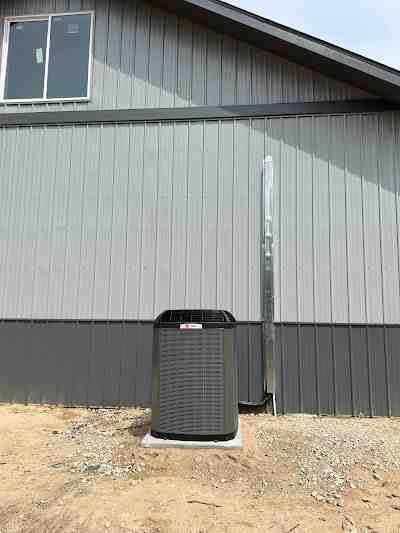
If your system was installed before 2023, it likely has a SEER rating rather than a SEER2 rating. To find it, look for the yellow EnergyGuide sticker on the side of your outdoor condenser unit. If that sticker has faded or "grown legs," as they often do in the Texas sun, you can find the model number and serial number on the manufacturer's data plate.
Once you have the model number, you can look it up in the AHRI (Air Conditioning, Heating, and Refrigeration Institute) database or check the air handler sticker inside your home. For more tips on identifying your system's specs, check out our Best AC Replacement Guide Spring TX.
While 14.3 SEER2 is the "floor" for new installations in Texas, "good" is a much higher bar. In our experience, a SEER2 rating between 16 and 20 represents the "sweet spot" for most homeowners in Harris County. Systems in this range often utilize variable-speed compressors or two-stage cooling.
Unlike standard single-stage units that are either 100% "on" or 100% "off," variable-speed systems (often using inverter technology) can scale their output down to as low as 25% capacity. This allows them to run longer, quieter cycles that maintain a perfectly steady temperature. To understand when it’s the right time to make this jump, read about the Optimal Times for Upgrading Your Home's Air Conditioning System.
While SEER2 measures efficiency over a whole season, EER2 (Energy Efficiency Ratio 2) measures efficiency at a specific, high-stress point: 95°F outside.
In places like Pinehurst and Houston, where we see many days well above 95°F, EER2 is a critical metric. A system might have a great SEER2 rating because it performs well at 75°F, but if its EER2 is low, it might struggle (and cost a fortune) when the mercury hits 105°F. For the best comfort and humidity control, we recommend looking for a balance of both. You can find more details in our Ultimate AC Replacement Guide Residential Woodlands TX.
The "is it worth it?" question usually comes down to two things: how long you plan to stay in the home and how much you use your AC. In Texas, we use our AC a lot.
Moving from a 14 SEER2 unit to a 20 SEER2 unit can result in an efficiency gain of approximately 43%. Over the 15-to-20-year lifespan of a modern system, those monthly savings add up significantly. If you plan to stay in your home for more than five years, the lower monthly bills often pay back the higher upfront cost of a premium unit. For those looking for budget-conscious ways to upgrade, our Affordable AC Replacement Guide Spring TX offers great insights.
As of April 2026, homeowners have more help than ever when upgrading to high-efficiency equipment. The Inflation Reduction Act has provided long-term federal incentives that make the leap to high SEER2 ratings much more palatable.
By choosing a system that meets specific efficiency thresholds, you can often claim the 25C tax credit, which can cover up to 30% of the project cost (capped at specific amounts depending on the equipment). To see how these systems fit into your overall home comfort plan, visit our HVAC service page.
To qualify for most federal tax credits in 2026, your system generally needs to be ENERGY STAR certified. For split-system air conditioners, this usually means a SEER2 rating of 16 or higher.
If you are installing a heat pump, the incentives are even more substantial. Some programs under the Inflation Reduction Act offer rebates of up to $8,000 for qualifying households. Generally, a split ducted heat pump must have a SEER2 of at least 16 to qualify, while packaged units need at least 15.2 SEER2. We recommend working with a pro to navigate these requirements; check out our AC Replacement Contractors Spring TX Guide for help choosing the right partner.
You could buy the most expensive 24 SEER2 unit on the market, but if it is installed poorly, it will perform like a 10 SEER unit. Efficiency is a "system-wide" achievement.
• Manual J Calculations: We always perform a proper load calculation to ensure the unit is sized correctly. An oversized unit will "short-cycle," failing to remove humidity and wearing out faster.
• Ductwork Integrity: If your ducts have leaks, you are cooling your attic instead of your bedroom. This can tank your real-world SEER2 performance by 30% or more.
• Static Pressure Checks: Ensuring your blower is set to the correct speed to handle the static pressure of your home's specific duct layout.
Regular maintenance is also key to keeping that efficiency rating high. Explore our full range of Services to see how we keep systems running at peak performance.
The champions of efficiency are currently ductless mini-split systems. Some models, such as those from Mitsubishi, have achieved SEER2 ratings as high as 32.2. These systems use advanced inverter technology to sip electricity while providing incredible comfort.
Generally, yes. High SEER2 units often use variable-speed fans and compressors. Because they can run at lower speeds for longer periods, they avoid the loud "clunk" and roar of a single-stage system starting up. Many also include sound blankets around the compressor to ensure whisper-quiet operation.
We strongly advise against this. To achieve a rated SEER2 efficiency, the indoor coil and outdoor condenser must be a matched set. Mixing old and new components can lead to performance issues, efficiency loss, and will almost certainly void your manufacturer's warranty. Always look for AHRI-certified matched systems.
Understanding what is a SEER2 rating on an AC unit is the first step toward a more comfortable, energy-efficient home. Whether you are in Pinehurst, Magnolia, or anywhere across the north side of Harris County, choosing the right efficiency level is a balance of your budget, your comfort needs, and your long-term plans for your home.
At Air Comfort Solutions LLC, we bring over 35 years of experience to every home we visit. We don't just "swap boxes"—we evaluate your ductwork, perform accurate sizing calculations, and ensure your new system qualifies for every possible rebate and tax credit. If you're ready to lower your energy bills and upgrade your home's comfort, we're here to help.
Ready to see how a high-efficiency upgrade can transform your home? Contact us today for an expert consultation on your next Air Conditioning project.
What is a SEER2 rating on an AC unit is a straightforward question with a practical answer: it is the updated federal efficiency standard that measures how much cooling your air conditioner delivers for every unit of electricity it consumes across a full cooling season. The higher the number, the less energy your system burns to keep your home comfortable.
Quick Answer: SEER2 at a Glance
| Term | What It Means |
|---|---|
| SEER2 | Seasonal Energy Efficiency Ratio 2 — the updated AC efficiency metric |
| How it's measured | Total cooling output (BTUs) ÷ total electricity used (watt-hours) over a season |
| When it took effect | January 1, 2023 — all new AC units must carry a SEER2 rating |
| Key difference from SEER | Tested under higher airflow resistance (0.5 in. vs. 0.1 in. of water pressure) to reflect real homes |
| Minimum for Texas homes | 14.3 SEER2 for most split systems under 45,000 BTU |
| Good rating range | 15–20 SEER2 for most homeowners; 20+ for maximum efficiency |
| Top available rating | Up to 32.2 SEER2 on some ductless mini-split systems |
If you are a homeowner in North Harris County dealing with rising summer energy bills or shopping for a replacement system, SEER2 is one of the most important numbers you will encounter. Think of it like the miles-per-gallon rating on a car — it tells you how far your cooling dollar actually goes. The critical upgrade from the old SEER standard is that SEER2 is tested under conditions that actually resemble your home's ductwork, not just a controlled laboratory setting. That means the rating you see on the box is much closer to the efficiency you will experience on a sweltering Houston afternoon.
In this guide, we break down exactly what SEER2 means, what the Department of Energy requires for Texas, how to find your unit's rating, and how to use this information to lower your energy bills and qualify for available incentives.
When we talk about the Seasonal Energy Efficiency Ratio 2 (SEER2), we are looking at the evolution of how we measure comfort. For decades, the industry used the original SEER rating. However, the Department of Energy (DOE) realized that the old testing methods didn't quite capture the "real-world" struggle an air conditioner faces inside a typical home.
The what is a SEER2 rating on an AC unit conversation starts with the math: it is the total heat removed from your home (measured in BTUs) divided by the total electrical energy consumed (measured in watt-hours) over a typical cooling season. In our neck of the woods—from Pinehurst to The Woodlands—that "cooling season" feels like it lasts about ten months of the year!
SEER2 matters because it accounts for airflow resistance and system cycling losses. When your AC kicks on, it doesn't reach peak efficiency instantly. There are "startup" losses every time the system cycles. SEER2 testing protocols are designed to reflect these realities, giving you a more honest look at your potential energy consumption. If you're interested in how this impacts your current setup, checking out our Air Conditioning services can help you understand your system's performance.
On January 1, 2023, the HVAC industry underwent a massive shift. The DOE mandated the transition to M1 testing procedures. The biggest difference? External static pressure.
Under the old SEER rules, units were tested at a static pressure of 0.1 inches of water. This represented a "perfect" lab environment with almost no resistance to airflow. In reality, your home has air filters, long stretches of ductwork, and vents—all of which create resistance. SEER2 testing increases that static pressure to 0.5 inches of water—a five-fold increase. This higher pressure more accurately simulates the resistance found in a real residential duct system. Because the test is harder, SEER2 ratings are typically about 4.7% lower than the old SEER numbers for the same piece of equipment, but they are far more accurate.
The M1 testing procedure isn't just about pressure; it’s about a comprehensive look at blower performance. It forces manufacturers to design systems that can handle the "push" required to move air through a modern home efficiently. By simulating these real-world conditions, the DOE ensures that the energy savings promised on the yellow EnergyGuide label are actually achievable in your living room.
Living in Texas means we play by a different set of rules than our neighbors in the North. Because our cooling loads are so much higher, the DOE has established regional minimums to ensure we aren't wasting massive amounts of electricity during our brutal summers.
| Region | Split System AC Minimum | Split System Heat Pump Minimum |
|---|---|---|
| North | 13.4 SEER2 | 14.3 SEER2 |
| South (Texas) | 14.3 SEER2 (units < 45k BTU) | 14.3 SEER2 |
| South (Texas) | 13.8 SEER2 (units ≥ 45k BTU) | 14.3 SEER2 |
For a deep dive into how these regulations affect local installations, see our AC Replacement Houston TX Complete Guide.
In the South and Southwest regions, which includes our service areas like Magnolia and Tomball, the requirements are strict. For most residential split-system air conditioners with a capacity of less than 45,000 BTU (roughly 3.5 tons), the minimum allowed is 14.3 SEER2. If the unit is larger (45,000 BTU or more), the minimum is 13.8 SEER2.
If you are considering a heat pump—which is becoming increasingly popular in Spring and Conroe—the nationwide minimum is 14.3 SEER2. These standards are in place to protect your wallet and the power grid. You can learn more about local options in our guide to AC Replacement Spring TX.
If your system was installed before 2023, it likely has a SEER rating rather than a SEER2 rating. To find it, look for the yellow EnergyGuide sticker on the side of your outdoor condenser unit. If that sticker has faded or "grown legs," as they often do in the Texas sun, you can find the model number and serial number on the manufacturer's data plate.
Once you have the model number, you can look it up in the AHRI (Air Conditioning, Heating, and Refrigeration Institute) database or check the air handler sticker inside your home. For more tips on identifying your system's specs, check out our Best AC Replacement Guide Spring TX.
While 14.3 SEER2 is the "floor" for new installations in Texas, "good" is a much higher bar. In our experience, a SEER2 rating between 16 and 20 represents the "sweet spot" for most homeowners in Harris County. Systems in this range often utilize variable-speed compressors or two-stage cooling.
Unlike standard single-stage units that are either 100% "on" or 100% "off," variable-speed systems (often using inverter technology) can scale their output down to as low as 25% capacity. This allows them to run longer, quieter cycles that maintain a perfectly steady temperature. To understand when it’s the right time to make this jump, read about the Optimal Times for Upgrading Your Home's Air Conditioning System.
While SEER2 measures efficiency over a whole season, EER2 (Energy Efficiency Ratio 2) measures efficiency at a specific, high-stress point: 95°F outside.
In places like Pinehurst and Houston, where we see many days well above 95°F, EER2 is a critical metric. A system might have a great SEER2 rating because it performs well at 75°F, but if its EER2 is low, it might struggle (and cost a fortune) when the mercury hits 105°F. For the best comfort and humidity control, we recommend looking for a balance of both. You can find more details in our Ultimate AC Replacement Guide Residential Woodlands TX.
The "is it worth it?" question usually comes down to two things: how long you plan to stay in the home and how much you use your AC. In Texas, we use our AC a lot.
Moving from a 14 SEER2 unit to a 20 SEER2 unit can result in an efficiency gain of approximately 43%. Over the 15-to-20-year lifespan of a modern system, those monthly savings add up significantly. If you plan to stay in your home for more than five years, the lower monthly bills often pay back the higher upfront cost of a premium unit. For those looking for budget-conscious ways to upgrade, our Affordable AC Replacement Guide Spring TX offers great insights.
As of April 2026, homeowners have more help than ever when upgrading to high-efficiency equipment. The Inflation Reduction Act has provided long-term federal incentives that make the leap to high SEER2 ratings much more palatable.
By choosing a system that meets specific efficiency thresholds, you can often claim the 25C tax credit, which can cover up to 30% of the project cost (capped at specific amounts depending on the equipment). To see how these systems fit into your overall home comfort plan, visit our HVAC service page.
To qualify for most federal tax credits in 2026, your system generally needs to be ENERGY STAR certified. For split-system air conditioners, this usually means a SEER2 rating of 16 or higher.
If you are installing a heat pump, the incentives are even more substantial. Some programs under the Inflation Reduction Act offer rebates of up to $8,000 for qualifying households. Generally, a split ducted heat pump must have a SEER2 of at least 16 to qualify, while packaged units need at least 15.2 SEER2. We recommend working with a pro to navigate these requirements; check out our AC Replacement Contractors Spring TX Guide for help choosing the right partner.
You could buy the most expensive 24 SEER2 unit on the market, but if it is installed poorly, it will perform like a 10 SEER unit. Efficiency is a "system-wide" achievement.
Regular maintenance is also key to keeping that efficiency rating high. Explore our full range of Services to see how we keep systems running at peak performance.
The champions of efficiency are currently ductless mini-split systems. Some models, such as those from Mitsubishi, have achieved SEER2 ratings as high as 32.2. These systems use advanced inverter technology to sip electricity while providing incredible comfort.
Generally, yes. High SEER2 units often use variable-speed fans and compressors. Because they can run at lower speeds for longer periods, they avoid the loud "clunk" and roar of a single-stage system starting up. Many also include sound blankets around the compressor to ensure whisper-quiet operation.
We strongly advise against this. To achieve a rated SEER2 efficiency, the indoor coil and outdoor condenser must be a matched set. Mixing old and new components can lead to performance issues, efficiency loss, and will almost certainly void your manufacturer's warranty. Always look for AHRI-certified matched systems.
Understanding what is a SEER2 rating on an AC unit is the first step toward a more comfortable, energy-efficient home. Whether you are in Pinehurst, Magnolia, or anywhere across the north side of Harris County, choosing the right efficiency level is a balance of your budget, your comfort needs, and your long-term plans for your home.
At Air Comfort Solutions LLC, we bring over 35 years of experience to every home we visit. We don't just "swap boxes"—we evaluate your ductwork, perform accurate sizing calculations, and ensure your new system qualifies for every possible rebate and tax credit. If you're ready to lower your energy bills and upgrade your home's comfort, we're here to help.
Ready to see how a high-efficiency upgrade can transform your home? Contact us today for an expert consultation on your next Air Conditioning project.
What is a SEER2 rating on an AC unit is a straightforward question with a practical answer: it is the updated federal efficiency standard that measures how much cooling your air conditioner delivers for every unit of electricity it consumes across a full cooling season. The higher the number, the less energy your system burns to keep your home comfortable.
Quick Answer: SEER2 at a Glance
| Term | What It Means |
|---|---|
| SEER2 | Seasonal Energy Efficiency Ratio 2 — the updated AC efficiency metric |
| How it's measured | Total cooling output (BTUs) ÷ total electricity used (watt-hours) over a season |
| When it took effect | January 1, 2023 — all new AC units must carry a SEER2 rating |
| Key difference from SEER | Tested under higher airflow resistance (0.5 in. vs. 0.1 in. of water pressure) to reflect real homes |
| Minimum for Texas homes | 14.3 SEER2 for most split systems under 45,000 BTU |
| Good rating range | 15–20 SEER2 for most homeowners; 20+ for maximum efficiency |
| Top available rating | Up to 32.2 SEER2 on some ductless mini-split systems |
If you are a homeowner in North Harris County dealing with rising summer energy bills or shopping for a replacement system, SEER2 is one of the most important numbers you will encounter. Think of it like the miles-per-gallon rating on a car — it tells you how far your cooling dollar actually goes. The critical upgrade from the old SEER standard is that SEER2 is tested under conditions that actually resemble your home's ductwork, not just a controlled laboratory setting. That means the rating you see on the box is much closer to the efficiency you will experience on a sweltering Houston afternoon.
In this guide, we break down exactly what SEER2 means, what the Department of Energy requires for Texas, how to find your unit's rating, and how to use this information to lower your energy bills and qualify for available incentives.
When we talk about the Seasonal Energy Efficiency Ratio 2 (SEER2), we are looking at the evolution of how we measure comfort. For decades, the industry used the original SEER rating. However, the Department of Energy (DOE) realized that the old testing methods didn't quite capture the "real-world" struggle an air conditioner faces inside a typical home.
The what is a SEER2 rating on an AC unit conversation starts with the math: it is the total heat removed from your home (measured in BTUs) divided by the total electrical energy consumed (measured in watt-hours) over a typical cooling season. In our neck of the woods—from Pinehurst to The Woodlands—that "cooling season" feels like it lasts about ten months of the year!
SEER2 matters because it accounts for airflow resistance and system cycling losses. When your AC kicks on, it doesn't reach peak efficiency instantly. There are "startup" losses every time the system cycles. SEER2 testing protocols are designed to reflect these realities, giving you a more honest look at your potential energy consumption. If you're interested in how this impacts your current setup, checking out our Air Conditioning services can help you understand your system's performance.
On January 1, 2023, the HVAC industry underwent a massive shift. The DOE mandated the transition to M1 testing procedures. The biggest difference? External static pressure.
Under the old SEER rules, units were tested at a static pressure of 0.1 inches of water. This represented a "perfect" lab environment with almost no resistance to airflow. In reality, your home has air filters, long stretches of ductwork, and vents—all of which create resistance. SEER2 testing increases that static pressure to 0.5 inches of water—a five-fold increase. This higher pressure more accurately simulates the resistance found in a real residential duct system. Because the test is harder, SEER2 ratings are typically about 4.7% lower than the old SEER numbers for the same piece of equipment, but they are far more accurate.
The M1 testing procedure isn't just about pressure; it’s about a comprehensive look at blower performance. It forces manufacturers to design systems that can handle the "push" required to move air through a modern home efficiently. By simulating these real-world conditions, the DOE ensures that the energy savings promised on the yellow EnergyGuide label are actually achievable in your living room.
Living in Texas means we play by a different set of rules than our neighbors in the North. Because our cooling loads are so much higher, the DOE has established regional minimums to ensure we aren't wasting massive amounts of electricity during our brutal summers.
| Region | Split System AC Minimum | Split System Heat Pump Minimum |
|---|---|---|
| North | 13.4 SEER2 | 14.3 SEER2 |
| South (Texas) | 14.3 SEER2 (units < 45k BTU) | 14.3 SEER2 |
| South (Texas) | 13.8 SEER2 (units ≥ 45k BTU) | 14.3 SEER2 |
For a deep dive into how these regulations affect local installations, see our AC Replacement Houston TX Complete Guide.
In the South and Southwest regions, which includes our service areas like Magnolia and Tomball, the requirements are strict. For most residential split-system air conditioners with a capacity of less than 45,000 BTU (roughly 3.5 tons), the minimum allowed is 14.3 SEER2. If the unit is larger (45,000 BTU or more), the minimum is 13.8 SEER2.
If you are considering a heat pump—which is becoming increasingly popular in Spring and Conroe—the nationwide minimum is 14.3 SEER2. These standards are in place to protect your wallet and the power grid. You can learn more about local options in our guide to AC Replacement Spring TX.
If your system was installed before 2023, it likely has a SEER rating rather than a SEER2 rating. To find it, look for the yellow EnergyGuide sticker on the side of your outdoor condenser unit. If that sticker has faded or "grown legs," as they often do in the Texas sun, you can find the model number and serial number on the manufacturer's data plate.
Once you have the model number, you can look it up in the AHRI (Air Conditioning, Heating, and Refrigeration Institute) database or check the air handler sticker inside your home. For more tips on identifying your system's specs, check out our Best AC Replacement Guide Spring TX.
While 14.3 SEER2 is the "floor" for new installations in Texas, "good" is a much higher bar. In our experience, a SEER2 rating between 16 and 20 represents the "sweet spot" for most homeowners in Harris County. Systems in this range often utilize variable-speed compressors or two-stage cooling.
Unlike standard single-stage units that are either 100% "on" or 100% "off," variable-speed systems (often using inverter technology) can scale their output down to as low as 25% capacity. This allows them to run longer, quieter cycles that maintain a perfectly steady temperature. To understand when it’s the right time to make this jump, read about the Optimal Times for Upgrading Your Home's Air Conditioning System.
While SEER2 measures efficiency over a whole season, EER2 (Energy Efficiency Ratio 2) measures efficiency at a specific, high-stress point: 95°F outside.
In places like Pinehurst and Houston, where we see many days well above 95°F, EER2 is a critical metric. A system might have a great SEER2 rating because it performs well at 75°F, but if its EER2 is low, it might struggle (and cost a fortune) when the mercury hits 105°F. For the best comfort and humidity control, we recommend looking for a balance of both. You can find more details in our Ultimate AC Replacement Guide Residential Woodlands TX.
The "is it worth it?" question usually comes down to two things: how long you plan to stay in the home and how much you use your AC. In Texas, we use our AC a lot.
Moving from a 14 SEER2 unit to a 20 SEER2 unit can result in an efficiency gain of approximately 43%. Over the 15-to-20-year lifespan of a modern system, those monthly savings add up significantly. If you plan to stay in your home for more than five years, the lower monthly bills often pay back the higher upfront cost of a premium unit. For those looking for budget-conscious ways to upgrade, our Affordable AC Replacement Guide Spring TX offers great insights.
As of April 2026, homeowners have more help than ever when upgrading to high-efficiency equipment. The Inflation Reduction Act has provided long-term federal incentives that make the leap to high SEER2 ratings much more palatable.
By choosing a system that meets specific efficiency thresholds, you can often claim the 25C tax credit, which can cover up to 30% of the project cost (capped at specific amounts depending on the equipment). To see how these systems fit into your overall home comfort plan, visit our HVAC service page.
To qualify for most federal tax credits in 2026, your system generally needs to be ENERGY STAR certified. For split-system air conditioners, this usually means a SEER2 rating of 16 or higher.
If you are installing a heat pump, the incentives are even more substantial. Some programs under the Inflation Reduction Act offer rebates of up to $8,000 for qualifying households. Generally, a split ducted heat pump must have a SEER2 of at least 16 to qualify, while packaged units need at least 15.2 SEER2. We recommend working with a pro to navigate these requirements; check out our AC Replacement Contractors Spring TX Guide for help choosing the right partner.
You could buy the most expensive 24 SEER2 unit on the market, but if it is installed poorly, it will perform like a 10 SEER unit. Efficiency is a "system-wide" achievement.
Regular maintenance is also key to keeping that efficiency rating high. Explore our full range of Services to see how we keep systems running at peak performance.
The champions of efficiency are currently ductless mini-split systems. Some models, such as those from Mitsubishi, have achieved SEER2 ratings as high as 32.2. These systems use advanced inverter technology to sip electricity while providing incredible comfort.
Generally, yes. High SEER2 units often use variable-speed fans and compressors. Because they can run at lower speeds for longer periods, they avoid the loud "clunk" and roar of a single-stage system starting up. Many also include sound blankets around the compressor to ensure whisper-quiet operation.
We strongly advise against this. To achieve a rated SEER2 efficiency, the indoor coil and outdoor condenser must be a matched set. Mixing old and new components can lead to performance issues, efficiency loss, and will almost certainly void your manufacturer's warranty. Always look for AHRI-certified matched systems.
Understanding what is a SEER2 rating on an AC unit is the first step toward a more comfortable, energy-efficient home. Whether you are in Pinehurst, Magnolia, or anywhere across the north side of Harris County, choosing the right efficiency level is a balance of your budget, your comfort needs, and your long-term plans for your home.
At Air Comfort Solutions LLC, we bring over 35 years of experience to every home we visit. We don't just "swap boxes"—we evaluate your ductwork, perform accurate sizing calculations, and ensure your new system qualifies for every possible rebate and tax credit. If you're ready to lower your energy bills and upgrade your home's comfort, we're here to help.
Ready to see how a high-efficiency upgrade can transform your home? Contact us today for an expert consultation on your next Air Conditioning project.
What is a SEER2 rating on an AC unit is a straightforward question with a practical answer: it is the updated federal efficiency standard that measures how much cooling your air conditioner delivers for every unit of electricity it consumes across a full cooling season. The higher the number, the less energy your system burns to keep your home comfortable.
Quick Answer: SEER2 at a Glance
| Term | What It Means |
|---|---|
| SEER2 | Seasonal Energy Efficiency Ratio 2 — the updated AC efficiency metric |
| How it's measured | Total cooling output (BTUs) ÷ total electricity used (watt-hours) over a season |
| When it took effect | January 1, 2023 — all new AC units must carry a SEER2 rating |
| Key difference from SEER | Tested under higher airflow resistance (0.5 in. vs. 0.1 in. of water pressure) to reflect real homes |
| Minimum for Texas homes | 14.3 SEER2 for most split systems under 45,000 BTU |
| Good rating range | 15–20 SEER2 for most homeowners; 20+ for maximum efficiency |
| Top available rating | Up to 32.2 SEER2 on some ductless mini-split systems |
If you are a homeowner in North Harris County dealing with rising summer energy bills or shopping for a replacement system, SEER2 is one of the most important numbers you will encounter. Think of it like the miles-per-gallon rating on a car — it tells you how far your cooling dollar actually goes. The critical upgrade from the old SEER standard is that SEER2 is tested under conditions that actually resemble your home's ductwork, not just a controlled laboratory setting. That means the rating you see on the box is much closer to the efficiency you will experience on a sweltering Houston afternoon.
In this guide, we break down exactly what SEER2 means, what the Department of Energy requires for Texas, how to find your unit's rating, and how to use this information to lower your energy bills and qualify for available incentives.
When we talk about the Seasonal Energy Efficiency Ratio 2 (SEER2), we are looking at the evolution of how we measure comfort. For decades, the industry used the original SEER rating. However, the Department of Energy (DOE) realized that the old testing methods didn't quite capture the "real-world" struggle an air conditioner faces inside a typical home.
The what is a SEER2 rating on an AC unit conversation starts with the math: it is the total heat removed from your home (measured in BTUs) divided by the total electrical energy consumed (measured in watt-hours) over a typical cooling season. In our neck of the woods—from Pinehurst to The Woodlands—that "cooling season" feels like it lasts about ten months of the year!
SEER2 matters because it accounts for airflow resistance and system cycling losses. When your AC kicks on, it doesn't reach peak efficiency instantly. There are "startup" losses every time the system cycles. SEER2 testing protocols are designed to reflect these realities, giving you a more honest look at your potential energy consumption. If you're interested in how this impacts your current setup, checking out our Air Conditioning services can help you understand your system's performance.
On January 1, 2023, the HVAC industry underwent a massive shift. The DOE mandated the transition to M1 testing procedures. The biggest difference? External static pressure.
Under the old SEER rules, units were tested at a static pressure of 0.1 inches of water. This represented a "perfect" lab environment with almost no resistance to airflow. In reality, your home has air filters, long stretches of ductwork, and vents—all of which create resistance. SEER2 testing increases that static pressure to 0.5 inches of water—a five-fold increase. This higher pressure more accurately simulates the resistance found in a real residential duct system. Because the test is harder, SEER2 ratings are typically about 4.7% lower than the old SEER numbers for the same piece of equipment, but they are far more accurate.
The M1 testing procedure isn't just about pressure; it’s about a comprehensive look at blower performance. It forces manufacturers to design systems that can handle the "push" required to move air through a modern home efficiently. By simulating these real-world conditions, the DOE ensures that the energy savings promised on the yellow EnergyGuide label are actually achievable in your living room.
Living in Texas means we play by a different set of rules than our neighbors in the North. Because our cooling loads are so much higher, the DOE has established regional minimums to ensure we aren't wasting massive amounts of electricity during our brutal summers.
| Region | Split System AC Minimum | Split System Heat Pump Minimum |
|---|---|---|
| North | 13.4 SEER2 | 14.3 SEER2 |
| South (Texas) | 14.3 SEER2 (units < 45k BTU) | 14.3 SEER2 |
| South (Texas) | 13.8 SEER2 (units ≥ 45k BTU) | 14.3 SEER2 |
For a deep dive into how these regulations affect local installations, see our AC Replacement Houston TX Complete Guide.
In the South and Southwest regions, which includes our service areas like Magnolia and Tomball, the requirements are strict. For most residential split-system air conditioners with a capacity of less than 45,000 BTU (roughly 3.5 tons), the minimum allowed is 14.3 SEER2. If the unit is larger (45,000 BTU or more), the minimum is 13.8 SEER2.
If you are considering a heat pump—which is becoming increasingly popular in Spring and Conroe—the nationwide minimum is 14.3 SEER2. These standards are in place to protect your wallet and the power grid. You can learn more about local options in our guide to AC Replacement Spring TX.
If your system was installed before 2023, it likely has a SEER rating rather than a SEER2 rating. To find it, look for the yellow EnergyGuide sticker on the side of your outdoor condenser unit. If that sticker has faded or "grown legs," as they often do in the Texas sun, you can find the model number and serial number on the manufacturer's data plate.
Once you have the model number, you can look it up in the AHRI (Air Conditioning, Heating, and Refrigeration Institute) database or check the air handler sticker inside your home. For more tips on identifying your system's specs, check out our Best AC Replacement Guide Spring TX.
While 14.3 SEER2 is the "floor" for new installations in Texas, "good" is a much higher bar. In our experience, a SEER2 rating between 16 and 20 represents the "sweet spot" for most homeowners in Harris County. Systems in this range often utilize variable-speed compressors or two-stage cooling.
Unlike standard single-stage units that are either 100% "on" or 100% "off," variable-speed systems (often using inverter technology) can scale their output down to as low as 25% capacity. This allows them to run longer, quieter cycles that maintain a perfectly steady temperature. To understand when it’s the right time to make this jump, read about the Optimal Times for Upgrading Your Home's Air Conditioning System.
While SEER2 measures efficiency over a whole season, EER2 (Energy Efficiency Ratio 2) measures efficiency at a specific, high-stress point: 95°F outside.
In places like Pinehurst and Houston, where we see many days well above 95°F, EER2 is a critical metric. A system might have a great SEER2 rating because it performs well at 75°F, but if its EER2 is low, it might struggle (and cost a fortune) when the mercury hits 105°F. For the best comfort and humidity control, we recommend looking for a balance of both. You can find more details in our Ultimate AC Replacement Guide Residential Woodlands TX.
The "is it worth it?" question usually comes down to two things: how long you plan to stay in the home and how much you use your AC. In Texas, we use our AC a lot.
Moving from a 14 SEER2 unit to a 20 SEER2 unit can result in an efficiency gain of approximately 43%. Over the 15-to-20-year lifespan of a modern system, those monthly savings add up significantly. If you plan to stay in your home for more than five years, the lower monthly bills often pay back the higher upfront cost of a premium unit. For those looking for budget-conscious ways to upgrade, our Affordable AC Replacement Guide Spring TX offers great insights.
As of April 2026, homeowners have more help than ever when upgrading to high-efficiency equipment. The Inflation Reduction Act has provided long-term federal incentives that make the leap to high SEER2 ratings much more palatable.
By choosing a system that meets specific efficiency thresholds, you can often claim the 25C tax credit, which can cover up to 30% of the project cost (capped at specific amounts depending on the equipment). To see how these systems fit into your overall home comfort plan, visit our HVAC service page.
To qualify for most federal tax credits in 2026, your system generally needs to be ENERGY STAR certified. For split-system air conditioners, this usually means a SEER2 rating of 16 or higher.
If you are installing a heat pump, the incentives are even more substantial. Some programs under the Inflation Reduction Act offer rebates of up to $8,000 for qualifying households. Generally, a split ducted heat pump must have a SEER2 of at least 16 to qualify, while packaged units need at least 15.2 SEER2. We recommend working with a pro to navigate these requirements; check out our AC Replacement Contractors Spring TX Guide for help choosing the right partner.
You could buy the most expensive 24 SEER2 unit on the market, but if it is installed poorly, it will perform like a 10 SEER unit. Efficiency is a "system-wide" achievement.
Regular maintenance is also key to keeping that efficiency rating high. Explore our full range of Services to see how we keep systems running at peak performance.
The champions of efficiency are currently ductless mini-split systems. Some models, such as those from Mitsubishi, have achieved SEER2 ratings as high as 32.2. These systems use advanced inverter technology to sip electricity while providing incredible comfort.
Generally, yes. High SEER2 units often use variable-speed fans and compressors. Because they can run at lower speeds for longer periods, they avoid the loud "clunk" and roar of a single-stage system starting up. Many also include sound blankets around the compressor to ensure whisper-quiet operation.
We strongly advise against this. To achieve a rated SEER2 efficiency, the indoor coil and outdoor condenser must be a matched set. Mixing old and new components can lead to performance issues, efficiency loss, and will almost certainly void your manufacturer's warranty. Always look for AHRI-certified matched systems.
Understanding what is a SEER2 rating on an AC unit is the first step toward a more comfortable, energy-efficient home. Whether you are in Pinehurst, Magnolia, or anywhere across the north side of Harris County, choosing the right efficiency level is a balance of your budget, your comfort needs, and your long-term plans for your home.
At Air Comfort Solutions LLC, we bring over 35 years of experience to every home we visit. We don't just "swap boxes"—we evaluate your ductwork, perform accurate sizing calculations, and ensure your new system qualifies for every possible rebate and tax credit. If you're ready to lower your energy bills and upgrade your home's comfort, we're here to help.
Ready to see how a high-efficiency upgrade can transform your home? Contact us today for an expert consultation on your next Air Conditioning project.
What is a SEER2 rating on an AC unit is a straightforward question with a practical answer: it is the updated federal efficiency standard that measures how much cooling your air conditioner delivers for every unit of electricity it consumes across a full cooling season. The higher the number, the less energy your system burns to keep your home comfortable.
Quick Answer: SEER2 at a Glance
| Term | What It Means |
|---|---|
| SEER2 | Seasonal Energy Efficiency Ratio 2 — the updated AC efficiency metric |
| How it's measured | Total cooling output (BTUs) ÷ total electricity used (watt-hours) over a season |
| When it took effect | January 1, 2023 — all new AC units must carry a SEER2 rating |
| Key difference from SEER | Tested under higher airflow resistance (0.5 in. vs. 0.1 in. of water pressure) to reflect real homes |
| Minimum for Texas homes | 14.3 SEER2 for most split systems under 45,000 BTU |
| Good rating range | 15–20 SEER2 for most homeowners; 20+ for maximum efficiency |
| Top available rating | Up to 32.2 SEER2 on some ductless mini-split systems |
If you are a homeowner in North Harris County dealing with rising summer energy bills or shopping for a replacement system, SEER2 is one of the most important numbers you will encounter. Think of it like the miles-per-gallon rating on a car — it tells you how far your cooling dollar actually goes. The critical upgrade from the old SEER standard is that SEER2 is tested under conditions that actually resemble your home's ductwork, not just a controlled laboratory setting. That means the rating you see on the box is much closer to the efficiency you will experience on a sweltering Houston afternoon.
In this guide, we break down exactly what SEER2 means, what the Department of Energy requires for Texas, how to find your unit's rating, and how to use this information to lower your energy bills and qualify for available incentives.
When we talk about the Seasonal Energy Efficiency Ratio 2 (SEER2), we are looking at the evolution of how we measure comfort. For decades, the industry used the original SEER rating. However, the Department of Energy (DOE) realized that the old testing methods didn't quite capture the "real-world" struggle an air conditioner faces inside a typical home.
The what is a SEER2 rating on an AC unit conversation starts with the math: it is the total heat removed from your home (measured in BTUs) divided by the total electrical energy consumed (measured in watt-hours) over a typical cooling season. In our neck of the woods—from Pinehurst to The Woodlands—that "cooling season" feels like it lasts about ten months of the year!
SEER2 matters because it accounts for airflow resistance and system cycling losses. When your AC kicks on, it doesn't reach peak efficiency instantly. There are "startup" losses every time the system cycles. SEER2 testing protocols are designed to reflect these realities, giving you a more honest look at your potential energy consumption. If you're interested in how this impacts your current setup, checking out our Air Conditioning services can help you understand your system's performance.
On January 1, 2023, the HVAC industry underwent a massive shift. The DOE mandated the transition to M1 testing procedures. The biggest difference? External static pressure.
Under the old SEER rules, units were tested at a static pressure of 0.1 inches of water. This represented a "perfect" lab environment with almost no resistance to airflow. In reality, your home has air filters, long stretches of ductwork, and vents—all of which create resistance. SEER2 testing increases that static pressure to 0.5 inches of water—a five-fold increase. This higher pressure more accurately simulates the resistance found in a real residential duct system. Because the test is harder, SEER2 ratings are typically about 4.7% lower than the old SEER numbers for the same piece of equipment, but they are far more accurate.
The M1 testing procedure isn't just about pressure; it’s about a comprehensive look at blower performance. It forces manufacturers to design systems that can handle the "push" required to move air through a modern home efficiently. By simulating these real-world conditions, the DOE ensures that the energy savings promised on the yellow EnergyGuide label are actually achievable in your living room.
Living in Texas means we play by a different set of rules than our neighbors in the North. Because our cooling loads are so much higher, the DOE has established regional minimums to ensure we aren't wasting massive amounts of electricity during our brutal summers.
| Region | Split System AC Minimum | Split System Heat Pump Minimum |
|---|---|---|
| North | 13.4 SEER2 | 14.3 SEER2 |
| South (Texas) | 14.3 SEER2 (units < 45k BTU) | 14.3 SEER2 |
| South (Texas) | 13.8 SEER2 (units ≥ 45k BTU) | 14.3 SEER2 |
For a deep dive into how these regulations affect local installations, see our AC Replacement Houston TX Complete Guide.
In the South and Southwest regions, which includes our service areas like Magnolia and Tomball, the requirements are strict. For most residential split-system air conditioners with a capacity of less than 45,000 BTU (roughly 3.5 tons), the minimum allowed is 14.3 SEER2. If the unit is larger (45,000 BTU or more), the minimum is 13.8 SEER2.
If you are considering a heat pump—which is becoming increasingly popular in Spring and Conroe—the nationwide minimum is 14.3 SEER2. These standards are in place to protect your wallet and the power grid. You can learn more about local options in our guide to AC Replacement Spring TX.
If your system was installed before 2023, it likely has a SEER rating rather than a SEER2 rating. To find it, look for the yellow EnergyGuide sticker on the side of your outdoor condenser unit. If that sticker has faded or "grown legs," as they often do in the Texas sun, you can find the model number and serial number on the manufacturer's data plate.
Once you have the model number, you can look it up in the AHRI (Air Conditioning, Heating, and Refrigeration Institute) database or check the air handler sticker inside your home. For more tips on identifying your system's specs, check out our Best AC Replacement Guide Spring TX.
While 14.3 SEER2 is the "floor" for new installations in Texas, "good" is a much higher bar. In our experience, a SEER2 rating between 16 and 20 represents the "sweet spot" for most homeowners in Harris County. Systems in this range often utilize variable-speed compressors or two-stage cooling.
Unlike standard single-stage units that are either 100% "on" or 100% "off," variable-speed systems (often using inverter technology) can scale their output down to as low as 25% capacity. This allows them to run longer, quieter cycles that maintain a perfectly steady temperature. To understand when it’s the right time to make this jump, read about the Optimal Times for Upgrading Your Home's Air Conditioning System.
While SEER2 measures efficiency over a whole season, EER2 (Energy Efficiency Ratio 2) measures efficiency at a specific, high-stress point: 95°F outside.
In places like Pinehurst and Houston, where we see many days well above 95°F, EER2 is a critical metric. A system might have a great SEER2 rating because it performs well at 75°F, but if its EER2 is low, it might struggle (and cost a fortune) when the mercury hits 105°F. For the best comfort and humidity control, we recommend looking for a balance of both. You can find more details in our Ultimate AC Replacement Guide Residential Woodlands TX.
The "is it worth it?" question usually comes down to two things: how long you plan to stay in the home and how much you use your AC. In Texas, we use our AC a lot.
Moving from a 14 SEER2 unit to a 20 SEER2 unit can result in an efficiency gain of approximately 43%. Over the 15-to-20-year lifespan of a modern system, those monthly savings add up significantly. If you plan to stay in your home for more than five years, the lower monthly bills often pay back the higher upfront cost of a premium unit. For those looking for budget-conscious ways to upgrade, our Affordable AC Replacement Guide Spring TX offers great insights.
As of April 2026, homeowners have more help than ever when upgrading to high-efficiency equipment. The Inflation Reduction Act has provided long-term federal incentives that make the leap to high SEER2 ratings much more palatable.
By choosing a system that meets specific efficiency thresholds, you can often claim the 25C tax credit, which can cover up to 30% of the project cost (capped at specific amounts depending on the equipment). To see how these systems fit into your overall home comfort plan, visit our HVAC service page.
To qualify for most federal tax credits in 2026, your system generally needs to be ENERGY STAR certified. For split-system air conditioners, this usually means a SEER2 rating of 16 or higher.
If you are installing a heat pump, the incentives are even more substantial. Some programs under the Inflation Reduction Act offer rebates of up to $8,000 for qualifying households. Generally, a split ducted heat pump must have a SEER2 of at least 16 to qualify, while packaged units need at least 15.2 SEER2. We recommend working with a pro to navigate these requirements; check out our AC Replacement Contractors Spring TX Guide for help choosing the right partner.
You could buy the most expensive 24 SEER2 unit on the market, but if it is installed poorly, it will perform like a 10 SEER unit. Efficiency is a "system-wide" achievement.
Regular maintenance is also key to keeping that efficiency rating high. Explore our full range of Services to see how we keep systems running at peak performance.
The champions of efficiency are currently ductless mini-split systems. Some models, such as those from Mitsubishi, have achieved SEER2 ratings as high as 32.2. These systems use advanced inverter technology to sip electricity while providing incredible comfort.
Generally, yes. High SEER2 units often use variable-speed fans and compressors. Because they can run at lower speeds for longer periods, they avoid the loud "clunk" and roar of a single-stage system starting up. Many also include sound blankets around the compressor to ensure whisper-quiet operation.
We strongly advise against this. To achieve a rated SEER2 efficiency, the indoor coil and outdoor condenser must be a matched set. Mixing old and new components can lead to performance issues, efficiency loss, and will almost certainly void your manufacturer's warranty. Always look for AHRI-certified matched systems.
Understanding what is a SEER2 rating on an AC unit is the first step toward a more comfortable, energy-efficient home. Whether you are in Pinehurst, Magnolia, or anywhere across the north side of Harris County, choosing the right efficiency level is a balance of your budget, your comfort needs, and your long-term plans for your home.
At Air Comfort Solutions LLC, we bring over 35 years of experience to every home we visit. We don't just "swap boxes"—we evaluate your ductwork, perform accurate sizing calculations, and ensure your new system qualifies for every possible rebate and tax credit. If you're ready to lower your energy bills and upgrade your home's comfort, we're here to help.
Ready to see how a high-efficiency upgrade can transform your home? Contact us today for an expert consultation on your next Air Conditioning project.


Zane came out and did an amazing job! Super friendly, honest and transparent about the work that needed to be done. This is my second time working with Air Comfort Solutions and they’re my go to for HVAC services. Highly recommend.
God's AMAZING grace sent us Robert and Zane. We have been without air in this Texas heat for six weeks and four days. We've had a few contractors give us quotes all trying to upsell when we're at a low point. But not the guys at Air Comfort Solutions. They came in assessed our situation, gave us honest feedback, and showed us the issues as they proceeded with the assessment for clear understanding. We highly recommend them for their professionalism, quality products, and fair pricing. We hands down support them for all the work they do 💯 %.
Robert and Zane gone above and beyond to make the process easy and affordable.
Would definitely recommend!!
I’m writing this review to let everyone know that Air Comfort Solutions is the company to work with. I know the owner ( Robert) for several years now. He has been taking care of my residential and business work orders. Robert is professional, knowledgeable and will save you money. I just want to thank Robert for great job you have been doing for me.