Why Knowing How Clean Coils and Filters Protect Your Family Matters More You Think
Understanding how clean coils and filters protect your family is one of the most practical things a Pinehurst, TX homeowner can do — because the air inside your home may already be working against you. The EPA estimates indoor air is 2 to 5 times more polluted than outdoor air, and in a humid Gulf Coast climate like Harris County, that gap can grow even wider. Every time your HVAC system runs, it circulates the entire volume of air in your home 5 to 7 times per hour — pushing whatever is on your coils and filters straight into the air your family breathes.
Here is a quick summary of how clean coils and filters protect your family:
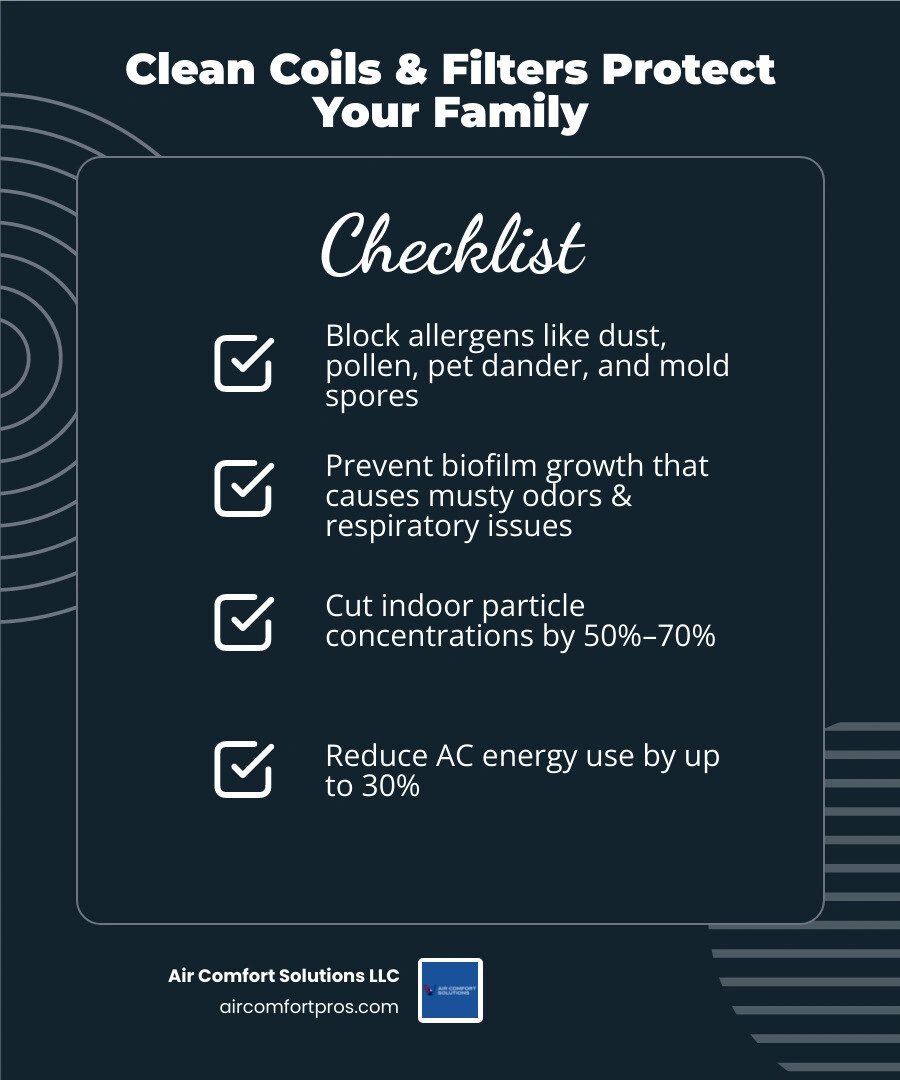
- Block airborne allergens — Clean filters trap dust, pollen, pet dander, and mold spores before they circulate through your living spaces
- Prevent mold and bacteria growth — Clean evaporator coils resist the biofilm buildup that causes musty odors and respiratory irritation
- Reduce asthma and allergy triggers — Improved filtration can cut indoor particle concentrations by 50% to 70%, with measurable reductions in symptoms
- Lower the risk of sudden system failure — Clean components reduce strain on the compressor and blower motor, extending equipment life
- Cut energy costs — A dirty coil can increase your AC's energy consumption by up to 30%, driving up monthly utility bills
- Protect vulnerable family members — Children breathe faster than adults and spend more time indoors, making them especially sensitive to poor indoor air quality
In Pinehurst and across North Harris County, the combination of high humidity, regional pollen, and year-round AC use makes coil and filter maintenance more urgent than in drier climates. When coils stay damp and filters go unchanged, your HVAC system stops being a comfort tool and starts becoming a health risk. The good news is that consistent, simple maintenance makes a measurable difference — and understanding why is the first step.
Understanding Your HVAC Coils and How Clean Coils and Filters Protect Your Family
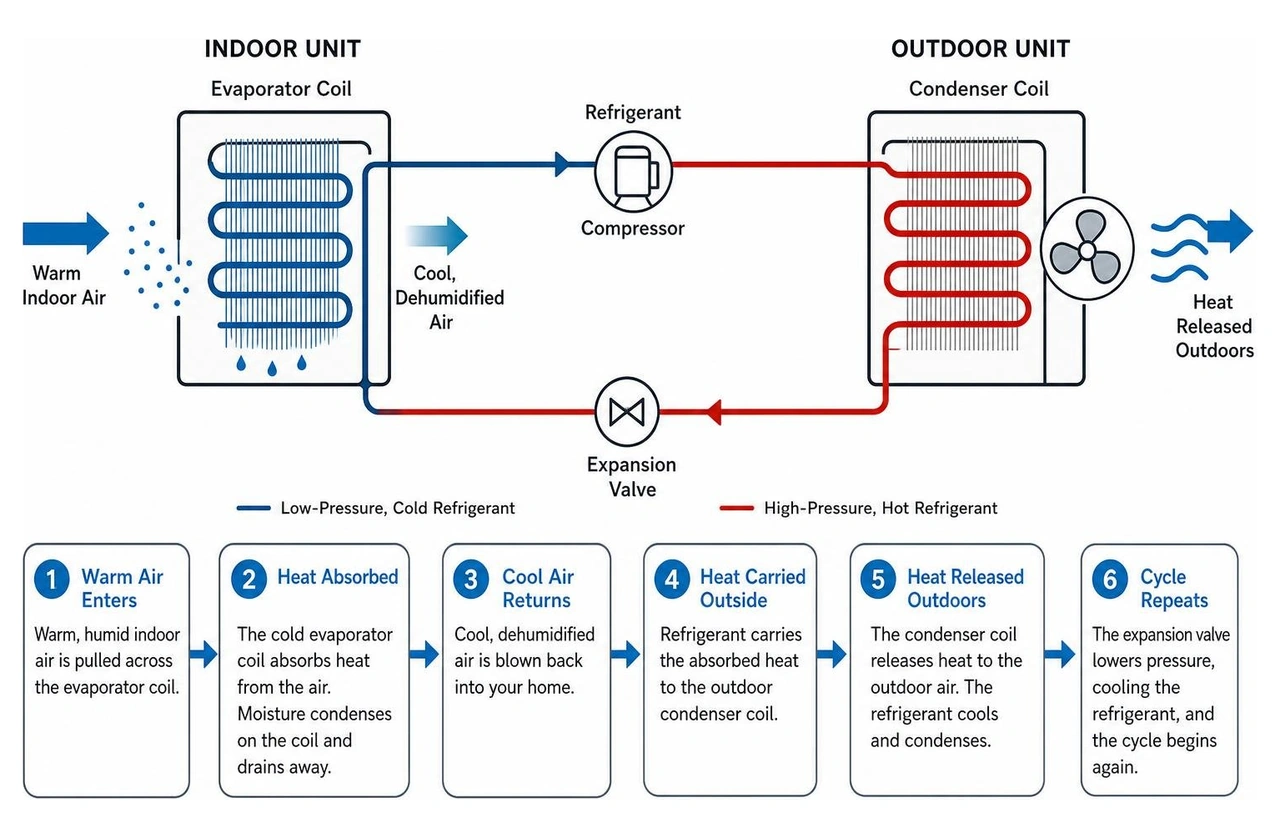
To appreciate how clean coils and filters protect your family, we first need to look at what is actually happening inside your air conditioning system. Many homeowners assume that an AC unit works by actively "creating" cold air and blowing it into the house. In reality, the process is all about heat transfer. Your air conditioner is a heat-extraction machine, working against the natural laws of thermodynamics to pull warmth out of your indoor spaces and dump it outside.
This heat exchange relies on two primary components: the evaporator coil (located inside your home, usually within the air handler or furnace cabinet) and the condenser coil (located in the outdoor unit). Both coils are made of highly conductive copper tubing surrounded by thousands of paper-thin aluminum fins designed to maximize surface area.
If either of these coils becomes coated in a layer of household dust, pet hair, or outdoor grime, that debris acts as an insulating blanket. This barrier physically blocks the heat transfer process. When heat cannot escape, your system has to run much longer and work significantly harder to keep your home comfortable. To understand this dynamic in more detail, read about the Dirty Condenser Coil and AC Performance Connection to see how mechanical strain translates directly to poor home cooling.
The Role of Evaporator Coils in Humid Climates
The indoor evaporator coil has a dual responsibility: it absorbs heat from your indoor air, and in doing so, it removes moisture. As warm, humid air from your Pinehurst home is blown across the cold evaporator coil, water vapor naturally condenses on the cold metal surface—much like condensation forming on the outside of an iced tea glass on a hot July afternoon.
This moisture drips down the coil fins into a condensate drain pan and is channeled safely out of your home. However, this process means the evaporator coil is almost constantly wet during our long Texas cooling seasons.
When you combine a damp metal surface with the organic dust, skin flakes, and pet dander that bypass a poor or dirty air filter, you create the perfect breeding ground for mold, mildew, and bacterial biofilms. To learn more about how this moisture extraction process directly shapes the air you breathe, explore How Your AC Affects Indoor Air Quality in Humid Climates.
The Role of Condenser Coils in Heat Release
While the indoor coil is busy absorbing heat and managing moisture, the outdoor condenser coil has the grueling job of releasing that captured heat into the outdoor air. Located in your backyard, the condenser unit is completely exposed to the elements.
In communities like Tomball, Spring, and Magnolia, outdoor condenser coils are constantly bombarded by:
- Pine needles and oak leaves
- Grass clippings from weekly lawn mowing
- High concentrations of seasonal pollen
- Windblown dust and dirt
When a thick blanket of outdoor debris coats the condenser coil, the heat trapped in the refrigerant cannot escape. The compressor—the "heart" of your HVAC system—is forced to pump at much higher pressures and temperatures to reject the heat. This not only causes your monthly utility bills to climb, but it also subjects the compressor to extreme thermal stress, paving the way for a premature and highly expensive mechanical breakdown.
The Health Risks of Dirty Coils and Clogged Filters
When we ignore HVAC maintenance, the consequences go far beyond a warmer house or a higher electric bill. A neglected air conditioning system can actively compromise your family's physical health. Because your HVAC system recirculates the same indoor air multiple times an hour, any biological growth or accumulated particulate matter on your coils and filters is continuously distributed into your bedrooms, living rooms, and kitchen.

When standard air filters are left unchanged, they eventually reach a point of complete saturation. Once a filter is fully clogged, the vacuum pressure created by the system's blower motor can cause the filter to bend, buckle, or pull away from its frame. This allows unfiltered air to bypass the filter entirely.
This bypass air carries heavy loads of dust, hair, and microscopic allergens directly onto the wet evaporator coil. If you have dogs or cats, this issue is magnified. To understand how advanced filtration shields your family from these specific irritants, read about How Air Filtration Systems Remove Pet Dander.
How Clean Coils and Filters Protect Your Family from Airborne Pathogens
Maintaining clean coils and filters is your home's primary line of defense against microscopic airborne hazards. According to the EPA, indoor air pollution is a top environmental health risk. This is particularly true for children, whose lungs and immune systems are still developing. Because children breathe faster than adults relative to their body weight and spend up to 90% of their time indoors, they are highly vulnerable to poor indoor air quality.
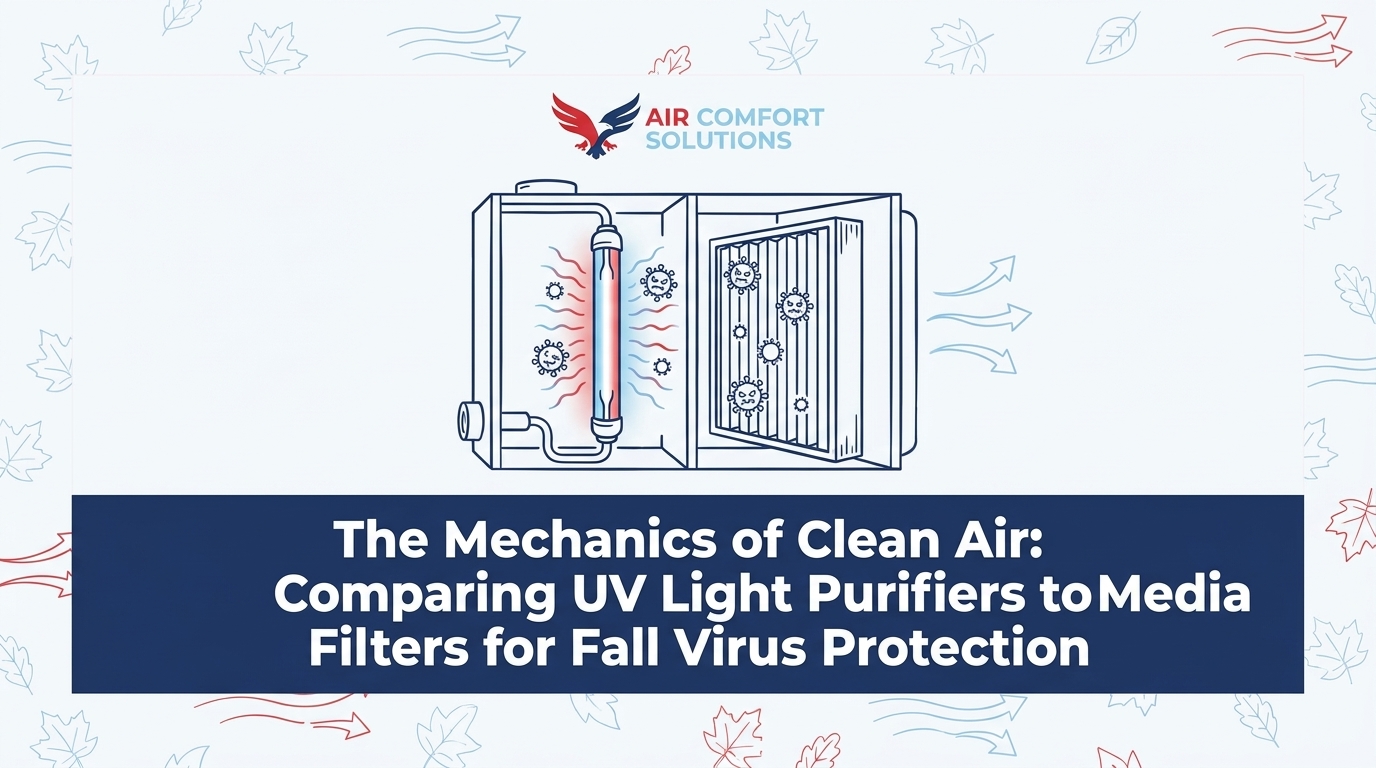
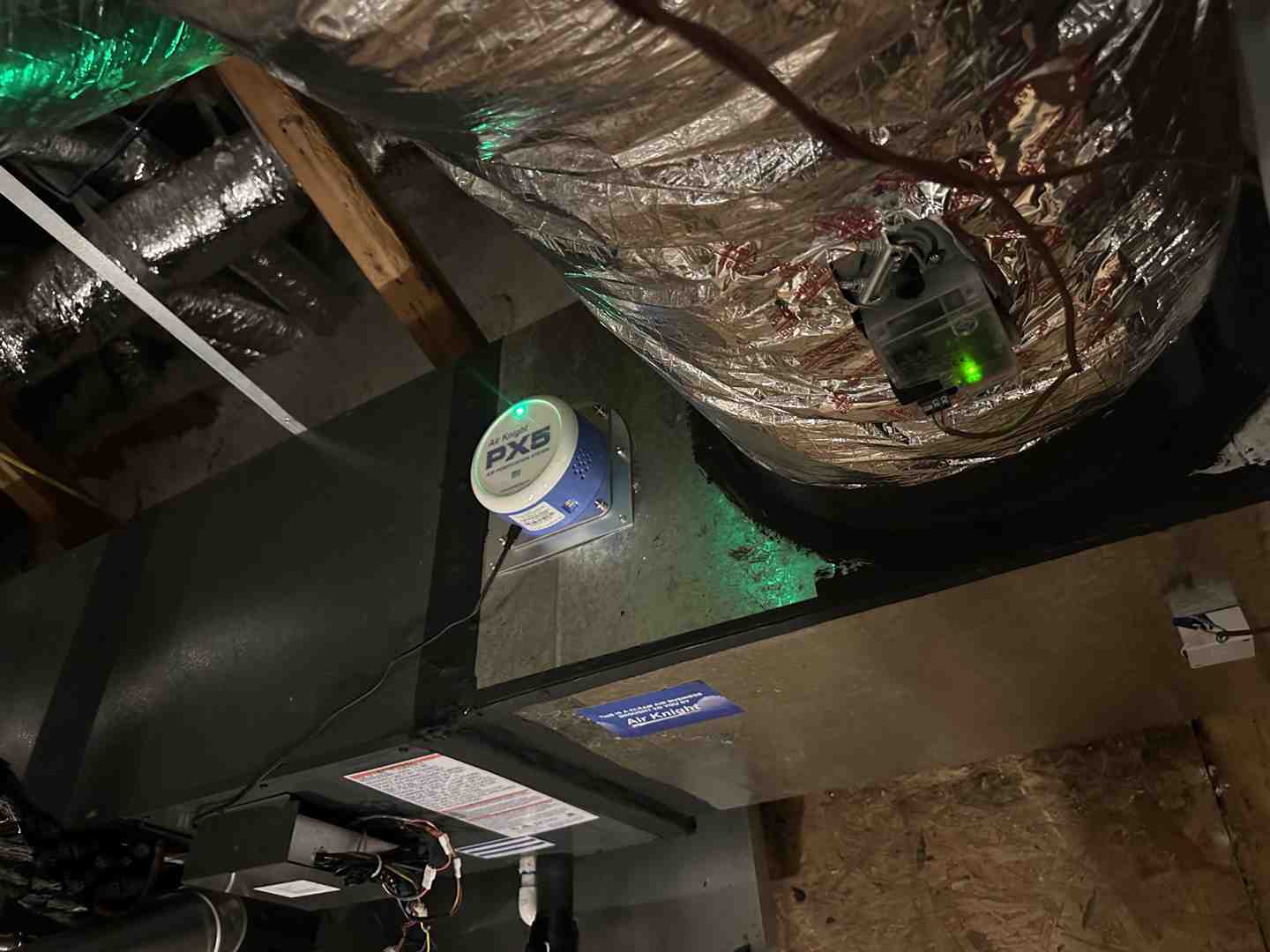
When high-quality filters are kept clean, they trap fine particulate matter (including PM2.5 particles), mold spores, pollen, and bacteria before these irritants can reach your family's lungs. Pairing clean coils with an advanced Air Purification System can reduce airborne microbial risks by up to 90%, creating a sterile, safe environment for family members with asthma, seasonal allergies, or chronic respiratory conditions.
Preventing Mold Biofilm on Damp Evaporator Coils
In our humid Southeast Texas climate, a neglected evaporator coil can grow a visible, harmful mold biofilm within just 8 to 14 weeks of continuous operation. As organic dust sticks to the wet coil fins, it provides an abundant food source for fungal spores. Over time, this mixture of dust and moisture forms a thick, sticky, living paste.
This biological biofilm is responsible for what the HVAC industry calls "dirty sock syndrome"—that sharp, musty, or sour odor that blows out of your vents the moment your air conditioner kicks on. In fact, clinical observations and industry data show that approximately 38% of all musty odor complaints in residential systems trace directly back to a fungal biofilm growing on the evaporator coil.
Breathing these spores daily can trigger headaches, sinus congestion, chronic coughing, and fatigue—symptoms often associated with Sick Building Syndrome. Keeping the coil clean prevents this biological glue from ever taking root.
It is a simple physical fact: dirt is an excellent insulator. When a thin layer of dust—even one as thin as a sheet of paper—accumulates on your HVAC coils, it severely degrades the system's ability to transfer heat. This translates directly into longer cooling cycles, uneven room temperatures, and a massive waste of electricity.
According to the U.S. Department of Energy, keeping your coils and filters clean can lower your air conditioner's energy consumption by 5% to 15%. Conversely, a neglected, dirty system can drive up energy usage by as much as 30%, forcing your air conditioner to draw 40% more electricity to achieve the same cooling output as a clean unit.
To visualize how dirty components drag down your entire system, consider this comparison:
| Performance Metric | Clean Coils & Filters | Dirty Coils & Clogged Filters |
|---|
| Heat Transfer Efficiency | Maximum | Severely Restricted (Insulated by Dust) |
| Average Cooling Cycle Time | Short, Efficient Cycles | Long, Continuous Running |
| Electricity Consumption | Baseline | 30% to 40% Higher |
| Indoor Relative Humidity | Maintained at 40% - 50% | High (Muggy, Sticky Air) |
| Risk of Coil Freeze-Ups | Low / None | High (Due to Restricted Airflow) |
| Expected Compressor Lifespan | 15 to 20 Years | Reductions of 3 to 5 Years |
Airflow Restriction and Frozen Coils
Your air conditioner needs a steady, unrestricted volume of warm indoor air flowing over the evaporator coil to keep the refrigerant inside the tubing from getting too cold. When a dirty filter or a matted evaporator coil blocks this airflow, the static pressure within your ductwork spikes, and the temperature of the coil drops below 32°F.
As the moisture in the air continues to condense on the sub-freezing coil, it instantly turns to ice. This ice layer further blocks airflow, causing a runaway effect that eventually encases the entire indoor unit in a solid block of ice.
If this happens, your AC will stop cooling entirely, and as the ice eventually thaws, it can easily overflow your drain pan, leading to severe water damage to your ceilings and walls. To understand the mechanics behind this frustrating problem, read our detailed guide on How Dirty Filters Cause Frozen Evaporator Coils.
How Clean Coils and Filters Protect Your Family from Sudden System Breakdowns
There is nothing worse than your air conditioner breaking down in the middle of a triple-digit August heatwave in Conroe or The Woodlands. Most emergency AC breakdowns are not sudden, random acts of bad luck; they are the final stage of long-term neglect.
When your system operates with dirty coils and clogged filters, the compressor has to run at elevated temperatures and pressures to move heat. This constant overheating causes the compressor's lubricating oil to break down, leading to severe friction, mechanical wear, and ultimately, a complete compressor burnout.
Replacing a compressor is one of the most expensive repairs in the HVAC industry. Systems with neglected coil maintenance routinely require complete compressor replacements 3 to 5 years earlier than well-maintained units. By keeping these components clean, you protect your wallet and ensure your family has reliable, uninterrupted cooling. For more practical advice on avoiding these breakdowns, check out our HVAC Maintenance Tips for Texas Homeowners.
Maintenance Guide: Cleaning and Replacement Best Practices
Taking care of your filters and coils is a highly cost-effective way to protect your home's air quality and mechanical efficiency. While some of these tasks are simple enough to do yourself, others require specialized tools and professional training to avoid damaging your expensive equipment.
The single most effective step you can take at home is establishing a strict filter replacement routine. The old rule of thumb to change your filter every 90 days is outdated for modern, airtight homes—especially if you have pets or suffer from allergies. A 45-day baseline is much safer for standard 1-inch pleated filters.
When choosing a filter, pay close attention to the MERV (Minimum Efficiency Reporting Value) rating:
- MERV 1 to 4: Typically cheap fiberglass filters. They protect the blower motor from large dust bunnies but let microscopic allergens and fine dust pass straight through to coat your coils.
- MERV 8 to 11: The sweet spot for typical residential use. These pleated filters capture pollen, dust mites, and mold spores without creating excessive airflow resistance.
- MERV 13: Highly recommended for households with severe asthma or allergies, but you should consult an HVAC professional first to ensure your system can handle the increased static pressure.
To make this process simple, we have put together a How to Replace AC Filters a Quick and Simple Guide that you can easily follow at home.
Refrigerator Coil Maintenance at Home
While we often focus on our home's central heating and cooling system, your kitchen refrigerator is another vital appliance that relies on clean coils to keep your food safe. A refrigerator's condenser coils are usually located at the bottom of the unit behind a base grille, or on the back of the appliance.
Over time, these coils become magnets for kitchen grease, pet hair, and floor dust. When refrigerator coils are dirty, the compressor has to work overtime, which can lead to unstable food temperatures and premature appliance failure.
Here is how you can safely clean your refrigerator coils at home every 6 months:
- Safety First: Unplug the refrigerator or disconnect the power at the circuit breaker before starting any work.
- Remove the Grille: Gently snap off or unscrew the base grille at the bottom front of the refrigerator.
- Vacuum the Area: Use a vacuum cleaner equipped with a soft brush attachment or a specialized flexible coil cleaning brush to gently sweep away loose dust and hair from the open areas behind the grille.
- Brush the Coils: Carefully slide the coil brush between the metal loops to loosen stubborn, caked-on dust. Avoid bending the delicate metal tubing or disturbing any water lines for ice makers.
- Clean Up: Vacuum up the loose debris from the floor, snap the grille back into place, and restore power to the unit.
Professional AC Coil Cleaning vs. DIY
While cleaning your refrigerator coils or swapping out your home's air filter are excellent DIY projects, cleaning your central AC's evaporator and condenser coils is a job best left to the professionals. The aluminum fins surrounding your AC coils are paper-thin and incredibly easy to bend. If you accidentally flatten these fins with a stiff brush or a high-pressure garden hose, you will permanently restrict airflow and ruin the coil's efficiency.
Furthermore, using the wrong cleaning chemical can be disastrous. Standard household cleaners or highly corrosive chemicals like bleach can react with the copper and aluminum, causing micro-corrosion that leads to expensive refrigerant leaks.
Professional technicians use specialized, self-foaming, non-acidic chemical cleaners that safely lift dirt out from deep within the fins without causing structural damage. To understand what goes into a comprehensive system tune-up, explore What Does Professional AC Service Include.
Frequently Asked Questions About HVAC Cleanliness
How often should I clean my AC coils and change my filters in Pinehurst, TX?
For the best balance of health protection and system efficiency, you should inspect your air filters every 30 days and replace standard 1-inch pleated filters every 45 to 60 days. If you have multiple shedding pets, live near active construction, or have family members with severe allergies, you should shorten this interval to every 20 to 30 days.
Your central AC coils (both indoor and outdoor) should be professionally inspected and cleaned at least once a year—ideally in the spring before the intense summer heat sets in.
What are the warning signs that my coils need cleaning?
Your system will usually drop several hints when its coils are dirty. Watch out for these common warning signs:
- Musty Odors: A sour, damp, or dusty smell coming from your vents when the system starts up.
- Longer Run Times: Your AC seems to run constantly without ever reaching the temperature set on your thermostat.
- Spiking Utility Bills: A sudden, unexplained increase in your monthly electricity costs during cooling seasons.
- Frozen AC Unit: Visible ice forming on the brass refrigerant lines or the indoor air handler cabinet.
- Uneven Cooling: Rooms farthest from the indoor unit feel stuffy, humid, or warm.
Can I use household bleach to clean my AC coils?
No, you should never use household bleach on your HVAC coils. Bleach is highly corrosive to copper and aluminum. Using it on your coils can cause chemical pitting, which leads to microscopic pinhole leaks in your refrigerant lines.
Additionally, pouring bleach into your system can release highly toxic, irritating fumes into your home's air duct network, posing an immediate respiratory hazard to your family and pets.
Conclusion
At Air Comfort Pros, we know that your home should be a safe haven for your family. Understanding how clean coils and filters protect your family is a powerful first step toward lower energy bills, a longer-lasting HVAC system, and—most importantly—clean, healthy air that you can breathe with confidence.
If you live in Pinehurst, Tomball, Spring, Magnolia, Conroe, or surrounding North Harris County communities, our team of experienced, licensed technicians is here to help you breathe easier. We offer upfront pricing, professional indoor air quality evaluations, and comprehensive maintenance plans tailored to our unique Texas climate.
Don't wait for a system freeze-up or a spike in allergy symptoms to take action. Schedule professional indoor air quality services today and let us help you keep your home's air clean, safe, and comfortable all year long.
Why Knowing How Clean Coils and Filters Protect Your Family Matters More You Think
Understanding how clean coils and filters protect your family is one of the most practical things a Pinehurst, TX homeowner can do — because the air inside your home may already be working against you. The EPA estimates indoor air is 2 to 5 times more polluted than outdoor air, and in a humid Gulf Coast climate like Harris County, that gap can grow even wider. Every time your HVAC system runs, it circulates the entire volume of air in your home 5 to 7 times per hour — pushing whatever is on your coils and filters straight into the air your family breathes.
Here is a quick summary of how clean coils and filters protect your family:
- Block airborne allergens — Clean filters trap dust, pollen, pet dander, and mold spores before they circulate through your living spaces
- Prevent mold and bacteria growth — Clean evaporator coils resist the biofilm buildup that causes musty odors and respiratory irritation
- Reduce asthma and allergy triggers — Improved filtration can cut indoor particle concentrations by 50% to 70%, with measurable reductions in symptoms
- Lower the risk of sudden system failure — Clean components reduce strain on the compressor and blower motor, extending equipment life
- Cut energy costs — A dirty coil can increase your AC's energy consumption by up to 30%, driving up monthly utility bills
- Protect vulnerable family members — Children breathe faster than adults and spend more time indoors, making them especially sensitive to poor indoor air quality
In Pinehurst and across North Harris County, the combination of high humidity, regional pollen, and year-round AC use makes coil and filter maintenance more urgent than in drier climates. When coils stay damp and filters go unchanged, your HVAC system stops being a comfort tool and starts becoming a health risk. The good news is that consistent, simple maintenance makes a measurable difference — and understanding why is the first step.
Understanding Your HVAC Coils and How Clean Coils and Filters Protect Your Family
To appreciate how clean coils and filters protect your family, we first need to look at what is actually happening inside your air conditioning system. Many homeowners assume that an AC unit works by actively "creating" cold air and blowing it into the house. In reality, the process is all about heat transfer. Your air conditioner is a heat-extraction machine, working against the natural laws of thermodynamics to pull warmth out of your indoor spaces and dump it outside.
This heat exchange relies on two primary components: the evaporator coil (located inside your home, usually within the air handler or furnace cabinet) and the condenser coil (located in the outdoor unit). Both coils are made of highly conductive copper tubing surrounded by thousands of paper-thin aluminum fins designed to maximize surface area.
If either of these coils becomes coated in a layer of household dust, pet hair, or outdoor grime, that debris acts as an insulating blanket. This barrier physically blocks the heat transfer process. When heat cannot escape, your system has to run much longer and work significantly harder to keep your home comfortable. To understand this dynamic in more detail, read about the Dirty Condenser Coil and AC Performance Connection to see how mechanical strain translates directly to poor home cooling.
The Role of Evaporator Coils in Humid Climates
The indoor evaporator coil has a dual responsibility: it absorbs heat from your indoor air, and in doing so, it removes moisture. As warm, humid air from your Pinehurst home is blown across the cold evaporator coil, water vapor naturally condenses on the cold metal surface—much like condensation forming on the outside of an iced tea glass on a hot July afternoon.
This moisture drips down the coil fins into a condensate drain pan and is channeled safely out of your home. However, this process means the evaporator coil is almost constantly wet during our long Texas cooling seasons.
When you combine a damp metal surface with the organic dust, skin flakes, and pet dander that bypass a poor or dirty air filter, you create the perfect breeding ground for mold, mildew, and bacterial biofilms. To learn more about how this moisture extraction process directly shapes the air you breathe, explore How Your AC Affects Indoor Air Quality in Humid Climates.
The Role of Condenser Coils in Heat Release
While the indoor coil is busy absorbing heat and managing moisture, the outdoor condenser coil has the grueling job of releasing that captured heat into the outdoor air. Located in your backyard, the condenser unit is completely exposed to the elements.
In communities like Tomball, Spring, and Magnolia, outdoor condenser coils are constantly bombarded by:
- Pine needles and oak leaves
- Grass clippings from weekly lawn mowing
- High concentrations of seasonal pollen
- Windblown dust and dirt
When a thick blanket of outdoor debris coats the condenser coil, the heat trapped in the refrigerant cannot escape. The compressor—the "heart" of your HVAC system—is forced to pump at much higher pressures and temperatures to reject the heat. This not only causes your monthly utility bills to climb, but it also subjects the compressor to extreme thermal stress, paving the way for a premature and highly expensive mechanical breakdown.
The Health Risks of Dirty Coils and Clogged Filters
When we ignore HVAC maintenance, the consequences go far beyond a warmer house or a higher electric bill. A neglected air conditioning system can actively compromise your family's physical health. Because your HVAC system recirculates the same indoor air multiple times an hour, any biological growth or accumulated particulate matter on your coils and filters is continuously distributed into your bedrooms, living rooms, and kitchen.
When standard air filters are left unchanged, they eventually reach a point of complete saturation. Once a filter is fully clogged, the vacuum pressure created by the system's blower motor can cause the filter to bend, buckle, or pull away from its frame. This allows unfiltered air to bypass the filter entirely.
This bypass air carries heavy loads of dust, hair, and microscopic allergens directly onto the wet evaporator coil. If you have dogs or cats, this issue is magnified. To understand how advanced filtration shields your family from these specific irritants, read about How Air Filtration Systems Remove Pet Dander.
How Clean Coils and Filters Protect Your Family from Airborne Pathogens
Maintaining clean coils and filters is your home's primary line of defense against microscopic airborne hazards. According to the EPA, indoor air pollution is a top environmental health risk. This is particularly true for children, whose lungs and immune systems are still developing. Because children breathe faster than adults relative to their body weight and spend up to 90% of their time indoors, they are highly vulnerable to poor indoor air quality.
When high-quality filters are kept clean, they trap fine particulate matter (including PM2.5 particles), mold spores, pollen, and bacteria before these irritants can reach your family's lungs. Pairing clean coils with an advanced Air Purification System can reduce airborne microbial risks by up to 90%, creating a sterile, safe environment for family members with asthma, seasonal allergies, or chronic respiratory conditions.
Preventing Mold Biofilm on Damp Evaporator Coils
In our humid Southeast Texas climate, a neglected evaporator coil can grow a visible, harmful mold biofilm within just 8 to 14 weeks of continuous operation. As organic dust sticks to the wet coil fins, it provides an abundant food source for fungal spores. Over time, this mixture of dust and moisture forms a thick, sticky, living paste.
This biological biofilm is responsible for what the HVAC industry calls "dirty sock syndrome"—that sharp, musty, or sour odor that blows out of your vents the moment your air conditioner kicks on. In fact, clinical observations and industry data show that approximately 38% of all musty odor complaints in residential systems trace directly back to a fungal biofilm growing on the evaporator coil.
Breathing these spores daily can trigger headaches, sinus congestion, chronic coughing, and fatigue—symptoms often associated with Sick Building Syndrome. Keeping the coil clean prevents this biological glue from ever taking root.
It is a simple physical fact: dirt is an excellent insulator. When a thin layer of dust—even one as thin as a sheet of paper—accumulates on your HVAC coils, it severely degrades the system's ability to transfer heat. This translates directly into longer cooling cycles, uneven room temperatures, and a massive waste of electricity.
According to the U.S. Department of Energy, keeping your coils and filters clean can lower your air conditioner's energy consumption by 5% to 15%. Conversely, a neglected, dirty system can drive up energy usage by as much as 30%, forcing your air conditioner to draw 40% more electricity to achieve the same cooling output as a clean unit.
To visualize how dirty components drag down your entire system, consider this comparison:
| Performance Metric | Clean Coils & Filters | Dirty Coils & Clogged Filters |
|---|
| Heat Transfer Efficiency | Maximum | Severely Restricted (Insulated by Dust) |
| Average Cooling Cycle Time | Short, Efficient Cycles | Long, Continuous Running |
| Electricity Consumption | Baseline | 30% to 40% Higher |
| Indoor Relative Humidity | Maintained at 40% - 50% | High (Muggy, Sticky Air) |
| Risk of Coil Freeze-Ups | Low / None | High (Due to Restricted Airflow) |
| Expected Compressor Lifespan | 15 to 20 Years | Reductions of 3 to 5 Years |
Airflow Restriction and Frozen Coils
Your air conditioner needs a steady, unrestricted volume of warm indoor air flowing over the evaporator coil to keep the refrigerant inside the tubing from getting too cold. When a dirty filter or a matted evaporator coil blocks this airflow, the static pressure within your ductwork spikes, and the temperature of the coil drops below 32°F.
As the moisture in the air continues to condense on the sub-freezing coil, it instantly turns to ice. This ice layer further blocks airflow, causing a runaway effect that eventually encases the entire indoor unit in a solid block of ice.
If this happens, your AC will stop cooling entirely, and as the ice eventually thaws, it can easily overflow your drain pan, leading to severe water damage to your ceilings and walls. To understand the mechanics behind this frustrating problem, read our detailed guide on How Dirty Filters Cause Frozen Evaporator Coils.
How Clean Coils and Filters Protect Your Family from Sudden System Breakdowns
There is nothing worse than your air conditioner breaking down in the middle of a triple-digit August heatwave in Conroe or The Woodlands. Most emergency AC breakdowns are not sudden, random acts of bad luck; they are the final stage of long-term neglect.
When your system operates with dirty coils and clogged filters, the compressor has to run at elevated temperatures and pressures to move heat. This constant overheating causes the compressor's lubricating oil to break down, leading to severe friction, mechanical wear, and ultimately, a complete compressor burnout.
Replacing a compressor is one of the most expensive repairs in the HVAC industry. Systems with neglected coil maintenance routinely require complete compressor replacements 3 to 5 years earlier than well-maintained units. By keeping these components clean, you protect your wallet and ensure your family has reliable, uninterrupted cooling. For more practical advice on avoiding these breakdowns, check out our HVAC Maintenance Tips for Texas Homeowners.
Maintenance Guide: Cleaning and Replacement Best Practices
Taking care of your filters and coils is a highly cost-effective way to protect your home's air quality and mechanical efficiency. While some of these tasks are simple enough to do yourself, others require specialized tools and professional training to avoid damaging your expensive equipment.
The single most effective step you can take at home is establishing a strict filter replacement routine. The old rule of thumb to change your filter every 90 days is outdated for modern, airtight homes—especially if you have pets or suffer from allergies. A 45-day baseline is much safer for standard 1-inch pleated filters.
When choosing a filter, pay close attention to the MERV (Minimum Efficiency Reporting Value) rating:
- MERV 1 to 4: Typically cheap fiberglass filters. They protect the blower motor from large dust bunnies but let microscopic allergens and fine dust pass straight through to coat your coils.
- MERV 8 to 11: The sweet spot for typical residential use. These pleated filters capture pollen, dust mites, and mold spores without creating excessive airflow resistance.
- MERV 13: Highly recommended for households with severe asthma or allergies, but you should consult an HVAC professional first to ensure your system can handle the increased static pressure.
To make this process simple, we have put together a How to Replace AC Filters a Quick and Simple Guide that you can easily follow at home.
Refrigerator Coil Maintenance at Home
While we often focus on our home's central heating and cooling system, your kitchen refrigerator is another vital appliance that relies on clean coils to keep your food safe. A refrigerator's condenser coils are usually located at the bottom of the unit behind a base grille, or on the back of the appliance.
Over time, these coils become magnets for kitchen grease, pet hair, and floor dust. When refrigerator coils are dirty, the compressor has to work overtime, which can lead to unstable food temperatures and premature appliance failure.
Here is how you can safely clean your refrigerator coils at home every 6 months:
- Safety First: Unplug the refrigerator or disconnect the power at the circuit breaker before starting any work.
- Remove the Grille: Gently snap off or unscrew the base grille at the bottom front of the refrigerator.
- Vacuum the Area: Use a vacuum cleaner equipped with a soft brush attachment or a specialized flexible coil cleaning brush to gently sweep away loose dust and hair from the open areas behind the grille.
- Brush the Coils: Carefully slide the coil brush between the metal loops to loosen stubborn, caked-on dust. Avoid bending the delicate metal tubing or disturbing any water lines for ice makers.
- Clean Up: Vacuum up the loose debris from the floor, snap the grille back into place, and restore power to the unit.
Professional AC Coil Cleaning vs. DIY
While cleaning your refrigerator coils or swapping out your home's air filter are excellent DIY projects, cleaning your central AC's evaporator and condenser coils is a job best left to the professionals. The aluminum fins surrounding your AC coils are paper-thin and incredibly easy to bend. If you accidentally flatten these fins with a stiff brush or a high-pressure garden hose, you will permanently restrict airflow and ruin the coil's efficiency.
Furthermore, using the wrong cleaning chemical can be disastrous. Standard household cleaners or highly corrosive chemicals like bleach can react with the copper and aluminum, causing micro-corrosion that leads to expensive refrigerant leaks.
Professional technicians use specialized, self-foaming, non-acidic chemical cleaners that safely lift dirt out from deep within the fins without causing structural damage. To understand what goes into a comprehensive system tune-up, explore What Does Professional AC Service Include.
Frequently Asked Questions About HVAC Cleanliness
How often should I clean my AC coils and change my filters in Pinehurst, TX?
For the best balance of health protection and system efficiency, you should inspect your air filters every 30 days and replace standard 1-inch pleated filters every 45 to 60 days. If you have multiple shedding pets, live near active construction, or have family members with severe allergies, you should shorten this interval to every 20 to 30 days.
Your central AC coils (both indoor and outdoor) should be professionally inspected and cleaned at least once a year—ideally in the spring before the intense summer heat sets in.
What are the warning signs that my coils need cleaning?
Your system will usually drop several hints when its coils are dirty. Watch out for these common warning signs:
- Musty Odors: A sour, damp, or dusty smell coming from your vents when the system starts up.
- Longer Run Times: Your AC seems to run constantly without ever reaching the temperature set on your thermostat.
- Spiking Utility Bills: A sudden, unexplained increase in your monthly electricity costs during cooling seasons.
- Frozen AC Unit: Visible ice forming on the brass refrigerant lines or the indoor air handler cabinet.
- Uneven Cooling: Rooms farthest from the indoor unit feel stuffy, humid, or warm.
Can I use household bleach to clean my AC coils?
No, you should never use household bleach on your HVAC coils. Bleach is highly corrosive to copper and aluminum. Using it on your coils can cause chemical pitting, which leads to microscopic pinhole leaks in your refrigerant lines.
Additionally, pouring bleach into your system can release highly toxic, irritating fumes into your home's air duct network, posing an immediate respiratory hazard to your family and pets.
Conclusion
At Air Comfort Pros, we know that your home should be a safe haven for your family. Understanding how clean coils and filters protect your family is a powerful first step toward lower energy bills, a longer-lasting HVAC system, and—most importantly—clean, healthy air that you can breathe with confidence.
If you live in Pinehurst, Tomball, Spring, Magnolia, Conroe, or surrounding North Harris County communities, our team of experienced, licensed technicians is here to help you breathe easier. We offer upfront pricing, professional indoor air quality evaluations, and comprehensive maintenance plans tailored to our unique Texas climate.
Don't wait for a system freeze-up or a spike in allergy symptoms to take action. Schedule professional indoor air quality services today and let us help you keep your home's air clean, safe, and comfortable all year long.
Why Knowing How Clean Coils and Filters Protect Your Family Matters More You Think
Understanding how clean coils and filters protect your family is one of the most practical things a Pinehurst, TX homeowner can do — because the air inside your home may already be working against you. The EPA estimates indoor air is 2 to 5 times more polluted than outdoor air, and in a humid Gulf Coast climate like Harris County, that gap can grow even wider. Every time your HVAC system runs, it circulates the entire volume of air in your home 5 to 7 times per hour — pushing whatever is on your coils and filters straight into the air your family breathes.
Here is a quick summary of how clean coils and filters protect your family:
- Block airborne allergens — Clean filters trap dust, pollen, pet dander, and mold spores before they circulate through your living spaces
- Prevent mold and bacteria growth — Clean evaporator coils resist the biofilm buildup that causes musty odors and respiratory irritation
- Reduce asthma and allergy triggers — Improved filtration can cut indoor particle concentrations by 50% to 70%, with measurable reductions in symptoms
- Lower the risk of sudden system failure — Clean components reduce strain on the compressor and blower motor, extending equipment life
- Cut energy costs — A dirty coil can increase your AC's energy consumption by up to 30%, driving up monthly utility bills
- Protect vulnerable family members — Children breathe faster than adults and spend more time indoors, making them especially sensitive to poor indoor air quality
In Pinehurst and across North Harris County, the combination of high humidity, regional pollen, and year-round AC use makes coil and filter maintenance more urgent than in drier climates. When coils stay damp and filters go unchanged, your HVAC system stops being a comfort tool and starts becoming a health risk. The good news is that consistent, simple maintenance makes a measurable difference — and understanding why is the first step.
Understanding Your HVAC Coils and How Clean Coils and Filters Protect Your Family
To appreciate how clean coils and filters protect your family, we first need to look at what is actually happening inside your air conditioning system. Many homeowners assume that an AC unit works by actively "creating" cold air and blowing it into the house. In reality, the process is all about heat transfer. Your air conditioner is a heat-extraction machine, working against the natural laws of thermodynamics to pull warmth out of your indoor spaces and dump it outside.
This heat exchange relies on two primary components: the evaporator coil (located inside your home, usually within the air handler or furnace cabinet) and the condenser coil (located in the outdoor unit). Both coils are made of highly conductive copper tubing surrounded by thousands of paper-thin aluminum fins designed to maximize surface area.
If either of these coils becomes coated in a layer of household dust, pet hair, or outdoor grime, that debris acts as an insulating blanket. This barrier physically blocks the heat transfer process. When heat cannot escape, your system has to run much longer and work significantly harder to keep your home comfortable. To understand this dynamic in more detail, read about the Dirty Condenser Coil and AC Performance Connection to see how mechanical strain translates directly to poor home cooling.
The Role of Evaporator Coils in Humid Climates
The indoor evaporator coil has a dual responsibility: it absorbs heat from your indoor air, and in doing so, it removes moisture. As warm, humid air from your Pinehurst home is blown across the cold evaporator coil, water vapor naturally condenses on the cold metal surface—much like condensation forming on the outside of an iced tea glass on a hot July afternoon.
This moisture drips down the coil fins into a condensate drain pan and is channeled safely out of your home. However, this process means the evaporator coil is almost constantly wet during our long Texas cooling seasons.
When you combine a damp metal surface with the organic dust, skin flakes, and pet dander that bypass a poor or dirty air filter, you create the perfect breeding ground for mold, mildew, and bacterial biofilms. To learn more about how this moisture extraction process directly shapes the air you breathe, explore How Your AC Affects Indoor Air Quality in Humid Climates.
The Role of Condenser Coils in Heat Release
While the indoor coil is busy absorbing heat and managing moisture, the outdoor condenser coil has the grueling job of releasing that captured heat into the outdoor air. Located in your backyard, the condenser unit is completely exposed to the elements.
In communities like Tomball, Spring, and Magnolia, outdoor condenser coils are constantly bombarded by:
- Pine needles and oak leaves
- Grass clippings from weekly lawn mowing
- High concentrations of seasonal pollen
- Windblown dust and dirt
When a thick blanket of outdoor debris coats the condenser coil, the heat trapped in the refrigerant cannot escape. The compressor—the "heart" of your HVAC system—is forced to pump at much higher pressures and temperatures to reject the heat. This not only causes your monthly utility bills to climb, but it also subjects the compressor to extreme thermal stress, paving the way for a premature and highly expensive mechanical breakdown.
The Health Risks of Dirty Coils and Clogged Filters
When we ignore HVAC maintenance, the consequences go far beyond a warmer house or a higher electric bill. A neglected air conditioning system can actively compromise your family's physical health. Because your HVAC system recirculates the same indoor air multiple times an hour, any biological growth or accumulated particulate matter on your coils and filters is continuously distributed into your bedrooms, living rooms, and kitchen.
When standard air filters are left unchanged, they eventually reach a point of complete saturation. Once a filter is fully clogged, the vacuum pressure created by the system's blower motor can cause the filter to bend, buckle, or pull away from its frame. This allows unfiltered air to bypass the filter entirely.
This bypass air carries heavy loads of dust, hair, and microscopic allergens directly onto the wet evaporator coil. If you have dogs or cats, this issue is magnified. To understand how advanced filtration shields your family from these specific irritants, read about How Air Filtration Systems Remove Pet Dander.
How Clean Coils and Filters Protect Your Family from Airborne Pathogens
Maintaining clean coils and filters is your home's primary line of defense against microscopic airborne hazards. According to the EPA, indoor air pollution is a top environmental health risk. This is particularly true for children, whose lungs and immune systems are still developing. Because children breathe faster than adults relative to their body weight and spend up to 90% of their time indoors, they are highly vulnerable to poor indoor air quality.
When high-quality filters are kept clean, they trap fine particulate matter (including PM2.5 particles), mold spores, pollen, and bacteria before these irritants can reach your family's lungs. Pairing clean coils with an advanced Air Purification System can reduce airborne microbial risks by up to 90%, creating a sterile, safe environment for family members with asthma, seasonal allergies, or chronic respiratory conditions.
Preventing Mold Biofilm on Damp Evaporator Coils
In our humid Southeast Texas climate, a neglected evaporator coil can grow a visible, harmful mold biofilm within just 8 to 14 weeks of continuous operation. As organic dust sticks to the wet coil fins, it provides an abundant food source for fungal spores. Over time, this mixture of dust and moisture forms a thick, sticky, living paste.
This biological biofilm is responsible for what the HVAC industry calls "dirty sock syndrome"—that sharp, musty, or sour odor that blows out of your vents the moment your air conditioner kicks on. In fact, clinical observations and industry data show that approximately 38% of all musty odor complaints in residential systems trace directly back to a fungal biofilm growing on the evaporator coil.
Breathing these spores daily can trigger headaches, sinus congestion, chronic coughing, and fatigue—symptoms often associated with Sick Building Syndrome. Keeping the coil clean prevents this biological glue from ever taking root.
It is a simple physical fact: dirt is an excellent insulator. When a thin layer of dust—even one as thin as a sheet of paper—accumulates on your HVAC coils, it severely degrades the system's ability to transfer heat. This translates directly into longer cooling cycles, uneven room temperatures, and a massive waste of electricity.
According to the U.S. Department of Energy, keeping your coils and filters clean can lower your air conditioner's energy consumption by 5% to 15%. Conversely, a neglected, dirty system can drive up energy usage by as much as 30%, forcing your air conditioner to draw 40% more electricity to achieve the same cooling output as a clean unit.
To visualize how dirty components drag down your entire system, consider this comparison:
| Performance Metric | Clean Coils & Filters | Dirty Coils & Clogged Filters |
|---|
| Heat Transfer Efficiency | Maximum | Severely Restricted (Insulated by Dust) |
| Average Cooling Cycle Time | Short, Efficient Cycles | Long, Continuous Running |
| Electricity Consumption | Baseline | 30% to 40% Higher |
| Indoor Relative Humidity | Maintained at 40% - 50% | High (Muggy, Sticky Air) |
| Risk of Coil Freeze-Ups | Low / None | High (Due to Restricted Airflow) |
| Expected Compressor Lifespan | 15 to 20 Years | Reductions of 3 to 5 Years |
Airflow Restriction and Frozen Coils
Your air conditioner needs a steady, unrestricted volume of warm indoor air flowing over the evaporator coil to keep the refrigerant inside the tubing from getting too cold. When a dirty filter or a matted evaporator coil blocks this airflow, the static pressure within your ductwork spikes, and the temperature of the coil drops below 32°F.
As the moisture in the air continues to condense on the sub-freezing coil, it instantly turns to ice. This ice layer further blocks airflow, causing a runaway effect that eventually encases the entire indoor unit in a solid block of ice.
If this happens, your AC will stop cooling entirely, and as the ice eventually thaws, it can easily overflow your drain pan, leading to severe water damage to your ceilings and walls. To understand the mechanics behind this frustrating problem, read our detailed guide on How Dirty Filters Cause Frozen Evaporator Coils.
How Clean Coils and Filters Protect Your Family from Sudden System Breakdowns
There is nothing worse than your air conditioner breaking down in the middle of a triple-digit August heatwave in Conroe or The Woodlands. Most emergency AC breakdowns are not sudden, random acts of bad luck; they are the final stage of long-term neglect.
When your system operates with dirty coils and clogged filters, the compressor has to run at elevated temperatures and pressures to move heat. This constant overheating causes the compressor's lubricating oil to break down, leading to severe friction, mechanical wear, and ultimately, a complete compressor burnout.
Replacing a compressor is one of the most expensive repairs in the HVAC industry. Systems with neglected coil maintenance routinely require complete compressor replacements 3 to 5 years earlier than well-maintained units. By keeping these components clean, you protect your wallet and ensure your family has reliable, uninterrupted cooling. For more practical advice on avoiding these breakdowns, check out our HVAC Maintenance Tips for Texas Homeowners.
Maintenance Guide: Cleaning and Replacement Best Practices
Taking care of your filters and coils is a highly cost-effective way to protect your home's air quality and mechanical efficiency. While some of these tasks are simple enough to do yourself, others require specialized tools and professional training to avoid damaging your expensive equipment.
The single most effective step you can take at home is establishing a strict filter replacement routine. The old rule of thumb to change your filter every 90 days is outdated for modern, airtight homes—especially if you have pets or suffer from allergies. A 45-day baseline is much safer for standard 1-inch pleated filters.
When choosing a filter, pay close attention to the MERV (Minimum Efficiency Reporting Value) rating:
- MERV 1 to 4: Typically cheap fiberglass filters. They protect the blower motor from large dust bunnies but let microscopic allergens and fine dust pass straight through to coat your coils.
- MERV 8 to 11: The sweet spot for typical residential use. These pleated filters capture pollen, dust mites, and mold spores without creating excessive airflow resistance.
- MERV 13: Highly recommended for households with severe asthma or allergies, but you should consult an HVAC professional first to ensure your system can handle the increased static pressure.
To make this process simple, we have put together a How to Replace AC Filters a Quick and Simple Guide that you can easily follow at home.
Refrigerator Coil Maintenance at Home
While we often focus on our home's central heating and cooling system, your kitchen refrigerator is another vital appliance that relies on clean coils to keep your food safe. A refrigerator's condenser coils are usually located at the bottom of the unit behind a base grille, or on the back of the appliance.
Over time, these coils become magnets for kitchen grease, pet hair, and floor dust. When refrigerator coils are dirty, the compressor has to work overtime, which can lead to unstable food temperatures and premature appliance failure.
Here is how you can safely clean your refrigerator coils at home every 6 months:
- Safety First: Unplug the refrigerator or disconnect the power at the circuit breaker before starting any work.
- Remove the Grille: Gently snap off or unscrew the base grille at the bottom front of the refrigerator.
- Vacuum the Area: Use a vacuum cleaner equipped with a soft brush attachment or a specialized flexible coil cleaning brush to gently sweep away loose dust and hair from the open areas behind the grille.
- Brush the Coils: Carefully slide the coil brush between the metal loops to loosen stubborn, caked-on dust. Avoid bending the delicate metal tubing or disturbing any water lines for ice makers.
- Clean Up: Vacuum up the loose debris from the floor, snap the grille back into place, and restore power to the unit.
Professional AC Coil Cleaning vs. DIY
While cleaning your refrigerator coils or swapping out your home's air filter are excellent DIY projects, cleaning your central AC's evaporator and condenser coils is a job best left to the professionals. The aluminum fins surrounding your AC coils are paper-thin and incredibly easy to bend. If you accidentally flatten these fins with a stiff brush or a high-pressure garden hose, you will permanently restrict airflow and ruin the coil's efficiency.
Furthermore, using the wrong cleaning chemical can be disastrous. Standard household cleaners or highly corrosive chemicals like bleach can react with the copper and aluminum, causing micro-corrosion that leads to expensive refrigerant leaks.
Professional technicians use specialized, self-foaming, non-acidic chemical cleaners that safely lift dirt out from deep within the fins without causing structural damage. To understand what goes into a comprehensive system tune-up, explore What Does Professional AC Service Include.
Frequently Asked Questions About HVAC Cleanliness
How often should I clean my AC coils and change my filters in Pinehurst, TX?
For the best balance of health protection and system efficiency, you should inspect your air filters every 30 days and replace standard 1-inch pleated filters every 45 to 60 days. If you have multiple shedding pets, live near active construction, or have family members with severe allergies, you should shorten this interval to every 20 to 30 days.
Your central AC coils (both indoor and outdoor) should be professionally inspected and cleaned at least once a year—ideally in the spring before the intense summer heat sets in.
What are the warning signs that my coils need cleaning?
Your system will usually drop several hints when its coils are dirty. Watch out for these common warning signs:
- Musty Odors: A sour, damp, or dusty smell coming from your vents when the system starts up.
- Longer Run Times: Your AC seems to run constantly without ever reaching the temperature set on your thermostat.
- Spiking Utility Bills: A sudden, unexplained increase in your monthly electricity costs during cooling seasons.
- Frozen AC Unit: Visible ice forming on the brass refrigerant lines or the indoor air handler cabinet.
- Uneven Cooling: Rooms farthest from the indoor unit feel stuffy, humid, or warm.
Can I use household bleach to clean my AC coils?
No, you should never use household bleach on your HVAC coils. Bleach is highly corrosive to copper and aluminum. Using it on your coils can cause chemical pitting, which leads to microscopic pinhole leaks in your refrigerant lines.
Additionally, pouring bleach into your system can release highly toxic, irritating fumes into your home's air duct network, posing an immediate respiratory hazard to your family and pets.
Conclusion
At Air Comfort Pros, we know that your home should be a safe haven for your family. Understanding how clean coils and filters protect your family is a powerful first step toward lower energy bills, a longer-lasting HVAC system, and—most importantly—clean, healthy air that you can breathe with confidence.
If you live in Pinehurst, Tomball, Spring, Magnolia, Conroe, or surrounding North Harris County communities, our team of experienced, licensed technicians is here to help you breathe easier. We offer upfront pricing, professional indoor air quality evaluations, and comprehensive maintenance plans tailored to our unique Texas climate.
Don't wait for a system freeze-up or a spike in allergy symptoms to take action. Schedule professional indoor air quality services today and let us help you keep your home's air clean, safe, and comfortable all year long.
Why Knowing How Clean Coils and Filters Protect Your Family Matters More You Think
Understanding how clean coils and filters protect your family is one of the most practical things a Pinehurst, TX homeowner can do — because the air inside your home may already be working against you. The EPA estimates indoor air is 2 to 5 times more polluted than outdoor air, and in a humid Gulf Coast climate like Harris County, that gap can grow even wider. Every time your HVAC system runs, it circulates the entire volume of air in your home 5 to 7 times per hour — pushing whatever is on your coils and filters straight into the air your family breathes.
Here is a quick summary of how clean coils and filters protect your family:
- Block airborne allergens — Clean filters trap dust, pollen, pet dander, and mold spores before they circulate through your living spaces
- Prevent mold and bacteria growth — Clean evaporator coils resist the biofilm buildup that causes musty odors and respiratory irritation
- Reduce asthma and allergy triggers — Improved filtration can cut indoor particle concentrations by 50% to 70%, with measurable reductions in symptoms
- Lower the risk of sudden system failure — Clean components reduce strain on the compressor and blower motor, extending equipment life
- Cut energy costs — A dirty coil can increase your AC's energy consumption by up to 30%, driving up monthly utility bills
- Protect vulnerable family members — Children breathe faster than adults and spend more time indoors, making them especially sensitive to poor indoor air quality
In Pinehurst and across North Harris County, the combination of high humidity, regional pollen, and year-round AC use makes coil and filter maintenance more urgent than in drier climates. When coils stay damp and filters go unchanged, your HVAC system stops being a comfort tool and starts becoming a health risk. The good news is that consistent, simple maintenance makes a measurable difference — and understanding why is the first step.
Understanding Your HVAC Coils and How Clean Coils and Filters Protect Your Family
To appreciate how clean coils and filters protect your family, we first need to look at what is actually happening inside your air conditioning system. Many homeowners assume that an AC unit works by actively "creating" cold air and blowing it into the house. In reality, the process is all about heat transfer. Your air conditioner is a heat-extraction machine, working against the natural laws of thermodynamics to pull warmth out of your indoor spaces and dump it outside.
This heat exchange relies on two primary components: the evaporator coil (located inside your home, usually within the air handler or furnace cabinet) and the condenser coil (located in the outdoor unit). Both coils are made of highly conductive copper tubing surrounded by thousands of paper-thin aluminum fins designed to maximize surface area.
If either of these coils becomes coated in a layer of household dust, pet hair, or outdoor grime, that debris acts as an insulating blanket. This barrier physically blocks the heat transfer process. When heat cannot escape, your system has to run much longer and work significantly harder to keep your home comfortable. To understand this dynamic in more detail, read about the Dirty Condenser Coil and AC Performance Connection to see how mechanical strain translates directly to poor home cooling.
The Role of Evaporator Coils in Humid Climates
The indoor evaporator coil has a dual responsibility: it absorbs heat from your indoor air, and in doing so, it removes moisture. As warm, humid air from your Pinehurst home is blown across the cold evaporator coil, water vapor naturally condenses on the cold metal surface—much like condensation forming on the outside of an iced tea glass on a hot July afternoon.
This moisture drips down the coil fins into a condensate drain pan and is channeled safely out of your home. However, this process means the evaporator coil is almost constantly wet during our long Texas cooling seasons.
When you combine a damp metal surface with the organic dust, skin flakes, and pet dander that bypass a poor or dirty air filter, you create the perfect breeding ground for mold, mildew, and bacterial biofilms. To learn more about how this moisture extraction process directly shapes the air you breathe, explore How Your AC Affects Indoor Air Quality in Humid Climates.
The Role of Condenser Coils in Heat Release
While the indoor coil is busy absorbing heat and managing moisture, the outdoor condenser coil has the grueling job of releasing that captured heat into the outdoor air. Located in your backyard, the condenser unit is completely exposed to the elements.
In communities like Tomball, Spring, and Magnolia, outdoor condenser coils are constantly bombarded by:
- Pine needles and oak leaves
- Grass clippings from weekly lawn mowing
- High concentrations of seasonal pollen
- Windblown dust and dirt
When a thick blanket of outdoor debris coats the condenser coil, the heat trapped in the refrigerant cannot escape. The compressor—the "heart" of your HVAC system—is forced to pump at much higher pressures and temperatures to reject the heat. This not only causes your monthly utility bills to climb, but it also subjects the compressor to extreme thermal stress, paving the way for a premature and highly expensive mechanical breakdown.
The Health Risks of Dirty Coils and Clogged Filters
When we ignore HVAC maintenance, the consequences go far beyond a warmer house or a higher electric bill. A neglected air conditioning system can actively compromise your family's physical health. Because your HVAC system recirculates the same indoor air multiple times an hour, any biological growth or accumulated particulate matter on your coils and filters is continuously distributed into your bedrooms, living rooms, and kitchen.
When standard air filters are left unchanged, they eventually reach a point of complete saturation. Once a filter is fully clogged, the vacuum pressure created by the system's blower motor can cause the filter to bend, buckle, or pull away from its frame. This allows unfiltered air to bypass the filter entirely.
This bypass air carries heavy loads of dust, hair, and microscopic allergens directly onto the wet evaporator coil. If you have dogs or cats, this issue is magnified. To understand how advanced filtration shields your family from these specific irritants, read about How Air Filtration Systems Remove Pet Dander.
How Clean Coils and Filters Protect Your Family from Airborne Pathogens
Maintaining clean coils and filters is your home's primary line of defense against microscopic airborne hazards. According to the EPA, indoor air pollution is a top environmental health risk. This is particularly true for children, whose lungs and immune systems are still developing. Because children breathe faster than adults relative to their body weight and spend up to 90% of their time indoors, they are highly vulnerable to poor indoor air quality.
When high-quality filters are kept clean, they trap fine particulate matter (including PM2.5 particles), mold spores, pollen, and bacteria before these irritants can reach your family's lungs. Pairing clean coils with an advanced Air Purification System can reduce airborne microbial risks by up to 90%, creating a sterile, safe environment for family members with asthma, seasonal allergies, or chronic respiratory conditions.
Preventing Mold Biofilm on Damp Evaporator Coils
In our humid Southeast Texas climate, a neglected evaporator coil can grow a visible, harmful mold biofilm within just 8 to 14 weeks of continuous operation. As organic dust sticks to the wet coil fins, it provides an abundant food source for fungal spores. Over time, this mixture of dust and moisture forms a thick, sticky, living paste.
This biological biofilm is responsible for what the HVAC industry calls "dirty sock syndrome"—that sharp, musty, or sour odor that blows out of your vents the moment your air conditioner kicks on. In fact, clinical observations and industry data show that approximately 38% of all musty odor complaints in residential systems trace directly back to a fungal biofilm growing on the evaporator coil.
Breathing these spores daily can trigger headaches, sinus congestion, chronic coughing, and fatigue—symptoms often associated with Sick Building Syndrome. Keeping the coil clean prevents this biological glue from ever taking root.
It is a simple physical fact: dirt is an excellent insulator. When a thin layer of dust—even one as thin as a sheet of paper—accumulates on your HVAC coils, it severely degrades the system's ability to transfer heat. This translates directly into longer cooling cycles, uneven room temperatures, and a massive waste of electricity.
According to the U.S. Department of Energy, keeping your coils and filters clean can lower your air conditioner's energy consumption by 5% to 15%. Conversely, a neglected, dirty system can drive up energy usage by as much as 30%, forcing your air conditioner to draw 40% more electricity to achieve the same cooling output as a clean unit.
To visualize how dirty components drag down your entire system, consider this comparison:
| Performance Metric | Clean Coils & Filters | Dirty Coils & Clogged Filters |
|---|
| Heat Transfer Efficiency | Maximum | Severely Restricted (Insulated by Dust) |
| Average Cooling Cycle Time | Short, Efficient Cycles | Long, Continuous Running |
| Electricity Consumption | Baseline | 30% to 40% Higher |
| Indoor Relative Humidity | Maintained at 40% - 50% | High (Muggy, Sticky Air) |
| Risk of Coil Freeze-Ups | Low / None | High (Due to Restricted Airflow) |
| Expected Compressor Lifespan | 15 to 20 Years | Reductions of 3 to 5 Years |
Airflow Restriction and Frozen Coils
Your air conditioner needs a steady, unrestricted volume of warm indoor air flowing over the evaporator coil to keep the refrigerant inside the tubing from getting too cold. When a dirty filter or a matted evaporator coil blocks this airflow, the static pressure within your ductwork spikes, and the temperature of the coil drops below 32°F.
As the moisture in the air continues to condense on the sub-freezing coil, it instantly turns to ice. This ice layer further blocks airflow, causing a runaway effect that eventually encases the entire indoor unit in a solid block of ice.
If this happens, your AC will stop cooling entirely, and as the ice eventually thaws, it can easily overflow your drain pan, leading to severe water damage to your ceilings and walls. To understand the mechanics behind this frustrating problem, read our detailed guide on How Dirty Filters Cause Frozen Evaporator Coils.
How Clean Coils and Filters Protect Your Family from Sudden System Breakdowns
There is nothing worse than your air conditioner breaking down in the middle of a triple-digit August heatwave in Conroe or The Woodlands. Most emergency AC breakdowns are not sudden, random acts of bad luck; they are the final stage of long-term neglect.
When your system operates with dirty coils and clogged filters, the compressor has to run at elevated temperatures and pressures to move heat. This constant overheating causes the compressor's lubricating oil to break down, leading to severe friction, mechanical wear, and ultimately, a complete compressor burnout.
Replacing a compressor is one of the most expensive repairs in the HVAC industry. Systems with neglected coil maintenance routinely require complete compressor replacements 3 to 5 years earlier than well-maintained units. By keeping these components clean, you protect your wallet and ensure your family has reliable, uninterrupted cooling. For more practical advice on avoiding these breakdowns, check out our HVAC Maintenance Tips for Texas Homeowners.
Maintenance Guide: Cleaning and Replacement Best Practices
Taking care of your filters and coils is a highly cost-effective way to protect your home's air quality and mechanical efficiency. While some of these tasks are simple enough to do yourself, others require specialized tools and professional training to avoid damaging your expensive equipment.
The single most effective step you can take at home is establishing a strict filter replacement routine. The old rule of thumb to change your filter every 90 days is outdated for modern, airtight homes—especially if you have pets or suffer from allergies. A 45-day baseline is much safer for standard 1-inch pleated filters.
When choosing a filter, pay close attention to the MERV (Minimum Efficiency Reporting Value) rating:
- MERV 1 to 4: Typically cheap fiberglass filters. They protect the blower motor from large dust bunnies but let microscopic allergens and fine dust pass straight through to coat your coils.
- MERV 8 to 11: The sweet spot for typical residential use. These pleated filters capture pollen, dust mites, and mold spores without creating excessive airflow resistance.
- MERV 13: Highly recommended for households with severe asthma or allergies, but you should consult an HVAC professional first to ensure your system can handle the increased static pressure.
To make this process simple, we have put together a How to Replace AC Filters a Quick and Simple Guide that you can easily follow at home.
Refrigerator Coil Maintenance at Home
While we often focus on our home's central heating and cooling system, your kitchen refrigerator is another vital appliance that relies on clean coils to keep your food safe. A refrigerator's condenser coils are usually located at the bottom of the unit behind a base grille, or on the back of the appliance.
Over time, these coils become magnets for kitchen grease, pet hair, and floor dust. When refrigerator coils are dirty, the compressor has to work overtime, which can lead to unstable food temperatures and premature appliance failure.
Here is how you can safely clean your refrigerator coils at home every 6 months:
- Safety First: Unplug the refrigerator or disconnect the power at the circuit breaker before starting any work.
- Remove the Grille: Gently snap off or unscrew the base grille at the bottom front of the refrigerator.
- Vacuum the Area: Use a vacuum cleaner equipped with a soft brush attachment or a specialized flexible coil cleaning brush to gently sweep away loose dust and hair from the open areas behind the grille.
- Brush the Coils: Carefully slide the coil brush between the metal loops to loosen stubborn, caked-on dust. Avoid bending the delicate metal tubing or disturbing any water lines for ice makers.
- Clean Up: Vacuum up the loose debris from the floor, snap the grille back into place, and restore power to the unit.
Professional AC Coil Cleaning vs. DIY
While cleaning your refrigerator coils or swapping out your home's air filter are excellent DIY projects, cleaning your central AC's evaporator and condenser coils is a job best left to the professionals. The aluminum fins surrounding your AC coils are paper-thin and incredibly easy to bend. If you accidentally flatten these fins with a stiff brush or a high-pressure garden hose, you will permanently restrict airflow and ruin the coil's efficiency.
Furthermore, using the wrong cleaning chemical can be disastrous. Standard household cleaners or highly corrosive chemicals like bleach can react with the copper and aluminum, causing micro-corrosion that leads to expensive refrigerant leaks.
Professional technicians use specialized, self-foaming, non-acidic chemical cleaners that safely lift dirt out from deep within the fins without causing structural damage. To understand what goes into a comprehensive system tune-up, explore What Does Professional AC Service Include.
Frequently Asked Questions About HVAC Cleanliness
How often should I clean my AC coils and change my filters in Pinehurst, TX?
For the best balance of health protection and system efficiency, you should inspect your air filters every 30 days and replace standard 1-inch pleated filters every 45 to 60 days. If you have multiple shedding pets, live near active construction, or have family members with severe allergies, you should shorten this interval to every 20 to 30 days.
Your central AC coils (both indoor and outdoor) should be professionally inspected and cleaned at least once a year—ideally in the spring before the intense summer heat sets in.
What are the warning signs that my coils need cleaning?
Your system will usually drop several hints when its coils are dirty. Watch out for these common warning signs:
- Musty Odors: A sour, damp, or dusty smell coming from your vents when the system starts up.
- Longer Run Times: Your AC seems to run constantly without ever reaching the temperature set on your thermostat.
- Spiking Utility Bills: A sudden, unexplained increase in your monthly electricity costs during cooling seasons.
- Frozen AC Unit: Visible ice forming on the brass refrigerant lines or the indoor air handler cabinet.
- Uneven Cooling: Rooms farthest from the indoor unit feel stuffy, humid, or warm.
Can I use household bleach to clean my AC coils?
No, you should never use household bleach on your HVAC coils. Bleach is highly corrosive to copper and aluminum. Using it on your coils can cause chemical pitting, which leads to microscopic pinhole leaks in your refrigerant lines.
Additionally, pouring bleach into your system can release highly toxic, irritating fumes into your home's air duct network, posing an immediate respiratory hazard to your family and pets.
Conclusion
At Air Comfort Pros, we know that your home should be a safe haven for your family. Understanding how clean coils and filters protect your family is a powerful first step toward lower energy bills, a longer-lasting HVAC system, and—most importantly—clean, healthy air that you can breathe with confidence.
If you live in Pinehurst, Tomball, Spring, Magnolia, Conroe, or surrounding North Harris County communities, our team of experienced, licensed technicians is here to help you breathe easier. We offer upfront pricing, professional indoor air quality evaluations, and comprehensive maintenance plans tailored to our unique Texas climate.
Don't wait for a system freeze-up or a spike in allergy symptoms to take action. Schedule professional indoor air quality services today and let us help you keep your home's air clean, safe, and comfortable all year long.
Why Knowing How Clean Coils and Filters Protect Your Family Matters More You Think
Understanding how clean coils and filters protect your family is one of the most practical things a Pinehurst, TX homeowner can do — because the air inside your home may already be working against you. The EPA estimates indoor air is 2 to 5 times more polluted than outdoor air, and in a humid Gulf Coast climate like Harris County, that gap can grow even wider. Every time your HVAC system runs, it circulates the entire volume of air in your home 5 to 7 times per hour — pushing whatever is on your coils and filters straight into the air your family breathes.
Here is a quick summary of how clean coils and filters protect your family:
- Block airborne allergens — Clean filters trap dust, pollen, pet dander, and mold spores before they circulate through your living spaces
- Prevent mold and bacteria growth — Clean evaporator coils resist the biofilm buildup that causes musty odors and respiratory irritation
- Reduce asthma and allergy triggers — Improved filtration can cut indoor particle concentrations by 50% to 70%, with measurable reductions in symptoms
- Lower the risk of sudden system failure — Clean components reduce strain on the compressor and blower motor, extending equipment life
- Cut energy costs — A dirty coil can increase your AC's energy consumption by up to 30%, driving up monthly utility bills
- Protect vulnerable family members — Children breathe faster than adults and spend more time indoors, making them especially sensitive to poor indoor air quality
In Pinehurst and across North Harris County, the combination of high humidity, regional pollen, and year-round AC use makes coil and filter maintenance more urgent than in drier climates. When coils stay damp and filters go unchanged, your HVAC system stops being a comfort tool and starts becoming a health risk. The good news is that consistent, simple maintenance makes a measurable difference — and understanding why is the first step.
Understanding Your HVAC Coils and How Clean Coils and Filters Protect Your Family
To appreciate how clean coils and filters protect your family, we first need to look at what is actually happening inside your air conditioning system. Many homeowners assume that an AC unit works by actively "creating" cold air and blowing it into the house. In reality, the process is all about heat transfer. Your air conditioner is a heat-extraction machine, working against the natural laws of thermodynamics to pull warmth out of your indoor spaces and dump it outside.
This heat exchange relies on two primary components: the evaporator coil (located inside your home, usually within the air handler or furnace cabinet) and the condenser coil (located in the outdoor unit). Both coils are made of highly conductive copper tubing surrounded by thousands of paper-thin aluminum fins designed to maximize surface area.
If either of these coils becomes coated in a layer of household dust, pet hair, or outdoor grime, that debris acts as an insulating blanket. This barrier physically blocks the heat transfer process. When heat cannot escape, your system has to run much longer and work significantly harder to keep your home comfortable. To understand this dynamic in more detail, read about the Dirty Condenser Coil and AC Performance Connection to see how mechanical strain translates directly to poor home cooling.
The Role of Evaporator Coils in Humid Climates
The indoor evaporator coil has a dual responsibility: it absorbs heat from your indoor air, and in doing so, it removes moisture. As warm, humid air from your Pinehurst home is blown across the cold evaporator coil, water vapor naturally condenses on the cold metal surface—much like condensation forming on the outside of an iced tea glass on a hot July afternoon.
This moisture drips down the coil fins into a condensate drain pan and is channeled safely out of your home. However, this process means the evaporator coil is almost constantly wet during our long Texas cooling seasons.
When you combine a damp metal surface with the organic dust, skin flakes, and pet dander that bypass a poor or dirty air filter, you create the perfect breeding ground for mold, mildew, and bacterial biofilms. To learn more about how this moisture extraction process directly shapes the air you breathe, explore How Your AC Affects Indoor Air Quality in Humid Climates.
The Role of Condenser Coils in Heat Release
While the indoor coil is busy absorbing heat and managing moisture, the outdoor condenser coil has the grueling job of releasing that captured heat into the outdoor air. Located in your backyard, the condenser unit is completely exposed to the elements.
In communities like Tomball, Spring, and Magnolia, outdoor condenser coils are constantly bombarded by:
- Pine needles and oak leaves
- Grass clippings from weekly lawn mowing
- High concentrations of seasonal pollen
- Windblown dust and dirt
When a thick blanket of outdoor debris coats the condenser coil, the heat trapped in the refrigerant cannot escape. The compressor—the "heart" of your HVAC system—is forced to pump at much higher pressures and temperatures to reject the heat. This not only causes your monthly utility bills to climb, but it also subjects the compressor to extreme thermal stress, paving the way for a premature and highly expensive mechanical breakdown.
The Health Risks of Dirty Coils and Clogged Filters
When we ignore HVAC maintenance, the consequences go far beyond a warmer house or a higher electric bill. A neglected air conditioning system can actively compromise your family's physical health. Because your HVAC system recirculates the same indoor air multiple times an hour, any biological growth or accumulated particulate matter on your coils and filters is continuously distributed into your bedrooms, living rooms, and kitchen.
When standard air filters are left unchanged, they eventually reach a point of complete saturation. Once a filter is fully clogged, the vacuum pressure created by the system's blower motor can cause the filter to bend, buckle, or pull away from its frame. This allows unfiltered air to bypass the filter entirely.
This bypass air carries heavy loads of dust, hair, and microscopic allergens directly onto the wet evaporator coil. If you have dogs or cats, this issue is magnified. To understand how advanced filtration shields your family from these specific irritants, read about How Air Filtration Systems Remove Pet Dander.
How Clean Coils and Filters Protect Your Family from Airborne Pathogens
Maintaining clean coils and filters is your home's primary line of defense against microscopic airborne hazards. According to the EPA, indoor air pollution is a top environmental health risk. This is particularly true for children, whose lungs and immune systems are still developing. Because children breathe faster than adults relative to their body weight and spend up to 90% of their time indoors, they are highly vulnerable to poor indoor air quality.
When high-quality filters are kept clean, they trap fine particulate matter (including PM2.5 particles), mold spores, pollen, and bacteria before these irritants can reach your family's lungs. Pairing clean coils with an advanced Air Purification System can reduce airborne microbial risks by up to 90%, creating a sterile, safe environment for family members with asthma, seasonal allergies, or chronic respiratory conditions.
Preventing Mold Biofilm on Damp Evaporator Coils
In our humid Southeast Texas climate, a neglected evaporator coil can grow a visible, harmful mold biofilm within just 8 to 14 weeks of continuous operation. As organic dust sticks to the wet coil fins, it provides an abundant food source for fungal spores. Over time, this mixture of dust and moisture forms a thick, sticky, living paste.
This biological biofilm is responsible for what the HVAC industry calls "dirty sock syndrome"—that sharp, musty, or sour odor that blows out of your vents the moment your air conditioner kicks on. In fact, clinical observations and industry data show that approximately 38% of all musty odor complaints in residential systems trace directly back to a fungal biofilm growing on the evaporator coil.
Breathing these spores daily can trigger headaches, sinus congestion, chronic coughing, and fatigue—symptoms often associated with Sick Building Syndrome. Keeping the coil clean prevents this biological glue from ever taking root.
It is a simple physical fact: dirt is an excellent insulator. When a thin layer of dust—even one as thin as a sheet of paper—accumulates on your HVAC coils, it severely degrades the system's ability to transfer heat. This translates directly into longer cooling cycles, uneven room temperatures, and a massive waste of electricity.
According to the U.S. Department of Energy, keeping your coils and filters clean can lower your air conditioner's energy consumption by 5% to 15%. Conversely, a neglected, dirty system can drive up energy usage by as much as 30%, forcing your air conditioner to draw 40% more electricity to achieve the same cooling output as a clean unit.
To visualize how dirty components drag down your entire system, consider this comparison:
| Performance Metric | Clean Coils & Filters | Dirty Coils & Clogged Filters |
|---|
| Heat Transfer Efficiency | Maximum | Severely Restricted (Insulated by Dust) |
| Average Cooling Cycle Time | Short, Efficient Cycles | Long, Continuous Running |
| Electricity Consumption | Baseline | 30% to 40% Higher |
| Indoor Relative Humidity | Maintained at 40% - 50% | High (Muggy, Sticky Air) |
| Risk of Coil Freeze-Ups | Low / None | High (Due to Restricted Airflow) |
| Expected Compressor Lifespan | 15 to 20 Years | Reductions of 3 to 5 Years |
Airflow Restriction and Frozen Coils
Your air conditioner needs a steady, unrestricted volume of warm indoor air flowing over the evaporator coil to keep the refrigerant inside the tubing from getting too cold. When a dirty filter or a matted evaporator coil blocks this airflow, the static pressure within your ductwork spikes, and the temperature of the coil drops below 32°F.
As the moisture in the air continues to condense on the sub-freezing coil, it instantly turns to ice. This ice layer further blocks airflow, causing a runaway effect that eventually encases the entire indoor unit in a solid block of ice.
If this happens, your AC will stop cooling entirely, and as the ice eventually thaws, it can easily overflow your drain pan, leading to severe water damage to your ceilings and walls. To understand the mechanics behind this frustrating problem, read our detailed guide on How Dirty Filters Cause Frozen Evaporator Coils.
How Clean Coils and Filters Protect Your Family from Sudden System Breakdowns
There is nothing worse than your air conditioner breaking down in the middle of a triple-digit August heatwave in Conroe or The Woodlands. Most emergency AC breakdowns are not sudden, random acts of bad luck; they are the final stage of long-term neglect.
When your system operates with dirty coils and clogged filters, the compressor has to run at elevated temperatures and pressures to move heat. This constant overheating causes the compressor's lubricating oil to break down, leading to severe friction, mechanical wear, and ultimately, a complete compressor burnout.
Replacing a compressor is one of the most expensive repairs in the HVAC industry. Systems with neglected coil maintenance routinely require complete compressor replacements 3 to 5 years earlier than well-maintained units. By keeping these components clean, you protect your wallet and ensure your family has reliable, uninterrupted cooling. For more practical advice on avoiding these breakdowns, check out our HVAC Maintenance Tips for Texas Homeowners.
Maintenance Guide: Cleaning and Replacement Best Practices
Taking care of your filters and coils is a highly cost-effective way to protect your home's air quality and mechanical efficiency. While some of these tasks are simple enough to do yourself, others require specialized tools and professional training to avoid damaging your expensive equipment.
The single most effective step you can take at home is establishing a strict filter replacement routine. The old rule of thumb to change your filter every 90 days is outdated for modern, airtight homes—especially if you have pets or suffer from allergies. A 45-day baseline is much safer for standard 1-inch pleated filters.
When choosing a filter, pay close attention to the MERV (Minimum Efficiency Reporting Value) rating:
- MERV 1 to 4: Typically cheap fiberglass filters. They protect the blower motor from large dust bunnies but let microscopic allergens and fine dust pass straight through to coat your coils.
- MERV 8 to 11: The sweet spot for typical residential use. These pleated filters capture pollen, dust mites, and mold spores without creating excessive airflow resistance.
- MERV 13: Highly recommended for households with severe asthma or allergies, but you should consult an HVAC professional first to ensure your system can handle the increased static pressure.
To make this process simple, we have put together a How to Replace AC Filters a Quick and Simple Guide that you can easily follow at home.
Refrigerator Coil Maintenance at Home
While we often focus on our home's central heating and cooling system, your kitchen refrigerator is another vital appliance that relies on clean coils to keep your food safe. A refrigerator's condenser coils are usually located at the bottom of the unit behind a base grille, or on the back of the appliance.
Over time, these coils become magnets for kitchen grease, pet hair, and floor dust. When refrigerator coils are dirty, the compressor has to work overtime, which can lead to unstable food temperatures and premature appliance failure.
Here is how you can safely clean your refrigerator coils at home every 6 months:
- Safety First: Unplug the refrigerator or disconnect the power at the circuit breaker before starting any work.
- Remove the Grille: Gently snap off or unscrew the base grille at the bottom front of the refrigerator.
- Vacuum the Area: Use a vacuum cleaner equipped with a soft brush attachment or a specialized flexible coil cleaning brush to gently sweep away loose dust and hair from the open areas behind the grille.
- Brush the Coils: Carefully slide the coil brush between the metal loops to loosen stubborn, caked-on dust. Avoid bending the delicate metal tubing or disturbing any water lines for ice makers.
- Clean Up: Vacuum up the loose debris from the floor, snap the grille back into place, and restore power to the unit.
Professional AC Coil Cleaning vs. DIY
While cleaning your refrigerator coils or swapping out your home's air filter are excellent DIY projects, cleaning your central AC's evaporator and condenser coils is a job best left to the professionals. The aluminum fins surrounding your AC coils are paper-thin and incredibly easy to bend. If you accidentally flatten these fins with a stiff brush or a high-pressure garden hose, you will permanently restrict airflow and ruin the coil's efficiency.
Furthermore, using the wrong cleaning chemical can be disastrous. Standard household cleaners or highly corrosive chemicals like bleach can react with the copper and aluminum, causing micro-corrosion that leads to expensive refrigerant leaks.
Professional technicians use specialized, self-foaming, non-acidic chemical cleaners that safely lift dirt out from deep within the fins without causing structural damage. To understand what goes into a comprehensive system tune-up, explore What Does Professional AC Service Include.
Frequently Asked Questions About HVAC Cleanliness
How often should I clean my AC coils and change my filters in Pinehurst, TX?
For the best balance of health protection and system efficiency, you should inspect your air filters every 30 days and replace standard 1-inch pleated filters every 45 to 60 days. If you have multiple shedding pets, live near active construction, or have family members with severe allergies, you should shorten this interval to every 20 to 30 days.
Your central AC coils (both indoor and outdoor) should be professionally inspected and cleaned at least once a year—ideally in the spring before the intense summer heat sets in.
What are the warning signs that my coils need cleaning?
Your system will usually drop several hints when its coils are dirty. Watch out for these common warning signs:
- Musty Odors: A sour, damp, or dusty smell coming from your vents when the system starts up.
- Longer Run Times: Your AC seems to run constantly without ever reaching the temperature set on your thermostat.
- Spiking Utility Bills: A sudden, unexplained increase in your monthly electricity costs during cooling seasons.
- Frozen AC Unit: Visible ice forming on the brass refrigerant lines or the indoor air handler cabinet.
- Uneven Cooling: Rooms farthest from the indoor unit feel stuffy, humid, or warm.
Can I use household bleach to clean my AC coils?
No, you should never use household bleach on your HVAC coils. Bleach is highly corrosive to copper and aluminum. Using it on your coils can cause chemical pitting, which leads to microscopic pinhole leaks in your refrigerant lines.
Additionally, pouring bleach into your system can release highly toxic, irritating fumes into your home's air duct network, posing an immediate respiratory hazard to your family and pets.
Conclusion
At Air Comfort Pros, we know that your home should be a safe haven for your family. Understanding how clean coils and filters protect your family is a powerful first step toward lower energy bills, a longer-lasting HVAC system, and—most importantly—clean, healthy air that you can breathe with confidence.
If you live in Pinehurst, Tomball, Spring, Magnolia, Conroe, or surrounding North Harris County communities, our team of experienced, licensed technicians is here to help you breathe easier. We offer upfront pricing, professional indoor air quality evaluations, and comprehensive maintenance plans tailored to our unique Texas climate.
Don't wait for a system freeze-up or a spike in allergy symptoms to take action. Schedule professional indoor air quality services today and let us help you keep your home's air clean, safe, and comfortable all year long.