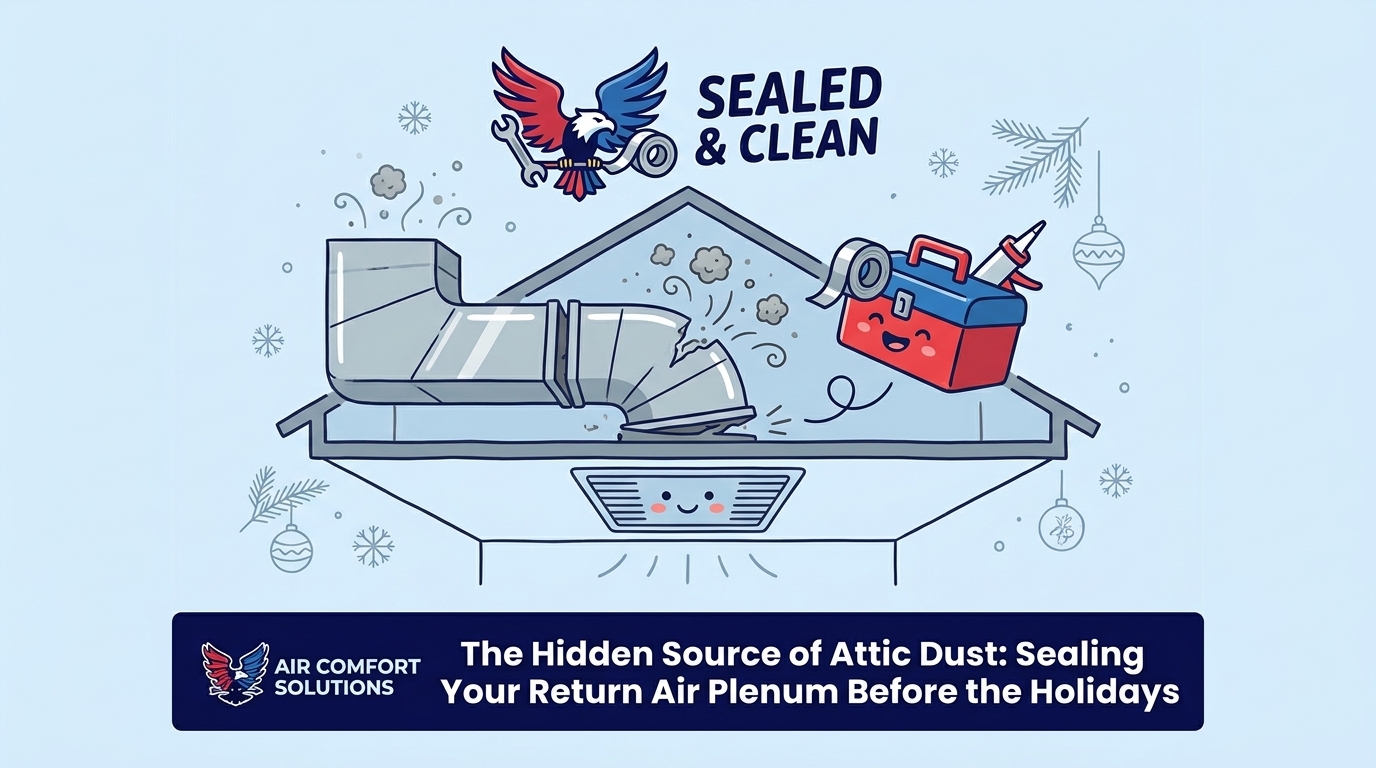
The Value of Sealing Your Return Air Plenum Before the Holidays
Most homeowners buy expensive filters to fix dusty air, not realizing a leaky return plenum in the attic is the real culprit. See why sealing it now saves your holiday gatherings.
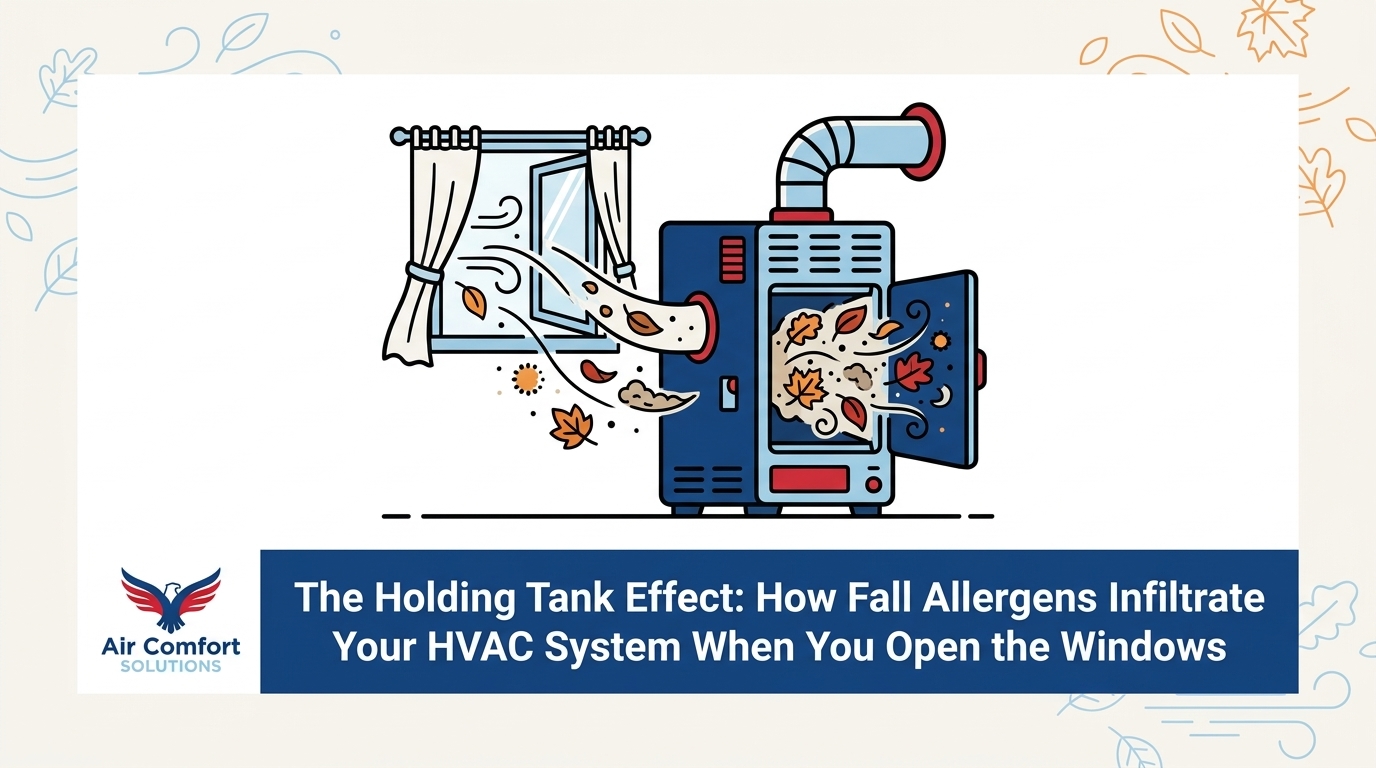
September in Texas finally brings a break from the relentless summer heat, but understanding exactly how fall allergens infiltrate your HVAC system when you open the windows is the key to actually enjoying that fresh evening air without sacrificing your health. At Air Comfort Solutions, we've spent years helping homeowners transition their systems into fall, and we know that after months of running your air conditioner nonstop, the temptation to throw open the sashes and let the cooler breezes flow through your home is entirely understandable. The breeze feels incredibly refreshing, providing a temporary break for your cooling equipment and a welcome shift in the stale indoor environment.
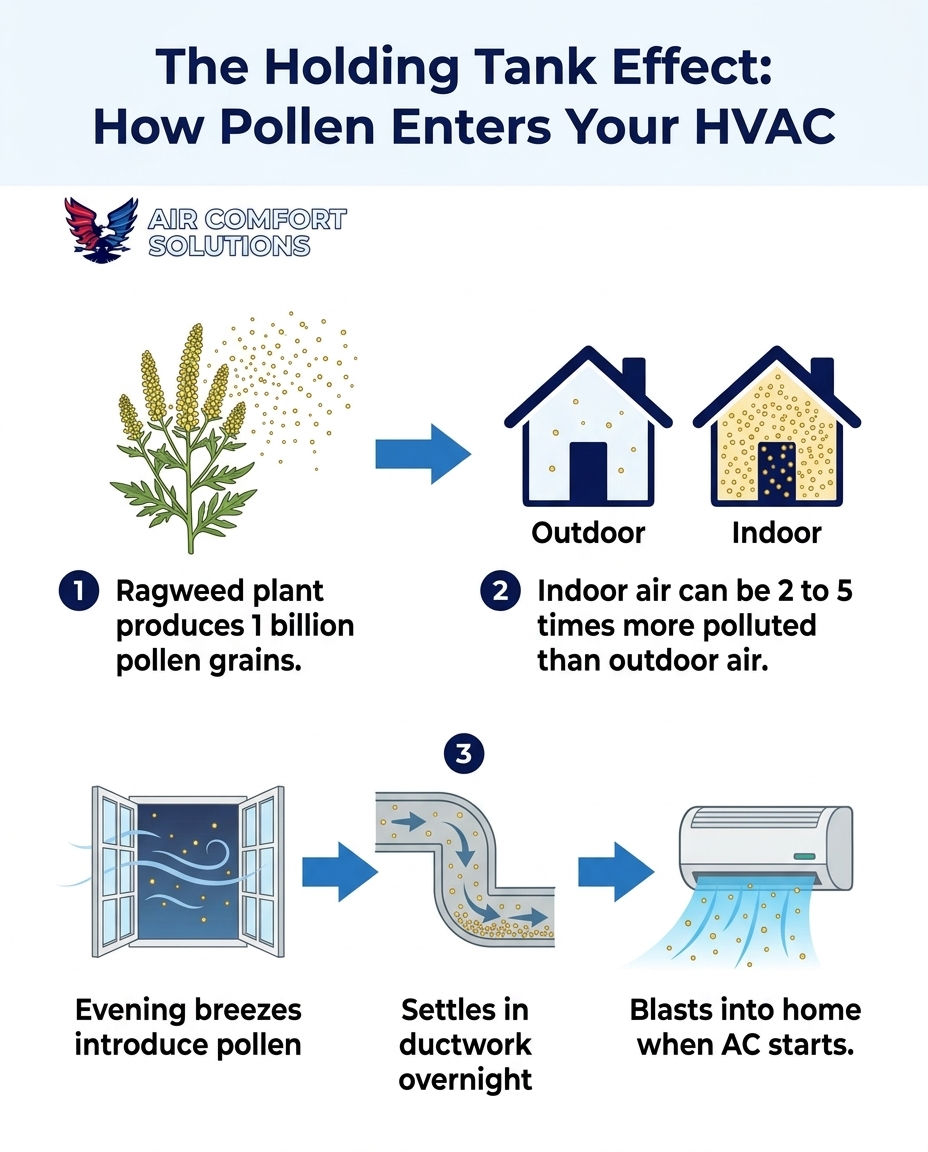
However, that same refreshing breeze carries massive amounts of invisible ragweed pollen directly into your living space. According to the Environmental Protection Agency (EPA), indoor air can already be two to five times more polluted than outdoor air. When you introduce a heavy load of seasonal outdoor allergens into an enclosed space, that pollution level spikes dramatically. During the peak of the September ragweed season, millions of microscopic pollen grains ride the wind right through your window screens, settling onto your furniture, your floors, and most importantly, into your ventilation system.
The hidden filtration burden:
• Unfiltered entry: Window screens are designed to stop insects and large debris, not microscopic pollen grains or fine dust particles.
• Stagnant air: When your windows are open, your HVAC system is typically turned off, meaning your home's active air filtration comes to a complete halt.
• Accumulation: Without the system running to pull air through the main filter, allergens simply fall and accumulate on surfaces throughout the house.
Opening your windows provides undeniable relief, but it creates a massive, hidden filtration burden once the system is turned back on the next day. To truly protect your home's environment, you need a combination of proactive habits and professional HVAC services. By understanding the mechanics of how these particles travel and utilizing proper indoor air quality solutions, you can embrace the fall weather without turning your home into an allergy trap.
The transition from summer to fall in Texas is defined by significant daily temperature swings. It is perfectly common for homeowners to open their windows at night to capture the cool air, only to close them tightly by late morning when the hot daytime hours demand the air conditioner. This specific hot-day, cool-night cycle is exactly what turns your home's ductwork into a holding tank for seasonal allergens.
When the system powers down for the evening, the air inside your ductwork becomes completely stagnant. The breeze blowing through your open windows carries pollen into the house, and as the air settles, those particles naturally drift into the open grilles of your return and supply vents. Because a single ragweed plant can produce up to 1 billion pollen grains in a single season, even a few hours of open windows constitutes a massive exposure event for your ductwork.
The Daily Fall Filtration Cycle:
• Evening / Night — System Status: Off (Windows Open) — What Happens to the Pollen: Breezes carry pollen indoors; particles settle in stagnant ductwork and on vent grilles.
• Early Morning — System Status: Off (Windows Closed) — What Happens to the Pollen: Pollen remains trapped and resting inside the dark, unventilated duct system.
• Mid-Day — System Status: On (Cooling Cycle) — What Happens to the Pollen: The system starts up, instantly blasting the settled pollen through the house before it can be filtered.
When the afternoon heat arrives and you finally turn the air conditioner back on, you trigger what our HVAC technicians at Air Comfort Solutions call the "blast effect." The system's blower motor kicks on at full capacity, instantly sucking up the settled ragweed from the return ducts and forcing it through the supply ductwork. Instead of slowly filtering the air, the initial startup acts like a leaf blower inside your vents, redistributing a concentrated dose of allergens directly into your breathing space.
Your return vents are the large grilles typically located in hallways or on ceilings that pull air back into the HVAC system to be cooled and filtered. When the system is running, they act as powerful vacuums for the indoor air. However, without active filtration during the night, these intake zones become collection points.
Because return vents are often located in central, high-traffic areas of Pinehurst TX area homes, our team frequently observes that they are perfectly positioned to catch the cross-breeze from open windows. Particles settle deep inside the ridges of the return ducting just behind the grille. When the initial system startup occurs the next day, it pulls this highly concentrated load directly into the filter housing all at once, which can quickly overwhelm a standard fiberglass filter and force microscopic pollen grains into the sensitive internal components of your air handler.
The holding tank effect is frustrating on its own, but the regional climate adds a significant complication. Evening breezes in the Gulf Coast region carry much more than just pollen; they carry heavy, lingering moisture. When you open your windows, you are inviting that high humidity directly into your home, which completely changes how dust and allergens behave once they get inside your ventilation system.
The sticky situation inside your ducts: Dry pollen is relatively easy for a high-quality filter to catch because it remains airborne and moves freely with the airflow. However, when sticky, humid air enters your stagnant ductwork overnight, it causes dust, ragweed, and other microscopic debris to clump together. This heavy, damp mixture adheres stubbornly to the interior walls of your ductwork, the blades of your blower motor, and the surface of your evaporator coil.
This damp, pollen-heavy environment creates several distinct problems for your comfort and your equipment. First, it drastically reduces filter efficiency. When pollen clumps together due to moisture, it forms a restrictive mat over the surface of your air filter much faster than dry dust would, suffocating the system. Second, it strains the air handler, forcing the motor to work harder to push air through the restricted filter and the slightly narrowed, debris-coated ducts.
Standard cooling cycles often struggle to dehumidify effectively when the system is constantly turned on and off during the fall transition. An air conditioner needs to run for a sustained period to pull moisture out of the air. When you only run the system for a few hours in the afternoon, it cools the house quickly but leaves the underlying humidity behind. As a local team at Air Comfort Solutions with deep expertise in managing Southeast Texas-specific allergens and humidity challenges simultaneously, our technicians frequently see Pinehurst TX area homes where this exact cycle has caused excessive biological buildup inside the air handler.
Managing the fall transition does not mean you have to keep your windows permanently sealed until December. It simply means you need a strategy for dealing with the pollen once the windows are closed and the heat of the day returns. By taking a few proactive steps, you can help your system process the newly introduced allergens safely and efficiently.
Here is a practical checklist our team at Air Comfort Solutions recommends to help you clear pollen from your system during the September ragweed season:
• Run the system fan continuously: After closing your windows in the morning, switch your thermostat's fan setting from "AUTO" to "ON" for two to three hours. This forces the air to circulate constantly through your filter without running the cooling compressor, helping to sweep airborne pollen out of the rooms before it settles.
• Upgrade to a high-efficiency pleated filter: Standard fiberglass filters will not catch microscopic ragweed grains. You need a pleated filter with an appropriate MERV rating to capture these tiny particles. Always check your system's specifications to ensure the MERV rating isn't so high that it restricts necessary airflow.
• Wipe down the grilles of return vents: Before turning the system back on, take a damp microfiber cloth and wipe down the exterior grilles of your return vents. This physically removes the dust and pollen that settled there overnight, preventing it from being sucked into the filter housing.
• Monitor your indoor humidity levels: Keep an eye on your thermostat's humidity reading. You want to ensure the AC is actively removing the moisture brought in by the evening breeze. If indoor humidity stays above 50%, the pollen will continue to clump and stick.
Taking control of your filtration is the most effective way to combat the holding tank effect. If you are unsure which filter is right for your specific equipment, exploring the best AC filter options for Houston area homes will help you strike the right balance between catching microscopic ragweed and maintaining healthy system airflow.
While upgrading your filters and managing your thermostat settings will catch the airborne particles floating through your rooms, the pollen that has already adhered to the inside of your coils and ductwork requires professional attention. The holding tank effect combined with high humidity means that a significant portion of the allergens brought in during the fall will never make it to the filter—they will simply stick to the internal components of your HVAC system.
It is incredibly important to avoid DIY deep duct cleaning or attempting to access your internal evaporator coils yourself. These components are delicate, and improper cleaning can bend coil fins, damage sensitive electronics, or puncture the condensate drain pan. Accessing the internal cabinet of your air handler requires a licensed HVAC professional who has the training to safely clean the system without voiding your manufacturer's warranty.
In our years of serving the community, we've found that the early fall transition is the absolute ideal time to address this hidden buildup. You want to clear out the summer dust and the fresh layer of ragweed pollen before the heating season begins. When you turn your furnace on for the first time in the winter, any dust and pollen resting on the heat exchanger will literally bake onto the surface, creating that notorious burning smell and releasing a fresh wave of degraded allergens into your air.
Proactive care restores your system's efficiency and protects your indoor air quality straight through the winter months. By scheduling routine HVAC maintenance now, a technician can safely clean the blower assembly, check the static pressure, and ensure your coils are free of the sticky pollen residue that plagues Pinehurst TX area homes this time of year. Furthermore, upgrading to advanced, whole-home filtration systems during a maintenance visit with our team may even qualify you for generic utility incentive programs or federal tax credits—always check with your local provider or a tax professional to see what programs are currently active in your area.
Yes, opening windows frequently makes indoor allergies much worse during the fall transition. While the breeze feels fresh, it introduces unfiltered outdoor allergens—like ragweed pollen and mold spores—directly into your living space. Once inside, these microscopic particles settle into your carpets, furniture, and ductwork, where they continue to trigger symptoms long after the windows are closed.
Start by upgrading your air filter to a high-efficiency pleated model and running your thermostat's fan setting to "ON" for a few hours to circulate the air. You should also wipe down your return vent grilles with a damp cloth to catch settled dust. However, for pollen that has stuck to the internal blower motor or evaporator coil, you will need a professional technician from a team like Air Comfort Solutions to perform a thorough system cleaning.
Yes, your air conditioning system filters out pollen, but only if the system is actively running and equipped with a high-quality filter. When the system is turned off—such as when your windows are open at night—no filtration is happening. The system relies entirely on the mechanical action of pulling air through the pleated filter material to remove airborne particles.
No, you should turn the HVAC system completely off when your windows are open. Running the fan while windows are open pulls unconditioned, humid, and pollen-heavy outdoor air directly into your return vents, forcing your filter to work overtime and potentially drawing excess moisture into your ductwork. Only run the fan continuously after you have closed the windows.
For most residential systems, a MERV 8 to MERV 13 filter is ideal for capturing ragweed pollen during the September ragweed season. A MERV 8 filter catches basic pollen and dust, while a MERV 11 or 13 will capture finer microscopic particles. Always verify your specific HVAC system's maximum recommended MERV rating, as a filter that is too dense can restrict essential airflow and damage your equipment.
Enjoying the beautiful fall weather should never mean compromising on your indoor air quality or suffering through endless allergy symptoms inside your own house. Understanding how allergens infiltrate the system—and how the holding tank effect traps them in your ductwork—is the critical first step to eliminating them from your environment.
By managing your windows strategically, upgrading your filtration, and keeping humidity in check, you can protect your home from the worst of the seasonal pollen drops. If you find that allergy symptoms persist in your Pinehurst TX area home even after the windows are tightly closed, it is time to take the next step. We encourage you to reach out to our team at Air Comfort Solutions to explore professional indoor air quality solutions to ensure the air you breathe is as clean and refreshing as it feels.


Zane came out and did an amazing job! Super friendly, honest and transparent about the work that needed to be done. This is my second time working with Air Comfort Solutions and they’re my go to for HVAC services. Highly recommend.
God's AMAZING grace sent us Robert and Zane. We have been without air in this Texas heat for six weeks and four days. We've had a few contractors give us quotes all trying to upsell when we're at a low point. But not the guys at Air Comfort Solutions. They came in assessed our situation, gave us honest feedback, and showed us the issues as they proceeded with the assessment for clear understanding. We highly recommend them for their professionalism, quality products, and fair pricing. We hands down support them for all the work they do 💯 %.
Robert and Zane gone above and beyond to make the process easy and affordable.
Would definitely recommend!!
I’m writing this review to let everyone know that Air Comfort Solutions is the company to work with. I know the owner ( Robert) for several years now. He has been taking care of my residential and business work orders. Robert is professional, knowledgeable and will save you money. I just want to thank Robert for great job you have been doing for me.