Burning Smell on Fall Startup? When to Call for 24 Hour AC Repair
Why we always check for dust burn-off first. Review our home maintenance tips and troubleshooting advice to decide if that fall HVAC smell needs a pro.
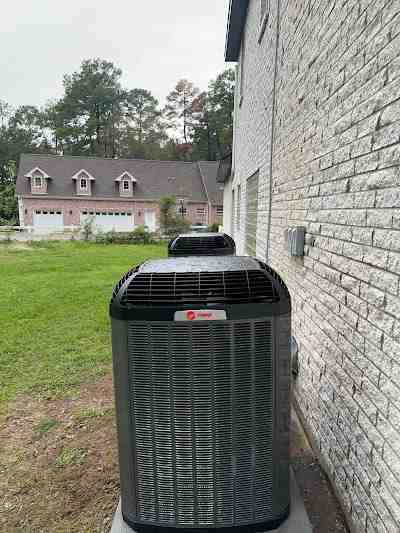
When evaluating single stage vs two stage vs variable speed options for your home's HVAC system, the right choice comes down to three things: how consistent you want your indoor temperature, how well you need to control humidity, and how much you want to spend upfront versus over time. Here is a quick breakdown:
| System Type | Capacity Range | Best For | Key Tradeoff |
|---|---|---|---|
| Single-Stage | 100% or off | Tight budgets, mild climates | Temperature swings, frequent cycling |
| Two-Stage | 65% or 100% | Most homes, balanced comfort | Moderate upfront cost |
| Variable-Speed | 25% to 100% | Humid climates, maximum comfort | Higher upfront investment |
Quick answer:
For most homeowners in North Harris County, the choice between these three system types has a real, daily impact. Texas summers are long, humid, and unforgiving. A system that short-cycles at full power may cool the air but leave moisture behind, making your home feel sticky even when the thermostat reads 72°F. The wrong system choice can also mean higher energy bills, uneven temperatures between rooms, and more wear on your equipment over time.
I'm Robert Patterson, and in this guide I'll walk you through everything you need to know to make a confident, informed decision — starting with how each compressor type actually works.
Single stage vs two stage vs variable speed options basics:
At the heart of any air conditioning or heat pump system lies the compressor. Think of the compressor as the engine of your cooling system. It is responsible for circulating refrigerant through the indoor and outdoor coils, which ultimately extracts heat from your home and releases it outside. How that compressor manages its workload dictates your daily comfort, energy usage, and long-term utility bills.
One of the most important concepts to understand is capacity modulation. Traditional systems are built to handle the hottest days of the year in Pinehurst, TX. However, those extreme-heat days only represent a small fraction of our long cooling season. For the rest of the spring, summer, and fall, your home requires far less cooling power.
Another critical factor is startup energy. Air conditioners draw the absolute most electricity when they first kick on from a complete stop. A system that frequently cycles on and off uses significantly more power than one that runs continuously at a lower, steadier rate. To understand how these dynamics play out across different equipment tiers, check out our Standard Efficiency vs. High Efficiency AC Comparison.
A single-stage system is the most traditional type of air conditioner. It operates on a simple on-and-off cycle. Think of it like a standard household light switch: it is either 100% on or completely off.
When your thermostat detects that the indoor temperature has risen above your setpoint, it signals the compressor to kick on at maximum capacity. The system blasts cold air through your vents until the target temperature is reached, and then it shuts off entirely.
While this technology is highly reliable and has a lower upfront cost, it creates noticeable temperature swings. You might set your thermostat to 72°F, but the system won't turn on until the house warms up to 74°F, and it won't shut off until the temperature drops to 70°F. This constant "blast-and-chill" cycle can also lead to higher energy spikes during startup.
A two-stage system acts like a light switch with two settings: high and low. The compressor features a high setting (100% capacity) for extremely hot days and a low setting (typically operating at around 65% to 70% capacity) for milder days.
During most of the cooling season in areas like Magnolia and Tomball, a two-stage system will spend about 80% of its run time in the low setting. Because it runs at a reduced capacity, it can operate for longer, gentler cycles. This continuous, low-intensity operation prevents the frequent on-and-off cycling that plagues single-stage units, which significantly reduces wear and tear on the compressor's internal components.
When the afternoon heat peaks, the system automatically shifts into second stage to deliver maximum cooling power. To see if this middle-ground option aligns with your home's needs, read our detailed analysis: Are Two-Stage and Variable-Speed Systems Worth the Extra Cost?.
If a single-stage system is a light switch and a two-stage system is a two-setting switch, a variable-speed system is a dimmer dial. Also known as variable-capacity or inverter-driven systems, these units can modulate their output anywhere from 25% to 100% capacity in precise 1% increments.
Instead of cycling on and off, a variable-speed compressor runs almost continuously. It constantly monitors the indoor temperature and makes micro-adjustments to match your home's real-time cooling demand. Some advanced variable-speed systems feature up to 700 distinct compressor settings.
By operating at a low, steady speed for hours at a time, these systems sip electricity, maintain incredibly stable indoor temperatures, and provide unmatched comfort.
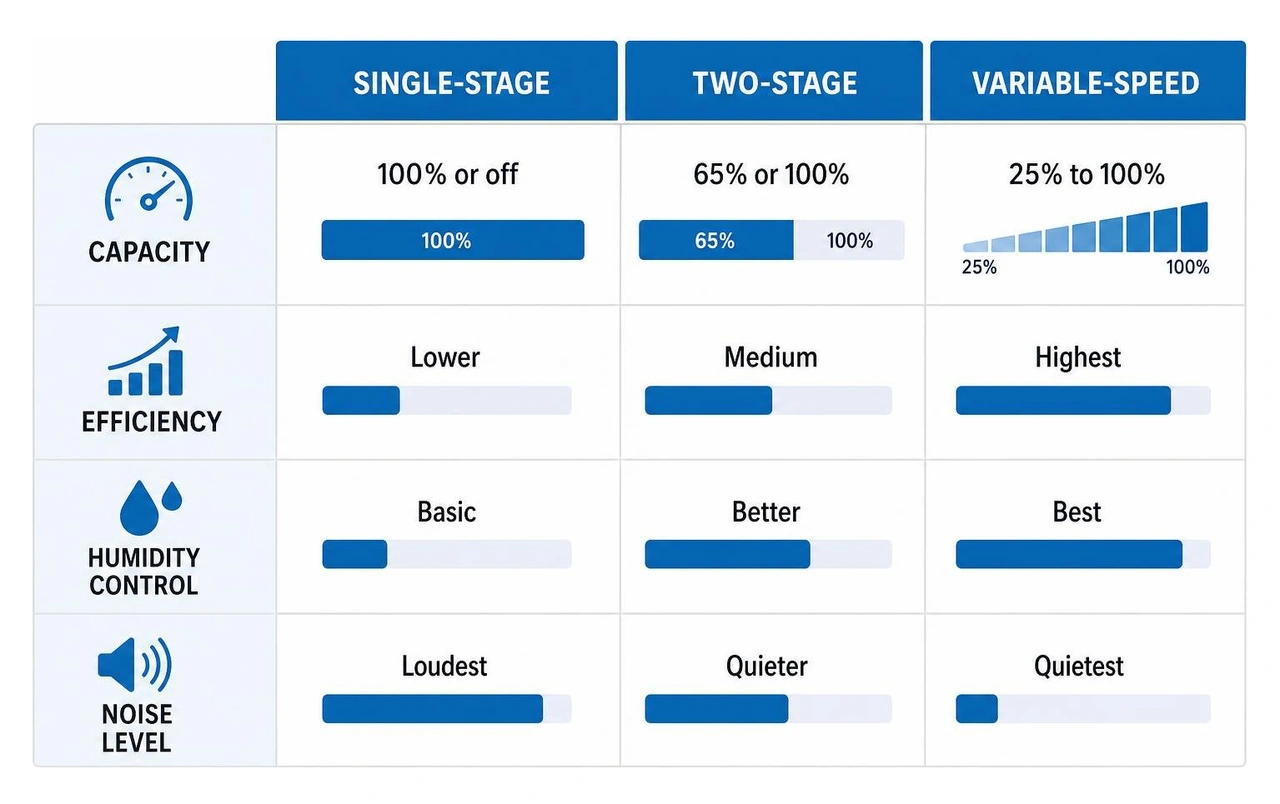
To help you visualize how these systems stack up against one another in real-world conditions, we have outlined the key differences in performance, efficiency, and comfort metrics below.
| Feature | Single-Stage | Two-Stage | Variable-Speed |
|---|---|---|---|
| Typical SEER2 Range | 13.4 to 15.2 | 15.2 to 18 | 18 to 22+ |
| Temperature Swings | ±2°F to 4°F | ±1°F to 2°F | Within 0.5°F of setpoint |
| Relative Humidity Levels | 55% to 65% | 45% to 55% | 40% to 50% |
| Outdoor Noise Levels | 70 to 76 dB | 65 to 72 dB | 55 to 68 dB |
| Air Filtration Quality | Basic (frequent stops) | Enhanced (longer cycles) | Maximum (continuous flow) |
One of the first things homeowners notice when upgrading to a multi-stage or variable-speed system is how quiet and consistent their home becomes.
Because single-stage systems blast air at 100% capacity, they create noticeable rushes of air through the ductwork and loud startup sounds from the outdoor condenser. Additionally, the rapid temperature drops can leave some rooms feeling icy while others remain warm.
A variable-speed system, by contrast, operates so quietly that you are rarely aware it is running. Because it maintains continuous airflow at lower speeds, it eliminates the loud "clunk" of the compressor kicking on. Furthermore, because it constantly micro-adjusts its capacity, it can maintain your home's desired temperature within a razor-thin half-degree margin, completely eliminating hot and cold spots.
For families living in Pinehurst, Spring, and The Woodlands, humidity control is just as important as temperature control. High indoor humidity makes the air feel warmer than it actually is, forces you to lower your thermostat, and creates an environment where dust mites and mold can thrive.
Air conditioners naturally remove moisture from the air as they run, condensing water vapor on the cold indoor evaporator coil. However, a single-stage system often cools the air so quickly that it shuts off before it has a chance to pull significant moisture out of the air. This results in a cold, clammy indoor environment.
A variable-speed system runs longer, slower cycles. This continuous movement of air across the cold evaporator coil allows the system to extract up to 400% more moisture than a standard single-stage unit under humid conditions.
Additionally, continuous air circulation means your indoor air is constantly passing through your home's filtration system. When paired with a high-quality MERV 11-13 filter, a variable-speed blower motor can dramatically improve indoor air quality by continuously removing pollen, pet dander, and dust from circulation.
When weighing single stage vs two stage vs variable speed options, it is essential to look beyond the initial purchase price and evaluate the total cost of ownership over the lifespan of the equipment.
While advanced systems require a higher upfront investment than simpler single-stage units, they can dramatically lower your monthly energy consumption. To explore which high-efficiency features offer the best financial return, read our guide on High-Efficiency AC Features Worth Paying For.
The return on investment (ROI) for a high-efficiency system depends heavily on your local climate and how long you plan to stay in your home.
In our hot, humid Southeast Texas climate, we have an exceptionally high number of annual cooling hours. This means the payback period for a high-efficiency variable-speed system is much shorter here than it would be in a mild northern state.
Upgrading to a high-efficiency two-stage or variable-speed system is not as simple as swapping out the outdoor condenser unit. These advanced systems rely on sophisticated, communicating technology to coordinate operation between the indoor and outdoor components.
Proper equipment matching is absolutely critical. To achieve the rated efficiency and performance of a variable-speed compressor, it must be paired with a compatible indoor air handler or furnace featuring a variable-speed blower motor (often called an ECM, or Electronically Commutated Motor).
If you pair a premium variable-speed outdoor unit with an older, fixed-speed indoor fan, the system will not be able to modulate its airflow. This can lead to improper static pressure, restricted airflow, and potential system damage.
Before installing any new HVAC system, your ductwork must be thoroughly inspected. This is especially true for older homes in Conroe, Montgomery, and Plantersville.
Because variable-speed systems run for long periods at lower airflows, they require a well-sealed and properly insulated duct system to function correctly.
To learn more about how to evaluate your home's infrastructure before an upgrade, check out our resource on How to Choose the Right AC System for Your Home.
A common question homeowners ask is whether more complex systems are more prone to breakdowns. The answer lies in understanding the nature of the technology.
Single-stage systems are mechanically simple. Because they have fewer electronic components, they are straightforward to troubleshoot, and replacement parts are generally highly accessible.
Two-stage systems are also relatively simple, though they feature a second-stage solenoid valve that can occasionally fail over time.
Variable-speed systems utilize highly sophisticated inverter drives and proprietary electronic control boards to modulate the compressor's speed. While these components are incredibly durable, they are more complex than the parts found in a single-stage unit. If an out-of-warranty inverter board fails, the replacement cost can be higher than a standard single-stage repair.
To protect your investment, we highly recommend:
Yes, in most cases. Because a two-stage system spends the vast majority of its life running at a lower, gentler 65% capacity, it experiences significantly fewer start-and-stop cycles.
The startup phase is when an HVAC system experiences the most electrical and mechanical stress. By reducing the number of daily starts and stops, a two-stage system experiences less overall wear and tear, which can contribute to a longer operational lifespan.
Generally, no. A variable-speed outdoor compressor must communicate directly with a compatible variable-speed indoor blower motor (ECM) and a matching smart thermostat to adjust airflow in real-time.
If your existing furnace has a standard single-speed blower motor, it cannot support the varying airflow rates required by a variable-speed compressor. To get the full benefits of variable-speed technology, you will need to upgrade your indoor air handler or furnace at the same time.
Absolutely. Because of our extreme summer heat and high humidity levels, a variable-speed system is highly effective in Southeast Texas.
The continuous, low-speed operation is perfect for pulling thick moisture out of the air, keeping your indoor relative humidity in a comfortable 40% to 50% range. While the upfront investment is higher, the dramatic reduction in monthly energy bills combined with unmatched indoor comfort makes variable-speed systems an excellent choice for local homeowners.
Choosing between single stage vs two stage vs variable speed options is all about balancing your budget with your comfort expectations. If you are looking for a straightforward, cost-effective replacement, a single-stage system is a reliable workhorse. If you want a noticeable boost in comfort and efficiency without a premium price tag, a two-stage system is the sweet spot for many families. And if you want the absolute ultimate in quiet operation, precise temperature control, and superior humidity removal, a variable-speed system is an investment you will appreciate every single day.
At Air Comfort Solutions LLC, we have over 35 years of experience helping homeowners across Pinehurst, Magnolia, The Woodlands, Conroe, Spring, Tomball, and surrounding areas find the perfect comfort solutions for their homes. Our certified technicians provide honest advice, upfront pricing, and professional installations tailored to the unique demands of the Texas climate.
Ready to explore your options and find the perfect cooling system for your home? Schedule your AC consultation today with our friendly local team!
When evaluating single stage vs two stage vs variable speed options for your home's HVAC system, the right choice comes down to three things: how consistent you want your indoor temperature, how well you need to control humidity, and how much you want to spend upfront versus over time. Here is a quick breakdown:
| System Type | Capacity Range | Best For | Key Tradeoff |
|---|---|---|---|
| Single-Stage | 100% or off | Tight budgets, mild climates | Temperature swings, frequent cycling |
| Two-Stage | 65% or 100% | Most homes, balanced comfort | Moderate upfront cost |
| Variable-Speed | 25% to 100% | Humid climates, maximum comfort | Higher upfront investment |
Quick answer:
For most homeowners in North Harris County, the choice between these three system types has a real, daily impact. Texas summers are long, humid, and unforgiving. A system that short-cycles at full power may cool the air but leave moisture behind, making your home feel sticky even when the thermostat reads 72°F. The wrong system choice can also mean higher energy bills, uneven temperatures between rooms, and more wear on your equipment over time.
I'm Robert Patterson, and in this guide I'll walk you through everything you need to know to make a confident, informed decision — starting with how each compressor type actually works.
Single stage vs two stage vs variable speed options basics:
At the heart of any air conditioning or heat pump system lies the compressor. Think of the compressor as the engine of your cooling system. It is responsible for circulating refrigerant through the indoor and outdoor coils, which ultimately extracts heat from your home and releases it outside. How that compressor manages its workload dictates your daily comfort, energy usage, and long-term utility bills.
One of the most important concepts to understand is capacity modulation. Traditional systems are built to handle the hottest days of the year in Pinehurst, TX. However, those extreme-heat days only represent a small fraction of our long cooling season. For the rest of the spring, summer, and fall, your home requires far less cooling power.
Another critical factor is startup energy. Air conditioners draw the absolute most electricity when they first kick on from a complete stop. A system that frequently cycles on and off uses significantly more power than one that runs continuously at a lower, steadier rate. To understand how these dynamics play out across different equipment tiers, check out our Standard Efficiency vs. High Efficiency AC Comparison.
A single-stage system is the most traditional type of air conditioner. It operates on a simple on-and-off cycle. Think of it like a standard household light switch: it is either 100% on or completely off.
When your thermostat detects that the indoor temperature has risen above your setpoint, it signals the compressor to kick on at maximum capacity. The system blasts cold air through your vents until the target temperature is reached, and then it shuts off entirely.
While this technology is highly reliable and has a lower upfront cost, it creates noticeable temperature swings. You might set your thermostat to 72°F, but the system won't turn on until the house warms up to 74°F, and it won't shut off until the temperature drops to 70°F. This constant "blast-and-chill" cycle can also lead to higher energy spikes during startup.
A two-stage system acts like a light switch with two settings: high and low. The compressor features a high setting (100% capacity) for extremely hot days and a low setting (typically operating at around 65% to 70% capacity) for milder days.
During most of the cooling season in areas like Magnolia and Tomball, a two-stage system will spend about 80% of its run time in the low setting. Because it runs at a reduced capacity, it can operate for longer, gentler cycles. This continuous, low-intensity operation prevents the frequent on-and-off cycling that plagues single-stage units, which significantly reduces wear and tear on the compressor's internal components.
When the afternoon heat peaks, the system automatically shifts into second stage to deliver maximum cooling power. To see if this middle-ground option aligns with your home's needs, read our detailed analysis: Are Two-Stage and Variable-Speed Systems Worth the Extra Cost?.
If a single-stage system is a light switch and a two-stage system is a two-setting switch, a variable-speed system is a dimmer dial. Also known as variable-capacity or inverter-driven systems, these units can modulate their output anywhere from 25% to 100% capacity in precise 1% increments.
Instead of cycling on and off, a variable-speed compressor runs almost continuously. It constantly monitors the indoor temperature and makes micro-adjustments to match your home's real-time cooling demand. Some advanced variable-speed systems feature up to 700 distinct compressor settings.
By operating at a low, steady speed for hours at a time, these systems sip electricity, maintain incredibly stable indoor temperatures, and provide unmatched comfort.
To help you visualize how these systems stack up against one another in real-world conditions, we have outlined the key differences in performance, efficiency, and comfort metrics below.
| Feature | Single-Stage | Two-Stage | Variable-Speed |
|---|---|---|---|
| Typical SEER2 Range | 13.4 to 15.2 | 15.2 to 18 | 18 to 22+ |
| Temperature Swings | ±2°F to 4°F | ±1°F to 2°F | Within 0.5°F of setpoint |
| Relative Humidity Levels | 55% to 65% | 45% to 55% | 40% to 50% |
| Outdoor Noise Levels | 70 to 76 dB | 65 to 72 dB | 55 to 68 dB |
| Air Filtration Quality | Basic (frequent stops) | Enhanced (longer cycles) | Maximum (continuous flow) |
One of the first things homeowners notice when upgrading to a multi-stage or variable-speed system is how quiet and consistent their home becomes.
Because single-stage systems blast air at 100% capacity, they create noticeable rushes of air through the ductwork and loud startup sounds from the outdoor condenser. Additionally, the rapid temperature drops can leave some rooms feeling icy while others remain warm.
A variable-speed system, by contrast, operates so quietly that you are rarely aware it is running. Because it maintains continuous airflow at lower speeds, it eliminates the loud "clunk" of the compressor kicking on. Furthermore, because it constantly micro-adjusts its capacity, it can maintain your home's desired temperature within a razor-thin half-degree margin, completely eliminating hot and cold spots.
For families living in Pinehurst, Spring, and The Woodlands, humidity control is just as important as temperature control. High indoor humidity makes the air feel warmer than it actually is, forces you to lower your thermostat, and creates an environment where dust mites and mold can thrive.
Air conditioners naturally remove moisture from the air as they run, condensing water vapor on the cold indoor evaporator coil. However, a single-stage system often cools the air so quickly that it shuts off before it has a chance to pull significant moisture out of the air. This results in a cold, clammy indoor environment.
A variable-speed system runs longer, slower cycles. This continuous movement of air across the cold evaporator coil allows the system to extract up to 400% more moisture than a standard single-stage unit under humid conditions.
Additionally, continuous air circulation means your indoor air is constantly passing through your home's filtration system. When paired with a high-quality MERV 11-13 filter, a variable-speed blower motor can dramatically improve indoor air quality by continuously removing pollen, pet dander, and dust from circulation.
When weighing single stage vs two stage vs variable speed options, it is essential to look beyond the initial purchase price and evaluate the total cost of ownership over the lifespan of the equipment.
While advanced systems require a higher upfront investment than simpler single-stage units, they can dramatically lower your monthly energy consumption. To explore which high-efficiency features offer the best financial return, read our guide on High-Efficiency AC Features Worth Paying For.
The return on investment (ROI) for a high-efficiency system depends heavily on your local climate and how long you plan to stay in your home.
In our hot, humid Southeast Texas climate, we have an exceptionally high number of annual cooling hours. This means the payback period for a high-efficiency variable-speed system is much shorter here than it would be in a mild northern state.
Upgrading to a high-efficiency two-stage or variable-speed system is not as simple as swapping out the outdoor condenser unit. These advanced systems rely on sophisticated, communicating technology to coordinate operation between the indoor and outdoor components.
Proper equipment matching is absolutely critical. To achieve the rated efficiency and performance of a variable-speed compressor, it must be paired with a compatible indoor air handler or furnace featuring a variable-speed blower motor (often called an ECM, or Electronically Commutated Motor).
If you pair a premium variable-speed outdoor unit with an older, fixed-speed indoor fan, the system will not be able to modulate its airflow. This can lead to improper static pressure, restricted airflow, and potential system damage.
Before installing any new HVAC system, your ductwork must be thoroughly inspected. This is especially true for older homes in Conroe, Montgomery, and Plantersville.
Because variable-speed systems run for long periods at lower airflows, they require a well-sealed and properly insulated duct system to function correctly.
To learn more about how to evaluate your home's infrastructure before an upgrade, check out our resource on How to Choose the Right AC System for Your Home.
A common question homeowners ask is whether more complex systems are more prone to breakdowns. The answer lies in understanding the nature of the technology.
Single-stage systems are mechanically simple. Because they have fewer electronic components, they are straightforward to troubleshoot, and replacement parts are generally highly accessible.
Two-stage systems are also relatively simple, though they feature a second-stage solenoid valve that can occasionally fail over time.
Variable-speed systems utilize highly sophisticated inverter drives and proprietary electronic control boards to modulate the compressor's speed. While these components are incredibly durable, they are more complex than the parts found in a single-stage unit. If an out-of-warranty inverter board fails, the replacement cost can be higher than a standard single-stage repair.
To protect your investment, we highly recommend:
Yes, in most cases. Because a two-stage system spends the vast majority of its life running at a lower, gentler 65% capacity, it experiences significantly fewer start-and-stop cycles.
The startup phase is when an HVAC system experiences the most electrical and mechanical stress. By reducing the number of daily starts and stops, a two-stage system experiences less overall wear and tear, which can contribute to a longer operational lifespan.
Generally, no. A variable-speed outdoor compressor must communicate directly with a compatible variable-speed indoor blower motor (ECM) and a matching smart thermostat to adjust airflow in real-time.
If your existing furnace has a standard single-speed blower motor, it cannot support the varying airflow rates required by a variable-speed compressor. To get the full benefits of variable-speed technology, you will need to upgrade your indoor air handler or furnace at the same time.
Absolutely. Because of our extreme summer heat and high humidity levels, a variable-speed system is highly effective in Southeast Texas.
The continuous, low-speed operation is perfect for pulling thick moisture out of the air, keeping your indoor relative humidity in a comfortable 40% to 50% range. While the upfront investment is higher, the dramatic reduction in monthly energy bills combined with unmatched indoor comfort makes variable-speed systems an excellent choice for local homeowners.
Choosing between single stage vs two stage vs variable speed options is all about balancing your budget with your comfort expectations. If you are looking for a straightforward, cost-effective replacement, a single-stage system is a reliable workhorse. If you want a noticeable boost in comfort and efficiency without a premium price tag, a two-stage system is the sweet spot for many families. And if you want the absolute ultimate in quiet operation, precise temperature control, and superior humidity removal, a variable-speed system is an investment you will appreciate every single day.
At Air Comfort Solutions LLC, we have over 35 years of experience helping homeowners across Pinehurst, Magnolia, The Woodlands, Conroe, Spring, Tomball, and surrounding areas find the perfect comfort solutions for their homes. Our certified technicians provide honest advice, upfront pricing, and professional installations tailored to the unique demands of the Texas climate.
Ready to explore your options and find the perfect cooling system for your home? Schedule your AC consultation today with our friendly local team!
When evaluating single stage vs two stage vs variable speed options for your home's HVAC system, the right choice comes down to three things: how consistent you want your indoor temperature, how well you need to control humidity, and how much you want to spend upfront versus over time. Here is a quick breakdown:
| System Type | Capacity Range | Best For | Key Tradeoff |
|---|---|---|---|
| Single-Stage | 100% or off | Tight budgets, mild climates | Temperature swings, frequent cycling |
| Two-Stage | 65% or 100% | Most homes, balanced comfort | Moderate upfront cost |
| Variable-Speed | 25% to 100% | Humid climates, maximum comfort | Higher upfront investment |
Quick answer:
For most homeowners in North Harris County, the choice between these three system types has a real, daily impact. Texas summers are long, humid, and unforgiving. A system that short-cycles at full power may cool the air but leave moisture behind, making your home feel sticky even when the thermostat reads 72°F. The wrong system choice can also mean higher energy bills, uneven temperatures between rooms, and more wear on your equipment over time.
I'm Robert Patterson, and in this guide I'll walk you through everything you need to know to make a confident, informed decision — starting with how each compressor type actually works.
Single stage vs two stage vs variable speed options basics:
At the heart of any air conditioning or heat pump system lies the compressor. Think of the compressor as the engine of your cooling system. It is responsible for circulating refrigerant through the indoor and outdoor coils, which ultimately extracts heat from your home and releases it outside. How that compressor manages its workload dictates your daily comfort, energy usage, and long-term utility bills.
One of the most important concepts to understand is capacity modulation. Traditional systems are built to handle the hottest days of the year in Pinehurst, TX. However, those extreme-heat days only represent a small fraction of our long cooling season. For the rest of the spring, summer, and fall, your home requires far less cooling power.
Another critical factor is startup energy. Air conditioners draw the absolute most electricity when they first kick on from a complete stop. A system that frequently cycles on and off uses significantly more power than one that runs continuously at a lower, steadier rate. To understand how these dynamics play out across different equipment tiers, check out our Standard Efficiency vs. High Efficiency AC Comparison.
A single-stage system is the most traditional type of air conditioner. It operates on a simple on-and-off cycle. Think of it like a standard household light switch: it is either 100% on or completely off.
When your thermostat detects that the indoor temperature has risen above your setpoint, it signals the compressor to kick on at maximum capacity. The system blasts cold air through your vents until the target temperature is reached, and then it shuts off entirely.
While this technology is highly reliable and has a lower upfront cost, it creates noticeable temperature swings. You might set your thermostat to 72°F, but the system won't turn on until the house warms up to 74°F, and it won't shut off until the temperature drops to 70°F. This constant "blast-and-chill" cycle can also lead to higher energy spikes during startup.
A two-stage system acts like a light switch with two settings: high and low. The compressor features a high setting (100% capacity) for extremely hot days and a low setting (typically operating at around 65% to 70% capacity) for milder days.
During most of the cooling season in areas like Magnolia and Tomball, a two-stage system will spend about 80% of its run time in the low setting. Because it runs at a reduced capacity, it can operate for longer, gentler cycles. This continuous, low-intensity operation prevents the frequent on-and-off cycling that plagues single-stage units, which significantly reduces wear and tear on the compressor's internal components.
When the afternoon heat peaks, the system automatically shifts into second stage to deliver maximum cooling power. To see if this middle-ground option aligns with your home's needs, read our detailed analysis: Are Two-Stage and Variable-Speed Systems Worth the Extra Cost?.
If a single-stage system is a light switch and a two-stage system is a two-setting switch, a variable-speed system is a dimmer dial. Also known as variable-capacity or inverter-driven systems, these units can modulate their output anywhere from 25% to 100% capacity in precise 1% increments.
Instead of cycling on and off, a variable-speed compressor runs almost continuously. It constantly monitors the indoor temperature and makes micro-adjustments to match your home's real-time cooling demand. Some advanced variable-speed systems feature up to 700 distinct compressor settings.
By operating at a low, steady speed for hours at a time, these systems sip electricity, maintain incredibly stable indoor temperatures, and provide unmatched comfort.
To help you visualize how these systems stack up against one another in real-world conditions, we have outlined the key differences in performance, efficiency, and comfort metrics below.
| Feature | Single-Stage | Two-Stage | Variable-Speed |
|---|---|---|---|
| Typical SEER2 Range | 13.4 to 15.2 | 15.2 to 18 | 18 to 22+ |
| Temperature Swings | ±2°F to 4°F | ±1°F to 2°F | Within 0.5°F of setpoint |
| Relative Humidity Levels | 55% to 65% | 45% to 55% | 40% to 50% |
| Outdoor Noise Levels | 70 to 76 dB | 65 to 72 dB | 55 to 68 dB |
| Air Filtration Quality | Basic (frequent stops) | Enhanced (longer cycles) | Maximum (continuous flow) |
One of the first things homeowners notice when upgrading to a multi-stage or variable-speed system is how quiet and consistent their home becomes.
Because single-stage systems blast air at 100% capacity, they create noticeable rushes of air through the ductwork and loud startup sounds from the outdoor condenser. Additionally, the rapid temperature drops can leave some rooms feeling icy while others remain warm.
A variable-speed system, by contrast, operates so quietly that you are rarely aware it is running. Because it maintains continuous airflow at lower speeds, it eliminates the loud "clunk" of the compressor kicking on. Furthermore, because it constantly micro-adjusts its capacity, it can maintain your home's desired temperature within a razor-thin half-degree margin, completely eliminating hot and cold spots.
For families living in Pinehurst, Spring, and The Woodlands, humidity control is just as important as temperature control. High indoor humidity makes the air feel warmer than it actually is, forces you to lower your thermostat, and creates an environment where dust mites and mold can thrive.
Air conditioners naturally remove moisture from the air as they run, condensing water vapor on the cold indoor evaporator coil. However, a single-stage system often cools the air so quickly that it shuts off before it has a chance to pull significant moisture out of the air. This results in a cold, clammy indoor environment.
A variable-speed system runs longer, slower cycles. This continuous movement of air across the cold evaporator coil allows the system to extract up to 400% more moisture than a standard single-stage unit under humid conditions.
Additionally, continuous air circulation means your indoor air is constantly passing through your home's filtration system. When paired with a high-quality MERV 11-13 filter, a variable-speed blower motor can dramatically improve indoor air quality by continuously removing pollen, pet dander, and dust from circulation.
When weighing single stage vs two stage vs variable speed options, it is essential to look beyond the initial purchase price and evaluate the total cost of ownership over the lifespan of the equipment.
While advanced systems require a higher upfront investment than simpler single-stage units, they can dramatically lower your monthly energy consumption. To explore which high-efficiency features offer the best financial return, read our guide on High-Efficiency AC Features Worth Paying For.
The return on investment (ROI) for a high-efficiency system depends heavily on your local climate and how long you plan to stay in your home.
In our hot, humid Southeast Texas climate, we have an exceptionally high number of annual cooling hours. This means the payback period for a high-efficiency variable-speed system is much shorter here than it would be in a mild northern state.
Upgrading to a high-efficiency two-stage or variable-speed system is not as simple as swapping out the outdoor condenser unit. These advanced systems rely on sophisticated, communicating technology to coordinate operation between the indoor and outdoor components.
Proper equipment matching is absolutely critical. To achieve the rated efficiency and performance of a variable-speed compressor, it must be paired with a compatible indoor air handler or furnace featuring a variable-speed blower motor (often called an ECM, or Electronically Commutated Motor).
If you pair a premium variable-speed outdoor unit with an older, fixed-speed indoor fan, the system will not be able to modulate its airflow. This can lead to improper static pressure, restricted airflow, and potential system damage.
Before installing any new HVAC system, your ductwork must be thoroughly inspected. This is especially true for older homes in Conroe, Montgomery, and Plantersville.
Because variable-speed systems run for long periods at lower airflows, they require a well-sealed and properly insulated duct system to function correctly.
To learn more about how to evaluate your home's infrastructure before an upgrade, check out our resource on How to Choose the Right AC System for Your Home.
A common question homeowners ask is whether more complex systems are more prone to breakdowns. The answer lies in understanding the nature of the technology.
Single-stage systems are mechanically simple. Because they have fewer electronic components, they are straightforward to troubleshoot, and replacement parts are generally highly accessible.
Two-stage systems are also relatively simple, though they feature a second-stage solenoid valve that can occasionally fail over time.
Variable-speed systems utilize highly sophisticated inverter drives and proprietary electronic control boards to modulate the compressor's speed. While these components are incredibly durable, they are more complex than the parts found in a single-stage unit. If an out-of-warranty inverter board fails, the replacement cost can be higher than a standard single-stage repair.
To protect your investment, we highly recommend:
Yes, in most cases. Because a two-stage system spends the vast majority of its life running at a lower, gentler 65% capacity, it experiences significantly fewer start-and-stop cycles.
The startup phase is when an HVAC system experiences the most electrical and mechanical stress. By reducing the number of daily starts and stops, a two-stage system experiences less overall wear and tear, which can contribute to a longer operational lifespan.
Generally, no. A variable-speed outdoor compressor must communicate directly with a compatible variable-speed indoor blower motor (ECM) and a matching smart thermostat to adjust airflow in real-time.
If your existing furnace has a standard single-speed blower motor, it cannot support the varying airflow rates required by a variable-speed compressor. To get the full benefits of variable-speed technology, you will need to upgrade your indoor air handler or furnace at the same time.
Absolutely. Because of our extreme summer heat and high humidity levels, a variable-speed system is highly effective in Southeast Texas.
The continuous, low-speed operation is perfect for pulling thick moisture out of the air, keeping your indoor relative humidity in a comfortable 40% to 50% range. While the upfront investment is higher, the dramatic reduction in monthly energy bills combined with unmatched indoor comfort makes variable-speed systems an excellent choice for local homeowners.
Choosing between single stage vs two stage vs variable speed options is all about balancing your budget with your comfort expectations. If you are looking for a straightforward, cost-effective replacement, a single-stage system is a reliable workhorse. If you want a noticeable boost in comfort and efficiency without a premium price tag, a two-stage system is the sweet spot for many families. And if you want the absolute ultimate in quiet operation, precise temperature control, and superior humidity removal, a variable-speed system is an investment you will appreciate every single day.
At Air Comfort Solutions LLC, we have over 35 years of experience helping homeowners across Pinehurst, Magnolia, The Woodlands, Conroe, Spring, Tomball, and surrounding areas find the perfect comfort solutions for their homes. Our certified technicians provide honest advice, upfront pricing, and professional installations tailored to the unique demands of the Texas climate.
Ready to explore your options and find the perfect cooling system for your home? Schedule your AC consultation today with our friendly local team!
When evaluating single stage vs two stage vs variable speed options for your home's HVAC system, the right choice comes down to three things: how consistent you want your indoor temperature, how well you need to control humidity, and how much you want to spend upfront versus over time. Here is a quick breakdown:
| System Type | Capacity Range | Best For | Key Tradeoff |
|---|---|---|---|
| Single-Stage | 100% or off | Tight budgets, mild climates | Temperature swings, frequent cycling |
| Two-Stage | 65% or 100% | Most homes, balanced comfort | Moderate upfront cost |
| Variable-Speed | 25% to 100% | Humid climates, maximum comfort | Higher upfront investment |
Quick answer:
For most homeowners in North Harris County, the choice between these three system types has a real, daily impact. Texas summers are long, humid, and unforgiving. A system that short-cycles at full power may cool the air but leave moisture behind, making your home feel sticky even when the thermostat reads 72°F. The wrong system choice can also mean higher energy bills, uneven temperatures between rooms, and more wear on your equipment over time.
I'm Robert Patterson, and in this guide I'll walk you through everything you need to know to make a confident, informed decision — starting with how each compressor type actually works.
Single stage vs two stage vs variable speed options basics:
At the heart of any air conditioning or heat pump system lies the compressor. Think of the compressor as the engine of your cooling system. It is responsible for circulating refrigerant through the indoor and outdoor coils, which ultimately extracts heat from your home and releases it outside. How that compressor manages its workload dictates your daily comfort, energy usage, and long-term utility bills.
One of the most important concepts to understand is capacity modulation. Traditional systems are built to handle the hottest days of the year in Pinehurst, TX. However, those extreme-heat days only represent a small fraction of our long cooling season. For the rest of the spring, summer, and fall, your home requires far less cooling power.
Another critical factor is startup energy. Air conditioners draw the absolute most electricity when they first kick on from a complete stop. A system that frequently cycles on and off uses significantly more power than one that runs continuously at a lower, steadier rate. To understand how these dynamics play out across different equipment tiers, check out our Standard Efficiency vs. High Efficiency AC Comparison.
A single-stage system is the most traditional type of air conditioner. It operates on a simple on-and-off cycle. Think of it like a standard household light switch: it is either 100% on or completely off.
When your thermostat detects that the indoor temperature has risen above your setpoint, it signals the compressor to kick on at maximum capacity. The system blasts cold air through your vents until the target temperature is reached, and then it shuts off entirely.
While this technology is highly reliable and has a lower upfront cost, it creates noticeable temperature swings. You might set your thermostat to 72°F, but the system won't turn on until the house warms up to 74°F, and it won't shut off until the temperature drops to 70°F. This constant "blast-and-chill" cycle can also lead to higher energy spikes during startup.
A two-stage system acts like a light switch with two settings: high and low. The compressor features a high setting (100% capacity) for extremely hot days and a low setting (typically operating at around 65% to 70% capacity) for milder days.
During most of the cooling season in areas like Magnolia and Tomball, a two-stage system will spend about 80% of its run time in the low setting. Because it runs at a reduced capacity, it can operate for longer, gentler cycles. This continuous, low-intensity operation prevents the frequent on-and-off cycling that plagues single-stage units, which significantly reduces wear and tear on the compressor's internal components.
When the afternoon heat peaks, the system automatically shifts into second stage to deliver maximum cooling power. To see if this middle-ground option aligns with your home's needs, read our detailed analysis: Are Two-Stage and Variable-Speed Systems Worth the Extra Cost?.
If a single-stage system is a light switch and a two-stage system is a two-setting switch, a variable-speed system is a dimmer dial. Also known as variable-capacity or inverter-driven systems, these units can modulate their output anywhere from 25% to 100% capacity in precise 1% increments.
Instead of cycling on and off, a variable-speed compressor runs almost continuously. It constantly monitors the indoor temperature and makes micro-adjustments to match your home's real-time cooling demand. Some advanced variable-speed systems feature up to 700 distinct compressor settings.
By operating at a low, steady speed for hours at a time, these systems sip electricity, maintain incredibly stable indoor temperatures, and provide unmatched comfort.
To help you visualize how these systems stack up against one another in real-world conditions, we have outlined the key differences in performance, efficiency, and comfort metrics below.
| Feature | Single-Stage | Two-Stage | Variable-Speed |
|---|---|---|---|
| Typical SEER2 Range | 13.4 to 15.2 | 15.2 to 18 | 18 to 22+ |
| Temperature Swings | ±2°F to 4°F | ±1°F to 2°F | Within 0.5°F of setpoint |
| Relative Humidity Levels | 55% to 65% | 45% to 55% | 40% to 50% |
| Outdoor Noise Levels | 70 to 76 dB | 65 to 72 dB | 55 to 68 dB |
| Air Filtration Quality | Basic (frequent stops) | Enhanced (longer cycles) | Maximum (continuous flow) |
One of the first things homeowners notice when upgrading to a multi-stage or variable-speed system is how quiet and consistent their home becomes.
Because single-stage systems blast air at 100% capacity, they create noticeable rushes of air through the ductwork and loud startup sounds from the outdoor condenser. Additionally, the rapid temperature drops can leave some rooms feeling icy while others remain warm.
A variable-speed system, by contrast, operates so quietly that you are rarely aware it is running. Because it maintains continuous airflow at lower speeds, it eliminates the loud "clunk" of the compressor kicking on. Furthermore, because it constantly micro-adjusts its capacity, it can maintain your home's desired temperature within a razor-thin half-degree margin, completely eliminating hot and cold spots.
For families living in Pinehurst, Spring, and The Woodlands, humidity control is just as important as temperature control. High indoor humidity makes the air feel warmer than it actually is, forces you to lower your thermostat, and creates an environment where dust mites and mold can thrive.
Air conditioners naturally remove moisture from the air as they run, condensing water vapor on the cold indoor evaporator coil. However, a single-stage system often cools the air so quickly that it shuts off before it has a chance to pull significant moisture out of the air. This results in a cold, clammy indoor environment.
A variable-speed system runs longer, slower cycles. This continuous movement of air across the cold evaporator coil allows the system to extract up to 400% more moisture than a standard single-stage unit under humid conditions.
Additionally, continuous air circulation means your indoor air is constantly passing through your home's filtration system. When paired with a high-quality MERV 11-13 filter, a variable-speed blower motor can dramatically improve indoor air quality by continuously removing pollen, pet dander, and dust from circulation.
When weighing single stage vs two stage vs variable speed options, it is essential to look beyond the initial purchase price and evaluate the total cost of ownership over the lifespan of the equipment.
While advanced systems require a higher upfront investment than simpler single-stage units, they can dramatically lower your monthly energy consumption. To explore which high-efficiency features offer the best financial return, read our guide on High-Efficiency AC Features Worth Paying For.
The return on investment (ROI) for a high-efficiency system depends heavily on your local climate and how long you plan to stay in your home.
In our hot, humid Southeast Texas climate, we have an exceptionally high number of annual cooling hours. This means the payback period for a high-efficiency variable-speed system is much shorter here than it would be in a mild northern state.
Upgrading to a high-efficiency two-stage or variable-speed system is not as simple as swapping out the outdoor condenser unit. These advanced systems rely on sophisticated, communicating technology to coordinate operation between the indoor and outdoor components.
Proper equipment matching is absolutely critical. To achieve the rated efficiency and performance of a variable-speed compressor, it must be paired with a compatible indoor air handler or furnace featuring a variable-speed blower motor (often called an ECM, or Electronically Commutated Motor).
If you pair a premium variable-speed outdoor unit with an older, fixed-speed indoor fan, the system will not be able to modulate its airflow. This can lead to improper static pressure, restricted airflow, and potential system damage.
Before installing any new HVAC system, your ductwork must be thoroughly inspected. This is especially true for older homes in Conroe, Montgomery, and Plantersville.
Because variable-speed systems run for long periods at lower airflows, they require a well-sealed and properly insulated duct system to function correctly.
To learn more about how to evaluate your home's infrastructure before an upgrade, check out our resource on How to Choose the Right AC System for Your Home.
A common question homeowners ask is whether more complex systems are more prone to breakdowns. The answer lies in understanding the nature of the technology.
Single-stage systems are mechanically simple. Because they have fewer electronic components, they are straightforward to troubleshoot, and replacement parts are generally highly accessible.
Two-stage systems are also relatively simple, though they feature a second-stage solenoid valve that can occasionally fail over time.
Variable-speed systems utilize highly sophisticated inverter drives and proprietary electronic control boards to modulate the compressor's speed. While these components are incredibly durable, they are more complex than the parts found in a single-stage unit. If an out-of-warranty inverter board fails, the replacement cost can be higher than a standard single-stage repair.
To protect your investment, we highly recommend:
Yes, in most cases. Because a two-stage system spends the vast majority of its life running at a lower, gentler 65% capacity, it experiences significantly fewer start-and-stop cycles.
The startup phase is when an HVAC system experiences the most electrical and mechanical stress. By reducing the number of daily starts and stops, a two-stage system experiences less overall wear and tear, which can contribute to a longer operational lifespan.
Generally, no. A variable-speed outdoor compressor must communicate directly with a compatible variable-speed indoor blower motor (ECM) and a matching smart thermostat to adjust airflow in real-time.
If your existing furnace has a standard single-speed blower motor, it cannot support the varying airflow rates required by a variable-speed compressor. To get the full benefits of variable-speed technology, you will need to upgrade your indoor air handler or furnace at the same time.
Absolutely. Because of our extreme summer heat and high humidity levels, a variable-speed system is highly effective in Southeast Texas.
The continuous, low-speed operation is perfect for pulling thick moisture out of the air, keeping your indoor relative humidity in a comfortable 40% to 50% range. While the upfront investment is higher, the dramatic reduction in monthly energy bills combined with unmatched indoor comfort makes variable-speed systems an excellent choice for local homeowners.
Choosing between single stage vs two stage vs variable speed options is all about balancing your budget with your comfort expectations. If you are looking for a straightforward, cost-effective replacement, a single-stage system is a reliable workhorse. If you want a noticeable boost in comfort and efficiency without a premium price tag, a two-stage system is the sweet spot for many families. And if you want the absolute ultimate in quiet operation, precise temperature control, and superior humidity removal, a variable-speed system is an investment you will appreciate every single day.
At Air Comfort Solutions LLC, we have over 35 years of experience helping homeowners across Pinehurst, Magnolia, The Woodlands, Conroe, Spring, Tomball, and surrounding areas find the perfect comfort solutions for their homes. Our certified technicians provide honest advice, upfront pricing, and professional installations tailored to the unique demands of the Texas climate.
Ready to explore your options and find the perfect cooling system for your home? Schedule your AC consultation today with our friendly local team!
When evaluating single stage vs two stage vs variable speed options for your home's HVAC system, the right choice comes down to three things: how consistent you want your indoor temperature, how well you need to control humidity, and how much you want to spend upfront versus over time. Here is a quick breakdown:
| System Type | Capacity Range | Best For | Key Tradeoff |
|---|---|---|---|
| Single-Stage | 100% or off | Tight budgets, mild climates | Temperature swings, frequent cycling |
| Two-Stage | 65% or 100% | Most homes, balanced comfort | Moderate upfront cost |
| Variable-Speed | 25% to 100% | Humid climates, maximum comfort | Higher upfront investment |
Quick answer:
For most homeowners in North Harris County, the choice between these three system types has a real, daily impact. Texas summers are long, humid, and unforgiving. A system that short-cycles at full power may cool the air but leave moisture behind, making your home feel sticky even when the thermostat reads 72°F. The wrong system choice can also mean higher energy bills, uneven temperatures between rooms, and more wear on your equipment over time.
I'm Robert Patterson, and in this guide I'll walk you through everything you need to know to make a confident, informed decision — starting with how each compressor type actually works.
Single stage vs two stage vs variable speed options basics:
At the heart of any air conditioning or heat pump system lies the compressor. Think of the compressor as the engine of your cooling system. It is responsible for circulating refrigerant through the indoor and outdoor coils, which ultimately extracts heat from your home and releases it outside. How that compressor manages its workload dictates your daily comfort, energy usage, and long-term utility bills.
One of the most important concepts to understand is capacity modulation. Traditional systems are built to handle the hottest days of the year in Pinehurst, TX. However, those extreme-heat days only represent a small fraction of our long cooling season. For the rest of the spring, summer, and fall, your home requires far less cooling power.
Another critical factor is startup energy. Air conditioners draw the absolute most electricity when they first kick on from a complete stop. A system that frequently cycles on and off uses significantly more power than one that runs continuously at a lower, steadier rate. To understand how these dynamics play out across different equipment tiers, check out our Standard Efficiency vs. High Efficiency AC Comparison.
A single-stage system is the most traditional type of air conditioner. It operates on a simple on-and-off cycle. Think of it like a standard household light switch: it is either 100% on or completely off.
When your thermostat detects that the indoor temperature has risen above your setpoint, it signals the compressor to kick on at maximum capacity. The system blasts cold air through your vents until the target temperature is reached, and then it shuts off entirely.
While this technology is highly reliable and has a lower upfront cost, it creates noticeable temperature swings. You might set your thermostat to 72°F, but the system won't turn on until the house warms up to 74°F, and it won't shut off until the temperature drops to 70°F. This constant "blast-and-chill" cycle can also lead to higher energy spikes during startup.
A two-stage system acts like a light switch with two settings: high and low. The compressor features a high setting (100% capacity) for extremely hot days and a low setting (typically operating at around 65% to 70% capacity) for milder days.
During most of the cooling season in areas like Magnolia and Tomball, a two-stage system will spend about 80% of its run time in the low setting. Because it runs at a reduced capacity, it can operate for longer, gentler cycles. This continuous, low-intensity operation prevents the frequent on-and-off cycling that plagues single-stage units, which significantly reduces wear and tear on the compressor's internal components.
When the afternoon heat peaks, the system automatically shifts into second stage to deliver maximum cooling power. To see if this middle-ground option aligns with your home's needs, read our detailed analysis: Are Two-Stage and Variable-Speed Systems Worth the Extra Cost?.
If a single-stage system is a light switch and a two-stage system is a two-setting switch, a variable-speed system is a dimmer dial. Also known as variable-capacity or inverter-driven systems, these units can modulate their output anywhere from 25% to 100% capacity in precise 1% increments.
Instead of cycling on and off, a variable-speed compressor runs almost continuously. It constantly monitors the indoor temperature and makes micro-adjustments to match your home's real-time cooling demand. Some advanced variable-speed systems feature up to 700 distinct compressor settings.
By operating at a low, steady speed for hours at a time, these systems sip electricity, maintain incredibly stable indoor temperatures, and provide unmatched comfort.
To help you visualize how these systems stack up against one another in real-world conditions, we have outlined the key differences in performance, efficiency, and comfort metrics below.
| Feature | Single-Stage | Two-Stage | Variable-Speed |
|---|---|---|---|
| Typical SEER2 Range | 13.4 to 15.2 | 15.2 to 18 | 18 to 22+ |
| Temperature Swings | ±2°F to 4°F | ±1°F to 2°F | Within 0.5°F of setpoint |
| Relative Humidity Levels | 55% to 65% | 45% to 55% | 40% to 50% |
| Outdoor Noise Levels | 70 to 76 dB | 65 to 72 dB | 55 to 68 dB |
| Air Filtration Quality | Basic (frequent stops) | Enhanced (longer cycles) | Maximum (continuous flow) |
One of the first things homeowners notice when upgrading to a multi-stage or variable-speed system is how quiet and consistent their home becomes.
Because single-stage systems blast air at 100% capacity, they create noticeable rushes of air through the ductwork and loud startup sounds from the outdoor condenser. Additionally, the rapid temperature drops can leave some rooms feeling icy while others remain warm.
A variable-speed system, by contrast, operates so quietly that you are rarely aware it is running. Because it maintains continuous airflow at lower speeds, it eliminates the loud "clunk" of the compressor kicking on. Furthermore, because it constantly micro-adjusts its capacity, it can maintain your home's desired temperature within a razor-thin half-degree margin, completely eliminating hot and cold spots.
For families living in Pinehurst, Spring, and The Woodlands, humidity control is just as important as temperature control. High indoor humidity makes the air feel warmer than it actually is, forces you to lower your thermostat, and creates an environment where dust mites and mold can thrive.
Air conditioners naturally remove moisture from the air as they run, condensing water vapor on the cold indoor evaporator coil. However, a single-stage system often cools the air so quickly that it shuts off before it has a chance to pull significant moisture out of the air. This results in a cold, clammy indoor environment.
A variable-speed system runs longer, slower cycles. This continuous movement of air across the cold evaporator coil allows the system to extract up to 400% more moisture than a standard single-stage unit under humid conditions.
Additionally, continuous air circulation means your indoor air is constantly passing through your home's filtration system. When paired with a high-quality MERV 11-13 filter, a variable-speed blower motor can dramatically improve indoor air quality by continuously removing pollen, pet dander, and dust from circulation.
When weighing single stage vs two stage vs variable speed options, it is essential to look beyond the initial purchase price and evaluate the total cost of ownership over the lifespan of the equipment.
While advanced systems require a higher upfront investment than simpler single-stage units, they can dramatically lower your monthly energy consumption. To explore which high-efficiency features offer the best financial return, read our guide on High-Efficiency AC Features Worth Paying For.
The return on investment (ROI) for a high-efficiency system depends heavily on your local climate and how long you plan to stay in your home.
In our hot, humid Southeast Texas climate, we have an exceptionally high number of annual cooling hours. This means the payback period for a high-efficiency variable-speed system is much shorter here than it would be in a mild northern state.
Upgrading to a high-efficiency two-stage or variable-speed system is not as simple as swapping out the outdoor condenser unit. These advanced systems rely on sophisticated, communicating technology to coordinate operation between the indoor and outdoor components.
Proper equipment matching is absolutely critical. To achieve the rated efficiency and performance of a variable-speed compressor, it must be paired with a compatible indoor air handler or furnace featuring a variable-speed blower motor (often called an ECM, or Electronically Commutated Motor).
If you pair a premium variable-speed outdoor unit with an older, fixed-speed indoor fan, the system will not be able to modulate its airflow. This can lead to improper static pressure, restricted airflow, and potential system damage.
Before installing any new HVAC system, your ductwork must be thoroughly inspected. This is especially true for older homes in Conroe, Montgomery, and Plantersville.
Because variable-speed systems run for long periods at lower airflows, they require a well-sealed and properly insulated duct system to function correctly.
To learn more about how to evaluate your home's infrastructure before an upgrade, check out our resource on How to Choose the Right AC System for Your Home.
A common question homeowners ask is whether more complex systems are more prone to breakdowns. The answer lies in understanding the nature of the technology.
Single-stage systems are mechanically simple. Because they have fewer electronic components, they are straightforward to troubleshoot, and replacement parts are generally highly accessible.
Two-stage systems are also relatively simple, though they feature a second-stage solenoid valve that can occasionally fail over time.
Variable-speed systems utilize highly sophisticated inverter drives and proprietary electronic control boards to modulate the compressor's speed. While these components are incredibly durable, they are more complex than the parts found in a single-stage unit. If an out-of-warranty inverter board fails, the replacement cost can be higher than a standard single-stage repair.
To protect your investment, we highly recommend:
Yes, in most cases. Because a two-stage system spends the vast majority of its life running at a lower, gentler 65% capacity, it experiences significantly fewer start-and-stop cycles.
The startup phase is when an HVAC system experiences the most electrical and mechanical stress. By reducing the number of daily starts and stops, a two-stage system experiences less overall wear and tear, which can contribute to a longer operational lifespan.
Generally, no. A variable-speed outdoor compressor must communicate directly with a compatible variable-speed indoor blower motor (ECM) and a matching smart thermostat to adjust airflow in real-time.
If your existing furnace has a standard single-speed blower motor, it cannot support the varying airflow rates required by a variable-speed compressor. To get the full benefits of variable-speed technology, you will need to upgrade your indoor air handler or furnace at the same time.
Absolutely. Because of our extreme summer heat and high humidity levels, a variable-speed system is highly effective in Southeast Texas.
The continuous, low-speed operation is perfect for pulling thick moisture out of the air, keeping your indoor relative humidity in a comfortable 40% to 50% range. While the upfront investment is higher, the dramatic reduction in monthly energy bills combined with unmatched indoor comfort makes variable-speed systems an excellent choice for local homeowners.
Choosing between single stage vs two stage vs variable speed options is all about balancing your budget with your comfort expectations. If you are looking for a straightforward, cost-effective replacement, a single-stage system is a reliable workhorse. If you want a noticeable boost in comfort and efficiency without a premium price tag, a two-stage system is the sweet spot for many families. And if you want the absolute ultimate in quiet operation, precise temperature control, and superior humidity removal, a variable-speed system is an investment you will appreciate every single day.
At Air Comfort Solutions LLC, we have over 35 years of experience helping homeowners across Pinehurst, Magnolia, The Woodlands, Conroe, Spring, Tomball, and surrounding areas find the perfect comfort solutions for their homes. Our certified technicians provide honest advice, upfront pricing, and professional installations tailored to the unique demands of the Texas climate.
Ready to explore your options and find the perfect cooling system for your home? Schedule your AC consultation today with our friendly local team!


Zane came out and did an amazing job! Super friendly, honest and transparent about the work that needed to be done. This is my second time working with Air Comfort Solutions and they’re my go to for HVAC services. Highly recommend.
God's AMAZING grace sent us Robert and Zane. We have been without air in this Texas heat for six weeks and four days. We've had a few contractors give us quotes all trying to upsell when we're at a low point. But not the guys at Air Comfort Solutions. They came in assessed our situation, gave us honest feedback, and showed us the issues as they proceeded with the assessment for clear understanding. We highly recommend them for their professionalism, quality products, and fair pricing. We hands down support them for all the work they do 💯 %.
Robert and Zane gone above and beyond to make the process easy and affordable.
Would definitely recommend!!
I’m writing this review to let everyone know that Air Comfort Solutions is the company to work with. I know the owner ( Robert) for several years now. He has been taking care of my residential and business work orders. Robert is professional, knowledgeable and will save you money. I just want to thank Robert for great job you have been doing for me.