Home Maintenance Tips and Troubleshooting: Your Guide to a Safe Fall Heating Startup
What failing furnaces taught us: don't skip fall prep. Read our home maintenance tips and troubleshooting to avoid sudden breakdowns. See when to call a pro.

Knowing how to compare AC quotes from different companies is one of the most valuable skills a Pinehurst, TX homeowner can have before replacing an AC system. Three quotes can land on your kitchen table with prices thousands of dollars apart — and no clear explanation why. That gap rarely means one company is trying to rip you off. More often, each quote is describing a completely different job.
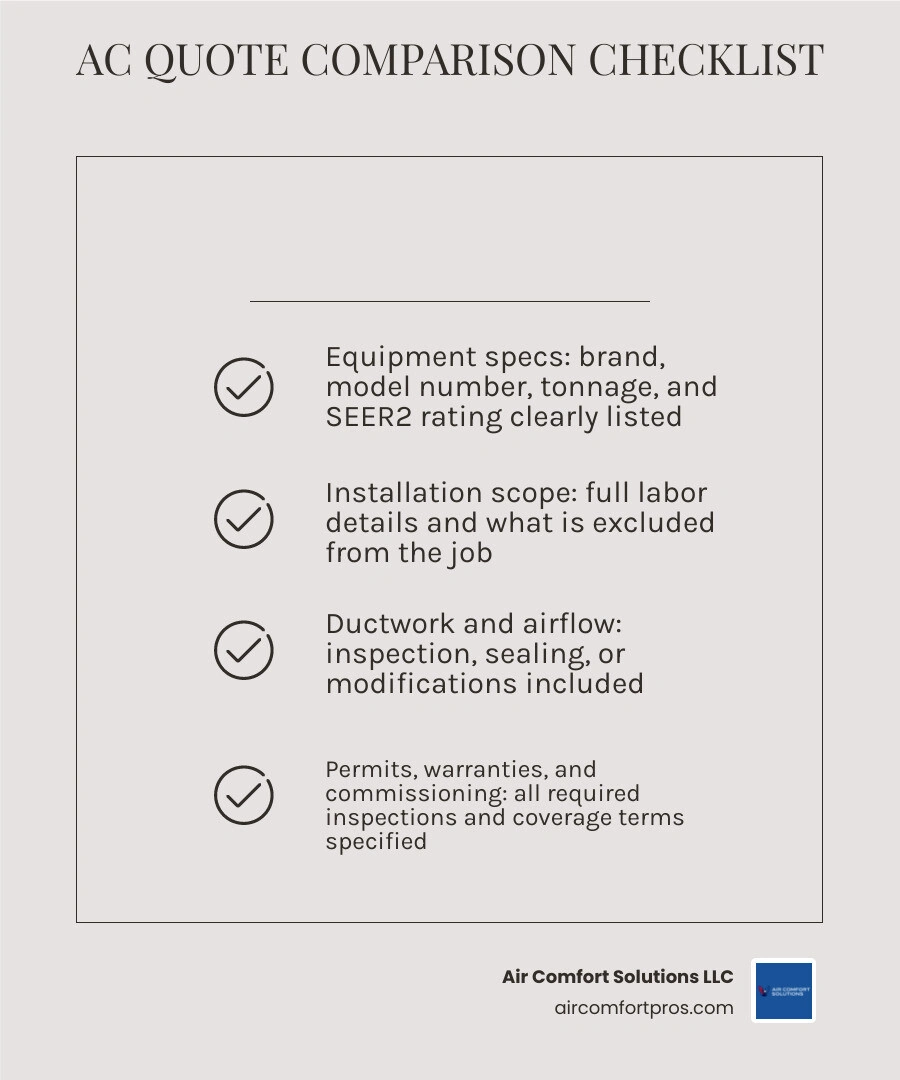
Here is a quick breakdown of what to compare across quotes:
1. Equipment specs – brand, model number, tonnage, and SEER2 rating
2. Installation scope – what labor is and is not included
3. Ductwork – whether existing ducts are inspected or corrected
4. Permits and inspections – who pulls them and who pays
5. Warranty terms – manufacturer parts, compressor, and labor coverage
6. Startup and commissioning – whether the system is tested after install
7. Contractor credentials – licensing, insurance, and local reputation
One homeowner found that the first company they contacted was quoting nearly $2,000 more than the contractor they ultimately hired — not because the equipment was better, but because the scopes were never compared side by side.
In Texas heat, a poorly compared quote can mean choosing a system that is the wrong size, missing key components, or installed without the permits your municipality requires. Getting the comparison right from the start protects your home, your budget, and your long-term comfort.
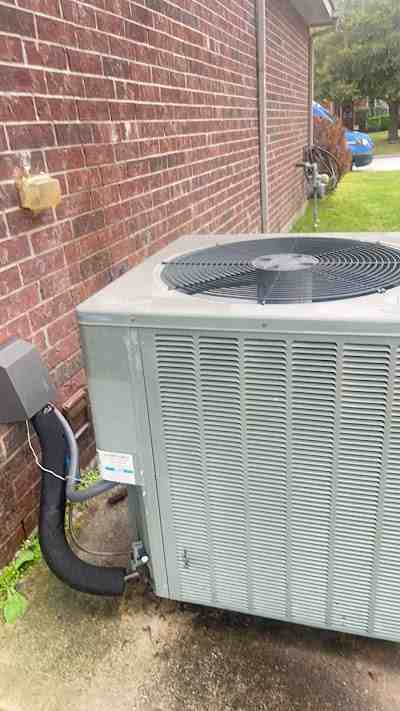
When you receive a quote for a new air conditioner, it is easy to flip straight to the final line item. However, the hardware itself is only one part of the equation. In the HVAC industry, the quality of the installation plays an incredibly large role in how well your system performs and how long it lasts. You could purchase the most advanced, premium outdoor unit on the market, but if it is paired with mismatched components or installed poorly, it will never reach its rated efficiency.
Our hot, humid climate in East Texas puts immense thermal stress on cooling equipment. Extreme summer temperatures mean systems run for long cycles under high pressure. If you want to understand why systems break down prematurely in our area, it helps to look at how severe weather impacts internal components. You can read more about this in our guide on Why Do AC Units Wear Out Faster in Hot Climates.
A comprehensive quote should detail the exact scope of work required to protect your investment from this intense wear and tear. When evaluating quotes side by side, you are not just comparing brands; you are comparing the technical precision, safety protocols, and long-term reliability that each contractor brings to the job.
To ensure you get the performance and efficiency you are paying for, the outdoor condenser and the indoor evaporator coil must form an AHRI-matched system. AHRI (Air-Conditioning, Heating, and Refrigeration Institute) matches are certified combinations tested to perform at specific efficiency levels.
Some low-cost quotes achieve a lower price point by proposing to replace only your outdoor unit while leaving your old indoor evaporator coil in place. This is a major red flag. Mixing old and new components can void your manufacturer warranty, cause premature compressor failure, and significantly lower your system’s operating efficiency.
When reviewing quotes, make sure the contractor lists the exact model numbers for both the indoor and outdoor units, along with the certified SEER2 rating of that specific combination. To learn more about how these modern efficiency metrics are calculated under realistic operating conditions, check out our article on What is a SEER2 Rating on an AC Unit.
Warranties are your primary safety net against unexpected repairs, but they vary significantly between companies. When comparing quotes, break the warranty down into three distinct categories:
• Manufacturer Parts Warranty: Most reputable brands offer a 10-year parts warranty. However, this coverage almost always requires you to register the equipment online within 60 to 90 days of installation. If you fail to register, the coverage typically drops to 5 years. Check if your contractor handles this registration process for you.
• Compressor Warranty: The compressor is the heart of your air conditioner. Premium brands often extend compressor-specific warranties up to 10 years, 12 years, or even offer lifetime replacement terms on their top-tier models.
• Labor Warranty: While manufacturers cover the parts, they do not cover the cost of the labor to replace them. Labor warranties are provided directly by the installing contractor. A standard labor warranty is typically 1 year, but high-quality companies will offer 2, 5, or even 10 years of labor coverage, which signals strong confidence in their installation craftsmanship.
A common mistake in home comfort replacement is assuming that “bigger is always better.” If an HVAC company simply looks at your old unit and quotes the exact same size without performing any calculations, they are guessing.
A professional quote must be based on an ACCA Manual J load calculation. This calculation analyzes your home’s square footage, insulation levels, window orientations, local climate, and ductwork to determine the exact cooling capacity your home requires. Sizing is measured in British thermal units (BTUs) or tons (where one ton equals 12,000 BTUs per hour). Sizing your system accurately is especially critical in our region to combat both high heat and heavy humidity. For a deeper dive into choosing the right setup for our local weather, read our guide on the Best AC System for Hot Humid Climates.
As of recent industry updates, all new residential air conditioners are rated using the SEER2 (Seasonal Energy Efficiency Ratio 2) scale. This standard uses more realistic static pressure testing to reflect real-world duct conditions. Upgrading from an older, low-SEER system to a modern SEER2-compliant unit can reduce your cooling energy usage by up to 20%.
When comparing quotes, you will typically see systems categorized by their compressor technology:
• Single-Stage Systems: These units run at 100% capacity whenever they are on. They are highly reliable and offer a lower upfront cost, but they are less efficient and can lead to slight temperature swings.
• Two-Stage Systems: These systems can run at a lower capacity (usually around 65-70%) on mild days and ramp up to full capacity during peak summer afternoons. This provides better humidity control and smoother energy usage.
• Variable-Speed Systems: These high-efficiency units continuously adjust their output in tiny increments to match your home’s exact cooling needs. They run for longer, quieter cycles, providing exceptional comfort and maximum energy savings.
To weigh the upfront investment against your monthly utility bills, take a look at our Standard Efficiency vs High Efficiency AC Comparison.
A general rule of thumb is that homes require roughly 20 BTUs of cooling capacity per square foot of living space. For example, a 2,000-square-foot home typically needs a 3.5 to 4-ton system (about 42,000 to 48,000 BTUs). However, relying solely on this rule of thumb can lead to severe comfort issues.
If a contractor installs an oversized system, it will cool your home too quickly and shut off. This is called short-cycling. Because the system runs in short bursts, it never stays on long enough to pull moisture out of the air, leaving your home feeling cold and clammy. Conversely, an undersized system will run constantly, struggling to keep up with the summer heat, which spikes your utility bills and wears out the compressor prematurely. Proper sizing ensures consistent temperatures and excellent humidity control.
The line items detailing the actual physical labor are where quotes diverge the most. A lower bid often looks attractive because it omits critical steps that a comprehensive quote includes. For example, does the quote include replacing the copper line set that carries refrigerant between the indoor and outdoor units? If the old line set is reused, it must be thoroughly flushed with a nitrogen purge to remove old oil and contaminants, especially when transitioning to modern refrigerants.
To help you see how these differences impact your project, we have laid out the differences between standard and comprehensive installation scopes below:
• Line Set Treatment — Standard Installation Scope: Reuses old lines without flushing — Comprehensive Installation Scope: Installs new copper line set or performs a full nitrogen flush
• Electrical Components — Standard Installation Scope: Reuses old disconnect box and whip — Comprehensive Installation Scope: Installs new electrical disconnect and flexible whip
• Condensate Management — Standard Installation Scope: Connects to existing drain lines — Comprehensive Installation Scope: Installs new drain lines, safety overflow switches, and EZ traps
• Ductwork Inspection — Standard Installation Scope: None (assumes existing ductwork is fine) — Comprehensive Installation Scope: Inspects for leaks, measures static pressure, and balances airflow
• Permits & Inspections — Standard Installation Scope: Often omitted or left to the homeowner — Comprehensive Installation Scope: Handles all municipal permits and schedules final inspections
• System Commissioning — Standard Installation Scope: Basic “turn-on” test to verify cold air — Comprehensive Installation Scope: Full start-up testing with recorded refrigerant pressures and airflow readings
Your ductwork is the delivery system for your air conditioner. According to industry data, unsealed or deteriorated ducts can waste 20% to 30% of the energy used to run your system. If a contractor connects a high-efficiency system to leaky, undersized, or collapsed ducts, you will not get the comfort or the energy savings you paid for.
A quality quote should always include a visual inspection of your ductwork and an evaluation of your home’s static pressure. Ensuring your ducts are properly sealed and balanced prevents hot spots, reduces dust, and keeps your system running smoothly. For practical advice on keeping your entire system in top shape, check out our HVAC Maintenance Tips for Texas Homeowners.
In our service areas across Harris and Montgomery counties, local building codes require a mechanical permit for any central AC replacement. Pulling a permit ensures that a third-party municipal inspector will review the installation to verify that it meets all safety, electrical, and structural codes.
If a quote does not mention permits, or if the contractor asks you to pull the permit yourself, it is a major warning sign. Legitimate, licensed contractors handle the permit process from start to finish.
Additionally, the quote should specify that the team will perform a formal commissioning process. This is not just a quick check to see if cold air is coming out of the vents. Commissioning involves measuring the exact refrigerant charge, checking the electrical draw, testing static pressure, and verifying that the airflow matches the manufacturer’s exact specifications.
Before you spend time comparing replacement quotes, you must decide if replacement is truly the right path. If your current system is relatively young and has been reliable, a professional repair might be the most sensible option.
To help make this decision, many HVAC professionals recommend using the “5,000 Rule.” Multiply the age of your unit by the estimated cost of the repair. If the result is over $5,000, replacing the system is generally the more cost-effective long-term choice. For example, if a 10-year-old system needs a repair that costs $600, the result is $6,000 — suggesting that replacement is the wiser investment.
A well-maintained air conditioner in Texas typically lasts 15 to 20 years, though our heavy cooling demands can shorten that lifespan. To help you weigh your options, read our detailed guide on How to Decide Between AC Repair and Replacement and learn more about what to expect regarding the Average Lifespan of an HVAC System in Texas.
The biggest red flags in an AC quote include:
• Vague descriptions: A single-line estimate that simply says “Replace AC system” without listing specific model numbers, SEER2 ratings, or scope of work.
• No load calculation: Sizing the new unit solely on your old unit’s size or using a generic square-footage formula instead of a Manual J calculation.
• Missing permits: No mention of municipal permits, code compliance, or final inspections.
• High-pressure sales tactics: Offers that “expire in 24 hours” or pressure to sign a contract before you can review other options.
We generally recommend getting three quotes from reputable, licensed local companies. Getting three quotes gives you a clear baseline of what a standard installation requires in your neighborhood, helps you identify any outliers, and gives you a tiebreaker if two options are very close.
Quotes vary because they represent different levels of service and equipment quality. A lower quote may involve standard-efficiency, single-stage equipment, reusing old line sets, and skipping ductwork repairs or permits. A higher quote often includes premium variable-speed equipment, a comprehensive installation scope (including new line sets, electrical upgrades, and duct sealing), longer labor warranties, and full code compliance.
At Air Comfort Solutions, we believe that a new air conditioning system is an investment in your family’s safety, comfort, and peace of mind. As a local, family-owned business serving Pinehurst, TX, and the north side of Harris County for over 35 years, we treat our customers like neighbors because you are.
Choosing a local family-owned business means you get direct accountability, personalized service, and technicians who understand the unique demands of the Texas climate. To learn more about why local expertise matters, explore the Benefits of Choosing a Local Family-Owned HVAC Company and see how you can support our community in our article on Supporting Local Businesses for Home Comfort. If you are weighing your options between different types of providers, check out our Local HVAC Company vs National Chain Comparison.
We are here to provide clear, honest, and highly detailed quotes that leave no room for guesswork. Schedule your professional AC consultation with Air Comfort Solutions today to get a comprehensive, transparent assessment tailored specifically to your home.
Knowing how to compare AC quotes from different companies is one of the most valuable skills a Pinehurst, TX homeowner can have before replacing an AC system. Three quotes can land on your kitchen table with prices thousands of dollars apart — and no clear explanation why. That gap rarely means one company is trying to rip you off. More often, each quote is describing a completely different job.
Here is a quick breakdown of what to compare across quotes:
One homeowner found that the first company they contacted was quoting nearly $2,000 more than the contractor they ultimately hired — not because the equipment was better, but because the scopes were never compared side by side.
In Texas heat, a poorly compared quote can mean choosing a system that is the wrong size, missing key components, or installed without the permits your municipality requires. Getting the comparison right from the start protects your home, your budget, and your long-term comfort.
When you receive a quote for a new air conditioner, it is easy to flip straight to the final line item. However, the hardware itself is only one part of the equation. In the HVAC industry, the quality of the installation plays an incredibly large role in how well your system performs and how long it lasts. You could purchase the most advanced, premium outdoor unit on the market, but if it is paired with mismatched components or installed poorly, it will never reach its rated efficiency.
Our hot, humid climate in East Texas puts immense thermal stress on cooling equipment. Extreme summer temperatures mean systems run for long cycles under high pressure. If you want to understand why systems break down prematurely in our area, it helps to look at how severe weather impacts internal components. You can read more about this in our guide on Why Do AC Units Wear Out Faster in Hot Climates.
A comprehensive quote should detail the exact scope of work required to protect your investment from this intense wear and tear. When evaluating quotes side by side, you are not just comparing brands; you are comparing the technical precision, safety protocols, and long-term reliability that each contractor brings to the job.
To ensure you get the performance and efficiency you are paying for, the outdoor condenser and the indoor evaporator coil must form an AHRI-matched system. AHRI (Air-Conditioning, Heating, and Refrigeration Institute) matches are certified combinations tested to perform at specific efficiency levels.
Some low-cost quotes achieve a lower price point by proposing to replace only your outdoor unit while leaving your old indoor evaporator coil in place. This is a major red flag. Mixing old and new components can void your manufacturer warranty, cause premature compressor failure, and significantly lower your system's operating efficiency.
When reviewing quotes, make sure the contractor lists the exact model numbers for both the indoor and outdoor units, along with the certified SEER2 rating of that specific combination. To learn more about how these modern efficiency metrics are calculated under realistic operating conditions, check out our article on What is a SEER2 Rating on an AC Unit.
Warranties are your primary safety net against unexpected repairs, but they vary significantly between companies. When comparing quotes, break the warranty down into three distinct categories:
A common mistake in home comfort replacement is assuming that "bigger is always better." If an HVAC company simply looks at your old unit and quotes the exact same size without performing any calculations, they are guessing.
A professional quote must be based on an ACCA Manual J load calculation. This calculation analyzes your home’s square footage, insulation levels, window orientations, local climate, and ductwork to determine the exact cooling capacity your home requires. Sizing is measured in British thermal units (BTUs) or tons (where one ton equals 12,000 BTUs per hour). Sizing your system accurately is especially critical in our region to combat both high heat and heavy humidity. For a deeper dive into choosing the right setup for our local weather, read our guide on the Best AC System for Hot Humid Climates.
As of recent industry updates, all new residential air conditioners are rated using the SEER2 (Seasonal Energy Efficiency Ratio 2) scale. This standard uses more realistic static pressure testing to reflect real-world duct conditions. Upgrading from an older, low-SEER system to a modern SEER2-compliant unit can reduce your cooling energy usage by up to 20%.
When comparing quotes, you will typically see systems categorized by their compressor technology:
To weigh the upfront investment against your monthly utility bills, take a look at our Standard Efficiency vs High Efficiency AC Comparison.
A general rule of thumb is that homes require roughly 20 BTUs of cooling capacity per square foot of living space. For example, a 2,000-square-foot home typically needs a 3.5 to 4-ton system (about 42,000 to 48,000 BTUs). However, relying solely on this rule of thumb can lead to severe comfort issues.
If a contractor installs an oversized system, it will cool your home too quickly and shut off. This is called short-cycling. Because the system runs in short bursts, it never stays on long enough to pull moisture out of the air, leaving your home feeling cold and clammy. Conversely, an undersized system will run constantly, struggling to keep up with the summer heat, which spikes your utility bills and wears out the compressor prematurely. Proper sizing ensures consistent temperatures and excellent humidity control.
The line items detailing the actual physical labor are where quotes diverge the most. A lower bid often looks attractive because it omits critical steps that a comprehensive quote includes. For example, does the quote include replacing the copper line set that carries refrigerant between the indoor and outdoor units? If the old line set is reused, it must be thoroughly flushed with a nitrogen purge to remove old oil and contaminants, especially when transitioning to modern refrigerants.
To help you see how these differences impact your project, we have laid out the differences between standard and comprehensive installation scopes below:
| Feature/Task | Standard Installation Scope | Comprehensive Installation Scope |
|---|---|---|
| Line Set Treatment | Reuses old lines without flushing | Installs new copper line set or performs a full nitrogen flush |
| Electrical Components | Reuses old disconnect box and whip | Installs new electrical disconnect and flexible whip |
| Condensate Management | Connects to existing drain lines | Installs new drain lines, safety overflow switches, and EZ traps |
| Ductwork Inspection | None (assumes existing ductwork is fine) | Inspects for leaks, measures static pressure, and balances airflow |
| Permits & Inspections | Often omitted or left to the homeowner | Handles all municipal permits and schedules final inspections |
| System Commissioning | Basic "turn-on" test to verify cold air | Full start-up testing with recorded refrigerant pressures and airflow readings |
Your ductwork is the delivery system for your air conditioner. According to industry data, unsealed or deteriorated ducts can waste 20% to 30% of the energy used to run your system. If a contractor connects a high-efficiency system to leaky, undersized, or collapsed ducts, you will not get the comfort or the energy savings you paid for.
A quality quote should always include a visual inspection of your ductwork and an evaluation of your home's static pressure. Ensuring your ducts are properly sealed and balanced prevents hot spots, reduces dust, and keeps your system running smoothly. For practical advice on keeping your entire system in top shape, check out our HVAC Maintenance Tips for Texas Homeowners.
In our service areas across Harris and Montgomery counties, local building codes require a mechanical permit for any central AC replacement. Pulling a permit ensures that a third-party municipal inspector will review the installation to verify that it meets all safety, electrical, and structural codes.
If a quote does not mention permits, or if the contractor asks you to pull the permit yourself, it is a major warning sign. Legitimate, licensed contractors handle the permit process from start to finish.
Additionally, the quote should specify that the team will perform a formal commissioning process. This is not just a quick check to see if cold air is coming out of the vents. Commissioning involves measuring the exact refrigerant charge, checking the electrical draw, testing static pressure, and verifying that the airflow matches the manufacturer's exact specifications.
Before you spend time comparing replacement quotes, you must decide if replacement is truly the right path. If your current system is relatively young and has been reliable, a professional repair might be the most sensible option.
To help make this decision, many HVAC professionals recommend using the "5,000 Rule." Multiply the age of your unit by the estimated cost of the repair. If the result is over $5,000, replacing the system is generally the more cost-effective long-term choice. For example, if a 10-year-old system needs a repair that costs $600, the result is $6,000 — suggesting that replacement is the wiser investment.
A well-maintained air conditioner in Texas typically lasts 15 to 20 years, though our heavy cooling demands can shorten that lifespan. To help you weigh your options, read our detailed guide on How to Decide Between AC Repair and Replacement and learn more about what to expect regarding the Average Lifespan of an HVAC System in Texas.
The biggest red flags in an AC quote include:
We generally recommend getting three quotes from reputable, licensed local companies. Getting three quotes gives you a clear baseline of what a standard installation requires in your neighborhood, helps you identify any outliers, and gives you a tiebreaker if two options are very close.
Quotes vary because they represent different levels of service and equipment quality. A lower quote may involve standard-efficiency, single-stage equipment, reusing old line sets, and skipping ductwork repairs or permits. A higher quote often includes premium variable-speed equipment, a comprehensive installation scope (including new line sets, electrical upgrades, and duct sealing), longer labor warranties, and full code compliance.
At Air Comfort Pros, we believe that a new air conditioning system is an investment in your family's safety, comfort, and peace of mind. As a local, family-owned business serving Pinehurst, TX, and the north side of Harris County for over 35 years, we treat our customers like neighbors because you are.
Choosing a local family-owned business means you get direct accountability, personalized service, and technicians who understand the unique demands of the Texas climate. To learn more about why local expertise matters, explore the Benefits of Choosing a Local Family-Owned HVAC Company and see how you can support our community in our article on Supporting Local Businesses for Home Comfort. If you are weighing your options between different types of providers, check out our Local HVAC Company vs National Chain Comparison.
We are here to provide clear, honest, and highly detailed quotes that leave no room for guesswork. Schedule your professional AC consultation with Air Comfort Pros today to get a comprehensive, transparent assessment tailored specifically to your home.
Knowing how to compare AC quotes from different companies is one of the most valuable skills a Pinehurst, TX homeowner can have before replacing an AC system. Three quotes can land on your kitchen table with prices thousands of dollars apart — and no clear explanation why. That gap rarely means one company is trying to rip you off. More often, each quote is describing a completely different job.
Here is a quick breakdown of what to compare across quotes:
One homeowner found that the first company they contacted was quoting nearly $2,000 more than the contractor they ultimately hired — not because the equipment was better, but because the scopes were never compared side by side.
In Texas heat, a poorly compared quote can mean choosing a system that is the wrong size, missing key components, or installed without the permits your municipality requires. Getting the comparison right from the start protects your home, your budget, and your long-term comfort.
When you receive a quote for a new air conditioner, it is easy to flip straight to the final line item. However, the hardware itself is only one part of the equation. In the HVAC industry, the quality of the installation plays an incredibly large role in how well your system performs and how long it lasts. You could purchase the most advanced, premium outdoor unit on the market, but if it is paired with mismatched components or installed poorly, it will never reach its rated efficiency.
Our hot, humid climate in East Texas puts immense thermal stress on cooling equipment. Extreme summer temperatures mean systems run for long cycles under high pressure. If you want to understand why systems break down prematurely in our area, it helps to look at how severe weather impacts internal components. You can read more about this in our guide on Why Do AC Units Wear Out Faster in Hot Climates.
A comprehensive quote should detail the exact scope of work required to protect your investment from this intense wear and tear. When evaluating quotes side by side, you are not just comparing brands; you are comparing the technical precision, safety protocols, and long-term reliability that each contractor brings to the job.
To ensure you get the performance and efficiency you are paying for, the outdoor condenser and the indoor evaporator coil must form an AHRI-matched system. AHRI (Air-Conditioning, Heating, and Refrigeration Institute) matches are certified combinations tested to perform at specific efficiency levels.
Some low-cost quotes achieve a lower price point by proposing to replace only your outdoor unit while leaving your old indoor evaporator coil in place. This is a major red flag. Mixing old and new components can void your manufacturer warranty, cause premature compressor failure, and significantly lower your system's operating efficiency.
When reviewing quotes, make sure the contractor lists the exact model numbers for both the indoor and outdoor units, along with the certified SEER2 rating of that specific combination. To learn more about how these modern efficiency metrics are calculated under realistic operating conditions, check out our article on What is a SEER2 Rating on an AC Unit.
Warranties are your primary safety net against unexpected repairs, but they vary significantly between companies. When comparing quotes, break the warranty down into three distinct categories:
A common mistake in home comfort replacement is assuming that "bigger is always better." If an HVAC company simply looks at your old unit and quotes the exact same size without performing any calculations, they are guessing.
A professional quote must be based on an ACCA Manual J load calculation. This calculation analyzes your home’s square footage, insulation levels, window orientations, local climate, and ductwork to determine the exact cooling capacity your home requires. Sizing is measured in British thermal units (BTUs) or tons (where one ton equals 12,000 BTUs per hour). Sizing your system accurately is especially critical in our region to combat both high heat and heavy humidity. For a deeper dive into choosing the right setup for our local weather, read our guide on the Best AC System for Hot Humid Climates.
As of recent industry updates, all new residential air conditioners are rated using the SEER2 (Seasonal Energy Efficiency Ratio 2) scale. This standard uses more realistic static pressure testing to reflect real-world duct conditions. Upgrading from an older, low-SEER system to a modern SEER2-compliant unit can reduce your cooling energy usage by up to 20%.
When comparing quotes, you will typically see systems categorized by their compressor technology:
To weigh the upfront investment against your monthly utility bills, take a look at our Standard Efficiency vs High Efficiency AC Comparison.
A general rule of thumb is that homes require roughly 20 BTUs of cooling capacity per square foot of living space. For example, a 2,000-square-foot home typically needs a 3.5 to 4-ton system (about 42,000 to 48,000 BTUs). However, relying solely on this rule of thumb can lead to severe comfort issues.
If a contractor installs an oversized system, it will cool your home too quickly and shut off. This is called short-cycling. Because the system runs in short bursts, it never stays on long enough to pull moisture out of the air, leaving your home feeling cold and clammy. Conversely, an undersized system will run constantly, struggling to keep up with the summer heat, which spikes your utility bills and wears out the compressor prematurely. Proper sizing ensures consistent temperatures and excellent humidity control.
The line items detailing the actual physical labor are where quotes diverge the most. A lower bid often looks attractive because it omits critical steps that a comprehensive quote includes. For example, does the quote include replacing the copper line set that carries refrigerant between the indoor and outdoor units? If the old line set is reused, it must be thoroughly flushed with a nitrogen purge to remove old oil and contaminants, especially when transitioning to modern refrigerants.
To help you see how these differences impact your project, we have laid out the differences between standard and comprehensive installation scopes below:
| Feature/Task | Standard Installation Scope | Comprehensive Installation Scope |
|---|---|---|
| Line Set Treatment | Reuses old lines without flushing | Installs new copper line set or performs a full nitrogen flush |
| Electrical Components | Reuses old disconnect box and whip | Installs new electrical disconnect and flexible whip |
| Condensate Management | Connects to existing drain lines | Installs new drain lines, safety overflow switches, and EZ traps |
| Ductwork Inspection | None (assumes existing ductwork is fine) | Inspects for leaks, measures static pressure, and balances airflow |
| Permits & Inspections | Often omitted or left to the homeowner | Handles all municipal permits and schedules final inspections |
| System Commissioning | Basic "turn-on" test to verify cold air | Full start-up testing with recorded refrigerant pressures and airflow readings |
Your ductwork is the delivery system for your air conditioner. According to industry data, unsealed or deteriorated ducts can waste 20% to 30% of the energy used to run your system. If a contractor connects a high-efficiency system to leaky, undersized, or collapsed ducts, you will not get the comfort or the energy savings you paid for.
A quality quote should always include a visual inspection of your ductwork and an evaluation of your home's static pressure. Ensuring your ducts are properly sealed and balanced prevents hot spots, reduces dust, and keeps your system running smoothly. For practical advice on keeping your entire system in top shape, check out our HVAC Maintenance Tips for Texas Homeowners.
In our service areas across Harris and Montgomery counties, local building codes require a mechanical permit for any central AC replacement. Pulling a permit ensures that a third-party municipal inspector will review the installation to verify that it meets all safety, electrical, and structural codes.
If a quote does not mention permits, or if the contractor asks you to pull the permit yourself, it is a major warning sign. Legitimate, licensed contractors handle the permit process from start to finish.
Additionally, the quote should specify that the team will perform a formal commissioning process. This is not just a quick check to see if cold air is coming out of the vents. Commissioning involves measuring the exact refrigerant charge, checking the electrical draw, testing static pressure, and verifying that the airflow matches the manufacturer's exact specifications.
Before you spend time comparing replacement quotes, you must decide if replacement is truly the right path. If your current system is relatively young and has been reliable, a professional repair might be the most sensible option.
To help make this decision, many HVAC professionals recommend using the "5,000 Rule." Multiply the age of your unit by the estimated cost of the repair. If the result is over $5,000, replacing the system is generally the more cost-effective long-term choice. For example, if a 10-year-old system needs a repair that costs $600, the result is $6,000 — suggesting that replacement is the wiser investment.
A well-maintained air conditioner in Texas typically lasts 15 to 20 years, though our heavy cooling demands can shorten that lifespan. To help you weigh your options, read our detailed guide on How to Decide Between AC Repair and Replacement and learn more about what to expect regarding the Average Lifespan of an HVAC System in Texas.
The biggest red flags in an AC quote include:
We generally recommend getting three quotes from reputable, licensed local companies. Getting three quotes gives you a clear baseline of what a standard installation requires in your neighborhood, helps you identify any outliers, and gives you a tiebreaker if two options are very close.
Quotes vary because they represent different levels of service and equipment quality. A lower quote may involve standard-efficiency, single-stage equipment, reusing old line sets, and skipping ductwork repairs or permits. A higher quote often includes premium variable-speed equipment, a comprehensive installation scope (including new line sets, electrical upgrades, and duct sealing), longer labor warranties, and full code compliance.
At Air Comfort Pros, we believe that a new air conditioning system is an investment in your family's safety, comfort, and peace of mind. As a local, family-owned business serving Pinehurst, TX, and the north side of Harris County for over 35 years, we treat our customers like neighbors because you are.
Choosing a local family-owned business means you get direct accountability, personalized service, and technicians who understand the unique demands of the Texas climate. To learn more about why local expertise matters, explore the Benefits of Choosing a Local Family-Owned HVAC Company and see how you can support our community in our article on Supporting Local Businesses for Home Comfort. If you are weighing your options between different types of providers, check out our Local HVAC Company vs National Chain Comparison.
We are here to provide clear, honest, and highly detailed quotes that leave no room for guesswork. Schedule your professional AC consultation with Air Comfort Pros today to get a comprehensive, transparent assessment tailored specifically to your home.
Knowing how to compare AC quotes from different companies is one of the most valuable skills a Pinehurst, TX homeowner can have before replacing an AC system. Three quotes can land on your kitchen table with prices thousands of dollars apart — and no clear explanation why. That gap rarely means one company is trying to rip you off. More often, each quote is describing a completely different job.
Here is a quick breakdown of what to compare across quotes:
One homeowner found that the first company they contacted was quoting nearly $2,000 more than the contractor they ultimately hired — not because the equipment was better, but because the scopes were never compared side by side.
In Texas heat, a poorly compared quote can mean choosing a system that is the wrong size, missing key components, or installed without the permits your municipality requires. Getting the comparison right from the start protects your home, your budget, and your long-term comfort.
When you receive a quote for a new air conditioner, it is easy to flip straight to the final line item. However, the hardware itself is only one part of the equation. In the HVAC industry, the quality of the installation plays an incredibly large role in how well your system performs and how long it lasts. You could purchase the most advanced, premium outdoor unit on the market, but if it is paired with mismatched components or installed poorly, it will never reach its rated efficiency.
Our hot, humid climate in East Texas puts immense thermal stress on cooling equipment. Extreme summer temperatures mean systems run for long cycles under high pressure. If you want to understand why systems break down prematurely in our area, it helps to look at how severe weather impacts internal components. You can read more about this in our guide on Why Do AC Units Wear Out Faster in Hot Climates.
A comprehensive quote should detail the exact scope of work required to protect your investment from this intense wear and tear. When evaluating quotes side by side, you are not just comparing brands; you are comparing the technical precision, safety protocols, and long-term reliability that each contractor brings to the job.
To ensure you get the performance and efficiency you are paying for, the outdoor condenser and the indoor evaporator coil must form an AHRI-matched system. AHRI (Air-Conditioning, Heating, and Refrigeration Institute) matches are certified combinations tested to perform at specific efficiency levels.
Some low-cost quotes achieve a lower price point by proposing to replace only your outdoor unit while leaving your old indoor evaporator coil in place. This is a major red flag. Mixing old and new components can void your manufacturer warranty, cause premature compressor failure, and significantly lower your system's operating efficiency.
When reviewing quotes, make sure the contractor lists the exact model numbers for both the indoor and outdoor units, along with the certified SEER2 rating of that specific combination. To learn more about how these modern efficiency metrics are calculated under realistic operating conditions, check out our article on What is a SEER2 Rating on an AC Unit.
Warranties are your primary safety net against unexpected repairs, but they vary significantly between companies. When comparing quotes, break the warranty down into three distinct categories:
A common mistake in home comfort replacement is assuming that "bigger is always better." If an HVAC company simply looks at your old unit and quotes the exact same size without performing any calculations, they are guessing.
A professional quote must be based on an ACCA Manual J load calculation. This calculation analyzes your home’s square footage, insulation levels, window orientations, local climate, and ductwork to determine the exact cooling capacity your home requires. Sizing is measured in British thermal units (BTUs) or tons (where one ton equals 12,000 BTUs per hour). Sizing your system accurately is especially critical in our region to combat both high heat and heavy humidity. For a deeper dive into choosing the right setup for our local weather, read our guide on the Best AC System for Hot Humid Climates.
As of recent industry updates, all new residential air conditioners are rated using the SEER2 (Seasonal Energy Efficiency Ratio 2) scale. This standard uses more realistic static pressure testing to reflect real-world duct conditions. Upgrading from an older, low-SEER system to a modern SEER2-compliant unit can reduce your cooling energy usage by up to 20%.
When comparing quotes, you will typically see systems categorized by their compressor technology:
To weigh the upfront investment against your monthly utility bills, take a look at our Standard Efficiency vs High Efficiency AC Comparison.
A general rule of thumb is that homes require roughly 20 BTUs of cooling capacity per square foot of living space. For example, a 2,000-square-foot home typically needs a 3.5 to 4-ton system (about 42,000 to 48,000 BTUs). However, relying solely on this rule of thumb can lead to severe comfort issues.
If a contractor installs an oversized system, it will cool your home too quickly and shut off. This is called short-cycling. Because the system runs in short bursts, it never stays on long enough to pull moisture out of the air, leaving your home feeling cold and clammy. Conversely, an undersized system will run constantly, struggling to keep up with the summer heat, which spikes your utility bills and wears out the compressor prematurely. Proper sizing ensures consistent temperatures and excellent humidity control.
The line items detailing the actual physical labor are where quotes diverge the most. A lower bid often looks attractive because it omits critical steps that a comprehensive quote includes. For example, does the quote include replacing the copper line set that carries refrigerant between the indoor and outdoor units? If the old line set is reused, it must be thoroughly flushed with a nitrogen purge to remove old oil and contaminants, especially when transitioning to modern refrigerants.
To help you see how these differences impact your project, we have laid out the differences between standard and comprehensive installation scopes below:
| Feature/Task | Standard Installation Scope | Comprehensive Installation Scope |
|---|---|---|
| Line Set Treatment | Reuses old lines without flushing | Installs new copper line set or performs a full nitrogen flush |
| Electrical Components | Reuses old disconnect box and whip | Installs new electrical disconnect and flexible whip |
| Condensate Management | Connects to existing drain lines | Installs new drain lines, safety overflow switches, and EZ traps |
| Ductwork Inspection | None (assumes existing ductwork is fine) | Inspects for leaks, measures static pressure, and balances airflow |
| Permits & Inspections | Often omitted or left to the homeowner | Handles all municipal permits and schedules final inspections |
| System Commissioning | Basic "turn-on" test to verify cold air | Full start-up testing with recorded refrigerant pressures and airflow readings |
Your ductwork is the delivery system for your air conditioner. According to industry data, unsealed or deteriorated ducts can waste 20% to 30% of the energy used to run your system. If a contractor connects a high-efficiency system to leaky, undersized, or collapsed ducts, you will not get the comfort or the energy savings you paid for.
A quality quote should always include a visual inspection of your ductwork and an evaluation of your home's static pressure. Ensuring your ducts are properly sealed and balanced prevents hot spots, reduces dust, and keeps your system running smoothly. For practical advice on keeping your entire system in top shape, check out our HVAC Maintenance Tips for Texas Homeowners.
In our service areas across Harris and Montgomery counties, local building codes require a mechanical permit for any central AC replacement. Pulling a permit ensures that a third-party municipal inspector will review the installation to verify that it meets all safety, electrical, and structural codes.
If a quote does not mention permits, or if the contractor asks you to pull the permit yourself, it is a major warning sign. Legitimate, licensed contractors handle the permit process from start to finish.
Additionally, the quote should specify that the team will perform a formal commissioning process. This is not just a quick check to see if cold air is coming out of the vents. Commissioning involves measuring the exact refrigerant charge, checking the electrical draw, testing static pressure, and verifying that the airflow matches the manufacturer's exact specifications.
Before you spend time comparing replacement quotes, you must decide if replacement is truly the right path. If your current system is relatively young and has been reliable, a professional repair might be the most sensible option.
To help make this decision, many HVAC professionals recommend using the "5,000 Rule." Multiply the age of your unit by the estimated cost of the repair. If the result is over $5,000, replacing the system is generally the more cost-effective long-term choice. For example, if a 10-year-old system needs a repair that costs $600, the result is $6,000 — suggesting that replacement is the wiser investment.
A well-maintained air conditioner in Texas typically lasts 15 to 20 years, though our heavy cooling demands can shorten that lifespan. To help you weigh your options, read our detailed guide on How to Decide Between AC Repair and Replacement and learn more about what to expect regarding the Average Lifespan of an HVAC System in Texas.
The biggest red flags in an AC quote include:
We generally recommend getting three quotes from reputable, licensed local companies. Getting three quotes gives you a clear baseline of what a standard installation requires in your neighborhood, helps you identify any outliers, and gives you a tiebreaker if two options are very close.
Quotes vary because they represent different levels of service and equipment quality. A lower quote may involve standard-efficiency, single-stage equipment, reusing old line sets, and skipping ductwork repairs or permits. A higher quote often includes premium variable-speed equipment, a comprehensive installation scope (including new line sets, electrical upgrades, and duct sealing), longer labor warranties, and full code compliance.
At Air Comfort Pros, we believe that a new air conditioning system is an investment in your family's safety, comfort, and peace of mind. As a local, family-owned business serving Pinehurst, TX, and the north side of Harris County for over 35 years, we treat our customers like neighbors because you are.
Choosing a local family-owned business means you get direct accountability, personalized service, and technicians who understand the unique demands of the Texas climate. To learn more about why local expertise matters, explore the Benefits of Choosing a Local Family-Owned HVAC Company and see how you can support our community in our article on Supporting Local Businesses for Home Comfort. If you are weighing your options between different types of providers, check out our Local HVAC Company vs National Chain Comparison.
We are here to provide clear, honest, and highly detailed quotes that leave no room for guesswork. Schedule your professional AC consultation with Air Comfort Pros today to get a comprehensive, transparent assessment tailored specifically to your home.
Knowing how to compare AC quotes from different companies is one of the most valuable skills a Pinehurst, TX homeowner can have before replacing an AC system. Three quotes can land on your kitchen table with prices thousands of dollars apart — and no clear explanation why. That gap rarely means one company is trying to rip you off. More often, each quote is describing a completely different job.
Here is a quick breakdown of what to compare across quotes:
One homeowner found that the first company they contacted was quoting nearly $2,000 more than the contractor they ultimately hired — not because the equipment was better, but because the scopes were never compared side by side.
In Texas heat, a poorly compared quote can mean choosing a system that is the wrong size, missing key components, or installed without the permits your municipality requires. Getting the comparison right from the start protects your home, your budget, and your long-term comfort.
When you receive a quote for a new air conditioner, it is easy to flip straight to the final line item. However, the hardware itself is only one part of the equation. In the HVAC industry, the quality of the installation plays an incredibly large role in how well your system performs and how long it lasts. You could purchase the most advanced, premium outdoor unit on the market, but if it is paired with mismatched components or installed poorly, it will never reach its rated efficiency.
Our hot, humid climate in East Texas puts immense thermal stress on cooling equipment. Extreme summer temperatures mean systems run for long cycles under high pressure. If you want to understand why systems break down prematurely in our area, it helps to look at how severe weather impacts internal components. You can read more about this in our guide on Why Do AC Units Wear Out Faster in Hot Climates.
A comprehensive quote should detail the exact scope of work required to protect your investment from this intense wear and tear. When evaluating quotes side by side, you are not just comparing brands; you are comparing the technical precision, safety protocols, and long-term reliability that each contractor brings to the job.
To ensure you get the performance and efficiency you are paying for, the outdoor condenser and the indoor evaporator coil must form an AHRI-matched system. AHRI (Air-Conditioning, Heating, and Refrigeration Institute) matches are certified combinations tested to perform at specific efficiency levels.
Some low-cost quotes achieve a lower price point by proposing to replace only your outdoor unit while leaving your old indoor evaporator coil in place. This is a major red flag. Mixing old and new components can void your manufacturer warranty, cause premature compressor failure, and significantly lower your system's operating efficiency.
When reviewing quotes, make sure the contractor lists the exact model numbers for both the indoor and outdoor units, along with the certified SEER2 rating of that specific combination. To learn more about how these modern efficiency metrics are calculated under realistic operating conditions, check out our article on What is a SEER2 Rating on an AC Unit.
Warranties are your primary safety net against unexpected repairs, but they vary significantly between companies. When comparing quotes, break the warranty down into three distinct categories:
A common mistake in home comfort replacement is assuming that "bigger is always better." If an HVAC company simply looks at your old unit and quotes the exact same size without performing any calculations, they are guessing.
A professional quote must be based on an ACCA Manual J load calculation. This calculation analyzes your home’s square footage, insulation levels, window orientations, local climate, and ductwork to determine the exact cooling capacity your home requires. Sizing is measured in British thermal units (BTUs) or tons (where one ton equals 12,000 BTUs per hour). Sizing your system accurately is especially critical in our region to combat both high heat and heavy humidity. For a deeper dive into choosing the right setup for our local weather, read our guide on the Best AC System for Hot Humid Climates.
As of recent industry updates, all new residential air conditioners are rated using the SEER2 (Seasonal Energy Efficiency Ratio 2) scale. This standard uses more realistic static pressure testing to reflect real-world duct conditions. Upgrading from an older, low-SEER system to a modern SEER2-compliant unit can reduce your cooling energy usage by up to 20%.
When comparing quotes, you will typically see systems categorized by their compressor technology:
To weigh the upfront investment against your monthly utility bills, take a look at our Standard Efficiency vs High Efficiency AC Comparison.
A general rule of thumb is that homes require roughly 20 BTUs of cooling capacity per square foot of living space. For example, a 2,000-square-foot home typically needs a 3.5 to 4-ton system (about 42,000 to 48,000 BTUs). However, relying solely on this rule of thumb can lead to severe comfort issues.
If a contractor installs an oversized system, it will cool your home too quickly and shut off. This is called short-cycling. Because the system runs in short bursts, it never stays on long enough to pull moisture out of the air, leaving your home feeling cold and clammy. Conversely, an undersized system will run constantly, struggling to keep up with the summer heat, which spikes your utility bills and wears out the compressor prematurely. Proper sizing ensures consistent temperatures and excellent humidity control.
The line items detailing the actual physical labor are where quotes diverge the most. A lower bid often looks attractive because it omits critical steps that a comprehensive quote includes. For example, does the quote include replacing the copper line set that carries refrigerant between the indoor and outdoor units? If the old line set is reused, it must be thoroughly flushed with a nitrogen purge to remove old oil and contaminants, especially when transitioning to modern refrigerants.
To help you see how these differences impact your project, we have laid out the differences between standard and comprehensive installation scopes below:
| Feature/Task | Standard Installation Scope | Comprehensive Installation Scope |
|---|---|---|
| Line Set Treatment | Reuses old lines without flushing | Installs new copper line set or performs a full nitrogen flush |
| Electrical Components | Reuses old disconnect box and whip | Installs new electrical disconnect and flexible whip |
| Condensate Management | Connects to existing drain lines | Installs new drain lines, safety overflow switches, and EZ traps |
| Ductwork Inspection | None (assumes existing ductwork is fine) | Inspects for leaks, measures static pressure, and balances airflow |
| Permits & Inspections | Often omitted or left to the homeowner | Handles all municipal permits and schedules final inspections |
| System Commissioning | Basic "turn-on" test to verify cold air | Full start-up testing with recorded refrigerant pressures and airflow readings |
Your ductwork is the delivery system for your air conditioner. According to industry data, unsealed or deteriorated ducts can waste 20% to 30% of the energy used to run your system. If a contractor connects a high-efficiency system to leaky, undersized, or collapsed ducts, you will not get the comfort or the energy savings you paid for.
A quality quote should always include a visual inspection of your ductwork and an evaluation of your home's static pressure. Ensuring your ducts are properly sealed and balanced prevents hot spots, reduces dust, and keeps your system running smoothly. For practical advice on keeping your entire system in top shape, check out our HVAC Maintenance Tips for Texas Homeowners.
In our service areas across Harris and Montgomery counties, local building codes require a mechanical permit for any central AC replacement. Pulling a permit ensures that a third-party municipal inspector will review the installation to verify that it meets all safety, electrical, and structural codes.
If a quote does not mention permits, or if the contractor asks you to pull the permit yourself, it is a major warning sign. Legitimate, licensed contractors handle the permit process from start to finish.
Additionally, the quote should specify that the team will perform a formal commissioning process. This is not just a quick check to see if cold air is coming out of the vents. Commissioning involves measuring the exact refrigerant charge, checking the electrical draw, testing static pressure, and verifying that the airflow matches the manufacturer's exact specifications.
Before you spend time comparing replacement quotes, you must decide if replacement is truly the right path. If your current system is relatively young and has been reliable, a professional repair might be the most sensible option.
To help make this decision, many HVAC professionals recommend using the "5,000 Rule." Multiply the age of your unit by the estimated cost of the repair. If the result is over $5,000, replacing the system is generally the more cost-effective long-term choice. For example, if a 10-year-old system needs a repair that costs $600, the result is $6,000 — suggesting that replacement is the wiser investment.
A well-maintained air conditioner in Texas typically lasts 15 to 20 years, though our heavy cooling demands can shorten that lifespan. To help you weigh your options, read our detailed guide on How to Decide Between AC Repair and Replacement and learn more about what to expect regarding the Average Lifespan of an HVAC System in Texas.
The biggest red flags in an AC quote include:
We generally recommend getting three quotes from reputable, licensed local companies. Getting three quotes gives you a clear baseline of what a standard installation requires in your neighborhood, helps you identify any outliers, and gives you a tiebreaker if two options are very close.
Quotes vary because they represent different levels of service and equipment quality. A lower quote may involve standard-efficiency, single-stage equipment, reusing old line sets, and skipping ductwork repairs or permits. A higher quote often includes premium variable-speed equipment, a comprehensive installation scope (including new line sets, electrical upgrades, and duct sealing), longer labor warranties, and full code compliance.
At Air Comfort Pros, we believe that a new air conditioning system is an investment in your family's safety, comfort, and peace of mind. As a local, family-owned business serving Pinehurst, TX, and the north side of Harris County for over 35 years, we treat our customers like neighbors because you are.
Choosing a local family-owned business means you get direct accountability, personalized service, and technicians who understand the unique demands of the Texas climate. To learn more about why local expertise matters, explore the Benefits of Choosing a Local Family-Owned HVAC Company and see how you can support our community in our article on Supporting Local Businesses for Home Comfort. If you are weighing your options between different types of providers, check out our Local HVAC Company vs National Chain Comparison.
We are here to provide clear, honest, and highly detailed quotes that leave no room for guesswork. Schedule your professional AC consultation with Air Comfort Pros today to get a comprehensive, transparent assessment tailored specifically to your home.


Zane came out and did an amazing job! Super friendly, honest and transparent about the work that needed to be done. This is my second time working with Air Comfort Solutions and they’re my go to for HVAC services. Highly recommend.
God's AMAZING grace sent us Robert and Zane. We have been without air in this Texas heat for six weeks and four days. We've had a few contractors give us quotes all trying to upsell when we're at a low point. But not the guys at Air Comfort Solutions. They came in assessed our situation, gave us honest feedback, and showed us the issues as they proceeded with the assessment for clear understanding. We highly recommend them for their professionalism, quality products, and fair pricing. We hands down support them for all the work they do 💯 %.
Robert and Zane gone above and beyond to make the process easy and affordable.
Would definitely recommend!!
I’m writing this review to let everyone know that Air Comfort Solutions is the company to work with. I know the owner ( Robert) for several years now. He has been taking care of my residential and business work orders. Robert is professional, knowledgeable and will save you money. I just want to thank Robert for great job you have been doing for me.