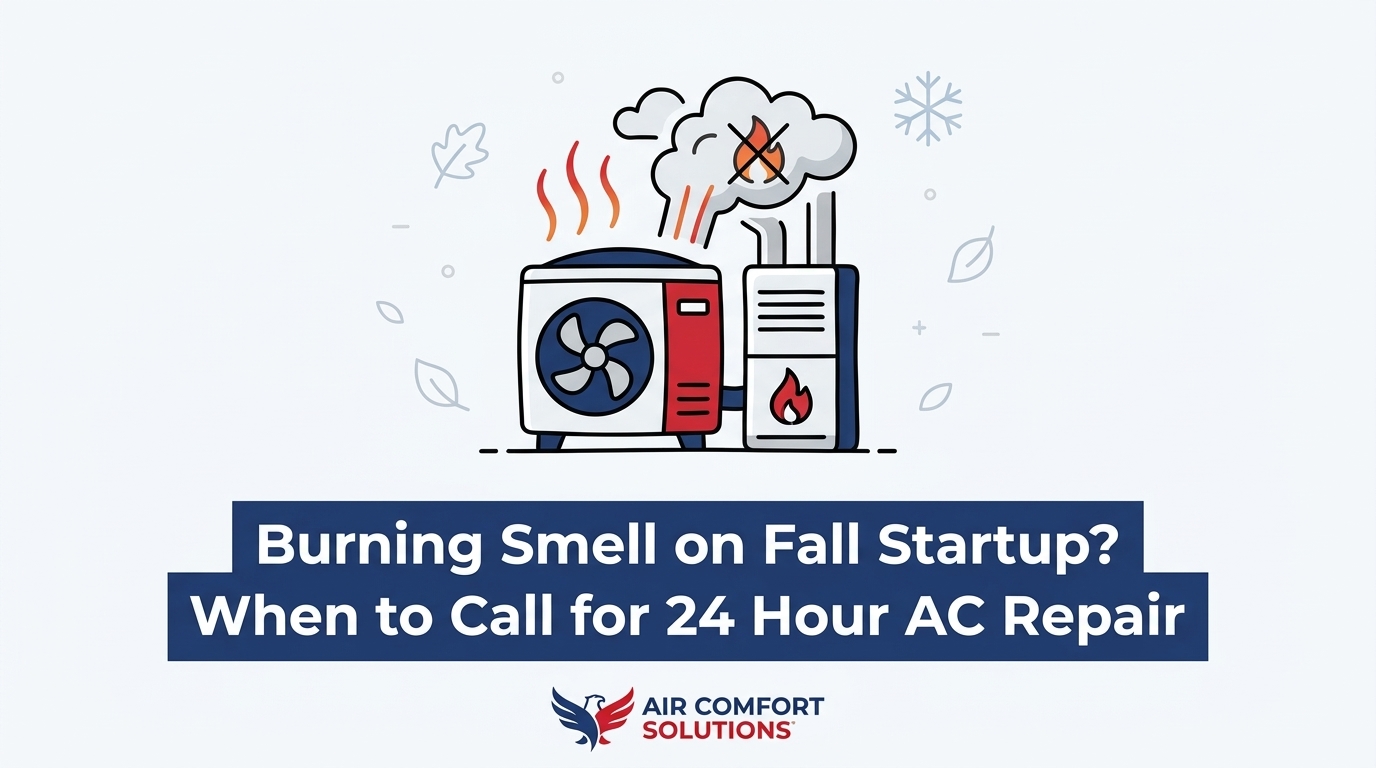
Burning Smell on Fall Startup? When to Call for 24 Hour AC Repair
Why we always check for dust burn-off first. Review our home maintenance tips and troubleshooting advice to decide if that fall HVAC smell needs a pro.
How a quality installation pays for itself over time is a question every homeowner in Pinehurst, TX should be asking before signing any HVAC contract — because the price you pay on installation day is just the beginning of the story.
Most homeowners focus on the upfront number. But the real cost of an HVAC system is what you spend — or save — over the next 15 to 20 years of Texas summers and cold fronts. A system that was rushed, undersized, or poorly commissioned will cost you far more in energy waste, repairs, and early replacement than the few hundred dollars you saved going with the cheapest bid.
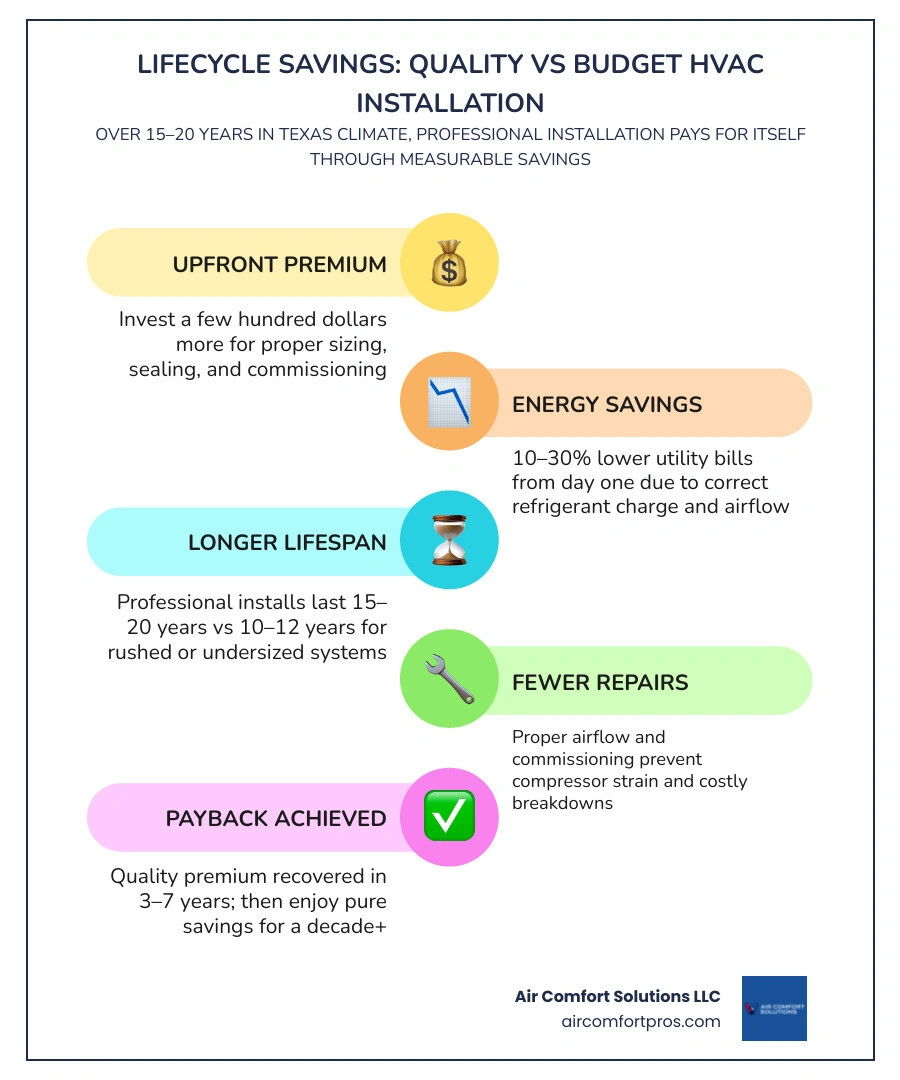
Here is a quick breakdown of how a professional HVAC installation pays for itself:
• Energy savings: Properly installed systems use 10–30% less energy than poorly installed ones, lowering your monthly utility bills from day one
• Longer system life: Professionally commissioned HVAC systems routinely last 15–20 years, compared to just 10–12 years for substandard installs
• Fewer repairs: Correct refrigerant charge, proper airflow, and accurate sizing prevent the component stress that leads to breakdowns
• Warranty protection: Most manufacturers require certified professional installation for their warranties to remain valid
• Home value: A high-efficiency system installed correctly can increase your home’s resale value by 5–7%
• Payback period: Most homeowners recover the quality premium within 3 to 7 years — and then enjoy a decade or more of pure savings
In North Harris County, where summer temperatures push into triple digits for months at a time, your HVAC system is not a luxury. It is the hardest-working appliance in your home. Getting the installation right the first time is not just a comfort decision — it is a financial one.
This guide breaks down exactly how quality HVAC installation delivers measurable long-term returns, what the hidden costs of a poor installation look like, and what to look for when choosing a professional for your Pinehurst home.
How a quality installation pays for itself over time terms simplified:
• how bad ac installation causes problems for years
• how ductwork mistakes during installation hurt your comfort
• how improper refrigerant charge reduces your ac lifespan
When evaluating a new heating and cooling system, it helps to shift from a “transactional” mindset to a “lifecycle” mindset. The transactional mindset asks: What is the lowest price I can pay today to get cool air blowing? The lifecycle mindset asks: What will this system cost me over its entire operating life?
To understand the financial logic, we must look at the difference between the simple payback period and the long-term return on investment (ROI).
• Payback Period: This is the time it takes for your energy and repair savings to fully cover the “quality premium” (the difference in cost between a cut-rate budget job and a professional, high-tier installation). For most homeowners in Pinehurst and surrounding areas like Tomball and Magnolia, this payback window is incredibly short—typically 3 to 7 years.
• Return on Investment (ROI): Once you cross the payback threshold, every dollar saved on your monthly utility bills and avoided repair costs is pure profit. Because a professionally installed system lasts significantly longer and runs more efficiently, the total ROI over a 15-to-20-year lifespan is exceptionally high, often returning several times the initial premium.
On the flip side, choosing a cut-rate installation means you are accepting a lifetime of higher utility bills and premature component failures. Industry research shows that installation faults can increase a system’s energy usage by up to 30%, completely wiping out the efficiency benefits of a modern unit.
• System Lifespan — Quality Installation (Air Comfort Solutions Standard): 15 to 20 Years — Budget / Cut-Rate Installation: 10 to 12 Years (or fewer)
• Energy Efficiency — Quality Installation (Air Comfort Solutions Standard): Operates at full rated SEER2 efficiency — Budget / Cut-Rate Installation: 20% to 40% efficiency loss from day one
• Breakdown Frequency — Quality Installation (Air Comfort Solutions Standard): Extremely low; limited to normal wear — Budget / Cut-Rate Installation: Frequent component failures and electrical strain
• Manufacturer Warranty — Quality Installation (Air Comfort Solutions Standard): Fully validated with registered documentation — Budget / Cut-Rate Installation: Risk of being voided due to poor workmanship
• Humidity & Comfort — Quality Installation (Air Comfort Solutions Standard): Excellent; balanced airflow and proper sizing — Budget / Cut-Rate Installation: Clammy, uneven temperatures and short-cycling
• Long-Term Financial Impact — Quality Installation (Air Comfort Solutions Standard): Pays for itself in 3–7 years; ongoing savings — Budget / Cut-Rate Installation: Constant drain on wallet via repairs and high bills
In Southeast Texas, your air conditioner is the primary driver of your monthly electricity bill. Modern high-efficiency systems are designed to sip electricity, utilizing advanced inverter-driven compressors and variable-speed blowers. However, these advanced features are highly sensitive. If the system is not installed with absolute precision, it cannot perform at its rated efficiency.
When a system is installed properly, with verified airflow and perfect refrigerant levels, it matches the manufacturer’s laboratory-tested SEER2 ratings. This direct alignment translates to immediate monthly savings. Homeowners transitioning from an old, failing unit to a professionally installed high-efficiency system often see their cooling-related energy consumption drop by 10% to 30%.
To explore whether investing in premium efficiency makes financial sense for your specific situation, read our detailed analysis: Is a High Efficiency AC Worth the Extra Cost in Texas.
Furthermore, timing your upgrade correctly maximizes these utility savings. Running a decaying system until it suffers a catastrophic failure in the middle of a July heatwave often forces a rushed decision. Planning your replacement during milder months allows for a meticulous, high-quality installation. For advice on timing, check out our guide on When Should You Replace Your AC in a Hot Climate.
An HVAC system is a complex mechanical circuit. If one part of the circuit is restricted or strained, the stress propagates to other components.
Substandard installations often suffer from restricted airflow (due to poor duct design) or incorrect refrigerant charges. These issues force the compressor—the expensive “heart” of your air conditioner—to work twice as hard to cool your home. The result is rapid component wear, electrical strain, overheating, and eventual compressor failure.
By contrast, a quality installation ensures that every component operates within its exact design parameters. This lack of mechanical strain dramatically extends the equipment’s operational life. While a budget installation often struggles to reach its 10th birthday, a professionally commissioned system in the Pinehurst and Spring area will routinely last 15 to 20 years.
To understand how local climate conditions impact this timeline, read more about How Long Does an AC System Last in Texas and explore the factors governing the Average Lifespan of an HVAC System in Texas.
A high-quality installation is not a matter of luck; it is the result of rigorous engineering, precise measurements, and adherence to industry standards. Here are the core technical processes that professional technicians perform to guarantee your system pays for itself over time.
One of the most common and costly mistakes in the HVAC industry is sizing a system based on “rules of thumb” (such as assigning one ton of cooling capacity per 500 square feet). Every home is unique. Factors like insulation levels, window orientations, ceiling heights, local shading, and air infiltration rates all dictate a home’s actual thermal load.
To determine the correct size, a professional contractor must perform an ACCA Manual J load calculation.
• The Danger of Oversizing: If a system is too large, it will cool the home too quickly and shut off. This is called short-cycling. Because the system runs in short, intense bursts, it never stays on long enough to remove moisture from the air, leaving your home feeling cold and clammy. Short-cycling also causes massive energy spikes and accelerates motor wear.
• The Danger of Undersizing: An undersized system will run continuously without ever reaching your thermostat’s set point, leading to high energy bills and a premature death for the compressor.
A properly sized system runs in long, efficient cycles that perfectly balance temperatures and steadily extract humidity from your indoor air. To see exactly how incorrect sizing impacts your pocketbook, read How Incorrect Sizing During Installation Wastes Energy.
You can buy the most efficient, advanced air conditioner on the market, but if you connect it to a leaky, poorly designed duct system, you are throwing money away. According to the Department of Energy, the average home loses 20% to 30% of its conditioned air through duct leaks, holes, and poor connections.
During a quality installation, technicians evaluate and seal the ductwork. They ensure:
1. Proper Static Pressure: Ductwork must be sized to handle the exact volume of air (CFM) your new system produces. If ducts are too small, static pressure increases, forcing the blower motor to work harder, run louder, and consume more electricity.
2. Robust Sealing: All joints and seams must be sealed with high-grade mastic or foil tape to prevent conditioned air from escaping into your hot attic.
3. Adequate Insulation: Ducts running through unconditioned spaces like attics must be insulated to prevent thermal heat gain from warming your cool air before it reaches your living spaces.
Ignoring these ductwork details leads to hot and cold spots, poor air quality, and high utility costs. Learn more about how to avoid these issues in our article on How Ductwork Mistakes During Installation Hurt Your Comfort.
A cheap installation is like a ticking time bomb for your finances. While the initial savings might feel like a victory, the hidden costs will quickly surface, draining your wallet and causing unnecessary stress.
When a system is installed incorrectly, minor issues quickly snowball into major financial headaches. Improper refrigerant levels can lead to liquid refrigerant floodback, which destroys the compressor. Poorly calibrated electrical connections can burn out expensive control boards. Restricted airflow can cause the indoor evaporator coil to freeze into a solid block of ice, potentially sending water cascading through your ceiling when it melts.
Before you know it, you are stuck in a cycle of paying for emergency service calls and replacement parts. When faced with an unreliable, poorly installed system, homeowners often have to weigh the cost of ongoing repairs against starting over with a complete replacement.
To help navigate this frustrating crossroad, we recommend reviewing our guides on Is It Worth Fixing an Old Air Conditioner in Texas and the practical The $5000 Dollar Rule for AC Replacement.
If you want to understand the long-term consequences of a bad setup, read our comprehensive breakdown: How Bad AC Installation Causes Problems for Years.
Many homeowners assume that if their brand-new HVAC system breaks down, the manufacturer’s warranty will automatically cover the cost of replacement parts. This is a dangerous misconception.
HVAC manufacturers (such as Trane, Carrier, and Lennox) build highly engineered systems. They know that equipment reliability depends entirely on the quality of the installation. Consequently, manufacturer warranties contain strict clauses:
• Professional Installation Required: The system must be installed by a licensed, certified HVAC professional. DIY installations or work completed by unlicensed handymen instantly void the warranty.
• Proof of Commissioning: If a major component like a compressor fails prematurely, the manufacturer may require proof of proper commissioning. This includes documented measurements of refrigerant charge levels, static pressure, and electrical voltage taken at the time of installation.
• Regular Maintenance: Warranties often require annual professional maintenance to keep the parts coverage active.
If your cheap installer cut corners, skipped the commissioning process, or failed to pull the required municipal permits, you could find yourself paying out of pocket for a major repair that should have been covered under warranty.
Evaluating an HVAC investment involves looking closely at the numbers. Here are the answers to the most common questions we hear from homeowners in Pinehurst, Conroe, and the Woodlands.
Most homeowners see the quality premium (the extra cost of choosing a top-tier installer and high-efficiency equipment) pay for itself within 3 to 7 years. Because a professionally installed system routinely lasts 15 to 20 years, you will enjoy an additional 10 to 13 years of pure, low-utility savings and minimal repair bills after the system has fully paid for itself.
Yes. A modern, professionally installed, high-efficiency HVAC system is a major selling point for home buyers, especially in the hot Texas climate. Real estate studies show that a certified, high-efficiency heating and cooling system can increase a home’s resale value by 5% to 7%. Prospective buyers appreciate knowing they won’t have to worry about replacing a major appliance or dealing with high utility bills immediately after moving in.
Improper installation can increase your monthly heating and cooling costs by up to 30%. Common installation errors—such as incorrect refrigerant charge, restricted airflow from poor duct design, and improper thermostat calibration—force your system to run longer, work harder, and waste massive amounts of electricity. This completely negates the energy-saving benefits of high-efficiency equipment.
At the end of the day, an HVAC system is not just a piece of metal sitting outside your home—it is an investment in your family’s comfort, health, and financial peace of mind. While it can be tempting to choose the lowest bid, the data is clear: how a quality installation pays for itself over time is a measurable financial reality.
By investing in a professional installation, you protect your manufacturer’s warranty, slash your monthly utility bills, prevent premature system failure, and avoid the constant headache of emergency repairs.
When you are ready to upgrade your home’s comfort, you need a team with the experience, integrity, and technical expertise to do the job right. Air Comfort Solutions has been serving Pinehurst, TX, and the north side of Harris County—including Magnolia, Tomball, Spring, and Conroe—for over 35 years. Our certified technicians use advanced engineering standards, including precise Manual J calculations and thorough ductwork evaluations, to ensure your system delivers maximum efficiency and longevity.
Don’t gamble your home comfort on a cheap, rushed installation. Trust the local experts who stand behind their work with honest, upfront pricing and flexible financing options.
Explore why we are recognized among the Best AC Replacement Contractors Houston and surrounding areas.
Ready to start saving? Request a professional AC installation consultation with Air Comfort Solutions today, and let us help you make an investment that truly pays for itself.
How a quality installation pays for itself over time is a question every homeowner in Pinehurst, TX should be asking before signing any HVAC contract — because the price you pay on installation day is just the beginning of the story.
Most homeowners focus on the upfront number. But the real cost of an HVAC system is what you spend — or save — over the next 15 to 20 years of Texas summers and cold fronts. A system that was rushed, undersized, or poorly commissioned will cost you far more in energy waste, repairs, and early replacement than the few hundred dollars you saved going with the cheapest bid.
Here is a quick breakdown of how a professional HVAC installation pays for itself:
In North Harris County, where summer temperatures push into triple digits for months at a time, your HVAC system is not a luxury. It is the hardest-working appliance in your home. Getting the installation right the first time is not just a comfort decision — it is a financial one.
This guide breaks down exactly how quality HVAC installation delivers measurable long-term returns, what the hidden costs of a poor installation look like, and what to look for when choosing a professional for your Pinehurst home.
How a quality installation pays for itself over time terms simplified:
When evaluating a new heating and cooling system, it helps to shift from a "transactional" mindset to a "lifecycle" mindset. The transactional mindset asks: What is the lowest price I can pay today to get cool air blowing? The lifecycle mindset asks: What will this system cost me over its entire operating life?
To understand the financial logic, we must look at the difference between the simple payback period and the long-term return on investment (ROI).
On the flip side, choosing a cut-rate installation means you are accepting a lifetime of higher utility bills and premature component failures. Industry research shows that installation faults can increase a system’s energy usage by up to 30%, completely wiping out the efficiency benefits of a modern unit.
| Feature / Outcome | Quality Installation (Air Comfort Pros Standard) | Budget / Cut-Rate Installation |
|---|---|---|
| System Lifespan | 15 to 20 Years | 10 to 12 Years (or fewer) |
| Energy Efficiency | Operates at full rated SEER2 efficiency | 20% to 40% efficiency loss from day one |
| Breakdown Frequency | Extremely low; limited to normal wear | Frequent component failures and electrical strain |
| Manufacturer Warranty | Fully validated with registered documentation | Risk of being voided due to poor workmanship |
| Humidity & Comfort | Excellent; balanced airflow and proper sizing | Clammy, uneven temperatures and short-cycling |
| Long-Term Financial Impact | Pays for itself in 3–7 years; ongoing savings | Constant drain on wallet via repairs and high bills |
In Southeast Texas, your air conditioner is the primary driver of your monthly electricity bill. Modern high-efficiency systems are designed to sip electricity, utilizing advanced inverter-driven compressors and variable-speed blowers. However, these advanced features are highly sensitive. If the system is not installed with absolute precision, it cannot perform at its rated efficiency.
When a system is installed properly, with verified airflow and perfect refrigerant levels, it matches the manufacturer’s laboratory-tested SEER2 ratings. This direct alignment translates to immediate monthly savings. Homeowners transitioning from an old, failing unit to a professionally installed high-efficiency system often see their cooling-related energy consumption drop by 10% to 30%.
To explore whether investing in premium efficiency makes financial sense for your specific situation, read our detailed analysis: Is a High Efficiency AC Worth the Extra Cost in Texas.
Furthermore, timing your upgrade correctly maximizes these utility savings. Running a decaying system until it suffers a catastrophic failure in the middle of a July heatwave often forces a rushed decision. Planning your replacement during milder months allows for a meticulous, high-quality installation. For advice on timing, check out our guide on When Should You Replace Your AC in a Hot Climate.
An HVAC system is a complex mechanical circuit. If one part of the circuit is restricted or strained, the stress propagates to other components.
Substandard installations often suffer from restricted airflow (due to poor duct design) or incorrect refrigerant charges. These issues force the compressor—the expensive "heart" of your air conditioner—to work twice as hard to cool your home. The result is rapid component wear, electrical strain, overheating, and eventual compressor failure.
By contrast, a quality installation ensures that every component operates within its exact design parameters. This lack of mechanical strain dramatically extends the equipment's operational life. While a budget installation often struggles to reach its 10th birthday, a professionally commissioned system in the Pinehurst and Spring area will routinely last 15 to 20 years.
To understand how local climate conditions impact this timeline, read more about How Long Does an AC System Last in Texas and explore the factors governing the Average Lifespan of an HVAC System in Texas.
A high-quality installation is not a matter of luck; it is the result of rigorous engineering, precise measurements, and adherence to industry standards. Here are the core technical processes that professional technicians perform to guarantee your system pays for itself over time.
One of the most common and costly mistakes in the HVAC industry is sizing a system based on "rules of thumb" (such as assigning one ton of cooling capacity per 500 square feet). Every home is unique. Factors like insulation levels, window orientations, ceiling heights, local shading, and air infiltration rates all dictate a home's actual thermal load.
To determine the correct size, a professional contractor must perform an ACCA Manual J load calculation.
A properly sized system runs in long, efficient cycles that perfectly balance temperatures and steadily extract humidity from your indoor air. To see exactly how incorrect sizing impacts your pocketbook, read How Incorrect Sizing During Installation Wastes Energy.
You can buy the most efficient, advanced air conditioner on the market, but if you connect it to a leaky, poorly designed duct system, you are throwing money away. According to the Department of Energy, the average home loses 20% to 30% of its conditioned air through duct leaks, holes, and poor connections.
During a quality installation, technicians evaluate and seal the ductwork. They ensure:
Ignoring these ductwork details leads to hot and cold spots, poor air quality, and high utility costs. Learn more about how to avoid these issues in our article on How Ductwork Mistakes During Installation Hurt Your Comfort.
A cheap installation is like a ticking time bomb for your finances. While the initial savings might feel like a victory, the hidden costs will quickly surface, draining your wallet and causing unnecessary stress.
When a system is installed incorrectly, minor issues quickly snowball into major financial headaches. Improper refrigerant levels can lead to liquid refrigerant floodback, which destroys the compressor. Poorly calibrated electrical connections can burn out expensive control boards. Restricted airflow can cause the indoor evaporator coil to freeze into a solid block of ice, potentially sending water cascading through your ceiling when it melts.
Before you know it, you are stuck in a cycle of paying for emergency service calls and replacement parts. When faced with an unreliable, poorly installed system, homeowners often have to weigh the cost of ongoing repairs against starting over with a complete replacement.
To help navigate this frustrating crossroad, we recommend reviewing our guides on Is It Worth Fixing an Old Air Conditioner in Texas and the practical The $5000 Dollar Rule for AC Replacement.
If you want to understand the long-term consequences of a bad setup, read our comprehensive breakdown: How Bad AC Installation Causes Problems for Years.
Many homeowners assume that if their brand-new HVAC system breaks down, the manufacturer's warranty will automatically cover the cost of replacement parts. This is a dangerous misconception.
HVAC manufacturers (such as Trane, Carrier, and Lennox) build highly engineered systems. They know that equipment reliability depends entirely on the quality of the installation. Consequently, manufacturer warranties contain strict clauses:
If your cheap installer cut corners, skipped the commissioning process, or failed to pull the required municipal permits, you could find yourself paying out of pocket for a major repair that should have been covered under warranty.
Evaluating an HVAC investment involves looking closely at the numbers. Here are the answers to the most common questions we hear from homeowners in Pinehurst, Conroe, and the Woodlands.
Most homeowners see the quality premium (the extra cost of choosing a top-tier installer and high-efficiency equipment) pay for itself within 3 to 7 years. Because a professionally installed system routinely lasts 15 to 20 years, you will enjoy an additional 10 to 13 years of pure, low-utility savings and minimal repair bills after the system has fully paid for itself.
Yes. A modern, professionally installed, high-efficiency HVAC system is a major selling point for home buyers, especially in the hot Texas climate. Real estate studies show that a certified, high-efficiency heating and cooling system can increase a home's resale value by 5% to 7%. Prospective buyers appreciate knowing they won't have to worry about replacing a major appliance or dealing with high utility bills immediately after moving in.
Improper installation can increase your monthly heating and cooling costs by up to 30%. Common installation errors—such as incorrect refrigerant charge, restricted airflow from poor duct design, and improper thermostat calibration—force your system to run longer, work harder, and waste massive amounts of electricity. This completely negates the energy-saving benefits of high-efficiency equipment.
At the end of the day, an HVAC system is not just a piece of metal sitting outside your home—it is an investment in your family's comfort, health, and financial peace of mind. While it can be tempting to choose the lowest bid, the data is clear: how a quality installation pays for itself over time is a measurable financial reality.
By investing in a professional installation, you protect your manufacturer’s warranty, slash your monthly utility bills, prevent premature system failure, and avoid the constant headache of emergency repairs.
When you are ready to upgrade your home's comfort, you need a team with the experience, integrity, and technical expertise to do the job right. Air Comfort Pros has been serving Pinehurst, TX, and the north side of Harris County—including Magnolia, Tomball, Spring, and Conroe—for over 35 years. Our certified technicians use advanced engineering standards, including precise Manual J calculations and thorough ductwork evaluations, to ensure your system delivers maximum efficiency and longevity.
Don't gamble your home comfort on a cheap, rushed installation. Trust the local experts who stand behind their work with honest, upfront pricing and flexible financing options.
Explore why we are recognized among the Best AC Replacement Contractors Houston and surrounding areas.
Ready to start saving? Request a professional AC installation consultation with Air Comfort Pros today, and let us help you make an investment that truly pays for itself.
How a quality installation pays for itself over time is a question every homeowner in Pinehurst, TX should be asking before signing any HVAC contract — because the price you pay on installation day is just the beginning of the story.
Most homeowners focus on the upfront number. But the real cost of an HVAC system is what you spend — or save — over the next 15 to 20 years of Texas summers and cold fronts. A system that was rushed, undersized, or poorly commissioned will cost you far more in energy waste, repairs, and early replacement than the few hundred dollars you saved going with the cheapest bid.
Here is a quick breakdown of how a professional HVAC installation pays for itself:
In North Harris County, where summer temperatures push into triple digits for months at a time, your HVAC system is not a luxury. It is the hardest-working appliance in your home. Getting the installation right the first time is not just a comfort decision — it is a financial one.
This guide breaks down exactly how quality HVAC installation delivers measurable long-term returns, what the hidden costs of a poor installation look like, and what to look for when choosing a professional for your Pinehurst home.
How a quality installation pays for itself over time terms simplified:
When evaluating a new heating and cooling system, it helps to shift from a "transactional" mindset to a "lifecycle" mindset. The transactional mindset asks: What is the lowest price I can pay today to get cool air blowing? The lifecycle mindset asks: What will this system cost me over its entire operating life?
To understand the financial logic, we must look at the difference between the simple payback period and the long-term return on investment (ROI).
On the flip side, choosing a cut-rate installation means you are accepting a lifetime of higher utility bills and premature component failures. Industry research shows that installation faults can increase a system’s energy usage by up to 30%, completely wiping out the efficiency benefits of a modern unit.
| Feature / Outcome | Quality Installation (Air Comfort Pros Standard) | Budget / Cut-Rate Installation |
|---|---|---|
| System Lifespan | 15 to 20 Years | 10 to 12 Years (or fewer) |
| Energy Efficiency | Operates at full rated SEER2 efficiency | 20% to 40% efficiency loss from day one |
| Breakdown Frequency | Extremely low; limited to normal wear | Frequent component failures and electrical strain |
| Manufacturer Warranty | Fully validated with registered documentation | Risk of being voided due to poor workmanship |
| Humidity & Comfort | Excellent; balanced airflow and proper sizing | Clammy, uneven temperatures and short-cycling |
| Long-Term Financial Impact | Pays for itself in 3–7 years; ongoing savings | Constant drain on wallet via repairs and high bills |
In Southeast Texas, your air conditioner is the primary driver of your monthly electricity bill. Modern high-efficiency systems are designed to sip electricity, utilizing advanced inverter-driven compressors and variable-speed blowers. However, these advanced features are highly sensitive. If the system is not installed with absolute precision, it cannot perform at its rated efficiency.
When a system is installed properly, with verified airflow and perfect refrigerant levels, it matches the manufacturer’s laboratory-tested SEER2 ratings. This direct alignment translates to immediate monthly savings. Homeowners transitioning from an old, failing unit to a professionally installed high-efficiency system often see their cooling-related energy consumption drop by 10% to 30%.
To explore whether investing in premium efficiency makes financial sense for your specific situation, read our detailed analysis: Is a High Efficiency AC Worth the Extra Cost in Texas.
Furthermore, timing your upgrade correctly maximizes these utility savings. Running a decaying system until it suffers a catastrophic failure in the middle of a July heatwave often forces a rushed decision. Planning your replacement during milder months allows for a meticulous, high-quality installation. For advice on timing, check out our guide on When Should You Replace Your AC in a Hot Climate.
An HVAC system is a complex mechanical circuit. If one part of the circuit is restricted or strained, the stress propagates to other components.
Substandard installations often suffer from restricted airflow (due to poor duct design) or incorrect refrigerant charges. These issues force the compressor—the expensive "heart" of your air conditioner—to work twice as hard to cool your home. The result is rapid component wear, electrical strain, overheating, and eventual compressor failure.
By contrast, a quality installation ensures that every component operates within its exact design parameters. This lack of mechanical strain dramatically extends the equipment's operational life. While a budget installation often struggles to reach its 10th birthday, a professionally commissioned system in the Pinehurst and Spring area will routinely last 15 to 20 years.
To understand how local climate conditions impact this timeline, read more about How Long Does an AC System Last in Texas and explore the factors governing the Average Lifespan of an HVAC System in Texas.
A high-quality installation is not a matter of luck; it is the result of rigorous engineering, precise measurements, and adherence to industry standards. Here are the core technical processes that professional technicians perform to guarantee your system pays for itself over time.
One of the most common and costly mistakes in the HVAC industry is sizing a system based on "rules of thumb" (such as assigning one ton of cooling capacity per 500 square feet). Every home is unique. Factors like insulation levels, window orientations, ceiling heights, local shading, and air infiltration rates all dictate a home's actual thermal load.
To determine the correct size, a professional contractor must perform an ACCA Manual J load calculation.
A properly sized system runs in long, efficient cycles that perfectly balance temperatures and steadily extract humidity from your indoor air. To see exactly how incorrect sizing impacts your pocketbook, read How Incorrect Sizing During Installation Wastes Energy.
You can buy the most efficient, advanced air conditioner on the market, but if you connect it to a leaky, poorly designed duct system, you are throwing money away. According to the Department of Energy, the average home loses 20% to 30% of its conditioned air through duct leaks, holes, and poor connections.
During a quality installation, technicians evaluate and seal the ductwork. They ensure:
Ignoring these ductwork details leads to hot and cold spots, poor air quality, and high utility costs. Learn more about how to avoid these issues in our article on How Ductwork Mistakes During Installation Hurt Your Comfort.
A cheap installation is like a ticking time bomb for your finances. While the initial savings might feel like a victory, the hidden costs will quickly surface, draining your wallet and causing unnecessary stress.
When a system is installed incorrectly, minor issues quickly snowball into major financial headaches. Improper refrigerant levels can lead to liquid refrigerant floodback, which destroys the compressor. Poorly calibrated electrical connections can burn out expensive control boards. Restricted airflow can cause the indoor evaporator coil to freeze into a solid block of ice, potentially sending water cascading through your ceiling when it melts.
Before you know it, you are stuck in a cycle of paying for emergency service calls and replacement parts. When faced with an unreliable, poorly installed system, homeowners often have to weigh the cost of ongoing repairs against starting over with a complete replacement.
To help navigate this frustrating crossroad, we recommend reviewing our guides on Is It Worth Fixing an Old Air Conditioner in Texas and the practical The $5000 Dollar Rule for AC Replacement.
If you want to understand the long-term consequences of a bad setup, read our comprehensive breakdown: How Bad AC Installation Causes Problems for Years.
Many homeowners assume that if their brand-new HVAC system breaks down, the manufacturer's warranty will automatically cover the cost of replacement parts. This is a dangerous misconception.
HVAC manufacturers (such as Trane, Carrier, and Lennox) build highly engineered systems. They know that equipment reliability depends entirely on the quality of the installation. Consequently, manufacturer warranties contain strict clauses:
If your cheap installer cut corners, skipped the commissioning process, or failed to pull the required municipal permits, you could find yourself paying out of pocket for a major repair that should have been covered under warranty.
Evaluating an HVAC investment involves looking closely at the numbers. Here are the answers to the most common questions we hear from homeowners in Pinehurst, Conroe, and the Woodlands.
Most homeowners see the quality premium (the extra cost of choosing a top-tier installer and high-efficiency equipment) pay for itself within 3 to 7 years. Because a professionally installed system routinely lasts 15 to 20 years, you will enjoy an additional 10 to 13 years of pure, low-utility savings and minimal repair bills after the system has fully paid for itself.
Yes. A modern, professionally installed, high-efficiency HVAC system is a major selling point for home buyers, especially in the hot Texas climate. Real estate studies show that a certified, high-efficiency heating and cooling system can increase a home's resale value by 5% to 7%. Prospective buyers appreciate knowing they won't have to worry about replacing a major appliance or dealing with high utility bills immediately after moving in.
Improper installation can increase your monthly heating and cooling costs by up to 30%. Common installation errors—such as incorrect refrigerant charge, restricted airflow from poor duct design, and improper thermostat calibration—force your system to run longer, work harder, and waste massive amounts of electricity. This completely negates the energy-saving benefits of high-efficiency equipment.
At the end of the day, an HVAC system is not just a piece of metal sitting outside your home—it is an investment in your family's comfort, health, and financial peace of mind. While it can be tempting to choose the lowest bid, the data is clear: how a quality installation pays for itself over time is a measurable financial reality.
By investing in a professional installation, you protect your manufacturer’s warranty, slash your monthly utility bills, prevent premature system failure, and avoid the constant headache of emergency repairs.
When you are ready to upgrade your home's comfort, you need a team with the experience, integrity, and technical expertise to do the job right. Air Comfort Pros has been serving Pinehurst, TX, and the north side of Harris County—including Magnolia, Tomball, Spring, and Conroe—for over 35 years. Our certified technicians use advanced engineering standards, including precise Manual J calculations and thorough ductwork evaluations, to ensure your system delivers maximum efficiency and longevity.
Don't gamble your home comfort on a cheap, rushed installation. Trust the local experts who stand behind their work with honest, upfront pricing and flexible financing options.
Explore why we are recognized among the Best AC Replacement Contractors Houston and surrounding areas.
Ready to start saving? Request a professional AC installation consultation with Air Comfort Pros today, and let us help you make an investment that truly pays for itself.
How a quality installation pays for itself over time is a question every homeowner in Pinehurst, TX should be asking before signing any HVAC contract — because the price you pay on installation day is just the beginning of the story.
Most homeowners focus on the upfront number. But the real cost of an HVAC system is what you spend — or save — over the next 15 to 20 years of Texas summers and cold fronts. A system that was rushed, undersized, or poorly commissioned will cost you far more in energy waste, repairs, and early replacement than the few hundred dollars you saved going with the cheapest bid.
Here is a quick breakdown of how a professional HVAC installation pays for itself:
In North Harris County, where summer temperatures push into triple digits for months at a time, your HVAC system is not a luxury. It is the hardest-working appliance in your home. Getting the installation right the first time is not just a comfort decision — it is a financial one.
This guide breaks down exactly how quality HVAC installation delivers measurable long-term returns, what the hidden costs of a poor installation look like, and what to look for when choosing a professional for your Pinehurst home.
How a quality installation pays for itself over time terms simplified:
When evaluating a new heating and cooling system, it helps to shift from a "transactional" mindset to a "lifecycle" mindset. The transactional mindset asks: What is the lowest price I can pay today to get cool air blowing? The lifecycle mindset asks: What will this system cost me over its entire operating life?
To understand the financial logic, we must look at the difference between the simple payback period and the long-term return on investment (ROI).
On the flip side, choosing a cut-rate installation means you are accepting a lifetime of higher utility bills and premature component failures. Industry research shows that installation faults can increase a system’s energy usage by up to 30%, completely wiping out the efficiency benefits of a modern unit.
| Feature / Outcome | Quality Installation (Air Comfort Pros Standard) | Budget / Cut-Rate Installation |
|---|---|---|
| System Lifespan | 15 to 20 Years | 10 to 12 Years (or fewer) |
| Energy Efficiency | Operates at full rated SEER2 efficiency | 20% to 40% efficiency loss from day one |
| Breakdown Frequency | Extremely low; limited to normal wear | Frequent component failures and electrical strain |
| Manufacturer Warranty | Fully validated with registered documentation | Risk of being voided due to poor workmanship |
| Humidity & Comfort | Excellent; balanced airflow and proper sizing | Clammy, uneven temperatures and short-cycling |
| Long-Term Financial Impact | Pays for itself in 3–7 years; ongoing savings | Constant drain on wallet via repairs and high bills |
In Southeast Texas, your air conditioner is the primary driver of your monthly electricity bill. Modern high-efficiency systems are designed to sip electricity, utilizing advanced inverter-driven compressors and variable-speed blowers. However, these advanced features are highly sensitive. If the system is not installed with absolute precision, it cannot perform at its rated efficiency.
When a system is installed properly, with verified airflow and perfect refrigerant levels, it matches the manufacturer’s laboratory-tested SEER2 ratings. This direct alignment translates to immediate monthly savings. Homeowners transitioning from an old, failing unit to a professionally installed high-efficiency system often see their cooling-related energy consumption drop by 10% to 30%.
To explore whether investing in premium efficiency makes financial sense for your specific situation, read our detailed analysis: Is a High Efficiency AC Worth the Extra Cost in Texas.
Furthermore, timing your upgrade correctly maximizes these utility savings. Running a decaying system until it suffers a catastrophic failure in the middle of a July heatwave often forces a rushed decision. Planning your replacement during milder months allows for a meticulous, high-quality installation. For advice on timing, check out our guide on When Should You Replace Your AC in a Hot Climate.
An HVAC system is a complex mechanical circuit. If one part of the circuit is restricted or strained, the stress propagates to other components.
Substandard installations often suffer from restricted airflow (due to poor duct design) or incorrect refrigerant charges. These issues force the compressor—the expensive "heart" of your air conditioner—to work twice as hard to cool your home. The result is rapid component wear, electrical strain, overheating, and eventual compressor failure.
By contrast, a quality installation ensures that every component operates within its exact design parameters. This lack of mechanical strain dramatically extends the equipment's operational life. While a budget installation often struggles to reach its 10th birthday, a professionally commissioned system in the Pinehurst and Spring area will routinely last 15 to 20 years.
To understand how local climate conditions impact this timeline, read more about How Long Does an AC System Last in Texas and explore the factors governing the Average Lifespan of an HVAC System in Texas.
A high-quality installation is not a matter of luck; it is the result of rigorous engineering, precise measurements, and adherence to industry standards. Here are the core technical processes that professional technicians perform to guarantee your system pays for itself over time.
One of the most common and costly mistakes in the HVAC industry is sizing a system based on "rules of thumb" (such as assigning one ton of cooling capacity per 500 square feet). Every home is unique. Factors like insulation levels, window orientations, ceiling heights, local shading, and air infiltration rates all dictate a home's actual thermal load.
To determine the correct size, a professional contractor must perform an ACCA Manual J load calculation.
A properly sized system runs in long, efficient cycles that perfectly balance temperatures and steadily extract humidity from your indoor air. To see exactly how incorrect sizing impacts your pocketbook, read How Incorrect Sizing During Installation Wastes Energy.
You can buy the most efficient, advanced air conditioner on the market, but if you connect it to a leaky, poorly designed duct system, you are throwing money away. According to the Department of Energy, the average home loses 20% to 30% of its conditioned air through duct leaks, holes, and poor connections.
During a quality installation, technicians evaluate and seal the ductwork. They ensure:
Ignoring these ductwork details leads to hot and cold spots, poor air quality, and high utility costs. Learn more about how to avoid these issues in our article on How Ductwork Mistakes During Installation Hurt Your Comfort.
A cheap installation is like a ticking time bomb for your finances. While the initial savings might feel like a victory, the hidden costs will quickly surface, draining your wallet and causing unnecessary stress.
When a system is installed incorrectly, minor issues quickly snowball into major financial headaches. Improper refrigerant levels can lead to liquid refrigerant floodback, which destroys the compressor. Poorly calibrated electrical connections can burn out expensive control boards. Restricted airflow can cause the indoor evaporator coil to freeze into a solid block of ice, potentially sending water cascading through your ceiling when it melts.
Before you know it, you are stuck in a cycle of paying for emergency service calls and replacement parts. When faced with an unreliable, poorly installed system, homeowners often have to weigh the cost of ongoing repairs against starting over with a complete replacement.
To help navigate this frustrating crossroad, we recommend reviewing our guides on Is It Worth Fixing an Old Air Conditioner in Texas and the practical The $5000 Dollar Rule for AC Replacement.
If you want to understand the long-term consequences of a bad setup, read our comprehensive breakdown: How Bad AC Installation Causes Problems for Years.
Many homeowners assume that if their brand-new HVAC system breaks down, the manufacturer's warranty will automatically cover the cost of replacement parts. This is a dangerous misconception.
HVAC manufacturers (such as Trane, Carrier, and Lennox) build highly engineered systems. They know that equipment reliability depends entirely on the quality of the installation. Consequently, manufacturer warranties contain strict clauses:
If your cheap installer cut corners, skipped the commissioning process, or failed to pull the required municipal permits, you could find yourself paying out of pocket for a major repair that should have been covered under warranty.
Evaluating an HVAC investment involves looking closely at the numbers. Here are the answers to the most common questions we hear from homeowners in Pinehurst, Conroe, and the Woodlands.
Most homeowners see the quality premium (the extra cost of choosing a top-tier installer and high-efficiency equipment) pay for itself within 3 to 7 years. Because a professionally installed system routinely lasts 15 to 20 years, you will enjoy an additional 10 to 13 years of pure, low-utility savings and minimal repair bills after the system has fully paid for itself.
Yes. A modern, professionally installed, high-efficiency HVAC system is a major selling point for home buyers, especially in the hot Texas climate. Real estate studies show that a certified, high-efficiency heating and cooling system can increase a home's resale value by 5% to 7%. Prospective buyers appreciate knowing they won't have to worry about replacing a major appliance or dealing with high utility bills immediately after moving in.
Improper installation can increase your monthly heating and cooling costs by up to 30%. Common installation errors—such as incorrect refrigerant charge, restricted airflow from poor duct design, and improper thermostat calibration—force your system to run longer, work harder, and waste massive amounts of electricity. This completely negates the energy-saving benefits of high-efficiency equipment.
At the end of the day, an HVAC system is not just a piece of metal sitting outside your home—it is an investment in your family's comfort, health, and financial peace of mind. While it can be tempting to choose the lowest bid, the data is clear: how a quality installation pays for itself over time is a measurable financial reality.
By investing in a professional installation, you protect your manufacturer’s warranty, slash your monthly utility bills, prevent premature system failure, and avoid the constant headache of emergency repairs.
When you are ready to upgrade your home's comfort, you need a team with the experience, integrity, and technical expertise to do the job right. Air Comfort Pros has been serving Pinehurst, TX, and the north side of Harris County—including Magnolia, Tomball, Spring, and Conroe—for over 35 years. Our certified technicians use advanced engineering standards, including precise Manual J calculations and thorough ductwork evaluations, to ensure your system delivers maximum efficiency and longevity.
Don't gamble your home comfort on a cheap, rushed installation. Trust the local experts who stand behind their work with honest, upfront pricing and flexible financing options.
Explore why we are recognized among the Best AC Replacement Contractors Houston and surrounding areas.
Ready to start saving? Request a professional AC installation consultation with Air Comfort Pros today, and let us help you make an investment that truly pays for itself.
How a quality installation pays for itself over time is a question every homeowner in Pinehurst, TX should be asking before signing any HVAC contract — because the price you pay on installation day is just the beginning of the story.
Most homeowners focus on the upfront number. But the real cost of an HVAC system is what you spend — or save — over the next 15 to 20 years of Texas summers and cold fronts. A system that was rushed, undersized, or poorly commissioned will cost you far more in energy waste, repairs, and early replacement than the few hundred dollars you saved going with the cheapest bid.
Here is a quick breakdown of how a professional HVAC installation pays for itself:
In North Harris County, where summer temperatures push into triple digits for months at a time, your HVAC system is not a luxury. It is the hardest-working appliance in your home. Getting the installation right the first time is not just a comfort decision — it is a financial one.
This guide breaks down exactly how quality HVAC installation delivers measurable long-term returns, what the hidden costs of a poor installation look like, and what to look for when choosing a professional for your Pinehurst home.
How a quality installation pays for itself over time terms simplified:
When evaluating a new heating and cooling system, it helps to shift from a "transactional" mindset to a "lifecycle" mindset. The transactional mindset asks: What is the lowest price I can pay today to get cool air blowing? The lifecycle mindset asks: What will this system cost me over its entire operating life?
To understand the financial logic, we must look at the difference between the simple payback period and the long-term return on investment (ROI).
On the flip side, choosing a cut-rate installation means you are accepting a lifetime of higher utility bills and premature component failures. Industry research shows that installation faults can increase a system’s energy usage by up to 30%, completely wiping out the efficiency benefits of a modern unit.
| Feature / Outcome | Quality Installation (Air Comfort Pros Standard) | Budget / Cut-Rate Installation |
|---|---|---|
| System Lifespan | 15 to 20 Years | 10 to 12 Years (or fewer) |
| Energy Efficiency | Operates at full rated SEER2 efficiency | 20% to 40% efficiency loss from day one |
| Breakdown Frequency | Extremely low; limited to normal wear | Frequent component failures and electrical strain |
| Manufacturer Warranty | Fully validated with registered documentation | Risk of being voided due to poor workmanship |
| Humidity & Comfort | Excellent; balanced airflow and proper sizing | Clammy, uneven temperatures and short-cycling |
| Long-Term Financial Impact | Pays for itself in 3–7 years; ongoing savings | Constant drain on wallet via repairs and high bills |
In Southeast Texas, your air conditioner is the primary driver of your monthly electricity bill. Modern high-efficiency systems are designed to sip electricity, utilizing advanced inverter-driven compressors and variable-speed blowers. However, these advanced features are highly sensitive. If the system is not installed with absolute precision, it cannot perform at its rated efficiency.
When a system is installed properly, with verified airflow and perfect refrigerant levels, it matches the manufacturer’s laboratory-tested SEER2 ratings. This direct alignment translates to immediate monthly savings. Homeowners transitioning from an old, failing unit to a professionally installed high-efficiency system often see their cooling-related energy consumption drop by 10% to 30%.
To explore whether investing in premium efficiency makes financial sense for your specific situation, read our detailed analysis: Is a High Efficiency AC Worth the Extra Cost in Texas.
Furthermore, timing your upgrade correctly maximizes these utility savings. Running a decaying system until it suffers a catastrophic failure in the middle of a July heatwave often forces a rushed decision. Planning your replacement during milder months allows for a meticulous, high-quality installation. For advice on timing, check out our guide on When Should You Replace Your AC in a Hot Climate.
An HVAC system is a complex mechanical circuit. If one part of the circuit is restricted or strained, the stress propagates to other components.
Substandard installations often suffer from restricted airflow (due to poor duct design) or incorrect refrigerant charges. These issues force the compressor—the expensive "heart" of your air conditioner—to work twice as hard to cool your home. The result is rapid component wear, electrical strain, overheating, and eventual compressor failure.
By contrast, a quality installation ensures that every component operates within its exact design parameters. This lack of mechanical strain dramatically extends the equipment's operational life. While a budget installation often struggles to reach its 10th birthday, a professionally commissioned system in the Pinehurst and Spring area will routinely last 15 to 20 years.
To understand how local climate conditions impact this timeline, read more about How Long Does an AC System Last in Texas and explore the factors governing the Average Lifespan of an HVAC System in Texas.
A high-quality installation is not a matter of luck; it is the result of rigorous engineering, precise measurements, and adherence to industry standards. Here are the core technical processes that professional technicians perform to guarantee your system pays for itself over time.
One of the most common and costly mistakes in the HVAC industry is sizing a system based on "rules of thumb" (such as assigning one ton of cooling capacity per 500 square feet). Every home is unique. Factors like insulation levels, window orientations, ceiling heights, local shading, and air infiltration rates all dictate a home's actual thermal load.
To determine the correct size, a professional contractor must perform an ACCA Manual J load calculation.
A properly sized system runs in long, efficient cycles that perfectly balance temperatures and steadily extract humidity from your indoor air. To see exactly how incorrect sizing impacts your pocketbook, read How Incorrect Sizing During Installation Wastes Energy.
You can buy the most efficient, advanced air conditioner on the market, but if you connect it to a leaky, poorly designed duct system, you are throwing money away. According to the Department of Energy, the average home loses 20% to 30% of its conditioned air through duct leaks, holes, and poor connections.
During a quality installation, technicians evaluate and seal the ductwork. They ensure:
Ignoring these ductwork details leads to hot and cold spots, poor air quality, and high utility costs. Learn more about how to avoid these issues in our article on How Ductwork Mistakes During Installation Hurt Your Comfort.
A cheap installation is like a ticking time bomb for your finances. While the initial savings might feel like a victory, the hidden costs will quickly surface, draining your wallet and causing unnecessary stress.
When a system is installed incorrectly, minor issues quickly snowball into major financial headaches. Improper refrigerant levels can lead to liquid refrigerant floodback, which destroys the compressor. Poorly calibrated electrical connections can burn out expensive control boards. Restricted airflow can cause the indoor evaporator coil to freeze into a solid block of ice, potentially sending water cascading through your ceiling when it melts.
Before you know it, you are stuck in a cycle of paying for emergency service calls and replacement parts. When faced with an unreliable, poorly installed system, homeowners often have to weigh the cost of ongoing repairs against starting over with a complete replacement.
To help navigate this frustrating crossroad, we recommend reviewing our guides on Is It Worth Fixing an Old Air Conditioner in Texas and the practical The $5000 Dollar Rule for AC Replacement.
If you want to understand the long-term consequences of a bad setup, read our comprehensive breakdown: How Bad AC Installation Causes Problems for Years.
Many homeowners assume that if their brand-new HVAC system breaks down, the manufacturer's warranty will automatically cover the cost of replacement parts. This is a dangerous misconception.
HVAC manufacturers (such as Trane, Carrier, and Lennox) build highly engineered systems. They know that equipment reliability depends entirely on the quality of the installation. Consequently, manufacturer warranties contain strict clauses:
If your cheap installer cut corners, skipped the commissioning process, or failed to pull the required municipal permits, you could find yourself paying out of pocket for a major repair that should have been covered under warranty.
Evaluating an HVAC investment involves looking closely at the numbers. Here are the answers to the most common questions we hear from homeowners in Pinehurst, Conroe, and the Woodlands.
Most homeowners see the quality premium (the extra cost of choosing a top-tier installer and high-efficiency equipment) pay for itself within 3 to 7 years. Because a professionally installed system routinely lasts 15 to 20 years, you will enjoy an additional 10 to 13 years of pure, low-utility savings and minimal repair bills after the system has fully paid for itself.
Yes. A modern, professionally installed, high-efficiency HVAC system is a major selling point for home buyers, especially in the hot Texas climate. Real estate studies show that a certified, high-efficiency heating and cooling system can increase a home's resale value by 5% to 7%. Prospective buyers appreciate knowing they won't have to worry about replacing a major appliance or dealing with high utility bills immediately after moving in.
Improper installation can increase your monthly heating and cooling costs by up to 30%. Common installation errors—such as incorrect refrigerant charge, restricted airflow from poor duct design, and improper thermostat calibration—force your system to run longer, work harder, and waste massive amounts of electricity. This completely negates the energy-saving benefits of high-efficiency equipment.
At the end of the day, an HVAC system is not just a piece of metal sitting outside your home—it is an investment in your family's comfort, health, and financial peace of mind. While it can be tempting to choose the lowest bid, the data is clear: how a quality installation pays for itself over time is a measurable financial reality.
By investing in a professional installation, you protect your manufacturer’s warranty, slash your monthly utility bills, prevent premature system failure, and avoid the constant headache of emergency repairs.
When you are ready to upgrade your home's comfort, you need a team with the experience, integrity, and technical expertise to do the job right. Air Comfort Pros has been serving Pinehurst, TX, and the north side of Harris County—including Magnolia, Tomball, Spring, and Conroe—for over 35 years. Our certified technicians use advanced engineering standards, including precise Manual J calculations and thorough ductwork evaluations, to ensure your system delivers maximum efficiency and longevity.
Don't gamble your home comfort on a cheap, rushed installation. Trust the local experts who stand behind their work with honest, upfront pricing and flexible financing options.
Explore why we are recognized among the Best AC Replacement Contractors Houston and surrounding areas.
Ready to start saving? Request a professional AC installation consultation with Air Comfort Pros today, and let us help you make an investment that truly pays for itself.


Zane came out and did an amazing job! Super friendly, honest and transparent about the work that needed to be done. This is my second time working with Air Comfort Solutions and they’re my go to for HVAC services. Highly recommend.
God's AMAZING grace sent us Robert and Zane. We have been without air in this Texas heat for six weeks and four days. We've had a few contractors give us quotes all trying to upsell when we're at a low point. But not the guys at Air Comfort Solutions. They came in assessed our situation, gave us honest feedback, and showed us the issues as they proceeded with the assessment for clear understanding. We highly recommend them for their professionalism, quality products, and fair pricing. We hands down support them for all the work they do 💯 %.
Robert and Zane gone above and beyond to make the process easy and affordable.
Would definitely recommend!!
I’m writing this review to let everyone know that Air Comfort Solutions is the company to work with. I know the owner ( Robert) for several years now. He has been taking care of my residential and business work orders. Robert is professional, knowledgeable and will save you money. I just want to thank Robert for great job you have been doing for me.