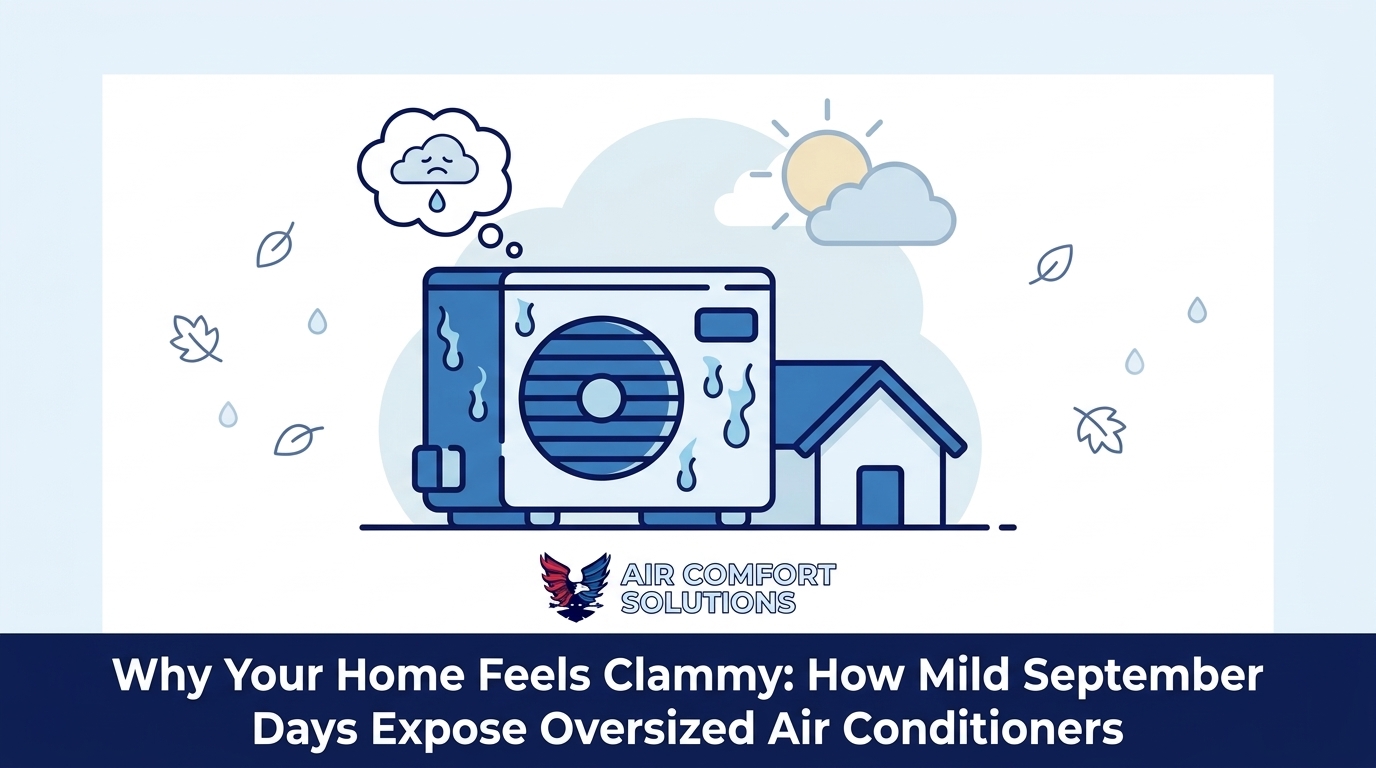
How Mild September Days Expose Oversized Air Conditioners
When early fall weather arrives, your cooling system might struggle to remove humidity. Discover why a home feels damp and cold when an oversized AC short-cycles.
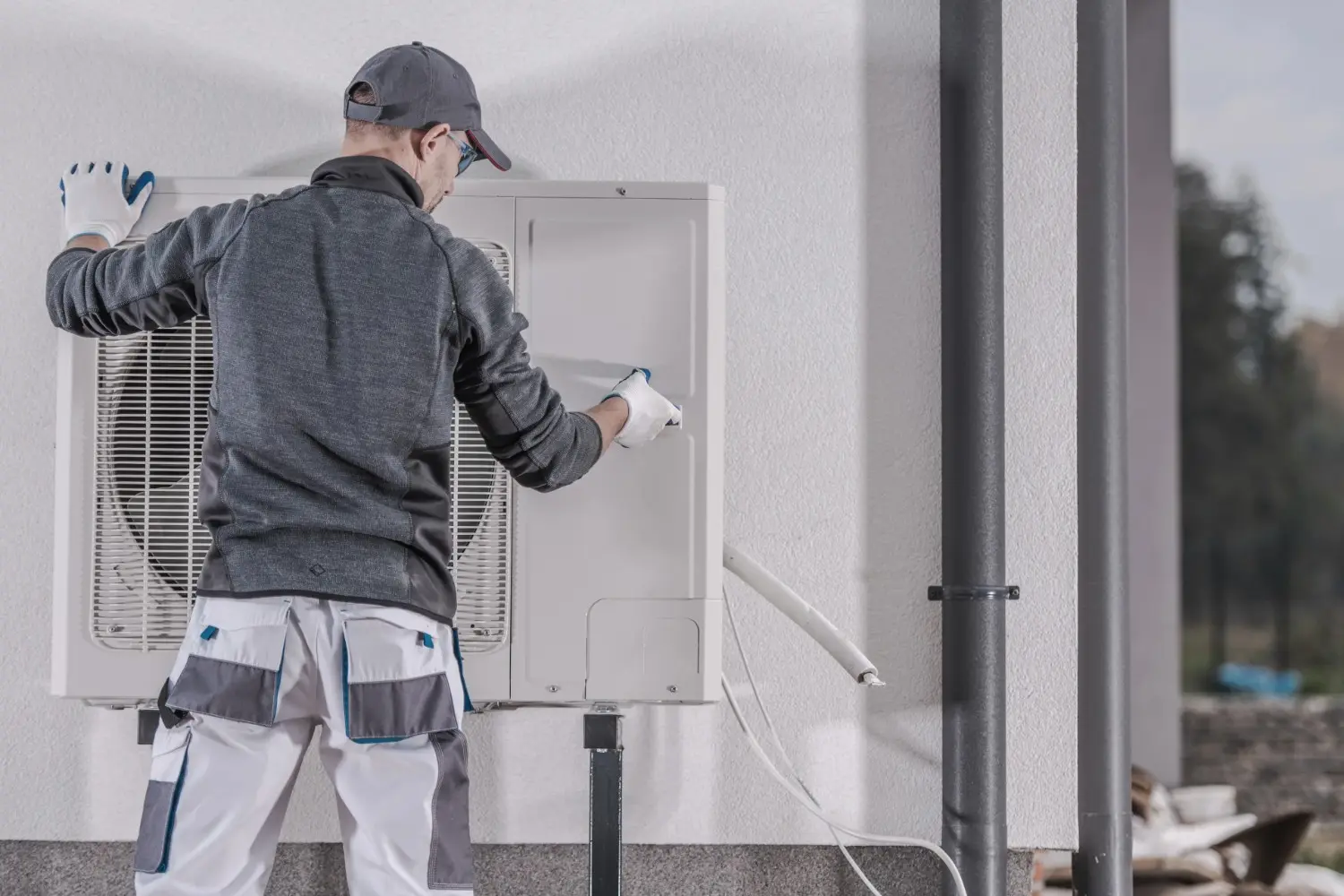
How incorrect sizing during installation wastes energy is one of the most common and most expensive problems facing homeowners in Pinehurst, TX today. Whether your system is too large or too small for your home, the result is the same: your equipment works harder than it should, your energy bills climb higher than they need to, and your comfort suffers. According to research from the National Institute of Standards and Technology (NIST), improper installation practices can increase household energy use for heating and cooling by as much as 30%.
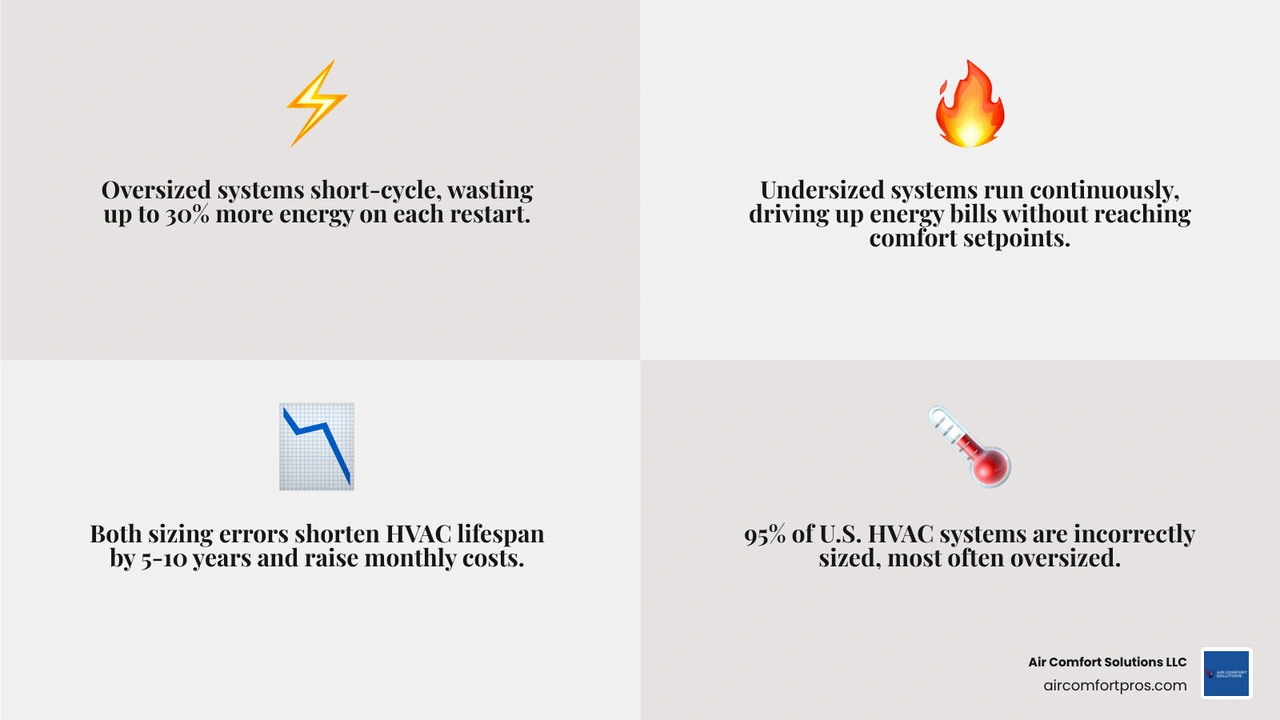
Here is a quick summary of how sizing errors waste energy:
• Oversized systems cool or heat your home too quickly, then shut off before completing a full cycle. This is called short cycling. Each restart draws a surge of electricity, and the system never reaches its most efficient operating range.
• Undersized systems run almost constantly trying to reach your thermostat setpoint, especially on the hottest or coldest days of the year. That continuous runtime drives up your energy bill without ever fully delivering the comfort you expect.
• Both errors can increase your energy use by up to 30%, shorten your equipment’s lifespan by 5 to 10 years, and cause humidity and indoor air quality problems that make your home feel uncomfortable even when the temperature seems right.
Studies show that up to 95% of HVAC systems installed in the U.S. are incorrectly sized — and the majority are oversized, not undersized. That means most homes in North Harris County may already be paying an unnecessary energy penalty every single month.
The good news is that proper sizing, based on a real load calculation rather than a rough estimate, solves all of these problems before they start. The sections below explain exactly how the energy waste happens, what it costs over time, and what to look for when you’re getting a quote for a new system.
How incorrect sizing during installation wastes energy helpful reading:
• how bad ac installation causes problems for years
• how ductwork mistakes during installation hurt your comfort
• how improper refrigerant charge reduces your ac lifespan
When we talk about the “size” of an air conditioner or heat pump, we are not talking about its physical dimensions. We are talking about its capacity to move heat out of (or into) your home. This capacity is measured in British Thermal Units (BTUs) per hour, or in “tons.” One ton of cooling capacity equals 12,000 BTUs per hour.
If an installer puts in a system that is too large (oversized) or too small (undersized), the physical laws of thermodynamics guarantee that the system will waste energy. The core issue is that HVAC systems are designed to reach a state of equilibrium—a steady operating temperature where the refrigerant cycle runs at peak efficiency.
When a system is incorrectly sized, it either never reaches this steady state, or it has to run in an inefficient state for hours on end. This is a primary reason why how bad ac installation causes problems for years is such a critical topic for homeowners in Pinehurst, Magnolia, and Tomball.
To help visualize how these two problems compare, let’s look at their core operating characteristics:
• Cycle Length — Oversized System (Too Large): Short (typically under 10 minutes) — Undersized System (Too Small): Continuous (runs 24/7 on hot days)
• Energy Waste Mechanism — Oversized System (Too Large): Frequent startup power surges and transient losses — Undersized System (Too Small): Extended continuous runtime at maximum capacity
• Indoor Humidity Levels — Oversized System (Too Large): High (clammy air) due to short runtimes — Undersized System (Too Small): Varies, but struggles to keep up with load
• Component Wear and Tear — Oversized System (Too Large): High stress on compressor and capacitors — Undersized System (Too Small): High wear on motor bearings and fan assemblies
• Lifespan Reduction — Oversized System (Too Large): 5 to 10 years lost due to cycling stress — Undersized System (Too Small): Premature failure from continuous operation
• Annual Energy Bill Impact — Oversized System (Too Large): Up to 20% higher bills — Undersized System (Too Small): Up to 30% higher bills (especially with heat strips)
Oversized systems suffer from a phenomenon known as short cycling. Because the unit has too much cooling capacity, it rapidly lowers the indoor air temperature and satisfies the thermostat in a matter of minutes—often running for less than 10 minutes per cycle.
This rapid on-and-off behavior wastes energy in two distinct ways:
1. The Startup Surge: The most energy-intensive part of any HVAC cycle is the first few minutes during compressor startup. The electric motor requires a massive “inrush” of electrical current to overcome inertia and start pumping refrigerant. When a system cycles on and off several times an hour instead of running in a long, steady cycle, it draws these massive power surges repeatedly.
2. The Cyclic Degradation Coefficient: An air conditioner does not operate at its rated efficiency the instant it turns on. It takes 10 to 15 minutes for the evaporator coil to reach its optimal operating temperature and for the refrigerant pressures to stabilize. During these initial minutes, the system’s efficiency is highly degraded. An oversized system that shuts off after 8 minutes spends 100% of its operating time in this highly inefficient startup phase.
Furthermore, short cycling ruins your home’s humidity control. It takes time for the cold evaporator coil to begin condensing moisture out of our humid Texas air. If the system shuts off too quickly, the air is cooled but the moisture remains, leaving your home feeling damp and clammy. This often prompts homeowners to lower the thermostat even further, which wastes even more energy.
When you combine short cycling with other installation issues, such as a system with incorrect refrigerant levels, the energy waste and mechanical damage accelerate. You can read more about how these issues interact in our article on how improper refrigerant charge reduces your ac lifespan.
On the opposite end of the spectrum is the undersized system. An undersized system simply does not have enough capacity to handle the heat load of your home during a typical hot summer afternoon in Spring, Conroe, or Houston.
When the outdoor temperature climbs, an undersized system will run continuously without ever reaching the thermostat setpoint. While continuous runtime is actually efficient for modern variable-speed systems operating at low capacities, an undersized single-stage system running flat-out at maximum capacity for 12 to 18 hours straight is highly inefficient.
The energy-waste mechanisms of an undersized system include:
• Extended Peak-Capacity Operation: The system’s blower motor, condenser fan, and compressor run at maximum electrical draw for hours on end, consuming massive amounts of kilowatt-hours.
• Auxiliary Heat Engagement: In the winter, if you have a heat pump that is undersized for the heating load, the system will frequently have to engage its electric auxiliary heat strips. These heat strips operate on pure electrical resistance, which is incredibly expensive and highly inefficient compared to the heat pump’s normal compressor cycle.
• Duct and Envelope Losses: When a system runs continuously, the air inside your ductwork is constantly pressurized. If your ducts are located in a hot attic and have even minor leaks, you will lose a massive amount of conditioned air to the outdoors.
This constant run time directly impacts your monthly utility costs. To understand how these operating hours translate into dollars, check out our guide on how SEER2 ratings affect energy bills.
An HVAC system is a long-term investment. In our hot Texas climate, these systems work incredibly hard. When a system is installed with a sizing error, the financial consequences are not limited to a single high electric bill; they compound over the entire life of the equipment.
The typical average lifespan of an HVAC system in Texas is about 10 to 15 years, depending on how well it is maintained. However, an incorrectly sized system will struggle to reach even the lower end of that range.
Let’s look at the long-term operational and financial consequences that pile up over a 15-year period:
• Premature Compressor Failure: The constant starting and stopping of an oversized unit, or the non-stop running of an undersized unit, puts extreme thermal and mechanical stress on the compressor. Replacing a compressor out of warranty is one of the most expensive repairs in the industry.
• Shortened Equipment Lifespan: Because of the added mechanical stress, oversized systems typically fail 5 to 10 years earlier than properly sized systems. This means you may have to buy a whole new system years before you planned to.
• Accumulated Efficiency Penalties: If your system wastes 20% to 30% more energy than a correctly sized unit, that penalty is added to your electric bill every single month. Over 15 years, this accumulated waste can easily equal the original cost of the entire system.
• Upfront Equipment Premiums: Oversized systems cost more to buy initially. Homeowners who are sold a 5-ton system when their home only needs a 3.5-ton system are paying a premium for capacity they don’t need, only to have that extra capacity waste energy and ruin their comfort.
One of the trickiest aspects of HVAC sizing is that the symptoms of a bad installation can manifest in very different ways depending on which direction the sizing error went.
Undersizing is highly visible and painful. When a system is too small, you know it immediately on a hot July afternoon. The indoor temperature will slowly rise to 78°F or 80°F even though your thermostat is set to 72°F. In the winter, an undersized heat pump will constantly rely on its electric immersion backup heater (heat strips) to keep the house warm. You will see the “Auxiliary Heat” light on your thermostat constantly glowing, and your electric bill will skyrocket.
Oversizing, on the other hand, is an invisible cost. Because an oversized system has plenty of capacity, it will easily keep your home cool, even on the hottest days. Homeowners rarely complain that their house is too warm when the system is oversized. Instead, the costs are hidden:
• The system quietly degrades its own efficiency, operating at a Seasonal Coefficient of Performance (SCOP) or SEER level far below its rated design because of the constant short cycling.
• The home remains humid and clammy, leading the homeowner to lower the thermostat to 68°F just to feel comfortable, which drives energy bills even higher.
• The system wears out its capacitors, contactors, and compressor valves years ahead of schedule.
When evaluating system choices, it helps to understand how different efficiency tiers handle these loads. You can compare the differences in our standard efficiency vs high efficiency AC comparison.
If oversizing is so detrimental to energy efficiency and system lifespan, why is it so incredibly common? Why do field studies show that up to 75% of operating systems are oversized?
The answer lies in the history and business practices of the residential HVAC industry:
1. The Fear of Complaints: For many installers, the worst-case scenario is a callback from a hot homeowner on a 100°F day complaining that the house isn’t cool enough. To eliminate this risk, many contractors historically chose to “pad” their estimates, adding a safety margin of an extra half-ton or full ton of capacity “just to be safe.”
2. Rule-of-Thumb Sizing: For decades, many installers relied on outdated rules of thumb, such as “one ton of cooling capacity per 500 square feet of living space.” This method completely ignores modern building practices, insulation quality, window ratings, shading, ceiling heights, and air leakage rates.
3. Ignoring Home Upgrades: When replacing an old system, many contractors simply look at the model number of the existing unit and install the exact same size. However, if the homeowner has since upgraded their windows, added attic insulation, or sealed air leaks, the home’s heating and cooling loads have actually decreased. Installing the same size unit results in a system that is now heavily oversized.
These shortcut sizing methods often collide with poorly designed ductwork. If an installer puts a 5-ton AC onto a duct system designed for a 3-ton unit, the high static pressure will choke the airflow, skyrocket your energy bills, and quickly destroy the blower motor. You can learn more about these ductwork issues in our guide on how ductwork mistakes during installation hurt your comfort.
To combat systemic oversizing and protect consumer energy efficiency, the HVAC industry has developed rigorous, scientifically validated design standards. Today, there is absolutely no reason for an installer to guess at system sizing.
The gold standard for residential sizing in the United States is the Air Conditioning Contractors of America (ACCA) Manual J Load Calculation. A proper Manual J calculation takes into account a massive range of variables to determine the exact heating and cooling loads of a specific home:
• The exact square footage and volume of every room.
• The orientation of the house relative to the sun.
• The R-value of the insulation in the attic, walls, and floors.
• The type, shading, and U-factor of all windows and doors.
• The local climate data and outdoor design temperatures.
• The heat generated by appliances, lighting, and occupants.
In international markets and advanced heat pump designs, standards like BS EN 12831-1:2017 and MIS 3005-D V3.0 are used to calculate precise design-day heat loads down to a single decimal place in kilowatts. These rigorous standards ensure that the specified unit matches the actual thermal loss of the building envelope, allowing modern inverter-driven compressors to modulate precisely and operate at peak efficiency.
By utilizing these precise calculations, homeowners can confidently invest in advanced equipment features. To see what options are available, check out our article on high efficiency AC features worth paying for.
When you are collecting quotes for a new heating and cooling system in the Pinehurst or Spring area, you should look for evidence of professional sizing rigour. If a contractor walks into your home, glances at your current outdoor unit, and writes down a quote for the exact same size without taking measurements, you should be highly skeptical.
Here are the key pieces of data you should verify on any professional installation quote:
• The Calculated Design Load: Ask for a copy of the Manual J load calculation report. It should show the exact sensible and latent cooling loads (and heating loads) for your home in BTUs or tons.
• The Design Temperature Assumptions: Verify that the installer used realistic outdoor design temperatures for our specific climate zone (such as 95°F or 96°F for summer cooling in the Houston area) rather than inflated numbers.
• The Unit’s Rated Output at Design Conditions: An AC system’s actual cooling capacity drops as the outdoor temperature rises. A system rated for 36,000 BTUs (3 tons) under standard laboratory conditions (80°F indoor / 95°F outdoor) might only deliver 32,000 BTUs of actual cooling on a scorching Texas afternoon. A professional installer will use the manufacturer’s expanded performance tables to match the unit’s actual output at design conditions to your home’s calculated load.
Taking these steps ensures you don’t overpay for an oversized system that will waste energy for the next 15 years. For a deeper dive into whether these high-efficiency systems are worth the investment, read our analysis on is a high efficiency AC worth the extra cost in Texas.
Proper sizing is not just about your monthly electric bill; it also has a massive impact on our broader environment. When an HVAC system is correctly sized, it runs longer, gentler cycles. This allows the system to operate at its maximum SEER2 (Seasonal Energy Efficiency Ratio) potential, reducing the overall electrical demand on our local power grid.
Furthermore, correct sizing directly improves your indoor air quality (IAQ). By running continuous, steady cycles, a properly sized system keeps air moving through your filtration system consistently. This prevents stagnant air pockets, controls indoor relative humidity to keep it within the healthy 30% to 50% range, and prevents the growth of mold and mildew in your ductwork.

When systems fail prematurely due to sizing errors, it also contributes to a massive global electronic and industrial waste problem. For example, as our energy grids modernize and incorporate more renewable energy, we are beginning to grapple with the massive regulatory and logistical challenges of end-of-life solar panels. By 2050, the United States is expected to have as many as an estimated 10 million total tons of solar panel waste.
Just like solar panels, HVAC systems contain valuable metals, electronics, and chemical refrigerants that require careful regulatory management and recycling at the end of their lifespans. By ensuring your system is correctly sized and professionally maintained, you extend its operational life by a decade, directly reducing the volume of heavy equipment heading to landfills. To learn more about keeping your system running efficiently for the long haul, check out our guide on what happens if you skip AC maintenance in Texas.
Modern variable-speed (inverter-driven) heat pumps are designed to modulate their output, meaning they can run at anywhere from 30% to 100% of their maximum capacity. This makes them incredibly efficient. However, if a heat pump is heavily oversized, even its lowest modulation stage (say, 30% of a 5-ton unit) will still be too powerful for a low-load day, forcing the system to short cycle and waste energy.
Conversely, if the heat pump is undersized, it will frequently run at 100% capacity and struggle to keep up. On cold winter days, an undersized heat pump will exhaust its heating capacity and trigger the highly inefficient backup auxiliary electric heat strips, which consume up to three times more electricity than the heat pump’s normal compressor cycle. This severely degrades the system’s Seasonal Coefficient of Performance (SCOP) and spikes your winter energy bills.
Yes, absolutely. If your home has restricted, undersized, or poorly designed ductwork, it creates high static pressure within the system. This chokes the airflow across the indoor evaporator coil.
Even if the AC unit itself is perfectly sized for your home’s thermal load, the restricted airflow prevents the system from transferring heat efficiently. The evaporator coil will get too cold, which can cause the compressor to cycle off prematurely on thermal overload or freeze up entirely. This mimics the exact symptoms of an oversized system: short cycling, high energy bills, and terrible humidity control. To avoid this, a professional installer must evaluate your existing ducts as part of the installation process. For more details, read how ductwork mistakes during installation hurt your comfort.
Your air conditioner is responsible for both cooling the air (sensible cooling) and removing moisture from the air (latent cooling). An oversized system cools the air so rapidly that it satisfies the thermostat and shuts off long before the evaporator coil has time to condense moisture out of the air. This leaves you with cold, stagnant, and highly humid indoor air, which creates a breeding ground for mold, dust mites, and mildew.
An undersized system, on the other hand, runs constantly. While this may remove plenty of moisture, the continuous airflow through leaky ducts in unconditioned attics can pull in dusty, hot, and humid attic air, severely degrading your indoor air quality. To keep your air clean and healthy, check out our HVAC maintenance tips for Texas homeowners.
At the end of the day, an air conditioner or heat pump is only as good as its installation. You can buy the most advanced, highest-SEER2 system on the market, but if it is incorrectly sized for your home, it will waste energy, break down prematurely, and leave you uncomfortable in your own home.
At Air Comfort Solutions, we have over 35 years of experience providing honest, reliable, and scientifically accurate HVAC services to our neighbors in Pinehurst, TX, and across the north side of Harris County—including Magnolia, Tomball, Spring, The Woodlands, Conroe, and Montgomery. Our certified technicians never rely on shortcuts or rules of thumb. We perform precise, comprehensive load calculations to ensure your new system is sized perfectly for your home’s unique thermal footprint.
Don’t let a bad installation waste your energy and burn your hard-earned cash. Schedule your professional AC installation with Air Comfort Solutions today, and experience the difference that true, professional precision makes for your home’s comfort and utility bills!
How incorrect sizing during installation wastes energy is one of the most common and most expensive problems facing homeowners in Pinehurst, TX today. Whether your system is too large or too small for your home, the result is the same: your equipment works harder than it should, your energy bills climb higher than they need to, and your comfort suffers. According to research from the National Institute of Standards and Technology (NIST), improper installation practices can increase household energy use for heating and cooling by as much as 30%.
Here is a quick summary of how sizing errors waste energy:
Studies show that up to 95% of HVAC systems installed in the U.S. are incorrectly sized — and the majority are oversized, not undersized. That means most homes in North Harris County may already be paying an unnecessary energy penalty every single month.
The good news is that proper sizing, based on a real load calculation rather than a rough estimate, solves all of these problems before they start. The sections below explain exactly how the energy waste happens, what it costs over time, and what to look for when you're getting a quote for a new system.
How incorrect sizing during installation wastes energy helpful reading:
When we talk about the "size" of an air conditioner or heat pump, we are not talking about its physical dimensions. We are talking about its capacity to move heat out of (or into) your home. This capacity is measured in British Thermal Units (BTUs) per hour, or in "tons." One ton of cooling capacity equals 12,000 BTUs per hour.
If an installer puts in a system that is too large (oversized) or too small (undersized), the physical laws of thermodynamics guarantee that the system will waste energy. The core issue is that HVAC systems are designed to reach a state of equilibrium—a steady operating temperature where the refrigerant cycle runs at peak efficiency.
When a system is incorrectly sized, it either never reaches this steady state, or it has to run in an inefficient state for hours on end. This is a primary reason why how bad ac installation causes problems for years is such a critical topic for homeowners in Pinehurst, Magnolia, and Tomball.
To help visualize how these two problems compare, let's look at their core operating characteristics:
| System Sizing Characteristic | Oversized System (Too Large) | Undersized System (Too Small) |
|---|---|---|
| Cycle Length | Short (typically under 10 minutes) | Continuous (runs 24/7 on hot days) |
| Energy Waste Mechanism | Frequent startup power surges and transient losses | Extended continuous runtime at maximum capacity |
| Indoor Humidity Levels | High (clammy air) due to short runtimes | Varies, but struggles to keep up with load |
| Component Wear and Tear | High stress on compressor and capacitors | High wear on motor bearings and fan assemblies |
| Lifespan Reduction | 5 to 10 years lost due to cycling stress | Premature failure from continuous operation |
| Annual Energy Bill Impact | Up to 20% higher bills | Up to 30% higher bills (especially with heat strips) |
Oversized systems suffer from a phenomenon known as short cycling. Because the unit has too much cooling capacity, it rapidly lowers the indoor air temperature and satisfies the thermostat in a matter of minutes—often running for less than 10 minutes per cycle.
This rapid on-and-off behavior wastes energy in two distinct ways:
Furthermore, short cycling ruins your home's humidity control. It takes time for the cold evaporator coil to begin condensing moisture out of our humid Texas air. If the system shuts off too quickly, the air is cooled but the moisture remains, leaving your home feeling damp and clammy. This often prompts homeowners to lower the thermostat even further, which wastes even more energy.
When you combine short cycling with other installation issues, such as a system with incorrect refrigerant levels, the energy waste and mechanical damage accelerate. You can read more about how these issues interact in our article on how improper refrigerant charge reduces your ac lifespan.
On the opposite end of the spectrum is the undersized system. An undersized system simply does not have enough capacity to handle the heat load of your home during a typical hot summer afternoon in Spring, Conroe, or Houston.
When the outdoor temperature climbs, an undersized system will run continuously without ever reaching the thermostat setpoint. While continuous runtime is actually efficient for modern variable-speed systems operating at low capacities, an undersized single-stage system running flat-out at maximum capacity for 12 to 18 hours straight is highly inefficient.
The energy-waste mechanisms of an undersized system include:
This constant run time directly impacts your monthly utility costs. To understand how these operating hours translate into dollars, check out our guide on how SEER2 ratings affect energy bills.
An HVAC system is a long-term investment. In our hot Texas climate, these systems work incredibly hard. When a system is installed with a sizing error, the financial consequences are not limited to a single high electric bill; they compound over the entire life of the equipment.
The typical average lifespan of an HVAC system in Texas is about 10 to 15 years, depending on how well it is maintained. However, an incorrectly sized system will struggle to reach even the lower end of that range.
Let's look at the long-term operational and financial consequences that pile up over a 15-year period:
One of the trickiest aspects of HVAC sizing is that the symptoms of a bad installation can manifest in very different ways depending on which direction the sizing error went.
Undersizing is highly visible and painful. When a system is too small, you know it immediately on a hot July afternoon. The indoor temperature will slowly rise to 78°F or 80°F even though your thermostat is set to 72°F. In the winter, an undersized heat pump will constantly rely on its electric immersion backup heater (heat strips) to keep the house warm. You will see the "Auxiliary Heat" light on your thermostat constantly glowing, and your electric bill will skyrocket.
Oversizing, on the other hand, is an invisible cost. Because an oversized system has plenty of capacity, it will easily keep your home cool, even on the hottest days. Homeowners rarely complain that their house is too warm when the system is oversized. Instead, the costs are hidden:
When evaluating system choices, it helps to understand how different efficiency tiers handle these loads. You can compare the differences in our standard efficiency vs high efficiency AC comparison.
If oversizing is so detrimental to energy efficiency and system lifespan, why is it so incredibly common? Why do field studies show that up to 75% of operating systems are oversized?
The answer lies in the history and business practices of the residential HVAC industry:
These shortcut sizing methods often collide with poorly designed ductwork. If an installer puts a 5-ton AC onto a duct system designed for a 3-ton unit, the high static pressure will choke the airflow, skyrocket your energy bills, and quickly destroy the blower motor. You can learn more about these ductwork issues in our guide on how ductwork mistakes during installation hurt your comfort.
To combat systemic oversizing and protect consumer energy efficiency, the HVAC industry has developed rigorous, scientifically validated design standards. Today, there is absolutely no reason for an installer to guess at system sizing.
The gold standard for residential sizing in the United States is the Air Conditioning Contractors of America (ACCA) Manual J Load Calculation. A proper Manual J calculation takes into account a massive range of variables to determine the exact heating and cooling loads of a specific home:
In international markets and advanced heat pump designs, standards like BS EN 12831-1:2017 and MIS 3005-D V3.0 are used to calculate precise design-day heat loads down to a single decimal place in kilowatts. These rigorous standards ensure that the specified unit matches the actual thermal loss of the building envelope, allowing modern inverter-driven compressors to modulate precisely and operate at peak efficiency.
By utilizing these precise calculations, homeowners can confidently invest in advanced equipment features. To see what options are available, check out our article on high efficiency AC features worth paying for.
When you are collecting quotes for a new heating and cooling system in the Pinehurst or Spring area, you should look for evidence of professional sizing rigour. If a contractor walks into your home, glances at your current outdoor unit, and writes down a quote for the exact same size without taking measurements, you should be highly skeptical.
Here are the key pieces of data you should verify on any professional installation quote:
Taking these steps ensures you don't overpay for an oversized system that will waste energy for the next 15 years. For a deeper dive into whether these high-efficiency systems are worth the investment, read our analysis on is a high efficiency AC worth the extra cost in Texas.
Proper sizing is not just about your monthly electric bill; it also has a massive impact on our broader environment. When an HVAC system is correctly sized, it runs longer, gentler cycles. This allows the system to operate at its maximum SEER2 (Seasonal Energy Efficiency Ratio) potential, reducing the overall electrical demand on our local power grid.
Furthermore, correct sizing directly improves your indoor air quality (IAQ). By running continuous, steady cycles, a properly sized system keeps air moving through your filtration system consistently. This prevents stagnant air pockets, controls indoor relative humidity to keep it within the healthy 30% to 50% range, and prevents the growth of mold and mildew in your ductwork.
When systems fail prematurely due to sizing errors, it also contributes to a massive global electronic and industrial waste problem. For example, as our energy grids modernize and incorporate more renewable energy, we are beginning to grapple with the massive regulatory and logistical challenges of end-of-life solar panels. By 2050, the United States is expected to have as many as an estimated 10 million total tons of solar panel waste.
Just like solar panels, HVAC systems contain valuable metals, electronics, and chemical refrigerants that require careful regulatory management and recycling at the end of their lifespans. By ensuring your system is correctly sized and professionally maintained, you extend its operational life by a decade, directly reducing the volume of heavy equipment heading to landfills. To learn more about keeping your system running efficiently for the long haul, check out our guide on what happens if you skip AC maintenance in Texas.
Modern variable-speed (inverter-driven) heat pumps are designed to modulate their output, meaning they can run at anywhere from 30% to 100% of their maximum capacity. This makes them incredibly efficient. However, if a heat pump is heavily oversized, even its lowest modulation stage (say, 30% of a 5-ton unit) will still be too powerful for a low-load day, forcing the system to short cycle and waste energy.
Conversely, if the heat pump is undersized, it will frequently run at 100% capacity and struggle to keep up. On cold winter days, an undersized heat pump will exhaust its heating capacity and trigger the highly inefficient backup auxiliary electric heat strips, which consume up to three times more electricity than the heat pump's normal compressor cycle. This severely degrades the system's Seasonal Coefficient of Performance (SCOP) and spikes your winter energy bills.
Yes, absolutely. If your home has restricted, undersized, or poorly designed ductwork, it creates high static pressure within the system. This chokes the airflow across the indoor evaporator coil.
Even if the AC unit itself is perfectly sized for your home's thermal load, the restricted airflow prevents the system from transferring heat efficiently. The evaporator coil will get too cold, which can cause the compressor to cycle off prematurely on thermal overload or freeze up entirely. This mimics the exact symptoms of an oversized system: short cycling, high energy bills, and terrible humidity control. To avoid this, a professional installer must evaluate your existing ducts as part of the installation process. For more details, read how ductwork mistakes during installation hurt your comfort.
Your air conditioner is responsible for both cooling the air (sensible cooling) and removing moisture from the air (latent cooling). An oversized system cools the air so rapidly that it satisfies the thermostat and shuts off long before the evaporator coil has time to condense moisture out of the air. This leaves you with cold, stagnant, and highly humid indoor air, which creates a breeding ground for mold, dust mites, and mildew.
An undersized system, on the other hand, runs constantly. While this may remove plenty of moisture, the continuous airflow through leaky ducts in unconditioned attics can pull in dusty, hot, and humid attic air, severely degrading your indoor air quality. To keep your air clean and healthy, check out our HVAC maintenance tips for Texas homeowners.
At the end of the day, an air conditioner or heat pump is only as good as its installation. You can buy the most advanced, highest-SEER2 system on the market, but if it is incorrectly sized for your home, it will waste energy, break down prematurely, and leave you uncomfortable in your own home.
At Air Comfort Pros, we have over 35 years of experience providing honest, reliable, and scientifically accurate HVAC services to our neighbors in Pinehurst, TX, and across the north side of Harris County—including Magnolia, Tomball, Spring, The Woodlands, Conroe, and Montgomery. Our certified technicians never rely on shortcuts or rules of thumb. We perform precise, comprehensive load calculations to ensure your new system is sized perfectly for your home's unique thermal footprint.
Don't let a bad installation waste your energy and burn your hard-earned cash. Schedule your professional AC installation with Air Comfort Pros today, and experience the difference that true, professional precision makes for your home's comfort and utility bills!
How incorrect sizing during installation wastes energy is one of the most common and most expensive problems facing homeowners in Pinehurst, TX today. Whether your system is too large or too small for your home, the result is the same: your equipment works harder than it should, your energy bills climb higher than they need to, and your comfort suffers. According to research from the National Institute of Standards and Technology (NIST), improper installation practices can increase household energy use for heating and cooling by as much as 30%.
Here is a quick summary of how sizing errors waste energy:
Studies show that up to 95% of HVAC systems installed in the U.S. are incorrectly sized — and the majority are oversized, not undersized. That means most homes in North Harris County may already be paying an unnecessary energy penalty every single month.
The good news is that proper sizing, based on a real load calculation rather than a rough estimate, solves all of these problems before they start. The sections below explain exactly how the energy waste happens, what it costs over time, and what to look for when you're getting a quote for a new system.
How incorrect sizing during installation wastes energy helpful reading:
When we talk about the "size" of an air conditioner or heat pump, we are not talking about its physical dimensions. We are talking about its capacity to move heat out of (or into) your home. This capacity is measured in British Thermal Units (BTUs) per hour, or in "tons." One ton of cooling capacity equals 12,000 BTUs per hour.
If an installer puts in a system that is too large (oversized) or too small (undersized), the physical laws of thermodynamics guarantee that the system will waste energy. The core issue is that HVAC systems are designed to reach a state of equilibrium—a steady operating temperature where the refrigerant cycle runs at peak efficiency.
When a system is incorrectly sized, it either never reaches this steady state, or it has to run in an inefficient state for hours on end. This is a primary reason why how bad ac installation causes problems for years is such a critical topic for homeowners in Pinehurst, Magnolia, and Tomball.
To help visualize how these two problems compare, let's look at their core operating characteristics:
| System Sizing Characteristic | Oversized System (Too Large) | Undersized System (Too Small) |
|---|---|---|
| Cycle Length | Short (typically under 10 minutes) | Continuous (runs 24/7 on hot days) |
| Energy Waste Mechanism | Frequent startup power surges and transient losses | Extended continuous runtime at maximum capacity |
| Indoor Humidity Levels | High (clammy air) due to short runtimes | Varies, but struggles to keep up with load |
| Component Wear and Tear | High stress on compressor and capacitors | High wear on motor bearings and fan assemblies |
| Lifespan Reduction | 5 to 10 years lost due to cycling stress | Premature failure from continuous operation |
| Annual Energy Bill Impact | Up to 20% higher bills | Up to 30% higher bills (especially with heat strips) |
Oversized systems suffer from a phenomenon known as short cycling. Because the unit has too much cooling capacity, it rapidly lowers the indoor air temperature and satisfies the thermostat in a matter of minutes—often running for less than 10 minutes per cycle.
This rapid on-and-off behavior wastes energy in two distinct ways:
Furthermore, short cycling ruins your home's humidity control. It takes time for the cold evaporator coil to begin condensing moisture out of our humid Texas air. If the system shuts off too quickly, the air is cooled but the moisture remains, leaving your home feeling damp and clammy. This often prompts homeowners to lower the thermostat even further, which wastes even more energy.
When you combine short cycling with other installation issues, such as a system with incorrect refrigerant levels, the energy waste and mechanical damage accelerate. You can read more about how these issues interact in our article on how improper refrigerant charge reduces your ac lifespan.
On the opposite end of the spectrum is the undersized system. An undersized system simply does not have enough capacity to handle the heat load of your home during a typical hot summer afternoon in Spring, Conroe, or Houston.
When the outdoor temperature climbs, an undersized system will run continuously without ever reaching the thermostat setpoint. While continuous runtime is actually efficient for modern variable-speed systems operating at low capacities, an undersized single-stage system running flat-out at maximum capacity for 12 to 18 hours straight is highly inefficient.
The energy-waste mechanisms of an undersized system include:
This constant run time directly impacts your monthly utility costs. To understand how these operating hours translate into dollars, check out our guide on how SEER2 ratings affect energy bills.
An HVAC system is a long-term investment. In our hot Texas climate, these systems work incredibly hard. When a system is installed with a sizing error, the financial consequences are not limited to a single high electric bill; they compound over the entire life of the equipment.
The typical average lifespan of an HVAC system in Texas is about 10 to 15 years, depending on how well it is maintained. However, an incorrectly sized system will struggle to reach even the lower end of that range.
Let's look at the long-term operational and financial consequences that pile up over a 15-year period:
One of the trickiest aspects of HVAC sizing is that the symptoms of a bad installation can manifest in very different ways depending on which direction the sizing error went.
Undersizing is highly visible and painful. When a system is too small, you know it immediately on a hot July afternoon. The indoor temperature will slowly rise to 78°F or 80°F even though your thermostat is set to 72°F. In the winter, an undersized heat pump will constantly rely on its electric immersion backup heater (heat strips) to keep the house warm. You will see the "Auxiliary Heat" light on your thermostat constantly glowing, and your electric bill will skyrocket.
Oversizing, on the other hand, is an invisible cost. Because an oversized system has plenty of capacity, it will easily keep your home cool, even on the hottest days. Homeowners rarely complain that their house is too warm when the system is oversized. Instead, the costs are hidden:
When evaluating system choices, it helps to understand how different efficiency tiers handle these loads. You can compare the differences in our standard efficiency vs high efficiency AC comparison.
If oversizing is so detrimental to energy efficiency and system lifespan, why is it so incredibly common? Why do field studies show that up to 75% of operating systems are oversized?
The answer lies in the history and business practices of the residential HVAC industry:
These shortcut sizing methods often collide with poorly designed ductwork. If an installer puts a 5-ton AC onto a duct system designed for a 3-ton unit, the high static pressure will choke the airflow, skyrocket your energy bills, and quickly destroy the blower motor. You can learn more about these ductwork issues in our guide on how ductwork mistakes during installation hurt your comfort.
To combat systemic oversizing and protect consumer energy efficiency, the HVAC industry has developed rigorous, scientifically validated design standards. Today, there is absolutely no reason for an installer to guess at system sizing.
The gold standard for residential sizing in the United States is the Air Conditioning Contractors of America (ACCA) Manual J Load Calculation. A proper Manual J calculation takes into account a massive range of variables to determine the exact heating and cooling loads of a specific home:
In international markets and advanced heat pump designs, standards like BS EN 12831-1:2017 and MIS 3005-D V3.0 are used to calculate precise design-day heat loads down to a single decimal place in kilowatts. These rigorous standards ensure that the specified unit matches the actual thermal loss of the building envelope, allowing modern inverter-driven compressors to modulate precisely and operate at peak efficiency.
By utilizing these precise calculations, homeowners can confidently invest in advanced equipment features. To see what options are available, check out our article on high efficiency AC features worth paying for.
When you are collecting quotes for a new heating and cooling system in the Pinehurst or Spring area, you should look for evidence of professional sizing rigour. If a contractor walks into your home, glances at your current outdoor unit, and writes down a quote for the exact same size without taking measurements, you should be highly skeptical.
Here are the key pieces of data you should verify on any professional installation quote:
Taking these steps ensures you don't overpay for an oversized system that will waste energy for the next 15 years. For a deeper dive into whether these high-efficiency systems are worth the investment, read our analysis on is a high efficiency AC worth the extra cost in Texas.
Proper sizing is not just about your monthly electric bill; it also has a massive impact on our broader environment. When an HVAC system is correctly sized, it runs longer, gentler cycles. This allows the system to operate at its maximum SEER2 (Seasonal Energy Efficiency Ratio) potential, reducing the overall electrical demand on our local power grid.
Furthermore, correct sizing directly improves your indoor air quality (IAQ). By running continuous, steady cycles, a properly sized system keeps air moving through your filtration system consistently. This prevents stagnant air pockets, controls indoor relative humidity to keep it within the healthy 30% to 50% range, and prevents the growth of mold and mildew in your ductwork.
When systems fail prematurely due to sizing errors, it also contributes to a massive global electronic and industrial waste problem. For example, as our energy grids modernize and incorporate more renewable energy, we are beginning to grapple with the massive regulatory and logistical challenges of end-of-life solar panels. By 2050, the United States is expected to have as many as an estimated 10 million total tons of solar panel waste.
Just like solar panels, HVAC systems contain valuable metals, electronics, and chemical refrigerants that require careful regulatory management and recycling at the end of their lifespans. By ensuring your system is correctly sized and professionally maintained, you extend its operational life by a decade, directly reducing the volume of heavy equipment heading to landfills. To learn more about keeping your system running efficiently for the long haul, check out our guide on what happens if you skip AC maintenance in Texas.
Modern variable-speed (inverter-driven) heat pumps are designed to modulate their output, meaning they can run at anywhere from 30% to 100% of their maximum capacity. This makes them incredibly efficient. However, if a heat pump is heavily oversized, even its lowest modulation stage (say, 30% of a 5-ton unit) will still be too powerful for a low-load day, forcing the system to short cycle and waste energy.
Conversely, if the heat pump is undersized, it will frequently run at 100% capacity and struggle to keep up. On cold winter days, an undersized heat pump will exhaust its heating capacity and trigger the highly inefficient backup auxiliary electric heat strips, which consume up to three times more electricity than the heat pump's normal compressor cycle. This severely degrades the system's Seasonal Coefficient of Performance (SCOP) and spikes your winter energy bills.
Yes, absolutely. If your home has restricted, undersized, or poorly designed ductwork, it creates high static pressure within the system. This chokes the airflow across the indoor evaporator coil.
Even if the AC unit itself is perfectly sized for your home's thermal load, the restricted airflow prevents the system from transferring heat efficiently. The evaporator coil will get too cold, which can cause the compressor to cycle off prematurely on thermal overload or freeze up entirely. This mimics the exact symptoms of an oversized system: short cycling, high energy bills, and terrible humidity control. To avoid this, a professional installer must evaluate your existing ducts as part of the installation process. For more details, read how ductwork mistakes during installation hurt your comfort.
Your air conditioner is responsible for both cooling the air (sensible cooling) and removing moisture from the air (latent cooling). An oversized system cools the air so rapidly that it satisfies the thermostat and shuts off long before the evaporator coil has time to condense moisture out of the air. This leaves you with cold, stagnant, and highly humid indoor air, which creates a breeding ground for mold, dust mites, and mildew.
An undersized system, on the other hand, runs constantly. While this may remove plenty of moisture, the continuous airflow through leaky ducts in unconditioned attics can pull in dusty, hot, and humid attic air, severely degrading your indoor air quality. To keep your air clean and healthy, check out our HVAC maintenance tips for Texas homeowners.
At the end of the day, an air conditioner or heat pump is only as good as its installation. You can buy the most advanced, highest-SEER2 system on the market, but if it is incorrectly sized for your home, it will waste energy, break down prematurely, and leave you uncomfortable in your own home.
At Air Comfort Pros, we have over 35 years of experience providing honest, reliable, and scientifically accurate HVAC services to our neighbors in Pinehurst, TX, and across the north side of Harris County—including Magnolia, Tomball, Spring, The Woodlands, Conroe, and Montgomery. Our certified technicians never rely on shortcuts or rules of thumb. We perform precise, comprehensive load calculations to ensure your new system is sized perfectly for your home's unique thermal footprint.
Don't let a bad installation waste your energy and burn your hard-earned cash. Schedule your professional AC installation with Air Comfort Pros today, and experience the difference that true, professional precision makes for your home's comfort and utility bills!
How incorrect sizing during installation wastes energy is one of the most common and most expensive problems facing homeowners in Pinehurst, TX today. Whether your system is too large or too small for your home, the result is the same: your equipment works harder than it should, your energy bills climb higher than they need to, and your comfort suffers. According to research from the National Institute of Standards and Technology (NIST), improper installation practices can increase household energy use for heating and cooling by as much as 30%.
Here is a quick summary of how sizing errors waste energy:
Studies show that up to 95% of HVAC systems installed in the U.S. are incorrectly sized — and the majority are oversized, not undersized. That means most homes in North Harris County may already be paying an unnecessary energy penalty every single month.
The good news is that proper sizing, based on a real load calculation rather than a rough estimate, solves all of these problems before they start. The sections below explain exactly how the energy waste happens, what it costs over time, and what to look for when you're getting a quote for a new system.
How incorrect sizing during installation wastes energy helpful reading:
When we talk about the "size" of an air conditioner or heat pump, we are not talking about its physical dimensions. We are talking about its capacity to move heat out of (or into) your home. This capacity is measured in British Thermal Units (BTUs) per hour, or in "tons." One ton of cooling capacity equals 12,000 BTUs per hour.
If an installer puts in a system that is too large (oversized) or too small (undersized), the physical laws of thermodynamics guarantee that the system will waste energy. The core issue is that HVAC systems are designed to reach a state of equilibrium—a steady operating temperature where the refrigerant cycle runs at peak efficiency.
When a system is incorrectly sized, it either never reaches this steady state, or it has to run in an inefficient state for hours on end. This is a primary reason why how bad ac installation causes problems for years is such a critical topic for homeowners in Pinehurst, Magnolia, and Tomball.
To help visualize how these two problems compare, let's look at their core operating characteristics:
| System Sizing Characteristic | Oversized System (Too Large) | Undersized System (Too Small) |
|---|---|---|
| Cycle Length | Short (typically under 10 minutes) | Continuous (runs 24/7 on hot days) |
| Energy Waste Mechanism | Frequent startup power surges and transient losses | Extended continuous runtime at maximum capacity |
| Indoor Humidity Levels | High (clammy air) due to short runtimes | Varies, but struggles to keep up with load |
| Component Wear and Tear | High stress on compressor and capacitors | High wear on motor bearings and fan assemblies |
| Lifespan Reduction | 5 to 10 years lost due to cycling stress | Premature failure from continuous operation |
| Annual Energy Bill Impact | Up to 20% higher bills | Up to 30% higher bills (especially with heat strips) |
Oversized systems suffer from a phenomenon known as short cycling. Because the unit has too much cooling capacity, it rapidly lowers the indoor air temperature and satisfies the thermostat in a matter of minutes—often running for less than 10 minutes per cycle.
This rapid on-and-off behavior wastes energy in two distinct ways:
Furthermore, short cycling ruins your home's humidity control. It takes time for the cold evaporator coil to begin condensing moisture out of our humid Texas air. If the system shuts off too quickly, the air is cooled but the moisture remains, leaving your home feeling damp and clammy. This often prompts homeowners to lower the thermostat even further, which wastes even more energy.
When you combine short cycling with other installation issues, such as a system with incorrect refrigerant levels, the energy waste and mechanical damage accelerate. You can read more about how these issues interact in our article on how improper refrigerant charge reduces your ac lifespan.
On the opposite end of the spectrum is the undersized system. An undersized system simply does not have enough capacity to handle the heat load of your home during a typical hot summer afternoon in Spring, Conroe, or Houston.
When the outdoor temperature climbs, an undersized system will run continuously without ever reaching the thermostat setpoint. While continuous runtime is actually efficient for modern variable-speed systems operating at low capacities, an undersized single-stage system running flat-out at maximum capacity for 12 to 18 hours straight is highly inefficient.
The energy-waste mechanisms of an undersized system include:
This constant run time directly impacts your monthly utility costs. To understand how these operating hours translate into dollars, check out our guide on how SEER2 ratings affect energy bills.
An HVAC system is a long-term investment. In our hot Texas climate, these systems work incredibly hard. When a system is installed with a sizing error, the financial consequences are not limited to a single high electric bill; they compound over the entire life of the equipment.
The typical average lifespan of an HVAC system in Texas is about 10 to 15 years, depending on how well it is maintained. However, an incorrectly sized system will struggle to reach even the lower end of that range.
Let's look at the long-term operational and financial consequences that pile up over a 15-year period:
One of the trickiest aspects of HVAC sizing is that the symptoms of a bad installation can manifest in very different ways depending on which direction the sizing error went.
Undersizing is highly visible and painful. When a system is too small, you know it immediately on a hot July afternoon. The indoor temperature will slowly rise to 78°F or 80°F even though your thermostat is set to 72°F. In the winter, an undersized heat pump will constantly rely on its electric immersion backup heater (heat strips) to keep the house warm. You will see the "Auxiliary Heat" light on your thermostat constantly glowing, and your electric bill will skyrocket.
Oversizing, on the other hand, is an invisible cost. Because an oversized system has plenty of capacity, it will easily keep your home cool, even on the hottest days. Homeowners rarely complain that their house is too warm when the system is oversized. Instead, the costs are hidden:
When evaluating system choices, it helps to understand how different efficiency tiers handle these loads. You can compare the differences in our standard efficiency vs high efficiency AC comparison.
If oversizing is so detrimental to energy efficiency and system lifespan, why is it so incredibly common? Why do field studies show that up to 75% of operating systems are oversized?
The answer lies in the history and business practices of the residential HVAC industry:
These shortcut sizing methods often collide with poorly designed ductwork. If an installer puts a 5-ton AC onto a duct system designed for a 3-ton unit, the high static pressure will choke the airflow, skyrocket your energy bills, and quickly destroy the blower motor. You can learn more about these ductwork issues in our guide on how ductwork mistakes during installation hurt your comfort.
To combat systemic oversizing and protect consumer energy efficiency, the HVAC industry has developed rigorous, scientifically validated design standards. Today, there is absolutely no reason for an installer to guess at system sizing.
The gold standard for residential sizing in the United States is the Air Conditioning Contractors of America (ACCA) Manual J Load Calculation. A proper Manual J calculation takes into account a massive range of variables to determine the exact heating and cooling loads of a specific home:
In international markets and advanced heat pump designs, standards like BS EN 12831-1:2017 and MIS 3005-D V3.0 are used to calculate precise design-day heat loads down to a single decimal place in kilowatts. These rigorous standards ensure that the specified unit matches the actual thermal loss of the building envelope, allowing modern inverter-driven compressors to modulate precisely and operate at peak efficiency.
By utilizing these precise calculations, homeowners can confidently invest in advanced equipment features. To see what options are available, check out our article on high efficiency AC features worth paying for.
When you are collecting quotes for a new heating and cooling system in the Pinehurst or Spring area, you should look for evidence of professional sizing rigour. If a contractor walks into your home, glances at your current outdoor unit, and writes down a quote for the exact same size without taking measurements, you should be highly skeptical.
Here are the key pieces of data you should verify on any professional installation quote:
Taking these steps ensures you don't overpay for an oversized system that will waste energy for the next 15 years. For a deeper dive into whether these high-efficiency systems are worth the investment, read our analysis on is a high efficiency AC worth the extra cost in Texas.
Proper sizing is not just about your monthly electric bill; it also has a massive impact on our broader environment. When an HVAC system is correctly sized, it runs longer, gentler cycles. This allows the system to operate at its maximum SEER2 (Seasonal Energy Efficiency Ratio) potential, reducing the overall electrical demand on our local power grid.
Furthermore, correct sizing directly improves your indoor air quality (IAQ). By running continuous, steady cycles, a properly sized system keeps air moving through your filtration system consistently. This prevents stagnant air pockets, controls indoor relative humidity to keep it within the healthy 30% to 50% range, and prevents the growth of mold and mildew in your ductwork.
When systems fail prematurely due to sizing errors, it also contributes to a massive global electronic and industrial waste problem. For example, as our energy grids modernize and incorporate more renewable energy, we are beginning to grapple with the massive regulatory and logistical challenges of end-of-life solar panels. By 2050, the United States is expected to have as many as an estimated 10 million total tons of solar panel waste.
Just like solar panels, HVAC systems contain valuable metals, electronics, and chemical refrigerants that require careful regulatory management and recycling at the end of their lifespans. By ensuring your system is correctly sized and professionally maintained, you extend its operational life by a decade, directly reducing the volume of heavy equipment heading to landfills. To learn more about keeping your system running efficiently for the long haul, check out our guide on what happens if you skip AC maintenance in Texas.
Modern variable-speed (inverter-driven) heat pumps are designed to modulate their output, meaning they can run at anywhere from 30% to 100% of their maximum capacity. This makes them incredibly efficient. However, if a heat pump is heavily oversized, even its lowest modulation stage (say, 30% of a 5-ton unit) will still be too powerful for a low-load day, forcing the system to short cycle and waste energy.
Conversely, if the heat pump is undersized, it will frequently run at 100% capacity and struggle to keep up. On cold winter days, an undersized heat pump will exhaust its heating capacity and trigger the highly inefficient backup auxiliary electric heat strips, which consume up to three times more electricity than the heat pump's normal compressor cycle. This severely degrades the system's Seasonal Coefficient of Performance (SCOP) and spikes your winter energy bills.
Yes, absolutely. If your home has restricted, undersized, or poorly designed ductwork, it creates high static pressure within the system. This chokes the airflow across the indoor evaporator coil.
Even if the AC unit itself is perfectly sized for your home's thermal load, the restricted airflow prevents the system from transferring heat efficiently. The evaporator coil will get too cold, which can cause the compressor to cycle off prematurely on thermal overload or freeze up entirely. This mimics the exact symptoms of an oversized system: short cycling, high energy bills, and terrible humidity control. To avoid this, a professional installer must evaluate your existing ducts as part of the installation process. For more details, read how ductwork mistakes during installation hurt your comfort.
Your air conditioner is responsible for both cooling the air (sensible cooling) and removing moisture from the air (latent cooling). An oversized system cools the air so rapidly that it satisfies the thermostat and shuts off long before the evaporator coil has time to condense moisture out of the air. This leaves you with cold, stagnant, and highly humid indoor air, which creates a breeding ground for mold, dust mites, and mildew.
An undersized system, on the other hand, runs constantly. While this may remove plenty of moisture, the continuous airflow through leaky ducts in unconditioned attics can pull in dusty, hot, and humid attic air, severely degrading your indoor air quality. To keep your air clean and healthy, check out our HVAC maintenance tips for Texas homeowners.
At the end of the day, an air conditioner or heat pump is only as good as its installation. You can buy the most advanced, highest-SEER2 system on the market, but if it is incorrectly sized for your home, it will waste energy, break down prematurely, and leave you uncomfortable in your own home.
At Air Comfort Pros, we have over 35 years of experience providing honest, reliable, and scientifically accurate HVAC services to our neighbors in Pinehurst, TX, and across the north side of Harris County—including Magnolia, Tomball, Spring, The Woodlands, Conroe, and Montgomery. Our certified technicians never rely on shortcuts or rules of thumb. We perform precise, comprehensive load calculations to ensure your new system is sized perfectly for your home's unique thermal footprint.
Don't let a bad installation waste your energy and burn your hard-earned cash. Schedule your professional AC installation with Air Comfort Pros today, and experience the difference that true, professional precision makes for your home's comfort and utility bills!
How incorrect sizing during installation wastes energy is one of the most common and most expensive problems facing homeowners in Pinehurst, TX today. Whether your system is too large or too small for your home, the result is the same: your equipment works harder than it should, your energy bills climb higher than they need to, and your comfort suffers. According to research from the National Institute of Standards and Technology (NIST), improper installation practices can increase household energy use for heating and cooling by as much as 30%.
Here is a quick summary of how sizing errors waste energy:
Studies show that up to 95% of HVAC systems installed in the U.S. are incorrectly sized — and the majority are oversized, not undersized. That means most homes in North Harris County may already be paying an unnecessary energy penalty every single month.
The good news is that proper sizing, based on a real load calculation rather than a rough estimate, solves all of these problems before they start. The sections below explain exactly how the energy waste happens, what it costs over time, and what to look for when you're getting a quote for a new system.
How incorrect sizing during installation wastes energy helpful reading:
When we talk about the "size" of an air conditioner or heat pump, we are not talking about its physical dimensions. We are talking about its capacity to move heat out of (or into) your home. This capacity is measured in British Thermal Units (BTUs) per hour, or in "tons." One ton of cooling capacity equals 12,000 BTUs per hour.
If an installer puts in a system that is too large (oversized) or too small (undersized), the physical laws of thermodynamics guarantee that the system will waste energy. The core issue is that HVAC systems are designed to reach a state of equilibrium—a steady operating temperature where the refrigerant cycle runs at peak efficiency.
When a system is incorrectly sized, it either never reaches this steady state, or it has to run in an inefficient state for hours on end. This is a primary reason why how bad ac installation causes problems for years is such a critical topic for homeowners in Pinehurst, Magnolia, and Tomball.
To help visualize how these two problems compare, let's look at their core operating characteristics:
| System Sizing Characteristic | Oversized System (Too Large) | Undersized System (Too Small) |
|---|---|---|
| Cycle Length | Short (typically under 10 minutes) | Continuous (runs 24/7 on hot days) |
| Energy Waste Mechanism | Frequent startup power surges and transient losses | Extended continuous runtime at maximum capacity |
| Indoor Humidity Levels | High (clammy air) due to short runtimes | Varies, but struggles to keep up with load |
| Component Wear and Tear | High stress on compressor and capacitors | High wear on motor bearings and fan assemblies |
| Lifespan Reduction | 5 to 10 years lost due to cycling stress | Premature failure from continuous operation |
| Annual Energy Bill Impact | Up to 20% higher bills | Up to 30% higher bills (especially with heat strips) |
Oversized systems suffer from a phenomenon known as short cycling. Because the unit has too much cooling capacity, it rapidly lowers the indoor air temperature and satisfies the thermostat in a matter of minutes—often running for less than 10 minutes per cycle.
This rapid on-and-off behavior wastes energy in two distinct ways:
Furthermore, short cycling ruins your home's humidity control. It takes time for the cold evaporator coil to begin condensing moisture out of our humid Texas air. If the system shuts off too quickly, the air is cooled but the moisture remains, leaving your home feeling damp and clammy. This often prompts homeowners to lower the thermostat even further, which wastes even more energy.
When you combine short cycling with other installation issues, such as a system with incorrect refrigerant levels, the energy waste and mechanical damage accelerate. You can read more about how these issues interact in our article on how improper refrigerant charge reduces your ac lifespan.
On the opposite end of the spectrum is the undersized system. An undersized system simply does not have enough capacity to handle the heat load of your home during a typical hot summer afternoon in Spring, Conroe, or Houston.
When the outdoor temperature climbs, an undersized system will run continuously without ever reaching the thermostat setpoint. While continuous runtime is actually efficient for modern variable-speed systems operating at low capacities, an undersized single-stage system running flat-out at maximum capacity for 12 to 18 hours straight is highly inefficient.
The energy-waste mechanisms of an undersized system include:
This constant run time directly impacts your monthly utility costs. To understand how these operating hours translate into dollars, check out our guide on how SEER2 ratings affect energy bills.
An HVAC system is a long-term investment. In our hot Texas climate, these systems work incredibly hard. When a system is installed with a sizing error, the financial consequences are not limited to a single high electric bill; they compound over the entire life of the equipment.
The typical average lifespan of an HVAC system in Texas is about 10 to 15 years, depending on how well it is maintained. However, an incorrectly sized system will struggle to reach even the lower end of that range.
Let's look at the long-term operational and financial consequences that pile up over a 15-year period:
One of the trickiest aspects of HVAC sizing is that the symptoms of a bad installation can manifest in very different ways depending on which direction the sizing error went.
Undersizing is highly visible and painful. When a system is too small, you know it immediately on a hot July afternoon. The indoor temperature will slowly rise to 78°F or 80°F even though your thermostat is set to 72°F. In the winter, an undersized heat pump will constantly rely on its electric immersion backup heater (heat strips) to keep the house warm. You will see the "Auxiliary Heat" light on your thermostat constantly glowing, and your electric bill will skyrocket.
Oversizing, on the other hand, is an invisible cost. Because an oversized system has plenty of capacity, it will easily keep your home cool, even on the hottest days. Homeowners rarely complain that their house is too warm when the system is oversized. Instead, the costs are hidden:
When evaluating system choices, it helps to understand how different efficiency tiers handle these loads. You can compare the differences in our standard efficiency vs high efficiency AC comparison.
If oversizing is so detrimental to energy efficiency and system lifespan, why is it so incredibly common? Why do field studies show that up to 75% of operating systems are oversized?
The answer lies in the history and business practices of the residential HVAC industry:
These shortcut sizing methods often collide with poorly designed ductwork. If an installer puts a 5-ton AC onto a duct system designed for a 3-ton unit, the high static pressure will choke the airflow, skyrocket your energy bills, and quickly destroy the blower motor. You can learn more about these ductwork issues in our guide on how ductwork mistakes during installation hurt your comfort.
To combat systemic oversizing and protect consumer energy efficiency, the HVAC industry has developed rigorous, scientifically validated design standards. Today, there is absolutely no reason for an installer to guess at system sizing.
The gold standard for residential sizing in the United States is the Air Conditioning Contractors of America (ACCA) Manual J Load Calculation. A proper Manual J calculation takes into account a massive range of variables to determine the exact heating and cooling loads of a specific home:
In international markets and advanced heat pump designs, standards like BS EN 12831-1:2017 and MIS 3005-D V3.0 are used to calculate precise design-day heat loads down to a single decimal place in kilowatts. These rigorous standards ensure that the specified unit matches the actual thermal loss of the building envelope, allowing modern inverter-driven compressors to modulate precisely and operate at peak efficiency.
By utilizing these precise calculations, homeowners can confidently invest in advanced equipment features. To see what options are available, check out our article on high efficiency AC features worth paying for.
When you are collecting quotes for a new heating and cooling system in the Pinehurst or Spring area, you should look for evidence of professional sizing rigour. If a contractor walks into your home, glances at your current outdoor unit, and writes down a quote for the exact same size without taking measurements, you should be highly skeptical.
Here are the key pieces of data you should verify on any professional installation quote:
Taking these steps ensures you don't overpay for an oversized system that will waste energy for the next 15 years. For a deeper dive into whether these high-efficiency systems are worth the investment, read our analysis on is a high efficiency AC worth the extra cost in Texas.
Proper sizing is not just about your monthly electric bill; it also has a massive impact on our broader environment. When an HVAC system is correctly sized, it runs longer, gentler cycles. This allows the system to operate at its maximum SEER2 (Seasonal Energy Efficiency Ratio) potential, reducing the overall electrical demand on our local power grid.
Furthermore, correct sizing directly improves your indoor air quality (IAQ). By running continuous, steady cycles, a properly sized system keeps air moving through your filtration system consistently. This prevents stagnant air pockets, controls indoor relative humidity to keep it within the healthy 30% to 50% range, and prevents the growth of mold and mildew in your ductwork.
When systems fail prematurely due to sizing errors, it also contributes to a massive global electronic and industrial waste problem. For example, as our energy grids modernize and incorporate more renewable energy, we are beginning to grapple with the massive regulatory and logistical challenges of end-of-life solar panels. By 2050, the United States is expected to have as many as an estimated 10 million total tons of solar panel waste.
Just like solar panels, HVAC systems contain valuable metals, electronics, and chemical refrigerants that require careful regulatory management and recycling at the end of their lifespans. By ensuring your system is correctly sized and professionally maintained, you extend its operational life by a decade, directly reducing the volume of heavy equipment heading to landfills. To learn more about keeping your system running efficiently for the long haul, check out our guide on what happens if you skip AC maintenance in Texas.
Modern variable-speed (inverter-driven) heat pumps are designed to modulate their output, meaning they can run at anywhere from 30% to 100% of their maximum capacity. This makes them incredibly efficient. However, if a heat pump is heavily oversized, even its lowest modulation stage (say, 30% of a 5-ton unit) will still be too powerful for a low-load day, forcing the system to short cycle and waste energy.
Conversely, if the heat pump is undersized, it will frequently run at 100% capacity and struggle to keep up. On cold winter days, an undersized heat pump will exhaust its heating capacity and trigger the highly inefficient backup auxiliary electric heat strips, which consume up to three times more electricity than the heat pump's normal compressor cycle. This severely degrades the system's Seasonal Coefficient of Performance (SCOP) and spikes your winter energy bills.
Yes, absolutely. If your home has restricted, undersized, or poorly designed ductwork, it creates high static pressure within the system. This chokes the airflow across the indoor evaporator coil.
Even if the AC unit itself is perfectly sized for your home's thermal load, the restricted airflow prevents the system from transferring heat efficiently. The evaporator coil will get too cold, which can cause the compressor to cycle off prematurely on thermal overload or freeze up entirely. This mimics the exact symptoms of an oversized system: short cycling, high energy bills, and terrible humidity control. To avoid this, a professional installer must evaluate your existing ducts as part of the installation process. For more details, read how ductwork mistakes during installation hurt your comfort.
Your air conditioner is responsible for both cooling the air (sensible cooling) and removing moisture from the air (latent cooling). An oversized system cools the air so rapidly that it satisfies the thermostat and shuts off long before the evaporator coil has time to condense moisture out of the air. This leaves you with cold, stagnant, and highly humid indoor air, which creates a breeding ground for mold, dust mites, and mildew.
An undersized system, on the other hand, runs constantly. While this may remove plenty of moisture, the continuous airflow through leaky ducts in unconditioned attics can pull in dusty, hot, and humid attic air, severely degrading your indoor air quality. To keep your air clean and healthy, check out our HVAC maintenance tips for Texas homeowners.
At the end of the day, an air conditioner or heat pump is only as good as its installation. You can buy the most advanced, highest-SEER2 system on the market, but if it is incorrectly sized for your home, it will waste energy, break down prematurely, and leave you uncomfortable in your own home.
At Air Comfort Pros, we have over 35 years of experience providing honest, reliable, and scientifically accurate HVAC services to our neighbors in Pinehurst, TX, and across the north side of Harris County—including Magnolia, Tomball, Spring, The Woodlands, Conroe, and Montgomery. Our certified technicians never rely on shortcuts or rules of thumb. We perform precise, comprehensive load calculations to ensure your new system is sized perfectly for your home's unique thermal footprint.
Don't let a bad installation waste your energy and burn your hard-earned cash. Schedule your professional AC installation with Air Comfort Pros today, and experience the difference that true, professional precision makes for your home's comfort and utility bills!


Zane came out and did an amazing job! Super friendly, honest and transparent about the work that needed to be done. This is my second time working with Air Comfort Solutions and they’re my go to for HVAC services. Highly recommend.
God's AMAZING grace sent us Robert and Zane. We have been without air in this Texas heat for six weeks and four days. We've had a few contractors give us quotes all trying to upsell when we're at a low point. But not the guys at Air Comfort Solutions. They came in assessed our situation, gave us honest feedback, and showed us the issues as they proceeded with the assessment for clear understanding. We highly recommend them for their professionalism, quality products, and fair pricing. We hands down support them for all the work they do 💯 %.
Robert and Zane gone above and beyond to make the process easy and affordable.
Would definitely recommend!!
I’m writing this review to let everyone know that Air Comfort Solutions is the company to work with. I know the owner ( Robert) for several years now. He has been taking care of my residential and business work orders. Robert is professional, knowledgeable and will save you money. I just want to thank Robert for great job you have been doing for me.