



Home Maintenance Tips and Troubleshooting: Is Your Fall HVAC Startup an Emergency?
Smell burning dust during your fall heating startup? See why we recommend these home maintenance tips and troubleshooting steps to spot real HVAC hazards.
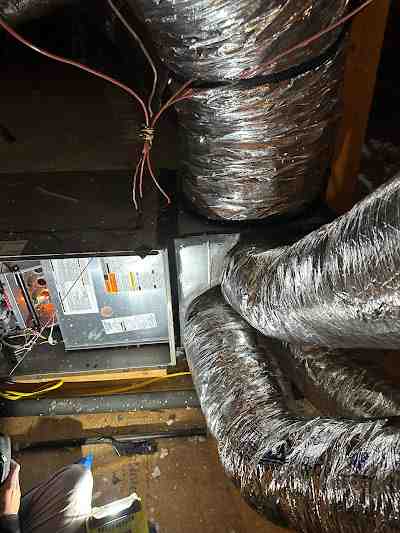
How ductwork mistakes during installation hurt your comfort is one of the most overlooked problems in home HVAC systems — and one of the most costly. You might have a brand-new, high-efficiency air conditioner, but if the ducts behind your walls were installed incorrectly, you’ll still deal with hot spots, weak airflow, and energy bills that don’t make sense.
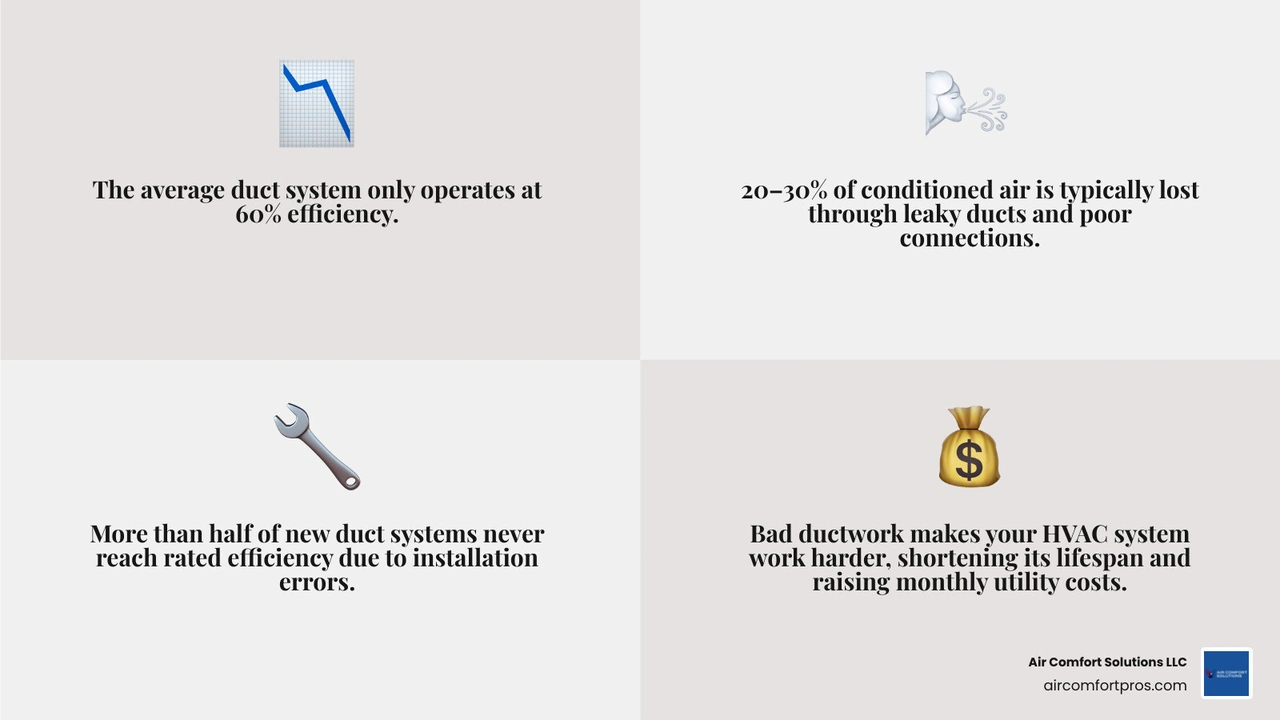
Here’s the hard truth: the U.S. Department of Energy estimates the average duct system operates at only about 60% efficiency. That means nearly 40% of the air your system works hard to condition never reaches the rooms it’s meant to serve. Studies also show that the average home loses 20% to 30% of conditioned air through leaky ducts, poor connections, and bad design — and more than half of new ductwork systems never even reach their rated efficiency due to avoidable installation errors.
In Pinehurst, TX, where summer heat is relentless and your AC runs hard for months at a time, the stakes are even higher. Bad ductwork doesn’t just mean discomfort — it means your system works harder, wears out faster, and costs you more every single month.
The most common ductwork installation mistakes that hurt your comfort include:
• Undersized ducts — How It Hurts You: Restricted airflow, high static pressure, hot and cold spots
• Oversized ducts — How It Hurts You: Low air velocity, poor room mixing, stagnant air
• Sharp bends and long runs — How It Hurts You: Friction loss, turbulence, weak airflow at distant vents
• Leaky joints and poor sealing — How It Hurts You: 20–30% conditioned air loss, higher energy bills
• Poor insulation in attics — How It Hurts You: Heat gain in ducts, less effective cooling
• Insufficient return vents — How It Hurts You: Pressure imbalances, doors slamming, system strain
• Skipping Manual D calculations — How It Hurts You: Rooms never reach the right temperature
Understanding these mistakes is the first step toward a home that actually stays comfortable — and a system that doesn’t burn out before its time.
When we think about home comfort, we usually focus on the outdoor condenser or the indoor furnace. We obsess over SEER2 ratings, brand names, and smart thermostats. However, your ductwork is the “highway system” of your home’s climate control. If the highway is full of potholes, narrow lanes, and dead ends, it doesn’t matter how fast or powerful your car is—you are still going to get stuck in traffic.
In the same way, subpar ductwork design ruins the performance of even the most premium HVAC systems. When technicians rush through an installation or rely on guesswork instead of science, they leave behind hidden flaws that compromise your air distribution. This creates dramatic temperature imbalances, where your living room feels like a desert while your bedroom feels like the North Pole.
To understand why this happens, we have to look at the direct relationship between the physical layout of your ducts and the physics of moving air. When a system is poorly planned, it fails to deliver the correct volume of air to each room. This is why understanding How Bad AC Installation Causes Problems For Years is so critical; a single set of bad choices during the installation phase can lock you into a decade of high utility bills and persistent discomfort.
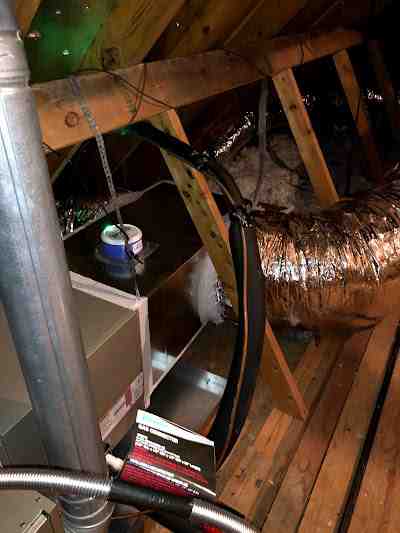
One of the most common installation errors is incorrect duct sizing. Duct sizing is a delicate balancing act. If the ducts are too small, your HVAC system is forced to work against high static pressure. Think of it like trying to breathe through a tiny cocktail straw while running a marathon—your lungs (or in this case, your blower motor) have to work incredibly hard just to move a fraction of the air they need to.
Conversely, oversized ducts are not a “safe bet” either. When ducts are too large, the air velocity drops significantly. Instead of being projected into the room to mix properly with the ambient air, the conditioned air simply “falls” out of the registers and pools near the floor. This leads to stagnant, drafty rooms and poor temperature distribution.
• Undersized Ducts — Physical Effect: High static pressure, restricted airflow, increased air velocity at registers — Impact on Homeowner Comfort: Loud whistling or rushing noises, weak airflow in distant rooms, hot/cold spots
• Oversized Ducts — Physical Effect: Low static pressure, dropped air velocity, poor air throw — Impact on Homeowner Comfort: Stagnant air, poor air mixing, rooms that feel humid and drafty
Air behaves much like water flowing through a pipe. It wants to travel in a straight, unobstructed path. Every time air hits a sharp 90-degree bend, a kink, or a sagging section of flexible duct, it experiences friction loss and turbulence.
When installers take the “easy route” rather than the most efficient route, they often install overly long duct runs with sharp bends to bypass structural framing. This creates massive airflow resistance. For example, a single sharp 90-degree elbow can add the equivalent resistance of 30 to 50 feet of straight pipe!
Flexible ductwork is particularly vulnerable to this issue. If flex duct is not pulled completely tight during installation, its corrugated inner core bunches up. Studies show that just 15% compression in a flex duct can cause a 4-to-8-times increase in pressure loss, while 30% compression can increase pressure drop by a staggering 10 times. When we perform a professional HVAC Installation in Spring, TX, we ensure all flexible ducts are fully stretched, properly supported every three feet with wide straps, and fitted with rigid metal elbows at major turns to prevent these exact bottlenecks.
Leaky ducts are the ultimate comfort and energy killer. When duct connections are not sealed with high-quality mastic paste or metal-backed foil tape, conditioned air escapes into unconditioned spaces like your attic or crawlspace.
This direct loss of conditioned air means your system has to run much longer to satisfy the thermostat, wasting energy and driving up your utility bills. It also creates pressure imbalances. If your supply ducts are leaking air into the attic, your home becomes depressurized. This negative pressure forces hot, humid, dusty outdoor air to be sucked in through cracks around your windows, doors, and electrical outlets.
As of June 2026, modern energy standards demand tight, well-sealed duct systems that lose less than 5% of their air. Yet, many older or poorly installed systems still lose up to 30% of their heating and cooling. Ensuring your duct connections are perfectly sealed is a standard part of any quality HVAC Installation in Cypress, TX, protecting both your comfort and your wallet from the extreme Texas climate.
While uneven room temperatures are the most immediate sign of poor duct design, the unseen damage happening inside your HVAC equipment is often much worse. Your heating and cooling system is designed to operate within very specific airflow parameters—typically between 350 and 400 cubic feet per minute (CFM) per ton of cooling capacity. When bad ductwork restricts or disrupts this airflow, it triggers a chain reaction of mechanical strain.
When we carry out an HVAC Installation in Conroe, TX, we carefully evaluate the existing ductwork to ensure it can support the airflow demands of the new system. Connecting a modern, high-efficiency AC unit to a restrictive, poorly designed duct system is like putting a high-performance sports car engine into a vehicle with a clogged exhaust pipe—you will never get the performance you paid for, and you will likely destroy the engine in the process.
Ductwork mistakes don’t just affect temperature; they also play a massive role in your indoor air quality (IAQ) and humidity control. In Southeast Texas, controlling indoor moisture is critical to preventing mold growth and maintaining comfort.
When return ducts are leaky and run through a dusty, humid attic, they act like a giant vacuum cleaner. They pull in hot, humid air, fiberglass insulation fibers, dust, and pollen, circulating these contaminants directly into your living spaces. This leads to rapid dust accumulation on your furniture and can trigger severe allergies or respiratory issues.
Furthermore, if the airflow is restricted by bad duct design, your air conditioner cannot effectively dehumidify your home. The system may “short cycle” (turning on and off rapidly), cooling the air quickly near the thermostat but leaving the rest of the house feeling sticky and damp. This excess moisture can condense inside the ducts or on your registers, creating the perfect breeding ground for mold and mildew.
When your ductwork restricts airflow, your HVAC system has to work twice as hard to do its job. This high static pressure forces the blower motor to draw more electrical current and run hotter, which can cause it to burn out prematurely. A blower motor designed to last 15 to 20 years can easily fail in just 2 to 5 years if forced to push air through undersized or kinked ducts.
Additionally, restricted airflow can cause the temperature of your evaporator coil to drop below freezing. When this happens, moisture on the coil freezes solid, blocking all airflow and potentially causing liquid refrigerant to flood back into the compressor. This can permanently destroy the compressor—the most expensive component in your outdoor unit—resulting in a premature system replacement that could have been completely avoided with proper duct design.
How do you know if your home is suffering from a bad duct installation? Fortunately, your system will usually leave a few clear clues.
If you notice any of the following warning signs, it is highly likely your duct system was installed incorrectly:
• Hot and Cold Spots: If your master bedroom feels like a sauna while your kitchen is freezing, your ducts are likely unbalanced, undersized, or suffering from excessive friction loss.
• Weak Airflow: If you hold your hand up to a register and can barely feel a breeze, you may have sagging flex ducts, disconnected joints, or a bunched inner core.
• Loud Whistling or Rattling: Noisy registers are a classic sign of undersized ducts or registers that are forcing too much air through too small of an opening.
• Excessive Dust: If a thick layer of dust settles on your tables shortly after cleaning, your return ducts are likely drawing in unfiltered air from your attic or crawlspace.
• Rising Energy Bills: If your utility bills keep climbing despite normal usage, your system is likely running longer to compensate for massive air leaks.
If you are experiencing these frustrating issues, scheduling professional HVAC Ductwork Services in Conroe, TX is the best way to diagnose the root cause and restore proper balance to your home.
An experienced HVAC professional can determine if your ducts are sized incorrectly by performing a static pressure test. This test measures the resistance to airflow within your system, much like a doctor measuring your blood pressure. High static pressure indicates undersized or restricted ducts, while exceptionally low pressure can point to oversized ducts or major leaks. We also measure the airflow (CFM) at each register using a specialized tool called a balometer to ensure every room is receiving the exact amount of air it needs.
Duct design should never be based on guesswork or “rule of thumb” estimates. Professional duct design relies on ACCA Manual D calculations, which are performed in tandem with Manual J load calculations. Manual J calculates exactly how much heating and cooling each individual room needs based on its size, insulation, windows, and local climate. Manual D then uses this data to design a custom duct layout, specifying the exact size, material, and pathway of every duct run to ensure perfectly balanced airflow and maximum system efficiency.
Despite its name, standard cloth duct tape is actually the worst material to use for sealing ducts. The adhesive on standard duct tape dries out, cracks, and fails very quickly when exposed to the extreme heat and temperature fluctuations of a Texas attic. To achieve a permanent, airtight seal, professionals use specialized mastic sealant (a thick, paint-on adhesive) or metal-backed foil tape that is rated to withstand extreme temperatures without losing its grip.
Your home’s comfort depends heavily on the quality of your ductwork. Avoidable installation mistakes like incorrect sizing, sharp bends, sagging flex ducts, and poor sealing can easily ruin the performance of even the best HVAC systems, leaving you with uneven temperatures, dusty air, and sky-high energy bills.
At Air Comfort Solutions LLC, we believe that proper ductwork installation is a science. Serving Pinehurst, TX, and the north side of Harris County for over 35 years, our certified technicians are experts in designing, sealing, and balancing duct systems for maximum comfort and efficiency. We offer honest, reliable solutions, upfront pricing, and flexible financing tailored to your home’s unique needs.
Don’t let poor ductwork ruin your comfort. Schedule Air Conditioning Services with Air Comfort Solutions today, and let us make sure your home’s air highway is built for peak performance!
How ductwork mistakes during installation hurt your comfort is one of the most overlooked problems in home HVAC systems — and one of the most costly. You might have a brand-new, high-efficiency air conditioner, but if the ducts behind your walls were installed incorrectly, you'll still deal with hot spots, weak airflow, and energy bills that don't make sense.
Here's the hard truth: the U.S. Department of Energy estimates the average duct system operates at only about 60% efficiency. That means nearly 40% of the air your system works hard to condition never reaches the rooms it's meant to serve. Studies also show that the average home loses 20% to 30% of conditioned air through leaky ducts, poor connections, and bad design — and more than half of new ductwork systems never even reach their rated efficiency due to avoidable installation errors.
In Pinehurst, TX, where summer heat is relentless and your AC runs hard for months at a time, the stakes are even higher. Bad ductwork doesn't just mean discomfort — it means your system works harder, wears out faster, and costs you more every single month.
The most common ductwork installation mistakes that hurt your comfort include:
| Mistake | How It Hurts You |
|---|---|
| Undersized ducts | Restricted airflow, high static pressure, hot and cold spots |
| Oversized ducts | Low air velocity, poor room mixing, stagnant air |
| Sharp bends and long runs | Friction loss, turbulence, weak airflow at distant vents |
| Leaky joints and poor sealing | 20–30% conditioned air loss, higher energy bills |
| Poor insulation in attics | Heat gain in ducts, less effective cooling |
| Insufficient return vents | Pressure imbalances, doors slamming, system strain |
| Skipping Manual D calculations | Rooms never reach the right temperature |
Understanding these mistakes is the first step toward a home that actually stays comfortable — and a system that doesn't burn out before its time.
When we think about home comfort, we usually focus on the outdoor condenser or the indoor furnace. We obsess over SEER2 ratings, brand names, and smart thermostats. However, your ductwork is the "highway system" of your home's climate control. If the highway is full of potholes, narrow lanes, and dead ends, it doesn't matter how fast or powerful your car is—you are still going to get stuck in traffic.
In the same way, subpar ductwork design ruins the performance of even the most premium HVAC systems. When technicians rush through an installation or rely on guesswork instead of science, they leave behind hidden flaws that compromise your air distribution. This creates dramatic temperature imbalances, where your living room feels like a desert while your bedroom feels like the North Pole.
To understand why this happens, we have to look at the direct relationship between the physical layout of your ducts and the physics of moving air. When a system is poorly planned, it fails to deliver the correct volume of air to each room. This is why understanding How Bad AC Installation Causes Problems For Years is so critical; a single set of bad choices during the installation phase can lock you into a decade of high utility bills and persistent discomfort.
One of the most common installation errors is incorrect duct sizing. Duct sizing is a delicate balancing act. If the ducts are too small, your HVAC system is forced to work against high static pressure. Think of it like trying to breathe through a tiny cocktail straw while running a marathon—your lungs (or in this case, your blower motor) have to work incredibly hard just to move a fraction of the air they need to.
Conversely, oversized ducts are not a "safe bet" either. When ducts are too large, the air velocity drops significantly. Instead of being projected into the room to mix properly with the ambient air, the conditioned air simply "falls" out of the registers and pools near the floor. This leads to stagnant, drafty rooms and poor temperature distribution.
| Duct Sizing Issue | Physical Effect | Impact on Homeowner Comfort |
|---|---|---|
| Undersized Ducts | High static pressure, restricted airflow, increased air velocity at registers | Loud whistling or rushing noises, weak airflow in distant rooms, hot/cold spots |
| Oversized Ducts | Low static pressure, dropped air velocity, poor air throw | Stagnant air, poor air mixing, rooms that feel humid and drafty |
Air behaves much like water flowing through a pipe. It wants to travel in a straight, unobstructed path. Every time air hits a sharp 90-degree bend, a kink, or a sagging section of flexible duct, it experiences friction loss and turbulence.
When installers take the "easy route" rather than the most efficient route, they often install overly long duct runs with sharp bends to bypass structural framing. This creates massive airflow resistance. For example, a single sharp 90-degree elbow can add the equivalent resistance of 30 to 50 feet of straight pipe!
Flexible ductwork is particularly vulnerable to this issue. If flex duct is not pulled completely tight during installation, its corrugated inner core bunches up. Studies show that just 15% compression in a flex duct can cause a 4-to-8-times increase in pressure loss, while 30% compression can increase pressure drop by a staggering 10 times. When we perform a professional HVAC Installation in Spring, TX, we ensure all flexible ducts are fully stretched, properly supported every three feet with wide straps, and fitted with rigid metal elbows at major turns to prevent these exact bottlenecks.
Leaky ducts are the ultimate comfort and energy killer. When duct connections are not sealed with high-quality mastic paste or metal-backed foil tape, conditioned air escapes into unconditioned spaces like your attic or crawlspace.
This direct loss of conditioned air means your system has to run much longer to satisfy the thermostat, wasting energy and driving up your utility bills. It also creates pressure imbalances. If your supply ducts are leaking air into the attic, your home becomes depressurized. This negative pressure forces hot, humid, dusty outdoor air to be sucked in through cracks around your windows, doors, and electrical outlets.
As of June 2026, modern energy standards demand tight, well-sealed duct systems that lose less than 5% of their air. Yet, many older or poorly installed systems still lose up to 30% of their heating and cooling. Ensuring your duct connections are perfectly sealed is a standard part of any quality HVAC Installation in Cypress, TX, protecting both your comfort and your wallet from the extreme Texas climate.
While uneven room temperatures are the most immediate sign of poor duct design, the unseen damage happening inside your HVAC equipment is often much worse. Your heating and cooling system is designed to operate within very specific airflow parameters—typically between 350 and 400 cubic feet per minute (CFM) per ton of cooling capacity. When bad ductwork restricts or disrupts this airflow, it triggers a chain reaction of mechanical strain.
When we carry out an HVAC Installation in Conroe, TX, we carefully evaluate the existing ductwork to ensure it can support the airflow demands of the new system. Connecting a modern, high-efficiency AC unit to a restrictive, poorly designed duct system is like putting a high-performance sports car engine into a vehicle with a clogged exhaust pipe—you will never get the performance you paid for, and you will likely destroy the engine in the process.
Ductwork mistakes don't just affect temperature; they also play a massive role in your indoor air quality (IAQ) and humidity control. In Southeast Texas, controlling indoor moisture is critical to preventing mold growth and maintaining comfort.
When return ducts are leaky and run through a dusty, humid attic, they act like a giant vacuum cleaner. They pull in hot, humid air, fiberglass insulation fibers, dust, and pollen, circulating these contaminants directly into your living spaces. This leads to rapid dust accumulation on your furniture and can trigger severe allergies or respiratory issues.
Furthermore, if the airflow is restricted by bad duct design, your air conditioner cannot effectively dehumidify your home. The system may "short cycle" (turning on and off rapidly), cooling the air quickly near the thermostat but leaving the rest of the house feeling sticky and damp. This excess moisture can condense inside the ducts or on your registers, creating the perfect breeding ground for mold and mildew.
When your ductwork restricts airflow, your HVAC system has to work twice as hard to do its job. This high static pressure forces the blower motor to draw more electrical current and run hotter, which can cause it to burn out prematurely. A blower motor designed to last 15 to 20 years can easily fail in just 2 to 5 years if forced to push air through undersized or kinked ducts.
Additionally, restricted airflow can cause the temperature of your evaporator coil to drop below freezing. When this happens, moisture on the coil freezes solid, blocking all airflow and potentially causing liquid refrigerant to flood back into the compressor. This can permanently destroy the compressor—the most expensive component in your outdoor unit—resulting in a premature system replacement that could have been completely avoided with proper duct design.
How do you know if your home is suffering from a bad duct installation? Fortunately, your system will usually leave a few clear clues.
If you notice any of the following warning signs, it is highly likely your duct system was installed incorrectly:
If you are experiencing these frustrating issues, scheduling professional HVAC Ductwork Services in Conroe, TX is the best way to diagnose the root cause and restore proper balance to your home.
An experienced HVAC professional can determine if your ducts are sized incorrectly by performing a static pressure test. This test measures the resistance to airflow within your system, much like a doctor measuring your blood pressure. High static pressure indicates undersized or restricted ducts, while exceptionally low pressure can point to oversized ducts or major leaks. We also measure the airflow (CFM) at each register using a specialized tool called a balometer to ensure every room is receiving the exact amount of air it needs.
Duct design should never be based on guesswork or "rule of thumb" estimates. Professional duct design relies on ACCA Manual D calculations, which are performed in tandem with Manual J load calculations. Manual J calculates exactly how much heating and cooling each individual room needs based on its size, insulation, windows, and local climate. Manual D then uses this data to design a custom duct layout, specifying the exact size, material, and pathway of every duct run to ensure perfectly balanced airflow and maximum system efficiency.
Despite its name, standard cloth duct tape is actually the worst material to use for sealing ducts. The adhesive on standard duct tape dries out, cracks, and fails very quickly when exposed to the extreme heat and temperature fluctuations of a Texas attic. To achieve a permanent, airtight seal, professionals use specialized mastic sealant (a thick, paint-on adhesive) or metal-backed foil tape that is rated to withstand extreme temperatures without losing its grip.
Your home's comfort depends heavily on the quality of your ductwork. Avoidable installation mistakes like incorrect sizing, sharp bends, sagging flex ducts, and poor sealing can easily ruin the performance of even the best HVAC systems, leaving you with uneven temperatures, dusty air, and sky-high energy bills.
At Air Comfort Solutions LLC, we believe that proper ductwork installation is a science. Serving Pinehurst, TX, and the north side of Harris County for over 35 years, our certified technicians are experts in designing, sealing, and balancing duct systems for maximum comfort and efficiency. We offer honest, reliable solutions, upfront pricing, and flexible financing tailored to your home's unique needs.
Don't let poor ductwork ruin your comfort. Schedule Air Conditioning Services with Air Comfort Pros today, and let us make sure your home's air highway is built for peak performance!
How ductwork mistakes during installation hurt your comfort is one of the most overlooked problems in home HVAC systems — and one of the most costly. You might have a brand-new, high-efficiency air conditioner, but if the ducts behind your walls were installed incorrectly, you'll still deal with hot spots, weak airflow, and energy bills that don't make sense.
Here's the hard truth: the U.S. Department of Energy estimates the average duct system operates at only about 60% efficiency. That means nearly 40% of the air your system works hard to condition never reaches the rooms it's meant to serve. Studies also show that the average home loses 20% to 30% of conditioned air through leaky ducts, poor connections, and bad design — and more than half of new ductwork systems never even reach their rated efficiency due to avoidable installation errors.
In Pinehurst, TX, where summer heat is relentless and your AC runs hard for months at a time, the stakes are even higher. Bad ductwork doesn't just mean discomfort — it means your system works harder, wears out faster, and costs you more every single month.
The most common ductwork installation mistakes that hurt your comfort include:
| Mistake | How It Hurts You |
|---|---|
| Undersized ducts | Restricted airflow, high static pressure, hot and cold spots |
| Oversized ducts | Low air velocity, poor room mixing, stagnant air |
| Sharp bends and long runs | Friction loss, turbulence, weak airflow at distant vents |
| Leaky joints and poor sealing | 20–30% conditioned air loss, higher energy bills |
| Poor insulation in attics | Heat gain in ducts, less effective cooling |
| Insufficient return vents | Pressure imbalances, doors slamming, system strain |
| Skipping Manual D calculations | Rooms never reach the right temperature |
Understanding these mistakes is the first step toward a home that actually stays comfortable — and a system that doesn't burn out before its time.
When we think about home comfort, we usually focus on the outdoor condenser or the indoor furnace. We obsess over SEER2 ratings, brand names, and smart thermostats. However, your ductwork is the "highway system" of your home's climate control. If the highway is full of potholes, narrow lanes, and dead ends, it doesn't matter how fast or powerful your car is—you are still going to get stuck in traffic.
In the same way, subpar ductwork design ruins the performance of even the most premium HVAC systems. When technicians rush through an installation or rely on guesswork instead of science, they leave behind hidden flaws that compromise your air distribution. This creates dramatic temperature imbalances, where your living room feels like a desert while your bedroom feels like the North Pole.
To understand why this happens, we have to look at the direct relationship between the physical layout of your ducts and the physics of moving air. When a system is poorly planned, it fails to deliver the correct volume of air to each room. This is why understanding How Bad AC Installation Causes Problems For Years is so critical; a single set of bad choices during the installation phase can lock you into a decade of high utility bills and persistent discomfort.
One of the most common installation errors is incorrect duct sizing. Duct sizing is a delicate balancing act. If the ducts are too small, your HVAC system is forced to work against high static pressure. Think of it like trying to breathe through a tiny cocktail straw while running a marathon—your lungs (or in this case, your blower motor) have to work incredibly hard just to move a fraction of the air they need to.
Conversely, oversized ducts are not a "safe bet" either. When ducts are too large, the air velocity drops significantly. Instead of being projected into the room to mix properly with the ambient air, the conditioned air simply "falls" out of the registers and pools near the floor. This leads to stagnant, drafty rooms and poor temperature distribution.
| Duct Sizing Issue | Physical Effect | Impact on Homeowner Comfort |
|---|---|---|
| Undersized Ducts | High static pressure, restricted airflow, increased air velocity at registers | Loud whistling or rushing noises, weak airflow in distant rooms, hot/cold spots |
| Oversized Ducts | Low static pressure, dropped air velocity, poor air throw | Stagnant air, poor air mixing, rooms that feel humid and drafty |
Air behaves much like water flowing through a pipe. It wants to travel in a straight, unobstructed path. Every time air hits a sharp 90-degree bend, a kink, or a sagging section of flexible duct, it experiences friction loss and turbulence.
When installers take the "easy route" rather than the most efficient route, they often install overly long duct runs with sharp bends to bypass structural framing. This creates massive airflow resistance. For example, a single sharp 90-degree elbow can add the equivalent resistance of 30 to 50 feet of straight pipe!
Flexible ductwork is particularly vulnerable to this issue. If flex duct is not pulled completely tight during installation, its corrugated inner core bunches up. Studies show that just 15% compression in a flex duct can cause a 4-to-8-times increase in pressure loss, while 30% compression can increase pressure drop by a staggering 10 times. When we perform a professional HVAC Installation in Spring, TX, we ensure all flexible ducts are fully stretched, properly supported every three feet with wide straps, and fitted with rigid metal elbows at major turns to prevent these exact bottlenecks.
Leaky ducts are the ultimate comfort and energy killer. When duct connections are not sealed with high-quality mastic paste or metal-backed foil tape, conditioned air escapes into unconditioned spaces like your attic or crawlspace.
This direct loss of conditioned air means your system has to run much longer to satisfy the thermostat, wasting energy and driving up your utility bills. It also creates pressure imbalances. If your supply ducts are leaking air into the attic, your home becomes depressurized. This negative pressure forces hot, humid, dusty outdoor air to be sucked in through cracks around your windows, doors, and electrical outlets.
As of June 2026, modern energy standards demand tight, well-sealed duct systems that lose less than 5% of their air. Yet, many older or poorly installed systems still lose up to 30% of their heating and cooling. Ensuring your duct connections are perfectly sealed is a standard part of any quality HVAC Installation in Cypress, TX, protecting both your comfort and your wallet from the extreme Texas climate.
While uneven room temperatures are the most immediate sign of poor duct design, the unseen damage happening inside your HVAC equipment is often much worse. Your heating and cooling system is designed to operate within very specific airflow parameters—typically between 350 and 400 cubic feet per minute (CFM) per ton of cooling capacity. When bad ductwork restricts or disrupts this airflow, it triggers a chain reaction of mechanical strain.
When we carry out an HVAC Installation in Conroe, TX, we carefully evaluate the existing ductwork to ensure it can support the airflow demands of the new system. Connecting a modern, high-efficiency AC unit to a restrictive, poorly designed duct system is like putting a high-performance sports car engine into a vehicle with a clogged exhaust pipe—you will never get the performance you paid for, and you will likely destroy the engine in the process.
Ductwork mistakes don't just affect temperature; they also play a massive role in your indoor air quality (IAQ) and humidity control. In Southeast Texas, controlling indoor moisture is critical to preventing mold growth and maintaining comfort.
When return ducts are leaky and run through a dusty, humid attic, they act like a giant vacuum cleaner. They pull in hot, humid air, fiberglass insulation fibers, dust, and pollen, circulating these contaminants directly into your living spaces. This leads to rapid dust accumulation on your furniture and can trigger severe allergies or respiratory issues.
Furthermore, if the airflow is restricted by bad duct design, your air conditioner cannot effectively dehumidify your home. The system may "short cycle" (turning on and off rapidly), cooling the air quickly near the thermostat but leaving the rest of the house feeling sticky and damp. This excess moisture can condense inside the ducts or on your registers, creating the perfect breeding ground for mold and mildew.
When your ductwork restricts airflow, your HVAC system has to work twice as hard to do its job. This high static pressure forces the blower motor to draw more electrical current and run hotter, which can cause it to burn out prematurely. A blower motor designed to last 15 to 20 years can easily fail in just 2 to 5 years if forced to push air through undersized or kinked ducts.
Additionally, restricted airflow can cause the temperature of your evaporator coil to drop below freezing. When this happens, moisture on the coil freezes solid, blocking all airflow and potentially causing liquid refrigerant to flood back into the compressor. This can permanently destroy the compressor—the most expensive component in your outdoor unit—resulting in a premature system replacement that could have been completely avoided with proper duct design.
How do you know if your home is suffering from a bad duct installation? Fortunately, your system will usually leave a few clear clues.
If you notice any of the following warning signs, it is highly likely your duct system was installed incorrectly:
If you are experiencing these frustrating issues, scheduling professional HVAC Ductwork Services in Conroe, TX is the best way to diagnose the root cause and restore proper balance to your home.
An experienced HVAC professional can determine if your ducts are sized incorrectly by performing a static pressure test. This test measures the resistance to airflow within your system, much like a doctor measuring your blood pressure. High static pressure indicates undersized or restricted ducts, while exceptionally low pressure can point to oversized ducts or major leaks. We also measure the airflow (CFM) at each register using a specialized tool called a balometer to ensure every room is receiving the exact amount of air it needs.
Duct design should never be based on guesswork or "rule of thumb" estimates. Professional duct design relies on ACCA Manual D calculations, which are performed in tandem with Manual J load calculations. Manual J calculates exactly how much heating and cooling each individual room needs based on its size, insulation, windows, and local climate. Manual D then uses this data to design a custom duct layout, specifying the exact size, material, and pathway of every duct run to ensure perfectly balanced airflow and maximum system efficiency.
Despite its name, standard cloth duct tape is actually the worst material to use for sealing ducts. The adhesive on standard duct tape dries out, cracks, and fails very quickly when exposed to the extreme heat and temperature fluctuations of a Texas attic. To achieve a permanent, airtight seal, professionals use specialized mastic sealant (a thick, paint-on adhesive) or metal-backed foil tape that is rated to withstand extreme temperatures without losing its grip.
Your home's comfort depends heavily on the quality of your ductwork. Avoidable installation mistakes like incorrect sizing, sharp bends, sagging flex ducts, and poor sealing can easily ruin the performance of even the best HVAC systems, leaving you with uneven temperatures, dusty air, and sky-high energy bills.
At Air Comfort Solutions LLC, we believe that proper ductwork installation is a science. Serving Pinehurst, TX, and the north side of Harris County for over 35 years, our certified technicians are experts in designing, sealing, and balancing duct systems for maximum comfort and efficiency. We offer honest, reliable solutions, upfront pricing, and flexible financing tailored to your home's unique needs.
Don't let poor ductwork ruin your comfort. Schedule Air Conditioning Services with Air Comfort Pros today, and let us make sure your home's air highway is built for peak performance!
How ductwork mistakes during installation hurt your comfort is one of the most overlooked problems in home HVAC systems — and one of the most costly. You might have a brand-new, high-efficiency air conditioner, but if the ducts behind your walls were installed incorrectly, you'll still deal with hot spots, weak airflow, and energy bills that don't make sense.
Here's the hard truth: the U.S. Department of Energy estimates the average duct system operates at only about 60% efficiency. That means nearly 40% of the air your system works hard to condition never reaches the rooms it's meant to serve. Studies also show that the average home loses 20% to 30% of conditioned air through leaky ducts, poor connections, and bad design — and more than half of new ductwork systems never even reach their rated efficiency due to avoidable installation errors.
In Pinehurst, TX, where summer heat is relentless and your AC runs hard for months at a time, the stakes are even higher. Bad ductwork doesn't just mean discomfort — it means your system works harder, wears out faster, and costs you more every single month.
The most common ductwork installation mistakes that hurt your comfort include:
| Mistake | How It Hurts You |
|---|---|
| Undersized ducts | Restricted airflow, high static pressure, hot and cold spots |
| Oversized ducts | Low air velocity, poor room mixing, stagnant air |
| Sharp bends and long runs | Friction loss, turbulence, weak airflow at distant vents |
| Leaky joints and poor sealing | 20–30% conditioned air loss, higher energy bills |
| Poor insulation in attics | Heat gain in ducts, less effective cooling |
| Insufficient return vents | Pressure imbalances, doors slamming, system strain |
| Skipping Manual D calculations | Rooms never reach the right temperature |
Understanding these mistakes is the first step toward a home that actually stays comfortable — and a system that doesn't burn out before its time.
When we think about home comfort, we usually focus on the outdoor condenser or the indoor furnace. We obsess over SEER2 ratings, brand names, and smart thermostats. However, your ductwork is the "highway system" of your home's climate control. If the highway is full of potholes, narrow lanes, and dead ends, it doesn't matter how fast or powerful your car is—you are still going to get stuck in traffic.
In the same way, subpar ductwork design ruins the performance of even the most premium HVAC systems. When technicians rush through an installation or rely on guesswork instead of science, they leave behind hidden flaws that compromise your air distribution. This creates dramatic temperature imbalances, where your living room feels like a desert while your bedroom feels like the North Pole.
To understand why this happens, we have to look at the direct relationship between the physical layout of your ducts and the physics of moving air. When a system is poorly planned, it fails to deliver the correct volume of air to each room. This is why understanding How Bad AC Installation Causes Problems For Years is so critical; a single set of bad choices during the installation phase can lock you into a decade of high utility bills and persistent discomfort.
One of the most common installation errors is incorrect duct sizing. Duct sizing is a delicate balancing act. If the ducts are too small, your HVAC system is forced to work against high static pressure. Think of it like trying to breathe through a tiny cocktail straw while running a marathon—your lungs (or in this case, your blower motor) have to work incredibly hard just to move a fraction of the air they need to.
Conversely, oversized ducts are not a "safe bet" either. When ducts are too large, the air velocity drops significantly. Instead of being projected into the room to mix properly with the ambient air, the conditioned air simply "falls" out of the registers and pools near the floor. This leads to stagnant, drafty rooms and poor temperature distribution.
| Duct Sizing Issue | Physical Effect | Impact on Homeowner Comfort |
|---|---|---|
| Undersized Ducts | High static pressure, restricted airflow, increased air velocity at registers | Loud whistling or rushing noises, weak airflow in distant rooms, hot/cold spots |
| Oversized Ducts | Low static pressure, dropped air velocity, poor air throw | Stagnant air, poor air mixing, rooms that feel humid and drafty |
Air behaves much like water flowing through a pipe. It wants to travel in a straight, unobstructed path. Every time air hits a sharp 90-degree bend, a kink, or a sagging section of flexible duct, it experiences friction loss and turbulence.
When installers take the "easy route" rather than the most efficient route, they often install overly long duct runs with sharp bends to bypass structural framing. This creates massive airflow resistance. For example, a single sharp 90-degree elbow can add the equivalent resistance of 30 to 50 feet of straight pipe!
Flexible ductwork is particularly vulnerable to this issue. If flex duct is not pulled completely tight during installation, its corrugated inner core bunches up. Studies show that just 15% compression in a flex duct can cause a 4-to-8-times increase in pressure loss, while 30% compression can increase pressure drop by a staggering 10 times. When we perform a professional HVAC Installation in Spring, TX, we ensure all flexible ducts are fully stretched, properly supported every three feet with wide straps, and fitted with rigid metal elbows at major turns to prevent these exact bottlenecks.
Leaky ducts are the ultimate comfort and energy killer. When duct connections are not sealed with high-quality mastic paste or metal-backed foil tape, conditioned air escapes into unconditioned spaces like your attic or crawlspace.
This direct loss of conditioned air means your system has to run much longer to satisfy the thermostat, wasting energy and driving up your utility bills. It also creates pressure imbalances. If your supply ducts are leaking air into the attic, your home becomes depressurized. This negative pressure forces hot, humid, dusty outdoor air to be sucked in through cracks around your windows, doors, and electrical outlets.
As of June 2026, modern energy standards demand tight, well-sealed duct systems that lose less than 5% of their air. Yet, many older or poorly installed systems still lose up to 30% of their heating and cooling. Ensuring your duct connections are perfectly sealed is a standard part of any quality HVAC Installation in Cypress, TX, protecting both your comfort and your wallet from the extreme Texas climate.
While uneven room temperatures are the most immediate sign of poor duct design, the unseen damage happening inside your HVAC equipment is often much worse. Your heating and cooling system is designed to operate within very specific airflow parameters—typically between 350 and 400 cubic feet per minute (CFM) per ton of cooling capacity. When bad ductwork restricts or disrupts this airflow, it triggers a chain reaction of mechanical strain.
When we carry out an HVAC Installation in Conroe, TX, we carefully evaluate the existing ductwork to ensure it can support the airflow demands of the new system. Connecting a modern, high-efficiency AC unit to a restrictive, poorly designed duct system is like putting a high-performance sports car engine into a vehicle with a clogged exhaust pipe—you will never get the performance you paid for, and you will likely destroy the engine in the process.
Ductwork mistakes don't just affect temperature; they also play a massive role in your indoor air quality (IAQ) and humidity control. In Southeast Texas, controlling indoor moisture is critical to preventing mold growth and maintaining comfort.
When return ducts are leaky and run through a dusty, humid attic, they act like a giant vacuum cleaner. They pull in hot, humid air, fiberglass insulation fibers, dust, and pollen, circulating these contaminants directly into your living spaces. This leads to rapid dust accumulation on your furniture and can trigger severe allergies or respiratory issues.
Furthermore, if the airflow is restricted by bad duct design, your air conditioner cannot effectively dehumidify your home. The system may "short cycle" (turning on and off rapidly), cooling the air quickly near the thermostat but leaving the rest of the house feeling sticky and damp. This excess moisture can condense inside the ducts or on your registers, creating the perfect breeding ground for mold and mildew.
When your ductwork restricts airflow, your HVAC system has to work twice as hard to do its job. This high static pressure forces the blower motor to draw more electrical current and run hotter, which can cause it to burn out prematurely. A blower motor designed to last 15 to 20 years can easily fail in just 2 to 5 years if forced to push air through undersized or kinked ducts.
Additionally, restricted airflow can cause the temperature of your evaporator coil to drop below freezing. When this happens, moisture on the coil freezes solid, blocking all airflow and potentially causing liquid refrigerant to flood back into the compressor. This can permanently destroy the compressor—the most expensive component in your outdoor unit—resulting in a premature system replacement that could have been completely avoided with proper duct design.
How do you know if your home is suffering from a bad duct installation? Fortunately, your system will usually leave a few clear clues.
If you notice any of the following warning signs, it is highly likely your duct system was installed incorrectly:
If you are experiencing these frustrating issues, scheduling professional HVAC Ductwork Services in Conroe, TX is the best way to diagnose the root cause and restore proper balance to your home.
An experienced HVAC professional can determine if your ducts are sized incorrectly by performing a static pressure test. This test measures the resistance to airflow within your system, much like a doctor measuring your blood pressure. High static pressure indicates undersized or restricted ducts, while exceptionally low pressure can point to oversized ducts or major leaks. We also measure the airflow (CFM) at each register using a specialized tool called a balometer to ensure every room is receiving the exact amount of air it needs.
Duct design should never be based on guesswork or "rule of thumb" estimates. Professional duct design relies on ACCA Manual D calculations, which are performed in tandem with Manual J load calculations. Manual J calculates exactly how much heating and cooling each individual room needs based on its size, insulation, windows, and local climate. Manual D then uses this data to design a custom duct layout, specifying the exact size, material, and pathway of every duct run to ensure perfectly balanced airflow and maximum system efficiency.
Despite its name, standard cloth duct tape is actually the worst material to use for sealing ducts. The adhesive on standard duct tape dries out, cracks, and fails very quickly when exposed to the extreme heat and temperature fluctuations of a Texas attic. To achieve a permanent, airtight seal, professionals use specialized mastic sealant (a thick, paint-on adhesive) or metal-backed foil tape that is rated to withstand extreme temperatures without losing its grip.
Your home's comfort depends heavily on the quality of your ductwork. Avoidable installation mistakes like incorrect sizing, sharp bends, sagging flex ducts, and poor sealing can easily ruin the performance of even the best HVAC systems, leaving you with uneven temperatures, dusty air, and sky-high energy bills.
At Air Comfort Solutions LLC, we believe that proper ductwork installation is a science. Serving Pinehurst, TX, and the north side of Harris County for over 35 years, our certified technicians are experts in designing, sealing, and balancing duct systems for maximum comfort and efficiency. We offer honest, reliable solutions, upfront pricing, and flexible financing tailored to your home's unique needs.
Don't let poor ductwork ruin your comfort. Schedule Air Conditioning Services with Air Comfort Pros today, and let us make sure your home's air highway is built for peak performance!
How ductwork mistakes during installation hurt your comfort is one of the most overlooked problems in home HVAC systems — and one of the most costly. You might have a brand-new, high-efficiency air conditioner, but if the ducts behind your walls were installed incorrectly, you'll still deal with hot spots, weak airflow, and energy bills that don't make sense.
Here's the hard truth: the U.S. Department of Energy estimates the average duct system operates at only about 60% efficiency. That means nearly 40% of the air your system works hard to condition never reaches the rooms it's meant to serve. Studies also show that the average home loses 20% to 30% of conditioned air through leaky ducts, poor connections, and bad design — and more than half of new ductwork systems never even reach their rated efficiency due to avoidable installation errors.
In Pinehurst, TX, where summer heat is relentless and your AC runs hard for months at a time, the stakes are even higher. Bad ductwork doesn't just mean discomfort — it means your system works harder, wears out faster, and costs you more every single month.
The most common ductwork installation mistakes that hurt your comfort include:
| Mistake | How It Hurts You |
|---|---|
| Undersized ducts | Restricted airflow, high static pressure, hot and cold spots |
| Oversized ducts | Low air velocity, poor room mixing, stagnant air |
| Sharp bends and long runs | Friction loss, turbulence, weak airflow at distant vents |
| Leaky joints and poor sealing | 20–30% conditioned air loss, higher energy bills |
| Poor insulation in attics | Heat gain in ducts, less effective cooling |
| Insufficient return vents | Pressure imbalances, doors slamming, system strain |
| Skipping Manual D calculations | Rooms never reach the right temperature |
Understanding these mistakes is the first step toward a home that actually stays comfortable — and a system that doesn't burn out before its time.
When we think about home comfort, we usually focus on the outdoor condenser or the indoor furnace. We obsess over SEER2 ratings, brand names, and smart thermostats. However, your ductwork is the "highway system" of your home's climate control. If the highway is full of potholes, narrow lanes, and dead ends, it doesn't matter how fast or powerful your car is—you are still going to get stuck in traffic.
In the same way, subpar ductwork design ruins the performance of even the most premium HVAC systems. When technicians rush through an installation or rely on guesswork instead of science, they leave behind hidden flaws that compromise your air distribution. This creates dramatic temperature imbalances, where your living room feels like a desert while your bedroom feels like the North Pole.
To understand why this happens, we have to look at the direct relationship between the physical layout of your ducts and the physics of moving air. When a system is poorly planned, it fails to deliver the correct volume of air to each room. This is why understanding How Bad AC Installation Causes Problems For Years is so critical; a single set of bad choices during the installation phase can lock you into a decade of high utility bills and persistent discomfort.
One of the most common installation errors is incorrect duct sizing. Duct sizing is a delicate balancing act. If the ducts are too small, your HVAC system is forced to work against high static pressure. Think of it like trying to breathe through a tiny cocktail straw while running a marathon—your lungs (or in this case, your blower motor) have to work incredibly hard just to move a fraction of the air they need to.
Conversely, oversized ducts are not a "safe bet" either. When ducts are too large, the air velocity drops significantly. Instead of being projected into the room to mix properly with the ambient air, the conditioned air simply "falls" out of the registers and pools near the floor. This leads to stagnant, drafty rooms and poor temperature distribution.
| Duct Sizing Issue | Physical Effect | Impact on Homeowner Comfort |
|---|---|---|
| Undersized Ducts | High static pressure, restricted airflow, increased air velocity at registers | Loud whistling or rushing noises, weak airflow in distant rooms, hot/cold spots |
| Oversized Ducts | Low static pressure, dropped air velocity, poor air throw | Stagnant air, poor air mixing, rooms that feel humid and drafty |
Air behaves much like water flowing through a pipe. It wants to travel in a straight, unobstructed path. Every time air hits a sharp 90-degree bend, a kink, or a sagging section of flexible duct, it experiences friction loss and turbulence.
When installers take the "easy route" rather than the most efficient route, they often install overly long duct runs with sharp bends to bypass structural framing. This creates massive airflow resistance. For example, a single sharp 90-degree elbow can add the equivalent resistance of 30 to 50 feet of straight pipe!
Flexible ductwork is particularly vulnerable to this issue. If flex duct is not pulled completely tight during installation, its corrugated inner core bunches up. Studies show that just 15% compression in a flex duct can cause a 4-to-8-times increase in pressure loss, while 30% compression can increase pressure drop by a staggering 10 times. When we perform a professional HVAC Installation in Spring, TX, we ensure all flexible ducts are fully stretched, properly supported every three feet with wide straps, and fitted with rigid metal elbows at major turns to prevent these exact bottlenecks.
Leaky ducts are the ultimate comfort and energy killer. When duct connections are not sealed with high-quality mastic paste or metal-backed foil tape, conditioned air escapes into unconditioned spaces like your attic or crawlspace.
This direct loss of conditioned air means your system has to run much longer to satisfy the thermostat, wasting energy and driving up your utility bills. It also creates pressure imbalances. If your supply ducts are leaking air into the attic, your home becomes depressurized. This negative pressure forces hot, humid, dusty outdoor air to be sucked in through cracks around your windows, doors, and electrical outlets.
As of June 2026, modern energy standards demand tight, well-sealed duct systems that lose less than 5% of their air. Yet, many older or poorly installed systems still lose up to 30% of their heating and cooling. Ensuring your duct connections are perfectly sealed is a standard part of any quality HVAC Installation in Cypress, TX, protecting both your comfort and your wallet from the extreme Texas climate.
While uneven room temperatures are the most immediate sign of poor duct design, the unseen damage happening inside your HVAC equipment is often much worse. Your heating and cooling system is designed to operate within very specific airflow parameters—typically between 350 and 400 cubic feet per minute (CFM) per ton of cooling capacity. When bad ductwork restricts or disrupts this airflow, it triggers a chain reaction of mechanical strain.
When we carry out an HVAC Installation in Conroe, TX, we carefully evaluate the existing ductwork to ensure it can support the airflow demands of the new system. Connecting a modern, high-efficiency AC unit to a restrictive, poorly designed duct system is like putting a high-performance sports car engine into a vehicle with a clogged exhaust pipe—you will never get the performance you paid for, and you will likely destroy the engine in the process.
Ductwork mistakes don't just affect temperature; they also play a massive role in your indoor air quality (IAQ) and humidity control. In Southeast Texas, controlling indoor moisture is critical to preventing mold growth and maintaining comfort.
When return ducts are leaky and run through a dusty, humid attic, they act like a giant vacuum cleaner. They pull in hot, humid air, fiberglass insulation fibers, dust, and pollen, circulating these contaminants directly into your living spaces. This leads to rapid dust accumulation on your furniture and can trigger severe allergies or respiratory issues.
Furthermore, if the airflow is restricted by bad duct design, your air conditioner cannot effectively dehumidify your home. The system may "short cycle" (turning on and off rapidly), cooling the air quickly near the thermostat but leaving the rest of the house feeling sticky and damp. This excess moisture can condense inside the ducts or on your registers, creating the perfect breeding ground for mold and mildew.
When your ductwork restricts airflow, your HVAC system has to work twice as hard to do its job. This high static pressure forces the blower motor to draw more electrical current and run hotter, which can cause it to burn out prematurely. A blower motor designed to last 15 to 20 years can easily fail in just 2 to 5 years if forced to push air through undersized or kinked ducts.
Additionally, restricted airflow can cause the temperature of your evaporator coil to drop below freezing. When this happens, moisture on the coil freezes solid, blocking all airflow and potentially causing liquid refrigerant to flood back into the compressor. This can permanently destroy the compressor—the most expensive component in your outdoor unit—resulting in a premature system replacement that could have been completely avoided with proper duct design.
How do you know if your home is suffering from a bad duct installation? Fortunately, your system will usually leave a few clear clues.
If you notice any of the following warning signs, it is highly likely your duct system was installed incorrectly:
If you are experiencing these frustrating issues, scheduling professional HVAC Ductwork Services in Conroe, TX is the best way to diagnose the root cause and restore proper balance to your home.
An experienced HVAC professional can determine if your ducts are sized incorrectly by performing a static pressure test. This test measures the resistance to airflow within your system, much like a doctor measuring your blood pressure. High static pressure indicates undersized or restricted ducts, while exceptionally low pressure can point to oversized ducts or major leaks. We also measure the airflow (CFM) at each register using a specialized tool called a balometer to ensure every room is receiving the exact amount of air it needs.
Duct design should never be based on guesswork or "rule of thumb" estimates. Professional duct design relies on ACCA Manual D calculations, which are performed in tandem with Manual J load calculations. Manual J calculates exactly how much heating and cooling each individual room needs based on its size, insulation, windows, and local climate. Manual D then uses this data to design a custom duct layout, specifying the exact size, material, and pathway of every duct run to ensure perfectly balanced airflow and maximum system efficiency.
Despite its name, standard cloth duct tape is actually the worst material to use for sealing ducts. The adhesive on standard duct tape dries out, cracks, and fails very quickly when exposed to the extreme heat and temperature fluctuations of a Texas attic. To achieve a permanent, airtight seal, professionals use specialized mastic sealant (a thick, paint-on adhesive) or metal-backed foil tape that is rated to withstand extreme temperatures without losing its grip.
Your home's comfort depends heavily on the quality of your ductwork. Avoidable installation mistakes like incorrect sizing, sharp bends, sagging flex ducts, and poor sealing can easily ruin the performance of even the best HVAC systems, leaving you with uneven temperatures, dusty air, and sky-high energy bills.
At Air Comfort Solutions LLC, we believe that proper ductwork installation is a science. Serving Pinehurst, TX, and the north side of Harris County for over 35 years, our certified technicians are experts in designing, sealing, and balancing duct systems for maximum comfort and efficiency. We offer honest, reliable solutions, upfront pricing, and flexible financing tailored to your home's unique needs.
Don't let poor ductwork ruin your comfort. Schedule Air Conditioning Services with Air Comfort Pros today, and let us make sure your home's air highway is built for peak performance!


Zane came out and did an amazing job! Super friendly, honest and transparent about the work that needed to be done. This is my second time working with Air Comfort Solutions and they’re my go to for HVAC services. Highly recommend.
God's AMAZING grace sent us Robert and Zane. We have been without air in this Texas heat for six weeks and four days. We've had a few contractors give us quotes all trying to upsell when we're at a low point. But not the guys at Air Comfort Solutions. They came in assessed our situation, gave us honest feedback, and showed us the issues as they proceeded with the assessment for clear understanding. We highly recommend them for their professionalism, quality products, and fair pricing. We hands down support them for all the work they do 💯 %.
Robert and Zane gone above and beyond to make the process easy and affordable.
Would definitely recommend!!
I’m writing this review to let everyone know that Air Comfort Solutions is the company to work with. I know the owner ( Robert) for several years now. He has been taking care of my residential and business work orders. Robert is professional, knowledgeable and will save you money. I just want to thank Robert for great job you have been doing for me.


