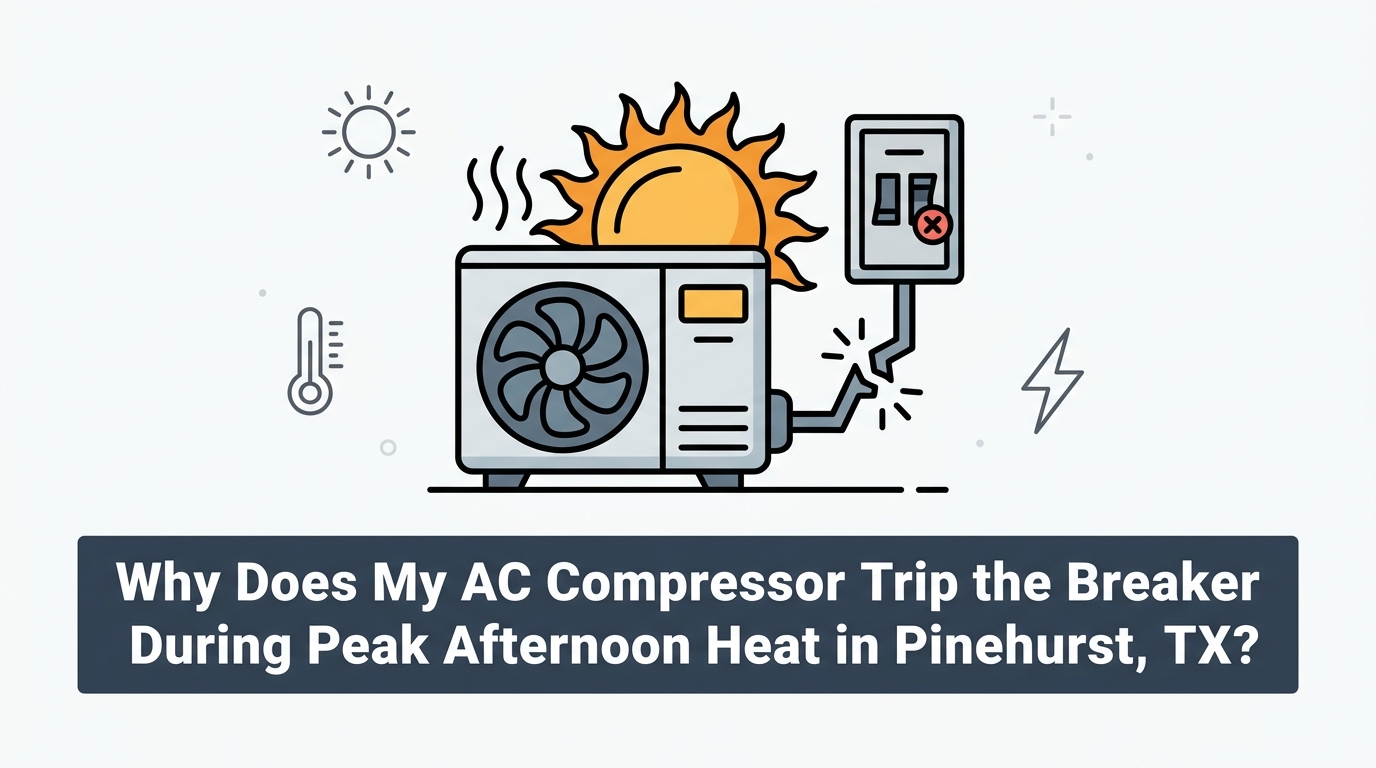
Assessing the Wear on Your AC Contactor After a Brutal Texas Summer
Months of continuous high-load cycling can leave electrical parts scarred and pitted. Catching a worn contactor during a fall tune-up prevents a welded-shut emergency.

How proper AC installation affects long-term performance is one of the most important things to understand before investing in a new cooling system — because even a top-rated unit can fail early, waste energy, and leave your home uncomfortable if the setup is done wrong.
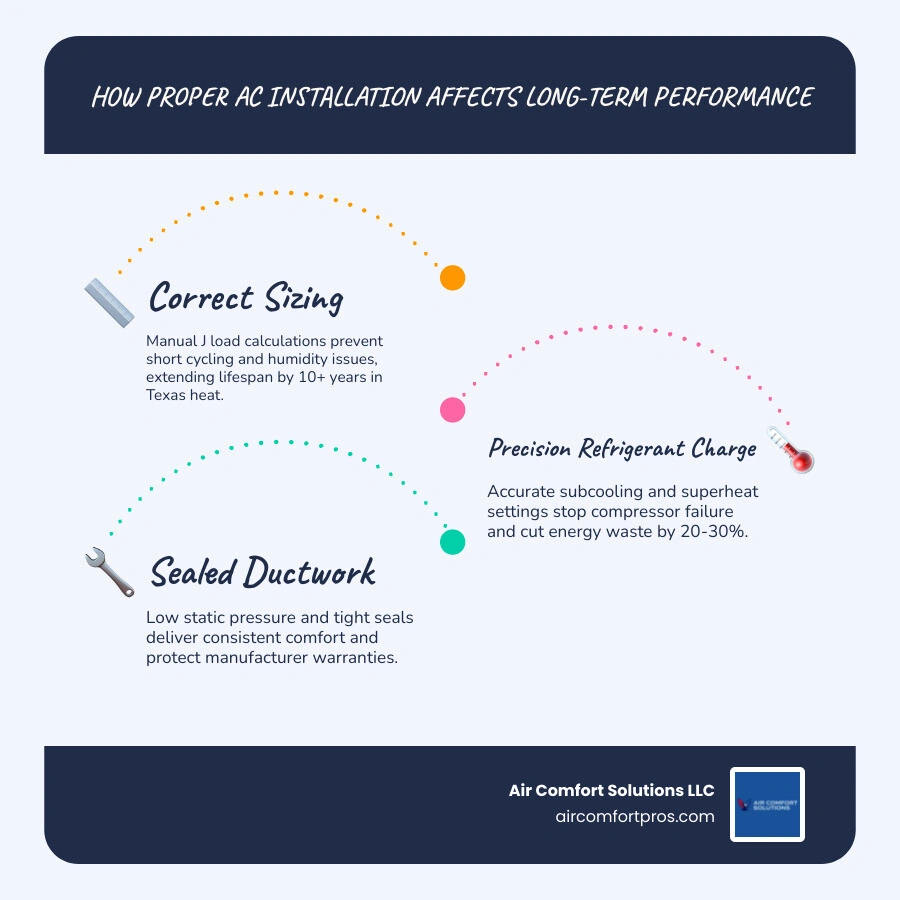
Here is a quick summary of how installation quality shapes your system's future:
Most homeowners spend time comparing brands and efficiency ratings. But research consistently shows that the quality of the installation itself is the single biggest predictor of how long your system lasts and how much it costs to run. Think of it this way: even the best engine will fail quickly if it is dropped into the wrong vehicle and connected with loose wires. Your air conditioner works exactly the same way.
In North Harris County, where summers are long, humid, and relentless, the stakes are even higher. A system that is oversized, undercharged, or poorly sealed will not just underperform — it will struggle every single day until it breaks down ahead of schedule.
This guide walks you through every major installation factor that determines whether your AC delivers reliable comfort for two decades or becomes a costly headache within a few years.
Terms related to how proper ac installation affects long term performance:
When it comes to central air conditioning, bigger is definitely not better. Unfortunately, one of the most common mistakes made by inexperienced contractors is sizing a system based solely on a "rule of thumb," such as square footage alone. In reality, choosing the correct system capacity requires a scientific approach known as a Manual J load calculation.
A proper Manual J load calculation takes into account a variety of factors unique to your home:
Skipping this essential calculation can lead to severe operational issues. If a contractor guesses the size of your system, you end up with an air conditioner that is either too large or too small for your home's actual thermal needs. This is a primary driver of energy waste, as detailed in our guide on How Incorrect Sizing During Installation Wastes Energy.
When an AC is improperly sized, it struggles to manage both temperature and humidity. In our subtropical climate, humidity control is just as important as lowering the temperature. A system needs to run long enough to pull moisture out of the air. If the sizing is incorrect, you will find yourself constantly adjusting the thermostat, wondering why your home feels cold yet sticky. This constant struggle accelerates system wear, forcing you to ask When Should You Replace Your AC in a Hot Climate much sooner than you ever expected.
Sizing mistakes have direct, devastating consequences on the mechanical components inside your air conditioner. Let's look at how oversized and undersized units behave under the hood:
The physical strain caused by incorrect sizing directly shortens the operational life of your equipment. To understand the financial impact of this mistake, consider How Long Does an AC System Last in Texas. While a perfectly sized and installed system can easily last 15 to 25 years with regular maintenance, an improperly sized unit often fails in under 10 years, forcing an expensive premature replacement.
Even the most advanced, high-efficiency air conditioner cannot perform well if its supporting infrastructure is flawed. The two most critical physical components established during installation are the refrigerant charge and the ductwork system.
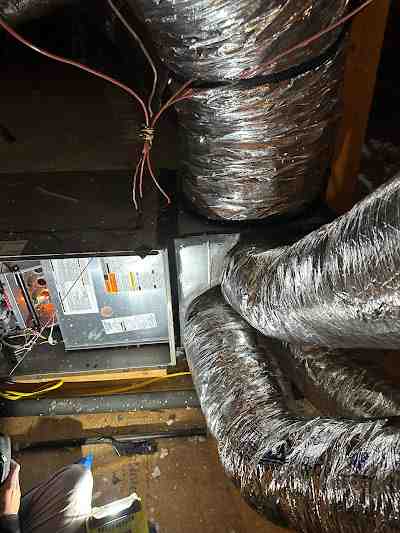
Ductwork acts as the circulatory system of your home's comfort. If the ducts are poorly designed, restricted, or leaking, your air conditioner has to work twice as hard to distribute air. According to industry data, 20% to 30% of conditioned air is lost through poorly sealed or improperly installed ductwork.
During a high-quality installation, technicians perform static pressure tests to ensure your ductwork can handle the airflow volume required by your new system. They also seal all joints with professional-grade mastic sealant or foil tape. Standard duct tape dries out and fails within a few years, which is why we never rely on it. Proper duct sealing ensures that 95% to 100% of the cold air you pay for actually reaches your living spaces, preventing the comfort issues highlighted in our article on How Ductwork Mistakes During Installation Hurt Your Comfort.
Refrigerant is the medium your system uses to absorb heat from inside your home and dump it outside. The level of refrigerant in your system must be exact. It cannot be "guesstimated" or simply filled until the lines feel cold.
To achieve a perfect charge, technicians must measure subcooling and superheat using precise digital gauges while referencing the manufacturer's charging slide charts. This level of precision is even more critical now under modern SEER2 standards, which require highly exact operating parameters.
If the refrigerant charge is off by even 5%, the consequences for your system are severe:
An incorrect refrigerant charge can reduce your AC's operating efficiency by up to 20% from day one. Over time, this chemical imbalance ruins the compressor, as explained in How Improper Refrigerant Charge Reduces Your AC Lifespan.
The direct link between installation quality and your monthly utility bills cannot be overstated. When an air conditioner is installed with factory-level precision, it operates at its peak rated efficiency. This means you actually get the energy savings promised by the unit's SEER2 label.
Substandard installations force the system to run longer, draw more power, and cycle inefficiently. Over time, these minor performance drains add up to thousands of dollars in wasted electricity and premature repair bills.
To help you visualize the differences, here is a comparison of what you can expect from a high-quality professional installation versus a substandard setup:
| Performance Metric | Professional Installation (Air Comfort Pros) | Substandard Installation ("Joe" Contractor) |
|---|---|---|
| Average Lifespan | 15 to 25 Years | Under 10 Years |
| Ductwork Air Loss | Less than 5% (fully sealed with mastic) | 20% to 30% loss of conditioned air |
| Refrigerant Levels | Calibrated precisely via subcooling/superheat | Guesstimated (leads to frozen coils or slugging) |
| Sizing Method | Scientific Manual J Load Calculation | Rule-of-thumb square footage guess |
| Energy Efficiency | Operates at 100% of rated SEER2 capacity | 20% to 30% drop in operating efficiency |
| Warranty Status | Fully protected with documented professional setup | Denied due to uncertified or unlicensed work |
To learn more about what to look for when hiring a team, read our breakdown on What Separates a Good AC Installation from a Bad One.
A highly efficient AC unit is only as smart as the thermostat controlling it. During installation, the physical placement of the thermostat is critical.
If a technician installs the thermostat on an exterior wall, in direct sunlight, or near a drafty window, it will register "ghost readings." For example, direct sunlight will trick the thermostat into thinking the entire house is hot, causing the AC to run unnecessarily. Conversely, placing it too close to a supply register will cause it to cool down instantly, shutting the system off before the rest of the home is comfortable.
Proper calibration and placement on an interior wall away from direct heat sources prevent short cycling and ensure consistent, even temperatures throughout your home.
An air conditioner does more than cool your air; it also extracts gallons of water from your indoor air every day. This water must be safely drained away.
A professional installation includes:
If the drainage line is pitched incorrectly or lacks a safety switch, water will pool inside the unit, leading to biological growth, foul odors, and catastrophic water damage to your ceilings or floors.
Similarly, electrical connections must be perfectly secure. Loose wiring connections create electrical resistance, which generates heat. This can burn out expensive control boards, trip breakers, or even pose a fire hazard. Ensuring correct wire sizing and tight terminal connections during installation prevents these safety risks.
A new air conditioning system is a major financial investment. Protecting that investment means ensuring your manufacturer's warranty remains fully intact.
Most major AC manufacturers offer robust 10-year parts warranties, but they all contain a crucial clause: the system must be installed by a licensed, certified professional in accordance with their strict specifications.
If a system fails because of a contaminated refrigerant line, improper wiring, or incorrect airflow, the manufacturer will deny your warranty claim. They require documented proof of professional installation and commissioning. Cutting corners with uncertified labor might save money upfront, but it can cost you thousands of dollars if a major component fails. For a deeper look at this risk, see How Bad AC Installation Causes Problems for Years and evaluate whether Is It Worth Fixing an Old Air Conditioner in Texas.
In our service area—stretching from Pinehurst and Magnolia down through Spring and North Houston—our HVAC systems face some of the most demanding operating conditions in the country.
Our combination of extreme summer heat and relentless coastal humidity means your AC runs longer and works harder than systems in milder climates. This makes precise installation even more critical. A minor installation error that might go unnoticed in a cooler state will quickly escalate into a system-killing breakdown under the pressure of a 100-degree Texas summer.
For step-by-step guidance tailored specifically to our local climate, check out our AC Replacement Houston TX Complete Guide and our Best AC Replacement Guide Spring TX.
There are several clear warning signs that point back to a subpar installation:
With a high-quality professional installation and regular annual maintenance, a central air conditioning system in Texas should last between 15 and 25 years. However, if the system was installed poorly, the accumulated mechanical stress from incorrect sizing or improper charging often causes major component failure in under 10 years.
Yes, absolutely. Manufacturers know that their equipment is only as good as the installation. If you hire an unlicensed contractor or attempt a DIY install, you will not have the professional commissioning documentation required to file a warranty claim. If a major component like the compressor fails due to poor installation practices, the manufacturer will deny the claim, leaving you to pay for the replacement out of pocket.
At the end of the day, the brand of air conditioner you choose matters far less than the hands that install it. Investing in a high-efficiency system is a smart choice, but only a precise, professional installation can unlock that system's true potential for long-term reliability, low energy bills, and consistent comfort.
At Air Comfort Pros, we have spent over 35 years providing honest, reliable HVAC services to our neighbors in Pinehurst, TX, and across the north side of Harris County—including Spring, Cypress, Magnolia, Conroe, and The Woodlands. Our highly trained, certified technicians take the time to perform detailed Manual J load calculations, test ductwork integrity, and calibrate refrigerant levels to the exact ounce.
We stand behind our work with upfront pricing and flexible financing options to ensure your home stays comfortable for decades to come.
Don't leave your comfort and your wallet to chance. Schedule your professional AC installation with Air Comfort Pros today and experience the peace of mind that comes with a job done right the first time.
How proper AC installation affects long-term performance is one of the most important things to understand before investing in a new cooling system — because even a top-rated unit can fail early, waste energy, and leave your home uncomfortable if the setup is done wrong.
Here is a quick summary of how installation quality shapes your system's future:
Most homeowners spend time comparing brands and efficiency ratings. But research consistently shows that the quality of the installation itself is the single biggest predictor of how long your system lasts and how much it costs to run. Think of it this way: even the best engine will fail quickly if it is dropped into the wrong vehicle and connected with loose wires. Your air conditioner works exactly the same way.
In North Harris County, where summers are long, humid, and relentless, the stakes are even higher. A system that is oversized, undercharged, or poorly sealed will not just underperform — it will struggle every single day until it breaks down ahead of schedule.
This guide walks you through every major installation factor that determines whether your AC delivers reliable comfort for two decades or becomes a costly headache within a few years.
Terms related to how proper ac installation affects long term performance:
When it comes to central air conditioning, bigger is definitely not better. Unfortunately, one of the most common mistakes made by inexperienced contractors is sizing a system based solely on a "rule of thumb," such as square footage alone. In reality, choosing the correct system capacity requires a scientific approach known as a Manual J load calculation.
A proper Manual J load calculation takes into account a variety of factors unique to your home:
Skipping this essential calculation can lead to severe operational issues. If a contractor guesses the size of your system, you end up with an air conditioner that is either too large or too small for your home's actual thermal needs. This is a primary driver of energy waste, as detailed in our guide on How Incorrect Sizing During Installation Wastes Energy.
When an AC is improperly sized, it struggles to manage both temperature and humidity. In our subtropical climate, humidity control is just as important as lowering the temperature. A system needs to run long enough to pull moisture out of the air. If the sizing is incorrect, you will find yourself constantly adjusting the thermostat, wondering why your home feels cold yet sticky. This constant struggle accelerates system wear, forcing you to ask When Should You Replace Your AC in a Hot Climate much sooner than you ever expected.
Sizing mistakes have direct, devastating consequences on the mechanical components inside your air conditioner. Let's look at how oversized and undersized units behave under the hood:
The physical strain caused by incorrect sizing directly shortens the operational life of your equipment. To understand the financial impact of this mistake, consider How Long Does an AC System Last in Texas. While a perfectly sized and installed system can easily last 15 to 25 years with regular maintenance, an improperly sized unit often fails in under 10 years, forcing an expensive premature replacement.
Even the most advanced, high-efficiency air conditioner cannot perform well if its supporting infrastructure is flawed. The two most critical physical components established during installation are the refrigerant charge and the ductwork system.
Ductwork acts as the circulatory system of your home's comfort. If the ducts are poorly designed, restricted, or leaking, your air conditioner has to work twice as hard to distribute air. According to industry data, 20% to 30% of conditioned air is lost through poorly sealed or improperly installed ductwork.
During a high-quality installation, technicians perform static pressure tests to ensure your ductwork can handle the airflow volume required by your new system. They also seal all joints with professional-grade mastic sealant or foil tape. Standard duct tape dries out and fails within a few years, which is why we never rely on it. Proper duct sealing ensures that 95% to 100% of the cold air you pay for actually reaches your living spaces, preventing the comfort issues highlighted in our article on How Ductwork Mistakes During Installation Hurt Your Comfort.
Refrigerant is the medium your system uses to absorb heat from inside your home and dump it outside. The level of refrigerant in your system must be exact. It cannot be "guesstimated" or simply filled until the lines feel cold.
To achieve a perfect charge, technicians must measure subcooling and superheat using precise digital gauges while referencing the manufacturer's charging slide charts. This level of precision is even more critical now under modern SEER2 standards, which require highly exact operating parameters.
If the refrigerant charge is off by even 5%, the consequences for your system are severe:
An incorrect refrigerant charge can reduce your AC's operating efficiency by up to 20% from day one. Over time, this chemical imbalance ruins the compressor, as explained in How Improper Refrigerant Charge Reduces Your AC Lifespan.
The direct link between installation quality and your monthly utility bills cannot be overstated. When an air conditioner is installed with factory-level precision, it operates at its peak rated efficiency. This means you actually get the energy savings promised by the unit's SEER2 label.
Substandard installations force the system to run longer, draw more power, and cycle inefficiently. Over time, these minor performance drains add up to thousands of dollars in wasted electricity and premature repair bills.
To help you visualize the differences, here is a comparison of what you can expect from a high-quality professional installation versus a substandard setup:
| Performance Metric | Professional Installation (Air Comfort Pros) | Substandard Installation ("Joe" Contractor) |
|---|---|---|
| Average Lifespan | 15 to 25 Years | Under 10 Years |
| Ductwork Air Loss | Less than 5% (fully sealed with mastic) | 20% to 30% loss of conditioned air |
| Refrigerant Levels | Calibrated precisely via subcooling/superheat | Guesstimated (leads to frozen coils or slugging) |
| Sizing Method | Scientific Manual J Load Calculation | Rule-of-thumb square footage guess |
| Energy Efficiency | Operates at 100% of rated SEER2 capacity | 20% to 30% drop in operating efficiency |
| Warranty Status | Fully protected with documented professional setup | Denied due to uncertified or unlicensed work |
To learn more about what to look for when hiring a team, read our breakdown on What Separates a Good AC Installation from a Bad One.
A highly efficient AC unit is only as smart as the thermostat controlling it. During installation, the physical placement of the thermostat is critical.
If a technician installs the thermostat on an exterior wall, in direct sunlight, or near a drafty window, it will register "ghost readings." For example, direct sunlight will trick the thermostat into thinking the entire house is hot, causing the AC to run unnecessarily. Conversely, placing it too close to a supply register will cause it to cool down instantly, shutting the system off before the rest of the home is comfortable.
Proper calibration and placement on an interior wall away from direct heat sources prevent short cycling and ensure consistent, even temperatures throughout your home.
An air conditioner does more than cool your air; it also extracts gallons of water from your indoor air every day. This water must be safely drained away.
A professional installation includes:
If the drainage line is pitched incorrectly or lacks a safety switch, water will pool inside the unit, leading to biological growth, foul odors, and catastrophic water damage to your ceilings or floors.
Similarly, electrical connections must be perfectly secure. Loose wiring connections create electrical resistance, which generates heat. This can burn out expensive control boards, trip breakers, or even pose a fire hazard. Ensuring correct wire sizing and tight terminal connections during installation prevents these safety risks.
A new air conditioning system is a major financial investment. Protecting that investment means ensuring your manufacturer's warranty remains fully intact.
Most major AC manufacturers offer robust 10-year parts warranties, but they all contain a crucial clause: the system must be installed by a licensed, certified professional in accordance with their strict specifications.
If a system fails because of a contaminated refrigerant line, improper wiring, or incorrect airflow, the manufacturer will deny your warranty claim. They require documented proof of professional installation and commissioning. Cutting corners with uncertified labor might save money upfront, but it can cost you thousands of dollars if a major component fails. For a deeper look at this risk, see How Bad AC Installation Causes Problems for Years and evaluate whether Is It Worth Fixing an Old Air Conditioner in Texas.
In our service area—stretching from Pinehurst and Magnolia down through Spring and North Houston—our HVAC systems face some of the most demanding operating conditions in the country.
Our combination of extreme summer heat and relentless coastal humidity means your AC runs longer and works harder than systems in milder climates. This makes precise installation even more critical. A minor installation error that might go unnoticed in a cooler state will quickly escalate into a system-killing breakdown under the pressure of a 100-degree Texas summer.
For step-by-step guidance tailored specifically to our local climate, check out our AC Replacement Houston TX Complete Guide and our Best AC Replacement Guide Spring TX.
There are several clear warning signs that point back to a subpar installation:
With a high-quality professional installation and regular annual maintenance, a central air conditioning system in Texas should last between 15 and 25 years. However, if the system was installed poorly, the accumulated mechanical stress from incorrect sizing or improper charging often causes major component failure in under 10 years.
Yes, absolutely. Manufacturers know that their equipment is only as good as the installation. If you hire an unlicensed contractor or attempt a DIY install, you will not have the professional commissioning documentation required to file a warranty claim. If a major component like the compressor fails due to poor installation practices, the manufacturer will deny the claim, leaving you to pay for the replacement out of pocket.
At the end of the day, the brand of air conditioner you choose matters far less than the hands that install it. Investing in a high-efficiency system is a smart choice, but only a precise, professional installation can unlock that system's true potential for long-term reliability, low energy bills, and consistent comfort.
At Air Comfort Pros, we have spent over 35 years providing honest, reliable HVAC services to our neighbors in Pinehurst, TX, and across the north side of Harris County—including Spring, Cypress, Magnolia, Conroe, and The Woodlands. Our highly trained, certified technicians take the time to perform detailed Manual J load calculations, test ductwork integrity, and calibrate refrigerant levels to the exact ounce.
We stand behind our work with upfront pricing and flexible financing options to ensure your home stays comfortable for decades to come.
Don't leave your comfort and your wallet to chance. Schedule your professional AC installation with Air Comfort Pros today and experience the peace of mind that comes with a job done right the first time.
How proper AC installation affects long-term performance is one of the most important things to understand before investing in a new cooling system — because even a top-rated unit can fail early, waste energy, and leave your home uncomfortable if the setup is done wrong.
Here is a quick summary of how installation quality shapes your system's future:
Most homeowners spend time comparing brands and efficiency ratings. But research consistently shows that the quality of the installation itself is the single biggest predictor of how long your system lasts and how much it costs to run. Think of it this way: even the best engine will fail quickly if it is dropped into the wrong vehicle and connected with loose wires. Your air conditioner works exactly the same way.
In North Harris County, where summers are long, humid, and relentless, the stakes are even higher. A system that is oversized, undercharged, or poorly sealed will not just underperform — it will struggle every single day until it breaks down ahead of schedule.
This guide walks you through every major installation factor that determines whether your AC delivers reliable comfort for two decades or becomes a costly headache within a few years.
Terms related to how proper ac installation affects long term performance:
When it comes to central air conditioning, bigger is definitely not better. Unfortunately, one of the most common mistakes made by inexperienced contractors is sizing a system based solely on a "rule of thumb," such as square footage alone. In reality, choosing the correct system capacity requires a scientific approach known as a Manual J load calculation.
A proper Manual J load calculation takes into account a variety of factors unique to your home:
Skipping this essential calculation can lead to severe operational issues. If a contractor guesses the size of your system, you end up with an air conditioner that is either too large or too small for your home's actual thermal needs. This is a primary driver of energy waste, as detailed in our guide on How Incorrect Sizing During Installation Wastes Energy.
When an AC is improperly sized, it struggles to manage both temperature and humidity. In our subtropical climate, humidity control is just as important as lowering the temperature. A system needs to run long enough to pull moisture out of the air. If the sizing is incorrect, you will find yourself constantly adjusting the thermostat, wondering why your home feels cold yet sticky. This constant struggle accelerates system wear, forcing you to ask When Should You Replace Your AC in a Hot Climate much sooner than you ever expected.
Sizing mistakes have direct, devastating consequences on the mechanical components inside your air conditioner. Let's look at how oversized and undersized units behave under the hood:
The physical strain caused by incorrect sizing directly shortens the operational life of your equipment. To understand the financial impact of this mistake, consider How Long Does an AC System Last in Texas. While a perfectly sized and installed system can easily last 15 to 25 years with regular maintenance, an improperly sized unit often fails in under 10 years, forcing an expensive premature replacement.
Even the most advanced, high-efficiency air conditioner cannot perform well if its supporting infrastructure is flawed. The two most critical physical components established during installation are the refrigerant charge and the ductwork system.
Ductwork acts as the circulatory system of your home's comfort. If the ducts are poorly designed, restricted, or leaking, your air conditioner has to work twice as hard to distribute air. According to industry data, 20% to 30% of conditioned air is lost through poorly sealed or improperly installed ductwork.
During a high-quality installation, technicians perform static pressure tests to ensure your ductwork can handle the airflow volume required by your new system. They also seal all joints with professional-grade mastic sealant or foil tape. Standard duct tape dries out and fails within a few years, which is why we never rely on it. Proper duct sealing ensures that 95% to 100% of the cold air you pay for actually reaches your living spaces, preventing the comfort issues highlighted in our article on How Ductwork Mistakes During Installation Hurt Your Comfort.
Refrigerant is the medium your system uses to absorb heat from inside your home and dump it outside. The level of refrigerant in your system must be exact. It cannot be "guesstimated" or simply filled until the lines feel cold.
To achieve a perfect charge, technicians must measure subcooling and superheat using precise digital gauges while referencing the manufacturer's charging slide charts. This level of precision is even more critical now under modern SEER2 standards, which require highly exact operating parameters.
If the refrigerant charge is off by even 5%, the consequences for your system are severe:
An incorrect refrigerant charge can reduce your AC's operating efficiency by up to 20% from day one. Over time, this chemical imbalance ruins the compressor, as explained in How Improper Refrigerant Charge Reduces Your AC Lifespan.
The direct link between installation quality and your monthly utility bills cannot be overstated. When an air conditioner is installed with factory-level precision, it operates at its peak rated efficiency. This means you actually get the energy savings promised by the unit's SEER2 label.
Substandard installations force the system to run longer, draw more power, and cycle inefficiently. Over time, these minor performance drains add up to thousands of dollars in wasted electricity and premature repair bills.
To help you visualize the differences, here is a comparison of what you can expect from a high-quality professional installation versus a substandard setup:
| Performance Metric | Professional Installation (Air Comfort Pros) | Substandard Installation ("Joe" Contractor) |
|---|---|---|
| Average Lifespan | 15 to 25 Years | Under 10 Years |
| Ductwork Air Loss | Less than 5% (fully sealed with mastic) | 20% to 30% loss of conditioned air |
| Refrigerant Levels | Calibrated precisely via subcooling/superheat | Guesstimated (leads to frozen coils or slugging) |
| Sizing Method | Scientific Manual J Load Calculation | Rule-of-thumb square footage guess |
| Energy Efficiency | Operates at 100% of rated SEER2 capacity | 20% to 30% drop in operating efficiency |
| Warranty Status | Fully protected with documented professional setup | Denied due to uncertified or unlicensed work |
To learn more about what to look for when hiring a team, read our breakdown on What Separates a Good AC Installation from a Bad One.
A highly efficient AC unit is only as smart as the thermostat controlling it. During installation, the physical placement of the thermostat is critical.
If a technician installs the thermostat on an exterior wall, in direct sunlight, or near a drafty window, it will register "ghost readings." For example, direct sunlight will trick the thermostat into thinking the entire house is hot, causing the AC to run unnecessarily. Conversely, placing it too close to a supply register will cause it to cool down instantly, shutting the system off before the rest of the home is comfortable.
Proper calibration and placement on an interior wall away from direct heat sources prevent short cycling and ensure consistent, even temperatures throughout your home.
An air conditioner does more than cool your air; it also extracts gallons of water from your indoor air every day. This water must be safely drained away.
A professional installation includes:
If the drainage line is pitched incorrectly or lacks a safety switch, water will pool inside the unit, leading to biological growth, foul odors, and catastrophic water damage to your ceilings or floors.
Similarly, electrical connections must be perfectly secure. Loose wiring connections create electrical resistance, which generates heat. This can burn out expensive control boards, trip breakers, or even pose a fire hazard. Ensuring correct wire sizing and tight terminal connections during installation prevents these safety risks.
A new air conditioning system is a major financial investment. Protecting that investment means ensuring your manufacturer's warranty remains fully intact.
Most major AC manufacturers offer robust 10-year parts warranties, but they all contain a crucial clause: the system must be installed by a licensed, certified professional in accordance with their strict specifications.
If a system fails because of a contaminated refrigerant line, improper wiring, or incorrect airflow, the manufacturer will deny your warranty claim. They require documented proof of professional installation and commissioning. Cutting corners with uncertified labor might save money upfront, but it can cost you thousands of dollars if a major component fails. For a deeper look at this risk, see How Bad AC Installation Causes Problems for Years and evaluate whether Is It Worth Fixing an Old Air Conditioner in Texas.
In our service area—stretching from Pinehurst and Magnolia down through Spring and North Houston—our HVAC systems face some of the most demanding operating conditions in the country.
Our combination of extreme summer heat and relentless coastal humidity means your AC runs longer and works harder than systems in milder climates. This makes precise installation even more critical. A minor installation error that might go unnoticed in a cooler state will quickly escalate into a system-killing breakdown under the pressure of a 100-degree Texas summer.
For step-by-step guidance tailored specifically to our local climate, check out our AC Replacement Houston TX Complete Guide and our Best AC Replacement Guide Spring TX.
There are several clear warning signs that point back to a subpar installation:
With a high-quality professional installation and regular annual maintenance, a central air conditioning system in Texas should last between 15 and 25 years. However, if the system was installed poorly, the accumulated mechanical stress from incorrect sizing or improper charging often causes major component failure in under 10 years.
Yes, absolutely. Manufacturers know that their equipment is only as good as the installation. If you hire an unlicensed contractor or attempt a DIY install, you will not have the professional commissioning documentation required to file a warranty claim. If a major component like the compressor fails due to poor installation practices, the manufacturer will deny the claim, leaving you to pay for the replacement out of pocket.
At the end of the day, the brand of air conditioner you choose matters far less than the hands that install it. Investing in a high-efficiency system is a smart choice, but only a precise, professional installation can unlock that system's true potential for long-term reliability, low energy bills, and consistent comfort.
At Air Comfort Pros, we have spent over 35 years providing honest, reliable HVAC services to our neighbors in Pinehurst, TX, and across the north side of Harris County—including Spring, Cypress, Magnolia, Conroe, and The Woodlands. Our highly trained, certified technicians take the time to perform detailed Manual J load calculations, test ductwork integrity, and calibrate refrigerant levels to the exact ounce.
We stand behind our work with upfront pricing and flexible financing options to ensure your home stays comfortable for decades to come.
Don't leave your comfort and your wallet to chance. Schedule your professional AC installation with Air Comfort Pros today and experience the peace of mind that comes with a job done right the first time.
How proper AC installation affects long-term performance is one of the most important things to understand before investing in a new cooling system — because even a top-rated unit can fail early, waste energy, and leave your home uncomfortable if the setup is done wrong.
Here is a quick summary of how installation quality shapes your system's future:
Most homeowners spend time comparing brands and efficiency ratings. But research consistently shows that the quality of the installation itself is the single biggest predictor of how long your system lasts and how much it costs to run. Think of it this way: even the best engine will fail quickly if it is dropped into the wrong vehicle and connected with loose wires. Your air conditioner works exactly the same way.
In North Harris County, where summers are long, humid, and relentless, the stakes are even higher. A system that is oversized, undercharged, or poorly sealed will not just underperform — it will struggle every single day until it breaks down ahead of schedule.
This guide walks you through every major installation factor that determines whether your AC delivers reliable comfort for two decades or becomes a costly headache within a few years.
Terms related to how proper ac installation affects long term performance:
When it comes to central air conditioning, bigger is definitely not better. Unfortunately, one of the most common mistakes made by inexperienced contractors is sizing a system based solely on a "rule of thumb," such as square footage alone. In reality, choosing the correct system capacity requires a scientific approach known as a Manual J load calculation.
A proper Manual J load calculation takes into account a variety of factors unique to your home:
Skipping this essential calculation can lead to severe operational issues. If a contractor guesses the size of your system, you end up with an air conditioner that is either too large or too small for your home's actual thermal needs. This is a primary driver of energy waste, as detailed in our guide on How Incorrect Sizing During Installation Wastes Energy.
When an AC is improperly sized, it struggles to manage both temperature and humidity. In our subtropical climate, humidity control is just as important as lowering the temperature. A system needs to run long enough to pull moisture out of the air. If the sizing is incorrect, you will find yourself constantly adjusting the thermostat, wondering why your home feels cold yet sticky. This constant struggle accelerates system wear, forcing you to ask When Should You Replace Your AC in a Hot Climate much sooner than you ever expected.
Sizing mistakes have direct, devastating consequences on the mechanical components inside your air conditioner. Let's look at how oversized and undersized units behave under the hood:
The physical strain caused by incorrect sizing directly shortens the operational life of your equipment. To understand the financial impact of this mistake, consider How Long Does an AC System Last in Texas. While a perfectly sized and installed system can easily last 15 to 25 years with regular maintenance, an improperly sized unit often fails in under 10 years, forcing an expensive premature replacement.
Even the most advanced, high-efficiency air conditioner cannot perform well if its supporting infrastructure is flawed. The two most critical physical components established during installation are the refrigerant charge and the ductwork system.
Ductwork acts as the circulatory system of your home's comfort. If the ducts are poorly designed, restricted, or leaking, your air conditioner has to work twice as hard to distribute air. According to industry data, 20% to 30% of conditioned air is lost through poorly sealed or improperly installed ductwork.
During a high-quality installation, technicians perform static pressure tests to ensure your ductwork can handle the airflow volume required by your new system. They also seal all joints with professional-grade mastic sealant or foil tape. Standard duct tape dries out and fails within a few years, which is why we never rely on it. Proper duct sealing ensures that 95% to 100% of the cold air you pay for actually reaches your living spaces, preventing the comfort issues highlighted in our article on How Ductwork Mistakes During Installation Hurt Your Comfort.
Refrigerant is the medium your system uses to absorb heat from inside your home and dump it outside. The level of refrigerant in your system must be exact. It cannot be "guesstimated" or simply filled until the lines feel cold.
To achieve a perfect charge, technicians must measure subcooling and superheat using precise digital gauges while referencing the manufacturer's charging slide charts. This level of precision is even more critical now under modern SEER2 standards, which require highly exact operating parameters.
If the refrigerant charge is off by even 5%, the consequences for your system are severe:
An incorrect refrigerant charge can reduce your AC's operating efficiency by up to 20% from day one. Over time, this chemical imbalance ruins the compressor, as explained in How Improper Refrigerant Charge Reduces Your AC Lifespan.
The direct link between installation quality and your monthly utility bills cannot be overstated. When an air conditioner is installed with factory-level precision, it operates at its peak rated efficiency. This means you actually get the energy savings promised by the unit's SEER2 label.
Substandard installations force the system to run longer, draw more power, and cycle inefficiently. Over time, these minor performance drains add up to thousands of dollars in wasted electricity and premature repair bills.
To help you visualize the differences, here is a comparison of what you can expect from a high-quality professional installation versus a substandard setup:
| Performance Metric | Professional Installation (Air Comfort Pros) | Substandard Installation ("Joe" Contractor) |
|---|---|---|
| Average Lifespan | 15 to 25 Years | Under 10 Years |
| Ductwork Air Loss | Less than 5% (fully sealed with mastic) | 20% to 30% loss of conditioned air |
| Refrigerant Levels | Calibrated precisely via subcooling/superheat | Guesstimated (leads to frozen coils or slugging) |
| Sizing Method | Scientific Manual J Load Calculation | Rule-of-thumb square footage guess |
| Energy Efficiency | Operates at 100% of rated SEER2 capacity | 20% to 30% drop in operating efficiency |
| Warranty Status | Fully protected with documented professional setup | Denied due to uncertified or unlicensed work |
To learn more about what to look for when hiring a team, read our breakdown on What Separates a Good AC Installation from a Bad One.
A highly efficient AC unit is only as smart as the thermostat controlling it. During installation, the physical placement of the thermostat is critical.
If a technician installs the thermostat on an exterior wall, in direct sunlight, or near a drafty window, it will register "ghost readings." For example, direct sunlight will trick the thermostat into thinking the entire house is hot, causing the AC to run unnecessarily. Conversely, placing it too close to a supply register will cause it to cool down instantly, shutting the system off before the rest of the home is comfortable.
Proper calibration and placement on an interior wall away from direct heat sources prevent short cycling and ensure consistent, even temperatures throughout your home.
An air conditioner does more than cool your air; it also extracts gallons of water from your indoor air every day. This water must be safely drained away.
A professional installation includes:
If the drainage line is pitched incorrectly or lacks a safety switch, water will pool inside the unit, leading to biological growth, foul odors, and catastrophic water damage to your ceilings or floors.
Similarly, electrical connections must be perfectly secure. Loose wiring connections create electrical resistance, which generates heat. This can burn out expensive control boards, trip breakers, or even pose a fire hazard. Ensuring correct wire sizing and tight terminal connections during installation prevents these safety risks.
A new air conditioning system is a major financial investment. Protecting that investment means ensuring your manufacturer's warranty remains fully intact.
Most major AC manufacturers offer robust 10-year parts warranties, but they all contain a crucial clause: the system must be installed by a licensed, certified professional in accordance with their strict specifications.
If a system fails because of a contaminated refrigerant line, improper wiring, or incorrect airflow, the manufacturer will deny your warranty claim. They require documented proof of professional installation and commissioning. Cutting corners with uncertified labor might save money upfront, but it can cost you thousands of dollars if a major component fails. For a deeper look at this risk, see How Bad AC Installation Causes Problems for Years and evaluate whether Is It Worth Fixing an Old Air Conditioner in Texas.
In our service area—stretching from Pinehurst and Magnolia down through Spring and North Houston—our HVAC systems face some of the most demanding operating conditions in the country.
Our combination of extreme summer heat and relentless coastal humidity means your AC runs longer and works harder than systems in milder climates. This makes precise installation even more critical. A minor installation error that might go unnoticed in a cooler state will quickly escalate into a system-killing breakdown under the pressure of a 100-degree Texas summer.
For step-by-step guidance tailored specifically to our local climate, check out our AC Replacement Houston TX Complete Guide and our Best AC Replacement Guide Spring TX.
There are several clear warning signs that point back to a subpar installation:
With a high-quality professional installation and regular annual maintenance, a central air conditioning system in Texas should last between 15 and 25 years. However, if the system was installed poorly, the accumulated mechanical stress from incorrect sizing or improper charging often causes major component failure in under 10 years.
Yes, absolutely. Manufacturers know that their equipment is only as good as the installation. If you hire an unlicensed contractor or attempt a DIY install, you will not have the professional commissioning documentation required to file a warranty claim. If a major component like the compressor fails due to poor installation practices, the manufacturer will deny the claim, leaving you to pay for the replacement out of pocket.
At the end of the day, the brand of air conditioner you choose matters far less than the hands that install it. Investing in a high-efficiency system is a smart choice, but only a precise, professional installation can unlock that system's true potential for long-term reliability, low energy bills, and consistent comfort.
At Air Comfort Pros, we have spent over 35 years providing honest, reliable HVAC services to our neighbors in Pinehurst, TX, and across the north side of Harris County—including Spring, Cypress, Magnolia, Conroe, and The Woodlands. Our highly trained, certified technicians take the time to perform detailed Manual J load calculations, test ductwork integrity, and calibrate refrigerant levels to the exact ounce.
We stand behind our work with upfront pricing and flexible financing options to ensure your home stays comfortable for decades to come.
Don't leave your comfort and your wallet to chance. Schedule your professional AC installation with Air Comfort Pros today and experience the peace of mind that comes with a job done right the first time.
How proper AC installation affects long-term performance is one of the most important things to understand before investing in a new cooling system — because even a top-rated unit can fail early, waste energy, and leave your home uncomfortable if the setup is done wrong.
Here is a quick summary of how installation quality shapes your system's future:
Most homeowners spend time comparing brands and efficiency ratings. But research consistently shows that the quality of the installation itself is the single biggest predictor of how long your system lasts and how much it costs to run. Think of it this way: even the best engine will fail quickly if it is dropped into the wrong vehicle and connected with loose wires. Your air conditioner works exactly the same way.
In North Harris County, where summers are long, humid, and relentless, the stakes are even higher. A system that is oversized, undercharged, or poorly sealed will not just underperform — it will struggle every single day until it breaks down ahead of schedule.
This guide walks you through every major installation factor that determines whether your AC delivers reliable comfort for two decades or becomes a costly headache within a few years.
Terms related to how proper ac installation affects long term performance:
When it comes to central air conditioning, bigger is definitely not better. Unfortunately, one of the most common mistakes made by inexperienced contractors is sizing a system based solely on a "rule of thumb," such as square footage alone. In reality, choosing the correct system capacity requires a scientific approach known as a Manual J load calculation.
A proper Manual J load calculation takes into account a variety of factors unique to your home:
Skipping this essential calculation can lead to severe operational issues. If a contractor guesses the size of your system, you end up with an air conditioner that is either too large or too small for your home's actual thermal needs. This is a primary driver of energy waste, as detailed in our guide on How Incorrect Sizing During Installation Wastes Energy.
When an AC is improperly sized, it struggles to manage both temperature and humidity. In our subtropical climate, humidity control is just as important as lowering the temperature. A system needs to run long enough to pull moisture out of the air. If the sizing is incorrect, you will find yourself constantly adjusting the thermostat, wondering why your home feels cold yet sticky. This constant struggle accelerates system wear, forcing you to ask When Should You Replace Your AC in a Hot Climate much sooner than you ever expected.
Sizing mistakes have direct, devastating consequences on the mechanical components inside your air conditioner. Let's look at how oversized and undersized units behave under the hood:
The physical strain caused by incorrect sizing directly shortens the operational life of your equipment. To understand the financial impact of this mistake, consider How Long Does an AC System Last in Texas. While a perfectly sized and installed system can easily last 15 to 25 years with regular maintenance, an improperly sized unit often fails in under 10 years, forcing an expensive premature replacement.
Even the most advanced, high-efficiency air conditioner cannot perform well if its supporting infrastructure is flawed. The two most critical physical components established during installation are the refrigerant charge and the ductwork system.
Ductwork acts as the circulatory system of your home's comfort. If the ducts are poorly designed, restricted, or leaking, your air conditioner has to work twice as hard to distribute air. According to industry data, 20% to 30% of conditioned air is lost through poorly sealed or improperly installed ductwork.
During a high-quality installation, technicians perform static pressure tests to ensure your ductwork can handle the airflow volume required by your new system. They also seal all joints with professional-grade mastic sealant or foil tape. Standard duct tape dries out and fails within a few years, which is why we never rely on it. Proper duct sealing ensures that 95% to 100% of the cold air you pay for actually reaches your living spaces, preventing the comfort issues highlighted in our article on How Ductwork Mistakes During Installation Hurt Your Comfort.
Refrigerant is the medium your system uses to absorb heat from inside your home and dump it outside. The level of refrigerant in your system must be exact. It cannot be "guesstimated" or simply filled until the lines feel cold.
To achieve a perfect charge, technicians must measure subcooling and superheat using precise digital gauges while referencing the manufacturer's charging slide charts. This level of precision is even more critical now under modern SEER2 standards, which require highly exact operating parameters.
If the refrigerant charge is off by even 5%, the consequences for your system are severe:
An incorrect refrigerant charge can reduce your AC's operating efficiency by up to 20% from day one. Over time, this chemical imbalance ruins the compressor, as explained in How Improper Refrigerant Charge Reduces Your AC Lifespan.
The direct link between installation quality and your monthly utility bills cannot be overstated. When an air conditioner is installed with factory-level precision, it operates at its peak rated efficiency. This means you actually get the energy savings promised by the unit's SEER2 label.
Substandard installations force the system to run longer, draw more power, and cycle inefficiently. Over time, these minor performance drains add up to thousands of dollars in wasted electricity and premature repair bills.
To help you visualize the differences, here is a comparison of what you can expect from a high-quality professional installation versus a substandard setup:
| Performance Metric | Professional Installation (Air Comfort Pros) | Substandard Installation ("Joe" Contractor) |
|---|---|---|
| Average Lifespan | 15 to 25 Years | Under 10 Years |
| Ductwork Air Loss | Less than 5% (fully sealed with mastic) | 20% to 30% loss of conditioned air |
| Refrigerant Levels | Calibrated precisely via subcooling/superheat | Guesstimated (leads to frozen coils or slugging) |
| Sizing Method | Scientific Manual J Load Calculation | Rule-of-thumb square footage guess |
| Energy Efficiency | Operates at 100% of rated SEER2 capacity | 20% to 30% drop in operating efficiency |
| Warranty Status | Fully protected with documented professional setup | Denied due to uncertified or unlicensed work |
To learn more about what to look for when hiring a team, read our breakdown on What Separates a Good AC Installation from a Bad One.
A highly efficient AC unit is only as smart as the thermostat controlling it. During installation, the physical placement of the thermostat is critical.
If a technician installs the thermostat on an exterior wall, in direct sunlight, or near a drafty window, it will register "ghost readings." For example, direct sunlight will trick the thermostat into thinking the entire house is hot, causing the AC to run unnecessarily. Conversely, placing it too close to a supply register will cause it to cool down instantly, shutting the system off before the rest of the home is comfortable.
Proper calibration and placement on an interior wall away from direct heat sources prevent short cycling and ensure consistent, even temperatures throughout your home.
An air conditioner does more than cool your air; it also extracts gallons of water from your indoor air every day. This water must be safely drained away.
A professional installation includes:
If the drainage line is pitched incorrectly or lacks a safety switch, water will pool inside the unit, leading to biological growth, foul odors, and catastrophic water damage to your ceilings or floors.
Similarly, electrical connections must be perfectly secure. Loose wiring connections create electrical resistance, which generates heat. This can burn out expensive control boards, trip breakers, or even pose a fire hazard. Ensuring correct wire sizing and tight terminal connections during installation prevents these safety risks.
A new air conditioning system is a major financial investment. Protecting that investment means ensuring your manufacturer's warranty remains fully intact.
Most major AC manufacturers offer robust 10-year parts warranties, but they all contain a crucial clause: the system must be installed by a licensed, certified professional in accordance with their strict specifications.
If a system fails because of a contaminated refrigerant line, improper wiring, or incorrect airflow, the manufacturer will deny your warranty claim. They require documented proof of professional installation and commissioning. Cutting corners with uncertified labor might save money upfront, but it can cost you thousands of dollars if a major component fails. For a deeper look at this risk, see How Bad AC Installation Causes Problems for Years and evaluate whether Is It Worth Fixing an Old Air Conditioner in Texas.
In our service area—stretching from Pinehurst and Magnolia down through Spring and North Houston—our HVAC systems face some of the most demanding operating conditions in the country.
Our combination of extreme summer heat and relentless coastal humidity means your AC runs longer and works harder than systems in milder climates. This makes precise installation even more critical. A minor installation error that might go unnoticed in a cooler state will quickly escalate into a system-killing breakdown under the pressure of a 100-degree Texas summer.
For step-by-step guidance tailored specifically to our local climate, check out our AC Replacement Houston TX Complete Guide and our Best AC Replacement Guide Spring TX.
There are several clear warning signs that point back to a subpar installation:
With a high-quality professional installation and regular annual maintenance, a central air conditioning system in Texas should last between 15 and 25 years. However, if the system was installed poorly, the accumulated mechanical stress from incorrect sizing or improper charging often causes major component failure in under 10 years.
Yes, absolutely. Manufacturers know that their equipment is only as good as the installation. If you hire an unlicensed contractor or attempt a DIY install, you will not have the professional commissioning documentation required to file a warranty claim. If a major component like the compressor fails due to poor installation practices, the manufacturer will deny the claim, leaving you to pay for the replacement out of pocket.
At the end of the day, the brand of air conditioner you choose matters far less than the hands that install it. Investing in a high-efficiency system is a smart choice, but only a precise, professional installation can unlock that system's true potential for long-term reliability, low energy bills, and consistent comfort.
At Air Comfort Pros, we have spent over 35 years providing honest, reliable HVAC services to our neighbors in Pinehurst, TX, and across the north side of Harris County—including Spring, Cypress, Magnolia, Conroe, and The Woodlands. Our highly trained, certified technicians take the time to perform detailed Manual J load calculations, test ductwork integrity, and calibrate refrigerant levels to the exact ounce.
We stand behind our work with upfront pricing and flexible financing options to ensure your home stays comfortable for decades to come.
Don't leave your comfort and your wallet to chance. Schedule your professional AC installation with Air Comfort Pros today and experience the peace of mind that comes with a job done right the first time.


Zane came out and did an amazing job! Super friendly, honest and transparent about the work that needed to be done. This is my second time working with Air Comfort Solutions and they’re my go to for HVAC services. Highly recommend.
God's AMAZING grace sent us Robert and Zane. We have been without air in this Texas heat for six weeks and four days. We've had a few contractors give us quotes all trying to upsell when we're at a low point. But not the guys at Air Comfort Solutions. They came in assessed our situation, gave us honest feedback, and showed us the issues as they proceeded with the assessment for clear understanding. We highly recommend them for their professionalism, quality products, and fair pricing. We hands down support them for all the work they do 💯 %.
Robert and Zane gone above and beyond to make the process easy and affordable.
Would definitely recommend!!
I’m writing this review to let everyone know that Air Comfort Solutions is the company to work with. I know the owner ( Robert) for several years now. He has been taking care of my residential and business work orders. Robert is professional, knowledgeable and will save you money. I just want to thank Robert for great job you have been doing for me.