How Mild September Days Expose Oversized Air Conditioners
When early fall weather arrives, your cooling system might struggle to remove humidity. Discover why a home feels damp and cold when an oversized AC short-cycles.
How a tune-up improves efficiency and lowers bills comes down to one straightforward idea: a clean, well-calibrated system uses less energy to do the same job. When your HVAC hasn't been serviced, it works harder than it needs to — and that extra effort shows up directly on your monthly utility statement. In fact, heating and cooling already account for nearly half of the average home's energy use. A neglected system can consume 10% to 25% more energy than a properly maintained one, and systems that have gone years without service can see efficiency drop to as low as 70% to 85% of their original rated capacity.
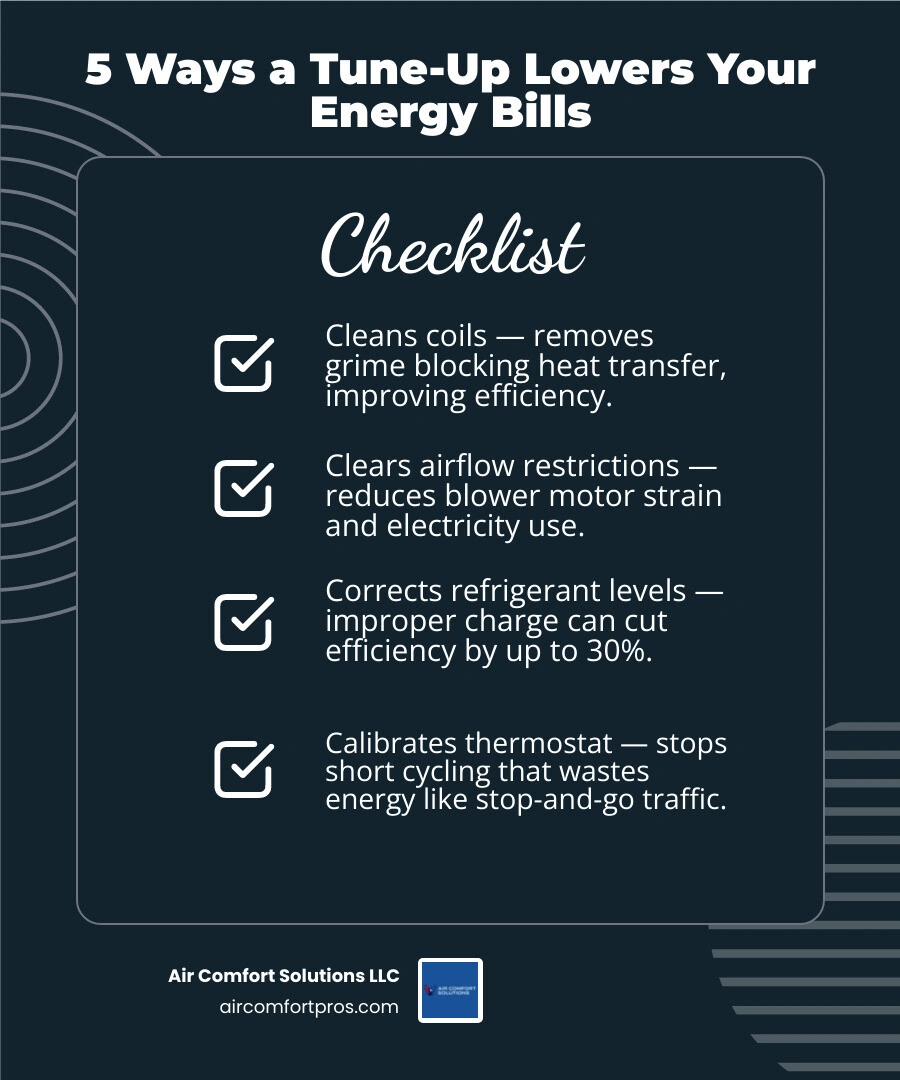
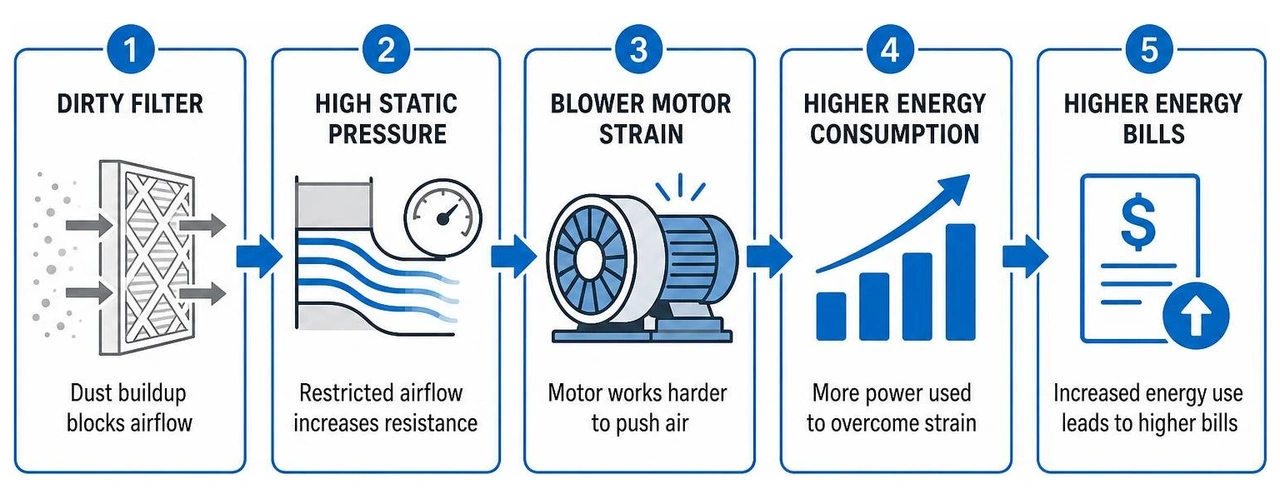
Here's a quick look at how a professional tune-up directly lowers your energy bills:
Most homeowners see a 5% to 15% reduction in monthly energy costs after a tune-up. If your system has been neglected for a few years, that number can climb as high as 30%.
For North Harris County homeowners dealing with Texas summers, skipping annual maintenance isn't just an inconvenience — it's an expensive gamble. The sections below walk through exactly what happens during a professional tune-up and why each step matters for your comfort and your wallet.
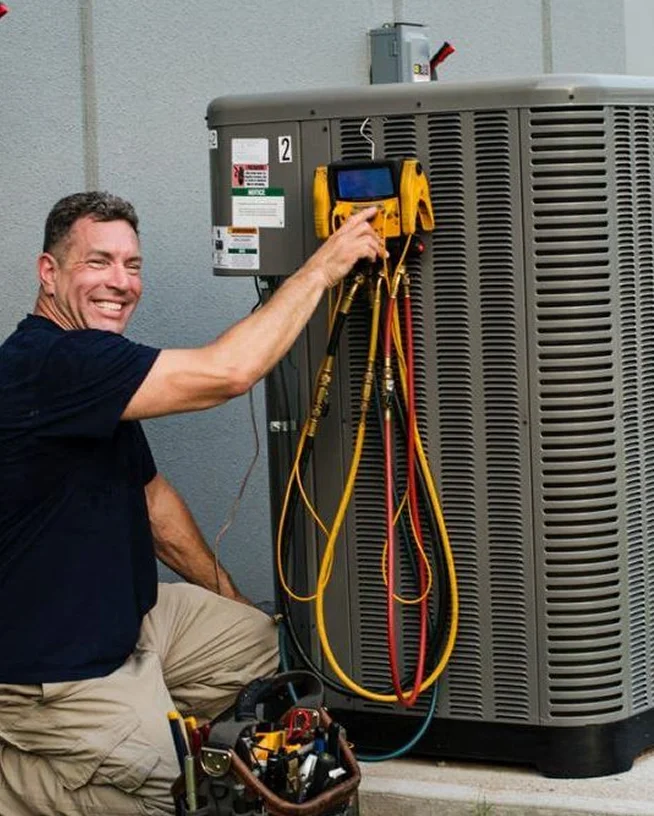
To understand why a regular tune-up has such a dramatic impact on your wallet, it helps to look at the physical principles that govern your air conditioner. An AC unit doesn't actually "create" cold air; instead, it functions as a heat transfer machine. It extracts thermal energy from inside your home and dumps it outdoors.
This process relies heavily on three core physical concepts: thermodynamic heat transfer, mechanical friction, and static pressure. When any of these elements are compromised by dirt, wear, or neglect, the entire system loses its "oomph." To get a complete overview of how local weather and mechanical factors intersect, you can read our comprehensive AC Tune-Up Guide for Houston Area Homeowners.
When we perform a professional tune-up, we are essentially reversing the natural degradation process that occurs over months of heavy usage. By restoring the system to its original factory specifications, we reduce the electrical amperage required to run the compressor and blower motor. This mechanical restoration is the precise reason why how a tune up improves efficiency and lowers bills is backed by real science.
Thermodynamic heat transfer occurs at two major points in your air conditioner: the indoor evaporator coil and the outdoor condenser coil. For heat to move efficiently from your indoor air into the refrigerant, and then from the refrigerant to the outdoor air, there must be direct contact between the air and the metal fins of the coils.
Over time, a thin layer of dust, pollen, and outdoor grime accumulates on these surfaces. This buildup acts as an insulating blanket, creating "thermal resistance." Because heat cannot easily pass through this barrier, the refrigerant cannot absorb or release heat efficiently. To learn more about how this specific issue chokes your system, take a look at our guide on the Dirty Condenser Coil and AC Performance Connection. Cleaning these coils immediately restores optimal thermal transfer, allowing your system to cool your home in much shorter cycles.
Static pressure is essentially the "blood pressure" of your HVAC system. It is the resistance to airflow within your ductwork and air handler. When your air conditioning system is forced to push air through a dirty air filter or past a dusty blower wheel, the static pressure spikes.
High static pressure places immense mechanical strain on your blower motor. To overcome the resistance, the motor must draw significantly more electrical current (amperage), which quietly inflates your electricity bill. Even worse, restricted airflow can cause the temperature of your indoor evaporator coil to drop below freezing. This physical reaction is explained in detail in our article on How Dirty Filters Cause Frozen Evaporator Coils. A professional tune-up eliminates these airflow barriers, dropping static pressure back to safe, energy-efficient operational levels.
Preventative maintenance is not just a superficial inspection; it is a meticulous process of deep cleaning, mechanical adjustment, and system calibration. When you schedule service with us, our NATE-certified technicians systematically target the key areas where energy waste occurs.
Understanding what goes on behind the scenes can help you see why this service pays for itself. For a deep dive into the complete list of tasks we perform, check out our guide on What Does Professional AC Service Include. Below are the five primary steps that directly translate to lower monthly utility bills.
Our first step is to address the thermodynamic barriers of dirt accumulation. We perform a deep chemical and physical cleaning of both the indoor evaporator coil and the outdoor condenser coil.
By removing the insulating layer of grime, we immediately restore the system's heat transfer efficiency. Because the refrigerant can now shed heat outdoors much more rapidly, the compressor does not have to run as long or work as hard to lower your indoor temperature. This directly reduces compressor strain, which is highly beneficial because the compressor is the single most expensive and energy-intensive component in your entire system. If you live in North Harris County, securing regular AC Maintenance Spring TX is the most effective way to keep these coils pristine.
Next, we focus on the mechanics of moving air through your home. A dirty blower wheel can reduce system airflow by up to 20%. The individual blades of a blower wheel are precision-curved to scoop and move air efficiently; when dust builds up on these blades, it acts like tiny weights, destroying their aerodynamic design.
During this step, we clean the blower wheel blades, inspect the blower motor, and lubricate all moving parts to eliminate friction. We also inspect your air filter and duct connections. While we handle the complex internal cleaning, you can keep airflow optimal between our visits by following our How to Replace AC Filters a Quick and Simple Guide.
Refrigerant is the lifeblood of your air conditioner. It operates in a closed loop, meaning it is never "used up" or consumed. If your system is low on refrigerant, it means there is a physical leak that must be found and repaired.
An incorrect refrigerant charge — whether it is too high or too low — can slash system efficiency by up to 30%. To verify the exact charge, our technicians do not just read pressure gauges; we perform precise thermodynamic calculations known as subcooling and superheat. Running a system with the wrong charge can lead to catastrophic compressor damage. Read more about protecting your equipment in our article on How Improper Refrigerant Charge Reduces Your AC Lifespan.
Your thermostat is the brain of your HVAC system. If it is uncalibrated or poorly located, it can misread the indoor temperature and trigger a phenomenon known as short cycling. This is when your air conditioner turns on and off rapidly in short, inefficient cycles.
Short cycling is incredibly expensive because an AC unit uses the vast majority of its electricity during the startup phase. Once the system is up and running, its energy draw stabilizes. Frequent starting and stopping wastes energy and subjects components to extreme wear. Correcting the temperature split and calibrating your thermostat ensures your system runs complete, efficient cooling cycles. This is particularly critical for Reducing Cooling Costs During Heat Waves when utility bills naturally peak.
Heat causes metal to expand and contract. Over a year of constant operation, this natural thermal movement can cause electrical connections to work themselves loose. Loose terminals increase electrical resistance, which means your system must consume more watts of electricity simply to push power through the wires.
We tighten all electrical connections, measure voltage and amperage draws, and test safety controls like the start capacitor and contactor. A weak capacitor forces the compressor to struggle during startup, which can eventually lead to total system failure. Knowing What to Expect During Your First AC Tune-Up helps homeowners appreciate why these technical electrical safety checks are so important.
The intense heat of a Southeast Texas summer puts our air conditioning systems through a brutal marathon. In places like Conroe, Tomball, Magnolia, and Spring, an AC unit can easily run for thousands of hours a year. Skipping annual maintenance under these conditions is a major financial risk.
To put the value of routine care into perspective, let's compare a well-maintained system against one that has been neglected for several years:
| Operational Feature | Well-Maintained HVAC System | Neglected HVAC System |
|---|---|---|
| Average Lifespan | 15 to 20 Years | 8 to 10 Years |
| Energy Efficiency | Operates at 95% - 100% of rated SEER2 | Drops to 70% - 85% of rated SEER2 |
| Monthly Energy Cost | Baseline (Lowest possible bills) | 10% to 30% Higher |
| Unexpected Breakdown Risk | Less than 5% annually | Up to 95% higher risk |
| Manufacturer Warranty Status | Fully Protected & Valid | Voided due to lack of documentation |
Maintaining your system's efficiency is directly tied to its SEER2 (Seasonal Energy Efficiency Ratio) rating. To understand how these ratings impact your monthly expenses, read our article on How SEER2 Ratings Affect Energy Bills.
Most homeowners do not realize that their air conditioner's manufacturer warranty comes with a major catch. Almost all major HVAC brands explicitly state in their warranty terms that the equipment must be professionally maintained every year to keep the parts coverage active.
If a major component like your compressor fails, the manufacturer will often require you to provide documented proof of annual professional maintenance before they will ship a replacement part. If you cannot produce those service receipts, your claim can be denied, leaving you to pay for a very expensive repair out of pocket. You can learn more about this costly mistake by reading What Happens If You Skip AC Maintenance in Texas.
An air conditioning system is a massive home investment. A well-maintained central air system or heat pump can reliably last 15 to 20 years. On the other hand, a neglected unit often suffers a catastrophic failure and requires complete replacement after just 8 to 10 years.
By reducing mechanical friction, keeping coils clean, and ensuring optimal airflow, a professional tune-up minimizes the daily wear and tear on your system. This keeps your equipment running smoothly for years beyond a neglected unit's lifespan. For practical strategies on maximizing your system's longevity, check out our guide on How to Extend the Life of Your AC in Texas.
While we always recommend scheduling maintenance proactively, sometimes your system will send clear warning signs that it is in desperate need of professional attention. Ignoring these signs can lead to a sudden breakdown during the hottest week of the year.
Watch out for these common warning signs:
If you notice any of these symptoms, it is time to schedule a professional inspection. Homeowners in the Tomball area can quickly book a visit through our AC Service Tomball TX page to catch these issues before they turn into major repairs.
As local HVAC experts serving Pinehurst and surrounding North Harris and Montgomery county communities, we get a lot of questions about how to keep cooling systems running efficiently. Below are some of the most common questions we hear from homeowners. If you want a complete breakdown of scheduling frequencies, check out our guide on How Often Should You Service Your AC in Texas.
No. While there are highly valuable DIY tasks you can perform — such as replacing your air filters, keeping your outdoor unit clear of weeds and debris, and ensuring indoor vents are unblocked — a full tune-up must be left to a professional.
Modern HVAC systems are highly complex appliances that involve high-voltage electricity, pressurized chemical refrigerants, and sensitive electronic controls. Working on these systems without specialized diagnostic tools, high-voltage safety training, and EPA certification is dangerous and can easily void your manufacturer warranty. For safe, effective home maintenance strategies, read our HVAC Maintenance Tips for Texas Homeowners.
During a Texas heatwave, outdoor temperatures routinely push past 95°F, forcing your air conditioner to run almost constantly. This extreme demand places immense strain on every component in your system.
A professional tune-up ensures that your system is operating at peak physical capacity before this heat hits. By ensuring unrestricted airflow and clean coils, the system can transfer heat out of your home as quickly as possible. This minimizes runtime, prevents overheating, and keeps your energy bills from skyrocketing during peak summer demand. You can find more targeted tips on helping your system survive the worst of the summer in our article on How to Make Sure Your AC Survives a Texas Summer.
For standard air conditioning and heating systems, you should schedule professional maintenance twice a year: once in the spring for your cooling system and once in the fall for your heating system.
If you use a heat pump, biannual maintenance is even more critical. Because heat pumps run year-round to provide both heating and cooling, they rack up double the operational hours of single-season systems. Keeping up with this schedule is easy and stress-free when you join our Maintenance Plan. If you are located in the Magnolia area, you can easily set up your seasonal service through our AC Maintenance Magnolia TX page.
Investing in a professional HVAC tune-up is one of the smartest financial decisions you can make as a homeowner. It directly reduces your monthly energy bills, protects your expensive equipment from premature failure, preserves your manufacturer warranty, and ensures your family stays cool and comfortable all year long.
At Air Comfort Pros, we have over 35 years of experience providing honest, reliable HVAC solutions to our neighbors in Pinehurst, TX, and across the north side of Harris County. Whether you need a quick pre-summer tune-up, emergency repairs, or a complete system replacement, our certified technicians are ready to deliver outstanding service with upfront pricing and flexible financing options.
Don't let your hard-earned money vanish into thin air through an inefficient, neglected system. Take control of your home comfort and your utility bills today. Contact us to schedule your professional AC Maintenance Houston TX and start experiencing the savings on your very next bill!
How a tune-up improves efficiency and lowers bills comes down to one straightforward idea: a clean, well-calibrated system uses less energy to do the same job. When your HVAC hasn't been serviced, it works harder than it needs to — and that extra effort shows up directly on your monthly utility statement. In fact, heating and cooling already account for nearly half of the average home's energy use. A neglected system can consume 10% to 25% more energy than a properly maintained one, and systems that have gone years without service can see efficiency drop to as low as 70% to 85% of their original rated capacity.
Here's a quick look at how a professional tune-up directly lowers your energy bills:
Most homeowners see a 5% to 15% reduction in monthly energy costs after a tune-up. If your system has been neglected for a few years, that number can climb as high as 30%.
For North Harris County homeowners dealing with Texas summers, skipping annual maintenance isn't just an inconvenience — it's an expensive gamble. The sections below walk through exactly what happens during a professional tune-up and why each step matters for your comfort and your wallet.
To understand why a regular tune-up has such a dramatic impact on your wallet, it helps to look at the physical principles that govern your air conditioner. An AC unit doesn't actually "create" cold air; instead, it functions as a heat transfer machine. It extracts thermal energy from inside your home and dumps it outdoors.
This process relies heavily on three core physical concepts: thermodynamic heat transfer, mechanical friction, and static pressure. When any of these elements are compromised by dirt, wear, or neglect, the entire system loses its "oomph." To get a complete overview of how local weather and mechanical factors intersect, you can read our comprehensive AC Tune-Up Guide for Houston Area Homeowners.
When we perform a professional tune-up, we are essentially reversing the natural degradation process that occurs over months of heavy usage. By restoring the system to its original factory specifications, we reduce the electrical amperage required to run the compressor and blower motor. This mechanical restoration is the precise reason why how a tune up improves efficiency and lowers bills is backed by real science.
Thermodynamic heat transfer occurs at two major points in your air conditioner: the indoor evaporator coil and the outdoor condenser coil. For heat to move efficiently from your indoor air into the refrigerant, and then from the refrigerant to the outdoor air, there must be direct contact between the air and the metal fins of the coils.
Over time, a thin layer of dust, pollen, and outdoor grime accumulates on these surfaces. This buildup acts as an insulating blanket, creating "thermal resistance." Because heat cannot easily pass through this barrier, the refrigerant cannot absorb or release heat efficiently. To learn more about how this specific issue chokes your system, take a look at our guide on the Dirty Condenser Coil and AC Performance Connection. Cleaning these coils immediately restores optimal thermal transfer, allowing your system to cool your home in much shorter cycles.
Static pressure is essentially the "blood pressure" of your HVAC system. It is the resistance to airflow within your ductwork and air handler. When your air conditioning system is forced to push air through a dirty air filter or past a dusty blower wheel, the static pressure spikes.
High static pressure places immense mechanical strain on your blower motor. To overcome the resistance, the motor must draw significantly more electrical current (amperage), which quietly inflates your electricity bill. Even worse, restricted airflow can cause the temperature of your indoor evaporator coil to drop below freezing. This physical reaction is explained in detail in our article on How Dirty Filters Cause Frozen Evaporator Coils. A professional tune-up eliminates these airflow barriers, dropping static pressure back to safe, energy-efficient operational levels.
Preventative maintenance is not just a superficial inspection; it is a meticulous process of deep cleaning, mechanical adjustment, and system calibration. When you schedule service with us, our NATE-certified technicians systematically target the key areas where energy waste occurs.
Understanding what goes on behind the scenes can help you see why this service pays for itself. For a deep dive into the complete list of tasks we perform, check out our guide on What Does Professional AC Service Include. Below are the five primary steps that directly translate to lower monthly utility bills.
Our first step is to address the thermodynamic barriers of dirt accumulation. We perform a deep chemical and physical cleaning of both the indoor evaporator coil and the outdoor condenser coil.
By removing the insulating layer of grime, we immediately restore the system's heat transfer efficiency. Because the refrigerant can now shed heat outdoors much more rapidly, the compressor does not have to run as long or work as hard to lower your indoor temperature. This directly reduces compressor strain, which is highly beneficial because the compressor is the single most expensive and energy-intensive component in your entire system. If you live in North Harris County, securing regular AC Maintenance Spring TX is the most effective way to keep these coils pristine.
Next, we focus on the mechanics of moving air through your home. A dirty blower wheel can reduce system airflow by up to 20%. The individual blades of a blower wheel are precision-curved to scoop and move air efficiently; when dust builds up on these blades, it acts like tiny weights, destroying their aerodynamic design.
During this step, we clean the blower wheel blades, inspect the blower motor, and lubricate all moving parts to eliminate friction. We also inspect your air filter and duct connections. While we handle the complex internal cleaning, you can keep airflow optimal between our visits by following our How to Replace AC Filters a Quick and Simple Guide.
Refrigerant is the lifeblood of your air conditioner. It operates in a closed loop, meaning it is never "used up" or consumed. If your system is low on refrigerant, it means there is a physical leak that must be found and repaired.
An incorrect refrigerant charge — whether it is too high or too low — can slash system efficiency by up to 30%. To verify the exact charge, our technicians do not just read pressure gauges; we perform precise thermodynamic calculations known as subcooling and superheat. Running a system with the wrong charge can lead to catastrophic compressor damage. Read more about protecting your equipment in our article on How Improper Refrigerant Charge Reduces Your AC Lifespan.
Your thermostat is the brain of your HVAC system. If it is uncalibrated or poorly located, it can misread the indoor temperature and trigger a phenomenon known as short cycling. This is when your air conditioner turns on and off rapidly in short, inefficient cycles.
Short cycling is incredibly expensive because an AC unit uses the vast majority of its electricity during the startup phase. Once the system is up and running, its energy draw stabilizes. Frequent starting and stopping wastes energy and subjects components to extreme wear. Correcting the temperature split and calibrating your thermostat ensures your system runs complete, efficient cooling cycles. This is particularly critical for Reducing Cooling Costs During Heat Waves when utility bills naturally peak.
Heat causes metal to expand and contract. Over a year of constant operation, this natural thermal movement can cause electrical connections to work themselves loose. Loose terminals increase electrical resistance, which means your system must consume more watts of electricity simply to push power through the wires.
We tighten all electrical connections, measure voltage and amperage draws, and test safety controls like the start capacitor and contactor. A weak capacitor forces the compressor to struggle during startup, which can eventually lead to total system failure. Knowing What to Expect During Your First AC Tune-Up helps homeowners appreciate why these technical electrical safety checks are so important.
The intense heat of a Southeast Texas summer puts our air conditioning systems through a brutal marathon. In places like Conroe, Tomball, Magnolia, and Spring, an AC unit can easily run for thousands of hours a year. Skipping annual maintenance under these conditions is a major financial risk.
To put the value of routine care into perspective, let's compare a well-maintained system against one that has been neglected for several years:
| Operational Feature | Well-Maintained HVAC System | Neglected HVAC System |
|---|---|---|
| Average Lifespan | 15 to 20 Years | 8 to 10 Years |
| Energy Efficiency | Operates at 95% - 100% of rated SEER2 | Drops to 70% - 85% of rated SEER2 |
| Monthly Energy Cost | Baseline (Lowest possible bills) | 10% to 30% Higher |
| Unexpected Breakdown Risk | Less than 5% annually | Up to 95% higher risk |
| Manufacturer Warranty Status | Fully Protected & Valid | Voided due to lack of documentation |
Maintaining your system's efficiency is directly tied to its SEER2 (Seasonal Energy Efficiency Ratio) rating. To understand how these ratings impact your monthly expenses, read our article on How SEER2 Ratings Affect Energy Bills.
Most homeowners do not realize that their air conditioner's manufacturer warranty comes with a major catch. Almost all major HVAC brands explicitly state in their warranty terms that the equipment must be professionally maintained every year to keep the parts coverage active.
If a major component like your compressor fails, the manufacturer will often require you to provide documented proof of annual professional maintenance before they will ship a replacement part. If you cannot produce those service receipts, your claim can be denied, leaving you to pay for a very expensive repair out of pocket. You can learn more about this costly mistake by reading What Happens If You Skip AC Maintenance in Texas.
An air conditioning system is a massive home investment. A well-maintained central air system or heat pump can reliably last 15 to 20 years. On the other hand, a neglected unit often suffers a catastrophic failure and requires complete replacement after just 8 to 10 years.
By reducing mechanical friction, keeping coils clean, and ensuring optimal airflow, a professional tune-up minimizes the daily wear and tear on your system. This keeps your equipment running smoothly for years beyond a neglected unit's lifespan. For practical strategies on maximizing your system's longevity, check out our guide on How to Extend the Life of Your AC in Texas.
While we always recommend scheduling maintenance proactively, sometimes your system will send clear warning signs that it is in desperate need of professional attention. Ignoring these signs can lead to a sudden breakdown during the hottest week of the year.
Watch out for these common warning signs:
If you notice any of these symptoms, it is time to schedule a professional inspection. Homeowners in the Tomball area can quickly book a visit through our AC Service Tomball TX page to catch these issues before they turn into major repairs.
As local HVAC experts serving Pinehurst and surrounding North Harris and Montgomery county communities, we get a lot of questions about how to keep cooling systems running efficiently. Below are some of the most common questions we hear from homeowners. If you want a complete breakdown of scheduling frequencies, check out our guide on How Often Should You Service Your AC in Texas.
No. While there are highly valuable DIY tasks you can perform — such as replacing your air filters, keeping your outdoor unit clear of weeds and debris, and ensuring indoor vents are unblocked — a full tune-up must be left to a professional.
Modern HVAC systems are highly complex appliances that involve high-voltage electricity, pressurized chemical refrigerants, and sensitive electronic controls. Working on these systems without specialized diagnostic tools, high-voltage safety training, and EPA certification is dangerous and can easily void your manufacturer warranty. For safe, effective home maintenance strategies, read our HVAC Maintenance Tips for Texas Homeowners.
During a Texas heatwave, outdoor temperatures routinely push past 95°F, forcing your air conditioner to run almost constantly. This extreme demand places immense strain on every component in your system.
A professional tune-up ensures that your system is operating at peak physical capacity before this heat hits. By ensuring unrestricted airflow and clean coils, the system can transfer heat out of your home as quickly as possible. This minimizes runtime, prevents overheating, and keeps your energy bills from skyrocketing during peak summer demand. You can find more targeted tips on helping your system survive the worst of the summer in our article on How to Make Sure Your AC Survives a Texas Summer.
For standard air conditioning and heating systems, you should schedule professional maintenance twice a year: once in the spring for your cooling system and once in the fall for your heating system.
If you use a heat pump, biannual maintenance is even more critical. Because heat pumps run year-round to provide both heating and cooling, they rack up double the operational hours of single-season systems. Keeping up with this schedule is easy and stress-free when you join our Maintenance Plan. If you are located in the Magnolia area, you can easily set up your seasonal service through our AC Maintenance Magnolia TX page.
Investing in a professional HVAC tune-up is one of the smartest financial decisions you can make as a homeowner. It directly reduces your monthly energy bills, protects your expensive equipment from premature failure, preserves your manufacturer warranty, and ensures your family stays cool and comfortable all year long.
At Air Comfort Pros, we have over 35 years of experience providing honest, reliable HVAC solutions to our neighbors in Pinehurst, TX, and across the north side of Harris County. Whether you need a quick pre-summer tune-up, emergency repairs, or a complete system replacement, our certified technicians are ready to deliver outstanding service with upfront pricing and flexible financing options.
Don't let your hard-earned money vanish into thin air through an inefficient, neglected system. Take control of your home comfort and your utility bills today. Contact us to schedule your professional AC Maintenance Houston TX and start experiencing the savings on your very next bill!
How a tune-up improves efficiency and lowers bills comes down to one straightforward idea: a clean, well-calibrated system uses less energy to do the same job. When your HVAC hasn't been serviced, it works harder than it needs to — and that extra effort shows up directly on your monthly utility statement. In fact, heating and cooling already account for nearly half of the average home's energy use. A neglected system can consume 10% to 25% more energy than a properly maintained one, and systems that have gone years without service can see efficiency drop to as low as 70% to 85% of their original rated capacity.
Here's a quick look at how a professional tune-up directly lowers your energy bills:
Most homeowners see a 5% to 15% reduction in monthly energy costs after a tune-up. If your system has been neglected for a few years, that number can climb as high as 30%.
For North Harris County homeowners dealing with Texas summers, skipping annual maintenance isn't just an inconvenience — it's an expensive gamble. The sections below walk through exactly what happens during a professional tune-up and why each step matters for your comfort and your wallet.
To understand why a regular tune-up has such a dramatic impact on your wallet, it helps to look at the physical principles that govern your air conditioner. An AC unit doesn't actually "create" cold air; instead, it functions as a heat transfer machine. It extracts thermal energy from inside your home and dumps it outdoors.
This process relies heavily on three core physical concepts: thermodynamic heat transfer, mechanical friction, and static pressure. When any of these elements are compromised by dirt, wear, or neglect, the entire system loses its "oomph." To get a complete overview of how local weather and mechanical factors intersect, you can read our comprehensive AC Tune-Up Guide for Houston Area Homeowners.
When we perform a professional tune-up, we are essentially reversing the natural degradation process that occurs over months of heavy usage. By restoring the system to its original factory specifications, we reduce the electrical amperage required to run the compressor and blower motor. This mechanical restoration is the precise reason why how a tune up improves efficiency and lowers bills is backed by real science.
Thermodynamic heat transfer occurs at two major points in your air conditioner: the indoor evaporator coil and the outdoor condenser coil. For heat to move efficiently from your indoor air into the refrigerant, and then from the refrigerant to the outdoor air, there must be direct contact between the air and the metal fins of the coils.
Over time, a thin layer of dust, pollen, and outdoor grime accumulates on these surfaces. This buildup acts as an insulating blanket, creating "thermal resistance." Because heat cannot easily pass through this barrier, the refrigerant cannot absorb or release heat efficiently. To learn more about how this specific issue chokes your system, take a look at our guide on the Dirty Condenser Coil and AC Performance Connection. Cleaning these coils immediately restores optimal thermal transfer, allowing your system to cool your home in much shorter cycles.
Static pressure is essentially the "blood pressure" of your HVAC system. It is the resistance to airflow within your ductwork and air handler. When your air conditioning system is forced to push air through a dirty air filter or past a dusty blower wheel, the static pressure spikes.
High static pressure places immense mechanical strain on your blower motor. To overcome the resistance, the motor must draw significantly more electrical current (amperage), which quietly inflates your electricity bill. Even worse, restricted airflow can cause the temperature of your indoor evaporator coil to drop below freezing. This physical reaction is explained in detail in our article on How Dirty Filters Cause Frozen Evaporator Coils. A professional tune-up eliminates these airflow barriers, dropping static pressure back to safe, energy-efficient operational levels.
Preventative maintenance is not just a superficial inspection; it is a meticulous process of deep cleaning, mechanical adjustment, and system calibration. When you schedule service with us, our NATE-certified technicians systematically target the key areas where energy waste occurs.
Understanding what goes on behind the scenes can help you see why this service pays for itself. For a deep dive into the complete list of tasks we perform, check out our guide on What Does Professional AC Service Include. Below are the five primary steps that directly translate to lower monthly utility bills.
Our first step is to address the thermodynamic barriers of dirt accumulation. We perform a deep chemical and physical cleaning of both the indoor evaporator coil and the outdoor condenser coil.
By removing the insulating layer of grime, we immediately restore the system's heat transfer efficiency. Because the refrigerant can now shed heat outdoors much more rapidly, the compressor does not have to run as long or work as hard to lower your indoor temperature. This directly reduces compressor strain, which is highly beneficial because the compressor is the single most expensive and energy-intensive component in your entire system. If you live in North Harris County, securing regular AC Maintenance Spring TX is the most effective way to keep these coils pristine.
Next, we focus on the mechanics of moving air through your home. A dirty blower wheel can reduce system airflow by up to 20%. The individual blades of a blower wheel are precision-curved to scoop and move air efficiently; when dust builds up on these blades, it acts like tiny weights, destroying their aerodynamic design.
During this step, we clean the blower wheel blades, inspect the blower motor, and lubricate all moving parts to eliminate friction. We also inspect your air filter and duct connections. While we handle the complex internal cleaning, you can keep airflow optimal between our visits by following our How to Replace AC Filters a Quick and Simple Guide.
Refrigerant is the lifeblood of your air conditioner. It operates in a closed loop, meaning it is never "used up" or consumed. If your system is low on refrigerant, it means there is a physical leak that must be found and repaired.
An incorrect refrigerant charge — whether it is too high or too low — can slash system efficiency by up to 30%. To verify the exact charge, our technicians do not just read pressure gauges; we perform precise thermodynamic calculations known as subcooling and superheat. Running a system with the wrong charge can lead to catastrophic compressor damage. Read more about protecting your equipment in our article on How Improper Refrigerant Charge Reduces Your AC Lifespan.
Your thermostat is the brain of your HVAC system. If it is uncalibrated or poorly located, it can misread the indoor temperature and trigger a phenomenon known as short cycling. This is when your air conditioner turns on and off rapidly in short, inefficient cycles.
Short cycling is incredibly expensive because an AC unit uses the vast majority of its electricity during the startup phase. Once the system is up and running, its energy draw stabilizes. Frequent starting and stopping wastes energy and subjects components to extreme wear. Correcting the temperature split and calibrating your thermostat ensures your system runs complete, efficient cooling cycles. This is particularly critical for Reducing Cooling Costs During Heat Waves when utility bills naturally peak.
Heat causes metal to expand and contract. Over a year of constant operation, this natural thermal movement can cause electrical connections to work themselves loose. Loose terminals increase electrical resistance, which means your system must consume more watts of electricity simply to push power through the wires.
We tighten all electrical connections, measure voltage and amperage draws, and test safety controls like the start capacitor and contactor. A weak capacitor forces the compressor to struggle during startup, which can eventually lead to total system failure. Knowing What to Expect During Your First AC Tune-Up helps homeowners appreciate why these technical electrical safety checks are so important.
The intense heat of a Southeast Texas summer puts our air conditioning systems through a brutal marathon. In places like Conroe, Tomball, Magnolia, and Spring, an AC unit can easily run for thousands of hours a year. Skipping annual maintenance under these conditions is a major financial risk.
To put the value of routine care into perspective, let's compare a well-maintained system against one that has been neglected for several years:
| Operational Feature | Well-Maintained HVAC System | Neglected HVAC System |
|---|---|---|
| Average Lifespan | 15 to 20 Years | 8 to 10 Years |
| Energy Efficiency | Operates at 95% - 100% of rated SEER2 | Drops to 70% - 85% of rated SEER2 |
| Monthly Energy Cost | Baseline (Lowest possible bills) | 10% to 30% Higher |
| Unexpected Breakdown Risk | Less than 5% annually | Up to 95% higher risk |
| Manufacturer Warranty Status | Fully Protected & Valid | Voided due to lack of documentation |
Maintaining your system's efficiency is directly tied to its SEER2 (Seasonal Energy Efficiency Ratio) rating. To understand how these ratings impact your monthly expenses, read our article on How SEER2 Ratings Affect Energy Bills.
Most homeowners do not realize that their air conditioner's manufacturer warranty comes with a major catch. Almost all major HVAC brands explicitly state in their warranty terms that the equipment must be professionally maintained every year to keep the parts coverage active.
If a major component like your compressor fails, the manufacturer will often require you to provide documented proof of annual professional maintenance before they will ship a replacement part. If you cannot produce those service receipts, your claim can be denied, leaving you to pay for a very expensive repair out of pocket. You can learn more about this costly mistake by reading What Happens If You Skip AC Maintenance in Texas.
An air conditioning system is a massive home investment. A well-maintained central air system or heat pump can reliably last 15 to 20 years. On the other hand, a neglected unit often suffers a catastrophic failure and requires complete replacement after just 8 to 10 years.
By reducing mechanical friction, keeping coils clean, and ensuring optimal airflow, a professional tune-up minimizes the daily wear and tear on your system. This keeps your equipment running smoothly for years beyond a neglected unit's lifespan. For practical strategies on maximizing your system's longevity, check out our guide on How to Extend the Life of Your AC in Texas.
While we always recommend scheduling maintenance proactively, sometimes your system will send clear warning signs that it is in desperate need of professional attention. Ignoring these signs can lead to a sudden breakdown during the hottest week of the year.
Watch out for these common warning signs:
If you notice any of these symptoms, it is time to schedule a professional inspection. Homeowners in the Tomball area can quickly book a visit through our AC Service Tomball TX page to catch these issues before they turn into major repairs.
As local HVAC experts serving Pinehurst and surrounding North Harris and Montgomery county communities, we get a lot of questions about how to keep cooling systems running efficiently. Below are some of the most common questions we hear from homeowners. If you want a complete breakdown of scheduling frequencies, check out our guide on How Often Should You Service Your AC in Texas.
No. While there are highly valuable DIY tasks you can perform — such as replacing your air filters, keeping your outdoor unit clear of weeds and debris, and ensuring indoor vents are unblocked — a full tune-up must be left to a professional.
Modern HVAC systems are highly complex appliances that involve high-voltage electricity, pressurized chemical refrigerants, and sensitive electronic controls. Working on these systems without specialized diagnostic tools, high-voltage safety training, and EPA certification is dangerous and can easily void your manufacturer warranty. For safe, effective home maintenance strategies, read our HVAC Maintenance Tips for Texas Homeowners.
During a Texas heatwave, outdoor temperatures routinely push past 95°F, forcing your air conditioner to run almost constantly. This extreme demand places immense strain on every component in your system.
A professional tune-up ensures that your system is operating at peak physical capacity before this heat hits. By ensuring unrestricted airflow and clean coils, the system can transfer heat out of your home as quickly as possible. This minimizes runtime, prevents overheating, and keeps your energy bills from skyrocketing during peak summer demand. You can find more targeted tips on helping your system survive the worst of the summer in our article on How to Make Sure Your AC Survives a Texas Summer.
For standard air conditioning and heating systems, you should schedule professional maintenance twice a year: once in the spring for your cooling system and once in the fall for your heating system.
If you use a heat pump, biannual maintenance is even more critical. Because heat pumps run year-round to provide both heating and cooling, they rack up double the operational hours of single-season systems. Keeping up with this schedule is easy and stress-free when you join our Maintenance Plan. If you are located in the Magnolia area, you can easily set up your seasonal service through our AC Maintenance Magnolia TX page.
Investing in a professional HVAC tune-up is one of the smartest financial decisions you can make as a homeowner. It directly reduces your monthly energy bills, protects your expensive equipment from premature failure, preserves your manufacturer warranty, and ensures your family stays cool and comfortable all year long.
At Air Comfort Pros, we have over 35 years of experience providing honest, reliable HVAC solutions to our neighbors in Pinehurst, TX, and across the north side of Harris County. Whether you need a quick pre-summer tune-up, emergency repairs, or a complete system replacement, our certified technicians are ready to deliver outstanding service with upfront pricing and flexible financing options.
Don't let your hard-earned money vanish into thin air through an inefficient, neglected system. Take control of your home comfort and your utility bills today. Contact us to schedule your professional AC Maintenance Houston TX and start experiencing the savings on your very next bill!
How a tune-up improves efficiency and lowers bills comes down to one straightforward idea: a clean, well-calibrated system uses less energy to do the same job. When your HVAC hasn't been serviced, it works harder than it needs to — and that extra effort shows up directly on your monthly utility statement. In fact, heating and cooling already account for nearly half of the average home's energy use. A neglected system can consume 10% to 25% more energy than a properly maintained one, and systems that have gone years without service can see efficiency drop to as low as 70% to 85% of their original rated capacity.
Here's a quick look at how a professional tune-up directly lowers your energy bills:
Most homeowners see a 5% to 15% reduction in monthly energy costs after a tune-up. If your system has been neglected for a few years, that number can climb as high as 30%.
For North Harris County homeowners dealing with Texas summers, skipping annual maintenance isn't just an inconvenience — it's an expensive gamble. The sections below walk through exactly what happens during a professional tune-up and why each step matters for your comfort and your wallet.
To understand why a regular tune-up has such a dramatic impact on your wallet, it helps to look at the physical principles that govern your air conditioner. An AC unit doesn't actually "create" cold air; instead, it functions as a heat transfer machine. It extracts thermal energy from inside your home and dumps it outdoors.
This process relies heavily on three core physical concepts: thermodynamic heat transfer, mechanical friction, and static pressure. When any of these elements are compromised by dirt, wear, or neglect, the entire system loses its "oomph." To get a complete overview of how local weather and mechanical factors intersect, you can read our comprehensive AC Tune-Up Guide for Houston Area Homeowners.
When we perform a professional tune-up, we are essentially reversing the natural degradation process that occurs over months of heavy usage. By restoring the system to its original factory specifications, we reduce the electrical amperage required to run the compressor and blower motor. This mechanical restoration is the precise reason why how a tune up improves efficiency and lowers bills is backed by real science.
Thermodynamic heat transfer occurs at two major points in your air conditioner: the indoor evaporator coil and the outdoor condenser coil. For heat to move efficiently from your indoor air into the refrigerant, and then from the refrigerant to the outdoor air, there must be direct contact between the air and the metal fins of the coils.
Over time, a thin layer of dust, pollen, and outdoor grime accumulates on these surfaces. This buildup acts as an insulating blanket, creating "thermal resistance." Because heat cannot easily pass through this barrier, the refrigerant cannot absorb or release heat efficiently. To learn more about how this specific issue chokes your system, take a look at our guide on the Dirty Condenser Coil and AC Performance Connection. Cleaning these coils immediately restores optimal thermal transfer, allowing your system to cool your home in much shorter cycles.
Static pressure is essentially the "blood pressure" of your HVAC system. It is the resistance to airflow within your ductwork and air handler. When your air conditioning system is forced to push air through a dirty air filter or past a dusty blower wheel, the static pressure spikes.
High static pressure places immense mechanical strain on your blower motor. To overcome the resistance, the motor must draw significantly more electrical current (amperage), which quietly inflates your electricity bill. Even worse, restricted airflow can cause the temperature of your indoor evaporator coil to drop below freezing. This physical reaction is explained in detail in our article on How Dirty Filters Cause Frozen Evaporator Coils. A professional tune-up eliminates these airflow barriers, dropping static pressure back to safe, energy-efficient operational levels.
Preventative maintenance is not just a superficial inspection; it is a meticulous process of deep cleaning, mechanical adjustment, and system calibration. When you schedule service with us, our NATE-certified technicians systematically target the key areas where energy waste occurs.
Understanding what goes on behind the scenes can help you see why this service pays for itself. For a deep dive into the complete list of tasks we perform, check out our guide on What Does Professional AC Service Include. Below are the five primary steps that directly translate to lower monthly utility bills.
Our first step is to address the thermodynamic barriers of dirt accumulation. We perform a deep chemical and physical cleaning of both the indoor evaporator coil and the outdoor condenser coil.
By removing the insulating layer of grime, we immediately restore the system's heat transfer efficiency. Because the refrigerant can now shed heat outdoors much more rapidly, the compressor does not have to run as long or work as hard to lower your indoor temperature. This directly reduces compressor strain, which is highly beneficial because the compressor is the single most expensive and energy-intensive component in your entire system. If you live in North Harris County, securing regular AC Maintenance Spring TX is the most effective way to keep these coils pristine.
Next, we focus on the mechanics of moving air through your home. A dirty blower wheel can reduce system airflow by up to 20%. The individual blades of a blower wheel are precision-curved to scoop and move air efficiently; when dust builds up on these blades, it acts like tiny weights, destroying their aerodynamic design.
During this step, we clean the blower wheel blades, inspect the blower motor, and lubricate all moving parts to eliminate friction. We also inspect your air filter and duct connections. While we handle the complex internal cleaning, you can keep airflow optimal between our visits by following our How to Replace AC Filters a Quick and Simple Guide.
Refrigerant is the lifeblood of your air conditioner. It operates in a closed loop, meaning it is never "used up" or consumed. If your system is low on refrigerant, it means there is a physical leak that must be found and repaired.
An incorrect refrigerant charge — whether it is too high or too low — can slash system efficiency by up to 30%. To verify the exact charge, our technicians do not just read pressure gauges; we perform precise thermodynamic calculations known as subcooling and superheat. Running a system with the wrong charge can lead to catastrophic compressor damage. Read more about protecting your equipment in our article on How Improper Refrigerant Charge Reduces Your AC Lifespan.
Your thermostat is the brain of your HVAC system. If it is uncalibrated or poorly located, it can misread the indoor temperature and trigger a phenomenon known as short cycling. This is when your air conditioner turns on and off rapidly in short, inefficient cycles.
Short cycling is incredibly expensive because an AC unit uses the vast majority of its electricity during the startup phase. Once the system is up and running, its energy draw stabilizes. Frequent starting and stopping wastes energy and subjects components to extreme wear. Correcting the temperature split and calibrating your thermostat ensures your system runs complete, efficient cooling cycles. This is particularly critical for Reducing Cooling Costs During Heat Waves when utility bills naturally peak.
Heat causes metal to expand and contract. Over a year of constant operation, this natural thermal movement can cause electrical connections to work themselves loose. Loose terminals increase electrical resistance, which means your system must consume more watts of electricity simply to push power through the wires.
We tighten all electrical connections, measure voltage and amperage draws, and test safety controls like the start capacitor and contactor. A weak capacitor forces the compressor to struggle during startup, which can eventually lead to total system failure. Knowing What to Expect During Your First AC Tune-Up helps homeowners appreciate why these technical electrical safety checks are so important.
The intense heat of a Southeast Texas summer puts our air conditioning systems through a brutal marathon. In places like Conroe, Tomball, Magnolia, and Spring, an AC unit can easily run for thousands of hours a year. Skipping annual maintenance under these conditions is a major financial risk.
To put the value of routine care into perspective, let's compare a well-maintained system against one that has been neglected for several years:
| Operational Feature | Well-Maintained HVAC System | Neglected HVAC System |
|---|---|---|
| Average Lifespan | 15 to 20 Years | 8 to 10 Years |
| Energy Efficiency | Operates at 95% - 100% of rated SEER2 | Drops to 70% - 85% of rated SEER2 |
| Monthly Energy Cost | Baseline (Lowest possible bills) | 10% to 30% Higher |
| Unexpected Breakdown Risk | Less than 5% annually | Up to 95% higher risk |
| Manufacturer Warranty Status | Fully Protected & Valid | Voided due to lack of documentation |
Maintaining your system's efficiency is directly tied to its SEER2 (Seasonal Energy Efficiency Ratio) rating. To understand how these ratings impact your monthly expenses, read our article on How SEER2 Ratings Affect Energy Bills.
Most homeowners do not realize that their air conditioner's manufacturer warranty comes with a major catch. Almost all major HVAC brands explicitly state in their warranty terms that the equipment must be professionally maintained every year to keep the parts coverage active.
If a major component like your compressor fails, the manufacturer will often require you to provide documented proof of annual professional maintenance before they will ship a replacement part. If you cannot produce those service receipts, your claim can be denied, leaving you to pay for a very expensive repair out of pocket. You can learn more about this costly mistake by reading What Happens If You Skip AC Maintenance in Texas.
An air conditioning system is a massive home investment. A well-maintained central air system or heat pump can reliably last 15 to 20 years. On the other hand, a neglected unit often suffers a catastrophic failure and requires complete replacement after just 8 to 10 years.
By reducing mechanical friction, keeping coils clean, and ensuring optimal airflow, a professional tune-up minimizes the daily wear and tear on your system. This keeps your equipment running smoothly for years beyond a neglected unit's lifespan. For practical strategies on maximizing your system's longevity, check out our guide on How to Extend the Life of Your AC in Texas.
While we always recommend scheduling maintenance proactively, sometimes your system will send clear warning signs that it is in desperate need of professional attention. Ignoring these signs can lead to a sudden breakdown during the hottest week of the year.
Watch out for these common warning signs:
If you notice any of these symptoms, it is time to schedule a professional inspection. Homeowners in the Tomball area can quickly book a visit through our AC Service Tomball TX page to catch these issues before they turn into major repairs.
As local HVAC experts serving Pinehurst and surrounding North Harris and Montgomery county communities, we get a lot of questions about how to keep cooling systems running efficiently. Below are some of the most common questions we hear from homeowners. If you want a complete breakdown of scheduling frequencies, check out our guide on How Often Should You Service Your AC in Texas.
No. While there are highly valuable DIY tasks you can perform — such as replacing your air filters, keeping your outdoor unit clear of weeds and debris, and ensuring indoor vents are unblocked — a full tune-up must be left to a professional.
Modern HVAC systems are highly complex appliances that involve high-voltage electricity, pressurized chemical refrigerants, and sensitive electronic controls. Working on these systems without specialized diagnostic tools, high-voltage safety training, and EPA certification is dangerous and can easily void your manufacturer warranty. For safe, effective home maintenance strategies, read our HVAC Maintenance Tips for Texas Homeowners.
During a Texas heatwave, outdoor temperatures routinely push past 95°F, forcing your air conditioner to run almost constantly. This extreme demand places immense strain on every component in your system.
A professional tune-up ensures that your system is operating at peak physical capacity before this heat hits. By ensuring unrestricted airflow and clean coils, the system can transfer heat out of your home as quickly as possible. This minimizes runtime, prevents overheating, and keeps your energy bills from skyrocketing during peak summer demand. You can find more targeted tips on helping your system survive the worst of the summer in our article on How to Make Sure Your AC Survives a Texas Summer.
For standard air conditioning and heating systems, you should schedule professional maintenance twice a year: once in the spring for your cooling system and once in the fall for your heating system.
If you use a heat pump, biannual maintenance is even more critical. Because heat pumps run year-round to provide both heating and cooling, they rack up double the operational hours of single-season systems. Keeping up with this schedule is easy and stress-free when you join our Maintenance Plan. If you are located in the Magnolia area, you can easily set up your seasonal service through our AC Maintenance Magnolia TX page.
Investing in a professional HVAC tune-up is one of the smartest financial decisions you can make as a homeowner. It directly reduces your monthly energy bills, protects your expensive equipment from premature failure, preserves your manufacturer warranty, and ensures your family stays cool and comfortable all year long.
At Air Comfort Pros, we have over 35 years of experience providing honest, reliable HVAC solutions to our neighbors in Pinehurst, TX, and across the north side of Harris County. Whether you need a quick pre-summer tune-up, emergency repairs, or a complete system replacement, our certified technicians are ready to deliver outstanding service with upfront pricing and flexible financing options.
Don't let your hard-earned money vanish into thin air through an inefficient, neglected system. Take control of your home comfort and your utility bills today. Contact us to schedule your professional AC Maintenance Houston TX and start experiencing the savings on your very next bill!
How a tune-up improves efficiency and lowers bills comes down to one straightforward idea: a clean, well-calibrated system uses less energy to do the same job. When your HVAC hasn't been serviced, it works harder than it needs to — and that extra effort shows up directly on your monthly utility statement. In fact, heating and cooling already account for nearly half of the average home's energy use. A neglected system can consume 10% to 25% more energy than a properly maintained one, and systems that have gone years without service can see efficiency drop to as low as 70% to 85% of their original rated capacity.
Here's a quick look at how a professional tune-up directly lowers your energy bills:
Most homeowners see a 5% to 15% reduction in monthly energy costs after a tune-up. If your system has been neglected for a few years, that number can climb as high as 30%.
For North Harris County homeowners dealing with Texas summers, skipping annual maintenance isn't just an inconvenience — it's an expensive gamble. The sections below walk through exactly what happens during a professional tune-up and why each step matters for your comfort and your wallet.
To understand why a regular tune-up has such a dramatic impact on your wallet, it helps to look at the physical principles that govern your air conditioner. An AC unit doesn't actually "create" cold air; instead, it functions as a heat transfer machine. It extracts thermal energy from inside your home and dumps it outdoors.
This process relies heavily on three core physical concepts: thermodynamic heat transfer, mechanical friction, and static pressure. When any of these elements are compromised by dirt, wear, or neglect, the entire system loses its "oomph." To get a complete overview of how local weather and mechanical factors intersect, you can read our comprehensive AC Tune-Up Guide for Houston Area Homeowners.
When we perform a professional tune-up, we are essentially reversing the natural degradation process that occurs over months of heavy usage. By restoring the system to its original factory specifications, we reduce the electrical amperage required to run the compressor and blower motor. This mechanical restoration is the precise reason why how a tune up improves efficiency and lowers bills is backed by real science.
Thermodynamic heat transfer occurs at two major points in your air conditioner: the indoor evaporator coil and the outdoor condenser coil. For heat to move efficiently from your indoor air into the refrigerant, and then from the refrigerant to the outdoor air, there must be direct contact between the air and the metal fins of the coils.
Over time, a thin layer of dust, pollen, and outdoor grime accumulates on these surfaces. This buildup acts as an insulating blanket, creating "thermal resistance." Because heat cannot easily pass through this barrier, the refrigerant cannot absorb or release heat efficiently. To learn more about how this specific issue chokes your system, take a look at our guide on the Dirty Condenser Coil and AC Performance Connection. Cleaning these coils immediately restores optimal thermal transfer, allowing your system to cool your home in much shorter cycles.
Static pressure is essentially the "blood pressure" of your HVAC system. It is the resistance to airflow within your ductwork and air handler. When your air conditioning system is forced to push air through a dirty air filter or past a dusty blower wheel, the static pressure spikes.
High static pressure places immense mechanical strain on your blower motor. To overcome the resistance, the motor must draw significantly more electrical current (amperage), which quietly inflates your electricity bill. Even worse, restricted airflow can cause the temperature of your indoor evaporator coil to drop below freezing. This physical reaction is explained in detail in our article on How Dirty Filters Cause Frozen Evaporator Coils. A professional tune-up eliminates these airflow barriers, dropping static pressure back to safe, energy-efficient operational levels.
Preventative maintenance is not just a superficial inspection; it is a meticulous process of deep cleaning, mechanical adjustment, and system calibration. When you schedule service with us, our NATE-certified technicians systematically target the key areas where energy waste occurs.
Understanding what goes on behind the scenes can help you see why this service pays for itself. For a deep dive into the complete list of tasks we perform, check out our guide on What Does Professional AC Service Include. Below are the five primary steps that directly translate to lower monthly utility bills.
Our first step is to address the thermodynamic barriers of dirt accumulation. We perform a deep chemical and physical cleaning of both the indoor evaporator coil and the outdoor condenser coil.
By removing the insulating layer of grime, we immediately restore the system's heat transfer efficiency. Because the refrigerant can now shed heat outdoors much more rapidly, the compressor does not have to run as long or work as hard to lower your indoor temperature. This directly reduces compressor strain, which is highly beneficial because the compressor is the single most expensive and energy-intensive component in your entire system. If you live in North Harris County, securing regular AC Maintenance Spring TX is the most effective way to keep these coils pristine.
Next, we focus on the mechanics of moving air through your home. A dirty blower wheel can reduce system airflow by up to 20%. The individual blades of a blower wheel are precision-curved to scoop and move air efficiently; when dust builds up on these blades, it acts like tiny weights, destroying their aerodynamic design.
During this step, we clean the blower wheel blades, inspect the blower motor, and lubricate all moving parts to eliminate friction. We also inspect your air filter and duct connections. While we handle the complex internal cleaning, you can keep airflow optimal between our visits by following our How to Replace AC Filters a Quick and Simple Guide.
Refrigerant is the lifeblood of your air conditioner. It operates in a closed loop, meaning it is never "used up" or consumed. If your system is low on refrigerant, it means there is a physical leak that must be found and repaired.
An incorrect refrigerant charge — whether it is too high or too low — can slash system efficiency by up to 30%. To verify the exact charge, our technicians do not just read pressure gauges; we perform precise thermodynamic calculations known as subcooling and superheat. Running a system with the wrong charge can lead to catastrophic compressor damage. Read more about protecting your equipment in our article on How Improper Refrigerant Charge Reduces Your AC Lifespan.
Your thermostat is the brain of your HVAC system. If it is uncalibrated or poorly located, it can misread the indoor temperature and trigger a phenomenon known as short cycling. This is when your air conditioner turns on and off rapidly in short, inefficient cycles.
Short cycling is incredibly expensive because an AC unit uses the vast majority of its electricity during the startup phase. Once the system is up and running, its energy draw stabilizes. Frequent starting and stopping wastes energy and subjects components to extreme wear. Correcting the temperature split and calibrating your thermostat ensures your system runs complete, efficient cooling cycles. This is particularly critical for Reducing Cooling Costs During Heat Waves when utility bills naturally peak.
Heat causes metal to expand and contract. Over a year of constant operation, this natural thermal movement can cause electrical connections to work themselves loose. Loose terminals increase electrical resistance, which means your system must consume more watts of electricity simply to push power through the wires.
We tighten all electrical connections, measure voltage and amperage draws, and test safety controls like the start capacitor and contactor. A weak capacitor forces the compressor to struggle during startup, which can eventually lead to total system failure. Knowing What to Expect During Your First AC Tune-Up helps homeowners appreciate why these technical electrical safety checks are so important.
The intense heat of a Southeast Texas summer puts our air conditioning systems through a brutal marathon. In places like Conroe, Tomball, Magnolia, and Spring, an AC unit can easily run for thousands of hours a year. Skipping annual maintenance under these conditions is a major financial risk.
To put the value of routine care into perspective, let's compare a well-maintained system against one that has been neglected for several years:
| Operational Feature | Well-Maintained HVAC System | Neglected HVAC System |
|---|---|---|
| Average Lifespan | 15 to 20 Years | 8 to 10 Years |
| Energy Efficiency | Operates at 95% - 100% of rated SEER2 | Drops to 70% - 85% of rated SEER2 |
| Monthly Energy Cost | Baseline (Lowest possible bills) | 10% to 30% Higher |
| Unexpected Breakdown Risk | Less than 5% annually | Up to 95% higher risk |
| Manufacturer Warranty Status | Fully Protected & Valid | Voided due to lack of documentation |
Maintaining your system's efficiency is directly tied to its SEER2 (Seasonal Energy Efficiency Ratio) rating. To understand how these ratings impact your monthly expenses, read our article on How SEER2 Ratings Affect Energy Bills.
Most homeowners do not realize that their air conditioner's manufacturer warranty comes with a major catch. Almost all major HVAC brands explicitly state in their warranty terms that the equipment must be professionally maintained every year to keep the parts coverage active.
If a major component like your compressor fails, the manufacturer will often require you to provide documented proof of annual professional maintenance before they will ship a replacement part. If you cannot produce those service receipts, your claim can be denied, leaving you to pay for a very expensive repair out of pocket. You can learn more about this costly mistake by reading What Happens If You Skip AC Maintenance in Texas.
An air conditioning system is a massive home investment. A well-maintained central air system or heat pump can reliably last 15 to 20 years. On the other hand, a neglected unit often suffers a catastrophic failure and requires complete replacement after just 8 to 10 years.
By reducing mechanical friction, keeping coils clean, and ensuring optimal airflow, a professional tune-up minimizes the daily wear and tear on your system. This keeps your equipment running smoothly for years beyond a neglected unit's lifespan. For practical strategies on maximizing your system's longevity, check out our guide on How to Extend the Life of Your AC in Texas.
While we always recommend scheduling maintenance proactively, sometimes your system will send clear warning signs that it is in desperate need of professional attention. Ignoring these signs can lead to a sudden breakdown during the hottest week of the year.
Watch out for these common warning signs:
If you notice any of these symptoms, it is time to schedule a professional inspection. Homeowners in the Tomball area can quickly book a visit through our AC Service Tomball TX page to catch these issues before they turn into major repairs.
As local HVAC experts serving Pinehurst and surrounding North Harris and Montgomery county communities, we get a lot of questions about how to keep cooling systems running efficiently. Below are some of the most common questions we hear from homeowners. If you want a complete breakdown of scheduling frequencies, check out our guide on How Often Should You Service Your AC in Texas.
No. While there are highly valuable DIY tasks you can perform — such as replacing your air filters, keeping your outdoor unit clear of weeds and debris, and ensuring indoor vents are unblocked — a full tune-up must be left to a professional.
Modern HVAC systems are highly complex appliances that involve high-voltage electricity, pressurized chemical refrigerants, and sensitive electronic controls. Working on these systems without specialized diagnostic tools, high-voltage safety training, and EPA certification is dangerous and can easily void your manufacturer warranty. For safe, effective home maintenance strategies, read our HVAC Maintenance Tips for Texas Homeowners.
During a Texas heatwave, outdoor temperatures routinely push past 95°F, forcing your air conditioner to run almost constantly. This extreme demand places immense strain on every component in your system.
A professional tune-up ensures that your system is operating at peak physical capacity before this heat hits. By ensuring unrestricted airflow and clean coils, the system can transfer heat out of your home as quickly as possible. This minimizes runtime, prevents overheating, and keeps your energy bills from skyrocketing during peak summer demand. You can find more targeted tips on helping your system survive the worst of the summer in our article on How to Make Sure Your AC Survives a Texas Summer.
For standard air conditioning and heating systems, you should schedule professional maintenance twice a year: once in the spring for your cooling system and once in the fall for your heating system.
If you use a heat pump, biannual maintenance is even more critical. Because heat pumps run year-round to provide both heating and cooling, they rack up double the operational hours of single-season systems. Keeping up with this schedule is easy and stress-free when you join our Maintenance Plan. If you are located in the Magnolia area, you can easily set up your seasonal service through our AC Maintenance Magnolia TX page.
Investing in a professional HVAC tune-up is one of the smartest financial decisions you can make as a homeowner. It directly reduces your monthly energy bills, protects your expensive equipment from premature failure, preserves your manufacturer warranty, and ensures your family stays cool and comfortable all year long.
At Air Comfort Pros, we have over 35 years of experience providing honest, reliable HVAC solutions to our neighbors in Pinehurst, TX, and across the north side of Harris County. Whether you need a quick pre-summer tune-up, emergency repairs, or a complete system replacement, our certified technicians are ready to deliver outstanding service with upfront pricing and flexible financing options.
Don't let your hard-earned money vanish into thin air through an inefficient, neglected system. Take control of your home comfort and your utility bills today. Contact us to schedule your professional AC Maintenance Houston TX and start experiencing the savings on your very next bill!


Zane came out and did an amazing job! Super friendly, honest and transparent about the work that needed to be done. This is my second time working with Air Comfort Solutions and they’re my go to for HVAC services. Highly recommend.
God's AMAZING grace sent us Robert and Zane. We have been without air in this Texas heat for six weeks and four days. We've had a few contractors give us quotes all trying to upsell when we're at a low point. But not the guys at Air Comfort Solutions. They came in assessed our situation, gave us honest feedback, and showed us the issues as they proceeded with the assessment for clear understanding. We highly recommend them for their professionalism, quality products, and fair pricing. We hands down support them for all the work they do 💯 %.
Robert and Zane gone above and beyond to make the process easy and affordable.
Would definitely recommend!!
I’m writing this review to let everyone know that Air Comfort Solutions is the company to work with. I know the owner ( Robert) for several years now. He has been taking care of my residential and business work orders. Robert is professional, knowledgeable and will save you money. I just want to thank Robert for great job you have been doing for me.