The Reality of Scheduling Fall HVAC Maintenance Before the Rush
When the first Texas cold snap hits, same-day service becomes a week-long wait. Booking your heating tune-up in September is the only way to bypass the rush and guarantee a warm home.
How to make sure your ac survives a texas summer starts with these core steps:
1. Schedule a professional tune-up in early spring (February–April) before peak demand hits
2. Replace your air filter every 30–60 days during cooling season, or monthly if you have pets or allergies
3. Clear at least 2 feet around your outdoor condenser unit and rinse the fins with a garden hose
4. Flush your condensate drain line monthly with white vinegar to prevent clogs
5. Set your thermostat to 78°F when home and 82–85°F when away
6. Seal air leaks around windows and doors with weatherstripping or caulk
7. Use ceiling fans counterclockwise to push cool air downward
8. Block heat through south- and west-facing windows with blackout curtains or solar screens
If you live in North Harris County, you already know what a Texas summer feels like. By June, your air conditioner isn't just running — it's fighting for its life. Austin recorded 31 consecutive days at or above 100°F in July 2023, and conditions across the greater Houston area are no less brutal. HVAC systems in Texas can run more than 2,800 hours over a single summer, compared to just a few hundred in cooler states. That kind of load pushes every component — capacitors, coils, drain lines, refrigerant circuits — to its limit.
The stakes are real. HVAC systems account for 50–60% of a Texas home's electricity use during peak summer months. A neglected system doesn't just cost more to run — it breaks down faster, often on the hottest day of the year when every repair company in the area has a two-week wait. The good news? According to industry data, 95% of summer AC breakdowns are preventable with proper spring preparation.
This checklist from Air Comfort Solutions LLC walks you through exactly what to do — and when — so your system stays cool, efficient, and reliable all summer long. For a broader look at seasonal prep, Preparing Your Home's Cooling System for a Smooth Summer is a great place to start.
In April 2026, we are already looking at the horizon of another intense cooling season. In places like Tomball and The Woodlands, the "Texas Summer" isn't just a season; it's a marathon for your mechanical equipment. When the mercury stays above 100°F for weeks, your AC unit might run for 12 to 16 hours a day without a break. This relentless operation is why understanding how to make sure your ac survives a texas summer is vital for your comfort and your wallet.
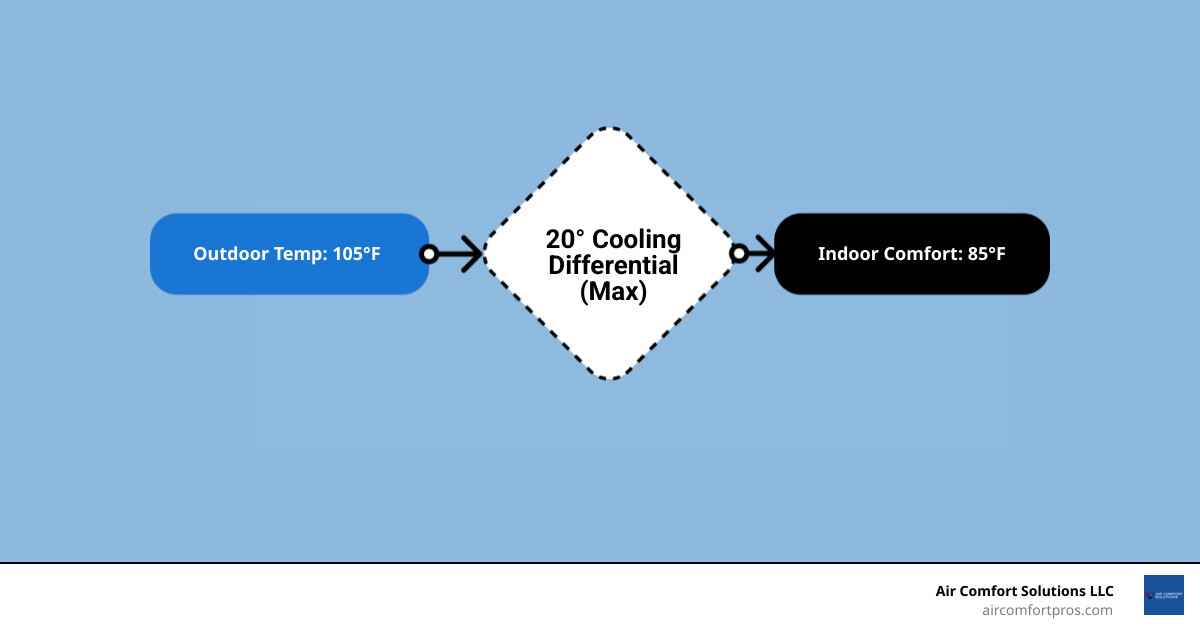
The physics of cooling are often misunderstood. Most air conditioners are designed to create a temperature differential of about 20 degrees between the outdoor air and your indoor setting. If it is 105°F in Spring, TX, and you set your thermostat to 68°F, you aren't just asking for comfort—you’re asking for the impossible. This overexertion leads to "equipment-destroying" stress.
When you ignore maintenance, the consequences ripple through your household:
• Component Wear: High heat degrades capacitors (the #1 failure point during heatwaves) and strains compressors.
• Energy Spikes: A neglected unit can consume up to 15% more energy just to move the same amount of air.
• Shortened Lifespan: Well-maintained systems in Texas can last 15+ years, while neglected ones often fail in 8–10 years.
• Health and Safety: Extreme heat is more than an inconvenience; it can be dangerous for seniors and children if the AC fails.
To understand the full scope of the risks, you can read about What Happens If You Skip AC Maintenance in Texas. Essentially, you are trading a small amount of prevention for a very large amount of panic in July.
While we always recommend professional oversight, there are several high-impact tasks you can handle yourself. These "quick wins" keep the air flowing and the electricity bills manageable.
The single most important DIY task is managing your air filters. A dirty filter restricts airflow, forcing the blower motor to work harder and potentially causing the evaporator coils to freeze. Replacing a dirty filter can lower your AC's energy consumption by up to 15%.
• Frequency: Check monthly. In high-pollen areas like Magnolia or if you have pets, replace every 30 days.
• Rating: We recommend MERV 8 to 11 filters. They balance the need for clean air with the need for high airflow.
• Guide: If you've never done it before, check out How to Replace AC Filters - A Quick and Simple Guide.
Your outdoor condenser unit is responsible for expelling the heat from your home. If it's crowded by bushes or covered in dirt, that heat has nowhere to go.
• Clearance: Maintain at least 2 feet (24 inches) of clear space on all sides. Trim back vines, shrubs, and weeds.
• Cleaning: Use a garden hose (never a pressure washer, which can bend the delicate fins) to gently rinse away dust, grass clippings, and pollen from the coils.
In humid climates like Houston and Conroe, your AC removes gallons of water from the air every day. This water flows through a drain line that can easily become clogged with algae or "sludge."
• The Vinegar Flush: Once a month, pour a cup of distilled white vinegar down the condensate drain line. This kills algae growth and prevents the line from backing up—a common cause of system shutdowns and ceiling water damage.
Check your indoor vents. Make sure they aren't blocked by furniture or curtains. Even if a room is rarely used, keep the door open. Closing doors can disrupt the "static pressure" of your home, making the AC work harder to move air through the returns.
If you live in Pinehurst, Plantersville, or the north side of Harris County, you need a team that understands our specific microclimate. We aren't just dealing with heat; we’re dealing with Gulf Coast humidity and specific allergens like cedar pollen that can gum up a system fast.
The best time to look for help is now. Waiting until mid-July to find a technician is a recipe for frustration. Most reputable companies see a massive surge in calls once the first 90-degree day hits. By scheduling your service in the early spring (February through April), you ensure your system is vetted before the "stress test" begins.
For those in our local service area, we offer deep expertise in preventing the most common regional issues. For instance, did you know that spring storms often lead to power surges that can damage your AC’s electrical components? If you’ve noticed your AC Keeps Tripping Circuit Breaker in Spring, it’s a sign that your system is already struggling with an electrical fault that will only get worse in the summer heat.
If you are asking yourself, I Want to Get My System Checked Before Summer Starts - Find Me Reputable Companies for Routine Air Con Servi, look for local providers who have been in the community for decades. We bring 35 years of experience to every Pinehurst doorstep, ensuring your "summer readiness" isn't just a checklist, but a guarantee of comfort.
While DIY tasks are great, there are parts of your AC that require specialized tools and training. A professional "tune-up" is essentially a health screening for your HVAC system. If you're curious about the process, we have a detailed breakdown of What to Expect During Your First AC Tune-Up.
• Filter Replacement — DIY: Yes — Professional: Included
• Debris Removal — DIY: Yes — Professional: Included
• Refrigerant Level Check — DIY: No — Professional: Yes (Critical)
• Electrical Component Testing — DIY: No — Professional: Yes (Capacitors/Contactors)
• Evaporator Coil Cleaning — DIY: No — Professional: Yes
• Drain Line Vacuum/Clear — DIY: Basic — Professional: Deep Clean
• Static Pressure Testing — DIY: No — Professional: Yes
A professional technician does more than just look at the unit. We perform precision adjustments that can't be done with a standard home toolkit:
• Refrigerant Charge: If your refrigerant is even slightly low, your system will run constantly and fail to cool. We check for leaks and ensure the "charge" is exactly where the manufacturer intended.
• Capacitor Health: Capacitors are like batteries that give your motor the "kick" it needs to start. Heat kills them. We test their "microfarads" to see if they are within safety limits.
• Electrical Connections: We tighten all connections. Loose wires can cause "pitting" on contactors, leading to a system that won't turn on.
• Coil Cleaning: We use specialized cleaners to remove the deep-seated grime on your indoor evaporator coils, which is essential for efficient heat transfer.
Catching these issues early is vital. If you wait, you’ll start seeing the Signs Your AC Needs Repair in Houston Area Heat, such as odd noises, frequent cycling, or a sudden spike in your energy bill.
Even a perfectly maintained AC needs help when it's 108°F outside. To truly master how to make sure your ac survives a texas summer, you have to look at your home as a complete ecosystem.
The Department of Energy recommends setting your thermostat to 78°F when you are home and awake. We know that sounds high to some, but every degree you set below 78°F can increase your energy usage by 6–8%.
• When Away: Raise the setting to 82–85°F. Do not turn the AC off completely. Turning it off allows humidity to build up and heat to soak into your walls and furniture. When you return, the AC will have to work for hours just to "remove the heat" from the house itself.
• The 20-Degree Gap: If it's 100°F outside, your AC is designed to get you to 80°F comfortably. Pushing it to 70°F is a recipe for a frozen coil or a seized compressor.
• Ceiling Fans: Ensure they are rotating counter-clockwise. This creates a wind-chill effect that can make a room feel 4 degrees cooler, allowing you to raise the thermostat without losing comfort.
• Blackout Curtains: Up to 30% of your home's heat gain comes through the windows. Close curtains on the south and west sides of the house during the day.
• Attic Insulation: If your attic isn't properly insulated, it acts like an oven sitting on top of your living space. Proper insulation and duct sealing can lower cooling costs by up to 20%.
If your system is running but you aren't feeling the relief, you might be wondering When Your AC Can't Keep Up With The Heat. Often, the issue is a combination of a struggling unit and a "leaky" home envelope.
• Limit Internal Heat: Avoid using the oven, dishwasher, or dryer during the hottest part of the day (2 PM to 7 PM). These appliances add heat and humidity to your home, forcing the AC to work harder.
• Smart Thermostats: Use geofencing or schedules to automatically adjust temperatures. Many models also have "Dehumidify" modes that slow the blower fan to pull more moisture from the air.
• Humidity Control: In the Woodlands and Houston, humidity is the "silent partner" in your high bills. If your home feels "clammy" even when the air is cold, it’s a sign of poor dehumidification. You may want to investigate Why Is My AC Running But Not Cooling or Why Is My AC Blowing Warm Air? to see if a component is failing.
First, stay calm and check the basics. Is the thermostat on the right setting? Did a circuit breaker trip? If the system is completely unresponsive, check out our guide on AC Not Turning On During a Heatwave.
• Safety First: If the indoor temperature exceeds 85–90°F, especially for vulnerable family members, seek a cooling center or a local library.
• Hydration: Drink plenty of water and avoid strenuous activity.
• Call for Help: Contact a professional immediately, as wait times grow during heatwaves.
It seems counterintuitive, but ice on your AC unit is a sign of a serious problem. Usually, it's caused by restricted airflow (a very dirty filter) or low refrigerant. When the air can't move over the coils, the temperature drops below freezing, and the condensation turns to ice. If you see ice, turn the system off immediately to let it thaw, and call a technician. For local specifics, read Why Is My AC Freezing Up in Summer in Tomball.
In our area (Spring, Tomball, Magnolia), we recommend a monthly check. If the filter looks grey or you can't see light through it, change it. During peak summer, the sheer volume of air being moved means the filter captures more dust and pollen than usual. Keeping a fresh filter can save you up to 15% on your energy bill and is the easiest way to prevent a system breakdown.
Surviving a Texas summer requires more than just luck; it requires a proactive plan. By combining DIY maintenance like filter changes and drain line flushes with professional tune-ups, you can ensure your home remains a sanctuary even when the pavement is melting outside.
At Air Comfort Solutions LLC, we’ve spent over 35 years helping our neighbors in Pinehurst, The Woodlands, and across North Harris County keep their cool. Whether you need a quick repair or are wondering Is an HVAC Maintenance Plan Worth It for long-term protection, our team is here to provide honest, reliable service.
Don't wait for the triple digits to arrive. Schedule your summer readiness service today and give your AC the best chance to beat the Texas heat.
How to make sure your ac survives a texas summer starts with these core steps:
If you live in North Harris County, you already know what a Texas summer feels like. By June, your air conditioner isn't just running — it's fighting for its life. Austin recorded 31 consecutive days at or above 100°F in July 2023, and conditions across the greater Houston area are no less brutal. HVAC systems in Texas can run more than 2,800 hours over a single summer, compared to just a few hundred in cooler states. That kind of load pushes every component — capacitors, coils, drain lines, refrigerant circuits — to its limit.
The stakes are real. HVAC systems account for 50–60% of a Texas home's electricity use during peak summer months. A neglected system doesn't just cost more to run — it breaks down faster, often on the hottest day of the year when every repair company in the area has a two-week wait. The good news? According to industry data, 95% of summer AC breakdowns are preventable with proper spring preparation.
This checklist from Air Comfort Solutions LLC walks you through exactly what to do — and when — so your system stays cool, efficient, and reliable all summer long. For a broader look at seasonal prep, Preparing Your Home's Cooling System for a Smooth Summer is a great place to start.
In April 2026, we are already looking at the horizon of another intense cooling season. In places like Tomball and The Woodlands, the "Texas Summer" isn't just a season; it's a marathon for your mechanical equipment. When the mercury stays above 100°F for weeks, your AC unit might run for 12 to 16 hours a day without a break. This relentless operation is why understanding how to make sure your ac survives a texas summer is vital for your comfort and your wallet.
The physics of cooling are often misunderstood. Most air conditioners are designed to create a temperature differential of about 20 degrees between the outdoor air and your indoor setting. If it is 105°F in Spring, TX, and you set your thermostat to 68°F, you aren't just asking for comfort—you’re asking for the impossible. This overexertion leads to "equipment-destroying" stress.
When you ignore maintenance, the consequences ripple through your household:
To understand the full scope of the risks, you can read about What Happens If You Skip AC Maintenance in Texas. Essentially, you are trading a small amount of prevention for a very large amount of panic in July.
While we always recommend professional oversight, there are several high-impact tasks you can handle yourself. These "quick wins" keep the air flowing and the electricity bills manageable.
The single most important DIY task is managing your air filters. A dirty filter restricts airflow, forcing the blower motor to work harder and potentially causing the evaporator coils to freeze. Replacing a dirty filter can lower your AC's energy consumption by up to 15%.
Your outdoor condenser unit is responsible for expelling the heat from your home. If it's crowded by bushes or covered in dirt, that heat has nowhere to go.
In humid climates like Houston and Conroe, your AC removes gallons of water from the air every day. This water flows through a drain line that can easily become clogged with algae or "sludge."
Check your indoor vents. Make sure they aren't blocked by furniture or curtains. Even if a room is rarely used, keep the door open. Closing doors can disrupt the "static pressure" of your home, making the AC work harder to move air through the returns.
If you live in Pinehurst, Plantersville, or the north side of Harris County, you need a team that understands our specific microclimate. We aren't just dealing with heat; we’re dealing with Gulf Coast humidity and specific allergens like cedar pollen that can gum up a system fast.
The best time to look for help is now. Waiting until mid-July to find a technician is a recipe for frustration. Most reputable companies see a massive surge in calls once the first 90-degree day hits. By scheduling your service in the early spring (February through April), you ensure your system is vetted before the "stress test" begins.
For those in our local service area, we offer deep expertise in preventing the most common regional issues. For instance, did you know that spring storms often lead to power surges that can damage your AC’s electrical components? If you’ve noticed your AC Keeps Tripping Circuit Breaker in Spring, it’s a sign that your system is already struggling with an electrical fault that will only get worse in the summer heat.
If you are asking yourself, I Want to Get My System Checked Before Summer Starts - Find Me Reputable Companies for Routine Air Con Servi, look for local providers who have been in the community for decades. We bring 35 years of experience to every Pinehurst doorstep, ensuring your "summer readiness" isn't just a checklist, but a guarantee of comfort.
While DIY tasks are great, there are parts of your AC that require specialized tools and training. A professional "tune-up" is essentially a health screening for your HVAC system. If you're curious about the process, we have a detailed breakdown of What to Expect During Your First AC Tune-Up.
| Task | DIY | Professional |
|---|---|---|
| Filter Replacement | Yes | Included |
| Debris Removal | Yes | Included |
| Refrigerant Level Check | No | Yes (Critical) |
| Electrical Component Testing | No | Yes (Capacitors/Contactors) |
| Evaporator Coil Cleaning | No | Yes |
| Drain Line Vacuum/Clear | Basic | Deep Clean |
| Static Pressure Testing | No | Yes |
A professional technician does more than just look at the unit. We perform precision adjustments that can't be done with a standard home toolkit:
Catching these issues early is vital. If you wait, you’ll start seeing the Signs Your AC Needs Repair in Houston Area Heat, such as odd noises, frequent cycling, or a sudden spike in your energy bill.
Even a perfectly maintained AC needs help when it's 108°F outside. To truly master how to make sure your ac survives a texas summer, you have to look at your home as a complete ecosystem.
The Department of Energy recommends setting your thermostat to 78°F when you are home and awake. We know that sounds high to some, but every degree you set below 78°F can increase your energy usage by 6–8%.
If your system is running but you aren't feeling the relief, you might be wondering When Your AC Can't Keep Up With The Heat. Often, the issue is a combination of a struggling unit and a "leaky" home envelope.
First, stay calm and check the basics. Is the thermostat on the right setting? Did a circuit breaker trip? If the system is completely unresponsive, check out our guide on AC Not Turning On During a Heatwave.
It seems counterintuitive, but ice on your AC unit is a sign of a serious problem. Usually, it's caused by restricted airflow (a very dirty filter) or low refrigerant. When the air can't move over the coils, the temperature drops below freezing, and the condensation turns to ice. If you see ice, turn the system off immediately to let it thaw, and call a technician. For local specifics, read Why Is My AC Freezing Up in Summer in Tomball.
In our area (Spring, Tomball, Magnolia), we recommend a monthly check. If the filter looks grey or you can't see light through it, change it. During peak summer, the sheer volume of air being moved means the filter captures more dust and pollen than usual. Keeping a fresh filter can save you up to 15% on your energy bill and is the easiest way to prevent a system breakdown.
Surviving a Texas summer requires more than just luck; it requires a proactive plan. By combining DIY maintenance like filter changes and drain line flushes with professional tune-ups, you can ensure your home remains a sanctuary even when the pavement is melting outside.
At Air Comfort Solutions LLC, we’ve spent over 35 years helping our neighbors in Pinehurst, The Woodlands, and across North Harris County keep their cool. Whether you need a quick repair or are wondering Is an HVAC Maintenance Plan Worth It for long-term protection, our team is here to provide honest, reliable service.
Don't wait for the triple digits to arrive. Schedule your summer readiness service today and give your AC the best chance to beat the Texas heat.
How to make sure your ac survives a texas summer starts with these core steps:
If you live in North Harris County, you already know what a Texas summer feels like. By June, your air conditioner isn't just running — it's fighting for its life. Austin recorded 31 consecutive days at or above 100°F in July 2023, and conditions across the greater Houston area are no less brutal. HVAC systems in Texas can run more than 2,800 hours over a single summer, compared to just a few hundred in cooler states. That kind of load pushes every component — capacitors, coils, drain lines, refrigerant circuits — to its limit.
The stakes are real. HVAC systems account for 50–60% of a Texas home's electricity use during peak summer months. A neglected system doesn't just cost more to run — it breaks down faster, often on the hottest day of the year when every repair company in the area has a two-week wait. The good news? According to industry data, 95% of summer AC breakdowns are preventable with proper spring preparation.
This checklist from Air Comfort Solutions LLC walks you through exactly what to do — and when — so your system stays cool, efficient, and reliable all summer long. For a broader look at seasonal prep, Preparing Your Home's Cooling System for a Smooth Summer is a great place to start.
In April 2026, we are already looking at the horizon of another intense cooling season. In places like Tomball and The Woodlands, the "Texas Summer" isn't just a season; it's a marathon for your mechanical equipment. When the mercury stays above 100°F for weeks, your AC unit might run for 12 to 16 hours a day without a break. This relentless operation is why understanding how to make sure your ac survives a texas summer is vital for your comfort and your wallet.
The physics of cooling are often misunderstood. Most air conditioners are designed to create a temperature differential of about 20 degrees between the outdoor air and your indoor setting. If it is 105°F in Spring, TX, and you set your thermostat to 68°F, you aren't just asking for comfort—you’re asking for the impossible. This overexertion leads to "equipment-destroying" stress.
When you ignore maintenance, the consequences ripple through your household:
To understand the full scope of the risks, you can read about What Happens If You Skip AC Maintenance in Texas. Essentially, you are trading a small amount of prevention for a very large amount of panic in July.
While we always recommend professional oversight, there are several high-impact tasks you can handle yourself. These "quick wins" keep the air flowing and the electricity bills manageable.
The single most important DIY task is managing your air filters. A dirty filter restricts airflow, forcing the blower motor to work harder and potentially causing the evaporator coils to freeze. Replacing a dirty filter can lower your AC's energy consumption by up to 15%.
Your outdoor condenser unit is responsible for expelling the heat from your home. If it's crowded by bushes or covered in dirt, that heat has nowhere to go.
In humid climates like Houston and Conroe, your AC removes gallons of water from the air every day. This water flows through a drain line that can easily become clogged with algae or "sludge."
Check your indoor vents. Make sure they aren't blocked by furniture or curtains. Even if a room is rarely used, keep the door open. Closing doors can disrupt the "static pressure" of your home, making the AC work harder to move air through the returns.
If you live in Pinehurst, Plantersville, or the north side of Harris County, you need a team that understands our specific microclimate. We aren't just dealing with heat; we’re dealing with Gulf Coast humidity and specific allergens like cedar pollen that can gum up a system fast.
The best time to look for help is now. Waiting until mid-July to find a technician is a recipe for frustration. Most reputable companies see a massive surge in calls once the first 90-degree day hits. By scheduling your service in the early spring (February through April), you ensure your system is vetted before the "stress test" begins.
For those in our local service area, we offer deep expertise in preventing the most common regional issues. For instance, did you know that spring storms often lead to power surges that can damage your AC’s electrical components? If you’ve noticed your AC Keeps Tripping Circuit Breaker in Spring, it’s a sign that your system is already struggling with an electrical fault that will only get worse in the summer heat.
If you are asking yourself, I Want to Get My System Checked Before Summer Starts - Find Me Reputable Companies for Routine Air Con Servi, look for local providers who have been in the community for decades. We bring 35 years of experience to every Pinehurst doorstep, ensuring your "summer readiness" isn't just a checklist, but a guarantee of comfort.
While DIY tasks are great, there are parts of your AC that require specialized tools and training. A professional "tune-up" is essentially a health screening for your HVAC system. If you're curious about the process, we have a detailed breakdown of What to Expect During Your First AC Tune-Up.
| Task | DIY | Professional |
|---|---|---|
| Filter Replacement | Yes | Included |
| Debris Removal | Yes | Included |
| Refrigerant Level Check | No | Yes (Critical) |
| Electrical Component Testing | No | Yes (Capacitors/Contactors) |
| Evaporator Coil Cleaning | No | Yes |
| Drain Line Vacuum/Clear | Basic | Deep Clean |
| Static Pressure Testing | No | Yes |
A professional technician does more than just look at the unit. We perform precision adjustments that can't be done with a standard home toolkit:
Catching these issues early is vital. If you wait, you’ll start seeing the Signs Your AC Needs Repair in Houston Area Heat, such as odd noises, frequent cycling, or a sudden spike in your energy bill.
Even a perfectly maintained AC needs help when it's 108°F outside. To truly master how to make sure your ac survives a texas summer, you have to look at your home as a complete ecosystem.
The Department of Energy recommends setting your thermostat to 78°F when you are home and awake. We know that sounds high to some, but every degree you set below 78°F can increase your energy usage by 6–8%.
If your system is running but you aren't feeling the relief, you might be wondering When Your AC Can't Keep Up With The Heat. Often, the issue is a combination of a struggling unit and a "leaky" home envelope.
First, stay calm and check the basics. Is the thermostat on the right setting? Did a circuit breaker trip? If the system is completely unresponsive, check out our guide on AC Not Turning On During a Heatwave.
It seems counterintuitive, but ice on your AC unit is a sign of a serious problem. Usually, it's caused by restricted airflow (a very dirty filter) or low refrigerant. When the air can't move over the coils, the temperature drops below freezing, and the condensation turns to ice. If you see ice, turn the system off immediately to let it thaw, and call a technician. For local specifics, read Why Is My AC Freezing Up in Summer in Tomball.
In our area (Spring, Tomball, Magnolia), we recommend a monthly check. If the filter looks grey or you can't see light through it, change it. During peak summer, the sheer volume of air being moved means the filter captures more dust and pollen than usual. Keeping a fresh filter can save you up to 15% on your energy bill and is the easiest way to prevent a system breakdown.
Surviving a Texas summer requires more than just luck; it requires a proactive plan. By combining DIY maintenance like filter changes and drain line flushes with professional tune-ups, you can ensure your home remains a sanctuary even when the pavement is melting outside.
At Air Comfort Solutions LLC, we’ve spent over 35 years helping our neighbors in Pinehurst, The Woodlands, and across North Harris County keep their cool. Whether you need a quick repair or are wondering Is an HVAC Maintenance Plan Worth It for long-term protection, our team is here to provide honest, reliable service.
Don't wait for the triple digits to arrive. Schedule your summer readiness service today and give your AC the best chance to beat the Texas heat.
How to make sure your ac survives a texas summer starts with these core steps:
If you live in North Harris County, you already know what a Texas summer feels like. By June, your air conditioner isn't just running — it's fighting for its life. Austin recorded 31 consecutive days at or above 100°F in July 2023, and conditions across the greater Houston area are no less brutal. HVAC systems in Texas can run more than 2,800 hours over a single summer, compared to just a few hundred in cooler states. That kind of load pushes every component — capacitors, coils, drain lines, refrigerant circuits — to its limit.
The stakes are real. HVAC systems account for 50–60% of a Texas home's electricity use during peak summer months. A neglected system doesn't just cost more to run — it breaks down faster, often on the hottest day of the year when every repair company in the area has a two-week wait. The good news? According to industry data, 95% of summer AC breakdowns are preventable with proper spring preparation.
This checklist from Air Comfort Solutions LLC walks you through exactly what to do — and when — so your system stays cool, efficient, and reliable all summer long. For a broader look at seasonal prep, Preparing Your Home's Cooling System for a Smooth Summer is a great place to start.
In April 2026, we are already looking at the horizon of another intense cooling season. In places like Tomball and The Woodlands, the "Texas Summer" isn't just a season; it's a marathon for your mechanical equipment. When the mercury stays above 100°F for weeks, your AC unit might run for 12 to 16 hours a day without a break. This relentless operation is why understanding how to make sure your ac survives a texas summer is vital for your comfort and your wallet.
The physics of cooling are often misunderstood. Most air conditioners are designed to create a temperature differential of about 20 degrees between the outdoor air and your indoor setting. If it is 105°F in Spring, TX, and you set your thermostat to 68°F, you aren't just asking for comfort—you’re asking for the impossible. This overexertion leads to "equipment-destroying" stress.
When you ignore maintenance, the consequences ripple through your household:
To understand the full scope of the risks, you can read about What Happens If You Skip AC Maintenance in Texas. Essentially, you are trading a small amount of prevention for a very large amount of panic in July.
While we always recommend professional oversight, there are several high-impact tasks you can handle yourself. These "quick wins" keep the air flowing and the electricity bills manageable.
The single most important DIY task is managing your air filters. A dirty filter restricts airflow, forcing the blower motor to work harder and potentially causing the evaporator coils to freeze. Replacing a dirty filter can lower your AC's energy consumption by up to 15%.
Your outdoor condenser unit is responsible for expelling the heat from your home. If it's crowded by bushes or covered in dirt, that heat has nowhere to go.
In humid climates like Houston and Conroe, your AC removes gallons of water from the air every day. This water flows through a drain line that can easily become clogged with algae or "sludge."
Check your indoor vents. Make sure they aren't blocked by furniture or curtains. Even if a room is rarely used, keep the door open. Closing doors can disrupt the "static pressure" of your home, making the AC work harder to move air through the returns.
If you live in Pinehurst, Plantersville, or the north side of Harris County, you need a team that understands our specific microclimate. We aren't just dealing with heat; we’re dealing with Gulf Coast humidity and specific allergens like cedar pollen that can gum up a system fast.
The best time to look for help is now. Waiting until mid-July to find a technician is a recipe for frustration. Most reputable companies see a massive surge in calls once the first 90-degree day hits. By scheduling your service in the early spring (February through April), you ensure your system is vetted before the "stress test" begins.
For those in our local service area, we offer deep expertise in preventing the most common regional issues. For instance, did you know that spring storms often lead to power surges that can damage your AC’s electrical components? If you’ve noticed your AC Keeps Tripping Circuit Breaker in Spring, it’s a sign that your system is already struggling with an electrical fault that will only get worse in the summer heat.
If you are asking yourself, I Want to Get My System Checked Before Summer Starts - Find Me Reputable Companies for Routine Air Con Servi, look for local providers who have been in the community for decades. We bring 35 years of experience to every Pinehurst doorstep, ensuring your "summer readiness" isn't just a checklist, but a guarantee of comfort.
While DIY tasks are great, there are parts of your AC that require specialized tools and training. A professional "tune-up" is essentially a health screening for your HVAC system. If you're curious about the process, we have a detailed breakdown of What to Expect During Your First AC Tune-Up.
| Task | DIY | Professional |
|---|---|---|
| Filter Replacement | Yes | Included |
| Debris Removal | Yes | Included |
| Refrigerant Level Check | No | Yes (Critical) |
| Electrical Component Testing | No | Yes (Capacitors/Contactors) |
| Evaporator Coil Cleaning | No | Yes |
| Drain Line Vacuum/Clear | Basic | Deep Clean |
| Static Pressure Testing | No | Yes |
A professional technician does more than just look at the unit. We perform precision adjustments that can't be done with a standard home toolkit:
Catching these issues early is vital. If you wait, you’ll start seeing the Signs Your AC Needs Repair in Houston Area Heat, such as odd noises, frequent cycling, or a sudden spike in your energy bill.
Even a perfectly maintained AC needs help when it's 108°F outside. To truly master how to make sure your ac survives a texas summer, you have to look at your home as a complete ecosystem.
The Department of Energy recommends setting your thermostat to 78°F when you are home and awake. We know that sounds high to some, but every degree you set below 78°F can increase your energy usage by 6–8%.
If your system is running but you aren't feeling the relief, you might be wondering When Your AC Can't Keep Up With The Heat. Often, the issue is a combination of a struggling unit and a "leaky" home envelope.
First, stay calm and check the basics. Is the thermostat on the right setting? Did a circuit breaker trip? If the system is completely unresponsive, check out our guide on AC Not Turning On During a Heatwave.
It seems counterintuitive, but ice on your AC unit is a sign of a serious problem. Usually, it's caused by restricted airflow (a very dirty filter) or low refrigerant. When the air can't move over the coils, the temperature drops below freezing, and the condensation turns to ice. If you see ice, turn the system off immediately to let it thaw, and call a technician. For local specifics, read Why Is My AC Freezing Up in Summer in Tomball.
In our area (Spring, Tomball, Magnolia), we recommend a monthly check. If the filter looks grey or you can't see light through it, change it. During peak summer, the sheer volume of air being moved means the filter captures more dust and pollen than usual. Keeping a fresh filter can save you up to 15% on your energy bill and is the easiest way to prevent a system breakdown.
Surviving a Texas summer requires more than just luck; it requires a proactive plan. By combining DIY maintenance like filter changes and drain line flushes with professional tune-ups, you can ensure your home remains a sanctuary even when the pavement is melting outside.
At Air Comfort Solutions LLC, we’ve spent over 35 years helping our neighbors in Pinehurst, The Woodlands, and across North Harris County keep their cool. Whether you need a quick repair or are wondering Is an HVAC Maintenance Plan Worth It for long-term protection, our team is here to provide honest, reliable service.
Don't wait for the triple digits to arrive. Schedule your summer readiness service today and give your AC the best chance to beat the Texas heat.
How to make sure your ac survives a texas summer starts with these core steps:
If you live in North Harris County, you already know what a Texas summer feels like. By June, your air conditioner isn't just running — it's fighting for its life. Austin recorded 31 consecutive days at or above 100°F in July 2023, and conditions across the greater Houston area are no less brutal. HVAC systems in Texas can run more than 2,800 hours over a single summer, compared to just a few hundred in cooler states. That kind of load pushes every component — capacitors, coils, drain lines, refrigerant circuits — to its limit.
The stakes are real. HVAC systems account for 50–60% of a Texas home's electricity use during peak summer months. A neglected system doesn't just cost more to run — it breaks down faster, often on the hottest day of the year when every repair company in the area has a two-week wait. The good news? According to industry data, 95% of summer AC breakdowns are preventable with proper spring preparation.
This checklist from Air Comfort Solutions LLC walks you through exactly what to do — and when — so your system stays cool, efficient, and reliable all summer long. For a broader look at seasonal prep, Preparing Your Home's Cooling System for a Smooth Summer is a great place to start.
In April 2026, we are already looking at the horizon of another intense cooling season. In places like Tomball and The Woodlands, the "Texas Summer" isn't just a season; it's a marathon for your mechanical equipment. When the mercury stays above 100°F for weeks, your AC unit might run for 12 to 16 hours a day without a break. This relentless operation is why understanding how to make sure your ac survives a texas summer is vital for your comfort and your wallet.
The physics of cooling are often misunderstood. Most air conditioners are designed to create a temperature differential of about 20 degrees between the outdoor air and your indoor setting. If it is 105°F in Spring, TX, and you set your thermostat to 68°F, you aren't just asking for comfort—you’re asking for the impossible. This overexertion leads to "equipment-destroying" stress.
When you ignore maintenance, the consequences ripple through your household:
To understand the full scope of the risks, you can read about What Happens If You Skip AC Maintenance in Texas. Essentially, you are trading a small amount of prevention for a very large amount of panic in July.
While we always recommend professional oversight, there are several high-impact tasks you can handle yourself. These "quick wins" keep the air flowing and the electricity bills manageable.
The single most important DIY task is managing your air filters. A dirty filter restricts airflow, forcing the blower motor to work harder and potentially causing the evaporator coils to freeze. Replacing a dirty filter can lower your AC's energy consumption by up to 15%.
Your outdoor condenser unit is responsible for expelling the heat from your home. If it's crowded by bushes or covered in dirt, that heat has nowhere to go.
In humid climates like Houston and Conroe, your AC removes gallons of water from the air every day. This water flows through a drain line that can easily become clogged with algae or "sludge."
Check your indoor vents. Make sure they aren't blocked by furniture or curtains. Even if a room is rarely used, keep the door open. Closing doors can disrupt the "static pressure" of your home, making the AC work harder to move air through the returns.
If you live in Pinehurst, Plantersville, or the north side of Harris County, you need a team that understands our specific microclimate. We aren't just dealing with heat; we’re dealing with Gulf Coast humidity and specific allergens like cedar pollen that can gum up a system fast.
The best time to look for help is now. Waiting until mid-July to find a technician is a recipe for frustration. Most reputable companies see a massive surge in calls once the first 90-degree day hits. By scheduling your service in the early spring (February through April), you ensure your system is vetted before the "stress test" begins.
For those in our local service area, we offer deep expertise in preventing the most common regional issues. For instance, did you know that spring storms often lead to power surges that can damage your AC’s electrical components? If you’ve noticed your AC Keeps Tripping Circuit Breaker in Spring, it’s a sign that your system is already struggling with an electrical fault that will only get worse in the summer heat.
If you are asking yourself, I Want to Get My System Checked Before Summer Starts - Find Me Reputable Companies for Routine Air Con Servi, look for local providers who have been in the community for decades. We bring 35 years of experience to every Pinehurst doorstep, ensuring your "summer readiness" isn't just a checklist, but a guarantee of comfort.
While DIY tasks are great, there are parts of your AC that require specialized tools and training. A professional "tune-up" is essentially a health screening for your HVAC system. If you're curious about the process, we have a detailed breakdown of What to Expect During Your First AC Tune-Up.
| Task | DIY | Professional |
|---|---|---|
| Filter Replacement | Yes | Included |
| Debris Removal | Yes | Included |
| Refrigerant Level Check | No | Yes (Critical) |
| Electrical Component Testing | No | Yes (Capacitors/Contactors) |
| Evaporator Coil Cleaning | No | Yes |
| Drain Line Vacuum/Clear | Basic | Deep Clean |
| Static Pressure Testing | No | Yes |
A professional technician does more than just look at the unit. We perform precision adjustments that can't be done with a standard home toolkit:
Catching these issues early is vital. If you wait, you’ll start seeing the Signs Your AC Needs Repair in Houston Area Heat, such as odd noises, frequent cycling, or a sudden spike in your energy bill.
Even a perfectly maintained AC needs help when it's 108°F outside. To truly master how to make sure your ac survives a texas summer, you have to look at your home as a complete ecosystem.
The Department of Energy recommends setting your thermostat to 78°F when you are home and awake. We know that sounds high to some, but every degree you set below 78°F can increase your energy usage by 6–8%.
If your system is running but you aren't feeling the relief, you might be wondering When Your AC Can't Keep Up With The Heat. Often, the issue is a combination of a struggling unit and a "leaky" home envelope.
First, stay calm and check the basics. Is the thermostat on the right setting? Did a circuit breaker trip? If the system is completely unresponsive, check out our guide on AC Not Turning On During a Heatwave.
It seems counterintuitive, but ice on your AC unit is a sign of a serious problem. Usually, it's caused by restricted airflow (a very dirty filter) or low refrigerant. When the air can't move over the coils, the temperature drops below freezing, and the condensation turns to ice. If you see ice, turn the system off immediately to let it thaw, and call a technician. For local specifics, read Why Is My AC Freezing Up in Summer in Tomball.
In our area (Spring, Tomball, Magnolia), we recommend a monthly check. If the filter looks grey or you can't see light through it, change it. During peak summer, the sheer volume of air being moved means the filter captures more dust and pollen than usual. Keeping a fresh filter can save you up to 15% on your energy bill and is the easiest way to prevent a system breakdown.
Surviving a Texas summer requires more than just luck; it requires a proactive plan. By combining DIY maintenance like filter changes and drain line flushes with professional tune-ups, you can ensure your home remains a sanctuary even when the pavement is melting outside.
At Air Comfort Solutions LLC, we’ve spent over 35 years helping our neighbors in Pinehurst, The Woodlands, and across North Harris County keep their cool. Whether you need a quick repair or are wondering Is an HVAC Maintenance Plan Worth It for long-term protection, our team is here to provide honest, reliable service.
Don't wait for the triple digits to arrive. Schedule your summer readiness service today and give your AC the best chance to beat the Texas heat.


Zane came out and did an amazing job! Super friendly, honest and transparent about the work that needed to be done. This is my second time working with Air Comfort Solutions and they’re my go to for HVAC services. Highly recommend.
God's AMAZING grace sent us Robert and Zane. We have been without air in this Texas heat for six weeks and four days. We've had a few contractors give us quotes all trying to upsell when we're at a low point. But not the guys at Air Comfort Solutions. They came in assessed our situation, gave us honest feedback, and showed us the issues as they proceeded with the assessment for clear understanding. We highly recommend them for their professionalism, quality products, and fair pricing. We hands down support them for all the work they do 💯 %.
Robert and Zane gone above and beyond to make the process easy and affordable.
Would definitely recommend!!
I’m writing this review to let everyone know that Air Comfort Solutions is the company to work with. I know the owner ( Robert) for several years now. He has been taking care of my residential and business work orders. Robert is professional, knowledgeable and will save you money. I just want to thank Robert for great job you have been doing for me.