Why Is My AC Blowing Warm Air? (And What to Do About It)
If you're wondering why is my ac blowing warm air, here are the most common reasons:
• Wrong thermostat settings - fan set to "ON" instead of "AUTO," or mode set to "heat" instead of "cool"
• Dirty air filter - restricts airflow, causing the system to overheat or freeze up
• Low refrigerant - usually from a leak; prevents the system from absorbing indoor heat
• Tripped circuit breaker - outdoor unit loses power while indoor fan keeps running
• Frozen evaporator coil - blocks heat transfer, causing warm air at the vents
• Dirty or blocked outdoor condenser unit - can't expel heat properly
• Failing compressor or capacitor - shuts down the cooling process entirely
In fact, about 90% of the time, the root cause traces back to the outdoor condenser unit in some way — whether it's dirty coils, a tripped breaker, or a failing component.
It's the middle of summer in North Harris County, and you walk through your front door expecting cool relief — only to feel a wave of warm, humid air blowing from your vents. It's one of the most frustrating things a homeowner can experience, and unfortunately, it's more common than you'd think.
The good news? Some causes are simple enough to fix yourself in minutes. Others need a trained technician before they turn into a much bigger (and more expensive) problem. This guide walks you through exactly what's happening inside your system, what you can check right now, and when it's time to call in a pro.
I'm looking for expert AC service in Tomball. How does my system work?
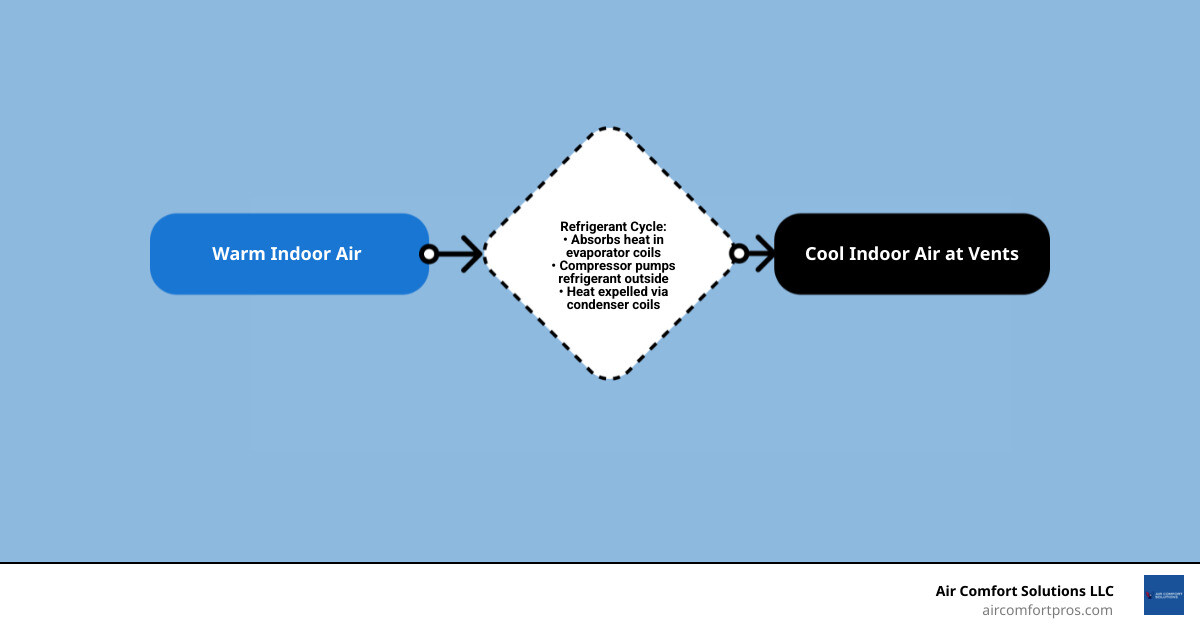
Before we dive into the "why," it helps to understand the "how." Many homeowners in our area think an air conditioner creates "cold" out of thin air. In reality, your Air Conditioning system is a heat mover. It works by pulling heat out of your home and dumping it outside.
This process relies on the HVAC refrigeration cycle. Inside your home, the indoor unit contains evaporator coils. As warm indoor air is blown over these cold coils, the refrigerant inside absorbs the heat. This transformed refrigerant then travels to the outdoor unit to release that heat. If any part of this loop is broken, you'll find your vents blowing air that feels more like a hair dryer than a refrigerator.
Understanding the role of the outdoor condenser unit
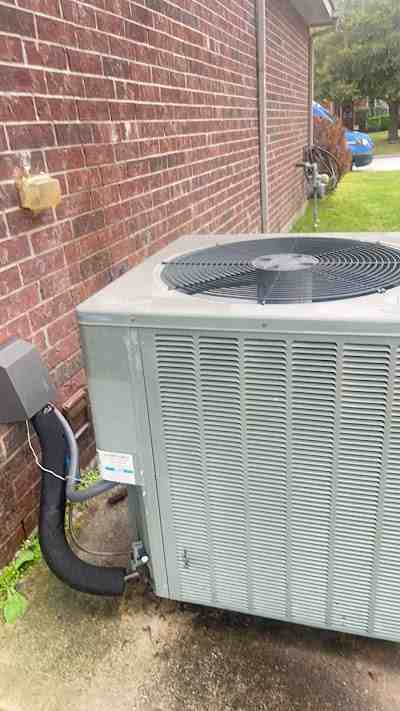
The outdoor unit, or the condenser, is the unsung hero of your home comfort. Its primary job is heat expulsion. Once the refrigerant has "soaked up" the heat from your living room, it travels outside where the condenser coils and a large fan work together to release that heat into the Texas air.
Statistics show that 90% of the time, the reason behind your warm air issue is located right here in the outdoor unit. If the condenser can't breathe because it's buried in grass clippings or if it has lost power, the heat has nowhere to go. It stays trapped in the line, and eventually, that heat ends up right back in your house. This is why regular AC service Tomball TX is so critical; a clean condenser is a functional condenser.
How refrigerant enables indoor cooling
Refrigerant is the "lifeblood" of your system. Whether you have a traditional central AC or a Heat Pump, the refrigerant (often referred to by the brand name Freon) constantly changes states from a liquid to a gas to facilitate heat transfer.
As it evaporates in the indoor coils, it becomes extremely cold and pulls heat from the air. If your system is low on this fluid, it can’t absorb enough heat to lower the temperature of the air blowing into your rooms. It’s important to remember that an AC doesn't "use up" refrigerant like a car uses gas. If it’s low, you have a leak that needs professional attention.
My house in Spring is getting too hot. Why is my ac blowing warm air?
When the temperature hits the high 90s in April 2026, the last thing you want to deal with is a cooling failure. If you are currently asking, "why is my ac blowing warm air," the culprit is often hiding in plain sight. It could be a simple setting on your wall, or it could be a cry for help from your equipment.
Common triggers for warm air include:
• Thermostat accidentally bumped to "Heat" or "Fan On."
• A layer of Houston dust clogging your filters.
• A tripped breaker that cut power to the outside unit but left the indoor fan running.
Many of these issues can be caught early with consistent AC maintenance Tomball TX. If your system is running but the air isn't chilled, it's time to check the basics before the house turns into a sauna. You can also explore more specific details on AC blowing hot to see if your symptoms match common mechanical failures.
Why is my ac blowing warm air because of a dirty filter?
It might seem too simple, but a dirty air filter is the leading cause of "ghost" AC problems. When a filter is clogged with pet dander and dust, it creates severe airflow restriction. Without enough air moving over the evaporator coils, those coils can actually get too cold and freeze over.
Once a layer of ice forms on the coils, they act as an insulator. Instead of absorbing heat, they block it. This results in the system working overtime while blowing warm air into your home. We recommend checking your filters every 30 days during the peak Texas summer. For more tips on maintaining airflow, check out our guide on Why is my AC not cooling properly in Tomball.
Why is my ac blowing warm air due to low refrigerant?
If your filters are clean but the air is still tepid, you might be dealing with a refrigerant leak. Since the system is sealed, any loss of refrigerant means there is a hole or a crack in the copper lines.
Signs of a leak include:
1. Hissing or bubbling sounds coming from the indoor or outdoor unit.
2. Ice buildup on the refrigerant lines or the evaporator coil.
3. Higher energy bills as the system runs longer to try (and fail) to reach the target temperature.
Handling refrigerant requires EPA certification and specialized tools. If you suspect a leak, you'll need AC repair Spring TX to find the source, seal it, and recharge the system to the correct levels.
I need urgent AC repair in Conroe TX. When is it time to call a technician?
While we love a good DIY win, some AC problems are dangerous or too complex for a homeowner to tackle safely. If you’ve checked your thermostat and changed your filter but the air is still warm, it’s time to call the experts.
• Thermostat Settings — Can I DIY?: Yes — Professional Fix Required: No
• Dirty Air Filter — Can I DIY?: Yes — Professional Fix Required: No
• Tripped Breaker — Can I DIY?: Yes (Once) — Professional Fix Required: Yes (If it trips again)
• Low Refrigerant — Can I DIY?: No — Professional Fix Required: Yes
• Capacitor Failure — Can I DIY?: No — Professional Fix Required: Yes
• Compressor Failure — Can I DIY?: No — Professional Fix Required: Yes
• Frozen Coils — Can I DIY?: Partially (Thaw it) — Professional Fix Required: Yes (Find the cause)
If you are in need of AC repair Conroe TX or AC repair Cypress TX, don't wait until the system suffers permanent damage.
Identifying electrical problems and component failures
Sometimes the reason why is my ac blowing warm air is purely electrical. Your AC uses a lot of power, especially during a Magnolia heatwave. This can lead to tripped breakers or blown fuses.
One of the most common electrical failures is a "bad capacitor." Think of the capacitor as a large battery that gives your motor the "kick" it needs to start up. If the capacitor dies, your outdoor fan or compressor won't spin, but your indoor blower will keep pushing uncooled air through the house. Because this involves high-voltage electricity, this is a job strictly for AC repair Tomball TX specialists.
Signs of a failing compressor or blower motor
The compressor is often called the "heart" of the AC unit. It’s responsible for pumping the refrigerant through the system. If the compressor fails, the cooling cycle stops instantly.
You might notice:
• Grinding or "coins in a dryer" noises coming from the outdoor unit.
• The unit failing to start despite the thermostat calling for cool air.
• The circuit breaker tripping every time the AC tries to kick on.
Similarly, if the blower motor (the fan inside your home) is failing, you won't get proper air distribution. You might feel a tiny bit of cool air near the vents, but it won't be enough to move through the house. If you notice these signs, contact us for AC service Houston TX immediately to prevent a total system meltdown.
Troubleshooting steps for homeowners in Pinehurst and North Harris County
Before you pick up the phone, try these simple troubleshooting steps. You might save yourself a service call!
1. Check the Thermostat: Ensure it is set to "Cool" and the temperature is at least 5 degrees below the current room temp.
2. Inspect the Batteries: If the thermostat screen is blank or fading, fresh batteries might be the fix.
3. The "Auto" Rule: Make sure the fan setting is on "Auto," not "On." The "On" setting keeps the fan blowing even when the AC isn't actually cooling, which just circulates warm air.
4. Reset the Breaker: Check your electrical panel. If the AC breaker is tripped, flip it all the way off and then back on. Warning: If it trips again immediately, do not reset it a second time. Call a pro.
5. Look for Ice: If you see ice on the copper lines, turn the system off and let it thaw for 24 hours before trying again with a clean filter.
Verifying thermostat settings and power supply
It sounds silly, but we see it all the time: a guest or a child accidentally switches the thermostat to "Heat" or "Fan." Always double-check that the "Cool" mode is active. Also, check the power switch near your indoor air handler; it looks like a light switch and can easily be flicked off by mistake while reaching for something in a closet or attic.
Inspecting the outdoor unit for obstructions
Your outdoor unit needs to "breathe" to release heat. If you have bushes, tall grass, or stored items within two feet of the unit, it can't expel heat efficiently. This causes the system to overheat and blow warm air. Take a moment to clear away any debris, leaves, or grass clippings from the fins of the condenser. A gentle rinse with a garden hose (don't use a power washer!) can also help remove built-up North Texas dust.
Should I turn off the AC if it is blowing warm air?
Yes. If your AC is blowing warm air, you should shut it down at the thermostat immediately. Running a malfunctioning system can cause "liquid slugging" in the compressor or lead to a total motor burnout. Turning it off protects your expensive components, saves energy, and allows for a safer inspection.
What are the consequences of ignoring an AC blowing warm air?
Ignoring the problem won't make it go away; it will only make it more expensive.
• Sky-high energy bills: Your system will run 24/7 trying to cool a house it can't reach.
• Compressor failure: Heat is the enemy of machinery. Running a hot system will eventually kill the compressor.
• Uncomfortable home: In the humidity of Pinehurst or The Woodlands, a warm house quickly leads to mold growth and poor indoor air quality.
How often should I schedule preventative maintenance?
We recommend a professional tune-up twice a year: once in the spring for your AC and once in the fall for your heater. This ensures your system is clean, your refrigerant levels are topped off, and any small electrical issues are caught before they leave you sweating in the middle of July.
Conclusion
When you're faced with the question of why is my ac blowing warm air, you don't have to solve it alone. Whether it's a simple filter change or a complex compressor replacement, Air Comfort Solutions LLC is here to help homeowners across Pinehurst, Tomball, Spring, and the North Harris County area.
With over 35 years of experience, our certified technicians provide honest, reliable solutions and upfront pricing to get your home back to the "cool zone." Don't spend another minute in the heat. For Expert HVAC Services in Houston TX and the surrounding communities, give us a call today and let us bring the comfort back to your home.
Why Is My AC Blowing Warm Air? (And What to Do About It)
If you're wondering why is my ac blowing warm air, here are the most common reasons:
- Wrong thermostat settings - fan set to "ON" instead of "AUTO," or mode set to "heat" instead of "cool"
- Dirty air filter - restricts airflow, causing the system to overheat or freeze up
- Low refrigerant - usually from a leak; prevents the system from absorbing indoor heat
- Tripped circuit breaker - outdoor unit loses power while indoor fan keeps running
- Frozen evaporator coil - blocks heat transfer, causing warm air at the vents
- Dirty or blocked outdoor condenser unit - can't expel heat properly
- Failing compressor or capacitor - shuts down the cooling process entirely
In fact, about 90% of the time, the root cause traces back to the outdoor condenser unit in some way — whether it's dirty coils, a tripped breaker, or a failing component.
It's the middle of summer in North Harris County, and you walk through your front door expecting cool relief — only to feel a wave of warm, humid air blowing from your vents. It's one of the most frustrating things a homeowner can experience, and unfortunately, it's more common than you'd think.
The good news? Some causes are simple enough to fix yourself in minutes. Others need a trained technician before they turn into a much bigger (and more expensive) problem. This guide walks you through exactly what's happening inside your system, what you can check right now, and when it's time to call in a pro.
I'm looking for expert AC service in Tomball. How does my system work?
Before we dive into the "why," it helps to understand the "how." Many homeowners in our area think an air conditioner creates "cold" out of thin air. In reality, your Air Conditioning system is a heat mover. It works by pulling heat out of your home and dumping it outside.
This process relies on the HVAC refrigeration cycle. Inside your home, the indoor unit contains evaporator coils. As warm indoor air is blown over these cold coils, the refrigerant inside absorbs the heat. This transformed refrigerant then travels to the outdoor unit to release that heat. If any part of this loop is broken, you'll find your vents blowing air that feels more like a hair dryer than a refrigerator.
Understanding the role of the outdoor condenser unit
The outdoor unit, or the condenser, is the unsung hero of your home comfort. Its primary job is heat expulsion. Once the refrigerant has "soaked up" the heat from your living room, it travels outside where the condenser coils and a large fan work together to release that heat into the Texas air.
Statistics show that 90% of the time, the reason behind your warm air issue is located right here in the outdoor unit. If the condenser can't breathe because it's buried in grass clippings or if it has lost power, the heat has nowhere to go. It stays trapped in the line, and eventually, that heat ends up right back in your house. This is why regular AC service Tomball TX is so critical; a clean condenser is a functional condenser.
How refrigerant enables indoor cooling
Refrigerant is the "lifeblood" of your system. Whether you have a traditional central AC or a Heat Pump, the refrigerant (often referred to by the brand name Freon) constantly changes states from a liquid to a gas to facilitate heat transfer.
As it evaporates in the indoor coils, it becomes extremely cold and pulls heat from the air. If your system is low on this fluid, it can’t absorb enough heat to lower the temperature of the air blowing into your rooms. It’s important to remember that an AC doesn't "use up" refrigerant like a car uses gas. If it’s low, you have a leak that needs professional attention.
My house in Spring is getting too hot. Why is my ac blowing warm air?
When the temperature hits the high 90s in April 2026, the last thing you want to deal with is a cooling failure. If you are currently asking, "why is my ac blowing warm air," the culprit is often hiding in plain sight. It could be a simple setting on your wall, or it could be a cry for help from your equipment.
Common triggers for warm air include:
- Thermostat accidentally bumped to "Heat" or "Fan On."
- A layer of Houston dust clogging your filters.
- A tripped breaker that cut power to the outside unit but left the indoor fan running.
Many of these issues can be caught early with consistent AC maintenance Tomball TX. If your system is running but the air isn't chilled, it's time to check the basics before the house turns into a sauna. You can also explore more specific details on AC blowing hot to see if your symptoms match common mechanical failures.
Why is my ac blowing warm air because of a dirty filter?
It might seem too simple, but a dirty air filter is the leading cause of "ghost" AC problems. When a filter is clogged with pet dander and dust, it creates severe airflow restriction. Without enough air moving over the evaporator coils, those coils can actually get too cold and freeze over.
Once a layer of ice forms on the coils, they act as an insulator. Instead of absorbing heat, they block it. This results in the system working overtime while blowing warm air into your home. We recommend checking your filters every 30 days during the peak Texas summer. For more tips on maintaining airflow, check out our guide on Why is my AC not cooling properly in Tomball.
Why is my ac blowing warm air due to low refrigerant?
If your filters are clean but the air is still tepid, you might be dealing with a refrigerant leak. Since the system is sealed, any loss of refrigerant means there is a hole or a crack in the copper lines.
Signs of a leak include:
- Hissing or bubbling sounds coming from the indoor or outdoor unit.
- Ice buildup on the refrigerant lines or the evaporator coil.
- Higher energy bills as the system runs longer to try (and fail) to reach the target temperature.
Handling refrigerant requires EPA certification and specialized tools. If you suspect a leak, you'll need AC repair Spring TX to find the source, seal it, and recharge the system to the correct levels.
I need urgent AC repair in Conroe TX. When is it time to call a technician?
While we love a good DIY win, some AC problems are dangerous or too complex for a homeowner to tackle safely. If you’ve checked your thermostat and changed your filter but the air is still warm, it’s time to call the experts.
| Issue | Can I DIY? | Professional Fix Required |
|---|
| Thermostat Settings | Yes | No |
| Dirty Air Filter | Yes | No |
| Tripped Breaker | Yes (Once) | Yes (If it trips again) |
| Low Refrigerant | No | Yes |
| Capacitor Failure | No | Yes |
| Compressor Failure | No | Yes |
| Frozen Coils | Partially (Thaw it) | Yes (Find the cause) |
If you are in need of AC repair Conroe TX or AC repair Cypress TX, don't wait until the system suffers permanent damage.
Identifying electrical problems and component failures
Sometimes the reason why is my ac blowing warm air is purely electrical. Your AC uses a lot of power, especially during a Magnolia heatwave. This can lead to tripped breakers or blown fuses.
One of the most common electrical failures is a "bad capacitor." Think of the capacitor as a large battery that gives your motor the "kick" it needs to start up. If the capacitor dies, your outdoor fan or compressor won't spin, but your indoor blower will keep pushing uncooled air through the house. Because this involves high-voltage electricity, this is a job strictly for AC repair Tomball TX specialists.
Signs of a failing compressor or blower motor
The compressor is often called the "heart" of the AC unit. It’s responsible for pumping the refrigerant through the system. If the compressor fails, the cooling cycle stops instantly.
You might notice:
- Grinding or "coins in a dryer" noises coming from the outdoor unit.
- The unit failing to start despite the thermostat calling for cool air.
- The circuit breaker tripping every time the AC tries to kick on.
Similarly, if the blower motor (the fan inside your home) is failing, you won't get proper air distribution. You might feel a tiny bit of cool air near the vents, but it won't be enough to move through the house. If you notice these signs, contact us for AC service Houston TX immediately to prevent a total system meltdown.
Troubleshooting steps for homeowners in Pinehurst and North Harris County
Before you pick up the phone, try these simple troubleshooting steps. You might save yourself a service call!
- Check the Thermostat: Ensure it is set to "Cool" and the temperature is at least 5 degrees below the current room temp.
- Inspect the Batteries: If the thermostat screen is blank or fading, fresh batteries might be the fix.
- The "Auto" Rule: Make sure the fan setting is on "Auto," not "On." The "On" setting keeps the fan blowing even when the AC isn't actually cooling, which just circulates warm air.
- Reset the Breaker: Check your electrical panel. If the AC breaker is tripped, flip it all the way off and then back on. Warning: If it trips again immediately, do not reset it a second time. Call a pro.
- Look for Ice: If you see ice on the copper lines, turn the system off and let it thaw for 24 hours before trying again with a clean filter.
Verifying thermostat settings and power supply
It sounds silly, but we see it all the time: a guest or a child accidentally switches the thermostat to "Heat" or "Fan." Always double-check that the "Cool" mode is active. Also, check the power switch near your indoor air handler; it looks like a light switch and can easily be flicked off by mistake while reaching for something in a closet or attic.
Inspecting the outdoor unit for obstructions
Your outdoor unit needs to "breathe" to release heat. If you have bushes, tall grass, or stored items within two feet of the unit, it can't expel heat efficiently. This causes the system to overheat and blow warm air. Take a moment to clear away any debris, leaves, or grass clippings from the fins of the condenser. A gentle rinse with a garden hose (don't use a power washer!) can also help remove built-up North Texas dust.
Should I turn off the AC if it is blowing warm air?
Yes. If your AC is blowing warm air, you should shut it down at the thermostat immediately. Running a malfunctioning system can cause "liquid slugging" in the compressor or lead to a total motor burnout. Turning it off protects your expensive components, saves energy, and allows for a safer inspection.
What are the consequences of ignoring an AC blowing warm air?
Ignoring the problem won't make it go away; it will only make it more expensive.
- Sky-high energy bills: Your system will run 24/7 trying to cool a house it can't reach.
- Compressor failure: Heat is the enemy of machinery. Running a hot system will eventually kill the compressor.
- Uncomfortable home: In the humidity of Pinehurst or The Woodlands, a warm house quickly leads to mold growth and poor indoor air quality.
How often should I schedule preventative maintenance?
We recommend a professional tune-up twice a year: once in the spring for your AC and once in the fall for your heater. This ensures your system is clean, your refrigerant levels are topped off, and any small electrical issues are caught before they leave you sweating in the middle of July.
Conclusion
When you're faced with the question of why is my ac blowing warm air, you don't have to solve it alone. Whether it's a simple filter change or a complex compressor replacement, Air Comfort Solutions LLC is here to help homeowners across Pinehurst, Tomball, Spring, and the North Harris County area.
With over 35 years of experience, our certified technicians provide honest, reliable solutions and upfront pricing to get your home back to the "cool zone." Don't spend another minute in the heat. For Expert HVAC Services in Houston TX and the surrounding communities, give us a call today and let us bring the comfort back to your home.
Why Is My AC Blowing Warm Air? (And What to Do About It)
If you're wondering why is my ac blowing warm air, here are the most common reasons:
- Wrong thermostat settings - fan set to "ON" instead of "AUTO," or mode set to "heat" instead of "cool"
- Dirty air filter - restricts airflow, causing the system to overheat or freeze up
- Low refrigerant - usually from a leak; prevents the system from absorbing indoor heat
- Tripped circuit breaker - outdoor unit loses power while indoor fan keeps running
- Frozen evaporator coil - blocks heat transfer, causing warm air at the vents
- Dirty or blocked outdoor condenser unit - can't expel heat properly
- Failing compressor or capacitor - shuts down the cooling process entirely
In fact, about 90% of the time, the root cause traces back to the outdoor condenser unit in some way — whether it's dirty coils, a tripped breaker, or a failing component.
It's the middle of summer in North Harris County, and you walk through your front door expecting cool relief — only to feel a wave of warm, humid air blowing from your vents. It's one of the most frustrating things a homeowner can experience, and unfortunately, it's more common than you'd think.
The good news? Some causes are simple enough to fix yourself in minutes. Others need a trained technician before they turn into a much bigger (and more expensive) problem. This guide walks you through exactly what's happening inside your system, what you can check right now, and when it's time to call in a pro.
I'm looking for expert AC service in Tomball. How does my system work?
Before we dive into the "why," it helps to understand the "how." Many homeowners in our area think an air conditioner creates "cold" out of thin air. In reality, your Air Conditioning system is a heat mover. It works by pulling heat out of your home and dumping it outside.
This process relies on the HVAC refrigeration cycle. Inside your home, the indoor unit contains evaporator coils. As warm indoor air is blown over these cold coils, the refrigerant inside absorbs the heat. This transformed refrigerant then travels to the outdoor unit to release that heat. If any part of this loop is broken, you'll find your vents blowing air that feels more like a hair dryer than a refrigerator.
Understanding the role of the outdoor condenser unit
The outdoor unit, or the condenser, is the unsung hero of your home comfort. Its primary job is heat expulsion. Once the refrigerant has "soaked up" the heat from your living room, it travels outside where the condenser coils and a large fan work together to release that heat into the Texas air.
Statistics show that 90% of the time, the reason behind your warm air issue is located right here in the outdoor unit. If the condenser can't breathe because it's buried in grass clippings or if it has lost power, the heat has nowhere to go. It stays trapped in the line, and eventually, that heat ends up right back in your house. This is why regular AC service Tomball TX is so critical; a clean condenser is a functional condenser.
How refrigerant enables indoor cooling
Refrigerant is the "lifeblood" of your system. Whether you have a traditional central AC or a Heat Pump, the refrigerant (often referred to by the brand name Freon) constantly changes states from a liquid to a gas to facilitate heat transfer.
As it evaporates in the indoor coils, it becomes extremely cold and pulls heat from the air. If your system is low on this fluid, it can’t absorb enough heat to lower the temperature of the air blowing into your rooms. It’s important to remember that an AC doesn't "use up" refrigerant like a car uses gas. If it’s low, you have a leak that needs professional attention.
My house in Spring is getting too hot. Why is my ac blowing warm air?
When the temperature hits the high 90s in April 2026, the last thing you want to deal with is a cooling failure. If you are currently asking, "why is my ac blowing warm air," the culprit is often hiding in plain sight. It could be a simple setting on your wall, or it could be a cry for help from your equipment.
Common triggers for warm air include:
- Thermostat accidentally bumped to "Heat" or "Fan On."
- A layer of Houston dust clogging your filters.
- A tripped breaker that cut power to the outside unit but left the indoor fan running.
Many of these issues can be caught early with consistent AC maintenance Tomball TX. If your system is running but the air isn't chilled, it's time to check the basics before the house turns into a sauna. You can also explore more specific details on AC blowing hot to see if your symptoms match common mechanical failures.
Why is my ac blowing warm air because of a dirty filter?
It might seem too simple, but a dirty air filter is the leading cause of "ghost" AC problems. When a filter is clogged with pet dander and dust, it creates severe airflow restriction. Without enough air moving over the evaporator coils, those coils can actually get too cold and freeze over.
Once a layer of ice forms on the coils, they act as an insulator. Instead of absorbing heat, they block it. This results in the system working overtime while blowing warm air into your home. We recommend checking your filters every 30 days during the peak Texas summer. For more tips on maintaining airflow, check out our guide on Why is my AC not cooling properly in Tomball.
Why is my ac blowing warm air due to low refrigerant?
If your filters are clean but the air is still tepid, you might be dealing with a refrigerant leak. Since the system is sealed, any loss of refrigerant means there is a hole or a crack in the copper lines.
Signs of a leak include:
- Hissing or bubbling sounds coming from the indoor or outdoor unit.
- Ice buildup on the refrigerant lines or the evaporator coil.
- Higher energy bills as the system runs longer to try (and fail) to reach the target temperature.
Handling refrigerant requires EPA certification and specialized tools. If you suspect a leak, you'll need AC repair Spring TX to find the source, seal it, and recharge the system to the correct levels.
I need urgent AC repair in Conroe TX. When is it time to call a technician?
While we love a good DIY win, some AC problems are dangerous or too complex for a homeowner to tackle safely. If you’ve checked your thermostat and changed your filter but the air is still warm, it’s time to call the experts.
| Issue | Can I DIY? | Professional Fix Required |
|---|
| Thermostat Settings | Yes | No |
| Dirty Air Filter | Yes | No |
| Tripped Breaker | Yes (Once) | Yes (If it trips again) |
| Low Refrigerant | No | Yes |
| Capacitor Failure | No | Yes |
| Compressor Failure | No | Yes |
| Frozen Coils | Partially (Thaw it) | Yes (Find the cause) |
If you are in need of AC repair Conroe TX or AC repair Cypress TX, don't wait until the system suffers permanent damage.
Identifying electrical problems and component failures
Sometimes the reason why is my ac blowing warm air is purely electrical. Your AC uses a lot of power, especially during a Magnolia heatwave. This can lead to tripped breakers or blown fuses.
One of the most common electrical failures is a "bad capacitor." Think of the capacitor as a large battery that gives your motor the "kick" it needs to start up. If the capacitor dies, your outdoor fan or compressor won't spin, but your indoor blower will keep pushing uncooled air through the house. Because this involves high-voltage electricity, this is a job strictly for AC repair Tomball TX specialists.
Signs of a failing compressor or blower motor
The compressor is often called the "heart" of the AC unit. It’s responsible for pumping the refrigerant through the system. If the compressor fails, the cooling cycle stops instantly.
You might notice:
- Grinding or "coins in a dryer" noises coming from the outdoor unit.
- The unit failing to start despite the thermostat calling for cool air.
- The circuit breaker tripping every time the AC tries to kick on.
Similarly, if the blower motor (the fan inside your home) is failing, you won't get proper air distribution. You might feel a tiny bit of cool air near the vents, but it won't be enough to move through the house. If you notice these signs, contact us for AC service Houston TX immediately to prevent a total system meltdown.
Troubleshooting steps for homeowners in Pinehurst and North Harris County
Before you pick up the phone, try these simple troubleshooting steps. You might save yourself a service call!
- Check the Thermostat: Ensure it is set to "Cool" and the temperature is at least 5 degrees below the current room temp.
- Inspect the Batteries: If the thermostat screen is blank or fading, fresh batteries might be the fix.
- The "Auto" Rule: Make sure the fan setting is on "Auto," not "On." The "On" setting keeps the fan blowing even when the AC isn't actually cooling, which just circulates warm air.
- Reset the Breaker: Check your electrical panel. If the AC breaker is tripped, flip it all the way off and then back on. Warning: If it trips again immediately, do not reset it a second time. Call a pro.
- Look for Ice: If you see ice on the copper lines, turn the system off and let it thaw for 24 hours before trying again with a clean filter.
Verifying thermostat settings and power supply
It sounds silly, but we see it all the time: a guest or a child accidentally switches the thermostat to "Heat" or "Fan." Always double-check that the "Cool" mode is active. Also, check the power switch near your indoor air handler; it looks like a light switch and can easily be flicked off by mistake while reaching for something in a closet or attic.
Inspecting the outdoor unit for obstructions
Your outdoor unit needs to "breathe" to release heat. If you have bushes, tall grass, or stored items within two feet of the unit, it can't expel heat efficiently. This causes the system to overheat and blow warm air. Take a moment to clear away any debris, leaves, or grass clippings from the fins of the condenser. A gentle rinse with a garden hose (don't use a power washer!) can also help remove built-up North Texas dust.
Should I turn off the AC if it is blowing warm air?
Yes. If your AC is blowing warm air, you should shut it down at the thermostat immediately. Running a malfunctioning system can cause "liquid slugging" in the compressor or lead to a total motor burnout. Turning it off protects your expensive components, saves energy, and allows for a safer inspection.
What are the consequences of ignoring an AC blowing warm air?
Ignoring the problem won't make it go away; it will only make it more expensive.
- Sky-high energy bills: Your system will run 24/7 trying to cool a house it can't reach.
- Compressor failure: Heat is the enemy of machinery. Running a hot system will eventually kill the compressor.
- Uncomfortable home: In the humidity of Pinehurst or The Woodlands, a warm house quickly leads to mold growth and poor indoor air quality.
How often should I schedule preventative maintenance?
We recommend a professional tune-up twice a year: once in the spring for your AC and once in the fall for your heater. This ensures your system is clean, your refrigerant levels are topped off, and any small electrical issues are caught before they leave you sweating in the middle of July.
Conclusion
When you're faced with the question of why is my ac blowing warm air, you don't have to solve it alone. Whether it's a simple filter change or a complex compressor replacement, Air Comfort Solutions LLC is here to help homeowners across Pinehurst, Tomball, Spring, and the North Harris County area.
With over 35 years of experience, our certified technicians provide honest, reliable solutions and upfront pricing to get your home back to the "cool zone." Don't spend another minute in the heat. For Expert HVAC Services in Houston TX and the surrounding communities, give us a call today and let us bring the comfort back to your home.
Why Is My AC Blowing Warm Air? (And What to Do About It)
If you're wondering why is my ac blowing warm air, here are the most common reasons:
- Wrong thermostat settings - fan set to "ON" instead of "AUTO," or mode set to "heat" instead of "cool"
- Dirty air filter - restricts airflow, causing the system to overheat or freeze up
- Low refrigerant - usually from a leak; prevents the system from absorbing indoor heat
- Tripped circuit breaker - outdoor unit loses power while indoor fan keeps running
- Frozen evaporator coil - blocks heat transfer, causing warm air at the vents
- Dirty or blocked outdoor condenser unit - can't expel heat properly
- Failing compressor or capacitor - shuts down the cooling process entirely
In fact, about 90% of the time, the root cause traces back to the outdoor condenser unit in some way — whether it's dirty coils, a tripped breaker, or a failing component.
It's the middle of summer in North Harris County, and you walk through your front door expecting cool relief — only to feel a wave of warm, humid air blowing from your vents. It's one of the most frustrating things a homeowner can experience, and unfortunately, it's more common than you'd think.
The good news? Some causes are simple enough to fix yourself in minutes. Others need a trained technician before they turn into a much bigger (and more expensive) problem. This guide walks you through exactly what's happening inside your system, what you can check right now, and when it's time to call in a pro.
I'm looking for expert AC service in Tomball. How does my system work?
Before we dive into the "why," it helps to understand the "how." Many homeowners in our area think an air conditioner creates "cold" out of thin air. In reality, your Air Conditioning system is a heat mover. It works by pulling heat out of your home and dumping it outside.
This process relies on the HVAC refrigeration cycle. Inside your home, the indoor unit contains evaporator coils. As warm indoor air is blown over these cold coils, the refrigerant inside absorbs the heat. This transformed refrigerant then travels to the outdoor unit to release that heat. If any part of this loop is broken, you'll find your vents blowing air that feels more like a hair dryer than a refrigerator.
Understanding the role of the outdoor condenser unit
The outdoor unit, or the condenser, is the unsung hero of your home comfort. Its primary job is heat expulsion. Once the refrigerant has "soaked up" the heat from your living room, it travels outside where the condenser coils and a large fan work together to release that heat into the Texas air.
Statistics show that 90% of the time, the reason behind your warm air issue is located right here in the outdoor unit. If the condenser can't breathe because it's buried in grass clippings or if it has lost power, the heat has nowhere to go. It stays trapped in the line, and eventually, that heat ends up right back in your house. This is why regular AC service Tomball TX is so critical; a clean condenser is a functional condenser.
How refrigerant enables indoor cooling
Refrigerant is the "lifeblood" of your system. Whether you have a traditional central AC or a Heat Pump, the refrigerant (often referred to by the brand name Freon) constantly changes states from a liquid to a gas to facilitate heat transfer.
As it evaporates in the indoor coils, it becomes extremely cold and pulls heat from the air. If your system is low on this fluid, it can’t absorb enough heat to lower the temperature of the air blowing into your rooms. It’s important to remember that an AC doesn't "use up" refrigerant like a car uses gas. If it’s low, you have a leak that needs professional attention.
My house in Spring is getting too hot. Why is my ac blowing warm air?
When the temperature hits the high 90s in April 2026, the last thing you want to deal with is a cooling failure. If you are currently asking, "why is my ac blowing warm air," the culprit is often hiding in plain sight. It could be a simple setting on your wall, or it could be a cry for help from your equipment.
Common triggers for warm air include:
- Thermostat accidentally bumped to "Heat" or "Fan On."
- A layer of Houston dust clogging your filters.
- A tripped breaker that cut power to the outside unit but left the indoor fan running.
Many of these issues can be caught early with consistent AC maintenance Tomball TX. If your system is running but the air isn't chilled, it's time to check the basics before the house turns into a sauna. You can also explore more specific details on AC blowing hot to see if your symptoms match common mechanical failures.
Why is my ac blowing warm air because of a dirty filter?
It might seem too simple, but a dirty air filter is the leading cause of "ghost" AC problems. When a filter is clogged with pet dander and dust, it creates severe airflow restriction. Without enough air moving over the evaporator coils, those coils can actually get too cold and freeze over.
Once a layer of ice forms on the coils, they act as an insulator. Instead of absorbing heat, they block it. This results in the system working overtime while blowing warm air into your home. We recommend checking your filters every 30 days during the peak Texas summer. For more tips on maintaining airflow, check out our guide on Why is my AC not cooling properly in Tomball.
Why is my ac blowing warm air due to low refrigerant?
If your filters are clean but the air is still tepid, you might be dealing with a refrigerant leak. Since the system is sealed, any loss of refrigerant means there is a hole or a crack in the copper lines.
Signs of a leak include:
- Hissing or bubbling sounds coming from the indoor or outdoor unit.
- Ice buildup on the refrigerant lines or the evaporator coil.
- Higher energy bills as the system runs longer to try (and fail) to reach the target temperature.
Handling refrigerant requires EPA certification and specialized tools. If you suspect a leak, you'll need AC repair Spring TX to find the source, seal it, and recharge the system to the correct levels.
I need urgent AC repair in Conroe TX. When is it time to call a technician?
While we love a good DIY win, some AC problems are dangerous or too complex for a homeowner to tackle safely. If you’ve checked your thermostat and changed your filter but the air is still warm, it’s time to call the experts.
| Issue | Can I DIY? | Professional Fix Required |
|---|
| Thermostat Settings | Yes | No |
| Dirty Air Filter | Yes | No |
| Tripped Breaker | Yes (Once) | Yes (If it trips again) |
| Low Refrigerant | No | Yes |
| Capacitor Failure | No | Yes |
| Compressor Failure | No | Yes |
| Frozen Coils | Partially (Thaw it) | Yes (Find the cause) |
If you are in need of AC repair Conroe TX or AC repair Cypress TX, don't wait until the system suffers permanent damage.
Identifying electrical problems and component failures
Sometimes the reason why is my ac blowing warm air is purely electrical. Your AC uses a lot of power, especially during a Magnolia heatwave. This can lead to tripped breakers or blown fuses.
One of the most common electrical failures is a "bad capacitor." Think of the capacitor as a large battery that gives your motor the "kick" it needs to start up. If the capacitor dies, your outdoor fan or compressor won't spin, but your indoor blower will keep pushing uncooled air through the house. Because this involves high-voltage electricity, this is a job strictly for AC repair Tomball TX specialists.
Signs of a failing compressor or blower motor
The compressor is often called the "heart" of the AC unit. It’s responsible for pumping the refrigerant through the system. If the compressor fails, the cooling cycle stops instantly.
You might notice:
- Grinding or "coins in a dryer" noises coming from the outdoor unit.
- The unit failing to start despite the thermostat calling for cool air.
- The circuit breaker tripping every time the AC tries to kick on.
Similarly, if the blower motor (the fan inside your home) is failing, you won't get proper air distribution. You might feel a tiny bit of cool air near the vents, but it won't be enough to move through the house. If you notice these signs, contact us for AC service Houston TX immediately to prevent a total system meltdown.
Troubleshooting steps for homeowners in Pinehurst and North Harris County
Before you pick up the phone, try these simple troubleshooting steps. You might save yourself a service call!
- Check the Thermostat: Ensure it is set to "Cool" and the temperature is at least 5 degrees below the current room temp.
- Inspect the Batteries: If the thermostat screen is blank or fading, fresh batteries might be the fix.
- The "Auto" Rule: Make sure the fan setting is on "Auto," not "On." The "On" setting keeps the fan blowing even when the AC isn't actually cooling, which just circulates warm air.
- Reset the Breaker: Check your electrical panel. If the AC breaker is tripped, flip it all the way off and then back on. Warning: If it trips again immediately, do not reset it a second time. Call a pro.
- Look for Ice: If you see ice on the copper lines, turn the system off and let it thaw for 24 hours before trying again with a clean filter.
Verifying thermostat settings and power supply
It sounds silly, but we see it all the time: a guest or a child accidentally switches the thermostat to "Heat" or "Fan." Always double-check that the "Cool" mode is active. Also, check the power switch near your indoor air handler; it looks like a light switch and can easily be flicked off by mistake while reaching for something in a closet or attic.
Inspecting the outdoor unit for obstructions
Your outdoor unit needs to "breathe" to release heat. If you have bushes, tall grass, or stored items within two feet of the unit, it can't expel heat efficiently. This causes the system to overheat and blow warm air. Take a moment to clear away any debris, leaves, or grass clippings from the fins of the condenser. A gentle rinse with a garden hose (don't use a power washer!) can also help remove built-up North Texas dust.
Should I turn off the AC if it is blowing warm air?
Yes. If your AC is blowing warm air, you should shut it down at the thermostat immediately. Running a malfunctioning system can cause "liquid slugging" in the compressor or lead to a total motor burnout. Turning it off protects your expensive components, saves energy, and allows for a safer inspection.
What are the consequences of ignoring an AC blowing warm air?
Ignoring the problem won't make it go away; it will only make it more expensive.
- Sky-high energy bills: Your system will run 24/7 trying to cool a house it can't reach.
- Compressor failure: Heat is the enemy of machinery. Running a hot system will eventually kill the compressor.
- Uncomfortable home: In the humidity of Pinehurst or The Woodlands, a warm house quickly leads to mold growth and poor indoor air quality.
How often should I schedule preventative maintenance?
We recommend a professional tune-up twice a year: once in the spring for your AC and once in the fall for your heater. This ensures your system is clean, your refrigerant levels are topped off, and any small electrical issues are caught before they leave you sweating in the middle of July.
Conclusion
When you're faced with the question of why is my ac blowing warm air, you don't have to solve it alone. Whether it's a simple filter change or a complex compressor replacement, Air Comfort Solutions LLC is here to help homeowners across Pinehurst, Tomball, Spring, and the North Harris County area.
With over 35 years of experience, our certified technicians provide honest, reliable solutions and upfront pricing to get your home back to the "cool zone." Don't spend another minute in the heat. For Expert HVAC Services in Houston TX and the surrounding communities, give us a call today and let us bring the comfort back to your home.
Why Is My AC Blowing Warm Air? (And What to Do About It)
If you're wondering why is my ac blowing warm air, here are the most common reasons:
- Wrong thermostat settings - fan set to "ON" instead of "AUTO," or mode set to "heat" instead of "cool"
- Dirty air filter - restricts airflow, causing the system to overheat or freeze up
- Low refrigerant - usually from a leak; prevents the system from absorbing indoor heat
- Tripped circuit breaker - outdoor unit loses power while indoor fan keeps running
- Frozen evaporator coil - blocks heat transfer, causing warm air at the vents
- Dirty or blocked outdoor condenser unit - can't expel heat properly
- Failing compressor or capacitor - shuts down the cooling process entirely
In fact, about 90% of the time, the root cause traces back to the outdoor condenser unit in some way — whether it's dirty coils, a tripped breaker, or a failing component.
It's the middle of summer in North Harris County, and you walk through your front door expecting cool relief — only to feel a wave of warm, humid air blowing from your vents. It's one of the most frustrating things a homeowner can experience, and unfortunately, it's more common than you'd think.
The good news? Some causes are simple enough to fix yourself in minutes. Others need a trained technician before they turn into a much bigger (and more expensive) problem. This guide walks you through exactly what's happening inside your system, what you can check right now, and when it's time to call in a pro.
I'm looking for expert AC service in Tomball. How does my system work?
Before we dive into the "why," it helps to understand the "how." Many homeowners in our area think an air conditioner creates "cold" out of thin air. In reality, your Air Conditioning system is a heat mover. It works by pulling heat out of your home and dumping it outside.
This process relies on the HVAC refrigeration cycle. Inside your home, the indoor unit contains evaporator coils. As warm indoor air is blown over these cold coils, the refrigerant inside absorbs the heat. This transformed refrigerant then travels to the outdoor unit to release that heat. If any part of this loop is broken, you'll find your vents blowing air that feels more like a hair dryer than a refrigerator.
Understanding the role of the outdoor condenser unit
The outdoor unit, or the condenser, is the unsung hero of your home comfort. Its primary job is heat expulsion. Once the refrigerant has "soaked up" the heat from your living room, it travels outside where the condenser coils and a large fan work together to release that heat into the Texas air.
Statistics show that 90% of the time, the reason behind your warm air issue is located right here in the outdoor unit. If the condenser can't breathe because it's buried in grass clippings or if it has lost power, the heat has nowhere to go. It stays trapped in the line, and eventually, that heat ends up right back in your house. This is why regular AC service Tomball TX is so critical; a clean condenser is a functional condenser.
How refrigerant enables indoor cooling
Refrigerant is the "lifeblood" of your system. Whether you have a traditional central AC or a Heat Pump, the refrigerant (often referred to by the brand name Freon) constantly changes states from a liquid to a gas to facilitate heat transfer.
As it evaporates in the indoor coils, it becomes extremely cold and pulls heat from the air. If your system is low on this fluid, it can’t absorb enough heat to lower the temperature of the air blowing into your rooms. It’s important to remember that an AC doesn't "use up" refrigerant like a car uses gas. If it’s low, you have a leak that needs professional attention.
My house in Spring is getting too hot. Why is my ac blowing warm air?
When the temperature hits the high 90s in April 2026, the last thing you want to deal with is a cooling failure. If you are currently asking, "why is my ac blowing warm air," the culprit is often hiding in plain sight. It could be a simple setting on your wall, or it could be a cry for help from your equipment.
Common triggers for warm air include:
- Thermostat accidentally bumped to "Heat" or "Fan On."
- A layer of Houston dust clogging your filters.
- A tripped breaker that cut power to the outside unit but left the indoor fan running.
Many of these issues can be caught early with consistent AC maintenance Tomball TX. If your system is running but the air isn't chilled, it's time to check the basics before the house turns into a sauna. You can also explore more specific details on AC blowing hot to see if your symptoms match common mechanical failures.
Why is my ac blowing warm air because of a dirty filter?
It might seem too simple, but a dirty air filter is the leading cause of "ghost" AC problems. When a filter is clogged with pet dander and dust, it creates severe airflow restriction. Without enough air moving over the evaporator coils, those coils can actually get too cold and freeze over.
Once a layer of ice forms on the coils, they act as an insulator. Instead of absorbing heat, they block it. This results in the system working overtime while blowing warm air into your home. We recommend checking your filters every 30 days during the peak Texas summer. For more tips on maintaining airflow, check out our guide on Why is my AC not cooling properly in Tomball.
Why is my ac blowing warm air due to low refrigerant?
If your filters are clean but the air is still tepid, you might be dealing with a refrigerant leak. Since the system is sealed, any loss of refrigerant means there is a hole or a crack in the copper lines.
Signs of a leak include:
- Hissing or bubbling sounds coming from the indoor or outdoor unit.
- Ice buildup on the refrigerant lines or the evaporator coil.
- Higher energy bills as the system runs longer to try (and fail) to reach the target temperature.
Handling refrigerant requires EPA certification and specialized tools. If you suspect a leak, you'll need AC repair Spring TX to find the source, seal it, and recharge the system to the correct levels.
I need urgent AC repair in Conroe TX. When is it time to call a technician?
While we love a good DIY win, some AC problems are dangerous or too complex for a homeowner to tackle safely. If you’ve checked your thermostat and changed your filter but the air is still warm, it’s time to call the experts.
| Issue | Can I DIY? | Professional Fix Required |
|---|
| Thermostat Settings | Yes | No |
| Dirty Air Filter | Yes | No |
| Tripped Breaker | Yes (Once) | Yes (If it trips again) |
| Low Refrigerant | No | Yes |
| Capacitor Failure | No | Yes |
| Compressor Failure | No | Yes |
| Frozen Coils | Partially (Thaw it) | Yes (Find the cause) |
If you are in need of AC repair Conroe TX or AC repair Cypress TX, don't wait until the system suffers permanent damage.
Identifying electrical problems and component failures
Sometimes the reason why is my ac blowing warm air is purely electrical. Your AC uses a lot of power, especially during a Magnolia heatwave. This can lead to tripped breakers or blown fuses.
One of the most common electrical failures is a "bad capacitor." Think of the capacitor as a large battery that gives your motor the "kick" it needs to start up. If the capacitor dies, your outdoor fan or compressor won't spin, but your indoor blower will keep pushing uncooled air through the house. Because this involves high-voltage electricity, this is a job strictly for AC repair Tomball TX specialists.
Signs of a failing compressor or blower motor
The compressor is often called the "heart" of the AC unit. It’s responsible for pumping the refrigerant through the system. If the compressor fails, the cooling cycle stops instantly.
You might notice:
- Grinding or "coins in a dryer" noises coming from the outdoor unit.
- The unit failing to start despite the thermostat calling for cool air.
- The circuit breaker tripping every time the AC tries to kick on.
Similarly, if the blower motor (the fan inside your home) is failing, you won't get proper air distribution. You might feel a tiny bit of cool air near the vents, but it won't be enough to move through the house. If you notice these signs, contact us for AC service Houston TX immediately to prevent a total system meltdown.
Troubleshooting steps for homeowners in Pinehurst and North Harris County
Before you pick up the phone, try these simple troubleshooting steps. You might save yourself a service call!
- Check the Thermostat: Ensure it is set to "Cool" and the temperature is at least 5 degrees below the current room temp.
- Inspect the Batteries: If the thermostat screen is blank or fading, fresh batteries might be the fix.
- The "Auto" Rule: Make sure the fan setting is on "Auto," not "On." The "On" setting keeps the fan blowing even when the AC isn't actually cooling, which just circulates warm air.
- Reset the Breaker: Check your electrical panel. If the AC breaker is tripped, flip it all the way off and then back on. Warning: If it trips again immediately, do not reset it a second time. Call a pro.
- Look for Ice: If you see ice on the copper lines, turn the system off and let it thaw for 24 hours before trying again with a clean filter.
Verifying thermostat settings and power supply
It sounds silly, but we see it all the time: a guest or a child accidentally switches the thermostat to "Heat" or "Fan." Always double-check that the "Cool" mode is active. Also, check the power switch near your indoor air handler; it looks like a light switch and can easily be flicked off by mistake while reaching for something in a closet or attic.
Inspecting the outdoor unit for obstructions
Your outdoor unit needs to "breathe" to release heat. If you have bushes, tall grass, or stored items within two feet of the unit, it can't expel heat efficiently. This causes the system to overheat and blow warm air. Take a moment to clear away any debris, leaves, or grass clippings from the fins of the condenser. A gentle rinse with a garden hose (don't use a power washer!) can also help remove built-up North Texas dust.
Should I turn off the AC if it is blowing warm air?
Yes. If your AC is blowing warm air, you should shut it down at the thermostat immediately. Running a malfunctioning system can cause "liquid slugging" in the compressor or lead to a total motor burnout. Turning it off protects your expensive components, saves energy, and allows for a safer inspection.
What are the consequences of ignoring an AC blowing warm air?
Ignoring the problem won't make it go away; it will only make it more expensive.
- Sky-high energy bills: Your system will run 24/7 trying to cool a house it can't reach.
- Compressor failure: Heat is the enemy of machinery. Running a hot system will eventually kill the compressor.
- Uncomfortable home: In the humidity of Pinehurst or The Woodlands, a warm house quickly leads to mold growth and poor indoor air quality.
How often should I schedule preventative maintenance?
We recommend a professional tune-up twice a year: once in the spring for your AC and once in the fall for your heater. This ensures your system is clean, your refrigerant levels are topped off, and any small electrical issues are caught before they leave you sweating in the middle of July.
Conclusion
When you're faced with the question of why is my ac blowing warm air, you don't have to solve it alone. Whether it's a simple filter change or a complex compressor replacement, Air Comfort Solutions LLC is here to help homeowners across Pinehurst, Tomball, Spring, and the North Harris County area.
With over 35 years of experience, our certified technicians provide honest, reliable solutions and upfront pricing to get your home back to the "cool zone." Don't spend another minute in the heat. For Expert HVAC Services in Houston TX and the surrounding communities, give us a call today and let us bring the comfort back to your home.