


Comfort Solutions HVAC Guide: Diagnosing First-Time Heater Smells
Smelling burning dust during your fall heater startup? We get common homeowner questions answered so you can decide with confidence when to call a pro.
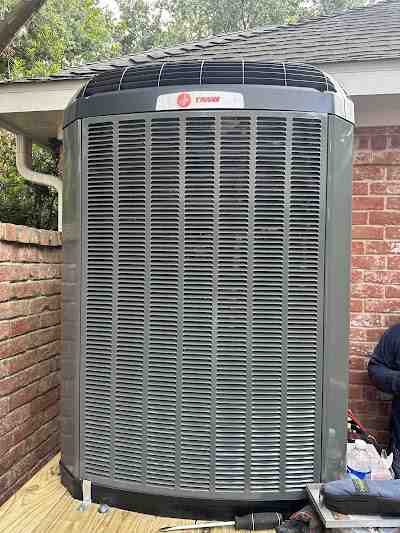
To understand why your home feels like a sauna despite the hum of your vents, we first have to look at the physics of air conditioning. Many homeowners believe an AC "creates" cold air. In reality, it’s a heat removal machine. It pulls heat out of your indoor air and dumps it outside.
However, this process has physical limits. Most air conditioning systems are designed to reach a maximum "temperature delta" (or difference) of about 20 degrees between the outdoor air and your indoor air. This is a critical point to remember when your ac cant keep up with the heat. If it is a blistering 105°F outside in Magnolia or Tomball, and your indoor temperature is sitting at 82°F, your system is actually performing exactly as it was engineered to do.
If you find yourself asking Why is my AC not cooling properly in Tomball, the answer often lies in these environmental extremes. When the outdoor ambient temperature exceeds the "design temperature" of the unit, the heat transfer process slows down, and the system struggles to keep up with the radiant heat soaking into your walls and roof.
The 20-degree rule isn't a flaw; it's a standard of HVAC engineering. Systems are sized to handle the "average" high temperatures of a region, not the record-breaking peaks. When we hit those 100-degree-plus days in Southeast Texas, your AC reaches its maximum cooling capacity. At this point, even if the compressor runs 24/7, it simply cannot remove heat faster than the sun is pumping it into your home. This is why your indoor comfort levels might dip during the late afternoon but recover once the sun goes down.
In April 2026, we are seeing more frequent "extreme" weather days than in decades past. When HVAC professionals calculate what size unit a home needs, they use a formula called a Manual J Load Calculation. This considers local climate data and "design temperatures"—the temperatures a region stays at or below for 99% of the year.
If your system was installed ten years ago based on older climate data, it might be undersized for the intensified heatwaves we experience today. This cooling load mismatch means that during a modern Texas heatwave, your system is essentially "outmatched" by the environment.
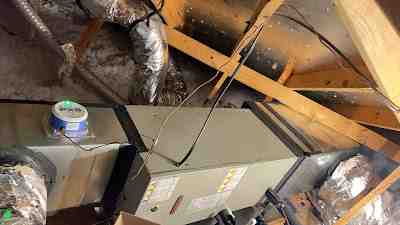
While physics plays a role, mechanical failures are often the culprit when an AC is blowing hot. When a component is struggling, the extreme heat acts like a stress test that exposes the system's weakest links. If you are facing an AC not turning on during a heatwave, it may have tripped a safety switch due to overheating.
The simplest reason for a struggling AC is often the most overlooked: the air filter. A clogged filter acts like a structural blockade. It restricts the volume of air flowing over your evaporator coils. This causes two major problems:
1. Efficiency Loss: Your system has to work much harder to pull air through the debris, leading to a 15% increase in energy use.
2. Component Strain: The blower motor can overheat trying to overcome the "pressure drop" caused by the dirt.
In the dusty environments around Plantersville or Spring, we recommend checking filters every 30 days during the peak of summer. Using a filter with a MERV rating that is too high (like a HEPA filter in a system not designed for it) can also restrict airflow just as badly as a dirty one.
Refrigerant is the lifeblood of your cooling system. Unlike gas in a car, refrigerant is not "used up"—it circulates in a closed loop. If your levels are low, you have a leak. Low refrigerant causes the pressure in the evaporator coil to drop, which sounds counterintuitive, but actually causes the coil to freeze over.
• Airflow Strength — Low Refrigerant: Usually normal, but warm — Dirty Air Filter: Noticeably weak or "thin"
• Noises — Low Refrigerant: Hissing or bubbling sounds — Dirty Air Filter: Whistling or labored motor hum
• Ice Buildup — Low Refrigerant: Often found on the copper lines — Dirty Air Filter: Often found on the indoor coil
• Thermostat — Low Refrigerant: Temperature never drops — Dirty Air Filter: Temperature drops very slowly
Sometimes the problem isn't the AC unit itself, but the "envelope" of your home. If your house is "leaky," your AC is trying to cool the entire neighborhood. You might also need to Address high humidity despite running AC if moisture is seeping in through these same gaps.
Your attic can reach temperatures of 140°F or higher in a Conroe summer. If your ductwork has small holes or unsealed seams, it can lose 20–30% of its cooling capacity before the air ever reaches your living room. Furthermore, if your attic insulation has settled or is insufficient (low R-value), that 140-degree heat is radiating directly through your ceiling, forcing the AC to fight an uphill battle.
Windows are essentially "heat holes" in your walls. Statistics show that up to 30% of a home's unwanted heat comes through the glass. Radiant energy from the sun hits your floors and furniture, turning into heat that stays trapped inside. Using heavy window treatments, blackout curtains, or solar film is one of the most effective ways to help when your ac cant keep up with the heat.
Before calling for a repair, there are steps you can take to alleviate the strain. Preparing your home’s cooling system for a smooth summer involves both maintenance and behavioral changes.
Is your thermostat located on a wall that receives direct afternoon sunlight? If so, it might be getting "false readings," thinking the house is 85°F when it's actually 75°F. This causes the system to run indefinitely.
Additionally, avoid the temptation to "crank it down" to 60°F. An AC unit does not blow "colder" air when you set the thermostat lower; it just runs longer. Setting it to a realistic 78°F during a heatwave prevents the system from overworking and potentially burning out a capacitor or compressor.
Your home has internal "heat enemies." During a heatwave, try to limit activities that generate heat inside the house:
• Cooking: Use an outdoor grill or a microwave instead of the oven.
• Laundry: Run the dryer late at night or early in the morning.
• Lighting: Switch to LED bulbs, which produce significantly less heat than old incandescent ones.
• Showers: Use exhaust fans to pull humidity out of the house immediately.
Immediate steps to cool your home:
1. Close all blinds and curtains on the south and west sides of the house.
2. Turn on ceiling fans (ensure they are spinning counter-clockwise).
3. Check that all supply vents are open and not blocked by furniture.
4. Clear weeds and debris away from your outdoor condenser unit to ensure it can "breathe."
Sometimes, no amount of troubleshooting can fix the fact that a system is simply worn out. Knowing the Optimal times for upgrading your home’s air conditioning system can save you from a total breakdown in the middle of July.
"Bigger is better" does not apply to air conditioners. If a unit is oversized, it will "short cycle"—turning on and off rapidly. This prevents it from running long enough to remove humidity, leaving your home feeling "clammy" and cold but uncomfortable. Conversely, an undersized unit will run forever and never reach the set point. A professional load calculation is the only way to ensure your home has the right "tonnage" for its square footage.
In the harsh climate of The Woodlands and Houston, an AC system typically lasts 10–15 years. As a system ages, the compressor becomes less efficient, and the coils may develop "pitting" or corrosion. If you find yourself frequently searching for an AC repair Tomball TX complete guide, it may be more cost-effective to invest in a modern SEER2-compliant system that can handle the 2026 heat levels with ease.
Yes. When outdoor temperatures exceed 95°F, it is perfectly normal for a properly functioning AC to run almost continuously to maintain a 20-degree difference. As long as the air coming out of the vents is significantly cooler than the air going into the return, the system is likely doing its job.
At night, there is no "solar load" (sunlight hitting the house), and the outdoor temperature drops. This makes it much easier for the condenser to release heat. In the afternoon, the system has to fight both the high outdoor air temperature and the radiant heat from the sun.
While a gentle rinse with a garden hose can help clean dust off the coils, you should never leave a sprinkler running on your unit. Over time, the minerals in Texas tap water can create "scale" buildup on the delicate aluminum fins, which actually acts as an insulator and makes the problem worse.
When your ac cant keep up with the heat, it’s a sign that your home’s cooling system is under extreme duress. Whether it’s a simple matter of a 20-degree design limit or a more serious mechanical failure like a refrigerant leak, you shouldn't have to suffer through a Texas summer.
At Air Comfort Solutions LLC, we have spent over 35 years helping our neighbors in Pinehurst, TX, and across the north side of Harris County stay cool. Our certified technicians understand the unique demands that our local climate puts on your equipment. From a simple tune-up to a full system replacement, we offer honest, reliable solutions and upfront pricing.
If your home is staying five degrees or more above your thermostat setting, don't wait for a total system failure. Whether you need AC repair in Pinehurst TX or are looking for an AC service Tomball TX complete guide, we are here to help.
Book your expert AC inspection today and ensure your home remains a sanctuary of comfort, no matter how high the mercury rises.
To understand why your home feels like a sauna despite the hum of your vents, we first have to look at the physics of air conditioning. Many homeowners believe an AC "creates" cold air. In reality, it’s a heat removal machine. It pulls heat out of your indoor air and dumps it outside.
However, this process has physical limits. Most air conditioning systems are designed to reach a maximum "temperature delta" (or difference) of about 20 degrees between the outdoor air and your indoor air. This is a critical point to remember when your ac cant keep up with the heat. If it is a blistering 105°F outside in Magnolia or Tomball, and your indoor temperature is sitting at 82°F, your system is actually performing exactly as it was engineered to do.
If you find yourself asking Why is my AC not cooling properly in Tomball, the answer often lies in these environmental extremes. When the outdoor ambient temperature exceeds the "design temperature" of the unit, the heat transfer process slows down, and the system struggles to keep up with the radiant heat soaking into your walls and roof.
The 20-degree rule isn't a flaw; it's a standard of HVAC engineering. Systems are sized to handle the "average" high temperatures of a region, not the record-breaking peaks. When we hit those 100-degree-plus days in Southeast Texas, your AC reaches its maximum cooling capacity. At this point, even if the compressor runs 24/7, it simply cannot remove heat faster than the sun is pumping it into your home. This is why your indoor comfort levels might dip during the late afternoon but recover once the sun goes down.
In April 2026, we are seeing more frequent "extreme" weather days than in decades past. When HVAC professionals calculate what size unit a home needs, they use a formula called a Manual J Load Calculation. This considers local climate data and "design temperatures"—the temperatures a region stays at or below for 99% of the year.
If your system was installed ten years ago based on older climate data, it might be undersized for the intensified heatwaves we experience today. This cooling load mismatch means that during a modern Texas heatwave, your system is essentially "outmatched" by the environment.
While physics plays a role, mechanical failures are often the culprit when an AC is blowing hot. When a component is struggling, the extreme heat acts like a stress test that exposes the system's weakest links. If you are facing an AC not turning on during a heatwave, it may have tripped a safety switch due to overheating.
The simplest reason for a struggling AC is often the most overlooked: the air filter. A clogged filter acts like a structural blockade. It restricts the volume of air flowing over your evaporator coils. This causes two major problems:
In the dusty environments around Plantersville or Spring, we recommend checking filters every 30 days during the peak of summer. Using a filter with a MERV rating that is too high (like a HEPA filter in a system not designed for it) can also restrict airflow just as badly as a dirty one.
Refrigerant is the lifeblood of your cooling system. Unlike gas in a car, refrigerant is not "used up"—it circulates in a closed loop. If your levels are low, you have a leak. Low refrigerant causes the pressure in the evaporator coil to drop, which sounds counterintuitive, but actually causes the coil to freeze over.
| Symptom | Low Refrigerant | Dirty Air Filter |
|---|---|---|
| Airflow Strength | Usually normal, but warm | Noticeably weak or "thin" |
| Noises | Hissing or bubbling sounds | Whistling or labored motor hum |
| Ice Buildup | Often found on the copper lines | Often found on the indoor coil |
| Thermostat | Temperature never drops | Temperature drops very slowly |
Sometimes the problem isn't the AC unit itself, but the "envelope" of your home. If your house is "leaky," your AC is trying to cool the entire neighborhood. You might also need to Address high humidity despite running AC if moisture is seeping in through these same gaps.
Your attic can reach temperatures of 140°F or higher in a Conroe summer. If your ductwork has small holes or unsealed seams, it can lose 20–30% of its cooling capacity before the air ever reaches your living room. Furthermore, if your attic insulation has settled or is insufficient (low R-value), that 140-degree heat is radiating directly through your ceiling, forcing the AC to fight an uphill battle.
Windows are essentially "heat holes" in your walls. Statistics show that up to 30% of a home's unwanted heat comes through the glass. Radiant energy from the sun hits your floors and furniture, turning into heat that stays trapped inside. Using heavy window treatments, blackout curtains, or solar film is one of the most effective ways to help when your ac cant keep up with the heat.
Before calling for a repair, there are steps you can take to alleviate the strain. Preparing your home’s cooling system for a smooth summer involves both maintenance and behavioral changes.
Is your thermostat located on a wall that receives direct afternoon sunlight? If so, it might be getting "false readings," thinking the house is 85°F when it's actually 75°F. This causes the system to run indefinitely.
Additionally, avoid the temptation to "crank it down" to 60°F. An AC unit does not blow "colder" air when you set the thermostat lower; it just runs longer. Setting it to a realistic 78°F during a heatwave prevents the system from overworking and potentially burning out a capacitor or compressor.
Your home has internal "heat enemies." During a heatwave, try to limit activities that generate heat inside the house:
Immediate steps to cool your home:
Sometimes, no amount of troubleshooting can fix the fact that a system is simply worn out. Knowing the Optimal times for upgrading your home’s air conditioning system can save you from a total breakdown in the middle of July.
"Bigger is better" does not apply to air conditioners. If a unit is oversized, it will "short cycle"—turning on and off rapidly. This prevents it from running long enough to remove humidity, leaving your home feeling "clammy" and cold but uncomfortable. Conversely, an undersized unit will run forever and never reach the set point. A professional load calculation is the only way to ensure your home has the right "tonnage" for its square footage.
In the harsh climate of The Woodlands and Houston, an AC system typically lasts 10–15 years. As a system ages, the compressor becomes less efficient, and the coils may develop "pitting" or corrosion. If you find yourself frequently searching for an AC repair Tomball TX complete guide, it may be more cost-effective to invest in a modern SEER2-compliant system that can handle the 2026 heat levels with ease.
Yes. When outdoor temperatures exceed 95°F, it is perfectly normal for a properly functioning AC to run almost continuously to maintain a 20-degree difference. As long as the air coming out of the vents is significantly cooler than the air going into the return, the system is likely doing its job.
At night, there is no "solar load" (sunlight hitting the house), and the outdoor temperature drops. This makes it much easier for the condenser to release heat. In the afternoon, the system has to fight both the high outdoor air temperature and the radiant heat from the sun.
While a gentle rinse with a garden hose can help clean dust off the coils, you should never leave a sprinkler running on your unit. Over time, the minerals in Texas tap water can create "scale" buildup on the delicate aluminum fins, which actually acts as an insulator and makes the problem worse.
When your ac cant keep up with the heat, it’s a sign that your home’s cooling system is under extreme duress. Whether it’s a simple matter of a 20-degree design limit or a more serious mechanical failure like a refrigerant leak, you shouldn't have to suffer through a Texas summer.
At Air Comfort Solutions LLC, we have spent over 35 years helping our neighbors in Pinehurst, TX, and across the north side of Harris County stay cool. Our certified technicians understand the unique demands that our local climate puts on your equipment. From a simple tune-up to a full system replacement, we offer honest, reliable solutions and upfront pricing.
If your home is staying five degrees or more above your thermostat setting, don't wait for a total system failure. Whether you need AC repair in Pinehurst TX or are looking for an AC service Tomball TX complete guide, we are here to help.
Book your expert AC inspection today and ensure your home remains a sanctuary of comfort, no matter how high the mercury rises.
To understand why your home feels like a sauna despite the hum of your vents, we first have to look at the physics of air conditioning. Many homeowners believe an AC "creates" cold air. In reality, it’s a heat removal machine. It pulls heat out of your indoor air and dumps it outside.
However, this process has physical limits. Most air conditioning systems are designed to reach a maximum "temperature delta" (or difference) of about 20 degrees between the outdoor air and your indoor air. This is a critical point to remember when your ac cant keep up with the heat. If it is a blistering 105°F outside in Magnolia or Tomball, and your indoor temperature is sitting at 82°F, your system is actually performing exactly as it was engineered to do.
If you find yourself asking Why is my AC not cooling properly in Tomball, the answer often lies in these environmental extremes. When the outdoor ambient temperature exceeds the "design temperature" of the unit, the heat transfer process slows down, and the system struggles to keep up with the radiant heat soaking into your walls and roof.
The 20-degree rule isn't a flaw; it's a standard of HVAC engineering. Systems are sized to handle the "average" high temperatures of a region, not the record-breaking peaks. When we hit those 100-degree-plus days in Southeast Texas, your AC reaches its maximum cooling capacity. At this point, even if the compressor runs 24/7, it simply cannot remove heat faster than the sun is pumping it into your home. This is why your indoor comfort levels might dip during the late afternoon but recover once the sun goes down.
In April 2026, we are seeing more frequent "extreme" weather days than in decades past. When HVAC professionals calculate what size unit a home needs, they use a formula called a Manual J Load Calculation. This considers local climate data and "design temperatures"—the temperatures a region stays at or below for 99% of the year.
If your system was installed ten years ago based on older climate data, it might be undersized for the intensified heatwaves we experience today. This cooling load mismatch means that during a modern Texas heatwave, your system is essentially "outmatched" by the environment.
While physics plays a role, mechanical failures are often the culprit when an AC is blowing hot. When a component is struggling, the extreme heat acts like a stress test that exposes the system's weakest links. If you are facing an AC not turning on during a heatwave, it may have tripped a safety switch due to overheating.
The simplest reason for a struggling AC is often the most overlooked: the air filter. A clogged filter acts like a structural blockade. It restricts the volume of air flowing over your evaporator coils. This causes two major problems:
In the dusty environments around Plantersville or Spring, we recommend checking filters every 30 days during the peak of summer. Using a filter with a MERV rating that is too high (like a HEPA filter in a system not designed for it) can also restrict airflow just as badly as a dirty one.
Refrigerant is the lifeblood of your cooling system. Unlike gas in a car, refrigerant is not "used up"—it circulates in a closed loop. If your levels are low, you have a leak. Low refrigerant causes the pressure in the evaporator coil to drop, which sounds counterintuitive, but actually causes the coil to freeze over.
| Symptom | Low Refrigerant | Dirty Air Filter |
|---|---|---|
| Airflow Strength | Usually normal, but warm | Noticeably weak or "thin" |
| Noises | Hissing or bubbling sounds | Whistling or labored motor hum |
| Ice Buildup | Often found on the copper lines | Often found on the indoor coil |
| Thermostat | Temperature never drops | Temperature drops very slowly |
Sometimes the problem isn't the AC unit itself, but the "envelope" of your home. If your house is "leaky," your AC is trying to cool the entire neighborhood. You might also need to Address high humidity despite running AC if moisture is seeping in through these same gaps.
Your attic can reach temperatures of 140°F or higher in a Conroe summer. If your ductwork has small holes or unsealed seams, it can lose 20–30% of its cooling capacity before the air ever reaches your living room. Furthermore, if your attic insulation has settled or is insufficient (low R-value), that 140-degree heat is radiating directly through your ceiling, forcing the AC to fight an uphill battle.
Windows are essentially "heat holes" in your walls. Statistics show that up to 30% of a home's unwanted heat comes through the glass. Radiant energy from the sun hits your floors and furniture, turning into heat that stays trapped inside. Using heavy window treatments, blackout curtains, or solar film is one of the most effective ways to help when your ac cant keep up with the heat.
Before calling for a repair, there are steps you can take to alleviate the strain. Preparing your home’s cooling system for a smooth summer involves both maintenance and behavioral changes.
Is your thermostat located on a wall that receives direct afternoon sunlight? If so, it might be getting "false readings," thinking the house is 85°F when it's actually 75°F. This causes the system to run indefinitely.
Additionally, avoid the temptation to "crank it down" to 60°F. An AC unit does not blow "colder" air when you set the thermostat lower; it just runs longer. Setting it to a realistic 78°F during a heatwave prevents the system from overworking and potentially burning out a capacitor or compressor.
Your home has internal "heat enemies." During a heatwave, try to limit activities that generate heat inside the house:
Immediate steps to cool your home:
Sometimes, no amount of troubleshooting can fix the fact that a system is simply worn out. Knowing the Optimal times for upgrading your home’s air conditioning system can save you from a total breakdown in the middle of July.
"Bigger is better" does not apply to air conditioners. If a unit is oversized, it will "short cycle"—turning on and off rapidly. This prevents it from running long enough to remove humidity, leaving your home feeling "clammy" and cold but uncomfortable. Conversely, an undersized unit will run forever and never reach the set point. A professional load calculation is the only way to ensure your home has the right "tonnage" for its square footage.
In the harsh climate of The Woodlands and Houston, an AC system typically lasts 10–15 years. As a system ages, the compressor becomes less efficient, and the coils may develop "pitting" or corrosion. If you find yourself frequently searching for an AC repair Tomball TX complete guide, it may be more cost-effective to invest in a modern SEER2-compliant system that can handle the 2026 heat levels with ease.
Yes. When outdoor temperatures exceed 95°F, it is perfectly normal for a properly functioning AC to run almost continuously to maintain a 20-degree difference. As long as the air coming out of the vents is significantly cooler than the air going into the return, the system is likely doing its job.
At night, there is no "solar load" (sunlight hitting the house), and the outdoor temperature drops. This makes it much easier for the condenser to release heat. In the afternoon, the system has to fight both the high outdoor air temperature and the radiant heat from the sun.
While a gentle rinse with a garden hose can help clean dust off the coils, you should never leave a sprinkler running on your unit. Over time, the minerals in Texas tap water can create "scale" buildup on the delicate aluminum fins, which actually acts as an insulator and makes the problem worse.
When your ac cant keep up with the heat, it’s a sign that your home’s cooling system is under extreme duress. Whether it’s a simple matter of a 20-degree design limit or a more serious mechanical failure like a refrigerant leak, you shouldn't have to suffer through a Texas summer.
At Air Comfort Solutions LLC, we have spent over 35 years helping our neighbors in Pinehurst, TX, and across the north side of Harris County stay cool. Our certified technicians understand the unique demands that our local climate puts on your equipment. From a simple tune-up to a full system replacement, we offer honest, reliable solutions and upfront pricing.
If your home is staying five degrees or more above your thermostat setting, don't wait for a total system failure. Whether you need AC repair in Pinehurst TX or are looking for an AC service Tomball TX complete guide, we are here to help.
Book your expert AC inspection today and ensure your home remains a sanctuary of comfort, no matter how high the mercury rises.
To understand why your home feels like a sauna despite the hum of your vents, we first have to look at the physics of air conditioning. Many homeowners believe an AC "creates" cold air. In reality, it’s a heat removal machine. It pulls heat out of your indoor air and dumps it outside.
However, this process has physical limits. Most air conditioning systems are designed to reach a maximum "temperature delta" (or difference) of about 20 degrees between the outdoor air and your indoor air. This is a critical point to remember when your ac cant keep up with the heat. If it is a blistering 105°F outside in Magnolia or Tomball, and your indoor temperature is sitting at 82°F, your system is actually performing exactly as it was engineered to do.
If you find yourself asking Why is my AC not cooling properly in Tomball, the answer often lies in these environmental extremes. When the outdoor ambient temperature exceeds the "design temperature" of the unit, the heat transfer process slows down, and the system struggles to keep up with the radiant heat soaking into your walls and roof.
The 20-degree rule isn't a flaw; it's a standard of HVAC engineering. Systems are sized to handle the "average" high temperatures of a region, not the record-breaking peaks. When we hit those 100-degree-plus days in Southeast Texas, your AC reaches its maximum cooling capacity. At this point, even if the compressor runs 24/7, it simply cannot remove heat faster than the sun is pumping it into your home. This is why your indoor comfort levels might dip during the late afternoon but recover once the sun goes down.
In April 2026, we are seeing more frequent "extreme" weather days than in decades past. When HVAC professionals calculate what size unit a home needs, they use a formula called a Manual J Load Calculation. This considers local climate data and "design temperatures"—the temperatures a region stays at or below for 99% of the year.
If your system was installed ten years ago based on older climate data, it might be undersized for the intensified heatwaves we experience today. This cooling load mismatch means that during a modern Texas heatwave, your system is essentially "outmatched" by the environment.
While physics plays a role, mechanical failures are often the culprit when an AC is blowing hot. When a component is struggling, the extreme heat acts like a stress test that exposes the system's weakest links. If you are facing an AC not turning on during a heatwave, it may have tripped a safety switch due to overheating.
The simplest reason for a struggling AC is often the most overlooked: the air filter. A clogged filter acts like a structural blockade. It restricts the volume of air flowing over your evaporator coils. This causes two major problems:
In the dusty environments around Plantersville or Spring, we recommend checking filters every 30 days during the peak of summer. Using a filter with a MERV rating that is too high (like a HEPA filter in a system not designed for it) can also restrict airflow just as badly as a dirty one.
Refrigerant is the lifeblood of your cooling system. Unlike gas in a car, refrigerant is not "used up"—it circulates in a closed loop. If your levels are low, you have a leak. Low refrigerant causes the pressure in the evaporator coil to drop, which sounds counterintuitive, but actually causes the coil to freeze over.
| Symptom | Low Refrigerant | Dirty Air Filter |
|---|---|---|
| Airflow Strength | Usually normal, but warm | Noticeably weak or "thin" |
| Noises | Hissing or bubbling sounds | Whistling or labored motor hum |
| Ice Buildup | Often found on the copper lines | Often found on the indoor coil |
| Thermostat | Temperature never drops | Temperature drops very slowly |
Sometimes the problem isn't the AC unit itself, but the "envelope" of your home. If your house is "leaky," your AC is trying to cool the entire neighborhood. You might also need to Address high humidity despite running AC if moisture is seeping in through these same gaps.
Your attic can reach temperatures of 140°F or higher in a Conroe summer. If your ductwork has small holes or unsealed seams, it can lose 20–30% of its cooling capacity before the air ever reaches your living room. Furthermore, if your attic insulation has settled or is insufficient (low R-value), that 140-degree heat is radiating directly through your ceiling, forcing the AC to fight an uphill battle.
Windows are essentially "heat holes" in your walls. Statistics show that up to 30% of a home's unwanted heat comes through the glass. Radiant energy from the sun hits your floors and furniture, turning into heat that stays trapped inside. Using heavy window treatments, blackout curtains, or solar film is one of the most effective ways to help when your ac cant keep up with the heat.
Before calling for a repair, there are steps you can take to alleviate the strain. Preparing your home’s cooling system for a smooth summer involves both maintenance and behavioral changes.
Is your thermostat located on a wall that receives direct afternoon sunlight? If so, it might be getting "false readings," thinking the house is 85°F when it's actually 75°F. This causes the system to run indefinitely.
Additionally, avoid the temptation to "crank it down" to 60°F. An AC unit does not blow "colder" air when you set the thermostat lower; it just runs longer. Setting it to a realistic 78°F during a heatwave prevents the system from overworking and potentially burning out a capacitor or compressor.
Your home has internal "heat enemies." During a heatwave, try to limit activities that generate heat inside the house:
Immediate steps to cool your home:
Sometimes, no amount of troubleshooting can fix the fact that a system is simply worn out. Knowing the Optimal times for upgrading your home’s air conditioning system can save you from a total breakdown in the middle of July.
"Bigger is better" does not apply to air conditioners. If a unit is oversized, it will "short cycle"—turning on and off rapidly. This prevents it from running long enough to remove humidity, leaving your home feeling "clammy" and cold but uncomfortable. Conversely, an undersized unit will run forever and never reach the set point. A professional load calculation is the only way to ensure your home has the right "tonnage" for its square footage.
In the harsh climate of The Woodlands and Houston, an AC system typically lasts 10–15 years. As a system ages, the compressor becomes less efficient, and the coils may develop "pitting" or corrosion. If you find yourself frequently searching for an AC repair Tomball TX complete guide, it may be more cost-effective to invest in a modern SEER2-compliant system that can handle the 2026 heat levels with ease.
Yes. When outdoor temperatures exceed 95°F, it is perfectly normal for a properly functioning AC to run almost continuously to maintain a 20-degree difference. As long as the air coming out of the vents is significantly cooler than the air going into the return, the system is likely doing its job.
At night, there is no "solar load" (sunlight hitting the house), and the outdoor temperature drops. This makes it much easier for the condenser to release heat. In the afternoon, the system has to fight both the high outdoor air temperature and the radiant heat from the sun.
While a gentle rinse with a garden hose can help clean dust off the coils, you should never leave a sprinkler running on your unit. Over time, the minerals in Texas tap water can create "scale" buildup on the delicate aluminum fins, which actually acts as an insulator and makes the problem worse.
When your ac cant keep up with the heat, it’s a sign that your home’s cooling system is under extreme duress. Whether it’s a simple matter of a 20-degree design limit or a more serious mechanical failure like a refrigerant leak, you shouldn't have to suffer through a Texas summer.
At Air Comfort Solutions LLC, we have spent over 35 years helping our neighbors in Pinehurst, TX, and across the north side of Harris County stay cool. Our certified technicians understand the unique demands that our local climate puts on your equipment. From a simple tune-up to a full system replacement, we offer honest, reliable solutions and upfront pricing.
If your home is staying five degrees or more above your thermostat setting, don't wait for a total system failure. Whether you need AC repair in Pinehurst TX or are looking for an AC service Tomball TX complete guide, we are here to help.
Book your expert AC inspection today and ensure your home remains a sanctuary of comfort, no matter how high the mercury rises.
To understand why your home feels like a sauna despite the hum of your vents, we first have to look at the physics of air conditioning. Many homeowners believe an AC "creates" cold air. In reality, it’s a heat removal machine. It pulls heat out of your indoor air and dumps it outside.
However, this process has physical limits. Most air conditioning systems are designed to reach a maximum "temperature delta" (or difference) of about 20 degrees between the outdoor air and your indoor air. This is a critical point to remember when your ac cant keep up with the heat. If it is a blistering 105°F outside in Magnolia or Tomball, and your indoor temperature is sitting at 82°F, your system is actually performing exactly as it was engineered to do.
If you find yourself asking Why is my AC not cooling properly in Tomball, the answer often lies in these environmental extremes. When the outdoor ambient temperature exceeds the "design temperature" of the unit, the heat transfer process slows down, and the system struggles to keep up with the radiant heat soaking into your walls and roof.
The 20-degree rule isn't a flaw; it's a standard of HVAC engineering. Systems are sized to handle the "average" high temperatures of a region, not the record-breaking peaks. When we hit those 100-degree-plus days in Southeast Texas, your AC reaches its maximum cooling capacity. At this point, even if the compressor runs 24/7, it simply cannot remove heat faster than the sun is pumping it into your home. This is why your indoor comfort levels might dip during the late afternoon but recover once the sun goes down.
In April 2026, we are seeing more frequent "extreme" weather days than in decades past. When HVAC professionals calculate what size unit a home needs, they use a formula called a Manual J Load Calculation. This considers local climate data and "design temperatures"—the temperatures a region stays at or below for 99% of the year.
If your system was installed ten years ago based on older climate data, it might be undersized for the intensified heatwaves we experience today. This cooling load mismatch means that during a modern Texas heatwave, your system is essentially "outmatched" by the environment.
While physics plays a role, mechanical failures are often the culprit when an AC is blowing hot. When a component is struggling, the extreme heat acts like a stress test that exposes the system's weakest links. If you are facing an AC not turning on during a heatwave, it may have tripped a safety switch due to overheating.
The simplest reason for a struggling AC is often the most overlooked: the air filter. A clogged filter acts like a structural blockade. It restricts the volume of air flowing over your evaporator coils. This causes two major problems:
In the dusty environments around Plantersville or Spring, we recommend checking filters every 30 days during the peak of summer. Using a filter with a MERV rating that is too high (like a HEPA filter in a system not designed for it) can also restrict airflow just as badly as a dirty one.
Refrigerant is the lifeblood of your cooling system. Unlike gas in a car, refrigerant is not "used up"—it circulates in a closed loop. If your levels are low, you have a leak. Low refrigerant causes the pressure in the evaporator coil to drop, which sounds counterintuitive, but actually causes the coil to freeze over.
| Symptom | Low Refrigerant | Dirty Air Filter |
|---|---|---|
| Airflow Strength | Usually normal, but warm | Noticeably weak or "thin" |
| Noises | Hissing or bubbling sounds | Whistling or labored motor hum |
| Ice Buildup | Often found on the copper lines | Often found on the indoor coil |
| Thermostat | Temperature never drops | Temperature drops very slowly |
Sometimes the problem isn't the AC unit itself, but the "envelope" of your home. If your house is "leaky," your AC is trying to cool the entire neighborhood. You might also need to Address high humidity despite running AC if moisture is seeping in through these same gaps.
Your attic can reach temperatures of 140°F or higher in a Conroe summer. If your ductwork has small holes or unsealed seams, it can lose 20–30% of its cooling capacity before the air ever reaches your living room. Furthermore, if your attic insulation has settled or is insufficient (low R-value), that 140-degree heat is radiating directly through your ceiling, forcing the AC to fight an uphill battle.
Windows are essentially "heat holes" in your walls. Statistics show that up to 30% of a home's unwanted heat comes through the glass. Radiant energy from the sun hits your floors and furniture, turning into heat that stays trapped inside. Using heavy window treatments, blackout curtains, or solar film is one of the most effective ways to help when your ac cant keep up with the heat.
Before calling for a repair, there are steps you can take to alleviate the strain. Preparing your home’s cooling system for a smooth summer involves both maintenance and behavioral changes.
Is your thermostat located on a wall that receives direct afternoon sunlight? If so, it might be getting "false readings," thinking the house is 85°F when it's actually 75°F. This causes the system to run indefinitely.
Additionally, avoid the temptation to "crank it down" to 60°F. An AC unit does not blow "colder" air when you set the thermostat lower; it just runs longer. Setting it to a realistic 78°F during a heatwave prevents the system from overworking and potentially burning out a capacitor or compressor.
Your home has internal "heat enemies." During a heatwave, try to limit activities that generate heat inside the house:
Immediate steps to cool your home:
Sometimes, no amount of troubleshooting can fix the fact that a system is simply worn out. Knowing the Optimal times for upgrading your home’s air conditioning system can save you from a total breakdown in the middle of July.
"Bigger is better" does not apply to air conditioners. If a unit is oversized, it will "short cycle"—turning on and off rapidly. This prevents it from running long enough to remove humidity, leaving your home feeling "clammy" and cold but uncomfortable. Conversely, an undersized unit will run forever and never reach the set point. A professional load calculation is the only way to ensure your home has the right "tonnage" for its square footage.
In the harsh climate of The Woodlands and Houston, an AC system typically lasts 10–15 years. As a system ages, the compressor becomes less efficient, and the coils may develop "pitting" or corrosion. If you find yourself frequently searching for an AC repair Tomball TX complete guide, it may be more cost-effective to invest in a modern SEER2-compliant system that can handle the 2026 heat levels with ease.
Yes. When outdoor temperatures exceed 95°F, it is perfectly normal for a properly functioning AC to run almost continuously to maintain a 20-degree difference. As long as the air coming out of the vents is significantly cooler than the air going into the return, the system is likely doing its job.
At night, there is no "solar load" (sunlight hitting the house), and the outdoor temperature drops. This makes it much easier for the condenser to release heat. In the afternoon, the system has to fight both the high outdoor air temperature and the radiant heat from the sun.
While a gentle rinse with a garden hose can help clean dust off the coils, you should never leave a sprinkler running on your unit. Over time, the minerals in Texas tap water can create "scale" buildup on the delicate aluminum fins, which actually acts as an insulator and makes the problem worse.
When your ac cant keep up with the heat, it’s a sign that your home’s cooling system is under extreme duress. Whether it’s a simple matter of a 20-degree design limit or a more serious mechanical failure like a refrigerant leak, you shouldn't have to suffer through a Texas summer.
At Air Comfort Solutions LLC, we have spent over 35 years helping our neighbors in Pinehurst, TX, and across the north side of Harris County stay cool. Our certified technicians understand the unique demands that our local climate puts on your equipment. From a simple tune-up to a full system replacement, we offer honest, reliable solutions and upfront pricing.
If your home is staying five degrees or more above your thermostat setting, don't wait for a total system failure. Whether you need AC repair in Pinehurst TX or are looking for an AC service Tomball TX complete guide, we are here to help.
Book your expert AC inspection today and ensure your home remains a sanctuary of comfort, no matter how high the mercury rises.


Zane came out and did an amazing job! Super friendly, honest and transparent about the work that needed to be done. This is my second time working with Air Comfort Solutions and they’re my go to for HVAC services. Highly recommend.
God's AMAZING grace sent us Robert and Zane. We have been without air in this Texas heat for six weeks and four days. We've had a few contractors give us quotes all trying to upsell when we're at a low point. But not the guys at Air Comfort Solutions. They came in assessed our situation, gave us honest feedback, and showed us the issues as they proceeded with the assessment for clear understanding. We highly recommend them for their professionalism, quality products, and fair pricing. We hands down support them for all the work they do 💯 %.
Robert and Zane gone above and beyond to make the process easy and affordable.
Would definitely recommend!!
I’m writing this review to let everyone know that Air Comfort Solutions is the company to work with. I know the owner ( Robert) for several years now. He has been taking care of my residential and business work orders. Robert is professional, knowledgeable and will save you money. I just want to thank Robert for great job you have been doing for me.


