


Do You Need 24 Hour AC Repair? Troubleshooting Your Fall Heating Startup
See why fall heater smells cause panic. Use our home maintenance tips and troubleshooting to decide if it's normal dust burn-off or time to call a pro.
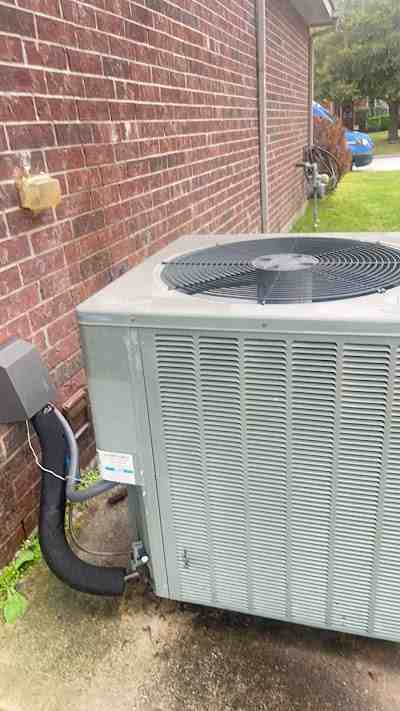
Is a high efficiency ac worth the extra cost in texas — for most Pinehurst homeowners, the answer is yes. Texas cooling seasons stretch close to nine months, electricity bills climb fast, and an inefficient system runs constantly just to keep up. Upgrading to a high-efficiency unit can cut your cooling costs by 30–50%, and the system often pays for itself well within its lifespan.
Quick answer at a glance:
• Who benefits most: Homeowners staying 5+ years, those with older systems (10–15 years), and anyone paying high monthly electric bills
• Typical energy savings: 30–50% reduction in cooling costs compared to older low-SEER systems
• Payback period: Most Texas homeowners see a payback window of 5–10 years through utility savings alone
• Minimum standard in Texas: 14.3 SEER2 (federal requirement for the Southeast region as of 2023)
• Sweet spot for Pinehurst: 16–18 SEER2 balances upfront cost with meaningful long-term savings
• Bonus benefits: Better humidity control, quieter operation, and improved indoor comfort — all especially valuable in Harris County's hot, humid climate
• When to skip the upgrade: If you plan to sell within 2–3 years, a minimum-efficiency unit may make more financial sense
Here in North Harris County, the heat is relentless and air conditioning is not a luxury — it's a necessity. The real question isn't whether to run your AC, it's how much you want to spend doing it. A standard-efficiency unit might cost less today, but in a climate like Pinehurst's, the monthly operating costs add up fast. A high-efficiency system is essentially a long-term investment in lower bills, better comfort, and fewer headaches.
The rest of this guide breaks down exactly how the math works, what the comfort difference feels like, and how to decide which system is the right fit for your home and budget.
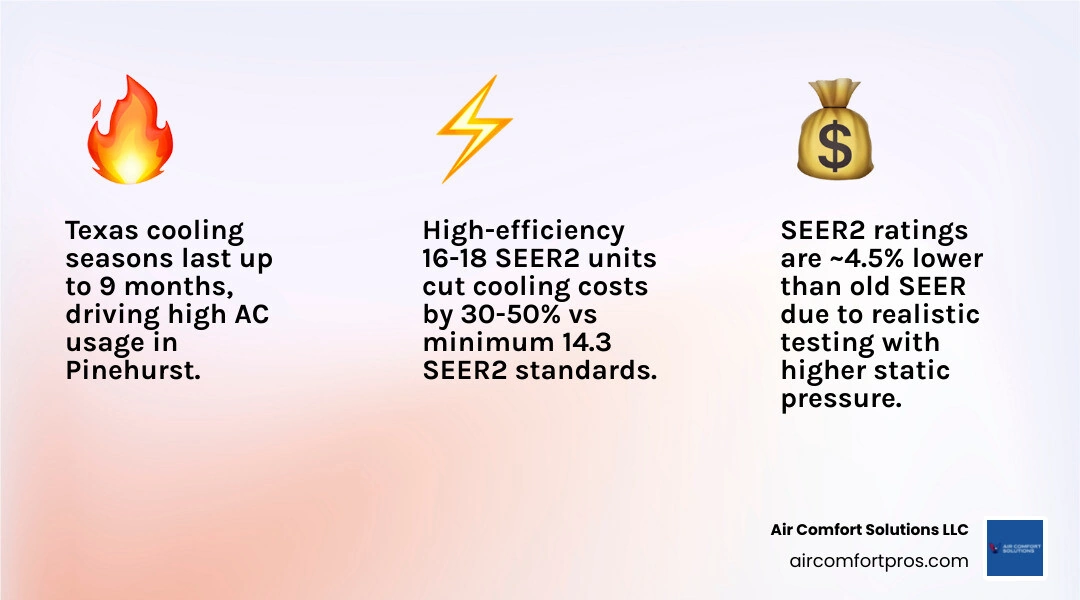
When we talk about air conditioning efficiency, the acronym you’ll hear most is SEER, which stands for Seasonal Energy Efficiency Ratio. Think of it like the "miles per gallon" for your home’s cooling system. However, as of 2023, the Department of Energy transitioned to a new standard called SEER2.
SEER2 is a more accurate way of measuring how a unit performs in the real world. Traditional SEER ratings were calculated in laboratory settings that didn't always account for the resistance of actual ductwork. SEER2 testing uses higher static pressure, which better mimics the conditions inside a home in Pinehurst or Tomball. Because the testing is more rigorous, SEER2 ratings are typically about 4.5% lower than the old SEER numbers for the same piece of equipment. For example, an old 15 SEER unit might be rated as 14.3 SEER2 today.
In the Southeast region, which includes Texas, the federal minimum requirement for new central air conditioners is now 14.3 SEER2. This is a significant jump from the standards of a decade ago. It is important to understand why do AC units wear out faster in hot climates. In our region, the sheer volume of cooling hours puts immense mechanical stress on the system. A unit that isn't built for efficiency will struggle under this load, leading to higher energy consumption and a shorter lifespan.
In Pinehurst and the surrounding Harris County area, our AC units don't just work; they labor. While a homeowner in the North might only run their AC for a few hundred hours a summer, Texas homes often require over 2,000 cooling hours per year. This high usage is the primary reason why is a high efficiency ac worth the extra cost in texas.
When you have a long cooling season, even small differences in efficiency lead to massive savings over time. Furthermore, how Southeast Texas climate affects your HVAC system goes beyond just temperature. Our high humidity means your AC has two jobs: cooling the air and removing moisture. High-efficiency units are designed to do both more effectively. By choosing a more efficient model, you are also contributing to energy grid stability during those triple-digit August afternoons when the Texas grid is under the most strain.

One of the most compelling arguments for a high-efficiency system is the immediate drop in your monthly utility bills. If you are replacing a 10-year-old or 15-year-old system, you are likely moving from a unit with a SEER rating of 10 or 12 to something much higher.
Upgrading from a SEER 10 unit to an 18 SEER2 model can reduce your cooling energy consumption by up to 50%. In a typical Texas home where air conditioning can account for nearly half of the summer energy bill, that is a substantial amount of money staying in your pocket. Knowing the optimal times for upgrading your home's air conditioning system can help you maximize these savings before your old unit fails during a heatwave.
Return on Investment (ROI) is the best way to look at this purchase. While a high-efficiency unit has a higher upfront price tag, the "payback period" — the time it takes for energy savings to cover that extra cost — is usually between 5 and 10 years in Texas. Given that a well-maintained system can last 15 to 20 years, you could enjoy a decade or more of "profit" from your investment.
To sweeten the deal, there are several financial incentives currently available:
• Federal Tax Credits: Under the Inflation Reduction Act, homeowners can claim tax credits for high-efficiency HVAC installations, often up to $2,000 for qualified heat pumps or $600 for high-efficiency AC units.
• Utility Rebates: Many local providers in the Houston and Spring areas offer rebates for installing ENERGY STAR certified equipment.
• Long-term Savings: Beyond the bills, high-efficiency units often have longer warranties and more durable components, potentially saving you on repair costs down the road.
While the numbers are important, the way a high-efficiency system feels is often what homeowners love most. Standard units are "single-stage," meaning they are either 100% on or 100% off. This leads to temperature swings where the house gets cold, the AC turns off, and then it feels "clammy" before the unit kicks back on.
High-efficiency units often utilize variable-speed technology. These compressors can run at lower speeds for longer periods. This doesn't just save energy; it provides superior humidity removal. Because the unit runs longer at a gentle pace, it pulls more moisture out of the air, making 75 degrees feel like 72. This is a core part of our AC replacement Houston TX complete guide.
Additionally, these systems are significantly quieter. Instead of the "clunk and roar" of an old compressor, variable-speed units use soft-start technology to ramp up gradually, often operating at decibel levels so low you won't even notice they are running while you're on the patio.
If you're thinking about moving in the next few years, you might wonder if the upgrade is worth it. In the Texas real estate market, a modern, high-efficiency HVAC system is a major selling point. Prospective buyers in the Magnolia and The Woodlands areas are savvy; they ask about utility bills and the age of the AC.
A high-efficiency unit increases your home's marketability and can even pass home inspections with flying colors. If your current unit is showing signs your AC needs repair in Houston area heat, replacing it with a high-efficiency model before listing can prevent a buyer from asking for a massive price reduction later.
In 2026, many Pinehurst homeowners are looking at heat pumps as an alternative to traditional AC and furnace setups. A modern high-efficiency heat pump is essentially an AC unit that can run in reverse to provide heat during our chilly Texas winters.
Heat pumps are incredibly efficient because they move heat rather than generating it through combustion or electric resistance. For our climate, a "dual-fuel" system — a heat pump paired with a gas furnace for the few truly freezing nights — can offer the best of both worlds. When you are trying to how to decide between AC repair and replacement, consider that a heat pump might qualify for higher federal tax credits, making the high-efficiency upgrade even more affordable.
Buying a high-efficiency system is the first step, but keeping it efficient requires a little bit of love. These systems have advanced sensors and sensitive inverter boards that need to be kept clean and clear of debris.
To protect your investment, we recommend:
1. Regular Filter Changes: In the dusty Texas summer, check your filters every 30 days.
2. Professional Tune-ups: Knowing how often should you service your AC in Texas is critical — we recommend twice a year.
3. Coil Cleaning: Dirty coils force the system to work harder, which can negate the efficiency you paid for.
We've seen what happens if you skip AC maintenance in Texas, and it usually involves expensive emergency repairs. Taking steps to how to make sure your AC survives a Texas summer ensures your high-efficiency unit actually hits those 15-20 year lifespan marks.
For most homes in the Pinehurst and Tomball area, the "sweet spot" is between 16 and 18 SEER2. This range offers a fantastic balance of significantly lower utility bills and improved comfort features (like two-stage or variable-speed cooling) without the extremely high entry price of the 20+ SEER2 ultra-premium models.
With proper maintenance, a high-efficiency AC unit should last between 15 and 20 years. Because these units often use variable-speed motors that ramp up slowly, they experience less mechanical "shock" than older units that kick on at full blast, which can actually help the components last longer.
Yes, many high-efficiency, variable-speed systems require "communicating" thermostats. These aren't just standard Wi-Fi thermostats; they actually talk to the AC unit to tell it exactly what speed to run at to maintain the perfect temperature and humidity level.
At the end of the day, deciding if is a high efficiency ac worth the extra cost in texas comes down to your goals for your home. If you want lower monthly bills, a quieter backyard, and a house that doesn't feel clammy when the humidity spikes, a high-efficiency system is a winning choice.
At Air Comfort Solutions LLC, we’ve spent over 35 years helping our neighbors in Pinehurst, Magnolia, and throughout Harris County stay cool without breaking the bank. Our licensed technicians provide honest, upfront guidance to help you find the system that fits your home’s unique needs. Whether you are in Conroe, Spring, or The Woodlands, we are here to ensure your home remains a sanctuary from the Texas heat.
Schedule your professional air conditioning consultation today and let us show you exactly how much a high-efficiency upgrade can save you.
Is a high efficiency ac worth the extra cost in texas — for most Pinehurst homeowners, the answer is yes. Texas cooling seasons stretch close to nine months, electricity bills climb fast, and an inefficient system runs constantly just to keep up. Upgrading to a high-efficiency unit can cut your cooling costs by 30–50%, and the system often pays for itself well within its lifespan.
Quick answer at a glance:
Here in North Harris County, the heat is relentless and air conditioning is not a luxury — it's a necessity. The real question isn't whether to run your AC, it's how much you want to spend doing it. A standard-efficiency unit might cost less today, but in a climate like Pinehurst's, the monthly operating costs add up fast. A high-efficiency system is essentially a long-term investment in lower bills, better comfort, and fewer headaches.
The rest of this guide breaks down exactly how the math works, what the comfort difference feels like, and how to decide which system is the right fit for your home and budget.
When we talk about air conditioning efficiency, the acronym you’ll hear most is SEER, which stands for Seasonal Energy Efficiency Ratio. Think of it like the "miles per gallon" for your home’s cooling system. However, as of 2023, the Department of Energy transitioned to a new standard called SEER2.
SEER2 is a more accurate way of measuring how a unit performs in the real world. Traditional SEER ratings were calculated in laboratory settings that didn't always account for the resistance of actual ductwork. SEER2 testing uses higher static pressure, which better mimics the conditions inside a home in Pinehurst or Tomball. Because the testing is more rigorous, SEER2 ratings are typically about 4.5% lower than the old SEER numbers for the same piece of equipment. For example, an old 15 SEER unit might be rated as 14.3 SEER2 today.
In the Southeast region, which includes Texas, the federal minimum requirement for new central air conditioners is now 14.3 SEER2. This is a significant jump from the standards of a decade ago. It is important to understand why do AC units wear out faster in hot climates. In our region, the sheer volume of cooling hours puts immense mechanical stress on the system. A unit that isn't built for efficiency will struggle under this load, leading to higher energy consumption and a shorter lifespan.
In Pinehurst and the surrounding Harris County area, our AC units don't just work; they labor. While a homeowner in the North might only run their AC for a few hundred hours a summer, Texas homes often require over 2,000 cooling hours per year. This high usage is the primary reason why is a high efficiency ac worth the extra cost in texas.
When you have a long cooling season, even small differences in efficiency lead to massive savings over time. Furthermore, how Southeast Texas climate affects your HVAC system goes beyond just temperature. Our high humidity means your AC has two jobs: cooling the air and removing moisture. High-efficiency units are designed to do both more effectively. By choosing a more efficient model, you are also contributing to energy grid stability during those triple-digit August afternoons when the Texas grid is under the most strain.
One of the most compelling arguments for a high-efficiency system is the immediate drop in your monthly utility bills. If you are replacing a 10-year-old or 15-year-old system, you are likely moving from a unit with a SEER rating of 10 or 12 to something much higher.
Upgrading from a SEER 10 unit to an 18 SEER2 model can reduce your cooling energy consumption by up to 50%. In a typical Texas home where air conditioning can account for nearly half of the summer energy bill, that is a substantial amount of money staying in your pocket. Knowing the optimal times for upgrading your home's air conditioning system can help you maximize these savings before your old unit fails during a heatwave.
Return on Investment (ROI) is the best way to look at this purchase. While a high-efficiency unit has a higher upfront price tag, the "payback period" — the time it takes for energy savings to cover that extra cost — is usually between 5 and 10 years in Texas. Given that a well-maintained system can last 15 to 20 years, you could enjoy a decade or more of "profit" from your investment.
To sweeten the deal, there are several financial incentives currently available:
While the numbers are important, the way a high-efficiency system feels is often what homeowners love most. Standard units are "single-stage," meaning they are either 100% on or 100% off. This leads to temperature swings where the house gets cold, the AC turns off, and then it feels "clammy" before the unit kicks back on.
High-efficiency units often utilize variable-speed technology. These compressors can run at lower speeds for longer periods. This doesn't just save energy; it provides superior humidity removal. Because the unit runs longer at a gentle pace, it pulls more moisture out of the air, making 75 degrees feel like 72. This is a core part of our AC replacement Houston TX complete guide.
Additionally, these systems are significantly quieter. Instead of the "clunk and roar" of an old compressor, variable-speed units use soft-start technology to ramp up gradually, often operating at decibel levels so low you won't even notice they are running while you're on the patio.
If you're thinking about moving in the next few years, you might wonder if the upgrade is worth it. In the Texas real estate market, a modern, high-efficiency HVAC system is a major selling point. Prospective buyers in the Magnolia and The Woodlands areas are savvy; they ask about utility bills and the age of the AC.
A high-efficiency unit increases your home's marketability and can even pass home inspections with flying colors. If your current unit is showing signs your AC needs repair in Houston area heat, replacing it with a high-efficiency model before listing can prevent a buyer from asking for a massive price reduction later.
In 2026, many Pinehurst homeowners are looking at heat pumps as an alternative to traditional AC and furnace setups. A modern high-efficiency heat pump is essentially an AC unit that can run in reverse to provide heat during our chilly Texas winters.
Heat pumps are incredibly efficient because they move heat rather than generating it through combustion or electric resistance. For our climate, a "dual-fuel" system — a heat pump paired with a gas furnace for the few truly freezing nights — can offer the best of both worlds. When you are trying to how to decide between AC repair and replacement, consider that a heat pump might qualify for higher federal tax credits, making the high-efficiency upgrade even more affordable.
Buying a high-efficiency system is the first step, but keeping it efficient requires a little bit of love. These systems have advanced sensors and sensitive inverter boards that need to be kept clean and clear of debris.
To protect your investment, we recommend:
We've seen what happens if you skip AC maintenance in Texas, and it usually involves expensive emergency repairs. Taking steps to how to make sure your AC survives a Texas summer ensures your high-efficiency unit actually hits those 15-20 year lifespan marks.
For most homes in the Pinehurst and Tomball area, the "sweet spot" is between 16 and 18 SEER2. This range offers a fantastic balance of significantly lower utility bills and improved comfort features (like two-stage or variable-speed cooling) without the extremely high entry price of the 20+ SEER2 ultra-premium models.
With proper maintenance, a high-efficiency AC unit should last between 15 and 20 years. Because these units often use variable-speed motors that ramp up slowly, they experience less mechanical "shock" than older units that kick on at full blast, which can actually help the components last longer.
Yes, many high-efficiency, variable-speed systems require "communicating" thermostats. These aren't just standard Wi-Fi thermostats; they actually talk to the AC unit to tell it exactly what speed to run at to maintain the perfect temperature and humidity level.
At the end of the day, deciding if is a high efficiency ac worth the extra cost in texas comes down to your goals for your home. If you want lower monthly bills, a quieter backyard, and a house that doesn't feel clammy when the humidity spikes, a high-efficiency system is a winning choice.
At Air Comfort Solutions LLC, we’ve spent over 35 years helping our neighbors in Pinehurst, Magnolia, and throughout Harris County stay cool without breaking the bank. Our licensed technicians provide honest, upfront guidance to help you find the system that fits your home’s unique needs. Whether you are in Conroe, Spring, or The Woodlands, we are here to ensure your home remains a sanctuary from the Texas heat.
Schedule your professional air conditioning consultation today and let us show you exactly how much a high-efficiency upgrade can save you.
Is a high efficiency ac worth the extra cost in texas — for most Pinehurst homeowners, the answer is yes. Texas cooling seasons stretch close to nine months, electricity bills climb fast, and an inefficient system runs constantly just to keep up. Upgrading to a high-efficiency unit can cut your cooling costs by 30–50%, and the system often pays for itself well within its lifespan.
Quick answer at a glance:
Here in North Harris County, the heat is relentless and air conditioning is not a luxury — it's a necessity. The real question isn't whether to run your AC, it's how much you want to spend doing it. A standard-efficiency unit might cost less today, but in a climate like Pinehurst's, the monthly operating costs add up fast. A high-efficiency system is essentially a long-term investment in lower bills, better comfort, and fewer headaches.
The rest of this guide breaks down exactly how the math works, what the comfort difference feels like, and how to decide which system is the right fit for your home and budget.
When we talk about air conditioning efficiency, the acronym you’ll hear most is SEER, which stands for Seasonal Energy Efficiency Ratio. Think of it like the "miles per gallon" for your home’s cooling system. However, as of 2023, the Department of Energy transitioned to a new standard called SEER2.
SEER2 is a more accurate way of measuring how a unit performs in the real world. Traditional SEER ratings were calculated in laboratory settings that didn't always account for the resistance of actual ductwork. SEER2 testing uses higher static pressure, which better mimics the conditions inside a home in Pinehurst or Tomball. Because the testing is more rigorous, SEER2 ratings are typically about 4.5% lower than the old SEER numbers for the same piece of equipment. For example, an old 15 SEER unit might be rated as 14.3 SEER2 today.
In the Southeast region, which includes Texas, the federal minimum requirement for new central air conditioners is now 14.3 SEER2. This is a significant jump from the standards of a decade ago. It is important to understand why do AC units wear out faster in hot climates. In our region, the sheer volume of cooling hours puts immense mechanical stress on the system. A unit that isn't built for efficiency will struggle under this load, leading to higher energy consumption and a shorter lifespan.
In Pinehurst and the surrounding Harris County area, our AC units don't just work; they labor. While a homeowner in the North might only run their AC for a few hundred hours a summer, Texas homes often require over 2,000 cooling hours per year. This high usage is the primary reason why is a high efficiency ac worth the extra cost in texas.
When you have a long cooling season, even small differences in efficiency lead to massive savings over time. Furthermore, how Southeast Texas climate affects your HVAC system goes beyond just temperature. Our high humidity means your AC has two jobs: cooling the air and removing moisture. High-efficiency units are designed to do both more effectively. By choosing a more efficient model, you are also contributing to energy grid stability during those triple-digit August afternoons when the Texas grid is under the most strain.
One of the most compelling arguments for a high-efficiency system is the immediate drop in your monthly utility bills. If you are replacing a 10-year-old or 15-year-old system, you are likely moving from a unit with a SEER rating of 10 or 12 to something much higher.
Upgrading from a SEER 10 unit to an 18 SEER2 model can reduce your cooling energy consumption by up to 50%. In a typical Texas home where air conditioning can account for nearly half of the summer energy bill, that is a substantial amount of money staying in your pocket. Knowing the optimal times for upgrading your home's air conditioning system can help you maximize these savings before your old unit fails during a heatwave.
Return on Investment (ROI) is the best way to look at this purchase. While a high-efficiency unit has a higher upfront price tag, the "payback period" — the time it takes for energy savings to cover that extra cost — is usually between 5 and 10 years in Texas. Given that a well-maintained system can last 15 to 20 years, you could enjoy a decade or more of "profit" from your investment.
To sweeten the deal, there are several financial incentives currently available:
While the numbers are important, the way a high-efficiency system feels is often what homeowners love most. Standard units are "single-stage," meaning they are either 100% on or 100% off. This leads to temperature swings where the house gets cold, the AC turns off, and then it feels "clammy" before the unit kicks back on.
High-efficiency units often utilize variable-speed technology. These compressors can run at lower speeds for longer periods. This doesn't just save energy; it provides superior humidity removal. Because the unit runs longer at a gentle pace, it pulls more moisture out of the air, making 75 degrees feel like 72. This is a core part of our AC replacement Houston TX complete guide.
Additionally, these systems are significantly quieter. Instead of the "clunk and roar" of an old compressor, variable-speed units use soft-start technology to ramp up gradually, often operating at decibel levels so low you won't even notice they are running while you're on the patio.
If you're thinking about moving in the next few years, you might wonder if the upgrade is worth it. In the Texas real estate market, a modern, high-efficiency HVAC system is a major selling point. Prospective buyers in the Magnolia and The Woodlands areas are savvy; they ask about utility bills and the age of the AC.
A high-efficiency unit increases your home's marketability and can even pass home inspections with flying colors. If your current unit is showing signs your AC needs repair in Houston area heat, replacing it with a high-efficiency model before listing can prevent a buyer from asking for a massive price reduction later.
In 2026, many Pinehurst homeowners are looking at heat pumps as an alternative to traditional AC and furnace setups. A modern high-efficiency heat pump is essentially an AC unit that can run in reverse to provide heat during our chilly Texas winters.
Heat pumps are incredibly efficient because they move heat rather than generating it through combustion or electric resistance. For our climate, a "dual-fuel" system — a heat pump paired with a gas furnace for the few truly freezing nights — can offer the best of both worlds. When you are trying to how to decide between AC repair and replacement, consider that a heat pump might qualify for higher federal tax credits, making the high-efficiency upgrade even more affordable.
Buying a high-efficiency system is the first step, but keeping it efficient requires a little bit of love. These systems have advanced sensors and sensitive inverter boards that need to be kept clean and clear of debris.
To protect your investment, we recommend:
We've seen what happens if you skip AC maintenance in Texas, and it usually involves expensive emergency repairs. Taking steps to how to make sure your AC survives a Texas summer ensures your high-efficiency unit actually hits those 15-20 year lifespan marks.
For most homes in the Pinehurst and Tomball area, the "sweet spot" is between 16 and 18 SEER2. This range offers a fantastic balance of significantly lower utility bills and improved comfort features (like two-stage or variable-speed cooling) without the extremely high entry price of the 20+ SEER2 ultra-premium models.
With proper maintenance, a high-efficiency AC unit should last between 15 and 20 years. Because these units often use variable-speed motors that ramp up slowly, they experience less mechanical "shock" than older units that kick on at full blast, which can actually help the components last longer.
Yes, many high-efficiency, variable-speed systems require "communicating" thermostats. These aren't just standard Wi-Fi thermostats; they actually talk to the AC unit to tell it exactly what speed to run at to maintain the perfect temperature and humidity level.
At the end of the day, deciding if is a high efficiency ac worth the extra cost in texas comes down to your goals for your home. If you want lower monthly bills, a quieter backyard, and a house that doesn't feel clammy when the humidity spikes, a high-efficiency system is a winning choice.
At Air Comfort Solutions LLC, we’ve spent over 35 years helping our neighbors in Pinehurst, Magnolia, and throughout Harris County stay cool without breaking the bank. Our licensed technicians provide honest, upfront guidance to help you find the system that fits your home’s unique needs. Whether you are in Conroe, Spring, or The Woodlands, we are here to ensure your home remains a sanctuary from the Texas heat.
Schedule your professional air conditioning consultation today and let us show you exactly how much a high-efficiency upgrade can save you.
Is a high efficiency ac worth the extra cost in texas — for most Pinehurst homeowners, the answer is yes. Texas cooling seasons stretch close to nine months, electricity bills climb fast, and an inefficient system runs constantly just to keep up. Upgrading to a high-efficiency unit can cut your cooling costs by 30–50%, and the system often pays for itself well within its lifespan.
Quick answer at a glance:
Here in North Harris County, the heat is relentless and air conditioning is not a luxury — it's a necessity. The real question isn't whether to run your AC, it's how much you want to spend doing it. A standard-efficiency unit might cost less today, but in a climate like Pinehurst's, the monthly operating costs add up fast. A high-efficiency system is essentially a long-term investment in lower bills, better comfort, and fewer headaches.
The rest of this guide breaks down exactly how the math works, what the comfort difference feels like, and how to decide which system is the right fit for your home and budget.
When we talk about air conditioning efficiency, the acronym you’ll hear most is SEER, which stands for Seasonal Energy Efficiency Ratio. Think of it like the "miles per gallon" for your home’s cooling system. However, as of 2023, the Department of Energy transitioned to a new standard called SEER2.
SEER2 is a more accurate way of measuring how a unit performs in the real world. Traditional SEER ratings were calculated in laboratory settings that didn't always account for the resistance of actual ductwork. SEER2 testing uses higher static pressure, which better mimics the conditions inside a home in Pinehurst or Tomball. Because the testing is more rigorous, SEER2 ratings are typically about 4.5% lower than the old SEER numbers for the same piece of equipment. For example, an old 15 SEER unit might be rated as 14.3 SEER2 today.
In the Southeast region, which includes Texas, the federal minimum requirement for new central air conditioners is now 14.3 SEER2. This is a significant jump from the standards of a decade ago. It is important to understand why do AC units wear out faster in hot climates. In our region, the sheer volume of cooling hours puts immense mechanical stress on the system. A unit that isn't built for efficiency will struggle under this load, leading to higher energy consumption and a shorter lifespan.
In Pinehurst and the surrounding Harris County area, our AC units don't just work; they labor. While a homeowner in the North might only run their AC for a few hundred hours a summer, Texas homes often require over 2,000 cooling hours per year. This high usage is the primary reason why is a high efficiency ac worth the extra cost in texas.
When you have a long cooling season, even small differences in efficiency lead to massive savings over time. Furthermore, how Southeast Texas climate affects your HVAC system goes beyond just temperature. Our high humidity means your AC has two jobs: cooling the air and removing moisture. High-efficiency units are designed to do both more effectively. By choosing a more efficient model, you are also contributing to energy grid stability during those triple-digit August afternoons when the Texas grid is under the most strain.
One of the most compelling arguments for a high-efficiency system is the immediate drop in your monthly utility bills. If you are replacing a 10-year-old or 15-year-old system, you are likely moving from a unit with a SEER rating of 10 or 12 to something much higher.
Upgrading from a SEER 10 unit to an 18 SEER2 model can reduce your cooling energy consumption by up to 50%. In a typical Texas home where air conditioning can account for nearly half of the summer energy bill, that is a substantial amount of money staying in your pocket. Knowing the optimal times for upgrading your home's air conditioning system can help you maximize these savings before your old unit fails during a heatwave.
Return on Investment (ROI) is the best way to look at this purchase. While a high-efficiency unit has a higher upfront price tag, the "payback period" — the time it takes for energy savings to cover that extra cost — is usually between 5 and 10 years in Texas. Given that a well-maintained system can last 15 to 20 years, you could enjoy a decade or more of "profit" from your investment.
To sweeten the deal, there are several financial incentives currently available:
While the numbers are important, the way a high-efficiency system feels is often what homeowners love most. Standard units are "single-stage," meaning they are either 100% on or 100% off. This leads to temperature swings where the house gets cold, the AC turns off, and then it feels "clammy" before the unit kicks back on.
High-efficiency units often utilize variable-speed technology. These compressors can run at lower speeds for longer periods. This doesn't just save energy; it provides superior humidity removal. Because the unit runs longer at a gentle pace, it pulls more moisture out of the air, making 75 degrees feel like 72. This is a core part of our AC replacement Houston TX complete guide.
Additionally, these systems are significantly quieter. Instead of the "clunk and roar" of an old compressor, variable-speed units use soft-start technology to ramp up gradually, often operating at decibel levels so low you won't even notice they are running while you're on the patio.
If you're thinking about moving in the next few years, you might wonder if the upgrade is worth it. In the Texas real estate market, a modern, high-efficiency HVAC system is a major selling point. Prospective buyers in the Magnolia and The Woodlands areas are savvy; they ask about utility bills and the age of the AC.
A high-efficiency unit increases your home's marketability and can even pass home inspections with flying colors. If your current unit is showing signs your AC needs repair in Houston area heat, replacing it with a high-efficiency model before listing can prevent a buyer from asking for a massive price reduction later.
In 2026, many Pinehurst homeowners are looking at heat pumps as an alternative to traditional AC and furnace setups. A modern high-efficiency heat pump is essentially an AC unit that can run in reverse to provide heat during our chilly Texas winters.
Heat pumps are incredibly efficient because they move heat rather than generating it through combustion or electric resistance. For our climate, a "dual-fuel" system — a heat pump paired with a gas furnace for the few truly freezing nights — can offer the best of both worlds. When you are trying to how to decide between AC repair and replacement, consider that a heat pump might qualify for higher federal tax credits, making the high-efficiency upgrade even more affordable.
Buying a high-efficiency system is the first step, but keeping it efficient requires a little bit of love. These systems have advanced sensors and sensitive inverter boards that need to be kept clean and clear of debris.
To protect your investment, we recommend:
We've seen what happens if you skip AC maintenance in Texas, and it usually involves expensive emergency repairs. Taking steps to how to make sure your AC survives a Texas summer ensures your high-efficiency unit actually hits those 15-20 year lifespan marks.
For most homes in the Pinehurst and Tomball area, the "sweet spot" is between 16 and 18 SEER2. This range offers a fantastic balance of significantly lower utility bills and improved comfort features (like two-stage or variable-speed cooling) without the extremely high entry price of the 20+ SEER2 ultra-premium models.
With proper maintenance, a high-efficiency AC unit should last between 15 and 20 years. Because these units often use variable-speed motors that ramp up slowly, they experience less mechanical "shock" than older units that kick on at full blast, which can actually help the components last longer.
Yes, many high-efficiency, variable-speed systems require "communicating" thermostats. These aren't just standard Wi-Fi thermostats; they actually talk to the AC unit to tell it exactly what speed to run at to maintain the perfect temperature and humidity level.
At the end of the day, deciding if is a high efficiency ac worth the extra cost in texas comes down to your goals for your home. If you want lower monthly bills, a quieter backyard, and a house that doesn't feel clammy when the humidity spikes, a high-efficiency system is a winning choice.
At Air Comfort Solutions LLC, we’ve spent over 35 years helping our neighbors in Pinehurst, Magnolia, and throughout Harris County stay cool without breaking the bank. Our licensed technicians provide honest, upfront guidance to help you find the system that fits your home’s unique needs. Whether you are in Conroe, Spring, or The Woodlands, we are here to ensure your home remains a sanctuary from the Texas heat.
Schedule your professional air conditioning consultation today and let us show you exactly how much a high-efficiency upgrade can save you.
Is a high efficiency ac worth the extra cost in texas — for most Pinehurst homeowners, the answer is yes. Texas cooling seasons stretch close to nine months, electricity bills climb fast, and an inefficient system runs constantly just to keep up. Upgrading to a high-efficiency unit can cut your cooling costs by 30–50%, and the system often pays for itself well within its lifespan.
Quick answer at a glance:
Here in North Harris County, the heat is relentless and air conditioning is not a luxury — it's a necessity. The real question isn't whether to run your AC, it's how much you want to spend doing it. A standard-efficiency unit might cost less today, but in a climate like Pinehurst's, the monthly operating costs add up fast. A high-efficiency system is essentially a long-term investment in lower bills, better comfort, and fewer headaches.
The rest of this guide breaks down exactly how the math works, what the comfort difference feels like, and how to decide which system is the right fit for your home and budget.
When we talk about air conditioning efficiency, the acronym you’ll hear most is SEER, which stands for Seasonal Energy Efficiency Ratio. Think of it like the "miles per gallon" for your home’s cooling system. However, as of 2023, the Department of Energy transitioned to a new standard called SEER2.
SEER2 is a more accurate way of measuring how a unit performs in the real world. Traditional SEER ratings were calculated in laboratory settings that didn't always account for the resistance of actual ductwork. SEER2 testing uses higher static pressure, which better mimics the conditions inside a home in Pinehurst or Tomball. Because the testing is more rigorous, SEER2 ratings are typically about 4.5% lower than the old SEER numbers for the same piece of equipment. For example, an old 15 SEER unit might be rated as 14.3 SEER2 today.
In the Southeast region, which includes Texas, the federal minimum requirement for new central air conditioners is now 14.3 SEER2. This is a significant jump from the standards of a decade ago. It is important to understand why do AC units wear out faster in hot climates. In our region, the sheer volume of cooling hours puts immense mechanical stress on the system. A unit that isn't built for efficiency will struggle under this load, leading to higher energy consumption and a shorter lifespan.
In Pinehurst and the surrounding Harris County area, our AC units don't just work; they labor. While a homeowner in the North might only run their AC for a few hundred hours a summer, Texas homes often require over 2,000 cooling hours per year. This high usage is the primary reason why is a high efficiency ac worth the extra cost in texas.
When you have a long cooling season, even small differences in efficiency lead to massive savings over time. Furthermore, how Southeast Texas climate affects your HVAC system goes beyond just temperature. Our high humidity means your AC has two jobs: cooling the air and removing moisture. High-efficiency units are designed to do both more effectively. By choosing a more efficient model, you are also contributing to energy grid stability during those triple-digit August afternoons when the Texas grid is under the most strain.
One of the most compelling arguments for a high-efficiency system is the immediate drop in your monthly utility bills. If you are replacing a 10-year-old or 15-year-old system, you are likely moving from a unit with a SEER rating of 10 or 12 to something much higher.
Upgrading from a SEER 10 unit to an 18 SEER2 model can reduce your cooling energy consumption by up to 50%. In a typical Texas home where air conditioning can account for nearly half of the summer energy bill, that is a substantial amount of money staying in your pocket. Knowing the optimal times for upgrading your home's air conditioning system can help you maximize these savings before your old unit fails during a heatwave.
Return on Investment (ROI) is the best way to look at this purchase. While a high-efficiency unit has a higher upfront price tag, the "payback period" — the time it takes for energy savings to cover that extra cost — is usually between 5 and 10 years in Texas. Given that a well-maintained system can last 15 to 20 years, you could enjoy a decade or more of "profit" from your investment.
To sweeten the deal, there are several financial incentives currently available:
While the numbers are important, the way a high-efficiency system feels is often what homeowners love most. Standard units are "single-stage," meaning they are either 100% on or 100% off. This leads to temperature swings where the house gets cold, the AC turns off, and then it feels "clammy" before the unit kicks back on.
High-efficiency units often utilize variable-speed technology. These compressors can run at lower speeds for longer periods. This doesn't just save energy; it provides superior humidity removal. Because the unit runs longer at a gentle pace, it pulls more moisture out of the air, making 75 degrees feel like 72. This is a core part of our AC replacement Houston TX complete guide.
Additionally, these systems are significantly quieter. Instead of the "clunk and roar" of an old compressor, variable-speed units use soft-start technology to ramp up gradually, often operating at decibel levels so low you won't even notice they are running while you're on the patio.
If you're thinking about moving in the next few years, you might wonder if the upgrade is worth it. In the Texas real estate market, a modern, high-efficiency HVAC system is a major selling point. Prospective buyers in the Magnolia and The Woodlands areas are savvy; they ask about utility bills and the age of the AC.
A high-efficiency unit increases your home's marketability and can even pass home inspections with flying colors. If your current unit is showing signs your AC needs repair in Houston area heat, replacing it with a high-efficiency model before listing can prevent a buyer from asking for a massive price reduction later.
In 2026, many Pinehurst homeowners are looking at heat pumps as an alternative to traditional AC and furnace setups. A modern high-efficiency heat pump is essentially an AC unit that can run in reverse to provide heat during our chilly Texas winters.
Heat pumps are incredibly efficient because they move heat rather than generating it through combustion or electric resistance. For our climate, a "dual-fuel" system — a heat pump paired with a gas furnace for the few truly freezing nights — can offer the best of both worlds. When you are trying to how to decide between AC repair and replacement, consider that a heat pump might qualify for higher federal tax credits, making the high-efficiency upgrade even more affordable.
Buying a high-efficiency system is the first step, but keeping it efficient requires a little bit of love. These systems have advanced sensors and sensitive inverter boards that need to be kept clean and clear of debris.
To protect your investment, we recommend:
We've seen what happens if you skip AC maintenance in Texas, and it usually involves expensive emergency repairs. Taking steps to how to make sure your AC survives a Texas summer ensures your high-efficiency unit actually hits those 15-20 year lifespan marks.
For most homes in the Pinehurst and Tomball area, the "sweet spot" is between 16 and 18 SEER2. This range offers a fantastic balance of significantly lower utility bills and improved comfort features (like two-stage or variable-speed cooling) without the extremely high entry price of the 20+ SEER2 ultra-premium models.
With proper maintenance, a high-efficiency AC unit should last between 15 and 20 years. Because these units often use variable-speed motors that ramp up slowly, they experience less mechanical "shock" than older units that kick on at full blast, which can actually help the components last longer.
Yes, many high-efficiency, variable-speed systems require "communicating" thermostats. These aren't just standard Wi-Fi thermostats; they actually talk to the AC unit to tell it exactly what speed to run at to maintain the perfect temperature and humidity level.
At the end of the day, deciding if is a high efficiency ac worth the extra cost in texas comes down to your goals for your home. If you want lower monthly bills, a quieter backyard, and a house that doesn't feel clammy when the humidity spikes, a high-efficiency system is a winning choice.
At Air Comfort Solutions LLC, we’ve spent over 35 years helping our neighbors in Pinehurst, Magnolia, and throughout Harris County stay cool without breaking the bank. Our licensed technicians provide honest, upfront guidance to help you find the system that fits your home’s unique needs. Whether you are in Conroe, Spring, or The Woodlands, we are here to ensure your home remains a sanctuary from the Texas heat.
Schedule your professional air conditioning consultation today and let us show you exactly how much a high-efficiency upgrade can save you.


Zane came out and did an amazing job! Super friendly, honest and transparent about the work that needed to be done. This is my second time working with Air Comfort Solutions and they’re my go to for HVAC services. Highly recommend.
God's AMAZING grace sent us Robert and Zane. We have been without air in this Texas heat for six weeks and four days. We've had a few contractors give us quotes all trying to upsell when we're at a low point. But not the guys at Air Comfort Solutions. They came in assessed our situation, gave us honest feedback, and showed us the issues as they proceeded with the assessment for clear understanding. We highly recommend them for their professionalism, quality products, and fair pricing. We hands down support them for all the work they do 💯 %.
Robert and Zane gone above and beyond to make the process easy and affordable.
Would definitely recommend!!
I’m writing this review to let everyone know that Air Comfort Solutions is the company to work with. I know the owner ( Robert) for several years now. He has been taking care of my residential and business work orders. Robert is professional, knowledgeable and will save you money. I just want to thank Robert for great job you have been doing for me.


