Burning Smell on Fall Startup? When to Call for 24 Hour AC Repair
Burning Smell on Fall Startup? When to Call for 24 Hour AC Repair
That First Fall Chill: Is Your HVAC Startup Smell Normal or an Emergency?
Are you looking for reliable home maintenance tips and troubleshooting guidance because you just turned your heater on and noticed a strange, concerning odor? When the October first cold snap finally arrives, switching your thermostat from cooling to heating should bring relief, not panic. But if you are suddenly greeted by a harsh burning smell or a loud, unexpected noise coming from your air vents, it is completely normal to feel a spike of anxiety. You rely on your system to keep your family comfortable, and sudden changes in how it operates can feel alarming.
At Air Comfort Solutions, our team fields dozens of frantic calls every October from local homeowners wondering whether this is a harmless seasonal quirk or a serious hazard that requires an immediate call for 24 hour ac repair. Determining the difference does not have to be a guessing game. The good news is that a clear, safety-focused triage process can help you make the right call without unnecessary stress. By understanding what happens inside your ductwork and heating cabinet during that initial startup, you can confidently evaluate the situation and take the appropriate next steps.
To understand why your heater smells the first time you turn it on, you have to look at what your system has been doing for the past several months. Throughout the long summer, your central air conditioning system circulates thousands of cubic feet of air through your home every single day. Even with high-quality air filters in place, microscopic airborne particles inevitably bypass the filter media and settle inside your HVAC cabinet.
The role of the heat exchanger: Your furnace contains a critical component called a heat exchanger. This metal chamber gets incredibly hot when your heating system ignites, transferring that heat to the air blowing through your vents. During the summer, this component sits idle and cold, acting as a magnet for settling dust, pet dander, and other microscopic debris.
The impact of local humidity: In places like Pinehurst TX, our extended, highly humid cooling season changes how this dust behaves. The excess moisture in the air makes particulate matter much stickier than it would be in a drier northern climate. In our years of performing fall maintenance, our technicians typically see that instead of a light dusting, heat exchangers here develop a thicker, slightly caked-on layer of debris over the summer months.
The burn-off process: When that October first cold snap hits and your burners ignite for the first time, the heat exchanger rapidly heats up to hundreds of degrees. That sticky, accumulated layer of dust literally burns off the metal surface. This process creates a distinct, somewhat smoky or dusty odor that is pushed directly into your living spaces by the blower motor. Typically, this harmless burn-off process lasts anywhere from 15 to 30 minutes on the very first heating cycle. Once the dust is incinerated, the smell should dissipate entirely.
The Environmental Protection Agency (EPA) strongly recommends annual pre-season HVAC inspections to ensure optimal indoor air quality. A professional tune-up involves cleaning this caked-on dust before you ever turn the heater on, significantly reducing that initial odor and ensuring your system operates efficiently from day one.
Normal Symptoms vs. Emergency Hazards: A Quick Triage Guide
When you are standing in your hallway trying to decipher a strange smell, you need clear answers fast. Not every odor or sound means your system is failing, but ignoring the wrong symptom can lead to catastrophic component failure or even a safety hazard. We recommend using this quick triage guide to help you determine whether you should wait it out or immediately shut the system down at the thermostat.
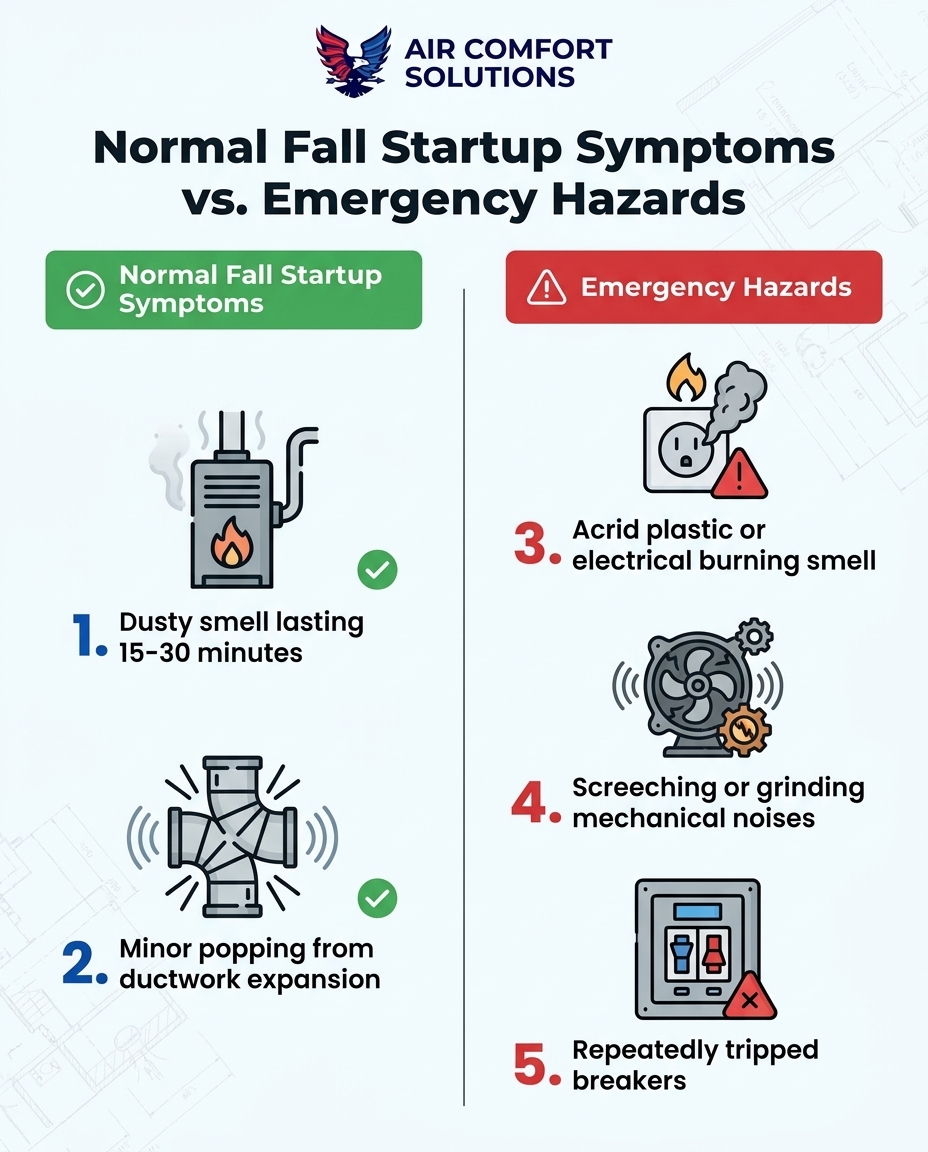
• Normal (Harmless) — What You Notice: Brief dusty or slightly smoky smell lasting 15-30 minutes. — What It Usually Means: Standard dust burn-off from the heat exchanger after summer inactivity. — Required Action: Monitor the system. The smell should fade quickly.
• Normal (Harmless) — What You Notice: Minor clicking, ticking, or light popping sounds as the system warms up. — What It Usually Means: Normal expansion of metal ductwork and the heat exchanger as temperatures rise. — Required Action: No action needed unless the sounds become aggressively loud.
• Emergency Hazard — What You Notice: Acrid, sharp smell resembling melting plastic or burning wires. — What It Usually Means: Failing electrical components, melting insulation, or a seized blower motor. — Required Action: Turn off the system immediately at the thermostat and call for professional help.
• Emergency Hazard — What You Notice: Loud electrical popping, persistent smoke, or alarms sounding. — What It Usually Means: Severe electrical short, cracked heat exchanger, or active fire risk. — Required Action: Shut off power at the breaker if safe, evacuate if necessary, and call for emergency repair.
If you encounter the dangerous symptoms listed above during that October first cold snap, do not wait to see if the problem resolves itself. Ignoring a seized motor or a failing electrical relay can turn a minor repair into a complete system replacement. If you are concerned about the unexpected costs of sudden breakdowns, we offer Emergency Repair Financing to help you address safety hazards immediately without financial stress.
Normal Fall Startup Symptoms vs. Emergency Hazards
Safe, Non-DIY Troubleshooting Before You Call
If your system is acting up but you are not seeing immediate signs of an electrical fire, there are a few safe, simple checks you can perform as a homeowner. These steps empower you to rule out basic operational errors without risking injury, voiding your manufacturer warranties, or causing further damage to delicate components.
1. Verify your thermostat settings: It sounds incredibly simple, but our technicians find that many service calls are resolved by simply double-checking the controls. Ensure your thermostat is firmly switched to the 'heat' position and that the target temperature is set at least three to five degrees higher than the current room ambient temperature. If the screen is blank, replace the batteries.
2. Inspect your air filters: A severely clogged air filter restricts airflow, causing the heat exchanger to overheat. This can trigger safety limit switches that shut the furnace down prematurely. If your filter is gray, opaque, and coated in dust, replace it immediately with a fresh one.
3. Check the electrical panel: If the system is completely unresponsive, check your home's main electrical panel for a tripped breaker. You may reset a tripped HVAC breaker exactly one time. Crucial Warning: If the breaker trips a second time immediately or shortly after resetting, do not touch it again. A repeatedly tripping breaker indicates a severe electrical short or ground fault. Forcing it to stay on removes your home's primary defense against electrical fires.
4. Ensure clear airflow: Walk through your Pinehurst TX home and verify that all supply and return vents are completely unblocked. Heavy furniture, thick rugs, or closed louvers can suffocate the system, leading to overheating and strange operational smells.
As licensed professionals, we must strictly advise against opening the indoor HVAC cabinet, attempting to bypass safety switches, or undertaking any mechanical DIY repairs. Modern heating systems utilize high-voltage electricity, pressurized natural gas, and complex circuit boards. Any internal troubleshooting requires the tools, training, and licensing of a certified technician.
Decoding Strange Startup Sounds
While smells are the most common complaint during the first seasonal use of a heating system, unusual noises are a close second. Your ductwork and HVAC cabinet have been operating at cooling temperatures for months. Introducing rapid, intense heat changes the physical dynamics of the metal components.
Normal expansion noises: As hot air rushes through cold metal ducts, the metal expands. This rapid expansion often causes light popping, pinging, or ticking sounds to echo through the walls. This is entirely normal behavior for the October first cold snap and usually subsides once the ductwork reaches a stable operating temperature.
Warning signs of mechanical failure: On the other hand, a pattern we see often is that aggressive mechanical noises are never normal. If you hear a loud, metal-on-metal grinding sound, our team usually finds that the bearings in your blower motor have failed. A high-pitched screeching or squealing noise often points to a slipped or fraying fan belt in older models, or a failing inducer motor. Loud banging or booming during ignition is particularly dangerous; this phenomenon, known as delayed ignition, means gas is pooling in the combustion chamber before igniting, creating a small explosion that can crack the heat exchanger.
If you hear grinding, screeching, or booming, turn the system off immediately. Continuing to run a system with failing mechanical parts will only cause a chain reaction of damage. For a deeper dive into what different operational sounds mean for your system's health, you can read our guide on strange AC noises and how they translate to heating issues.
Why Local Climate Makes Fall Maintenance Crucial
Your HVAC system does not operate in a vacuum; it is deeply affected by the environment it works in. Understanding how our specific regional climate impacts your equipment is key to preventing unexpected breakdowns when the temperatures finally drop.
The toll of a long cooling season: In our area, air conditioners run almost continuously for more than half the year. Because your heating and cooling systems share the same indoor air handler and blower motor, that motor has already endured thousands of hours of intense, continuous strain before you even ask it to circulate warm air. The blower motor does not get a break just because the season changes.
High humidity wear and tear: In our experience maintaining systems across the region, the thick, humid air typical of the Pinehurst TX area accelerates wear and tear on electrical connections, contactors, and moving parts. Moisture can lead to subtle corrosion on sensitive flame sensors and circuit boards during the summer. When you suddenly demand heat in the fall, these slightly corroded components often fail to communicate properly, leading to startup failures or short-cycling.
This localized strain is exactly why a professional pre-winter inspection is so crucial. A licensed technician does not just change the filter; they test the amperage of the heavily used blower motor, clean the flame sensor, inspect the heat exchanger for stress cracks, and tighten electrical connections that may have loosened from months of vibration. Proactive maintenance prevents catastrophic, mid-winter breakdowns when you need your heating system the most. If you live within the Pinehurst TX Service Area, scheduling this maintenance early ensures your system is primed and safe for the cooler months ahead.
Frequently Asked Questions About Emergency Fall HVAC Repair
How long should a heater smell like burning dust?
A heater should only smell like burning dust for about 15 to 30 minutes during its very first cycle of the season. This brief window is usually enough time for the heat exchanger to reach its maximum temperature and incinerate the accumulated summer debris. The odor should dissipate completely after the first few uses. If a strong, dusty smell lasts longer than an hour, or if it returns every time the system cycles on, you should shut the system down and schedule an inspection.
Is a burning smell from the heater an emergency?
It depends entirely on the type of smell; a dusty or slightly smoky odor is normal, but an electrical or plastic burning smell is an absolute emergency. The distinct difference is in the sharpness of the odor. Burning dust smells similar to a vacuum cleaner running, while melting plastic or burning wires smells acrid, chemical, and toxic. If you suspect electrical burning, shut the system off immediately at the thermostat and the breaker panel to prevent a potential fire.
When should I call for 24-hour emergency HVAC repair?
You should call for 24-hour emergency repair if you see visible smoke, hear loud electrical popping, or if your system repeatedly trips the circuit breaker. Additionally, if you lose all heating capabilities during freezing temperatures and have vulnerable family members in the home, it constitutes an emergency. Safety always comes first, and pushing a compromised system to run can lead to severe property damage or carbon monoxide risks.
What to check before calling an HVAC technician?
Before calling a professional, safely check your thermostat batteries and verify that the settings are correctly switched to 'heat'. Next, inspect your indoor air filter; a completely blocked filter can cause the system to overheat and shut down automatically. Finally, check your main breaker panel to ensure the HVAC circuit hasn't tripped. We reiterate that you must never attempt dangerous DIY repairs, such as opening the furnace cabinet or tampering with gas lines.
Why is my HVAC making a loud noise when I turn on the heat?
Loud noises on startup usually stem from either normal thermal expansion or serious mechanical failure. Light popping and ticking are just the metal ductwork expanding as it fills with hot air during that October first cold snap. However, a screeching blower motor, grinding bearings, or a loud boom from the combustion chamber indicates failing parts or delayed ignition. If the noise is aggressive, metallic, or startling, turn the system off and wait for a technician.
Can high humidity make my furnace smell worse on startup?
Yes, high humidity can make the initial fall startup smell significantly more noticeable. Throughout a humid summer, the excess moisture in the air causes airborne dust and pet dander to cake onto the cold heat exchanger, forming a thick, sticky layer. This caked-on dust burns much more noticeably and produces a stronger odor than dry, loose dust. Regular pre-season maintenance minimizes this effect by cleaning the components before they ever heat up.
Get Fast, Local Reassurance for Your HVAC System
There is a profound sense of satisfaction in knowing your home's heating system is operating safely, efficiently, and reliably. When the temperatures drop in Pinehurst TX, you deserve the peace of mind that comes from a well-maintained system. While most initial startup smells are simply harmless dust burning off, ignoring the warning signs of true mechanical or electrical failure is never worth the risk. If you are ever in doubt about a strange odor, a loud noise, or a system that refuses to cooperate, scheduling a professional inspection is always the most responsible route.
When you need answers fast, working with a genuine 24/7 local, family-owned company like Air Comfort Solutions makes all the difference. You can talk to a real local expert to triage your startup scare over the phone, rather than dealing with a disconnected national answering service that doesn't understand our regional climate challenges. Reach out today for a thorough system check or emergency repair, and let us ensure your home remains a safe, comfortable haven all season long.
Zane came out and did an amazing job! Super friendly, honest and transparent about the work that needed to be done. This is my second time working with Air Comfort Solutions and they’re my go to for HVAC services. Highly recommend.
Markeith H.
God's AMAZING grace sent us Robert and Zane. We have been without air in this Texas heat for six weeks and four days. We've had a few contractors give us quotes all trying to upsell when we're at a low point. But not the guys at Air Comfort Solutions. They came in assessed our situation, gave us honest feedback, and showed us the issues as they proceeded with the assessment for clear understanding. We highly recommend them for their professionalism, quality products, and fair pricing. We hands down support them for all the work they do 💯 %.
Lena N.
Robert and Zane gone above and beyond to make the process easy and affordable. Would definitely recommend!!
Cameron J.
I’m writing this review to let everyone know that Air Comfort Solutions is the company to work with. I know the owner ( Robert) for several years now. He has been taking care of my residential and business work orders. Robert is professional, knowledgeable and will save you money. I just want to thank Robert for great job you have been doing for me.