Is That Burning Smell Normal? When to Call for 24 Hour AC Repair During Fall Startup
Smell burning during your fall heating startup? Apply our home maintenance tips and troubleshooting to know what is normal and when to call a pro on this.
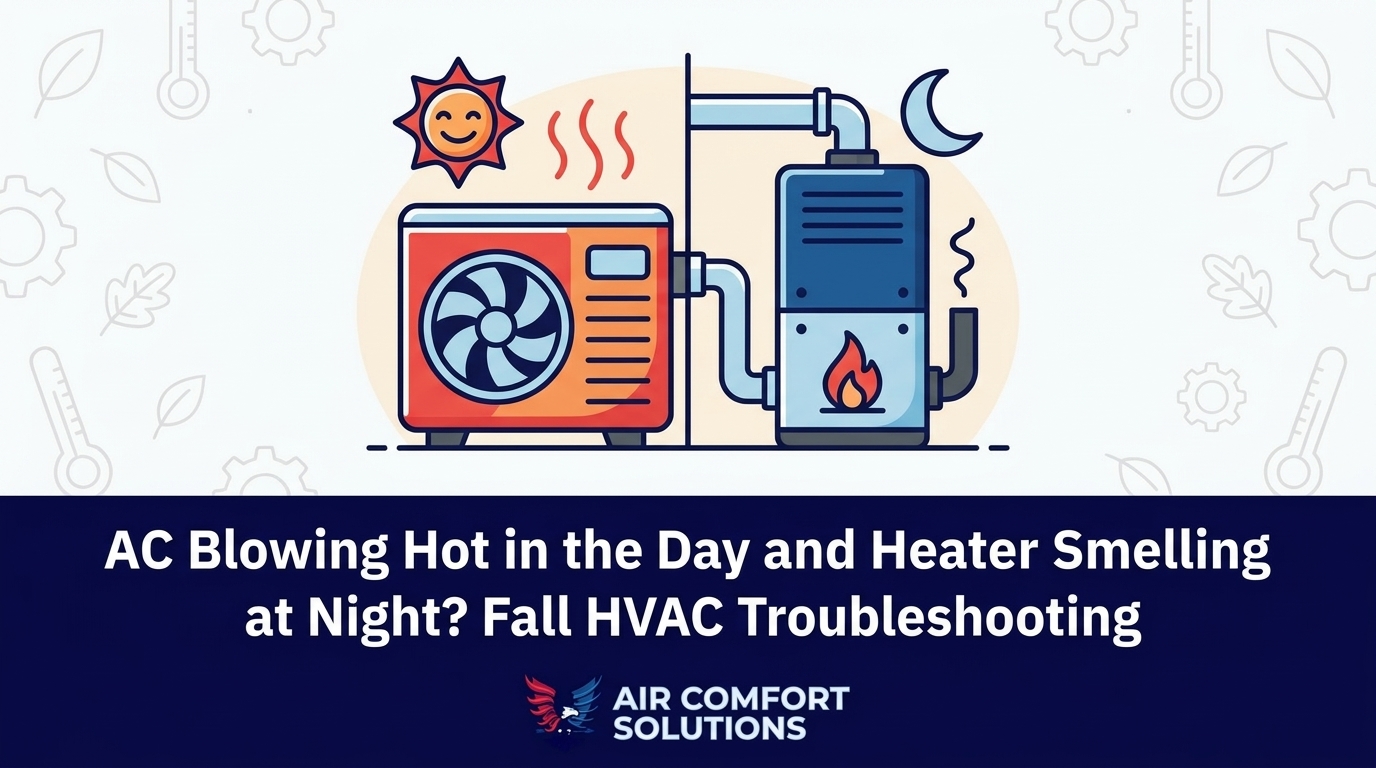
That sudden burning smell coming from the vents is enough to make any homeowner panic, especially when it is paired with an air conditioner that suddenly blows warm air in the middle of the day. When dealing with these seasonal shifts, understanding fundamental home maintenance tips and troubleshooting strategies is the best way to protect your property and your peace of mind. The transition from summer heat to autumn chills puts a unique, heavy mechanical strain on your climate control equipment. Systems that have been running dedicated cooling cycles for months are suddenly asked to perform dual duties, often switching back and forth within a single twenty-four-hour period.
In our years keeping Pinehurst comfortable, our team at Air Comfort Solutions has seen this sudden shift cause confusion for countless homeowners. You might find yourself standing at the thermostat, wondering if the unusual smells and strange metallic sounds echoing through your hallways are simply part of a normal October heating-startup or the warning signs of a dangerous mechanical failure. Figuring out whether your system is experiencing a routine seasonal adjustment or an active safety hazard is a critical decision point. Fortunately, these transitional behaviors follow predictable mechanical patterns. By establishing baseline expectations for how your HVAC system should operate during the fall, you can confidently determine when it is safe to let the system run and when you need to schedule professional air conditioning repair to prevent a minor issue from turning into a mid-season breakdown.
The mechanical stress of switching between cooling and heating modes is incredibly demanding on your equipment. With October bringing significant diurnal temperature variations to Pinehurst, TX, residents frequently need cooling during hot afternoons and heating during chilly nights. This constant back-and-forth means your equipment never truly gets a break, and internal components are forced to shift operations rapidly. Understanding why your system works overtime helps clarify why certain symptoms appear exclusively during this time of year.
If you have a heat pump, your system relies on a crucial component called the reversing valve. This brass valve contains a sliding mechanism that physically changes the direction of the pressurized refrigerant flowing through your system. During the summer, it directs hot refrigerant gas outside to release heat. When the temperature drops at night and your thermostat calls for warmth, the reversing valve engages, sliding into a new position to bring that hot refrigerant gas indoors. Because this valve sits idle in the cooling position all summer, the first few times it shifts during an October heating-startup can be sluggish. A pattern we see often in the field is a reversing valve getting stuck halfway, causing the system to struggle to regulate temperature, often blowing warm air when you want cold, or vice versa. The physical shifting of this valve is a primary reason why dual-system usage causes so much mechanical wear during the fall.
While your air conditioner works hard all summer, the heating components of your system—specifically the furnace heat exchangers or electric heating elements—sit completely dormant in the dark cabinet. Over these long months of inactivity, airborne particulates bypass your filters. Pet dander, household dust, and microscopic lint settle directly onto the cold metal surfaces of the heat exchanger. When the fall transition arrives and the burners ignite for the first time, these metal surfaces rapidly heat up to hundreds of degrees. The settled debris immediately reacts to this intense heat, baking off the metal. This reaction is the direct cause of the odors many homeowners notice during the first ignition cycle of the season. It is a simple matter of physics and accumulated debris, not necessarily a broken system.
Smelling something burning in your home is always alarming, but when it comes to seasonal HVAC changes, context is everything. Every October, our technicians field dozens of frantic calls about this exact issue. Providing a strictly technical, safety-first breakdown of normal startup smells versus dangerous odors is the best way to protect your home. The scientific reason behind the common burning dust smell is the rapid combustion of settled organic particles on the heat exchanger. However, knowing exactly when that smell crosses the line from a harmless nuisance to an active electrical hazard is vital for your family’s safety.
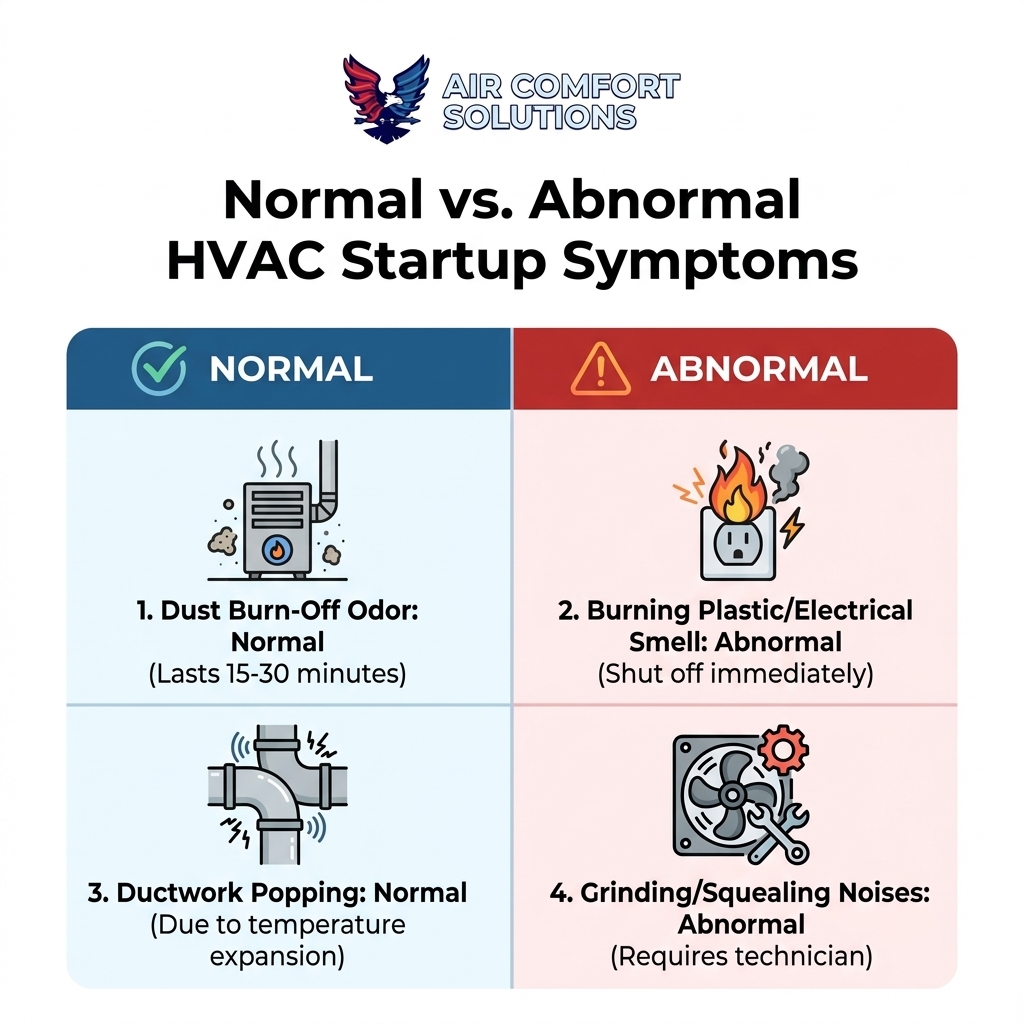
• Light burning dust or a “hot” smell — Typical Cause: Combustion of settled summer dust on heat exchangers — Normal Duration: 15 to 30 minutes — When to Call a Professional: If the smell persists for hours or fills the home with visible smoke.
• Musty or damp “dirty sock” odor — Typical Cause: Bacterial growth on the indoor evaporator coil — Normal Duration: A few minutes during startup — When to Call a Professional: If the smell remains strong every time the system runs, indicating deep coil buildup.
• Acrid, burning plastic or melting rubber — Typical Cause: Failing capacitor, melting wire insulation, or seized motor — Normal Duration: Never normal — When to Call a Professional: Immediately. Shut off the system at the breaker and call for emergency service.
• Sharp, electrical ozone smell — Typical Cause: Overheating blower motor or dangerous electrical arcing — Normal Duration: Never normal — When to Call a Professional: Immediately. Do not attempt to run the system or open the cabinet.
When you initiate your first heating cycle of the season, you should expect to experience the 15 to 30 minutes of normal dust burn-off duration. This is the standard window for harmless debris to clear from the heat exchanger. During this time, the smell might be noticeable, especially near the vents, but it should never be overpowering, and it should never produce visible smoke. If you notice this mild odor, the best course of action is to simply open a few windows to allow fresh air to circulate while you wait for the burn-off to complete. Once this initial window passes, the smell should dissipate entirely and not return for the rest of the winter.
While dust burn-off is harmless, other odors indicate a severe mechanical or electrical failure. If you smell melting plastic, burning rubber, or a sharp electrical ozone scent, you are not dealing with dust. These red-flag odors often mean a wire is melting, a blower motor is seizing, or a capacitor is failing under the stress of the seasonal switchover. If you detect these smells, or if a standard dust odor persists well beyond the normal window, take immediate action. Shut off the power to the HVAC system directly at the thermostat, and then flip the dedicated breaker in your electrical panel to the “off” position. You should never open the furnace cabinet to investigate electrical smells yourself; always leave high-voltage diagnostics to a licensed technician.
One of the most frustrating experiences during the fall transition is waking up to a chilly house, running the heater, and then realizing by 3:00 p.m. that the house is sweltering and the AC is blowing warm air. Before you assume the compressor has failed, there are several mechanical and user-error factors to rule out. Extreme temperature swings make systems work harder, but our team typically sees many midday cooling failures trace back to simple airflow or calibration issues that happen during the October heating-startup phase. Here are the steps to safely troubleshoot the problem before calling for Pinehurst TX cooling services.
1. Check the thermostat mode and fan settings: Ensure the thermostat is actually set to “Cool” and not stuck in “Heat” or “Emergency Heat” from the night before. Verify that the fan setting is on “Auto” rather than “On.” If the fan is set to “On,” it will blow unconditioned air through the vents even when the outdoor AC unit is not actively running, which feels like warm air.
2. Inspect the air filter for seasonal clogging: Fall allergens, combined with the dust stirred up by the first heating cycle, can clog an air filter rapidly. Pull the filter out and hold it up to a light source. If you cannot see light passing through the media, it is restricting airflow and must be replaced.
3. Examine the outdoor unit for debris: Falling autumn leaves and twigs can easily get sucked against the outdoor condenser coil. This blocks the necessary airflow the system needs to exhaust heat. Clear away any vegetation or debris within two feet of the outdoor unit.
4. Check the electrical panel for a tripped breaker: Switching back and forth between heating and cooling can sometimes cause a power surge that trips the dedicated HVAC breaker. Look in your main electrical panel to see if the breaker has shifted to the middle position. If it has, firmly push it to “Off” and then back to “On.”
5. Monitor the indoor vents for airflow volume: Place your hand over the return vent and the supply vents. If the airflow feels exceptionally weak, the indoor evaporator coil may have frozen over due to restricted airflow, which prevents the system from cooling the air.
Modern programmable and smart thermostats handle seasonal transitions well, but they require proper settings. One common issue is the “deadband” setting—the minimum temperature difference allowed between your heating and cooling setpoints. If you set your heat to 70 degrees and your AC to 72 degrees, the system may short-cycle, getting confused and blowing the wrong temperature air as it desperately tries to satisfy conflicting commands. We recommend always maintaining at least a three-to-five-degree gap between your heating and cooling setpoints during the fall.
The relationship between airflow and refrigerant temperature is a delicate balance. When a dirty filter restricts airflow, there is not enough warm indoor air passing over the cold indoor evaporator coil. Without that heat exchange, the refrigerant inside the coil drops below freezing, causing the ambient condensation to turn into a block of solid ice. Once the coil freezes, the AC can only blow warm, stagnant air into your home. Checking your filter monthly during the fall transition is the single most effective way to prevent this specific cooling failure.
Just as your system produces new smells during the fall transition, it also generates a symphony of new noises. Separating normal expansion noises from mechanical failures requires a keen ear and a basic understanding of thermal dynamics. When a system switches from months of cold air delivery to sudden bursts of high heat, the physical materials within your walls and ceilings react to the drastic temperature change.
Normal Expansion and Contraction: The most common sound you will hear during an October heating-startup is a metallic popping, pinging, or ticking noise coming from the walls or ceilings. This is entirely normal. Your ductwork is made of thin sheet metal. When hot air from the furnace hits the cold metal ducts for the first time in months, the metal rapidly expands. Because the ducts are secured with screws and straps that expand at different rates, the metal flexes, creating a popping sound. These thermal expansion noises typically occur within the same timeframe as the 15 to 30 minutes of normal dust burn-off duration. Once the ductwork reaches a steady operating temperature, the popping will subside.
Reversing Valve Engagement: If you have a heat pump, you may hear a distinct “whoosh” or a loud clicking sound from the outdoor unit when the system switches from cooling to heating. This is the sound of the reversing valve sliding into place and the pressurized refrigerant changing direction. It is a normal operational sound, though it can be startling if you are standing near the unit when it happens.
Mechanical Warning Sounds: While popping and whooshing are normal, other noises require immediate attention. If you hear a high-pitched squealing, it usually indicates a failing blower motor belt or dry bearings that have seized up after sitting dormant all summer. A loud, repetitive banging or clanking sound often points to a loose internal component, such as an unbalanced blower wheel or a failing compressor mount. Grinding sounds—which resemble metal scraping on metal—are severe warning signs that a motor is destroying itself. If you hear any of these mechanical warning sounds, shut the system down immediately to prevent further damage and look into AC making strange noises for further professional diagnostics.
When the temperature drops and the heater acts up, the urge to grab a toolbox and fix the problem yourself is strong. However, modern climate control systems are complex, high-voltage machines that handle combustible gases and pressurized refrigerants. Clearly delineating safe homeowner maintenance from tasks requiring a licensed professional is essential for your safety and the longevity of your equipment.
The Safe DIY List: Homeowners can safely handle several critical maintenance tasks. You should regularly change your air filters, clear leaves and debris from around the outdoor condenser, check your electrical breakers, and adjust your thermostat settings. You can also safely clean the exterior grilles of your indoor return vents with a vacuum attachment to improve airflow. These steps are safe, require no specialized tools, and solve a large percentage of midday cooling and evening heating issues.
The Professional Boundary: You must explicitly draw the line at the physical cabinet of the furnace or air handler. Never open the service panels to investigate strange smells or sounds. You should never attempt to handle refrigerant lines, test high-voltage electrical components, or inspect the gas burners yourself. Mishandling a gas furnace carries the severe risk of carbon monoxide exposure or fire, while touching the wrong capacitor can result in a lethal electrical shock. The internal components of your system require specialized diagnostic tools and rigorous safety protocols.
Because the unpredictable Texas fall transition stresses local systems so heavily, our technicians at Air Comfort Solutions have spent years providing fast, reliable professional responses to heating and cooling emergencies. Relying on licensed professionals ensures that hidden issues—like a cracked heat exchanger or a failing reversing valve—are caught early. Scheduling a professional pre-winter inspection as part of your routine AC maintenance is the smartest way to guarantee your system is clean, calibrated, and perfectly safe to operate before the first hard freeze of the season arrives. Additionally, this check-up is a great time to evaluate your equipment’s lifespan; if a replacement is needed, utility efficiency rebates may apply to qualifying high-efficiency heat pump or furnace installations, so ask us what’s current before you buy.
Why does my house smell like burning when I turn on the heat?
The most common cause is the combustion of dust and debris that settled on the furnace heat exchanger during the summer. When the burners ignite for the first time in the fall, this accumulated dust bakes off the hot metal surfaces. This process creates a distinct burning odor that circulates through your ductwork and out of your vents.
Is it normal for a heater to smell like burning dust?
Yes, a mild burning dust smell is entirely normal during the first few heating cycles of the year. You can expect the 15 to 30 minutes of normal dust burn-off duration to clear the debris safely. If the smell lasts longer than this window, or if it smells like melting plastic rather than dust, shut the system off immediately.
Why is my AC blowing warm air in the fall?
An AC blowing warm air during a hot fall afternoon is often caused by a dirty air filter restricting airflow, which leads to a frozen indoor coil. It can also be caused by incorrect thermostat settings, a tripped breaker, or a heat pump reversing valve that is stuck in the heating position after running the night before.
What noises are normal when switching from AC to heat?
You will likely hear metallic popping or pinging sounds coming from your vents and walls, which is just the thin sheet metal ductwork expanding as hot air hits it. If you have a heat pump, a brief whooshing sound from the outdoor unit is also normal as the reversing valve shifts the flow of refrigerant.
How do I know if my reversing valve is stuck?
If your heat pump is set to cool but blows hot air, or is set to heat but blows cold air, the reversing valve is likely stuck. You might also notice that the outdoor unit runs constantly without changing the indoor temperature, or you may hear a repeated clicking sound as the valve’s solenoid struggles to shift the internal mechanism.
When should I call a professional for HVAC smells?
You should call a professional immediately if you smell burning plastic, melting rubber, or a sharp electrical ozone scent, as these indicate serious electrical failures. You should also call a technician if a standard dust smell persists for several hours or if you see visible smoke coming from your vents.
Navigating the drastic temperature shifts of an October heating-startup does not have to be a stressful experience. By understanding the difference between normal startup symptoms—like brief dust odors and thermal expansion noises—and true red-flag warnings, you take control of your home’s safety. Remember that while changing filters and checking thermostats are great homeowner habits, you should never hesitate to prioritize a professional inspection if strange smells or sounds persist beyond their normal window. Taking proactive steps today ensures that your system is prepared to handle whatever the changing seasons bring, delivering reliable, efficient comfort all winter long.


Zane came out and did an amazing job! Super friendly, honest and transparent about the work that needed to be done. This is my second time working with Air Comfort Solutions and they’re my go to for HVAC services. Highly recommend.
God's AMAZING grace sent us Robert and Zane. We have been without air in this Texas heat for six weeks and four days. We've had a few contractors give us quotes all trying to upsell when we're at a low point. But not the guys at Air Comfort Solutions. They came in assessed our situation, gave us honest feedback, and showed us the issues as they proceeded with the assessment for clear understanding. We highly recommend them for their professionalism, quality products, and fair pricing. We hands down support them for all the work they do 💯 %.
Robert and Zane gone above and beyond to make the process easy and affordable.
Would definitely recommend!!
I’m writing this review to let everyone know that Air Comfort Solutions is the company to work with. I know the owner ( Robert) for several years now. He has been taking care of my residential and business work orders. Robert is professional, knowledgeable and will save you money. I just want to thank Robert for great job you have been doing for me.