Home Maintenance Tips and Troubleshooting: Your Guide to a Safe Fall Heating Startup
What failing furnaces taught us: don't skip fall prep. Read our home maintenance tips and troubleshooting to avoid sudden breakdowns. See when to call a pro.

Tackling a comprehensive seasonal home maintenance checklist before you flip the thermostat from "cool" to "heat" for the first time in months can prevent the sudden anxiety of burning smells and groaning equipment. That initial moment of firing up a dormant furnace often brings a wave of concern. You rely on your equipment to keep your household comfortable and safe, but a system that has sat idle all summer can hide potential hazards. Taking proactive steps is the most effective way to avoid unexpected breakdowns and hazardous combustion issues.
For homeowners looking to secure professional HVAC services, setting clear boundaries between basic preparation and mandatory safety inspections is critical. At Air Comfort Solutions, our team constantly reminds our local customers that handling a mid-fall October heating startup correctly prevents emergency failures when the first real cold snap hits.
Modern residential heating and cooling systems are highly complex networks of electrical relays, motors, and combustion chambers. While the blower motor has been working hard all summer to circulate chilled air, the dedicated heating components—such as the heat exchanger, gas burners, and igniters—have been completely dormant. During this long period of inactivity, dust settles on critical sensors, and lubrication in moving parts can begin to dry out.
Transitioning safely requires more than just adjusting the thermostat dial. A structured approach ensures that every component is verified for safe operation before it is subjected to the heavy load of winter heating. Neglecting this transition period forces the system to work harder, accelerating wear and tear while increasing the likelihood of a critical failure.
One of the most important aspects of seasonal preparation is recognizing what you can handle yourself and what requires a licensed expert. Basic airflow management and exterior cleaning are perfectly safe for homeowners to tackle. However, anything involving the electrical panel, the gas supply line, or the combustion chamber crosses the line into dangerous territory. By clearly defining these boundaries, you protect your property from accidental damage and ensure that your family remains safe throughout the colder months.
Generic northern maintenance checklists often advise homeowners to simply cover their outdoor units and forget about them until spring. That advice completely fails in regions with volatile autumn weather. After enduring brutal Texas summers, local systems are subjected to unpredictable fall temperature swings that force them to switch rapidly between cooling and heating modes within the exact same week.
In northern climates, the transition from summer to winter is relatively linear. Homeowners shut down their cooling systems entirely and fire up their furnaces for months of uninterrupted operation. However, our technicians at Air Comfort Solutions know firsthand that for Pinehurst TX residential properties, the reality is much different. You might need your air conditioner to battle an 85-degree afternoon, only to require emergency heating when a sudden cold front drops overnight temperatures into the 40s.
This constant toggling stresses electrical components, reversing valves on heat pumps, and blower motors in ways that northern systems rarely experience. A generic checklist misses these regional nuances entirely. When your equipment is forced to pivot back and forth, the wear and tear is amplified, making a reliable HVAC service in Pinehurst a critical necessity for ongoing safety and performance.
Because the local climate is so unpredictable, a reactive approach to maintenance is a recipe for disaster. Waiting for a system to fail before servicing it usually means you will be left without climate control exactly when you need it most. Proactive preparation ensures that your equipment is fully prepped for sudden, unannounced cold fronts. By addressing wear and tear from the summer cooling season before the winter heating season begins in earnest, you eliminate the weak points that cause sudden breakdowns.
While complex mechanical work must be left to the professionals, there are several vital steps you can take to prepare your home for the heating season. These safe, actionable tasks improve efficiency and protect your indoor air quality without crossing into dangerous DIY territory. Proper preparation is especially important to ensure a smooth mid-fall October heating startup.
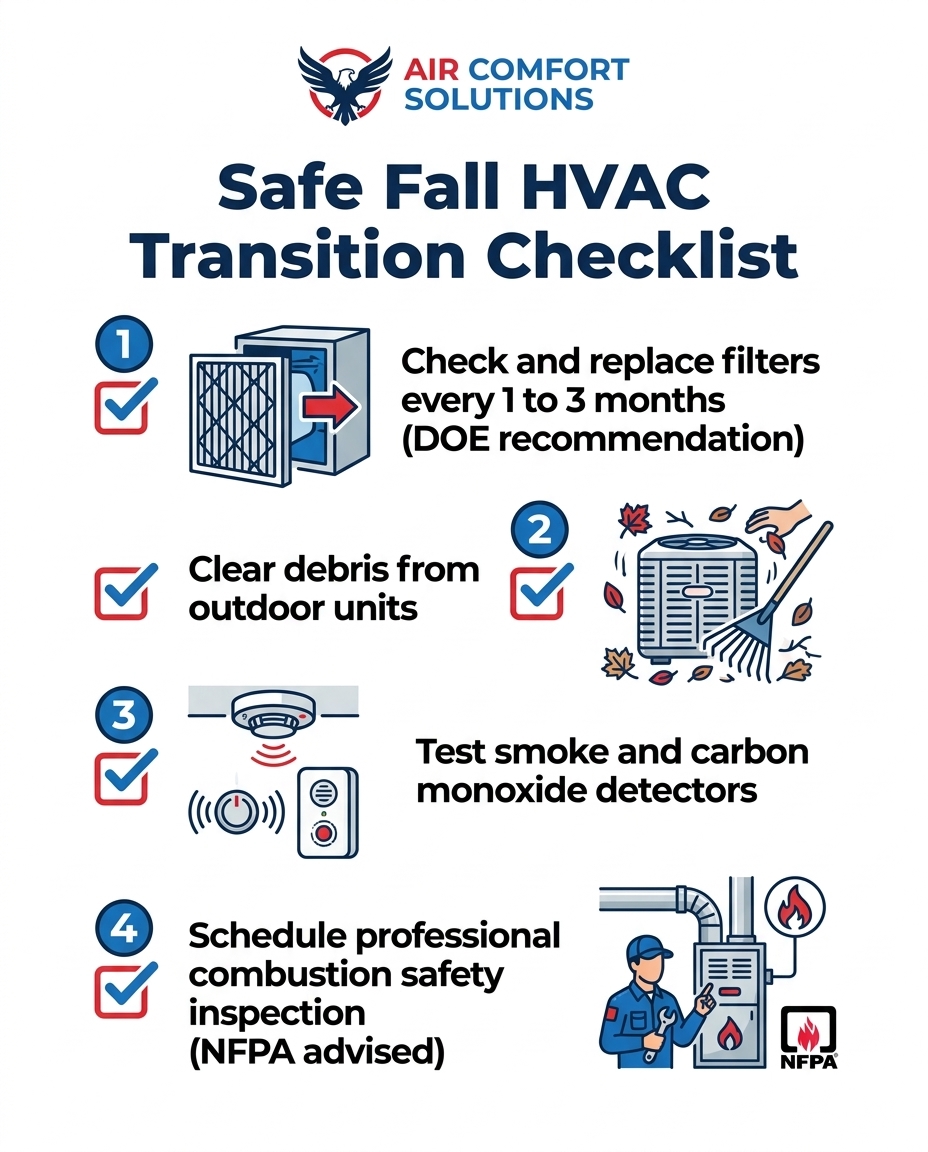
Focus your efforts on airflow, exterior clearance, and secondary safety systems. Here is a breakdown of what you can safely handle:
• Replace the air filter: The U.S. Department of Energy recommends checking and replacing HVAC filters every 1 to 3 months. A dirty filter restricts airflow, forcing the blower motor to work harder and increasing energy consumption.
• Clear outdoor debris: Fall foliage, overgrown bushes, and grass clippings can choke the outdoor compressor. Carefully clear a two-foot perimeter around the unit to ensure adequate airflow, which is just as important for heat pumps in winter as it is for air conditioning solutions in summer.
• Clean indoor vents and registers: Dust and pet hair often accumulate around return and supply vents. Vacuum these covers to prevent debris from being circulated through your home when the blower kicks on.
• Test safety alarms: Before the heating season begins, test all smoke detectors and carbon monoxide alarms in the home. Replace the batteries and ensure that a CO detector is installed near the sleeping areas and the furnace room.
• Inspect weatherstripping: Check the seals around doors and windows. Replacing worn weatherstripping prevents warm air from escaping and reduces the overall load on your heating equipment.
Reiterate this critical rule: any task involving opening the furnace cabinet, adjusting the electrical panel, or inspecting the gas lines must be left to licensed professionals. Attempting to service these components yourself risks severe injury, fire hazards, and voided manufacturer warranties.
Addressing the specific anxiety of the first fall heater startup requires understanding the difference between standard operational quirks and genuine safety hazards. A mid-fall October heating startup often produces odors that alarm homeowners, but not all of them indicate a malfunction.
During the long summer months, dust, pet dander, and microscopic airborne particles settle onto the furnace's heat exchanger and burners. When you activate the heating mode for the first time, these components rapidly heat up to hundreds of degrees. The settled dust is instantly incinerated, creating a distinct burning smell that circulates through the ductwork.
This is a completely normal chemical reaction. The odor is simply the physical manifestation of the system clearing its internal components. In most cases, this dusty, burning smell will dissipate within a few hours of operation as the debris is fully burned away and cleared from the ventilation system.
While dust burn-off is normal, other symptoms require immediate attention. Knowing how to differentiate between a harmless startup and a dangerous malfunction can save your property from severe damage.
• Faint, dusty burning smell — Likely Cause: Normal dust accumulation burning off the heat exchanger. — Required Action: Monitor for 1-2 hours; open a window if necessary. No action needed if it fades.
• Sharp, electrical burning (like melting plastic) — Likely Cause: Overheating blower motor, melting wire insulation, or a failing capacitor. — Required Action: Shut off the system immediately at the thermostat and breaker. Call a professional.
• Rotten egg or sulfur odor — Likely Cause: A natural gas leak near the combustion chamber or supply line. — Required Action: Evacuate the home immediately. Do not turn on lights. Call the gas company and an HVAC professional.
• Loud banging or booming upon startup — Likely Cause: Delayed ignition causing gas buildup in the chamber before sparking. — Required Action: Turn off the heating system immediately to prevent heat exchanger damage. Schedule an inspection.
If you experience any of the warning signs listed above, do not attempt to wait it out. Shutting down the system entirely is the only safe course of action until a licensed technician can evaluate the equipment.
Deep diving into the mechanics of dormant systems reveals exactly why neglected heating equipment poses such a significant hazard. The transition from a long period of inactivity to high-temperature combustion stresses every internal component of the furnace.
Data from the National Fire Protection Association (NFPA) consistently identifies heating equipment as a leading cause of home fires. The primary culprit is often a system that was not properly inspected before the intense demands of winter. For Pinehurst TX residential properties, where systems sit unused for many months, the risks of dormant ignition are particularly high.
One of the most critical components is the heat exchanger, the metal shield that separates the toxic combustion gases from the breathable air circulated into your home. Over time, the constant expansion and contraction of the metal during heating cycles can cause microscopic cracks to form. When the system sits dormant, ambient moisture can exacerbate these weak points through rust and corrosion. If a furnace fires up with a compromised heat exchanger, deadly carbon monoxide can be forced directly into the living spaces.
Beyond the heat exchanger, dormant periods allow moving parts to seize. Blower motor bearings can dry out, causing the motor to overheat rapidly upon startup. Flame sensors can become coated in stubborn grime, preventing the system from recognizing that a fire has been lit, which leads to raw gas flooding the chamber. These mechanical realities reinforce exactly why combustion safety inspections are strictly non-DIY tasks. A visual glance from a homeowner cannot detect a microscopic fracture in a heat exchanger or a failing relay switch.
Transitioning from basic homeowner preparations to professional intervention highlights the true value of a comprehensive maintenance strategy. A licensed professional possesses the diagnostic tools and training required to certify that a system is safe to operate.
When you schedule a professional AC maintenance plan visit for the fall transition, the technician performs a rigorous series of tests that go far beyond a simple filter change. They conduct a thorough combustion analysis to ensure the gas-to-air ratio is perfectly calibrated, which maximizes fuel efficiency and prevents soot buildup. They test the electrical connections, tightening loose wires that could arc and cause a fire.
Technicians also verify the integrity of all safety switches. Modern furnaces are equipped with limit switches designed to shut the system down if it overheats or if the exhaust flue becomes blocked. If these switches have failed during the dormant season, the furnace loses its primary defense mechanism against catastrophic failure. A professional inspection verifies that these fail-safes are fully operational.
Professional maintenance identifies minor issues—like a worn belt or a slightly degraded capacitor—before they escalate into expensive, system-destroying failures. This proactive approach significantly extends the lifespan of the equipment and keeps monthly utility bills in check by ensuring the system operates at peak efficiency.
Furthermore, working with a company that has a strong local reputation and a proven track record of reliable 24-hour emergency responses in the Pinehurst community provides ultimate peace of mind. Knowing that your system has been certified safe for winter, and knowing exactly who to call if a rare mid-season failure does occur, removes the stress from the seasonal transition.
Understanding the seasonal rhythms of the HVAC industry is crucial for maintaining a comfortable home. Waiting until the weather turns freezing to verify your heating system's functionality is a common, yet highly stressful, mistake.
October represents the critical window for pre-season inspections. In our years of servicing local homes at Air Comfort Solutions, we see dispatch boards across the region fill up instantly once the first major cold front arrives. Homeowners who neglected their mid-fall October heating startup suddenly discover their furnaces are dead, resulting in a massive surge of emergency service requests. During this "first freeze rush," scheduling backlogs can stretch for days, leaving unprepared families shivering in unheated homes.
Securing priority service through established maintenance relationships allows you to bypass this chaos. By scheduling your inspection early, you guarantee that your system is evaluated on your terms, at a convenient time, rather than during a frantic emergency scenario.
Contrast the extreme stress of an emergency mid-winter repair with the calm of proactive fall preparation. An emergency breakdown often requires rushing to find the best AC replacement contractors in Houston or local heating experts while your house grows colder by the hour. By taking action in October, you ensure that any necessary repairs or part replacements are handled smoothly before the severe weather arrives. Proactive maintenance is an investment in your family's comfort and your own peace of mind.
Why does my heater smell like burning dust when I turn it on?
This odor is a normal chemical reaction caused by the incineration of settled debris. During the summer dormancy period, dust and pet dander accumulate on the heat exchanger and burners. When the system fires up for the first time, these high temperatures burn off the dust, creating a smell that typically fades within a few hours of operation.
What HVAC maintenance should be done in the fall?
Fall maintenance should include both homeowner tasks and professional services to ensure safety. Homeowners should replace air filters, clear debris from outdoor units, and test all smoke and carbon monoxide detectors. A licensed professional must handle the internal work, including combustion analysis, testing safety limit switches, and inspecting the heat exchanger for microscopic cracks.
What heating preparations can a homeowner do safely?
Homeowners can safely manage airflow and external clearance to support their heating system. This includes changing filters regularly, vacuuming return vents to remove pet hair, and ensuring furniture is not blocking supply registers. Any task that requires opening the equipment cabinet, handling electrical wiring, or inspecting gas lines must be left to a licensed professional to avoid severe safety hazards.
When should I turn on my furnace for the first time?
You should perform a test run of your furnace in mid-fall, well before the first actual freezing temperatures are forecasted. Testing the system on a mild October day allows you to identify any startup issues, unusual noises, or persistent odors. If a repair is needed, discovering it early helps you avoid the severe scheduling backlogs that occur during the first major cold snap.
How often should I change my HVAC filter during the fall transition?
The U.S. Department of Energy recommends checking and replacing standard HVAC filters every 1 to 3 months. However, for Pinehurst TX residential properties dealing with rapid temperature swings, high pollen counts, or indoor pets, checking the filter monthly is the safest approach. A clean filter protects the blower motor from overheating and ensures optimal indoor air quality.
Successfully navigating the seasonal transition requires recognizing the difference between normal startup behaviors and true warning signs. While a faint dusty smell during a mid-fall October heating startup is standard, persistent electrical odors or banging noises demand immediate attention. Safety must always remain the highest priority, which means setting strict boundaries between helpful homeowner preparations and the mandatory technical work that requires a licensed expert.
Do not wait for the first freezing night to discover that your furnace is struggling. By prioritizing a structured seasonal checklist and relying on qualified professionals for complex combustion safety inspections, you eliminate the risk of dangerous DIY attempts. Schedule your professional inspection today to guarantee a warm, efficient, and thoroughly safe winter for your entire household.


Zane came out and did an amazing job! Super friendly, honest and transparent about the work that needed to be done. This is my second time working with Air Comfort Solutions and they’re my go to for HVAC services. Highly recommend.
God's AMAZING grace sent us Robert and Zane. We have been without air in this Texas heat for six weeks and four days. We've had a few contractors give us quotes all trying to upsell when we're at a low point. But not the guys at Air Comfort Solutions. They came in assessed our situation, gave us honest feedback, and showed us the issues as they proceeded with the assessment for clear understanding. We highly recommend them for their professionalism, quality products, and fair pricing. We hands down support them for all the work they do 💯 %.
Robert and Zane gone above and beyond to make the process easy and affordable.
Would definitely recommend!!
I’m writing this review to let everyone know that Air Comfort Solutions is the company to work with. I know the owner ( Robert) for several years now. He has been taking care of my residential and business work orders. Robert is professional, knowledgeable and will save you money. I just want to thank Robert for great job you have been doing for me.