Home Maintenance Tips and Troubleshooting: Your Guide to a Safe Fall Heating Startup
What failing furnaces taught us: don't skip fall prep. Read our home maintenance tips and troubleshooting to avoid sudden breakdowns. See when to call a pro.
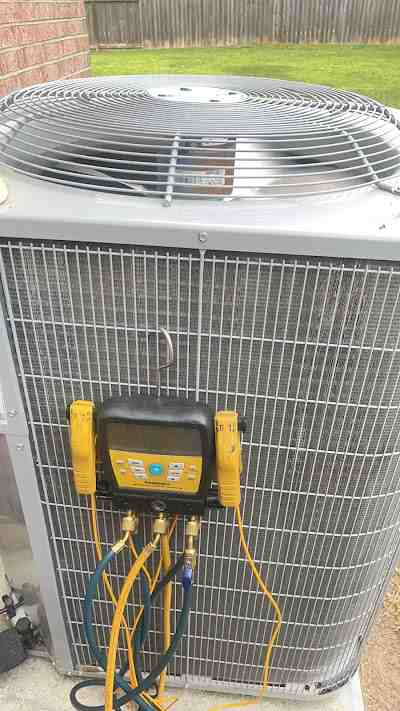
Knowing the ac repair red flags that mean you need a new system can save you from throwing money at a unit that’s already on its way out. In Pinehurst, TX, where summer temperatures regularly push past 95°F for months at a time, a struggling AC isn’t just uncomfortable — it’s a real problem that gets expensive fast.
Here are the key signs your AC needs replacement, not just another repair:
• System is 10–15+ years old and needs a major repair
• Repair costs exceed 50% of replacement cost (the 50% Rule)
• Age × repair cost exceeds $5,000 (the $5,000 Rule)
• You’re using R-22 refrigerant — phased out by the EPA in 2020
• Energy bills keep climbing even though your usage hasn’t changed
• The AC runs constantly but still can’t reach the set temperature
• Frequent breakdowns — two or more per season, or three or more in three years
• Warm air, weak airflow, or uneven cooling throughout the home
• Strange noises like grinding, banging, or squealing from the unit
• High indoor humidity that the system can no longer control
Most homeowners don’t think about replacing their AC until it stops working entirely on the hottest day of the year. That’s almost always the costliest way to handle it. Recognizing the warning signs early — before a total breakdown — gives you time to make a smart, informed decision rather than an emergency one.
This guide walks through every major red flag, explains the repair-vs-replace decision frameworks HVAC professionals actually use, and helps you understand what a proactive upgrade looks like for homeowners in Pinehurst and the surrounding North Harris County area.


When your air conditioner begins to fail, it rarely does so in complete silence. It usually leaves a trail of clues. Recognizing these clues early can prevent you from spending money on temporary fixes that only delay the inevitable.
If you are constantly calling for service, you are dealing with one of the most obvious ac repair red flags that mean you need a new system. While a single repair on a relatively young system is perfectly normal, a pattern of frequent breakdowns is a sign of systemic wear and tear. If your system has required multiple repairs over the last few seasons, the internal components are likely reaching the end of their usable life.
Another common warning sign is short-cycling. This occurs when your air conditioner turns on and off rapidly without ever completing a full cooling cycle. Short-cycling places immense stress on the electrical components and the compressor, leading to premature failure. This is often caused by an oversized unit, severe refrigerant leaks, or failing control boards.
Additionally, pay close attention to the quality of the air coming out of your vents. If you notice weak airflow or warm air blowing when the system should be cooling, your AC is struggling to perform its basic function. In our region, ignoring these signs can quickly lead to an uncomfortable and humid home. For a deeper dive into local cooling issues, check out our guide on Signs Your AC Needs Repair in Houston Area Heat.
The compressor is the heart of your air conditioning system. It is responsible for pumping refrigerant through the coils to facilitate the heat transfer process. Because it is the most critical and expensive component in the outdoor unit, a failing compressor is almost always a deciding factor in the repair-vs-replace debate.
So, how do you know if your compressor is on its last legs?
• Loud, unusual noises: If you hear loud clanking, rattling, or a deep buzzing sound when the outdoor unit kicks on, the internal hardware of the compressor may be loose or damaged.
• Hard starting: If the outdoor unit stutters, shakes, or takes several seconds to turn on, the compressor is struggling to start up. This is often accompanied by flickering lights inside your home.
• Tripping circuit breakers: A failing compressor will often draw too much electrical current, causing your home’s circuit breaker to trip repeatedly.
If you suspect your system’s heart is giving out, read our detailed article on How to Tell If Your AC Compressor Is Failing to learn more about diagnosing this critical issue.
Texas summers are unforgiving, but a properly sized and healthy air conditioner should still be able to maintain your set indoor temperature. If your system runs constantly without ever reaching the thermostat’s target, it is a major red flag.
Constant runtime is highly inefficient and leads to a massive spike in energy consumption. It also indicates that the system has lost its cooling capacity, which can be caused by aging compressor valves, severely clogged evaporator coils, or ductwork leaks.
Furthermore, your air conditioner is designed to regulate both temperature and humidity. If your home feels sticky, muggy, or has uneven temperatures with hot and cold spots from room to room, the system is no longer pulling enough moisture out of the air. When your system simply cannot match the outdoor climate, it is time to read about what to do When Your AC Can’t Keep Up With the Heat.
Age is one of the most reliable indicators of whether you should repair or replace your air conditioner. While a well-maintained system can sometimes last longer, the brutal climate in places like Pinehurst, Magnolia, and Conroe accelerates the aging process.
In general, different types of cooling equipment have varying expected lifespans:
• Central Air Conditioners: 10 to 15 years on average.
• Heat Pumps: 10 to 15 years.
• Ductless Mini-Splits: 15 to 20 years with consistent maintenance.
In our hot and humid climate, systems are forced to work much harder and run for longer cycles than they would in milder parts of the country. This constant operation causes the metal parts to expand and contract, leading to micro-stresses on electrical connections and refrigerant lines. To understand how our local weather impacts your equipment, read more about the Average Lifespan of an HVAC System in Texas and discover Why Do AC Units Wear Out Faster in Hot Climates.
If your air conditioner was manufactured before 2010, there is a very high probability that it operates on R-22 refrigerant (often referred to as Freon). Because R-22 is an ozone-depleting substance, the U.S. Environmental Protection Agency (EPA) fully phased out its production and import in January 2020.
Today, the only R-22 available is recycled or reclaimed, making it incredibly scarce and exceptionally expensive. If an older system develops a refrigerant leak, recharging it can cost a significant amount of money just for the chemical itself — without even addressing the cost of finding and repairing the physical leak.
Continuing to patch up an R-22 system is a classic example of throwing good money after bad. Modern systems use environmentally friendly alternatives like R-410A or R-454B, which are highly efficient, readily available, and far better for the planet. If your current unit still runs on R-22, this is one of the most definitive ac repair red flags that mean you need a new system.
Deciding whether to move forward with a repair or invest in a new air conditioning system does not have to be a guessing game. By looking at concrete metrics like age, efficiency standards, and repair history, you can make a logically sound and financially prudent decision.
Modern systems must meet strict SEER2 (Seasonal Energy Efficiency Ratio 2) standards. Upgrading from an older, degraded system to a new high-efficiency model can dramatically reduce your monthly utility consumption while providing superior comfort. To help you weigh these options systematically, we have put together a comprehensive guide on How to Decide Between AC Repair and Replacement.
When evaluating an active repair estimate, HVAC industry experts rely on two simple mathematical rules to determine if replacement is the better choice:
1. The 50% Rule: If the cost of a single repair exceeds 50% of the cost of a brand-new system, you should always opt for replacement.
2. The $5,000 Rule: Multiply the age of your air conditioner by the cost of the repair. If the resulting number is greater than $5,000, replacement is the more financially sound decision.
For example, if you have an 11-year-old system that requires a repair, and you multiply 11 by that repair cost, a high total indicates that you are investing too much into an aging asset. On the other hand, a minor repair on a 5-year-old system will easily fall under the threshold, making a repair the obvious choice. You can read more about how to apply this calculation in our dedicated article on The $5000 Dollar Rule for AC Replacement.
As air conditioners age, they naturally lose their ability to cool efficiently. This mechanical degradation means the system must consume more kilowatt-hours (kWh) of electricity to deliver the same amount of cooling as it did in its youth.
If you notice that your monthly electricity bills are steadily climbing year-over-year, but your local utility rates and your household habits have remained the same, your AC is likely losing its efficiency. Upgrading an old, low-SEER system to a modern, high-efficiency unit can cut your cooling energy consumption by approximately 37%, leading to massive long-term savings on your utility bills.
If you have decided that it is time to replace your aging system, timing your installation can make a major difference in your overall experience. Planning your upgrade during the shoulder seasons — such as spring or fall — allows you to avoid the summer rush when emergency breakdowns are at their peak.
Additionally, upgrading to a high-efficiency system in 2026 allows you to take advantage of valuable federal financial incentives. The Inflation Reduction Act (IRA) offers the Energy Efficient Home Improvement Credit (Section 25C), which provides tax credits for qualifying high-efficiency air conditioners and heat pumps.
For more tips on how to plan your installation, check out our resources on the Optimal Times for Upgrading Your Home’s Air Conditioning System, our AC Replacement Guide The Woodlands TX, and our AC Replacement Houston TX Complete Guide.
You can find the age of your system by looking at the metal manufacturer’s nameplate on the side of your outdoor condenser unit. Look for a field labeled “MFR DATE,” “MFG Date,” or “Date of Manufacture.” If the date is not explicitly printed, write down the serial number and search for it on the manufacturer’s website to decode the year of production.
Yes, in most cases, it is highly recommended to replace both systems together. Your furnace and air conditioner share the same indoor blower motor and ductwork system. Installing a new AC with an old, inefficient furnace can prevent the new system from reaching its rated efficiency and may lead to compatibility issues down the road.
Under the federal Energy Efficient Home Improvement Credit, homeowners can claim a tax credit of up to 30% of the installation cost for qualifying energy-efficient HVAC equipment. This includes caps of up to $600 for qualifying central air conditioners and up to $2,000 for qualifying electric heat pumps.
When it comes to keeping your home cool, ignoring the warning signs of a failing air conditioner only leads to higher utility bills, repeated repair costs, and eventual discomfort. Recognizing the ac repair red flags that mean you need a new system allows you to take control of your home’s comfort on your own terms.
At Air Comfort Solutions LLC, we have spent over 35 years providing honest, reliable, and professional HVAC services to homeowners across Pinehurst, TX, and the north side of Harris County — including Magnolia, Tomball, Spring, and The Woodlands. Our certified technicians are here to help you evaluate your current equipment and find the perfect, high-efficiency solution for your home.
Schedule your professional AC replacement evaluation today with Air Comfort Solutions and experience the peace of mind that comes with a reliable, energy-efficient home.
Knowing the ac repair red flags that mean you need a new system can save you from throwing money at a unit that's already on its way out. In Pinehurst, TX, where summer temperatures regularly push past 95°F for months at a time, a struggling AC isn't just uncomfortable — it's a real problem that gets expensive fast.
Here are the key signs your AC needs replacement, not just another repair:
Most homeowners don't think about replacing their AC until it stops working entirely on the hottest day of the year. That's almost always the costliest way to handle it. Recognizing the warning signs early — before a total breakdown — gives you time to make a smart, informed decision rather than an emergency one.
This guide walks through every major red flag, explains the repair-vs-replace decision frameworks HVAC professionals actually use, and helps you understand what a proactive upgrade looks like for homeowners in Pinehurst and the surrounding North Harris County area.
When your air conditioner begins to fail, it rarely does so in complete silence. It usually leaves a trail of clues. Recognizing these clues early can prevent you from spending money on temporary fixes that only delay the inevitable.
If you are constantly calling for service, you are dealing with one of the most obvious ac repair red flags that mean you need a new system. While a single repair on a relatively young system is perfectly normal, a pattern of frequent breakdowns is a sign of systemic wear and tear. If your system has required multiple repairs over the last few seasons, the internal components are likely reaching the end of their usable life.
Another common warning sign is short-cycling. This occurs when your air conditioner turns on and off rapidly without ever completing a full cooling cycle. Short-cycling places immense stress on the electrical components and the compressor, leading to premature failure. This is often caused by an oversized unit, severe refrigerant leaks, or failing control boards.
Additionally, pay close attention to the quality of the air coming out of your vents. If you notice weak airflow or warm air blowing when the system should be cooling, your AC is struggling to perform its basic function. In our region, ignoring these signs can quickly lead to an uncomfortable and humid home. For a deeper dive into local cooling issues, check out our guide on Signs Your AC Needs Repair in Houston Area Heat.
The compressor is the heart of your air conditioning system. It is responsible for pumping refrigerant through the coils to facilitate the heat transfer process. Because it is the most critical and expensive component in the outdoor unit, a failing compressor is almost always a deciding factor in the repair-vs-replace debate.
So, how do you know if your compressor is on its last legs?
If you suspect your system's heart is giving out, read our detailed article on How to Tell If Your AC Compressor Is Failing to learn more about diagnosing this critical issue.
Texas summers are unforgiving, but a properly sized and healthy air conditioner should still be able to maintain your set indoor temperature. If your system runs constantly without ever reaching the thermostat's target, it is a major red flag.
Constant runtime is highly inefficient and leads to a massive spike in energy consumption. It also indicates that the system has lost its cooling capacity, which can be caused by aging compressor valves, severely clogged evaporator coils, or ductwork leaks.
Furthermore, your air conditioner is designed to regulate both temperature and humidity. If your home feels sticky, muggy, or has uneven temperatures with hot and cold spots from room to room, the system is no longer pulling enough moisture out of the air. When your system simply cannot match the outdoor climate, it is time to read about what to do When Your AC Can't Keep Up With the Heat.
Age is one of the most reliable indicators of whether you should repair or replace your air conditioner. While a well-maintained system can sometimes last longer, the brutal climate in places like Pinehurst, Magnolia, and Conroe accelerates the aging process.
In general, different types of cooling equipment have varying expected lifespans:
In our hot and humid climate, systems are forced to work much harder and run for longer cycles than they would in milder parts of the country. This constant operation causes the metal parts to expand and contract, leading to micro-stresses on electrical connections and refrigerant lines. To understand how our local weather impacts your equipment, read more about the Average Lifespan of an HVAC System in Texas and discover Why Do AC Units Wear Out Faster in Hot Climates.
If your air conditioner was manufactured before 2010, there is a very high probability that it operates on R-22 refrigerant (often referred to as Freon). Because R-22 is an ozone-depleting substance, the U.S. Environmental Protection Agency (EPA) fully phased out its production and import in January 2020.
Today, the only R-22 available is recycled or reclaimed, making it incredibly scarce and exceptionally expensive. If an older system develops a refrigerant leak, recharging it can cost a significant amount of money just for the chemical itself — without even addressing the cost of finding and repairing the physical leak.
Continuing to patch up an R-22 system is a classic example of throwing good money after bad. Modern systems use environmentally friendly alternatives like R-410A or R-454B, which are highly efficient, readily available, and far better for the planet. If your current unit still runs on R-22, this is one of the most definitive ac repair red flags that mean you need a new system.
Deciding whether to move forward with a repair or invest in a new air conditioning system does not have to be a guessing game. By looking at concrete metrics like age, efficiency standards, and repair history, you can make a logically sound and financially prudent decision.
Modern systems must meet strict SEER2 (Seasonal Energy Efficiency Ratio 2) standards. Upgrading from an older, degraded system to a new high-efficiency model can dramatically reduce your monthly utility consumption while providing superior comfort. To help you weigh these options systematically, we have put together a comprehensive guide on How to Decide Between AC Repair and Replacement.
When evaluating an active repair estimate, HVAC industry experts rely on two simple mathematical rules to determine if replacement is the better choice:
For example, if you have an 11-year-old system that requires a repair, and you multiply 11 by that repair cost, a high total indicates that you are investing too much into an aging asset. On the other hand, a minor repair on a 5-year-old system will easily fall under the threshold, making a repair the obvious choice. You can read more about how to apply this calculation in our dedicated article on The $5000 Dollar Rule for AC Replacement.
As air conditioners age, they naturally lose their ability to cool efficiently. This mechanical degradation means the system must consume more kilowatt-hours (kWh) of electricity to deliver the same amount of cooling as it did in its youth.
If you notice that your monthly electricity bills are steadily climbing year-over-year, but your local utility rates and your household habits have remained the same, your AC is likely losing its efficiency. Upgrading an old, low-SEER system to a modern, high-efficiency unit can cut your cooling energy consumption by approximately 37%, leading to massive long-term savings on your utility bills.
If you have decided that it is time to replace your aging system, timing your installation can make a major difference in your overall experience. Planning your upgrade during the shoulder seasons — such as spring or fall — allows you to avoid the summer rush when emergency breakdowns are at their peak.
Additionally, upgrading to a high-efficiency system in 2026 allows you to take advantage of valuable federal financial incentives. The Inflation Reduction Act (IRA) offers the Energy Efficient Home Improvement Credit (Section 25C), which provides tax credits for qualifying high-efficiency air conditioners and heat pumps.
For more tips on how to plan your installation, check out our resources on the Optimal Times for Upgrading Your Home's Air Conditioning System, our AC Replacement Guide The Woodlands TX, and our AC Replacement Houston TX Complete Guide.
You can find the age of your system by looking at the metal manufacturer's nameplate on the side of your outdoor condenser unit. Look for a field labeled "MFR DATE," "MFG Date," or "Date of Manufacture." If the date is not explicitly printed, write down the serial number and search for it on the manufacturer's website to decode the year of production.
Yes, in most cases, it is highly recommended to replace both systems together. Your furnace and air conditioner share the same indoor blower motor and ductwork system. Installing a new AC with an old, inefficient furnace can prevent the new system from reaching its rated efficiency and may lead to compatibility issues down the road.
Under the federal Energy Efficient Home Improvement Credit, homeowners can claim a tax credit of up to 30% of the installation cost for qualifying energy-efficient HVAC equipment. This includes caps of up to $600 for qualifying central air conditioners and up to $2,000 for qualifying electric heat pumps.
When it comes to keeping your home cool, ignoring the warning signs of a failing air conditioner only leads to higher utility bills, repeated repair costs, and eventual discomfort. Recognizing the ac repair red flags that mean you need a new system allows you to take control of your home's comfort on your own terms.
At Air Comfort Solutions LLC, we have spent over 35 years providing honest, reliable, and professional HVAC services to homeowners across Pinehurst, TX, and the north side of Harris County — including Magnolia, Tomball, Spring, and The Woodlands. Our certified technicians are here to help you evaluate your current equipment and find the perfect, high-efficiency solution for your home.
Schedule your professional AC replacement evaluation today with Air Comfort Pros and experience the peace of mind that comes with a reliable, energy-efficient home.
Knowing the ac repair red flags that mean you need a new system can save you from throwing money at a unit that's already on its way out. In Pinehurst, TX, where summer temperatures regularly push past 95°F for months at a time, a struggling AC isn't just uncomfortable — it's a real problem that gets expensive fast.
Here are the key signs your AC needs replacement, not just another repair:
Most homeowners don't think about replacing their AC until it stops working entirely on the hottest day of the year. That's almost always the costliest way to handle it. Recognizing the warning signs early — before a total breakdown — gives you time to make a smart, informed decision rather than an emergency one.
This guide walks through every major red flag, explains the repair-vs-replace decision frameworks HVAC professionals actually use, and helps you understand what a proactive upgrade looks like for homeowners in Pinehurst and the surrounding North Harris County area.
When your air conditioner begins to fail, it rarely does so in complete silence. It usually leaves a trail of clues. Recognizing these clues early can prevent you from spending money on temporary fixes that only delay the inevitable.
If you are constantly calling for service, you are dealing with one of the most obvious ac repair red flags that mean you need a new system. While a single repair on a relatively young system is perfectly normal, a pattern of frequent breakdowns is a sign of systemic wear and tear. If your system has required multiple repairs over the last few seasons, the internal components are likely reaching the end of their usable life.
Another common warning sign is short-cycling. This occurs when your air conditioner turns on and off rapidly without ever completing a full cooling cycle. Short-cycling places immense stress on the electrical components and the compressor, leading to premature failure. This is often caused by an oversized unit, severe refrigerant leaks, or failing control boards.
Additionally, pay close attention to the quality of the air coming out of your vents. If you notice weak airflow or warm air blowing when the system should be cooling, your AC is struggling to perform its basic function. In our region, ignoring these signs can quickly lead to an uncomfortable and humid home. For a deeper dive into local cooling issues, check out our guide on Signs Your AC Needs Repair in Houston Area Heat.
The compressor is the heart of your air conditioning system. It is responsible for pumping refrigerant through the coils to facilitate the heat transfer process. Because it is the most critical and expensive component in the outdoor unit, a failing compressor is almost always a deciding factor in the repair-vs-replace debate.
So, how do you know if your compressor is on its last legs?
If you suspect your system's heart is giving out, read our detailed article on How to Tell If Your AC Compressor Is Failing to learn more about diagnosing this critical issue.
Texas summers are unforgiving, but a properly sized and healthy air conditioner should still be able to maintain your set indoor temperature. If your system runs constantly without ever reaching the thermostat's target, it is a major red flag.
Constant runtime is highly inefficient and leads to a massive spike in energy consumption. It also indicates that the system has lost its cooling capacity, which can be caused by aging compressor valves, severely clogged evaporator coils, or ductwork leaks.
Furthermore, your air conditioner is designed to regulate both temperature and humidity. If your home feels sticky, muggy, or has uneven temperatures with hot and cold spots from room to room, the system is no longer pulling enough moisture out of the air. When your system simply cannot match the outdoor climate, it is time to read about what to do When Your AC Can't Keep Up With the Heat.
Age is one of the most reliable indicators of whether you should repair or replace your air conditioner. While a well-maintained system can sometimes last longer, the brutal climate in places like Pinehurst, Magnolia, and Conroe accelerates the aging process.
In general, different types of cooling equipment have varying expected lifespans:
In our hot and humid climate, systems are forced to work much harder and run for longer cycles than they would in milder parts of the country. This constant operation causes the metal parts to expand and contract, leading to micro-stresses on electrical connections and refrigerant lines. To understand how our local weather impacts your equipment, read more about the Average Lifespan of an HVAC System in Texas and discover Why Do AC Units Wear Out Faster in Hot Climates.
If your air conditioner was manufactured before 2010, there is a very high probability that it operates on R-22 refrigerant (often referred to as Freon). Because R-22 is an ozone-depleting substance, the U.S. Environmental Protection Agency (EPA) fully phased out its production and import in January 2020.
Today, the only R-22 available is recycled or reclaimed, making it incredibly scarce and exceptionally expensive. If an older system develops a refrigerant leak, recharging it can cost a significant amount of money just for the chemical itself — without even addressing the cost of finding and repairing the physical leak.
Continuing to patch up an R-22 system is a classic example of throwing good money after bad. Modern systems use environmentally friendly alternatives like R-410A or R-454B, which are highly efficient, readily available, and far better for the planet. If your current unit still runs on R-22, this is one of the most definitive ac repair red flags that mean you need a new system.
Deciding whether to move forward with a repair or invest in a new air conditioning system does not have to be a guessing game. By looking at concrete metrics like age, efficiency standards, and repair history, you can make a logically sound and financially prudent decision.
Modern systems must meet strict SEER2 (Seasonal Energy Efficiency Ratio 2) standards. Upgrading from an older, degraded system to a new high-efficiency model can dramatically reduce your monthly utility consumption while providing superior comfort. To help you weigh these options systematically, we have put together a comprehensive guide on How to Decide Between AC Repair and Replacement.
When evaluating an active repair estimate, HVAC industry experts rely on two simple mathematical rules to determine if replacement is the better choice:
For example, if you have an 11-year-old system that requires a repair, and you multiply 11 by that repair cost, a high total indicates that you are investing too much into an aging asset. On the other hand, a minor repair on a 5-year-old system will easily fall under the threshold, making a repair the obvious choice. You can read more about how to apply this calculation in our dedicated article on The $5000 Dollar Rule for AC Replacement.
As air conditioners age, they naturally lose their ability to cool efficiently. This mechanical degradation means the system must consume more kilowatt-hours (kWh) of electricity to deliver the same amount of cooling as it did in its youth.
If you notice that your monthly electricity bills are steadily climbing year-over-year, but your local utility rates and your household habits have remained the same, your AC is likely losing its efficiency. Upgrading an old, low-SEER system to a modern, high-efficiency unit can cut your cooling energy consumption by approximately 37%, leading to massive long-term savings on your utility bills.
If you have decided that it is time to replace your aging system, timing your installation can make a major difference in your overall experience. Planning your upgrade during the shoulder seasons — such as spring or fall — allows you to avoid the summer rush when emergency breakdowns are at their peak.
Additionally, upgrading to a high-efficiency system in 2026 allows you to take advantage of valuable federal financial incentives. The Inflation Reduction Act (IRA) offers the Energy Efficient Home Improvement Credit (Section 25C), which provides tax credits for qualifying high-efficiency air conditioners and heat pumps.
For more tips on how to plan your installation, check out our resources on the Optimal Times for Upgrading Your Home's Air Conditioning System, our AC Replacement Guide The Woodlands TX, and our AC Replacement Houston TX Complete Guide.
You can find the age of your system by looking at the metal manufacturer's nameplate on the side of your outdoor condenser unit. Look for a field labeled "MFR DATE," "MFG Date," or "Date of Manufacture." If the date is not explicitly printed, write down the serial number and search for it on the manufacturer's website to decode the year of production.
Yes, in most cases, it is highly recommended to replace both systems together. Your furnace and air conditioner share the same indoor blower motor and ductwork system. Installing a new AC with an old, inefficient furnace can prevent the new system from reaching its rated efficiency and may lead to compatibility issues down the road.
Under the federal Energy Efficient Home Improvement Credit, homeowners can claim a tax credit of up to 30% of the installation cost for qualifying energy-efficient HVAC equipment. This includes caps of up to $600 for qualifying central air conditioners and up to $2,000 for qualifying electric heat pumps.
When it comes to keeping your home cool, ignoring the warning signs of a failing air conditioner only leads to higher utility bills, repeated repair costs, and eventual discomfort. Recognizing the ac repair red flags that mean you need a new system allows you to take control of your home's comfort on your own terms.
At Air Comfort Solutions LLC, we have spent over 35 years providing honest, reliable, and professional HVAC services to homeowners across Pinehurst, TX, and the north side of Harris County — including Magnolia, Tomball, Spring, and The Woodlands. Our certified technicians are here to help you evaluate your current equipment and find the perfect, high-efficiency solution for your home.
Schedule your professional AC replacement evaluation today with Air Comfort Pros and experience the peace of mind that comes with a reliable, energy-efficient home.
Knowing the ac repair red flags that mean you need a new system can save you from throwing money at a unit that's already on its way out. In Pinehurst, TX, where summer temperatures regularly push past 95°F for months at a time, a struggling AC isn't just uncomfortable — it's a real problem that gets expensive fast.
Here are the key signs your AC needs replacement, not just another repair:
Most homeowners don't think about replacing their AC until it stops working entirely on the hottest day of the year. That's almost always the costliest way to handle it. Recognizing the warning signs early — before a total breakdown — gives you time to make a smart, informed decision rather than an emergency one.
This guide walks through every major red flag, explains the repair-vs-replace decision frameworks HVAC professionals actually use, and helps you understand what a proactive upgrade looks like for homeowners in Pinehurst and the surrounding North Harris County area.
When your air conditioner begins to fail, it rarely does so in complete silence. It usually leaves a trail of clues. Recognizing these clues early can prevent you from spending money on temporary fixes that only delay the inevitable.
If you are constantly calling for service, you are dealing with one of the most obvious ac repair red flags that mean you need a new system. While a single repair on a relatively young system is perfectly normal, a pattern of frequent breakdowns is a sign of systemic wear and tear. If your system has required multiple repairs over the last few seasons, the internal components are likely reaching the end of their usable life.
Another common warning sign is short-cycling. This occurs when your air conditioner turns on and off rapidly without ever completing a full cooling cycle. Short-cycling places immense stress on the electrical components and the compressor, leading to premature failure. This is often caused by an oversized unit, severe refrigerant leaks, or failing control boards.
Additionally, pay close attention to the quality of the air coming out of your vents. If you notice weak airflow or warm air blowing when the system should be cooling, your AC is struggling to perform its basic function. In our region, ignoring these signs can quickly lead to an uncomfortable and humid home. For a deeper dive into local cooling issues, check out our guide on Signs Your AC Needs Repair in Houston Area Heat.
The compressor is the heart of your air conditioning system. It is responsible for pumping refrigerant through the coils to facilitate the heat transfer process. Because it is the most critical and expensive component in the outdoor unit, a failing compressor is almost always a deciding factor in the repair-vs-replace debate.
So, how do you know if your compressor is on its last legs?
If you suspect your system's heart is giving out, read our detailed article on How to Tell If Your AC Compressor Is Failing to learn more about diagnosing this critical issue.
Texas summers are unforgiving, but a properly sized and healthy air conditioner should still be able to maintain your set indoor temperature. If your system runs constantly without ever reaching the thermostat's target, it is a major red flag.
Constant runtime is highly inefficient and leads to a massive spike in energy consumption. It also indicates that the system has lost its cooling capacity, which can be caused by aging compressor valves, severely clogged evaporator coils, or ductwork leaks.
Furthermore, your air conditioner is designed to regulate both temperature and humidity. If your home feels sticky, muggy, or has uneven temperatures with hot and cold spots from room to room, the system is no longer pulling enough moisture out of the air. When your system simply cannot match the outdoor climate, it is time to read about what to do When Your AC Can't Keep Up With the Heat.
Age is one of the most reliable indicators of whether you should repair or replace your air conditioner. While a well-maintained system can sometimes last longer, the brutal climate in places like Pinehurst, Magnolia, and Conroe accelerates the aging process.
In general, different types of cooling equipment have varying expected lifespans:
In our hot and humid climate, systems are forced to work much harder and run for longer cycles than they would in milder parts of the country. This constant operation causes the metal parts to expand and contract, leading to micro-stresses on electrical connections and refrigerant lines. To understand how our local weather impacts your equipment, read more about the Average Lifespan of an HVAC System in Texas and discover Why Do AC Units Wear Out Faster in Hot Climates.
If your air conditioner was manufactured before 2010, there is a very high probability that it operates on R-22 refrigerant (often referred to as Freon). Because R-22 is an ozone-depleting substance, the U.S. Environmental Protection Agency (EPA) fully phased out its production and import in January 2020.
Today, the only R-22 available is recycled or reclaimed, making it incredibly scarce and exceptionally expensive. If an older system develops a refrigerant leak, recharging it can cost a significant amount of money just for the chemical itself — without even addressing the cost of finding and repairing the physical leak.
Continuing to patch up an R-22 system is a classic example of throwing good money after bad. Modern systems use environmentally friendly alternatives like R-410A or R-454B, which are highly efficient, readily available, and far better for the planet. If your current unit still runs on R-22, this is one of the most definitive ac repair red flags that mean you need a new system.
Deciding whether to move forward with a repair or invest in a new air conditioning system does not have to be a guessing game. By looking at concrete metrics like age, efficiency standards, and repair history, you can make a logically sound and financially prudent decision.
Modern systems must meet strict SEER2 (Seasonal Energy Efficiency Ratio 2) standards. Upgrading from an older, degraded system to a new high-efficiency model can dramatically reduce your monthly utility consumption while providing superior comfort. To help you weigh these options systematically, we have put together a comprehensive guide on How to Decide Between AC Repair and Replacement.
When evaluating an active repair estimate, HVAC industry experts rely on two simple mathematical rules to determine if replacement is the better choice:
For example, if you have an 11-year-old system that requires a repair, and you multiply 11 by that repair cost, a high total indicates that you are investing too much into an aging asset. On the other hand, a minor repair on a 5-year-old system will easily fall under the threshold, making a repair the obvious choice. You can read more about how to apply this calculation in our dedicated article on The $5000 Dollar Rule for AC Replacement.
As air conditioners age, they naturally lose their ability to cool efficiently. This mechanical degradation means the system must consume more kilowatt-hours (kWh) of electricity to deliver the same amount of cooling as it did in its youth.
If you notice that your monthly electricity bills are steadily climbing year-over-year, but your local utility rates and your household habits have remained the same, your AC is likely losing its efficiency. Upgrading an old, low-SEER system to a modern, high-efficiency unit can cut your cooling energy consumption by approximately 37%, leading to massive long-term savings on your utility bills.
If you have decided that it is time to replace your aging system, timing your installation can make a major difference in your overall experience. Planning your upgrade during the shoulder seasons — such as spring or fall — allows you to avoid the summer rush when emergency breakdowns are at their peak.
Additionally, upgrading to a high-efficiency system in 2026 allows you to take advantage of valuable federal financial incentives. The Inflation Reduction Act (IRA) offers the Energy Efficient Home Improvement Credit (Section 25C), which provides tax credits for qualifying high-efficiency air conditioners and heat pumps.
For more tips on how to plan your installation, check out our resources on the Optimal Times for Upgrading Your Home's Air Conditioning System, our AC Replacement Guide The Woodlands TX, and our AC Replacement Houston TX Complete Guide.
You can find the age of your system by looking at the metal manufacturer's nameplate on the side of your outdoor condenser unit. Look for a field labeled "MFR DATE," "MFG Date," or "Date of Manufacture." If the date is not explicitly printed, write down the serial number and search for it on the manufacturer's website to decode the year of production.
Yes, in most cases, it is highly recommended to replace both systems together. Your furnace and air conditioner share the same indoor blower motor and ductwork system. Installing a new AC with an old, inefficient furnace can prevent the new system from reaching its rated efficiency and may lead to compatibility issues down the road.
Under the federal Energy Efficient Home Improvement Credit, homeowners can claim a tax credit of up to 30% of the installation cost for qualifying energy-efficient HVAC equipment. This includes caps of up to $600 for qualifying central air conditioners and up to $2,000 for qualifying electric heat pumps.
When it comes to keeping your home cool, ignoring the warning signs of a failing air conditioner only leads to higher utility bills, repeated repair costs, and eventual discomfort. Recognizing the ac repair red flags that mean you need a new system allows you to take control of your home's comfort on your own terms.
At Air Comfort Solutions LLC, we have spent over 35 years providing honest, reliable, and professional HVAC services to homeowners across Pinehurst, TX, and the north side of Harris County — including Magnolia, Tomball, Spring, and The Woodlands. Our certified technicians are here to help you evaluate your current equipment and find the perfect, high-efficiency solution for your home.
Schedule your professional AC replacement evaluation today with Air Comfort Pros and experience the peace of mind that comes with a reliable, energy-efficient home.
Knowing the ac repair red flags that mean you need a new system can save you from throwing money at a unit that's already on its way out. In Pinehurst, TX, where summer temperatures regularly push past 95°F for months at a time, a struggling AC isn't just uncomfortable — it's a real problem that gets expensive fast.
Here are the key signs your AC needs replacement, not just another repair:
Most homeowners don't think about replacing their AC until it stops working entirely on the hottest day of the year. That's almost always the costliest way to handle it. Recognizing the warning signs early — before a total breakdown — gives you time to make a smart, informed decision rather than an emergency one.
This guide walks through every major red flag, explains the repair-vs-replace decision frameworks HVAC professionals actually use, and helps you understand what a proactive upgrade looks like for homeowners in Pinehurst and the surrounding North Harris County area.
When your air conditioner begins to fail, it rarely does so in complete silence. It usually leaves a trail of clues. Recognizing these clues early can prevent you from spending money on temporary fixes that only delay the inevitable.
If you are constantly calling for service, you are dealing with one of the most obvious ac repair red flags that mean you need a new system. While a single repair on a relatively young system is perfectly normal, a pattern of frequent breakdowns is a sign of systemic wear and tear. If your system has required multiple repairs over the last few seasons, the internal components are likely reaching the end of their usable life.
Another common warning sign is short-cycling. This occurs when your air conditioner turns on and off rapidly without ever completing a full cooling cycle. Short-cycling places immense stress on the electrical components and the compressor, leading to premature failure. This is often caused by an oversized unit, severe refrigerant leaks, or failing control boards.
Additionally, pay close attention to the quality of the air coming out of your vents. If you notice weak airflow or warm air blowing when the system should be cooling, your AC is struggling to perform its basic function. In our region, ignoring these signs can quickly lead to an uncomfortable and humid home. For a deeper dive into local cooling issues, check out our guide on Signs Your AC Needs Repair in Houston Area Heat.
The compressor is the heart of your air conditioning system. It is responsible for pumping refrigerant through the coils to facilitate the heat transfer process. Because it is the most critical and expensive component in the outdoor unit, a failing compressor is almost always a deciding factor in the repair-vs-replace debate.
So, how do you know if your compressor is on its last legs?
If you suspect your system's heart is giving out, read our detailed article on How to Tell If Your AC Compressor Is Failing to learn more about diagnosing this critical issue.
Texas summers are unforgiving, but a properly sized and healthy air conditioner should still be able to maintain your set indoor temperature. If your system runs constantly without ever reaching the thermostat's target, it is a major red flag.
Constant runtime is highly inefficient and leads to a massive spike in energy consumption. It also indicates that the system has lost its cooling capacity, which can be caused by aging compressor valves, severely clogged evaporator coils, or ductwork leaks.
Furthermore, your air conditioner is designed to regulate both temperature and humidity. If your home feels sticky, muggy, or has uneven temperatures with hot and cold spots from room to room, the system is no longer pulling enough moisture out of the air. When your system simply cannot match the outdoor climate, it is time to read about what to do When Your AC Can't Keep Up With the Heat.
Age is one of the most reliable indicators of whether you should repair or replace your air conditioner. While a well-maintained system can sometimes last longer, the brutal climate in places like Pinehurst, Magnolia, and Conroe accelerates the aging process.
In general, different types of cooling equipment have varying expected lifespans:
In our hot and humid climate, systems are forced to work much harder and run for longer cycles than they would in milder parts of the country. This constant operation causes the metal parts to expand and contract, leading to micro-stresses on electrical connections and refrigerant lines. To understand how our local weather impacts your equipment, read more about the Average Lifespan of an HVAC System in Texas and discover Why Do AC Units Wear Out Faster in Hot Climates.
If your air conditioner was manufactured before 2010, there is a very high probability that it operates on R-22 refrigerant (often referred to as Freon). Because R-22 is an ozone-depleting substance, the U.S. Environmental Protection Agency (EPA) fully phased out its production and import in January 2020.
Today, the only R-22 available is recycled or reclaimed, making it incredibly scarce and exceptionally expensive. If an older system develops a refrigerant leak, recharging it can cost a significant amount of money just for the chemical itself — without even addressing the cost of finding and repairing the physical leak.
Continuing to patch up an R-22 system is a classic example of throwing good money after bad. Modern systems use environmentally friendly alternatives like R-410A or R-454B, which are highly efficient, readily available, and far better for the planet. If your current unit still runs on R-22, this is one of the most definitive ac repair red flags that mean you need a new system.
Deciding whether to move forward with a repair or invest in a new air conditioning system does not have to be a guessing game. By looking at concrete metrics like age, efficiency standards, and repair history, you can make a logically sound and financially prudent decision.
Modern systems must meet strict SEER2 (Seasonal Energy Efficiency Ratio 2) standards. Upgrading from an older, degraded system to a new high-efficiency model can dramatically reduce your monthly utility consumption while providing superior comfort. To help you weigh these options systematically, we have put together a comprehensive guide on How to Decide Between AC Repair and Replacement.
When evaluating an active repair estimate, HVAC industry experts rely on two simple mathematical rules to determine if replacement is the better choice:
For example, if you have an 11-year-old system that requires a repair, and you multiply 11 by that repair cost, a high total indicates that you are investing too much into an aging asset. On the other hand, a minor repair on a 5-year-old system will easily fall under the threshold, making a repair the obvious choice. You can read more about how to apply this calculation in our dedicated article on The $5000 Dollar Rule for AC Replacement.
As air conditioners age, they naturally lose their ability to cool efficiently. This mechanical degradation means the system must consume more kilowatt-hours (kWh) of electricity to deliver the same amount of cooling as it did in its youth.
If you notice that your monthly electricity bills are steadily climbing year-over-year, but your local utility rates and your household habits have remained the same, your AC is likely losing its efficiency. Upgrading an old, low-SEER system to a modern, high-efficiency unit can cut your cooling energy consumption by approximately 37%, leading to massive long-term savings on your utility bills.
If you have decided that it is time to replace your aging system, timing your installation can make a major difference in your overall experience. Planning your upgrade during the shoulder seasons — such as spring or fall — allows you to avoid the summer rush when emergency breakdowns are at their peak.
Additionally, upgrading to a high-efficiency system in 2026 allows you to take advantage of valuable federal financial incentives. The Inflation Reduction Act (IRA) offers the Energy Efficient Home Improvement Credit (Section 25C), which provides tax credits for qualifying high-efficiency air conditioners and heat pumps.
For more tips on how to plan your installation, check out our resources on the Optimal Times for Upgrading Your Home's Air Conditioning System, our AC Replacement Guide The Woodlands TX, and our AC Replacement Houston TX Complete Guide.
You can find the age of your system by looking at the metal manufacturer's nameplate on the side of your outdoor condenser unit. Look for a field labeled "MFR DATE," "MFG Date," or "Date of Manufacture." If the date is not explicitly printed, write down the serial number and search for it on the manufacturer's website to decode the year of production.
Yes, in most cases, it is highly recommended to replace both systems together. Your furnace and air conditioner share the same indoor blower motor and ductwork system. Installing a new AC with an old, inefficient furnace can prevent the new system from reaching its rated efficiency and may lead to compatibility issues down the road.
Under the federal Energy Efficient Home Improvement Credit, homeowners can claim a tax credit of up to 30% of the installation cost for qualifying energy-efficient HVAC equipment. This includes caps of up to $600 for qualifying central air conditioners and up to $2,000 for qualifying electric heat pumps.
When it comes to keeping your home cool, ignoring the warning signs of a failing air conditioner only leads to higher utility bills, repeated repair costs, and eventual discomfort. Recognizing the ac repair red flags that mean you need a new system allows you to take control of your home's comfort on your own terms.
At Air Comfort Solutions LLC, we have spent over 35 years providing honest, reliable, and professional HVAC services to homeowners across Pinehurst, TX, and the north side of Harris County — including Magnolia, Tomball, Spring, and The Woodlands. Our certified technicians are here to help you evaluate your current equipment and find the perfect, high-efficiency solution for your home.
Schedule your professional AC replacement evaluation today with Air Comfort Pros and experience the peace of mind that comes with a reliable, energy-efficient home.


Zane came out and did an amazing job! Super friendly, honest and transparent about the work that needed to be done. This is my second time working with Air Comfort Solutions and they’re my go to for HVAC services. Highly recommend.
God's AMAZING grace sent us Robert and Zane. We have been without air in this Texas heat for six weeks and four days. We've had a few contractors give us quotes all trying to upsell when we're at a low point. But not the guys at Air Comfort Solutions. They came in assessed our situation, gave us honest feedback, and showed us the issues as they proceeded with the assessment for clear understanding. We highly recommend them for their professionalism, quality products, and fair pricing. We hands down support them for all the work they do 💯 %.
Robert and Zane gone above and beyond to make the process easy and affordable.
Would definitely recommend!!
I’m writing this review to let everyone know that Air Comfort Solutions is the company to work with. I know the owner ( Robert) for several years now. He has been taking care of my residential and business work orders. Robert is professional, knowledgeable and will save you money. I just want to thank Robert for great job you have been doing for me.