How Mild September Days Expose Oversized Air Conditioners
When early fall weather arrives, your cooling system might struggle to remove humidity. Discover why a home feels damp and cold when an oversized AC short-cycles.
Are you evaluating the switch from a gas furnace to a dual fuel heat pump system as the September pre-heating transition approaches? At Air Comfort Solutions, we frequently guide homeowners through this exact dilemma. If you are relying on an aging heating unit, the weeks before the first cold snap are the most critical time to decide on your home's future comfort strategy. Many homeowners find themselves at a crossroads: replace an old unit with another standard gas model, or upgrade to a hybrid system that pairs an electric heat pump with a gas furnace. This decision ultimately comes down to understanding how local weather patterns dictate your energy usage and determining which setup offers the most reliable, efficient warmth for your specific property.
A dual fuel setup, often called a hybrid heating system, utilizes two distinct energy sources to keep your home comfortable. During mild weather, the electric heat pump does the heavy lifting, pulling ambient heat from the outdoor air. When temperatures plummet, the system automatically switches to the gas furnace to provide powerful, high-capacity heating. Figuring out whether this two-in-one approach makes sense for your home requires looking closely at your current infrastructure, your long-term energy goals, and the reality of local winter weather.
If you are exploring upgrades for your HVAC systems, understanding the mechanics of a hybrid setup is the first step toward a successful heat pump installation.
The secret to a hybrid system's exceptional efficiency lies in a concept called the "balance point." This is the specific outdoor temperature threshold—which our technicians at Air Comfort Solutions typically program between 35 and 40 degrees Fahrenheit—where your smart thermostat tells the system to stop using the electric heat pump and ignite the gas furnace instead. Because average winter temperatures in the Pinehurst TX area sit perfectly within the 40-to-60-degree sweet spot, a heat pump can easily handle the vast majority of your seasonal heating needs without ever needing to burn a drop of gas.
Air-source heat pumps are incredibly efficient in mild weather because they do not generate heat from scratch; they simply transfer it. Even on a brisk 45-degree day, there is plenty of ambient thermal energy in the outside air. The heat pump absorbs this energy, compresses it to raise the temperature, and circulates it through your home. In these conditions, a heat pump can deliver up to three times more heat energy than the electrical energy it consumes to operate. However, as the temperature drops toward freezing, there is less ambient heat available, causing the heat pump to work harder and lose efficiency. That is exactly when the balance point triggers the switch to gas.
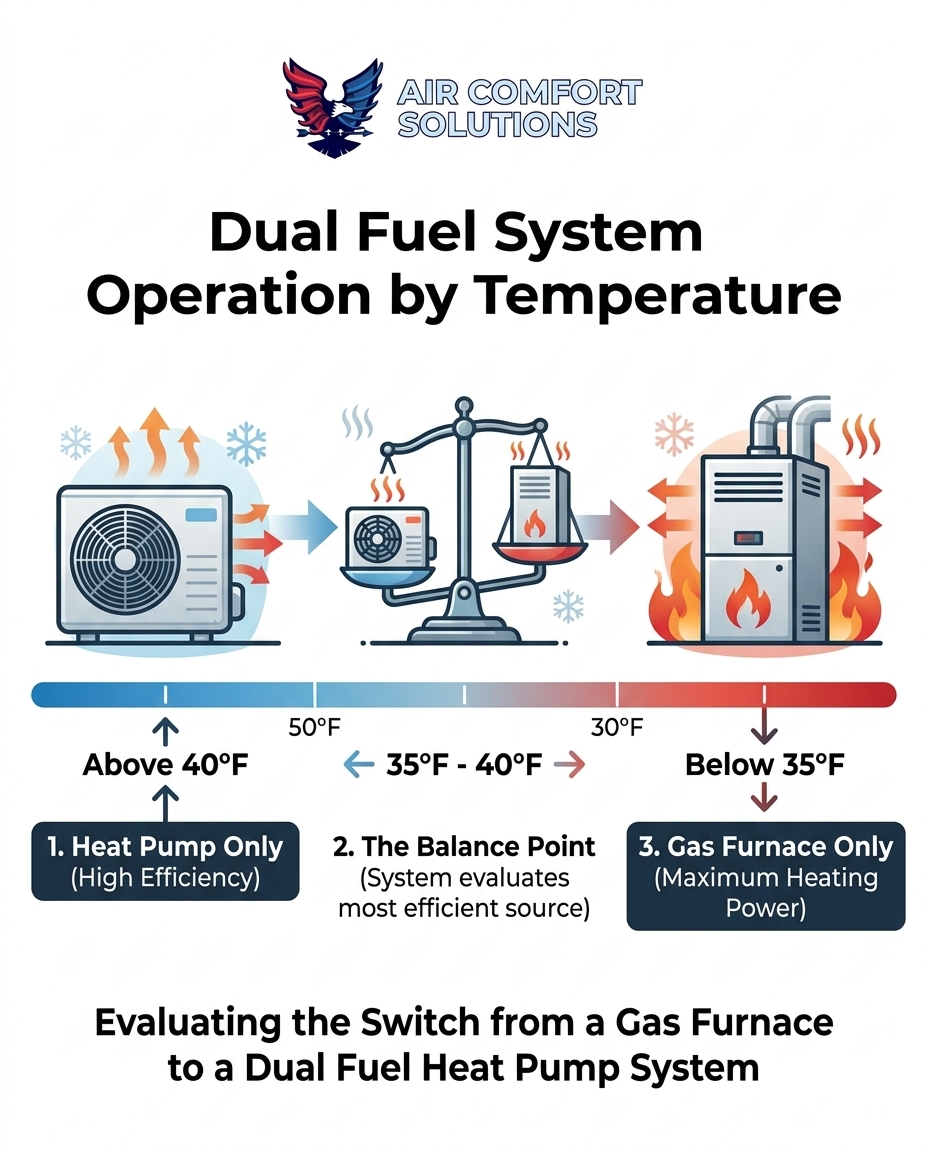
1. Operates during typical fall and mild winter days: For the bulk of the heating season, the heat pump is your primary source of warmth.
2. Draws ambient heat from the outside air: By moving heat rather than creating it, the system uses a fraction of the electricity required by traditional electric heaters.
3. Provides consistent, gentle warmth: Unlike a gas furnace that blasts hot air and shuts off, a heat pump runs for longer, slower cycles, eliminating cold spots and maintaining an even temperature throughout the house.
1. Takes over only when temperatures drop below the balance point: The transition happens automatically, without you needing to adjust the thermostat.
2. Provides high-capacity, rapid heating: Gas furnaces produce a much hotter air supply, which is necessary to combat severe cold and rapidly warm a chilly house.
3. Prevents the electric heat pump from overworking: By shutting down the heat pump when it is least efficient, the system prevents unnecessary wear and tear on the compressor.
While the mild climate of Pinehurst TX makes a heat pump highly effective for everyday use, our team has seen firsthand how the historical reality of unexpected deep freezes in Southeast Texas cannot be ignored. When extreme winter weather strikes and temperatures plunge well below freezing for days at a time, relying solely on electricity for heat can become a liability. This is where the true value of a hybrid heating system becomes apparent: the peace of mind that comes with retaining a powerful gas furnace as your auxiliary heat source.
To understand this benefit, it helps to compare a dual fuel setup with a standalone heat pump. When a standard, electric-only heat pump faces temperatures below its balance point, it relies on auxiliary electric resistance "heat strips" to make up the difference. These heat strips function much like the glowing coils inside a toaster. While they are effective at generating heat, they consume massive amounts of electricity. Running electric heat strips during a multi-day freeze can cause your energy usage to skyrocket, placing a heavy financial burden on your household just when the local power grid is under maximum strain.
By contrast, a dual fuel system completely bypasses the need for electric heat strips. When the freeze hits, the system seamlessly transitions to burning natural gas or propane. Gas furnaces excel in extreme cold, delivering rapid, high-temperature air that quickly warms your living spaces regardless of how cold it gets outside. Exploring the heat pump benefits for Southeast Texas reveals that having this reliable gas backup is the ultimate insurance policy against unpredictable winter storms, ensuring your family stays safe and warm without relying entirely on the electrical grid for heavy heating.
Making an informed decision during the September pre-heating transition requires a clear, side-by-side evaluation of how these systems operate. When you compare a dual fuel setup to a standard gas furnace, you are essentially looking at two different philosophies of energy consumption. A standard furnace burns combustible fuel 100% of the time it runs, regardless of whether it is 30 degrees or 55 degrees outside. A hybrid system, on the other hand, shares the workload, utilizing electricity for roughly 80% of the winter and saving the combustible fuel strictly for the coldest 20%.
This shared workload has significant implications for the longevity of your equipment. Because the gas furnace in a hybrid setup only runs during extreme cold, it accumulates far fewer operating hours each season compared to a standalone furnace. This reduced wear and tear can potentially extend the lifespan of the gas heating components, meaning fewer mid-winter breakdowns and a longer interval before your next major replacement. Additionally, utilizing an electric heat pump for the bulk of your heating needs offers notable environmental benefits, reducing your home's direct fossil fuel consumption and lowering your overall carbon footprint.
If you are currently weighing your furnace replacement options, reviewing the operational differences can clarify which path aligns with your household's needs.
• Primary Heat Source — Standard Gas Furnace: Natural gas or propane (100% of the time) — Dual Fuel (Hybrid) System: Electric heat pump (mild days); Gas (freezing days)
• Energy Efficiency in Mild Weather — Standard Gas Furnace: Moderate to High (burns fuel regardless of temp) — Dual Fuel (Hybrid) System: Extremely High (moves ambient heat using minimal electricity)
• Extreme Cold Performance — Standard Gas Furnace: Excellent (delivers high-capacity heat rapidly) — Dual Fuel (Hybrid) System: Excellent (switches to gas furnace automatically)
• System Wear and Tear — Standard Gas Furnace: Higher (furnace handles the entire heating season) — Dual Fuel (Hybrid) System: Lower (workload is split between two separate units)
• Environmental Impact — Standard Gas Furnace: Higher direct fossil fuel consumption — Dual Fuel (Hybrid) System: Lower direct emissions due to extensive heat pump usage
Upgrading to a high-efficiency dual fuel system generally requires a higher initial investment than simply swapping out an old gas furnace for a similar model. You are, after all, installing both an advanced electric heat pump and a compatible gas furnace. However, evaluating this switch requires looking beyond the upfront installation and considering the long-term value generated through month-over-month energy efficiency.
Because the heat pump operates at such high efficiency during the mild Pinehurst TX winters, the reduction in seasonal fuel consumption often offsets the initial equipment difference over the lifespan of the system. Furthermore, modern hybrid setups frequently utilize variable-speed systems that adjust their output in tiny increments, matching your home's exact heating or cooling needs at any given moment. This prevents the constant, energy-wasting on-and-off cycling associated with older, single-stage equipment.
To encourage homeowners to adopt more efficient technologies, numerous financial incentives are often available to help bridge the gap in upfront costs:
• Federal Tax Credits: Qualifying high-efficiency heat pump installations may be eligible for generic federal energy tax credits, allowing homeowners to claim a portion of the installation on their annual returns.
• Local Utility Rebates: Many regional power providers offer incentive programs for upgrading to energy-efficient heat pumps, as these systems help reduce overall strain on the grid during peak times.
• Manufacturer Promotions: During the fall transition season, equipment manufacturers frequently offer special financing terms or promotional incentives for complete system replacements.
• Important Note: Because incentive programs, eligibility criteria, and available funds change frequently, homeowners should always consult with their utility provider or a qualified tax professional to verify current programs before making a final purchase decision.
Deciding that a dual fuel system is the right choice for your comfort goals is only half the battle; the next step is determining if your home's physical infrastructure can actually support the upgrade. Adding a heat pump to a property that has historically only used gas heating involves specific electrical and airflow requirements. As local experts at Air Comfort Solutions, we have spent years assessing Pinehurst homes, and we are committed to providing honest, no-pressure advice on whether a hybrid investment genuinely makes sense for your specific home's layout, rather than pushing a one-size-fits-all solution.
Before scheduling a September pre-heating transition upgrade, a professional must evaluate several critical components of your home's infrastructure to ensure a safe and effective installation. Attempting to bypass these structural requirements will result in poor performance, frequent breakdowns, and compromised efficiency.
• Compatible Ductwork: Heat pumps and gas furnaces move air differently. A gas furnace blasts a smaller volume of very hot air, while a heat pump requires a larger volume of moderately warm air to heat the home effectively. Your existing ductwork must be properly sized and sealed to handle the increased airflow demands of the heat pump without creating static pressure issues or loud whistling noises.
• Electrical Panel Capacity: A standard gas furnace requires very little electricity—usually just enough to run the blower motor and the ignition sequence on a standard 120-volt circuit. A heat pump, however, features a heavy-duty outdoor compressor that requires a dedicated 240-volt circuit. Your home's main electrical breaker panel must have the physical space and the total amperage capacity to support this significant new load safely.
• Advanced Thermostat Wiring: A hybrid system requires a sophisticated smart thermostat to monitor outdoor temperatures and manage the balance point switchover. This typically requires a "C-wire" (common wire) to provide constant power to the thermostat, as well as additional wiring runs to communicate with both the outdoor heat pump and the indoor furnace independently.
• Clearances and Pad Requirements: The outdoor unit of a heat pump is often larger and taller than a standard air conditioning condenser. There must be adequate physical clearance around the installation site for proper airflow, and the concrete or composite pad must be leveled and sized correctly to support the new equipment.
The switchover point, known as the balance point, is typically set between 35 and 40 degrees Fahrenheit. This exact temperature can be adjusted by your HVAC technician based on your home's insulation levels, the specific efficiency rating of your heat pump, and local utility rates. The goal is to set the threshold exactly where the heat pump begins to lose its efficiency advantage over the gas furnace.
For most mild winter days in Texas, a hybrid heat pump is significantly more efficient than running a gas furnace. It provides the best of both worlds by utilizing highly efficient electric heating for the 40-to-60-degree weather that dominates the season, while still retaining the raw heating power of a gas furnace for unexpected, severe deep freezes.
The primary disadvantage is the higher upfront installation complexity and initial equipment investment, as you are purchasing two distinct heating technologies. Additionally, homes that have only ever used gas heating may require electrical panel upgrades to support the 240-volt circuit required by the outdoor heat pump compressor.
Yes, you can often add a heat pump to an existing gas furnace, provided the current furnace is compatible and its blower motor can handle the specific airflow requirements of the heat pump. However, this requires a thorough professional assessment to ensure the indoor evaporator coils, the furnace control board, and the new outdoor unit will communicate properly and operate safely.
Yes, many high-efficiency heat pumps and hybrid systems qualify for generic federal energy credits designed to encourage energy conservation. Because these programs are subject to change and have specific equipment efficiency requirements, homeowners should always verify current eligibility criteria with a tax professional or their local utility provider before installation.
Evaluating the switch to a dual fuel system requires carefully balancing your goals for lower energy consumption with your need for reliable backup heating. In the mild climate of Pinehurst TX, a hybrid setup offers an exceptional way to maximize efficiency on cool autumn days while maintaining the absolute peace of mind that comes with a powerful gas furnace during severe winter storms. By understanding how the balance point works and assessing your home's infrastructure, you can choose a system that delivers consistent, comfortable warmth all season long.
The early fall transition is the ideal time to make this decision, well before the first freeze hits and contractor schedules fill up. If you are ready to explore your options, our team at Air Comfort Solutions can provide a professional evaluation to give you a clear, honest picture of what it takes to upgrade your home. Take the time now to plan your heating strategy, and you will enjoy a more comfortable, efficient home when the winter weather finally arrives.


Zane came out and did an amazing job! Super friendly, honest and transparent about the work that needed to be done. This is my second time working with Air Comfort Solutions and they’re my go to for HVAC services. Highly recommend.
God's AMAZING grace sent us Robert and Zane. We have been without air in this Texas heat for six weeks and four days. We've had a few contractors give us quotes all trying to upsell when we're at a low point. But not the guys at Air Comfort Solutions. They came in assessed our situation, gave us honest feedback, and showed us the issues as they proceeded with the assessment for clear understanding. We highly recommend them for their professionalism, quality products, and fair pricing. We hands down support them for all the work they do 💯 %.
Robert and Zane gone above and beyond to make the process easy and affordable.
Would definitely recommend!!
I’m writing this review to let everyone know that Air Comfort Solutions is the company to work with. I know the owner ( Robert) for several years now. He has been taking care of my residential and business work orders. Robert is professional, knowledgeable and will save you money. I just want to thank Robert for great job you have been doing for me.