Home Maintenance Tips and Troubleshooting: Safely Evaluating Your Fall Heating Startup
Smell burning during a fall heating startup? Apply these home maintenance tips and troubleshooting to see if it's normal dust burn-off or time to call a pro.
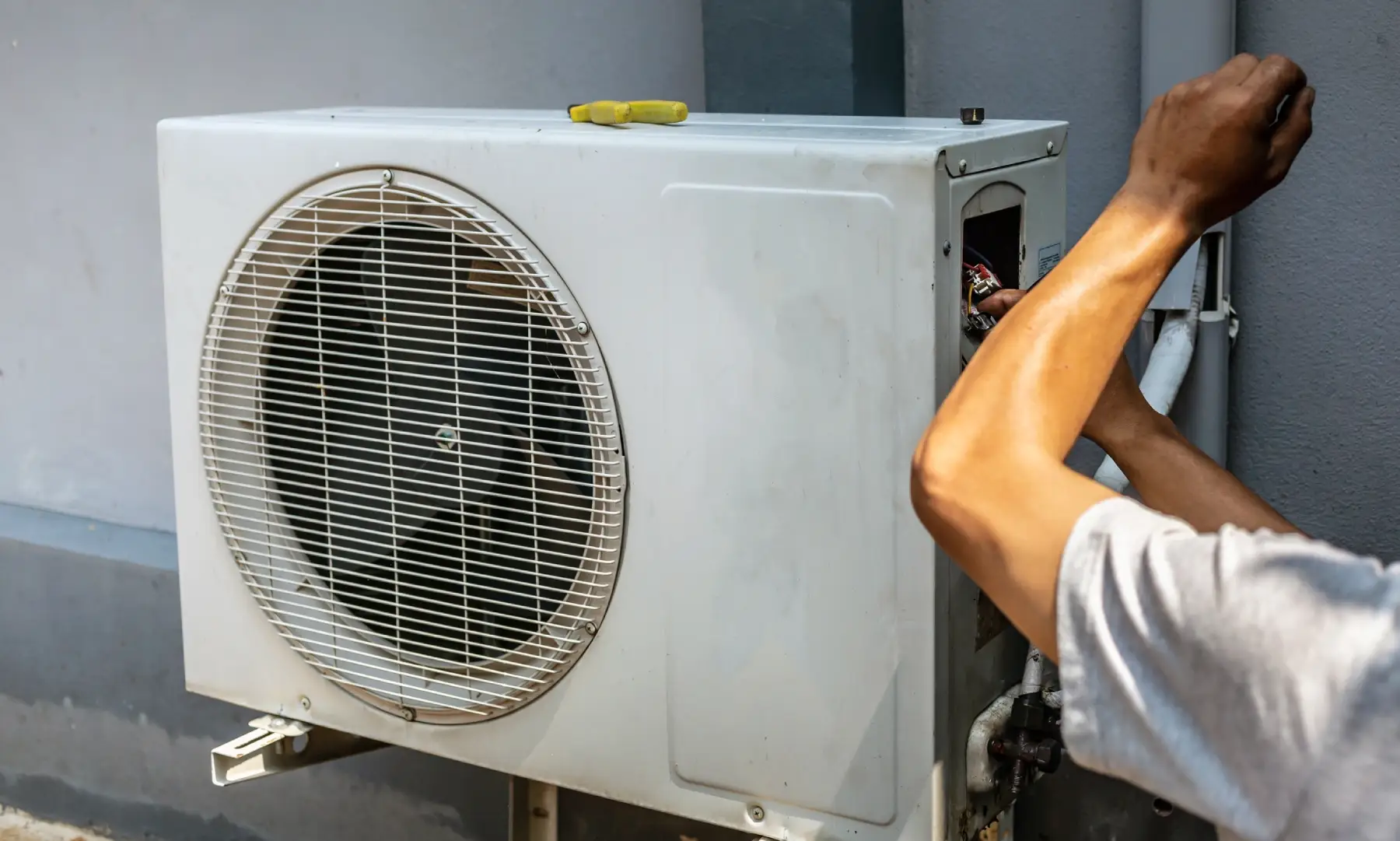
Capacitor failure is why it is the most common AC repair across North Harris County and throughout Texas — accounting for roughly 30% of all AC service calls, more than any other single component. If your outdoor unit is humming but not starting, blowing warm air, or short cycling in the middle of a Pinehurst summer, a failing capacitor is the most likely cause.
Quick Answer: Why Is Capacitor Failure the Most Common AC Repair?
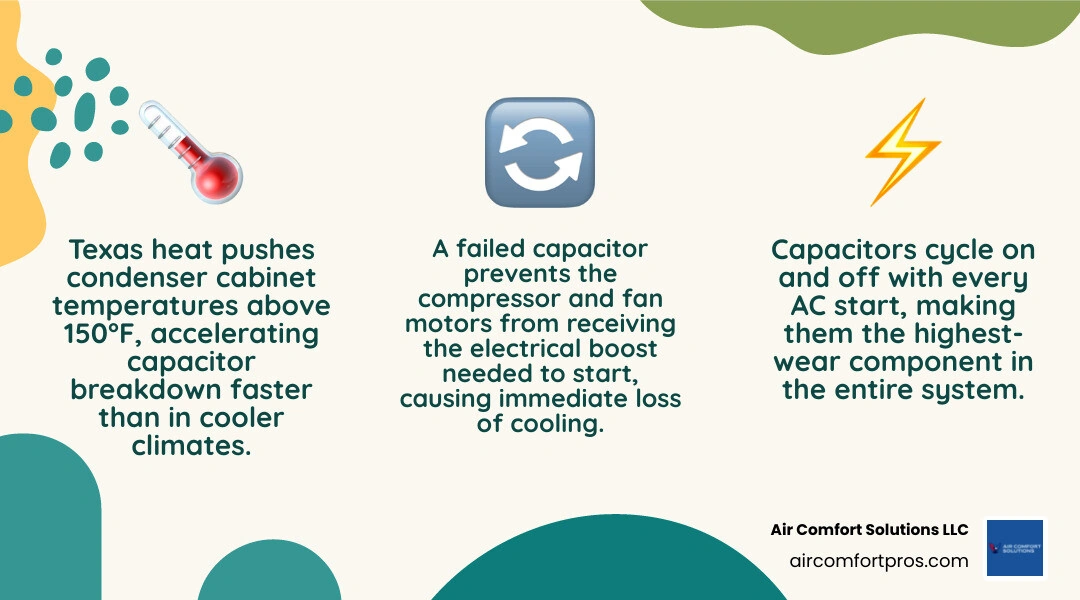
• Capacitors are small, heat-sensitive components that cycle on and off every time your AC runs
• Texas heat pushes temperatures inside outdoor condenser cabinets well above 150°F, which degrades the capacitor’s internal materials faster than in cooler climates
• AC systems in Pinehurst, TX run far more hours per year than systems in moderate climates, wearing capacitors down much faster
• Capacitors are designed to wear out over time — they simply have a shorter lifespan than most other AC components
• When one fails, the compressor and fan motors lose the electrical push they need to start, and the whole system stops cooling
The good news? A capacitor replacement is one of the faster, more straightforward AC repairs — but only when it is caught early. Ignoring a weak capacitor long enough can lead to compressor damage that costs many times more to fix.
To understand why this tiny, cylindrical metal canister fails so often, it helps to understand what it actually does. Think of your air conditioner’s capacitor as a temporary, high-powered storage battery.
While your home’s electrical system provides a steady stream of power, it is often not quite enough to jump-start the heavy-duty motors inside your outdoor AC unit. The compressor (which pumps refrigerant) and the condenser fan (which blows heat out of the system) require a massive electrical “shove” to break out of a standstill and begin spinning.
The capacitor’s job is to store up voltage and release it in a concentrated burst to get these motors moving. Once the motors are running, the capacitor continues to provide a steady, phase-shifted electrical current to keep them operating smoothly and efficiently.
The strength of a capacitor is measured in microfarads (µF) and voltage (VAC). If a capacitor’s microfarad rating drops even 10% below its factory specification, the motors will begin to struggle, overheat, and eventually refuse to start. This is often the mystery behind Why is My AC Running But Not Cooling, as the fan inside your home might blow room-temperature air while the outdoor compressor sits silent and powerless.
Different motors have different electrical needs during startup and continuous operation. Because of this, HVAC systems rely on two distinct types of capacitors—and in many modern systems, these functions are combined into a single, clever device.
• Start Capacitors: These are designed to provide a massive, brief burst of torque to get a motor spinning from a dead stop. Once the motor reaches about 75% of its operating speed, the start capacitor drops out of the electrical circuit.
• Run Capacitors: These remain active the entire time the air conditioner is running. They provide continuous, phase-shifted voltage to maintain the proper magnetic field around the motor windings, keeping the compressor and fan running efficiently.
• Dual Run Capacitors: Most modern residential air conditioners use a dual run capacitor. This single metal cylinder houses both a start-assist and run-assist function for both the compressor and the fan motor. It features three distinct terminals on top, typically labeled HERM (for the compressor), FAN (for the outdoor fan), and C (for common).
• Primary Function — Start Capacitor: Provides high startup torque — Run Capacitor: Maintains steady motor operation — Dual Run Capacitor: Combines start and run functions
• Duration of Use — Start Capacitor: Active for only a few seconds — Run Capacitor: Active continuously while AC runs — Dual Run Capacitor: Active continuously for both motors
• Typical Rating — Start Capacitor: High microfarads (100–400 µF) — Run Capacitor: Low microfarads (5–60 µF) — Dual Run Capacitor: Dual ratings (e.g., 45/5 µF)
• Common Symptoms of Failure — Start Capacitor: Motor hums but won’t start — Run Capacitor: Motor overheats, shuts off, or runs slowly — Dual Run Capacitor: Both fan and compressor fail to run
Ask any experienced HVAC technician in Spring, Tomball, or Magnolia, and they will tell you that a weak or blown capacitor is the absolute king of summer service tickets. It is easily the single most common repair we perform.
But why is this specific component the “weakest link” in your cooling system?
It comes down to a combination of continuous electrical cycling, physical location, and sheer workload. Your AC capacitor is constantly storing and discharging electrical energy under high pressure. Because it sits directly inside the outdoor condenser cabinet, it is subjected to the absolute worst environmental conditions your property has to offer.
While other major components like the compressor are built with heavy-duty cast iron and sealed steel, the capacitor is a delicate electrical component filled with oil and thin metal foils. When you consider how hard our cooling systems have to work to keep up with regional demands, it makes sense that this hard-working component is the first to yield to wear and tear. Understanding this wear pattern is key to understanding How Long Does an AC System Last in Texas and why regular system inspections are so vital.
If you want to know what kills capacitors faster than anything else, the answer is simple: heat.
Capacitors are rated for maximum operating temperatures, typically up to 158°F (70°C). While that might sound incredibly hot, the reality inside an outdoor AC cabinet during a peak summer afternoon is eye-opening.
When the outdoor air temperature hits 100°F in Houston or Conroe, the radiant heat from surrounding brick walls, concrete patios, and direct sunlight can easily push the temperature inside the metal electrical cabinet of your AC unit past 150°F.
As we look at the weather trends of June 2026, we are seeing extended periods of high heat that force air conditioners to run for hours on end. This intense thermal stress causes the liquid dielectric fluid inside the capacitor to expand. Over time, this fluid degrades, evaporates, or leaks out entirely, destroying the capacitor’s ability to hold an electrical charge.
While heat is the primary culprit, it does not act alone. Several other factors contribute to premature capacitor failure:
• Voltage Fluctuations and Surges: Power surges from summer lightning storms or grid fluctuations during peak demand periods put massive electrical stress on capacitors. A single high-voltage spike can instantly puncture the delicate internal insulation of a capacitor.
• Mechanical Vibration: Outdoor condenser units vibrate naturally while running. If a capacitor is not securely mounted, or if the internal components suffer from constant micro-vibrations, the electrical connections can loosen, leading to electrical arcing and rapid failure.
• Simple Age Degradation: Like any rechargeable battery, a capacitor has a finite number of charge and discharge cycles. Every single time your thermostat calls for cooling, the capacitor takes a beating. Over the years, the internal materials naturally degrade until they can no longer support the system’s electrical demands.
Fortunately, capacitors rarely fail in complete secrecy. They usually leave a trail of warning signs that a homeowner can spot—or hear—before the system shuts down entirely.
A physical inspection of a failed capacitor often reveals obvious structural damage. A healthy capacitor has a perfectly flat metal top. When a capacitor fails due to heat or electrical overload, the internal pressure causes the top of the cylinder to bulge, swell, or dome outward, resembling a mushroom. In severe cases, the bottom seam may rupture, resulting in oily dielectric fluid leaking onto the floor of the electrical cabinet, or you may even spot visible burn marks around the wire terminals.
You do not have to open up your AC unit to know something is wrong. Here are the most common everyday warning signs that your capacitor is on its last legs:
• The Outdoor Unit Hums but Won’t Start: This is the classic symptom. You hear a loud, rhythmic humming noise coming from the outdoor unit, but the fan blades are not spinning and the compressor is silent. The system is trying to start, but it lacks the electrical torque to get moving.
• Clicking Sounds: You might hear a rapid clicking sound from the outdoor cabinet as the system tries to engage the startup contactor, followed by silence.
• Delayed Startup: If you notice a lag of several seconds or minutes between the time your thermostat clicks on and the moment the outdoor unit actually starts spinning, your capacitor is likely weak and struggling to build up enough charge.
• AC Blows Warm Air: If the fan motor runs but the compressor fails to start, your indoor vents will blow warm air, leaving your home humid and uncomfortable.
• Rising Energy Bills: When a capacitor weakens, the compressor has to draw significantly more electrical current (amperage) to start and run. This extra power draw shows up directly on your monthly utility bill.
Ignoring a weak capacitor is one of the most expensive mistakes a homeowner can make. Because the capacitor acts as a protective buffer for your motors, a failing capacitor puts immense physical and electrical strain on the rest of your system.
When the capacitor cannot deliver enough starting torque, the compressor motor will experience “hard starting.” It will sit in the startup phase for several seconds instead of starting instantly. This causes the motor windings to overheat rapidly, breaking down their protective insulation.
Left unaddressed, this constant overheating will lead to a completely burned-out fan motor or, worst of all, a dead compressor. Since the compressor is the most expensive part of your air conditioner, a failed capacitor can quickly turn a simple repair into a major system replacement. Learning How to Tell if Your AC Compressor is Failing can help you identify if a weak capacitor has already begun to damage the heart of your air conditioner.
While you cannot stop the Texas summer heat, you can take proactive steps to protect your capacitor from premature failure and keep your cooling system running smoothly.
One of the easiest ways to protect your capacitor is to ensure your outdoor unit has plenty of room to breathe. Maintain at least two feet of clear space around your outdoor condenser unit and keep it free of weeds, leaves, and debris.
Additionally, keeping your condenser coils clean is vital. When coils are caked with dust and dirt, the system cannot shed heat efficiently, which dramatically increases the temperature inside the electrical cabinet.
You can also install a dedicated HVAC surge protector to shield your capacitor and compressor from sudden voltage spikes caused by summer storms. Taking these small steps is a great way to learn How to Extend the Life of Your AC in Texas.
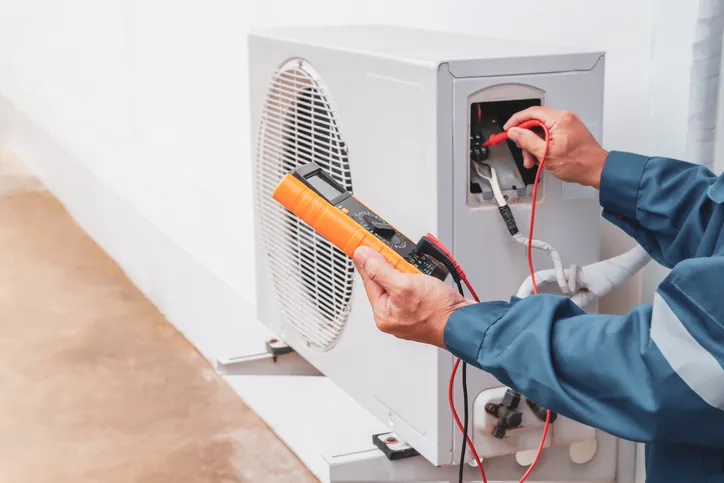
The absolute best defense against a sudden system breakdown is regular, professional maintenance. During a routine tune-up, an experienced technician will use a specialized multimeter to measure the exact microfarad output of your capacitor.
If a capacitor rated for 45 µF is only reading 38 µF, we know it is on the verge of failing. We can replace it proactively on the spot, saving you from an emergency breakdown on a blistering hot afternoon.
Skipping these simple checks can have serious consequences. To learn more about the risks of skipping professional care, read about What Happens if You Skip AC Maintenance in Texas. For a complete look at what a professional visit should include, check out our AC Maintenance Visit Complete Guide and find out How Often Should You Service Your AC in Texas to keep your system in peak condition.
In moderate climates, a high-quality AC capacitor can easily last 10 to 15 years. However, in the extreme heat of Texas, the average lifespan of a residential capacitor drops to 5 to 8 years. In systems that are poorly maintained, lack shade, or have dirty condenser coils, capacitors can fail in as little as 3 to 4 years. Proactive replacement during routine maintenance is highly recommended once a capacitor reaches the 5-year mark.
We strongly advise against attempting to replace an AC capacitor yourself. Capacitors are electrical storage devices; they hold a lethal electrical charge (often between 370 and 440 volts) even when the main power to the air conditioner is turned completely off. Touching the terminals of a charged capacitor can result in a severe, potentially fatal electrical shock. Professional technicians use specialized insulated tools and safety procedures to safely discharge the stored energy before handling the component.
If you continue to run your air conditioner with a weak or failing capacitor, the fan and compressor motors will draw excessive electrical current trying to start and run. This causes the motors to overheat rapidly. Over time, this thermal stress will burn out the fan motor or destroy the compressor’s internal windings, leading to a complete system failure and incredibly costly equipment replacements.
Your air conditioner’s capacitor may be small, but it plays a massive role in keeping your home cool and comfortable. Because it bears the brunt of the extreme Texas heat and constant electrical cycling, it remains the most common AC repair we see.
At Air Comfort Solutions, we have spent over 35 years helping homeowners across Pinehurst, Magnolia, Tomball, Spring, and the surrounding communities stay comfortable. Our certified technicians carry a wide range of high-quality, reliable replacement capacitors on every service truck, allowing us to get your cooling system back up and running safely and quickly.
If you hear a strange humming noise from your outdoor unit, or if your home is simply not cooling the way it should, do not wait for a minor issue to turn into an expensive compressor failure. Schedule professional AC repair in Tomball, TX with Air Comfort Solutions today, and let our family take care of yours!
Capacitor failure is why it is the most common AC repair across North Harris County and throughout Texas — accounting for roughly 30% of all AC service calls, more than any other single component. If your outdoor unit is humming but not starting, blowing warm air, or short cycling in the middle of a Pinehurst summer, a failing capacitor is the most likely cause.
Quick Answer: Why Is Capacitor Failure the Most Common AC Repair?
The good news? A capacitor replacement is one of the faster, more straightforward AC repairs — but only when it is caught early. Ignoring a weak capacitor long enough can lead to compressor damage that costs many times more to fix.
To understand why this tiny, cylindrical metal canister fails so often, it helps to understand what it actually does. Think of your air conditioner's capacitor as a temporary, high-powered storage battery.
While your home’s electrical system provides a steady stream of power, it is often not quite enough to jump-start the heavy-duty motors inside your outdoor AC unit. The compressor (which pumps refrigerant) and the condenser fan (which blows heat out of the system) require a massive electrical "shove" to break out of a standstill and begin spinning.
The capacitor's job is to store up voltage and release it in a concentrated burst to get these motors moving. Once the motors are running, the capacitor continues to provide a steady, phase-shifted electrical current to keep them operating smoothly and efficiently.
The strength of a capacitor is measured in microfarads (µF) and voltage (VAC). If a capacitor's microfarad rating drops even 10% below its factory specification, the motors will begin to struggle, overheat, and eventually refuse to start. This is often the mystery behind Why is My AC Running But Not Cooling, as the fan inside your home might blow room-temperature air while the outdoor compressor sits silent and powerless.
Different motors have different electrical needs during startup and continuous operation. Because of this, HVAC systems rely on two distinct types of capacitors—and in many modern systems, these functions are combined into a single, clever device.
| Feature | Start Capacitor | Run Capacitor | Dual Run Capacitor |
|---|---|---|---|
| Primary Function | Provides high startup torque | Maintains steady motor operation | Combines start and run functions |
| Duration of Use | Active for only a few seconds | Active continuously while AC runs | Active continuously for both motors |
| Typical Rating | High microfarads (100–400 µF) | Low microfarads (5–60 µF) | Dual ratings (e.g., 45/5 µF) |
| Common Symptoms of Failure | Motor hums but won't start | Motor overheats, shuts off, or runs slowly | Both fan and compressor fail to run |
Ask any experienced HVAC technician in Spring, Tomball, or Magnolia, and they will tell you that a weak or blown capacitor is the absolute king of summer service tickets. It is easily the single most common repair we perform.
But why is this specific component the "weakest link" in your cooling system?
It comes down to a combination of continuous electrical cycling, physical location, and sheer workload. Your AC capacitor is constantly storing and discharging electrical energy under high pressure. Because it sits directly inside the outdoor condenser cabinet, it is subjected to the absolute worst environmental conditions your property has to offer.
While other major components like the compressor are built with heavy-duty cast iron and sealed steel, the capacitor is a delicate electrical component filled with oil and thin metal foils. When you consider how hard our cooling systems have to work to keep up with regional demands, it makes sense that this hard-working component is the first to yield to wear and tear. Understanding this wear pattern is key to understanding How Long Does an AC System Last in Texas and why regular system inspections are so vital.
If you want to know what kills capacitors faster than anything else, the answer is simple: heat.
Capacitors are rated for maximum operating temperatures, typically up to 158°F (70°C). While that might sound incredibly hot, the reality inside an outdoor AC cabinet during a peak summer afternoon is eye-opening.
When the outdoor air temperature hits 100°F in Houston or Conroe, the radiant heat from surrounding brick walls, concrete patios, and direct sunlight can easily push the temperature inside the metal electrical cabinet of your AC unit past 150°F.
As we look at the weather trends of June 2026, we are seeing extended periods of high heat that force air conditioners to run for hours on end. This intense thermal stress causes the liquid dielectric fluid inside the capacitor to expand. Over time, this fluid degrades, evaporates, or leaks out entirely, destroying the capacitor's ability to hold an electrical charge.
While heat is the primary culprit, it does not act alone. Several other factors contribute to premature capacitor failure:
Fortunately, capacitors rarely fail in complete secrecy. They usually leave a trail of warning signs that a homeowner can spot—or hear—before the system shuts down entirely.
A physical inspection of a failed capacitor often reveals obvious structural damage. A healthy capacitor has a perfectly flat metal top. When a capacitor fails due to heat or electrical overload, the internal pressure causes the top of the cylinder to bulge, swell, or dome outward, resembling a mushroom. In severe cases, the bottom seam may rupture, resulting in oily dielectric fluid leaking onto the floor of the electrical cabinet, or you may even spot visible burn marks around the wire terminals.
You do not have to open up your AC unit to know something is wrong. Here are the most common everyday warning signs that your capacitor is on its last legs:
Ignoring a weak capacitor is one of the most expensive mistakes a homeowner can make. Because the capacitor acts as a protective buffer for your motors, a failing capacitor puts immense physical and electrical strain on the rest of your system.
When the capacitor cannot deliver enough starting torque, the compressor motor will experience "hard starting." It will sit in the startup phase for several seconds instead of starting instantly. This causes the motor windings to overheat rapidly, breaking down their protective insulation.
Left unaddressed, this constant overheating will lead to a completely burned-out fan motor or, worst of all, a dead compressor. Since the compressor is the most expensive part of your air conditioner, a failed capacitor can quickly turn a simple repair into a major system replacement. Learning How to Tell if Your AC Compressor is Failing can help you identify if a weak capacitor has already begun to damage the heart of your air conditioner.
While you cannot stop the Texas summer heat, you can take proactive steps to protect your capacitor from premature failure and keep your cooling system running smoothly.
One of the easiest ways to protect your capacitor is to ensure your outdoor unit has plenty of room to breathe. Maintain at least two feet of clear space around your outdoor condenser unit and keep it free of weeds, leaves, and debris.
Additionally, keeping your condenser coils clean is vital. When coils are caked with dust and dirt, the system cannot shed heat efficiently, which dramatically increases the temperature inside the electrical cabinet.
You can also install a dedicated HVAC surge protector to shield your capacitor and compressor from sudden voltage spikes caused by summer storms. Taking these small steps is a great way to learn How to Extend the Life of Your AC in Texas.
The absolute best defense against a sudden system breakdown is regular, professional maintenance. During a routine tune-up, an experienced technician will use a specialized multimeter to measure the exact microfarad output of your capacitor.
If a capacitor rated for 45 µF is only reading 38 µF, we know it is on the verge of failing. We can replace it proactively on the spot, saving you from an emergency breakdown on a blistering hot afternoon.
Skipping these simple checks can have serious consequences. To learn more about the risks of skipping professional care, read about What Happens if You Skip AC Maintenance in Texas. For a complete look at what a professional visit should include, check out our AC Maintenance Visit Complete Guide and find out How Often Should You Service Your AC in Texas to keep your system in peak condition.
In moderate climates, a high-quality AC capacitor can easily last 10 to 15 years. However, in the extreme heat of Texas, the average lifespan of a residential capacitor drops to 5 to 8 years. In systems that are poorly maintained, lack shade, or have dirty condenser coils, capacitors can fail in as little as 3 to 4 years. Proactive replacement during routine maintenance is highly recommended once a capacitor reaches the 5-year mark.
We strongly advise against attempting to replace an AC capacitor yourself. Capacitors are electrical storage devices; they hold a lethal electrical charge (often between 370 and 440 volts) even when the main power to the air conditioner is turned completely off. Touching the terminals of a charged capacitor can result in a severe, potentially fatal electrical shock. Professional technicians use specialized insulated tools and safety procedures to safely discharge the stored energy before handling the component.
If you continue to run your air conditioner with a weak or failing capacitor, the fan and compressor motors will draw excessive electrical current trying to start and run. This causes the motors to overheat rapidly. Over time, this thermal stress will burn out the fan motor or destroy the compressor's internal windings, leading to a complete system failure and incredibly costly equipment replacements.
Your air conditioner's capacitor may be small, but it plays a massive role in keeping your home cool and comfortable. Because it bears the brunt of the extreme Texas heat and constant electrical cycling, it remains the most common AC repair we see.
At Air Comfort Pros, we have spent over 35 years helping homeowners across Pinehurst, Magnolia, Tomball, Spring, and the surrounding communities stay comfortable. Our certified technicians carry a wide range of high-quality, reliable replacement capacitors on every service truck, allowing us to get your cooling system back up and running safely and quickly.
If you hear a strange humming noise from your outdoor unit, or if your home is simply not cooling the way it should, do not wait for a minor issue to turn into an expensive compressor failure. Schedule professional AC repair in Tomball, TX with Air Comfort Pros today, and let our family take care of yours!
Capacitor failure is why it is the most common AC repair across North Harris County and throughout Texas — accounting for roughly 30% of all AC service calls, more than any other single component. If your outdoor unit is humming but not starting, blowing warm air, or short cycling in the middle of a Pinehurst summer, a failing capacitor is the most likely cause.
Quick Answer: Why Is Capacitor Failure the Most Common AC Repair?
The good news? A capacitor replacement is one of the faster, more straightforward AC repairs — but only when it is caught early. Ignoring a weak capacitor long enough can lead to compressor damage that costs many times more to fix.
To understand why this tiny, cylindrical metal canister fails so often, it helps to understand what it actually does. Think of your air conditioner's capacitor as a temporary, high-powered storage battery.
While your home’s electrical system provides a steady stream of power, it is often not quite enough to jump-start the heavy-duty motors inside your outdoor AC unit. The compressor (which pumps refrigerant) and the condenser fan (which blows heat out of the system) require a massive electrical "shove" to break out of a standstill and begin spinning.
The capacitor's job is to store up voltage and release it in a concentrated burst to get these motors moving. Once the motors are running, the capacitor continues to provide a steady, phase-shifted electrical current to keep them operating smoothly and efficiently.
The strength of a capacitor is measured in microfarads (µF) and voltage (VAC). If a capacitor's microfarad rating drops even 10% below its factory specification, the motors will begin to struggle, overheat, and eventually refuse to start. This is often the mystery behind Why is My AC Running But Not Cooling, as the fan inside your home might blow room-temperature air while the outdoor compressor sits silent and powerless.
Different motors have different electrical needs during startup and continuous operation. Because of this, HVAC systems rely on two distinct types of capacitors—and in many modern systems, these functions are combined into a single, clever device.
| Feature | Start Capacitor | Run Capacitor | Dual Run Capacitor |
|---|---|---|---|
| Primary Function | Provides high startup torque | Maintains steady motor operation | Combines start and run functions |
| Duration of Use | Active for only a few seconds | Active continuously while AC runs | Active continuously for both motors |
| Typical Rating | High microfarads (100–400 µF) | Low microfarads (5–60 µF) | Dual ratings (e.g., 45/5 µF) |
| Common Symptoms of Failure | Motor hums but won't start | Motor overheats, shuts off, or runs slowly | Both fan and compressor fail to run |
Ask any experienced HVAC technician in Spring, Tomball, or Magnolia, and they will tell you that a weak or blown capacitor is the absolute king of summer service tickets. It is easily the single most common repair we perform.
But why is this specific component the "weakest link" in your cooling system?
It comes down to a combination of continuous electrical cycling, physical location, and sheer workload. Your AC capacitor is constantly storing and discharging electrical energy under high pressure. Because it sits directly inside the outdoor condenser cabinet, it is subjected to the absolute worst environmental conditions your property has to offer.
While other major components like the compressor are built with heavy-duty cast iron and sealed steel, the capacitor is a delicate electrical component filled with oil and thin metal foils. When you consider how hard our cooling systems have to work to keep up with regional demands, it makes sense that this hard-working component is the first to yield to wear and tear. Understanding this wear pattern is key to understanding How Long Does an AC System Last in Texas and why regular system inspections are so vital.
If you want to know what kills capacitors faster than anything else, the answer is simple: heat.
Capacitors are rated for maximum operating temperatures, typically up to 158°F (70°C). While that might sound incredibly hot, the reality inside an outdoor AC cabinet during a peak summer afternoon is eye-opening.
When the outdoor air temperature hits 100°F in Houston or Conroe, the radiant heat from surrounding brick walls, concrete patios, and direct sunlight can easily push the temperature inside the metal electrical cabinet of your AC unit past 150°F.
As we look at the weather trends of June 2026, we are seeing extended periods of high heat that force air conditioners to run for hours on end. This intense thermal stress causes the liquid dielectric fluid inside the capacitor to expand. Over time, this fluid degrades, evaporates, or leaks out entirely, destroying the capacitor's ability to hold an electrical charge.
While heat is the primary culprit, it does not act alone. Several other factors contribute to premature capacitor failure:
Fortunately, capacitors rarely fail in complete secrecy. They usually leave a trail of warning signs that a homeowner can spot—or hear—before the system shuts down entirely.
A physical inspection of a failed capacitor often reveals obvious structural damage. A healthy capacitor has a perfectly flat metal top. When a capacitor fails due to heat or electrical overload, the internal pressure causes the top of the cylinder to bulge, swell, or dome outward, resembling a mushroom. In severe cases, the bottom seam may rupture, resulting in oily dielectric fluid leaking onto the floor of the electrical cabinet, or you may even spot visible burn marks around the wire terminals.
You do not have to open up your AC unit to know something is wrong. Here are the most common everyday warning signs that your capacitor is on its last legs:
Ignoring a weak capacitor is one of the most expensive mistakes a homeowner can make. Because the capacitor acts as a protective buffer for your motors, a failing capacitor puts immense physical and electrical strain on the rest of your system.
When the capacitor cannot deliver enough starting torque, the compressor motor will experience "hard starting." It will sit in the startup phase for several seconds instead of starting instantly. This causes the motor windings to overheat rapidly, breaking down their protective insulation.
Left unaddressed, this constant overheating will lead to a completely burned-out fan motor or, worst of all, a dead compressor. Since the compressor is the most expensive part of your air conditioner, a failed capacitor can quickly turn a simple repair into a major system replacement. Learning How to Tell if Your AC Compressor is Failing can help you identify if a weak capacitor has already begun to damage the heart of your air conditioner.
While you cannot stop the Texas summer heat, you can take proactive steps to protect your capacitor from premature failure and keep your cooling system running smoothly.
One of the easiest ways to protect your capacitor is to ensure your outdoor unit has plenty of room to breathe. Maintain at least two feet of clear space around your outdoor condenser unit and keep it free of weeds, leaves, and debris.
Additionally, keeping your condenser coils clean is vital. When coils are caked with dust and dirt, the system cannot shed heat efficiently, which dramatically increases the temperature inside the electrical cabinet.
You can also install a dedicated HVAC surge protector to shield your capacitor and compressor from sudden voltage spikes caused by summer storms. Taking these small steps is a great way to learn How to Extend the Life of Your AC in Texas.
The absolute best defense against a sudden system breakdown is regular, professional maintenance. During a routine tune-up, an experienced technician will use a specialized multimeter to measure the exact microfarad output of your capacitor.
If a capacitor rated for 45 µF is only reading 38 µF, we know it is on the verge of failing. We can replace it proactively on the spot, saving you from an emergency breakdown on a blistering hot afternoon.
Skipping these simple checks can have serious consequences. To learn more about the risks of skipping professional care, read about What Happens if You Skip AC Maintenance in Texas. For a complete look at what a professional visit should include, check out our AC Maintenance Visit Complete Guide and find out How Often Should You Service Your AC in Texas to keep your system in peak condition.
In moderate climates, a high-quality AC capacitor can easily last 10 to 15 years. However, in the extreme heat of Texas, the average lifespan of a residential capacitor drops to 5 to 8 years. In systems that are poorly maintained, lack shade, or have dirty condenser coils, capacitors can fail in as little as 3 to 4 years. Proactive replacement during routine maintenance is highly recommended once a capacitor reaches the 5-year mark.
We strongly advise against attempting to replace an AC capacitor yourself. Capacitors are electrical storage devices; they hold a lethal electrical charge (often between 370 and 440 volts) even when the main power to the air conditioner is turned completely off. Touching the terminals of a charged capacitor can result in a severe, potentially fatal electrical shock. Professional technicians use specialized insulated tools and safety procedures to safely discharge the stored energy before handling the component.
If you continue to run your air conditioner with a weak or failing capacitor, the fan and compressor motors will draw excessive electrical current trying to start and run. This causes the motors to overheat rapidly. Over time, this thermal stress will burn out the fan motor or destroy the compressor's internal windings, leading to a complete system failure and incredibly costly equipment replacements.
Your air conditioner's capacitor may be small, but it plays a massive role in keeping your home cool and comfortable. Because it bears the brunt of the extreme Texas heat and constant electrical cycling, it remains the most common AC repair we see.
At Air Comfort Pros, we have spent over 35 years helping homeowners across Pinehurst, Magnolia, Tomball, Spring, and the surrounding communities stay comfortable. Our certified technicians carry a wide range of high-quality, reliable replacement capacitors on every service truck, allowing us to get your cooling system back up and running safely and quickly.
If you hear a strange humming noise from your outdoor unit, or if your home is simply not cooling the way it should, do not wait for a minor issue to turn into an expensive compressor failure. Schedule professional AC repair in Tomball, TX with Air Comfort Pros today, and let our family take care of yours!
Capacitor failure is why it is the most common AC repair across North Harris County and throughout Texas — accounting for roughly 30% of all AC service calls, more than any other single component. If your outdoor unit is humming but not starting, blowing warm air, or short cycling in the middle of a Pinehurst summer, a failing capacitor is the most likely cause.
Quick Answer: Why Is Capacitor Failure the Most Common AC Repair?
The good news? A capacitor replacement is one of the faster, more straightforward AC repairs — but only when it is caught early. Ignoring a weak capacitor long enough can lead to compressor damage that costs many times more to fix.
To understand why this tiny, cylindrical metal canister fails so often, it helps to understand what it actually does. Think of your air conditioner's capacitor as a temporary, high-powered storage battery.
While your home’s electrical system provides a steady stream of power, it is often not quite enough to jump-start the heavy-duty motors inside your outdoor AC unit. The compressor (which pumps refrigerant) and the condenser fan (which blows heat out of the system) require a massive electrical "shove" to break out of a standstill and begin spinning.
The capacitor's job is to store up voltage and release it in a concentrated burst to get these motors moving. Once the motors are running, the capacitor continues to provide a steady, phase-shifted electrical current to keep them operating smoothly and efficiently.
The strength of a capacitor is measured in microfarads (µF) and voltage (VAC). If a capacitor's microfarad rating drops even 10% below its factory specification, the motors will begin to struggle, overheat, and eventually refuse to start. This is often the mystery behind Why is My AC Running But Not Cooling, as the fan inside your home might blow room-temperature air while the outdoor compressor sits silent and powerless.
Different motors have different electrical needs during startup and continuous operation. Because of this, HVAC systems rely on two distinct types of capacitors—and in many modern systems, these functions are combined into a single, clever device.
| Feature | Start Capacitor | Run Capacitor | Dual Run Capacitor |
|---|---|---|---|
| Primary Function | Provides high startup torque | Maintains steady motor operation | Combines start and run functions |
| Duration of Use | Active for only a few seconds | Active continuously while AC runs | Active continuously for both motors |
| Typical Rating | High microfarads (100–400 µF) | Low microfarads (5–60 µF) | Dual ratings (e.g., 45/5 µF) |
| Common Symptoms of Failure | Motor hums but won't start | Motor overheats, shuts off, or runs slowly | Both fan and compressor fail to run |
Ask any experienced HVAC technician in Spring, Tomball, or Magnolia, and they will tell you that a weak or blown capacitor is the absolute king of summer service tickets. It is easily the single most common repair we perform.
But why is this specific component the "weakest link" in your cooling system?
It comes down to a combination of continuous electrical cycling, physical location, and sheer workload. Your AC capacitor is constantly storing and discharging electrical energy under high pressure. Because it sits directly inside the outdoor condenser cabinet, it is subjected to the absolute worst environmental conditions your property has to offer.
While other major components like the compressor are built with heavy-duty cast iron and sealed steel, the capacitor is a delicate electrical component filled with oil and thin metal foils. When you consider how hard our cooling systems have to work to keep up with regional demands, it makes sense that this hard-working component is the first to yield to wear and tear. Understanding this wear pattern is key to understanding How Long Does an AC System Last in Texas and why regular system inspections are so vital.
If you want to know what kills capacitors faster than anything else, the answer is simple: heat.
Capacitors are rated for maximum operating temperatures, typically up to 158°F (70°C). While that might sound incredibly hot, the reality inside an outdoor AC cabinet during a peak summer afternoon is eye-opening.
When the outdoor air temperature hits 100°F in Houston or Conroe, the radiant heat from surrounding brick walls, concrete patios, and direct sunlight can easily push the temperature inside the metal electrical cabinet of your AC unit past 150°F.
As we look at the weather trends of June 2026, we are seeing extended periods of high heat that force air conditioners to run for hours on end. This intense thermal stress causes the liquid dielectric fluid inside the capacitor to expand. Over time, this fluid degrades, evaporates, or leaks out entirely, destroying the capacitor's ability to hold an electrical charge.
While heat is the primary culprit, it does not act alone. Several other factors contribute to premature capacitor failure:
Fortunately, capacitors rarely fail in complete secrecy. They usually leave a trail of warning signs that a homeowner can spot—or hear—before the system shuts down entirely.
A physical inspection of a failed capacitor often reveals obvious structural damage. A healthy capacitor has a perfectly flat metal top. When a capacitor fails due to heat or electrical overload, the internal pressure causes the top of the cylinder to bulge, swell, or dome outward, resembling a mushroom. In severe cases, the bottom seam may rupture, resulting in oily dielectric fluid leaking onto the floor of the electrical cabinet, or you may even spot visible burn marks around the wire terminals.
You do not have to open up your AC unit to know something is wrong. Here are the most common everyday warning signs that your capacitor is on its last legs:
Ignoring a weak capacitor is one of the most expensive mistakes a homeowner can make. Because the capacitor acts as a protective buffer for your motors, a failing capacitor puts immense physical and electrical strain on the rest of your system.
When the capacitor cannot deliver enough starting torque, the compressor motor will experience "hard starting." It will sit in the startup phase for several seconds instead of starting instantly. This causes the motor windings to overheat rapidly, breaking down their protective insulation.
Left unaddressed, this constant overheating will lead to a completely burned-out fan motor or, worst of all, a dead compressor. Since the compressor is the most expensive part of your air conditioner, a failed capacitor can quickly turn a simple repair into a major system replacement. Learning How to Tell if Your AC Compressor is Failing can help you identify if a weak capacitor has already begun to damage the heart of your air conditioner.
While you cannot stop the Texas summer heat, you can take proactive steps to protect your capacitor from premature failure and keep your cooling system running smoothly.
One of the easiest ways to protect your capacitor is to ensure your outdoor unit has plenty of room to breathe. Maintain at least two feet of clear space around your outdoor condenser unit and keep it free of weeds, leaves, and debris.
Additionally, keeping your condenser coils clean is vital. When coils are caked with dust and dirt, the system cannot shed heat efficiently, which dramatically increases the temperature inside the electrical cabinet.
You can also install a dedicated HVAC surge protector to shield your capacitor and compressor from sudden voltage spikes caused by summer storms. Taking these small steps is a great way to learn How to Extend the Life of Your AC in Texas.
The absolute best defense against a sudden system breakdown is regular, professional maintenance. During a routine tune-up, an experienced technician will use a specialized multimeter to measure the exact microfarad output of your capacitor.
If a capacitor rated for 45 µF is only reading 38 µF, we know it is on the verge of failing. We can replace it proactively on the spot, saving you from an emergency breakdown on a blistering hot afternoon.
Skipping these simple checks can have serious consequences. To learn more about the risks of skipping professional care, read about What Happens if You Skip AC Maintenance in Texas. For a complete look at what a professional visit should include, check out our AC Maintenance Visit Complete Guide and find out How Often Should You Service Your AC in Texas to keep your system in peak condition.
In moderate climates, a high-quality AC capacitor can easily last 10 to 15 years. However, in the extreme heat of Texas, the average lifespan of a residential capacitor drops to 5 to 8 years. In systems that are poorly maintained, lack shade, or have dirty condenser coils, capacitors can fail in as little as 3 to 4 years. Proactive replacement during routine maintenance is highly recommended once a capacitor reaches the 5-year mark.
We strongly advise against attempting to replace an AC capacitor yourself. Capacitors are electrical storage devices; they hold a lethal electrical charge (often between 370 and 440 volts) even when the main power to the air conditioner is turned completely off. Touching the terminals of a charged capacitor can result in a severe, potentially fatal electrical shock. Professional technicians use specialized insulated tools and safety procedures to safely discharge the stored energy before handling the component.
If you continue to run your air conditioner with a weak or failing capacitor, the fan and compressor motors will draw excessive electrical current trying to start and run. This causes the motors to overheat rapidly. Over time, this thermal stress will burn out the fan motor or destroy the compressor's internal windings, leading to a complete system failure and incredibly costly equipment replacements.
Your air conditioner's capacitor may be small, but it plays a massive role in keeping your home cool and comfortable. Because it bears the brunt of the extreme Texas heat and constant electrical cycling, it remains the most common AC repair we see.
At Air Comfort Pros, we have spent over 35 years helping homeowners across Pinehurst, Magnolia, Tomball, Spring, and the surrounding communities stay comfortable. Our certified technicians carry a wide range of high-quality, reliable replacement capacitors on every service truck, allowing us to get your cooling system back up and running safely and quickly.
If you hear a strange humming noise from your outdoor unit, or if your home is simply not cooling the way it should, do not wait for a minor issue to turn into an expensive compressor failure. Schedule professional AC repair in Tomball, TX with Air Comfort Pros today, and let our family take care of yours!
Capacitor failure is why it is the most common AC repair across North Harris County and throughout Texas — accounting for roughly 30% of all AC service calls, more than any other single component. If your outdoor unit is humming but not starting, blowing warm air, or short cycling in the middle of a Pinehurst summer, a failing capacitor is the most likely cause.
Quick Answer: Why Is Capacitor Failure the Most Common AC Repair?
The good news? A capacitor replacement is one of the faster, more straightforward AC repairs — but only when it is caught early. Ignoring a weak capacitor long enough can lead to compressor damage that costs many times more to fix.
To understand why this tiny, cylindrical metal canister fails so often, it helps to understand what it actually does. Think of your air conditioner's capacitor as a temporary, high-powered storage battery.
While your home’s electrical system provides a steady stream of power, it is often not quite enough to jump-start the heavy-duty motors inside your outdoor AC unit. The compressor (which pumps refrigerant) and the condenser fan (which blows heat out of the system) require a massive electrical "shove" to break out of a standstill and begin spinning.
The capacitor's job is to store up voltage and release it in a concentrated burst to get these motors moving. Once the motors are running, the capacitor continues to provide a steady, phase-shifted electrical current to keep them operating smoothly and efficiently.
The strength of a capacitor is measured in microfarads (µF) and voltage (VAC). If a capacitor's microfarad rating drops even 10% below its factory specification, the motors will begin to struggle, overheat, and eventually refuse to start. This is often the mystery behind Why is My AC Running But Not Cooling, as the fan inside your home might blow room-temperature air while the outdoor compressor sits silent and powerless.
Different motors have different electrical needs during startup and continuous operation. Because of this, HVAC systems rely on two distinct types of capacitors—and in many modern systems, these functions are combined into a single, clever device.
| Feature | Start Capacitor | Run Capacitor | Dual Run Capacitor |
|---|---|---|---|
| Primary Function | Provides high startup torque | Maintains steady motor operation | Combines start and run functions |
| Duration of Use | Active for only a few seconds | Active continuously while AC runs | Active continuously for both motors |
| Typical Rating | High microfarads (100–400 µF) | Low microfarads (5–60 µF) | Dual ratings (e.g., 45/5 µF) |
| Common Symptoms of Failure | Motor hums but won't start | Motor overheats, shuts off, or runs slowly | Both fan and compressor fail to run |
Ask any experienced HVAC technician in Spring, Tomball, or Magnolia, and they will tell you that a weak or blown capacitor is the absolute king of summer service tickets. It is easily the single most common repair we perform.
But why is this specific component the "weakest link" in your cooling system?
It comes down to a combination of continuous electrical cycling, physical location, and sheer workload. Your AC capacitor is constantly storing and discharging electrical energy under high pressure. Because it sits directly inside the outdoor condenser cabinet, it is subjected to the absolute worst environmental conditions your property has to offer.
While other major components like the compressor are built with heavy-duty cast iron and sealed steel, the capacitor is a delicate electrical component filled with oil and thin metal foils. When you consider how hard our cooling systems have to work to keep up with regional demands, it makes sense that this hard-working component is the first to yield to wear and tear. Understanding this wear pattern is key to understanding How Long Does an AC System Last in Texas and why regular system inspections are so vital.
If you want to know what kills capacitors faster than anything else, the answer is simple: heat.
Capacitors are rated for maximum operating temperatures, typically up to 158°F (70°C). While that might sound incredibly hot, the reality inside an outdoor AC cabinet during a peak summer afternoon is eye-opening.
When the outdoor air temperature hits 100°F in Houston or Conroe, the radiant heat from surrounding brick walls, concrete patios, and direct sunlight can easily push the temperature inside the metal electrical cabinet of your AC unit past 150°F.
As we look at the weather trends of June 2026, we are seeing extended periods of high heat that force air conditioners to run for hours on end. This intense thermal stress causes the liquid dielectric fluid inside the capacitor to expand. Over time, this fluid degrades, evaporates, or leaks out entirely, destroying the capacitor's ability to hold an electrical charge.
While heat is the primary culprit, it does not act alone. Several other factors contribute to premature capacitor failure:
Fortunately, capacitors rarely fail in complete secrecy. They usually leave a trail of warning signs that a homeowner can spot—or hear—before the system shuts down entirely.
A physical inspection of a failed capacitor often reveals obvious structural damage. A healthy capacitor has a perfectly flat metal top. When a capacitor fails due to heat or electrical overload, the internal pressure causes the top of the cylinder to bulge, swell, or dome outward, resembling a mushroom. In severe cases, the bottom seam may rupture, resulting in oily dielectric fluid leaking onto the floor of the electrical cabinet, or you may even spot visible burn marks around the wire terminals.
You do not have to open up your AC unit to know something is wrong. Here are the most common everyday warning signs that your capacitor is on its last legs:
Ignoring a weak capacitor is one of the most expensive mistakes a homeowner can make. Because the capacitor acts as a protective buffer for your motors, a failing capacitor puts immense physical and electrical strain on the rest of your system.
When the capacitor cannot deliver enough starting torque, the compressor motor will experience "hard starting." It will sit in the startup phase for several seconds instead of starting instantly. This causes the motor windings to overheat rapidly, breaking down their protective insulation.
Left unaddressed, this constant overheating will lead to a completely burned-out fan motor or, worst of all, a dead compressor. Since the compressor is the most expensive part of your air conditioner, a failed capacitor can quickly turn a simple repair into a major system replacement. Learning How to Tell if Your AC Compressor is Failing can help you identify if a weak capacitor has already begun to damage the heart of your air conditioner.
While you cannot stop the Texas summer heat, you can take proactive steps to protect your capacitor from premature failure and keep your cooling system running smoothly.
One of the easiest ways to protect your capacitor is to ensure your outdoor unit has plenty of room to breathe. Maintain at least two feet of clear space around your outdoor condenser unit and keep it free of weeds, leaves, and debris.
Additionally, keeping your condenser coils clean is vital. When coils are caked with dust and dirt, the system cannot shed heat efficiently, which dramatically increases the temperature inside the electrical cabinet.
You can also install a dedicated HVAC surge protector to shield your capacitor and compressor from sudden voltage spikes caused by summer storms. Taking these small steps is a great way to learn How to Extend the Life of Your AC in Texas.
The absolute best defense against a sudden system breakdown is regular, professional maintenance. During a routine tune-up, an experienced technician will use a specialized multimeter to measure the exact microfarad output of your capacitor.
If a capacitor rated for 45 µF is only reading 38 µF, we know it is on the verge of failing. We can replace it proactively on the spot, saving you from an emergency breakdown on a blistering hot afternoon.
Skipping these simple checks can have serious consequences. To learn more about the risks of skipping professional care, read about What Happens if You Skip AC Maintenance in Texas. For a complete look at what a professional visit should include, check out our AC Maintenance Visit Complete Guide and find out How Often Should You Service Your AC in Texas to keep your system in peak condition.
In moderate climates, a high-quality AC capacitor can easily last 10 to 15 years. However, in the extreme heat of Texas, the average lifespan of a residential capacitor drops to 5 to 8 years. In systems that are poorly maintained, lack shade, or have dirty condenser coils, capacitors can fail in as little as 3 to 4 years. Proactive replacement during routine maintenance is highly recommended once a capacitor reaches the 5-year mark.
We strongly advise against attempting to replace an AC capacitor yourself. Capacitors are electrical storage devices; they hold a lethal electrical charge (often between 370 and 440 volts) even when the main power to the air conditioner is turned completely off. Touching the terminals of a charged capacitor can result in a severe, potentially fatal electrical shock. Professional technicians use specialized insulated tools and safety procedures to safely discharge the stored energy before handling the component.
If you continue to run your air conditioner with a weak or failing capacitor, the fan and compressor motors will draw excessive electrical current trying to start and run. This causes the motors to overheat rapidly. Over time, this thermal stress will burn out the fan motor or destroy the compressor's internal windings, leading to a complete system failure and incredibly costly equipment replacements.
Your air conditioner's capacitor may be small, but it plays a massive role in keeping your home cool and comfortable. Because it bears the brunt of the extreme Texas heat and constant electrical cycling, it remains the most common AC repair we see.
At Air Comfort Pros, we have spent over 35 years helping homeowners across Pinehurst, Magnolia, Tomball, Spring, and the surrounding communities stay comfortable. Our certified technicians carry a wide range of high-quality, reliable replacement capacitors on every service truck, allowing us to get your cooling system back up and running safely and quickly.
If you hear a strange humming noise from your outdoor unit, or if your home is simply not cooling the way it should, do not wait for a minor issue to turn into an expensive compressor failure. Schedule professional AC repair in Tomball, TX with Air Comfort Pros today, and let our family take care of yours!


Zane came out and did an amazing job! Super friendly, honest and transparent about the work that needed to be done. This is my second time working with Air Comfort Solutions and they’re my go to for HVAC services. Highly recommend.
God's AMAZING grace sent us Robert and Zane. We have been without air in this Texas heat for six weeks and four days. We've had a few contractors give us quotes all trying to upsell when we're at a low point. But not the guys at Air Comfort Solutions. They came in assessed our situation, gave us honest feedback, and showed us the issues as they proceeded with the assessment for clear understanding. We highly recommend them for their professionalism, quality products, and fair pricing. We hands down support them for all the work they do 💯 %.
Robert and Zane gone above and beyond to make the process easy and affordable.
Would definitely recommend!!
I’m writing this review to let everyone know that Air Comfort Solutions is the company to work with. I know the owner ( Robert) for several years now. He has been taking care of my residential and business work orders. Robert is professional, knowledgeable and will save you money. I just want to thank Robert for great job you have been doing for me.