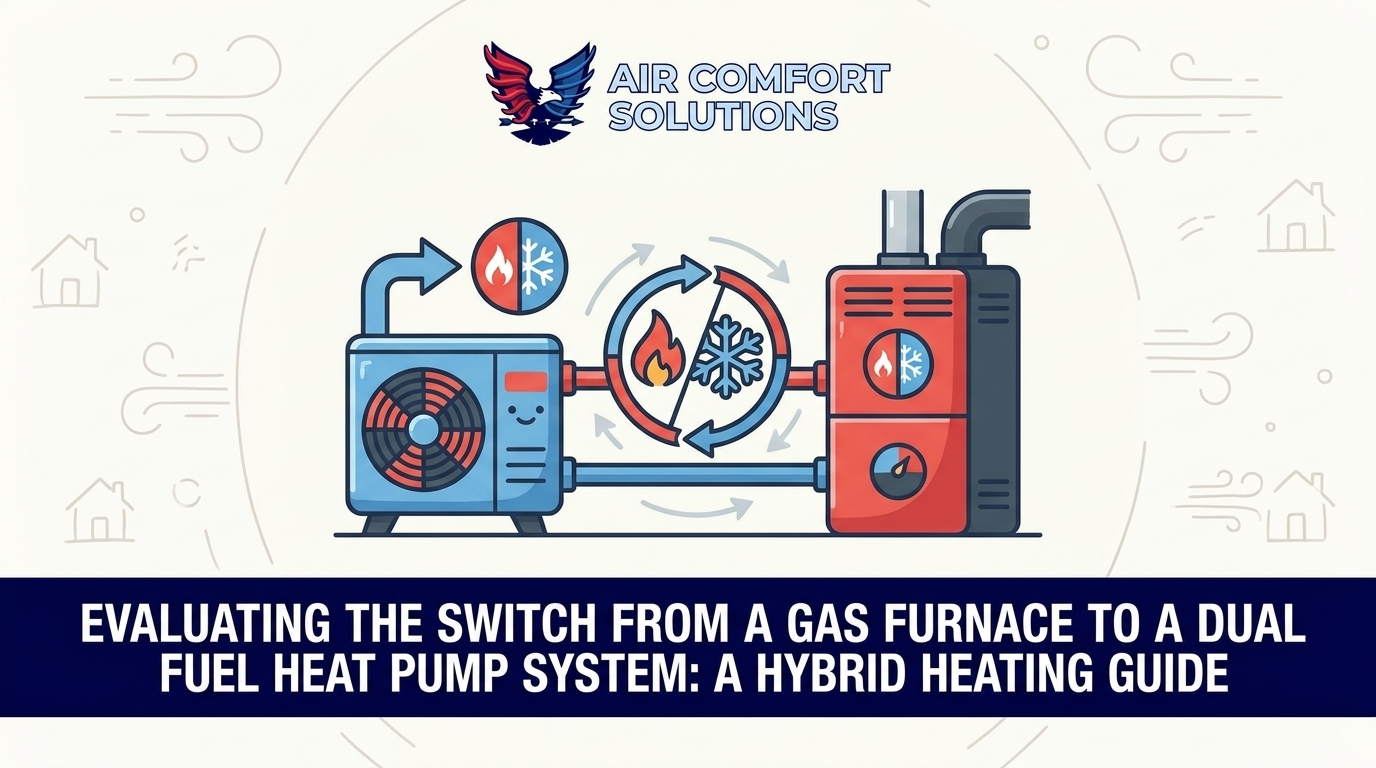
Evaluating the Switch from a Gas Furnace to a Dual Fuel Heat Pump System
As the pre-heating season approaches, many homeowners are weighing the benefits of hybrid heating. See how pairing an electric heat pump with gas backup offers reliable warmth.
Do maintenance plans save money on AC repairs? For most homeowners in Pinehurst, TX and the surrounding North Harris County area — yes, they do. The savings show up in several ways at once:
The honest answer is that the value depends on your system's age, your local climate, and what the plan actually covers. But in a place like Pinehurst, where AC units can run 12 to 16 hours a day during peak summer — racking up roughly 3,000 operating hours per year — the math tends to work out strongly in favor of preventative care.
Think of it like skipping oil changes on your car. Nothing terrible happens right away. But the wear quietly adds up, and by the time something breaks, the repair bill is far larger than every skipped maintenance visit combined.
Here in North Harris County, that reality hits harder than in most parts of the country. The combination of extreme heat, high humidity, and near-constant runtime puts local AC systems under stress that simply doesn't exist in milder climates. That stress accelerates component wear, drives up energy consumption, and makes unexpected breakdowns more likely — usually at the worst possible moment.
The sections below break down exactly how maintenance plans save money, what they cover, when they make the most financial sense, and when you might be better off without one.
Do maintenance plans save money on ac repairs glossary:
To understand the core financial return on investment (ROI) of a structured service agreement, we have to look at how modern cooling equipment fails. An air conditioner does not operate in a vacuum. It is a highly complex, closed-loop thermodynamic machine. When one small part starts to degrade, it does not just quietly stop working; it forces every other component in the chain to work harder to compensate.
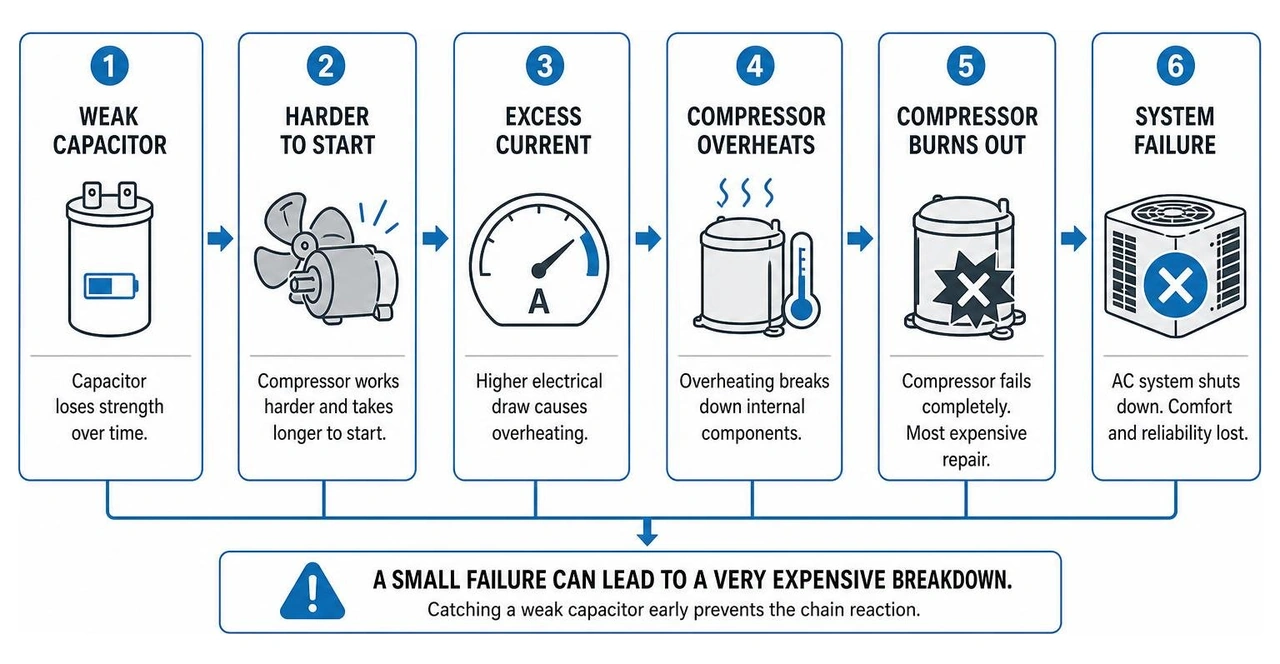
This is where we see the concept of "compounding wear." For example, a standard capacitor is responsible for providing the initial electrical jolt needed to start up your system's compressor and outdoor fan motor. Over time, extreme summer temperatures cause capacitors to lose their capacitance. If a weakening capacitor goes unnoticed, the compressor will struggle to start, drawing excess electrical current and overheating. Eventually, this destroys the compressor itself—the single most expensive part of your outdoor unit.
By investing in a preventative service agreement, you are essentially buying a shield against these compounding failures. During a scheduled visit, our technicians test the electrical strength of critical components before they have a chance to fail. Catching a weak capacitor early prevents a chain reaction that could otherwise destroy your entire system.
To help you decide whether a structured service agreement makes sense for your home, it is helpful to weigh the differences between a subscription-style plan and a traditional pay-per-visit approach. Homeowners often wonder if they should simply call a technician once a year on their own.
For a detailed breakdown of these two strategies, you can read our HVAC Maintenance Plan vs Pay-Per-Visit Comparison. To see how these two options look side-by-side, consider the following comparison:
| Feature / Benefit | Structured Maintenance Plan | Individual Pay-Per-Visit |
|---|---|---|
| Scheduling Responsibility | Automated reminders and priority booking | Homeowner must remember to call and schedule |
| Emergency Diagnostic Fees | Often waived or heavily discounted | Fully billed at standard or after-hours rates |
| Repair Discounts | Typically 10% to 20% off parts and labor | Standard flat-rate pricing applies |
| Warranty Compliance | Documented bi-annual records automatically kept | Homeowner must manually track and file receipts |
| Inflation Protection | Locks in current rates for future seasonal visits | Subject to rising labor and material costs |
| Priority Scheduling | Jump to the front of the queue during heatwaves | Standard booking wait times (often several days in July) |
When you look at the math over a multi-year period, a structured plan acts as a practical insurance policy. If your system experiences even one minor part failure over a five-year span, the combination of waived diagnostic fees, discounted repair parts, and preserved energy efficiency easily offsets the consistent, predictable cost of the agreement. It turns unpredictable, high-cost emergency expenses into small, manageable investments in your home's comfort.
If you are still weighing whether this type of coverage is right for your household, our guide on Is an HVAC Maintenance Plan Worth It offers a deeper dive into the long-term financial benefits.
The old saying "an ounce of prevention is worth a pound of cure" perfectly describes HVAC care in Texas. When we perform a professional seasonal tune-up, we are not just looking for existing problems; we are actively preparing your system to handle the brutal thermal stress of the upcoming season.
Thermal cycling is the process of rapid expansion and contraction that occurs within your air conditioner's metal components. When outdoor temperatures climb past 100°F in Houston, Spring, or Tomball, the temperature difference between the sizzling outdoor air and your cool indoor air is extreme. This causes copper lines to vibrate, electrical connections to wiggle loose, and fan motors to run at maximum thermal capacity.
Without regular attention, these minor physical shifts create serious mechanical hazards:
By cleaning coils, tightening electrical terminals, and flushing drain lines before the summer rush, we eliminate the root causes of nearly half of all mid-summer emergency service calls. For a complete look at what can go wrong when these steps are skipped, explore our guide on the Most Common AC Repairs and What Causes Them.
When your air conditioner breaks down in the middle of a triple-digit July heatwave, the financial cost of the repair is only part of the problem. In Southeast Texas, a broken AC is a true household emergency. The indoor temperature can climb past 90°F in a matter of hours, making the home unlivable and forcing families to seek temporary shelter in hotels or with relatives.
This is where the non-monetary perks of a service agreement translate directly into financial savings. During peak cooling season, every HVAC company in the Houston metro area is flooded with emergency calls. Unregistered customers often face wait times of several days just to get a technician to their door.
As a maintenance plan member, you bypass this queue entirely. Our agreements include priority scheduling, which guarantees that your call is routed to the front of the line. Instead of waiting days in a sweltering house, a technician is dispatched to your home with top priority.
Furthermore, emergency service calls during weekends, holidays, or late nights typically carry premium after-hours dispatch fees. Most structured service agreements either waive these emergency fees entirely or offer them at a steep discount. When you consider the cost of an emergency diagnostic fee combined with the expense of a last-minute hotel stay, having priority status is an invaluable benefit that saves you both money and immense stress.
To learn more about the unique challenges of keeping a home cool in our region, check out our article on What Happens If You Skip AC Maintenance in Texas.
In our local service area—from Pinehurst and Plantersville down through Spring and Conroe—an air conditioner is not a seasonal luxury; it is a critical home utility. Because our systems run for thousands of hours every year, even a microscopic drop in operating efficiency can have a massive impact on your monthly utility bills.
According to data from the U.S. Department of Energy, a neglected air conditioning system loses roughly 5% of its operating efficiency for every year it goes without professional service. This means that after just three years of neglect, your system is drawing 15% more electricity to deliver the exact same amount of cooling. For a typical home in Montgomery or Conroe during the peak of summer, that drop in efficiency can add up to hundreds of dollars in wasted electricity over the course of a single cooling season.
During a professional tune-up, our technicians restore your system’s SEER (Seasonal Energy Efficiency Ratio) performance by:
Beyond the monthly energy savings, regular care directly delays the single largest HVAC expense a homeowner can face: complete system replacement. A neglected system in the harsh Texas climate rarely lasts past 9 to 12 years. The continuous strain of dirty coils, low refrigerant, and weak electrical parts eventually causes a catastrophic compressor failure or a cracked heat exchanger.
By keeping those same components clean and properly calibrated, we can easily extend your system’s operational lifespan to 15 to 18 years. Delaying a major capital investment like an AC replacement by six years is the single largest financial return on investment a maintenance plan can offer.
For a detailed look at how to structure your cooling care throughout the year, refer to our guide on How Often Should You Service Your AC in Texas. You can also browse our comprehensive AC Maintenance Plan Texas Guide 2026 for localized tips on keeping your system running efficiently.
Many homeowners do not realize that their brand-new, high-efficiency air conditioning system came with a catch. While major HVAC manufacturers offer generous 10-year parts warranties on new equipment, those warranties are almost always contingent on documented, professional maintenance.
If a major component like your evaporator coil or compressor fails in year seven, the manufacturer will require proof that the system was professionally serviced every single year before they will ship a replacement part. If you cannot provide a clear, unbroken paper trail of professional tune-ups, your warranty claim will likely be denied. This turns a covered, free replacement part into a major out-of-pocket repair expense.
By signing up for a structured service agreement, you automate this record-keeping process. We maintain meticulous, digital service records tied directly to your system's serial number. If you ever need to file a warranty claim, you will have a complete, professional history of care ready to submit, ensuring your coverage remains fully active.
For a complete breakdown of how to navigate warranty requirements and protect your investment, check out our AC Maintenance Plan Guide 2026.
Navigating home maintenance decisions can be confusing. To help you make the most informed decision for your household, we have compiled answers to the most common questions we receive from homeowners in Pinehurst, Houston, and the surrounding areas.
For a broader look at what local homeowners should expect during a professional visit, read our AC Tune-Up Guide for Houston Area Homeowners.
A high-quality service agreement should never be just a quick visual inspection or a simple filter swap. A professional tune-up involves hands-on, technical adjustments that require specialized tools and training.
To learn more about what to look for in a service agreement, you can read our detailed guide on What Does an HVAC Maintenance Plan Include. At a minimum, a comprehensive plan should cover:
While we always encourage homeowners to take an active role in caring for their homes, there is a clear line between safe DIY tasks and those that require a licensed professional.
As a homeowner, you should regularly handle the following basic tasks:
However, technical maintenance tasks—such as testing high-voltage electrical circuits, measuring refrigerant pressures, and cleaning internal evaporator coils—require specialized diagnostic tools and safety training. Working with high-voltage electricity and handling chemical refrigerants carries significant safety risks. Furthermore, under federal law, only EPA Section 608 certified technicians are legally allowed to connect gauges to refrigerant lines or handle refrigerant. Attempting these tasks yourself can also void your manufacturer's warranty.
Yes, absolutely. It is a common misconception that brand-new systems do not need professional maintenance. In fact, a service plan is arguably more important for a new system than an old one.
First, as mentioned above, regular professional service is a mandatory requirement to keep your manufacturer's 10-year parts warranty valid. Skipping maintenance on a new system is a major financial risk.
Second, a brand-new, high-efficiency system is a major financial investment. Regular maintenance ensures that the system actually delivers the high-efficiency SEER performance you paid for. It also allows technicians to catch any minor installation issues, factory defects, or early component settling before they lead to a system breakdown.
When it comes to keeping your home comfortable in the demanding Texas climate, a structured service agreement is one of the smartest financial decisions you can make. It is not an unnecessary monthly subscription; it is a practical, proactive investment that lowers your monthly utility bills, prevents expensive emergency repairs, keeps your manufacturer’s warranty active, and extends the overall lifespan of your system.
At Air Comfort Pros, we provide expert, honest HVAC services across Pinehurst, TX, and the north side of Harris County—including Plantersville, Magnolia, Houston, The Woodlands, Montgomery, Conroe, Spring, and Tomball. With over 35 years of local experience, our certified technicians are dedicated to keeping your home comfortable and your system running at peak performance.
Protect your home, your wallet, and your peace of mind by signing up for our comprehensive Maintenance Plan today! Contact us to schedule your spring or fall tune-up, and let our experienced team handle the rest.
Do maintenance plans save money on AC repairs? For most homeowners in Pinehurst, TX and the surrounding North Harris County area — yes, they do. The savings show up in several ways at once:
The honest answer is that the value depends on your system's age, your local climate, and what the plan actually covers. But in a place like Pinehurst, where AC units can run 12 to 16 hours a day during peak summer — racking up roughly 3,000 operating hours per year — the math tends to work out strongly in favor of preventative care.
Think of it like skipping oil changes on your car. Nothing terrible happens right away. But the wear quietly adds up, and by the time something breaks, the repair bill is far larger than every skipped maintenance visit combined.
Here in North Harris County, that reality hits harder than in most parts of the country. The combination of extreme heat, high humidity, and near-constant runtime puts local AC systems under stress that simply doesn't exist in milder climates. That stress accelerates component wear, drives up energy consumption, and makes unexpected breakdowns more likely — usually at the worst possible moment.
The sections below break down exactly how maintenance plans save money, what they cover, when they make the most financial sense, and when you might be better off without one.
Do maintenance plans save money on ac repairs glossary:
To understand the core financial return on investment (ROI) of a structured service agreement, we have to look at how modern cooling equipment fails. An air conditioner does not operate in a vacuum. It is a highly complex, closed-loop thermodynamic machine. When one small part starts to degrade, it does not just quietly stop working; it forces every other component in the chain to work harder to compensate.
This is where we see the concept of "compounding wear." For example, a standard capacitor is responsible for providing the initial electrical jolt needed to start up your system's compressor and outdoor fan motor. Over time, extreme summer temperatures cause capacitors to lose their capacitance. If a weakening capacitor goes unnoticed, the compressor will struggle to start, drawing excess electrical current and overheating. Eventually, this destroys the compressor itself—the single most expensive part of your outdoor unit.
By investing in a preventative service agreement, you are essentially buying a shield against these compounding failures. During a scheduled visit, our technicians test the electrical strength of critical components before they have a chance to fail. Catching a weak capacitor early prevents a chain reaction that could otherwise destroy your entire system.
To help you decide whether a structured service agreement makes sense for your home, it is helpful to weigh the differences between a subscription-style plan and a traditional pay-per-visit approach. Homeowners often wonder if they should simply call a technician once a year on their own.
For a detailed breakdown of these two strategies, you can read our HVAC Maintenance Plan vs Pay-Per-Visit Comparison. To see how these two options look side-by-side, consider the following comparison:
| Feature / Benefit | Structured Maintenance Plan | Individual Pay-Per-Visit |
|---|---|---|
| Scheduling Responsibility | Automated reminders and priority booking | Homeowner must remember to call and schedule |
| Emergency Diagnostic Fees | Often waived or heavily discounted | Fully billed at standard or after-hours rates |
| Repair Discounts | Typically 10% to 20% off parts and labor | Standard flat-rate pricing applies |
| Warranty Compliance | Documented bi-annual records automatically kept | Homeowner must manually track and file receipts |
| Inflation Protection | Locks in current rates for future seasonal visits | Subject to rising labor and material costs |
| Priority Scheduling | Jump to the front of the queue during heatwaves | Standard booking wait times (often several days in July) |
When you look at the math over a multi-year period, a structured plan acts as a practical insurance policy. If your system experiences even one minor part failure over a five-year span, the combination of waived diagnostic fees, discounted repair parts, and preserved energy efficiency easily offsets the consistent, predictable cost of the agreement. It turns unpredictable, high-cost emergency expenses into small, manageable investments in your home's comfort.
If you are still weighing whether this type of coverage is right for your household, our guide on Is an HVAC Maintenance Plan Worth It offers a deeper dive into the long-term financial benefits.
The old saying "an ounce of prevention is worth a pound of cure" perfectly describes HVAC care in Texas. When we perform a professional seasonal tune-up, we are not just looking for existing problems; we are actively preparing your system to handle the brutal thermal stress of the upcoming season.
Thermal cycling is the process of rapid expansion and contraction that occurs within your air conditioner's metal components. When outdoor temperatures climb past 100°F in Houston, Spring, or Tomball, the temperature difference between the sizzling outdoor air and your cool indoor air is extreme. This causes copper lines to vibrate, electrical connections to wiggle loose, and fan motors to run at maximum thermal capacity.
Without regular attention, these minor physical shifts create serious mechanical hazards:
By cleaning coils, tightening electrical terminals, and flushing drain lines before the summer rush, we eliminate the root causes of nearly half of all mid-summer emergency service calls. For a complete look at what can go wrong when these steps are skipped, explore our guide on the Most Common AC Repairs and What Causes Them.
When your air conditioner breaks down in the middle of a triple-digit July heatwave, the financial cost of the repair is only part of the problem. In Southeast Texas, a broken AC is a true household emergency. The indoor temperature can climb past 90°F in a matter of hours, making the home unlivable and forcing families to seek temporary shelter in hotels or with relatives.
This is where the non-monetary perks of a service agreement translate directly into financial savings. During peak cooling season, every HVAC company in the Houston metro area is flooded with emergency calls. Unregistered customers often face wait times of several days just to get a technician to their door.
As a maintenance plan member, you bypass this queue entirely. Our agreements include priority scheduling, which guarantees that your call is routed to the front of the line. Instead of waiting days in a sweltering house, a technician is dispatched to your home with top priority.
Furthermore, emergency service calls during weekends, holidays, or late nights typically carry premium after-hours dispatch fees. Most structured service agreements either waive these emergency fees entirely or offer them at a steep discount. When you consider the cost of an emergency diagnostic fee combined with the expense of a last-minute hotel stay, having priority status is an invaluable benefit that saves you both money and immense stress.
To learn more about the unique challenges of keeping a home cool in our region, check out our article on What Happens If You Skip AC Maintenance in Texas.
In our local service area—from Pinehurst and Plantersville down through Spring and Conroe—an air conditioner is not a seasonal luxury; it is a critical home utility. Because our systems run for thousands of hours every year, even a microscopic drop in operating efficiency can have a massive impact on your monthly utility bills.
According to data from the U.S. Department of Energy, a neglected air conditioning system loses roughly 5% of its operating efficiency for every year it goes without professional service. This means that after just three years of neglect, your system is drawing 15% more electricity to deliver the exact same amount of cooling. For a typical home in Montgomery or Conroe during the peak of summer, that drop in efficiency can add up to hundreds of dollars in wasted electricity over the course of a single cooling season.
During a professional tune-up, our technicians restore your system’s SEER (Seasonal Energy Efficiency Ratio) performance by:
Beyond the monthly energy savings, regular care directly delays the single largest HVAC expense a homeowner can face: complete system replacement. A neglected system in the harsh Texas climate rarely lasts past 9 to 12 years. The continuous strain of dirty coils, low refrigerant, and weak electrical parts eventually causes a catastrophic compressor failure or a cracked heat exchanger.
By keeping those same components clean and properly calibrated, we can easily extend your system’s operational lifespan to 15 to 18 years. Delaying a major capital investment like an AC replacement by six years is the single largest financial return on investment a maintenance plan can offer.
For a detailed look at how to structure your cooling care throughout the year, refer to our guide on How Often Should You Service Your AC in Texas. You can also browse our comprehensive AC Maintenance Plan Texas Guide 2026 for localized tips on keeping your system running efficiently.
Many homeowners do not realize that their brand-new, high-efficiency air conditioning system came with a catch. While major HVAC manufacturers offer generous 10-year parts warranties on new equipment, those warranties are almost always contingent on documented, professional maintenance.
If a major component like your evaporator coil or compressor fails in year seven, the manufacturer will require proof that the system was professionally serviced every single year before they will ship a replacement part. If you cannot provide a clear, unbroken paper trail of professional tune-ups, your warranty claim will likely be denied. This turns a covered, free replacement part into a major out-of-pocket repair expense.
By signing up for a structured service agreement, you automate this record-keeping process. We maintain meticulous, digital service records tied directly to your system's serial number. If you ever need to file a warranty claim, you will have a complete, professional history of care ready to submit, ensuring your coverage remains fully active.
For a complete breakdown of how to navigate warranty requirements and protect your investment, check out our AC Maintenance Plan Guide 2026.
Navigating home maintenance decisions can be confusing. To help you make the most informed decision for your household, we have compiled answers to the most common questions we receive from homeowners in Pinehurst, Houston, and the surrounding areas.
For a broader look at what local homeowners should expect during a professional visit, read our AC Tune-Up Guide for Houston Area Homeowners.
A high-quality service agreement should never be just a quick visual inspection or a simple filter swap. A professional tune-up involves hands-on, technical adjustments that require specialized tools and training.
To learn more about what to look for in a service agreement, you can read our detailed guide on What Does an HVAC Maintenance Plan Include. At a minimum, a comprehensive plan should cover:
While we always encourage homeowners to take an active role in caring for their homes, there is a clear line between safe DIY tasks and those that require a licensed professional.
As a homeowner, you should regularly handle the following basic tasks:
However, technical maintenance tasks—such as testing high-voltage electrical circuits, measuring refrigerant pressures, and cleaning internal evaporator coils—require specialized diagnostic tools and safety training. Working with high-voltage electricity and handling chemical refrigerants carries significant safety risks. Furthermore, under federal law, only EPA Section 608 certified technicians are legally allowed to connect gauges to refrigerant lines or handle refrigerant. Attempting these tasks yourself can also void your manufacturer's warranty.
Yes, absolutely. It is a common misconception that brand-new systems do not need professional maintenance. In fact, a service plan is arguably more important for a new system than an old one.
First, as mentioned above, regular professional service is a mandatory requirement to keep your manufacturer's 10-year parts warranty valid. Skipping maintenance on a new system is a major financial risk.
Second, a brand-new, high-efficiency system is a major financial investment. Regular maintenance ensures that the system actually delivers the high-efficiency SEER performance you paid for. It also allows technicians to catch any minor installation issues, factory defects, or early component settling before they lead to a system breakdown.
When it comes to keeping your home comfortable in the demanding Texas climate, a structured service agreement is one of the smartest financial decisions you can make. It is not an unnecessary monthly subscription; it is a practical, proactive investment that lowers your monthly utility bills, prevents expensive emergency repairs, keeps your manufacturer’s warranty active, and extends the overall lifespan of your system.
At Air Comfort Pros, we provide expert, honest HVAC services across Pinehurst, TX, and the north side of Harris County—including Plantersville, Magnolia, Houston, The Woodlands, Montgomery, Conroe, Spring, and Tomball. With over 35 years of local experience, our certified technicians are dedicated to keeping your home comfortable and your system running at peak performance.
Protect your home, your wallet, and your peace of mind by signing up for our comprehensive Maintenance Plan today! Contact us to schedule your spring or fall tune-up, and let our experienced team handle the rest.
Do maintenance plans save money on AC repairs? For most homeowners in Pinehurst, TX and the surrounding North Harris County area — yes, they do. The savings show up in several ways at once:
The honest answer is that the value depends on your system's age, your local climate, and what the plan actually covers. But in a place like Pinehurst, where AC units can run 12 to 16 hours a day during peak summer — racking up roughly 3,000 operating hours per year — the math tends to work out strongly in favor of preventative care.
Think of it like skipping oil changes on your car. Nothing terrible happens right away. But the wear quietly adds up, and by the time something breaks, the repair bill is far larger than every skipped maintenance visit combined.
Here in North Harris County, that reality hits harder than in most parts of the country. The combination of extreme heat, high humidity, and near-constant runtime puts local AC systems under stress that simply doesn't exist in milder climates. That stress accelerates component wear, drives up energy consumption, and makes unexpected breakdowns more likely — usually at the worst possible moment.
The sections below break down exactly how maintenance plans save money, what they cover, when they make the most financial sense, and when you might be better off without one.
Do maintenance plans save money on ac repairs glossary:
To understand the core financial return on investment (ROI) of a structured service agreement, we have to look at how modern cooling equipment fails. An air conditioner does not operate in a vacuum. It is a highly complex, closed-loop thermodynamic machine. When one small part starts to degrade, it does not just quietly stop working; it forces every other component in the chain to work harder to compensate.
This is where we see the concept of "compounding wear." For example, a standard capacitor is responsible for providing the initial electrical jolt needed to start up your system's compressor and outdoor fan motor. Over time, extreme summer temperatures cause capacitors to lose their capacitance. If a weakening capacitor goes unnoticed, the compressor will struggle to start, drawing excess electrical current and overheating. Eventually, this destroys the compressor itself—the single most expensive part of your outdoor unit.
By investing in a preventative service agreement, you are essentially buying a shield against these compounding failures. During a scheduled visit, our technicians test the electrical strength of critical components before they have a chance to fail. Catching a weak capacitor early prevents a chain reaction that could otherwise destroy your entire system.
To help you decide whether a structured service agreement makes sense for your home, it is helpful to weigh the differences between a subscription-style plan and a traditional pay-per-visit approach. Homeowners often wonder if they should simply call a technician once a year on their own.
For a detailed breakdown of these two strategies, you can read our HVAC Maintenance Plan vs Pay-Per-Visit Comparison. To see how these two options look side-by-side, consider the following comparison:
| Feature / Benefit | Structured Maintenance Plan | Individual Pay-Per-Visit |
|---|---|---|
| Scheduling Responsibility | Automated reminders and priority booking | Homeowner must remember to call and schedule |
| Emergency Diagnostic Fees | Often waived or heavily discounted | Fully billed at standard or after-hours rates |
| Repair Discounts | Typically 10% to 20% off parts and labor | Standard flat-rate pricing applies |
| Warranty Compliance | Documented bi-annual records automatically kept | Homeowner must manually track and file receipts |
| Inflation Protection | Locks in current rates for future seasonal visits | Subject to rising labor and material costs |
| Priority Scheduling | Jump to the front of the queue during heatwaves | Standard booking wait times (often several days in July) |
When you look at the math over a multi-year period, a structured plan acts as a practical insurance policy. If your system experiences even one minor part failure over a five-year span, the combination of waived diagnostic fees, discounted repair parts, and preserved energy efficiency easily offsets the consistent, predictable cost of the agreement. It turns unpredictable, high-cost emergency expenses into small, manageable investments in your home's comfort.
If you are still weighing whether this type of coverage is right for your household, our guide on Is an HVAC Maintenance Plan Worth It offers a deeper dive into the long-term financial benefits.
The old saying "an ounce of prevention is worth a pound of cure" perfectly describes HVAC care in Texas. When we perform a professional seasonal tune-up, we are not just looking for existing problems; we are actively preparing your system to handle the brutal thermal stress of the upcoming season.
Thermal cycling is the process of rapid expansion and contraction that occurs within your air conditioner's metal components. When outdoor temperatures climb past 100°F in Houston, Spring, or Tomball, the temperature difference between the sizzling outdoor air and your cool indoor air is extreme. This causes copper lines to vibrate, electrical connections to wiggle loose, and fan motors to run at maximum thermal capacity.
Without regular attention, these minor physical shifts create serious mechanical hazards:
By cleaning coils, tightening electrical terminals, and flushing drain lines before the summer rush, we eliminate the root causes of nearly half of all mid-summer emergency service calls. For a complete look at what can go wrong when these steps are skipped, explore our guide on the Most Common AC Repairs and What Causes Them.
When your air conditioner breaks down in the middle of a triple-digit July heatwave, the financial cost of the repair is only part of the problem. In Southeast Texas, a broken AC is a true household emergency. The indoor temperature can climb past 90°F in a matter of hours, making the home unlivable and forcing families to seek temporary shelter in hotels or with relatives.
This is where the non-monetary perks of a service agreement translate directly into financial savings. During peak cooling season, every HVAC company in the Houston metro area is flooded with emergency calls. Unregistered customers often face wait times of several days just to get a technician to their door.
As a maintenance plan member, you bypass this queue entirely. Our agreements include priority scheduling, which guarantees that your call is routed to the front of the line. Instead of waiting days in a sweltering house, a technician is dispatched to your home with top priority.
Furthermore, emergency service calls during weekends, holidays, or late nights typically carry premium after-hours dispatch fees. Most structured service agreements either waive these emergency fees entirely or offer them at a steep discount. When you consider the cost of an emergency diagnostic fee combined with the expense of a last-minute hotel stay, having priority status is an invaluable benefit that saves you both money and immense stress.
To learn more about the unique challenges of keeping a home cool in our region, check out our article on What Happens If You Skip AC Maintenance in Texas.
In our local service area—from Pinehurst and Plantersville down through Spring and Conroe—an air conditioner is not a seasonal luxury; it is a critical home utility. Because our systems run for thousands of hours every year, even a microscopic drop in operating efficiency can have a massive impact on your monthly utility bills.
According to data from the U.S. Department of Energy, a neglected air conditioning system loses roughly 5% of its operating efficiency for every year it goes without professional service. This means that after just three years of neglect, your system is drawing 15% more electricity to deliver the exact same amount of cooling. For a typical home in Montgomery or Conroe during the peak of summer, that drop in efficiency can add up to hundreds of dollars in wasted electricity over the course of a single cooling season.
During a professional tune-up, our technicians restore your system’s SEER (Seasonal Energy Efficiency Ratio) performance by:
Beyond the monthly energy savings, regular care directly delays the single largest HVAC expense a homeowner can face: complete system replacement. A neglected system in the harsh Texas climate rarely lasts past 9 to 12 years. The continuous strain of dirty coils, low refrigerant, and weak electrical parts eventually causes a catastrophic compressor failure or a cracked heat exchanger.
By keeping those same components clean and properly calibrated, we can easily extend your system’s operational lifespan to 15 to 18 years. Delaying a major capital investment like an AC replacement by six years is the single largest financial return on investment a maintenance plan can offer.
For a detailed look at how to structure your cooling care throughout the year, refer to our guide on How Often Should You Service Your AC in Texas. You can also browse our comprehensive AC Maintenance Plan Texas Guide 2026 for localized tips on keeping your system running efficiently.
Many homeowners do not realize that their brand-new, high-efficiency air conditioning system came with a catch. While major HVAC manufacturers offer generous 10-year parts warranties on new equipment, those warranties are almost always contingent on documented, professional maintenance.
If a major component like your evaporator coil or compressor fails in year seven, the manufacturer will require proof that the system was professionally serviced every single year before they will ship a replacement part. If you cannot provide a clear, unbroken paper trail of professional tune-ups, your warranty claim will likely be denied. This turns a covered, free replacement part into a major out-of-pocket repair expense.
By signing up for a structured service agreement, you automate this record-keeping process. We maintain meticulous, digital service records tied directly to your system's serial number. If you ever need to file a warranty claim, you will have a complete, professional history of care ready to submit, ensuring your coverage remains fully active.
For a complete breakdown of how to navigate warranty requirements and protect your investment, check out our AC Maintenance Plan Guide 2026.
Navigating home maintenance decisions can be confusing. To help you make the most informed decision for your household, we have compiled answers to the most common questions we receive from homeowners in Pinehurst, Houston, and the surrounding areas.
For a broader look at what local homeowners should expect during a professional visit, read our AC Tune-Up Guide for Houston Area Homeowners.
A high-quality service agreement should never be just a quick visual inspection or a simple filter swap. A professional tune-up involves hands-on, technical adjustments that require specialized tools and training.
To learn more about what to look for in a service agreement, you can read our detailed guide on What Does an HVAC Maintenance Plan Include. At a minimum, a comprehensive plan should cover:
While we always encourage homeowners to take an active role in caring for their homes, there is a clear line between safe DIY tasks and those that require a licensed professional.
As a homeowner, you should regularly handle the following basic tasks:
However, technical maintenance tasks—such as testing high-voltage electrical circuits, measuring refrigerant pressures, and cleaning internal evaporator coils—require specialized diagnostic tools and safety training. Working with high-voltage electricity and handling chemical refrigerants carries significant safety risks. Furthermore, under federal law, only EPA Section 608 certified technicians are legally allowed to connect gauges to refrigerant lines or handle refrigerant. Attempting these tasks yourself can also void your manufacturer's warranty.
Yes, absolutely. It is a common misconception that brand-new systems do not need professional maintenance. In fact, a service plan is arguably more important for a new system than an old one.
First, as mentioned above, regular professional service is a mandatory requirement to keep your manufacturer's 10-year parts warranty valid. Skipping maintenance on a new system is a major financial risk.
Second, a brand-new, high-efficiency system is a major financial investment. Regular maintenance ensures that the system actually delivers the high-efficiency SEER performance you paid for. It also allows technicians to catch any minor installation issues, factory defects, or early component settling before they lead to a system breakdown.
When it comes to keeping your home comfortable in the demanding Texas climate, a structured service agreement is one of the smartest financial decisions you can make. It is not an unnecessary monthly subscription; it is a practical, proactive investment that lowers your monthly utility bills, prevents expensive emergency repairs, keeps your manufacturer’s warranty active, and extends the overall lifespan of your system.
At Air Comfort Pros, we provide expert, honest HVAC services across Pinehurst, TX, and the north side of Harris County—including Plantersville, Magnolia, Houston, The Woodlands, Montgomery, Conroe, Spring, and Tomball. With over 35 years of local experience, our certified technicians are dedicated to keeping your home comfortable and your system running at peak performance.
Protect your home, your wallet, and your peace of mind by signing up for our comprehensive Maintenance Plan today! Contact us to schedule your spring or fall tune-up, and let our experienced team handle the rest.
Do maintenance plans save money on AC repairs? For most homeowners in Pinehurst, TX and the surrounding North Harris County area — yes, they do. The savings show up in several ways at once:
The honest answer is that the value depends on your system's age, your local climate, and what the plan actually covers. But in a place like Pinehurst, where AC units can run 12 to 16 hours a day during peak summer — racking up roughly 3,000 operating hours per year — the math tends to work out strongly in favor of preventative care.
Think of it like skipping oil changes on your car. Nothing terrible happens right away. But the wear quietly adds up, and by the time something breaks, the repair bill is far larger than every skipped maintenance visit combined.
Here in North Harris County, that reality hits harder than in most parts of the country. The combination of extreme heat, high humidity, and near-constant runtime puts local AC systems under stress that simply doesn't exist in milder climates. That stress accelerates component wear, drives up energy consumption, and makes unexpected breakdowns more likely — usually at the worst possible moment.
The sections below break down exactly how maintenance plans save money, what they cover, when they make the most financial sense, and when you might be better off without one.
Do maintenance plans save money on ac repairs glossary:
To understand the core financial return on investment (ROI) of a structured service agreement, we have to look at how modern cooling equipment fails. An air conditioner does not operate in a vacuum. It is a highly complex, closed-loop thermodynamic machine. When one small part starts to degrade, it does not just quietly stop working; it forces every other component in the chain to work harder to compensate.
This is where we see the concept of "compounding wear." For example, a standard capacitor is responsible for providing the initial electrical jolt needed to start up your system's compressor and outdoor fan motor. Over time, extreme summer temperatures cause capacitors to lose their capacitance. If a weakening capacitor goes unnoticed, the compressor will struggle to start, drawing excess electrical current and overheating. Eventually, this destroys the compressor itself—the single most expensive part of your outdoor unit.
By investing in a preventative service agreement, you are essentially buying a shield against these compounding failures. During a scheduled visit, our technicians test the electrical strength of critical components before they have a chance to fail. Catching a weak capacitor early prevents a chain reaction that could otherwise destroy your entire system.
To help you decide whether a structured service agreement makes sense for your home, it is helpful to weigh the differences between a subscription-style plan and a traditional pay-per-visit approach. Homeowners often wonder if they should simply call a technician once a year on their own.
For a detailed breakdown of these two strategies, you can read our HVAC Maintenance Plan vs Pay-Per-Visit Comparison. To see how these two options look side-by-side, consider the following comparison:
| Feature / Benefit | Structured Maintenance Plan | Individual Pay-Per-Visit |
|---|---|---|
| Scheduling Responsibility | Automated reminders and priority booking | Homeowner must remember to call and schedule |
| Emergency Diagnostic Fees | Often waived or heavily discounted | Fully billed at standard or after-hours rates |
| Repair Discounts | Typically 10% to 20% off parts and labor | Standard flat-rate pricing applies |
| Warranty Compliance | Documented bi-annual records automatically kept | Homeowner must manually track and file receipts |
| Inflation Protection | Locks in current rates for future seasonal visits | Subject to rising labor and material costs |
| Priority Scheduling | Jump to the front of the queue during heatwaves | Standard booking wait times (often several days in July) |
When you look at the math over a multi-year period, a structured plan acts as a practical insurance policy. If your system experiences even one minor part failure over a five-year span, the combination of waived diagnostic fees, discounted repair parts, and preserved energy efficiency easily offsets the consistent, predictable cost of the agreement. It turns unpredictable, high-cost emergency expenses into small, manageable investments in your home's comfort.
If you are still weighing whether this type of coverage is right for your household, our guide on Is an HVAC Maintenance Plan Worth It offers a deeper dive into the long-term financial benefits.
The old saying "an ounce of prevention is worth a pound of cure" perfectly describes HVAC care in Texas. When we perform a professional seasonal tune-up, we are not just looking for existing problems; we are actively preparing your system to handle the brutal thermal stress of the upcoming season.
Thermal cycling is the process of rapid expansion and contraction that occurs within your air conditioner's metal components. When outdoor temperatures climb past 100°F in Houston, Spring, or Tomball, the temperature difference between the sizzling outdoor air and your cool indoor air is extreme. This causes copper lines to vibrate, electrical connections to wiggle loose, and fan motors to run at maximum thermal capacity.
Without regular attention, these minor physical shifts create serious mechanical hazards:
By cleaning coils, tightening electrical terminals, and flushing drain lines before the summer rush, we eliminate the root causes of nearly half of all mid-summer emergency service calls. For a complete look at what can go wrong when these steps are skipped, explore our guide on the Most Common AC Repairs and What Causes Them.
When your air conditioner breaks down in the middle of a triple-digit July heatwave, the financial cost of the repair is only part of the problem. In Southeast Texas, a broken AC is a true household emergency. The indoor temperature can climb past 90°F in a matter of hours, making the home unlivable and forcing families to seek temporary shelter in hotels or with relatives.
This is where the non-monetary perks of a service agreement translate directly into financial savings. During peak cooling season, every HVAC company in the Houston metro area is flooded with emergency calls. Unregistered customers often face wait times of several days just to get a technician to their door.
As a maintenance plan member, you bypass this queue entirely. Our agreements include priority scheduling, which guarantees that your call is routed to the front of the line. Instead of waiting days in a sweltering house, a technician is dispatched to your home with top priority.
Furthermore, emergency service calls during weekends, holidays, or late nights typically carry premium after-hours dispatch fees. Most structured service agreements either waive these emergency fees entirely or offer them at a steep discount. When you consider the cost of an emergency diagnostic fee combined with the expense of a last-minute hotel stay, having priority status is an invaluable benefit that saves you both money and immense stress.
To learn more about the unique challenges of keeping a home cool in our region, check out our article on What Happens If You Skip AC Maintenance in Texas.
In our local service area—from Pinehurst and Plantersville down through Spring and Conroe—an air conditioner is not a seasonal luxury; it is a critical home utility. Because our systems run for thousands of hours every year, even a microscopic drop in operating efficiency can have a massive impact on your monthly utility bills.
According to data from the U.S. Department of Energy, a neglected air conditioning system loses roughly 5% of its operating efficiency for every year it goes without professional service. This means that after just three years of neglect, your system is drawing 15% more electricity to deliver the exact same amount of cooling. For a typical home in Montgomery or Conroe during the peak of summer, that drop in efficiency can add up to hundreds of dollars in wasted electricity over the course of a single cooling season.
During a professional tune-up, our technicians restore your system’s SEER (Seasonal Energy Efficiency Ratio) performance by:
Beyond the monthly energy savings, regular care directly delays the single largest HVAC expense a homeowner can face: complete system replacement. A neglected system in the harsh Texas climate rarely lasts past 9 to 12 years. The continuous strain of dirty coils, low refrigerant, and weak electrical parts eventually causes a catastrophic compressor failure or a cracked heat exchanger.
By keeping those same components clean and properly calibrated, we can easily extend your system’s operational lifespan to 15 to 18 years. Delaying a major capital investment like an AC replacement by six years is the single largest financial return on investment a maintenance plan can offer.
For a detailed look at how to structure your cooling care throughout the year, refer to our guide on How Often Should You Service Your AC in Texas. You can also browse our comprehensive AC Maintenance Plan Texas Guide 2026 for localized tips on keeping your system running efficiently.
Many homeowners do not realize that their brand-new, high-efficiency air conditioning system came with a catch. While major HVAC manufacturers offer generous 10-year parts warranties on new equipment, those warranties are almost always contingent on documented, professional maintenance.
If a major component like your evaporator coil or compressor fails in year seven, the manufacturer will require proof that the system was professionally serviced every single year before they will ship a replacement part. If you cannot provide a clear, unbroken paper trail of professional tune-ups, your warranty claim will likely be denied. This turns a covered, free replacement part into a major out-of-pocket repair expense.
By signing up for a structured service agreement, you automate this record-keeping process. We maintain meticulous, digital service records tied directly to your system's serial number. If you ever need to file a warranty claim, you will have a complete, professional history of care ready to submit, ensuring your coverage remains fully active.
For a complete breakdown of how to navigate warranty requirements and protect your investment, check out our AC Maintenance Plan Guide 2026.
Navigating home maintenance decisions can be confusing. To help you make the most informed decision for your household, we have compiled answers to the most common questions we receive from homeowners in Pinehurst, Houston, and the surrounding areas.
For a broader look at what local homeowners should expect during a professional visit, read our AC Tune-Up Guide for Houston Area Homeowners.
A high-quality service agreement should never be just a quick visual inspection or a simple filter swap. A professional tune-up involves hands-on, technical adjustments that require specialized tools and training.
To learn more about what to look for in a service agreement, you can read our detailed guide on What Does an HVAC Maintenance Plan Include. At a minimum, a comprehensive plan should cover:
While we always encourage homeowners to take an active role in caring for their homes, there is a clear line between safe DIY tasks and those that require a licensed professional.
As a homeowner, you should regularly handle the following basic tasks:
However, technical maintenance tasks—such as testing high-voltage electrical circuits, measuring refrigerant pressures, and cleaning internal evaporator coils—require specialized diagnostic tools and safety training. Working with high-voltage electricity and handling chemical refrigerants carries significant safety risks. Furthermore, under federal law, only EPA Section 608 certified technicians are legally allowed to connect gauges to refrigerant lines or handle refrigerant. Attempting these tasks yourself can also void your manufacturer's warranty.
Yes, absolutely. It is a common misconception that brand-new systems do not need professional maintenance. In fact, a service plan is arguably more important for a new system than an old one.
First, as mentioned above, regular professional service is a mandatory requirement to keep your manufacturer's 10-year parts warranty valid. Skipping maintenance on a new system is a major financial risk.
Second, a brand-new, high-efficiency system is a major financial investment. Regular maintenance ensures that the system actually delivers the high-efficiency SEER performance you paid for. It also allows technicians to catch any minor installation issues, factory defects, or early component settling before they lead to a system breakdown.
When it comes to keeping your home comfortable in the demanding Texas climate, a structured service agreement is one of the smartest financial decisions you can make. It is not an unnecessary monthly subscription; it is a practical, proactive investment that lowers your monthly utility bills, prevents expensive emergency repairs, keeps your manufacturer’s warranty active, and extends the overall lifespan of your system.
At Air Comfort Pros, we provide expert, honest HVAC services across Pinehurst, TX, and the north side of Harris County—including Plantersville, Magnolia, Houston, The Woodlands, Montgomery, Conroe, Spring, and Tomball. With over 35 years of local experience, our certified technicians are dedicated to keeping your home comfortable and your system running at peak performance.
Protect your home, your wallet, and your peace of mind by signing up for our comprehensive Maintenance Plan today! Contact us to schedule your spring or fall tune-up, and let our experienced team handle the rest.
Do maintenance plans save money on AC repairs? For most homeowners in Pinehurst, TX and the surrounding North Harris County area — yes, they do. The savings show up in several ways at once:
The honest answer is that the value depends on your system's age, your local climate, and what the plan actually covers. But in a place like Pinehurst, where AC units can run 12 to 16 hours a day during peak summer — racking up roughly 3,000 operating hours per year — the math tends to work out strongly in favor of preventative care.
Think of it like skipping oil changes on your car. Nothing terrible happens right away. But the wear quietly adds up, and by the time something breaks, the repair bill is far larger than every skipped maintenance visit combined.
Here in North Harris County, that reality hits harder than in most parts of the country. The combination of extreme heat, high humidity, and near-constant runtime puts local AC systems under stress that simply doesn't exist in milder climates. That stress accelerates component wear, drives up energy consumption, and makes unexpected breakdowns more likely — usually at the worst possible moment.
The sections below break down exactly how maintenance plans save money, what they cover, when they make the most financial sense, and when you might be better off without one.
Do maintenance plans save money on ac repairs glossary:
To understand the core financial return on investment (ROI) of a structured service agreement, we have to look at how modern cooling equipment fails. An air conditioner does not operate in a vacuum. It is a highly complex, closed-loop thermodynamic machine. When one small part starts to degrade, it does not just quietly stop working; it forces every other component in the chain to work harder to compensate.
This is where we see the concept of "compounding wear." For example, a standard capacitor is responsible for providing the initial electrical jolt needed to start up your system's compressor and outdoor fan motor. Over time, extreme summer temperatures cause capacitors to lose their capacitance. If a weakening capacitor goes unnoticed, the compressor will struggle to start, drawing excess electrical current and overheating. Eventually, this destroys the compressor itself—the single most expensive part of your outdoor unit.
By investing in a preventative service agreement, you are essentially buying a shield against these compounding failures. During a scheduled visit, our technicians test the electrical strength of critical components before they have a chance to fail. Catching a weak capacitor early prevents a chain reaction that could otherwise destroy your entire system.
To help you decide whether a structured service agreement makes sense for your home, it is helpful to weigh the differences between a subscription-style plan and a traditional pay-per-visit approach. Homeowners often wonder if they should simply call a technician once a year on their own.
For a detailed breakdown of these two strategies, you can read our HVAC Maintenance Plan vs Pay-Per-Visit Comparison. To see how these two options look side-by-side, consider the following comparison:
| Feature / Benefit | Structured Maintenance Plan | Individual Pay-Per-Visit |
|---|---|---|
| Scheduling Responsibility | Automated reminders and priority booking | Homeowner must remember to call and schedule |
| Emergency Diagnostic Fees | Often waived or heavily discounted | Fully billed at standard or after-hours rates |
| Repair Discounts | Typically 10% to 20% off parts and labor | Standard flat-rate pricing applies |
| Warranty Compliance | Documented bi-annual records automatically kept | Homeowner must manually track and file receipts |
| Inflation Protection | Locks in current rates for future seasonal visits | Subject to rising labor and material costs |
| Priority Scheduling | Jump to the front of the queue during heatwaves | Standard booking wait times (often several days in July) |
When you look at the math over a multi-year period, a structured plan acts as a practical insurance policy. If your system experiences even one minor part failure over a five-year span, the combination of waived diagnostic fees, discounted repair parts, and preserved energy efficiency easily offsets the consistent, predictable cost of the agreement. It turns unpredictable, high-cost emergency expenses into small, manageable investments in your home's comfort.
If you are still weighing whether this type of coverage is right for your household, our guide on Is an HVAC Maintenance Plan Worth It offers a deeper dive into the long-term financial benefits.
The old saying "an ounce of prevention is worth a pound of cure" perfectly describes HVAC care in Texas. When we perform a professional seasonal tune-up, we are not just looking for existing problems; we are actively preparing your system to handle the brutal thermal stress of the upcoming season.
Thermal cycling is the process of rapid expansion and contraction that occurs within your air conditioner's metal components. When outdoor temperatures climb past 100°F in Houston, Spring, or Tomball, the temperature difference between the sizzling outdoor air and your cool indoor air is extreme. This causes copper lines to vibrate, electrical connections to wiggle loose, and fan motors to run at maximum thermal capacity.
Without regular attention, these minor physical shifts create serious mechanical hazards:
By cleaning coils, tightening electrical terminals, and flushing drain lines before the summer rush, we eliminate the root causes of nearly half of all mid-summer emergency service calls. For a complete look at what can go wrong when these steps are skipped, explore our guide on the Most Common AC Repairs and What Causes Them.
When your air conditioner breaks down in the middle of a triple-digit July heatwave, the financial cost of the repair is only part of the problem. In Southeast Texas, a broken AC is a true household emergency. The indoor temperature can climb past 90°F in a matter of hours, making the home unlivable and forcing families to seek temporary shelter in hotels or with relatives.
This is where the non-monetary perks of a service agreement translate directly into financial savings. During peak cooling season, every HVAC company in the Houston metro area is flooded with emergency calls. Unregistered customers often face wait times of several days just to get a technician to their door.
As a maintenance plan member, you bypass this queue entirely. Our agreements include priority scheduling, which guarantees that your call is routed to the front of the line. Instead of waiting days in a sweltering house, a technician is dispatched to your home with top priority.
Furthermore, emergency service calls during weekends, holidays, or late nights typically carry premium after-hours dispatch fees. Most structured service agreements either waive these emergency fees entirely or offer them at a steep discount. When you consider the cost of an emergency diagnostic fee combined with the expense of a last-minute hotel stay, having priority status is an invaluable benefit that saves you both money and immense stress.
To learn more about the unique challenges of keeping a home cool in our region, check out our article on What Happens If You Skip AC Maintenance in Texas.
In our local service area—from Pinehurst and Plantersville down through Spring and Conroe—an air conditioner is not a seasonal luxury; it is a critical home utility. Because our systems run for thousands of hours every year, even a microscopic drop in operating efficiency can have a massive impact on your monthly utility bills.
According to data from the U.S. Department of Energy, a neglected air conditioning system loses roughly 5% of its operating efficiency for every year it goes without professional service. This means that after just three years of neglect, your system is drawing 15% more electricity to deliver the exact same amount of cooling. For a typical home in Montgomery or Conroe during the peak of summer, that drop in efficiency can add up to hundreds of dollars in wasted electricity over the course of a single cooling season.
During a professional tune-up, our technicians restore your system’s SEER (Seasonal Energy Efficiency Ratio) performance by:
Beyond the monthly energy savings, regular care directly delays the single largest HVAC expense a homeowner can face: complete system replacement. A neglected system in the harsh Texas climate rarely lasts past 9 to 12 years. The continuous strain of dirty coils, low refrigerant, and weak electrical parts eventually causes a catastrophic compressor failure or a cracked heat exchanger.
By keeping those same components clean and properly calibrated, we can easily extend your system’s operational lifespan to 15 to 18 years. Delaying a major capital investment like an AC replacement by six years is the single largest financial return on investment a maintenance plan can offer.
For a detailed look at how to structure your cooling care throughout the year, refer to our guide on How Often Should You Service Your AC in Texas. You can also browse our comprehensive AC Maintenance Plan Texas Guide 2026 for localized tips on keeping your system running efficiently.
Many homeowners do not realize that their brand-new, high-efficiency air conditioning system came with a catch. While major HVAC manufacturers offer generous 10-year parts warranties on new equipment, those warranties are almost always contingent on documented, professional maintenance.
If a major component like your evaporator coil or compressor fails in year seven, the manufacturer will require proof that the system was professionally serviced every single year before they will ship a replacement part. If you cannot provide a clear, unbroken paper trail of professional tune-ups, your warranty claim will likely be denied. This turns a covered, free replacement part into a major out-of-pocket repair expense.
By signing up for a structured service agreement, you automate this record-keeping process. We maintain meticulous, digital service records tied directly to your system's serial number. If you ever need to file a warranty claim, you will have a complete, professional history of care ready to submit, ensuring your coverage remains fully active.
For a complete breakdown of how to navigate warranty requirements and protect your investment, check out our AC Maintenance Plan Guide 2026.
Navigating home maintenance decisions can be confusing. To help you make the most informed decision for your household, we have compiled answers to the most common questions we receive from homeowners in Pinehurst, Houston, and the surrounding areas.
For a broader look at what local homeowners should expect during a professional visit, read our AC Tune-Up Guide for Houston Area Homeowners.
A high-quality service agreement should never be just a quick visual inspection or a simple filter swap. A professional tune-up involves hands-on, technical adjustments that require specialized tools and training.
To learn more about what to look for in a service agreement, you can read our detailed guide on What Does an HVAC Maintenance Plan Include. At a minimum, a comprehensive plan should cover:
While we always encourage homeowners to take an active role in caring for their homes, there is a clear line between safe DIY tasks and those that require a licensed professional.
As a homeowner, you should regularly handle the following basic tasks:
However, technical maintenance tasks—such as testing high-voltage electrical circuits, measuring refrigerant pressures, and cleaning internal evaporator coils—require specialized diagnostic tools and safety training. Working with high-voltage electricity and handling chemical refrigerants carries significant safety risks. Furthermore, under federal law, only EPA Section 608 certified technicians are legally allowed to connect gauges to refrigerant lines or handle refrigerant. Attempting these tasks yourself can also void your manufacturer's warranty.
Yes, absolutely. It is a common misconception that brand-new systems do not need professional maintenance. In fact, a service plan is arguably more important for a new system than an old one.
First, as mentioned above, regular professional service is a mandatory requirement to keep your manufacturer's 10-year parts warranty valid. Skipping maintenance on a new system is a major financial risk.
Second, a brand-new, high-efficiency system is a major financial investment. Regular maintenance ensures that the system actually delivers the high-efficiency SEER performance you paid for. It also allows technicians to catch any minor installation issues, factory defects, or early component settling before they lead to a system breakdown.
When it comes to keeping your home comfortable in the demanding Texas climate, a structured service agreement is one of the smartest financial decisions you can make. It is not an unnecessary monthly subscription; it is a practical, proactive investment that lowers your monthly utility bills, prevents expensive emergency repairs, keeps your manufacturer’s warranty active, and extends the overall lifespan of your system.
At Air Comfort Pros, we provide expert, honest HVAC services across Pinehurst, TX, and the north side of Harris County—including Plantersville, Magnolia, Houston, The Woodlands, Montgomery, Conroe, Spring, and Tomball. With over 35 years of local experience, our certified technicians are dedicated to keeping your home comfortable and your system running at peak performance.
Protect your home, your wallet, and your peace of mind by signing up for our comprehensive Maintenance Plan today! Contact us to schedule your spring or fall tune-up, and let our experienced team handle the rest.


Zane came out and did an amazing job! Super friendly, honest and transparent about the work that needed to be done. This is my second time working with Air Comfort Solutions and they’re my go to for HVAC services. Highly recommend.
God's AMAZING grace sent us Robert and Zane. We have been without air in this Texas heat for six weeks and four days. We've had a few contractors give us quotes all trying to upsell when we're at a low point. But not the guys at Air Comfort Solutions. They came in assessed our situation, gave us honest feedback, and showed us the issues as they proceeded with the assessment for clear understanding. We highly recommend them for their professionalism, quality products, and fair pricing. We hands down support them for all the work they do 💯 %.
Robert and Zane gone above and beyond to make the process easy and affordable.
Would definitely recommend!!
I’m writing this review to let everyone know that Air Comfort Solutions is the company to work with. I know the owner ( Robert) for several years now. He has been taking care of my residential and business work orders. Robert is professional, knowledgeable and will save you money. I just want to thank Robert for great job you have been doing for me.