Why High SEER vs Standard SEER AC in Hot Climates Is One of the Biggest Decisions You'll Make for Your Home
When it comes to high SEER vs standard SEER AC in hot climates, the short answer is this: in places like Pinehurst, TX — where your air conditioner can run six months or more out of the year — the efficiency rating of your unit has a direct and significant impact on your comfort and your monthly energy bill.
Here's a quick breakdown before we dive deeper:
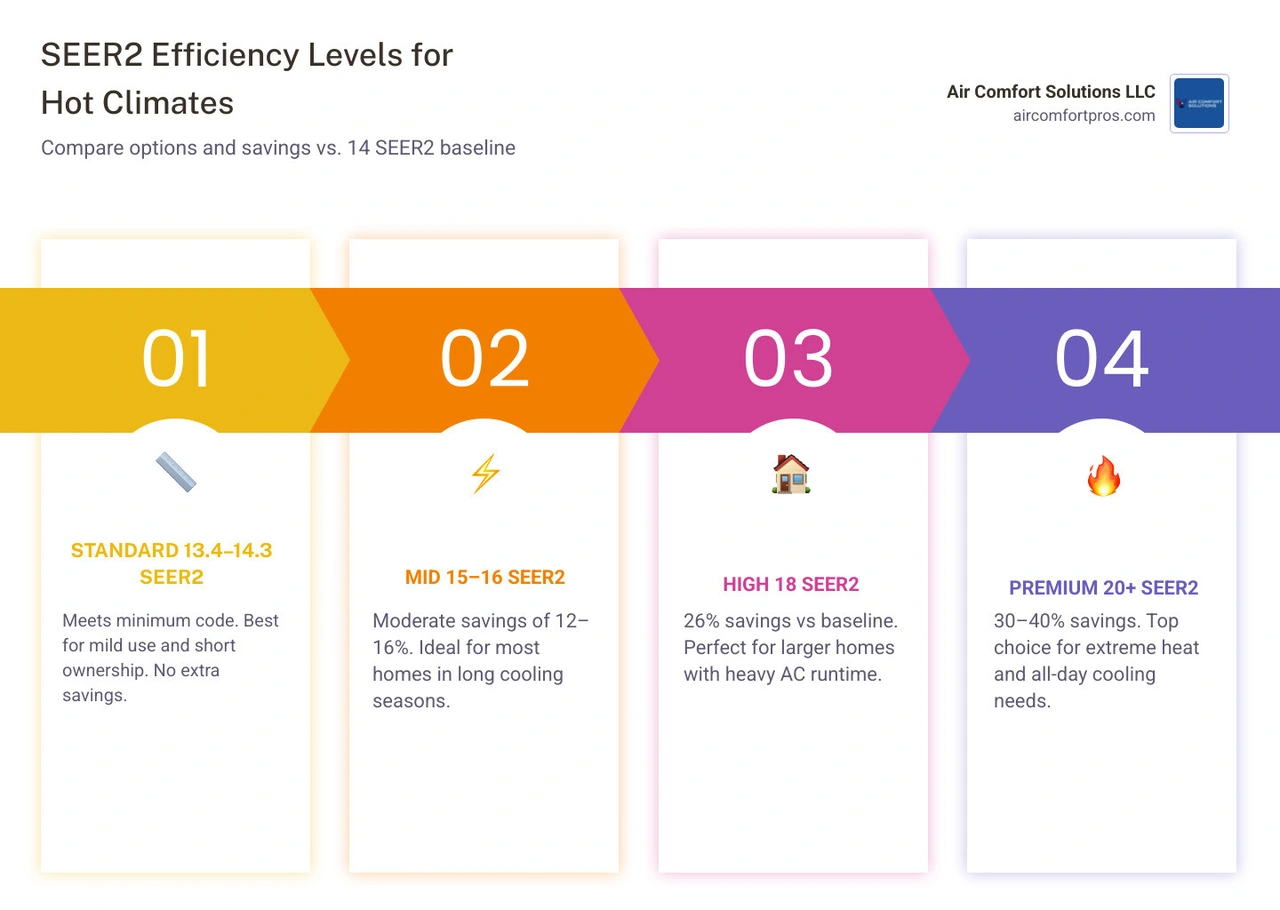
| SEER2 Rating | Efficiency Level | Best For | Estimated Annual Savings vs. 14 SEER2 |
|---|
| 13.4–14.3 SEER2 | Standard (minimum code) | Mild use, short ownership | Baseline |
| 15–16 SEER2 | Mid-efficiency | Most homes, moderate savings | ~12–16% |
| 18 SEER2 | High efficiency | Long cooling seasons, larger homes | ~26% |
| 20+ SEER2 | Premium efficiency | Hot climates, all-day cooling | ~30–40% |
If you're living with high energy bills, rooms that never quite cool down, or an aging system that runs constantly through the Texas heat, the gap between a standard-efficiency unit and a high-efficiency one is not just a number on a spec sheet — it's the difference between a home that's truly comfortable and one that's just barely keeping up.
The U.S. Department of Energy has found that upgrading to a high-efficiency AC system can cut cooling-season electricity use by up to 40% in hot, humid climates like Texas. That's not a small difference. For homeowners in North Harris County running their AC hard from April through October, that kind of savings adds up fast.
This guide walks you through exactly what SEER and SEER2 ratings mean, how high-efficiency systems actually perform differently in extreme heat, what the real payback looks like, and how to figure out which option actually makes sense for your home.
High SEER vs standard SEER AC in hot climates: what homeowners need to know first
Before we compare systems, we need to define the scorecard.
SEER stands for Seasonal Energy Efficiency Ratio. SEER2 is the updated version of that rating, using newer testing methods that better reflect real-world airflow conditions. In simple terms, both ratings estimate how much cooling an AC system delivers for the electricity it uses over an entire cooling season.
The formula is straightforward: total cooling output divided by total electrical energy consumed in watt-hours. Higher numbers mean greater efficiency.
If you want a deeper basics refresher, our guide on what a SEER2 rating means on an AC unit breaks it down in plain English.
What SEER and SEER2 actually measure
SEER is a seasonal average, not a guarantee of how a unit will perform at 4 p.m. in August when your attic feels like a pizza oven.
SEER2 was introduced to use stricter testing, including higher external static pressure, which better reflects the resistance your system sees from real ductwork. That means SEER2 is generally a more realistic number for homeowners. A unit that used to be rated at 16 SEER under the old method might test closer to 15 SEER2 under the new one.
What this means for you:
- SEER and SEER2 measure seasonal efficiency, not peak-heat performance alone
- SEER2 is the standard homeowners should pay attention to in 2026
- Higher ratings mean lower electricity use under the same conditions
- Real-world results still depend heavily on installation, duct design, and maintenance
Current minimum SEER2 rules in Southern hot-climate states
For hot-climate southern regions, including Texas, the current federal minimum for central air conditioners is 14.3 SEER2. In cooler northern regions, the minimum is lower at 13.4 SEER2.
That minimum matters, but it is just that: a minimum.
In a place like Pinehurst, Magnolia, Tomball, Spring, Conroe, Montgomery, or The Woodlands, many homeowners use AC far more than someone in a mild climate. So while a code-minimum system may pass inspection, it may not be the best fit for your long cooling season or humidity load.
Why high seer vs standard seer ac in hot climates is not just about the sticker
This is where a lot of homeowners get tripped up.
Two systems can have very different real-world results even if their ratings look close on paper. Why? Because the rating label does not account for:
- Leaky ducts
- Poor airflow
- Incorrect refrigerant charge
- Oversized equipment
- Weak attic insulation
- Long daily runtime in Texas heat
So when we talk about high SEER vs standard SEER AC in hot climates, we are not just comparing numbers. We are comparing how well the whole system handles a long, punishing cooling season.
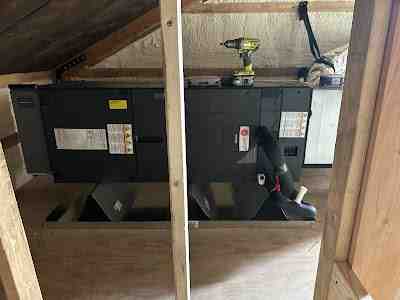
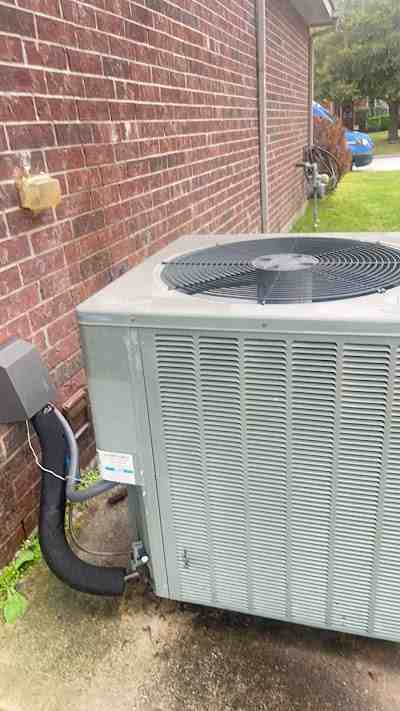
A standard-efficiency system and a high-efficiency system often cool the same home in very different ways.
For a broader overview, see our standard efficiency vs high efficiency AC comparison.
Standard 13 to 15 SEER2 vs high 16+ SEER2: core differences
Most standard systems in the 13 to 15 SEER2 range use simpler designs, often with single-stage compressors. That means they are basically on at full blast or off. It is a bit like driving in stop-and-go traffic with only one speed and a very dramatic personality.
Higher-efficiency systems, especially 16+ SEER2 models, often include:
- Two-stage or variable-speed compressors
- Variable-speed blower motors
- Longer, lower-speed cooling cycles
- Better part-load efficiency
- Improved temperature consistency
- Lower operating noise
In practical terms, standard units tend to cool quickly, shut off, then restart often. High-SEER units are better at adjusting output and running longer at lower levels. That creates more even temperatures and usually fewer hot spots.
Why EER matters more than SEER during brutal afternoon heat
SEER2 is important, but in extreme heat, EER deserves attention too.
EER stands for Energy Efficiency Ratio. It measures efficiency at a specific high-load condition rather than across an entire season. In very hot climates, EER can tell you more about how a unit holds up when the temperature is around 95 degrees and your system is under serious stress.
Why does that matter in Texas?
Because your AC does not get to choose the easy days.
In very hot afternoon conditions, some units with impressive seasonal ratings may not look quite as impressive at peak load. Research from desert markets has shown that at extreme temperatures, some higher-SEER systems can draw power closer to lower-rated units than homeowners expect. That does not make SEER useless. It means EER helps complete the picture.
For homeowners in our area, the smartest approach is:
- Use SEER2 to estimate seasonal savings
- Check EER when comparing systems that will run through long stretches of extreme heat
- Ask how the unit performs under heavy afternoon load, not just in mild test conditions
High seer vs standard seer ac in hot climates and humidity control
Humidity is where high-efficiency equipment often feels better, not just looks better on paper.
In Southeast Texas conditions, comfort is not only about air temperature. It is also about removing moisture. A home at 75 degrees can still feel sticky if the humidity is too high.
High-SEER systems, especially variable-speed models, usually dehumidify better because they run longer at lower speeds. That gives the indoor coil more time to pull moisture from the air. Standard single-stage systems often cool the air fast and shut off before they remove as much humidity.
That can mean:
- Less clammy air
- Fewer temperature swings
- Better comfort upstairs
- More stable indoor conditions during long humid stretches
Our article on how humidity affects AC performance explains why that matters so much in this part of Texas.
Savings, comfort, and payoff in real hot-climate conditions
The longer your cooling season, the more every efficiency step matters.
How much energy a 14 SEER2 to 18 or 20+ SEER2 upgrade can save
Research consistently points in the same direction: moving up from a standard 14 SEER2 system to a higher-efficiency model can cut cooling energy use in a meaningful way.
Here is a practical comparison:
| System Efficiency | Relative Cooling Energy Use vs 14 SEER2 | Typical Savings Range |
|---|
| 14 SEER2 | Baseline | 0% |
| 16 SEER2 | Lower | About 12% to 16% |
| 18 SEER2 | Much lower | About 26% |
| 20+ SEER2 | Significantly lower | About 30% to 40% |
In hot climates, upgrading from 14 to 16 can save about 12.5% on cooling costs. Moving from 14 to 20+ can approach 30% to 40% savings under the right conditions. That lines up with DOE guidance showing that high-efficiency AC systems can reduce cooling-season electricity use by up to 40% in hot, humid climates like Texas.
The key phrase is "under the right conditions." Homes that run AC all day, have long summers, or struggle with heat gain see the biggest difference.
When the upgrade pays off faster in hot regions
We are avoiding one-size-fits-all math here because every home is different, but the payback tends to happen faster when:
- The home is occupied most of the day
- The AC runs heavily from spring through fall
- The house is larger
- The upstairs gets hot
- Humidity is a constant problem
- Utility rates are high
- The old system is very inefficient
It may pay off more slowly when:
- The house is shaded and well insulated
- Occupants are gone much of the day
- Cooling demand is relatively light
- The homeowner may not stay long enough to enjoy the long-term savings
Are high-SEER units quieter and longer-lasting
Usually quieter, yes. Automatically longer-lasting, not exactly.
Many high-efficiency systems are quieter because variable-speed compressors and blower motors ramp up gradually and avoid the loud full-power starts common with basic single-stage systems. That means less of the classic "the AC just launched into orbit" sound.
As for lifespan, high-SEER systems can reduce wear in one important way: less hard cycling on and off. Longer, steadier operation is often gentler than constant stop-start operation. But lifespan still depends on maintenance, airflow, installation quality, and how hard the system works in heat.
That is especially important here, where extreme temperatures can accelerate wear. Our guide on why AC units wear out faster in hot climates covers that in more detail.
Which SEER level makes the most sense for your home in Texas and similar climates
The right SEER2 level depends on the house, not just the brochure.
Our local climate brings long cooling seasons, high humidity, strong sun exposure, and a lot of runtime. Our article on how Southeast Texas climate affects your HVAC system explains why local conditions matter so much.
Important decision factors include:
- Home size
- Insulation quality
- Duct condition
- Window exposure
- Number of occupants
- Whether someone is home all day
- Hot rooms or second-floor comfort problems
- Whether lower humidity is a top goal
When a standard-efficiency unit still makes sense
A standard-efficiency unit is not automatically a bad decision.
It can make sense when:
- You want a code-compliant replacement without extra features
- The home has lighter cooling demand
- You use the property seasonally or less intensively
- You expect shorter ownership
- The rest of the home is already efficient and easy to cool
In other words, minimum efficiency is not glamorous, but it can be reasonable in the right situation.
When high efficiency is worth the investment
High efficiency is often worth a closer look when:
- Your AC runs most of the day in summer
- You live in the home full-time
- Humidity is a major comfort issue
- Some rooms never stay comfortable
- The home is larger or has a second story
- You plan to stay in the home for years
- You want quieter operation and steadier temperatures
For many homeowners in Pinehurst and the north side of Harris County, 16 SEER2 is a strong middle ground. It often balances better performance with meaningful savings. Higher than that can make sense for homes with especially long runtimes or comfort challenges.
Rebates, tax credits, and ENERGY STAR considerations in 2026
In 2026, some high-efficiency systems may qualify for federal tax credits, utility rebates, manufacturer incentives, or ENERGY STAR-related benefits, depending on the exact equipment match and current program rules.
A few important reminders:
- Qualification usually depends on the complete matched system, not just the outdoor unit
- Efficiency thresholds can vary by product type
- Documentation matters
- Incentive programs change over time
That is one more reason not to choose equipment based on the condenser label alone.
Installation and maintenance decide whether high efficiency actually performs like high efficiency
A high-efficiency AC installed poorly can perform like a mediocre one. Sometimes worse.
Our guide on how to make sure your AC survives a Texas summer covers the maintenance side, but the short version is this: installation quality is everything.
Key checkpoints include:
- Proper load calculation
- Correct equipment sizing
- Matched indoor and outdoor components
- Correct refrigerant charge
- Verified airflow
- Duct leakage check
- Static pressure check
- Thermostat setup and staging configuration
- Drainage and condensate management
- Regular filter changes and seasonal tune-ups
Why poor installation can erase SEER gains
Even a premium system will struggle if it is oversized, undersized, or connected to bad ductwork.
Common performance killers include:
- Oversizing, which causes short cycling and weak dehumidification
- Undersizing, which leads to nonstop runtime and comfort issues
- Leaky ducts that dump cooled air into attics or crawlspaces
- High static pressure that chokes airflow
- Improper blower setup
- Incorrect refrigerant levels
This is why homeowners sometimes say, "My new unit is efficient, but my house still does not feel better." The equipment may not be the problem. The system design may be.
Real-world data from hot-climate discussions shows a consistent pattern:
- In very hot desert conditions, some high-SEER systems do not maintain as large a real-time advantage at extreme temperatures as their seasonal ratings suggest
- In mixed but still very hot conditions, moving from 14 to 16 SEER2 often saves roughly 12% to 16%
- In long-season, high-runtime homes, 18 to 20+ SEER2 systems can save around 26% to 40% over baseline systems
- In humid climates, variable-speed equipment often delivers added comfort through better moisture control, even beyond pure energy savings
So yes, SEER2 matters. But EER, humidity performance, and install quality matter too.
How to choose the right SEER without overbuying
Here is our practical advice:
- Start with a proper Manual J load calculation.
- Evaluate ductwork, insulation, and airflow.
- Be honest about your usage patterns.
- Decide whether your bigger goal is lower bills, better comfort, or both.
- Consider humidity control, not just temperature.
- Compare matched systems, not isolated components.
- Ask about both SEER2 and EER.
Sometimes the smartest choice is not the highest available rating. It is the one that fits your home best.
Frequently Asked Questions about high seer vs standard seer ac in hot climates
Is 16 SEER2 enough for a hot climate like Texas?
For many homes, yes.
A 16 SEER2 system is often a very good fit in Texas because it usually delivers a noticeable jump in efficiency over minimum equipment without pushing into premium territory. It can be especially attractive for average-sized homes with decent insulation and typical family occupancy.
That said, if your home has major humidity issues, a hot second floor, high daily runtime, or large open spaces, 18+ SEER2 may still be worth considering.
Should I focus on SEER2 or EER if I live somewhere extremely hot?
In our area, you should look at both.
SEER2 is better for estimating season-long energy use. EER is more useful for understanding performance during very hot peak conditions. If your AC spends long afternoons fighting extreme outdoor heat, EER becomes more important.
Think of SEER2 as the marathon score and EER as the sprint score in brutal heat.
Will a high-SEER unit lower humidity better than a standard unit?
Often, yes.
That is especially true if the high-SEER system uses variable-speed or two-stage operation. These systems run longer at lower output, which improves moisture removal and helps the home feel cooler without overcooling the space.
In humid Southeast Texas conditions, that can be one of the biggest real-life advantages of high-efficiency equipment.
Conclusion
For homeowners comparing high SEER vs standard SEER AC in hot climates, the best answer is not always "buy the highest rating available." It is "choose the right system for your home, your runtime, and your comfort goals."
In Pinehurst and across the north side of Harris County, a standard-efficiency unit may still make sense in some homes. But for many households dealing with long cooling seasons, high humidity, all-day AC use, and rising energy bills, high-efficiency equipment can be a real upgrade in both comfort and performance.
The biggest takeaway is simple: ratings matter, but system design matters just as much. A properly matched, properly installed, properly maintained AC will almost always outperform a higher-rated system that is installed poorly.
If you want help choosing the right efficiency level for your home, we can help you think through the real factors that matter, from insulation and ductwork to humidity control and long-term comfort. For more on replacement and cooling solutions, visit our air conditioning services page.
Why High SEER vs Standard SEER AC in Hot Climates Is One of the Biggest Decisions You'll Make for Your Home
When it comes to high SEER vs standard SEER AC in hot climates, the short answer is this: in places like Pinehurst, TX — where your air conditioner can run six months or more out of the year — the efficiency rating of your unit has a direct and significant impact on your comfort and your monthly energy bill.
Here's a quick breakdown before we dive deeper:
| SEER2 Rating | Efficiency Level | Best For | Estimated Annual Savings vs. 14 SEER2 |
|---|
| 13.4–14.3 SEER2 | Standard (minimum code) | Mild use, short ownership | Baseline |
| 15–16 SEER2 | Mid-efficiency | Most homes, moderate savings | ~12–16% |
| 18 SEER2 | High efficiency | Long cooling seasons, larger homes | ~26% |
| 20+ SEER2 | Premium efficiency | Hot climates, all-day cooling | ~30–40% |
If you're living with high energy bills, rooms that never quite cool down, or an aging system that runs constantly through the Texas heat, the gap between a standard-efficiency unit and a high-efficiency one is not just a number on a spec sheet — it's the difference between a home that's truly comfortable and one that's just barely keeping up.
The U.S. Department of Energy has found that upgrading to a high-efficiency AC system can cut cooling-season electricity use by up to 40% in hot, humid climates like Texas. That's not a small difference. For homeowners in North Harris County running their AC hard from April through October, that kind of savings adds up fast.
This guide walks you through exactly what SEER and SEER2 ratings mean, how high-efficiency systems actually perform differently in extreme heat, what the real payback looks like, and how to figure out which option actually makes sense for your home.
High SEER vs standard SEER AC in hot climates: what homeowners need to know first
Before we compare systems, we need to define the scorecard.
SEER stands for Seasonal Energy Efficiency Ratio. SEER2 is the updated version of that rating, using newer testing methods that better reflect real-world airflow conditions. In simple terms, both ratings estimate how much cooling an AC system delivers for the electricity it uses over an entire cooling season.
The formula is straightforward: total cooling output divided by total electrical energy consumed in watt-hours. Higher numbers mean greater efficiency.
If you want a deeper basics refresher, our guide on what a SEER2 rating means on an AC unit breaks it down in plain English.
What SEER and SEER2 actually measure
SEER is a seasonal average, not a guarantee of how a unit will perform at 4 p.m. in August when your attic feels like a pizza oven.
SEER2 was introduced to use stricter testing, including higher external static pressure, which better reflects the resistance your system sees from real ductwork. That means SEER2 is generally a more realistic number for homeowners. A unit that used to be rated at 16 SEER under the old method might test closer to 15 SEER2 under the new one.
What this means for you:
- SEER and SEER2 measure seasonal efficiency, not peak-heat performance alone
- SEER2 is the standard homeowners should pay attention to in 2026
- Higher ratings mean lower electricity use under the same conditions
- Real-world results still depend heavily on installation, duct design, and maintenance
Current minimum SEER2 rules in Southern hot-climate states
For hot-climate southern regions, including Texas, the current federal minimum for central air conditioners is 14.3 SEER2. In cooler northern regions, the minimum is lower at 13.4 SEER2.
That minimum matters, but it is just that: a minimum.
In a place like Pinehurst, Magnolia, Tomball, Spring, Conroe, Montgomery, or The Woodlands, many homeowners use AC far more than someone in a mild climate. So while a code-minimum system may pass inspection, it may not be the best fit for your long cooling season or humidity load.
Why high seer vs standard seer ac in hot climates is not just about the sticker
This is where a lot of homeowners get tripped up.
Two systems can have very different real-world results even if their ratings look close on paper. Why? Because the rating label does not account for:
- Leaky ducts
- Poor airflow
- Incorrect refrigerant charge
- Oversized equipment
- Weak attic insulation
- Long daily runtime in Texas heat
So when we talk about high SEER vs standard SEER AC in hot climates, we are not just comparing numbers. We are comparing how well the whole system handles a long, punishing cooling season.
A standard-efficiency system and a high-efficiency system often cool the same home in very different ways.
For a broader overview, see our standard efficiency vs high efficiency AC comparison.
Standard 13 to 15 SEER2 vs high 16+ SEER2: core differences
Most standard systems in the 13 to 15 SEER2 range use simpler designs, often with single-stage compressors. That means they are basically on at full blast or off. It is a bit like driving in stop-and-go traffic with only one speed and a very dramatic personality.
Higher-efficiency systems, especially 16+ SEER2 models, often include:
- Two-stage or variable-speed compressors
- Variable-speed blower motors
- Longer, lower-speed cooling cycles
- Better part-load efficiency
- Improved temperature consistency
- Lower operating noise
In practical terms, standard units tend to cool quickly, shut off, then restart often. High-SEER units are better at adjusting output and running longer at lower levels. That creates more even temperatures and usually fewer hot spots.
Why EER matters more than SEER during brutal afternoon heat
SEER2 is important, but in extreme heat, EER deserves attention too.
EER stands for Energy Efficiency Ratio. It measures efficiency at a specific high-load condition rather than across an entire season. In very hot climates, EER can tell you more about how a unit holds up when the temperature is around 95 degrees and your system is under serious stress.
Why does that matter in Texas?
Because your AC does not get to choose the easy days.
In very hot afternoon conditions, some units with impressive seasonal ratings may not look quite as impressive at peak load. Research from desert markets has shown that at extreme temperatures, some higher-SEER systems can draw power closer to lower-rated units than homeowners expect. That does not make SEER useless. It means EER helps complete the picture.
For homeowners in our area, the smartest approach is:
- Use SEER2 to estimate seasonal savings
- Check EER when comparing systems that will run through long stretches of extreme heat
- Ask how the unit performs under heavy afternoon load, not just in mild test conditions
High seer vs standard seer ac in hot climates and humidity control
Humidity is where high-efficiency equipment often feels better, not just looks better on paper.
In Southeast Texas conditions, comfort is not only about air temperature. It is also about removing moisture. A home at 75 degrees can still feel sticky if the humidity is too high.
High-SEER systems, especially variable-speed models, usually dehumidify better because they run longer at lower speeds. That gives the indoor coil more time to pull moisture from the air. Standard single-stage systems often cool the air fast and shut off before they remove as much humidity.
That can mean:
- Less clammy air
- Fewer temperature swings
- Better comfort upstairs
- More stable indoor conditions during long humid stretches
Our article on how humidity affects AC performance explains why that matters so much in this part of Texas.
Savings, comfort, and payoff in real hot-climate conditions
The longer your cooling season, the more every efficiency step matters.
How much energy a 14 SEER2 to 18 or 20+ SEER2 upgrade can save
Research consistently points in the same direction: moving up from a standard 14 SEER2 system to a higher-efficiency model can cut cooling energy use in a meaningful way.
Here is a practical comparison:
| System Efficiency | Relative Cooling Energy Use vs 14 SEER2 | Typical Savings Range |
|---|
| 14 SEER2 | Baseline | 0% |
| 16 SEER2 | Lower | About 12% to 16% |
| 18 SEER2 | Much lower | About 26% |
| 20+ SEER2 | Significantly lower | About 30% to 40% |
In hot climates, upgrading from 14 to 16 can save about 12.5% on cooling costs. Moving from 14 to 20+ can approach 30% to 40% savings under the right conditions. That lines up with DOE guidance showing that high-efficiency AC systems can reduce cooling-season electricity use by up to 40% in hot, humid climates like Texas.
The key phrase is "under the right conditions." Homes that run AC all day, have long summers, or struggle with heat gain see the biggest difference.
When the upgrade pays off faster in hot regions
We are avoiding one-size-fits-all math here because every home is different, but the payback tends to happen faster when:
- The home is occupied most of the day
- The AC runs heavily from spring through fall
- The house is larger
- The upstairs gets hot
- Humidity is a constant problem
- Utility rates are high
- The old system is very inefficient
It may pay off more slowly when:
- The house is shaded and well insulated
- Occupants are gone much of the day
- Cooling demand is relatively light
- The homeowner may not stay long enough to enjoy the long-term savings
Are high-SEER units quieter and longer-lasting
Usually quieter, yes. Automatically longer-lasting, not exactly.
Many high-efficiency systems are quieter because variable-speed compressors and blower motors ramp up gradually and avoid the loud full-power starts common with basic single-stage systems. That means less of the classic "the AC just launched into orbit" sound.
As for lifespan, high-SEER systems can reduce wear in one important way: less hard cycling on and off. Longer, steadier operation is often gentler than constant stop-start operation. But lifespan still depends on maintenance, airflow, installation quality, and how hard the system works in heat.
That is especially important here, where extreme temperatures can accelerate wear. Our guide on why AC units wear out faster in hot climates covers that in more detail.
Which SEER level makes the most sense for your home in Texas and similar climates
The right SEER2 level depends on the house, not just the brochure.
Our local climate brings long cooling seasons, high humidity, strong sun exposure, and a lot of runtime. Our article on how Southeast Texas climate affects your HVAC system explains why local conditions matter so much.
Important decision factors include:
- Home size
- Insulation quality
- Duct condition
- Window exposure
- Number of occupants
- Whether someone is home all day
- Hot rooms or second-floor comfort problems
- Whether lower humidity is a top goal
When a standard-efficiency unit still makes sense
A standard-efficiency unit is not automatically a bad decision.
It can make sense when:
- You want a code-compliant replacement without extra features
- The home has lighter cooling demand
- You use the property seasonally or less intensively
- You expect shorter ownership
- The rest of the home is already efficient and easy to cool
In other words, minimum efficiency is not glamorous, but it can be reasonable in the right situation.
When high efficiency is worth the investment
High efficiency is often worth a closer look when:
- Your AC runs most of the day in summer
- You live in the home full-time
- Humidity is a major comfort issue
- Some rooms never stay comfortable
- The home is larger or has a second story
- You plan to stay in the home for years
- You want quieter operation and steadier temperatures
For many homeowners in Pinehurst and the north side of Harris County, 16 SEER2 is a strong middle ground. It often balances better performance with meaningful savings. Higher than that can make sense for homes with especially long runtimes or comfort challenges.
Rebates, tax credits, and ENERGY STAR considerations in 2026
In 2026, some high-efficiency systems may qualify for federal tax credits, utility rebates, manufacturer incentives, or ENERGY STAR-related benefits, depending on the exact equipment match and current program rules.
A few important reminders:
- Qualification usually depends on the complete matched system, not just the outdoor unit
- Efficiency thresholds can vary by product type
- Documentation matters
- Incentive programs change over time
That is one more reason not to choose equipment based on the condenser label alone.
Installation and maintenance decide whether high efficiency actually performs like high efficiency
A high-efficiency AC installed poorly can perform like a mediocre one. Sometimes worse.
Our guide on how to make sure your AC survives a Texas summer covers the maintenance side, but the short version is this: installation quality is everything.
Key checkpoints include:
- Proper load calculation
- Correct equipment sizing
- Matched indoor and outdoor components
- Correct refrigerant charge
- Verified airflow
- Duct leakage check
- Static pressure check
- Thermostat setup and staging configuration
- Drainage and condensate management
- Regular filter changes and seasonal tune-ups
Why poor installation can erase SEER gains
Even a premium system will struggle if it is oversized, undersized, or connected to bad ductwork.
Common performance killers include:
- Oversizing, which causes short cycling and weak dehumidification
- Undersizing, which leads to nonstop runtime and comfort issues
- Leaky ducts that dump cooled air into attics or crawlspaces
- High static pressure that chokes airflow
- Improper blower setup
- Incorrect refrigerant levels
This is why homeowners sometimes say, "My new unit is efficient, but my house still does not feel better." The equipment may not be the problem. The system design may be.
Real-world data from hot-climate discussions shows a consistent pattern:
- In very hot desert conditions, some high-SEER systems do not maintain as large a real-time advantage at extreme temperatures as their seasonal ratings suggest
- In mixed but still very hot conditions, moving from 14 to 16 SEER2 often saves roughly 12% to 16%
- In long-season, high-runtime homes, 18 to 20+ SEER2 systems can save around 26% to 40% over baseline systems
- In humid climates, variable-speed equipment often delivers added comfort through better moisture control, even beyond pure energy savings
So yes, SEER2 matters. But EER, humidity performance, and install quality matter too.
How to choose the right SEER without overbuying
Here is our practical advice:
- Start with a proper Manual J load calculation.
- Evaluate ductwork, insulation, and airflow.
- Be honest about your usage patterns.
- Decide whether your bigger goal is lower bills, better comfort, or both.
- Consider humidity control, not just temperature.
- Compare matched systems, not isolated components.
- Ask about both SEER2 and EER.
Sometimes the smartest choice is not the highest available rating. It is the one that fits your home best.
Frequently Asked Questions about high seer vs standard seer ac in hot climates
Is 16 SEER2 enough for a hot climate like Texas?
For many homes, yes.
A 16 SEER2 system is often a very good fit in Texas because it usually delivers a noticeable jump in efficiency over minimum equipment without pushing into premium territory. It can be especially attractive for average-sized homes with decent insulation and typical family occupancy.
That said, if your home has major humidity issues, a hot second floor, high daily runtime, or large open spaces, 18+ SEER2 may still be worth considering.
Should I focus on SEER2 or EER if I live somewhere extremely hot?
In our area, you should look at both.
SEER2 is better for estimating season-long energy use. EER is more useful for understanding performance during very hot peak conditions. If your AC spends long afternoons fighting extreme outdoor heat, EER becomes more important.
Think of SEER2 as the marathon score and EER as the sprint score in brutal heat.
Will a high-SEER unit lower humidity better than a standard unit?
Often, yes.
That is especially true if the high-SEER system uses variable-speed or two-stage operation. These systems run longer at lower output, which improves moisture removal and helps the home feel cooler without overcooling the space.
In humid Southeast Texas conditions, that can be one of the biggest real-life advantages of high-efficiency equipment.
Conclusion
For homeowners comparing high SEER vs standard SEER AC in hot climates, the best answer is not always "buy the highest rating available." It is "choose the right system for your home, your runtime, and your comfort goals."
In Pinehurst and across the north side of Harris County, a standard-efficiency unit may still make sense in some homes. But for many households dealing with long cooling seasons, high humidity, all-day AC use, and rising energy bills, high-efficiency equipment can be a real upgrade in both comfort and performance.
The biggest takeaway is simple: ratings matter, but system design matters just as much. A properly matched, properly installed, properly maintained AC will almost always outperform a higher-rated system that is installed poorly.
If you want help choosing the right efficiency level for your home, we can help you think through the real factors that matter, from insulation and ductwork to humidity control and long-term comfort. For more on replacement and cooling solutions, visit our air conditioning services page.
Why High SEER vs Standard SEER AC in Hot Climates Is One of the Biggest Decisions You'll Make for Your Home
When it comes to high SEER vs standard SEER AC in hot climates, the short answer is this: in places like Pinehurst, TX — where your air conditioner can run six months or more out of the year — the efficiency rating of your unit has a direct and significant impact on your comfort and your monthly energy bill.
Here's a quick breakdown before we dive deeper:
| SEER2 Rating | Efficiency Level | Best For | Estimated Annual Savings vs. 14 SEER2 |
|---|
| 13.4–14.3 SEER2 | Standard (minimum code) | Mild use, short ownership | Baseline |
| 15–16 SEER2 | Mid-efficiency | Most homes, moderate savings | ~12–16% |
| 18 SEER2 | High efficiency | Long cooling seasons, larger homes | ~26% |
| 20+ SEER2 | Premium efficiency | Hot climates, all-day cooling | ~30–40% |
If you're living with high energy bills, rooms that never quite cool down, or an aging system that runs constantly through the Texas heat, the gap between a standard-efficiency unit and a high-efficiency one is not just a number on a spec sheet — it's the difference between a home that's truly comfortable and one that's just barely keeping up.
The U.S. Department of Energy has found that upgrading to a high-efficiency AC system can cut cooling-season electricity use by up to 40% in hot, humid climates like Texas. That's not a small difference. For homeowners in North Harris County running their AC hard from April through October, that kind of savings adds up fast.
This guide walks you through exactly what SEER and SEER2 ratings mean, how high-efficiency systems actually perform differently in extreme heat, what the real payback looks like, and how to figure out which option actually makes sense for your home.
High SEER vs standard SEER AC in hot climates: what homeowners need to know first
Before we compare systems, we need to define the scorecard.
SEER stands for Seasonal Energy Efficiency Ratio. SEER2 is the updated version of that rating, using newer testing methods that better reflect real-world airflow conditions. In simple terms, both ratings estimate how much cooling an AC system delivers for the electricity it uses over an entire cooling season.
The formula is straightforward: total cooling output divided by total electrical energy consumed in watt-hours. Higher numbers mean greater efficiency.
If you want a deeper basics refresher, our guide on what a SEER2 rating means on an AC unit breaks it down in plain English.
What SEER and SEER2 actually measure
SEER is a seasonal average, not a guarantee of how a unit will perform at 4 p.m. in August when your attic feels like a pizza oven.
SEER2 was introduced to use stricter testing, including higher external static pressure, which better reflects the resistance your system sees from real ductwork. That means SEER2 is generally a more realistic number for homeowners. A unit that used to be rated at 16 SEER under the old method might test closer to 15 SEER2 under the new one.
What this means for you:
- SEER and SEER2 measure seasonal efficiency, not peak-heat performance alone
- SEER2 is the standard homeowners should pay attention to in 2026
- Higher ratings mean lower electricity use under the same conditions
- Real-world results still depend heavily on installation, duct design, and maintenance
Current minimum SEER2 rules in Southern hot-climate states
For hot-climate southern regions, including Texas, the current federal minimum for central air conditioners is 14.3 SEER2. In cooler northern regions, the minimum is lower at 13.4 SEER2.
That minimum matters, but it is just that: a minimum.
In a place like Pinehurst, Magnolia, Tomball, Spring, Conroe, Montgomery, or The Woodlands, many homeowners use AC far more than someone in a mild climate. So while a code-minimum system may pass inspection, it may not be the best fit for your long cooling season or humidity load.
Why high seer vs standard seer ac in hot climates is not just about the sticker
This is where a lot of homeowners get tripped up.
Two systems can have very different real-world results even if their ratings look close on paper. Why? Because the rating label does not account for:
- Leaky ducts
- Poor airflow
- Incorrect refrigerant charge
- Oversized equipment
- Weak attic insulation
- Long daily runtime in Texas heat
So when we talk about high SEER vs standard SEER AC in hot climates, we are not just comparing numbers. We are comparing how well the whole system handles a long, punishing cooling season.
A standard-efficiency system and a high-efficiency system often cool the same home in very different ways.
For a broader overview, see our standard efficiency vs high efficiency AC comparison.
Standard 13 to 15 SEER2 vs high 16+ SEER2: core differences
Most standard systems in the 13 to 15 SEER2 range use simpler designs, often with single-stage compressors. That means they are basically on at full blast or off. It is a bit like driving in stop-and-go traffic with only one speed and a very dramatic personality.
Higher-efficiency systems, especially 16+ SEER2 models, often include:
- Two-stage or variable-speed compressors
- Variable-speed blower motors
- Longer, lower-speed cooling cycles
- Better part-load efficiency
- Improved temperature consistency
- Lower operating noise
In practical terms, standard units tend to cool quickly, shut off, then restart often. High-SEER units are better at adjusting output and running longer at lower levels. That creates more even temperatures and usually fewer hot spots.
Why EER matters more than SEER during brutal afternoon heat
SEER2 is important, but in extreme heat, EER deserves attention too.
EER stands for Energy Efficiency Ratio. It measures efficiency at a specific high-load condition rather than across an entire season. In very hot climates, EER can tell you more about how a unit holds up when the temperature is around 95 degrees and your system is under serious stress.
Why does that matter in Texas?
Because your AC does not get to choose the easy days.
In very hot afternoon conditions, some units with impressive seasonal ratings may not look quite as impressive at peak load. Research from desert markets has shown that at extreme temperatures, some higher-SEER systems can draw power closer to lower-rated units than homeowners expect. That does not make SEER useless. It means EER helps complete the picture.
For homeowners in our area, the smartest approach is:
- Use SEER2 to estimate seasonal savings
- Check EER when comparing systems that will run through long stretches of extreme heat
- Ask how the unit performs under heavy afternoon load, not just in mild test conditions
High seer vs standard seer ac in hot climates and humidity control
Humidity is where high-efficiency equipment often feels better, not just looks better on paper.
In Southeast Texas conditions, comfort is not only about air temperature. It is also about removing moisture. A home at 75 degrees can still feel sticky if the humidity is too high.
High-SEER systems, especially variable-speed models, usually dehumidify better because they run longer at lower speeds. That gives the indoor coil more time to pull moisture from the air. Standard single-stage systems often cool the air fast and shut off before they remove as much humidity.
That can mean:
- Less clammy air
- Fewer temperature swings
- Better comfort upstairs
- More stable indoor conditions during long humid stretches
Our article on how humidity affects AC performance explains why that matters so much in this part of Texas.
Savings, comfort, and payoff in real hot-climate conditions
The longer your cooling season, the more every efficiency step matters.
How much energy a 14 SEER2 to 18 or 20+ SEER2 upgrade can save
Research consistently points in the same direction: moving up from a standard 14 SEER2 system to a higher-efficiency model can cut cooling energy use in a meaningful way.
Here is a practical comparison:
| System Efficiency | Relative Cooling Energy Use vs 14 SEER2 | Typical Savings Range |
|---|
| 14 SEER2 | Baseline | 0% |
| 16 SEER2 | Lower | About 12% to 16% |
| 18 SEER2 | Much lower | About 26% |
| 20+ SEER2 | Significantly lower | About 30% to 40% |
In hot climates, upgrading from 14 to 16 can save about 12.5% on cooling costs. Moving from 14 to 20+ can approach 30% to 40% savings under the right conditions. That lines up with DOE guidance showing that high-efficiency AC systems can reduce cooling-season electricity use by up to 40% in hot, humid climates like Texas.
The key phrase is "under the right conditions." Homes that run AC all day, have long summers, or struggle with heat gain see the biggest difference.
When the upgrade pays off faster in hot regions
We are avoiding one-size-fits-all math here because every home is different, but the payback tends to happen faster when:
- The home is occupied most of the day
- The AC runs heavily from spring through fall
- The house is larger
- The upstairs gets hot
- Humidity is a constant problem
- Utility rates are high
- The old system is very inefficient
It may pay off more slowly when:
- The house is shaded and well insulated
- Occupants are gone much of the day
- Cooling demand is relatively light
- The homeowner may not stay long enough to enjoy the long-term savings
Are high-SEER units quieter and longer-lasting
Usually quieter, yes. Automatically longer-lasting, not exactly.
Many high-efficiency systems are quieter because variable-speed compressors and blower motors ramp up gradually and avoid the loud full-power starts common with basic single-stage systems. That means less of the classic "the AC just launched into orbit" sound.
As for lifespan, high-SEER systems can reduce wear in one important way: less hard cycling on and off. Longer, steadier operation is often gentler than constant stop-start operation. But lifespan still depends on maintenance, airflow, installation quality, and how hard the system works in heat.
That is especially important here, where extreme temperatures can accelerate wear. Our guide on why AC units wear out faster in hot climates covers that in more detail.
Which SEER level makes the most sense for your home in Texas and similar climates
The right SEER2 level depends on the house, not just the brochure.
Our local climate brings long cooling seasons, high humidity, strong sun exposure, and a lot of runtime. Our article on how Southeast Texas climate affects your HVAC system explains why local conditions matter so much.
Important decision factors include:
- Home size
- Insulation quality
- Duct condition
- Window exposure
- Number of occupants
- Whether someone is home all day
- Hot rooms or second-floor comfort problems
- Whether lower humidity is a top goal
When a standard-efficiency unit still makes sense
A standard-efficiency unit is not automatically a bad decision.
It can make sense when:
- You want a code-compliant replacement without extra features
- The home has lighter cooling demand
- You use the property seasonally or less intensively
- You expect shorter ownership
- The rest of the home is already efficient and easy to cool
In other words, minimum efficiency is not glamorous, but it can be reasonable in the right situation.
When high efficiency is worth the investment
High efficiency is often worth a closer look when:
- Your AC runs most of the day in summer
- You live in the home full-time
- Humidity is a major comfort issue
- Some rooms never stay comfortable
- The home is larger or has a second story
- You plan to stay in the home for years
- You want quieter operation and steadier temperatures
For many homeowners in Pinehurst and the north side of Harris County, 16 SEER2 is a strong middle ground. It often balances better performance with meaningful savings. Higher than that can make sense for homes with especially long runtimes or comfort challenges.
Rebates, tax credits, and ENERGY STAR considerations in 2026
In 2026, some high-efficiency systems may qualify for federal tax credits, utility rebates, manufacturer incentives, or ENERGY STAR-related benefits, depending on the exact equipment match and current program rules.
A few important reminders:
- Qualification usually depends on the complete matched system, not just the outdoor unit
- Efficiency thresholds can vary by product type
- Documentation matters
- Incentive programs change over time
That is one more reason not to choose equipment based on the condenser label alone.
Installation and maintenance decide whether high efficiency actually performs like high efficiency
A high-efficiency AC installed poorly can perform like a mediocre one. Sometimes worse.
Our guide on how to make sure your AC survives a Texas summer covers the maintenance side, but the short version is this: installation quality is everything.
Key checkpoints include:
- Proper load calculation
- Correct equipment sizing
- Matched indoor and outdoor components
- Correct refrigerant charge
- Verified airflow
- Duct leakage check
- Static pressure check
- Thermostat setup and staging configuration
- Drainage and condensate management
- Regular filter changes and seasonal tune-ups
Why poor installation can erase SEER gains
Even a premium system will struggle if it is oversized, undersized, or connected to bad ductwork.
Common performance killers include:
- Oversizing, which causes short cycling and weak dehumidification
- Undersizing, which leads to nonstop runtime and comfort issues
- Leaky ducts that dump cooled air into attics or crawlspaces
- High static pressure that chokes airflow
- Improper blower setup
- Incorrect refrigerant levels
This is why homeowners sometimes say, "My new unit is efficient, but my house still does not feel better." The equipment may not be the problem. The system design may be.
Real-world data from hot-climate discussions shows a consistent pattern:
- In very hot desert conditions, some high-SEER systems do not maintain as large a real-time advantage at extreme temperatures as their seasonal ratings suggest
- In mixed but still very hot conditions, moving from 14 to 16 SEER2 often saves roughly 12% to 16%
- In long-season, high-runtime homes, 18 to 20+ SEER2 systems can save around 26% to 40% over baseline systems
- In humid climates, variable-speed equipment often delivers added comfort through better moisture control, even beyond pure energy savings
So yes, SEER2 matters. But EER, humidity performance, and install quality matter too.
How to choose the right SEER without overbuying
Here is our practical advice:
- Start with a proper Manual J load calculation.
- Evaluate ductwork, insulation, and airflow.
- Be honest about your usage patterns.
- Decide whether your bigger goal is lower bills, better comfort, or both.
- Consider humidity control, not just temperature.
- Compare matched systems, not isolated components.
- Ask about both SEER2 and EER.
Sometimes the smartest choice is not the highest available rating. It is the one that fits your home best.
Frequently Asked Questions about high seer vs standard seer ac in hot climates
Is 16 SEER2 enough for a hot climate like Texas?
For many homes, yes.
A 16 SEER2 system is often a very good fit in Texas because it usually delivers a noticeable jump in efficiency over minimum equipment without pushing into premium territory. It can be especially attractive for average-sized homes with decent insulation and typical family occupancy.
That said, if your home has major humidity issues, a hot second floor, high daily runtime, or large open spaces, 18+ SEER2 may still be worth considering.
Should I focus on SEER2 or EER if I live somewhere extremely hot?
In our area, you should look at both.
SEER2 is better for estimating season-long energy use. EER is more useful for understanding performance during very hot peak conditions. If your AC spends long afternoons fighting extreme outdoor heat, EER becomes more important.
Think of SEER2 as the marathon score and EER as the sprint score in brutal heat.
Will a high-SEER unit lower humidity better than a standard unit?
Often, yes.
That is especially true if the high-SEER system uses variable-speed or two-stage operation. These systems run longer at lower output, which improves moisture removal and helps the home feel cooler without overcooling the space.
In humid Southeast Texas conditions, that can be one of the biggest real-life advantages of high-efficiency equipment.
Conclusion
For homeowners comparing high SEER vs standard SEER AC in hot climates, the best answer is not always "buy the highest rating available." It is "choose the right system for your home, your runtime, and your comfort goals."
In Pinehurst and across the north side of Harris County, a standard-efficiency unit may still make sense in some homes. But for many households dealing with long cooling seasons, high humidity, all-day AC use, and rising energy bills, high-efficiency equipment can be a real upgrade in both comfort and performance.
The biggest takeaway is simple: ratings matter, but system design matters just as much. A properly matched, properly installed, properly maintained AC will almost always outperform a higher-rated system that is installed poorly.
If you want help choosing the right efficiency level for your home, we can help you think through the real factors that matter, from insulation and ductwork to humidity control and long-term comfort. For more on replacement and cooling solutions, visit our air conditioning services page.
Why High SEER vs Standard SEER AC in Hot Climates Is One of the Biggest Decisions You'll Make for Your Home
When it comes to high SEER vs standard SEER AC in hot climates, the short answer is this: in places like Pinehurst, TX — where your air conditioner can run six months or more out of the year — the efficiency rating of your unit has a direct and significant impact on your comfort and your monthly energy bill.
Here's a quick breakdown before we dive deeper:
| SEER2 Rating | Efficiency Level | Best For | Estimated Annual Savings vs. 14 SEER2 |
|---|
| 13.4–14.3 SEER2 | Standard (minimum code) | Mild use, short ownership | Baseline |
| 15–16 SEER2 | Mid-efficiency | Most homes, moderate savings | ~12–16% |
| 18 SEER2 | High efficiency | Long cooling seasons, larger homes | ~26% |
| 20+ SEER2 | Premium efficiency | Hot climates, all-day cooling | ~30–40% |
If you're living with high energy bills, rooms that never quite cool down, or an aging system that runs constantly through the Texas heat, the gap between a standard-efficiency unit and a high-efficiency one is not just a number on a spec sheet — it's the difference between a home that's truly comfortable and one that's just barely keeping up.
The U.S. Department of Energy has found that upgrading to a high-efficiency AC system can cut cooling-season electricity use by up to 40% in hot, humid climates like Texas. That's not a small difference. For homeowners in North Harris County running their AC hard from April through October, that kind of savings adds up fast.
This guide walks you through exactly what SEER and SEER2 ratings mean, how high-efficiency systems actually perform differently in extreme heat, what the real payback looks like, and how to figure out which option actually makes sense for your home.
High SEER vs standard SEER AC in hot climates: what homeowners need to know first
Before we compare systems, we need to define the scorecard.
SEER stands for Seasonal Energy Efficiency Ratio. SEER2 is the updated version of that rating, using newer testing methods that better reflect real-world airflow conditions. In simple terms, both ratings estimate how much cooling an AC system delivers for the electricity it uses over an entire cooling season.
The formula is straightforward: total cooling output divided by total electrical energy consumed in watt-hours. Higher numbers mean greater efficiency.
If you want a deeper basics refresher, our guide on what a SEER2 rating means on an AC unit breaks it down in plain English.
What SEER and SEER2 actually measure
SEER is a seasonal average, not a guarantee of how a unit will perform at 4 p.m. in August when your attic feels like a pizza oven.
SEER2 was introduced to use stricter testing, including higher external static pressure, which better reflects the resistance your system sees from real ductwork. That means SEER2 is generally a more realistic number for homeowners. A unit that used to be rated at 16 SEER under the old method might test closer to 15 SEER2 under the new one.
What this means for you:
- SEER and SEER2 measure seasonal efficiency, not peak-heat performance alone
- SEER2 is the standard homeowners should pay attention to in 2026
- Higher ratings mean lower electricity use under the same conditions
- Real-world results still depend heavily on installation, duct design, and maintenance
Current minimum SEER2 rules in Southern hot-climate states
For hot-climate southern regions, including Texas, the current federal minimum for central air conditioners is 14.3 SEER2. In cooler northern regions, the minimum is lower at 13.4 SEER2.
That minimum matters, but it is just that: a minimum.
In a place like Pinehurst, Magnolia, Tomball, Spring, Conroe, Montgomery, or The Woodlands, many homeowners use AC far more than someone in a mild climate. So while a code-minimum system may pass inspection, it may not be the best fit for your long cooling season or humidity load.
Why high seer vs standard seer ac in hot climates is not just about the sticker
This is where a lot of homeowners get tripped up.
Two systems can have very different real-world results even if their ratings look close on paper. Why? Because the rating label does not account for:
- Leaky ducts
- Poor airflow
- Incorrect refrigerant charge
- Oversized equipment
- Weak attic insulation
- Long daily runtime in Texas heat
So when we talk about high SEER vs standard SEER AC in hot climates, we are not just comparing numbers. We are comparing how well the whole system handles a long, punishing cooling season.
A standard-efficiency system and a high-efficiency system often cool the same home in very different ways.
For a broader overview, see our standard efficiency vs high efficiency AC comparison.
Standard 13 to 15 SEER2 vs high 16+ SEER2: core differences
Most standard systems in the 13 to 15 SEER2 range use simpler designs, often with single-stage compressors. That means they are basically on at full blast or off. It is a bit like driving in stop-and-go traffic with only one speed and a very dramatic personality.
Higher-efficiency systems, especially 16+ SEER2 models, often include:
- Two-stage or variable-speed compressors
- Variable-speed blower motors
- Longer, lower-speed cooling cycles
- Better part-load efficiency
- Improved temperature consistency
- Lower operating noise
In practical terms, standard units tend to cool quickly, shut off, then restart often. High-SEER units are better at adjusting output and running longer at lower levels. That creates more even temperatures and usually fewer hot spots.
Why EER matters more than SEER during brutal afternoon heat
SEER2 is important, but in extreme heat, EER deserves attention too.
EER stands for Energy Efficiency Ratio. It measures efficiency at a specific high-load condition rather than across an entire season. In very hot climates, EER can tell you more about how a unit holds up when the temperature is around 95 degrees and your system is under serious stress.
Why does that matter in Texas?
Because your AC does not get to choose the easy days.
In very hot afternoon conditions, some units with impressive seasonal ratings may not look quite as impressive at peak load. Research from desert markets has shown that at extreme temperatures, some higher-SEER systems can draw power closer to lower-rated units than homeowners expect. That does not make SEER useless. It means EER helps complete the picture.
For homeowners in our area, the smartest approach is:
- Use SEER2 to estimate seasonal savings
- Check EER when comparing systems that will run through long stretches of extreme heat
- Ask how the unit performs under heavy afternoon load, not just in mild test conditions
High seer vs standard seer ac in hot climates and humidity control
Humidity is where high-efficiency equipment often feels better, not just looks better on paper.
In Southeast Texas conditions, comfort is not only about air temperature. It is also about removing moisture. A home at 75 degrees can still feel sticky if the humidity is too high.
High-SEER systems, especially variable-speed models, usually dehumidify better because they run longer at lower speeds. That gives the indoor coil more time to pull moisture from the air. Standard single-stage systems often cool the air fast and shut off before they remove as much humidity.
That can mean:
- Less clammy air
- Fewer temperature swings
- Better comfort upstairs
- More stable indoor conditions during long humid stretches
Our article on how humidity affects AC performance explains why that matters so much in this part of Texas.
Savings, comfort, and payoff in real hot-climate conditions
The longer your cooling season, the more every efficiency step matters.
How much energy a 14 SEER2 to 18 or 20+ SEER2 upgrade can save
Research consistently points in the same direction: moving up from a standard 14 SEER2 system to a higher-efficiency model can cut cooling energy use in a meaningful way.
Here is a practical comparison:
| System Efficiency | Relative Cooling Energy Use vs 14 SEER2 | Typical Savings Range |
|---|
| 14 SEER2 | Baseline | 0% |
| 16 SEER2 | Lower | About 12% to 16% |
| 18 SEER2 | Much lower | About 26% |
| 20+ SEER2 | Significantly lower | About 30% to 40% |
In hot climates, upgrading from 14 to 16 can save about 12.5% on cooling costs. Moving from 14 to 20+ can approach 30% to 40% savings under the right conditions. That lines up with DOE guidance showing that high-efficiency AC systems can reduce cooling-season electricity use by up to 40% in hot, humid climates like Texas.
The key phrase is "under the right conditions." Homes that run AC all day, have long summers, or struggle with heat gain see the biggest difference.
When the upgrade pays off faster in hot regions
We are avoiding one-size-fits-all math here because every home is different, but the payback tends to happen faster when:
- The home is occupied most of the day
- The AC runs heavily from spring through fall
- The house is larger
- The upstairs gets hot
- Humidity is a constant problem
- Utility rates are high
- The old system is very inefficient
It may pay off more slowly when:
- The house is shaded and well insulated
- Occupants are gone much of the day
- Cooling demand is relatively light
- The homeowner may not stay long enough to enjoy the long-term savings
Are high-SEER units quieter and longer-lasting
Usually quieter, yes. Automatically longer-lasting, not exactly.
Many high-efficiency systems are quieter because variable-speed compressors and blower motors ramp up gradually and avoid the loud full-power starts common with basic single-stage systems. That means less of the classic "the AC just launched into orbit" sound.
As for lifespan, high-SEER systems can reduce wear in one important way: less hard cycling on and off. Longer, steadier operation is often gentler than constant stop-start operation. But lifespan still depends on maintenance, airflow, installation quality, and how hard the system works in heat.
That is especially important here, where extreme temperatures can accelerate wear. Our guide on why AC units wear out faster in hot climates covers that in more detail.
Which SEER level makes the most sense for your home in Texas and similar climates
The right SEER2 level depends on the house, not just the brochure.
Our local climate brings long cooling seasons, high humidity, strong sun exposure, and a lot of runtime. Our article on how Southeast Texas climate affects your HVAC system explains why local conditions matter so much.
Important decision factors include:
- Home size
- Insulation quality
- Duct condition
- Window exposure
- Number of occupants
- Whether someone is home all day
- Hot rooms or second-floor comfort problems
- Whether lower humidity is a top goal
When a standard-efficiency unit still makes sense
A standard-efficiency unit is not automatically a bad decision.
It can make sense when:
- You want a code-compliant replacement without extra features
- The home has lighter cooling demand
- You use the property seasonally or less intensively
- You expect shorter ownership
- The rest of the home is already efficient and easy to cool
In other words, minimum efficiency is not glamorous, but it can be reasonable in the right situation.
When high efficiency is worth the investment
High efficiency is often worth a closer look when:
- Your AC runs most of the day in summer
- You live in the home full-time
- Humidity is a major comfort issue
- Some rooms never stay comfortable
- The home is larger or has a second story
- You plan to stay in the home for years
- You want quieter operation and steadier temperatures
For many homeowners in Pinehurst and the north side of Harris County, 16 SEER2 is a strong middle ground. It often balances better performance with meaningful savings. Higher than that can make sense for homes with especially long runtimes or comfort challenges.
Rebates, tax credits, and ENERGY STAR considerations in 2026
In 2026, some high-efficiency systems may qualify for federal tax credits, utility rebates, manufacturer incentives, or ENERGY STAR-related benefits, depending on the exact equipment match and current program rules.
A few important reminders:
- Qualification usually depends on the complete matched system, not just the outdoor unit
- Efficiency thresholds can vary by product type
- Documentation matters
- Incentive programs change over time
That is one more reason not to choose equipment based on the condenser label alone.
Installation and maintenance decide whether high efficiency actually performs like high efficiency
A high-efficiency AC installed poorly can perform like a mediocre one. Sometimes worse.
Our guide on how to make sure your AC survives a Texas summer covers the maintenance side, but the short version is this: installation quality is everything.
Key checkpoints include:
- Proper load calculation
- Correct equipment sizing
- Matched indoor and outdoor components
- Correct refrigerant charge
- Verified airflow
- Duct leakage check
- Static pressure check
- Thermostat setup and staging configuration
- Drainage and condensate management
- Regular filter changes and seasonal tune-ups
Why poor installation can erase SEER gains
Even a premium system will struggle if it is oversized, undersized, or connected to bad ductwork.
Common performance killers include:
- Oversizing, which causes short cycling and weak dehumidification
- Undersizing, which leads to nonstop runtime and comfort issues
- Leaky ducts that dump cooled air into attics or crawlspaces
- High static pressure that chokes airflow
- Improper blower setup
- Incorrect refrigerant levels
This is why homeowners sometimes say, "My new unit is efficient, but my house still does not feel better." The equipment may not be the problem. The system design may be.
Real-world data from hot-climate discussions shows a consistent pattern:
- In very hot desert conditions, some high-SEER systems do not maintain as large a real-time advantage at extreme temperatures as their seasonal ratings suggest
- In mixed but still very hot conditions, moving from 14 to 16 SEER2 often saves roughly 12% to 16%
- In long-season, high-runtime homes, 18 to 20+ SEER2 systems can save around 26% to 40% over baseline systems
- In humid climates, variable-speed equipment often delivers added comfort through better moisture control, even beyond pure energy savings
So yes, SEER2 matters. But EER, humidity performance, and install quality matter too.
How to choose the right SEER without overbuying
Here is our practical advice:
- Start with a proper Manual J load calculation.
- Evaluate ductwork, insulation, and airflow.
- Be honest about your usage patterns.
- Decide whether your bigger goal is lower bills, better comfort, or both.
- Consider humidity control, not just temperature.
- Compare matched systems, not isolated components.
- Ask about both SEER2 and EER.
Sometimes the smartest choice is not the highest available rating. It is the one that fits your home best.
Frequently Asked Questions about high seer vs standard seer ac in hot climates
Is 16 SEER2 enough for a hot climate like Texas?
For many homes, yes.
A 16 SEER2 system is often a very good fit in Texas because it usually delivers a noticeable jump in efficiency over minimum equipment without pushing into premium territory. It can be especially attractive for average-sized homes with decent insulation and typical family occupancy.
That said, if your home has major humidity issues, a hot second floor, high daily runtime, or large open spaces, 18+ SEER2 may still be worth considering.
Should I focus on SEER2 or EER if I live somewhere extremely hot?
In our area, you should look at both.
SEER2 is better for estimating season-long energy use. EER is more useful for understanding performance during very hot peak conditions. If your AC spends long afternoons fighting extreme outdoor heat, EER becomes more important.
Think of SEER2 as the marathon score and EER as the sprint score in brutal heat.
Will a high-SEER unit lower humidity better than a standard unit?
Often, yes.
That is especially true if the high-SEER system uses variable-speed or two-stage operation. These systems run longer at lower output, which improves moisture removal and helps the home feel cooler without overcooling the space.
In humid Southeast Texas conditions, that can be one of the biggest real-life advantages of high-efficiency equipment.
Conclusion
For homeowners comparing high SEER vs standard SEER AC in hot climates, the best answer is not always "buy the highest rating available." It is "choose the right system for your home, your runtime, and your comfort goals."
In Pinehurst and across the north side of Harris County, a standard-efficiency unit may still make sense in some homes. But for many households dealing with long cooling seasons, high humidity, all-day AC use, and rising energy bills, high-efficiency equipment can be a real upgrade in both comfort and performance.
The biggest takeaway is simple: ratings matter, but system design matters just as much. A properly matched, properly installed, properly maintained AC will almost always outperform a higher-rated system that is installed poorly.
If you want help choosing the right efficiency level for your home, we can help you think through the real factors that matter, from insulation and ductwork to humidity control and long-term comfort. For more on replacement and cooling solutions, visit our air conditioning services page.
Why High SEER vs Standard SEER AC in Hot Climates Is One of the Biggest Decisions You'll Make for Your Home
When it comes to high SEER vs standard SEER AC in hot climates, the short answer is this: in places like Pinehurst, TX — where your air conditioner can run six months or more out of the year — the efficiency rating of your unit has a direct and significant impact on your comfort and your monthly energy bill.
Here's a quick breakdown before we dive deeper:
| SEER2 Rating | Efficiency Level | Best For | Estimated Annual Savings vs. 14 SEER2 |
|---|
| 13.4–14.3 SEER2 | Standard (minimum code) | Mild use, short ownership | Baseline |
| 15–16 SEER2 | Mid-efficiency | Most homes, moderate savings | ~12–16% |
| 18 SEER2 | High efficiency | Long cooling seasons, larger homes | ~26% |
| 20+ SEER2 | Premium efficiency | Hot climates, all-day cooling | ~30–40% |
If you're living with high energy bills, rooms that never quite cool down, or an aging system that runs constantly through the Texas heat, the gap between a standard-efficiency unit and a high-efficiency one is not just a number on a spec sheet — it's the difference between a home that's truly comfortable and one that's just barely keeping up.
The U.S. Department of Energy has found that upgrading to a high-efficiency AC system can cut cooling-season electricity use by up to 40% in hot, humid climates like Texas. That's not a small difference. For homeowners in North Harris County running their AC hard from April through October, that kind of savings adds up fast.
This guide walks you through exactly what SEER and SEER2 ratings mean, how high-efficiency systems actually perform differently in extreme heat, what the real payback looks like, and how to figure out which option actually makes sense for your home.
High SEER vs standard SEER AC in hot climates: what homeowners need to know first
Before we compare systems, we need to define the scorecard.
SEER stands for Seasonal Energy Efficiency Ratio. SEER2 is the updated version of that rating, using newer testing methods that better reflect real-world airflow conditions. In simple terms, both ratings estimate how much cooling an AC system delivers for the electricity it uses over an entire cooling season.
The formula is straightforward: total cooling output divided by total electrical energy consumed in watt-hours. Higher numbers mean greater efficiency.
If you want a deeper basics refresher, our guide on what a SEER2 rating means on an AC unit breaks it down in plain English.
What SEER and SEER2 actually measure
SEER is a seasonal average, not a guarantee of how a unit will perform at 4 p.m. in August when your attic feels like a pizza oven.
SEER2 was introduced to use stricter testing, including higher external static pressure, which better reflects the resistance your system sees from real ductwork. That means SEER2 is generally a more realistic number for homeowners. A unit that used to be rated at 16 SEER under the old method might test closer to 15 SEER2 under the new one.
What this means for you:
- SEER and SEER2 measure seasonal efficiency, not peak-heat performance alone
- SEER2 is the standard homeowners should pay attention to in 2026
- Higher ratings mean lower electricity use under the same conditions
- Real-world results still depend heavily on installation, duct design, and maintenance
Current minimum SEER2 rules in Southern hot-climate states
For hot-climate southern regions, including Texas, the current federal minimum for central air conditioners is 14.3 SEER2. In cooler northern regions, the minimum is lower at 13.4 SEER2.
That minimum matters, but it is just that: a minimum.
In a place like Pinehurst, Magnolia, Tomball, Spring, Conroe, Montgomery, or The Woodlands, many homeowners use AC far more than someone in a mild climate. So while a code-minimum system may pass inspection, it may not be the best fit for your long cooling season or humidity load.
Why high seer vs standard seer ac in hot climates is not just about the sticker
This is where a lot of homeowners get tripped up.
Two systems can have very different real-world results even if their ratings look close on paper. Why? Because the rating label does not account for:
- Leaky ducts
- Poor airflow
- Incorrect refrigerant charge
- Oversized equipment
- Weak attic insulation
- Long daily runtime in Texas heat
So when we talk about high SEER vs standard SEER AC in hot climates, we are not just comparing numbers. We are comparing how well the whole system handles a long, punishing cooling season.
A standard-efficiency system and a high-efficiency system often cool the same home in very different ways.
For a broader overview, see our standard efficiency vs high efficiency AC comparison.
Standard 13 to 15 SEER2 vs high 16+ SEER2: core differences
Most standard systems in the 13 to 15 SEER2 range use simpler designs, often with single-stage compressors. That means they are basically on at full blast or off. It is a bit like driving in stop-and-go traffic with only one speed and a very dramatic personality.
Higher-efficiency systems, especially 16+ SEER2 models, often include:
- Two-stage or variable-speed compressors
- Variable-speed blower motors
- Longer, lower-speed cooling cycles
- Better part-load efficiency
- Improved temperature consistency
- Lower operating noise
In practical terms, standard units tend to cool quickly, shut off, then restart often. High-SEER units are better at adjusting output and running longer at lower levels. That creates more even temperatures and usually fewer hot spots.
Why EER matters more than SEER during brutal afternoon heat
SEER2 is important, but in extreme heat, EER deserves attention too.
EER stands for Energy Efficiency Ratio. It measures efficiency at a specific high-load condition rather than across an entire season. In very hot climates, EER can tell you more about how a unit holds up when the temperature is around 95 degrees and your system is under serious stress.
Why does that matter in Texas?
Because your AC does not get to choose the easy days.
In very hot afternoon conditions, some units with impressive seasonal ratings may not look quite as impressive at peak load. Research from desert markets has shown that at extreme temperatures, some higher-SEER systems can draw power closer to lower-rated units than homeowners expect. That does not make SEER useless. It means EER helps complete the picture.
For homeowners in our area, the smartest approach is:
- Use SEER2 to estimate seasonal savings
- Check EER when comparing systems that will run through long stretches of extreme heat
- Ask how the unit performs under heavy afternoon load, not just in mild test conditions
High seer vs standard seer ac in hot climates and humidity control
Humidity is where high-efficiency equipment often feels better, not just looks better on paper.
In Southeast Texas conditions, comfort is not only about air temperature. It is also about removing moisture. A home at 75 degrees can still feel sticky if the humidity is too high.
High-SEER systems, especially variable-speed models, usually dehumidify better because they run longer at lower speeds. That gives the indoor coil more time to pull moisture from the air. Standard single-stage systems often cool the air fast and shut off before they remove as much humidity.
That can mean:
- Less clammy air
- Fewer temperature swings
- Better comfort upstairs
- More stable indoor conditions during long humid stretches
Our article on how humidity affects AC performance explains why that matters so much in this part of Texas.
Savings, comfort, and payoff in real hot-climate conditions
The longer your cooling season, the more every efficiency step matters.
How much energy a 14 SEER2 to 18 or 20+ SEER2 upgrade can save
Research consistently points in the same direction: moving up from a standard 14 SEER2 system to a higher-efficiency model can cut cooling energy use in a meaningful way.
Here is a practical comparison:
| System Efficiency | Relative Cooling Energy Use vs 14 SEER2 | Typical Savings Range |
|---|
| 14 SEER2 | Baseline | 0% |
| 16 SEER2 | Lower | About 12% to 16% |
| 18 SEER2 | Much lower | About 26% |
| 20+ SEER2 | Significantly lower | About 30% to 40% |
In hot climates, upgrading from 14 to 16 can save about 12.5% on cooling costs. Moving from 14 to 20+ can approach 30% to 40% savings under the right conditions. That lines up with DOE guidance showing that high-efficiency AC systems can reduce cooling-season electricity use by up to 40% in hot, humid climates like Texas.
The key phrase is "under the right conditions." Homes that run AC all day, have long summers, or struggle with heat gain see the biggest difference.
When the upgrade pays off faster in hot regions
We are avoiding one-size-fits-all math here because every home is different, but the payback tends to happen faster when:
- The home is occupied most of the day
- The AC runs heavily from spring through fall
- The house is larger
- The upstairs gets hot
- Humidity is a constant problem
- Utility rates are high
- The old system is very inefficient
It may pay off more slowly when:
- The house is shaded and well insulated
- Occupants are gone much of the day
- Cooling demand is relatively light
- The homeowner may not stay long enough to enjoy the long-term savings
Are high-SEER units quieter and longer-lasting
Usually quieter, yes. Automatically longer-lasting, not exactly.
Many high-efficiency systems are quieter because variable-speed compressors and blower motors ramp up gradually and avoid the loud full-power starts common with basic single-stage systems. That means less of the classic "the AC just launched into orbit" sound.
As for lifespan, high-SEER systems can reduce wear in one important way: less hard cycling on and off. Longer, steadier operation is often gentler than constant stop-start operation. But lifespan still depends on maintenance, airflow, installation quality, and how hard the system works in heat.
That is especially important here, where extreme temperatures can accelerate wear. Our guide on why AC units wear out faster in hot climates covers that in more detail.
Which SEER level makes the most sense for your home in Texas and similar climates
The right SEER2 level depends on the house, not just the brochure.
Our local climate brings long cooling seasons, high humidity, strong sun exposure, and a lot of runtime. Our article on how Southeast Texas climate affects your HVAC system explains why local conditions matter so much.
Important decision factors include:
- Home size
- Insulation quality
- Duct condition
- Window exposure
- Number of occupants
- Whether someone is home all day
- Hot rooms or second-floor comfort problems
- Whether lower humidity is a top goal
When a standard-efficiency unit still makes sense
A standard-efficiency unit is not automatically a bad decision.
It can make sense when:
- You want a code-compliant replacement without extra features
- The home has lighter cooling demand
- You use the property seasonally or less intensively
- You expect shorter ownership
- The rest of the home is already efficient and easy to cool
In other words, minimum efficiency is not glamorous, but it can be reasonable in the right situation.
When high efficiency is worth the investment
High efficiency is often worth a closer look when:
- Your AC runs most of the day in summer
- You live in the home full-time
- Humidity is a major comfort issue
- Some rooms never stay comfortable
- The home is larger or has a second story
- You plan to stay in the home for years
- You want quieter operation and steadier temperatures
For many homeowners in Pinehurst and the north side of Harris County, 16 SEER2 is a strong middle ground. It often balances better performance with meaningful savings. Higher than that can make sense for homes with especially long runtimes or comfort challenges.
Rebates, tax credits, and ENERGY STAR considerations in 2026
In 2026, some high-efficiency systems may qualify for federal tax credits, utility rebates, manufacturer incentives, or ENERGY STAR-related benefits, depending on the exact equipment match and current program rules.
A few important reminders:
- Qualification usually depends on the complete matched system, not just the outdoor unit
- Efficiency thresholds can vary by product type
- Documentation matters
- Incentive programs change over time
That is one more reason not to choose equipment based on the condenser label alone.
Installation and maintenance decide whether high efficiency actually performs like high efficiency
A high-efficiency AC installed poorly can perform like a mediocre one. Sometimes worse.
Our guide on how to make sure your AC survives a Texas summer covers the maintenance side, but the short version is this: installation quality is everything.
Key checkpoints include:
- Proper load calculation
- Correct equipment sizing
- Matched indoor and outdoor components
- Correct refrigerant charge
- Verified airflow
- Duct leakage check
- Static pressure check
- Thermostat setup and staging configuration
- Drainage and condensate management
- Regular filter changes and seasonal tune-ups
Why poor installation can erase SEER gains
Even a premium system will struggle if it is oversized, undersized, or connected to bad ductwork.
Common performance killers include:
- Oversizing, which causes short cycling and weak dehumidification
- Undersizing, which leads to nonstop runtime and comfort issues
- Leaky ducts that dump cooled air into attics or crawlspaces
- High static pressure that chokes airflow
- Improper blower setup
- Incorrect refrigerant levels
This is why homeowners sometimes say, "My new unit is efficient, but my house still does not feel better." The equipment may not be the problem. The system design may be.
Real-world data from hot-climate discussions shows a consistent pattern:
- In very hot desert conditions, some high-SEER systems do not maintain as large a real-time advantage at extreme temperatures as their seasonal ratings suggest
- In mixed but still very hot conditions, moving from 14 to 16 SEER2 often saves roughly 12% to 16%
- In long-season, high-runtime homes, 18 to 20+ SEER2 systems can save around 26% to 40% over baseline systems
- In humid climates, variable-speed equipment often delivers added comfort through better moisture control, even beyond pure energy savings
So yes, SEER2 matters. But EER, humidity performance, and install quality matter too.
How to choose the right SEER without overbuying
Here is our practical advice:
- Start with a proper Manual J load calculation.
- Evaluate ductwork, insulation, and airflow.
- Be honest about your usage patterns.
- Decide whether your bigger goal is lower bills, better comfort, or both.
- Consider humidity control, not just temperature.
- Compare matched systems, not isolated components.
- Ask about both SEER2 and EER.
Sometimes the smartest choice is not the highest available rating. It is the one that fits your home best.
Frequently Asked Questions about high seer vs standard seer ac in hot climates
Is 16 SEER2 enough for a hot climate like Texas?
For many homes, yes.
A 16 SEER2 system is often a very good fit in Texas because it usually delivers a noticeable jump in efficiency over minimum equipment without pushing into premium territory. It can be especially attractive for average-sized homes with decent insulation and typical family occupancy.
That said, if your home has major humidity issues, a hot second floor, high daily runtime, or large open spaces, 18+ SEER2 may still be worth considering.
Should I focus on SEER2 or EER if I live somewhere extremely hot?
In our area, you should look at both.
SEER2 is better for estimating season-long energy use. EER is more useful for understanding performance during very hot peak conditions. If your AC spends long afternoons fighting extreme outdoor heat, EER becomes more important.
Think of SEER2 as the marathon score and EER as the sprint score in brutal heat.
Will a high-SEER unit lower humidity better than a standard unit?
Often, yes.
That is especially true if the high-SEER system uses variable-speed or two-stage operation. These systems run longer at lower output, which improves moisture removal and helps the home feel cooler without overcooling the space.
In humid Southeast Texas conditions, that can be one of the biggest real-life advantages of high-efficiency equipment.
Conclusion
For homeowners comparing high SEER vs standard SEER AC in hot climates, the best answer is not always "buy the highest rating available." It is "choose the right system for your home, your runtime, and your comfort goals."
In Pinehurst and across the north side of Harris County, a standard-efficiency unit may still make sense in some homes. But for many households dealing with long cooling seasons, high humidity, all-day AC use, and rising energy bills, high-efficiency equipment can be a real upgrade in both comfort and performance.
The biggest takeaway is simple: ratings matter, but system design matters just as much. A properly matched, properly installed, properly maintained AC will almost always outperform a higher-rated system that is installed poorly.
If you want help choosing the right efficiency level for your home, we can help you think through the real factors that matter, from insulation and ductwork to humidity control and long-term comfort. For more on replacement and cooling solutions, visit our air conditioning services page.