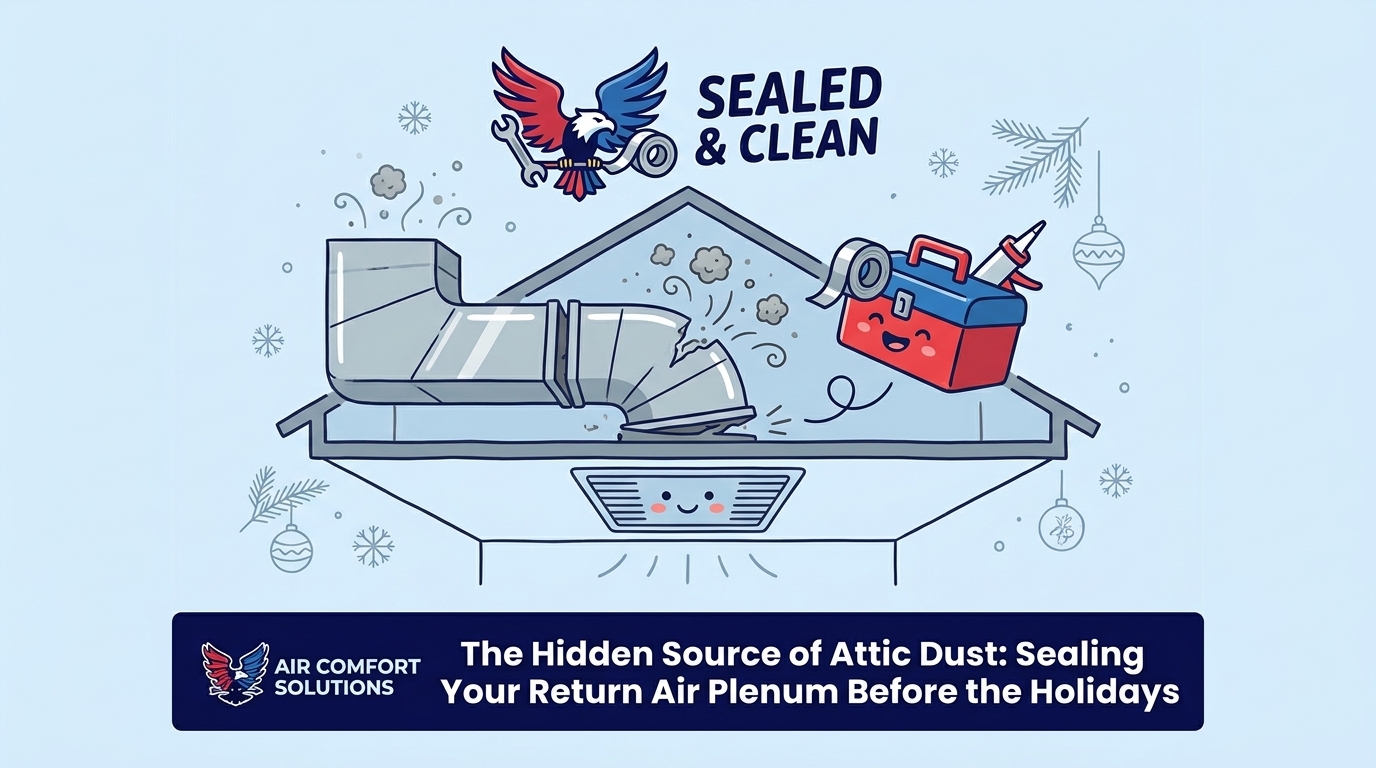
The Value of Sealing Your Return Air Plenum Before the Holidays
Most homeowners buy expensive filters to fix dusty air, not realizing a leaky return plenum in the attic is the real culprit. See why sealing it now saves your holiday gatherings.
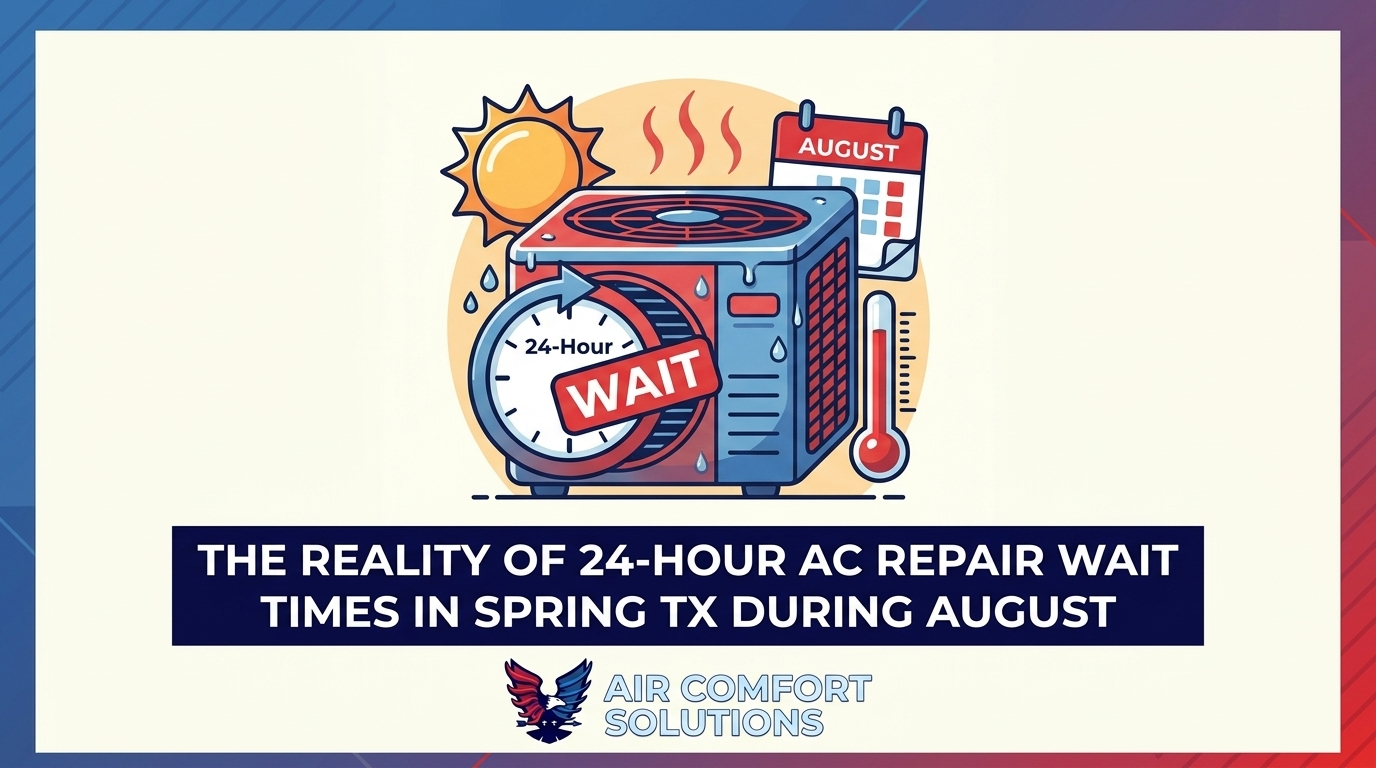
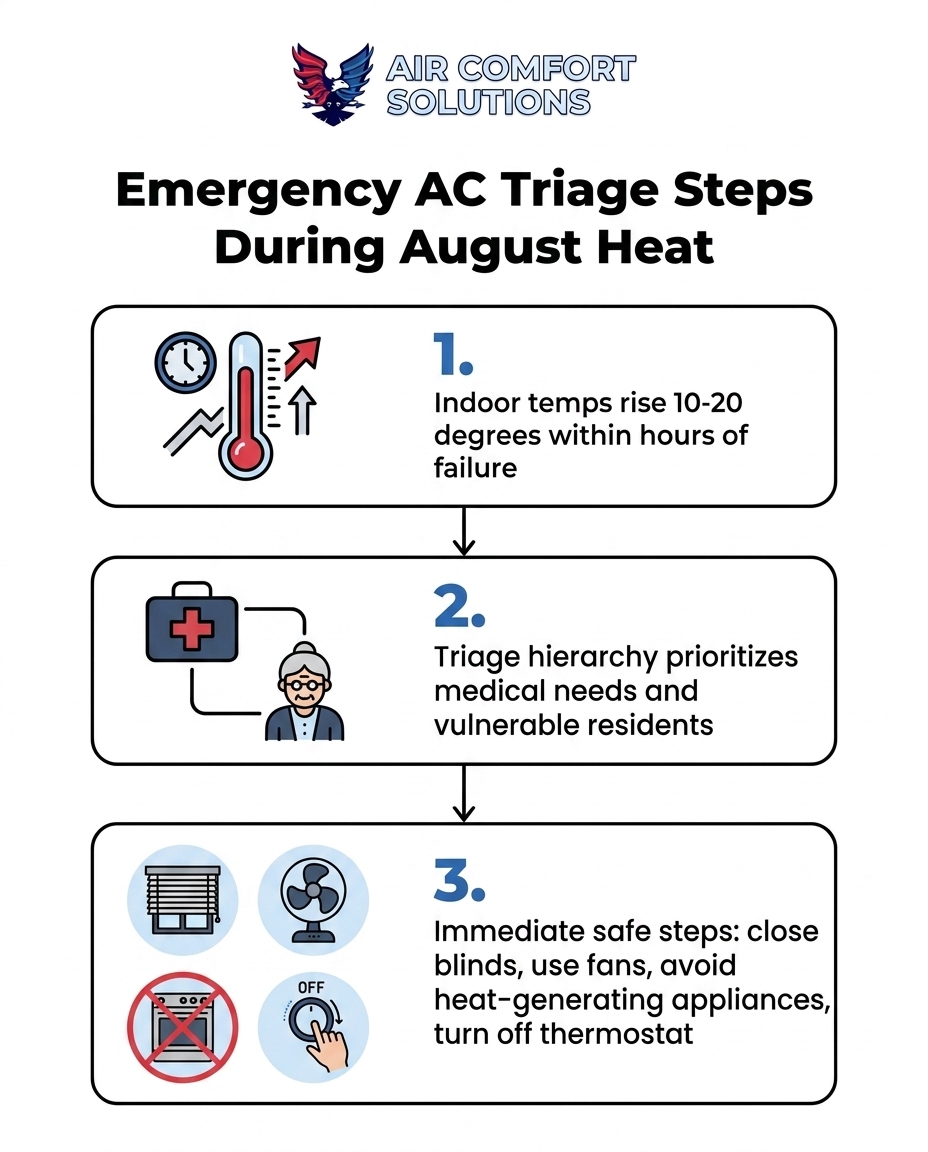
Indoor temperatures can rise by 10 to 20 degrees within a single afternoon, making The Reality of 24-Hour AC Repair Wait Times in Spring TX During August a critical topic for every local homeowner. When the late-summer heat index pushes past 100°F and the humidity stifles the air, an air conditioner breakdown immediately shifts from a minor inconvenience to a genuine source of panic. Your first instinct is to find a company promising instantaneous, drop-everything arrival. However, navigating the August late-summer breakdown surge requires a clear understanding of how local HVAC dispatch actually operates. At Air Comfort Solutions, we have guided countless homeowners through this exact panic when the entire region is sweltering.
If you are facing an active breakdown, explore our HVAC services and request emergency AC repair immediately.
Setting realistic expectations helps you make smart, safe decisions while waiting for a professional to arrive. During the hottest weeks of the year, service boards light up with hundreds of identical calls. In our experience, the companies that provide the most reliable service are often the ones that are honest about their backlogs, rather than those claiming they can be everywhere at once. By understanding the logistics of peak-season HVAC repairs, you can protect your home, keep your family safe, and avoid the frustration of empty marketing promises.
In our years of restoring comfort across Pinehurst and the surrounding communities, our technicians at Air Comfort Solutions have seen how August in Spring, TX brings extreme heat and suffocating humidity, creating the perfect storm for cooling system failures. Air conditioners in a hot-humid subtropical climate do not just lower the temperature; they must run continuously to extract massive amounts of moisture from the indoor air. This dual workload demands relentless operation, causing HVAC systems to run essentially non-stop from late morning until well after sunset. This simultaneous, metro-wide stress leads to a massive spike in service calls across the entire Spring TX service area.
Mechanical systems have thermal limits. When an air conditioner runs in endless cooling cycles without adequate rest, the internal temperatures of its components skyrocket. Our service crews consistently replace the same overworked parts during the August late-summer breakdown surge, which is heavily driven by the failure of a few critical components that simply cannot shed heat fast enough.
• Capacitors: These small, cylindrical components store the electrical energy needed to jump-start your compressor and fan motors. Under extreme thermal load, the fluid inside them can boil, causing the capacitor to swell and fail.
• Blower Motors: Responsible for pushing conditioned air through your ductwork, these motors can overheat and burn out when forced to run 24/7, especially if a dirty air filter is restricting airflow.
• Compressors: The heart of the cooling system, compressors can overheat if the outdoor coils are choked with dirt or if the system is low on refrigerant, leading to a catastrophic system shutdown.
The physics of heat transfer explain why your home becomes uncomfortable so quickly after a breakdown. Heat naturally moves toward cooler spaces. When your AC stops, the radiant heat from your roof, walls, and windows immediately begins warming the stagnant indoor air. Furthermore, without the system actively dehumidifying, indoor humidity levels spike rapidly. High humidity prevents human sweat from evaporating, making a 78-degree house feel significantly hotter and more oppressive than the thermostat indicates.
The Problem: When panic sets in, homeowners naturally gravitate toward advertisements guaranteeing "immediate arrival" or "60-minute emergency service." Yet, during the peak of the August late-summer breakdown surge, we constantly see these promises fall flat, leaving families waiting hours for a technician who is endlessly delayed.
The Cause: The logistics of emergency dispatch backlogs during the busiest month of the year make instantaneous arrival nearly impossible for any company. When a heatwave hits, call volumes can triple overnight. Technicians must navigate heavy local traffic, and the repairs themselves are unpredictable. A service call scheduled for 45 minutes might take two hours if a complex electrical short is discovered. When one job runs long, every subsequent appointment on that technician's board is delayed.
The Solution: As an honest, transparent local authority, our team at Air Comfort Solutions prioritizes reliable updates and realistic ETAs over empty marketing slogans. Trustworthy HVAC providers will tell you exactly where you stand in the queue. Transparent communication allows you to make informed decisions about whether to stay in the home, head to a cooling center, or book a hotel, rather than waiting in a sweltering house for a truck that is still hours away.
Routing technicians efficiently is a complex puzzle. Our dispatchers must group calls geographically to minimize windshield time, but emergency triage often forces us to reroute trucks across town. A technician might finish a job on one side of the city only to be urgently dispatched to a critical failure miles away. Understanding this logistical reality helps explain why wait times fluctuate during extreme weather events.
Reputable companies use a strict triage hierarchy to handle the massive influx of calls during a heatwave. It is not a simple first-come, first-served system. Just as an emergency room prioritizes a heart attack over a sprained ankle, our Air Comfort Solutions dispatchers must prioritize calls based on safety, vulnerability, and the severity of the hazard.
The highest priority in any dispatch queue goes to households where a lack of air conditioning poses a direct threat to health and safety. The extreme heat in the Spring TX metro area can be dangerous, and ethical service providers structure their response times to protect the most vulnerable.
• Elderly Residents: Older adults are highly susceptible to heat exhaustion and heatstroke because their bodies do not regulate temperature as efficiently.
• Infants and Toddlers: Young children are similarly vulnerable to rapid temperature spikes.
• Medical Conditions: Individuals relying on certain medical devices or medications that require temperature-controlled environments are always bumped to the front of the line.
The takeaway: Always communicate specific vulnerabilities to the dispatcher when you call. Honest providers rely on this information to route their technicians where they are needed most urgently.
Beyond human safety, the nature of the mechanical failure dictates priority. A system that is actively smoking, sparking, or presenting a severe electrical hazard takes precedence. Conversely, a system that is still running but struggling to keep up with the thermostat—perhaps cooling the house to 78 degrees instead of 72—will be scheduled behind complete, catastrophic failures.
Not every cooling issue requires a midnight dispatch. Knowing how to classify your system's symptoms can save you stress and help you communicate effectively with your service provider.
Some symptoms demand that you immediately shut down the system and request emergency professional attention. If you experience any of the following, turn off the AC at the thermostat and flip the dedicated breaker in your electrical panel to the "off" position:
• Acrid burning smells: The scent of melting plastic or burning wire insulation indicates an active electrical short or a seizing motor.
• Visible sparks or smoke: This is an immediate fire hazard.
• Repeatedly tripping breakers: If you reset the AC breaker and it trips again immediately, the system is pulling a dangerous amount of amperage. Never force a breaker to stay on.
Our technicians at Air Comfort Solutions strictly caution against any DIY repair attempts involving the electrical components or refrigerant lines of your system. Opening the cabinet exposes you to high-voltage capacitors and moving parts that require a licensed professional to handle safely.
Evaluating your system's current output helps determine your urgency level during the August late-summer breakdown surge.
• Blowing completely warm air from all vents — Classification: High Priority — Recommended Action: Turn off system to prevent compressor damage; call for emergency dispatch.
• System is dead and unresponsive to thermostat — Classification: High Priority — Recommended Action: Check the breaker. If not tripped, call for emergency service.
• House is 76°F but thermostat is set to 70°F — Classification: Standard Priority — Recommended Action: Leave system running if air is cool. Schedule a standard repair visit.
• Minor water dripping near the indoor unit — Classification: Standard Priority — Recommended Action: Place a bucket beneath the drip. Schedule a standard repair visit.
Once you have secured your place in the dispatch queue, your focus must shift to managing the indoor environment. Implementing safe, immediate strategies can significantly slow the rate at which your home heats up while you wait for one of our Air Comfort Solutions technicians to arrive in the Spring TX metro area.
1. Turn off the AC at the thermostat: If the system is blowing warm air or making terrible noises, leaving it running will only cause further mechanical damage. A struggling compressor can easily burn itself out, turning a simple capacitor replacement into a massive repair bill. Shut it down.
2. Block out radiant solar heat: Close all blinds, shades, and curtains, particularly on south- and west-facing windows. Sunlight pouring through glass acts like a greenhouse, rapidly increasing the ambient temperature of the room.
3. Create a wind-chill effect: Utilize ceiling fans and portable oscillating fans in the rooms you are occupying. Fans do not lower the air temperature, but moving air evaporates moisture from your skin, making you feel several degrees cooler. Turn them off when you leave the room.
4. Avoid heat-generating appliances: Do not use the oven, stove, or clothes dryer. These appliances release massive amounts of latent and sensible heat into the house. Stick to microwave meals or cold foods, and delay laundry until the AC is repaired.
5. Relocate to the lowest level: Heat naturally rises. If you live in a multi-story home, the ground floor or basement will remain significantly cooler than the upper bedrooms. Move your family and pets downstairs, and stay hydrated with plenty of cold water.
Surviving an intense heatwave often requires looking ahead. Once your immediate emergency is resolved, you must consider the end-of-season wear and tear your system has sustained. The transition back to routine cooling does not mean the system is entirely out of the woods.
The back-to-school transition period in late August is a critical time for assessing system health. Your air conditioner has just run a marathon through the hottest weeks of the year. Our maintenance crews always emphasize that mid-season filter replacements are absolutely vital right now. A clogged filter restricts airflow, forcing the blower motor to work harder and increasing the likelihood of a secondary breakdown. Check your filter today and replace it if it shows a thick layer of gray dust.
To prevent future panic, consider the value of a professional system evaluation. Catching wearing components—like a swollen capacitor or a frayed contactor—before they fail entirely is the smartest way to manage home comfort. Enrolling in a structured preventative maintenance plan ensures your equipment receives the attention it needs. By partnering with a reliable AC tune-up company in Spring TX, you can drastically reduce the likelihood of experiencing another late-summer emergency, keeping your home consistently cool through the remainder of the season.
Dealing with an AC failure during an extreme heatwave is undeniably stressful, but honest communication makes the situation manageable. You deserve a service provider who respects your time and prioritizes your safety over unrealistic marketing claims. When you call Air Comfort Solutions, you are relying on a local team that understands the unique demands of our climate, provides realistic dispatch updates, and treats your home with the urgency it deserves. If your system is struggling or has completely failed, reach out today for a transparent, honest assessment of your cooling needs.
What is considered an AC emergency in Texas?
An AC emergency typically involves a complete loss of cooling during extreme heatwaves, electrical hazards like sparks or burning smells, or a breakdown in a home with elderly residents, infants, or individuals with medical needs. If your system is blowing warm air when the heat index is over 100°F, it requires urgent professional attention. Minor drips or a system that is slightly inefficient are generally considered standard repairs.
How do HVAC companies prioritize calls during a heatwave?
Reputable companies use a triage system rather than a strict first-come, first-served queue. Dispatchers prioritize calls involving severe electrical hazards, complete system failures, and households with vulnerable residents. This structured approach ensures that those facing the highest safety risks receive attention first, while all customers are kept informed with realistic ETAs.
How to stay cool while waiting for AC repair?
The most effective strategy is to block out solar heat by closing all blinds and curtains. Use ceiling and box fans to create a wind-chill effect on your skin, and avoid running heat-generating appliances like ovens or dryers. Relocate to the lowest floor of your home, drink plenty of cold water, and avoid strenuous physical activity.
How long does it take to fix an AC during peak summer season?
Wait times can vary wildly depending on the severity of the regional heatwave and the complexity of the repair. While a simple capacitor replacement might take 45 minutes once the technician arrives, metro-wide service backlogs can result in dispatch wait times ranging from a few hours to a full day. Honest companies will communicate these delays upfront.
Can I safely sleep in a house with no AC?
Sleeping without AC is possible but requires careful temperature management, especially in high humidity. Open windows at night if the outside temperature drops sufficiently, use multiple fans for cross-ventilation, and sleep on the lowest floor of the house. However, if indoor temperatures remain dangerously high, it is safer to seek a cooling center or alternative lodging.
Why do AC capacitors fail so frequently in late August?
Capacitors store electrical energy to start your AC motors, and they are highly sensitive to extreme heat. By late August, the continuous 24/7 operation required to cool a home in the Texas heat pushes these components past their thermal limits. The internal fluid degrades or boils, causing the capacitor to swell, lose its charge, and ultimately fail.


Zane came out and did an amazing job! Super friendly, honest and transparent about the work that needed to be done. This is my second time working with Air Comfort Solutions and they’re my go to for HVAC services. Highly recommend.
God's AMAZING grace sent us Robert and Zane. We have been without air in this Texas heat for six weeks and four days. We've had a few contractors give us quotes all trying to upsell when we're at a low point. But not the guys at Air Comfort Solutions. They came in assessed our situation, gave us honest feedback, and showed us the issues as they proceeded with the assessment for clear understanding. We highly recommend them for their professionalism, quality products, and fair pricing. We hands down support them for all the work they do 💯 %.
Robert and Zane gone above and beyond to make the process easy and affordable.
Would definitely recommend!!
I’m writing this review to let everyone know that Air Comfort Solutions is the company to work with. I know the owner ( Robert) for several years now. He has been taking care of my residential and business work orders. Robert is professional, knowledgeable and will save you money. I just want to thank Robert for great job you have been doing for me.