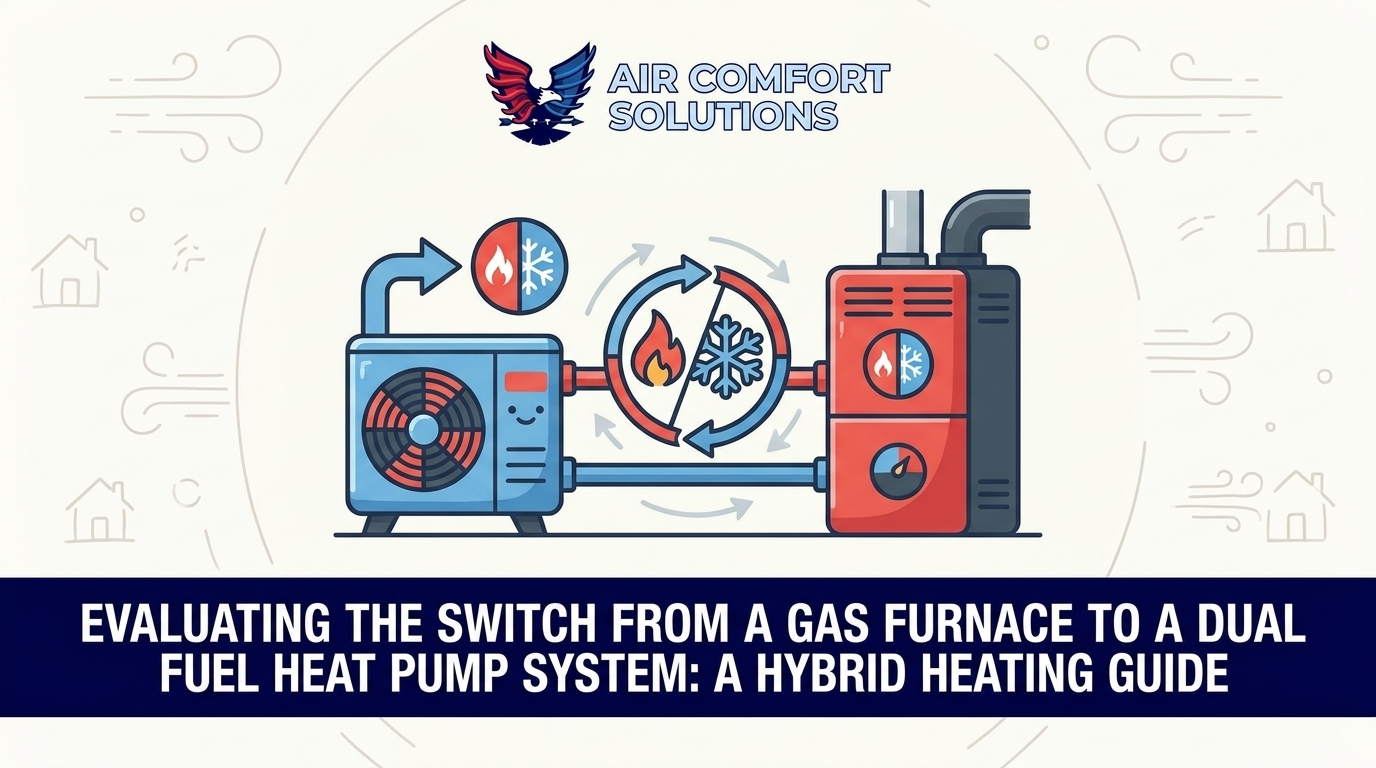
Evaluating the Switch from a Gas Furnace to a Dual Fuel Heat Pump System
As the pre-heating season approaches, many homeowners are weighing the benefits of hybrid heating. See how pairing an electric heat pump with gas backup offers reliable warmth.
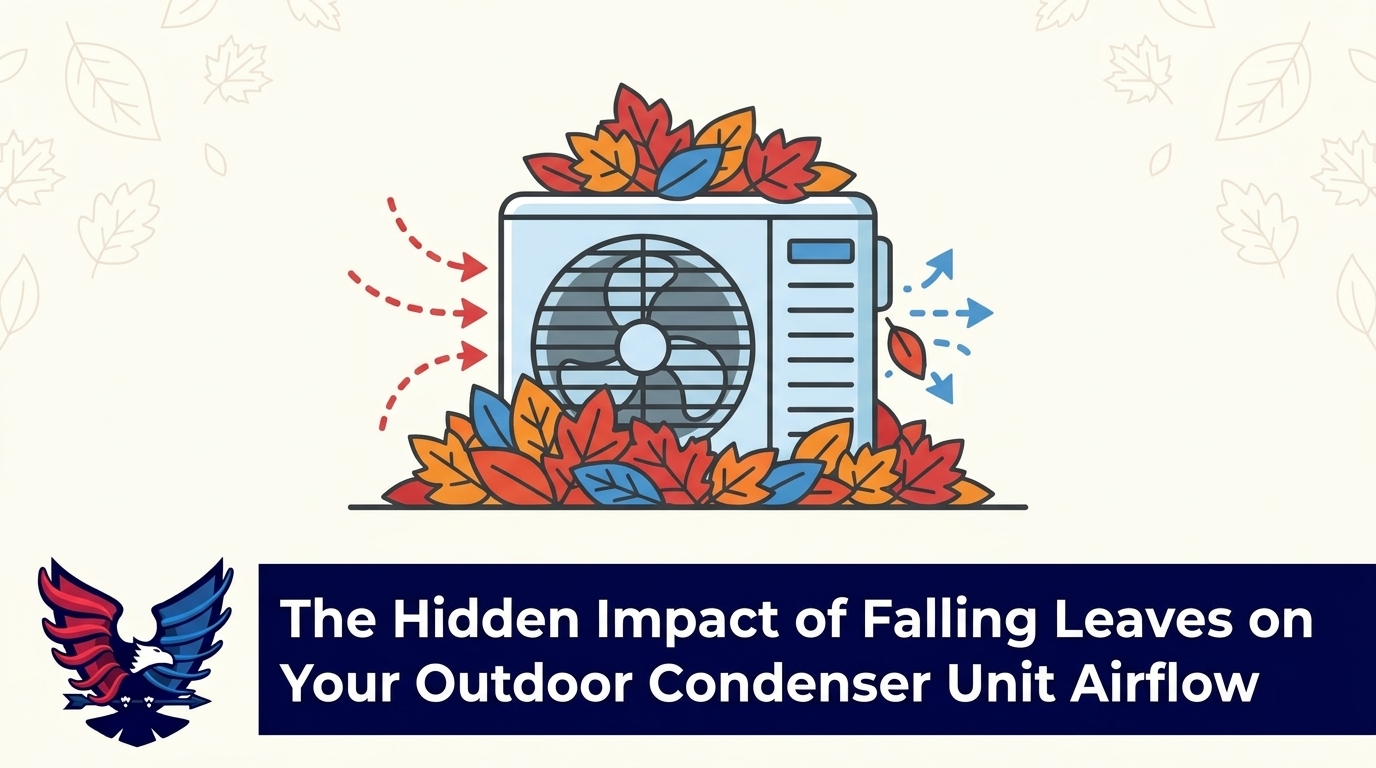
As the intense summer heat finally breaks and the September / early fall leaf drop begins, you might not realize the impact of falling leaves on your outdoor condenser unit airflow. Most homeowners head outside with a rake and a yard bag, focusing on clearing the lawn, the driveway, and the garden beds. During this routine yard cleanup, you might notice a thin layer of dry leaves clinging to the outside of your heating and cooling equipment. It is easy to brush them away and assume the job is done, but the real threat is often hiding out of sight.
When you are tackling your seasonal yard work, scheduling a professional HVAC maintenance plan is the best way to protect your system from hidden debris.
Your outdoor condenser unit is essentially a powerful outdoor vacuum. Whenever your system runs, the large fan at the top pulls massive amounts of air through the side grilles to cool the internal coils. While it pulls in air, it also pulls in windblown organic debris. There is a massive difference between harmless surface leaves that stick to the exterior metal louvers and the smaller, broken-down organic matter that gets sucked deep inside the cabinet.
If you only focus on the outside of the unit, you are missing the unseen accumulation happening in the base pan. Ignoring this internal buildup leads to significant airflow restriction, plunging energy efficiency, and severe long-term wear on your equipment. The decision point for most homeowners is recognizing when a simple exterior brush-off is no longer enough to protect the system.
To understand why internal debris is so destructive, you have to look at how the cabinet is designed. The fan continuously pulls organic matter through the protective grilles, depositing it directly into the base pan of the unit. In the heavily wooded residential areas of Pinehurst TX, the sheer volume of falling leaves, twigs, and seed pods can quickly overwhelm the bottom of the cabinet.
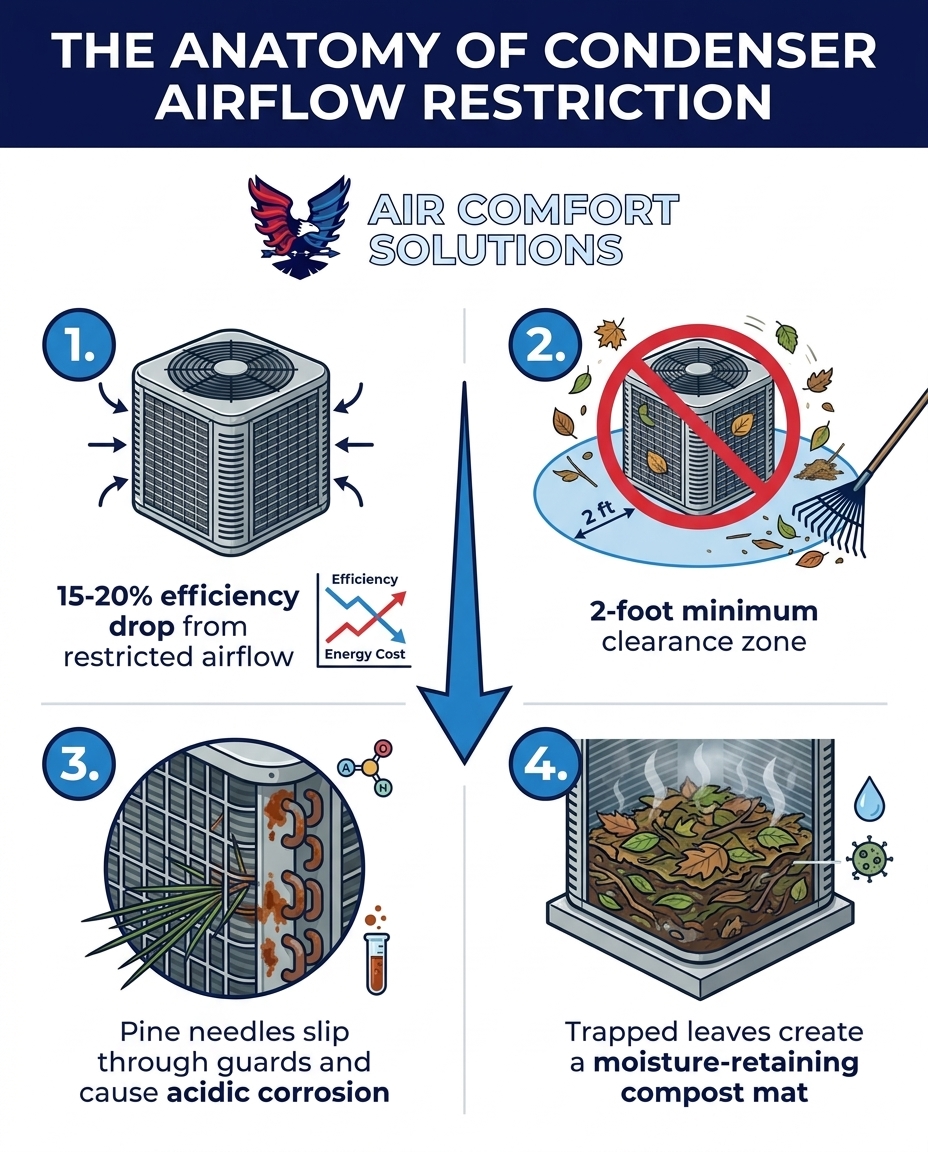
Once this organic matter settles inside, it undergoes a chemical and physical transformation known as the composting effect. As rain falls or condensation drips from the coils, those dry leaves turn into a dense, rotting mat of wet vegetation. This thick layer acts like a sponge, soaking up water and blocking the factory-drilled drainage holes at the bottom of the equipment. Instead of flowing out, standing water becomes trapped inside the heavy metal cabinet.
Lingering high humidity in East Texas accelerates this decomposition and composting process. The trapped moisture creates a highly humid micro-climate right inside your equipment, which relentlessly attacks the internal components.
• Broad Leaves — Location: Exterior grilles and louvers — Primary Risk: Blocks initial air intake — Required Action: Gentle exterior brushing
• Pine Needles — Location: Internal base pan and coils — Primary Risk: Acidic rot, traps heavy moisture — Required Action: Professional internal cleaning
• Composted Mat — Location: Clogging bottom drainage holes — Primary Risk: Standing water, severe corrosion — Required Action: Professional debris removal
This humid micro-climate prevents the internal components from ever fully drying out, setting the stage for deep, irreversible corrosion on your system's most expensive parts.
Your heating and cooling system relies on a very precise volume of air moving across the outdoor coils to function properly. The condenser coil is responsible for releasing heat during the summer, and if you have a heat pump, it absorbs heat from the outdoor air during the winter. When that airflow is restricted, the entire thermal transfer process breaks down.
If you are relying on heat pump services to keep your home comfortable, keeping those coils clear is critical. Here is exactly how internal debris destroys your system's efficiency:
1. The Insulation Effect: A matted layer of wet leaves acts as an unwanted, thick blanket of insulation directly against the metal coils. This prevents the coils from effectively transferring heat with the outside air.
2. Efficiency Freefall: According to Department of Energy data, restricted airflow from dirty coils and debris can reduce your overall system efficiency by up to 15-20%. Your system uses significantly more electricity to produce the exact same amount of heating or cooling.
3. Extended Run Times: Because the system cannot transfer heat efficiently, it has to run much longer to reach the temperature set on your indoor thermostat.
4. Higher Utility Bills: Those extended run times and the 15-20% efficiency drop show up immediately on your monthly energy statements.
The quick fix is never just waiting it out: As the September / early fall leaf drop continues to choke the airflow, the compressor—the heart of your HVAC system—is forced to work much harder to compensate. The compressor pumps refrigerant through the lines, and when airflow is blocked, the operating pressures inside those lines spike dangerously high.
This immense strain leads to thermal overload. The compressor motor overheats, pulling excessive electrical current, which can cause the system to abruptly shut down or repeatedly trip your circuit breaker. Over time, this constant overheating causes premature system wear, shortening the lifespan of an expensive component that should otherwise last for over a decade.
Not all fall yard waste poses the exact same threat to your equipment. In the Pinehurst TX heavily wooded residential areas, homeowners face a unique challenge that goes far beyond standard broadleaf trees. Broad oak leaves are large enough that they usually get stuck on the outside of the protective grilles. They block air, but they are easy to see and brush away. Pine needles are an entirely different story.
Pine needles are slender, aerodynamic, and easily slip right through standard unit guards and hail guards. Once they bypass the exterior defenses, they settle deep into the tiny gaps between the delicate aluminum fins of the condenser coil.
The danger is not just physical; it is highly chemical. Decaying pine needles are naturally acidic. When this acidity combines with the trapped moisture of the composting effect, it promotes galvanic corrosion directly on the metal condenser coils and copper tubing. This acidic rot slowly eats away at the metal structure.
If you rely on your equipment for reliable air conditioning services, this is a major concern. The damage caused by acidic pine needle rot is completely irreversible. It weakens the structural integrity of the pressurized refrigerant lines, inevitably leading to microscopic pinhole leaks, total loss of refrigerant, and catastrophic system failure.
While internal cabinet cleaning requires a professional, there are highly effective, safe steps you can take to manage exterior debris during the September / early fall leaf drop. Establishing clear boundaries around your equipment is the best way to prevent the composting effect from starting in the first place.
The industry standard for outdoor units is the two-foot clearance rule. Your system needs a minimum of 24 inches of completely unobstructed space around its entire perimeter to pull in enough air. Here is a safe exterior maintenance checklist for homeowners:
• Enforce the perimeter: Measure two feet outward from every side of the unit and ensure no yard items, stored materials, or dense vegetation cross that line.
• Gentle brushing: Use a soft-bristled broom or a gloved hand to gently brush dry leaves away from the exterior fins. Always brush straight down, never side-to-side.
• Trim back landscaping: Cut back encroaching shrubs, overgrown bushes, or low-hanging branches before the heavy fall drop begins.
• Avoid high pressure: Never use high-pressure water nozzles or pressure washers to blast leaves off the unit. High water pressure will instantly bend and crush the delicate aluminum fins, permanently restricting airflow.
By maintaining this two-foot barrier, you dramatically reduce the volume of debris the fan can pull inside. For a deeper look at comprehensive system care, reviewing a Texas AC maintenance guide can help you stay ahead of seasonal yard challenges.
Once leaves and pine needles have bypassed the outer grilles and started composting inside the base pan, the rules of maintenance change entirely. It is highly tempting to grab a screwdriver, remove the top panel, and scoop out the wet debris yourself. However, internal cabinet clearing is strictly a job for trained technicians, and attempting it yourself poses severe risks.
Removing the top or side panels immediately exposes you to high-voltage electrical components. The dual run capacitor, which sits just inside the access panel, stores a massive, potentially lethal electrical charge even after the power is disconnected at the breaker. Furthermore, the heavy fan motor is mounted directly to the top panel; lifting it improperly can sever the wiring harness.
Beyond the safety hazards, improper reassembly can lead to serious mechanical failures or instantly void your manufacturer warranty. Reaching your hands or tools inside to pull out wet, composted leaves from the heavily wooded residential areas of Pinehurst TX risks bending the fragile coil fins from the inside out. One slip of a tool can puncture a pressurized refrigerant line, turning a routine cleaning into a massive repair bill.
A clean exterior is only half the battle when it comes to fall HVAC preparation. The interior must be completely free of acidic, wet debris before you switch your system over for the colder months. As the September / early fall leaf drop concludes, transitioning from DIY yard work to professional preventative maintenance is the definitive solution.
A professional fall tune-up goes far beyond a simple visual inspection. A licensed technician will safely disconnect the high-voltage power, carefully remove the top fan assembly, and physically extract the matted, composting debris from the base pan. They will then use specialized, non-acidic chemical cleaners and low-pressure water to wash the coils from the inside out, neutralizing any acidic buildup left behind by decaying pine needles.
By relying on local Pinehurst HVAC services, you benefit from technicians who have deep, local expertise in preventative maintenance tailored specifically to regional foliage types like stubborn pine needles and heavy oak leaves. You gain the ultimate peace of mind knowing your system is fully prepped, clean, and ready to deliver efficient warmth throughout the upcoming Texas heating season.
Leaves affect heat pump efficiency by physically blocking the airflow required for the heat transfer process. When a thick layer of leaves coats the outdoor condenser coils, it acts as an insulator, preventing the system from absorbing or releasing heat. This forces the unit to run longer, consumes more electricity, and can drop overall system efficiency by up to 15-20%.
You should never attempt to remove leaves from the inside of the cabinet yourself. Opening the unit exposes you to dangerous high-voltage electrical components and risks permanent damage to the delicate internal coils. Internal debris removal requires a licensed professional who can safely dismantle the housing and extract the composting matter without voiding your warranty.
An outdoor condenser unit requires a minimum of two feet of clearance around its entire perimeter. This 24-inch zone must be kept entirely free of shrubs, tall grass, yard tools, and dense leaf piles. Maintaining this clearance ensures the fan can pull in the precise volume of air needed to keep the compressor from overheating.
You generally should not cover your entire AC unit with a tight-fitting tarp during the fall. Fully wrapping the unit traps rising ground moisture inside the metal cabinet, which accelerates rust and creates an attractive, dry nesting spot for winter rodents. If falling debris is a major issue, a breathable, top-only mesh guard is a much safer alternative.
Pine needles are worse because their slender shape allows them to easily slip right through the protective exterior grilles and settle deep inside the unit. Once trapped inside, decaying pine needles release natural acids that mix with trapped moisture. This acidic combination promotes rapid galvanic corrosion on the metal coils and refrigerant lines.
Protect your system before the cold weather arrives. Understanding the hidden danger of composting leaves inside your unit is the first step to protecting your investment. By taking safe exterior steps and trusting a professional to handle the internal cleaning, you ensure your system runs efficiently all season long. Schedule your fall tune-up today to clear out the debris and secure your home's comfort.


Zane came out and did an amazing job! Super friendly, honest and transparent about the work that needed to be done. This is my second time working with Air Comfort Solutions and they’re my go to for HVAC services. Highly recommend.
God's AMAZING grace sent us Robert and Zane. We have been without air in this Texas heat for six weeks and four days. We've had a few contractors give us quotes all trying to upsell when we're at a low point. But not the guys at Air Comfort Solutions. They came in assessed our situation, gave us honest feedback, and showed us the issues as they proceeded with the assessment for clear understanding. We highly recommend them for their professionalism, quality products, and fair pricing. We hands down support them for all the work they do 💯 %.
Robert and Zane gone above and beyond to make the process easy and affordable.
Would definitely recommend!!
I’m writing this review to let everyone know that Air Comfort Solutions is the company to work with. I know the owner ( Robert) for several years now. He has been taking care of my residential and business work orders. Robert is professional, knowledgeable and will save you money. I just want to thank Robert for great job you have been doing for me.