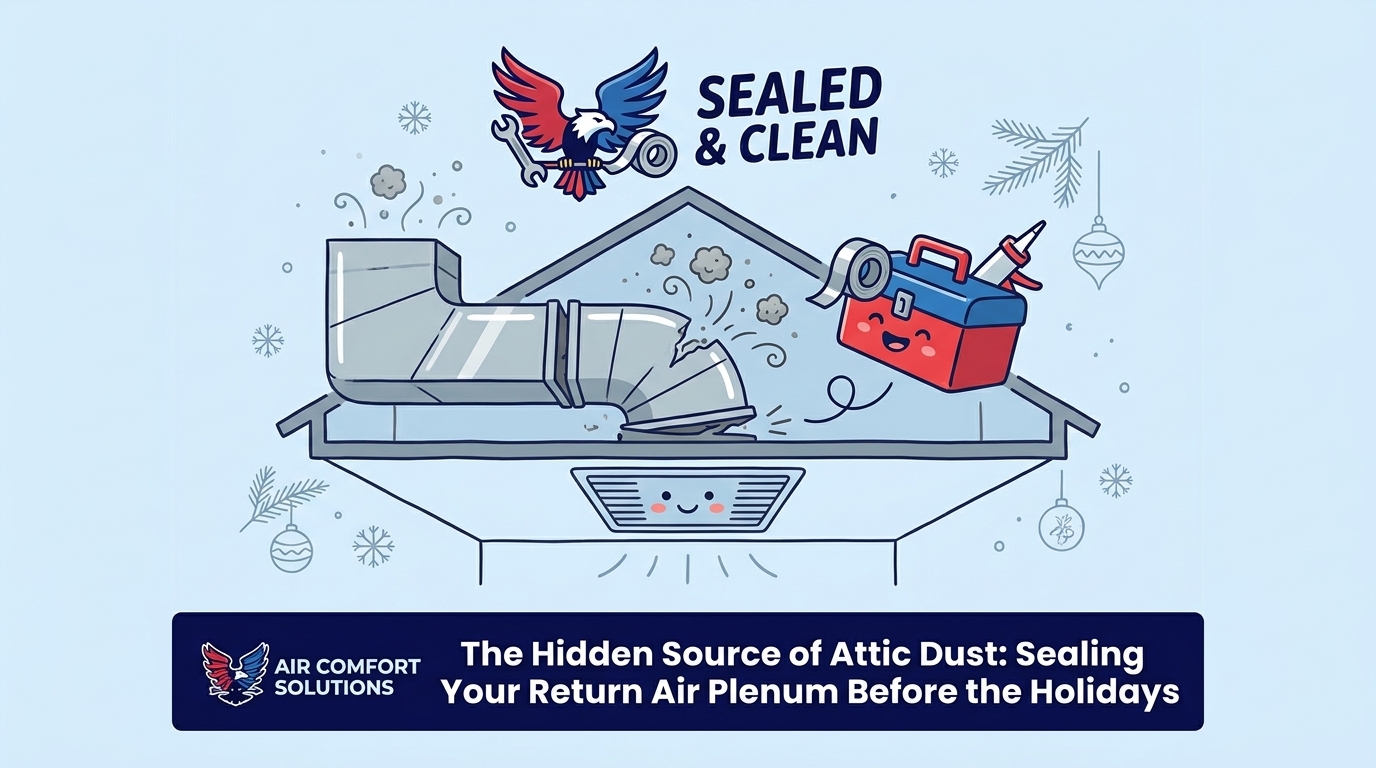
The Value of Sealing Your Return Air Plenum Before the Holidays
Most homeowners buy expensive filters to fix dusty air, not realizing a leaky return plenum in the attic is the real culprit. See why sealing it now saves your holiday gatherings.
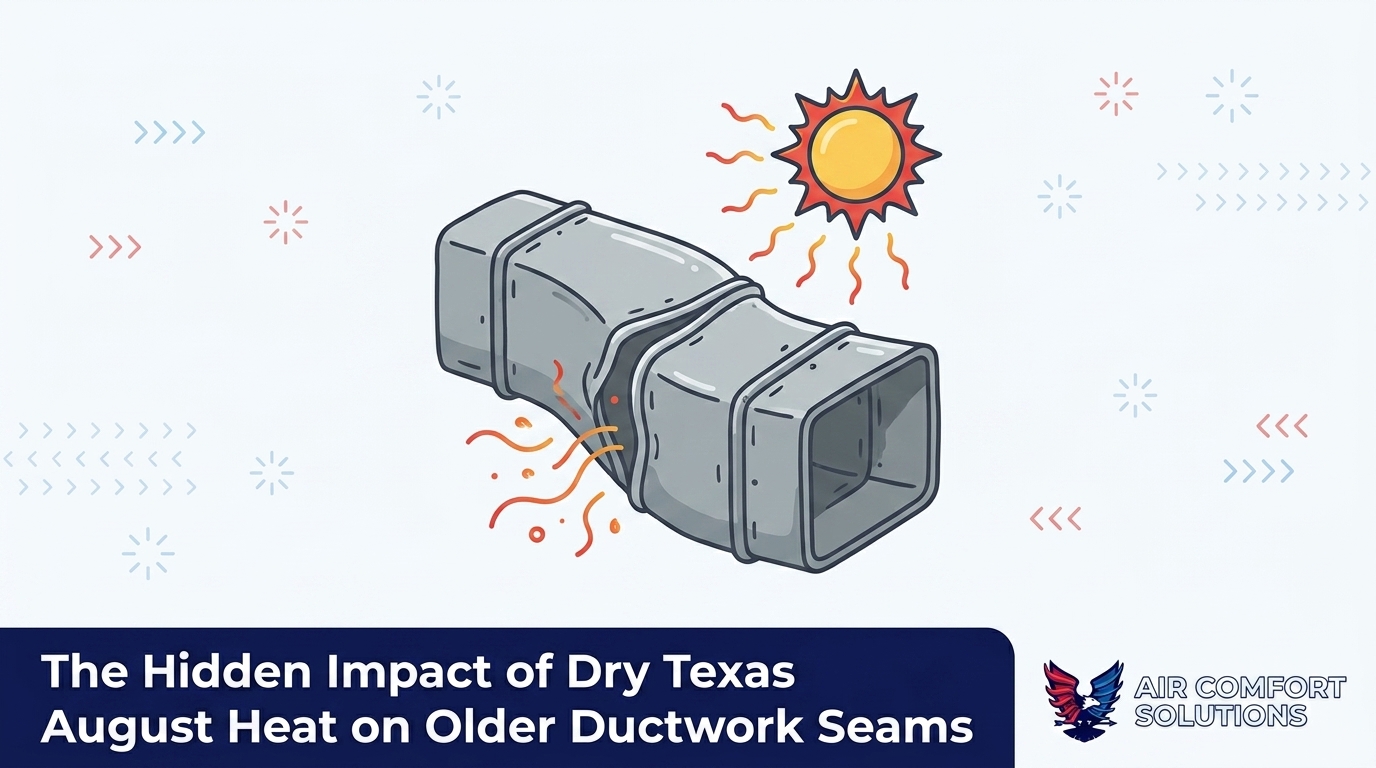
Unconditioned attics can easily reach 150 to 160 degrees Fahrenheit on extreme summer days, setting the stage for the impact of dry Texas August heat on older ductwork seams. When the temperature outside climbs into the upper nineties, the trapped air beneath your roof transforms into a superheated oven. This prolonged, relentless dry heat creates a severe environment that silently bakes the materials keeping your home cool. At Air Comfort Solutions, we know that for many homeowners, a sudden loss of cooling power leads to immediate panic. You might assume your air conditioning unit has suffered a catastrophic mechanical failure when, in reality, our technicians frequently find that the true culprit is hidden just above your ceiling.
Addressing this hidden vulnerability is essential for the overall health of residential HVAC systems and ensuring reliable cooling when you need it most. The decision point is critical: before you assume your system needs a massive mechanical overhaul or replacement, it is vital to understand how extreme attic temperatures physically degrade the connections in your ductwork. The dry, relentless nature of Southeast Texas heat in late summer creates a unique superheated environment that accelerates wear and tear on older seals, leading to massive air leaks that completely undermine your system's performance.
To understand why your cooling drops off so sharply, you have to look at the materials holding your ductwork together. Decades ago, duct systems were sealed with older formulations of mastic—a paste-like sealant designed to bridge the gaps between sheet metal collars, fiberglass board, and flexible duct lines. When first applied, this mastic is highly flexible, allowing it to expand and contract with the system. However, extreme attic temperatures profoundly alter the chemical structure of these older sealants over time.
As the attic bakes day after day, the extreme heat accelerates the evaporation of the volatile organic compounds and flexible polymers within the mastic. What was once a pliable, rubbery seal slowly turns into a hardened, brittle crust. This degradation does not happen overnight, but once the flexibility is gone, the sealant is living on borrowed time. The continuous pressure of conditioned, cold air blowing through the ducts against the hardened, baked mastic creates immense stress. Eventually, the weakened seams crack, split open, and allow your precious cold air to dump directly into the attic.
The daily temperature cycle in a Texas attic is a brutal test of material endurance. The physical stress this puts on aging ductwork connections is immense, driven by the constant expansion and contraction of the materials.
• Early Morning (6 AM - 10 AM) — Attic Environment: Cooling down to 80°F - 90°F. — Impact on Ductwork and Sealant: Materials contract slightly. Hardened mastic remains stiff, resisting the natural movement of the metal ducts.
• Peak Afternoon (2 PM - 6 PM) — Attic Environment: Temperatures peak at 150°F - 160°F. — Impact on Ductwork and Sealant: Metal ducts expand significantly. The extreme heat bakes out remaining moisture and flexible compounds from the mastic.
• Late Evening (8 PM - Midnight) — Attic Environment: Temperatures slowly recede to 100°F. — Impact on Ductwork and Sealant: The system runs continuously to cool the house, creating high internal pressure against seams that are currently expanding and shifting.
The breaking point: It is this constant, daily thermal cycling—stretching and shrinking, heating and cooling—that ultimately shatters the brittle mastic, leaving gaping holes in your ductwork.
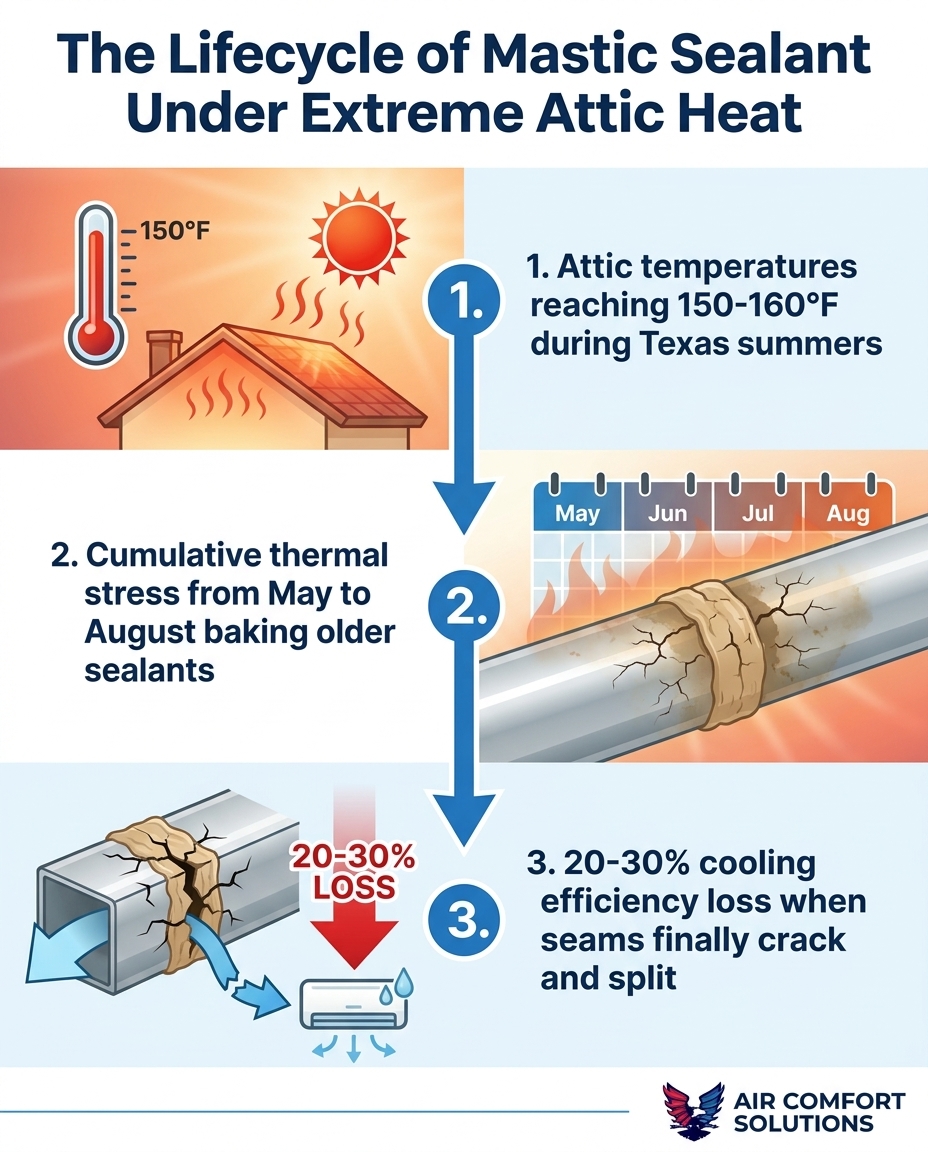
Ductwork degradation is a cumulative process, not an overnight event. When your system suddenly stops cooling your home effectively in late summer, it is usually the final result of months of continuous thermal punishment. From May through July, your attic experiences relentless heat cycling. Each day, the extreme temperatures strip a little more flexibility from the mastic, weakening the bond between the duct sections. The sealant holds on as long as it can, but the continuous stress severely compromises the materials.
This is why August late-summer wear represents the absolute peak of this thermal stress. By the time August arrives, the materials that have been stressed for months finally give out. As families transition back to school, our Air Comfort Solutions dispatchers field countless calls from homeowners whose brittle mastic simply could not withstand another 150-degree afternoon combined with the internal pressure of the blower motor. The seams often fail suddenly, snapping open right before the cooling season ends.
When these seams fail, the result is instantaneous and highly noticeable inside the living space. A massive volume of conditioned air is lost directly into the superheated attic instead of reaching your bedrooms and living areas.
• Instant capacity loss: A split seam can dump hundreds of cubic feet of cold air per minute into the attic.
• System overwork: The thermostat never reaches its target temperature, forcing the unit to run non-stop.
• Thermal collision: Cold air dumping into a 150-degree attic creates severe condensation and energy waste.
Understanding this cumulative effect is crucial. Homeowners often wonder why their system worked perfectly in June but failed in August. The answer lies in the slow, unseen baking of those critical seals over the course of the entire Texas summer.
The construction styles and aging duct systems prevalent in our local area present unique challenges. Many older Pinehurst homes were built during eras when ductwork installation and sealing standards were vastly different from today's building codes. Decades ago, installers relied heavily on cloth-backed duct tape and early-generation mastics that were never engineered to withstand the prolonged, extreme heat we see in modern summers.
Furthermore, the architectural design of these vintage homes often contributes to the problem. Many older homes feature attics with less modern ventilation—relying on undersized gable vents rather than continuous ridge and soffit ventilation systems. This lack of airflow traps even more heat, creating stagnant, superheated pockets that accelerate the damage to the ductwork.
Working with the team at Air Comfort Solutions means you are partnering with Pinehurst TX HVAC experts who have firsthand knowledge of Pinehurst's older housing stock and understand exactly how those specific aging duct systems react to extreme heat.
Based on years of inspecting local attics, the common vulnerabilities we see in vintage ductwork include:
1. Deteriorated cloth tape: Older tape adhesives turn to dust under extreme heat, leaving seams completely unsealed.
2. Sagging flexible ducts: As heat degrades the outer vapor barrier, the structural wire can sag, putting extra tension on the collar connections.
3. Uninsulated metal wyes: Older distribution boxes and Y-splitters often lack proper external insulation, making their sealed joints highly susceptible to thermal expansion.
4. Poorly sealed return plenums: The large box connecting your ductwork to the main unit often features long seams that crack easily under the stress of an aging home's settling and shifting.
Evaluating these specific vintage systems requires a tailored approach rather than applying a one-size-fits-all solution. Proper inspection and targeted sealing are necessary to preserve the integrity of these older layouts.
When the house starts getting warm in the late afternoon, most homeowners immediately fear the worst for their air conditioning unit. The symptoms are undeniably stressful: the AC runs continuously, the energy bills spike dramatically, but the house remains uncomfortably warm. These symptoms perfectly mimic a major mechanical failure, such as critically low refrigerant levels, a failing compressor, or a dying blower motor.
However, there is a distinct way to tell the difference. If you hold your hand up to the supply vents and the air coming out is weak but still cold, the issue is likely lost airflow in the attic rather than a mechanical cooling issue. The unit is successfully chilling the air, but that air is escaping through heat-cracked seams before it ever reaches your living room. Conversely, if the air blowing from the vents is strong but warm or room-temperature, you are likely dealing with a mechanical or refrigerant issue.
Understanding this distinction can drastically change your expectations about how long an AC system lasts in Texas, as the outdoor unit itself may be perfectly fine and operating exactly as designed.
• Airflow Strength — Likely Mechanical Failure: Strong, forceful airflow from vents. — Likely Compromised Duct Seams: Weak, barely noticeable airflow, especially in distant rooms.
• Air Temperature — Likely Mechanical Failure: Warm or room-temperature air blowing from vents. — Likely Compromised Duct Seams: Cold air blowing, but not enough volume to cool the room.
• System Run Time — Likely Mechanical Failure: Runs constantly but cannot drop the temperature. — Likely Compromised Duct Seams: Runs constantly because cold air is being dumped into the attic.
• Dust and Humidity — Likely Mechanical Failure: Normal indoor dust levels. — Likely Compromised Duct Seams: Sudden increase in dust, allergens, and indoor humidity.
As your honest local authority, our goal at Air Comfort Solutions is to prevent homeowners from needlessly replacing expensive outdoor AC units when professional duct sealing is the actual, highly effective solution to their August late-summer wear problems.
The consequences of cracked duct seams extend far beyond just a warm house. The energy waste and the impact on your family's health are substantial. According to Department of Energy data, leaky ducts can reduce cooling system efficiency by 20 to 30 percent. When you consider the heavy usage required during a Texas summer, losing nearly a third of your cooling capacity to the attic is a massive drain on your utility budget.
Beyond the financial cost, severely leaking ductwork creates a complex pressure imbalance inside your home. When conditioned air leaks out of the supply ducts into the attic, the system creates negative pressure inside the living space. To balance this pressure, the house acts like a vacuum, pulling unconditioned, dirty air from the outside, the crawlspace, or the attic itself directly into your rooms.
This infiltration introduces a host of problems:
• Airborne allergens: Pollen, mold spores, and outdoor dust are sucked into the home, bypassing your air filters entirely.
• Fiberglass particles: As air pulls through the attic space, it can drag microscopic fiberglass insulation particles into your breathing air.
• Extreme humidity: Pulling in humid outdoor air forces your AC to work twice as hard to dehumidify the space, making the house feel clammy and uncomfortable.
• Pest intrusion: Open seams in the attic can become entry points for insects and rodents seeking cool air.
The integrity of your ductwork seams is directly connected to your home's overall indoor air quality. When extreme attic temperatures destroy those seals, you are not just losing cold air; you are actively inviting the harsh attic environment into your living space, putting tremendous strain on both your HVAC equipment and your respiratory health.
When dealing with suspected ductwork breaches, a professional assessment is the only safe and accurate path forward. Inspecting and resealing ductwork in a 150-degree attic is highly dangerous. The extreme heat poses severe risks of heatstroke and dehydration, and navigating the fragile ceiling joists hidden beneath thick insulation requires experience and caution. This is not a project for a weekend afternoon.
A proper diagnostic evaluation requires specialized tools and training. When our Air Comfort Solutions technicians perform an inspection, we do not just look for obvious holes; we utilize advanced techniques to uncover the hidden damage caused by extreme heat in older Pinehurst homes.
Our professional assessment process includes:
• Airflow diagnostics: Using specialized manometers and flow hoods to measure the exact volume of air leaving the unit versus the volume arriving at the vents.
• Hidden breach identification: Carefully pulling back older insulation to inspect the critical collar connections and wye-joints where mastic is most likely to have baked and cracked.
• Static pressure testing: Evaluating the internal pressure of the duct system to pinpoint major leaks and restrictions.
• Code-compliant restoration: Applying modern, highly flexible, heat-resistant mastics embedded with fiberglass mesh, along with mechanical fasteners (like specialized zip ties and metal screws) that comply with current building codes.
Modern sealing materials are specifically engineered to withstand the extreme thermal expansion and contraction that destroyed the original seals. Reiterating the importance of this process, a professional assessment is the absolute only way to accurately determine if your sudden cooling loss is due to hidden ductwork failure or a mechanical issue with the air conditioner itself.
Sudden cooling loss in August is a stressful experience, but it is often a hidden ductwork issue rather than a catastrophic AC failure. The cumulative thermal stress of the summer months bakes the older mastic sealants, causing them to crack and dump your valuable conditioned air straight into the attic. Recognizing this pattern is the first step toward reclaiming your home's comfort.
You do not have to settle for a system that runs non-stop while your house remains warm. Identifying and professionally sealing these heat-damaged seams will restore your indoor comfort, drastically improve your air quality, and protect your expensive cooling equipment from the strain of continuous operation. Before the late-summer heat causes further disruption to your daily life, it is wise to schedule a professional evaluation of your air conditioning services and attic ductwork. Addressing the impact of dry Texas August heat on older ductwork seams is the key to ensuring your system delivers powerful, efficient cooling exactly where you need it most.
Why is my AC running but not cooling the house?
This often happens when the air conditioner is functioning mechanically, but the cold air is escaping through cracked ductwork before it reaches your rooms. Extreme attic heat can bake and break the seals on your ducts, causing massive air leaks. If your vents have weak airflow, a duct inspection is highly recommended.
How do you know if your ducts are leaking in the attic?
The most common signs include weak airflow from your vents, unusually high energy bills, and a home that stays warm despite the AC running constantly. You may also notice an increase in indoor dust or humidity. A professional pressure test can definitively pinpoint the exact location and size of the leaks.
Does ductwork go bad?
Yes, ductwork materials degrade over time, especially the sealants used to connect the various sections. The mastic and tape used in older homes lose their flexibility due to constant thermal expansion and extreme heat exposure. Once these materials become brittle, the pressure of the air blowing through the ducts causes them to crack and fail.
How hot does an attic get in Texas summer?
During the peak of a Texas summer, an unconditioned attic can easily reach temperatures between 150 and 160 degrees Fahrenheit. This superheated environment acts like an oven, baking the structural components, insulation, and HVAC ductwork located within the space. Proper ventilation is critical to managing these extreme temperatures.
Can extreme attic heat cause older ductwork seams to split?
Absolutely. Extreme heat accelerates the evaporation of the flexible compounds within older duct sealants, turning them hard and brittle. As the metal ducts expand and contract with the daily temperature swings, the brittle mastic shatters, causing the seams to split wide open and leak conditioned air.
Will sealing old ductwork improve my late-summer AC performance?
Yes, professionally sealing old ductwork is one of the most effective ways to restore cooling performance. By closing the breaches, you ensure that 100% of the cold air your system produces actually reaches your living space. This reduces the strain on your equipment, lowers energy waste, and drastically improves indoor comfort.


Zane came out and did an amazing job! Super friendly, honest and transparent about the work that needed to be done. This is my second time working with Air Comfort Solutions and they’re my go to for HVAC services. Highly recommend.
God's AMAZING grace sent us Robert and Zane. We have been without air in this Texas heat for six weeks and four days. We've had a few contractors give us quotes all trying to upsell when we're at a low point. But not the guys at Air Comfort Solutions. They came in assessed our situation, gave us honest feedback, and showed us the issues as they proceeded with the assessment for clear understanding. We highly recommend them for their professionalism, quality products, and fair pricing. We hands down support them for all the work they do 💯 %.
Robert and Zane gone above and beyond to make the process easy and affordable.
Would definitely recommend!!
I’m writing this review to let everyone know that Air Comfort Solutions is the company to work with. I know the owner ( Robert) for several years now. He has been taking care of my residential and business work orders. Robert is professional, knowledgeable and will save you money. I just want to thank Robert for great job you have been doing for me.