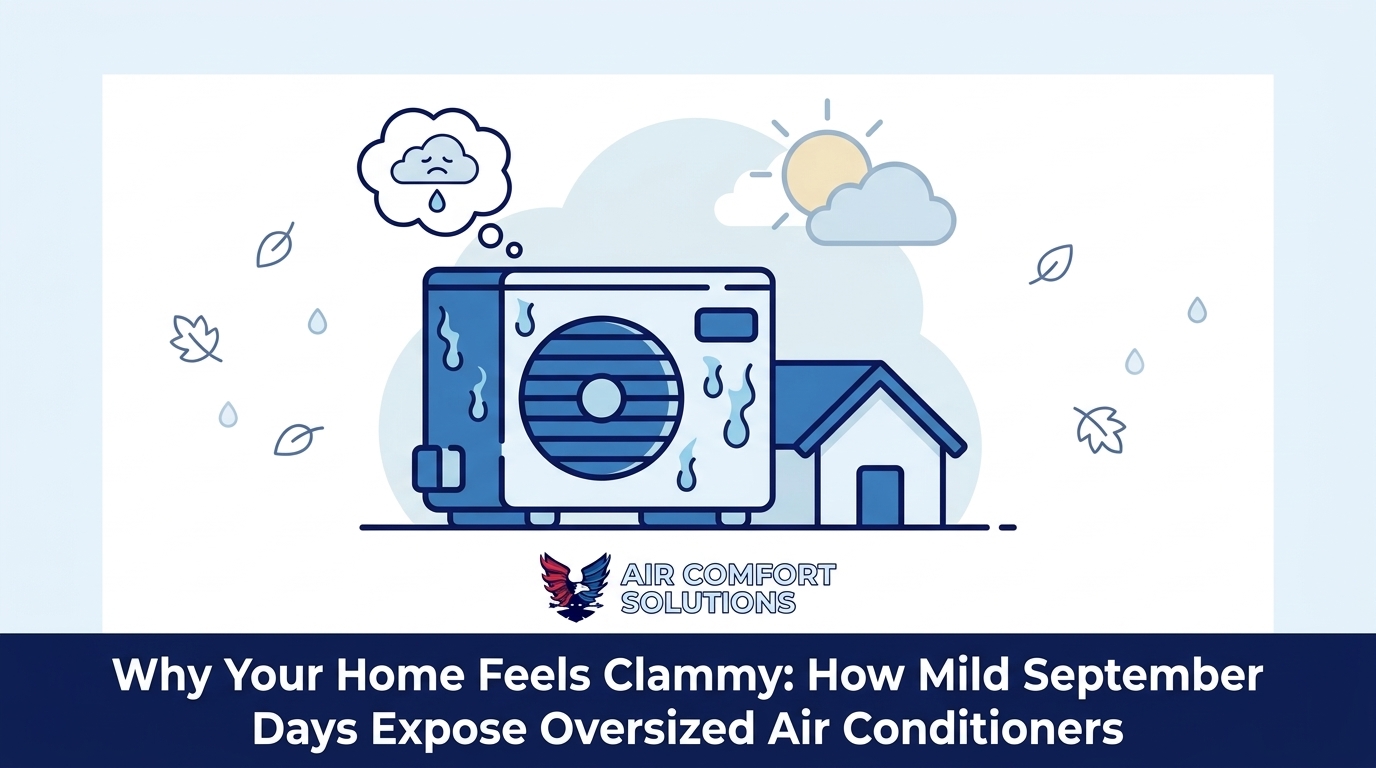
How Mild September Days Expose Oversized Air Conditioners
When early fall weather arrives, your cooling system might struggle to remove humidity. Discover why a home feels damp and cold when an oversized AC short-cycles.

How a well-maintained AC improves your breathing air is something most homeowners in Pinehurst, TX never stop to consider — until someone in the family starts waking up congested, sneezing more than usual, or feeling worn down without a clear reason.
Here is a quick answer:
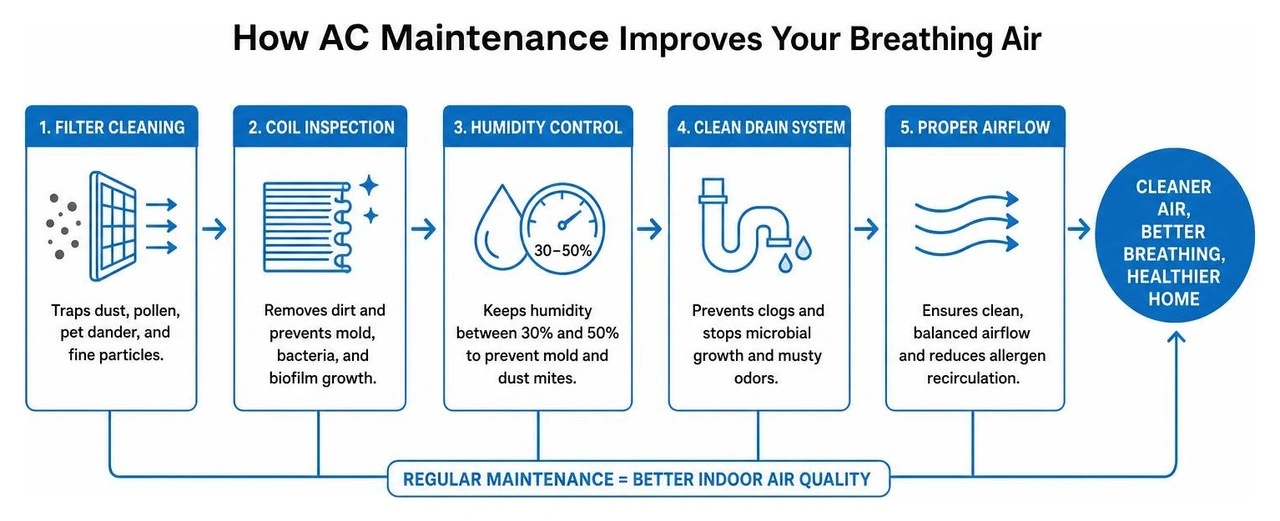
A well-maintained AC improves your breathing air by:
Most people spend roughly 90% of their time indoors, where pollutant concentrations can run two to five times higher than what is floating around outside. In North Harris County, where summer humidity is relentless, a neglected AC does not just cool poorly — it can actively make the air you breathe worse.
The good news is that the fix is straightforward. Regular maintenance transforms your AC from a potential source of respiratory irritants into a genuine air quality tool.

When your air conditioner is running optimally, it acts as the primary defense system for your home’s climate. Many people view their AC as a simple temperature box — you set the thermostat, and cold air blows out. In reality, your air conditioning system is more like the lungs of your home. Every single minute, it draws in thousands of cubic feet of air, processes it, and distributes it back to your living spaces.
Understanding How Your AC Affects Indoor Air Quality in Humid Climates is the first step toward reclaiming a healthy home environment. A well-maintained system addresses three main pillars of air quality: moisture management, physical particle filtration, and biological control. When any of these components are neglected, the quality of your breathing air rapidly degrades.
In places like Magnolia, Tomball, and Cypress, humidity is a constant battle. High indoor humidity is not just uncomfortable; it is a major health hazard. When relative humidity levels climb above 55% or 60%, your home becomes an ideal breeding ground for mold spores and dust mites.
According to guidelines from the Environmental Protection Agency (EPA), keeping your indoor relative humidity strictly between 30% and 50% is the gold standard for respiratory health. Dust mite populations crash when humidity drops below 50%, and mold spores cannot easily germinate on dry surfaces.
However, there is a delicate balance to strike. An air conditioner cools a room by extracting moisture from the air, but an improperly calibrated system can pull humidity down too low. For instance, a 1.5-ton split AC running at full capacity on a blistering 100-degree afternoon in a small bedroom can drag humidity down to 28% to 35% within 90 minutes. This overly dry air can dry out your nasal passages and mucous membranes, making you more vulnerable to respiratory infections.
By investing in professional Indoor Air Quality Cypress TX services, you ensure your system is calibrated to keep moisture right in that sweet spot where you can breathe comfortably without inviting mold growth.
The filter in your air conditioning system is your first line of defense against airborne debris. As air circulates, the filter traps floating particles before they can enter your ductwork and recirculate into your bedrooms.
Filters are rated on the Minimum Efficiency Reporting Value (MERV) scale, which runs from 1 to 16:
Upgrading to a high-efficiency filter is one of the most impactful changes you can make. If you have dogs or cats, you know how quickly fur and dander accumulate. Learning How Air Filtration Systems Remove Pet Dander can help you select the right setup.
For the ultimate level of protection, pairing your system with Whole Home Air Purifiers Cypress TX ensures that even fine particulate matter (PM2.5) is extracted from your breathing air before it can trigger asthma or allergy flare-ups.
When an air conditioner is neglected, it undergoes a slow but dangerous transformation. Instead of cleaning your air, it begins to act as a pollution loop. Every time the blower motor turns on, it picks up accumulated dust, mold spores, and bacterial particles from inside the unit and blasts them directly into your living room.
This cycle of contamination is a leading cause of Sick Building Syndrome, where occupants experience headaches, throat irritation, dry coughs, and chronic fatigue that mysteriously vanish when they leave the house. Furthermore, a dirty system struggles to move air efficiently. This restriction can lead to physical system failures, such as when How Dirty Filters Cause Frozen Evaporator Coils occurs, shutting down your cooling entirely.
The dark, damp interior of your AC's indoor cabinet is the perfect environment for microbes. As your evaporator coil runs, it stays cold—usually around 40 to 50 degrees Fahrenheit. When warm, humid air passes over this cold metal, water condenses on the fins and drips down into a condensate drain pan.
If the coils are covered in dust, this moisture mixes with the debris to form a sticky, organic paste. Within 8 to 14 weeks in high humidity, a neglected evaporator coil will grow visible mold. In fact, clinical HVAC studies show that approximately 38% of all "AC smell" complaints are caused by a fungal biofilm growing on the coil, rather than a mechanical or electrical issue.
When your system is caked in this biofilm, it releases millions of microscopic mold spores into your ductwork. This biological buildup also impacts heat transfer, which is why understanding the Dirty Condenser Coil and AC Performance Connection is so vital for both your physical health and your energy bills.
Unlike commercial buildings, standard residential split systems do not pull fresh air from the outdoors. They continuously recirculate the air already inside your home.
If you have pollen tracked in from the yard, dust mites breeding in your carpets, or pet dander settling on your couch, your AC will pull these particles in and blow them back out. In a sealed room, this creates a concentrated soup of allergens.
To break this cycle, homeowners often turn to Whole Home Air Filtration Tomball TX systems, which clean the air dynamically as it moves through your home's central ductwork, ensuring that recirculated air is thoroughly scrubbed of irritants.
Keeping your breathing air clean requires a combination of simple household habits and professional expertise. You do not need to be an HVAC engineer to keep your system in good shape, but you do need to be consistent.
To help visualize the division of labor, here is a quick comparison of what you can handle yourself versus what requires a certified professional:
| Maintenance Task | DIY Friendly? | Professional Needed? | Frequency | Impact on Breathing Air |
|---|---|---|---|---|
| Filter Replacement | Yes | No | Every 30-90 Days | High (Stops dust and allergen bypass) |
| Cleaning Supply Vents | Yes | No | Monthly | Moderate (Prevents surface dust buildup) |
| Clearing Outdoor Unit Debris | Yes | No | Seasonal | Low (Maintains overall system efficiency) |
| Deep Chemical Coil Cleaning | No | Yes | Annually | Critical (Eliminates mold and fungal biofilm) |
| Drain Line Disinfection | No | Yes | Annually | High (Prevents standing water and bacteria) |
| Ductwork Inspection & Sealing | No | Yes | Every 2-3 Years | High (Prevents attic dust from leaking in) |
Your number-one job as a homeowner is managing your air filters. Checking your filter monthly and replacing it regularly keeps your system running smoothly and stops dirty air from bypassing the filter frame. If you are not sure how to get started, review How to Replace AC Filters a Quick and Simple Guide to make the process quick and painless.
Beyond filter changes, make it a habit to gently vacuum your return and supply vents to prevent dust from gathering on the grilles. Also, take a quick walk outside to ensure that grass clippings, leaves, and weeds are cleared away from your outdoor condenser unit, allowing it to breathe freely.
While DIY tasks are essential, they only scratch the surface. A standard filter cannot stop mold from growing on an evaporator coil, and it cannot clean out a clogged condensate drain line. That is where professional maintenance comes in.
A professional tune-up is a comprehensive health check for your cooling system. When you schedule an appointment, you can learn more about What Does Professional AC Service Include, which typically covers deep chemical cleaning of the coils, flushing the drain lines, testing electrical connections, and calibrating airflow.
Whether you need specialized AC Maintenance Cypress TX or reliable AC Maintenance Tomball TX, having a licensed technician service your system once or twice a year is the single most effective way to protect your family's lungs. In fact, clinical observations show that a monthly filter wash combined with an annual professional coil clean cuts AC-linked respiratory complaints by an estimated 60% to 70%.
One of the biggest misconceptions about air conditioning is that it brings fresh air into your home. It does not. To manage your breathing air effectively, you must understand the difference between cooling and ventilation.
Standard split systems and window units are completely sealed loops. They draw air from your hallway, cool it, and blow it back into your rooms.
While this is incredibly energy-efficient, it means that in a tightly sealed room, carbon dioxide (CO2) and Volatile Organic Compounds (VOCs) from household cleaners, paints, and furniture have nowhere to go. Overnight in a closed bedroom, CO2 levels can easily rise from a fresh outdoor baseline of 400 parts per million (ppm) to over 1,800 ppm, leaving you feeling groggy, congested, or suffering from a mild headache in the morning.
To prevent your indoor air from becoming stale and heavy, you need to actively introduce fresh air. You can practice "burping" your home by opening windows on opposite sides of the house for just 10 to 15 minutes in the early morning or late evening when the outdoor air is cooler. This quick burst of cross-ventilation flushes out trapped CO2 and VOCs without putting too much strain on your AC.
For a more permanent, automated solution, consider installing an Energy Recovery Ventilator (ERV) or a dedicated Air Purification System. These systems continuously exhaust stale indoor air while pulling in fresh outdoor air, pre-cooling and dehumidifying the incoming air so your home stays fresh, clean, and energy-efficient.
You can also implement these simple habits to keep your indoor air fresh:
For more tailored advice on maximizing your system's performance, look through our comprehensive list of HVAC Maintenance Tips for Texas Homeowners.
No, standard residential split systems and window AC units do not pull fresh air from the outside. They are designed to recirculate, cool, and filter the air that is already inside your home.
To ensure your recirculated air remains clean and free of stale odors, regular professional upkeep is essential. Homeowners looking to maintain their systems can benefit from scheduling routine AC Maintenance Spring TX to keep internal components clean and free of biological growth.
The optimal relative humidity range for healthy breathing is between 30% and 50%. Keeping your home within this window prevents mold spores from germinating and causes dust mite populations to crash. It also keeps the air moist enough to prevent dry nasal passages, scratchy throats, and sinus irritation.
If you are struggling with high moisture levels in your home, setting up a professional consultation for AC Maintenance Magnolia TX can help ensure your system is dehumidifying your living space effectively.
For most homes, air filters should be replaced every 60 to 90 days. However, if you have pets, live in a dusty area, or have family members who suffer from severe allergies or asthma, you should check your filter monthly and replace it every 30 days.
Regular filter changes prevent dirty air from bypassing the filter frame and entering your lungs. To keep your system's filtration running at peak performance, consider enrolling in a professional plan like AC Maintenance Conroe TX to keep your home comfortable and healthy year-round.
At Air Comfort Pros, we believe that your home should be a safe, healthy sanctuary for your family. With over 35 years of experience serving Pinehurst, TX, and the north side of Harris County, our certified technicians are experts in keeping your HVAC system running cleanly and efficiently.
We are proud to serve communities across the region, including:
If you are ready to improve your home's breathing air, protect your family from airborne allergens, and enjoy dependable comfort all year long, we are here to help. Explore our specialized IAQ solutions today, or contact us to schedule your professional AC maintenance visit!
How a well-maintained AC improves your breathing air is something most homeowners in Pinehurst, TX never stop to consider — until someone in the family starts waking up congested, sneezing more than usual, or feeling worn down without a clear reason.
Here is a quick answer:
A well-maintained AC improves your breathing air by:
Most people spend roughly 90% of their time indoors, where pollutant concentrations can run two to five times higher than what is floating around outside. In North Harris County, where summer humidity is relentless, a neglected AC does not just cool poorly — it can actively make the air you breathe worse.
The good news is that the fix is straightforward. Regular maintenance transforms your AC from a potential source of respiratory irritants into a genuine air quality tool.
When your air conditioner is running optimally, it acts as the primary defense system for your home’s climate. Many people view their AC as a simple temperature box — you set the thermostat, and cold air blows out. In reality, your air conditioning system is more like the lungs of your home. Every single minute, it draws in thousands of cubic feet of air, processes it, and distributes it back to your living spaces.
Understanding How Your AC Affects Indoor Air Quality in Humid Climates is the first step toward reclaiming a healthy home environment. A well-maintained system addresses three main pillars of air quality: moisture management, physical particle filtration, and biological control. When any of these components are neglected, the quality of your breathing air rapidly degrades.
In places like Magnolia, Tomball, and Cypress, humidity is a constant battle. High indoor humidity is not just uncomfortable; it is a major health hazard. When relative humidity levels climb above 55% or 60%, your home becomes an ideal breeding ground for mold spores and dust mites.
According to guidelines from the Environmental Protection Agency (EPA), keeping your indoor relative humidity strictly between 30% and 50% is the gold standard for respiratory health. Dust mite populations crash when humidity drops below 50%, and mold spores cannot easily germinate on dry surfaces.
However, there is a delicate balance to strike. An air conditioner cools a room by extracting moisture from the air, but an improperly calibrated system can pull humidity down too low. For instance, a 1.5-ton split AC running at full capacity on a blistering 100-degree afternoon in a small bedroom can drag humidity down to 28% to 35% within 90 minutes. This overly dry air can dry out your nasal passages and mucous membranes, making you more vulnerable to respiratory infections.
By investing in professional Indoor Air Quality Cypress TX services, you ensure your system is calibrated to keep moisture right in that sweet spot where you can breathe comfortably without inviting mold growth.
The filter in your air conditioning system is your first line of defense against airborne debris. As air circulates, the filter traps floating particles before they can enter your ductwork and recirculate into your bedrooms.
Filters are rated on the Minimum Efficiency Reporting Value (MERV) scale, which runs from 1 to 16:
Upgrading to a high-efficiency filter is one of the most impactful changes you can make. If you have dogs or cats, you know how quickly fur and dander accumulate. Learning How Air Filtration Systems Remove Pet Dander can help you select the right setup.
For the ultimate level of protection, pairing your system with Whole Home Air Purifiers Cypress TX ensures that even fine particulate matter (PM2.5) is extracted from your breathing air before it can trigger asthma or allergy flare-ups.
When an air conditioner is neglected, it undergoes a slow but dangerous transformation. Instead of cleaning your air, it begins to act as a pollution loop. Every time the blower motor turns on, it picks up accumulated dust, mold spores, and bacterial particles from inside the unit and blasts them directly into your living room.
This cycle of contamination is a leading cause of Sick Building Syndrome, where occupants experience headaches, throat irritation, dry coughs, and chronic fatigue that mysteriously vanish when they leave the house. Furthermore, a dirty system struggles to move air efficiently. This restriction can lead to physical system failures, such as when How Dirty Filters Cause Frozen Evaporator Coils occurs, shutting down your cooling entirely.
The dark, damp interior of your AC's indoor cabinet is the perfect environment for microbes. As your evaporator coil runs, it stays cold—usually around 40 to 50 degrees Fahrenheit. When warm, humid air passes over this cold metal, water condenses on the fins and drips down into a condensate drain pan.
If the coils are covered in dust, this moisture mixes with the debris to form a sticky, organic paste. Within 8 to 14 weeks in high humidity, a neglected evaporator coil will grow visible mold. In fact, clinical HVAC studies show that approximately 38% of all "AC smell" complaints are caused by a fungal biofilm growing on the coil, rather than a mechanical or electrical issue.
When your system is caked in this biofilm, it releases millions of microscopic mold spores into your ductwork. This biological buildup also impacts heat transfer, which is why understanding the Dirty Condenser Coil and AC Performance Connection is so vital for both your physical health and your energy bills.
Unlike commercial buildings, standard residential split systems do not pull fresh air from the outdoors. They continuously recirculate the air already inside your home.
If you have pollen tracked in from the yard, dust mites breeding in your carpets, or pet dander settling on your couch, your AC will pull these particles in and blow them back out. In a sealed room, this creates a concentrated soup of allergens.
To break this cycle, homeowners often turn to Whole Home Air Filtration Tomball TX systems, which clean the air dynamically as it moves through your home's central ductwork, ensuring that recirculated air is thoroughly scrubbed of irritants.
Keeping your breathing air clean requires a combination of simple household habits and professional expertise. You do not need to be an HVAC engineer to keep your system in good shape, but you do need to be consistent.
To help visualize the division of labor, here is a quick comparison of what you can handle yourself versus what requires a certified professional:
| Maintenance Task | DIY Friendly? | Professional Needed? | Frequency | Impact on Breathing Air |
|---|---|---|---|---|
| Filter Replacement | Yes | No | Every 30-90 Days | High (Stops dust and allergen bypass) |
| Cleaning Supply Vents | Yes | No | Monthly | Moderate (Prevents surface dust buildup) |
| Clearing Outdoor Unit Debris | Yes | No | Seasonal | Low (Maintains overall system efficiency) |
| Deep Chemical Coil Cleaning | No | Yes | Annually | Critical (Eliminates mold and fungal biofilm) |
| Drain Line Disinfection | No | Yes | Annually | High (Prevents standing water and bacteria) |
| Ductwork Inspection & Sealing | No | Yes | Every 2-3 Years | High (Prevents attic dust from leaking in) |
Your number-one job as a homeowner is managing your air filters. Checking your filter monthly and replacing it regularly keeps your system running smoothly and stops dirty air from bypassing the filter frame. If you are not sure how to get started, review How to Replace AC Filters a Quick and Simple Guide to make the process quick and painless.
Beyond filter changes, make it a habit to gently vacuum your return and supply vents to prevent dust from gathering on the grilles. Also, take a quick walk outside to ensure that grass clippings, leaves, and weeds are cleared away from your outdoor condenser unit, allowing it to breathe freely.
While DIY tasks are essential, they only scratch the surface. A standard filter cannot stop mold from growing on an evaporator coil, and it cannot clean out a clogged condensate drain line. That is where professional maintenance comes in.
A professional tune-up is a comprehensive health check for your cooling system. When you schedule an appointment, you can learn more about What Does Professional AC Service Include, which typically covers deep chemical cleaning of the coils, flushing the drain lines, testing electrical connections, and calibrating airflow.
Whether you need specialized AC Maintenance Cypress TX or reliable AC Maintenance Tomball TX, having a licensed technician service your system once or twice a year is the single most effective way to protect your family's lungs. In fact, clinical observations show that a monthly filter wash combined with an annual professional coil clean cuts AC-linked respiratory complaints by an estimated 60% to 70%.
One of the biggest misconceptions about air conditioning is that it brings fresh air into your home. It does not. To manage your breathing air effectively, you must understand the difference between cooling and ventilation.
Standard split systems and window units are completely sealed loops. They draw air from your hallway, cool it, and blow it back into your rooms.
While this is incredibly energy-efficient, it means that in a tightly sealed room, carbon dioxide (CO2) and Volatile Organic Compounds (VOCs) from household cleaners, paints, and furniture have nowhere to go. Overnight in a closed bedroom, CO2 levels can easily rise from a fresh outdoor baseline of 400 parts per million (ppm) to over 1,800 ppm, leaving you feeling groggy, congested, or suffering from a mild headache in the morning.
To prevent your indoor air from becoming stale and heavy, you need to actively introduce fresh air. You can practice "burping" your home by opening windows on opposite sides of the house for just 10 to 15 minutes in the early morning or late evening when the outdoor air is cooler. This quick burst of cross-ventilation flushes out trapped CO2 and VOCs without putting too much strain on your AC.
For a more permanent, automated solution, consider installing an Energy Recovery Ventilator (ERV) or a dedicated Air Purification System. These systems continuously exhaust stale indoor air while pulling in fresh outdoor air, pre-cooling and dehumidifying the incoming air so your home stays fresh, clean, and energy-efficient.
You can also implement these simple habits to keep your indoor air fresh:
For more tailored advice on maximizing your system's performance, look through our comprehensive list of HVAC Maintenance Tips for Texas Homeowners.
No, standard residential split systems and window AC units do not pull fresh air from the outside. They are designed to recirculate, cool, and filter the air that is already inside your home.
To ensure your recirculated air remains clean and free of stale odors, regular professional upkeep is essential. Homeowners looking to maintain their systems can benefit from scheduling routine AC Maintenance Spring TX to keep internal components clean and free of biological growth.
The optimal relative humidity range for healthy breathing is between 30% and 50%. Keeping your home within this window prevents mold spores from germinating and causes dust mite populations to crash. It also keeps the air moist enough to prevent dry nasal passages, scratchy throats, and sinus irritation.
If you are struggling with high moisture levels in your home, setting up a professional consultation for AC Maintenance Magnolia TX can help ensure your system is dehumidifying your living space effectively.
For most homes, air filters should be replaced every 60 to 90 days. However, if you have pets, live in a dusty area, or have family members who suffer from severe allergies or asthma, you should check your filter monthly and replace it every 30 days.
Regular filter changes prevent dirty air from bypassing the filter frame and entering your lungs. To keep your system's filtration running at peak performance, consider enrolling in a professional plan like AC Maintenance Conroe TX to keep your home comfortable and healthy year-round.
At Air Comfort Pros, we believe that your home should be a safe, healthy sanctuary for your family. With over 35 years of experience serving Pinehurst, TX, and the north side of Harris County, our certified technicians are experts in keeping your HVAC system running cleanly and efficiently.
We are proud to serve communities across the region, including:
If you are ready to improve your home's breathing air, protect your family from airborne allergens, and enjoy dependable comfort all year long, we are here to help. Explore our specialized IAQ solutions today, or contact us to schedule your professional AC maintenance visit!
How a well-maintained AC improves your breathing air is something most homeowners in Pinehurst, TX never stop to consider — until someone in the family starts waking up congested, sneezing more than usual, or feeling worn down without a clear reason.
Here is a quick answer:
A well-maintained AC improves your breathing air by:
Most people spend roughly 90% of their time indoors, where pollutant concentrations can run two to five times higher than what is floating around outside. In North Harris County, where summer humidity is relentless, a neglected AC does not just cool poorly — it can actively make the air you breathe worse.
The good news is that the fix is straightforward. Regular maintenance transforms your AC from a potential source of respiratory irritants into a genuine air quality tool.
When your air conditioner is running optimally, it acts as the primary defense system for your home’s climate. Many people view their AC as a simple temperature box — you set the thermostat, and cold air blows out. In reality, your air conditioning system is more like the lungs of your home. Every single minute, it draws in thousands of cubic feet of air, processes it, and distributes it back to your living spaces.
Understanding How Your AC Affects Indoor Air Quality in Humid Climates is the first step toward reclaiming a healthy home environment. A well-maintained system addresses three main pillars of air quality: moisture management, physical particle filtration, and biological control. When any of these components are neglected, the quality of your breathing air rapidly degrades.
In places like Magnolia, Tomball, and Cypress, humidity is a constant battle. High indoor humidity is not just uncomfortable; it is a major health hazard. When relative humidity levels climb above 55% or 60%, your home becomes an ideal breeding ground for mold spores and dust mites.
According to guidelines from the Environmental Protection Agency (EPA), keeping your indoor relative humidity strictly between 30% and 50% is the gold standard for respiratory health. Dust mite populations crash when humidity drops below 50%, and mold spores cannot easily germinate on dry surfaces.
However, there is a delicate balance to strike. An air conditioner cools a room by extracting moisture from the air, but an improperly calibrated system can pull humidity down too low. For instance, a 1.5-ton split AC running at full capacity on a blistering 100-degree afternoon in a small bedroom can drag humidity down to 28% to 35% within 90 minutes. This overly dry air can dry out your nasal passages and mucous membranes, making you more vulnerable to respiratory infections.
By investing in professional Indoor Air Quality Cypress TX services, you ensure your system is calibrated to keep moisture right in that sweet spot where you can breathe comfortably without inviting mold growth.
The filter in your air conditioning system is your first line of defense against airborne debris. As air circulates, the filter traps floating particles before they can enter your ductwork and recirculate into your bedrooms.
Filters are rated on the Minimum Efficiency Reporting Value (MERV) scale, which runs from 1 to 16:
Upgrading to a high-efficiency filter is one of the most impactful changes you can make. If you have dogs or cats, you know how quickly fur and dander accumulate. Learning How Air Filtration Systems Remove Pet Dander can help you select the right setup.
For the ultimate level of protection, pairing your system with Whole Home Air Purifiers Cypress TX ensures that even fine particulate matter (PM2.5) is extracted from your breathing air before it can trigger asthma or allergy flare-ups.
When an air conditioner is neglected, it undergoes a slow but dangerous transformation. Instead of cleaning your air, it begins to act as a pollution loop. Every time the blower motor turns on, it picks up accumulated dust, mold spores, and bacterial particles from inside the unit and blasts them directly into your living room.
This cycle of contamination is a leading cause of Sick Building Syndrome, where occupants experience headaches, throat irritation, dry coughs, and chronic fatigue that mysteriously vanish when they leave the house. Furthermore, a dirty system struggles to move air efficiently. This restriction can lead to physical system failures, such as when How Dirty Filters Cause Frozen Evaporator Coils occurs, shutting down your cooling entirely.
The dark, damp interior of your AC's indoor cabinet is the perfect environment for microbes. As your evaporator coil runs, it stays cold—usually around 40 to 50 degrees Fahrenheit. When warm, humid air passes over this cold metal, water condenses on the fins and drips down into a condensate drain pan.
If the coils are covered in dust, this moisture mixes with the debris to form a sticky, organic paste. Within 8 to 14 weeks in high humidity, a neglected evaporator coil will grow visible mold. In fact, clinical HVAC studies show that approximately 38% of all "AC smell" complaints are caused by a fungal biofilm growing on the coil, rather than a mechanical or electrical issue.
When your system is caked in this biofilm, it releases millions of microscopic mold spores into your ductwork. This biological buildup also impacts heat transfer, which is why understanding the Dirty Condenser Coil and AC Performance Connection is so vital for both your physical health and your energy bills.
Unlike commercial buildings, standard residential split systems do not pull fresh air from the outdoors. They continuously recirculate the air already inside your home.
If you have pollen tracked in from the yard, dust mites breeding in your carpets, or pet dander settling on your couch, your AC will pull these particles in and blow them back out. In a sealed room, this creates a concentrated soup of allergens.
To break this cycle, homeowners often turn to Whole Home Air Filtration Tomball TX systems, which clean the air dynamically as it moves through your home's central ductwork, ensuring that recirculated air is thoroughly scrubbed of irritants.
Keeping your breathing air clean requires a combination of simple household habits and professional expertise. You do not need to be an HVAC engineer to keep your system in good shape, but you do need to be consistent.
To help visualize the division of labor, here is a quick comparison of what you can handle yourself versus what requires a certified professional:
| Maintenance Task | DIY Friendly? | Professional Needed? | Frequency | Impact on Breathing Air |
|---|---|---|---|---|
| Filter Replacement | Yes | No | Every 30-90 Days | High (Stops dust and allergen bypass) |
| Cleaning Supply Vents | Yes | No | Monthly | Moderate (Prevents surface dust buildup) |
| Clearing Outdoor Unit Debris | Yes | No | Seasonal | Low (Maintains overall system efficiency) |
| Deep Chemical Coil Cleaning | No | Yes | Annually | Critical (Eliminates mold and fungal biofilm) |
| Drain Line Disinfection | No | Yes | Annually | High (Prevents standing water and bacteria) |
| Ductwork Inspection & Sealing | No | Yes | Every 2-3 Years | High (Prevents attic dust from leaking in) |
Your number-one job as a homeowner is managing your air filters. Checking your filter monthly and replacing it regularly keeps your system running smoothly and stops dirty air from bypassing the filter frame. If you are not sure how to get started, review How to Replace AC Filters a Quick and Simple Guide to make the process quick and painless.
Beyond filter changes, make it a habit to gently vacuum your return and supply vents to prevent dust from gathering on the grilles. Also, take a quick walk outside to ensure that grass clippings, leaves, and weeds are cleared away from your outdoor condenser unit, allowing it to breathe freely.
While DIY tasks are essential, they only scratch the surface. A standard filter cannot stop mold from growing on an evaporator coil, and it cannot clean out a clogged condensate drain line. That is where professional maintenance comes in.
A professional tune-up is a comprehensive health check for your cooling system. When you schedule an appointment, you can learn more about What Does Professional AC Service Include, which typically covers deep chemical cleaning of the coils, flushing the drain lines, testing electrical connections, and calibrating airflow.
Whether you need specialized AC Maintenance Cypress TX or reliable AC Maintenance Tomball TX, having a licensed technician service your system once or twice a year is the single most effective way to protect your family's lungs. In fact, clinical observations show that a monthly filter wash combined with an annual professional coil clean cuts AC-linked respiratory complaints by an estimated 60% to 70%.
One of the biggest misconceptions about air conditioning is that it brings fresh air into your home. It does not. To manage your breathing air effectively, you must understand the difference between cooling and ventilation.
Standard split systems and window units are completely sealed loops. They draw air from your hallway, cool it, and blow it back into your rooms.
While this is incredibly energy-efficient, it means that in a tightly sealed room, carbon dioxide (CO2) and Volatile Organic Compounds (VOCs) from household cleaners, paints, and furniture have nowhere to go. Overnight in a closed bedroom, CO2 levels can easily rise from a fresh outdoor baseline of 400 parts per million (ppm) to over 1,800 ppm, leaving you feeling groggy, congested, or suffering from a mild headache in the morning.
To prevent your indoor air from becoming stale and heavy, you need to actively introduce fresh air. You can practice "burping" your home by opening windows on opposite sides of the house for just 10 to 15 minutes in the early morning or late evening when the outdoor air is cooler. This quick burst of cross-ventilation flushes out trapped CO2 and VOCs without putting too much strain on your AC.
For a more permanent, automated solution, consider installing an Energy Recovery Ventilator (ERV) or a dedicated Air Purification System. These systems continuously exhaust stale indoor air while pulling in fresh outdoor air, pre-cooling and dehumidifying the incoming air so your home stays fresh, clean, and energy-efficient.
You can also implement these simple habits to keep your indoor air fresh:
For more tailored advice on maximizing your system's performance, look through our comprehensive list of HVAC Maintenance Tips for Texas Homeowners.
No, standard residential split systems and window AC units do not pull fresh air from the outside. They are designed to recirculate, cool, and filter the air that is already inside your home.
To ensure your recirculated air remains clean and free of stale odors, regular professional upkeep is essential. Homeowners looking to maintain their systems can benefit from scheduling routine AC Maintenance Spring TX to keep internal components clean and free of biological growth.
The optimal relative humidity range for healthy breathing is between 30% and 50%. Keeping your home within this window prevents mold spores from germinating and causes dust mite populations to crash. It also keeps the air moist enough to prevent dry nasal passages, scratchy throats, and sinus irritation.
If you are struggling with high moisture levels in your home, setting up a professional consultation for AC Maintenance Magnolia TX can help ensure your system is dehumidifying your living space effectively.
For most homes, air filters should be replaced every 60 to 90 days. However, if you have pets, live in a dusty area, or have family members who suffer from severe allergies or asthma, you should check your filter monthly and replace it every 30 days.
Regular filter changes prevent dirty air from bypassing the filter frame and entering your lungs. To keep your system's filtration running at peak performance, consider enrolling in a professional plan like AC Maintenance Conroe TX to keep your home comfortable and healthy year-round.
At Air Comfort Pros, we believe that your home should be a safe, healthy sanctuary for your family. With over 35 years of experience serving Pinehurst, TX, and the north side of Harris County, our certified technicians are experts in keeping your HVAC system running cleanly and efficiently.
We are proud to serve communities across the region, including:
If you are ready to improve your home's breathing air, protect your family from airborne allergens, and enjoy dependable comfort all year long, we are here to help. Explore our specialized IAQ solutions today, or contact us to schedule your professional AC maintenance visit!
How a well-maintained AC improves your breathing air is something most homeowners in Pinehurst, TX never stop to consider — until someone in the family starts waking up congested, sneezing more than usual, or feeling worn down without a clear reason.
Here is a quick answer:
A well-maintained AC improves your breathing air by:
Most people spend roughly 90% of their time indoors, where pollutant concentrations can run two to five times higher than what is floating around outside. In North Harris County, where summer humidity is relentless, a neglected AC does not just cool poorly — it can actively make the air you breathe worse.
The good news is that the fix is straightforward. Regular maintenance transforms your AC from a potential source of respiratory irritants into a genuine air quality tool.
When your air conditioner is running optimally, it acts as the primary defense system for your home’s climate. Many people view their AC as a simple temperature box — you set the thermostat, and cold air blows out. In reality, your air conditioning system is more like the lungs of your home. Every single minute, it draws in thousands of cubic feet of air, processes it, and distributes it back to your living spaces.
Understanding How Your AC Affects Indoor Air Quality in Humid Climates is the first step toward reclaiming a healthy home environment. A well-maintained system addresses three main pillars of air quality: moisture management, physical particle filtration, and biological control. When any of these components are neglected, the quality of your breathing air rapidly degrades.
In places like Magnolia, Tomball, and Cypress, humidity is a constant battle. High indoor humidity is not just uncomfortable; it is a major health hazard. When relative humidity levels climb above 55% or 60%, your home becomes an ideal breeding ground for mold spores and dust mites.
According to guidelines from the Environmental Protection Agency (EPA), keeping your indoor relative humidity strictly between 30% and 50% is the gold standard for respiratory health. Dust mite populations crash when humidity drops below 50%, and mold spores cannot easily germinate on dry surfaces.
However, there is a delicate balance to strike. An air conditioner cools a room by extracting moisture from the air, but an improperly calibrated system can pull humidity down too low. For instance, a 1.5-ton split AC running at full capacity on a blistering 100-degree afternoon in a small bedroom can drag humidity down to 28% to 35% within 90 minutes. This overly dry air can dry out your nasal passages and mucous membranes, making you more vulnerable to respiratory infections.
By investing in professional Indoor Air Quality Cypress TX services, you ensure your system is calibrated to keep moisture right in that sweet spot where you can breathe comfortably without inviting mold growth.
The filter in your air conditioning system is your first line of defense against airborne debris. As air circulates, the filter traps floating particles before they can enter your ductwork and recirculate into your bedrooms.
Filters are rated on the Minimum Efficiency Reporting Value (MERV) scale, which runs from 1 to 16:
Upgrading to a high-efficiency filter is one of the most impactful changes you can make. If you have dogs or cats, you know how quickly fur and dander accumulate. Learning How Air Filtration Systems Remove Pet Dander can help you select the right setup.
For the ultimate level of protection, pairing your system with Whole Home Air Purifiers Cypress TX ensures that even fine particulate matter (PM2.5) is extracted from your breathing air before it can trigger asthma or allergy flare-ups.
When an air conditioner is neglected, it undergoes a slow but dangerous transformation. Instead of cleaning your air, it begins to act as a pollution loop. Every time the blower motor turns on, it picks up accumulated dust, mold spores, and bacterial particles from inside the unit and blasts them directly into your living room.
This cycle of contamination is a leading cause of Sick Building Syndrome, where occupants experience headaches, throat irritation, dry coughs, and chronic fatigue that mysteriously vanish when they leave the house. Furthermore, a dirty system struggles to move air efficiently. This restriction can lead to physical system failures, such as when How Dirty Filters Cause Frozen Evaporator Coils occurs, shutting down your cooling entirely.
The dark, damp interior of your AC's indoor cabinet is the perfect environment for microbes. As your evaporator coil runs, it stays cold—usually around 40 to 50 degrees Fahrenheit. When warm, humid air passes over this cold metal, water condenses on the fins and drips down into a condensate drain pan.
If the coils are covered in dust, this moisture mixes with the debris to form a sticky, organic paste. Within 8 to 14 weeks in high humidity, a neglected evaporator coil will grow visible mold. In fact, clinical HVAC studies show that approximately 38% of all "AC smell" complaints are caused by a fungal biofilm growing on the coil, rather than a mechanical or electrical issue.
When your system is caked in this biofilm, it releases millions of microscopic mold spores into your ductwork. This biological buildup also impacts heat transfer, which is why understanding the Dirty Condenser Coil and AC Performance Connection is so vital for both your physical health and your energy bills.
Unlike commercial buildings, standard residential split systems do not pull fresh air from the outdoors. They continuously recirculate the air already inside your home.
If you have pollen tracked in from the yard, dust mites breeding in your carpets, or pet dander settling on your couch, your AC will pull these particles in and blow them back out. In a sealed room, this creates a concentrated soup of allergens.
To break this cycle, homeowners often turn to Whole Home Air Filtration Tomball TX systems, which clean the air dynamically as it moves through your home's central ductwork, ensuring that recirculated air is thoroughly scrubbed of irritants.
Keeping your breathing air clean requires a combination of simple household habits and professional expertise. You do not need to be an HVAC engineer to keep your system in good shape, but you do need to be consistent.
To help visualize the division of labor, here is a quick comparison of what you can handle yourself versus what requires a certified professional:
| Maintenance Task | DIY Friendly? | Professional Needed? | Frequency | Impact on Breathing Air |
|---|---|---|---|---|
| Filter Replacement | Yes | No | Every 30-90 Days | High (Stops dust and allergen bypass) |
| Cleaning Supply Vents | Yes | No | Monthly | Moderate (Prevents surface dust buildup) |
| Clearing Outdoor Unit Debris | Yes | No | Seasonal | Low (Maintains overall system efficiency) |
| Deep Chemical Coil Cleaning | No | Yes | Annually | Critical (Eliminates mold and fungal biofilm) |
| Drain Line Disinfection | No | Yes | Annually | High (Prevents standing water and bacteria) |
| Ductwork Inspection & Sealing | No | Yes | Every 2-3 Years | High (Prevents attic dust from leaking in) |
Your number-one job as a homeowner is managing your air filters. Checking your filter monthly and replacing it regularly keeps your system running smoothly and stops dirty air from bypassing the filter frame. If you are not sure how to get started, review How to Replace AC Filters a Quick and Simple Guide to make the process quick and painless.
Beyond filter changes, make it a habit to gently vacuum your return and supply vents to prevent dust from gathering on the grilles. Also, take a quick walk outside to ensure that grass clippings, leaves, and weeds are cleared away from your outdoor condenser unit, allowing it to breathe freely.
While DIY tasks are essential, they only scratch the surface. A standard filter cannot stop mold from growing on an evaporator coil, and it cannot clean out a clogged condensate drain line. That is where professional maintenance comes in.
A professional tune-up is a comprehensive health check for your cooling system. When you schedule an appointment, you can learn more about What Does Professional AC Service Include, which typically covers deep chemical cleaning of the coils, flushing the drain lines, testing electrical connections, and calibrating airflow.
Whether you need specialized AC Maintenance Cypress TX or reliable AC Maintenance Tomball TX, having a licensed technician service your system once or twice a year is the single most effective way to protect your family's lungs. In fact, clinical observations show that a monthly filter wash combined with an annual professional coil clean cuts AC-linked respiratory complaints by an estimated 60% to 70%.
One of the biggest misconceptions about air conditioning is that it brings fresh air into your home. It does not. To manage your breathing air effectively, you must understand the difference between cooling and ventilation.
Standard split systems and window units are completely sealed loops. They draw air from your hallway, cool it, and blow it back into your rooms.
While this is incredibly energy-efficient, it means that in a tightly sealed room, carbon dioxide (CO2) and Volatile Organic Compounds (VOCs) from household cleaners, paints, and furniture have nowhere to go. Overnight in a closed bedroom, CO2 levels can easily rise from a fresh outdoor baseline of 400 parts per million (ppm) to over 1,800 ppm, leaving you feeling groggy, congested, or suffering from a mild headache in the morning.
To prevent your indoor air from becoming stale and heavy, you need to actively introduce fresh air. You can practice "burping" your home by opening windows on opposite sides of the house for just 10 to 15 minutes in the early morning or late evening when the outdoor air is cooler. This quick burst of cross-ventilation flushes out trapped CO2 and VOCs without putting too much strain on your AC.
For a more permanent, automated solution, consider installing an Energy Recovery Ventilator (ERV) or a dedicated Air Purification System. These systems continuously exhaust stale indoor air while pulling in fresh outdoor air, pre-cooling and dehumidifying the incoming air so your home stays fresh, clean, and energy-efficient.
You can also implement these simple habits to keep your indoor air fresh:
For more tailored advice on maximizing your system's performance, look through our comprehensive list of HVAC Maintenance Tips for Texas Homeowners.
No, standard residential split systems and window AC units do not pull fresh air from the outside. They are designed to recirculate, cool, and filter the air that is already inside your home.
To ensure your recirculated air remains clean and free of stale odors, regular professional upkeep is essential. Homeowners looking to maintain their systems can benefit from scheduling routine AC Maintenance Spring TX to keep internal components clean and free of biological growth.
The optimal relative humidity range for healthy breathing is between 30% and 50%. Keeping your home within this window prevents mold spores from germinating and causes dust mite populations to crash. It also keeps the air moist enough to prevent dry nasal passages, scratchy throats, and sinus irritation.
If you are struggling with high moisture levels in your home, setting up a professional consultation for AC Maintenance Magnolia TX can help ensure your system is dehumidifying your living space effectively.
For most homes, air filters should be replaced every 60 to 90 days. However, if you have pets, live in a dusty area, or have family members who suffer from severe allergies or asthma, you should check your filter monthly and replace it every 30 days.
Regular filter changes prevent dirty air from bypassing the filter frame and entering your lungs. To keep your system's filtration running at peak performance, consider enrolling in a professional plan like AC Maintenance Conroe TX to keep your home comfortable and healthy year-round.
At Air Comfort Pros, we believe that your home should be a safe, healthy sanctuary for your family. With over 35 years of experience serving Pinehurst, TX, and the north side of Harris County, our certified technicians are experts in keeping your HVAC system running cleanly and efficiently.
We are proud to serve communities across the region, including:
If you are ready to improve your home's breathing air, protect your family from airborne allergens, and enjoy dependable comfort all year long, we are here to help. Explore our specialized IAQ solutions today, or contact us to schedule your professional AC maintenance visit!
How a well-maintained AC improves your breathing air is something most homeowners in Pinehurst, TX never stop to consider — until someone in the family starts waking up congested, sneezing more than usual, or feeling worn down without a clear reason.
Here is a quick answer:
A well-maintained AC improves your breathing air by:
Most people spend roughly 90% of their time indoors, where pollutant concentrations can run two to five times higher than what is floating around outside. In North Harris County, where summer humidity is relentless, a neglected AC does not just cool poorly — it can actively make the air you breathe worse.
The good news is that the fix is straightforward. Regular maintenance transforms your AC from a potential source of respiratory irritants into a genuine air quality tool.
When your air conditioner is running optimally, it acts as the primary defense system for your home’s climate. Many people view their AC as a simple temperature box — you set the thermostat, and cold air blows out. In reality, your air conditioning system is more like the lungs of your home. Every single minute, it draws in thousands of cubic feet of air, processes it, and distributes it back to your living spaces.
Understanding How Your AC Affects Indoor Air Quality in Humid Climates is the first step toward reclaiming a healthy home environment. A well-maintained system addresses three main pillars of air quality: moisture management, physical particle filtration, and biological control. When any of these components are neglected, the quality of your breathing air rapidly degrades.
In places like Magnolia, Tomball, and Cypress, humidity is a constant battle. High indoor humidity is not just uncomfortable; it is a major health hazard. When relative humidity levels climb above 55% or 60%, your home becomes an ideal breeding ground for mold spores and dust mites.
According to guidelines from the Environmental Protection Agency (EPA), keeping your indoor relative humidity strictly between 30% and 50% is the gold standard for respiratory health. Dust mite populations crash when humidity drops below 50%, and mold spores cannot easily germinate on dry surfaces.
However, there is a delicate balance to strike. An air conditioner cools a room by extracting moisture from the air, but an improperly calibrated system can pull humidity down too low. For instance, a 1.5-ton split AC running at full capacity on a blistering 100-degree afternoon in a small bedroom can drag humidity down to 28% to 35% within 90 minutes. This overly dry air can dry out your nasal passages and mucous membranes, making you more vulnerable to respiratory infections.
By investing in professional Indoor Air Quality Cypress TX services, you ensure your system is calibrated to keep moisture right in that sweet spot where you can breathe comfortably without inviting mold growth.
The filter in your air conditioning system is your first line of defense against airborne debris. As air circulates, the filter traps floating particles before they can enter your ductwork and recirculate into your bedrooms.
Filters are rated on the Minimum Efficiency Reporting Value (MERV) scale, which runs from 1 to 16:
Upgrading to a high-efficiency filter is one of the most impactful changes you can make. If you have dogs or cats, you know how quickly fur and dander accumulate. Learning How Air Filtration Systems Remove Pet Dander can help you select the right setup.
For the ultimate level of protection, pairing your system with Whole Home Air Purifiers Cypress TX ensures that even fine particulate matter (PM2.5) is extracted from your breathing air before it can trigger asthma or allergy flare-ups.
When an air conditioner is neglected, it undergoes a slow but dangerous transformation. Instead of cleaning your air, it begins to act as a pollution loop. Every time the blower motor turns on, it picks up accumulated dust, mold spores, and bacterial particles from inside the unit and blasts them directly into your living room.
This cycle of contamination is a leading cause of Sick Building Syndrome, where occupants experience headaches, throat irritation, dry coughs, and chronic fatigue that mysteriously vanish when they leave the house. Furthermore, a dirty system struggles to move air efficiently. This restriction can lead to physical system failures, such as when How Dirty Filters Cause Frozen Evaporator Coils occurs, shutting down your cooling entirely.
The dark, damp interior of your AC's indoor cabinet is the perfect environment for microbes. As your evaporator coil runs, it stays cold—usually around 40 to 50 degrees Fahrenheit. When warm, humid air passes over this cold metal, water condenses on the fins and drips down into a condensate drain pan.
If the coils are covered in dust, this moisture mixes with the debris to form a sticky, organic paste. Within 8 to 14 weeks in high humidity, a neglected evaporator coil will grow visible mold. In fact, clinical HVAC studies show that approximately 38% of all "AC smell" complaints are caused by a fungal biofilm growing on the coil, rather than a mechanical or electrical issue.
When your system is caked in this biofilm, it releases millions of microscopic mold spores into your ductwork. This biological buildup also impacts heat transfer, which is why understanding the Dirty Condenser Coil and AC Performance Connection is so vital for both your physical health and your energy bills.
Unlike commercial buildings, standard residential split systems do not pull fresh air from the outdoors. They continuously recirculate the air already inside your home.
If you have pollen tracked in from the yard, dust mites breeding in your carpets, or pet dander settling on your couch, your AC will pull these particles in and blow them back out. In a sealed room, this creates a concentrated soup of allergens.
To break this cycle, homeowners often turn to Whole Home Air Filtration Tomball TX systems, which clean the air dynamically as it moves through your home's central ductwork, ensuring that recirculated air is thoroughly scrubbed of irritants.
Keeping your breathing air clean requires a combination of simple household habits and professional expertise. You do not need to be an HVAC engineer to keep your system in good shape, but you do need to be consistent.
To help visualize the division of labor, here is a quick comparison of what you can handle yourself versus what requires a certified professional:
| Maintenance Task | DIY Friendly? | Professional Needed? | Frequency | Impact on Breathing Air |
|---|---|---|---|---|
| Filter Replacement | Yes | No | Every 30-90 Days | High (Stops dust and allergen bypass) |
| Cleaning Supply Vents | Yes | No | Monthly | Moderate (Prevents surface dust buildup) |
| Clearing Outdoor Unit Debris | Yes | No | Seasonal | Low (Maintains overall system efficiency) |
| Deep Chemical Coil Cleaning | No | Yes | Annually | Critical (Eliminates mold and fungal biofilm) |
| Drain Line Disinfection | No | Yes | Annually | High (Prevents standing water and bacteria) |
| Ductwork Inspection & Sealing | No | Yes | Every 2-3 Years | High (Prevents attic dust from leaking in) |
Your number-one job as a homeowner is managing your air filters. Checking your filter monthly and replacing it regularly keeps your system running smoothly and stops dirty air from bypassing the filter frame. If you are not sure how to get started, review How to Replace AC Filters a Quick and Simple Guide to make the process quick and painless.
Beyond filter changes, make it a habit to gently vacuum your return and supply vents to prevent dust from gathering on the grilles. Also, take a quick walk outside to ensure that grass clippings, leaves, and weeds are cleared away from your outdoor condenser unit, allowing it to breathe freely.
While DIY tasks are essential, they only scratch the surface. A standard filter cannot stop mold from growing on an evaporator coil, and it cannot clean out a clogged condensate drain line. That is where professional maintenance comes in.
A professional tune-up is a comprehensive health check for your cooling system. When you schedule an appointment, you can learn more about What Does Professional AC Service Include, which typically covers deep chemical cleaning of the coils, flushing the drain lines, testing electrical connections, and calibrating airflow.
Whether you need specialized AC Maintenance Cypress TX or reliable AC Maintenance Tomball TX, having a licensed technician service your system once or twice a year is the single most effective way to protect your family's lungs. In fact, clinical observations show that a monthly filter wash combined with an annual professional coil clean cuts AC-linked respiratory complaints by an estimated 60% to 70%.
One of the biggest misconceptions about air conditioning is that it brings fresh air into your home. It does not. To manage your breathing air effectively, you must understand the difference between cooling and ventilation.
Standard split systems and window units are completely sealed loops. They draw air from your hallway, cool it, and blow it back into your rooms.
While this is incredibly energy-efficient, it means that in a tightly sealed room, carbon dioxide (CO2) and Volatile Organic Compounds (VOCs) from household cleaners, paints, and furniture have nowhere to go. Overnight in a closed bedroom, CO2 levels can easily rise from a fresh outdoor baseline of 400 parts per million (ppm) to over 1,800 ppm, leaving you feeling groggy, congested, or suffering from a mild headache in the morning.
To prevent your indoor air from becoming stale and heavy, you need to actively introduce fresh air. You can practice "burping" your home by opening windows on opposite sides of the house for just 10 to 15 minutes in the early morning or late evening when the outdoor air is cooler. This quick burst of cross-ventilation flushes out trapped CO2 and VOCs without putting too much strain on your AC.
For a more permanent, automated solution, consider installing an Energy Recovery Ventilator (ERV) or a dedicated Air Purification System. These systems continuously exhaust stale indoor air while pulling in fresh outdoor air, pre-cooling and dehumidifying the incoming air so your home stays fresh, clean, and energy-efficient.
You can also implement these simple habits to keep your indoor air fresh:
For more tailored advice on maximizing your system's performance, look through our comprehensive list of HVAC Maintenance Tips for Texas Homeowners.
No, standard residential split systems and window AC units do not pull fresh air from the outside. They are designed to recirculate, cool, and filter the air that is already inside your home.
To ensure your recirculated air remains clean and free of stale odors, regular professional upkeep is essential. Homeowners looking to maintain their systems can benefit from scheduling routine AC Maintenance Spring TX to keep internal components clean and free of biological growth.
The optimal relative humidity range for healthy breathing is between 30% and 50%. Keeping your home within this window prevents mold spores from germinating and causes dust mite populations to crash. It also keeps the air moist enough to prevent dry nasal passages, scratchy throats, and sinus irritation.
If you are struggling with high moisture levels in your home, setting up a professional consultation for AC Maintenance Magnolia TX can help ensure your system is dehumidifying your living space effectively.
For most homes, air filters should be replaced every 60 to 90 days. However, if you have pets, live in a dusty area, or have family members who suffer from severe allergies or asthma, you should check your filter monthly and replace it every 30 days.
Regular filter changes prevent dirty air from bypassing the filter frame and entering your lungs. To keep your system's filtration running at peak performance, consider enrolling in a professional plan like AC Maintenance Conroe TX to keep your home comfortable and healthy year-round.
At Air Comfort Pros, we believe that your home should be a safe, healthy sanctuary for your family. With over 35 years of experience serving Pinehurst, TX, and the north side of Harris County, our certified technicians are experts in keeping your HVAC system running cleanly and efficiently.
We are proud to serve communities across the region, including:
If you are ready to improve your home's breathing air, protect your family from airborne allergens, and enjoy dependable comfort all year long, we are here to help. Explore our specialized IAQ solutions today, or contact us to schedule your professional AC maintenance visit!


Zane came out and did an amazing job! Super friendly, honest and transparent about the work that needed to be done. This is my second time working with Air Comfort Solutions and they’re my go to for HVAC services. Highly recommend.
God's AMAZING grace sent us Robert and Zane. We have been without air in this Texas heat for six weeks and four days. We've had a few contractors give us quotes all trying to upsell when we're at a low point. But not the guys at Air Comfort Solutions. They came in assessed our situation, gave us honest feedback, and showed us the issues as they proceeded with the assessment for clear understanding. We highly recommend them for their professionalism, quality products, and fair pricing. We hands down support them for all the work they do 💯 %.
Robert and Zane gone above and beyond to make the process easy and affordable.
Would definitely recommend!!
I’m writing this review to let everyone know that Air Comfort Solutions is the company to work with. I know the owner ( Robert) for several years now. He has been taking care of my residential and business work orders. Robert is professional, knowledgeable and will save you money. I just want to thank Robert for great job you have been doing for me.