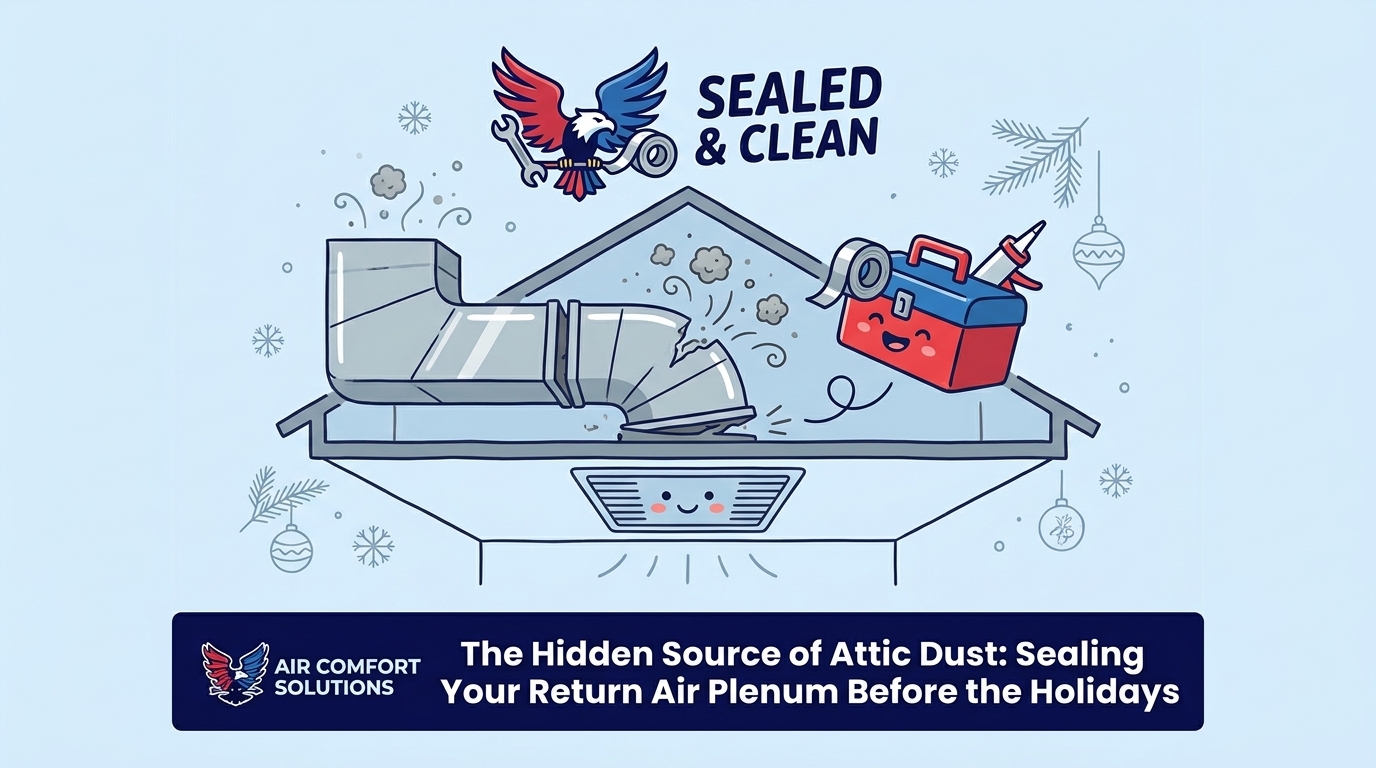
The Value of Sealing Your Return Air Plenum Before the Holidays
Most homeowners buy expensive filters to fix dusty air, not realizing a leaky return plenum in the attic is the real culprit. See why sealing it now saves your holiday gatherings.
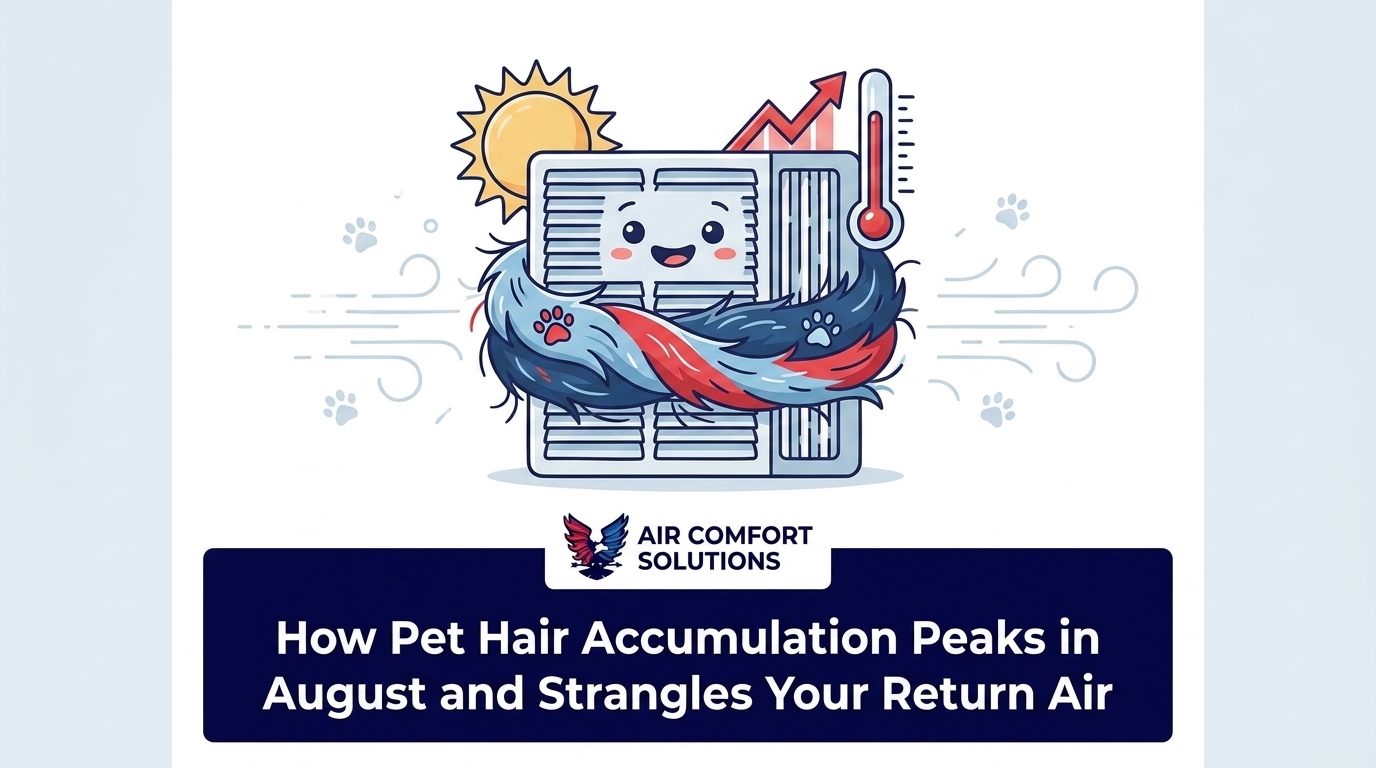
August in Southeast Texas brings relentless heat, but many homeowners do not realize exactly how pet hair accumulation peaks in August and strangles your return air. By the time late summer arrives, our technicians at Air Comfort Solutions have seen firsthand how your cooling equipment has already been working overtime for months. The components are stressed, the duty cycles are long, and the system is operating at maximum capacity just to maintain a baseline temperature indoors. During this vulnerable period, a hidden variable often pushes residential cooling systems past their breaking point: a sudden, massive influx of pet dander and hair.
To protect your home's comfort and efficiency, maintaining your air conditioning systems is non-negotiable, and integrating robust indoor air quality solutions can prevent minor issues from snowballing into complete mechanical failures.
The return air filter acts as the primary gateway for your entire HVAC system. It is designed to catch airborne particulates before they can enter the sensitive internal components of the air handler. However, our team typically sees this gateway easily become a dangerous choke point. When an excessive amount of pet hair coats the filter media, it creates a dense, felt-like barrier that drastically restricts the volume of air passing through. Understanding the mechanical relationship between this restricted airflow and your system's overall cooling capacity is the key to preventing an unexpected breakdown during the August late-summer peak cooling season.
The perfect storm of late summer:
• System fatigue: Motors and capacitors have already endured hundreds of hours of operation since spring.
• Peak temperatures: The ambient heat requires the system to run longer to satisfy the thermostat.
• Biological shifts: Pets undergo seasonal changes that drastically increase the amount of hair introduced into the home's air supply.
Most pet owners expect heavy shedding in the spring when dogs and cats lose their heavy winter coats. However, in our years of serving Pinehurst TX families, we often have to explain that the biological trigger for shedding is not just tied to temperature; it is heavily influenced by changing photoperiods, or the amount of daylight available in a 24-hour cycle. As August approaches, the days slowly begin to shorten. This shift in daylight hours triggers a secondary shedding phase in many dog and cat breeds as their bodies prepare to grow a new, denser coat for the upcoming winter.
This late-summer shed often catches homeowners off guard. While the spring shed is a highly anticipated event, the August shed happens quietly, right when the home's cooling system is most vulnerable. The sheer volume of hair released during this secondary shedding phase can easily rival the spring transition, creating a heavy burden on the home's air filtration system.
The science behind this phenomenon is rooted in the pet's endocrine system. The pineal gland responds to the decreasing daylight by signaling the hair follicles to release the current coat. For indoor pets, this biological process is often prolonged and intensified. Because indoor environments feature artificial lighting and climate control, the natural shedding cycle becomes confused. As a result, indoor pets often experience a continuous, low-grade shed year-round, punctuated by a severe spike during the August late-summer peak cooling period.
• Spring Shed — Primary Trigger: Increasing daylight, rising temperatures — Impact on Indoor Environment: Heavy clumps of undercoat, visible on furniture — HVAC Vulnerability Level: Moderate (AC duty cycles are shorter in spring)
• Late-Summer Shed — Primary Trigger: Decreasing daylight (photoperiod shift) — Impact on Indoor Environment: Fine topcoat hairs, highly airborne dander — HVAC Vulnerability Level: Severe (AC runs constantly, pulling hair into vents)
• Year-Round Indoor — Primary Trigger: Artificial lighting, constant indoor climate — Impact on Indoor Environment: Steady accumulation of hair and dander — HVAC Vulnerability Level: Low to Moderate (managed by regular filter changes)
Every strand of hair that detaches from your pet eventually becomes airborne or settles on the floor, where foot traffic stirs it back into the air. From there, the home's air currents carry this biological debris directly toward the strongest source of suction in the house: the HVAC return air intake.
The brutal August heat in Southeast Texas forces the air conditioner to run continuously. During these extreme weather patterns, our technicians note that the HVAC duty cycle—the amount of time the system spends actively cooling—extends dramatically. Instead of running for fifteen minutes and resting for twenty, the blower motor may run almost non-stop throughout the hottest parts of the afternoon. This constant operation turns the return air vent into a powerful, unyielding vacuum for shedding hair.
As the blower motor continuously pulls air from the living space, it accelerates the rate at which pet hair is drawn into the return grilles. Hair behaves differently than standard household dust when it meets a filter. Dust tends to accumulate as a loose powder, but pet hair weaves itself together. The long strands interlock with the filter's synthetic fibers and with each other, rapidly creating a matted, impermeable barrier. This matting effect effectively seals off the air supply to the blower motor.
The timeline of restriction:
• Days 1-7: The filter catches normal dust and initial pet hair. Airflow remains relatively normal.
• Days 8-14: The secondary shedding phase peaks. Hair begins to weave a solid mat across the filter media.
• Days 15-21: The matting becomes dense enough to restrict air velocity. The blower motor strains, and cooling efficiency drops.
• Days 22+: The filter is completely choked. What normally takes months to accumulate in a mild climate happens in just weeks during peak demand in Pinehurst TX.
This accelerated timeline means that a homeowner following a standard 30-day or 90-day filter replacement schedule will likely face severe airflow restriction before they even realize there is a problem. Selecting the best AC filter options for our area is critical, but as we constantly remind our customers, even the highest quality filter will eventually succumb to a sudden influx of woven pet hair if it is not monitored closely during peak season.
To understand why a hair-clogged filter is so dangerous to your cooling system, we always show our clients the physics of heat absorption happening inside the indoor unit. The evaporator coil is a network of copper or aluminum tubing filled with cold, liquid refrigerant. The primary role of this coil is not actually to create cold air, but to absorb heat from the warm return air blowing across it.
For this thermodynamic process to work correctly, the evaporator coil requires a massive, constant supply of warm air from the home. When pet hair blocks the return filter, it starves the coil of this essential heat. Without a steady flow of warm air to absorb, the refrigerant inside the coil cannot boil and turn into a gas as it is designed to do. Instead, the temperature of the refrigerant plummets rapidly, dropping well below 32 degrees Fahrenheit.
High humidity in the region provides ample moisture in the indoor air. As this humid air slowly passes over the super-cooled evaporator coil, the moisture condenses on the cold metal fins. Because the coil is now below freezing, that condensation instantly turns to ice. This begins a cascading mechanical failure that threatens the entire system during the August late-summer peak cooling window.
The freezing process is not a slow, gradual event; once it begins, it accelerates rapidly. The initial layer of frost on the evaporator coil further restricts the narrow spaces between the metal fins, reducing airflow even more. This causes the temperature to drop further, which creates more ice. Within a matter of hours, the entire evaporator coil can become encased in a solid block of ice.
The consequences of a frozen coil:
• Liquid slugging: If the refrigerant does not boil into a gas, liquid refrigerant can travel back the outdoor compressor. Compressors are designed to pump gas, not liquid, and liquid slugging can destroy the compressor's internal valves.
• Blower motor burnout: The indoor blower motor continues trying to push air through a solid block of ice. The extreme resistance causes the motor to overheat and potentially short-circuit.
• Water damage: When the system is finally turned off, the massive block of ice melts rapidly, often overwhelming the condensate drain pan and causing water damage to ceilings or floors.
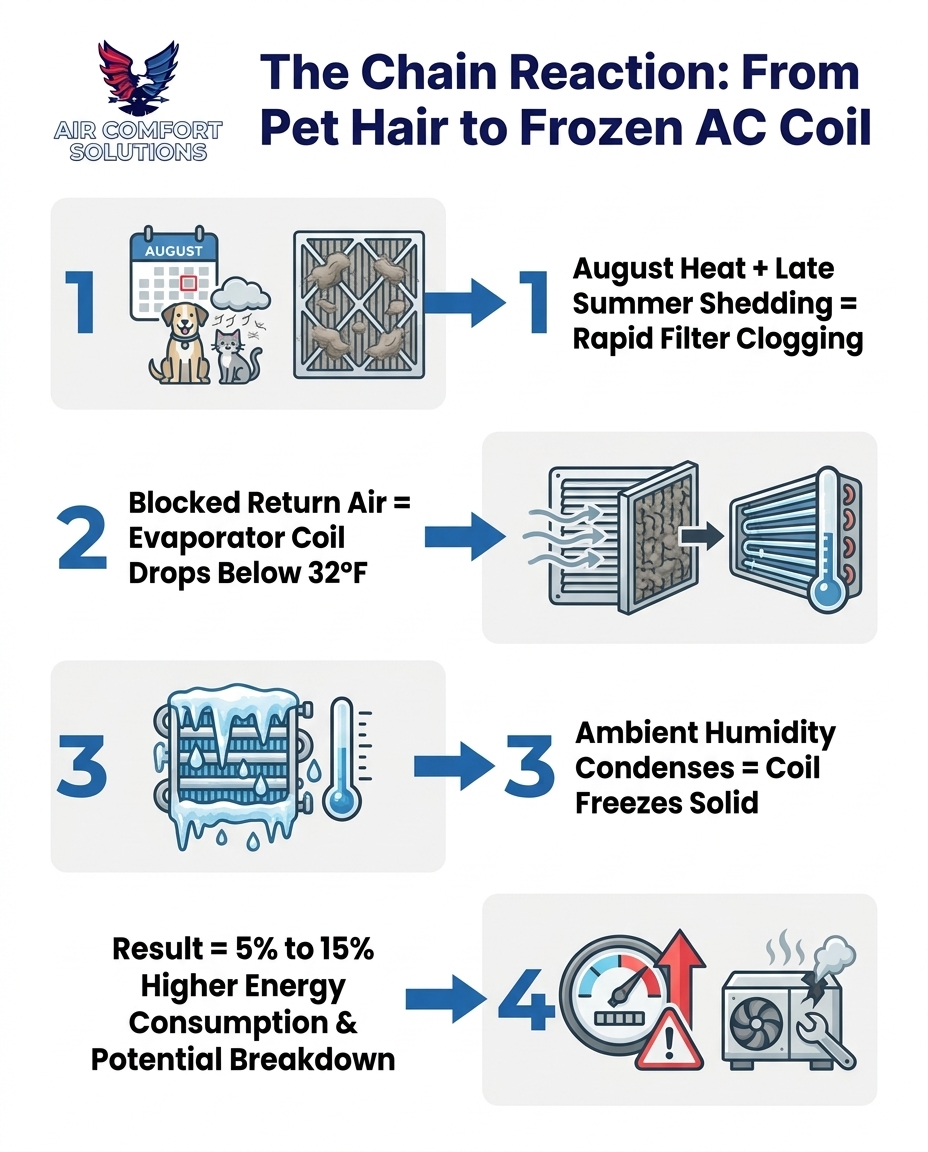
The transition from a dirty filter to a completely frozen evaporator coil provides several warning signs. Recognizing these symptoms early can save you from a catastrophic breakdown in the middle of a Pinehurst TX heatwave—a scenario our emergency dispatchers see all too often as kids head back to school and late-summer heat peaks. Homeowners must stay vigilant and monitor their system's performance, rather than simply waiting for the house to become unbearably hot.
When the return air is strangled by pet hair, the system will try to communicate its distress through changes in operation. If you notice any of the following patterns, it usually means your airflow is severely compromised.
• Longer cooling cycles: The system runs continuously, but the indoor temperature never quite reaches the set point on the thermostat. Because the airflow is restricted, the system is moving less conditioned air into the living space, forcing it to run longer to achieve the same result.
• Weak airflow at the registers: Put your hand over a supply vent in your living room or bedroom. If the air feels like a weak trickle rather than a strong, steady breeze, the blower motor is likely struggling to pull air through a hair-matted return filter.
• Warm air blowing from vents: If the air coming out of the registers feels warm or room-temperature, the evaporator coil has likely already frozen over. A solid block of ice prevents the air from touching the cold metal fins, meaning no heat is absorbed and no cooling takes place.
• Visible excessive dust and hair: Take a look at the outside of your return air grilles. If you see a thick layer of dust, dander, and pet hair gathering on the slats of the grille itself, the filter behind it is almost certainly overwhelmed.
Catching these signs early is the primary benefit of being enrolled in a routine AC maintenance plan, where regular check-ups ensure that airflow restrictions are caught before they cause mechanical damage.
Managing the sudden influx of pet hair requires a proactive approach to your home's filtration strategy. During the August late-summer peak cooling season, the standard rules of filter replacement no longer apply. You must adapt your maintenance routine to match the increased demand on the system.
Here is a clear, safe approach our team recommends for managing high-demand filter needs without risking damage to your equipment:
1. Increase replacement frequency: Do not wait for the first of the month. During August, check your return air filters weekly. Pull the filter out and hold it up to a light source. If you cannot see light shining through the media, the filter is clogged with pet hair and must be replaced immediately.
2. Avoid overly restrictive filters: It is tempting to buy the highest MERV-rated filter available to catch all the pet dander. However, highly restrictive filters (MERV 13 and above) already reduce airflow by design. When you add a layer of matted pet hair to a high-MERV filter, you completely suffocate the blower motor. Opt for a mid-range filter (MERV 8 to 11) and change it much more frequently.
3. Maintain the perimeter: Stop the hair before it reaches the HVAC system. Vacuum the floors around the return air grilles every few days. Use a brush attachment to clean the outer slats of the grille, preventing hair from being sucked inside when the system kicks on.
4. Keep blower compartments sealed: Never attempt to open the indoor air handler or access the evaporator coil yourself. Modern HVAC systems contain high-voltage electrical components and delicate aluminum fins that are easily crushed. Filter management should only happen at the designated return grilles or the external filter rack.
If you discover that your filter is completely matted with hair and your system is exhibiting signs of a freeze-up, replacing the filter alone will not solve the immediate problem. In our experience, once the evaporator coil is frozen, the system requires careful intervention to prevent permanent damage.
The immediate action you must take is to turn the thermostat to the "off" position and switch the fan setting from "auto" to "on." This stops the outdoor compressor from sending more cold refrigerant to the indoor unit, while the indoor blower motor continues to circulate warm air over the frozen coil to begin the thawing process. Thawing a heavily frozen system can take anywhere from four to twenty-four hours, depending on the severity of the ice buildup.
The danger of DIY intervention cannot be overstated. Never attempt to use a hair dryer, heat gun, or sharp object to melt or chip the ice off the evaporator coil. The metal tubing is incredibly thin, and a single slip can puncture the coil, releasing all the refrigerant and requiring a total coil replacement.
Once the system is turned off and thawing has begun, professional diagnostics are required. A licensed technician must verify that the blower motor has not overheated and sustained permanent electrical damage from pushing against the blocked filter. Furthermore, they must check the refrigerant levels; while pet hair is a primary cause of airflow restriction, low refrigerant can also cause a coil to freeze, and a professional must rule out a leak. Working with a dedicated local team like Air Comfort Solutions ensures prompt local response times to save stressed AC systems from catastrophic failure when airflow restriction has already caused a breakdown in Pinehurst TX.
Restoring balance to the system means ensuring the blower wheel is clean, the condensate drain is clear of the hair that washed down during the thaw, and the mechanical components are operating within safe electrical tolerances. If your system has frozen over, reaching out for professional HVAC services is the only safe way to bring it back online.
The connection between your pet's seasonal shedding and your air conditioner's mechanical health is undeniable. As changing daylight hours trigger a heavy secondary shed, that hair is inevitably drawn into your HVAC system's return air. If left unchecked, this rapid accumulation strangles the airflow, starves the evaporator coil of necessary heat, and sets the stage for a frozen system and a costly breakdown.
Protecting your home's comfort requires vigilance. By checking your filters weekly, avoiding overly restrictive MERV ratings, and keeping the area around your return vents clean, you can maintain the critical airflow your system needs to survive the extreme heat. If you notice longer cooling cycles, weak airflow, or suspect your system is already struggling against how pet hair accumulation peaks in August and strangles your return air, do not wait for the unit to freeze solid. Taking proactive steps now ensures your home remains a cool, comfortable refuge through the toughest weeks of late summer.
Yes, excessive pet hair can cause significant mechanical failures in an air conditioner. When hair mats across the return filter, it severely restricts airflow, which forces the blower motor to overwork and overheat. This lack of airflow also causes the evaporator coil to freeze, which can eventually lead to fatal liquid slugging in the outdoor compressor.
Your AC is likely freezing in August due to a combination of long duty cycles and restricted airflow. During peak heat, the system runs continuously, acting as a powerful vacuum that quickly pulls late-summer pet shedding into the filter. Once the filter is clogged, the evaporator coil cannot absorb enough heat from the home, causing the refrigerant to drop below freezing and turn condensation into solid ice.
A clogged filter starves the evaporator coil of the warm air it needs to function correctly. The coil relies on heat from your home's return air to boil the liquid refrigerant into a gas. When a barrier of pet hair blocks that warm air, the refrigerant stays cold, chilling the metal fins below 32 degrees Fahrenheit and causing ambient humidity to freeze on contact.
If you have a dog during the late-summer shedding season, you should inspect your AC filter at least once a week. While standard recommendations suggest changing filters every 30 to 90 days, the increased volume of hair combined with the AC running non-stop in August can completely choke a filter in just 14 to 21 days.
No, a higher MERV filter will actually compound the problem if it is not managed perfectly. High-MERV filters have tighter weaves that naturally restrict airflow to catch microscopic particles; when you add a layer of pet hair to an already restrictive filter, it suffocates the blower motor much faster than a standard filter would.
Yes, frequently vacuuming the outside of your return vents and the surrounding floor is an excellent preventative measure. By removing loose pet hair from the perimeter before the HVAC system turns on, you significantly reduce the volume of debris that gets pulled into the filter, helping to maintain healthy airflow and prevent coil freezing.


Zane came out and did an amazing job! Super friendly, honest and transparent about the work that needed to be done. This is my second time working with Air Comfort Solutions and they’re my go to for HVAC services. Highly recommend.
God's AMAZING grace sent us Robert and Zane. We have been without air in this Texas heat for six weeks and four days. We've had a few contractors give us quotes all trying to upsell when we're at a low point. But not the guys at Air Comfort Solutions. They came in assessed our situation, gave us honest feedback, and showed us the issues as they proceeded with the assessment for clear understanding. We highly recommend them for their professionalism, quality products, and fair pricing. We hands down support them for all the work they do 💯 %.
Robert and Zane gone above and beyond to make the process easy and affordable.
Would definitely recommend!!
I’m writing this review to let everyone know that Air Comfort Solutions is the company to work with. I know the owner ( Robert) for several years now. He has been taking care of my residential and business work orders. Robert is professional, knowledgeable and will save you money. I just want to thank Robert for great job you have been doing for me.