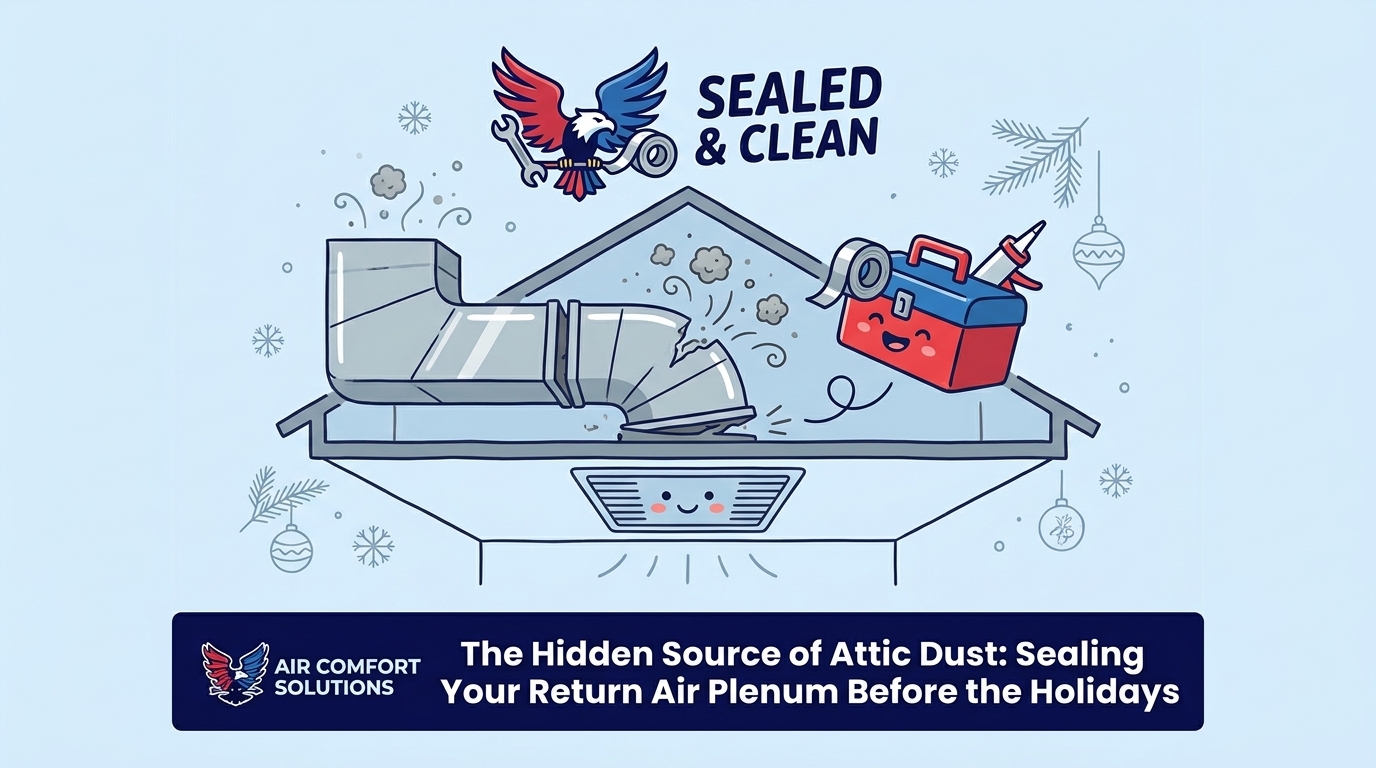
The Value of Sealing Your Return Air Plenum Before the Holidays
Most homeowners buy expensive filters to fix dusty air, not realizing a leaky return plenum in the attic is the real culprit. See why sealing it now saves your holiday gatherings.
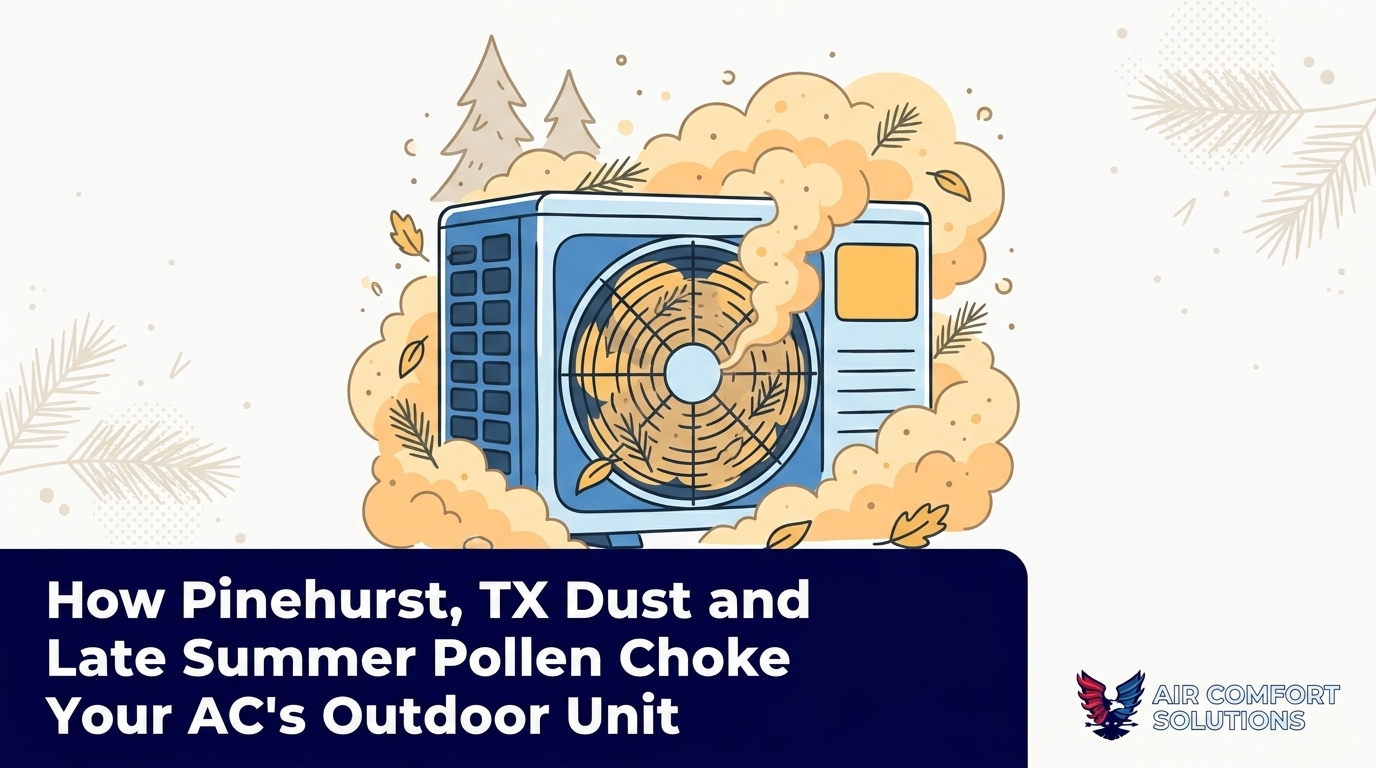
Before the first signs of autumn arrive and families settle into the back-to-school transition, the final stretch of summer delivers some of the harshest weather conditions of the year. If you find yourself wondering how Pinehurst dust and late summer pollen choke your outdoor unit, you are looking at one of the most common—yet frequently ignored—causes of late-season air conditioning failure. As late August peak heat and dry spells settle over the region, our team at Air Comfort Solutions routinely fields calls from homeowners whose outdoor HVAC units are facing their toughest environmental challenges. The combination of parched earth and blooming allergens creates a perfect storm for your system.
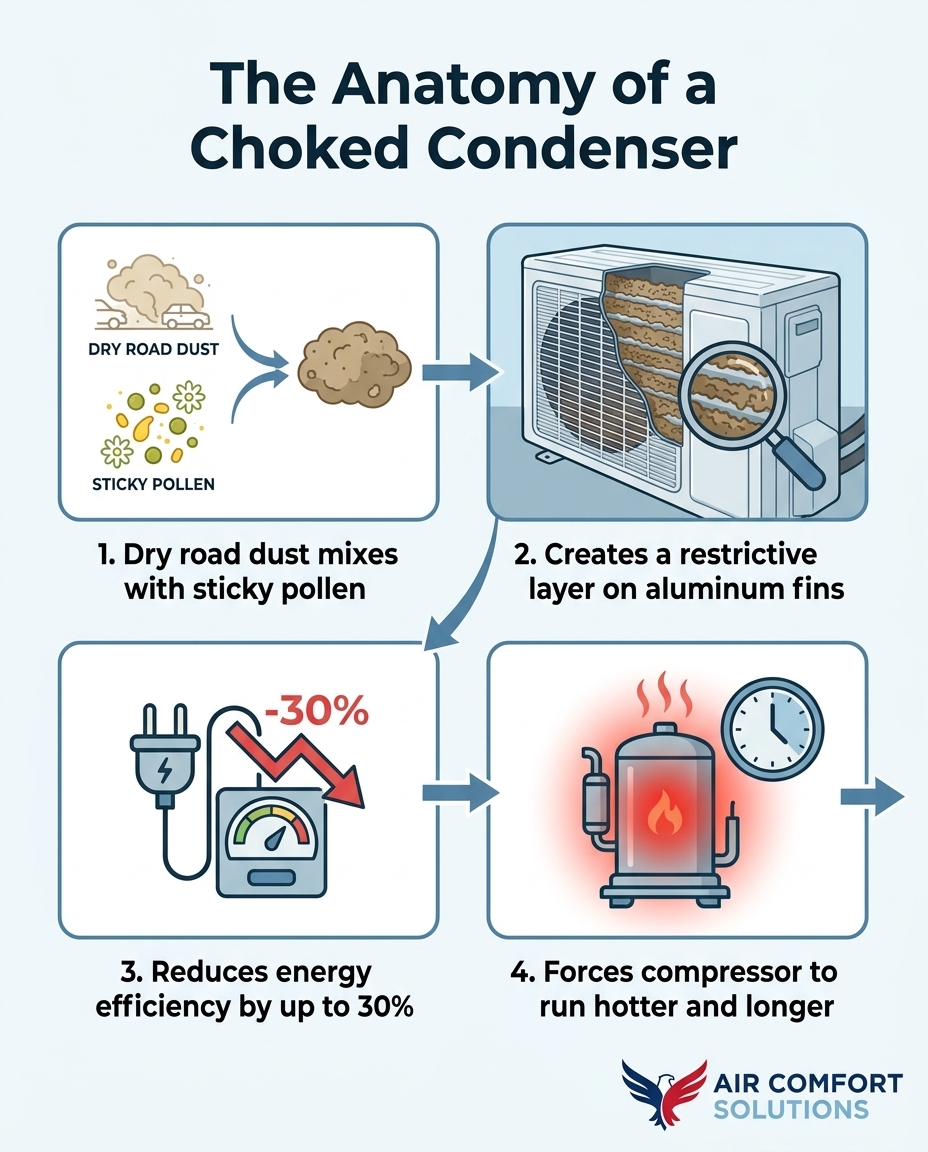
During these sweltering weeks, dry road dust and late-summer pollen combine in the air around your home. Together, they create a restrictive, suffocating blanket that coats your condenser fins. This buildup drastically reduces the unit's ability to release heat. At this stage, you face a critical decision point: you can ignore the longer run cycles and slightly warmer indoor temperatures, or you can proactively restore airflow before the excessive strain damages your compressor. Maintaining clean, unobstructed airflow is a fundamental part of reliable air conditioning services, ensuring your system survives the end of the season without a catastrophic breakdown.
A struggling air conditioner in this environment is not always suffering from a mechanical failure or a refrigerant leak. Very often, the drop in cooling performance is a direct environmental consequence of the local climate. At Air Comfort Solutions, we physically see and treat this specific neighborhood debris pattern every day. In our years of servicing cooling systems across the Pinehurst TX area, we've learned exactly how the local environment impacts equipment, and we recognize the unique seasonal overlap that creates this stubborn buildup.
When you rely on professional Pinehurst HVAC services, you get technicians who understand that regional weather patterns play a massive role in system health. The late summer season brings two distinct environmental factors that collide right at your outdoor unit.
Prolonged dry periods bake the ground, turning normal topsoil and road dirt into fine, airborne particulates. Every time a car drives by, the wind blows, or a lawnmower runs over dry grass, clouds of this microscopic dust launch into the air.
• The vacuum effect: Your condenser fan acts like a massive outdoor vacuum cleaner, pulling thousands of cubic feet of air through the side panels every minute.
• Microscopic trapping: The delicate aluminum fins on your outdoor unit are spaced just millimeters apart, making them the perfect filter to trap this fine, airborne powder.
• Cumulative buildup: Over weeks of dry weather, layer upon layer of road dust settles deep inside the coil, severely restricting the pathways where air needs to flow.
Just as the ground reaches its driest point, late-season allergens arrive in full force. Ragweed and other local plants release massive amounts of pollen into the air.
• The sticky factor: Unlike dry dust, pollen carries organic compounds that make it naturally sticky.
• The binding agent: When this sticky pollen gets pulled into your air conditioner alongside the dry road dust, it acts like glue, binding the loose dirt directly to the metal fins.
• Stubborn adhesion: Once pollen anchors the dust to the coils, a simple rain shower or a gentle breeze is no longer enough to knock the debris loose.
To understand why this environmental debris is so damaging, you have to look at the primary job of your outdoor unit. The condenser's sole purpose is to pull outside air through its metal fins to release the heat that the refrigerant absorbed from inside your house. The aluminum fins increase the surface area, allowing the heat to dissipate quickly into the surrounding air.
However, during late August peak heat and dry spells, a chemical-like reaction occurs on the surface of these fins. When dry road dust meets sticky pollen, they form a baseline layer of grime. Then, early morning dew or high evening humidity introduces a small amount of moisture to the mix. The moisture activates the sticky properties of the pollen, turning the dusty mixture into a thick, paste-like substance. As the hot afternoon sun bakes the unit, this paste hardens into a concrete-like crust over the delicate aluminum fins—a stubborn barrier our technicians spend hours carefully removing during late summer service calls.
This crust acts as a heavy insulating blanket. Instead of air flowing freely between the metal ridges to carry heat away, the air slams into a solid wall of baked-on debris. The fan continues to spin, burning electricity, but it cannot pull enough air through the suffocated coils. The heat remains trapped inside the refrigerant, and your system loses its ability to cool your home efficiently.
Because the outdoor unit sits in the backyard or on the side of the house, the physical buildup of dirt often goes unnoticed until the system completely fails. However, your air conditioner will usually give you warning signs that it is suffocating. Recognizing these hidden symptoms early can save you from a total breakdown during the hottest time of the year.
One of the most obvious signs is an air conditioner that runs constantly but struggles to lower the indoor temperature. You might notice the system running for hours on end, yet the thermostat never quite reaches your set temperature. This happens because the system is working at a severely reduced capacity. According to data from the U.S. Department of Energy, dirty condenser coils can reduce an air conditioner's energy efficiency by up to 30%. That means your system is working 30% harder just to provide the same amount of cooling.
Watch for these common symptoms our team frequently encounters in Pinehurst TX area homes:
• Spiking energy bills: You will notice a significant jump in your late-summer electricity costs, even though you have not changed your thermostat settings.
• Weak airflow at the vents: The air coming out of your indoor registers may feel weak or lukewarm instead of crisp and cold.
• Unusual outdoor noises: The outdoor fan motor may sound louder or hum more aggressively as it strains to pull air through the blocked fins.
• Excessive heat radiating from the unit: If you stand near the outdoor cabinet, you may feel an abnormal amount of intense heat radiating from the metal casing.
If you notice any of these signs, it is highly likely that your outdoor unit is suffocating. Understanding the dirty condenser coil and AC performance connection is vital for catching the problem early and preventing severe mechanical damage.
Ignoring a choked condenser coil does much more than just raise your electricity bill. It triggers a dangerous domino effect that directly threatens the most expensive component in your entire HVAC system: the compressor. The compressor is the heart of your air conditioner, responsible for pumping refrigerant between the indoor and outdoor coils.
When airflow is restricted by a thick blanket of dust and pollen, the heat trapped inside the system has nowhere to go. Because the heat cannot escape into the outside air, the refrigerant returning to the compressor is much hotter than it should be. This forces the compressor to run at dangerously high temperatures. A pattern we see often during late summer emergency calls is a compressor that has been pushed to the absolute brink by a suffocated coil.
The stages of compressor failure caused by restricted airflow:
1. Overheating: The lack of heat transfer causes the internal temperature of the compressor to skyrocket.
2. Oil breakdown: The extreme heat begins to break down the specialized lubricating oil inside the compressor, increasing friction on the moving parts.
3. Thermal overload: The compressor gets so hot that the internal safety switches trip, shutting the system down temporarily to prevent a fire or explosion.
4. Premature failure: After repeated thermal overloads during late August peak heat and dry spells, the internal motor windings burn out entirely, resulting in a dead compressor.
The cumulative effect of operating under this extreme stress during the hottest weeks of the year significantly increases the risk of a catastrophic failure. A dirty coil transforms a standard cooling cycle into a grueling endurance test for your equipment.
When homeowners realize their outdoor unit is choked with debris, the first instinct is often to grab a hose and start spraying. However, cleaning a condenser coil requires extreme caution. The aluminum fins are incredibly fragile and can easily bend flat if you use too much water pressure, which will block the airflow even worse than the dirt did. It is critical to understand the difference between safe perimeter maintenance and professional deep cleaning.
• Clearing loose leaves and twigs — Who Should Do It: Homeowner — Why It Matters: Removes large obstructions from the base of the unit, allowing air to flow freely from the bottom.
• Trimming bushes back 2 feet — Who Should Do It: Homeowner — Why It Matters: Ensures the unit has enough breathing room to pull in fresh air and exhaust hot air away from the house.
• Deep fin cleaning — Who Should Do It: Professional Only — Why It Matters: Requires specialized fin combs and low-pressure sprayers to remove baked-on pollen without bending the delicate aluminum.
• Applying chemical cleaners — Who Should Do It: Professional Only — Why It Matters: DIY chemical coil cleaners can eat through the metal coils and cause severe refrigerant leaks if not neutralized properly.
• Opening the electrical cabinet — Who Should Do It: Professional Only — Why It Matters: High-voltage capacitors hold lethal electrical charges even when the power is turned off at the breaker.
A strict warning for Pinehurst TX area homes: We strongly urge our customers never to use chemical DIY coil cleaners, pressure washers, or stiff bristle brushes on their air conditioners. Never open the electrical cabinet or attempt to disassemble the outer casing unless you hold a valid HVAC license. The safest and most effective way to restore your system's efficiency is to rely on a professional AC maintenance plan. A certified technician has the proper tools, training, and environmentally safe foaming agents to dissolve the sticky pollen and flush the road dust out from the inside of the coil.
It is easy to view the outdoor unit as a separate entity from the rest of the house, but your HVAC system operates as one continuous loop. What happens outside directly dictates what you feel inside. When the outdoor unit struggles to release heat due to a layer of dust and pollen, the indoor coil simultaneously struggles to absorb heat from your living spaces.
This disruption in the heat transfer process has a profound impact on your indoor environment. Because the system cannot absorb heat effectively, it also loses its ability to extract moisture from the air. A choked condenser often leads to a clammy, humid feeling inside the house. You might notice that your floors feel slightly sticky, or the air feels heavy and stale, even if the thermostat says the temperature is relatively cool.
Addressing the outdoor unit's airflow is a critical first step in maintaining overall indoor air quality and comfort. For Pinehurst TX area homes dealing with excessive humidity or poor air circulation, restoring the outdoor unit's performance is often the missing puzzle piece we recommend addressing before exploring comprehensive indoor air quality solutions to keep the air inside your home pristine, dry, and comfortable.
As the late-summer heat drags on, homeowners often have questions about why their systems are suddenly struggling. Here are clear answers to the most common concerns regarding environmental debris and air conditioning performance.
Yes, sticky pollen can coat the outdoor condenser fins, attracting dry road dust and severely restricting the airflow needed to cool your home. When ragweed and other allergens peak during late August peak heat and dry spells, they create a glue-like substance that binds dirt directly to the delicate metal components, forcing the system to work much harder.
Aside from extreme ambient heat, a dirty condenser coil forces the system to run longer to release trapped heat, leading to constant cycles and much higher energy bills. If the outdoor unit cannot exhaust the heat it absorbed from inside your house, the thermostat will never reach its target temperature, causing the motor to run non-stop.
Absolutely. If the fins are completely choked by dust and debris, the compressor can overheat and trigger a safety shutdown, stopping the cooling process entirely. Long before a complete shutdown, you will notice the air coming from your vents feeling lukewarm instead of crisp and cold.
Energy efficiency drops by up to 30%, the compressor sustains excess wear from overheating, and the system struggles to maintain the set thermostat temperature. The longer the system runs with a dirty condenser, the higher the risk of premature mechanical failure.
Homeowners should only clear the perimeter of loose debris, leaves, and overgrown vegetation to ensure a two-foot clearance around the cabinet. Deep cleaning of the delicate fins requires professional tools and expertise, and you should never use DIY chemical cleaners or pressure washers, which can permanently damage the equipment.
Understanding exactly how local road dust and sticky pollen restrict your condenser's airflow is the very first step in protecting your cooling system. When you recognize that a struggling air conditioner in late summer is often battling an environmental blanket rather than a mechanical breakdown, you can take the right steps to intervene before permanent damage occurs.
By focusing on safe perimeter clearing and knowing when it is time to call the experts at Air Comfort Solutions for deep fin cleaning, you can safeguard your equipment. Do not let the environmental buildup of Pinehurst TX area homes force your compressor to an early grave. Let our experienced team help you restore your system's efficiency, keep your energy consumption in check, and ensure your home stays perfectly comfortable through the back-to-school transition and the very last heat wave of the season.


Zane came out and did an amazing job! Super friendly, honest and transparent about the work that needed to be done. This is my second time working with Air Comfort Solutions and they’re my go to for HVAC services. Highly recommend.
God's AMAZING grace sent us Robert and Zane. We have been without air in this Texas heat for six weeks and four days. We've had a few contractors give us quotes all trying to upsell when we're at a low point. But not the guys at Air Comfort Solutions. They came in assessed our situation, gave us honest feedback, and showed us the issues as they proceeded with the assessment for clear understanding. We highly recommend them for their professionalism, quality products, and fair pricing. We hands down support them for all the work they do 💯 %.
Robert and Zane gone above and beyond to make the process easy and affordable.
Would definitely recommend!!
I’m writing this review to let everyone know that Air Comfort Solutions is the company to work with. I know the owner ( Robert) for several years now. He has been taking care of my residential and business work orders. Robert is professional, knowledgeable and will save you money. I just want to thank Robert for great job you have been doing for me.