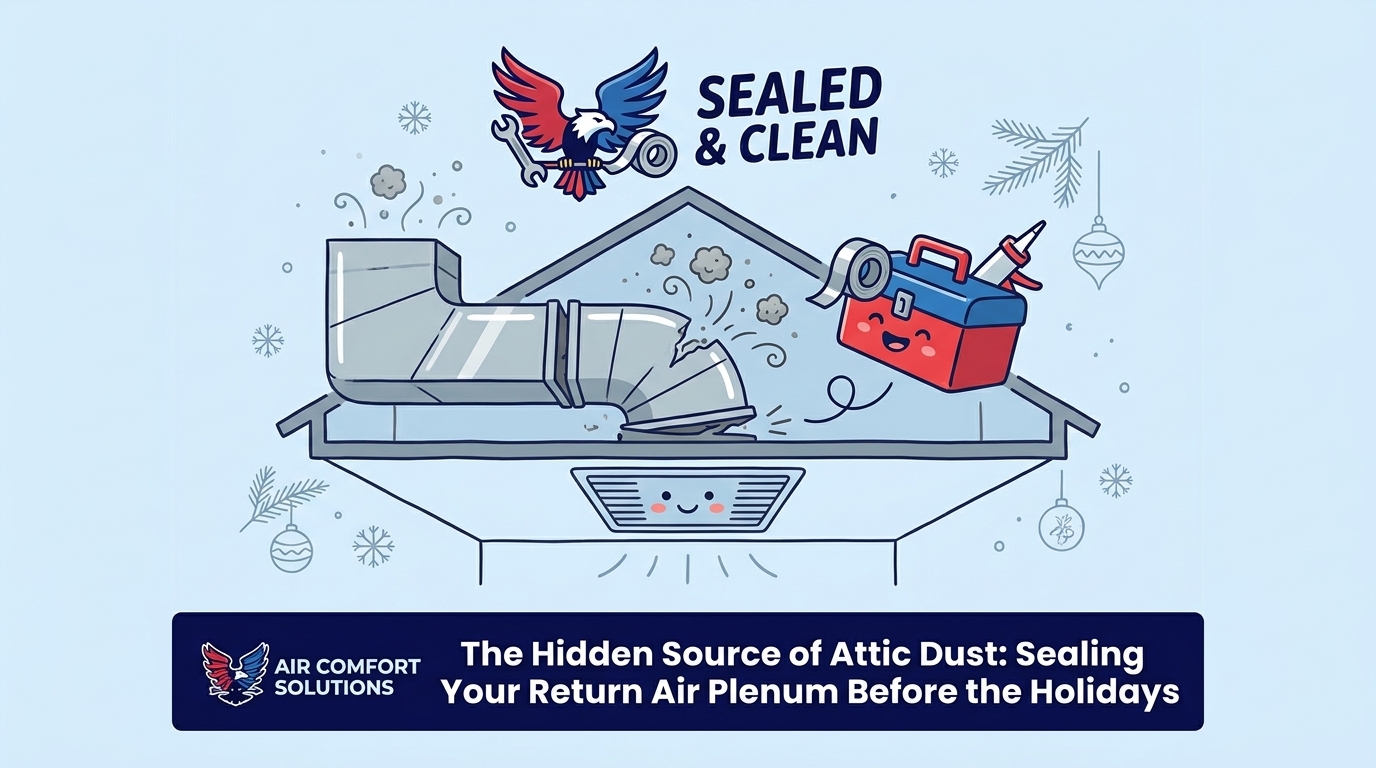
The Value of Sealing Your Return Air Plenum Before the Holidays
Most homeowners buy expensive filters to fix dusty air, not realizing a leaky return plenum in the attic is the real culprit. See why sealing it now saves your holiday gatherings.
Nearly 30 percent of the conditioned air moving through a typical residential duct system escapes through hidden leaks and poor connections, which is why identifying drafts around your vents before winter arrives in Magnolia is one of the most effective ways to protect your home's energy efficiency. Most homeowners naturally assume that cold winter drafts originate from aging windows, poorly weatherstripped doors, or uninsulated walls. While perimeter leaks certainly contribute to a chilly home, the largest and most persistent source of heat loss often sits right above your head.
When you feel a cold breeze in a closed room, the culprit is frequently the ceiling register. The transition point where your hidden ductwork meets the visible ceiling vent is notoriously prone to seal failure. If that seal breaks, your ductwork essentially acts as an open straw, pulling freezing, unconditioned attic air directly into your living space while simultaneously allowing your expensive heated air to escape into the rafters.
Addressing this specific vulnerability during the September pre-heating season gives you a distinct advantage. Catching a degraded seal now prevents your heating equipment from working overtime once the temperatures finally drop. To ensure your entire HVAC system is ready for the seasonal shift, shifting your inspection focus from the exterior walls to your ceiling vents is a highly strategic starting point.
To understand why ceiling drafts occur, you have to look at the components hiding just out of sight. A "vent boot" is the critical transition piece—usually made of galvanized metal or rigid plastic—that connects the flexible or rigid ductwork in your attic to the square or rectangular hole cut into your drywall. The visible ceiling register you see inside your home simply screws into this boot or the surrounding drywall.
For your heating and cooling system to operate efficiently, the connection between the vent boot and the drywall must be perfectly airtight. Installers typically use specialized mastic sealant or foil-backed HVAC tape to bridge this gap, ensuring that the conditioned air flows straight into the room without bleeding into the attic space.
However, the local climate creates a harsh environment for these materials. In our years of inspecting ductwork across Southeast Texas, our team at Air Comfort Solutions has seen firsthand how summer attic temperatures frequently exceed 140 degrees Fahrenheit. This intense, trapped heat essentially bakes the ductwork and the surrounding sealants day after day. Over multiple summer cycles, the mastic dries out, becomes brittle, and begins to crack. Foil tape loses its adhesive properties and peels away from the dusty drywall. Once the seal is compromised, the barrier between your comfortable living space and the raw attic environment is broken.
The structural layout of most Magnolia area homes places the majority of the ductwork in unconditioned attic spaces. This means the ducts are entirely exposed to extreme temperature fluctuations. The vent boot serves as the only bridge between that hostile attic environment and your climate-controlled rooms.
A properly sealed boot: Directs 100 percent of the airflow from the duct into the room. The mastic or tape creates a continuous, unbroken barrier that prevents any attic air from bypassing the insulation and entering the home.
A degraded boot: Features hairline cracks, peeling tape, or complete separations between the metal and the drywall. Through the physics of air pressure, your HVAC system will actively pull raw attic air through these gaps every time the blower motor turns on, mixing dusty, freezing air with your heated air.
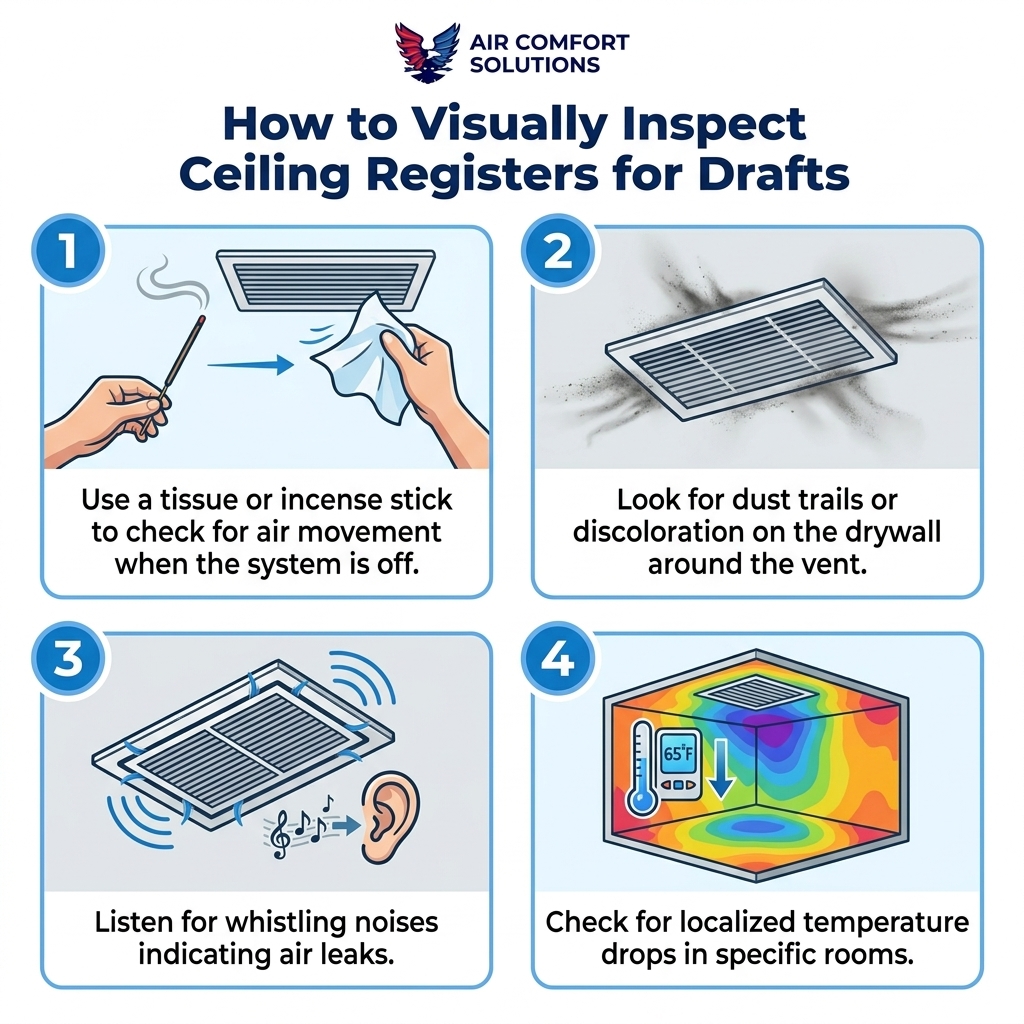
We always tell our customers that you do not need to climb into a sweltering or freezing attic to determine if your vent boots have failed. In fact, inspecting these connections from the safety of your living space is the most practical approach. By performing a few simple ground-level checks, you can accurately diagnose a breached seal.
1. The tissue or incense test: Turn your HVAC system completely off at the thermostat so the blower motor is not running. Tape a single square of light tissue paper to the ceiling immediately next to the edge of the vent cover, or carefully hold a lit stick of incense near the seam where the register meets the drywall. If the tissue flutters or the smoke is actively pulled into or blown away from the vent edge, you have a definitive air leak connecting to the attic.
2. Visual dust trails and streaking: Take a flashlight and closely examine the painted drywall immediately surrounding your ceiling registers. Look for faint, dark streaking, spiderweb-like dust patterns, or heavy particulate buildup clinging to the ceiling texture. Because attics are filled with loose fiberglass fibers and dust, a broken vent boot seal will forcefully pull these particles through the gap, leaving a visible, dirty trail on your ceiling over time.
3. Localized temperature drops: Pay attention to the ambient temperature directly beneath specific vents. If one room feels significantly colder than the rest of the house despite the heating system running, or if you feel a distinct column of cold air dropping from a specific register while the system is idle, the vent boot seal has likely separated, allowing heavy, cold attic air to sink into the room.
4. Whistling or unusual airflow noises: Listen closely to your vents while the heating system is actively blowing. A properly sealed register produces a smooth, consistent rushing sound. If you hear a high-pitched whistling, a fluttering noise, or a sound resembling wind blowing through a tight crack, air is being forced through a narrow gap between the vent boot and the drywall.
A compromised vent boot is far more than a minor annoyance; it is a structural failure that actively undermines your home's entire climate control strategy. When cold attic air continuously leaks into your living space, your thermostat detects the temperature drop and forces your heating equipment to run longer, more frequent cycles. This constant battle against incoming drafts accelerates wear and tear on blower motors, heat exchangers, and electrical components.
Furthermore, the air being pulled through these ceiling gaps is rarely clean. Attics are holding zones for allergens, pest dander, loose fiberglass insulation, and stagnant dust. When our technicians investigate complaints about an unexplained increase in household dust or a decline in indoor air quality, leaky ceiling registers are frequently the hidden culprit we find.
The consequences of attic air intrusion extend beyond just thermal discomfort. The mixing of different air masses creates a cascade of secondary issues throughout the home.
• Constant cold drafts — Underlying Attic Issue: Attic air bypassing the thermal envelope — Impact on the Home: Forces heating equipment to overwork and increases energy consumption.
• Excessive indoor dust — Underlying Attic Issue: Negative pressure pulling attic particulates — Impact on the Home: Degrades air quality and clogs HVAC filters prematurely.
• Fluctuating humidity — Underlying Attic Issue: Moisture-laden air entering the living space — Impact on the Home: Creates an uncomfortable, clammy environment and strains the system.
During the early fall transition, the humidity levels in an unconditioned attic can swing wildly. When a broken vent boot allows this moisture-laden air to seep into your home, it forces your HVAC equipment to act as a heavy-duty dehumidifier. Addressing these structural leaks is the only permanent way to stabilize your indoor environment and protect your equipment from unnecessary strain.
While identifying a drafty vent is a straightforward process for a homeowner, repairing the underlying issue is an entirely different matter. It can be tempting to grab a roll of standard duct tape and attempt to seal the visible gaps from inside the room, but this approach is merely a cosmetic bandage. Surface-level taping does not address the structural separation in the attic, and standard adhesives will quickly fail again under the stress of normal temperature fluctuations.
Properly resealing a vent boot requires accessing the ductwork from inside the attic space. This is an inherently hazardous environment. Navigating an attic requires walking precisely on wooden joists often hidden beneath deep layers of blown-in insulation. A single misstep can result in a dangerous fall through the drywall ceiling. Furthermore, attics are filled with exposed electrical wiring, roofing nails, and extreme heat conditions that pose significant safety risks to untrained individuals.
Professional HVAC technicians utilize specialized, code-compliant mastic sealants that are specifically engineered to expand and contract with extreme temperature shifts without cracking. They know exactly how to clean the degraded surfaces, apply the correct fiberglass mesh tape, and layer the mastic to create a permanent, airtight bond between the metal boot and the drywall.
Because attic structures and duct layouts vary wildly, having a team that understands local building methods is invaluable. Over our years of serving the community, Air Comfort Solutions has developed a deep familiarity with local housing construction quirks in the Magnolia and Pinehurst areas. We know exactly how these attic-to-ceiling penetrations were originally installed, allowing us to spot hidden vulnerabilities that generic contractors might miss. A professional assessment also ensures that the draft isn't a symptom of a larger issue, such as disconnected trunk lines or problems causing high humidity inside your house.
Southeast Texas weather is famously unpredictable. The transition from a mild fall afternoon to a freezing winter night can happen in a matter of hours. These sudden, sharp cold snaps are exactly when compromised vent boots reveal themselves, flooding your home with freezing drafts just when you need your heating system to perform flawlessly.
Proactive inspection and repair during the early fall is your best defense. By shifting your winter preparation focus away from just weatherstripping doors and toward securing your ductwork connections, you are addressing the most significant source of energy loss in the home. A tightly sealed duct system ensures that every ounce of warm air your equipment produces actually reaches your living space.
If your visual inspections have revealed fluttering tissues, dark dust rings, or distinct cold spots beneath your ceiling registers, the time to act is now. Relying on Pinehurst and Magnolia area HVAC services ensures that these structural leaks are permanently resolved using the correct materials and techniques, safeguarding your home against the unpredictable winter weather ahead.
Discovering that your ceiling vents are leaking attic air into your home can be frustrating, but it is a highly solvable problem when approached with the right expertise. You do not have to spend the winter months battling cold drafts or paying for energy that simply escapes into your rafters.
By bringing in a qualified local professional to properly inspect and reseal your vent boots, you restore the integrity of your home's thermal envelope. This permanent repair immediately stops the drafts, improves your indoor air quality, and maximizes your heat pump heating efficiency. Take the necessary steps today to secure your ductwork, and enjoy a consistently warm, comfortable home all winter long.
Why is cold air coming from my vents when the heat is off?
Cold air drops from inactive vents because the seal between the ductwork boot and your ceiling drywall has broken. This gap acts as an open channel, allowing heavy, unconditioned cold air from the attic to sink naturally into your warmer living space. Resealing this connection from the attic side stops the draft permanently.
How do I know if my ductwork is leaking in the attic?
The most common signs of leaking ductwork include unusually high energy bills, excessive dust accumulation in your home, and specific rooms that are consistently harder to heat or cool. You might also notice a significant lack of airflow coming from the registers themselves. A professional static pressure test can definitively pinpoint hidden leaks within the attic.
How do you safely stop drafts from ceiling air vents?
The safest and most effective way to stop a ceiling draft is to have a professional HVAC technician apply specialized mastic sealant to the vent boot from inside the attic. Homeowners should avoid attempting to block the vent from the inside with plastic or standard tape, as this does not solve the structural leak and can restrict necessary system airflow.
Can I use standard duct tape to seal gaps around AC vents?
Standard cloth-backed duct tape should never be used to seal HVAC vents or ductwork. The adhesive on standard tape quickly dries out, turns brittle, and peels away when exposed to the extreme heat and cold fluctuations of an attic environment. Only code-compliant foil tape or professional-grade mastic sealant provides a lasting, airtight bond.
What is a vent boot and why does it cause drafts?
A vent boot is the metal or plastic transition piece that connects the hidden ductwork in your attic to the visible hole in your ceiling. When the sealant holding this boot to the drywall degrades and cracks over time, it creates a direct opening to the unconditioned attic. This opening allows cold air to draft into the room and heated air to escape.
How does summer heat in Texas affect winter heating efficiency?
The extreme 140-plus degree temperatures inside a Texas attic during the summer relentlessly bake the sealants, tapes, and plastics used on your ductwork. Over time, this heat causes the materials to dry out and crack, breaking the airtight seals. When winter arrives, those heat-damaged gaps become the exact entry points for freezing drafts, forcing your heating system to work much harder.


Zane came out and did an amazing job! Super friendly, honest and transparent about the work that needed to be done. This is my second time working with Air Comfort Solutions and they’re my go to for HVAC services. Highly recommend.
God's AMAZING grace sent us Robert and Zane. We have been without air in this Texas heat for six weeks and four days. We've had a few contractors give us quotes all trying to upsell when we're at a low point. But not the guys at Air Comfort Solutions. They came in assessed our situation, gave us honest feedback, and showed us the issues as they proceeded with the assessment for clear understanding. We highly recommend them for their professionalism, quality products, and fair pricing. We hands down support them for all the work they do 💯 %.
Robert and Zane gone above and beyond to make the process easy and affordable.
Would definitely recommend!!
I’m writing this review to let everyone know that Air Comfort Solutions is the company to work with. I know the owner ( Robert) for several years now. He has been taking care of my residential and business work orders. Robert is professional, knowledgeable and will save you money. I just want to thank Robert for great job you have been doing for me.