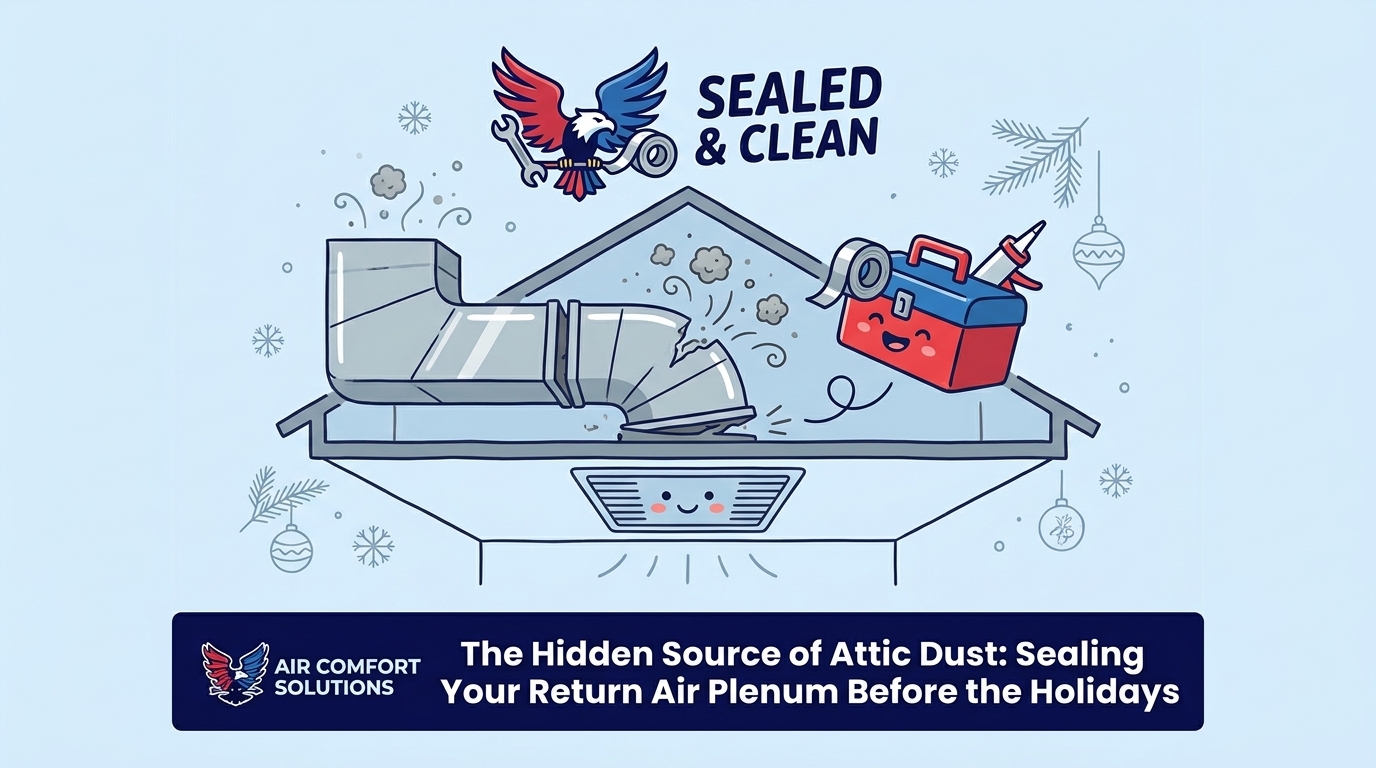
The Value of Sealing Your Return Air Plenum Before the Holidays
Most homeowners buy expensive filters to fix dusty air, not realizing a leaky return plenum in the attic is the real culprit. See why sealing it now saves your holiday gatherings.
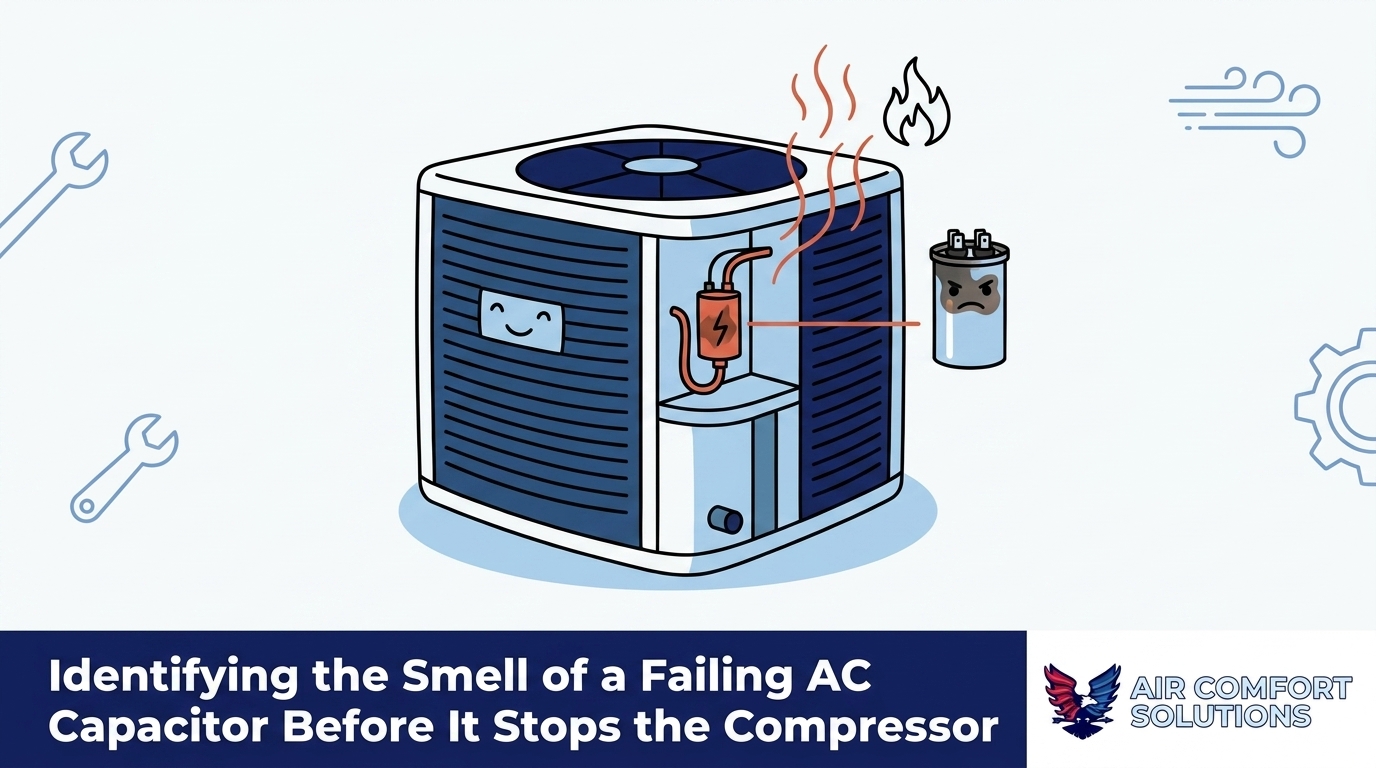
If you notice a sharp, chemical scent near your outdoor unit, identifying the smell of a failing AC capacitor before it stops the compressor is the single best way to prevent a catastrophic cooling breakdown. You walk outside, perhaps to check the mail or take out the trash, and you are hit with a faint but distinct odor that smells like melting plastic or an overheating electrical wire. The system might still be running, and cool air might still be blowing from your vents, but that scent is an immediate warning sign. During periods of August late-summer heavy use, your cooling equipment is pushed to its absolute limits, and components that have been working tirelessly for months begin to show signs of intense thermal stress.
To fully understand how to protect your air conditioning system, you need to know exactly what is happening inside that metal cabinet when this smell appears.
This distinct scent almost always points to a bulging, leaking, or overheating capacitor. The critical decision you face in this exact moment is whether to shut down the unit immediately to save the much more expensive compressor, or ignore the smell and risk a total system blowout. Catching this scent early is actually a stroke of luck. It is a rare, early warning sign that gives you the opportunity to intervene before a routine electrical repair escalates into a massive mechanical failure.
Homeowners often struggle to describe exactly what a failing HVAC component smells like, but the scent of a dying capacitor is highly specific. Unlike the dusty, burning smell you might notice the very first time you turn on your heater in the winter, this odor occurs during active cooling and carries a sharp, synthetic edge. Our technicians at Air Comfort Solutions have spent years serving homeowners in Pinehurst TX, and we know exactly what our local climate does to outdoor units. While these systems are exposed to intense elements, this particular smell originates from deep within the electrical panel of the condenser.
Capacitors are small, cylindrical devices that look somewhat like a metal soda can. Inside that metal casing, they contain a specialized dielectric fluid (often an oil-based compound) and layers of conductive material. This fluid is designed to help dissipate heat and maintain the electrical insulation required to store a massive charge.
When a capacitor begins to fail, it overheats. As the internal temperature skyrockets, that dielectric fluid literally begins to boil. The pressure builds, causing the top of the metal casing to bulge outward. Eventually, the seal breaks, and the boiling fluid vents into the air. This vented gas produces a highly distinct "ozone" smell, frequently compared to:
• Burning plastic: A harsh, synthetic scent that lingers heavily in the air immediately surrounding the outdoor unit.
• Melting electrical wires: A sharp, acrid odor similar to a short-circuiting appliance or a blown fuse in a car.
• A sweet, chemical tang: Some dielectric fluids produce a strangely sweet but distinctly unnatural chemical smell when vaporized.
It is vital to differentiate between harmless operational odors and the scent of mechanical distress. The smell of a boiling capacitor will always be strongest right next to the outdoor condenser unit, where the part is housed.
• Musty or "dirty sock" smell — Typical Source: Bacterial growth on the indoor evaporator coil. — Level of Concern: Moderate (Requires cleaning, but not an immediate mechanical emergency).
• Burning dust — Typical Source: Dust burning off heat exchangers during the first heating cycle of the year. — Level of Concern: Low (Normal and should dissipate within 30 minutes).
• Sharp ozone or burning plastic outdoors — Typical Source: Overheating capacitor venting boiling dielectric fluid. — Level of Concern: Severe (Requires immediate system shutdown to protect the compressor).
If you catch this scent while the system is actively trying to cool your home, it is a definitive sign that the electrical components are in distress and require immediate intervention.
In our experience repairing AC units across our service area, it is no coincidence that these electrical odors become incredibly common as summer draws to a close. Capacitors do not usually fail on the first mild day of spring; they fail after enduring months of continuous, grueling operation. The cumulative electrical and thermal stress placed on these small components eventually exceeds their physical limits.
With Pinehurst's intense summer heat and high humidity, air conditioners are forced into non-stop operation. During peak heatwaves, your system might run for hours at a time with only brief pauses. Every single time the cooling cycle starts, the capacitor must discharge a massive jolt of electricity. Doing this dozens of times a day, week after week, slowly degrades the internal materials.
Furthermore, the extreme ambient temperatures outside prevent the capacitor from properly cooling down between these cycles. The metal cabinet of the outdoor unit bakes in the direct sun, creating an oven-like environment for the electrical components inside. By the time we reach August late-summer heavy use, the capacitor has spent months operating at the very upper edge of its thermal tolerance.
As the intense heat persists, the dielectric fluid inside the capacitor begins to break down chemically. It loses its ability to insulate and cool the internal layers of foil. This creates a vicious cycle:
• Reduced cooling capacity: The degraded fluid cannot absorb heat effectively.
• Increased internal resistance: As the component heats up, electrical resistance increases, generating even more heat.
• Pressure accumulation: The boiling fluid creates gas, building pressure until the casing bulges and vents the scented gas you eventually smell.
This is a highly predictable wear pattern. A failing capacitor at the end of the summer is not necessarily a sign that you bought a defective overall system; it is simply the reality of what happens to electrical storage devices when subjected to relentless local heat and heavy workloads. When our team responds to calls for Pinehurst AC repair services, we always remind homeowners that knowing this is a common, localized wear pattern can give you peace of mind that the issue is straightforward.
To understand why that burning plastic smell is an emergency, you have to understand the mechanical relationship between the capacitor and the compressor. The compressor is the heart of your entire cooling system. It pumps the refrigerant through the lines, making heat transfer possible. However, the compressor requires an enormous amount of energy to start spinning—far more energy than your home's standard electrical wiring can provide all at once.
This is where the "run capacitor" comes in. You can think of the capacitor as a powerful, localized battery or a jump-starter. It stores up electricity and delivers a massive, instantaneous surge of power to the compressor the moment the thermostat calls for cooling. This surge gives the heavy compressor motor the torque it needs to overcome inertia and start spinning.
When the capacitor is bulging, leaking fluid, and venting that ozone smell, it is losing its ability to store and deliver that necessary electrical charge. It drops below its required microfarad rating, meaning it can no longer provide the "push" the compressor relies on.
When the compressor tries to start without the help of a healthy capacitor, a dangerous chain reaction begins. The motor is essentially stuck. Because it cannot start spinning, it begins pulling higher and higher amperage from your home's electrical grid, desperately trying to force itself to turn. This is known in the HVAC industry as "locked rotor amps."
This massive, sustained electrical draw generates intense heat inside the compressor. The delicate copper windings inside the motor begin to bake. If this cycle is allowed to continue, the protective insulation on those windings will melt away, causing an electrical short. Once the compressor shorts out or mechanically locks up from the heat, the entire unit is dead. What began as the most common AC repair—a simple capacitor swap—has now escalated into a catastrophic failure. This is why catching the smell early in Pinehurst TX is so critical.
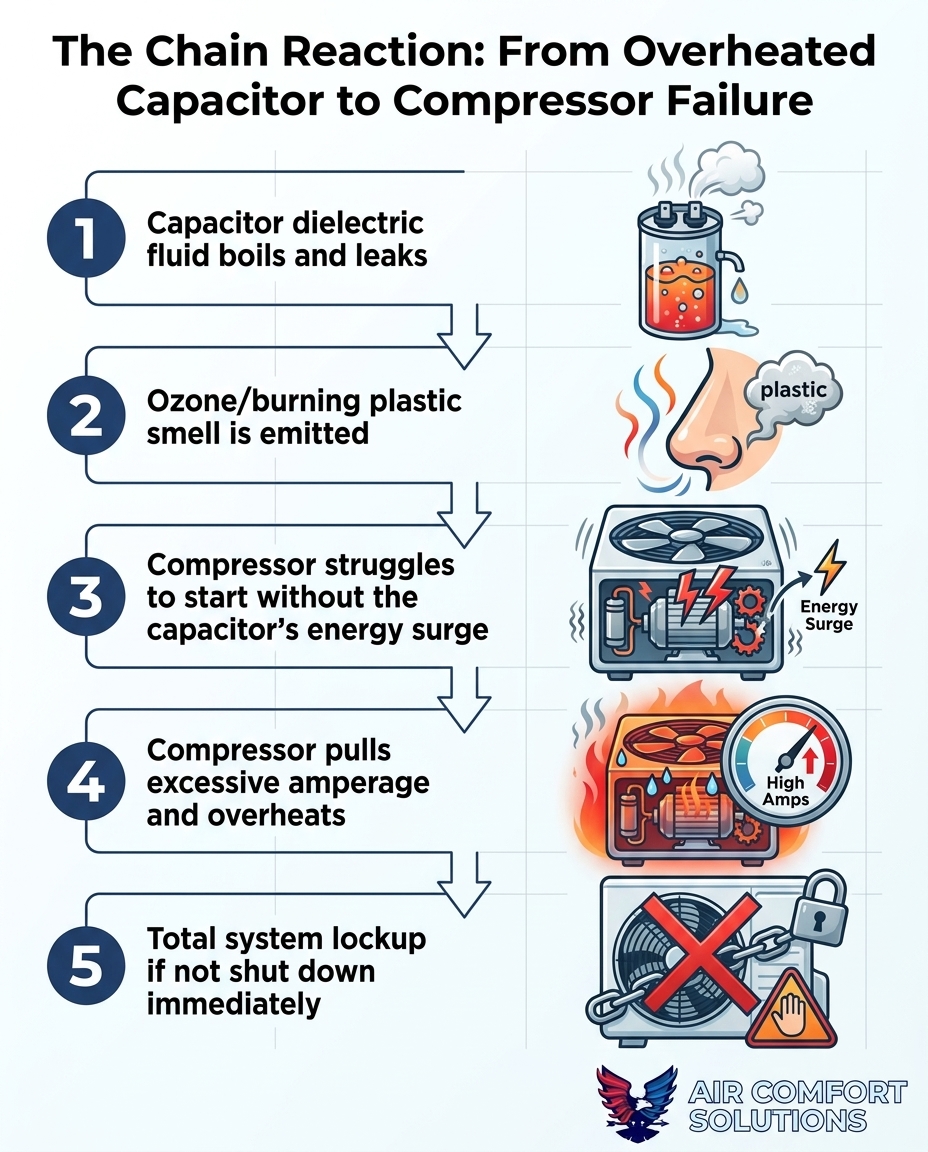
The moment you detect that faint electrical or burning plastic smell near your outdoor unit, you have reached a critical decision point. Treating the ozone smell as an emergency stop signal is the only way to protect the compressor from the chain reaction described above. Every minute the system continues to run or attempts to start with a failing capacitor increases the risk of permanent motor damage.
Take these urgent, actionable steps immediately to secure your equipment during August late-summer heavy use:
1. Turn off the thermostat immediately: Go to your indoor thermostat and switch the system from "Cool" to "Off." This stops the system from actively calling for cooling and prevents the indoor air handler from sending start signals to the struggling outdoor unit.
2. Shut off the breaker to the air conditioner: To completely sever the electrical connection and stop the thermal degradation, locate your home's main electrical panel. Find the dedicated breaker for the outdoor AC unit (often a double-pole breaker) and flip it to the "Off" position. You can also pull the disconnect block located in the small grey box mounted on the exterior wall next to the unit.
3. Call for prompt professional diagnostics: Reach out to our licensed HVAC technicians at Air Comfort Solutions to report the smell and the system shutdown.
4. Do not attempt a "test run": The most common mistake we see homeowners make is turning the system back on an hour later "just to see if it still smells" or "just to check if it fixed itself." It will not fix itself. Forcing the system to attempt another start with a boiled capacitor is often the final straw that kills the compressor. Leave it off.
If you are sitting in a warm house right now because you wisely shut off your system after smelling burning plastic, take a deep breath. You have likely just saved yourself from a massive headache. Validating your own vigilance is important here: noticing the smell before the system completely stops blowing cold air is the absolute best-case scenario for this type of breakdown.
Replacing a degraded, bulging capacitor is a highly straightforward, routine electrical repair. Our technicians can safely discharge the old unit, wire in a new one with the correct microfarad rating, and have your home cooling again very quickly. The part is small, the labor is minimal, and the disruption to your day is brief.
Contrast this with replacing a dead compressor. A compressor replacement is one of the most labor-intensive and severe failures an HVAC system can suffer. It requires recovering all the chemical refrigerant, cutting out the heavy failed motor with a torch, brazing in a new compressor, replacing the filter drier, pulling a deep vacuum on the entire system, and recharging it with fresh refrigerant. It is a major, highly disruptive operation.
Working with a reliable local company means you benefit from honest diagnostics designed to catch these components early. Our priority at Air Comfort Solutions is to save the homeowner from an expensive compressor blowout rather than exploiting the situation. Our honest technicians in Pinehurst TX will test the capacitor, show you the degraded readings, replace the single failing component, and get your system back online safely. Catching the smell early empowers us to perform the minor repair rather than delivering the bad news of a major system failure.
While identifying the smell is something any homeowner can do, resolving the issue requires professional expertise. Under no circumstances should you attempt to open the electrical panel of your air conditioner to inspect or replace the capacitor yourself.
Capacitors are designed to store massive amounts of electricity, and they retain this lethal charge long after the power to the unit has been disconnected. Even if you have flipped the breaker and pulled the outdoor disconnect, touching the terminals of a charged capacitor can deliver a dangerous, potentially fatal shock. Our licensed technicians carry specialized tools to safely bridge the terminals and discharge the stored energy before they ever touch the component with their hands.
Once the system is rendered safe, a professional diagnostic process involves precise measurement, not guesswork. The technician will use a specialized multimeter capable of reading capacitance. They will test the microfarad reading of the capacitor to see how far it has degraded below its factory rating. If the rating has dropped beyond the acceptable tolerance—or if the casing is visibly bulging and leaking dielectric fluid from the August late-summer heavy use—the part is condemned.
Crucially, the technician will also inspect the compressor windings. Using their meters, they will verify that the compressor motor did not suffer permanent electrical damage during the time it was struggling to start. They will check for shorts to ground and ensure the electrical integrity of the entire outdoor unit is intact before installing the new capacitor.
This situation also highlights the immense importance of ongoing seasonal maintenance. When you enroll in an Air Comfort Solutions AC maintenance plan, our technicians check the microfarad readings of your capacitors before the heavy summer heat arrives. This proactive approach allows us to replace a weakening capacitor long before it begins to boil, bulge, leak, and emit that burning plastic smell.
It produces a sharp, electrical "ozone" scent that is hard to ignore. This odor is often compared to melting plastic, burning wires, or a harsh chemical tang due to the boiling dielectric fluid escaping from the metal casing. The smell is highly localized and will be strongest right next to the outdoor condenser unit.
No, running the system forces the compressor to pull dangerous amounts of amperage in a desperate attempt to start. This massive electrical draw will rapidly overheat the internal windings and destroy the compressor entirely. Shut the system down at the thermostat and the breaker immediately.
Yes, if left running, the lack of starting torque causes the compressor to stall and overheat severely. This leads to total compressor failure, which is a severe, highly disruptive, and completely avoidable breakdown if the system is shut down in time. Protecting the compressor should be your first priority.
The outdoor unit houses the run capacitor, which stores electrical energy to start the compressor. When the capacitor overheats, its internal components and dielectric fluids degrade and boil, venting a gas that produces a distinct burning plastic odor. This is a sign of acute mechanical distress in Pinehurst TX climates.
Damage can occur very quickly, often within just a few cooling cycles of the capacitor failing to provide adequate starting torque. Immediate shutdown is required the moment the electrical smell is detected to ensure the compressor does not bake its internal wiring.
Identifying the smell of a failing AC capacitor before it stops the compressor is a massive win for any homeowner. By recognizing that sharp, ozone or burning plastic scent and taking immediate action, you are actively saving your system from a catastrophic failure. The wear and tear of August late-summer heavy use is inevitable, but how you react to the warning signs makes all the difference.
If you have noticed this distinct electrical odor, keep your system completely powered off and wait for professional help. Do not risk your safety or your equipment by attempting to restart the unit. Schedule a professional inspection with our team right away to have the electrical components safely tested, and consider exploring routine maintenance options to prevent these stressful electrical surprises in the future.


Zane came out and did an amazing job! Super friendly, honest and transparent about the work that needed to be done. This is my second time working with Air Comfort Solutions and they’re my go to for HVAC services. Highly recommend.
God's AMAZING grace sent us Robert and Zane. We have been without air in this Texas heat for six weeks and four days. We've had a few contractors give us quotes all trying to upsell when we're at a low point. But not the guys at Air Comfort Solutions. They came in assessed our situation, gave us honest feedback, and showed us the issues as they proceeded with the assessment for clear understanding. We highly recommend them for their professionalism, quality products, and fair pricing. We hands down support them for all the work they do 💯 %.
Robert and Zane gone above and beyond to make the process easy and affordable.
Would definitely recommend!!
I’m writing this review to let everyone know that Air Comfort Solutions is the company to work with. I know the owner ( Robert) for several years now. He has been taking care of my residential and business work orders. Robert is professional, knowledgeable and will save you money. I just want to thank Robert for great job you have been doing for me.