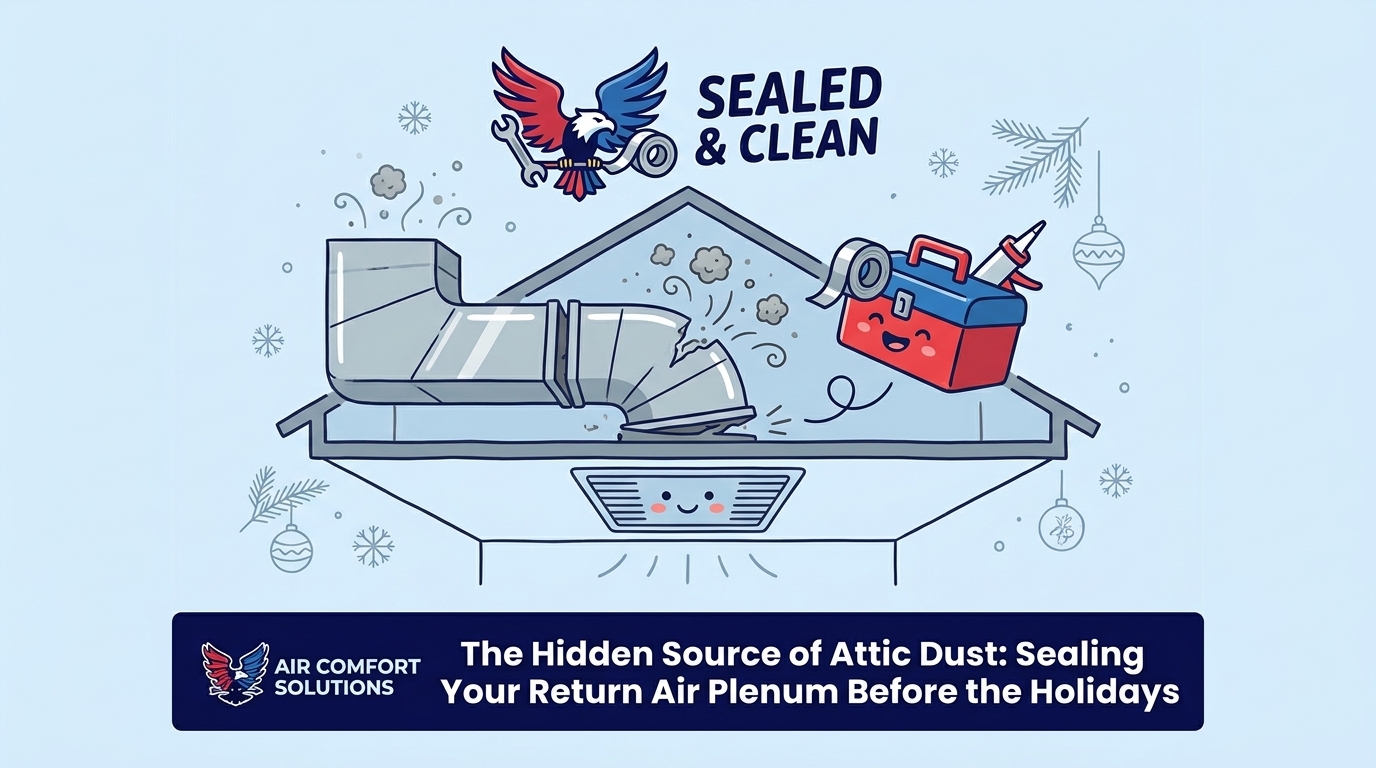
The Value of Sealing Your Return Air Plenum Before the Holidays
Most homeowners buy expensive filters to fix dusty air, not realizing a leaky return plenum in the attic is the real culprit. See why sealing it now saves your holiday gatherings.
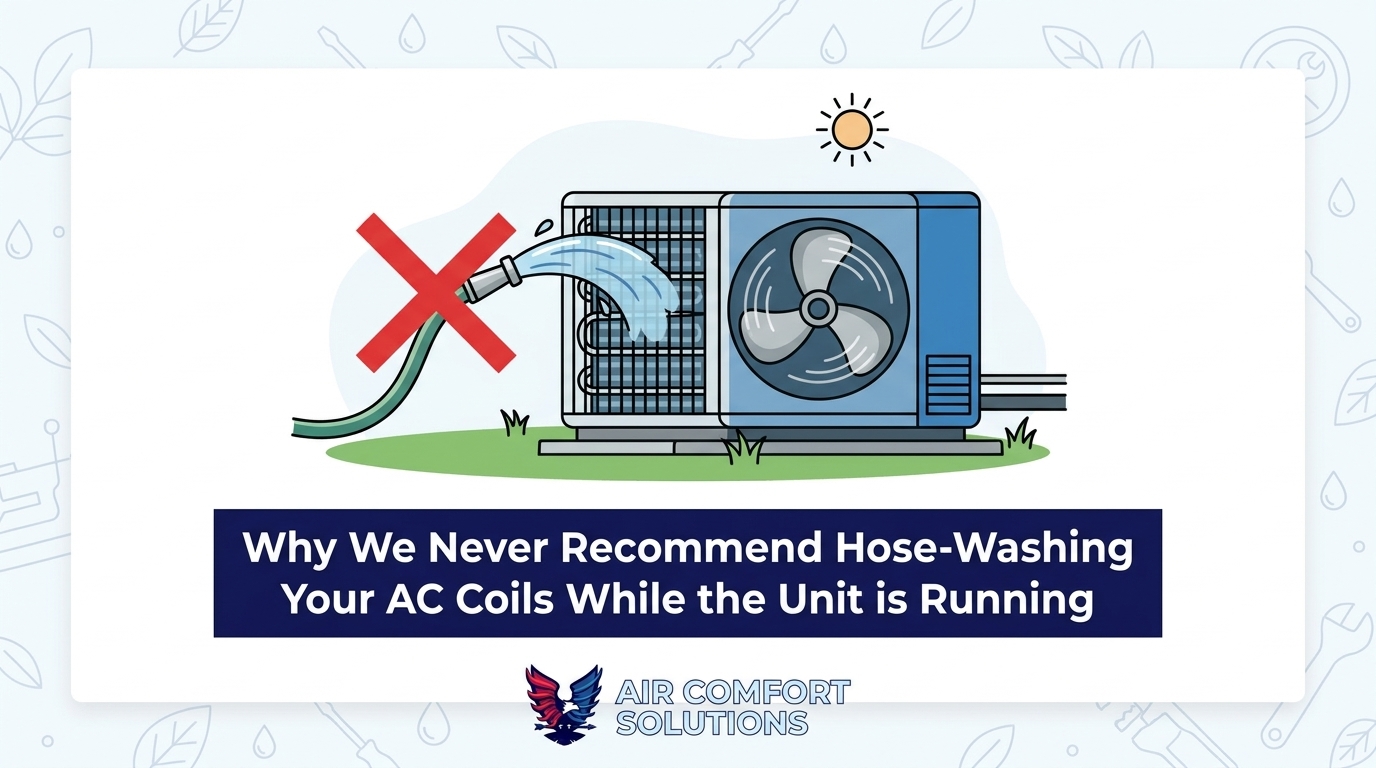
Is your air conditioner running nonstop during this August heat wave, but the house still feels uncomfortably warm? When indoor temperatures start climbing and the outdoor unit sounds like it is struggling to keep up, many homeowners look for immediate relief. A popular piece of word-of-mouth advice suggests taking a garden hose and spraying water directly onto the outdoor condenser to help it cool down. We need to set the record straight on this dangerous DIY cooling hack. The short answer is a definitive no: why we never recommend hose-washing your AC coils while the unit is running comes down to severe risks of electrical shorts, permanent compressor damage, and long-term system suffocation.
When your system is failing to maintain the temperature on your thermostat, it is a sign of an underlying mechanical or airflow issue, not a signal to artificially drop the temperature with tap water. Attempting this viral quick fix forces your equipment to operate outside of its engineered safety parameters. Instead of reaching for the hose, a struggling unit requires professional attention to diagnose the root cause. Whether you are dealing with a frozen evaporator coil, a failing fan motor, or low refrigerant, the safest course of action is to turn the system off and seek help for your air conditioning systems before a minor repair turns into a catastrophic replacement.
It is entirely understandable why homeowners in the Pinehurst TX area might be tempted to try this trick. When the afternoon sun is beating down and your family is sweating inside, desperation sets in. If you search online for quick ways to revive a struggling air conditioner, you will inevitably find videos and forums claiming that a quick spray from the garden hose will magically restore your cooling power. The reason this myth persists is that, on a purely superficial level, it appears to work for a few minutes.
To understand why this hack is deceptive, you have to understand a little bit about thermodynamics. Your outdoor air conditioning unit, known as the condenser, has one primary job: releasing the heat it absorbed from inside your home into the outside air. It does this by pumping hot, high-pressure refrigerant gas through the aluminum fins while a large fan pulls ambient air across them. Water is significantly better at absorbing heat than air. When you spray cool water from a garden hose onto those hot coils, the water rapidly absorbs the heat and evaporates. This sudden heat transfer artificially drops the head pressure inside the system.
For a brief window of time, the air coming out of your indoor vents might actually feel colder. The compressor sounds like it is working less aggressively. The system seems to have caught its breath. However, this temporary relief is an illusion that actively endangers your equipment.
The masking effect is the most insidious part of this viral hack. Your air conditioner is not designed to require a constant mist of water to function properly. If the unit is overheating and struggling to cool your home, there is a distinct mechanical failure happening behind the scenes. You might be dealing with a refrigerant leak, a failing dual run capacitor, a dying condenser fan motor, or simply heavily restricted airflow.
When you artificially drop the system pressure with a garden hose, you hide these symptoms. The system continues to run, forcing a compromised motor or a starved compressor to keep operating under immense strain. By the time the water evaporates and the head pressure spikes again, the underlying damage has worsened. Masking the symptoms of a failing system delays proper repairs, often turning a simple fix into a total system failure. If you want to understand the true root causes of poor cooling, learning why a dirty condenser coil makes your house hot is a much safer place to start.
Beyond masking underlying problems, hosing down a running air conditioner introduces an immediate, catastrophic physical threat to the most expensive component in your system: the compressor. The compressor is the heart of your cooling system, responsible for pumping refrigerant through the lines. During a severe August heat wave, a struggling compressor can reach incredibly high internal operating temperatures.
Thermal shock occurs when a material undergoes a rapid, extreme change in temperature, causing different parts of the material to expand or contract at different rates. Metals naturally expand when they get hot and contract when they cool down. When this happens gradually, as the system cycles on and off, the metal handles the stress perfectly. However, when the temperature change is instantaneous, the metal does not have time to distribute the stress evenly.
Consider the extreme temperature delta during an intense August heat wave. The ambient air temperature might be 100°F, but the internal temperature of an overworked, struggling compressor can easily exceed 150°F to 200°F. Meanwhile, the water sitting in your municipal pipes or garden hose might be 70°F.
When you blast a 200°F metal compressor casing with a sudden stream of 70°F water, the outer layer of the metal attempts to contract instantly, while the inner layer remains expanded from the heat. This violent, uneven contraction creates immense internal stress. The result is often micro-fracturing within the metal casing or the internal mechanical scrolls.
• Irreversible damage: Once the metal micro-fractures, the structural integrity of the compressor is permanently compromised.
• Internal friction: Warped internal components will begin grinding against each other, releasing metal shavings into your refrigerant lines.
• Complete seizure: Eventually, the thermal shock leads to a mechanical lockup, known as a seized compressor, which requires a complete unit replacement.
The temporary blast of cool air inside your home is never worth the risk of destroying the compressor. This type of damage cannot be repaired; it can only be replaced.
Air conditioning units are powered by high-voltage electricity. We are not talking about the standard 120 volts that power your television or lamps; central air conditioners run on a dedicated 240-volt circuit drawing significant amperage. Combining high-voltage electricity, a running mechanical system, and a pressurized jet of water is a recipe for disaster.
Every outdoor condenser has an electrical access panel, usually located on the side of the unit where the power whip connects from the house. Inside this panel are crucial, sensitive components that manage the heavy electrical load required to start and run the system. These include the contactor (a heavy-duty mechanical relay that switches the high voltage on and off) and the capacitor (which stores energy to jump-start the motors).
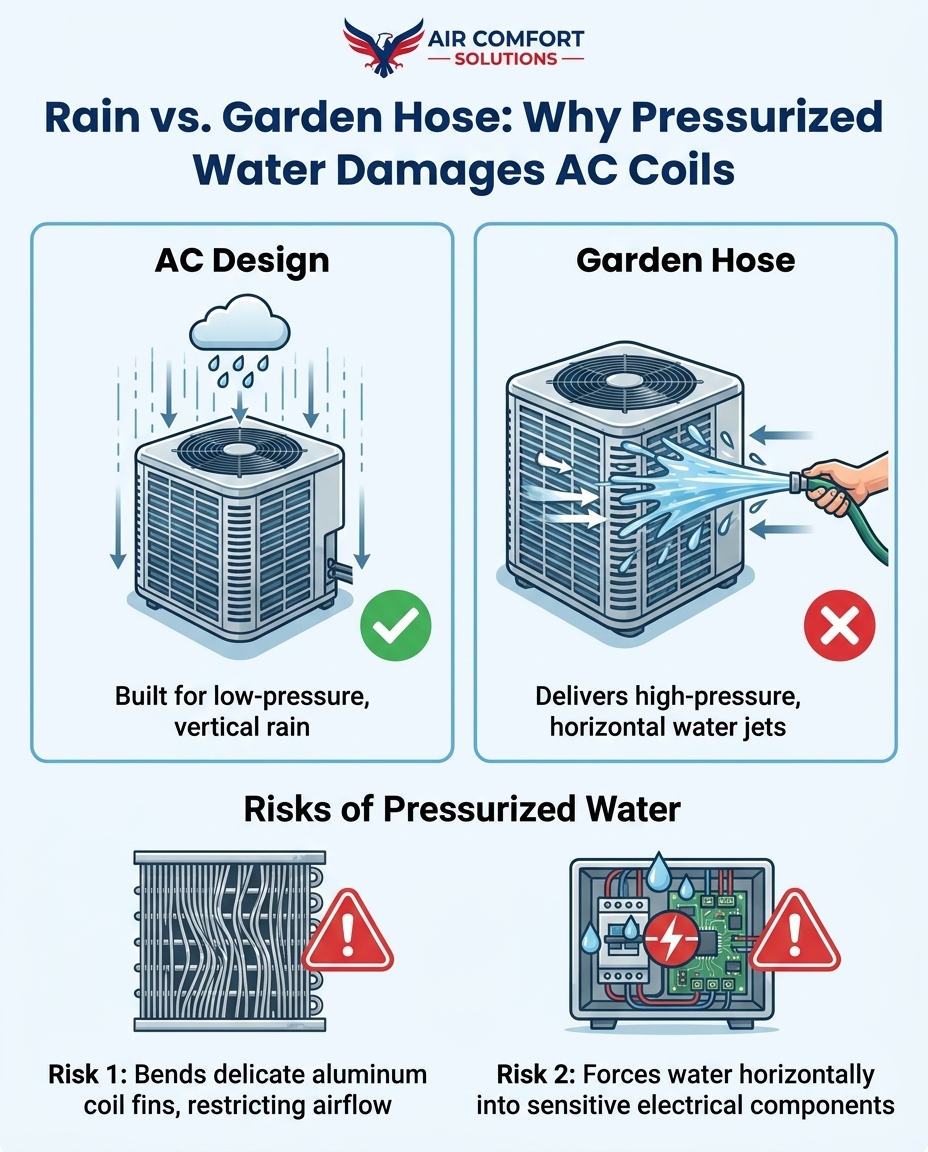
While air conditioners are designed to be weatherproof and withstand normal environmental moisture, they are absolutely not designed to take pressurized horizontal water jets directly into the electrical compartment seams. A garden hose can easily force water past the weather stripping and directly onto these live components.
If you spray water into the unit while it is actively drawing power, the risks multiply exponentially. Water is highly conductive. If a stream of water bridges the gap across a live contactor, several catastrophic things happen simultaneously:
• Direct short circuits: The water creates a path of least resistance, sending 240 volts of electricity where it does not belong, instantly frying the contactor and melting the wiring.
• Blown breakers and fuses: The sudden surge in amperage will trip your main electrical breaker, but often not before the sensitive components inside the AC are destroyed.
• Electrocution hazards: If the unit is improperly grounded or the chassis becomes energized, the person holding the wet garden hose is at severe risk of electrical shock.
When a system is running under heavy load, the electrical draw is at its peak. Introducing water into this environment is incredibly dangerous. If your system is failing to cool and you suspect it needs attention, the only safe move is to shut off the breaker and schedule professional AC repair in Pinehurst to safely diagnose the electrical and mechanical load.
Even if you manage to avoid electrocuting your system or fracturing your compressor, hosing down a running AC unit introduces a slower, more insidious form of damage: hard water scaling. The water that comes out of your garden hose is not pure H2O. It is municipal tap water, and it carries hidden dangers for delicate HVAC equipment.
Southeast Texas municipal water sources often contain high levels of dissolved solids, primarily calcium and magnesium. This is commonly referred to as "hard water." When you use this water for household chores, you might notice white, chalky spots left on your glassware or shower doors when the water dries. Now, imagine applying that same hard water to a piece of metal that is running at extremely high temperatures.
When you spray hard tap water onto a hot, running condenser coil, a rapid chemical reaction occurs. The water itself evaporates almost instantly due to the intense heat of the refrigerant inside the coils. However, the dissolved minerals do not evaporate. They precipitate out of the water and bake directly onto the delicate aluminum fins and copper tubing of your air conditioner.
Over time, and often after just a few applications of this DIY cooling hack during an August heat wave, these baked-on minerals form a thick, rock-hard layer of scale. This scale acts as a powerful thermal insulator.
The entire purpose of the aluminum fins is to conduct heat away from the refrigerant and release it into the air. When those fins are coated in a layer of calcium and magnesium, the heat becomes trapped inside the unit. The system has to work twice as hard, run twice as long, and consume significantly more electricity just to achieve the same amount of cooling. You have effectively suffocated the system. Removing this baked-on scale requires heavy-duty chemical cleaners that should only be handled during a routine AC maintenance plan by licensed professionals with the system completely powered down.
One of the most common rebuttals we hear from homeowners in the Pinehurst TX area is, "If the unit sits outside in torrential thunderstorms, why would a garden hose hurt it?" It is a logical question, but it fundamentally misunderstands how HVAC equipment is engineered and tested.
Outdoor air conditioning units are specifically engineered to withstand natural weather conditions. They undergo rigorous testing to ensure they can handle falling rain, sleet, and snow. The top grilles and internal fan blades are designed to shed water vertically. The electrical compartments are shielded against water falling from above.
However, natural rain falls vertically and at a relatively low pressure. A garden hose, on the other hand, delivers a high-pressure, horizontal jet of water. The unit is completely defenseless against pressurized water entering from the side, bypassing the engineered weather shields.
The aluminum fins that wrap around your condenser are incredibly thin—often no thicker than a few sheets of heavy foil. They are designed this way to maximize surface area for heat transfer. Because they are so thin, they are highly susceptible to mechanical damage. The water pressure from a standard garden hose nozzle is more than enough to bend and flatten these delicate fins.
• Natural Rainstorm — Water Direction: Vertical (falling downward) — Water Pressure: Low (gravity-driven) — Impact on AC Coils and Fins: Safe. Washes away loose surface dust; fins remain intact.
• Garden Hose (Jet/Spray) — Water Direction: Horizontal (forced sideways) — Water Pressure: High (municipal pressure) — Impact on AC Coils and Fins: Dangerous. Bends delicate fins flat, restricting vital airflow.
• Pressure Washer — Water Direction: Horizontal / Targeted — Water Pressure: Extreme — Impact on AC Coils and Fins: Catastrophic. Shreds aluminum fins and forces water into electrical panels.
When the fins get flattened by a blast from a hose, they block the airflow. Without adequate airflow, the unit cannot release heat, leading to the exact overheating problem you were trying to solve in the first place.
When temperatures spike during an August heat wave, we receive dozens of calls from homeowners asking how to safely manage an overheating system. Here are the direct answers to the most common questions about water exposure and AC cooling hacks.
No, spraying water on a running AC unit introduces severe risks of electrical shorts and thermal shock. The sudden temperature change can fracture the hot compressor, and pressurized water can bridge live electrical components. Water should only be applied to coils for cleaning purposes when the breaker is completely shut off and the system is cool.
It temporarily drops the head pressure, but this is an artificial fix that masks underlying mechanical problems. The water absorbs heat faster than air, giving the illusion of a repair. However, the long-term damage from hard water scaling and thermal shock far outweighs the temporary 10-minute cooling effect.
You risk water bridging live electrical components like the contactor, potentially destroying the electrical panel and tripping your main breakers. Furthermore, the sudden temperature drop can micro-fracture the hot compressor metal, leading to permanent mechanical failure and a seized unit.
Misting systems require specialized treated water to prevent mineral buildup and are designed completely differently than a standard garden hose. DIY misting with municipal tap water will quickly calcify and insulate the coils with calcium deposits, permanently reducing the system's efficiency and trapping heat inside.
Coils must be cleaned with the power disconnected at the main breaker, using proper chemical coil cleaners that dissolve organic debris without damaging the delicate aluminum metal. Because this process involves navigating sensitive electrical components and handling specialized chemicals, it is best handled during routine professional maintenance.
When your air conditioner is losing the battle against the Pinehurst TX area heat, your first instinct should be protection, not panic. The safest action for a struggling AC is to turn it off at the thermostat. Forcing a compromised system to run continuously will only guarantee permanent damage. By shutting it down, you protect the compressor from burning out and prevent expensive electrical shorts.
While you wait for professional help, there are safe, immediate steps you can take to manage your indoor comfort.
• Check your air filter: A severely clogged filter restricts airflow and causes the system to overheat. Replacing it might restore proper function.
• Reduce the heat load: Close all your blinds, curtains, and shades to block out the radiant heat from the sun.
• Create airflow: Turn on your ceiling fans to create a wind-chill effect in the rooms you are actively occupying.
Ultimately, a struggling system requires professional intervention. Working with a company that prioritizes a safety-first approach means you are getting a thorough diagnostic to find the real reason the unit is overheating, rather than relying on dangerous DIY hacks that destroy equipment. If your system is failing to keep up, shut it down and schedule professional condenser coil repair to safely restore your home's comfort.


Zane came out and did an amazing job! Super friendly, honest and transparent about the work that needed to be done. This is my second time working with Air Comfort Solutions and they’re my go to for HVAC services. Highly recommend.
God's AMAZING grace sent us Robert and Zane. We have been without air in this Texas heat for six weeks and four days. We've had a few contractors give us quotes all trying to upsell when we're at a low point. But not the guys at Air Comfort Solutions. They came in assessed our situation, gave us honest feedback, and showed us the issues as they proceeded with the assessment for clear understanding. We highly recommend them for their professionalism, quality products, and fair pricing. We hands down support them for all the work they do 💯 %.
Robert and Zane gone above and beyond to make the process easy and affordable.
Would definitely recommend!!
I’m writing this review to let everyone know that Air Comfort Solutions is the company to work with. I know the owner ( Robert) for several years now. He has been taking care of my residential and business work orders. Robert is professional, knowledgeable and will save you money. I just want to thank Robert for great job you have been doing for me.